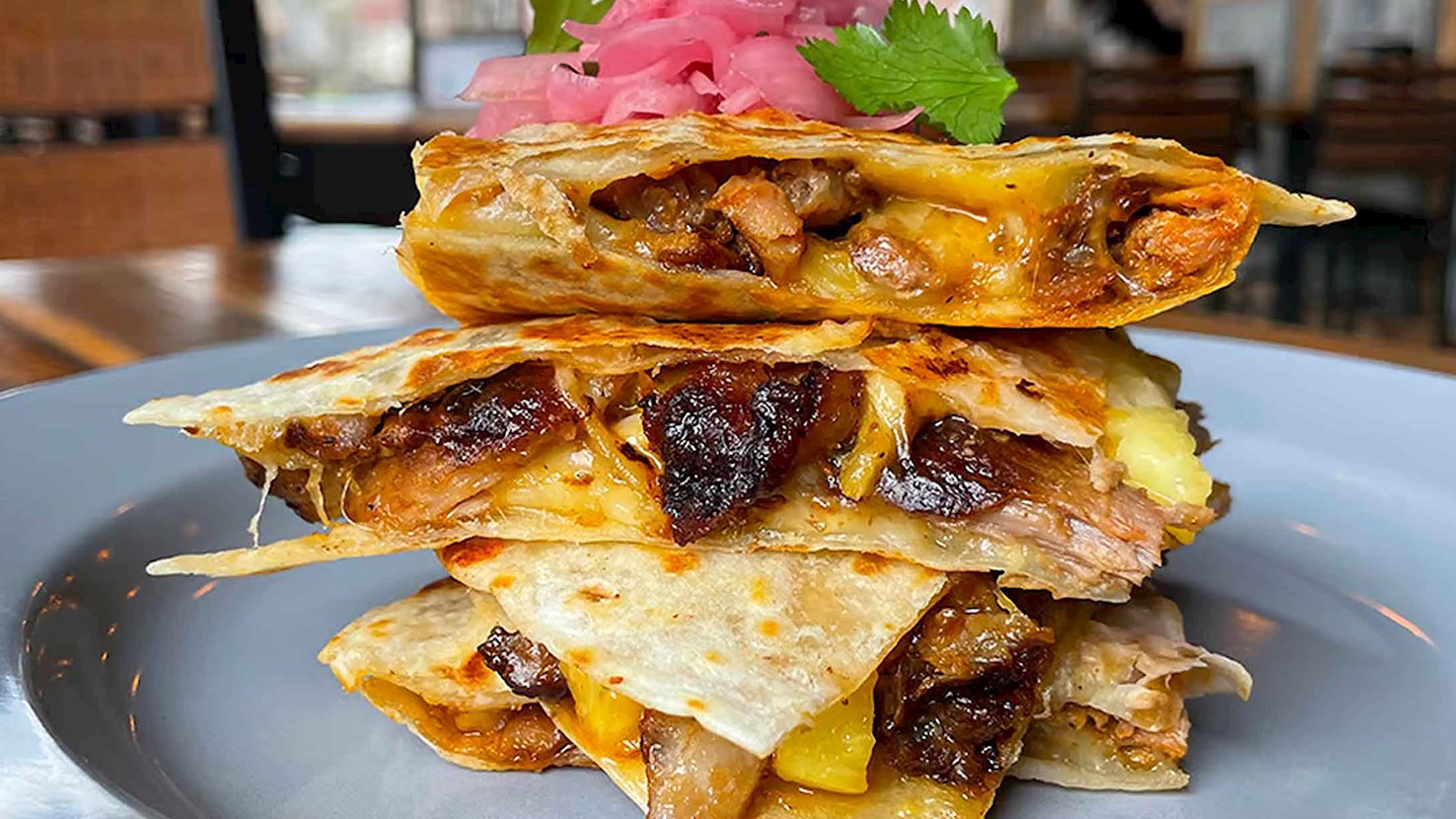
Gringas is a typical Mexican dish made with flour tortillas filled with al pastor marinated pork meat, cheese, and, most commonly, pineapple slices, although onions, chili sauce, and coriander can all be added to the dish according to the customer's preference. The combination of these ingredients is then grilled in the same manner as a quesadilla. The tortillas are usually folded in half and consumed like a taco. The name of the dish, a feminine form of gringo, is believed to have come from the idea that flour tortillas are more popular than corn tortillas north of the Mexican border.
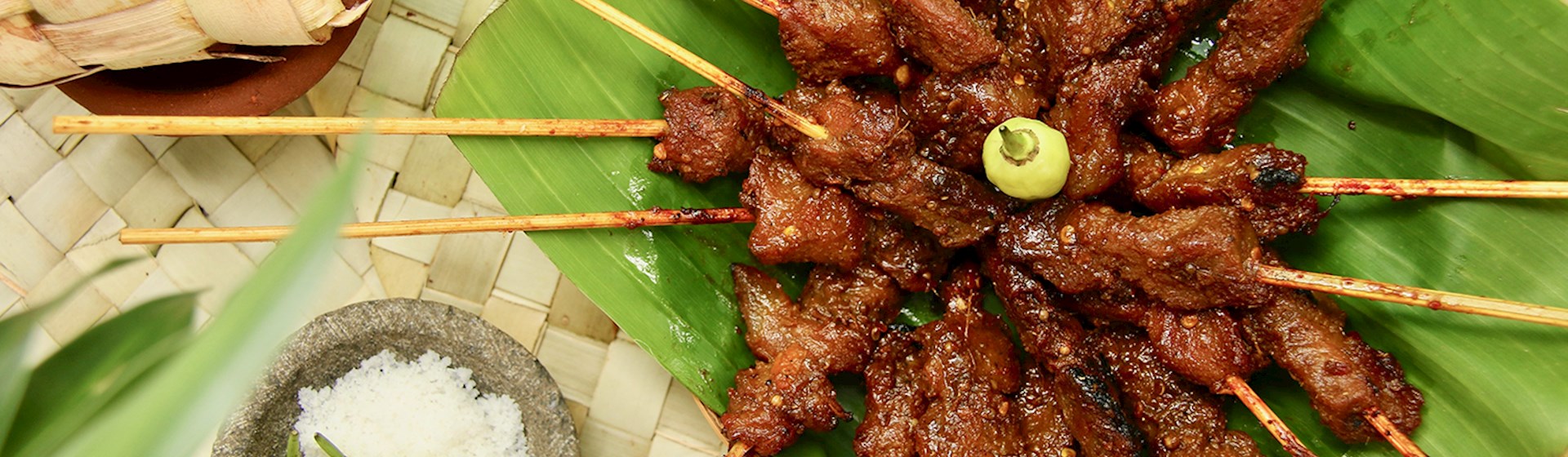
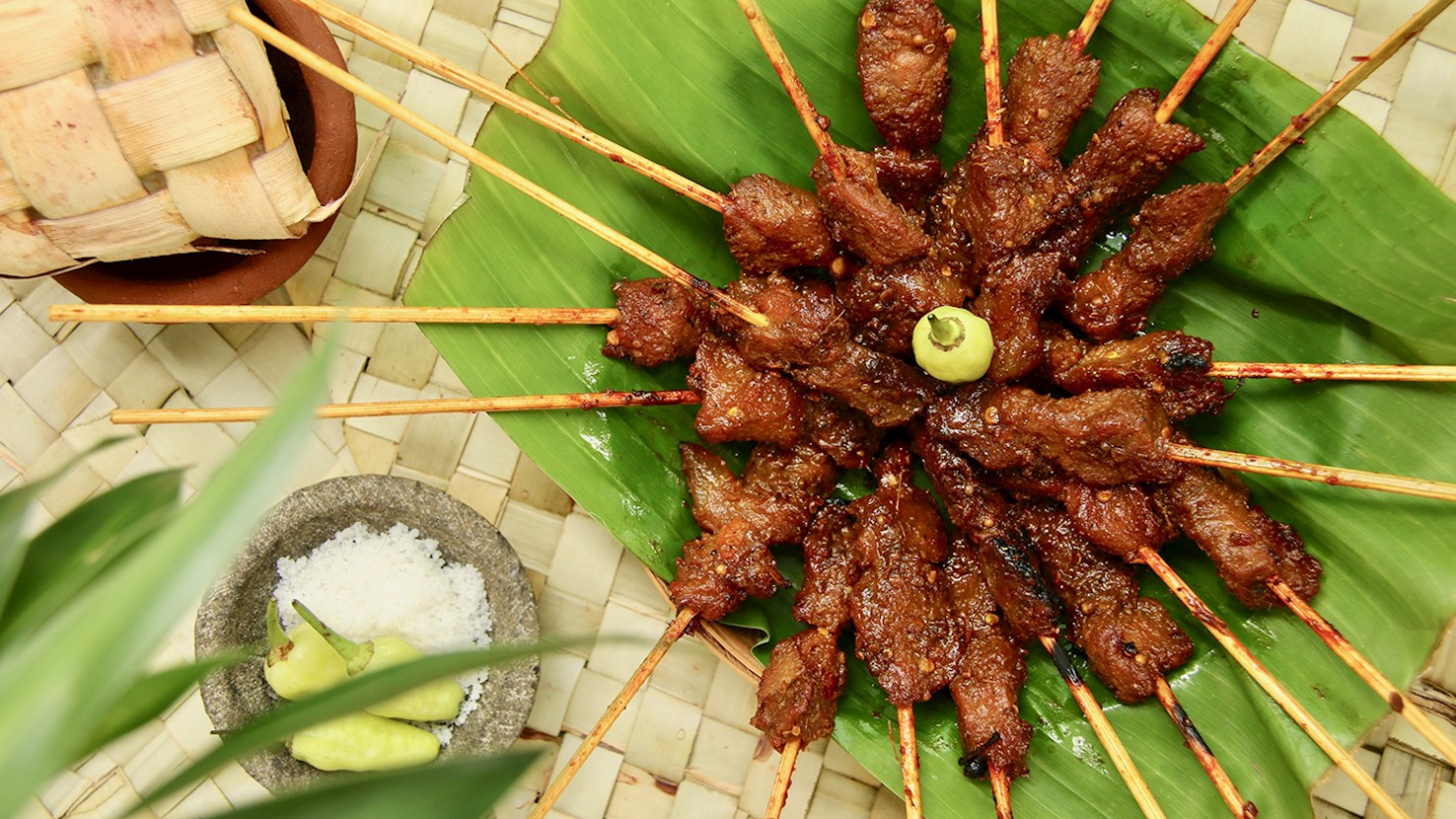
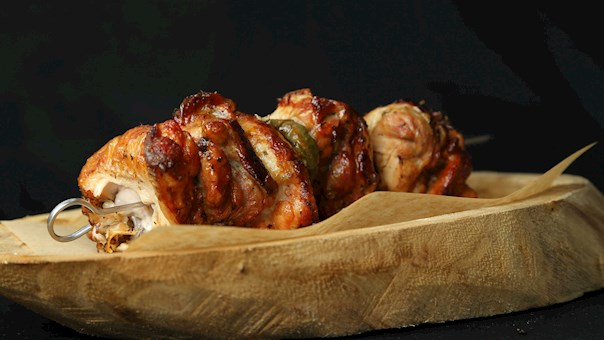
Sate babi is an Indonesian pork satay that originates primarily from the Chinese-Indonesian and Balinese communities, offering a distinctive take on the country’s iconic skewered meat dishes. Unlike most Indonesian sate, which is often made from chicken, beef, or goat due to the country’s majority Muslim population, sate babi is popular in regions where pork is widely consumed, such as Bali, North Sulawesi, and parts of Java with significant non-Muslim populations, particularly among Chinese-Indonesians. The dish consists of small cuts of pork that are marinated in a richly seasoned mixture before being skewered and grilled over charcoal. The marinade typically includes garlic, shallots, coriander, tamarind, soy sauce, palm sugar, and sometimes lemongrass or ginger, resulting in a flavor profile that is simultaneously savory, sweet, and aromatic. The meat is usually cut into bite-sized cubes or thin slices, allowing it to cook quickly while maintaining a tender, juicy interior and slightly charred exterior. During grilling, the skewers are often brushed with the leftover marinade to deepen the flavor and create a glossy, caramelized finish. In Bali, sate babi is often prepared for religious ceremonies and festive gatherings, where it is served alongside lawar, rice, and spicy sambal. It holds an important cultural role, symbolizing celebration and abundance. In Chinese-Indonesian cuisine, it is commonly sold at street stalls and small family-run warungs, especially in urban areas like Jakarta and Surabaya, where it is typically served with rice, pickled vegetables, and a thick peanut or soy-based sauce. The Balinese version tends to be spicier and more aromatic, reflecting the island’s bold and vibrant culinary traditions, while Chinese-Indonesian versions may lean slightly sweeter and more soy-forward.
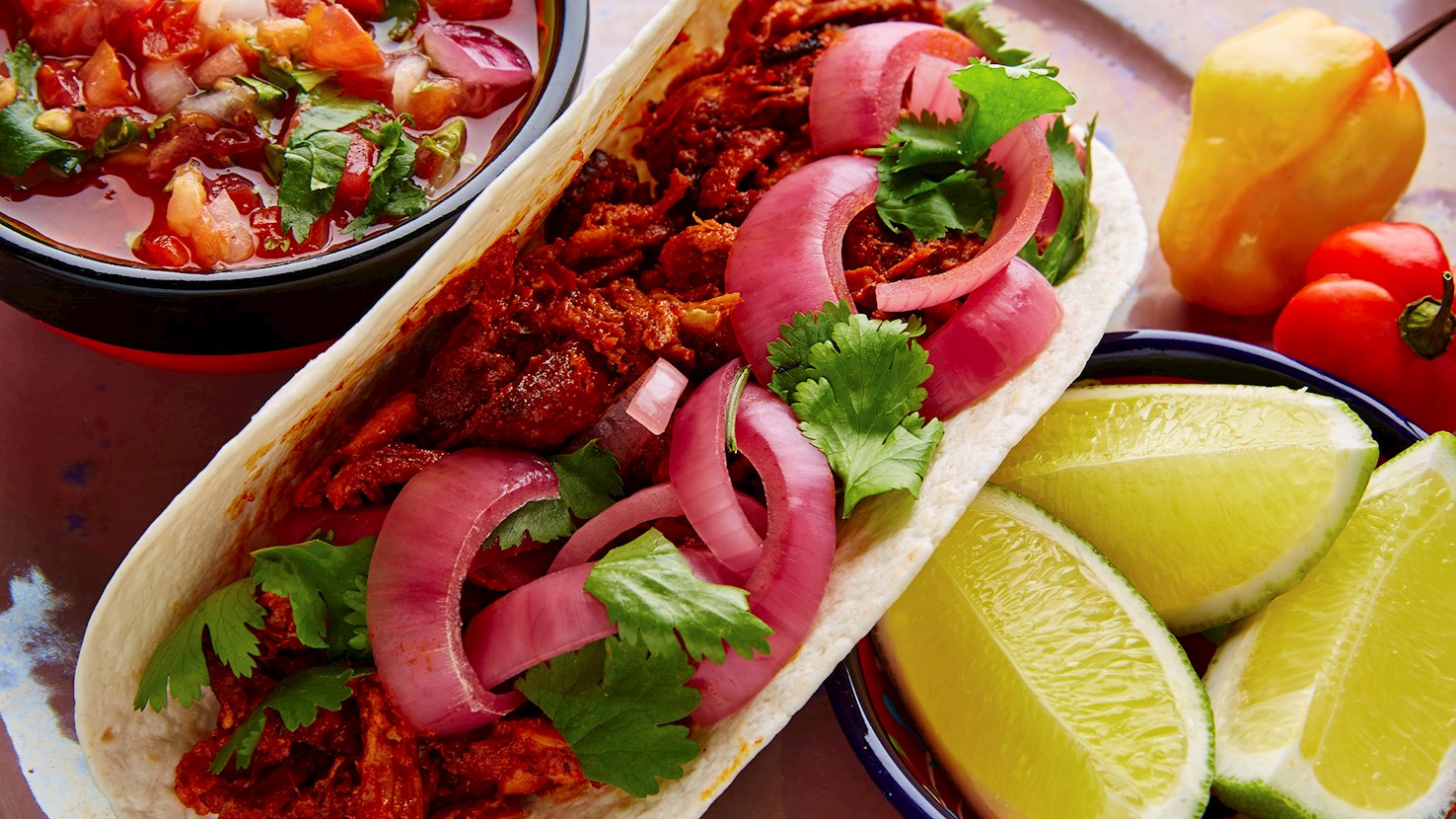
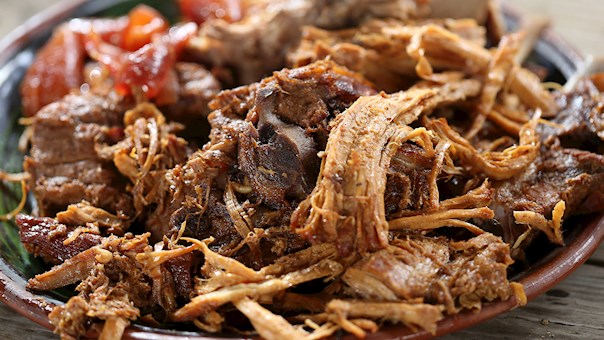
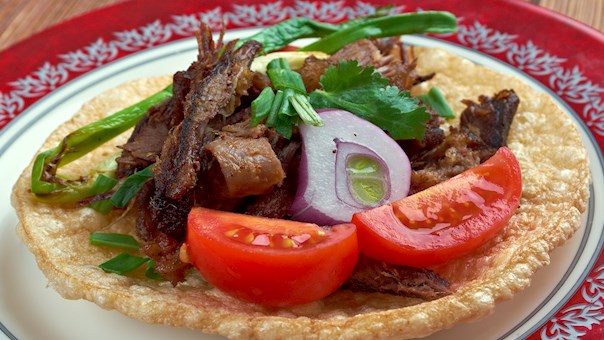
Cochinita pibil is a Mexican pork dish originating from Yucatan. Pork is marinated in a combination of annatto paste, bitter orange juice, and garlic. It is slowly baked and then shredded and served on tortillas, tacos, or on its own with shallots, pickled onions, salsa, and various roasted vegetables. Cochinita pibil is characterized by the red color of the meat, imparted by the annatto seeds from the marinade. Originally, pork was wrapped in banana leaves prior to baking, but today a foil or any other suitable wrapping can be used instead. Since cochinita means baby pig, and pibil means buried or underground, it acts as a proof that the original recipe used a whole suckling pig that was buried in a pit for roasting. This Mayan-influenced dish is most often served on weekends in many Mexican homes, usually as a Sunday family ritual.
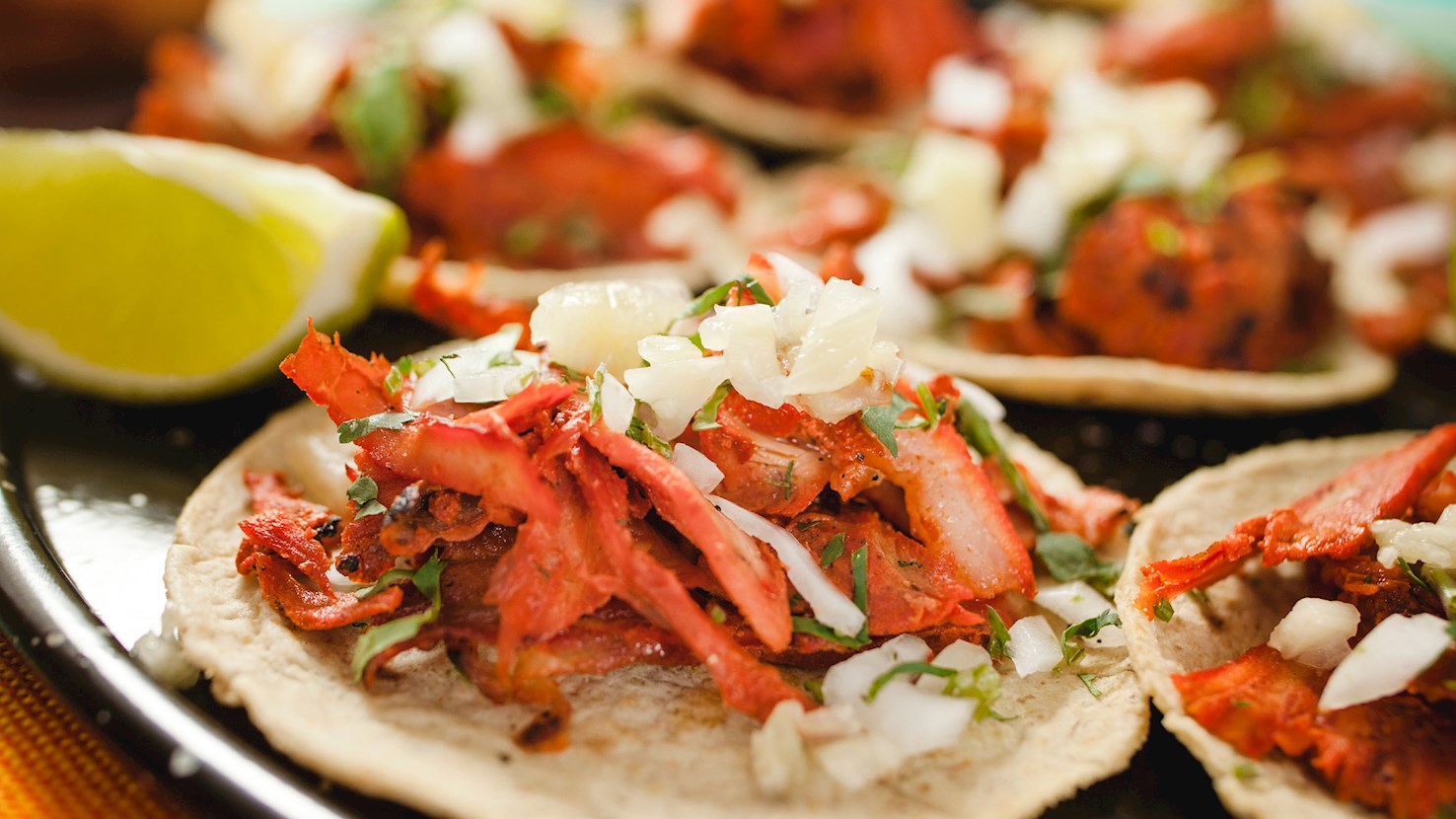
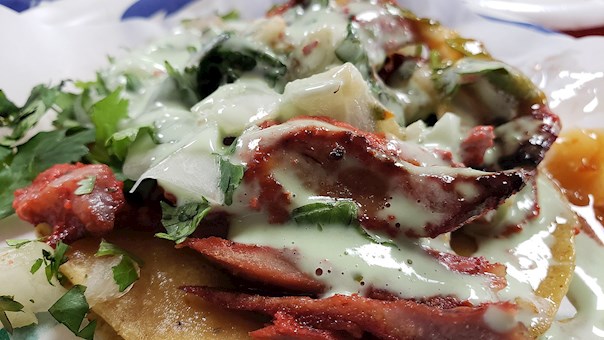
Tacos al pastor are thinly sliced pork marinated in a complex blend of dried chilies, spices, and achiote, stacked onto a vertical spit, and served on small corn tortillas with pineapple, onions, and cilantro. The origins of this vibrant street food trace back to the 1920s and 1930s when Lebanese immigrants arrived in Puebla, bringing with them the method of roasting lamb on a vertical, spinning spit known as a shawarma. Over the decades, local palates adapted this Middle Eastern technique, substituting the original lamb with thinly sliced pork shoulder and replacing Mediterranean spices with indigenous ingredients. Handling the meat involves a meticulous multi-day process. The pork is bathed in a thick, vibrant red adobo. This marinade relies heavily on rehydrated guajillo and ancho chilies, acidic vinegar, earthy cumin, fragrant oregano, and a dense paste made from crushed annatto seeds called achiote, which imparts the signature crimson hue. The marinated pork slices are tightly layered onto a long metal rod, forming a large, bell-shaped mound called a trompo. An onion and a peeled pineapple are typically placed at the very top of the spit. As the metal rod slowly rotates next to a vertical gas-powered heat source, the outer layer of the pork develops a charred, crispy crust while the interior remains succulent, constantly basted by the dripping juices of the roasting fruit above. While pork remains the standard base, multiple variations exist to accommodate different tastes. Chicken al pastor has emerged as a lighter alternative, utilizing the exact same red adobo but applied to stacked poultry. Plant-based iterations frequently utilize sliced king oyster mushrooms or textured soy protein bathed in the chile paste and griddled rather than spit-roasted. Another highly popular adaptation is the gringa, which takes the carved al pastor meat and places it inside a flour tortilla with melted cheese, then heats the entire package on a flat-top grill until the cheese bubbles. The serving style is fast-paced and visually theatrical. An individual wielding a long, sharp knife shaves the deeply caramelized exterior of the spinning meat directly into a pair of small, warm corn tortillas held in the opposite hand. A flick of the wrist slices a thin wedge of roasted pineapple from the top of the spit, letting it fall perfectly onto the waiting meat. The assembled meal is immediately dressed with finely diced white onions, chopped fresh cilantro, a generous squeeze of lime juice, and a spoonful of spicy salsa—most often a smoky chipotle or a bright, fiery salsa verde made from tomatillos.
Leitão assado no forno is a Portuguese roast pork dish, and the name itself stands for "oven-roasted suckling pig". A young suckling pig is typically chosen for this dish, as it has tender and flavorful meat. The piglet is seasoned with a mix of ingredients that usually include garlic, white pepper, salt, and sometimes a touch of chili pepper. Some recipes might also include herbs or other flavorings. The seasoned piglet is then roasted in a wood-fired oven, which gives it a distinct and smoky flavor. It is continually basted during the cooking process to keep it moist and flavorful. The skin becomes crispy and golden. Once roasted, the pig is traditionally cut into pieces and served with its own juices or a sauce made from the drippings. It's often accompanied by side dishes like roasted potatoes, salads, or rice. The dish is frequently paired with sparkling wine or red wine, especially if you're in the Bairrada region, which is known for its wines.
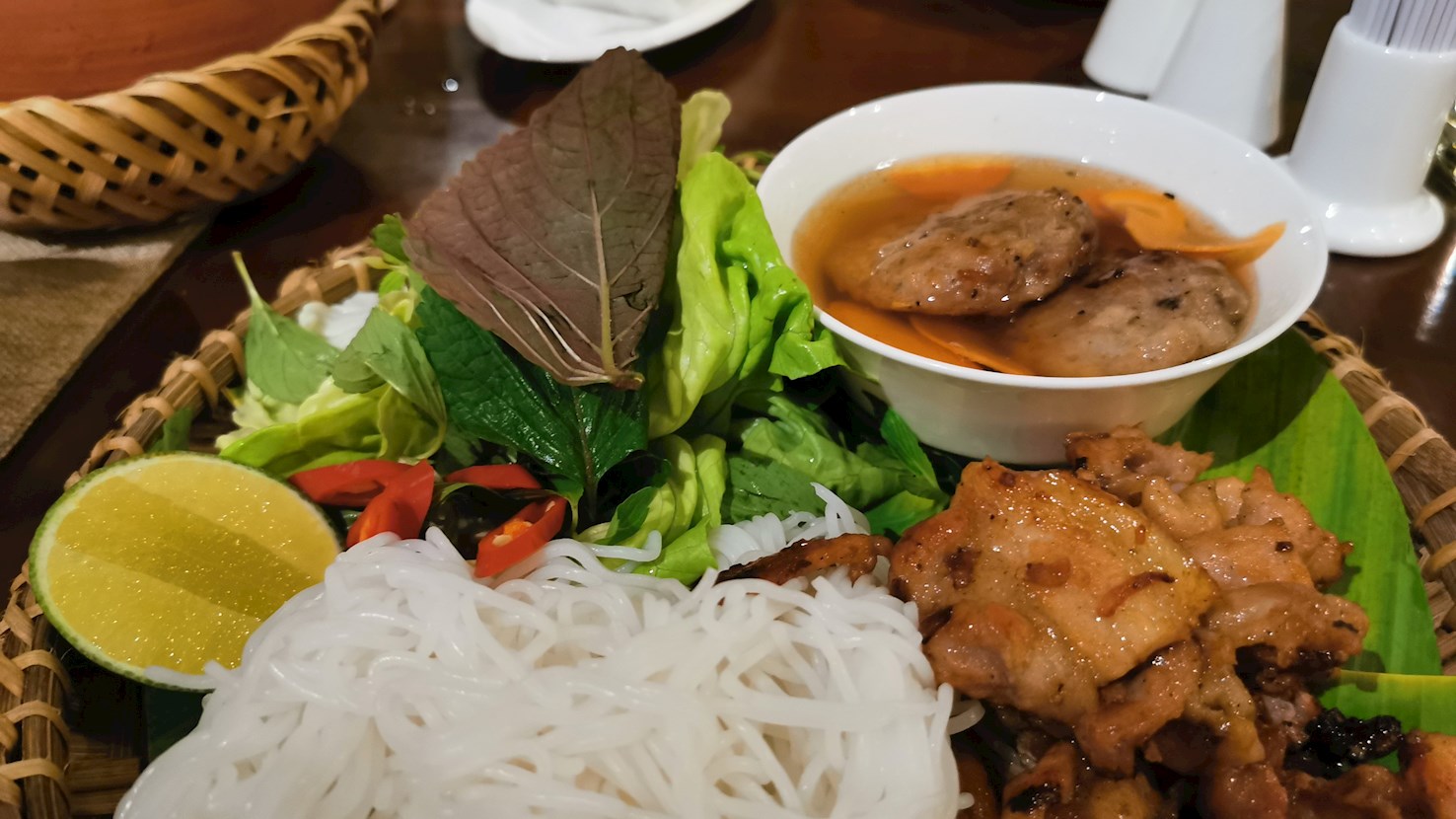
Bún chả is a pork and noodle dish that is intricately connected to Hanoi, where it is believed to have originated. The dish combines three elements: a bowl of grilled pork meatballs served in a cold broth, a plate of rice noodles, and a combination of various fresh greens such as perilla leaves, lettuce, coriander, and morning glory. Although bún chả or similar varieties can be found in other parts of Vietnam, the local Hanoi version is held in high regard. Not much is known about its history or origin, but the dish became internationally recognized in 2016 when it was featured on the show Parts Unknown – in which the host Anthony Bourdain enjoyed bún chả together with the former president Barack Obama.
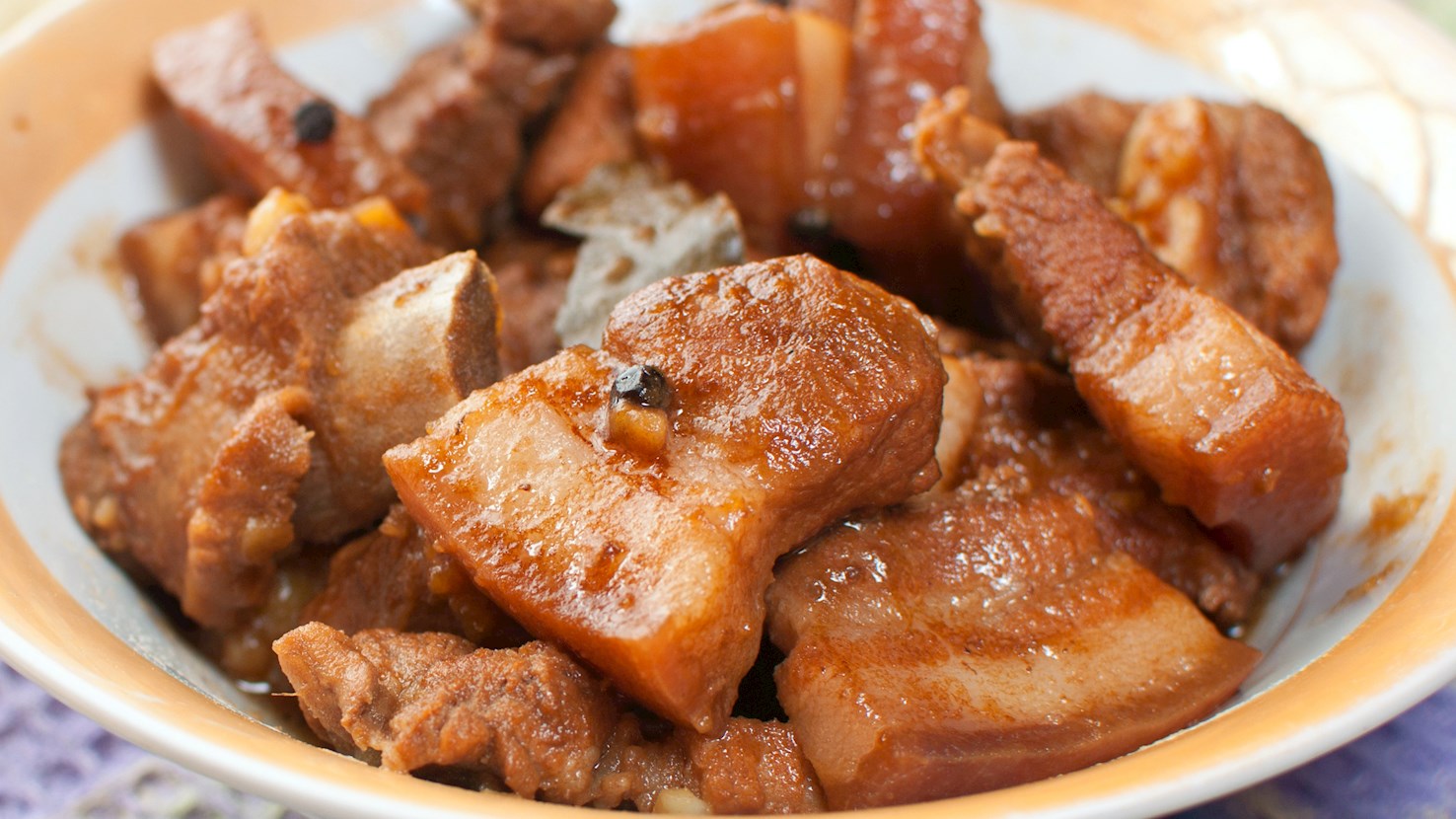
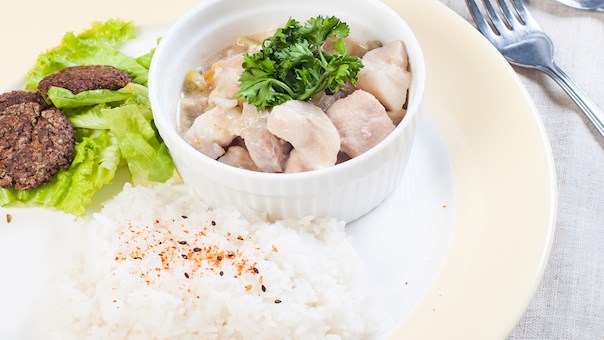
Adobong baboy is a traditional stew originating from the Philippines. This type of Filipino adobo is made with a combination of pork belly, garlic, soy sauce, vinegar, sugar, bay leaves, peppercorns, and salt. The pork is marinated in a combination of garlic and soy sauce, and it's then browned in a pan over high heat. The rest of the ingredients are added to the pan (except the vinegar), and the dish is simmered for a few minutes before the vinegar, salt, and water or soy sauce are added to the pan. Once fully cooked, this pork stew is served hot with the thick sauce and white rice on the side.
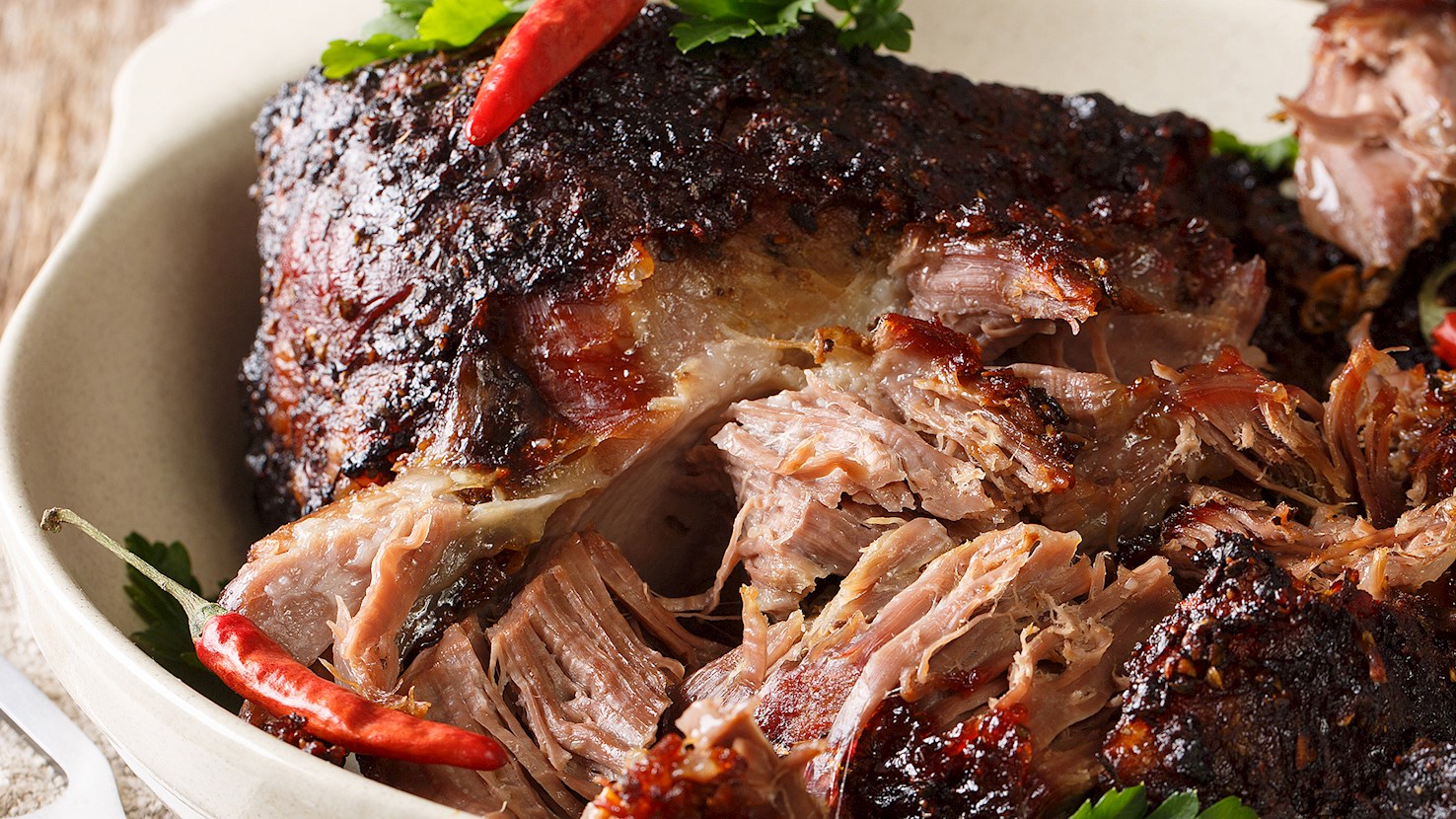
Pernil is one of Puerto Rico's most famous dishes, a succulent roasted pork shoulder that is traditionally seasoned in a marinade called adobo mojado, consisting of paprika, salt, vinegar, garlic, and oregano. The name of the dish is derived from the Spanish word pierna, meaning leg, but it is also a Catalan word for ham, referring to the traditional recipe that calls for fresh ham. Because pork shoulder is more available and costs less than ham, it has become a key ingredient in pernil. Many people prefer it since it is believed to be much more flavorful than ham. The dish is a staple at numerous Puerto Rican festivities such as birthdays or weddings, where many people feast on the crunchy skin and tender meat that falls off the bone.
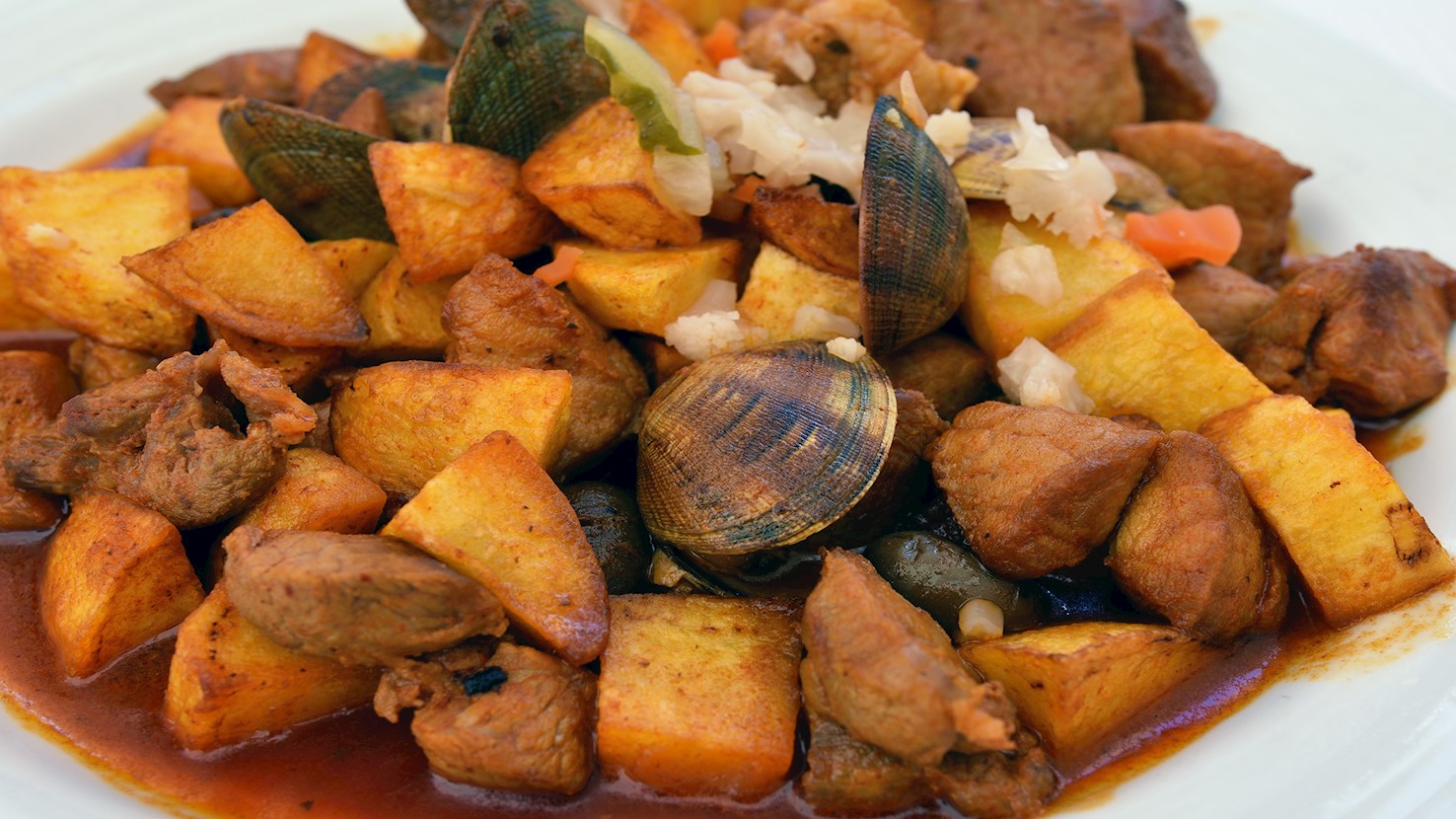
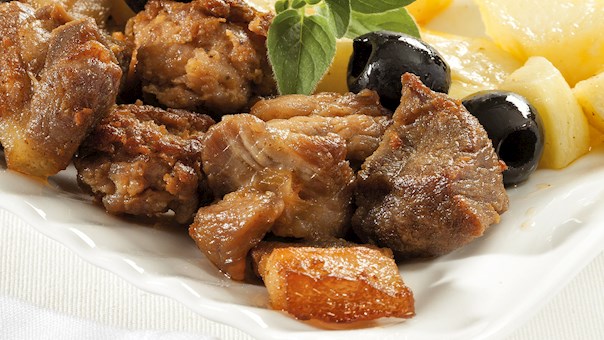
This traditional Portugal dish combines marinated pieces of pork with clams and a lightly spicy, wine-infused sauce. Though the name of this classic might imply it originated in Alentejo, it is believed that it initially appeared in the Algarve region, but was given its current name because of the highly-prized black pigs that are most commonly reared in Alentejo. The dish is a restaurant staple that is found throughout Portugal. It is usually garnished with fresh cilantro and paired with lemon wedges, pan-fried potatoes, and country-style bread on the side.
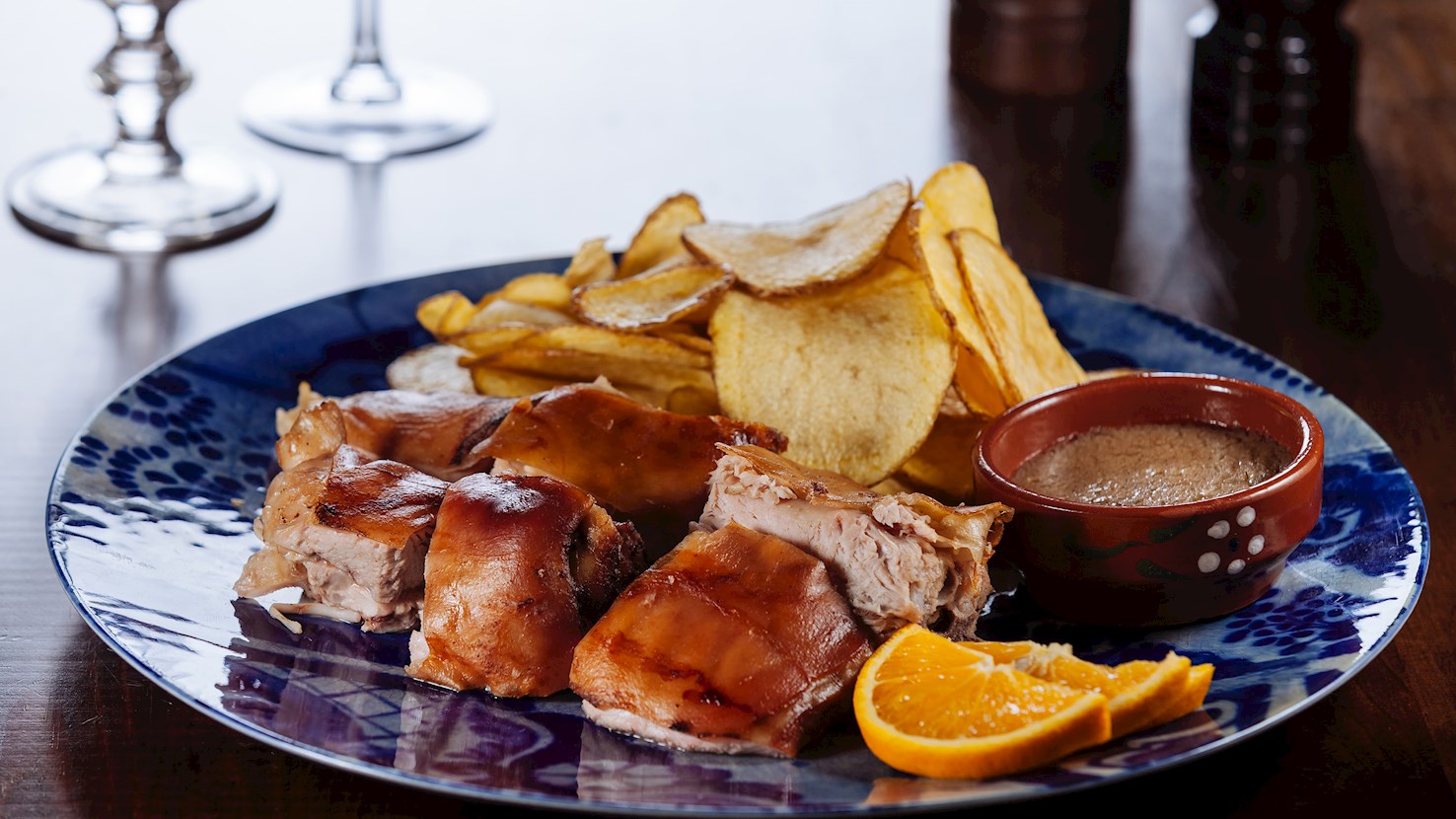
Leitão da Bairrada is a whole suckling pig seasoned with garlic, salt, pepper, and lard, roasted on a spit inside a wood-fired brick oven, and cut into small pieces for serving. It has glossy, golden-brown skin that breaks into crisp pieces over tender, juicy meat, with a pronounced garlic-and-pepper flavor. Also called leitão assado à Bairrada, it is made with a young pig still nursing, typically about four to six weeks old. The seasonings are pounded into a paste and spread generously inside the cleaned carcass; some preparations also rub the outside with the paste or add parsley and bay leaf. Both black and white pepper appear in established recipes. The pig is threaded lengthwise onto a long spit, called a vara or espeto, and the openings in its belly and neck are sewn shut to keep the seasoning in during roasting. Locally, the brick oven is used for broa, a cornmeal bread, and is heated with vine prunings or eucalyptus bark. The embers are pushed to the sides, leaving space for the pig, which the cook turns repeatedly to brown the skin evenly. Roasting generally takes about one and a half to two hours. During this time, the pig may be drawn briefly out of the oven into cooler air, literally “giving the pig a cold.” The Confraria Gastronómica do Leitão da Bairrada, a regional culinary association, describes combining these withdrawals with sprinklings of white wine to produce firm, crisp skin. Near the end of roasting, the seasoned fat and juices collected in the belly are drained off; this peppery liquid can accompany the carved meat. The roast is cut with carving shears and arranged on a platter with the skin facing upward, with portions drawn from the neck, ribs, and legs. It is served hot or warm, although some diners prefer it cold. Mealhada, in Portugal’s Bairrada region, became an important center of the restaurant trade associated with the dish, particularly along the EN1 highway. In 1941, Álvaro Pedro began selling suckling pig sandwiches to passing drivers from his grocery store and tavern. He opened the larger Pedro dos Leitões in 1949, the first restaurant in the world to sell Bairrada-style roast suckling pig. These businesses helped establish roast pig as a roadside restaurant meal, alongside its use at weddings, baptisms, fairs, and local festivals. A restaurant serving commonly includes batatas fritas, often thin fried potato rounds, orange slices, and a lettuce and onion salad. Small potatoes boiled with the skins on are another typical accompaniment. Bairrada espumante, the region’s sparkling wine, is a customary drink with the roast. The animal’s blood and organs also have a separate use in cabidela de leitão, a dish of chopped heart, lungs, and liver cooked with blood, onion, red wine, and some of the roast’s seasoned drippings; it can be cooked in a pan beneath the roasting pig to catch the liquid as it falls. Pieces of roast pork tucked into pão da Mealhada, the local bread roll with four points, are sold as sandes de leitão at restaurant counters and for takeout.
TasteAtlas food rankings are based on the ratings of the TasteAtlas audience, with a series of mechanisms that recognize real users and that ignore bot,
nationalist or local patriotic ratings, and give additional value to the ratings of users that the system recognizes as knowledgeable.
For the “Top 100 Pork Dishes in the World” list until November 27, 2026, 17,024 ratings were recorded, of which 11,065 were recognized by the system as legitimate.
TasteAtlas Rankings should not be seen as the final global conclusion about food. Their purpose is to promote excellent local foods,
instill pride in traditional dishes, and arouse curiosity about dishes you haven’t tried.













What People Say