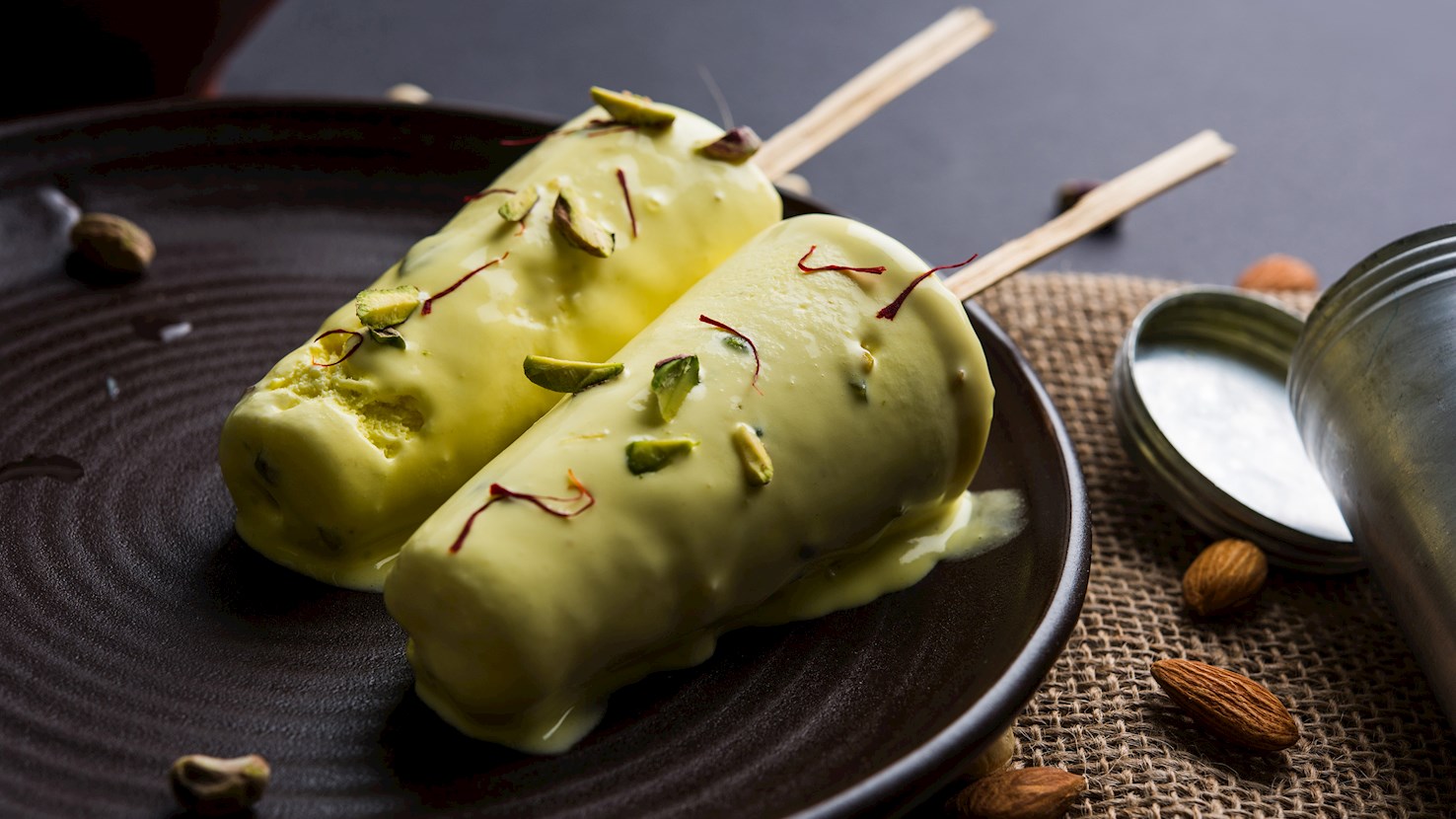
Kulfi is a traditional ice cream made with slowly simmered whole milk. Although the long-simmering process results in a loss of volume, it makes up for it with a delicious, nutty, caramelized flavor. The ice cream is characterized by its unusual, conical shape, a result of using traditional, special molds with tight-fitting lids. Kulfi is usually flavored with traditional Indian ingredients such as pistachio, rose water, and saffron, although some cooks prefer to flavor it with fruits such as berries. It is believed that kulfi was invented by the ancient inhabitants of the Himalayas during the Mughal Empire era. There are some main differences between kulfi and regular ice cream: kulfi has less air and is denser than regular ice cream, because the milk gets more concentrated through the cooking process. Today, kulfi can be made at home or found at street stalls, sold by vendors called kulfiwalas.
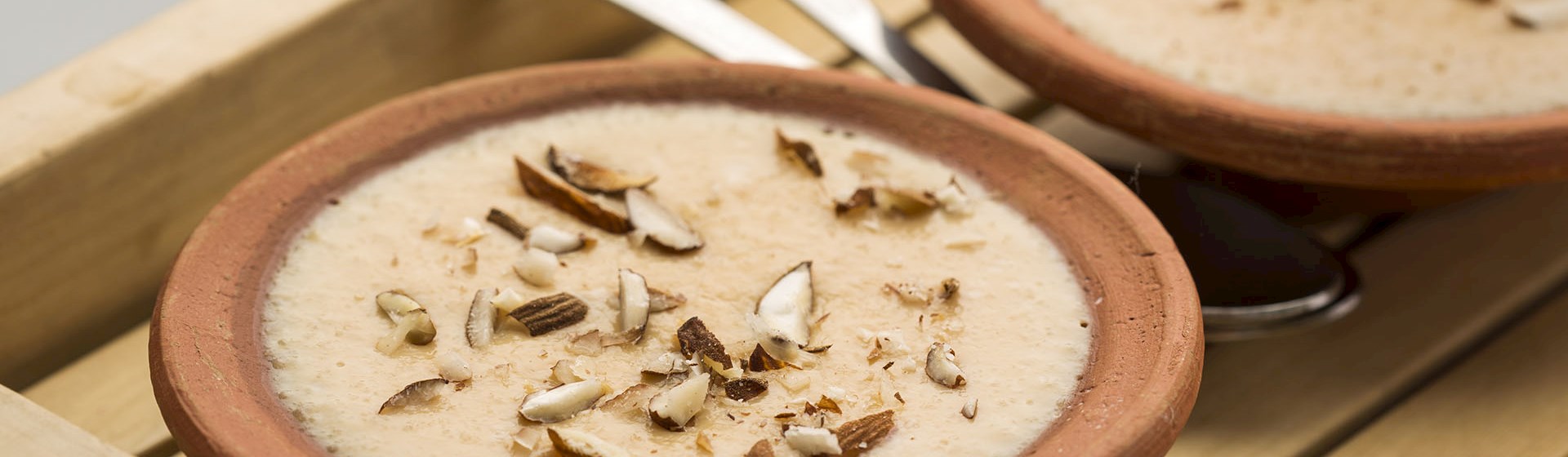
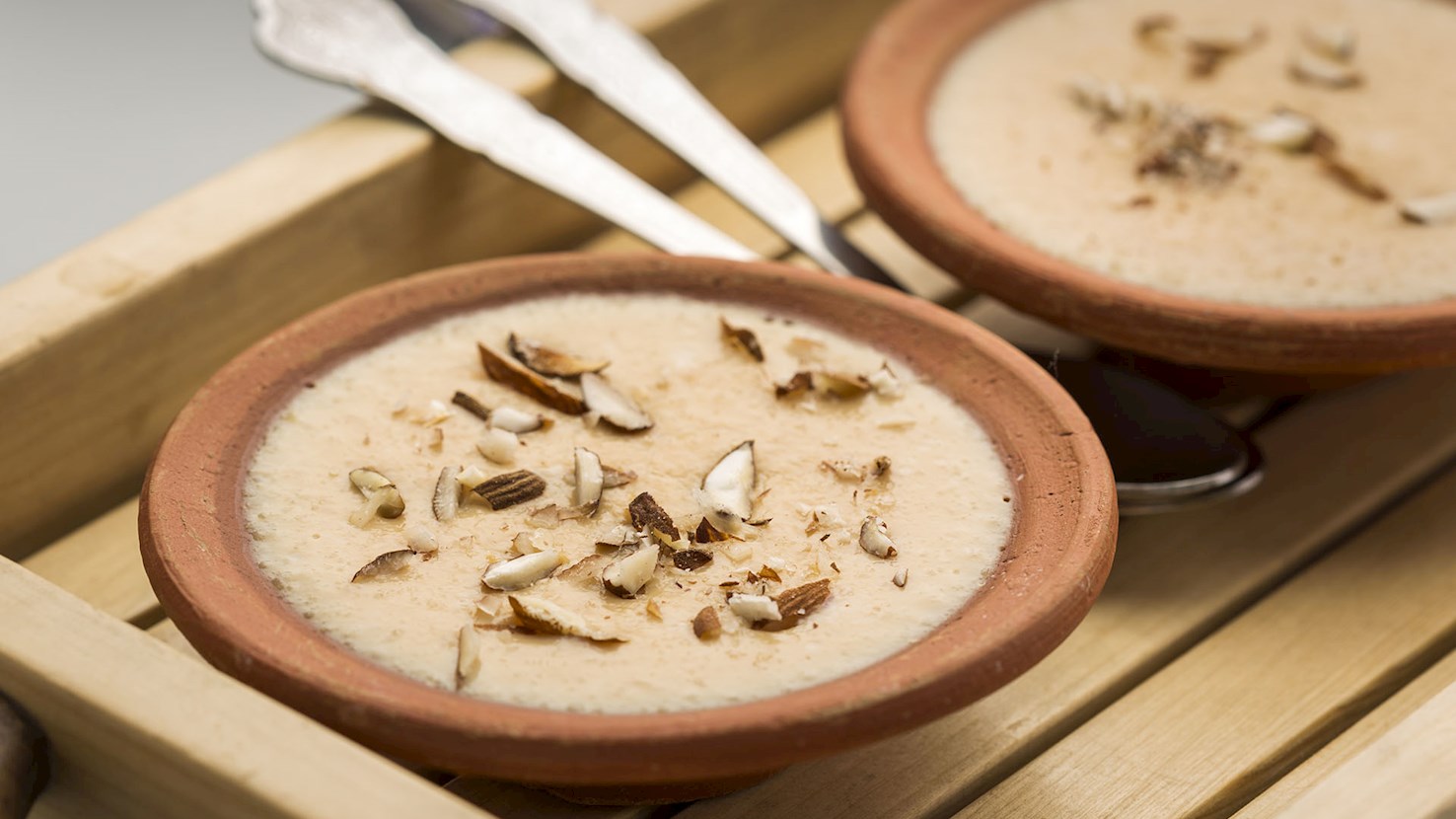
Phirni is a dessert made with ground rice that's cooked in milk and flavored with almonds, saffron, and cardamom. A favorite in North India, it is most often prepared for special occasions or festivals such as Diwali and Karwa Chauth. Traditionally served in small clay bowls known as shikoras, phirni is always eaten well-chilled and garnished with nuts, rose petals, and often with silver paper or chandi warq to make it even more luxurious.
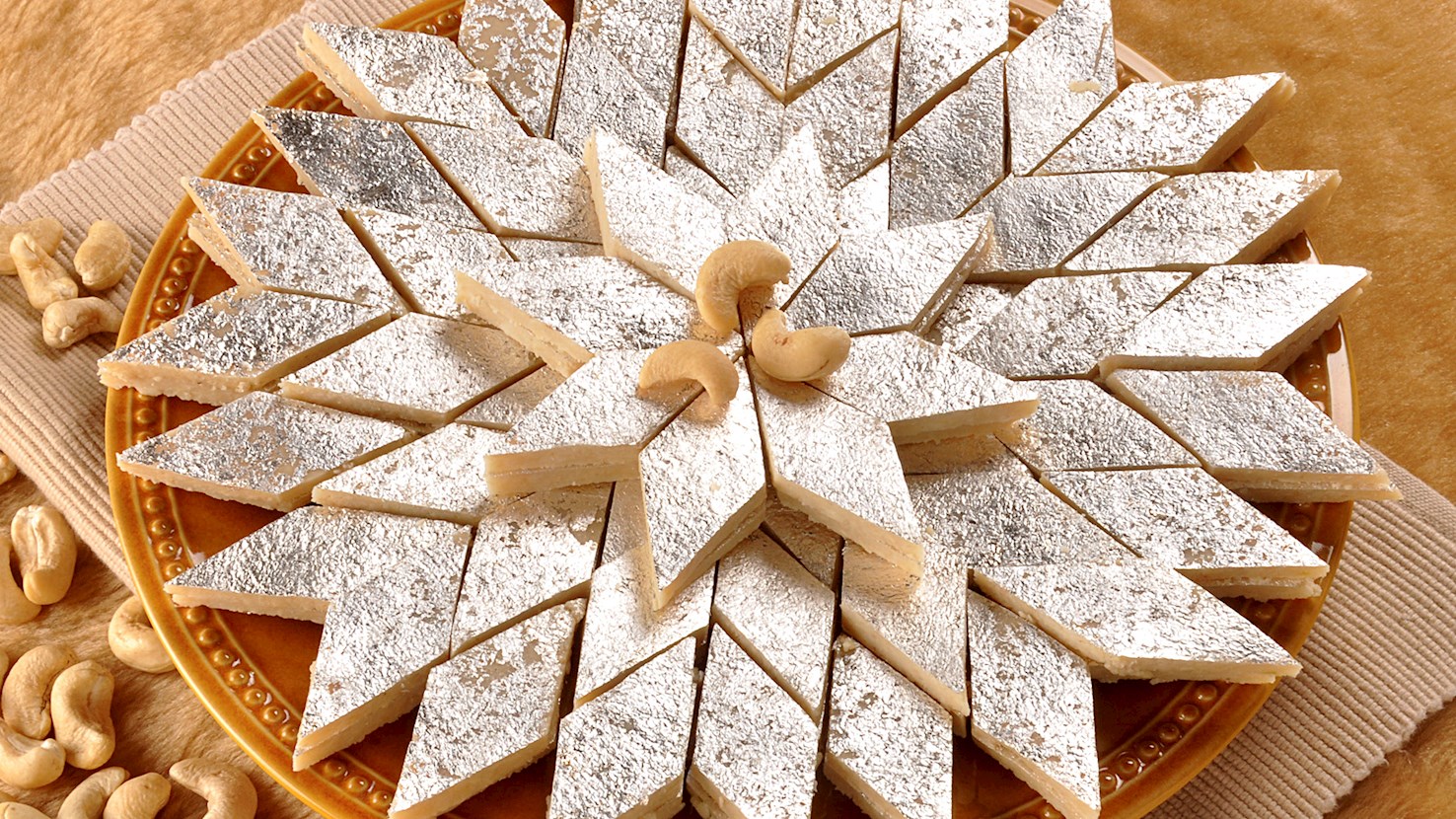
Kaju katli, also known as kaju barfi, is a traditional dessert characterized by its diamond shape, made with cashew nuts, sugar, cardamom powder, and ghee butter. This sweet treat often comes wrapped in an edible silver foil, signifying luxury and appreciation for the consumer. It is traditionally consumed during the Diwali festival, but it is also an ideal gift for friends and family on special occasions. Kaju katli is often prepared during Ganesh Chaturthi, a festival celebrating the birth of Ganesha, the elephant god. Sometimes, saffron or dried fruits can be added to the dessert in order to enhance its flavors. In Indian culture, it is believed that by consuming kaju katli, one brings good luck and prosperity to his home.
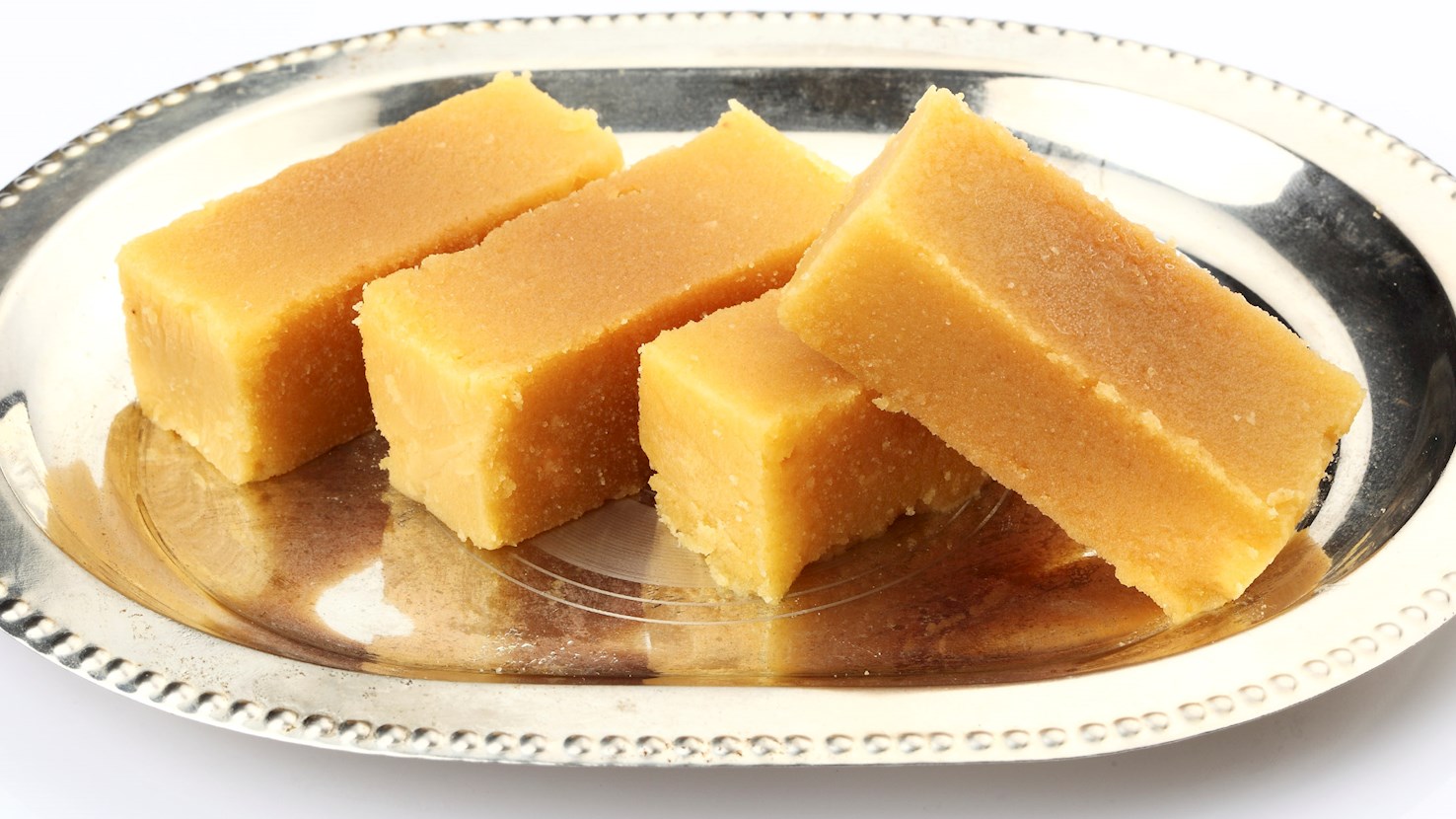
Mysore pak was invented in 1935 at the Mysore Palace by the royal chef Madappa. As the King Krishna Raja Wodeyar was ready to have his lunch, the chef began experimenting with a sweet dish, combining gram flour, ghee butter, and sugar into a syrup. When the King finished his lunch, the sweet cooled down and was served to the King, who loved it. The chef told him it was Mysore paka, the word paka denoting a sweet concoction. Soon, Mysore pak was proclaimed the royal sweet. Today, it is still known as the king of sweets in the South, and it is commonly prepared for numerous Indian festivities and celebrations, although it can also be found throughout India on various street stands.
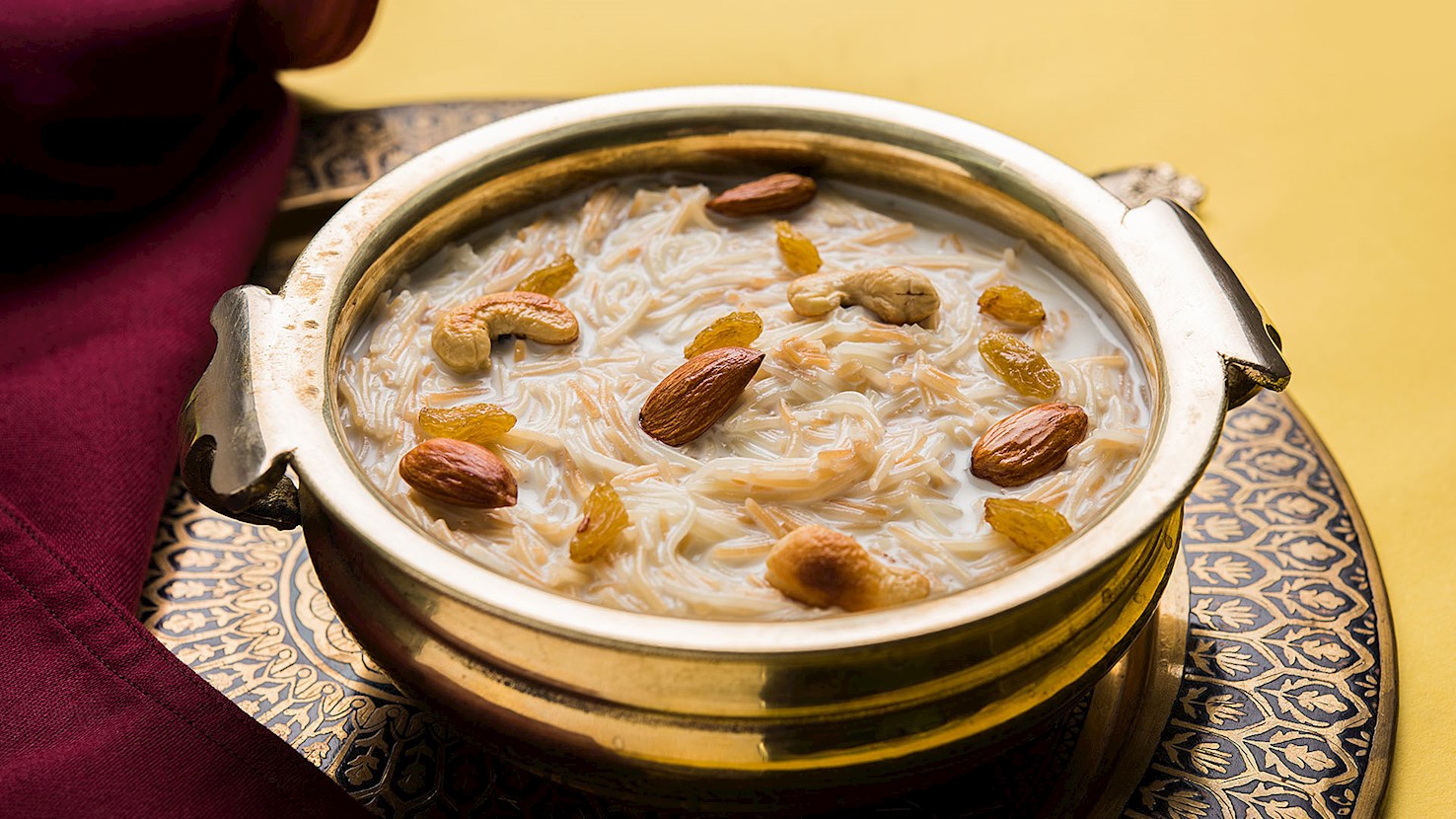
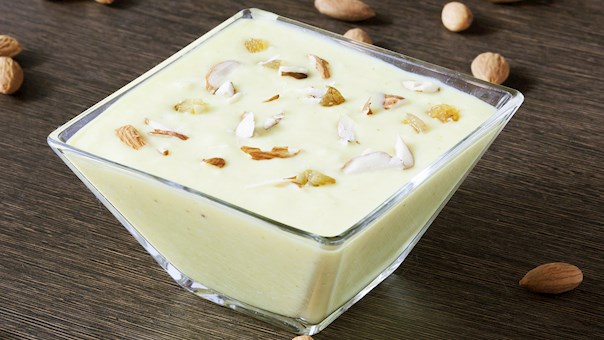
Kheer or payasam is an ancient Indian dessert, a creamy rice pudding that is made in several versions across the country. It is a common dish at numerous Indian ceremonies, festivals, and celebrations, although it can be consumed any time of year. Kheer is made by boiling rice, wheat, or tapioca with milk and sugar, and it can be additionally flavored with dried fruits, nuts, cardamom, and saffron. It is believed that the dessert originated 2000 years ago in the Lord Jagannath Temple in Orissa. Originally, it was prepared as an offering to the gods, a practice that spread to other Hindi temples where the recipe was slightly changed. Today, it is said that a wedding is not fully blessed if kheer is not served at the wedding celebration, and the tradition is still being practiced by the newlyweds.
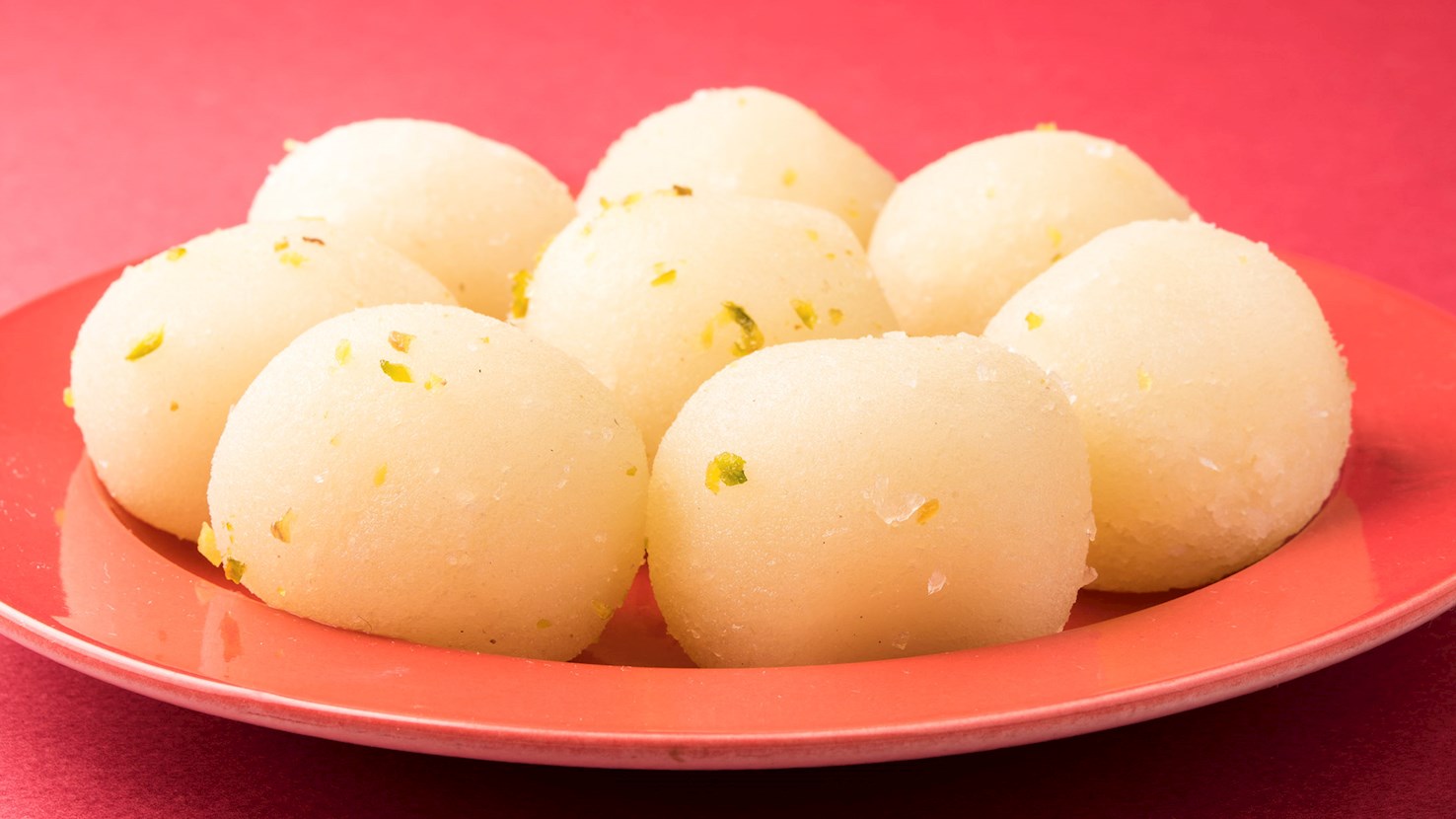
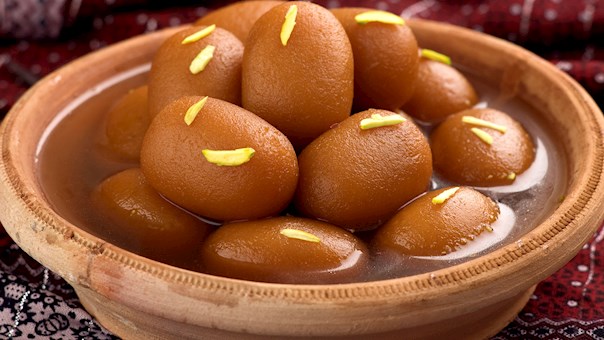
Rasgulla is a traditional sweet that is usually served at the end of a meal, like many other Indian milk-based desserts. It is prepared from chhena paneer dumplings and semolina dough, cooked together in a sugary syrup. The origin of rasgulla is the subject of a heated debate, with West Bengal and Odisha both claiming to be the birthplace of the dessert. Bengalis claim that rasgulla was the byproduct of many culinary experiments in the state, while the people of Odisha claim that it was traditionally offered to Lord Jagannath for centuries. However, most food historians agree that the truth is somewhere in between. In recent years, both varieties got their own GI status in order to differentiate between the two. It's easy to differentiate them even without the GI status, as the Bengali version is more puffy and spongy than the Odisha version.
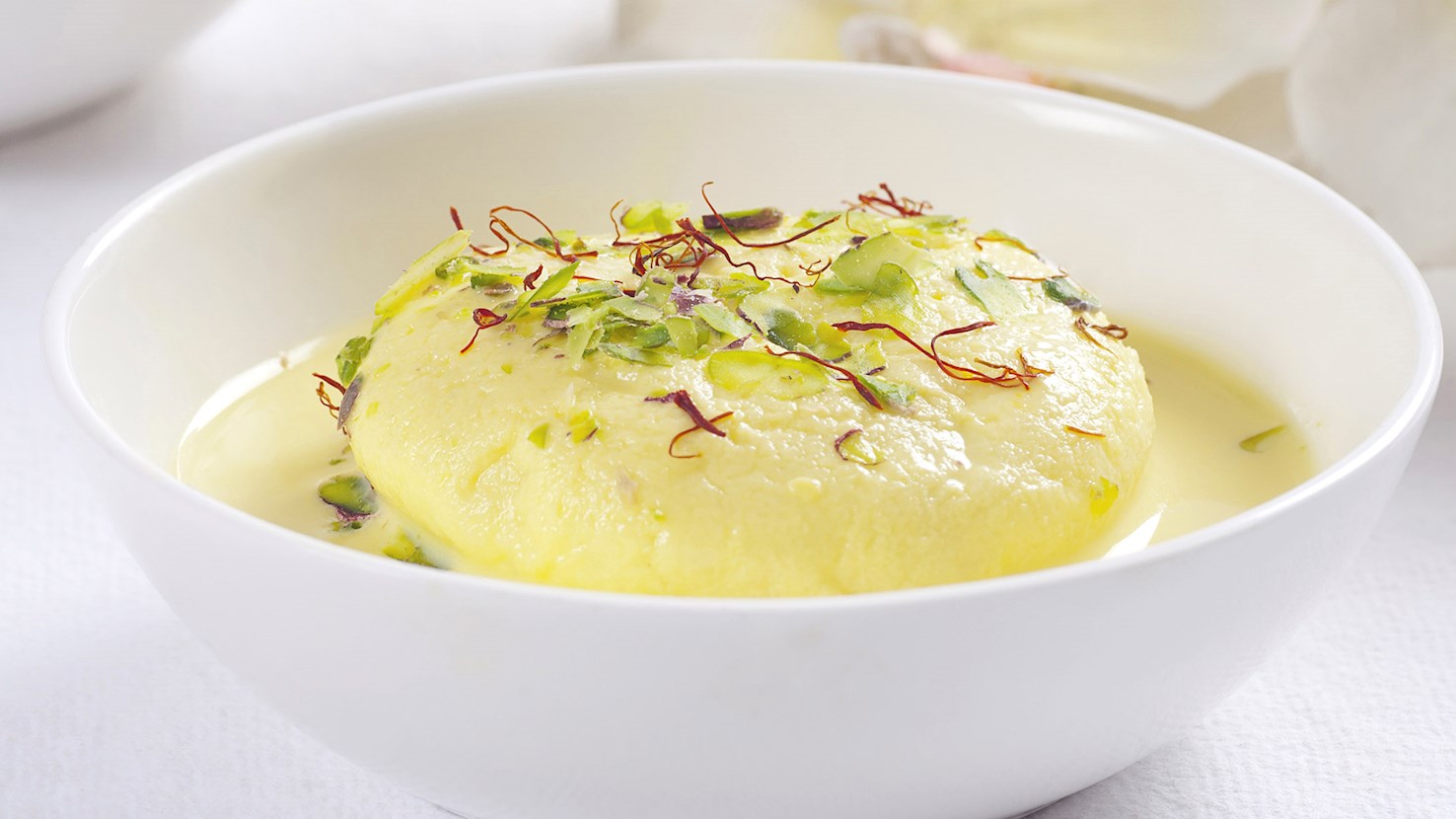
Roshmalai or ras malai is a popular Bengali and Indian dessert consisting of milk, sugar and cardamom-flavored paneer cheese known as chhana. Almonds, cashews, and saffron are often added to the dessert. Roshmalai is of Bengali origin, and is sometimes described as a rich cheesecake without a crust. The name of the dessert is a combination of two Bengali words, rosh, meaning sap, and Hindustani word malai, meaning cream. It is typically served chilled and garnished with cardamom seeds or dried fruits. This delicious dessert is most popular during the festivals such as Holi and Diwali. Spongy, tender, and aromatic, this Bengali classic is usually served at the end of a meal.
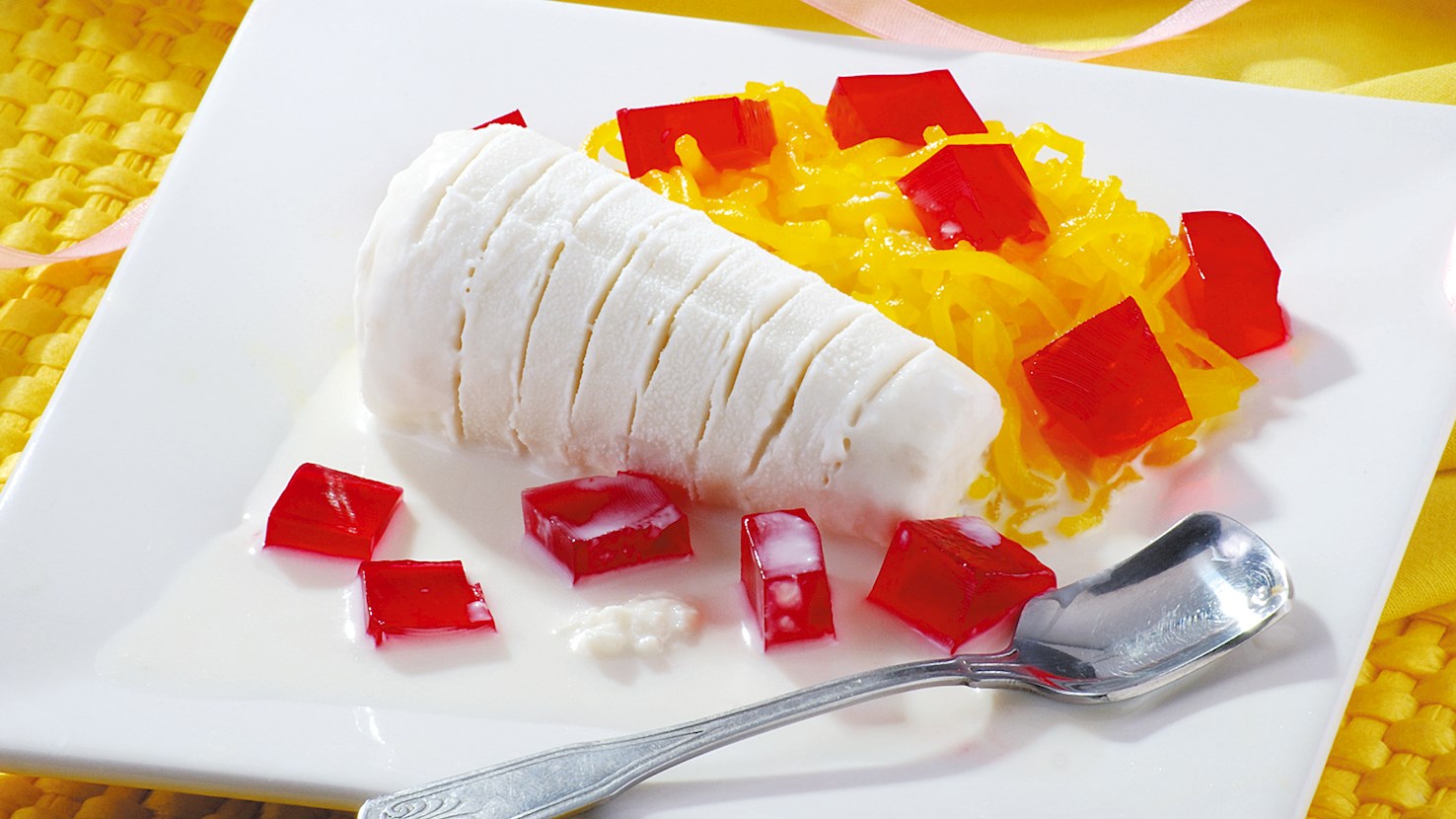
Usually associated with northern Indian regions, this refreshing treat combines thin falooda noodles and kulfi, a traditional Indian ice cream made with slowly simmered whole milk that is flavored with pistachio, rose water, and saffron. The whole dessert is often elevated with various additions such as sweet basil seeds, jelly, or rose water, and it is frequently garnished with crushed nuts. Traditionally enjoyed during the summer, kulfi falooda is commonly prepared at home, but can also be found on the menus of traditional restaurants or at specialized street stalls.
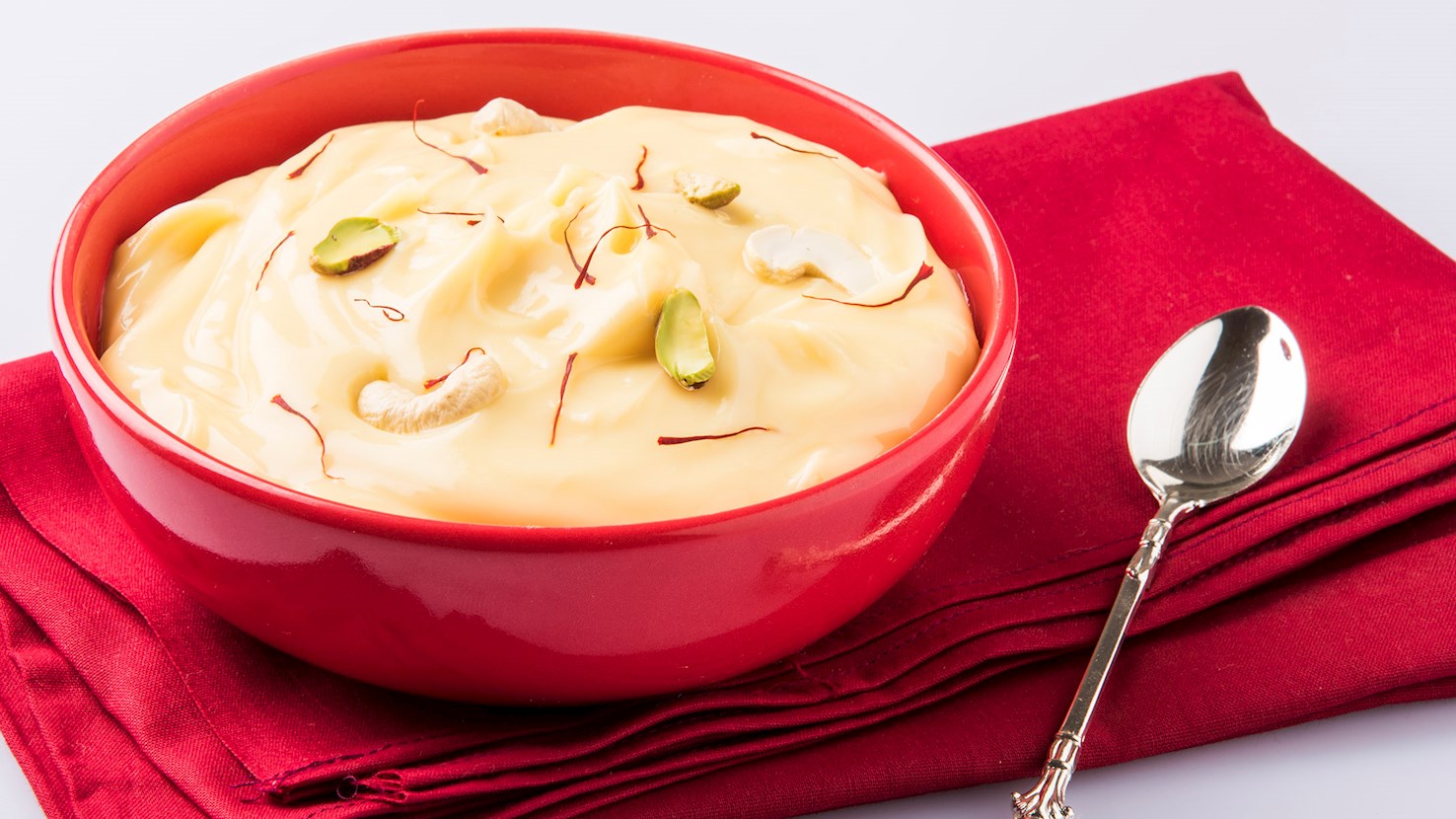
Shrikhand is a popular Indian yogurt-based dessert, combined with sugar and nuts in order to develop a rich, creamy texture and sweet flavor. In North India, it is usually served for breakfast, while in South India, it is commonly served as a dessert after the main dish. Shrikhand is also a festive dish that is made for Janmashtami (the birthday of Lord Krishna) in Maharashtra and Gujarat. There is a popular theory about the origin of shrikhand; it is said that the herdsmen used to hang curd or yogurt overnight so they could carry it more easily while traveling. The next day, they would collect the thick yogurt and combine it with dried fruits, nuts, and sugar to make it more flavorful during their long travels. Nutritious and filling, the dish is also very easy to prepare at home, where it is ofen served for breakfast or as a light dessert after a meal.
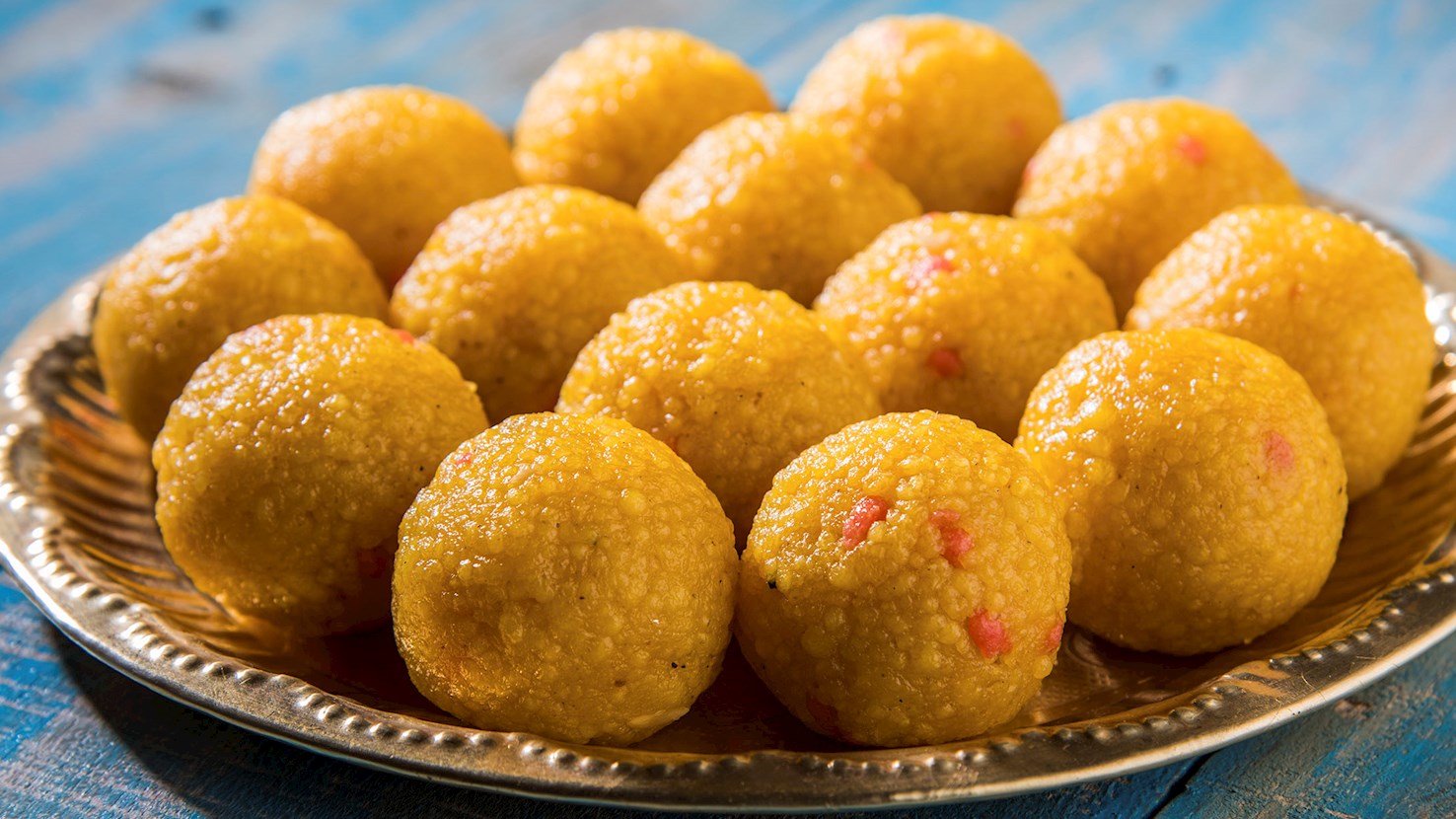
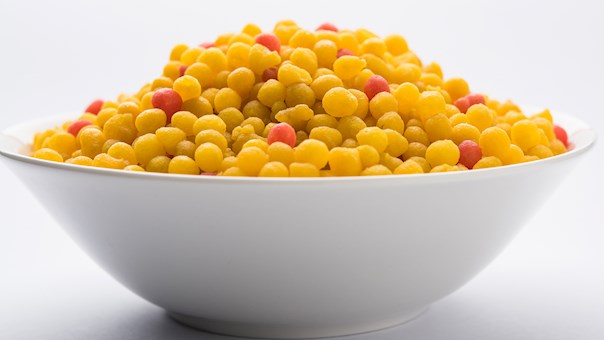
This traditional Indian dessert is made with different types of flour that are mixed with sugar and shortening, then shaped into balls. Like many other dishes in India, laddu appears in numerous varieties and is created with a myriad of different ingredients. Tiny laddu balls can be made with various types of legume flour, most commonly chickpea flour, wheat flour, and even coconut flakes. Dried fruits or nuts are often incorporated to provide sweetness and modify the flavor. This old Indian confectionery was primarily created with flour and jaggery. The introduction of white sugar, spices, and an array of dried fruits led to the creation of more elaborate versions. The original laddu had a long shelf life and was predominately eaten as a snack and often used as a health remedy. Today, it is mostly served on special occasions and brought to temples as an offering to the Gods. Different varieties can be found across the Indian subcontinent, and typically each region has their favorite laddu type. One of the most famous versions in the northern states is boondi laddu, created with gram flour mixture that is dropped into hot oil, collected, mixed with cardamom-flavored sugar syrup, and shaped into balls. Other famous varieties include besan laddu, made with frying gram flour in ghee, rava laddu made with semolina flour and dried fruits, and churma laddu, made with wheat flour and fried in ghee.
TasteAtlas food rankings are based on the ratings of the TasteAtlas audience, with a series of mechanisms that recognize real users and that ignore bot,
nationalist or local patriotic ratings, and give additional value to the ratings of users that the system recognizes as knowledgeable.
For the “Top 64 Indian Desserts” list until October 15, 2026, 2,981 ratings were recorded, of which 1,978 were recognized by the system as legitimate.
TasteAtlas Rankings should not be seen as the final global conclusion about food. Their purpose is to promote excellent local foods,
instill pride in traditional dishes, and arouse curiosity about dishes you haven’t tried.



What People Say