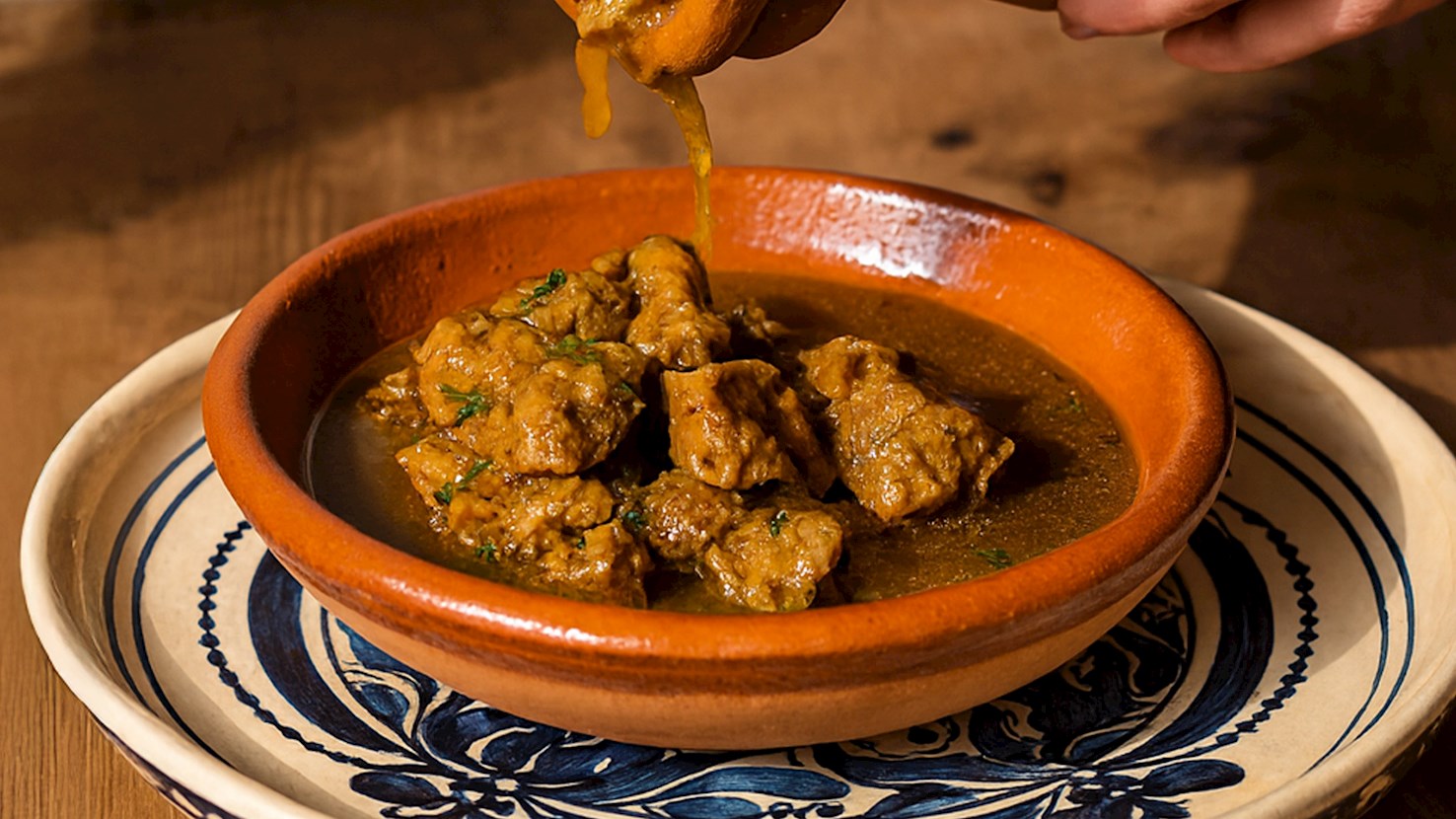
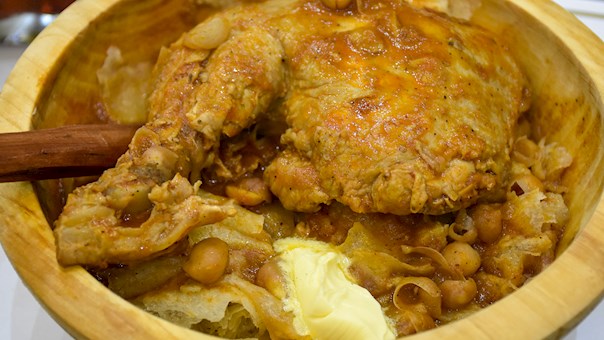
Tanjia is a unique Moroccan specialty made by cooking lamb meat in a clay urn along with flavorings such as saffron, cumin, garlic, lemons, and olive oil. The dish is especially popular in Marrakech, where the urns are filled with all of the ingredients, then placed in the coals of a public bath (hammam) to slowly cook overnight until the meat is so tender that it falls off the bone. Originally, tanjia was created and cooked by men who would go on outdoor picnics.
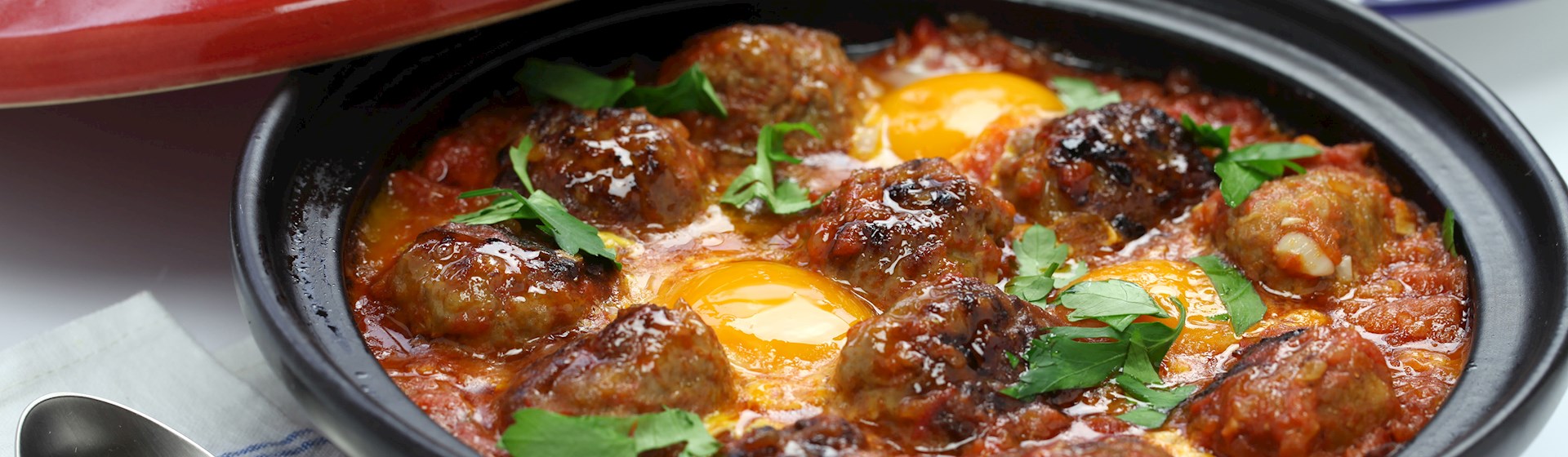
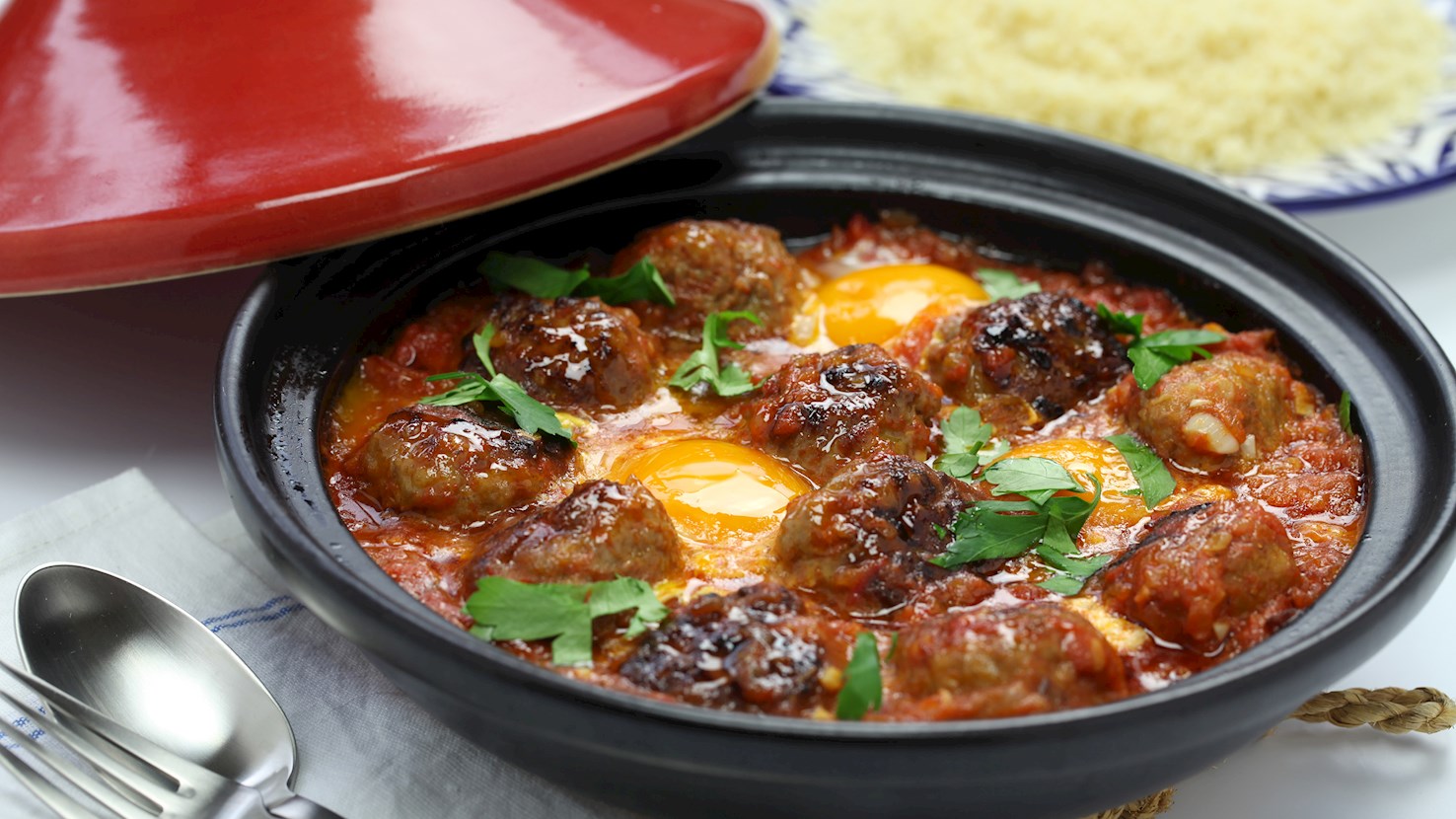
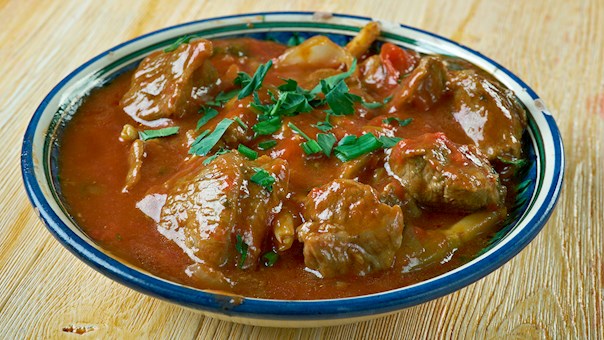
Kefta tagine is a classic Morrocan tagine variety consisting of small meatballs in a homemade tomato sauce, and are prepared in the eponymous conical cooking vessel.
The meatballs are shaped into spheres the size of a cherry tomato, made of ground lamb or beef meat (or a combination of two), and flavored with spices such as paprika, cumin, parsley, coriander, black pepper, and salt, and cooked in a piquant tomato sauce. Sometimes kofta tagine also includes eggs, which are added to the sauce near the end of cooking and cooked until poached.
Kefta tagine is mainly prepared at home and is a communal dish traditionally served straight from the tagine pot, with khobz or some other Moroccan bread used to scoop the tasty stew.
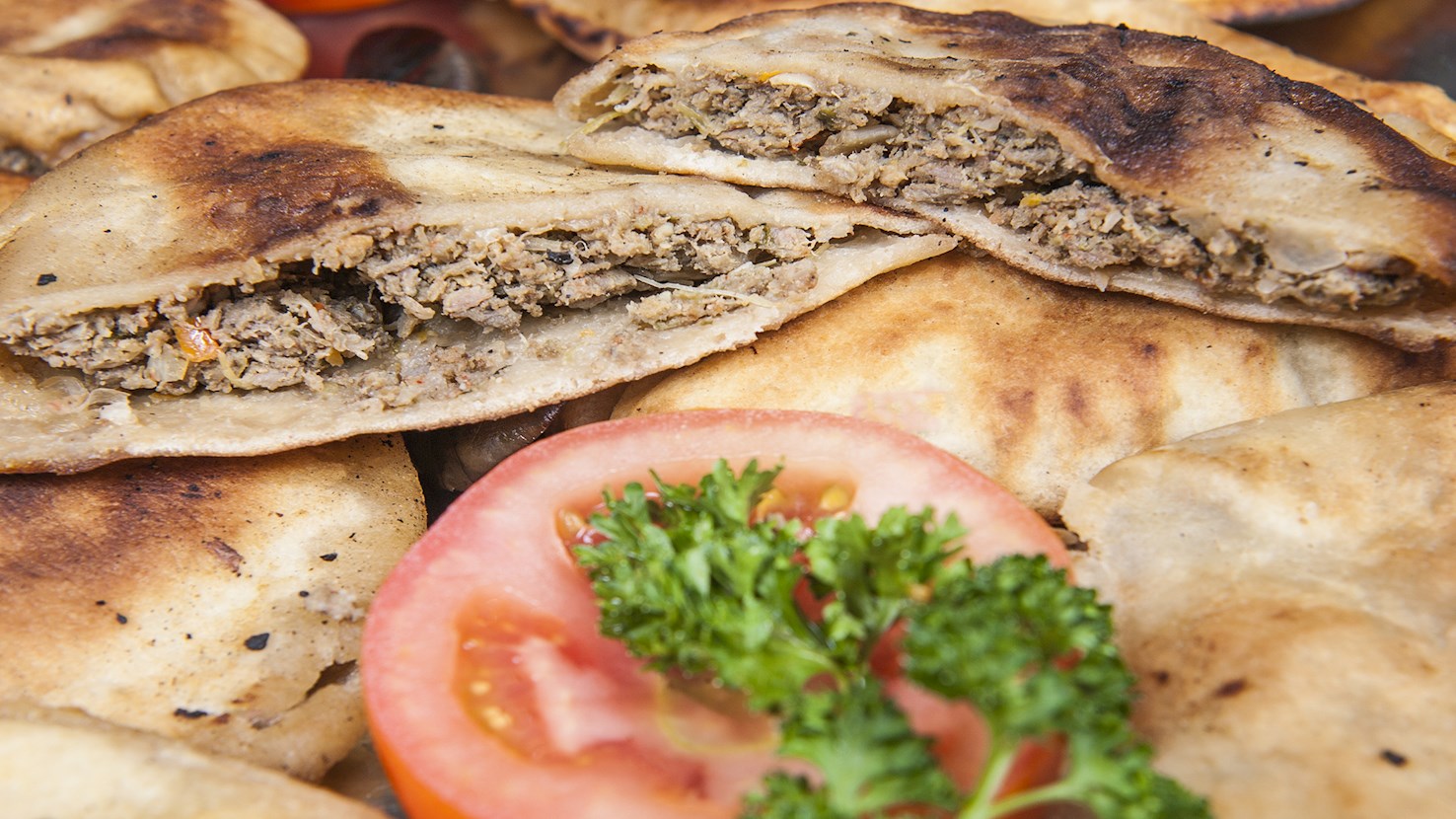
Hawawshi is a popular Egyptian snack consisting of a traditional baladi bread, in appearance similar to the famous pita pockets, stuffed with a flavorful mixture of minced meat, vegetables, and various spices. The generously seasoned meat mixture is placed inside the bread dough and baked until all the flavors combine, the meat is cooked, and the bread achieves a light golden color and a crispy texture. Whether prepared at home or enjoyed in various Egyptian food establishments, hawawshi is usually served alongside fresh vegetables, salads, and various dips.
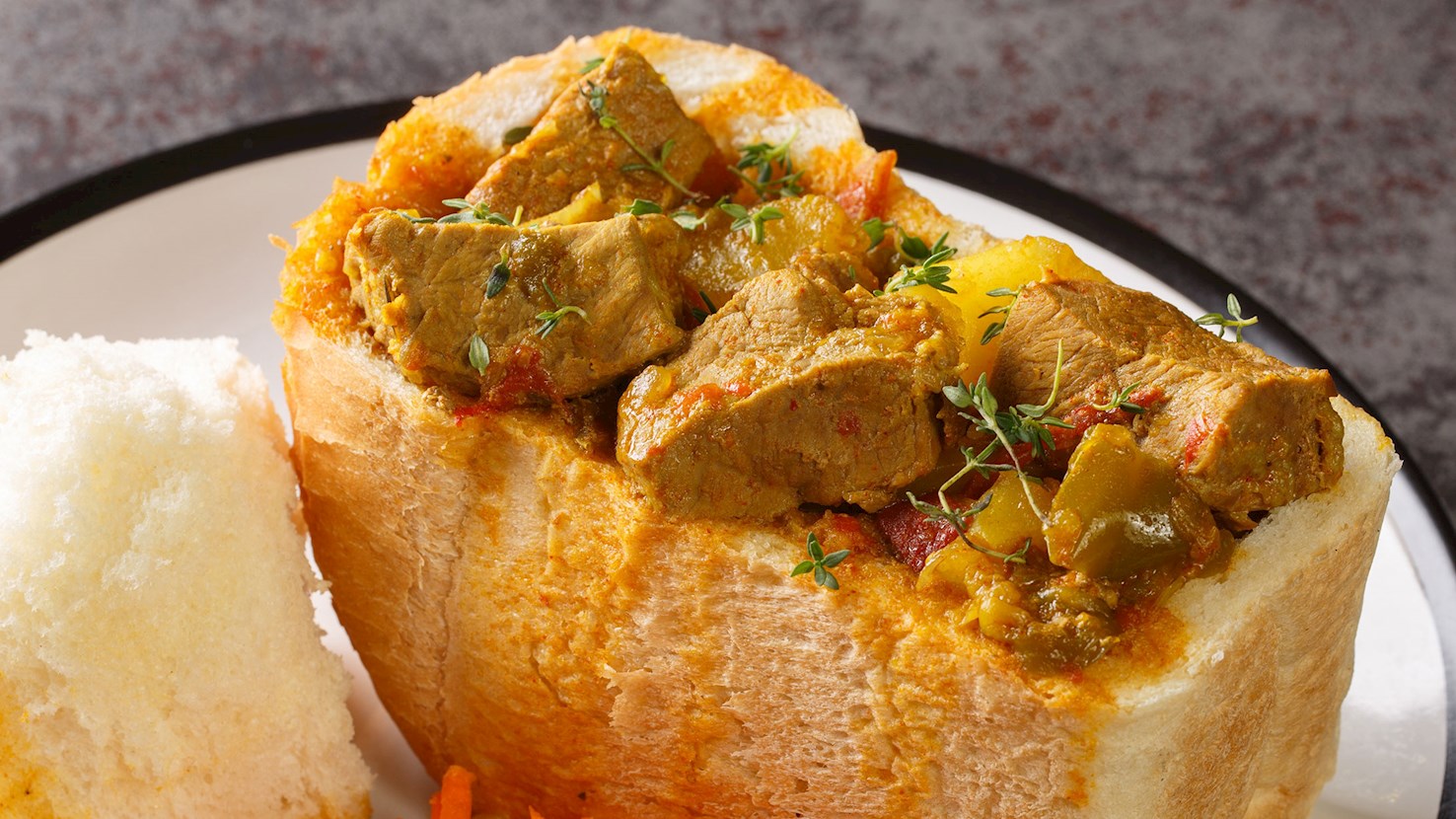
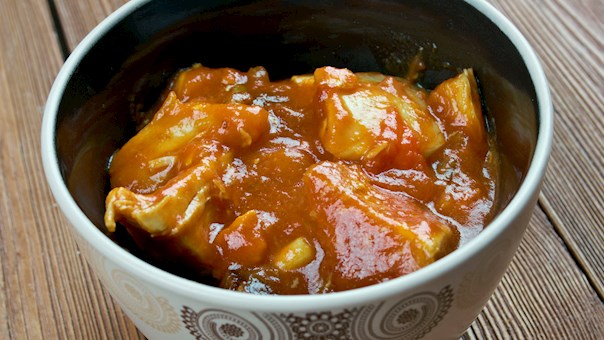
Bunny chow is a substantial fast-food meal made by hollowing out a section of an unsliced white loaf and filling the cavity to the top with hot curry. The bread serves as both container and accompaniment: its soft interior absorbs the gravy, while the surrounding crust holds the filling together long enough for it to be eaten by hand. Bunny chow originated within Durban’s Indian community, most likely during the first half of the twentieth century. The 1940s firmly established it, but no surviving document identifies a single inventor, restaurant, or exact date. Several connect its development with the Grey Street commercial district, plantation workers, golf caddies, factory laborers, and takeaway service during racial segregation. One influential explanation links the meal with Gujarati Bania merchants who operated cafés, grocery shops, and restaurants in Durban. Under this theory, bunny developed from the word Bania, while chow was already used in local English slang for food or eating. The etymology is plausible and widely repeated, but it has never been proved. Other explanations connect the name with buns, bread, or achar, although these are generally considered less convincing. The claim that bunny chow was invented specifically because black factory workers were legally barred from entering Bania restaurants is also difficult to confirm in full. Durban had discriminatory municipal and colonial restrictions long before apartheid became official national policy in 1948, and racial barriers affected where customers could enter, sit, and receive service. One account holds that curry was passed through side doors or back windows in hollowed bread because conventional plates and bowls were impractical for takeaway service. This may have contributed to the format, but it should not be treated as the single documented origin. Another account places the meal among workers who needed a portable lunch for sugar estates, factories, docks, shops, or construction sites. A hollowed loaf was cheap, filling, easy to carry, and required no plate. The bread absorbed curry more effectively than roti, which could soften, tear, and leak during transport. These stories all reflect the meal’s strong working-class roots, even though none can be verified as the sole explanation. Early bunny chows were probably filled mainly with bean curry rather than meat. Broad beans and sugar beans were inexpensive, nourishing, and well suited to long simmering. Meat fillings became increasingly prominent later, with mutton developing into the most celebrated and often most expensive option. The bread must be an unsliced, rectangular white loaf with a soft crumb and a crust strong enough to contain the curry. It is cut vertically into quarters, halves, or occasionally left as a full loaf. A quarter loaf is the standard individual portion, while a half loaf is considerably larger and may be shared. The soft central crumb is pulled out in one substantial piece rather than scraped away completely. Enough bread must remain along the sides and bottom to prevent the gravy from escaping. The removed section is often called the virgin. It is placed over the filled cavity like a lid or served beside the loaf for dipping. The curry must contain enough gravy to soak into the bread but should not be so thin that it immediately destroys the crust. Durban-style curries are usually richly spiced, hot, and cooked until the onions, tomatoes, and potatoes contribute natural thickness. The curry commonly begins with onions fried in oil until soft and browned. Fresh ginger and crushed garlic are added, followed by a spice mixture that may contain turmeric, coriander, cumin, fennel, chili powder, dried chilies, garam masala, or a locally blended curry masala. Whole spices such as cinnamon, cloves, cardamom, star anise, cumin seeds, or bay leaves may also be used. There is no single compulsory spice formula. The spices are briefly fried in hot oil to release their aroma before tomatoes are added. Bone-in mutton, lamb, chicken, beef, beans, lentils, or vegetables then simmer in the seasoned base. Potatoes are especially common because they absorb the curry and release starch as they soften, helping create the thick gravy needed for the bread container. The finished curry is ladled into the hollow loaf while extremely hot. Gravy is added first so that it reaches the bottom and begins soaking into the crumb. Meat, beans, and potatoes follow, with additional gravy poured over the top. The cavity is filled generously, often until the curry rises slightly above the cut edge. The virgin is then placed over or beside it. A beans bunny may contain broad beans, sugar beans, or another dried bean simmered with onions, tomatoes, potatoes, chilies, and spices. Broad beans produce a thick, earthy filling, while sugar beans develop a creamy interior and a reddish-brown gravy. Both remain among the least expensive and most established forms. Mutton bunny chow is widely regarded as the benchmark version. Bone-in mutton is simmered slowly until tender, giving the gravy fat, gelatin, and concentrated meat flavor. Bones can release some marrow when cut or cracked, but marrow is not the only source of the curry’s richness. Potatoes are usually added late enough to retain their shape while still thickening the sauce. A well-filled order should include a fair distribution of meat rather than mainly bones, potatoes, and gravy. Chicken provides a quicker and somewhat lighter filling. Bone-in chicken contributes more flavor, while boneless pieces are easier to eat inside the loaf. Beef, lamb, tripe, trotters with beans, dhal, mixed vegetables, chickpeas, and fish also appear, along with modern versions containing cheese, mince, or other additions. The bread container remains essentially unchanged regardless of the filling. Portion size and filling are often combined into a compact order. A quarter mutton means one-quarter of a loaf filled with mutton curry, while quarter beans indicates the same amount of bread with bean curry. A half mutton or half beans uses half a loaf. Full-loaf versions exist but are unusually large and often intended for sharing. Bunny chow is best eaten soon after filling. Resting for a few minutes allows the gravy to enter the crumb, but a long delay can make the walls excessively soft and cause the loaf to split. Earlier takeaway versions were often wrapped in newspaper, while modern shops usually use cardboard boxes or other containers that support the bread and retain heat. Eating it by hand is typical, although using a fork or spoon is not forbidden. The virgin is torn into pieces first and dipped into the curry. As the level of the filling drops, sections of the gravy-soaked inner walls are pulled away and used to scoop up meat, beans, potatoes, and sauce. The firmer outer crust is eaten last. The bread must be handled carefully as it softens. Metal utensils do not automatically cause the structure to collapse, but vigorous cutting can puncture the soaked base or split the side walls. Tearing the bread gradually from the top downward keeps the remaining section intact and allows the curry to stay contained. Bunny chow is frequently accompanied by sambal, a sharp raw salad that cuts through the fat and chili heat of the curry. One common version combines grated carrot, sliced onion, chopped green chilies, salt, and white vinegar. Tomato, cucumber, cabbage, coriander leaves, lemon juice, or sugar may also be added. The exact mixture varies from one shop to another. Mango pickle, lime pickle, mixed vegetable achar, or other sour condiments may be served alongside the sambal. These additions provide acidity, salt, and crunch against the soft bread and dense gravy, although a well-made bunny can also be served without any side.
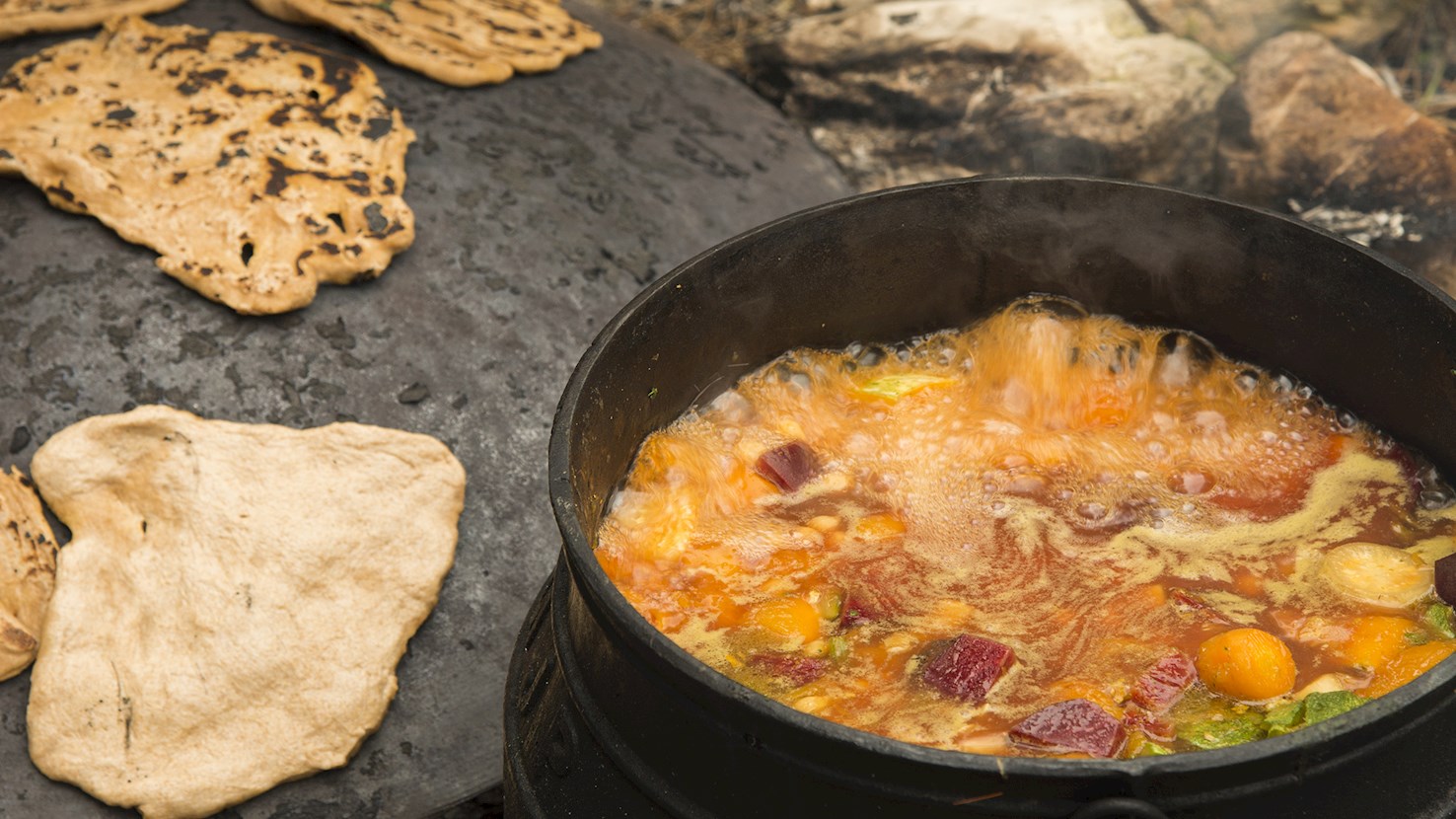
Potjiekos is a slowly simmered, layered stew made in a round, three-legged cast-iron pot called a potjie, usually over wood or charcoal. Meat forms the lower layer, firm vegetables sit above it, and softer ingredients are added near the top. The tightly covered pot remains over gentle heat until the meat becomes tender and the vegetables absorb the concentrated juices without losing their individual shapes. The Afrikaans name combines potjie, meaning “small pot,” with kos, meaning “food.” Despite the diminutive name, potjie pots range from compact vessels for a few servings to very large models used for gatherings. The rounded body, short legs, bail handle, and fitted lid distinguish the vessel from a flat-bottomed Dutch oven. Cast-iron pots reached the Cape through European settlement and maritime trade. Early households used heavy iron vessels over hearth fires. These portable three-legged pots later became closely associated with the Voortrekkers, who moved inland during the Great Trek of the 1830s and 1840s. The durable pot could stand directly over coals, tolerate repeated travel, and handle meat, grains, vegetables, bread, and other foods in a single vessel. However, Potjiekos cannot be attributed solely to the Voortrekkers or to one seventeenth-century recipe. The vessel was European in origin, but the food made in it developed through contact among Afrikaner, Cape Malay, indigenous African, and other southern African culinary cultures. Seasonings, available vegetables, livestock, wild game, and regional methods all helped shape the many forms now grouped under the same name. During inland travel, hunted game such as antelope, hare, guinea fowl, warthog, and wild pig could be simmered with whatever vegetables or roots were available. Bones were commonly left in the pot because they added flavor, gelatin, and body. The romantic account of one perpetual stew being renewed each day is repeated frequently. The pot retains heat effectively, creates a deep lower zone for meat and liquid, and leaves a narrower upper area where vegetables can soften in steam. Natural convection occurs in the hot liquid, but the shape does not continuously baste every ingredient without any other movement. Much of the upper layer is softened by trapped steam and moisture released from the vegetables themselves. A potjie is heated over a small wood or charcoal fire. Glowing coals provide the easiest control, but the vessel does not have to remain completely untouched by flame. The essential requirement is restrained, steady heat. A fierce fire can scorch the meat and sauce at the bottom long before the upper vegetables soften. The empty pot is warmed gradually before adding a small quantity of sunflower oil, rendered animal fat, butter, or another frying fat. Tough, bone-in meat is browned first. Lamb neck, mutton, oxtail, beef shin, short ribs, game, pork, and goat are particularly suitable because slow heating softens their connective tissue and enriches the liquid with gelatin. The meat does not need to be browned before it is fully cooked. Its surface is seared in batches so that it develops color without crowding the bottom of the pot. Chopped onions usually follow, along with garlic, ginger, leeks, or other aromatics. The onions soften in the fat and loosen the browned residue left by the meat. A modest amount of liquid is then added. Beef, lamb, chicken, or vegetable stock can be used alone, while dry red wine, beer, stout, sherry, cider, or dessert wine may provide further depth. The liquid loosens the browned material from the iron and begins forming the sauce. It should not fill the pot like a soup, since meat and vegetables release additional moisture during the long simmer. Beer and wine are common options rather than defining ingredients. Once the meat has begun simmering, the vegetables are added according to the time they need to soften. Potatoes, carrots, turnips, sweet potatoes, pumpkin, and other firm vegetables form the lower tiers. Green beans, corn, cabbage, cauliflower, and similar ingredients follow. Mushrooms, zucchini, peas, spinach, and other delicate vegetables belong near the top or are added later. Layering protects the softer ingredients from direct contact with the hottest liquid at the bottom. The meat braises in the sauce, firm roots simmer partly in the liquid, and the upper vegetables soften mainly in steam. This produces a different structure from a uniformly mixed stew. Once the layers are arranged and the lid is closed, stirring is usually avoided until serving. Moving a spoon repeatedly through the pot would break potatoes, squash, mushrooms, and other tender ingredients and combine the layers into a more uniform mixture. However, the rule is not absolute. The meat and onions are often moved during browning, and the finished contents may be folded together gently before serving. The lid should remain closed as much as possible because each opening releases heat and steam. A quiet, steady bubbling sound indicates suitable heat. Vigorous boiling can burn the bottom, toughen the meat, reduce the sauce too quickly, and damage the vegetables. A meat potjie may take between two and six hours, depending on the protein, the size of the pieces, and the strength of the fire. Oxtail and mature game require the longest time, while lamb neck, beef shin, and pork generally soften sooner. Chicken and seafood need considerably less time. Three to four hours is common for a substantial beef, lamb, or oxtail version, but no fixed duration applies to every pot. Seasonings vary widely. Salt, black pepper, coriander, bay leaves, garlic, and thyme are common. Curry powder, turmeric, cumin, cloves, allspice, cinnamon, chilies, chutney, Worcestershire sauce, tomato paste, and fruit may also appear. Cape Malay influence is especially visible in versions combining poultry or lamb with curry spices, dried fruit, and gentle sweetness. Potjiekos has no single compulsory spice mixture. A seafood potjie replaces long-cooked red meat with firm fish, mussels, prawns, crab, or calamari. The aromatic base and firm vegetables are usually softened first because the seafood needs only a short final simmer. Firm fish is added in large pieces so it does not disintegrate, mussels remain in their shells, and calamari is heated briefly or simmered long enough to become tender. Most seafood versions are completed in well under an hour once the sauce is ready. White wine, fish stock, tomato, garlic, cream, coconut milk, lemon, and herbs are common liquid and flavor components. Seafood should not be subjected to the three-to-six-hour timetable used for oxtail or game, since prawns, mussels, fish, and calamari can become dry or rubbery. A chicken potjie uses thighs, drumsticks, or jointed chicken, which remain moister than lean breast during simmering. Curried versions may include onions, garlic, ginger, turmeric, yellow curry powder, cinnamon, cardamom, apricots, peaches, raisins, or chutney. Sweet dried fruit against warm spices reflects the broader Cape Malay influence on Cape cooking, although apricots and curry powder are not required in every chicken version. Chicken needs less time than tough red meat. It may be browned first, simmered briefly with the sauce, and then covered with potatoes, carrots, and softer vegetables. Excessive heating causes the meat to leave the bones and lose its texture. A vegetarian potjie omits meat and animal stock but keeps the layered method. Large pieces of butternut squash, eggplant, potatoes, sweet potatoes, carrots, zucchini, corn, cabbage, beans, lentils, chickpeas, and whole button mushrooms can provide varied textures. Tomato paste and vegetable stock create a savory liquid base, while mushrooms, legumes, soy sauce, miso, nutritional yeast, or browned onions can deepen the flavor. The firmest vegetables still belong near the bottom, while eggplant, mushrooms, and zucchini are added above them or later in the simmer. Beans, chickpeas, or lentils make the meal more substantial, but they should be fully or partly softened beforehand unless enough liquid and time are available inside the pot. Rice, pasta, dumplings, or bread dough may sometimes be incorporated, although these require careful control because they absorb liquid rapidly. More commonly, the starch is served separately. Potjiekos should have a concentrated sauce or broth around the meat rather than an excessive volume of thin liquid. The finished pot is often brought from the fire to the center of an outdoor table, although the cast iron remains dangerously hot and must stand on a heat-resistant surface. Removing the lid releases accumulated steam and reveals the separate layers of meat and vegetables. A long metal spoon is guided down the inside wall to the bottom and lifted upward, collecting meat, root vegetables, softer upper ingredients, and sauce in one serving. This preserves a cross-section of the layers instead of taking all the vegetables from the top before reaching the meat underneath. Potjiekos is commonly served over plain white rice, pap or mieliepap (maize-meal porridge), or another form of crushed or ground maize. Crusty bread, potbrood, roosterkoek, mashed potatoes, samp, and polenta-like maize accompaniments can also absorb the concentrated broth. Rice, pap, and bread are especially useful when the pot contains little potato or another internal starch.
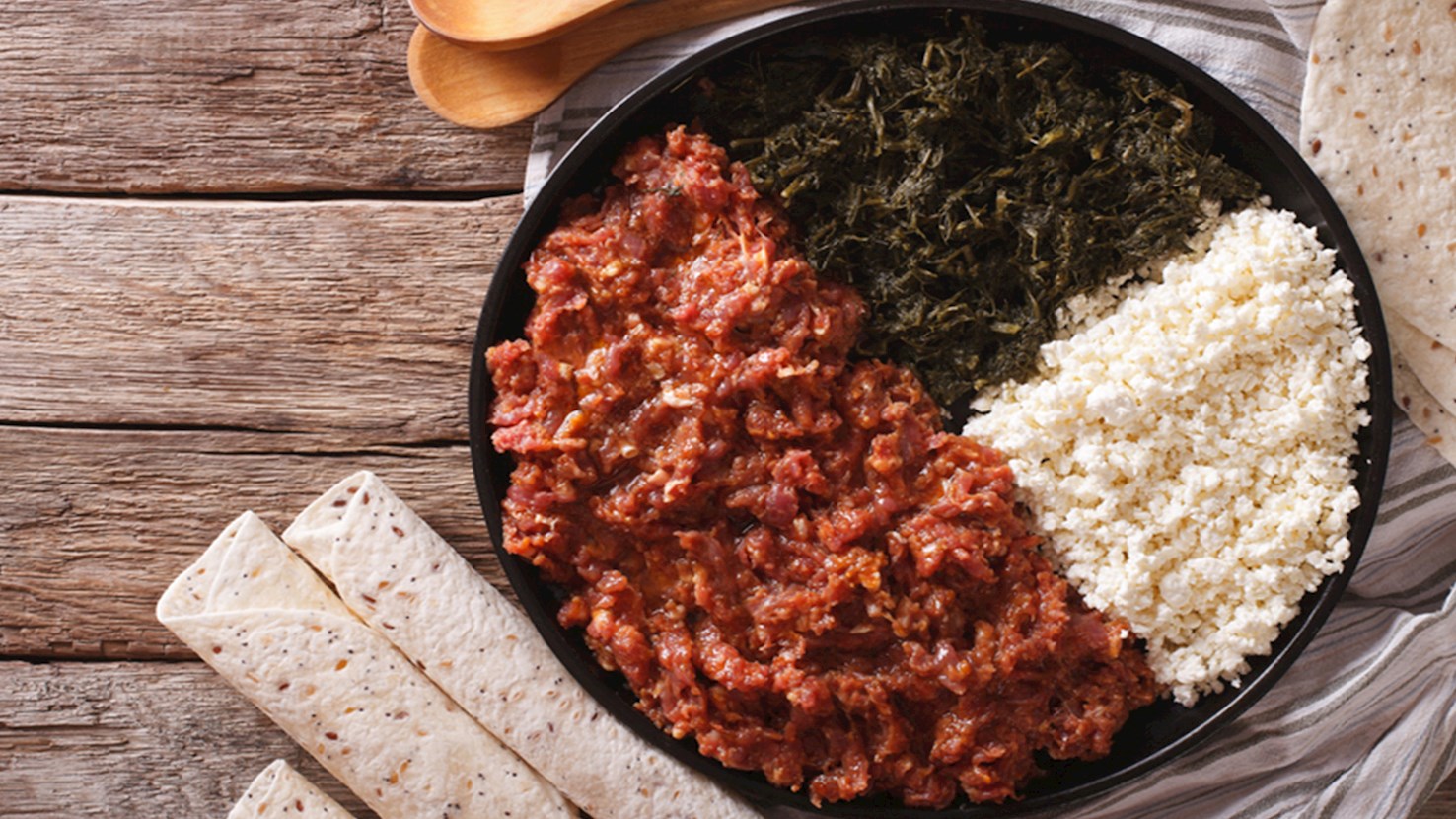
Kitfo is a popular Ethiopian dish consisting of raw beef that is freshly ground and combined with Ethiopian butter (niter kibbeh) and spices such as Cayenne pepper and cardamom. The dish is served with a variety of breads, with injera being a staple of every restaurant that serves kitfo. Although kitfo is usually served on its own, it can also be accompanied by salty cheeses or collard greens.
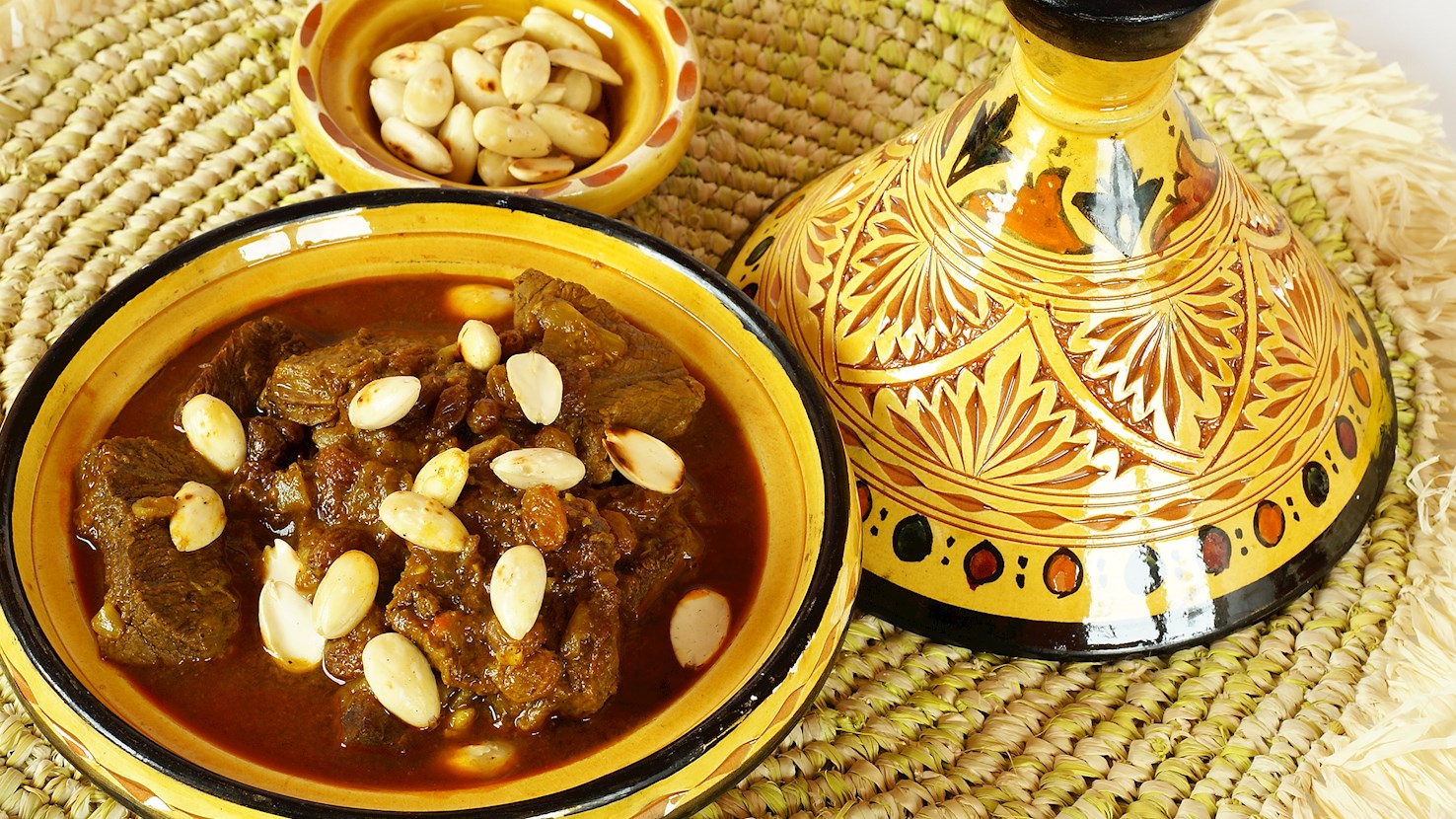
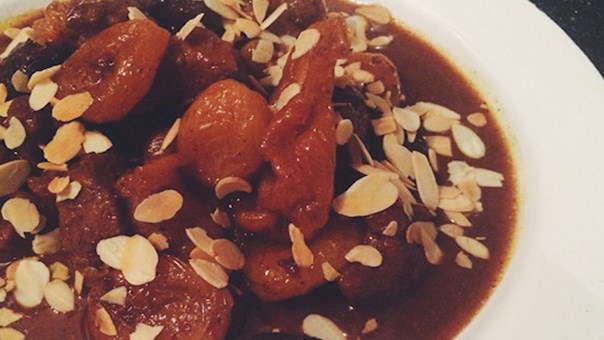
Mrouzia is one of the most loved sweet-and-savory Moroccan dishes, consisting of a tagine with lamb, honey, almonds, raisins, and ras el hanout spices. The dish is traditionally reserved for festivities, celebrations, holidays, and similar large gatherings. This tagine is one of the most popular dishes during the Muslim festival of Eid al-Adha. It is recommended to garnish the dish with a generous sprinkling of sesame seeds.
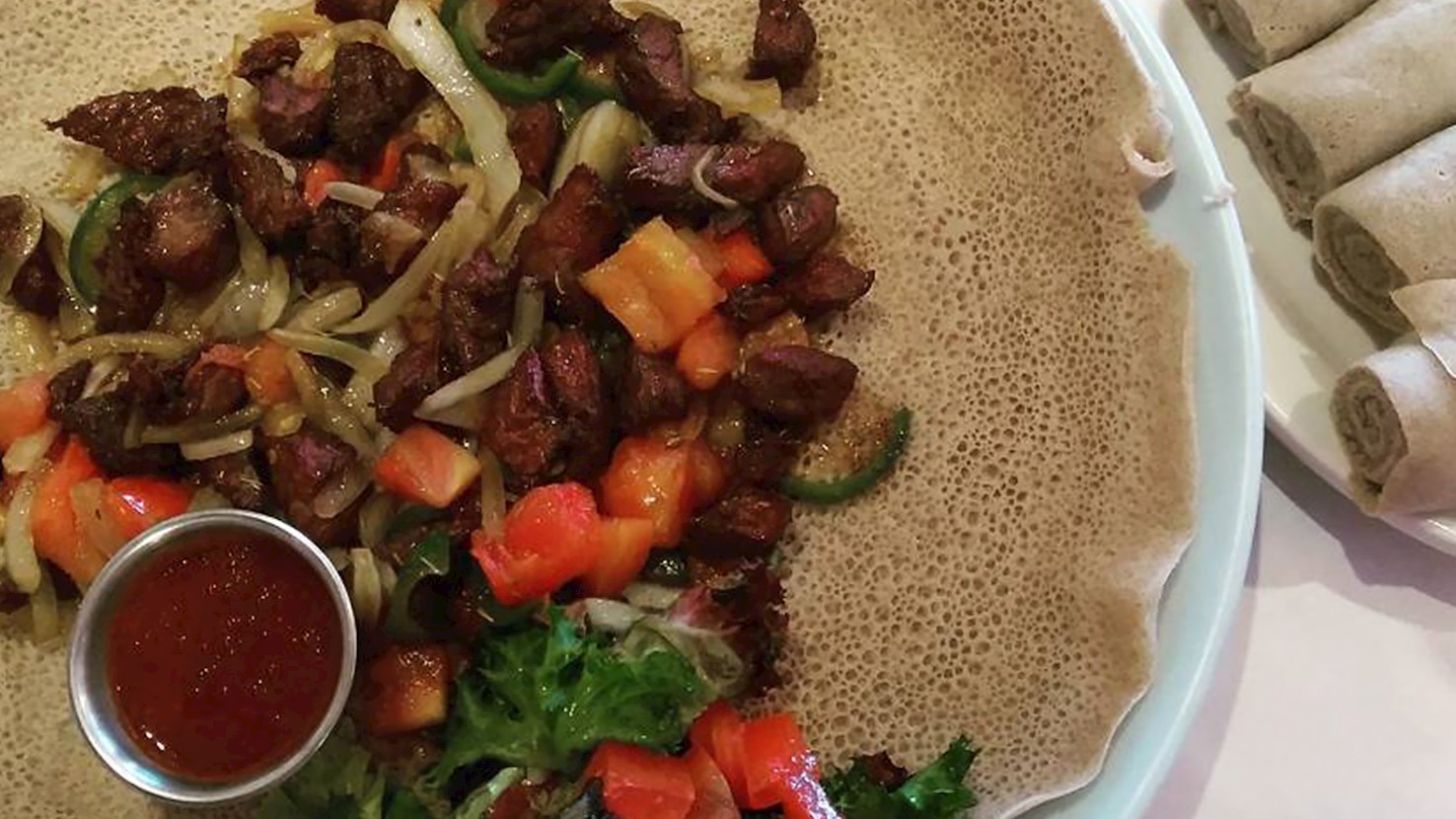
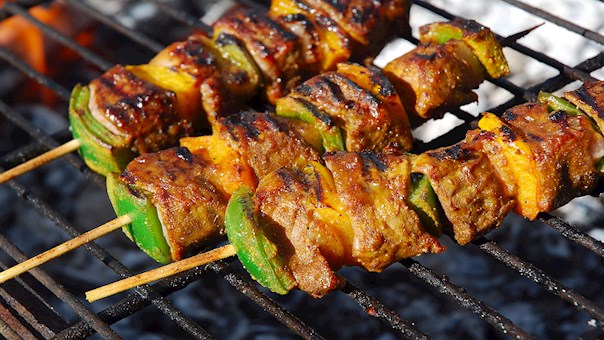
This Ethiopian tibs variation is made with chunks or strips of meat (either lamb, beef, or goat) that are cooked in a pan with butter, spices, onions, and peppers. The meat is seared until some of the pieces become crunchy. The dish is traditionally served in a hot earthenware dish with coals on the bottom, which keep the meat hot. Derek tibs is often garnished with a few fresh rosemary sticks on top, and it is usually served with awaze sauce and injera bread on the side.
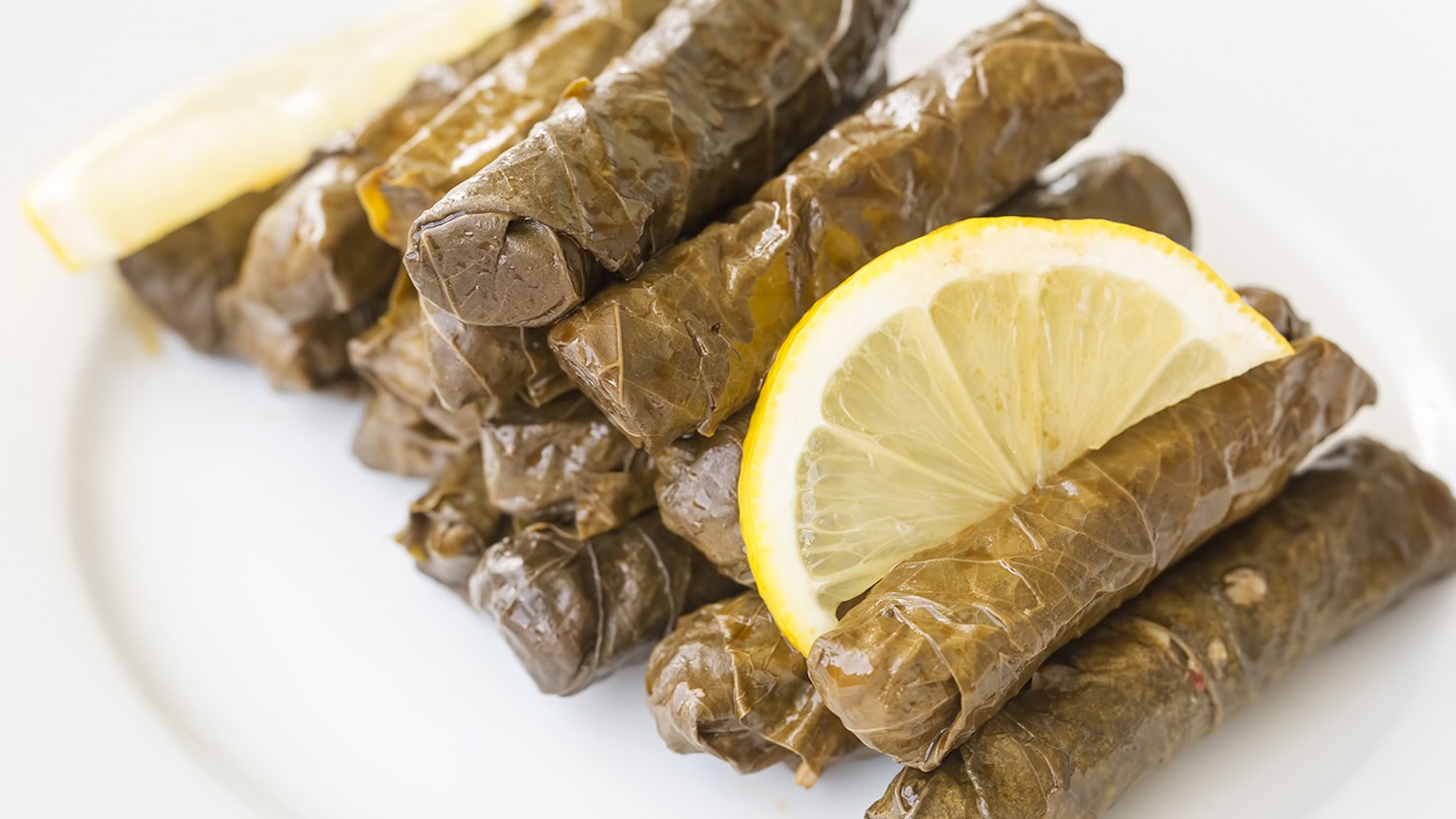
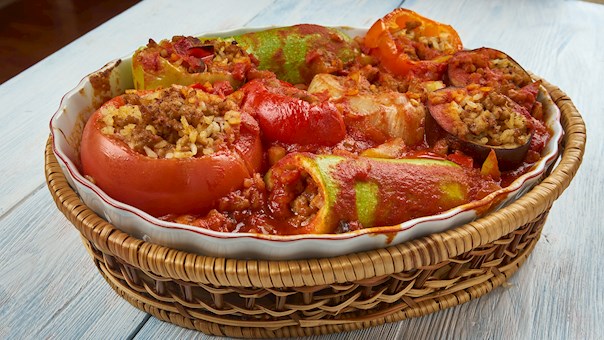
Warak enab is a dish of stuffed grape leaves prepared across the eastern Mediterranean and Middle East, especially in Lebanon, Syria, Jordan, and Palestine, consisting of tender vine leaves wrapped around a filling of rice, and in many versions minced meat, then gently cooked in a lightly acidic liquid. Its development is tied to long-established viticulture in the Mediterranean basin, where grape leaves were readily available alongside grapes and wine production, and where cooking practices evolved to make use of seasonal leaves by blanching and preserving them for later use, with references to stuffed leaves appearing in Byzantine and early Arabic culinary records that describe similar techniques applied to vegetables and leaves across the region. Preparation involves blanching fresh or preserved grape leaves to soften them, placing a small amount of filling made from short-grain rice, minced lamb or beef if used, salt, and mild spices near the base of each leaf, rolling them tightly into compact cylinders, and arranging them snugly in a pot layered to prevent movement during cooking, after which they are simmered slowly in water or stock with lemon juice until the rice is fully cooked and the leaves tender but intact. Warak enab is served warm or at room temperature, often drizzled lightly with olive oil and presented neatly arranged to emphasize uniformity rather than volume. A defining characteristic of warak enab is the balance between acidity from lemon and the neutral absorbent quality of rice, which allows the grape leaf itself to remain the dominant flavor rather than the filling. It is eaten in homes, restaurants, and social gatherings as part of shared meals, commonly alongside yogurt, grilled meats, or other vegetable dishes, and it pairs well with water, unsweetened black or mint tea, arak diluted with water, or dry white wines, fitting naturally into tables where multiple dishes are eaten slowly and in combination rather than in isolated courses.
Gomen be siga is a traditional dish that consists of sautéed collard greens (gomen) and chunks of beef (siga) as the key ingredients, made with addition of fresh ingredients like clarified spiced butter, and lots of onions and garlic for flavor. Like most Ethiopian dishes, gomen be siga is traditionally paired with injera flatbread. For a spicy kick, the dish can be consumed with awaze chili sauce.
TasteAtlas food rankings are based on the ratings of the TasteAtlas audience, with a series of mechanisms that recognize real users and that ignore bot,
nationalist or local patriotic ratings, and give additional value to the ratings of users that the system recognizes as knowledgeable.
For the “Top 70 African Meat Dishes” list until August 15, 2026, 2,889 ratings were recorded, of which 771 were recognized by the system as legitimate.
TasteAtlas Rankings should not be seen as the final global conclusion about food. Their purpose is to promote excellent local foods,
instill pride in traditional dishes, and arouse curiosity about dishes you haven’t tried.






What People Say