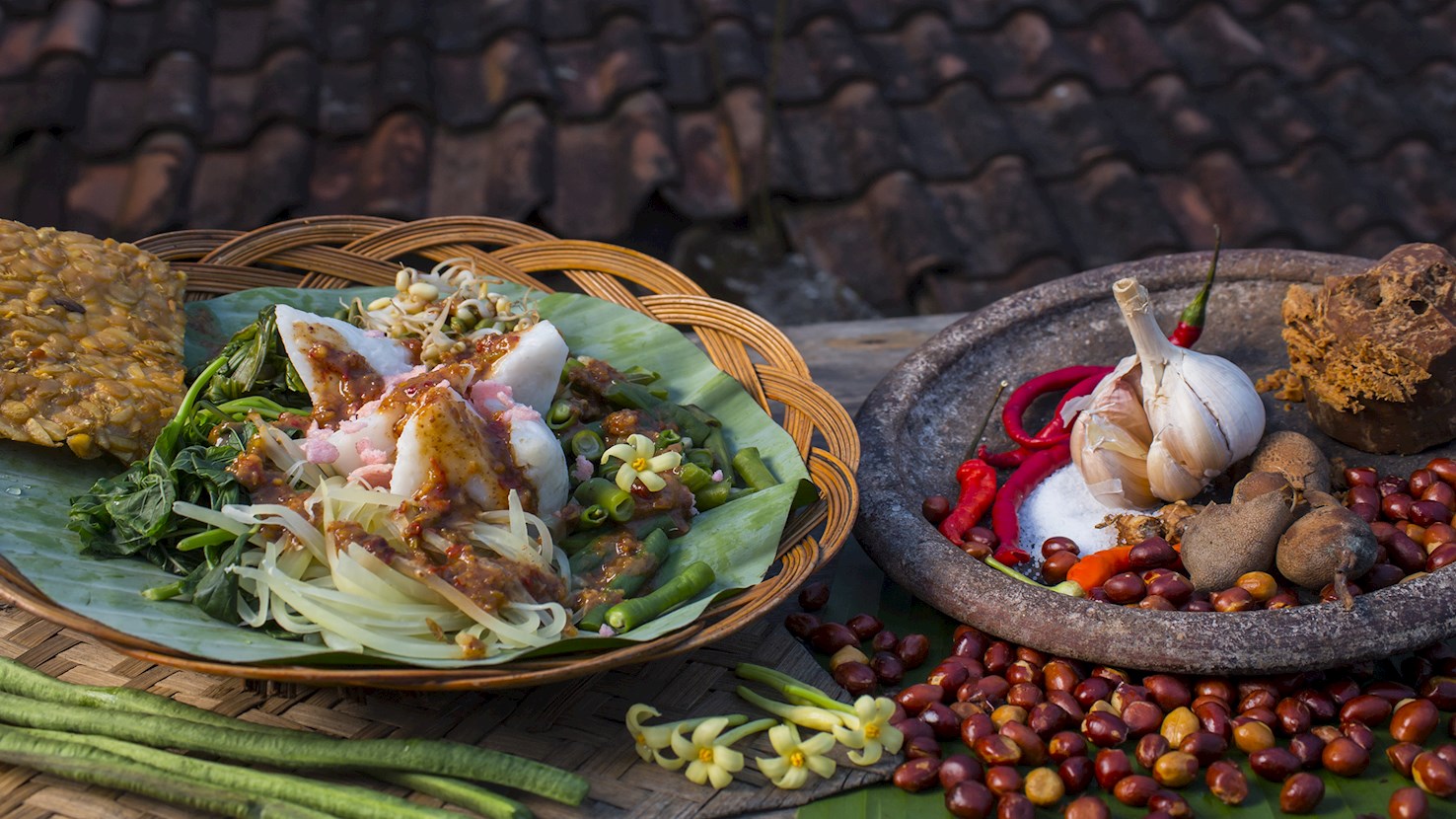
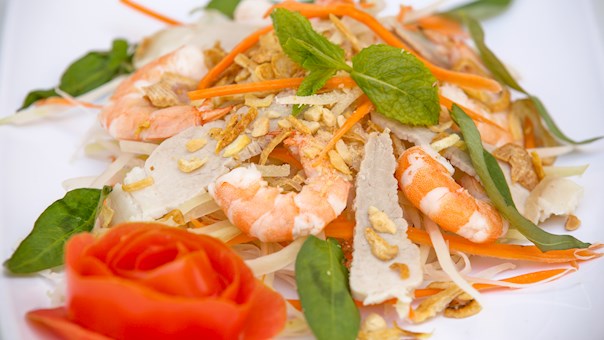
Indonesian pecel may refer to a fragrant peanut sauce or a combination of the sauce and various vegetables, when it is commonly referred to as a salad. The base of the sauce is prepared with roasted peanuts and spices that typically include chili peppers, palm sugar, garlic, tamarind juice, shrimp paste, kaffir lime leaves, salt, and kencur, an aromatic ginger variety. Usually associated with Java, the sauce is characterized by its distinctive combination of sweet and spicy flavors. When served with rice, the dish goes under the name nasi pecel.
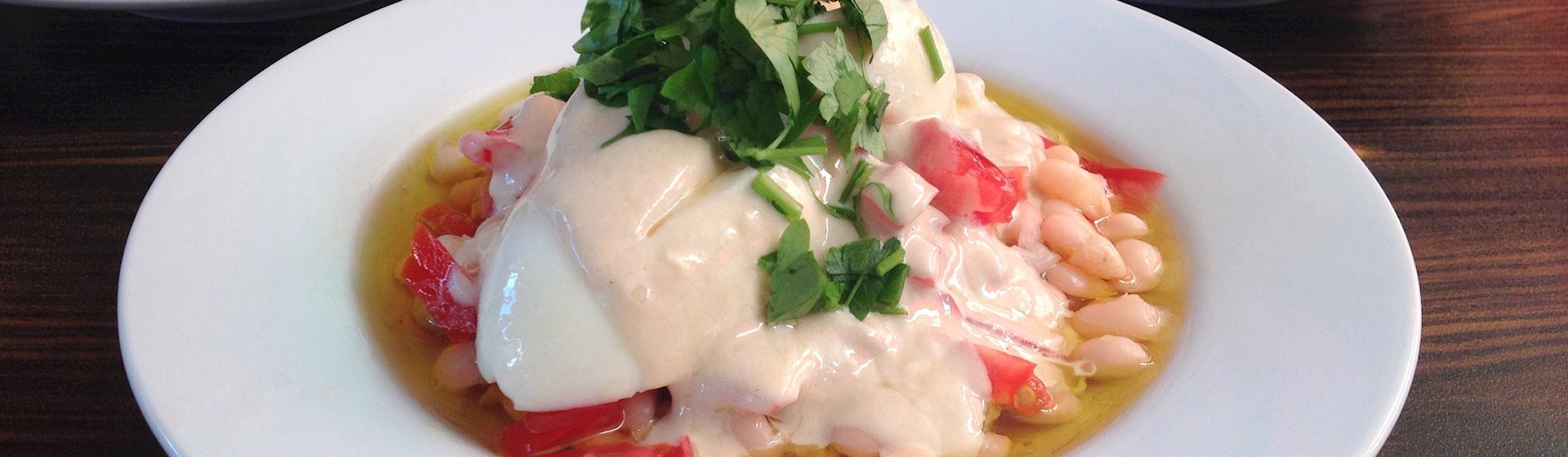
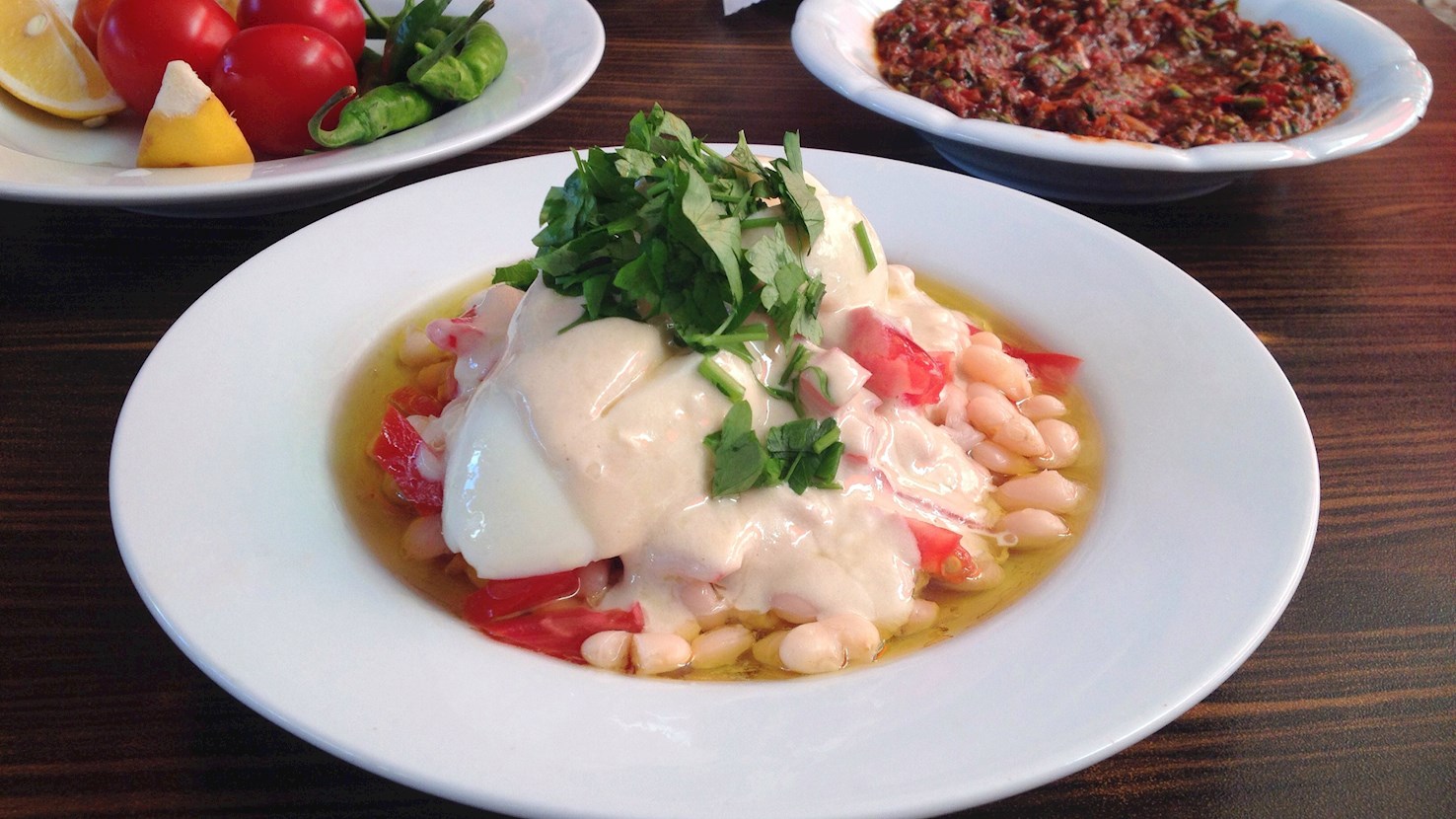
Piyaz is a traditional salad. In most of the country, it's a general term for a dish of dried beans, parsley, onions, and sumac. In Antalya, however, piyaz also contains a rich and smooth sauce consisting of tahini, lemon juice, and vinegar. The beans are topped with the sauce, and the dish is usually dressed with chopped tomatoes, sliced onions, hard-boiled eggs, olive oil, and parsley. Piyaz is often eaten as an accompaniment to köfte and similar grilled meats, but it can also be included in a meze selection.
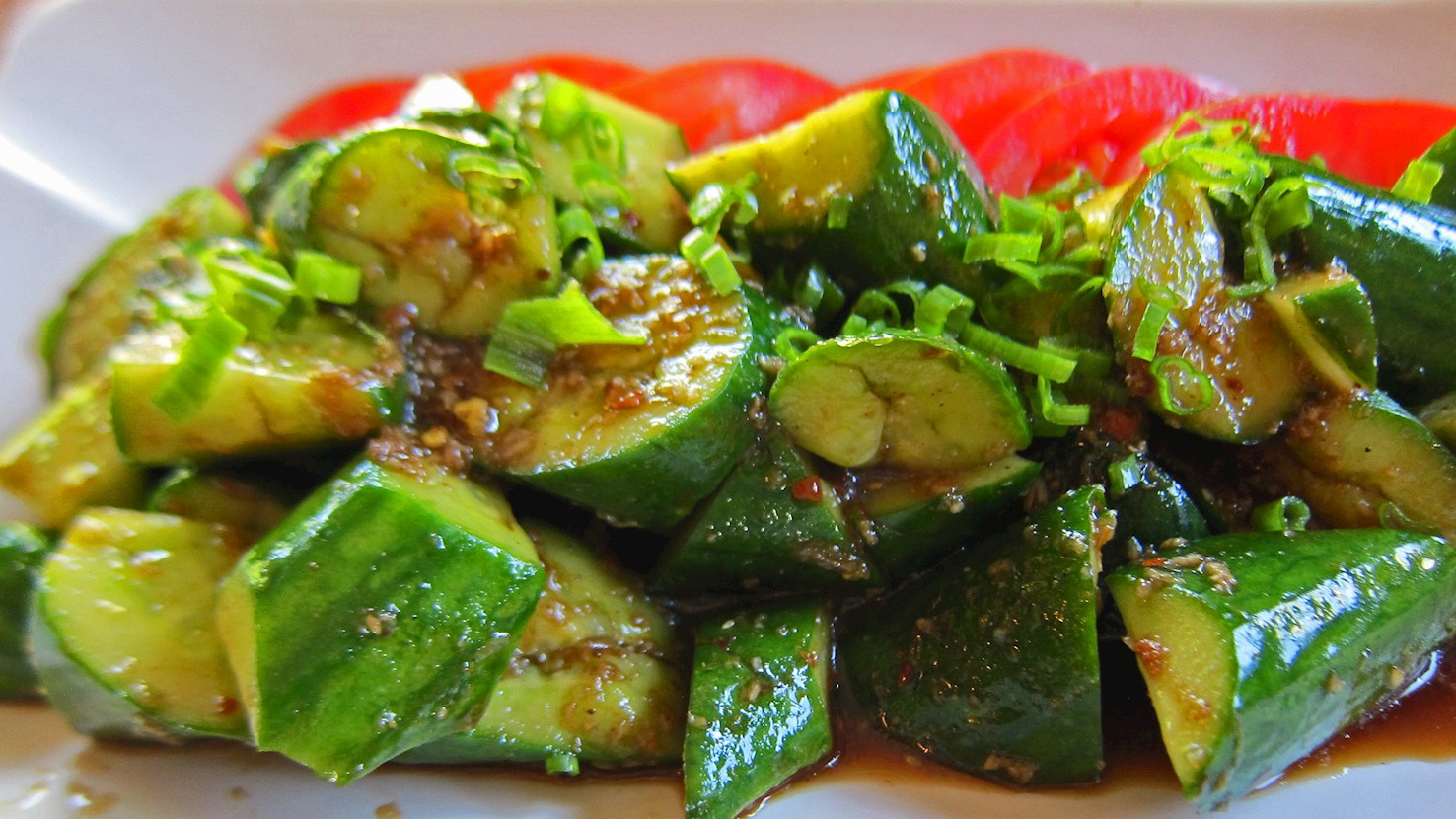
Smacked cucumber is a traditional Asian dish that’s especially popular in Tibet as a snack for picnicking. The dish is usually made with a combination of cucumbers, garlic, sesame oil, black vinegar, and soy sauce. The cucumber is peeled and smacked with a rolling pin so that it’s bruised and starting to break apart. It’s sliced into chunks and mixed with the rest of the ingredients. The ingredients are tossed well and then served on a large plate. The cucumber is smacked because it will absorb the flavors of garlic, oil, vinegar, and soy sauce even better and it will have a more intense flavor.
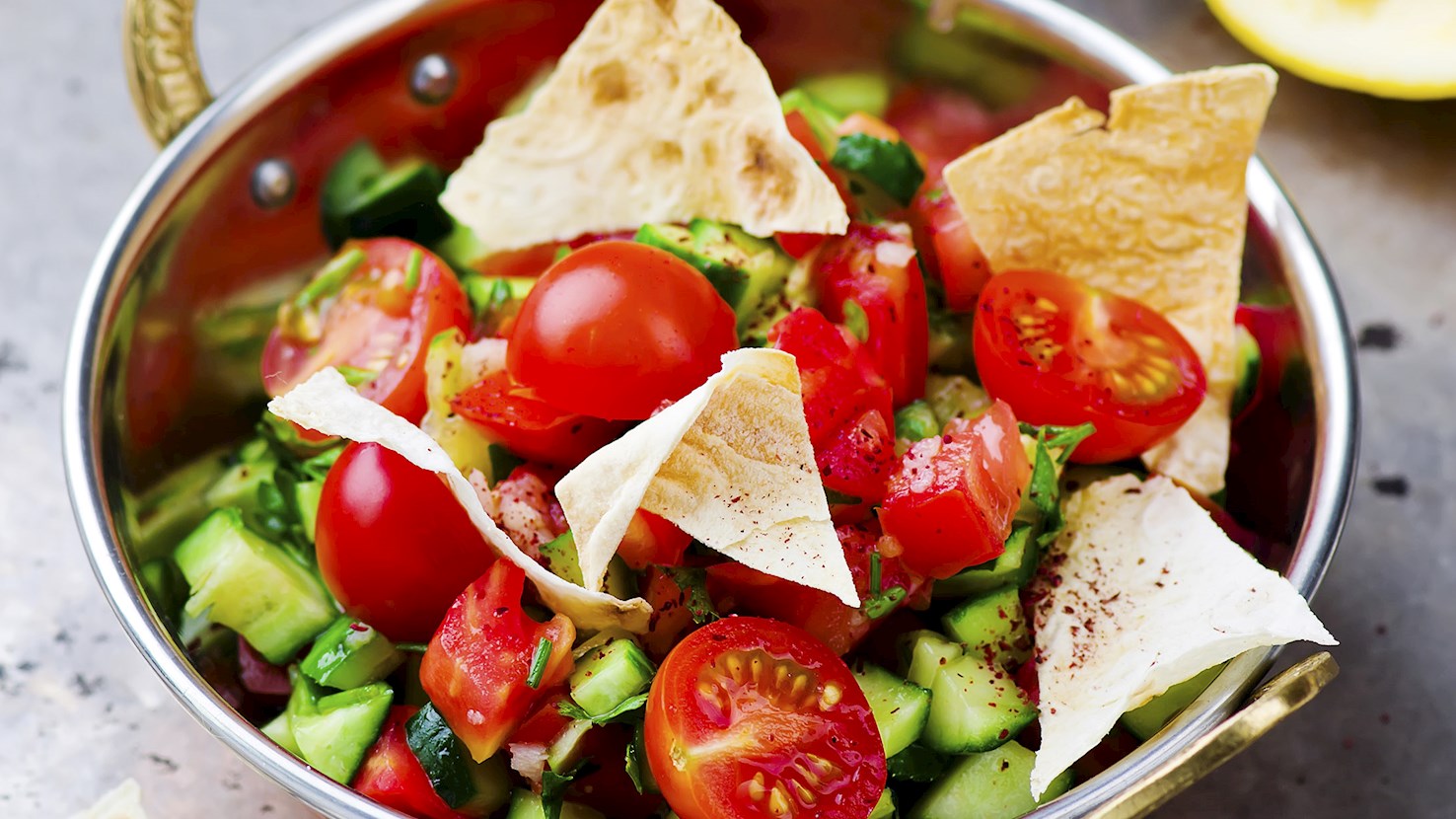
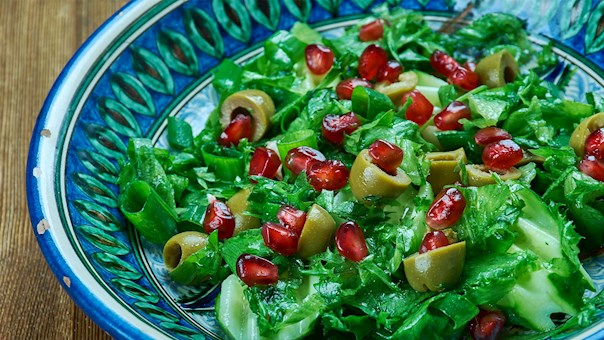
Fattoush is a simple salad made with traditional pita bread as a base on which the rest of the ingredients are built on. Pita bread is torn or cut into small bite-sized pieces, then toasted, grilled, or fried. It is then mixed with a variety of vegetables such as lettuce, radish, crunchy cucumbers, cherry tomatoes or regular tomatoes, peppers, onions, and (occasionally) garlic. All ingredients are chopped and cut into pieces and mixed with a generous amount of herbs, most commonly mint and parsley. The final touch to this authentic salad is the dressing, usually made with olive oil, lemon juice, and pomegranate syrup. The key ingredient, next to the crunchy pita bread, is sumac - a spice commonly used in the Levantine area. Sumac can be added to the dressing, and it is usually sprinkled on top of a prepared salad. It gives the dish a slightly tart taste and zest, which perfectly matches with the gentle flavors and aromas of fresh herbs and vegetables. The original fattoush is highly versatile, and other common additions may include crisp pomegranate seeds, olives, yogurt, and feta cheese. It is one of the most famous salads frequently eaten in Lebanon, Syria, Israel, Palestine, Jordan, and Iraq. This refreshing salad belongs to a group of dishes popularly called fattat, which use the stale pita, or any other flatbread, as the star ingredient.
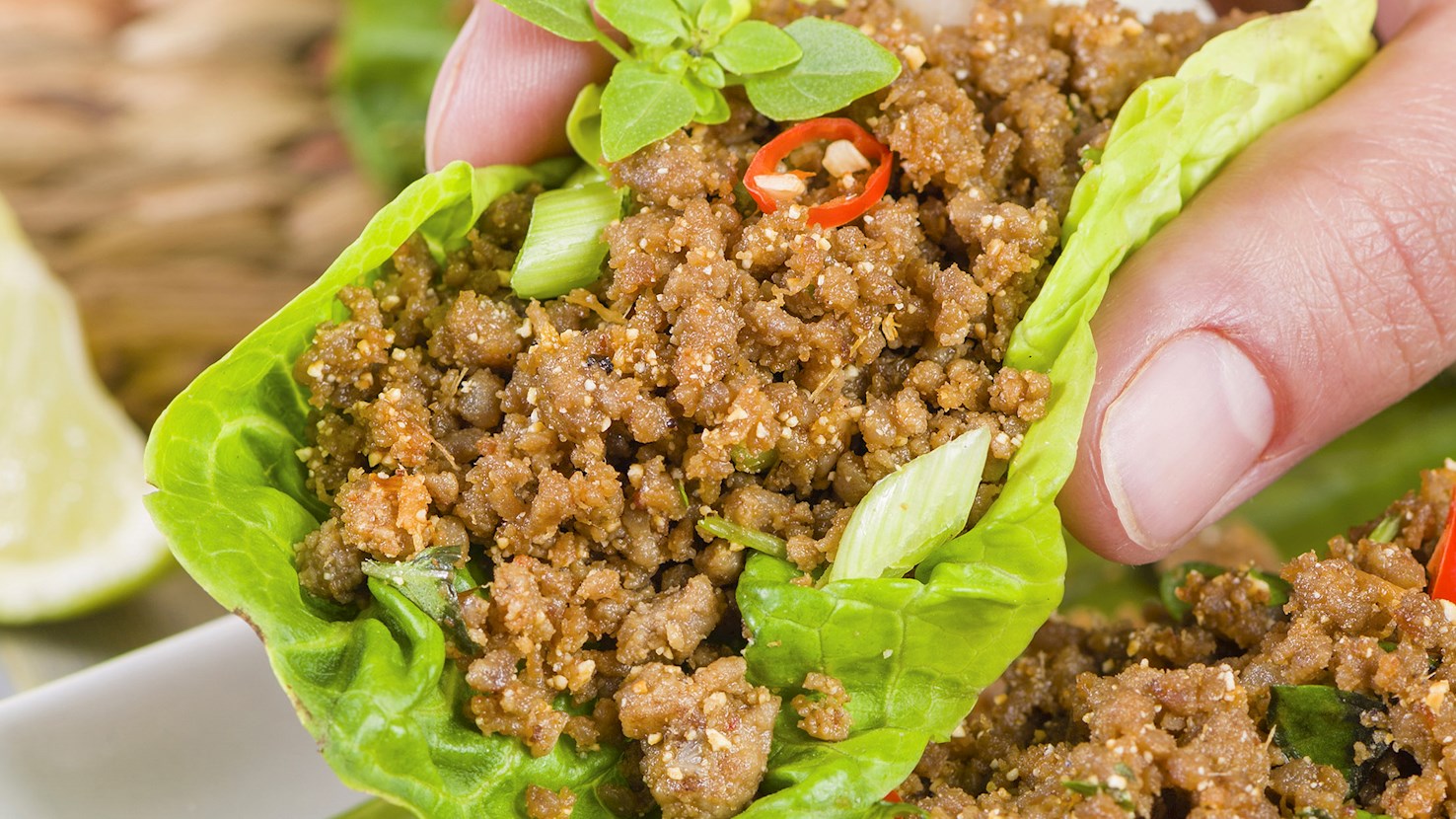
Larb is a heavily seasoned meat salad that's garnished with freshly chopped herbs and khao khoua — toasted ground rice. Considered the unofficial dish of Laos, larb is consumed both in Laos and the bordering Isan, a region in Thailand. The base of the dish is hand-minced meat, either beef, pork, chicken, duck, or fish, that can be raw or cooked, a souring agent - typically lime juice, and either fish sauce and/or padaek, a type of fermented fish sauce. The ingredients and variations of the basic recipe are endless, and similar dishes can be found throughout Southeast Asia. Larb is typically served wrapped in lettuce or with a portion of sticky rice and cucumber slices on the side.
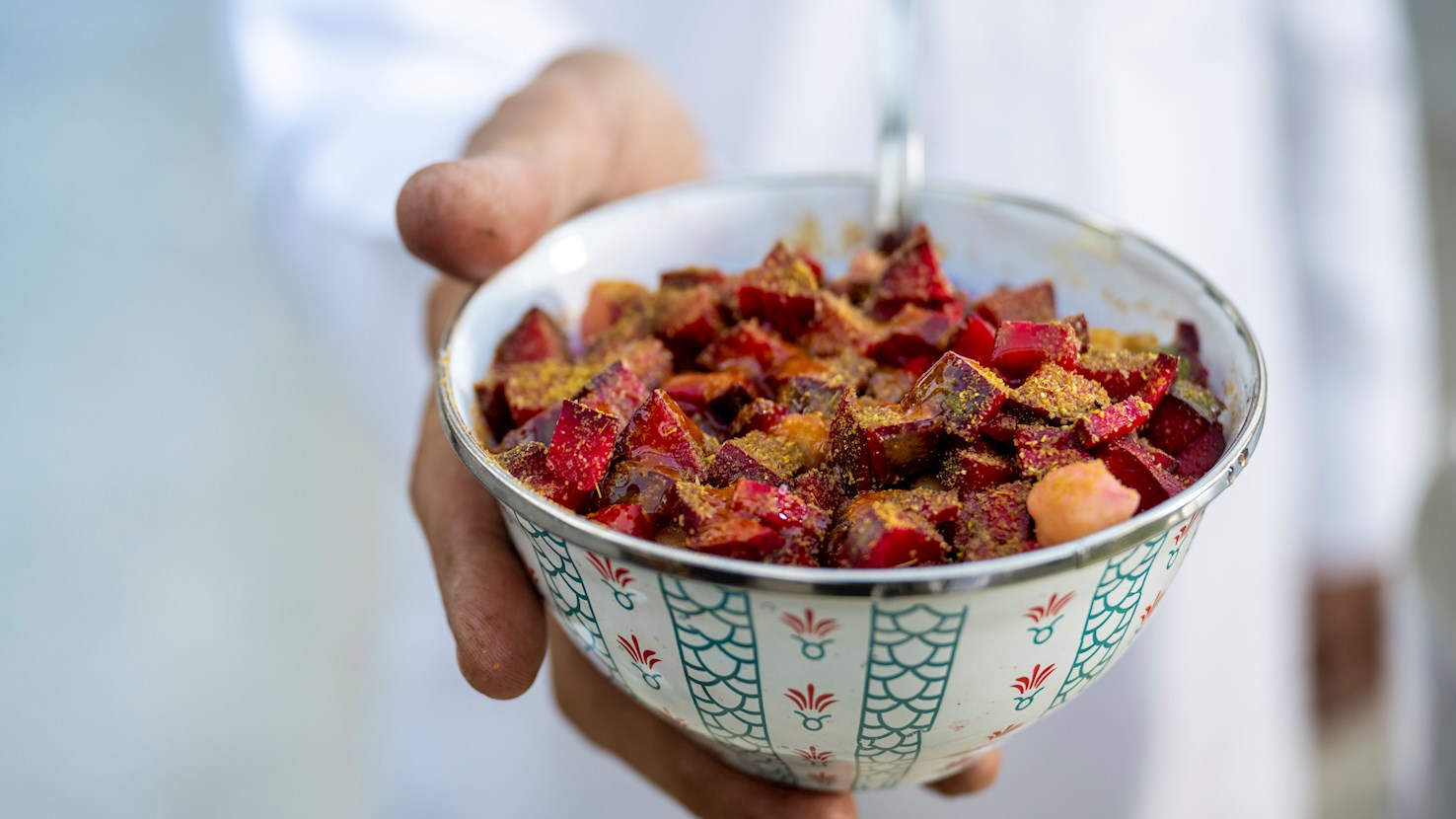
Balilah is a traditional Middle Eastern salad, particularly popular in Saudi Arabia and Syria. It is a simple and healthy snack made primarily from cooked chickpeas. The chickpeas are typically served warm with diced cucumbers and grated beets, and seasoned with a mixture of spices, lemon juice, olive oil, and sometimes garlic and herbs. The core ingredient is chickpeas (in Syria broad beans are also included), which are cooked until tender and then flavored with lemon juice, olive oil, cumin, salt, and sometimes other spices like black pepper, sumac, or paprika. Garlic and fresh herbs, such as parsley, are added for extra flavor. Balilah is usually served warm as a snack or appetizer, often enjoyed as a popular street food and eaten with a spoon or scooped up with bread. It is commonly enjoyed during Ramadan as part of the iftar meal (the meal to break the fast) due to its simplicity and nutritious qualities. It is also a staple at social gatherings and is appreciated for its light, tangy flavor.
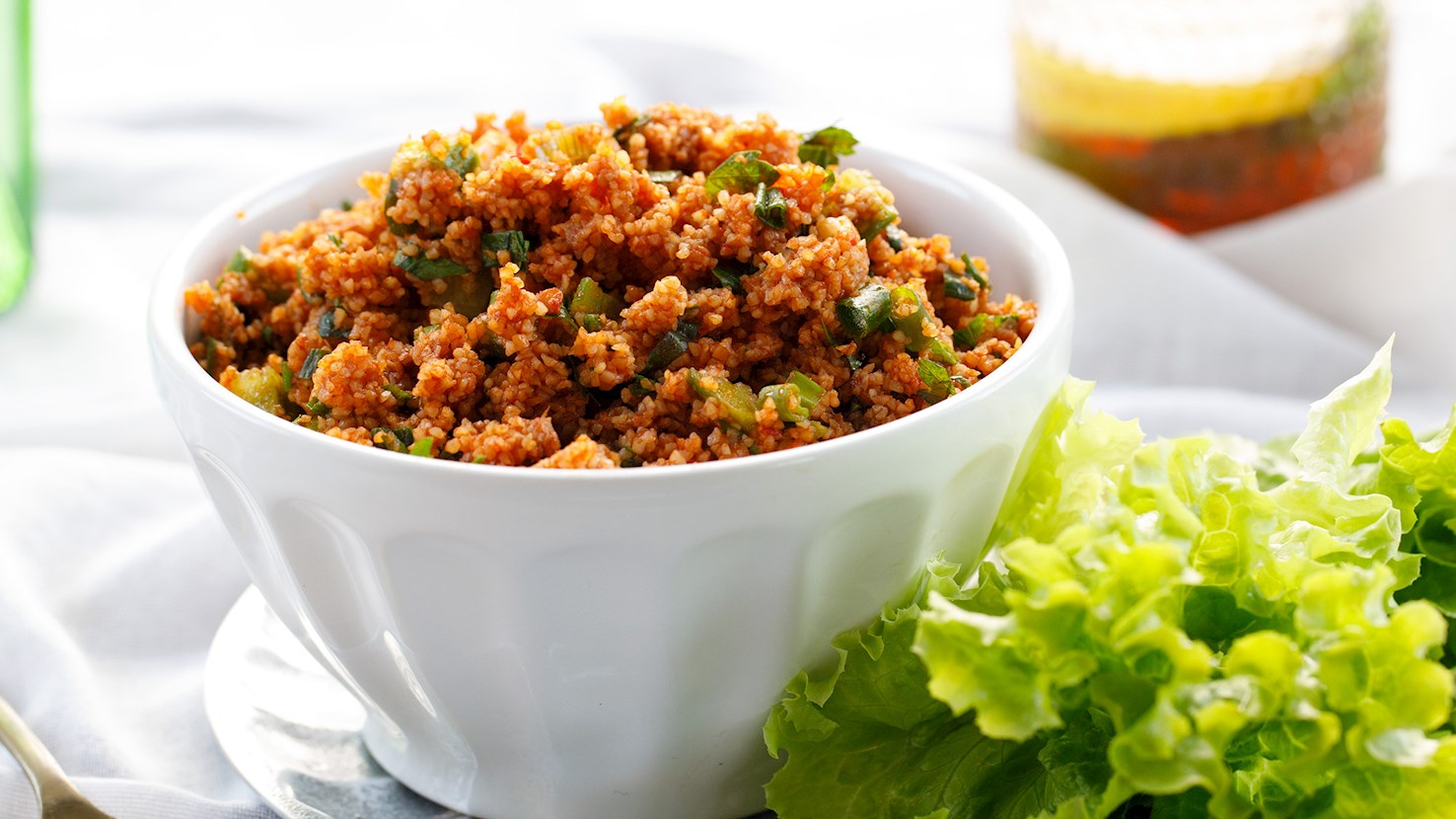
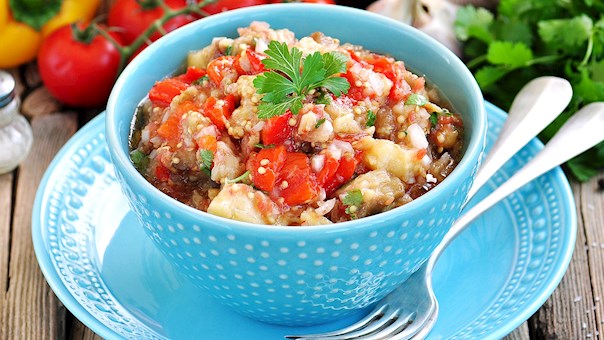
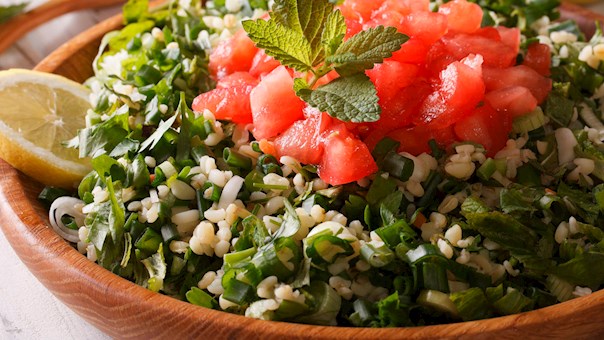
Kısır is a classic Turkish salad made with thin bulgur wheat, tomatoes, mint, garlic, parsley, and either lemon juice or sour pomegranate molasses. Red pepper flakes are often added to the salad to make it spicier. Lemon juice is typically used in northwestern Türkiye, while pomegranate molasses is more commonly used in the southeast of the country. The salad is ideal for buffets and meze, but it is also often used as a side dish for a variety of barbecued meat dishes. It is traditionally served cold or at room temperature.
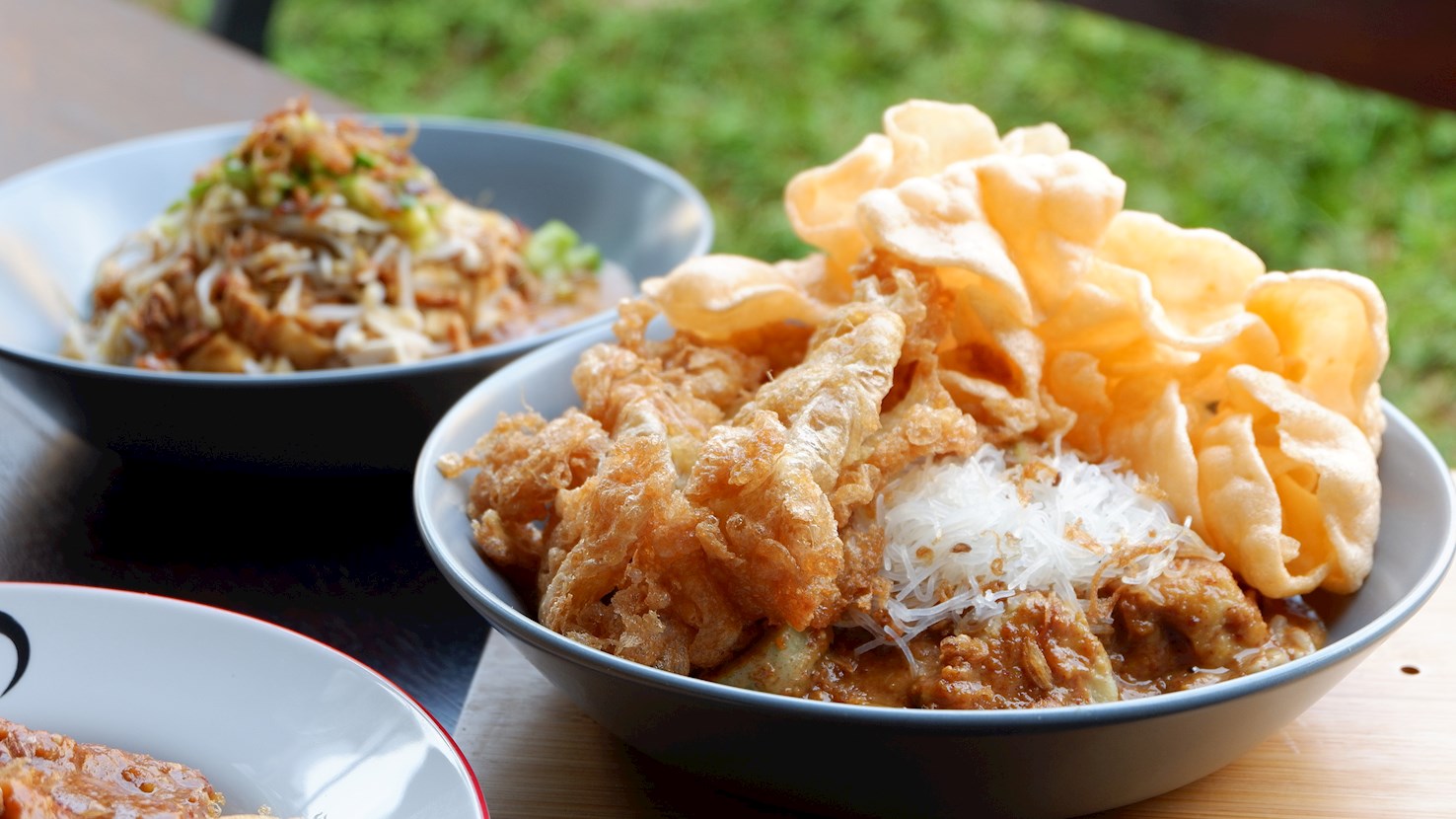
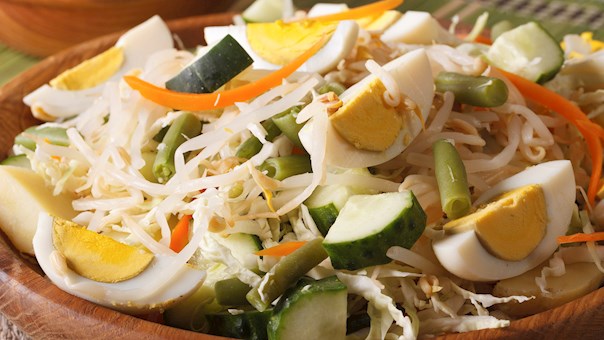
Ketoprak is a traditional street food dish that's often described as tofu salad. It's made with a combination of fried tofu, steamed rice cakes, rice vermicelli noodles, bean sprouts, cabbage, and cucumbers. The combination is served in peanut sauce and sweet soy sauce (kecap manis). It's usually topped with fried shallots and krupuk. The dish can be found at numerous ketoprak food carts throughout Jakarta, although there is still an ongoing debate about the origin of the dish – some claim that it was first made in Cirebon because the majority of street food vendors come from Cirebon. The tofu is freshly fried from the food carts, while the other ingredients are prepared in advance. Ketoprak is usually a vegan dish, but it's sometimes topped with a hard-boiled egg which makes it non-vegan.
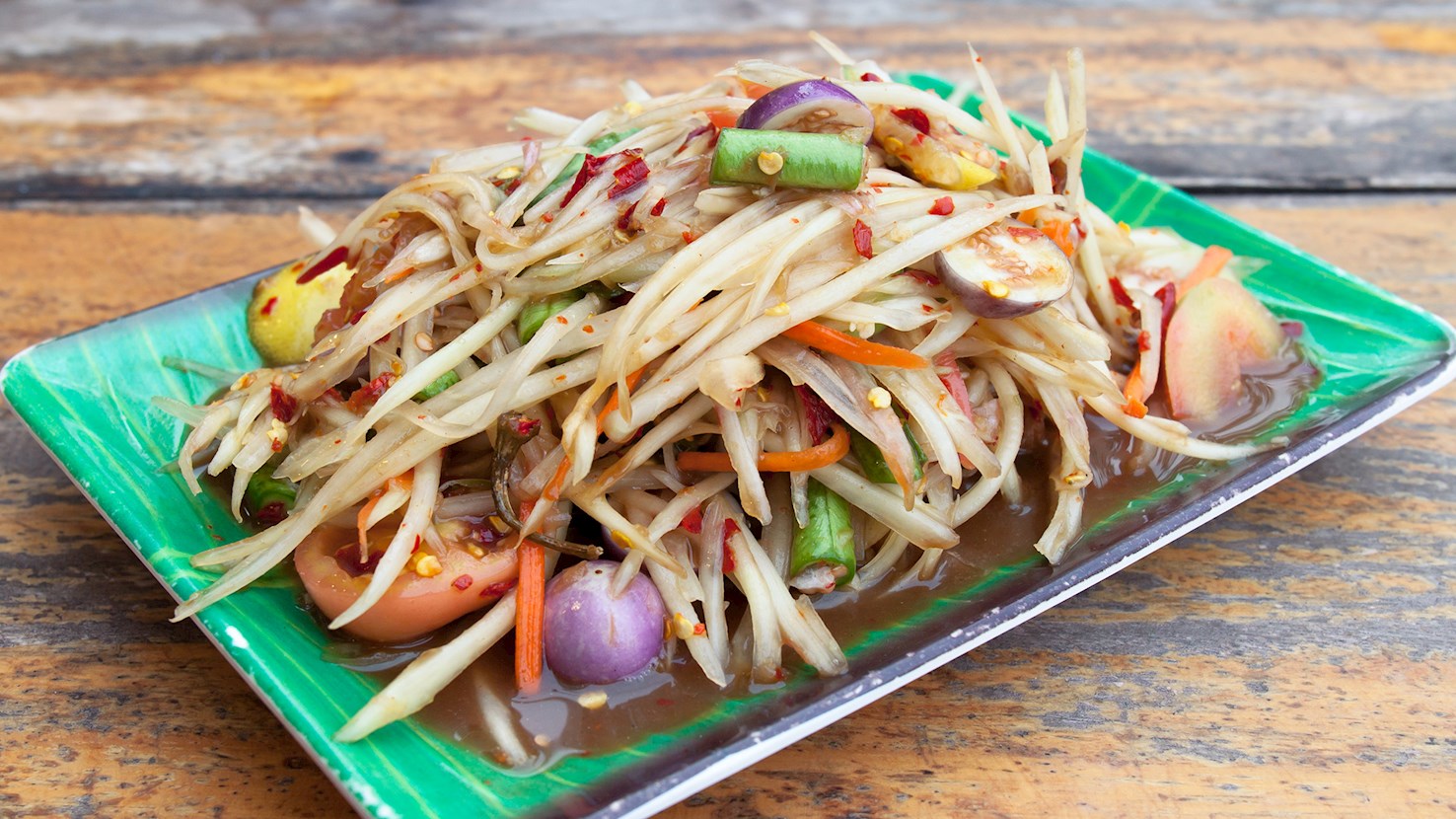
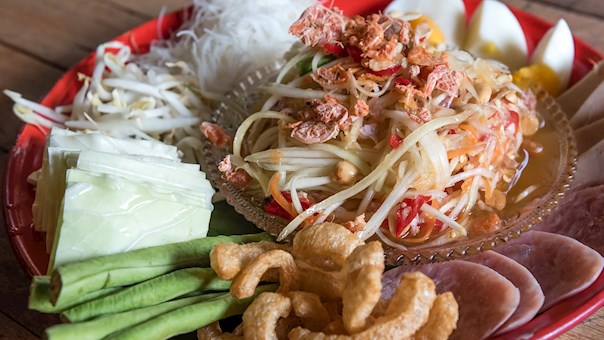
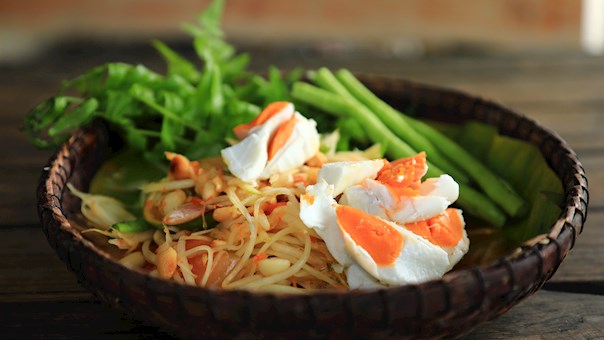
Som tam is a green papaya salad mostly associated with the northeastern part of Thailand (Isaan), though it is often suggested that it first appeared in Laos. Apart from thin strips of green papaya, this salad usually includes roasted peanuts, green beans, tomatoes, and a tangy sauce typically made with garlic, chili peppers, fish sauce, dried shrimps, palm sugar, and lime or tamarind juice. The varieties are plentiful and can include various additions. The sauce can also appear in many other combinations, and can significantly vary in sweetness and spiciness. Numerous restaurants and street stalls allow the customers to choose the variety they prefer and adjust the ingredients to their preference. It is still not clear whether this refreshing dish was invented in the north of Thailand, more precisely the Isaan region, or is it an original Lao creation. Many believe that it was primarily invented to utilize abundant papayas and that its original form did not use palm sugar because it mostly relied on spicy chili flavors. Regardless of its origin, this simple salad has gained global popularity and can be found on the menus of traditional Thai restaurants around the world. It can be enjoyed as the main dish or as a complement to rice, grilled meat, or marinated fish.
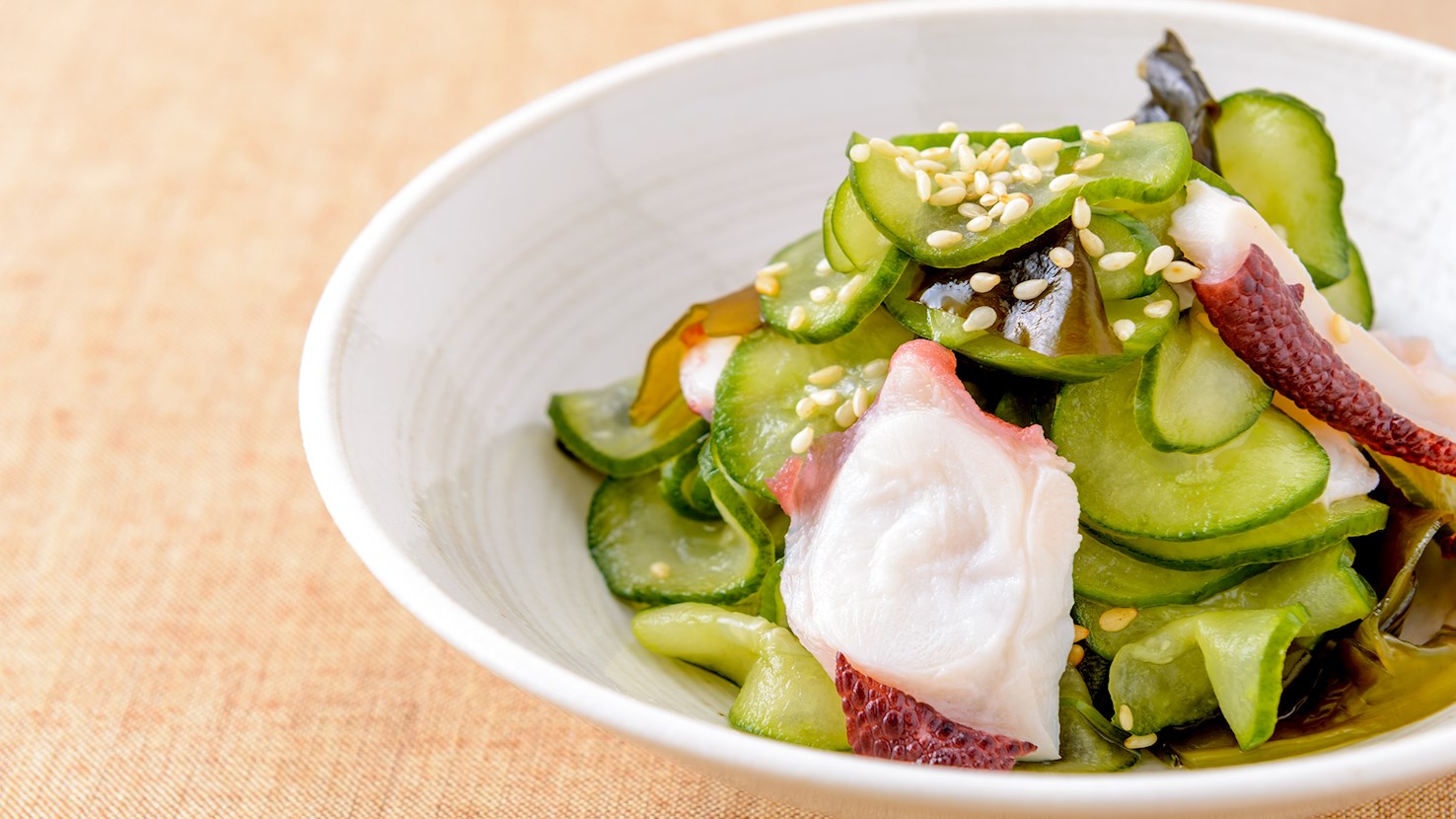
Sunomono is a popular Japanese cucumber salad seasoned with a lightly sweetened dressing consisting of vinegar and soy sauce. Simple and refreshing, alongside thinly sliced cucumbers it can incorporate various other ingredients such as seafood, seaweed strips, or toasted sesame seeds. It is usually served as an appetizer or a light side dish.
TasteAtlas food rankings are based on the ratings of the TasteAtlas audience, with a series of mechanisms that recognize real users and that ignore bot,
nationalist or local patriotic ratings, and give additional value to the ratings of users that the system recognizes as knowledgeable.
For the “Top 89 Asian Salads” list until May 15, 2026, 5,300 ratings were recorded, of which 2,669 were recognized by the system as legitimate.
TasteAtlas Rankings should not be seen as the final global conclusion about food. Their purpose is to promote excellent local foods,
instill pride in traditional dishes, and arouse curiosity about dishes you haven’t tried.