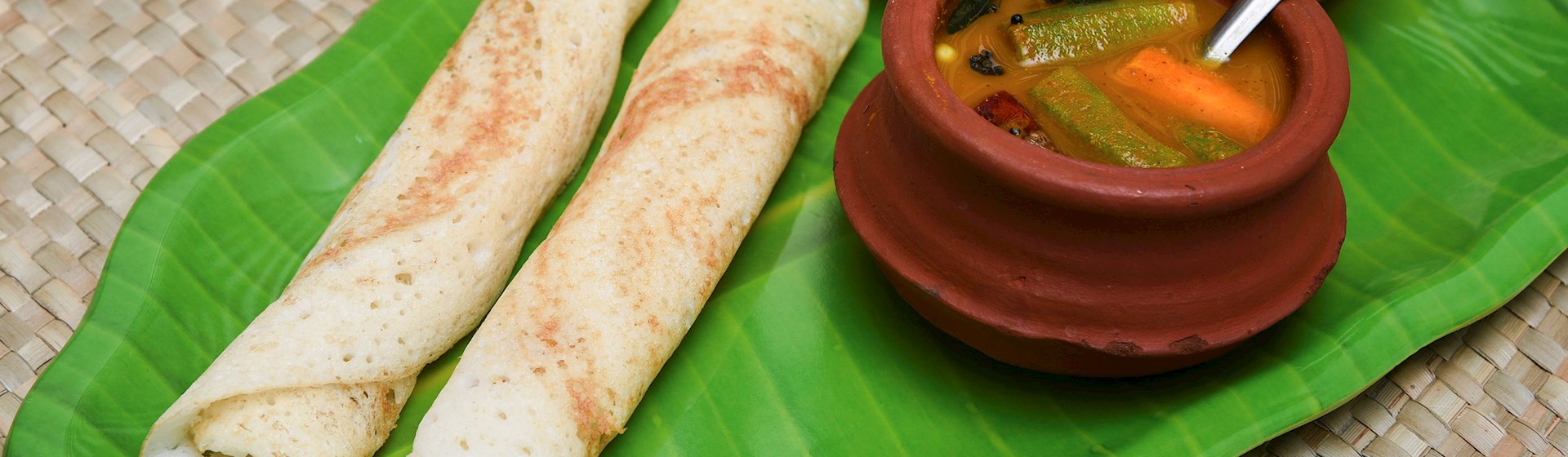
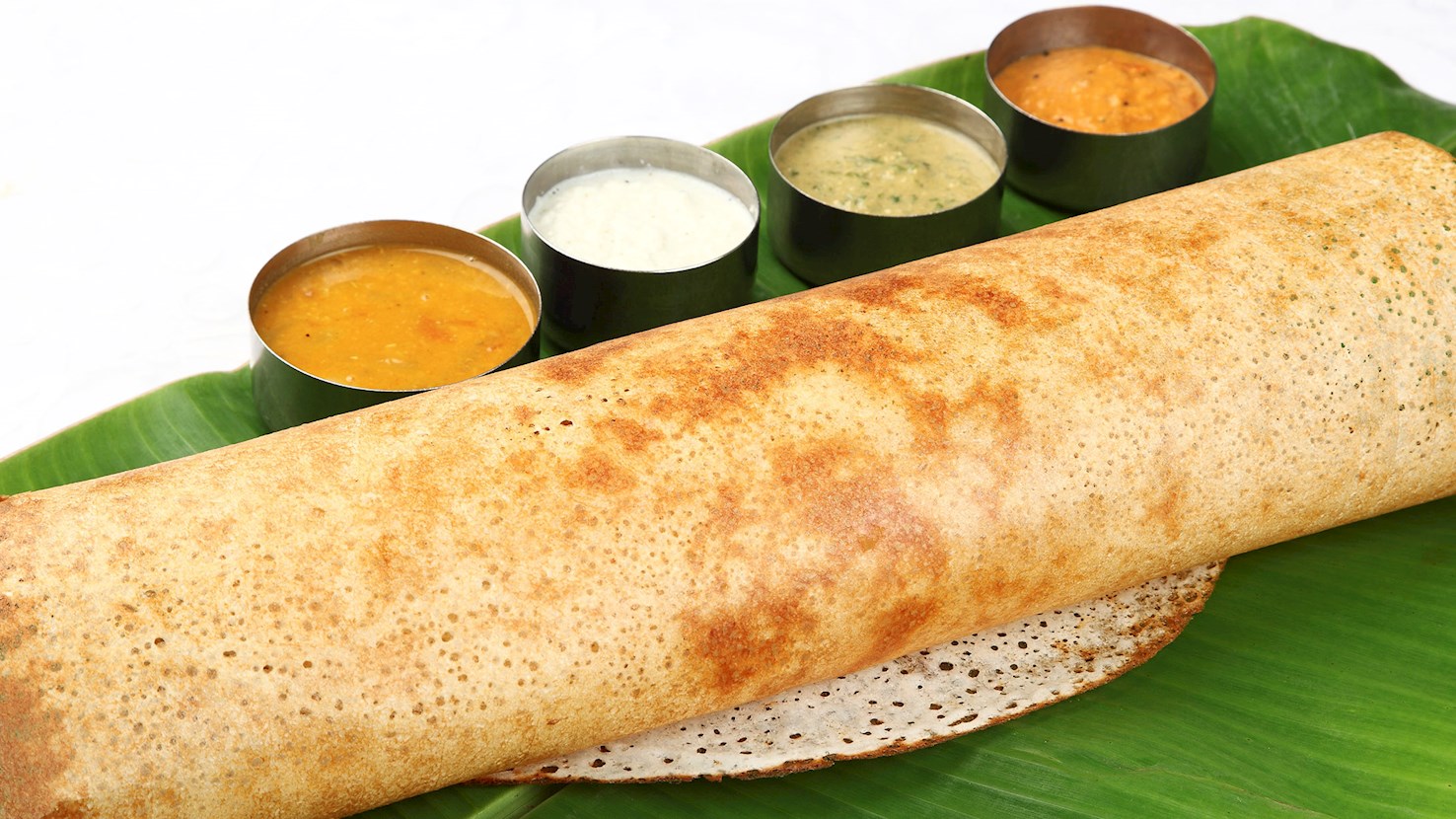
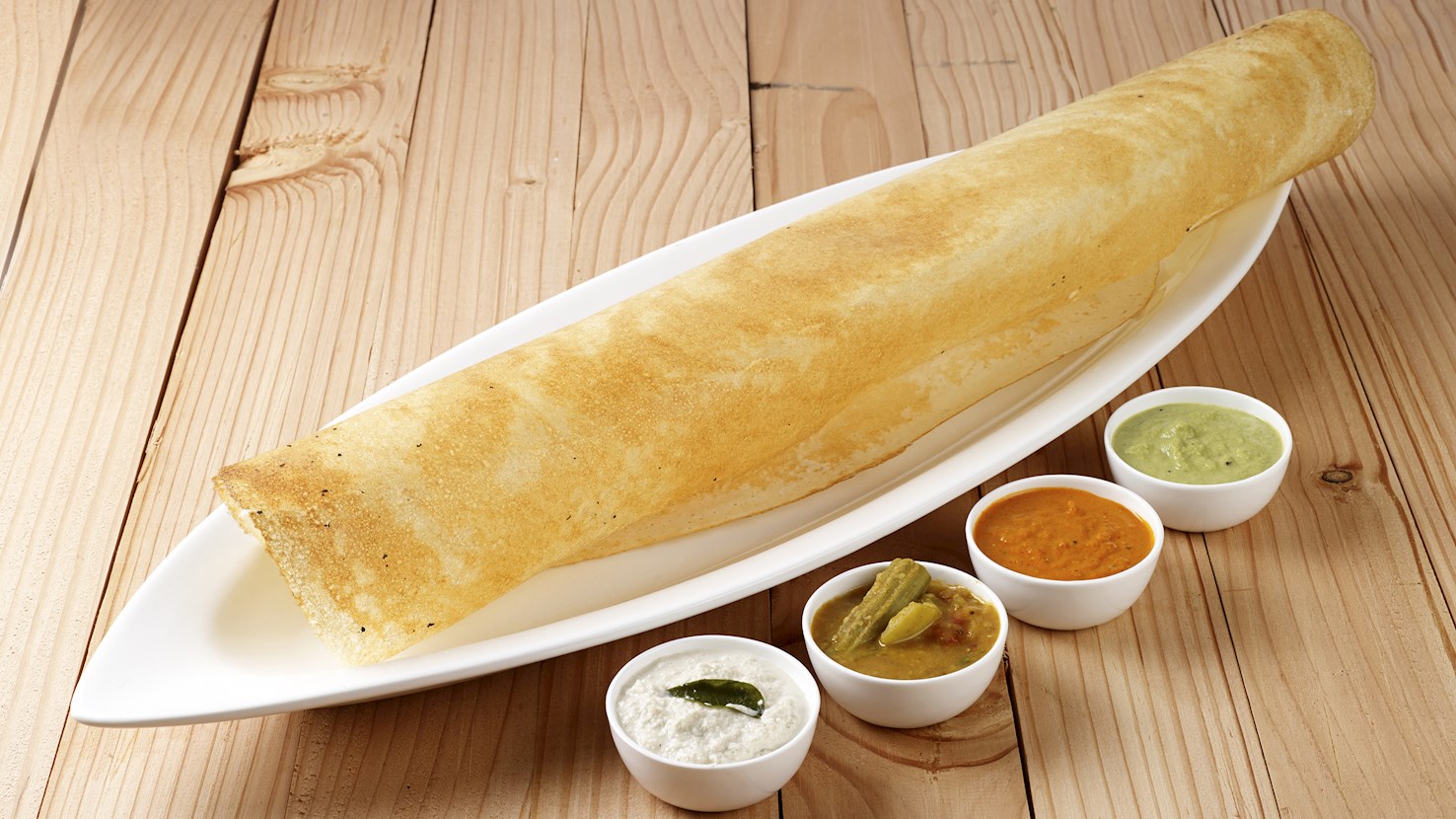
A traditional southern Indian dish known as masala dosa is popular throughout the country, made from a batter of soaked rice and lentils that is baked into a thin pancake and usually stuffed with potatoes, onions, and mustard seeds. The dish is often garnished with grated coconut and chopped coriander. With its huge popularity, there are also some variations of the dish, such as mysore masala dosa,rava masala dosa, onion masala dosa, and paper masala dosa. It is usually consumed as a quick snack or as a part of any meal of the day. Masala dosa has even made the list of 10 foods to try before you die, complied by the Huffington Post, alongside famous dishes such as Beijing duck, moussaka, and BBQ ribs.
The thin pancake known as dosa is one of the most famous Indian dishes. It is made with soaked rice and black gram beans, which are ground into a paste and mixed to create a thick batter, usually left to ferment overnight. The mixture is enriched with a handful of fenugreek seeds, which give dosa its distinctive golden brown color and a delicious, crispy texture. It is then baked on a hot oiled griddle, pertaining a delicate, thin texture and round shape. Indian dosa is a staple dish in the entire country, but some believe that dosa had originated in the south Indian state of Tamil Nadu. It is an ancient dish, whose origins are traced back to the 1st century AD, when it was first mentioned in Tamil literature. Others claim that it's linked to Udupi (present day Karnataka) due to the association with the Udupi restaurants. Usually, dosa is consumed as a savory dish, commonly eaten for breakfast, dinner, or a quick snack. Since it has a rather neutral taste, dosa is an ideal accompaniment to many luscious Indian dishes, such as meat and vegetable curries or chutneys. It is often filled with ingredients and wrapped, or served on the side as an integral part of a meal, when it is usually used as a utensil to scoop the fragrant side dishes. As other ancient food staples, dosa has been adapted and combined with other ingredients to create numerous distinct varieties. Wheat flour, semolina, rice flour, or soy milk are used in some regions to create milder, diverse, and more interesting dosa varieties. This ancient Indian creation, in its numerous forms, is found everywhere in India - it is sold as a quick snack by street vendors, and it is an irreplaceable item in traditional Indian restaurants.
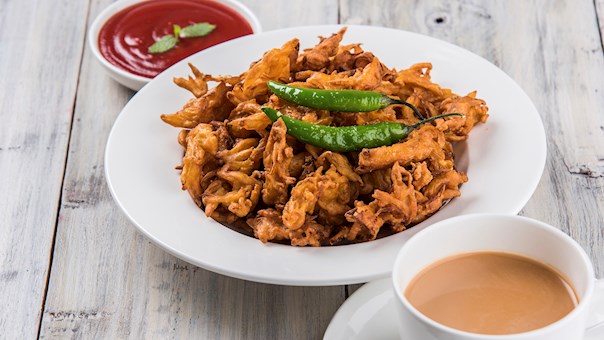
Chaat is a term signifying a huge variety of Indian street foods, snacks, or small meals which usually combine salty, spicy, sweet, and sour flavors. The name chaat is derived from a Hindi verb chaatna, meaning to lick, possibly referring to the finger-licking good quality of the dishes. Chaats are usually small, consumed on their own as a snack, or combined with other dishes to form a big meal. Throughout India, Pakistan, and Bangladesh, chaat can be found at chaatwallas (street vendors), serving various dishes, from stuffed bread to deep-fried pastries with accompanying dipping sauces. In India, a chaat stand is usually specialized for one or two dishes which are always made fresh. If chaat is offered in a larger restaurant, it is often accompanied by a traditional Indian drink called lassi. Chaat dishes are very popular due to their enormous variety: from crispy fried potatoes, sevpuri, and pakora, to chila pancakes with chutney and pav bhaji, there is a variety of chaat for every type of consumer.
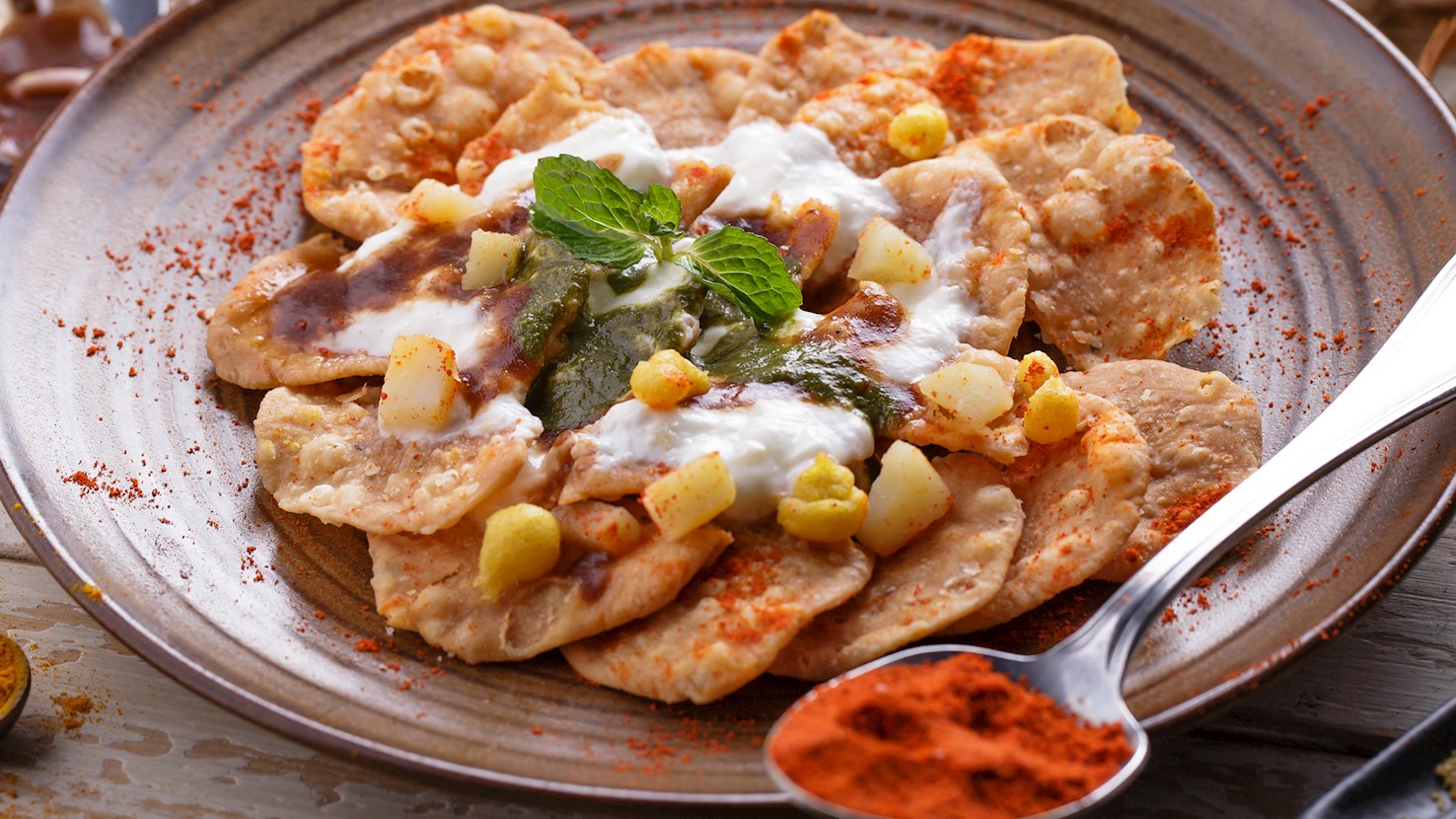
Papri chaat is an Indian dish consisting of deep-fried wafers (papri), tamarind and mint chutney, black grams, potatoes, and dahi. The ingredients are layered, and the dish is usually sprinkled with sev—fried chickpea noodles—and chaat masala—a spice mix which combines cumin, coriander, dried mango and ginger, as well as chili, asafoetida, and black pepper. The dish is a common street food item, and it is usually enjoyed as a filling, convenient snack. It is mainly found in North India, Pakistan, and Bangladesh.
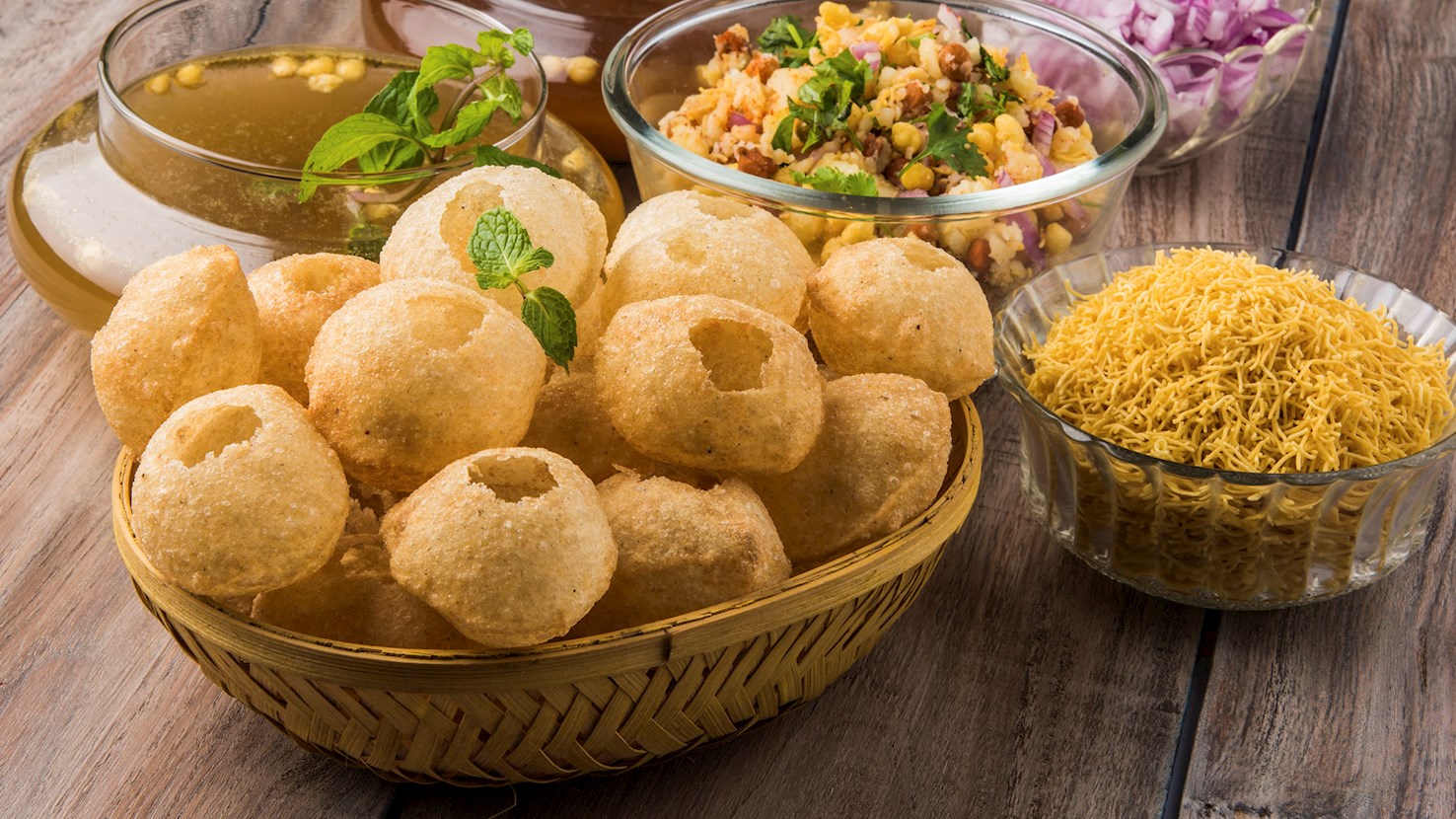
Panipuri is a street snack that is extremely popular in India, Bangladesh, Pakistan, and Nepal. Small in size, it consists of a hollow puri that is fried until crispy, then stuffed with a combination of flavored water called pani, tamarind chutney, chaat masala, potatoes, onions, hot chillis, and chickpeas. In North India, panipuri is known as golgappa, gol referring to the crispy shell, and gappa referring to the eating process, since these small snacks are typically eaten one at a time. It is believed that panipuri originated in Uttar Pradesh and gradually spread in popularity throughout the country and outside of it. Today, panipuri stalls are a staple at most fairs, festivals, or weddings in India.
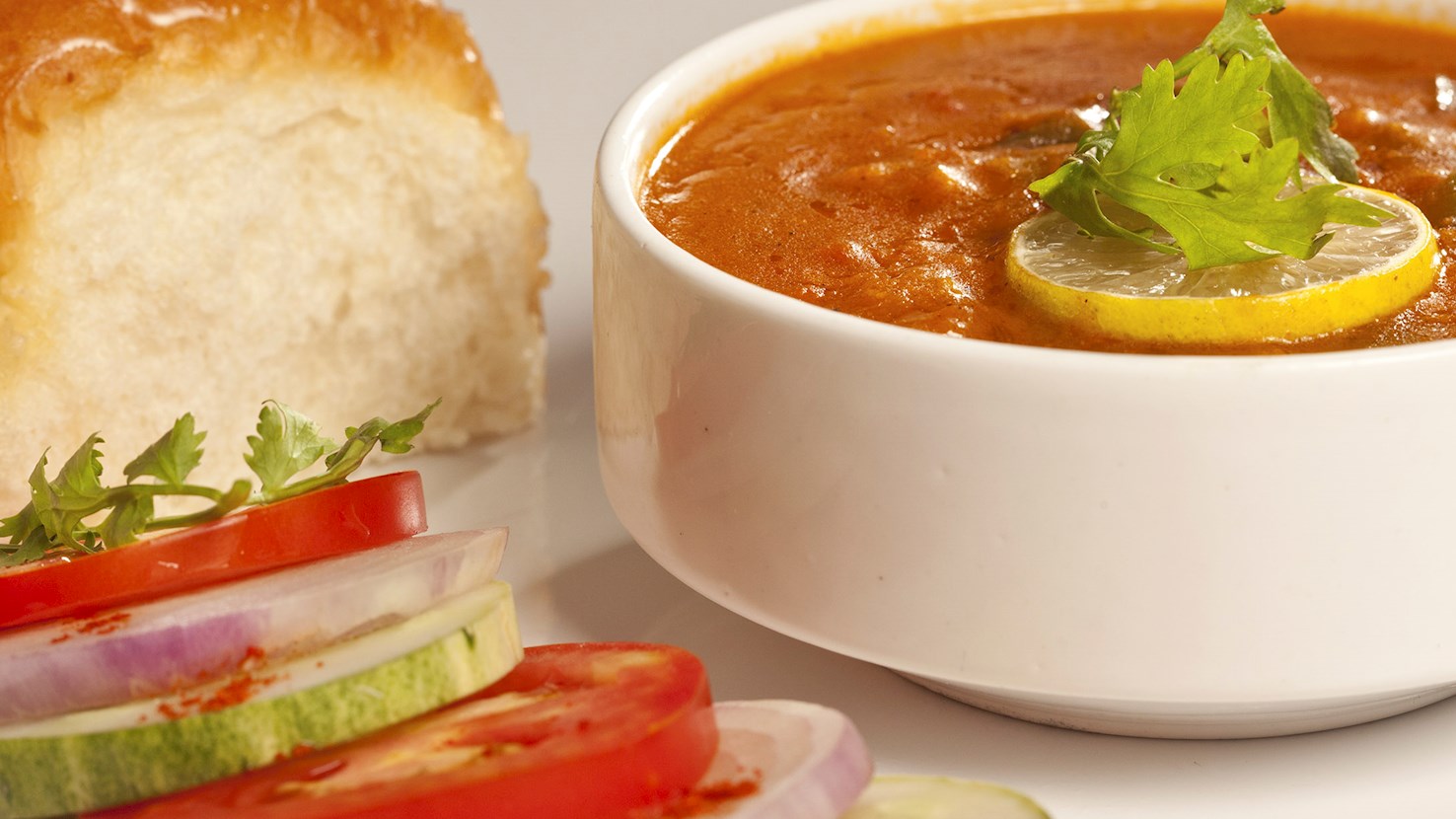
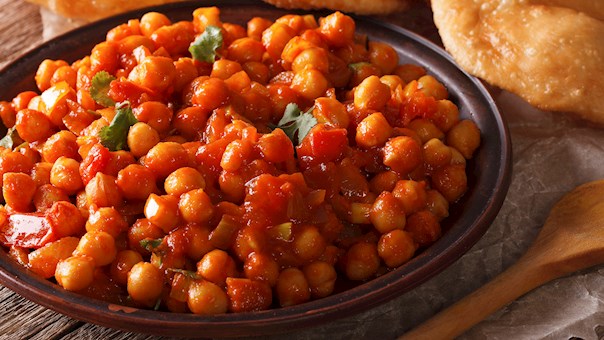
Pav bhaji is a popular street snack originating from the Indian state of Maharashtra. It consists of a vegetable curry that is typically served with a soft bread roll known as pav. The dish was invented in the 1850s as a midnight meal by street vendors who prepared it with all the leftover vegetables from the day, which were then mashed and combined with spices and ghee butter. Originally, it was a quick and easy meal for Mumbai's textile mill workers, but today it is a favorite street snack that is also served in some restaurants in Mumbai. There are a lot of varieties of the basic pav bhaji, with added cheese, paneer, mushrooms, plantains, and even dried fruits thrown in the flavorful curry mix.
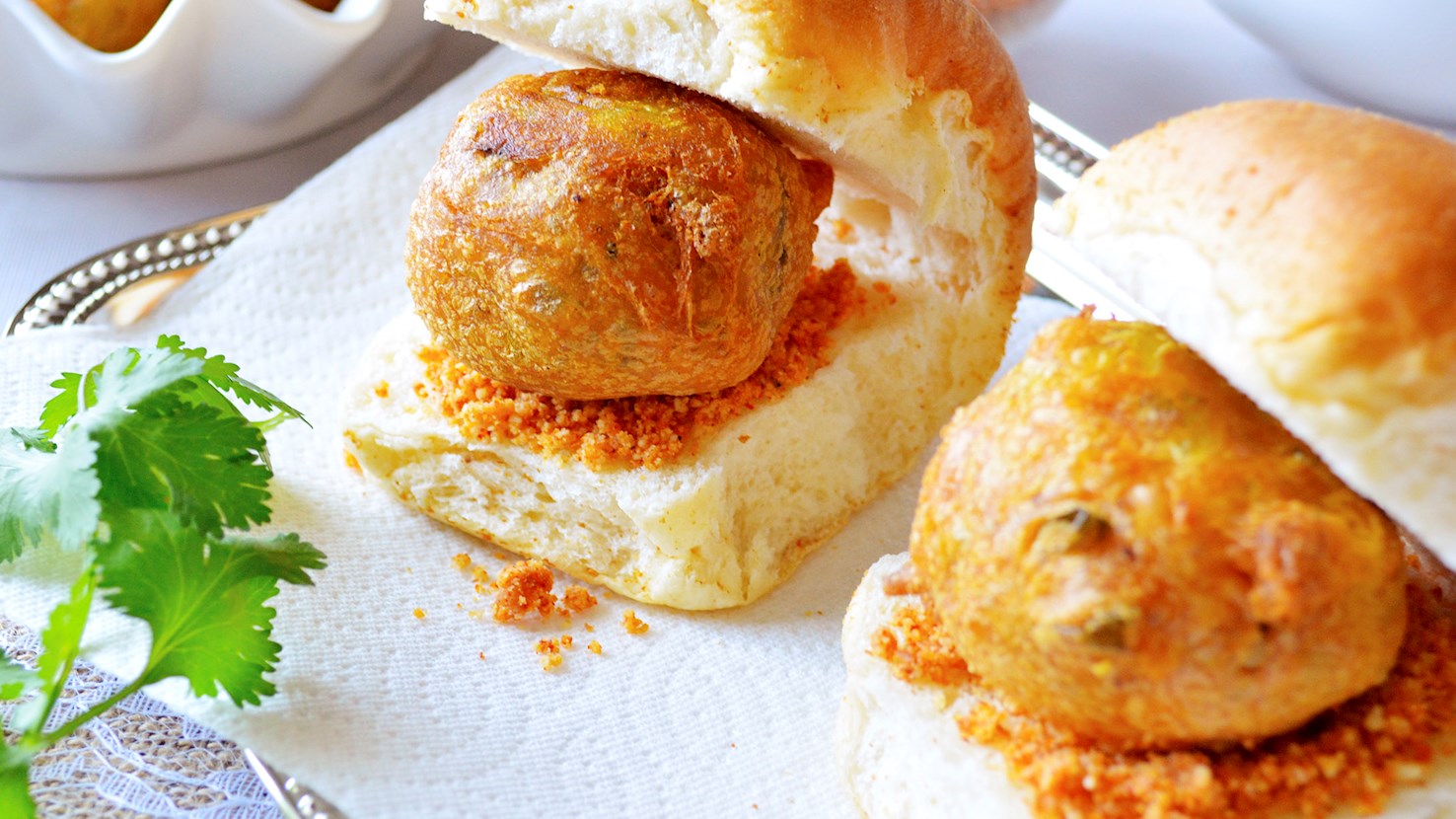
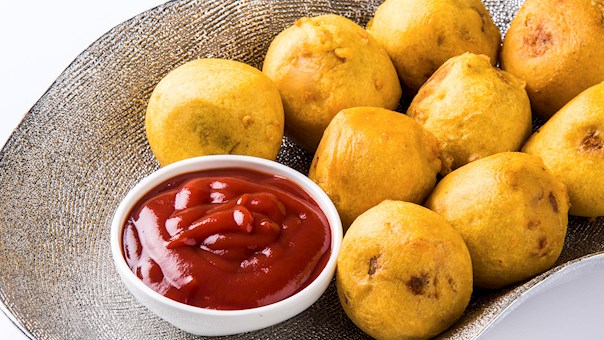
Vada pav is one of Mumbai's favorite sandwiches, its name referring to the key ingredients: vada, or spicy mashed potatoes that are deep-fried in chickpea batter, and pav, or white bread rolls. This iconic street food is said to have originated from a street vendor named Ashok Vaidya, who worked near the Dadar train station in the 1960s and 1970s. He thought of a way to satiate the hungry workers, and concluded that the ideal dish should be portable, affordable, and easy to prepare. Ashok made vada pav, and its popularity skyrocketed, especially after the Shiv Sena, a Marathi-Hindu nationalist political party, started to promote the sandwich as an ideal working class snack. Today, the sandwich is sold throughout Mumbai, both on street stands and in elegant restaurants, ideally accompanied by a hot red chutney with coconut, peanuts, garlic, tamarind, and chiles.
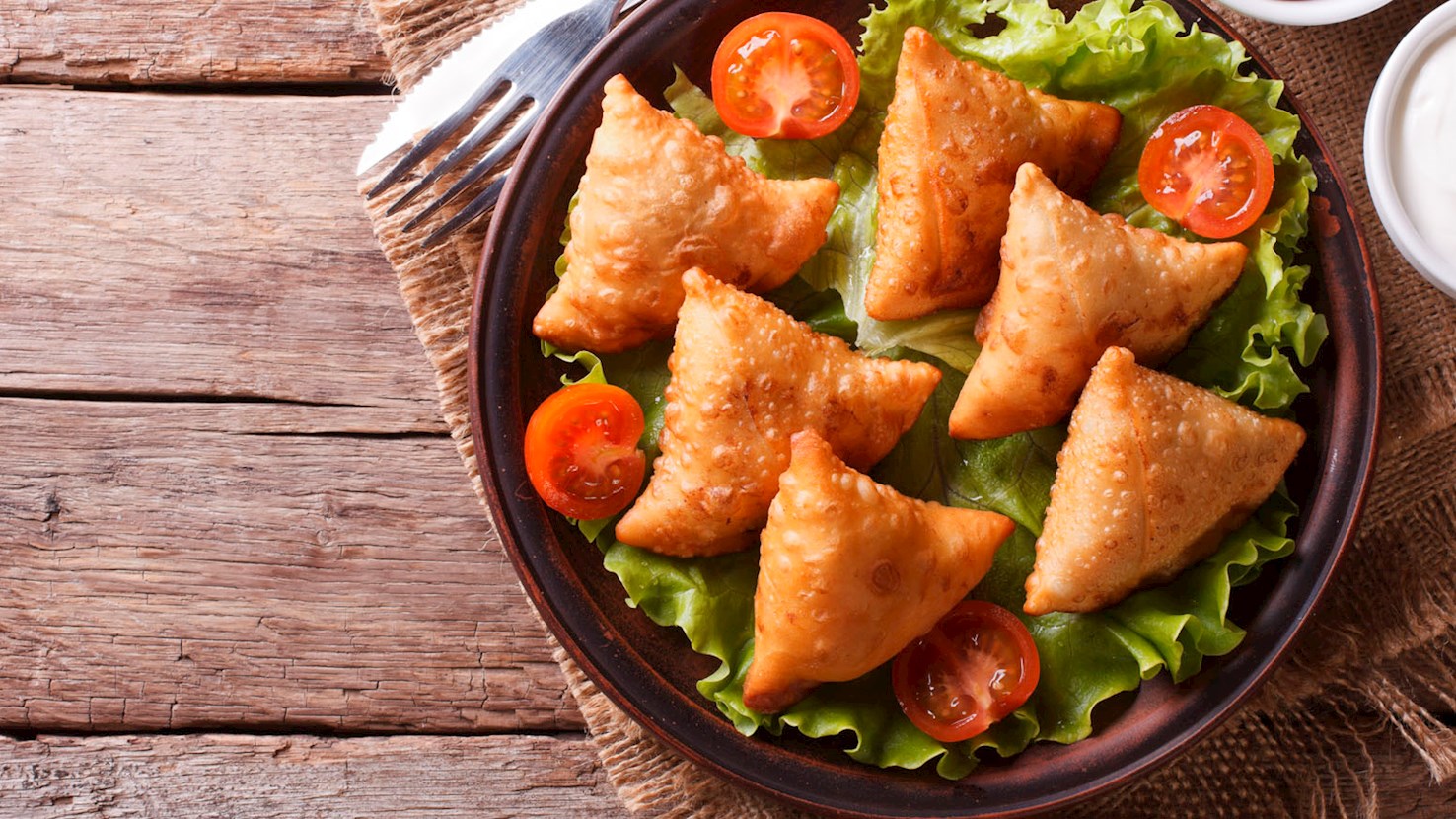
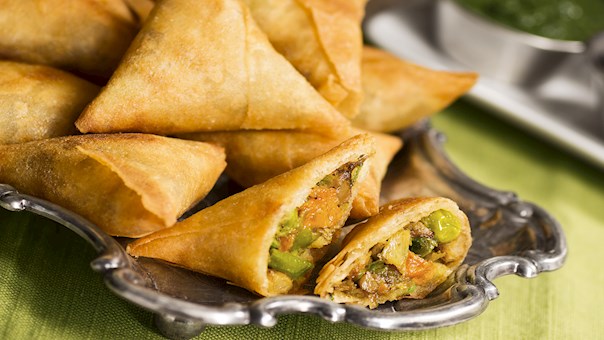
Due to their crunchy texture and a variety of different flavors, samosas provide a perfect introduction to the world of Indian cuisine for newcomers. These deep-fried, triangular pastries are filled with a variety of ingredients ranging from vegetables to meat, such as onions, lentils, spiced potatoes, peas, or ground meat. It is said that the popular, golden-brown snack travelled to India along the old trade routes from Central Asia, which is why samosas are also prevelent in Middle Eastern countries where they are typically served for Ramadan. In Saudi Arabia, for example, they are typically filled with meat or cheese and can be shaped as triangles, squares, and rolls. These savory triangles are typically served hot and accompanied with chopped onions, yogurt, or fresh, homemade Indian chutneys made with a variety of ingredients such as mint, coriander or tamarind. However, not all samosas are savory - some versions can contain a number of sweet ingredients such as pomegranate, mango, and raisins. Sweet or savory, they can be found throughout India at numerous street stalls and roadside eateries, freshly made and traditionally paired with masala chai tea.
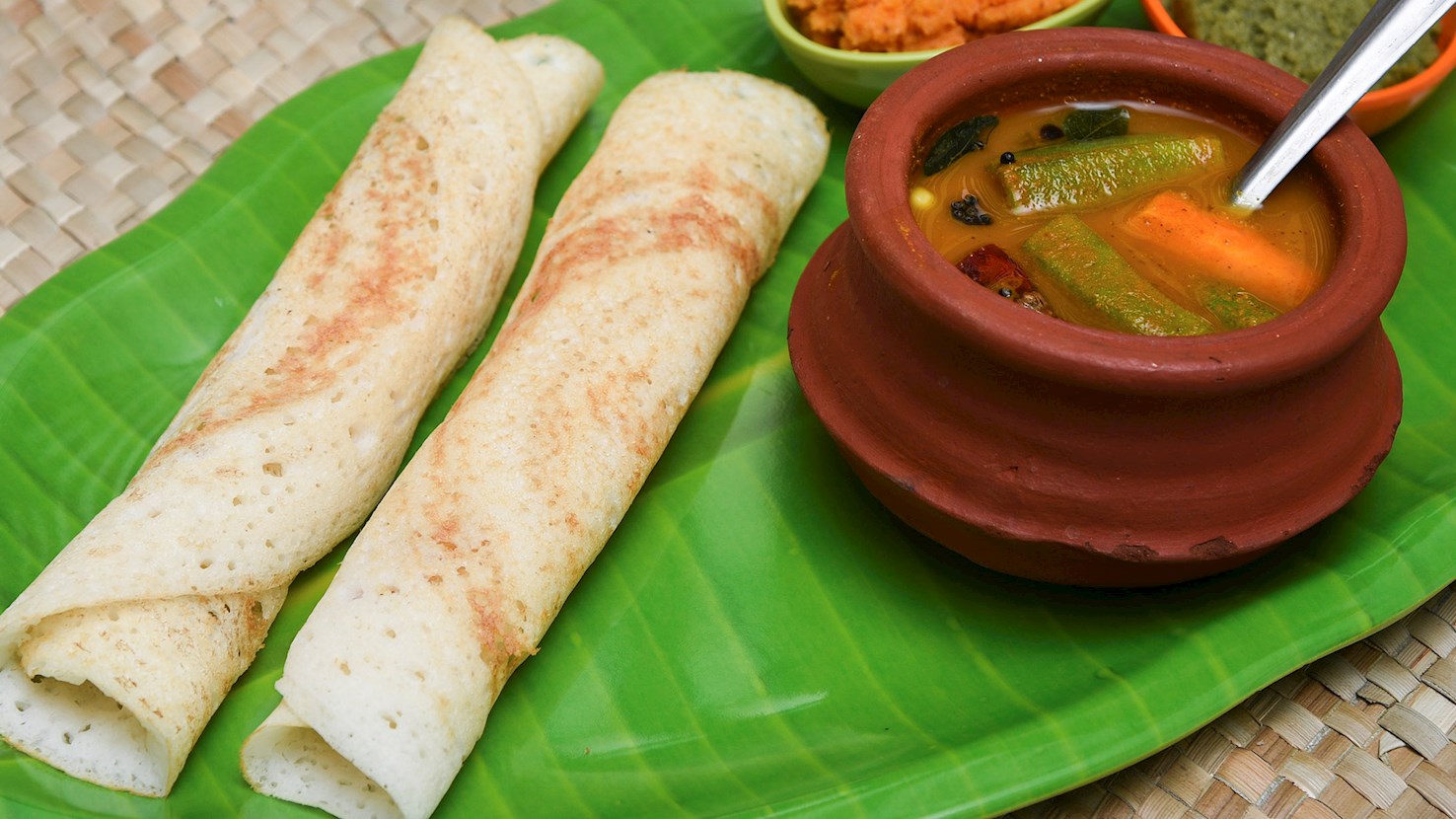
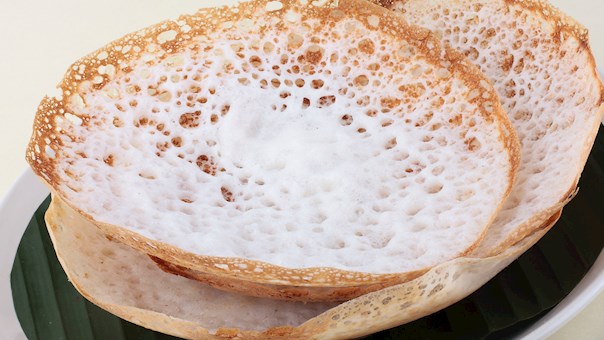
Paper dosa is a traditional pancake originating from Tamil Nadu. These wafer-thin crispy pancakes are usually made with a combination of basmati rice, urad dal (black grams), fenugreek seeds, ghee, and salt. The rice is processed into a thick paste and soaked in water. The urad dal is also soaked in water, and both are left to soak overnight. The next day, urad dal is drained, mixed with fenugreek, and processed into a paste. The two pastes are mixed together, left to stand overnight, and seasoned with salt. The batter is then fried in a skillet over medium heat until dry, and some ghee is spread in the center and on the sides. The dosa is cooked until golden brown and crisp. It's rolled up and served hot with sambar and coconut chutney.
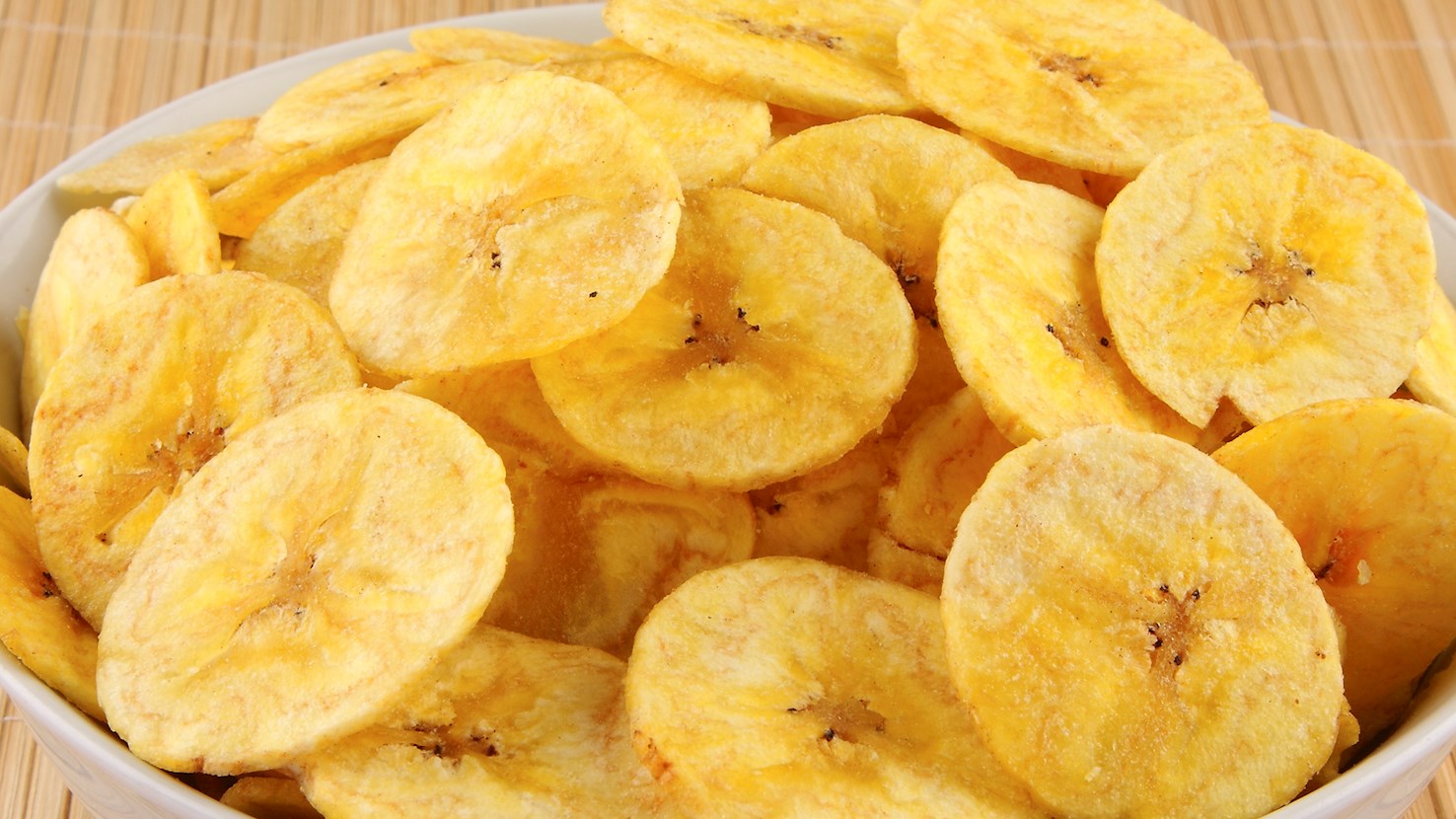
Upperi is a popular Indian snack made by frying thin slices of plantain in coconut oil. The chips are flavored with salted water while they are still frying in oil. The snack is a specialty of Kerala, especially during the Onam harvest festival, when these salted chips take center stage in a banana leaf during Sadya, a vegetarian banquet. It is available throughout the year, but during Onam, all of the shops are stacked with fresh yellow chips sealed in plastic bags. It is recommended to pair upperi with a hot cup of coffee or tea for a delicious snack.
TasteAtlas food rankings are based on the ratings of the TasteAtlas audience, with a series of mechanisms that recognize real users and that ignore bot,
nationalist or local patriotic ratings, and give additional value to the ratings of users that the system recognizes as knowledgeable.
For the “Top 79 Indian Snacks” list until May 15, 2026, 4,329 ratings were recorded, of which 3,202 were recognized by the system as legitimate.
TasteAtlas Rankings should not be seen as the final global conclusion about food. Their purpose is to promote excellent local foods,
instill pride in traditional dishes, and arouse curiosity about dishes you haven’t tried.