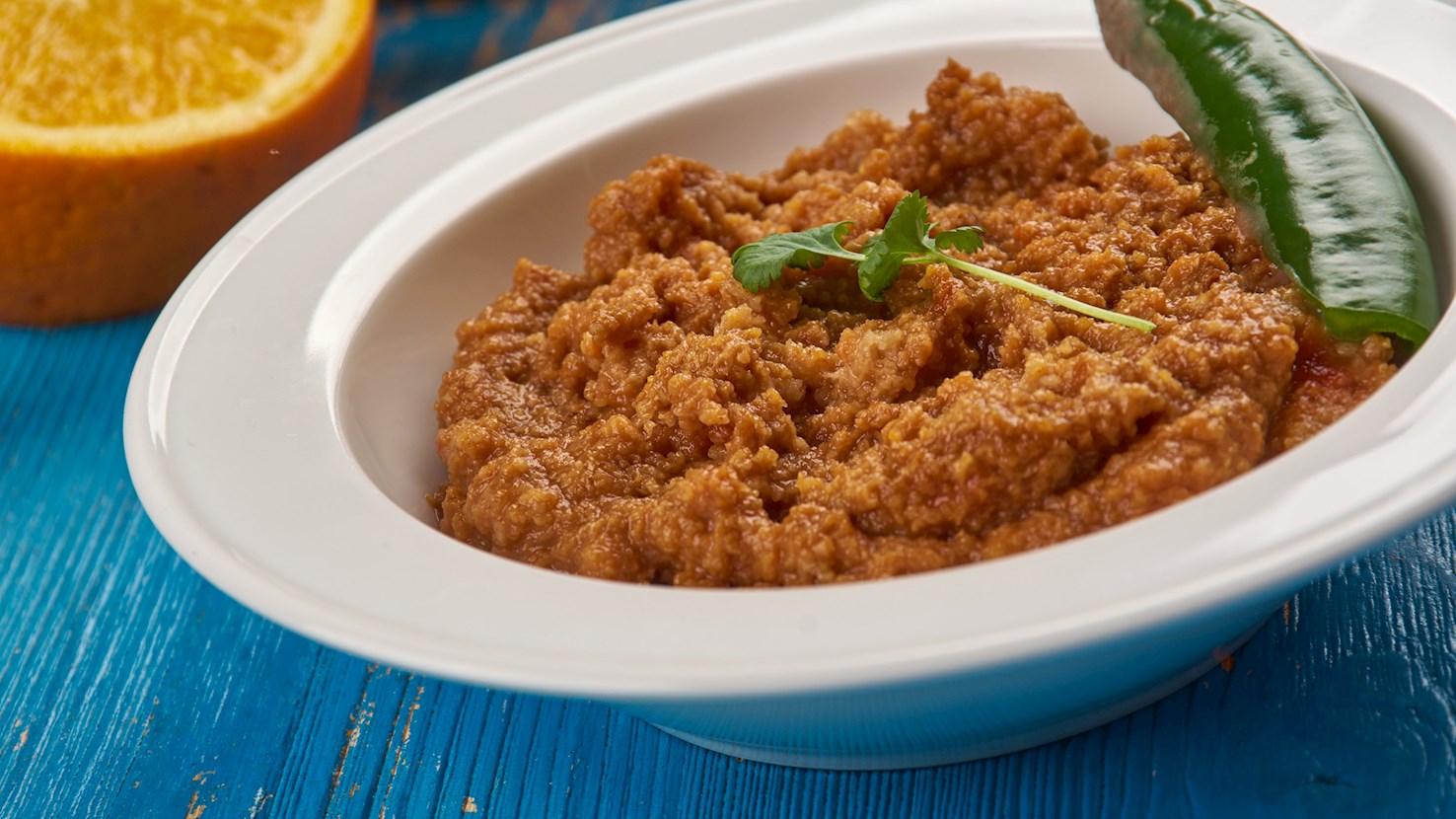
Fitfit is a typical Ethiopian food served for breakfast, made with clarified spiced butter and berbere spices. There are two main versions of fitfit: the one made with injera flatbread, and the other one made with unleavened kitcha bread. Injera fitfit is combined with onions, while kitcha is usually accompanied by a scoop of yogurt.
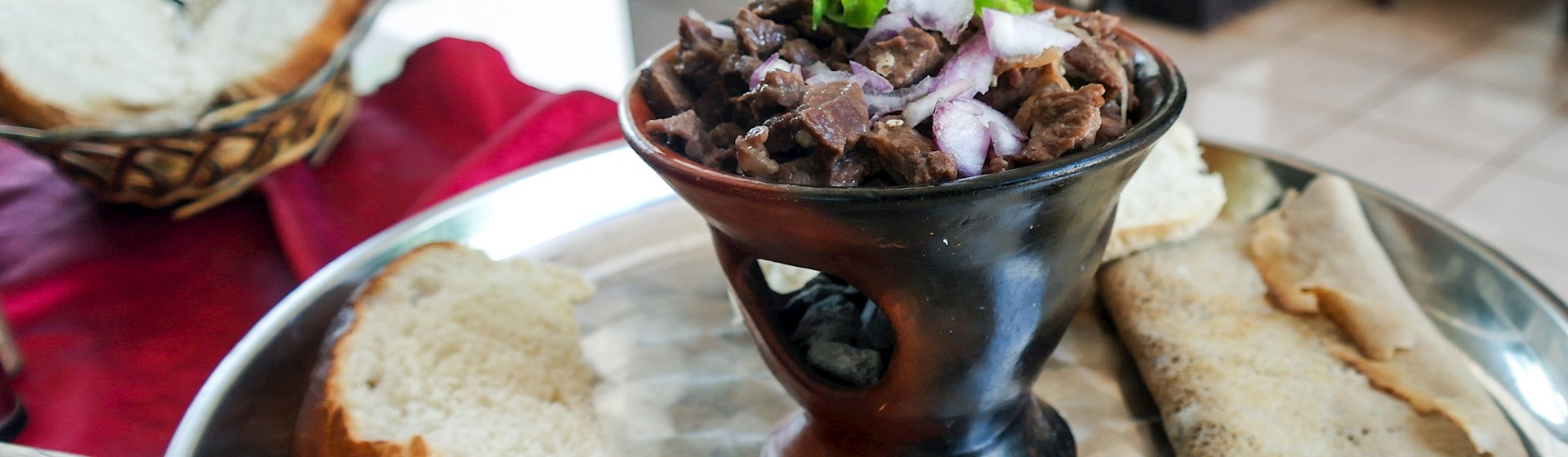
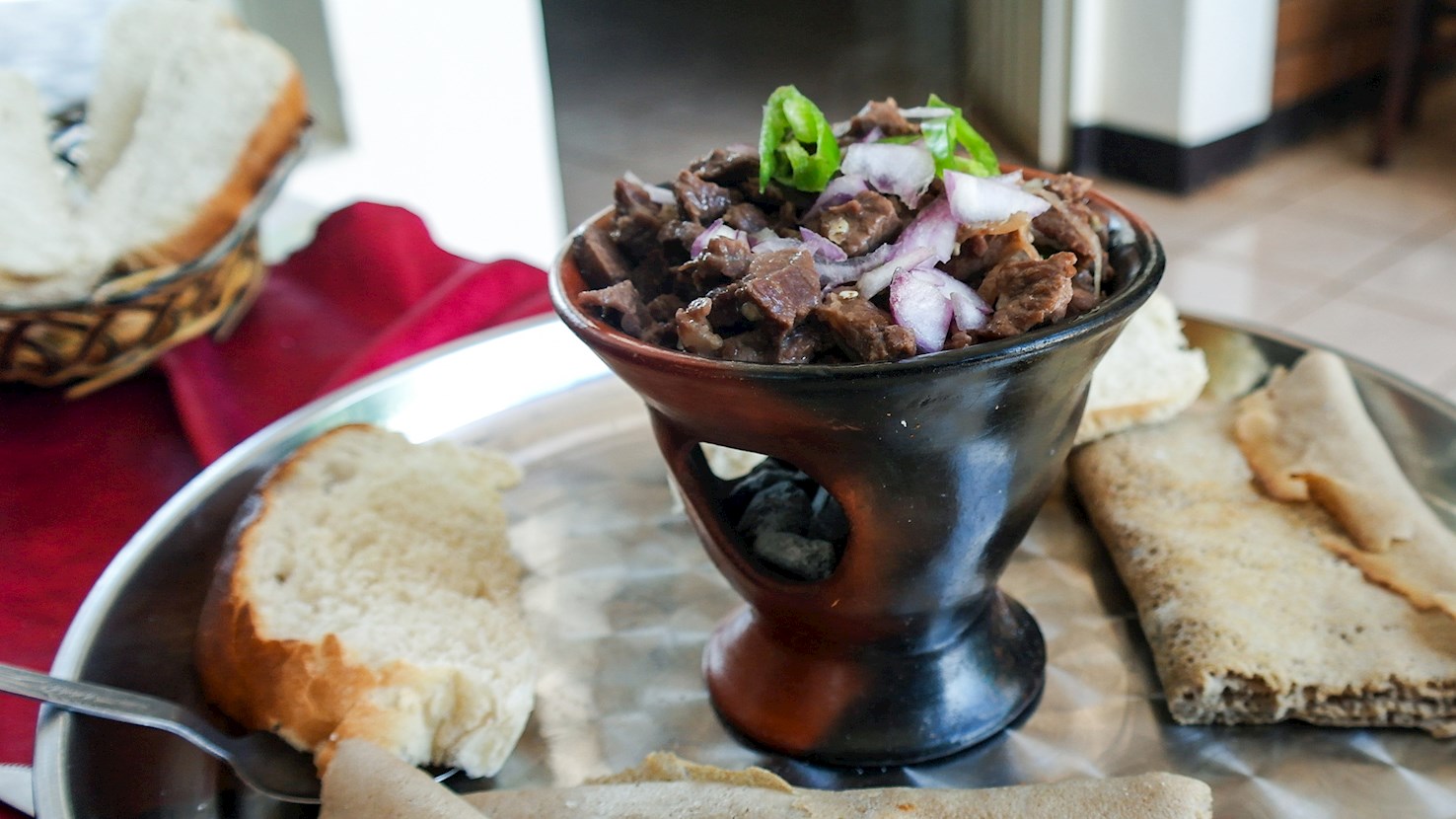
Tibs is a quick stir-fried meat dish made with cubes of beef, lamb, or goat seared over high heat with onions, jalapeños, and spiced clarified butter. Historical accounts from the Royal Chronicles of the Solomonic dynasty in the fourteenth century describe royal banquets where large platters of seared meat were served as a sign of wealth and to honor important guests. The high-heat cooking style is also closely connected with the fasting calendar of the Orthodox Church in the Horn of Africa. After the fifty-five-day vegan fast leading up to Fasika, freshly slaughtered livestock could be cooked quickly without the long simmering required for stews. The meat is first cut into even, bite-sized cubes. A wide metal pan is heated until very hot. A generous spoonful of niter kibbeh, clarified butter flavored with fenugreek, cardamom, and garlic, is melted in the pan. Sliced red onions and the raw meat are added to the hot fat and seared quickly so the outside browns while the inside stays juicy. Minced garlic, fresh ginger, and thick slices of green jalapeño are added shortly before the meat finishes cooking. Fresh rosemary sprigs are often added at the end so their aroma infuses the hot butter and meat. Changing the cooking time and seasonings creates several different styles. Awaze tibs adds a thick, spicy mixture of berbere chili and honey mead, turning the dry stir-fry into a richer, dark red, saucier version. Derek tibs takes the opposite approach. No extra liquid is added, and the meat stays in the hot pan until the outside becomes dry, crisp, and deeply browned. Lamb can replace beef, producing a fattier and gamier flavor and usually requiring less butter in the pan. The hot meat is served directly over injera, the large, spongy sourdough flatbread that absorbs the spiced butter and meat juices. The meal is eaten by tearing off pieces of injera by hand and using them to pick up the meat. A small clay brazier filled with hot charcoal is sometimes placed at the table beneath a special pan called a shekla, keeping the tibs hot and sizzling while it is served. Small portions of bright orange mitmita spice powder or sharp yellow mustard paste are often placed around the edges of the injera for dipping.
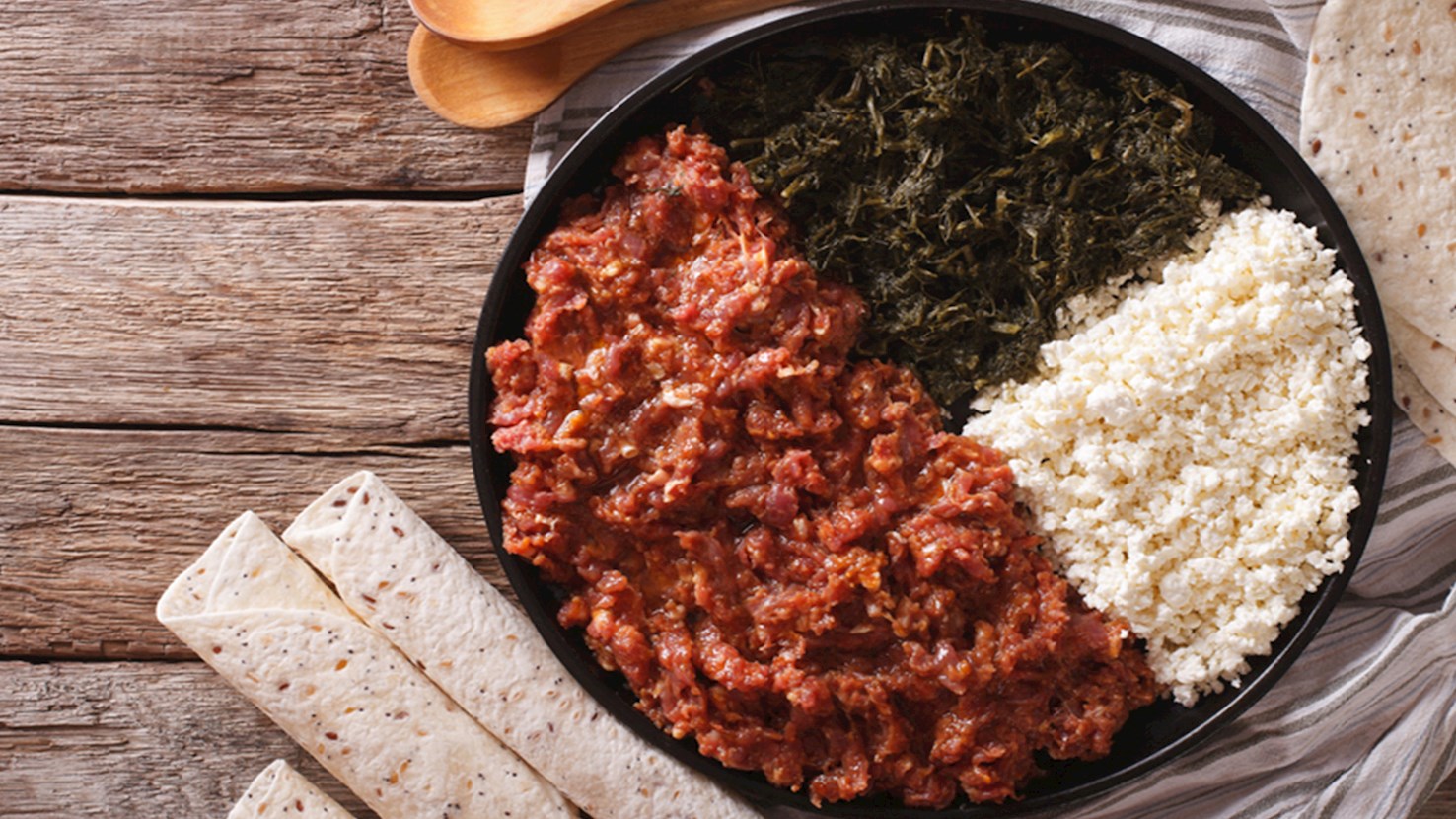
Kitfo is a popular Ethiopian dish consisting of raw beef that is freshly ground and combined with Ethiopian butter (niter kibbeh) and spices such as Cayenne pepper and cardamom. The dish is served with a variety of breads, with injera being a staple of every restaurant that serves kitfo. Although kitfo is usually served on its own, it can also be accompanied by salty cheeses or collard greens.
Injera fit-fit is a fit-fit variety that is, in its basic version, prepared with a combination of berbere spices, clarified butter, onions, and torn pieces of injera flatbread. Chunks of meat or leftover meat sauces are often added to the dish, which is sometimes served for breakfast with yogurt and chili peppers on the side. When served in a bowl, injera fit-fit is consumed with a spoon, but when it’s served on top of another piece of injera flatbread, it is customarily consumed with the right hand.
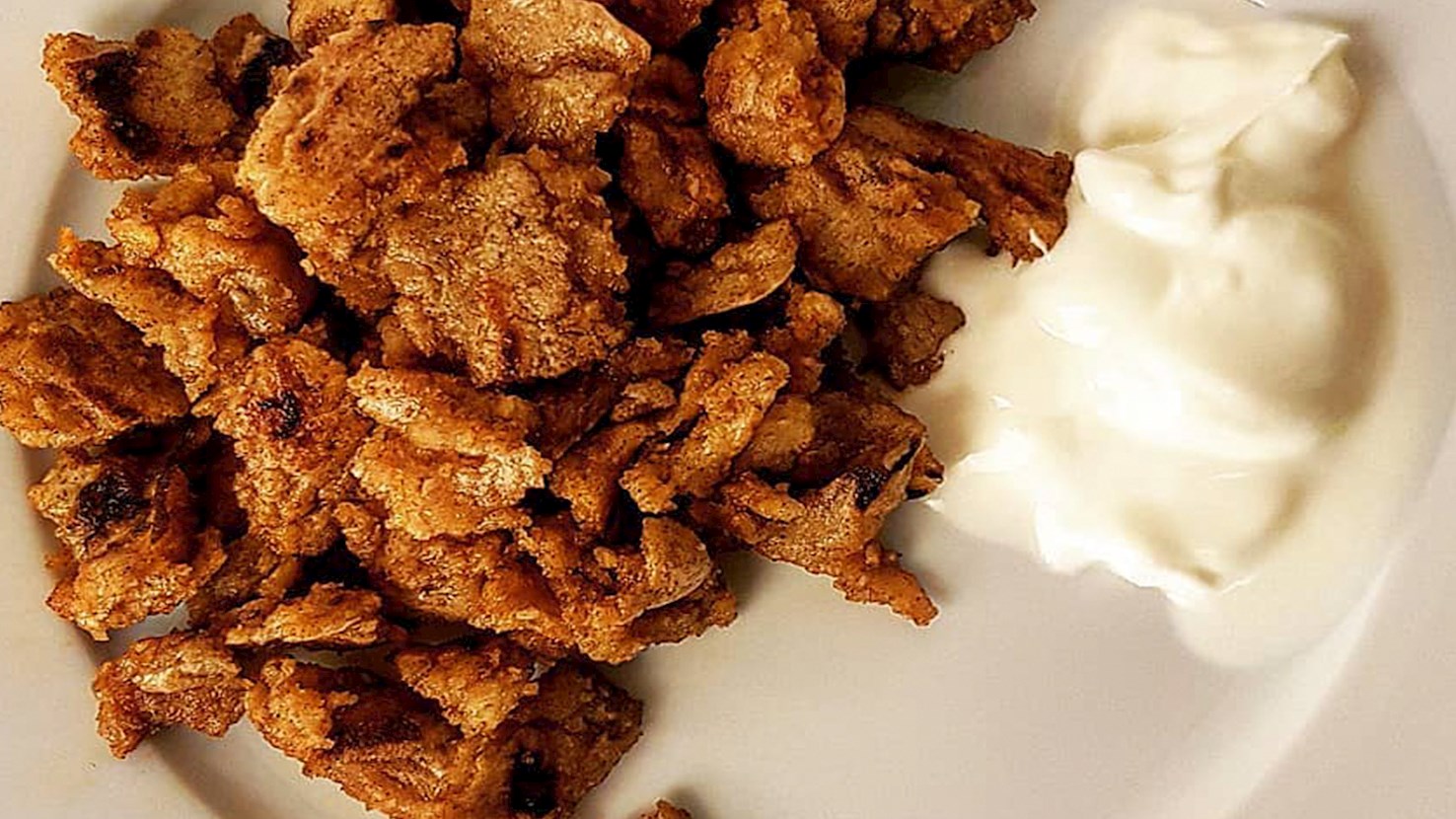
Kitcha fit-fit is a fit-fit variety prepared with a combination of torn pieces of kitcha flatbread, clarified butter, and berbere spices. The dish is traditionally served for breakfast, when it’s accompanied by plain yogurt. Unlike most Ethiopian dishes, kitcha fit-fit is typically consumed with a spoon instead of using the right hand.
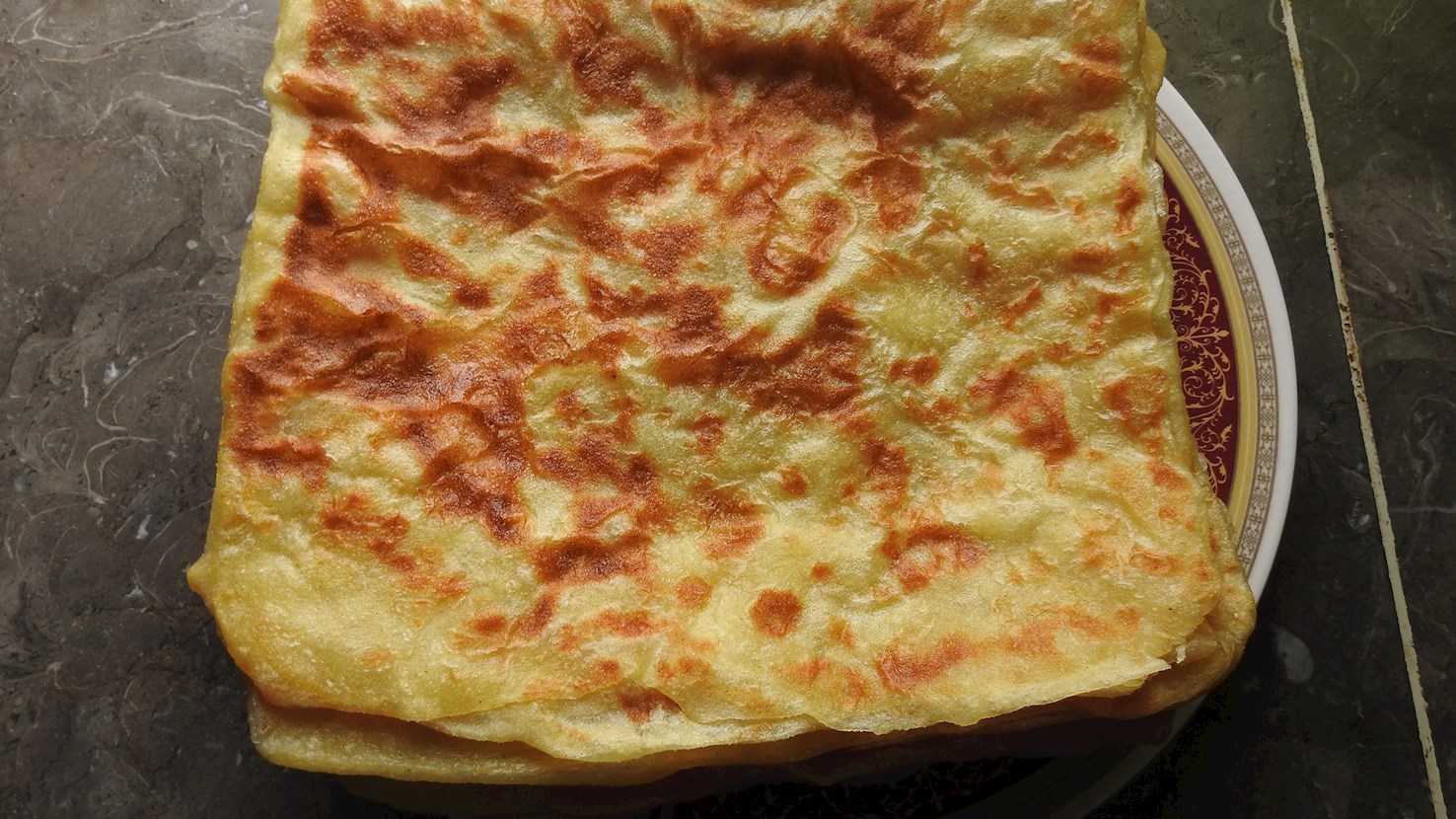
Fatira is a traditional street food item that is commonly consumed for breakfast, consisting of a large, crispy, wheat flour pancake. It is traditionally served with scrambled eggs, honey, or both. Fatira is often cut into smaller pieces, and it is especially popular during Eid-al-Fitr in Ethiopia.
TasteAtlas food rankings are based on the ratings of the TasteAtlas audience, with a series of mechanisms that recognize real users and that ignore bot,
nationalist or local patriotic ratings, and give additional value to the ratings of users that the system recognizes as knowledgeable.
TasteAtlas Rankings should not be seen as the final global conclusion about food. Their purpose is to promote excellent local foods,
instill pride in traditional dishes, and arouse curiosity about dishes you haven’t tried.



What People Say