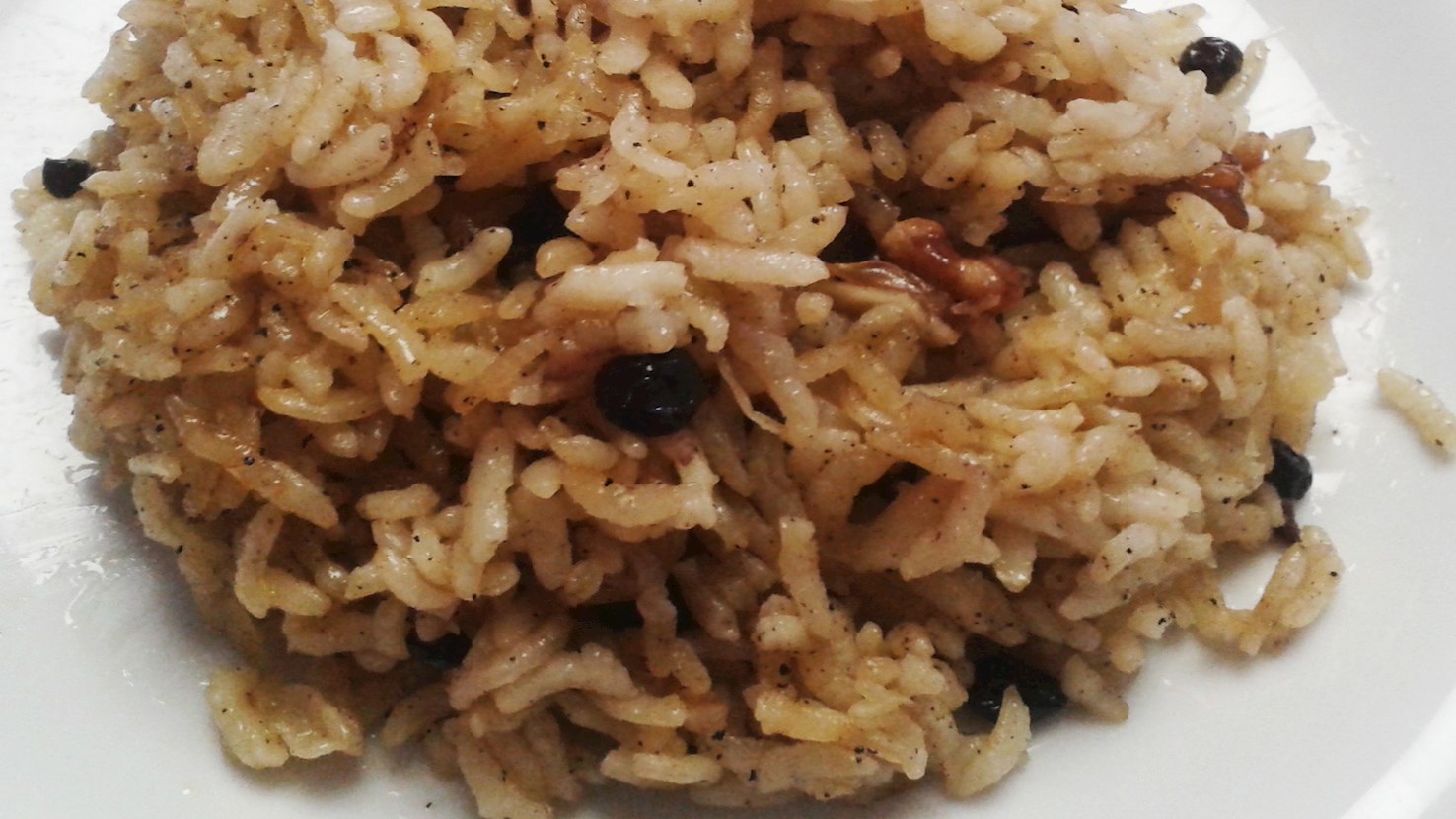
İç pilav is a flavorful Turkish pilaf made with a combination of rice (often of the Baldo variety), onions, currants, tomatoes, mint, and pine nuts. It is typically flavored with allspice, cinnamon, salt, and pepper. The ingredients are combined, and when the rice is cooked, the pilaf is ready to be stirred for one last time, then consumed. İç pilav is traditionally used as an accompaniment to roasted or fried meat dishes, but it is sometimes also used as a stuffing.
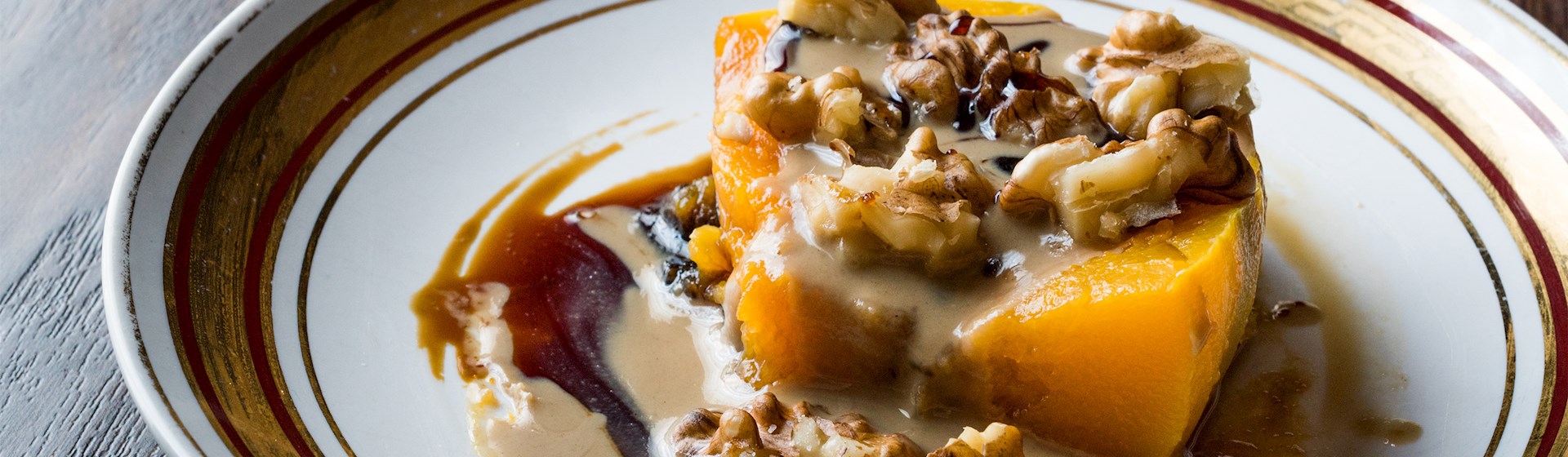
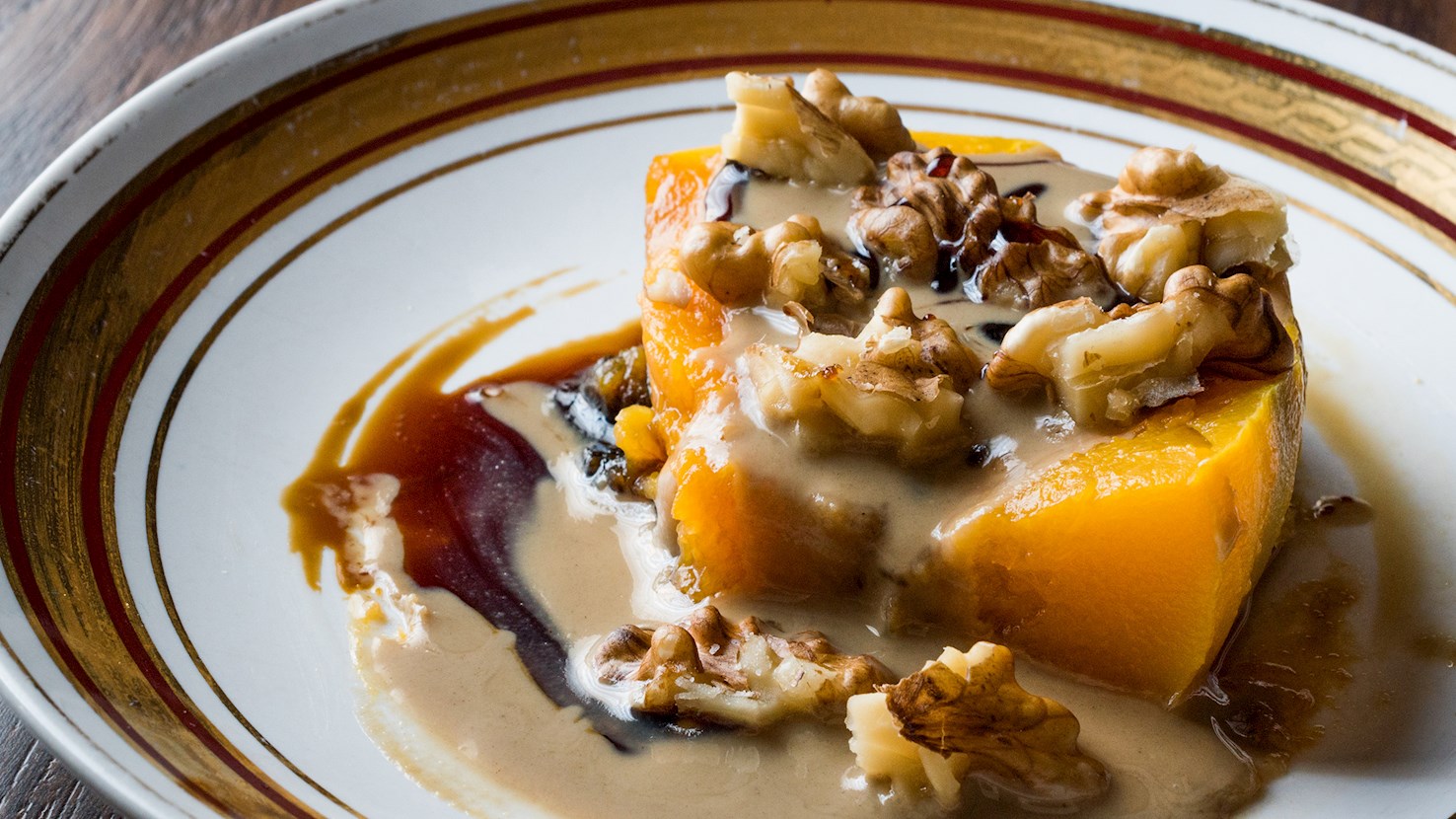
Kabak tatlısı is a classic Turkish dessert consisting of candied pumpkin. The pumpkin is peeled, cut, then baked in its own juices with sugar. When baked, it is traditionally topped with crushed walnuts and thick clotted cream called kaymak. If desired, a few cinnamon sticks or cloves can be added to the pumpkin pieces before baking. This dessert is especially popular during autumn and winter.
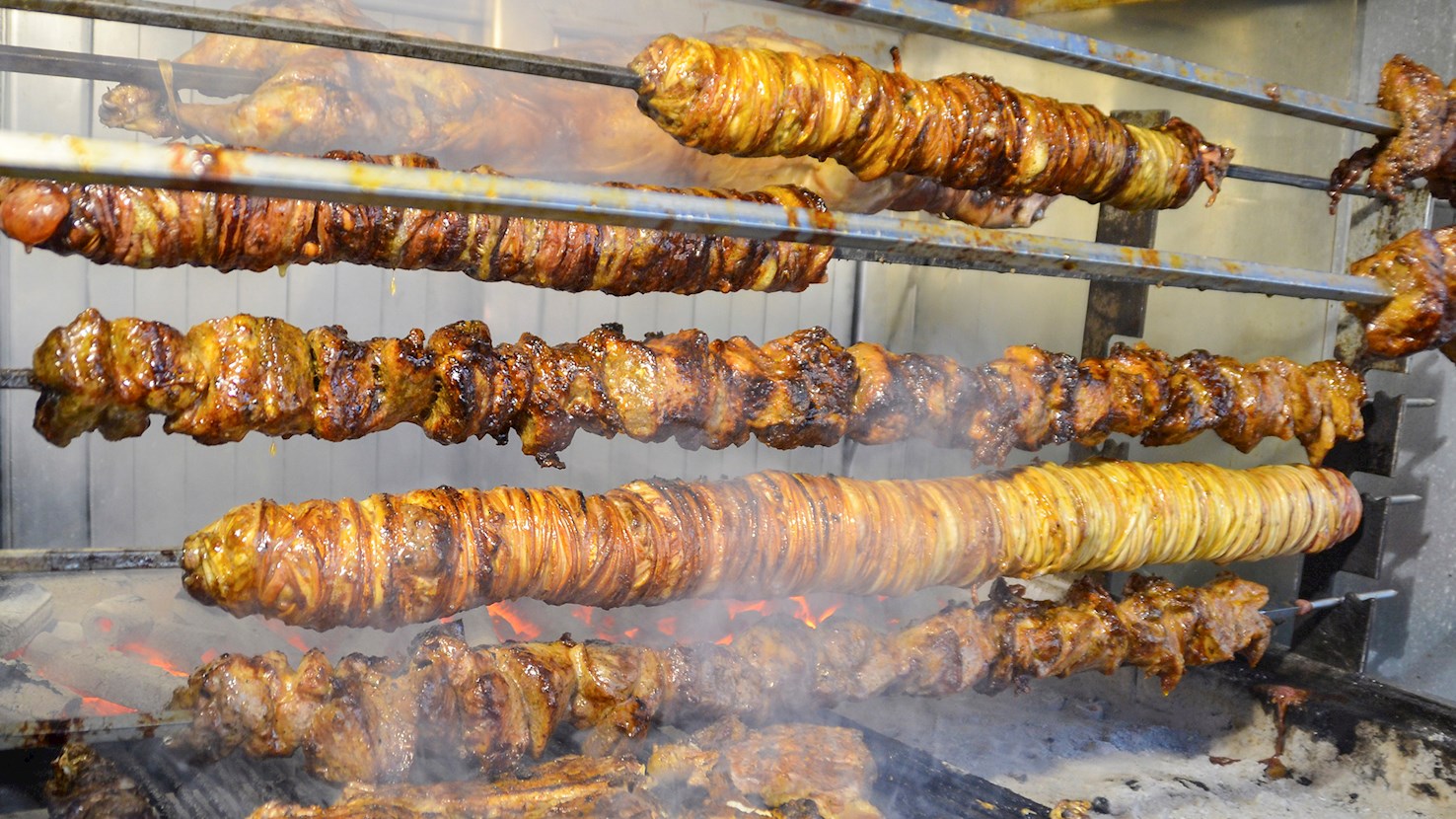
Kokoreç is a traditional dish that's also popular in other countries, especially in Greece, where it's known as kokoretsi. However, there are some differences between the Turkish and Greek versions. In Greek cuisine, people use lamb offal such as lungs, kidneys, hearts, and liver, and in Türkiye, they use small and large intestine and sweetbreads without any additional ingredients. For the Turkish version, kokoreç, the ingredients are rinsed and cleaned, then wrapped onto iron skewers to be grilled over charcoal. Once done, the dish is usually served with bread or tucked inside the bread with various spices such as oregano, cumin, and chili flakes. You can find this dish at street food vendors or in countless kokoreç restaurants.
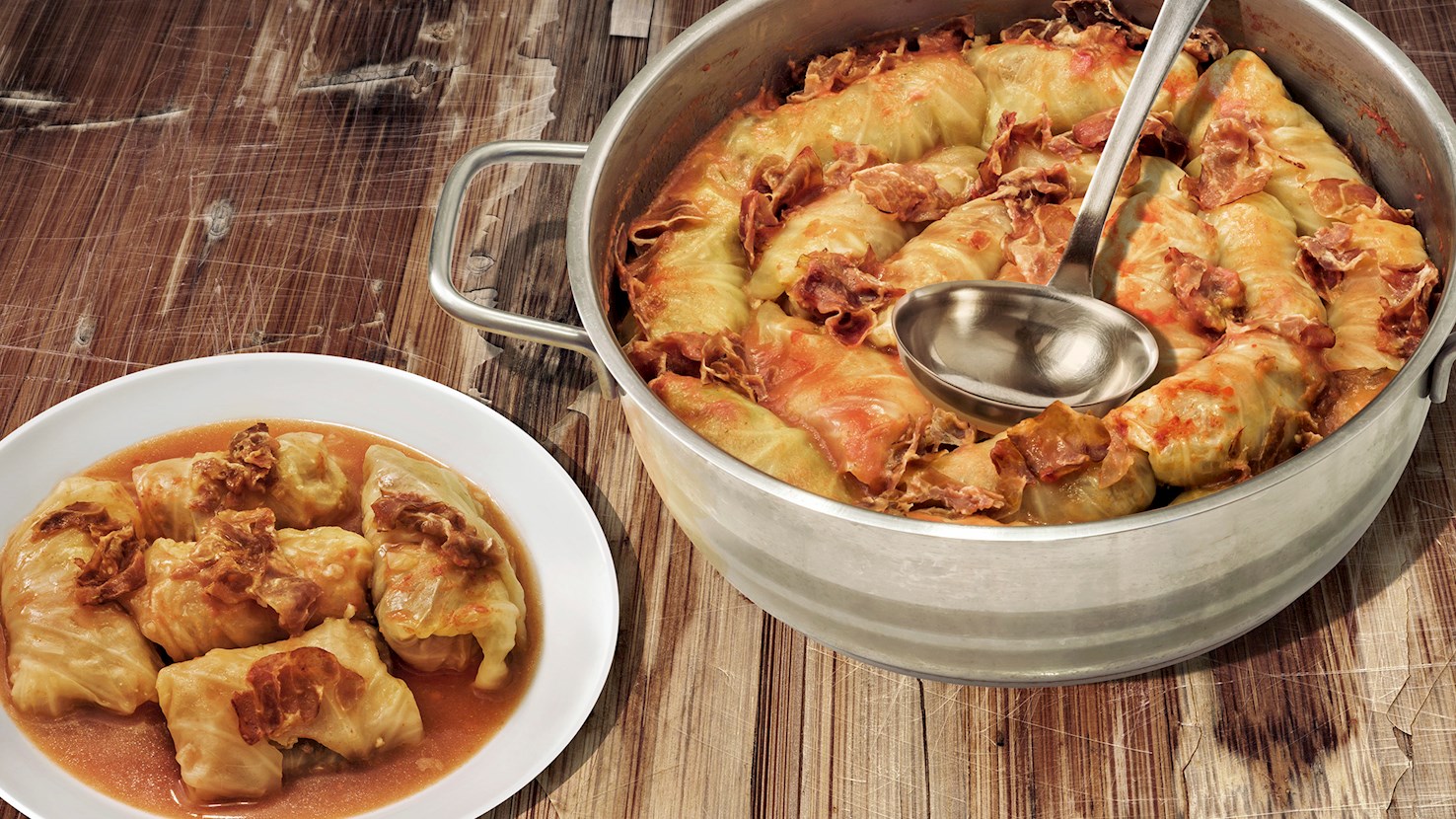
One of the staples of traditional Turkish cuisine, sarma consists of a filling that is snugly surrounded by leaves or leafy vegetables. There are numerous versions of this dish but the mixture typically combines ingredients such as minced meat, rice or bulgur, various herbs, seasonings, red pepper, paprika, ground sumac, or tomato sauce, while the typical wrapping usually includes vine, cabbage, or sauerkraut leaves, or a variety of leafy vegetables such as collard greens and swiss chard. Having its roots in the Ottoman Empire, sarma is also traditionally consumed in the Balkans, the countries of Central Europe, the South Caucasus, and the Middle East. Although it is commonly enjoyed as a filling lunch or dinner (typically during the winter season), sarma is often prepared on special occasions and holidays. The dish is usually accompanied by plain yogurt, mashed potatoes, and crusty bread on the side.
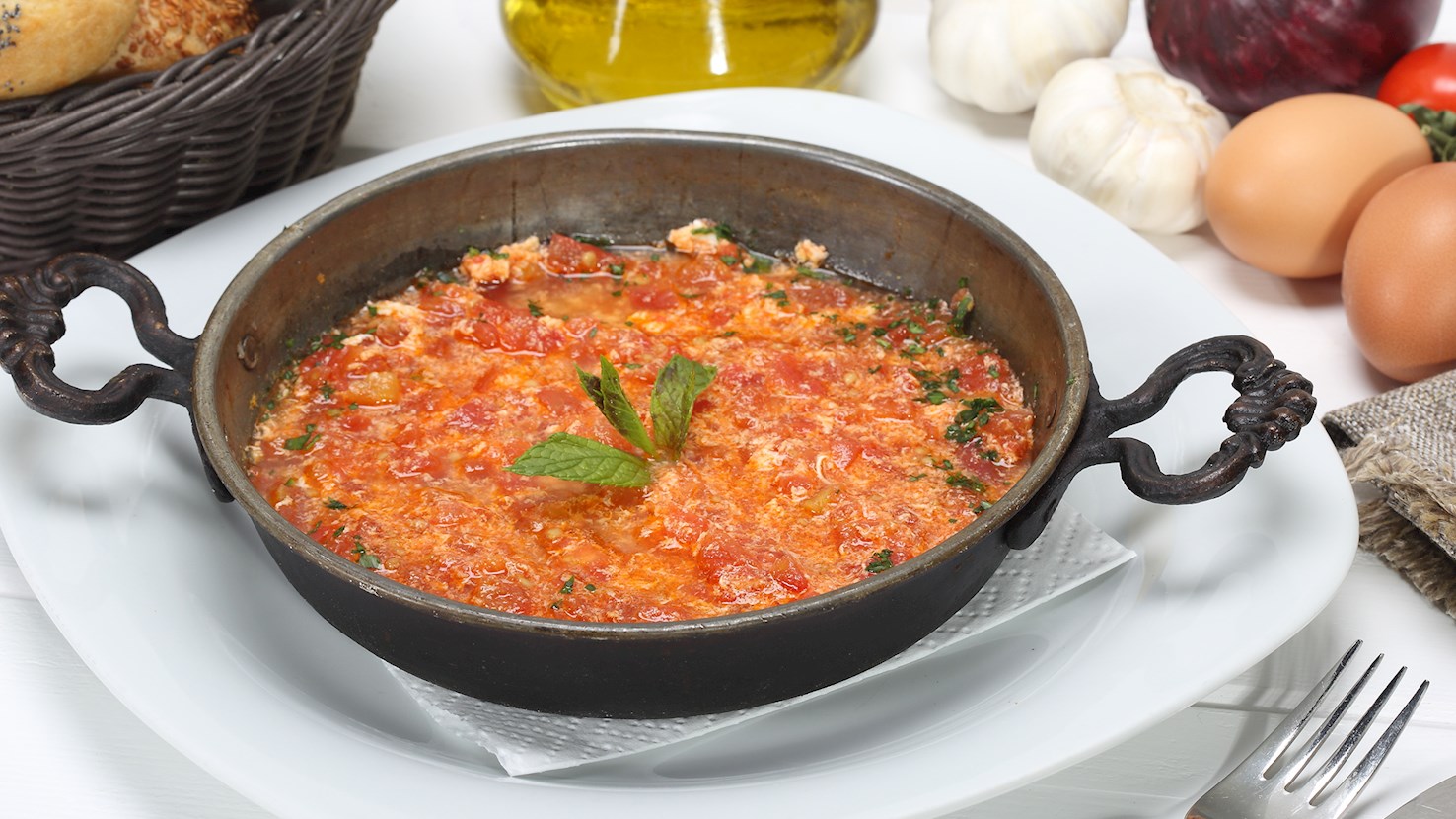
Menemen is a traditional spread consisting of tomatoes, eggs, peppers, and various spices. There are many version of menemen, so it can also contain garlic, cheese, spinach, sausage pieces, or onions (when menemen is served as a main dish). It is usually sold at breakfast or brunch places in Turkey, and most restaurants serve it in metal pans, with a big basket filled with bread as an accompaniment. Most people don’t use forks, as they opt for bread as the utensil of choice, scooping up this flavorful spread in the process.
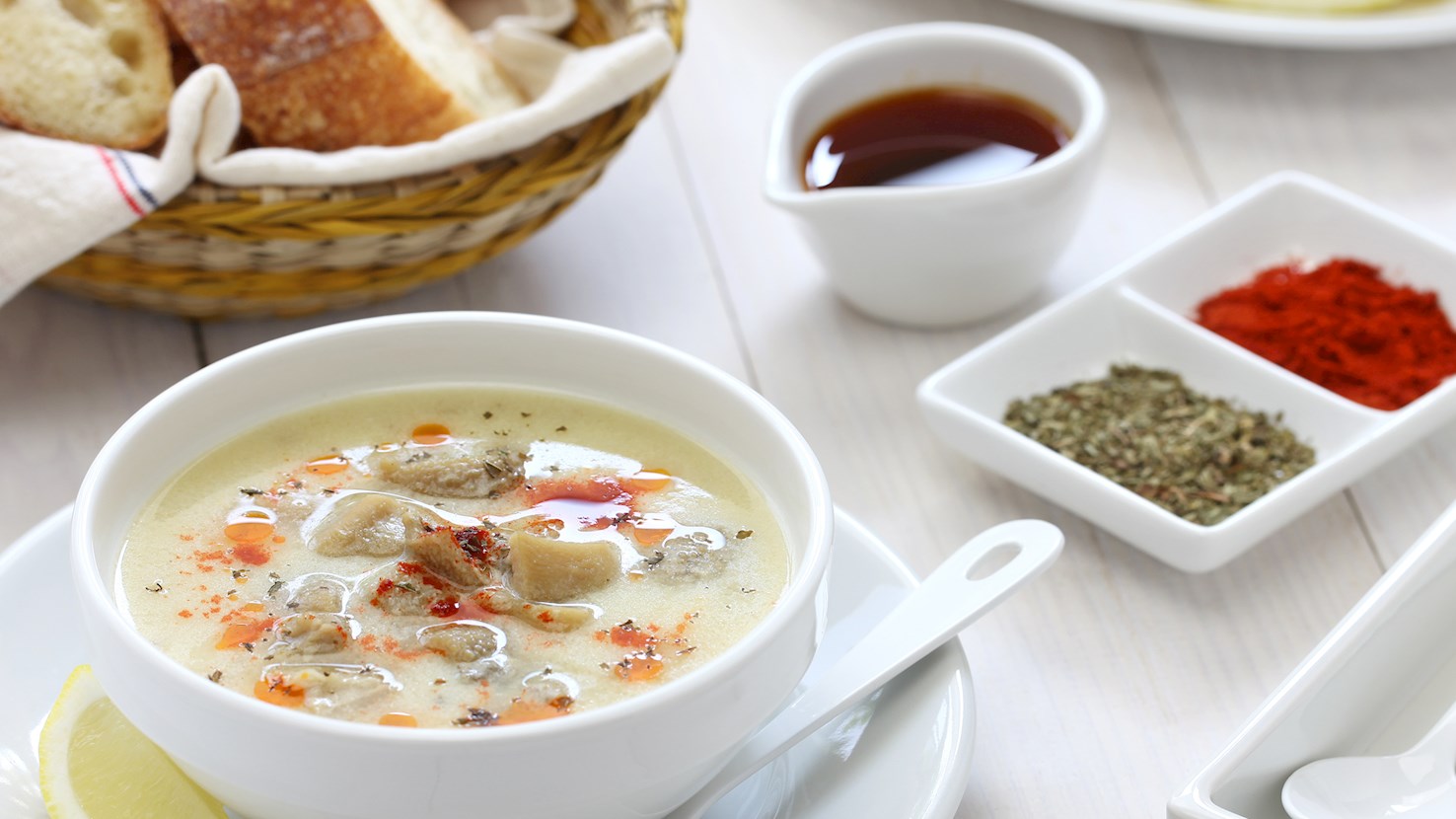
İşkembe çorbası is a traditional tripe soup that is known as a great hangover cure. It consists of tripe, water, milk, flour, butter, and egg yolks. The soup is usually seasoned with salt and finished with red pepper, vinegar, and garlic, giving it a bold flavor. It is recommended to serve the soup while still hot.
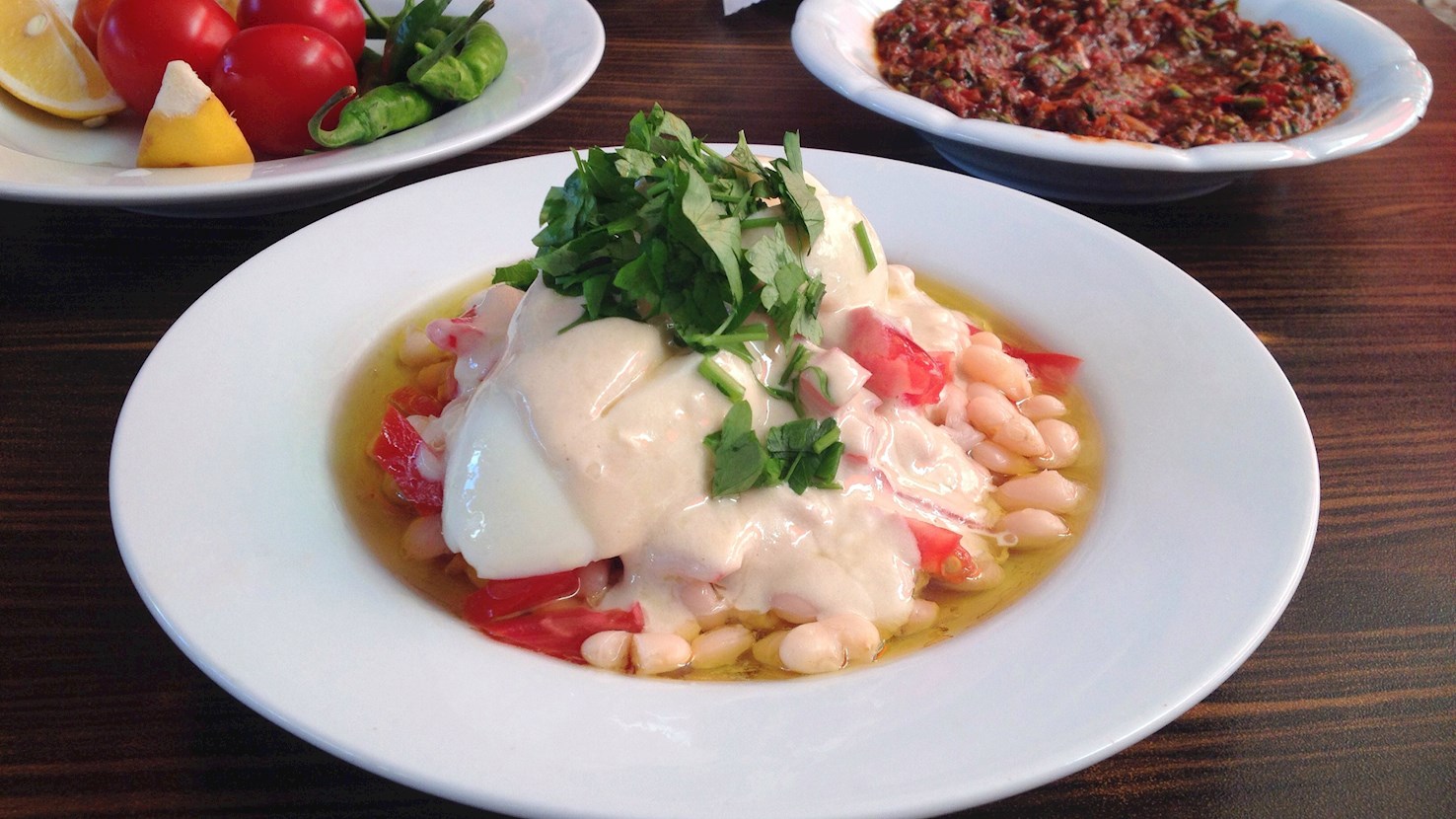
Piyaz is a traditional salad. In most of the country, it's a general term for a dish of dried beans, parsley, onions, and sumac. In Antalya, however, piyaz also contains a rich and smooth sauce consisting of tahini, lemon juice, and vinegar. The beans are topped with the sauce, and the dish is usually dressed with chopped tomatoes, sliced onions, hard-boiled eggs, olive oil, and parsley. Piyaz is often eaten as an accompaniment to köfte and similar grilled meats, but it can also be included in a meze selection.
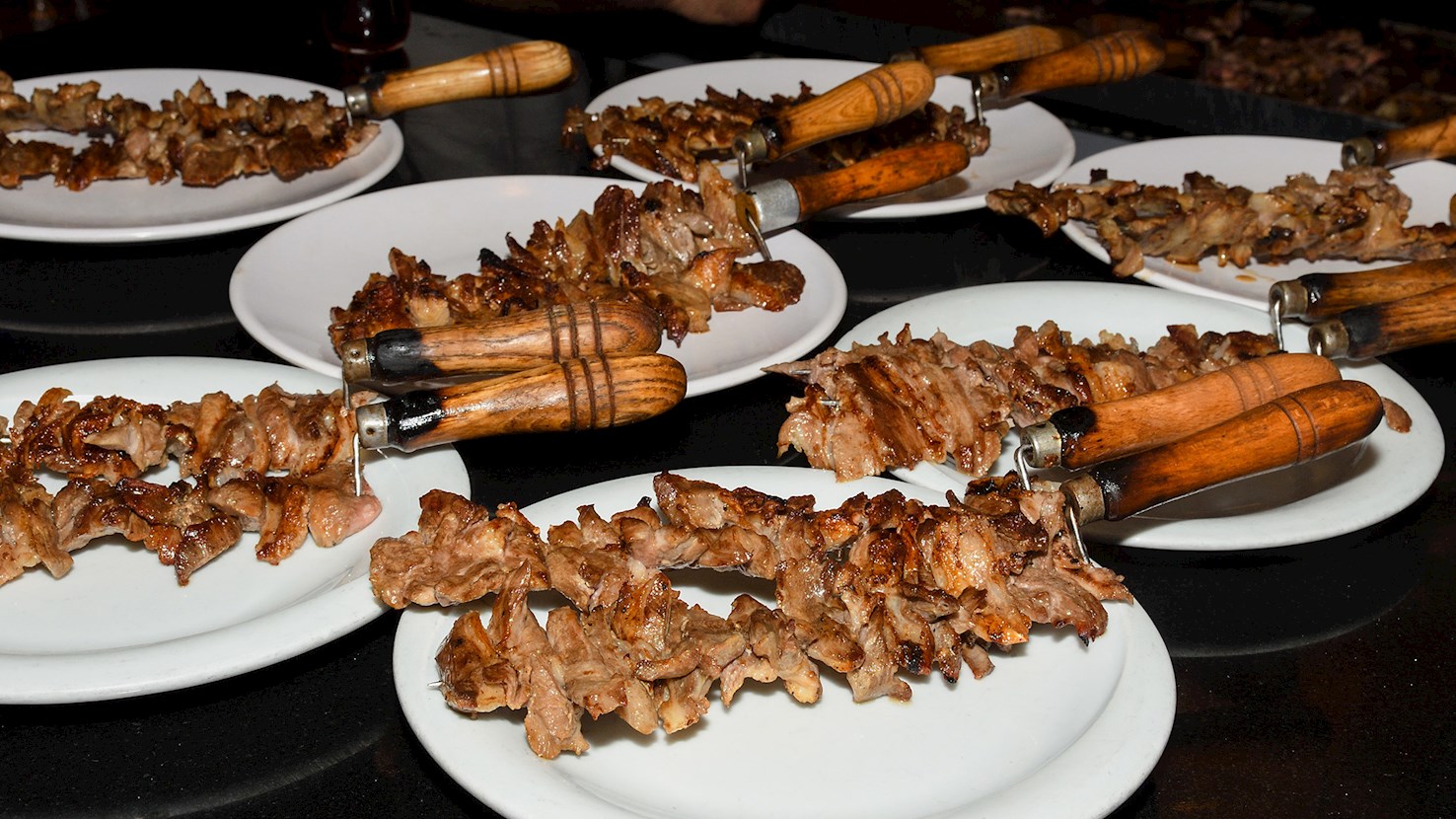
Oltu cağ kebabı is a horizontally roasted lamb kebab identified with the Oltu district of Erzurum Province in northeastern Türkiye, where the product took shape and continues to be defined by local practice and oversight. The kebab’s emergence is tied to sheep and lamb husbandry in Oltu and its surroundings, the availability of young lamb with a balanced fat profile, and a cooking method adapted to regional conditions that favored slow, controlled roasting on a horizontal spit rather than vertical stacking; over time, the name “Oltu” became inseparable from the product, and the name Oltu cağ kebabı is recorded in linguistic sources and in world culinary literature, a point that distinguishes it from similar regional preparations that may share techniques but not designation. Preparation centers on marinating carefully selected lamb, typically shoulder and leg cuts, with salt and restrained seasonings, then layering the meat onto a horizontal skewer and roasting it gradually over wood embers so the fat renders evenly and bastes the meat; as the exterior reaches doneness, thin slices are shaved off and served immediately, a service rhythm that prioritizes temperature and texture over batch holding. Serving is characteristically done on the cağ skewer itself, which functions both as utensil and presentation, and portions are often accompanied by flatbread and simple sides that do not compete with the meat; the method produces slices that balance exterior browning with a moist interior, and the horizontal orientation allows steady heat exposure that differentiates the cut and mouthfeel from vertical-spit kebabs. The product’s naming and oversight are formalized by the authorized supervisory body (Oltu Chamber of Commerce and Industry), which maintains standards tied to geographic identity and production criteria. Oltu cağ kebabı is commonly eaten as a shared table order served in successive cağs rather than a single plated portion, and it is paired most often with ayran, plain yogurt drinks, or lightly acidic beverages that refresh the palate, while bread and onions remain the customary accompaniments.
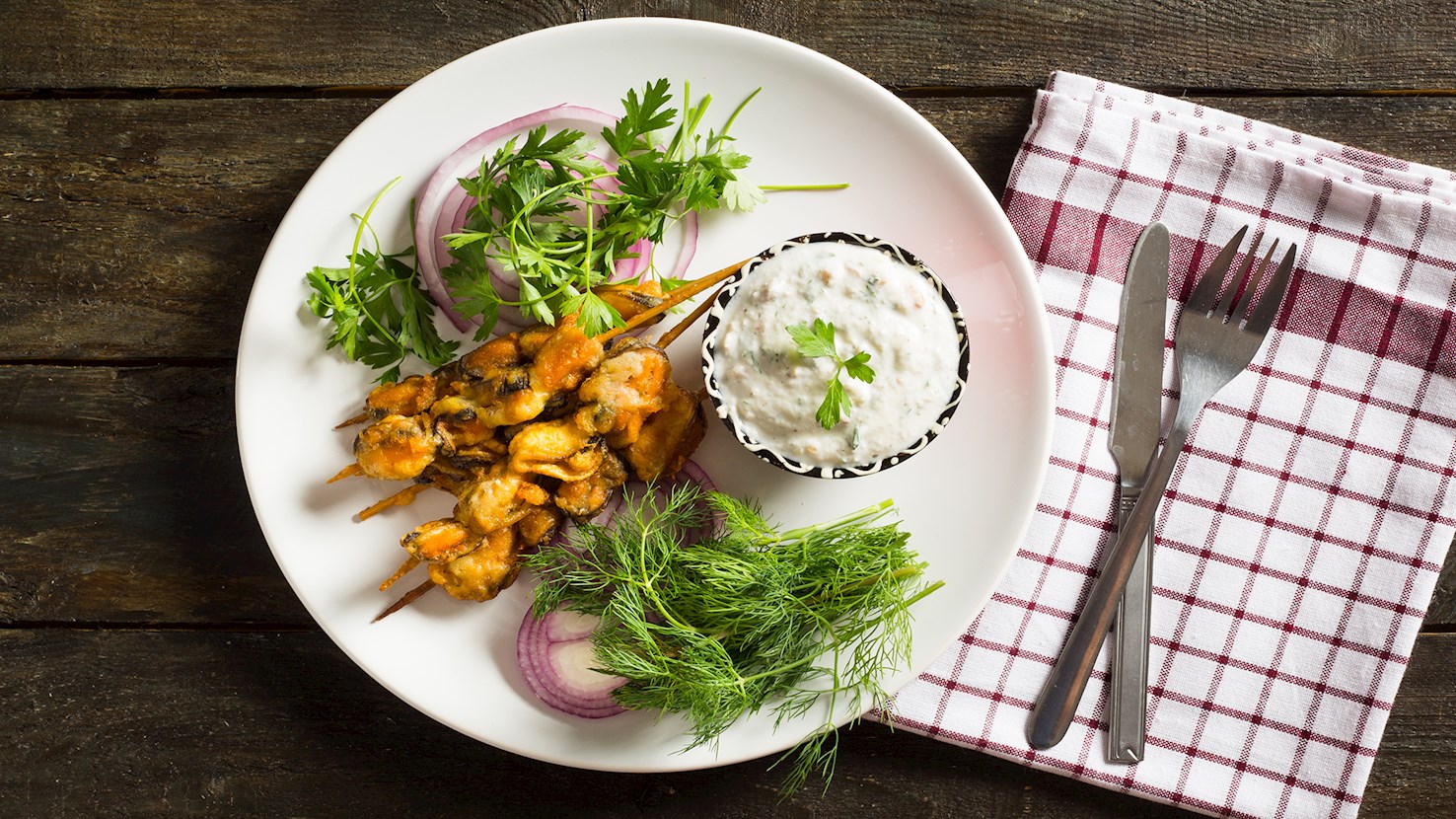
Midye tava is a delightfully good Turkish street food that is also served as an appetizer or a snack, consisting of fried mussels on a stick. Crispy and flavorful, the mussels are first battered, then deep-fried in a big metal cauldron. Hot oil is placed in the center of the cauldron, which has quite a wide rim in order for mussels stick to be arranged on it, as well as to drain all of the excess oil. The wide rim has another important function – it keeps the mussels warm, since the dish is usually sold by street vendors, especially in seaside neighborhoods scattered throughout Istanbul. When served, the mussels need only a dash of salt and a side of tangy tarator sauce for dipping.
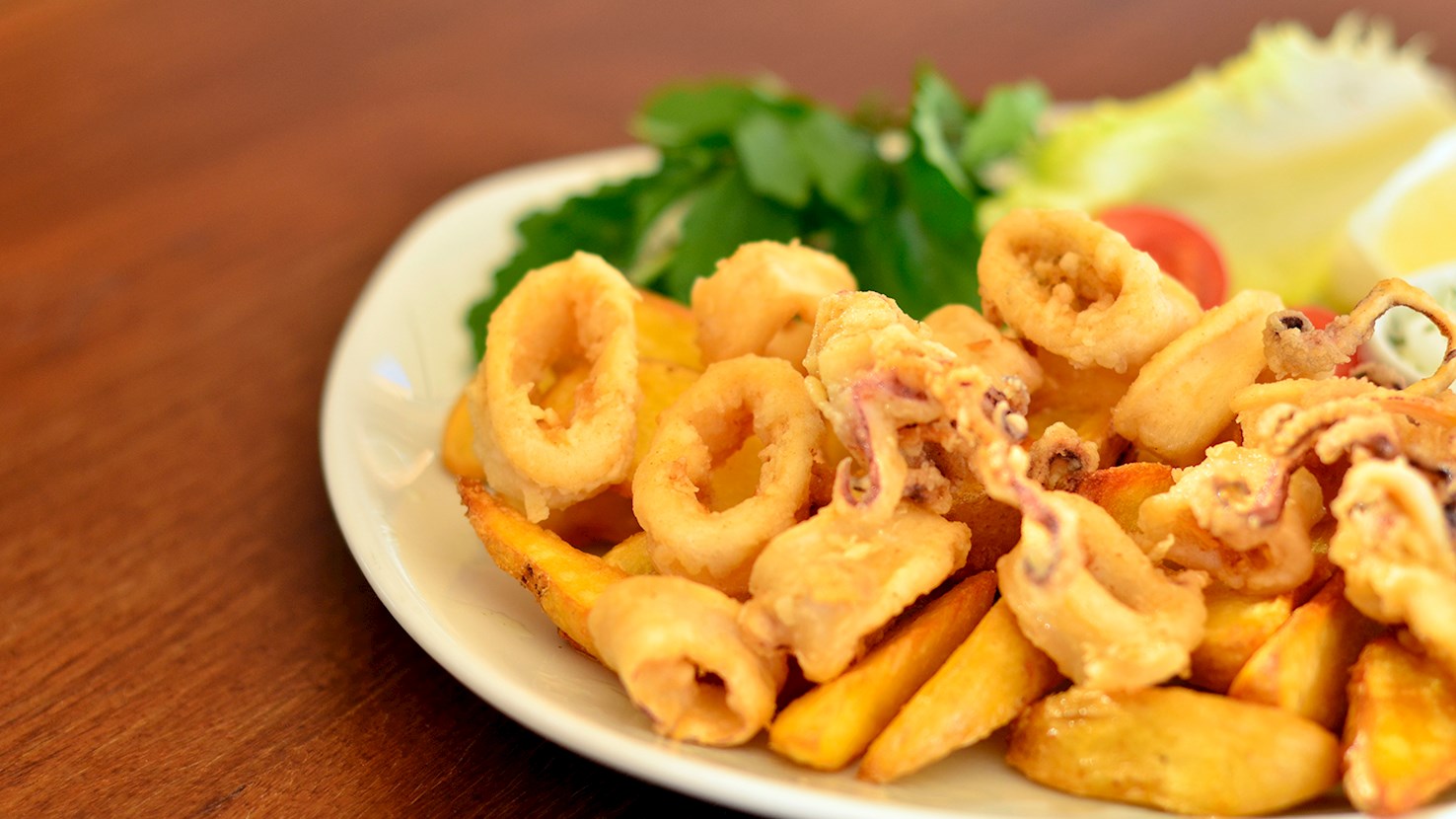
Kalamar tava is a traditional dish that's usually served as a meze. The dish consists of cleaned squid that's cut into thick rings, soaked in milk, then dipped in a batter of flour, baking soda, and salt before it's fried in hot oil. The squid rings can be flavored with herbs or pepper flakes, if desired. Once fried, the rings are typically served with a Turkish tartar-like sauce on the side for dipping, along with a few lemon wedges.
TasteAtlas food rankings are based on the ratings of the TasteAtlas audience, with a series of mechanisms that recognize real users and that ignore bot,
nationalist or local patriotic ratings, and give additional value to the ratings of users that the system recognizes as knowledgeable.
TasteAtlas Rankings should not be seen as the final global conclusion about food. Their purpose is to promote excellent local foods,
instill pride in traditional dishes, and arouse curiosity about dishes you haven’t tried.



What People Say