This internationally known, decadent, and sugar-packed dessert is usually made with a mixture of flour, sugar, yeast, and salt, which is deep-fried and then bathed in syrup or honey. The origin of lokma fritters is ancient but often debated. It is presumed that they first appeared in Greece or Turkey, though some suggest Arabic origin. The dish is considered to be one of the oldest recorded desserts in Greek history. It is said that the pastries were even given to winning Olympians as a treat and were called honey tokens. Loukoumades, or loukmades in Cyprus, can be found throughout the streets of Greece, in shops selling nothing else but this caloric dessert. Alternatively, loukoumades can be topped with Greek cheese, chocolate, sesame seeds, or walnuts. In Turkey, lokma fritters are best enjoyed while still warm. They are drizzled with honey or syrup and can occasionally be sprinkled with either ground cinnamon, walnuts, or pistachios. The name probably stems from from Arabic luqma, meaning bite or mouthful, and it is said that lokmas were first prepared in Turkey by the sultans' cooks in palaces of the Ottoman Empire, though the oldest documentation of a similar dish was even found in the tomb of Ramses IV. In some Middle Eastern and Levant countries, this dessert is known as luqaimat or luqmat al-qadi, which roughly translates as judge's mouthful. The deep-fried balls are usually covered with date syrup, honey, or flavored syrups, while some prefer them sprinkled with various seeds. They are also often flavored with saffron or cardamom. The dessert is traditionally made in the month of Ramadan, and consumed after iftar, or breaking the fast. The dish is also found in some African countries, where it appears under various names.
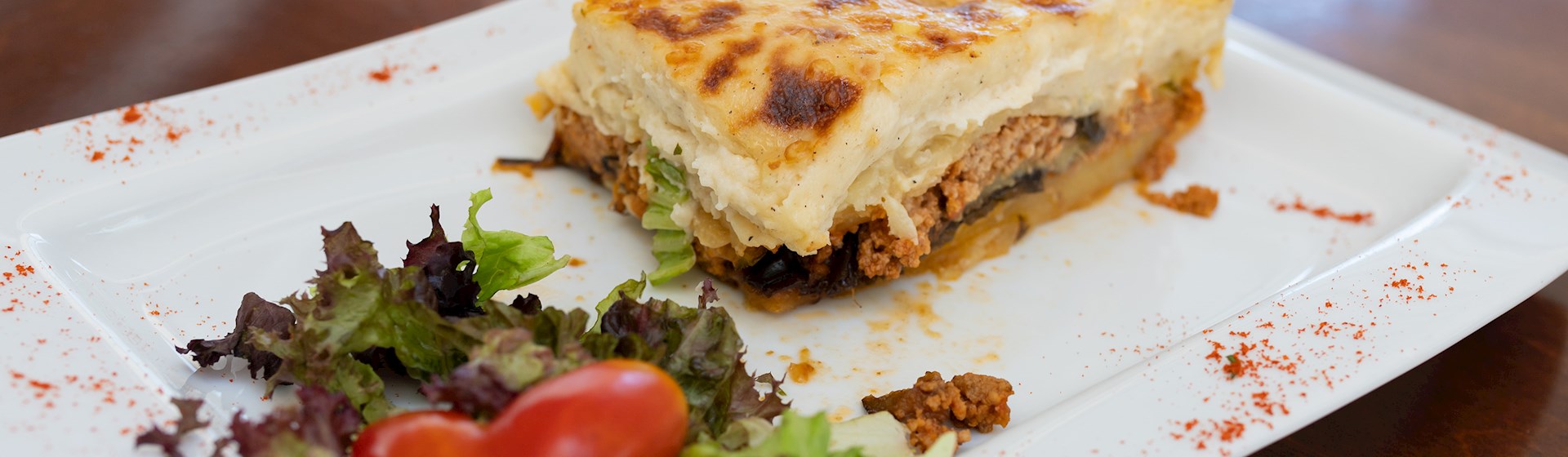
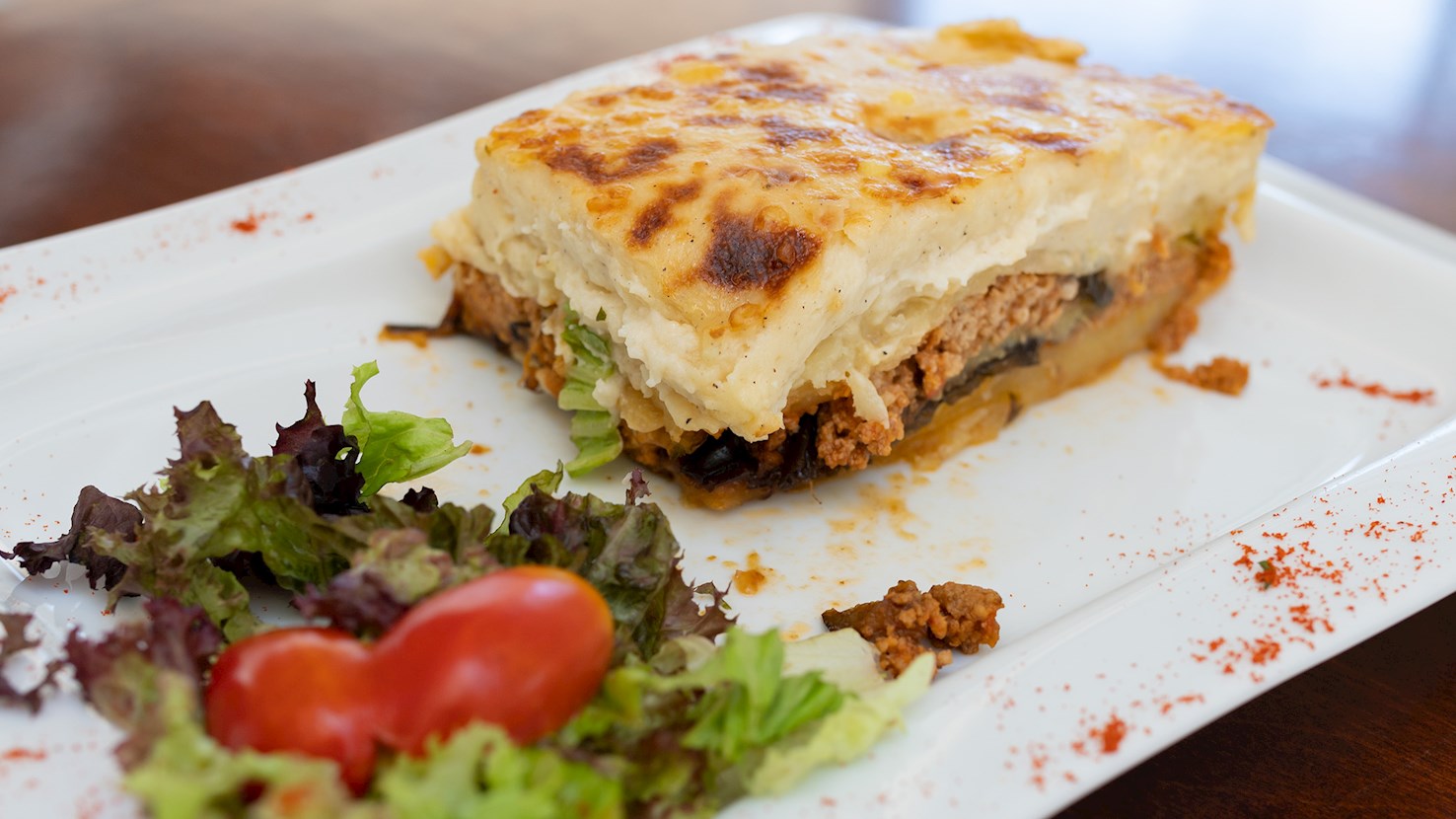
Moussaka is one of the best known Greek dishes – a baked casserole consisting of ground lamb meat and layers of sliced eggplant, covered with a thick layer of bechamel sauce that gets golden and crusty as it bakes. The lamb is sometimes replaced with beef, while the eggplants might be replaced with zucchini or potatoes. It is likely that moussaka has Middle-Eastern origins, and it was introduced when the Arabs brought the eggplant to Greece. Its Greek name mousakás is derived from the Turkish musakka, which came from the Arabic word musaqqa'ah, meaning chilled. Moussaka is not an everyday dish–it is baked as a special treat for guests and family on festive days. An exotic version of lasagna, without the pasta, moussaka is exceptionally healthy due to the abundance of vegetables used in the dish. It is commonly cut into squares and served warm, not hot, as the dish needs some resting time in order to firm up.
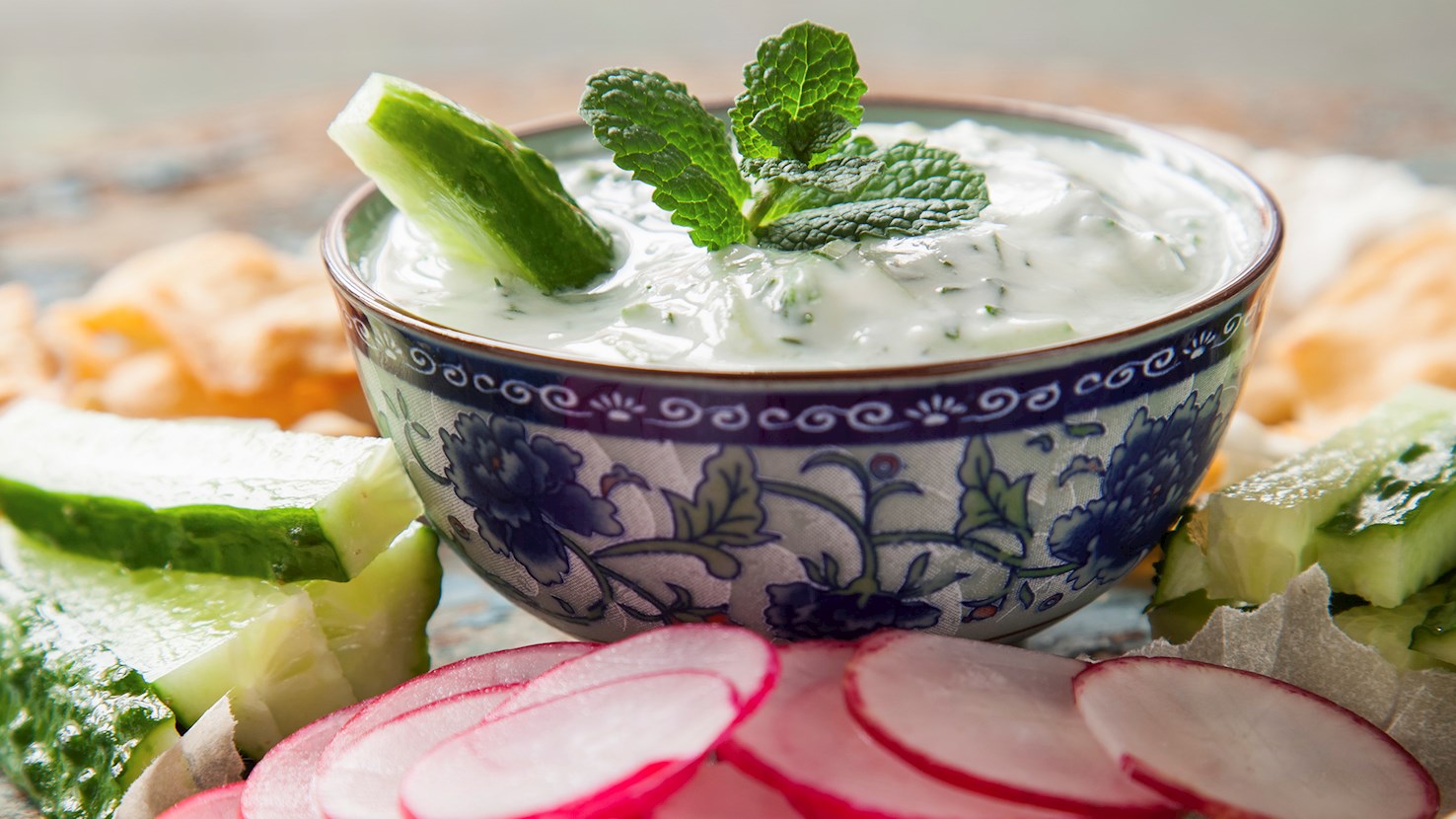
Tzatziki is a Greek concoction made from yogurt, cucumbers, garlic, and numerous herbs and spices such as dill, mint, or parsley. It is usually served as a sauce accompanying many meat dishes, as a simple dip, or an appetizer. Its name is derived from the Turkish word cacik, denoting a very similar dip, although some suspect that tzatziki was derived from the Indian raita dip. Tzatziki is always served cold, and it is especially popular to serve it with dishes such as gyros and souvlaki. Often, it is served with pita bread as part of the first course of a big meal. With its huge popularity, and the fact that it is one of the best summer dips, it is not strange that there are many regional variations of tzatziki, in countries such as Iran, Iraq, Turkey, Cyprus, Bulgaria, and Serbia.
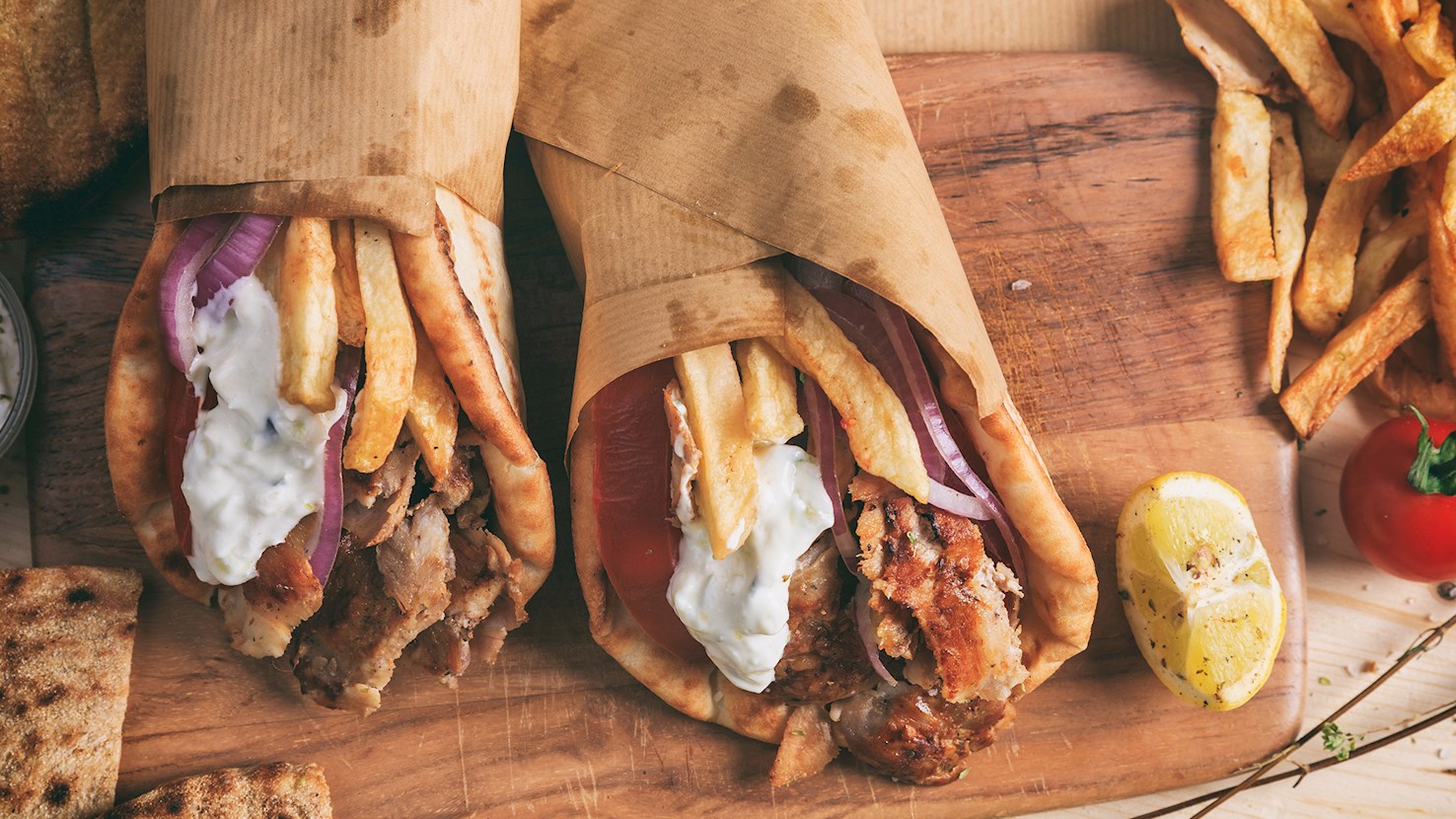
Gyros is one of the most popular Greek street food dishes, consisting of meat such as pork and chicken (in Greece) or lamb and veal (popular in other countries) cooked on a vertical spit. The meat is sliced in thin shavings and is then usually placed in a pita bread along with sauces such as tzatziki and vegetables such as tomatoes, onions, lettuce, and cucumbers. Gyros is derived from the Greek word gheereezo, meaning to turn, referring to the constantly rotating vertical spit on which the meat is cooked. Some believe that gyros originated during the time of Alexander the Great, when his soldiers skewered the meat on their swords and cooked it over a fire. Others claim that gyros was introduced to Greece in 1922, with the refugees from Constantinople and Smyrna. Many of the refugees became merchants and opened their shops with tiny holes in the wall, where gyros was sold. After WWII, gyros gained popularity and spread to Europe, Australia, and the United States. Today, gyros is known as one of the most popular street food varieties around the world.
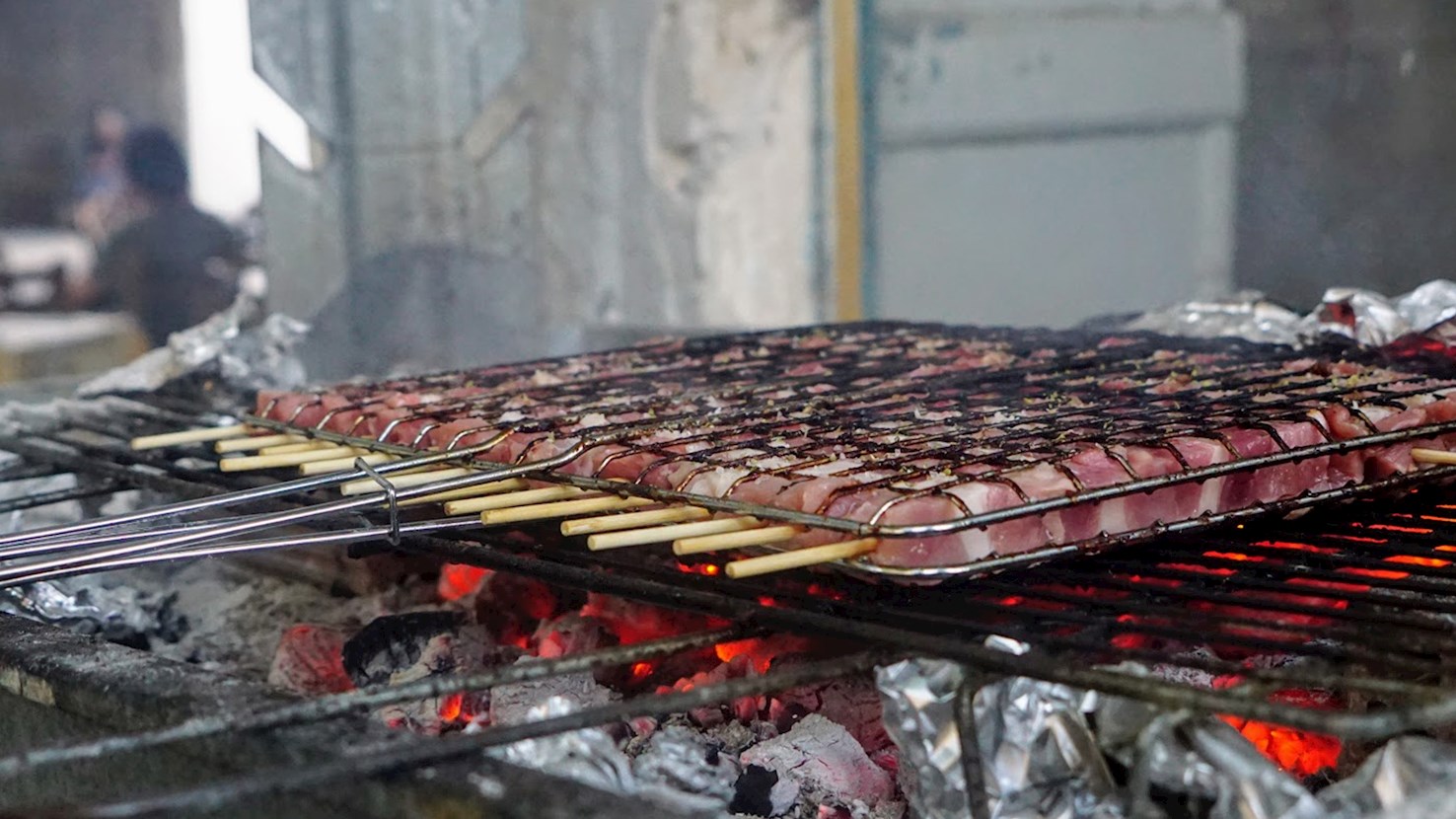
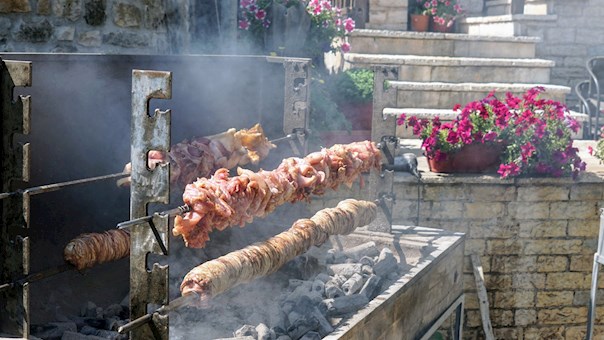
Souvlaki is one of the most popular Greek dishes, consisting of small cubes of skewered and grilled pork, chicken, lamb, or beef. It is a popular fast food item that is usually served in souvladzidika, small eateries that also often serve gyros and other similar grilled meat dishes. Souvlaki first appeared in ancient Greece, when it was called kandaulos, consisting of a combination of grilled meat, pita bread, cheese, and dill. The name of the dish is a diminutive of the Greek word souvla, meaning spit. The first souvlaki shop opened in Livadia in 1951, and today, souvlaki is sold in almost every Greek city, ordered as a takeaway, on the beaches, or on numerous street corners. It is usually served with a slice of bread or pita bread, tomatoes, parsley, onions, sometimes chips, and thick yogurt or tzatziki. There's also an oversized variety of souvlaki called kontosouvli in which large chunks of marinated meat, onions, tomatoes, and peppers are cooked on long and slim skewers over charcoal.
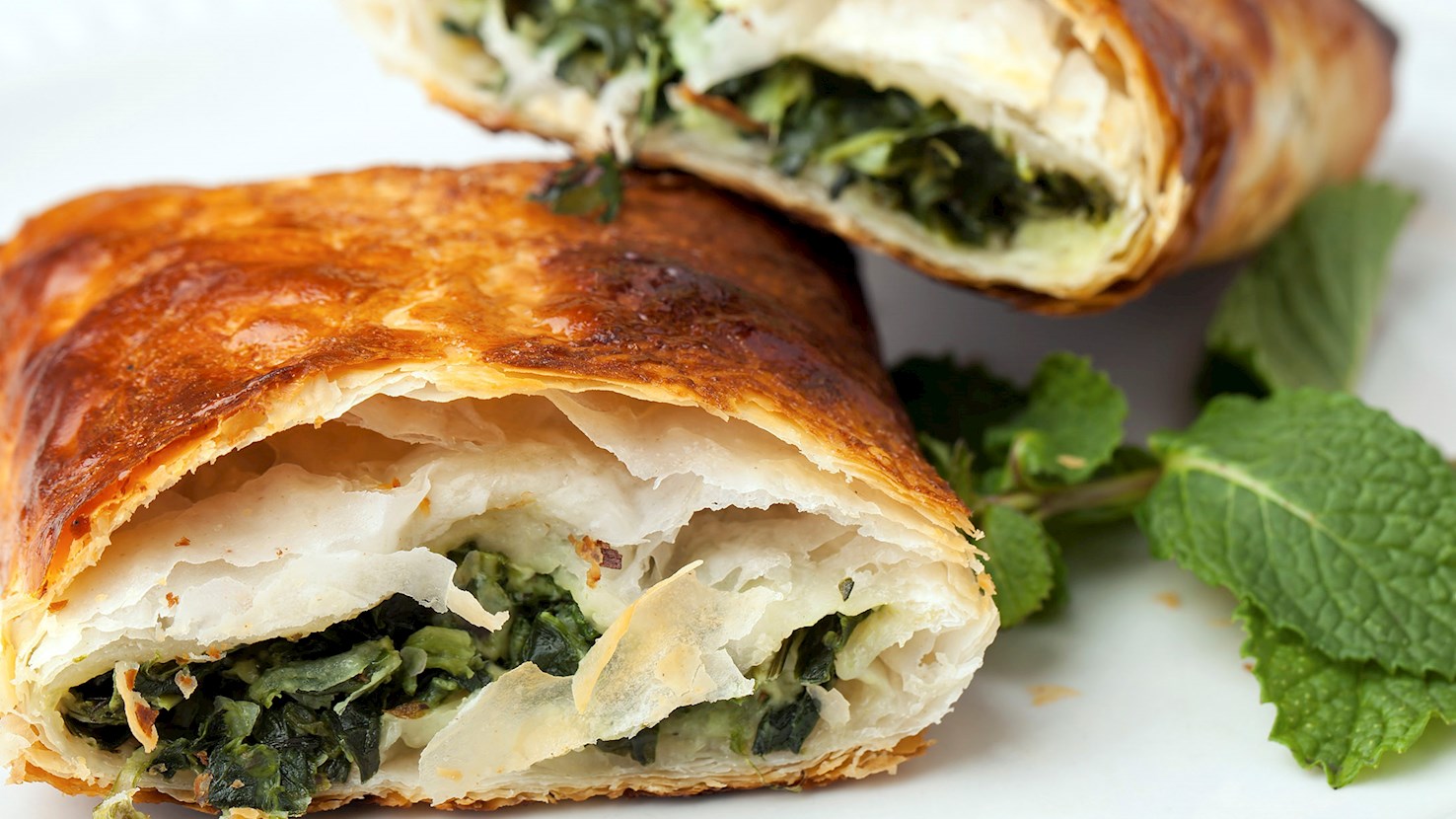
Spanakopita is a Greek spinach pie consisting of a buttery, flaky phyllo pastry with a filling of cooked spinach, lemon juice, feta cheese, and sometimes dill. It can be served either as a small snack, an appetizer, or a light main course. Due to a farming tradition of handheld foods, the pies were originally invented for the field workers who would carry them in their pockets and consume them while working. Although spanakopita has humble beginnings, it has risen to greater gastronomic heights, so today it can be found in most Greek diners, taverns, and upscale restaurants. It is likely that the dish originated 400 years ago, during the Turkish occupation of Greece, since a Turkish dish called ispanaki is almost identical in presentation. The traditional way to serve the pie is to cut it into small triangles and consume it while slightly warm, accompanied by tzatziki sauce - a flavorful dip consisting of yogurt, garlic, and cucumbers.
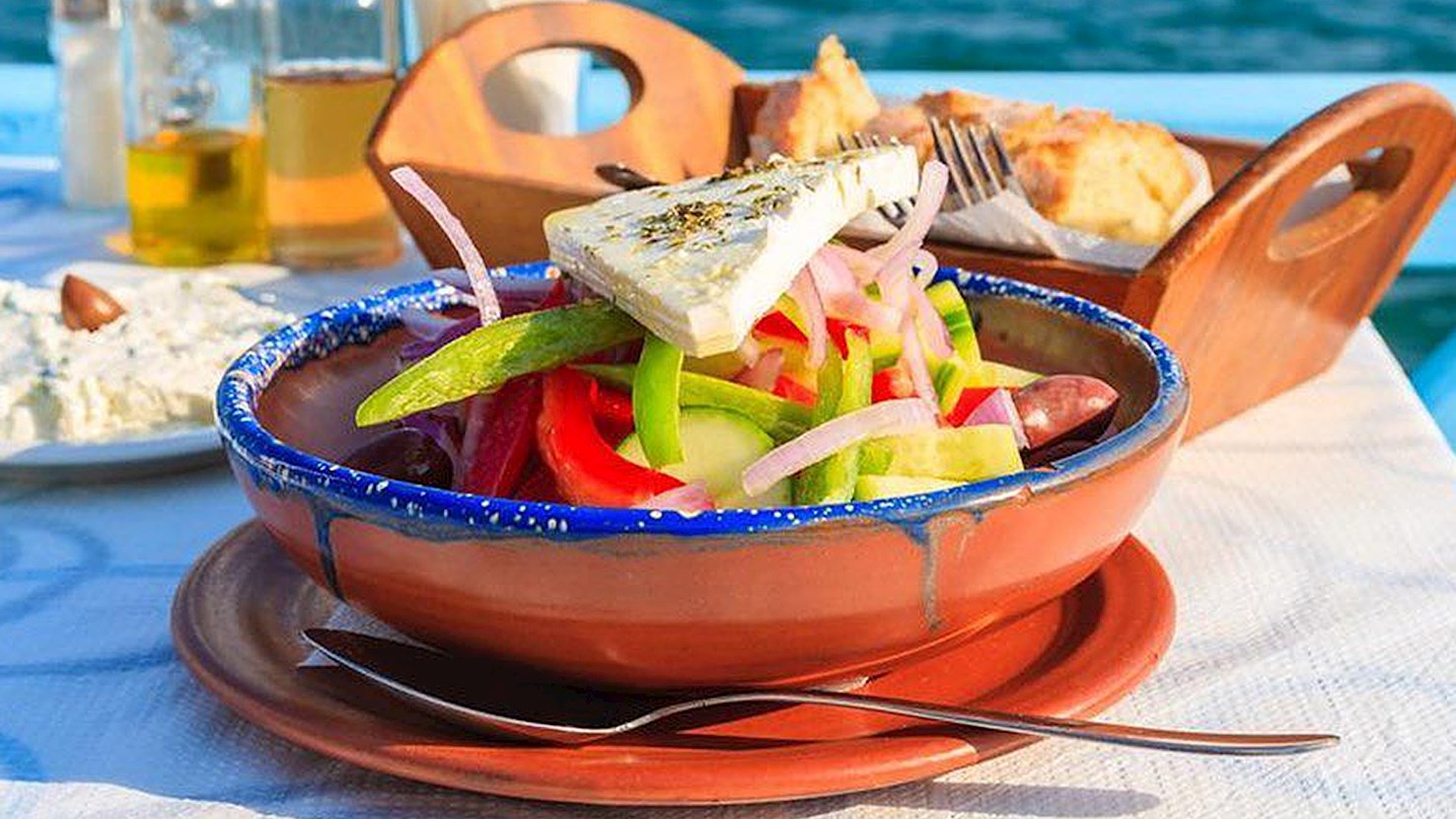
Greek salad, also known as village salad or horiatiki is the national dish of Greece, consisting of quartered tomatoes, sliced red onions, and chunky slices of cucumber. Depending on the region, there can also be olives, green peppers, feta cheese, oregano, salt, pepper, or a typical dressing made from olive oil and lemon or vinegar (optionally). When feta cheese is present in the salad, it is usually just sliced, but in some cases it's mixed in with a fork until slightly crumbled. Its name suggests that it was a rural dish, when farmers would take some essential ingredients to the field and mix them together. Greek salad is a true summer dish, full of refreshing, raw vegetables and herbs. It is best to prepare it with ripe tomatoes that are in season, while the olives should be of the Kalamata variety. Served in a shallow bowl, it is present on numerous Greek tables, either at home or in the taverns.
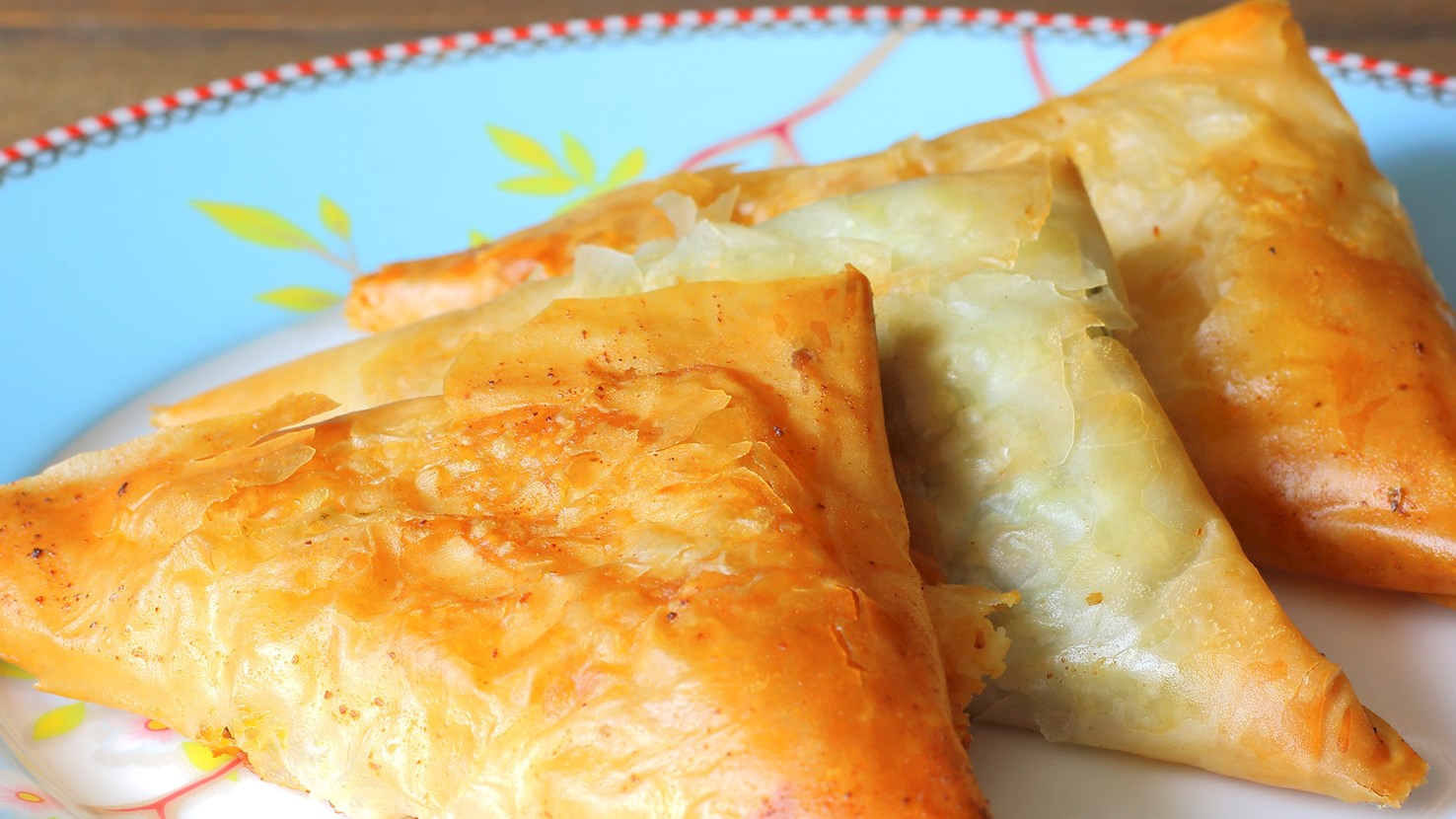
Tiropita is a popular Greek snack consisting of sheets of phyllo dough that are filled with a combination of cheese (usually feta) and eggs. The dish is typically wrapped in triangular pieces and brushed with melted butter before baking. This tasty pastry is found in almost every Greek bakery, although it is commonly served as an appetizer, when it is accompanied by numerous dips on the side. There are several theories about its origin, but most link the dish with either Byzantine, Roman, or Turkish cuisine. Tiropita is mostly consumed in the mid-morning in Greece, since breakfast is usually reserved only for bread with butter and a cup of coffee. With its huge popularity, there are also some other variations of tiropita, such as kasseropita, which is filled with kasseri cheese, or spanakopita, a spinach-filled variety.
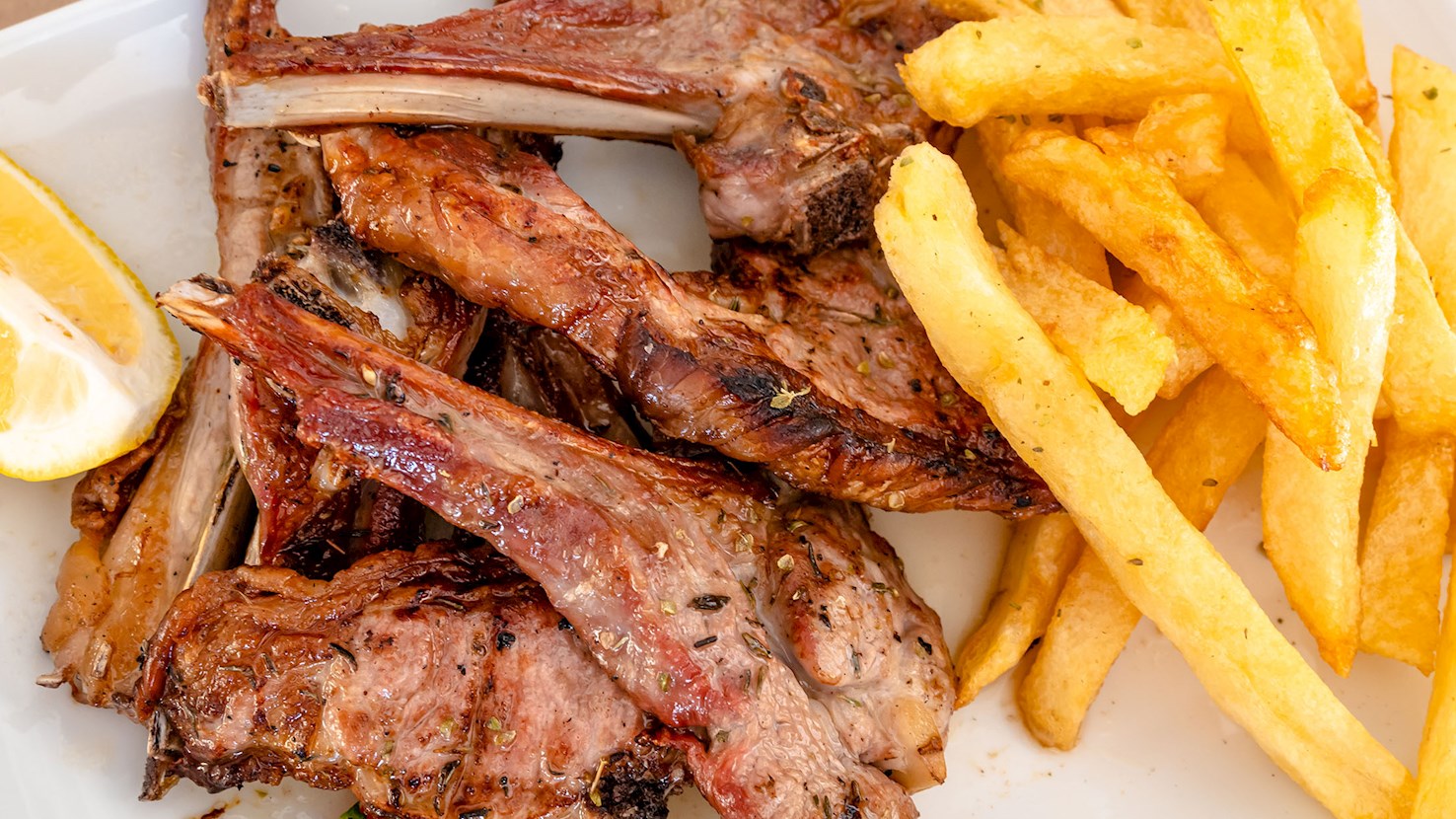
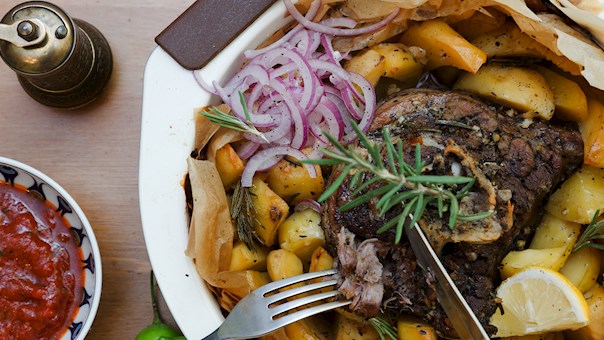
Grilled lamb chops are a traditional Greek dish that is popular throughout the country and usually enjoyed as the main course. Lamb chops are usually marinated in various combinations of olive oil, lemon juice, and a variety of fresh herbs before they are grilled on traditional charcoal barbecues. They are commonly paired with potatoes, salads, or the creamy and refreshing tzatziki sauce.
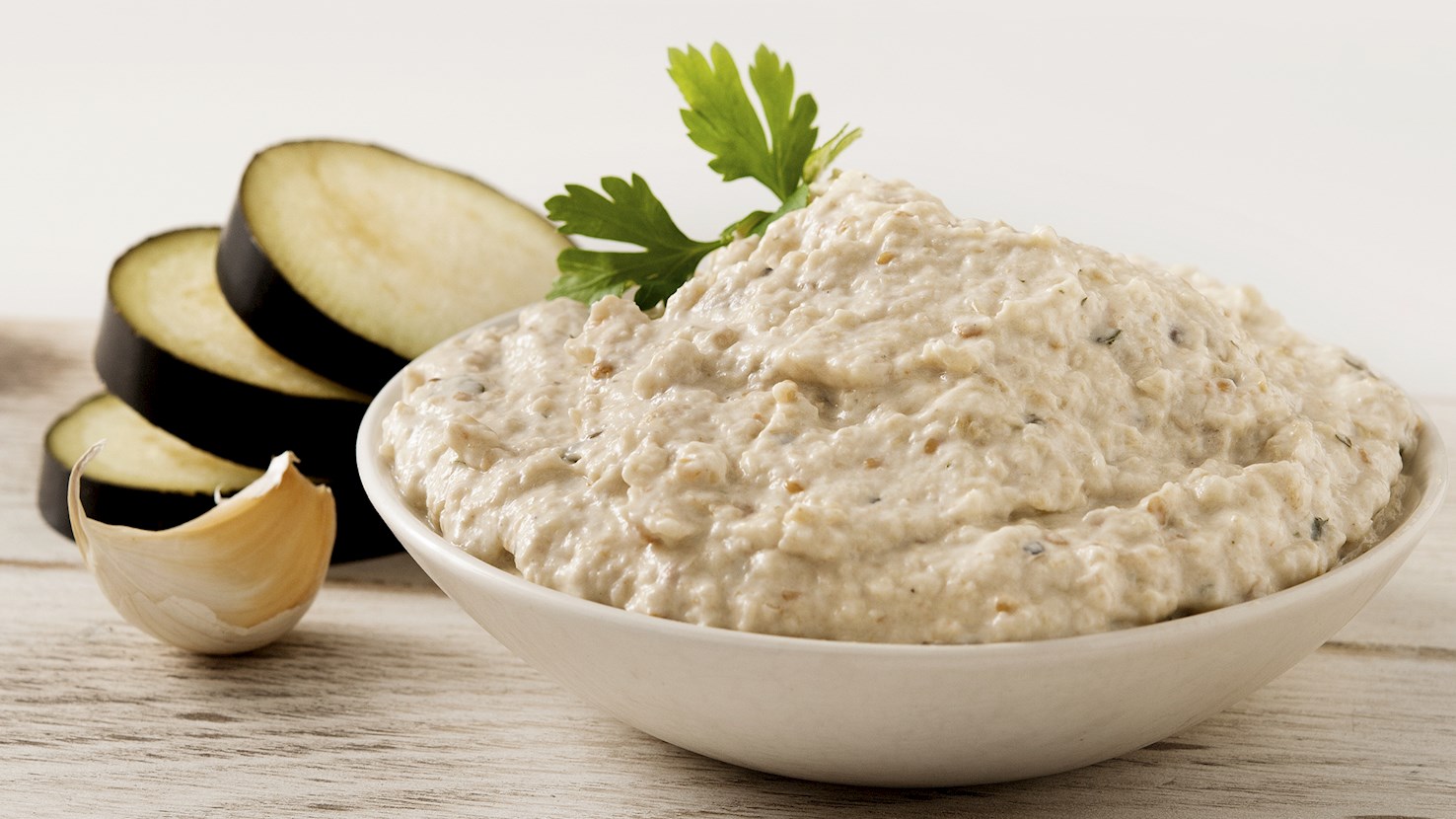
This classic Greek dip typically combines grilled eggplant, garlic, and olive oil into a creamy and flavorful dish that is mainly enjoyed as a part of meze—traditional meal service comprised of a selection of small dishes. Although simple, it is incredibly versatile and is often elevated with additional ingredients such as groundnuts, cheese, different vegetables, and a variety of fresh herbs and spices. It is typically garnished with parsley and a drizzle of olive oil, then paired with a crispy, rustic bread.
TasteAtlas food rankings are based on the ratings of the TasteAtlas audience, with a series of mechanisms that recognize real users and that ignore bot,
nationalist or local patriotic ratings, and give additional value to the ratings of users that the system recognizes as knowledgeable.
TasteAtlas Rankings should not be seen as the final global conclusion about food. Their purpose is to promote excellent local foods,
instill pride in traditional dishes, and arouse curiosity about dishes you haven’t tried.






What People Say