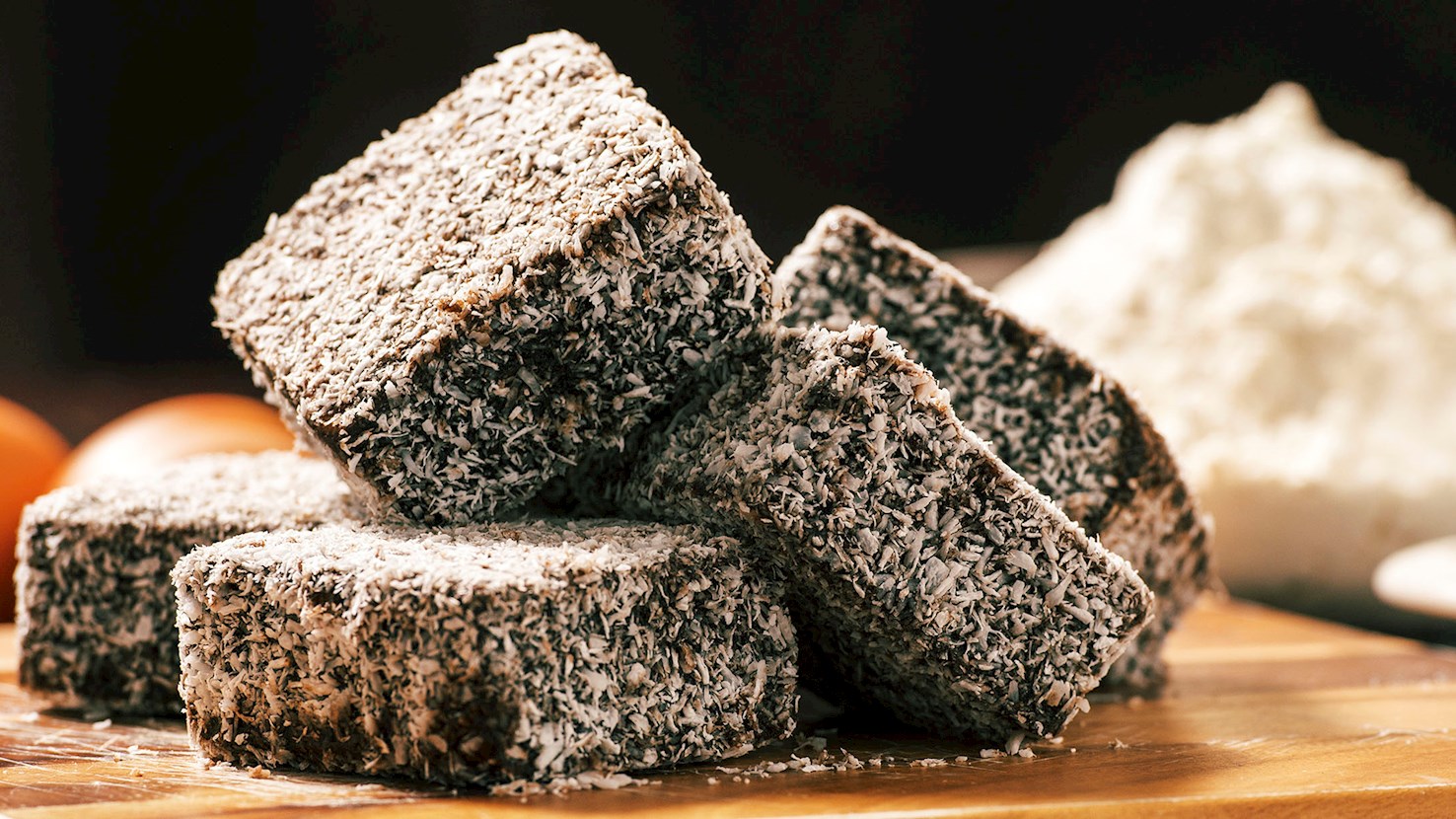
The world-famous Australian culinary icon Lamington consists of a sponge cake that is dipped in chocolate and sprinkled with finely desiccated coconut. The cake is believed to have been created by accident when Lord Lamington's maid accidentally dropped his favorite cake in melted chocolate. Lamington, the eighth Governor of Queensland, suggested that the cake should be sprinkled with coconut in order to avoid the mess while consuming it - and the erroneous cake was proclaimed a massive success by all. Today, the cake is extremely popular due to its climate suitability, as it lasts longer in the heat when it's cut in bite-sized squares and covered in coconut. It is also a staple of fundraising events due to the fact that it can be easily made in large quantities. The cake can also be found throughout Australia and New Zealand in numerous supermarkets, cafés, and bakeries. The cake is also popular in Balkan and Eastern Europe - in Croatia, the same cake (without any fruit jam whatsoever) is called čupavci, and it's a Christmas staple. In Slovakia, the cake is called kokosové ježe, in Poland it's known as kostka kokosowa, while the Hungarian name is kókuszkocka.
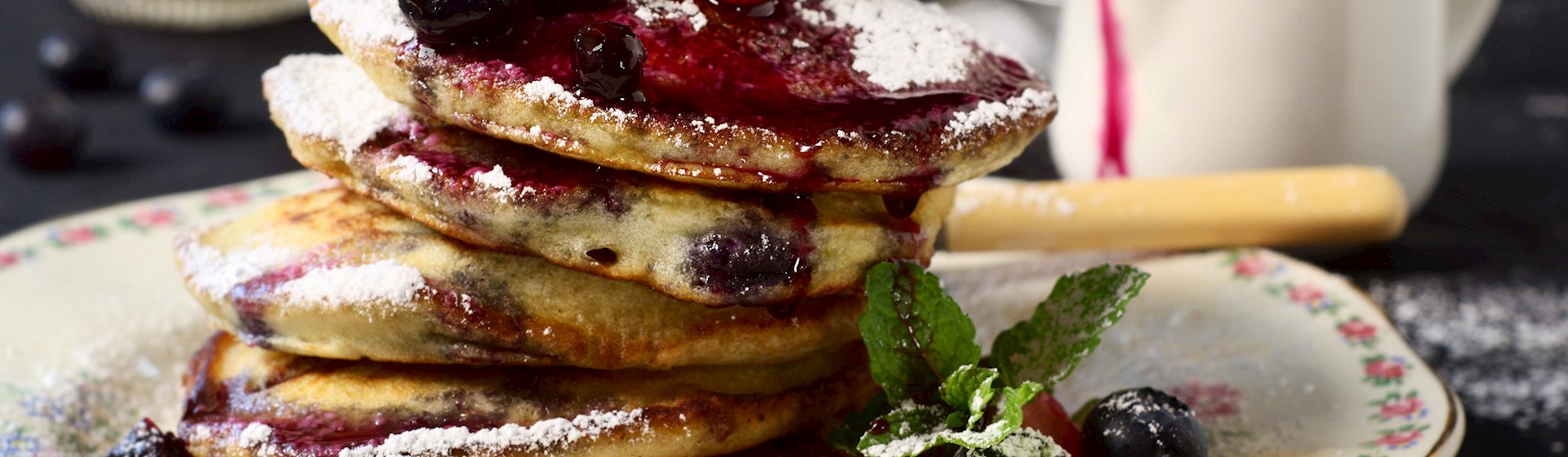
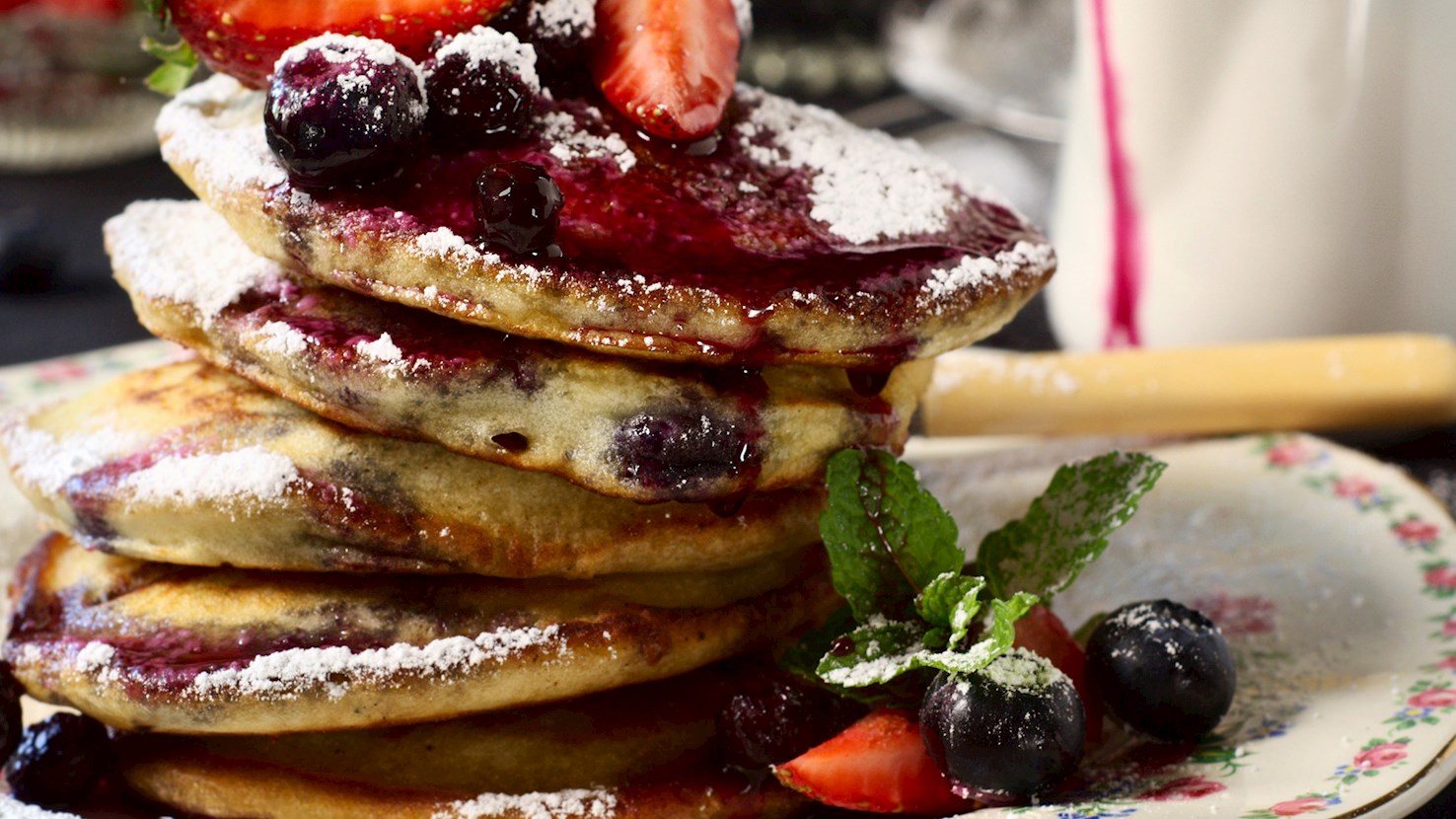
Pikelets are small, round griddle cakes popular in Australia and New Zealand. They resemble miniature pancakes but are usually smaller, slightly thicker, and somewhat sweeter. They are commonly served warm or at room temperature with butter, jam, cream, golden syrup or fruit. The word pikelet has a much older history in Britain, where it traditionally refers to a type of crumpet. The meaning changed in Australia and New Zealand. There, a pikelet is usually a small, soft pancake made with chemical raising agents rather than a yeasted crumpet batter like in England. It is similar to a drop scone, although the term pikelet has become firmly established in its own right in both countries. A typical Australian or New Zealand batter contains self-raising flour, or plain flour mixed with baking powder, along with milk, egg, a little sugar and a pinch of salt. Some recipes add melted butter, while others use butter only to grease the pan. The ingredients are mixed into a thick but pourable batter. Spoonfuls are dropped onto a lightly greased frying pan or griddle over medium heat. As the first side cooks, small bubbles appear across the surface and the edges begin to set. The pikelets are then flipped and cooked briefly on the second side until golden. They should remain soft and fluffy inside rather than becoming dry or crisp. Pikelets are generally only a few centimeters across, making them noticeably smaller than ordinary breakfast pancakes. Their compact size also makes them easy to serve cold, which is one reason they became a familiar food for afternoon tea, school lunches, children's parties and community gatherings in Australia and New Zealand. Butter and jam are among the most traditional toppings. In New Zealand and Australia, pikelets are also commonly served with jam and whipped cream, giving them something of the character of a small scone. Golden syrup, honey, lemon and sugar, fresh berries and other fruit are also popular. They do not have to be sweet. Savory pikelets can be made by reducing or omitting the sugar and adding ingredients such as grated zucchini, corn, cheese, herbs or spring onions. These are modern variations on the basic pikelet rather than a separate regional type. Today, pinklets are primarily associated with breakfast, morning or afternoon tea and simple home baking. Warm pikelets spread with butter and jam remain the classic presentation, while jam and cream are especially familiar when they are served as part of afternoon tea.
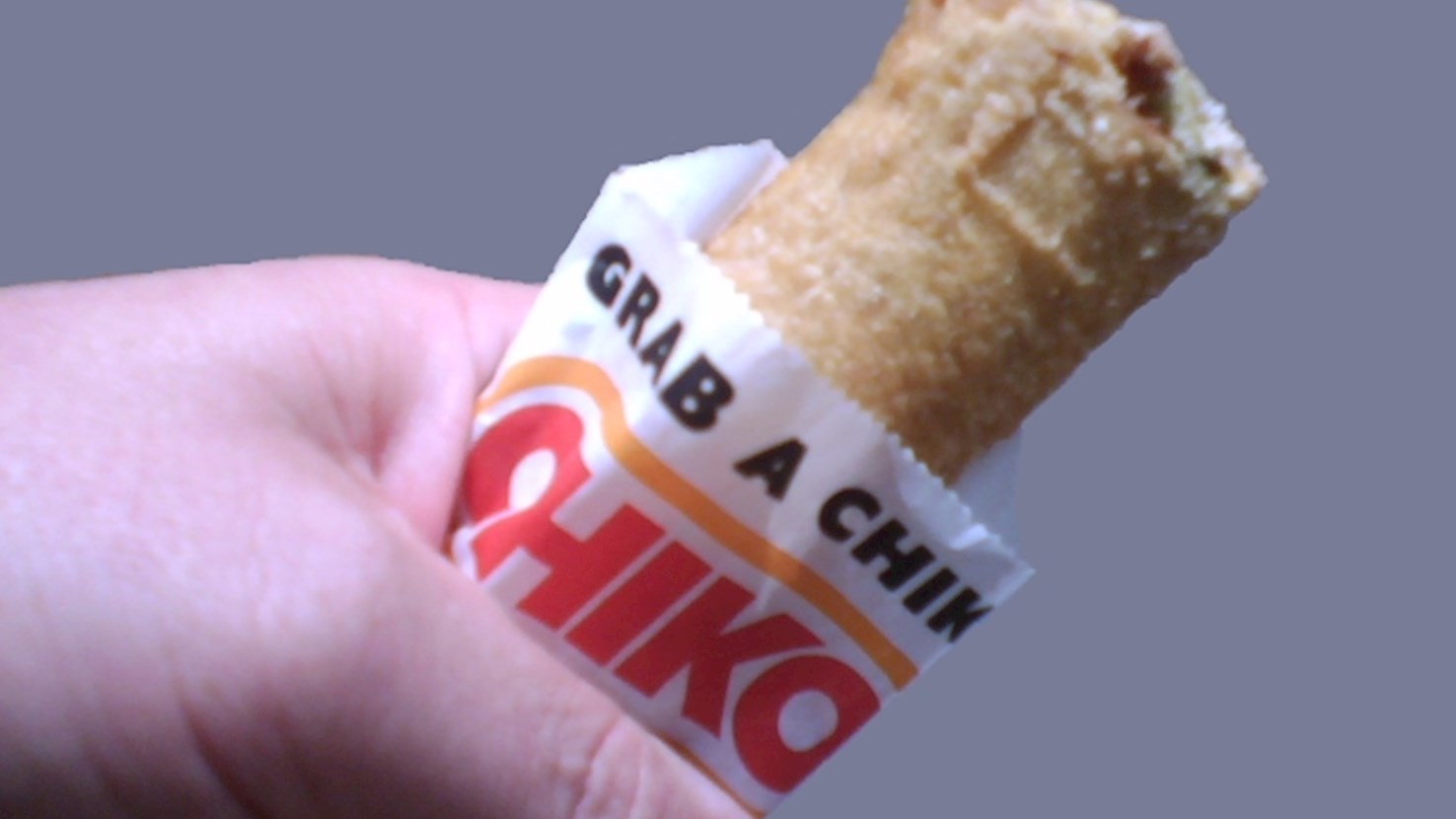
Chiko roll is the Australian version of a Chinese spring roll or an egg roll. This snack consists of a dough made from eggs and flour which is filled with seasonings, carrots, cabbage, barley, mutton, celery, and rice. The dough is thick and almost chewy, and chiko rolls are commonly deep-fried in hot oil. They can be found in most fish and chips shops. These trademarked snacks were invented by Frank McEnroe in the 1950s. The name chiko roll refers to the original name, chicken roll, even though the snack never contained any chicken meat. Interestingly, chiko rolls are usually associated with beachside kiosks and surf culture.
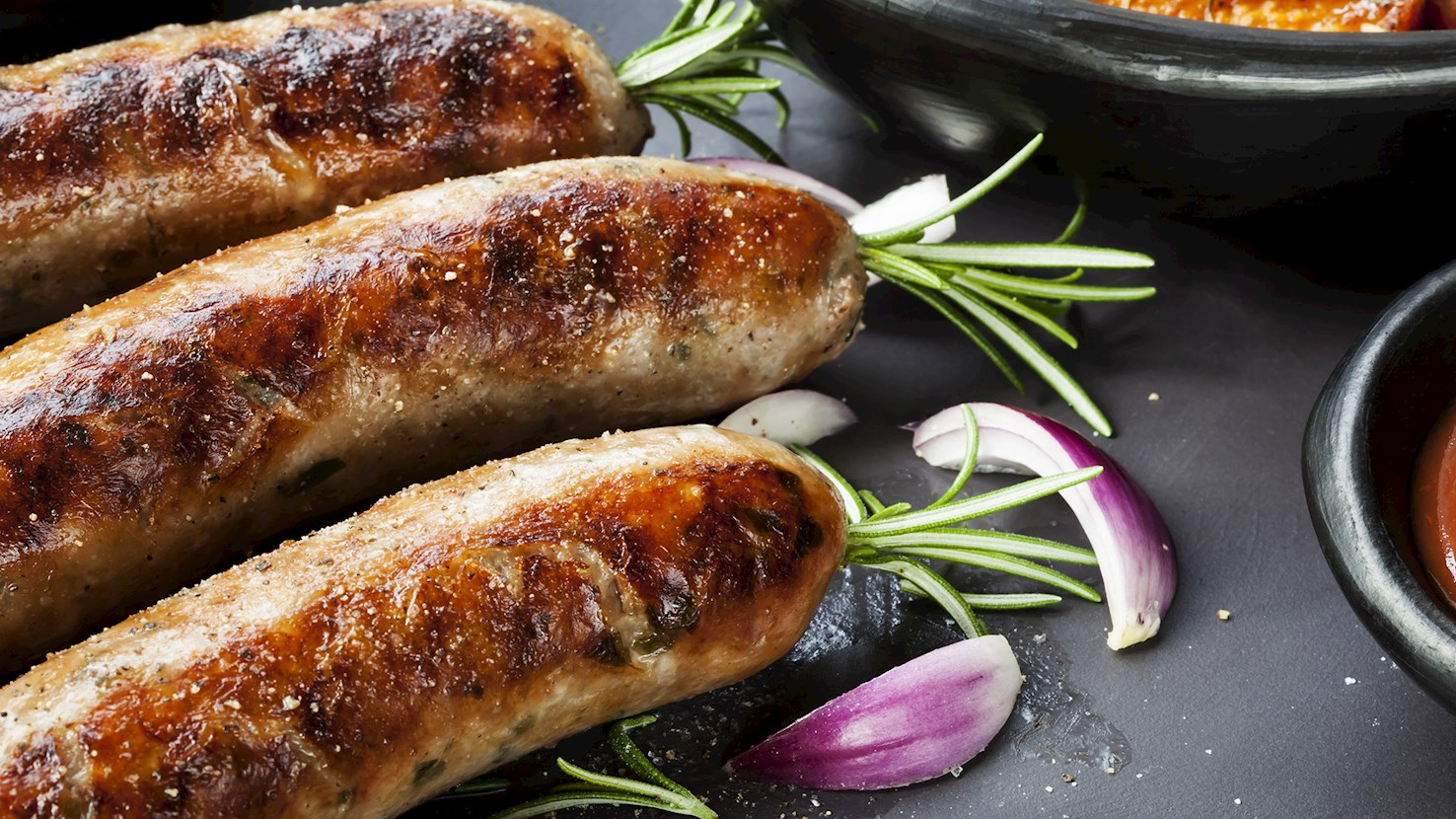
Barbecue snags are thick Australian sausages, usually with a mild flavor and made with beef, pork, garlic, and onions. They are a staple of almost every Australian barbecue party, where the sausages are accompanied by mashed potatoes, grilled onions, tomato sauce, barbecue sauce, salads, chutneys, and loaves of artisanal bread on the side. Today, there are also snags with numerous modern, gourmet fillings such as lamb and rosemary, chicken and cheese, or beef and red wine.
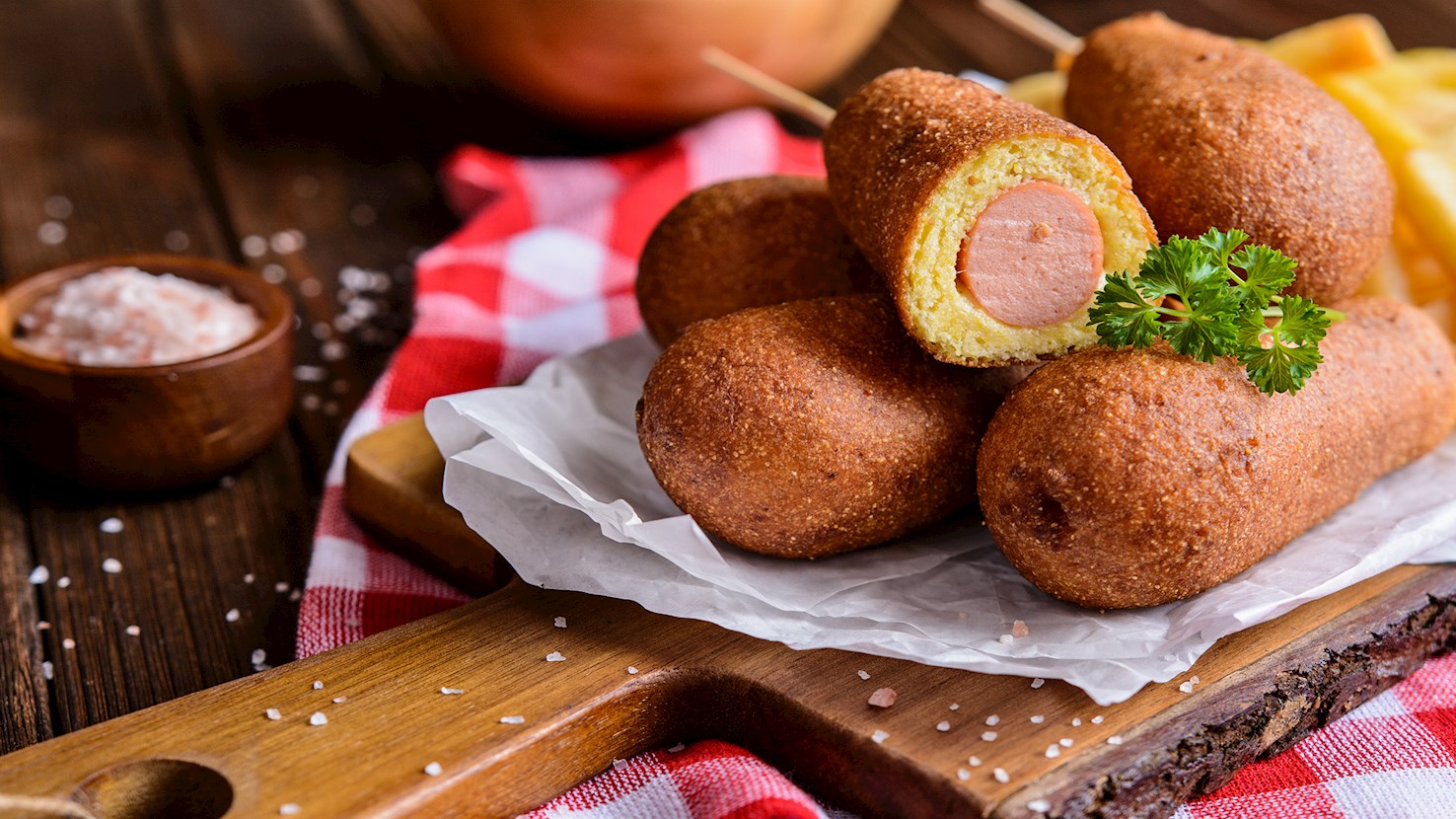
Dagwood dog is a popular Australian festival staple consisting of a hot dog on a stick that is dipped in batter, then deep-fried in hot oil. Before serving, the tip of Dagwood dog is typically dipped in tomato sauce, making it even tastier. This savory treat is also known as Pluto pup and Dippy dog, depending on the region.
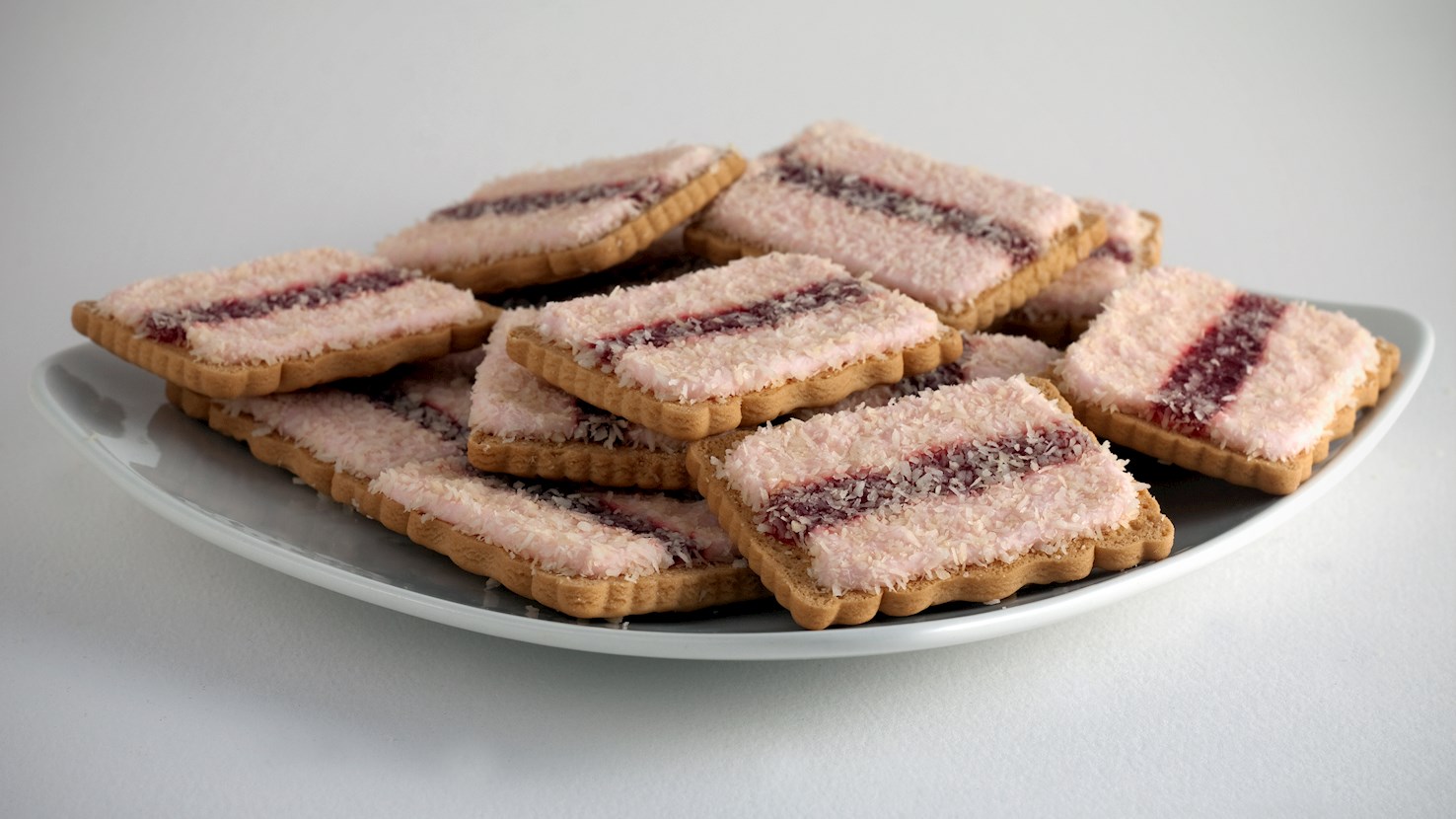
Iced VoVo is a classic Australian biscuit made from wheat flour and topped with a strip of raspberry jam and two strips of pink fondant. These cookies are sprinkled with coconut for the final touch. They have been trademarked by Arnott’s biscuit company since 1906. These iconic cookies can be found throughout the country and the sales of Iced VoVo skyrocketed in 2007, when Australian Prime Minister Kevin Rudd mentioned them in his victory speech. Iced VoVos are especially popular at children’s birthday parties and they’re usually enjoyed with a cup of tea on the side.
TasteAtlas food rankings are based on the ratings of the TasteAtlas audience, with a series of mechanisms that recognize real users and that ignore bot,
nationalist or local patriotic ratings, and give additional value to the ratings of users that the system recognizes as knowledgeable.
TasteAtlas Rankings should not be seen as the final global conclusion about food. Their purpose is to promote excellent local foods,
instill pride in traditional dishes, and arouse curiosity about dishes you haven’t tried.



What People Say