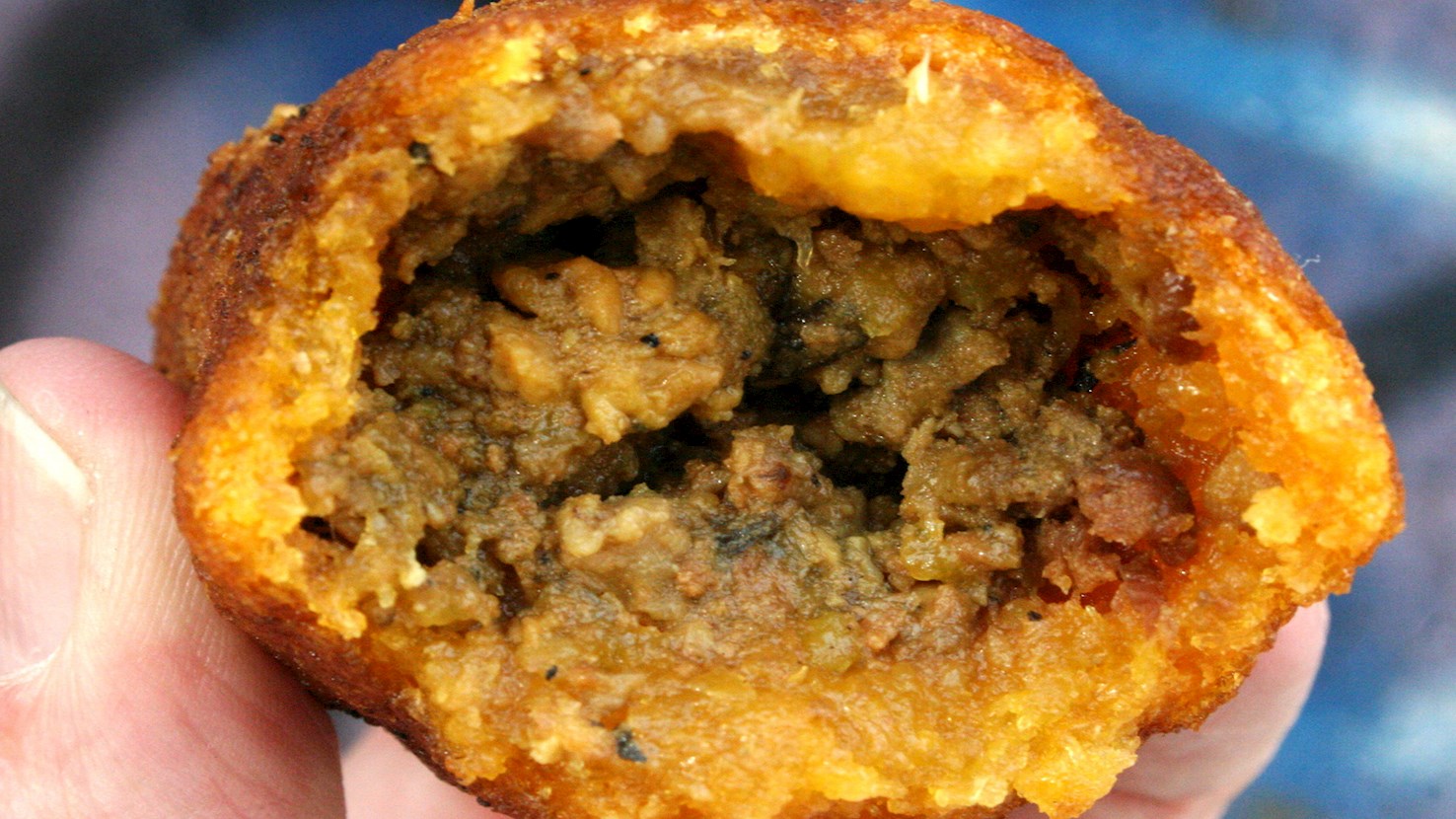
Alcapurria is a fritter made from a seasoned masa of grated green bananas and yautía, wrapped around a savory meat filling and deep-fried until deeply golden and crisp. Usually shaped into an elongated oval or torpedo, it is one of Puerto Rico’s best-known frituras and is especially associated with roadside stands, beach kiosks, and casual outdoor eating. The traditional masa is made primarily from very green bananas and yautía, a starchy tropical root from the genus Xanthosoma. Green plantain is also commonly included. The peeled vegetables are grated very finely, traditionally on a metal grater called a guayo, until they form a thick, sticky paste. Salt and achiote-infused oil are mixed into the masa. The achiote gives it a warm yellow-orange color and a subtle earthy flavor while also adding enough fat to make the mixture easier to handle. The masa should be thick and cohesive enough to hold a filling without breaking apart during frying. The classic filling is a Puerto Rican-style ground-beef picadillo. The meat is cooked with sofrito, typically containing onion, garlic, ají dulce, peppers, cilantro or culantro, and other seasonings. The filling may also include tomato sauce, oregano, olives, and capers. It is cooked before being enclosed in the raw masa. To shape an alcapurria, a portion of masa is spread onto an oiled banana leaf, waxed paper, or another smooth surface. A spoonful of picadillo is placed down the center, and the masa is folded around it until the filling is completely enclosed. The fritter is then shaped into its characteristic elongated form. The alcapurria is slid carefully into plenty of hot oil and fried until the outside becomes dark golden brown and crisp. The oil should be hot but not smoking. Inside, the grated banana and yautía cook into a soft, moist, slightly dense layer surrounding the seasoned meat. Freshly fried alcapurrias are drained briefly and eaten while still hot. They are usually served on their own as a snack or appetizer and are commonly sold in paper containers at kioskos and roadside stands. Pique, Puerto Rico’s vinegar-based hot sauce, can be added at the table, although it is not required. They are particularly associated with places such as Piñones, Luquillo, and Puerto Rico’s coastal food stands, where alcapurrias are sold alongside other frituras such as bacalaítos and empanadillas. Crab-filled alcapurrias are also closely associated with coastal areas, but seasoned ground meat remains a classic filling. The precise origin of the alcapurria is not documented. Its ingredients and technique reflect the different cultures that shaped Puerto Rican cooking: yautía and achiote have deep Indigenous roots in the Caribbean and tropical Americas, and plantains arrived through the transatlantic world. They became particularly important in Afro-Caribbean cooking, and the seasoned meat filling reflects Spanish and Creole influences. Over time, these elements came together in a fritter that became distinctly Puerto Rican.
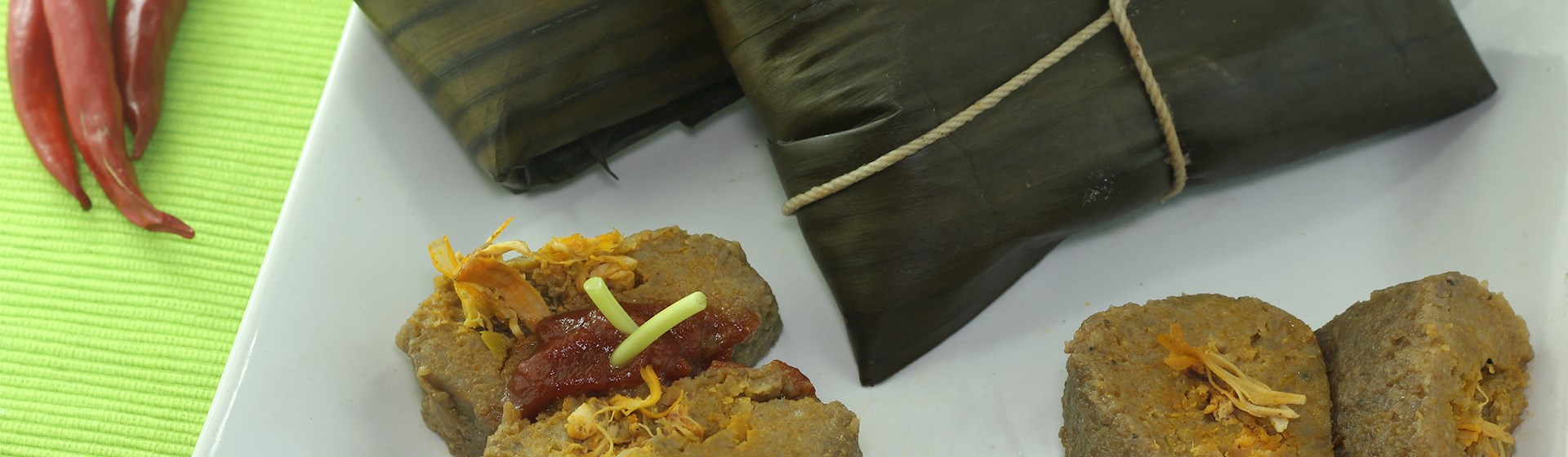
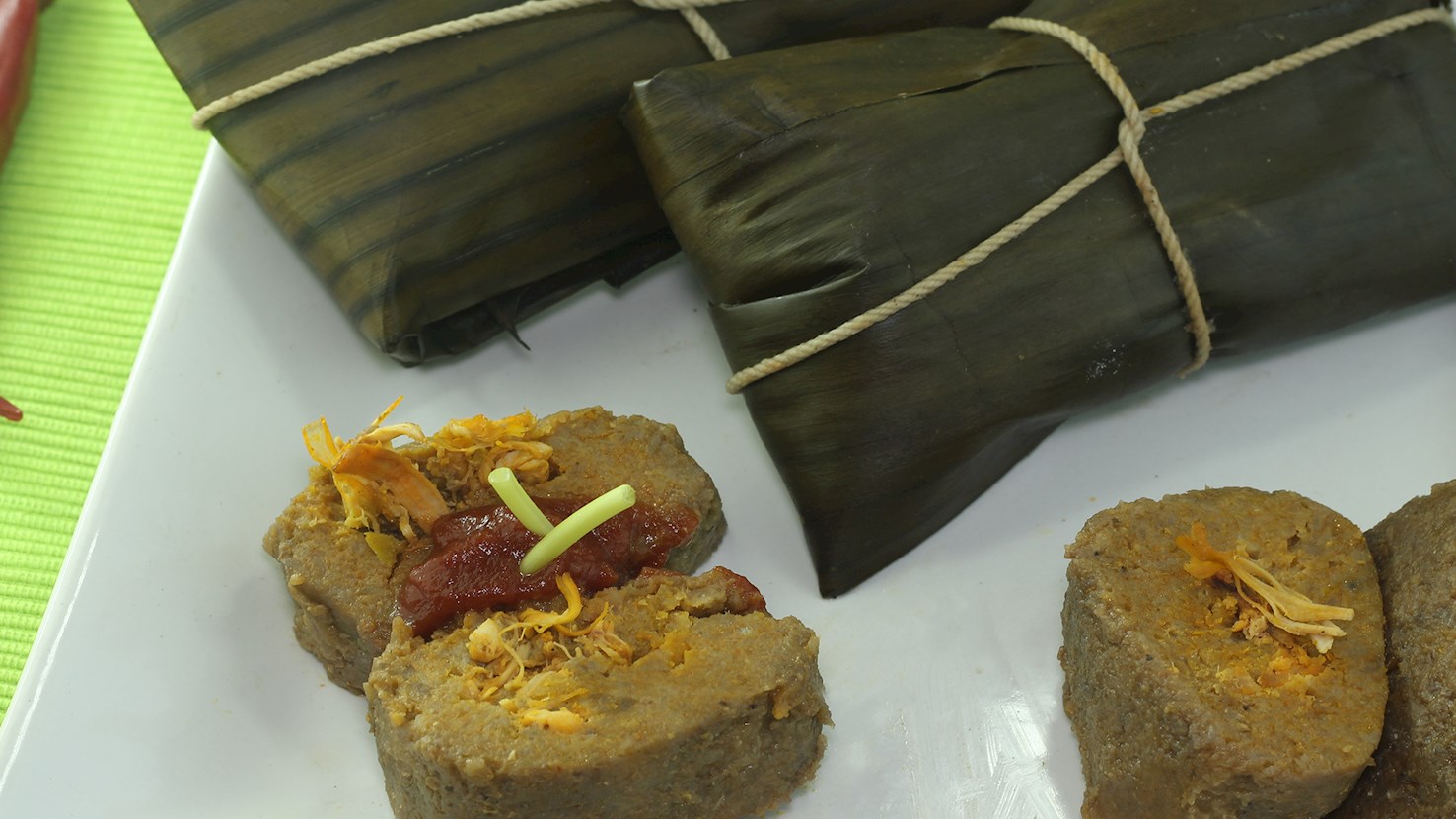
Pasteles are rectangular meat pies filled with a variety of ingredients, encased in masa dough that is then wrapped in a single banana leaf. The dough can be made with numerous ingredients such as cassava, taro, potatoes, or green bananas. The fillings are usually prepared with pork or chicken, with the addition of herbs and spices such as coriander and garlic, used to bring out the flavor of the meat. The typical condiments served with pasteles are ketchup, tabasco, or pique criollo, a hot sauce made from local hot chilis that have been pickled in vinegar. The history of pasteles is debated, as some say that they originate from Taino Indians who were already living on the island when Columbus arrived, while the others claim they were invented by African slaves who used to work on sugar plantations. Whatever the answer is, the fact remains that these flavorful meat pies are loved by young and old alike and bring the whole family together.
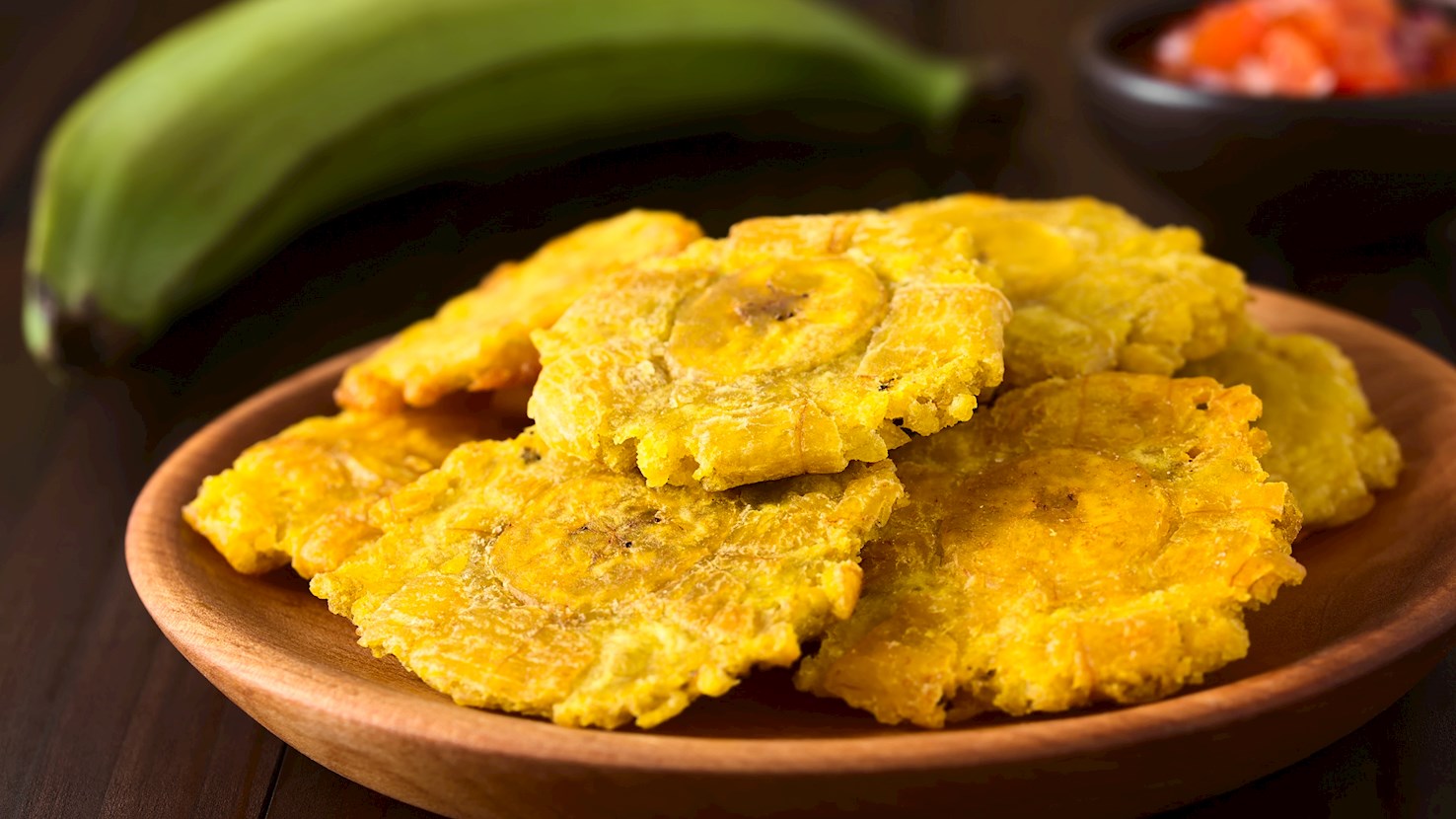
Tostones is a traditional side dish that's popular throughout Latin America and the Caribbean, especially in Puerto Rico. Unlike platanos fritos, where only ripe plantains are used, tostones are made with unripe, hard, very green plantains. They are sliced into pieces, fried on each side, then smashed or flattened and deep-fried one more time until they become golden. Once prepared, the tostones are sprinkled with sea salt and served as a side dish to various dishes. They are often served with garlic mojo sauce (mojo de ajo), either on top of the tostones, or on the side as a dip.
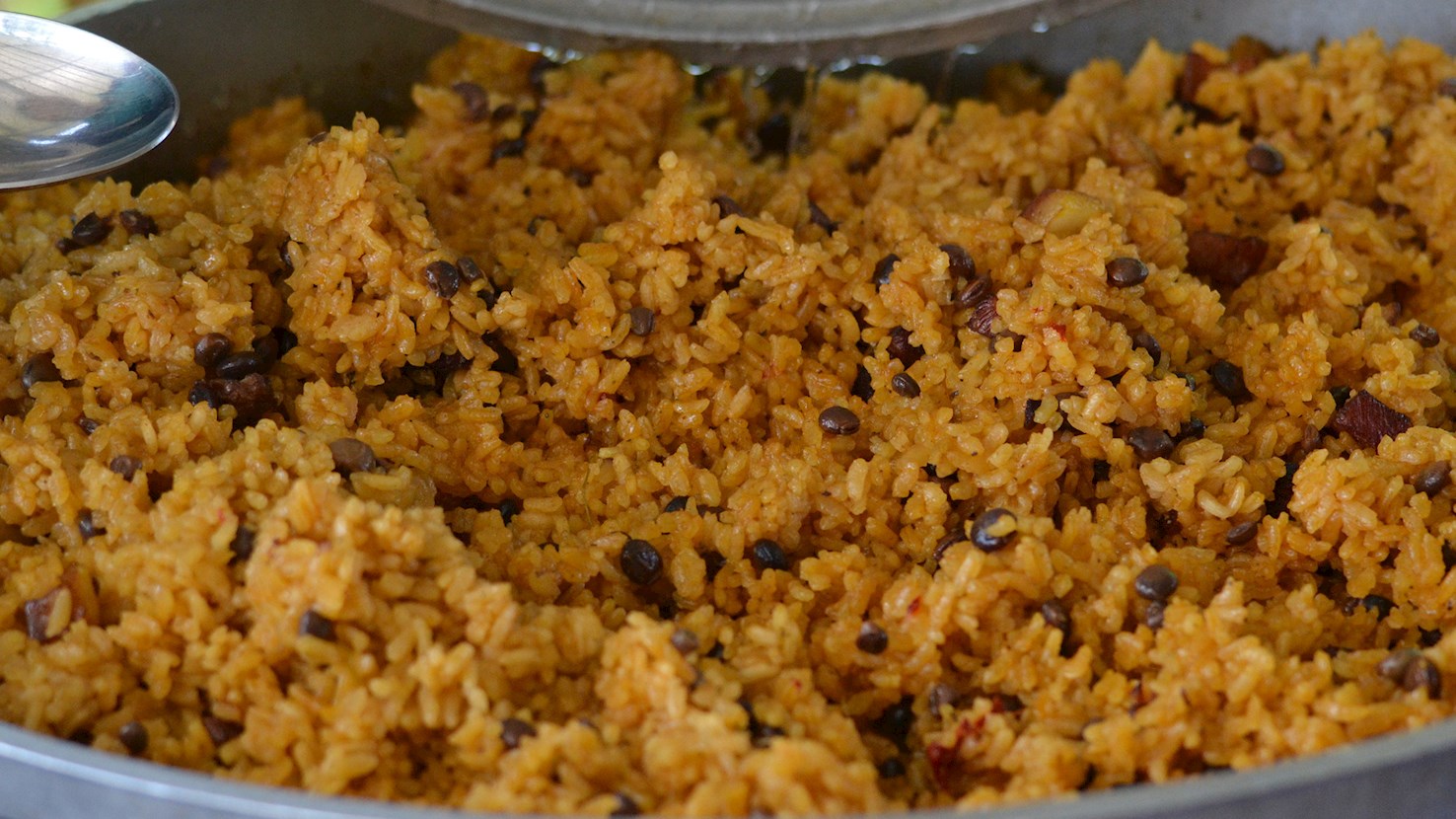
Arroz con gandules is a one-pot national dish of Puerto Rico consisting of rice, pigeon peas, and sofrito, and every family in the country has their own version of the recipe. Sofrito is the aromatic flavoring base for a variety of Puerto Rican dishes, made with green peppers, onions, garlic, and coriander. Some people may fry bacon in sofrito to add a smoky flavor to the finished dish. Other spices and garnishes in arroz con gandules might include cumin, bay leaves, oregano, tomato paste, olives, lime juice, and (not traditionally) sour cream. Although flavorful in its original, vegetarian version, it can also be made with added pork meat or sausages. The dish dates back to the 18th century. With numerous layers of flavor, this is the dish that is traditionally made for Christmas dinner in Puerto Rico, and it's easy to see why.
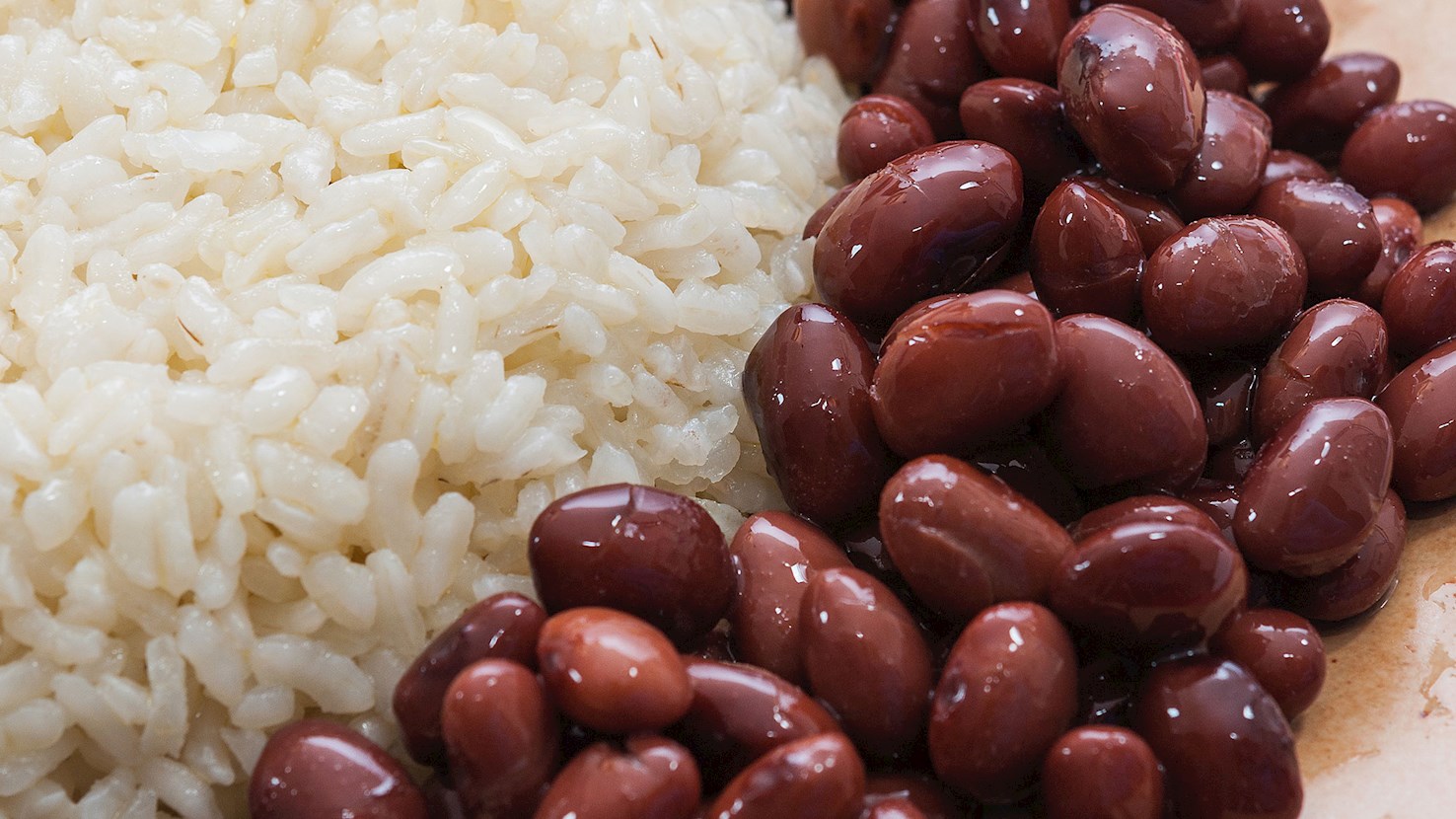
Arroz y habichuelas is a simple and traditional Puerto Rican dish. It consists of rice and beans flavored with bacon or ham, sofrito, tomato purée, spices, and (optionally) olives. In Puerto Rico, it is typically served as a side dish, but it can also be served on its own. Throughout Central and South America, there are numerous variations and twists on this simple side dish, beloved for its protein content which comes from the beans.
TasteAtlas food rankings are based on the ratings of the TasteAtlas audience, with a series of mechanisms that recognize real users and that ignore bot,
nationalist or local patriotic ratings, and give additional value to the ratings of users that the system recognizes as knowledgeable.
TasteAtlas Rankings should not be seen as the final global conclusion about food. Their purpose is to promote excellent local foods,
instill pride in traditional dishes, and arouse curiosity about dishes you haven’t tried.


What People Say