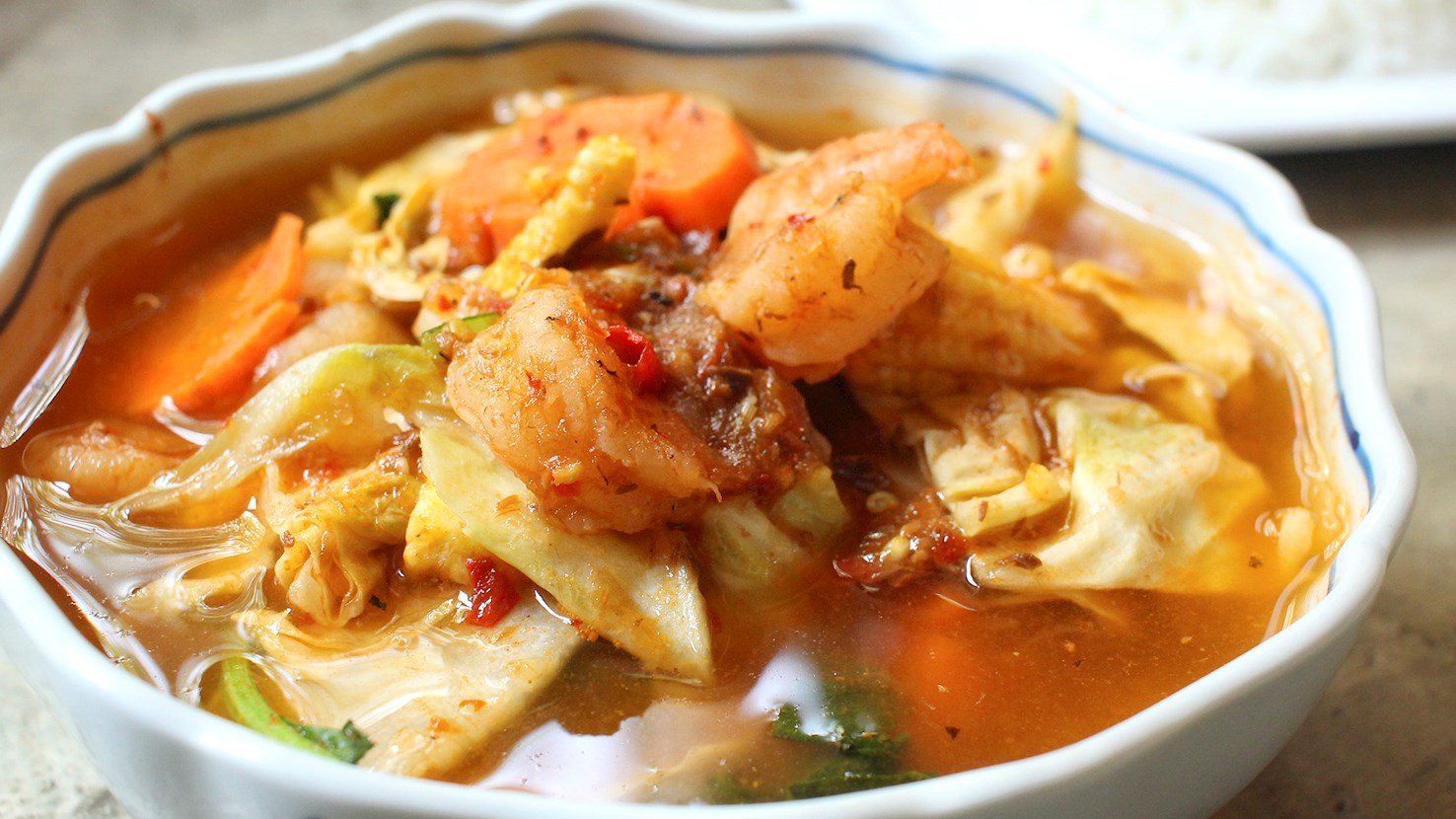
Thai curry is usually a soupy dish consisting of coconut milk or water, meat, and curry paste. Unlike the thicker Indian curries, Thai curries have a more soup-like consistency, and the cooks prefer to use fresh herbs and aromatic leaves instead of spice blends that are prevalent in Indian curries. In many Thai homes, curry is consumed on a daily basis, and the cooks can choose from two varieties of Thai curry: water-based or coconut milk-based curries. The most popular water-based curry is sour curry, or gaeng sohm plah, which is often prepared with fish or seafood, while the sour flavor comes from tamarind. Some of the spiciest Thai curries are water-based since there is no coconut milk in the dish to subdue the heat. Coconut-based curries are more popular in the West, such as red, green, yellow, or panangcurry.
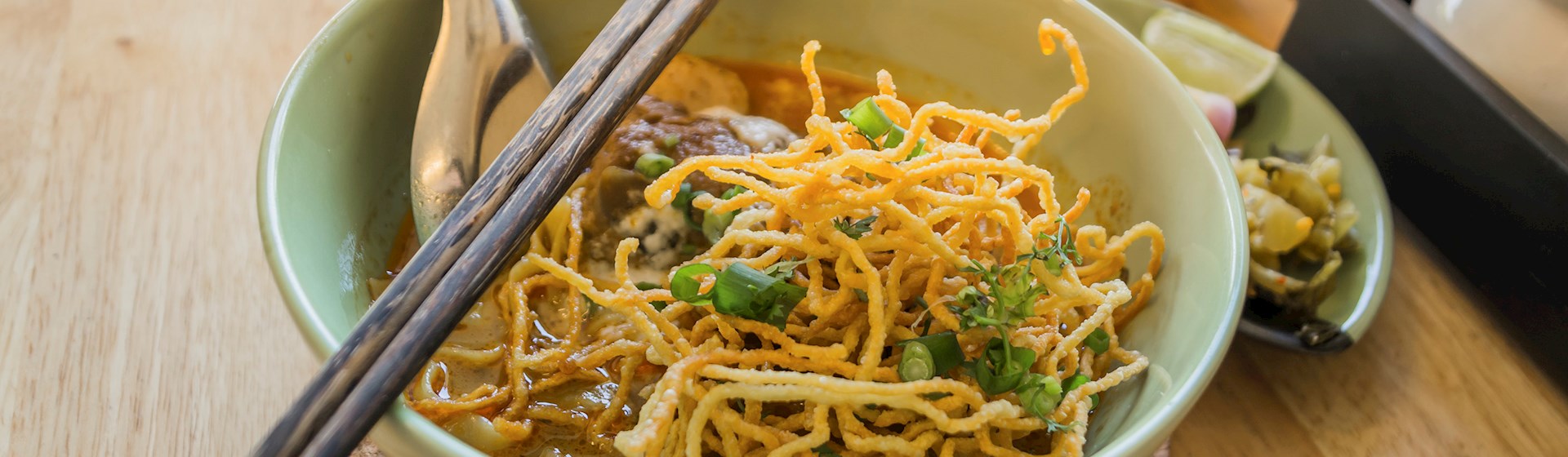
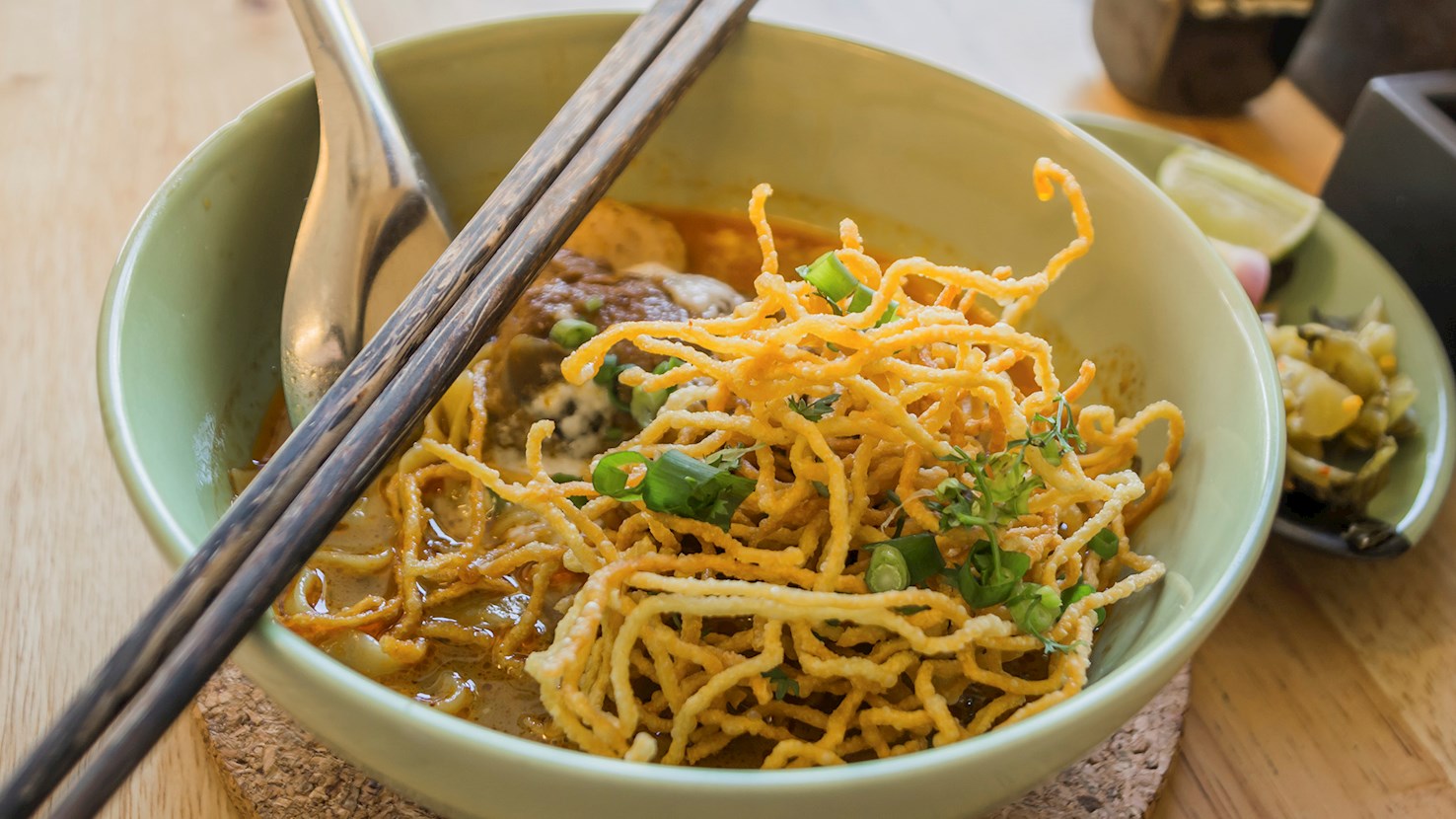
A signature dish of Northern Thailand, khao soi is a delicious coconut soup in which numerous regional influences were combined to create a truly spectacular dish. The base of the soup is a slightly spicy broth which combines coconut milk and red curry paste. The broth is served with flat egg noodles and a choice of meat, which usually includes chicken, beef, and pork. It is topped with a handful of crisp fried noodles and chopped cilantro. The dish is commonly served alongside a variety of condiments such as fresh lime, pickled cabbage, shallots, and chilis. Even though the dish originated in the north of the country, it is still not totally clear how and when this famous noodle soup was created. The most probable theory claims that khao soi is a fusion dish which originated under the influence of Chinese Muslims, traveling from the Yunnan region through Myanmar, Thailand, and Laos. It is also believed that the soup is a variety of an old Myanmarese coconut soup made with rice noodles, which were also primarily used in khao soi and were later replaced with the more traditional egg noodles. Regardless of its confusing origin, today this flavorful soup is a genuine product of Northern Thailand, found in numerous eateries and restaurants across the region, representing an irreplaceable dish among the locals and a favorite among the tourists. Khao soi is also popular in the neighboring Laos. However, the Lao version employs other ingredients and is somewhat different than the Thai counterpart.
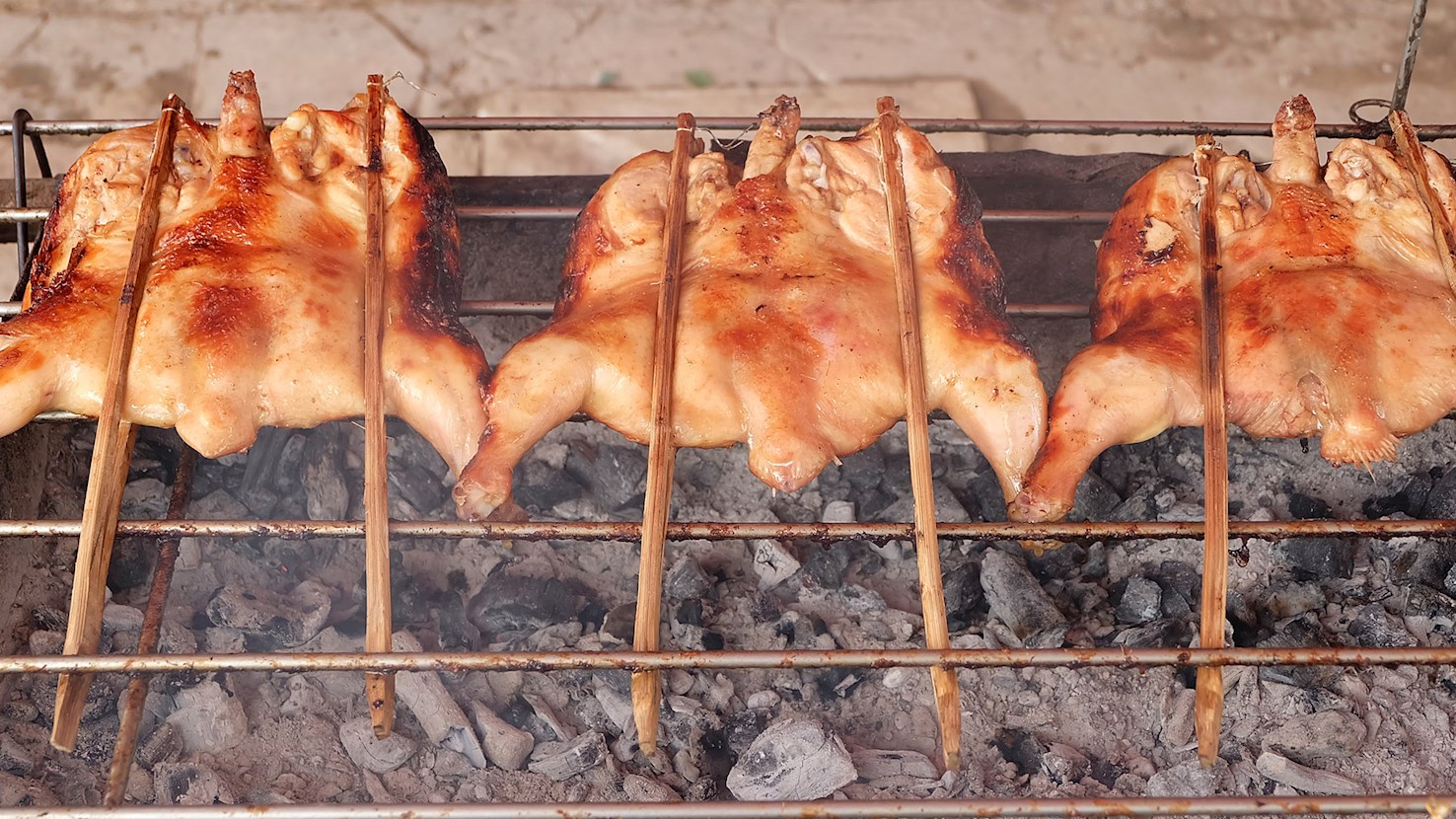
Kai yang is a charcoal-grilled chicken dish strongly associated with Isan, northeastern Thailand, and with the closely connected food culture of Laos, where the corresponding dish is known as ping kai. The chicken is usually marinated with garlic, coriander root, pepper, fish sauce or another salty seasoning, and often lemongrass and turmeric, then flattened and grilled slowly over charcoal until the skin is browned and the meat remains juicy. In Thai, kai means chicken and yang means grilled or roasted, so the name literally means “grilled chicken.” In Lao, the order is reversed in ping kai, with ping referring to grilling. The broader preparation is rooted in Lao food culture and the closely related cuisine of Isan. The two regions share language, ingredients, glutinous-rice eating habits, fermented seasonings, grilled foods, and numerous dishes that developed across a cultural area predating the modern border between Laos and Thailand. Lao grilled chicken, or ping kai, is an established part of everyday food in Laos, while kai yang became one of the defining grilled foods of Isan. As with som tam, assigning the preparation to a sharply separated modern national cuisine obscures this connection. The Lao form is generally regarded as the earlier basis, while the Thai name kai yang became widely used as the dish spread from Isan into the rest of Thailand. There is no documented individual creator or precise date for the dish. Grilling poultry over charcoal is much older than the modern restaurant and street-food versions, and the preparation developed in communities where chickens could be raised domestically, seasoned with locally available aromatics, and cooked over an open fire. Its close association with glutinous rice is particularly significant: sticky rice is the staple grain of Laos and Isan, and grilled meats are naturally suited to meals in which small portions of rice are formed by hand and eaten with meat, salads, dipping sauces, and vegetables. During the twentieth century, kai yang became increasingly visible outside northeastern Thailand as migration from Isan brought regional foods to Bangkok and other urban centers. The same movement that helped establish som tam, larb, and sticky rice as widely recognized Thai foods also expanded the market for Isan grilled chicken. Roadside vendors and small restaurants proved especially well suited to the dish because chickens could be marinated in advance and cooked continuously over charcoal, then chopped to order. Today it is sold across Thailand even though its strongest culinary identity remains northeastern. The chicken is commonly prepared whole, split along the breast or backbone and flattened so that the legs, thighs, and breast cook more evenly. Some vendors halve the bird instead. The flattened chicken may be secured between split bamboo sticks or reinforced with bamboo skewers, which keep it open during cooking and make it easier to turn over the grill. Leaner, relatively small chickens have historically been valued because their firmer meat responds well to slow charcoal cooking. There is no single compulsory marinade, but garlic, coriander root, and pepper form one of its most characteristic aromatic bases. Lemongrass, turmeric, fish sauce, soy or seasoning sauce, ginger, palm sugar, and sometimes coconut milk may also be used depending on the regional or vendor style. The aromatics are commonly pounded before being rubbed into the chicken, allowing them to adhere closely to the skin and meat. Thailand Foundation recipes, for example, combine garlic, coriander root, black pepper, lemongrass, ginger, seasoning sauce, and turmeric, while other established formulas use fish sauce and palm sugar. These differences are better understood as regional and household variation than as evidence of one standardized formula. After marinating, the chicken is grilled over charcoal at moderate or relatively low heat rather than placed directly over an intense flame. The slower cooking is important because the bird is usually grilled in large sections or whole and must cook through to the bone without burning the skin. Vendors may position the chicken well above the coals and regulate the fire to prevent flare-ups. The goal is a browned, slightly crisp exterior with some charcoal aroma, not a heavily blackened surface. The broad, flattened shape also allows more skin to face the heat directly and helps produce relatively even browning. Once cooked, kai yang is generally chopped through the bone into manageable pieces and served hot or warm. The skin should remain browned and aromatic, while the meat should be moist rather than dry. Unlike fried chicken, there is no coating or batter, and unlike heavily glazed barbecue, the surface is not defined by a thick sauce. Most of the seasoning enters the chicken before cooking, while dipping sauces are served separately. Regional versions have acquired reputations of their own. In Thailand, places such as Wichian Buri in Phetchabun and Khao Suan Kwang in Khon Kaen are particularly associated with distinctive grilled-chicken styles. Laos has its own famous regional example, Ping Kai Seno from Seno in Savannakhet province. The Seno version developed as a roadside specialty in the early 1990s, became strongly associated with travelers using Route 13, and later received national ODOP recognition. It should therefore be treated as a specific regional version of Lao grilled chicken rather than as the starting point of the broader dish. The most characteristic Thai serving combines kai yang with som tam and khao niao, or glutinous rice. The three are so closely associated in Isan eating that they are often ordered together as a complete meal. The cool, crisp, acidic and chili-heavy papaya salad offsets the fatty skin and savory marinade of the chicken, while sticky rice provides the main starch and can be shaped into small pieces and eaten by hand. Thailand’s tourism and culinary sources repeatedly present grilled chicken and som tam together, reflecting how established the combination has become. A dipping sauce commonly accompanies the chicken. In Isan this may be nam chim jaew, a salty, sour and spicy sauce commonly built around fish sauce, lime or tamarind, dried chili, shallot, and toasted rice powder. Other vendors serve a sweeter chili-garlic dipping sauce. In Laos, grilled chicken can be accompanied by jeow, the broad family of Lao dipping sauces. Fresh cucumber, raw vegetables, herbs, larb, and other grilled meats can be added when kai yang forms part of a larger shared meal. Kai yang is eaten throughout the day and is particularly well suited to informal meals, street stalls, markets, roadside restaurants, picnics, and shared family tables. Whole birds may be purchased to take away and eaten with baskets of sticky rice and som tam, while restaurants usually chop the chicken into portions before serving. The combination remains strongly associated with Isan even though it has become part of mainstream Thai restaurant and street-food culture. Cold lager is one of the most natural beverage pairings, particularly when the chicken is eaten with spicy som tam and nam chim jaew. In Laos, Beerlao commonly fills the same role with ping kai, while water and unsweetened tea work well with the salty, aromatic meat.
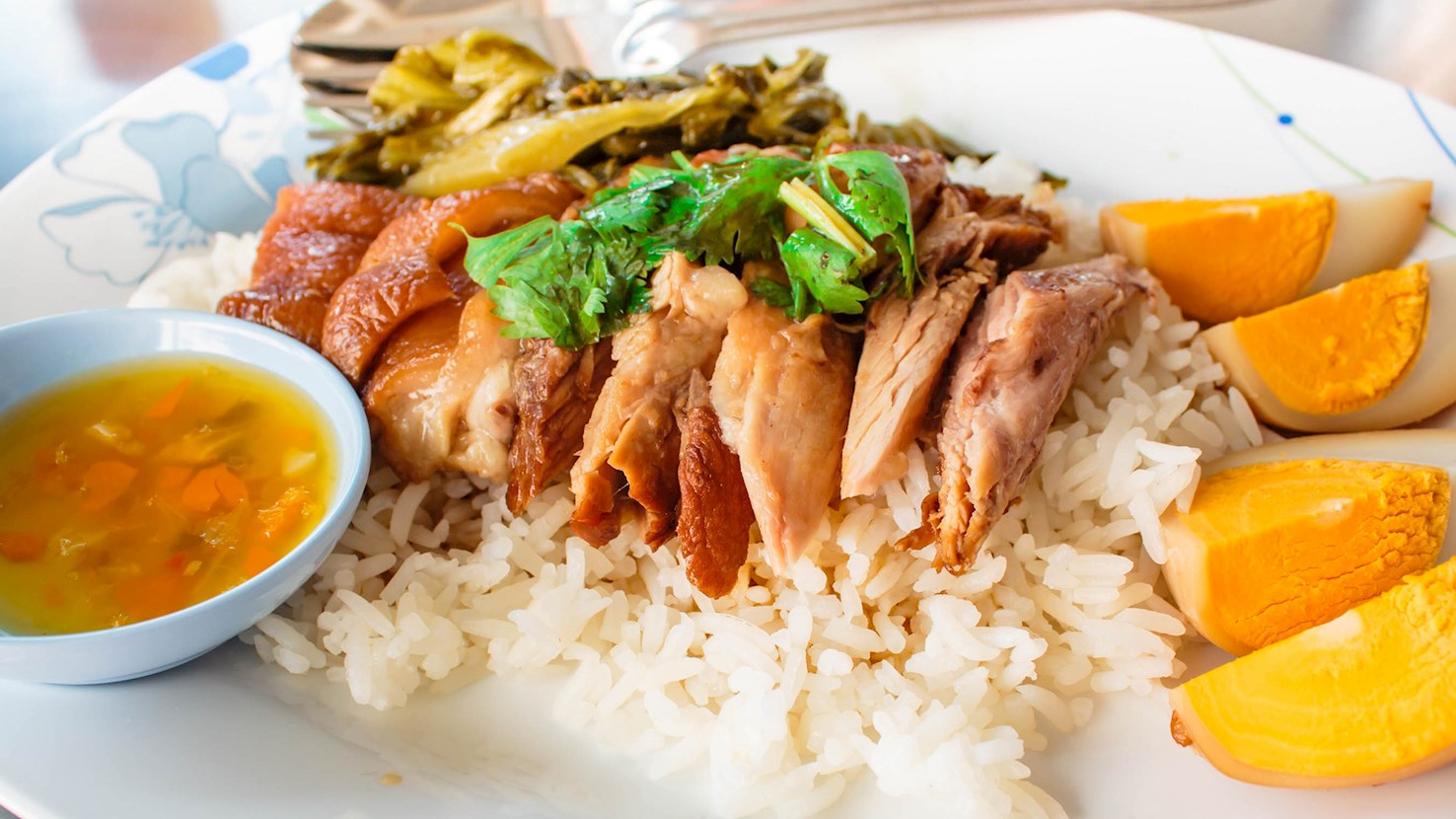
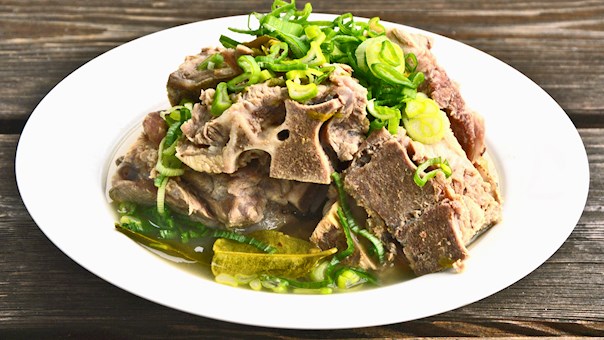
Khao kha mu is a dish which consists of braised pork leg served over rice, complemented with a variety of side dishes and flavorful condiments. The leg is shortly seared and then braised in a flavorful broth which is usually spiced with anise, coriander, five spice powder, soy sauce, brown or palm sugar, and cinnamon. The spices infuse the meat, and the whole process results in a tender, succulent, and incredibly flavorful dish. Boiled eggs, mustard greens, and the leafy Chinese broccoli kana are also added and cooked in the same broth. In Thailand, khao kha mu is usually sold by numerous street vendors who exclusively prepare it as their specialty. At many street food stalls, it is possible to order the entire leg, accompanied by rice and various side dishes and condiments, or choose a small serving of rice, topped with sliced pieces of tender pork meat. Every serving should include a piece of lean meat, chunks of thick, glutinous skin, and a side of broccoli, mustard greens, and sliced boiled eggs. Raw garlic and fresh chili peppers are occasionally served on the side, but they are more commonly incorporated into a sour and fiery sauce which is used to generously season this exquisite Thai dish.
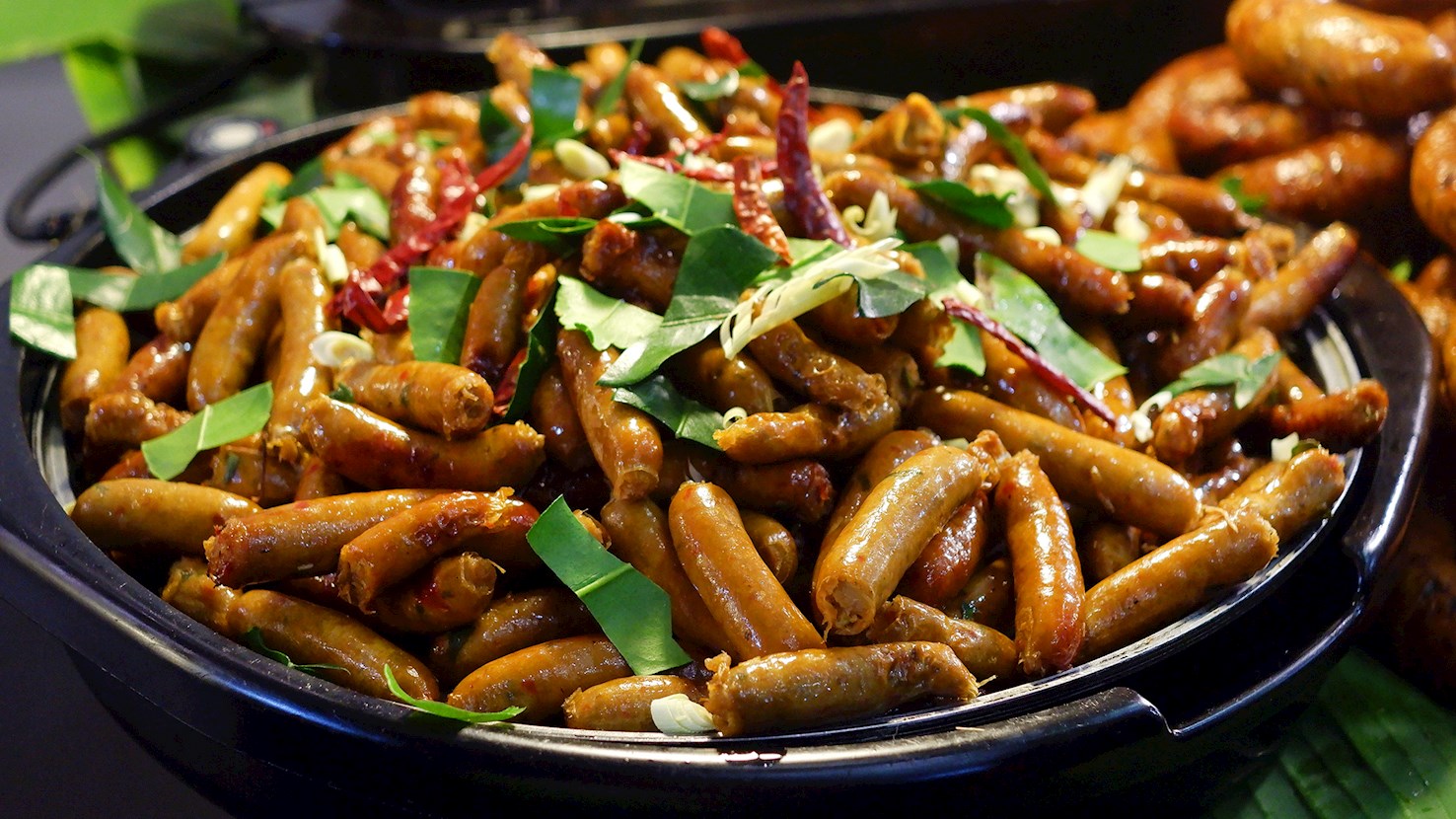
Renowned for being flavor-packed, sai ua is a type of Northern Thai sausage that combines pork with a red curry paste and a variety of herbs and spices. The meat mixture is prepared with ground pork, green onions, kaffir lime leaves, and cilantro stems, which are all finely chopped and combined. It is then mixed with a curry paste usually composed of galangal, kaffir lime zest, lemongrass, garlic, fermented shrimp paste, chilis, shallots, and fish sauce. Traditionally, sai ua is added to an intestine wrapper and formed into a coil that is typically grilled. These days, however, the sausage mixture is not necessarily added to sausage casings and can be shaped into meat patties, balls, or caseless sausages. Sai ua is often broiled, baked, or fried, and consumed as a street snack, an appetizer, or an accompaniment to main dishes. Salty and somewhat spicy, this Thai sausage is usually served with fresh vegetables, sticky rice, and nam prikh num sauce on the side. Sai ua is a staple of northern Thai provinces, especially Chiang Mai, where it is available at numerous street stalls and markets.
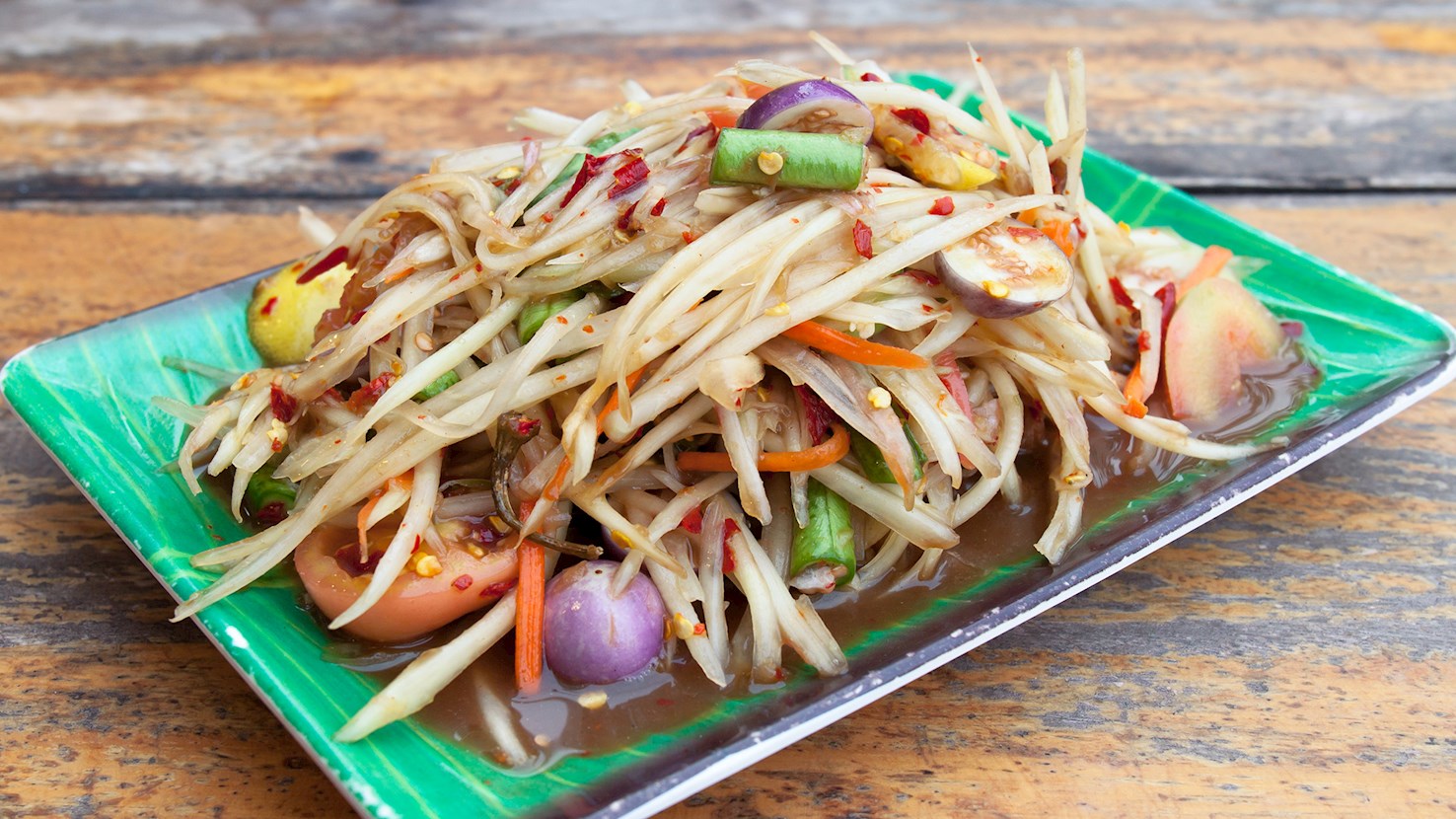
Som tam is a pounded green papaya salad of Lao origin that became a major part of the food culture of Isan, northeastern Thailand, before spreading throughout the rest of Thailand. It is made by pounding and tossing shredded unripe papaya with chilies, garlic, lime, fermented or fish-based seasonings, tomatoes, and other ingredients in a mortar. In Laos, the closely related form is known as tam mak hoong (ຕຳໝາກຫຸ່ງ), while in Isan the salad commonly appears with pla ra, the fermented fish seasoning closely related to Lao padaek. The sweeter version internationally known as som tam Thai, usually made with palm sugar, fish sauce, dried shrimp, roasted peanuts, long beans, and tomatoes, developed as a central Thai adaptation. The name som tam combines som, referring to sourness, with tam, meaning to pound. The dish belongs to the broader Lao category of tam, in which vegetables and fruits are pounded with chilies, garlic, fermented fish, and acidic seasonings. Lao and Isan food cultures are closely connected by language, migration, geography, and centuries of shared culinary practices. When Lao-speaking populations became incorporated into Siam and later Thailand, especially in the northeast, their foodways became part of what is now identified as Isan cuisine. Som tam therefore entered the wider Thai repertoire primarily through this Lao-Isan culinary connection. Papaya itself is not native to Southeast Asia. Carica papaya originated in tropical America and reached Asia through Spanish and Portuguese maritime networks during the sixteenth century. Once established in mainland Southeast Asia, its firm, mild unripe flesh proved well suited to existing Lao methods of pounding raw fruits and vegetables with salty, sour, and spicy seasonings. The precise date when green papaya became the standard ingredient cannot be established. The earliest currently identified printed Thai recipe specifically called som tam malakor, or papaya som tam, appears in the Bangkok cookbook Tamra Khraawp Lohk from 1929. Another version was recorded in Sai Yaowapa in 1935 as part of khao man som tam. These recipes show that papaya som tam had entered Bangkok culinary writing by the early twentieth century, but they do not establish Bangkok as its birthplace. Rural Lao and Isan foods were much less likely to appear in early printed cookbooks than dishes associated with urban kitchens. Som tam became far more visible across Thailand during the twentieth century as large numbers of people from Isan migrated to Bangkok and other cities. From the mid-twentieth century onward, Isan workers established food stalls and restaurants serving som tam, sticky rice, grilled chicken, and larb. By the 1960s, northeastern food had developed a significant presence in Bangkok, and som tam gradually became an everyday dish throughout Thailand. The defining preparation technique remains the mortar and pestle. Garlic and chilies are usually pounded first, followed by salty, sour, and sometimes sweet seasonings. Long beans and tomatoes are lightly bruised before shredded green papaya is added. A spoon is commonly used together with the pestle to lift and turn the ingredients. The goal is to bruise the papaya enough for the dressing to penetrate while keeping it crisp. Lao and Isan versions generally emphasize fermented fish, acidity, salt, and chili rather than pronounced sweetness. Tam mak hoong commonly uses padaek, while Isan som tam pla ra uses pla ra. Som tam pu pla ra also includes salted field crab. These forms usually contain little or no peanut and dried shrimp. By contrast, som tam Thai typically uses fish sauce instead of strongly fermented fish, more palm sugar, dried shrimp, and roasted peanuts, producing the sweeter profile most familiar outside Thailand. Som tam is therefore best understood as a family of closely related pounded salads rather than one fixed recipe. Green papaya is the best-known base, but cucumber, green mango, corn, fruit, noodles, and other ingredients can be prepared using the same tam technique. Individual vendors also adjust the amount of chili, acidity, sugar, and fermented fish according to preference. The salad is usually prepared to order because its texture is best immediately after pounding. The papaya should remain crisp, the tomatoes lightly crushed, and the dressing concentrated enough to coat the strands without making the salad soupy. In Laos and Isan, som tam is closely associated with glutinous rice. Small portions of sticky rice are eaten by hand alongside the salad, helping moderate the chili and absorb some of the dressing. Grilled chicken is another particularly established accompaniment, and the combination of som tam, sticky rice, and kai yang is now common throughout Thailand. Larb, grilled pork, grilled fish, sausages, pork rind, and fresh or blanched vegetables can also accompany it. Today som tam is one of the most widely recognized foods associated with Thailand, although its culinary roots lie in Lao food culture and the closely related cuisine of Isan. The sweeter som tam Thai dominates many international Thai restaurants, while the more fermented and less sweet forms remain central to everyday eating in northeastern Thailand and Laos. Sticky rice and grilled chicken are its most characteristic pairings, while cold water, soda water, lager, or unsweetened tea suit its chili, acidity, and saltiness.
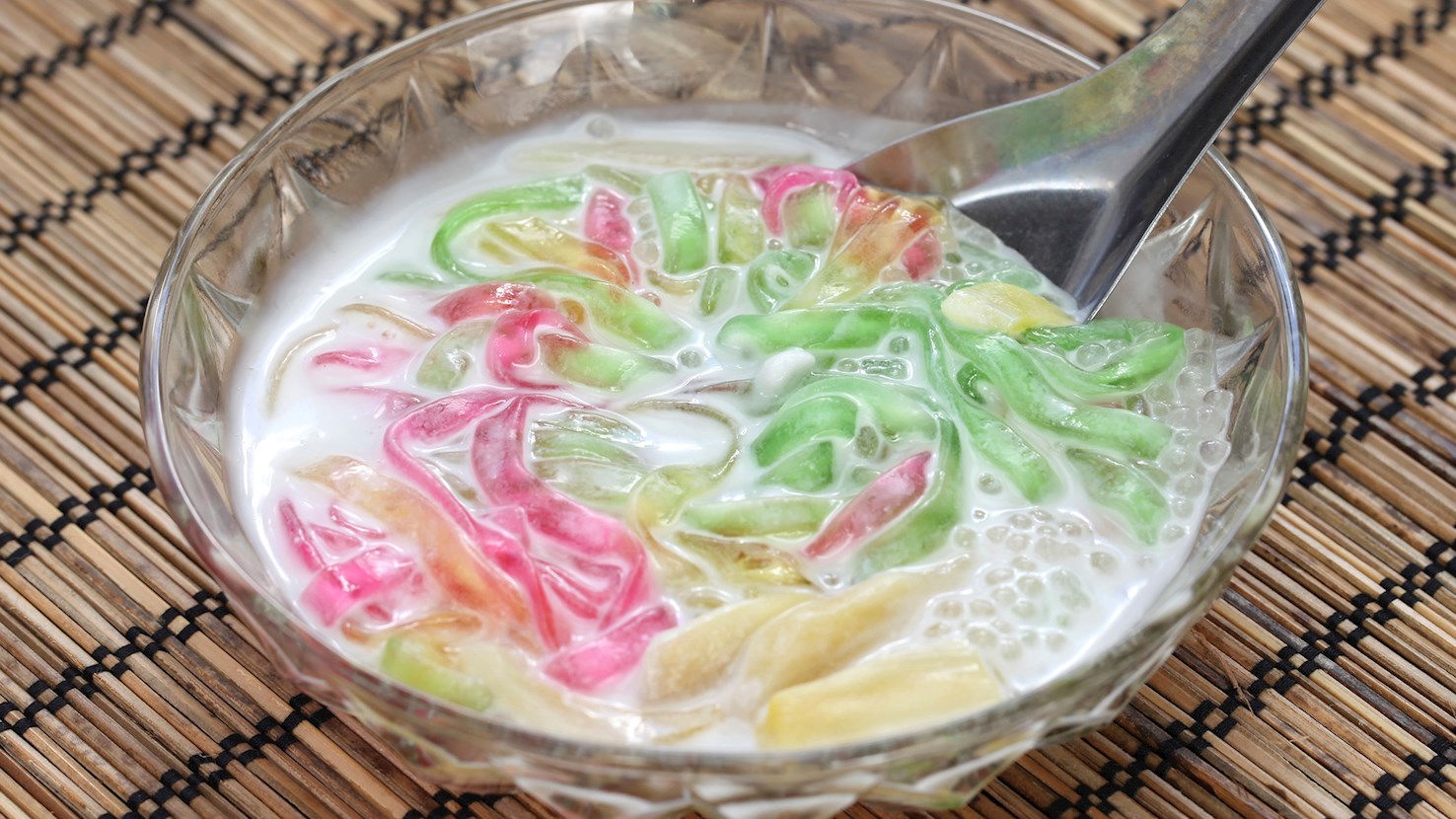
Ruam mit is a popular Thai dessert made with ingredients such as coconut milk, sugar, tapioca pearls, corn, lotus root, sweet potatoes, beans, and jackfruit. Each bowl typically includes starchy noodles that are flavored and colored with various ingredients, and which may come in the shape of thin strips or more elaborate decorative forms. There is no set recipe for ruam mit, so each cook or street vendor adds their own ingredients to the mix. It is often consumed as a cool refreshment on hot summer days, topped with shaved ice. In Thailand, it is one of the cheapest desserts, and each bowl typically costs around 15 baht. Interestingly, in Thai language, ruam means get together, and mit refers to friends, so it can be said that ruam mit is a meeting of many desserts in one simple, flavorful dish.
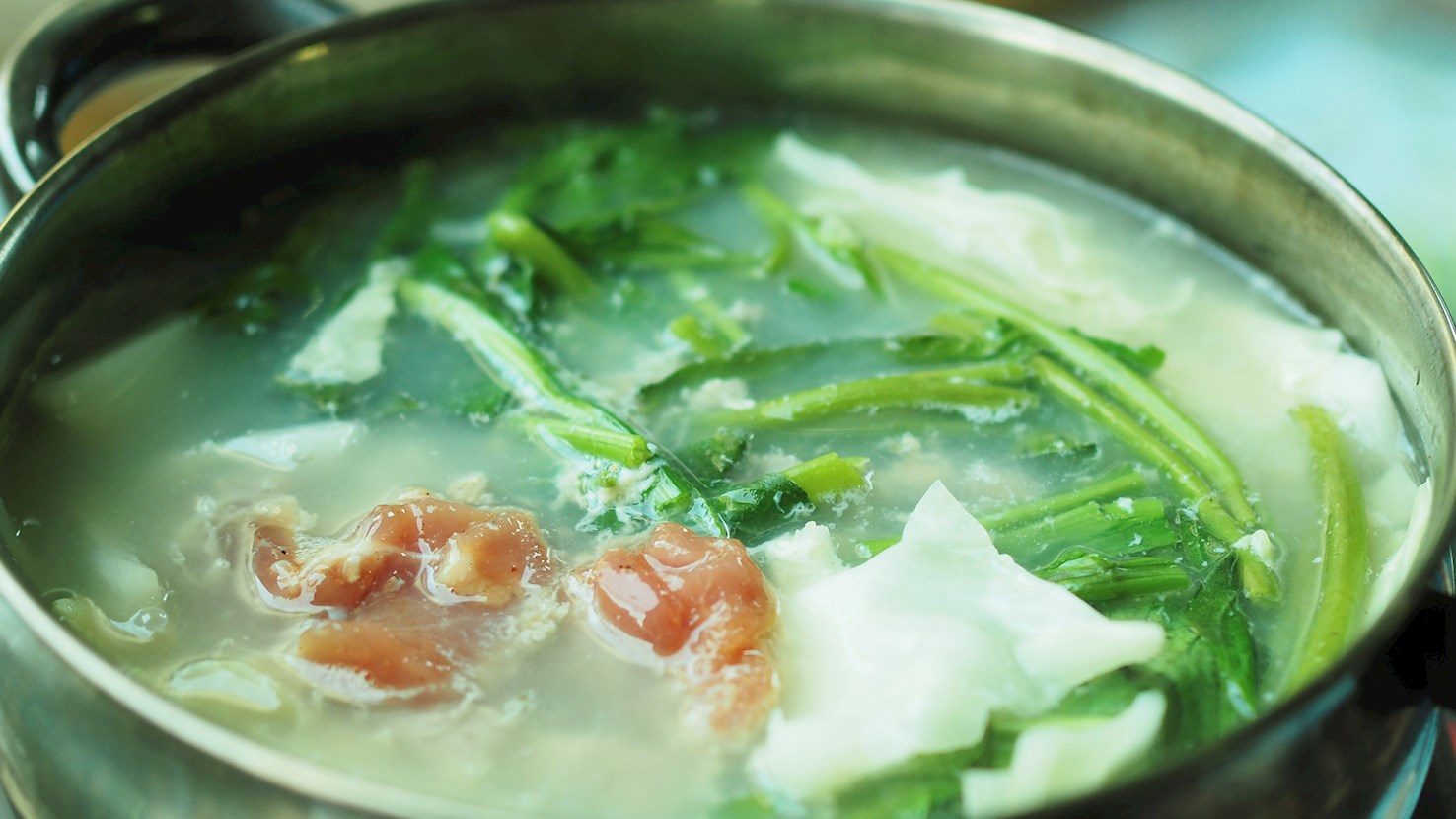
Suki is the Thai version of a communal hot pot dish. It grew out of Chinese and Japanese traditions of preparing and cooking ingredients tableside in a shared bowl. The assembling of the dish starts with a bowl placed in the middle of the table, usually filled with a lemongrass-spiced chicken broth. The rest of ingredients can include meat, pork, and chicken, a wide range of seafood ingredients, glass noodles, and vegetables such as cabbage, shiitake mushrooms, spring onions, carrots, and celery. The unique characteristic of Thai suki is the dipping sauce, created with a substantial amount of chili peppers, coriander, garlic, and lime. Occasionally, a raw egg is added to the broth, which creates unusual egg drippings and slightly thickens the soup. Having suki in a restaurant provides a unique dining experience in which each person can adjust the choice of ingredients and spiciness according to personal preferences. In Thailand, it is usually consumed at specialized suki restaurants.
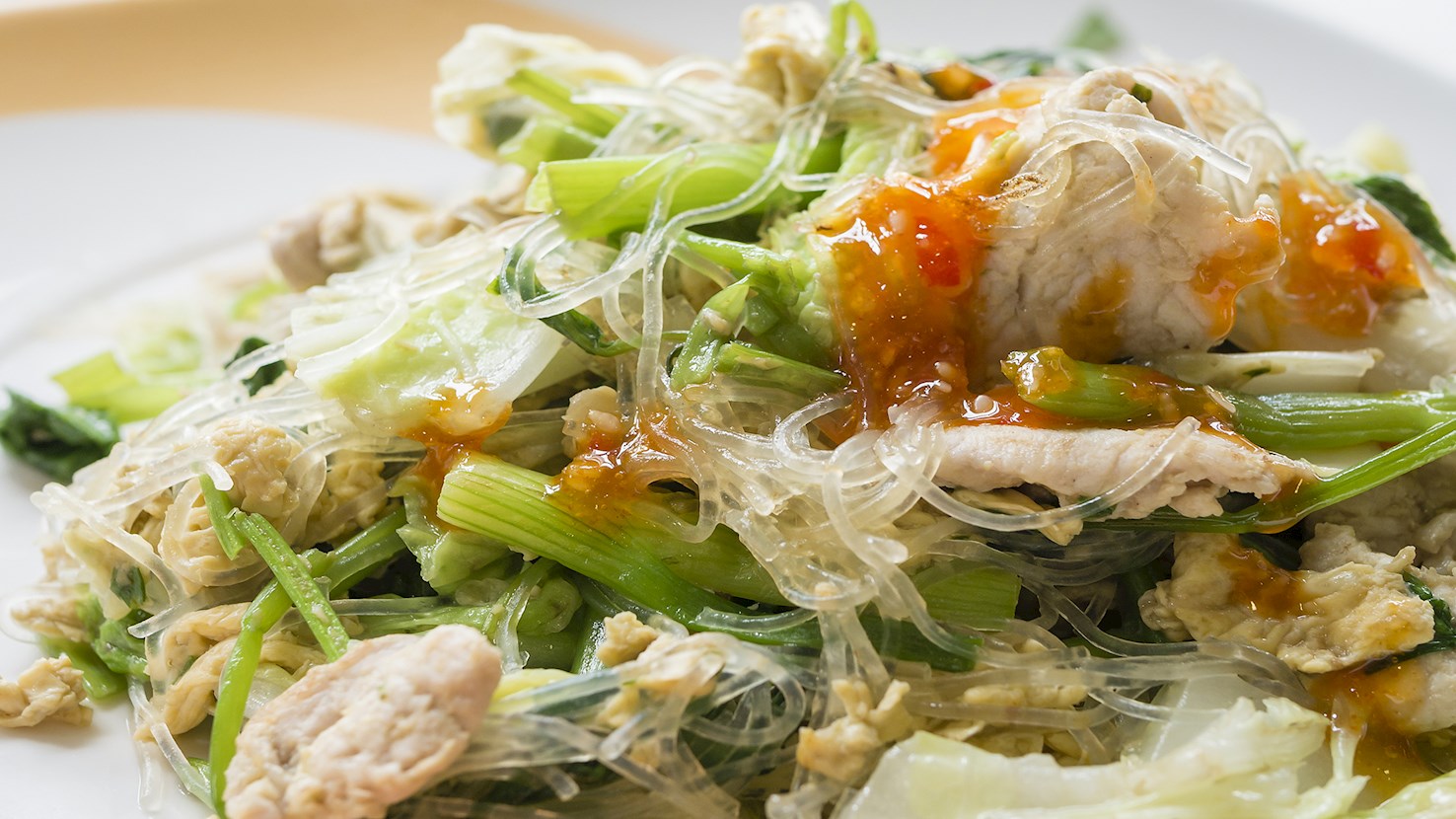
Suki haeng is the lesser-known, dry version of the popular Thai suki. Unlike the traditional variety that is cooked in broth, suki haeng is prepared in a wok, but it includes similar ingredients – meat, seafood, various vegetables, and glass noodles. All the elements are usually coated in eggs, shortly fried in a wok, and served accompanied by a signature, chili-flavored suki dipping sauce. Both versions are typically enjoyed at specialized suki restaurants.
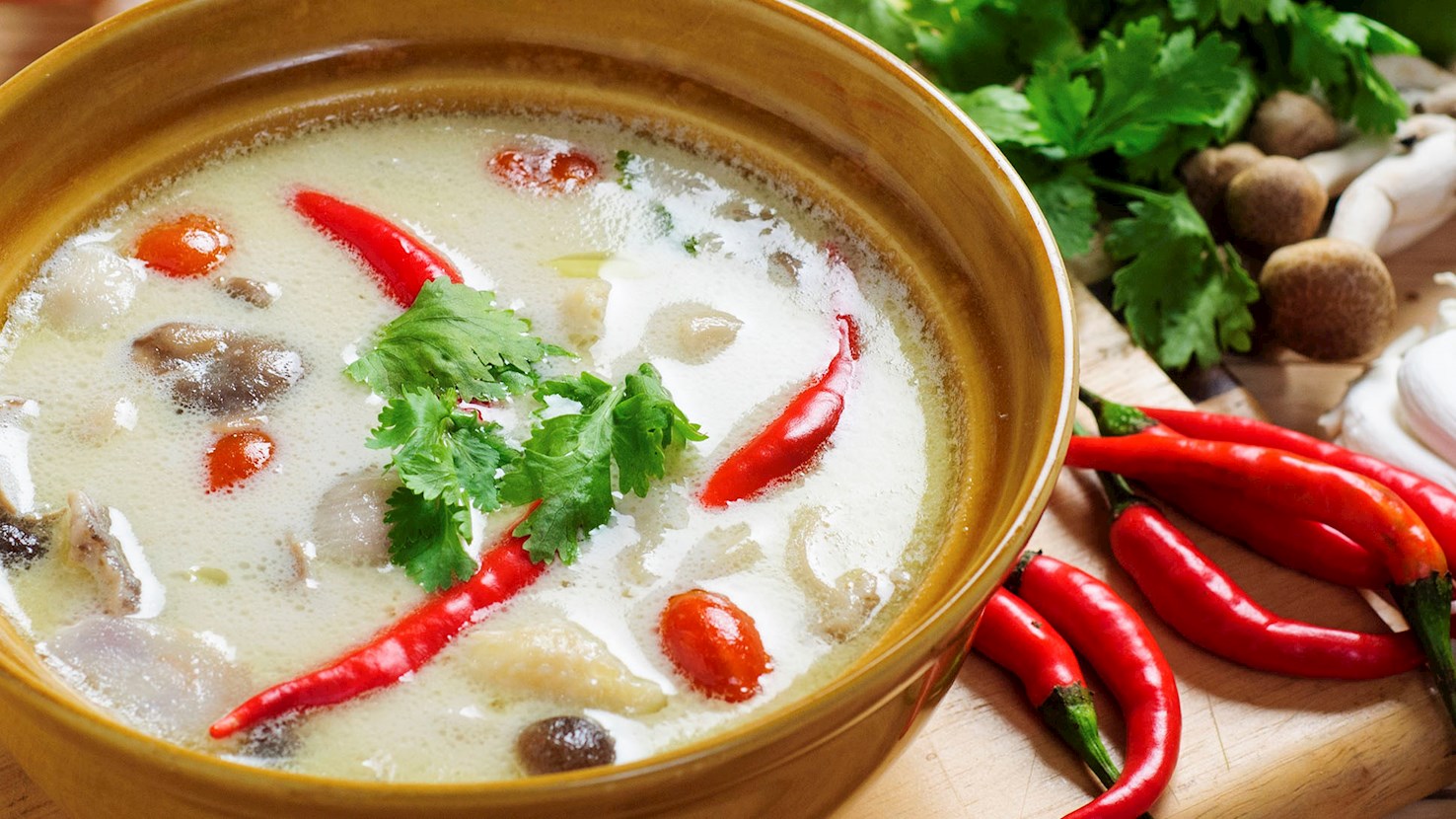
Tom kha gai is Thailand's delicious national dish coming from the central part of the country and bearing the influence of neighbouring Laos. It is a soup whose name translates to boiled galangal chicken soup, consisting of coconut milk, chicken chunks or shreds, galangal (reddish-brown or pink woody plant related to ginger), lemongrass, garlic, bird's eye chili peppers, kaffir lime leaves, fish sauce, and shiitake mushrooms. Galangal's peppery, pungent, slightly sour and floral flavors provide an interesting contrast to the creaminess of coconut milk, creating a wonderfully aromatic dish in the process. Tom kha gai is highly nutritious with great medicinal properties, such as the ability to soothe the gastro-intestinal tract. Since the dish is very popular, there are also other versions of the soup - vegetarian, tofu, seafood, and pork tom kha are just some of its varieties. It is traditionally served with rice on the side, garnished with coriander leaves and diced tomatoes.
TasteAtlas food rankings are based on the ratings of the TasteAtlas audience, with a series of mechanisms that recognize real users and that ignore bot,
nationalist or local patriotic ratings, and give additional value to the ratings of users that the system recognizes as knowledgeable.
TasteAtlas Rankings should not be seen as the final global conclusion about food. Their purpose is to promote excellent local foods,
instill pride in traditional dishes, and arouse curiosity about dishes you haven’t tried.



What People Say