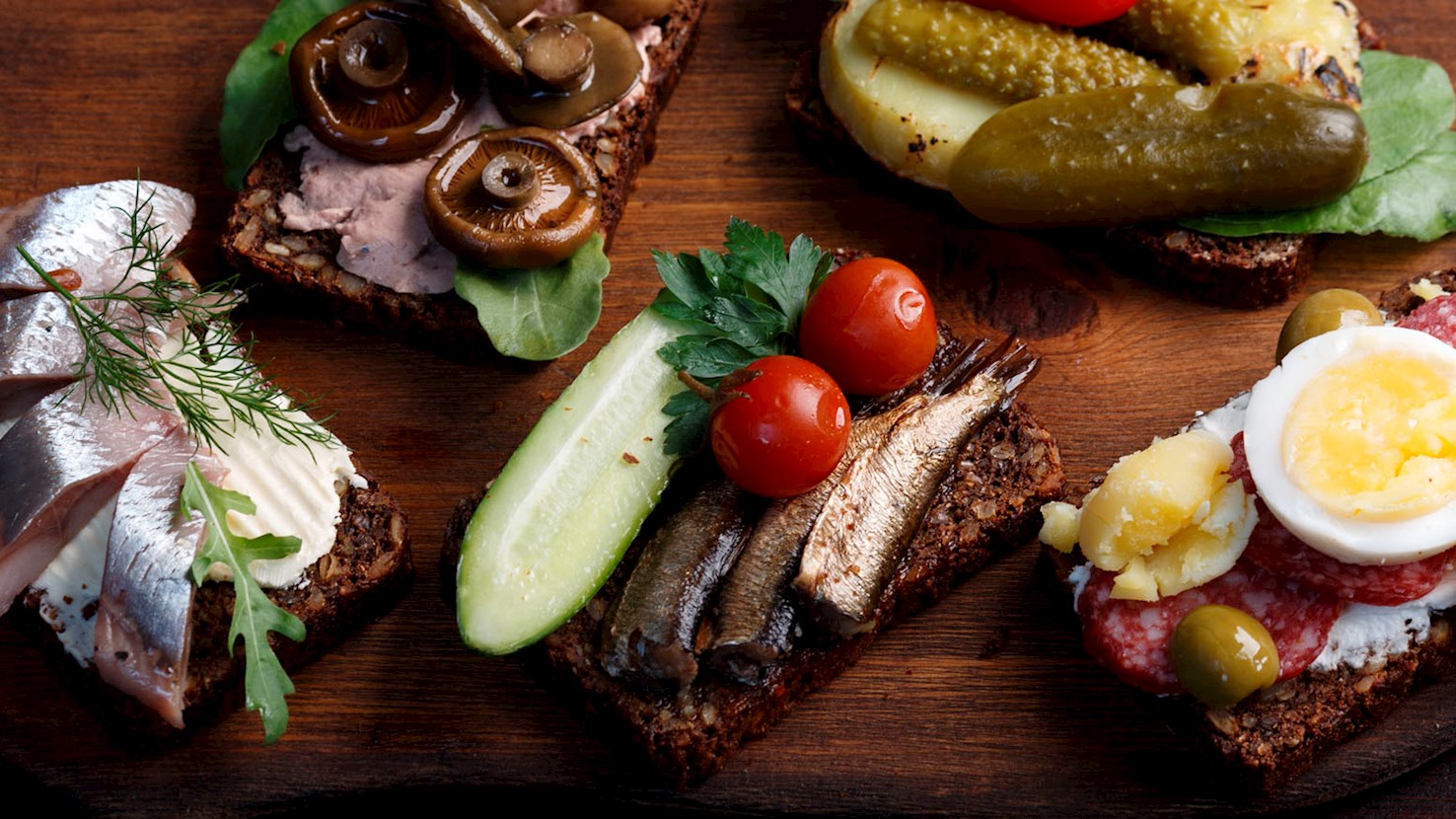
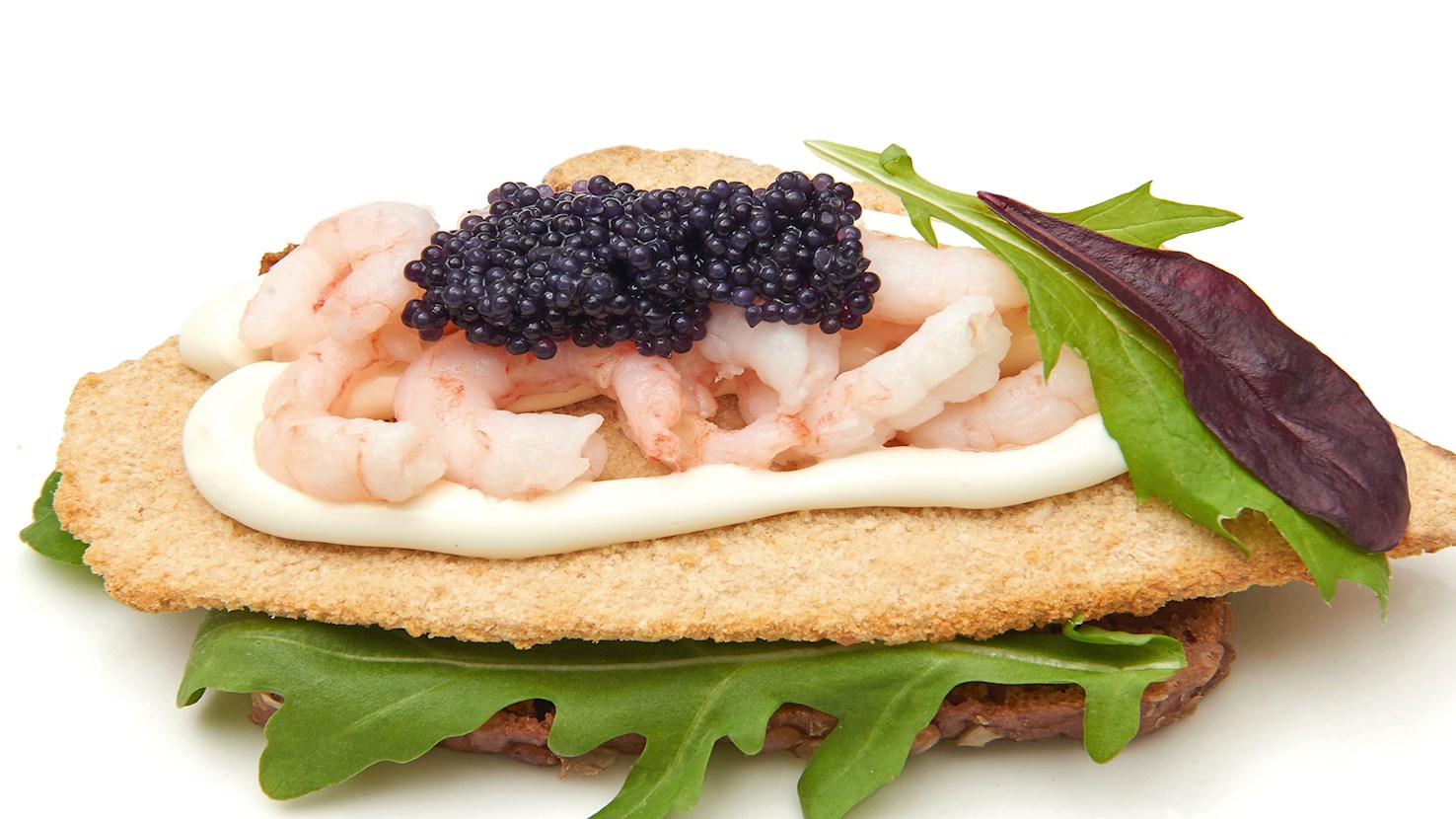
Smørrebrød is a traditional open-faced sandwich consisting of buttered rye bread that is topped with numerous ingredients and typically accompanied by vegetables, herbs, and salads. Toppings include ingredients such as cold cuts of meat, cheeses, spreads, meatballs, caviar, and condiments such as mayonnaise. This sandwich was invented in the 19th century by Scandinavian agricultural workers who would pack a variety of open-faced sandwiches for lunch–often made with leftovers from the previous night–in order to provide them with energy during the long working hours. Some claim that the basic idea stems from the Middle Ages and the tradition of serving food on stale bread. Today, smørrebrød is a staple of Scandinavian cuisine that is served either as an appetizer, main course, or a dessert. The sandwiches are especially popular during the holiday festivities such as Christmas and Easter. Open-faced sandwiches are also common in other countries - in Austria, they're known as belegte brote.
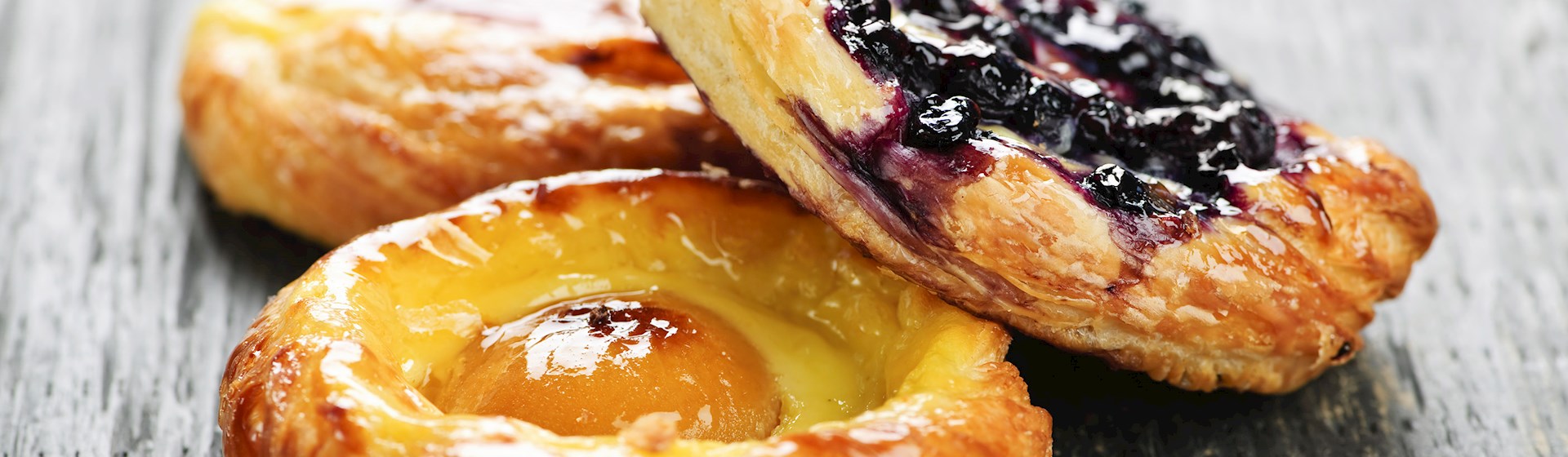
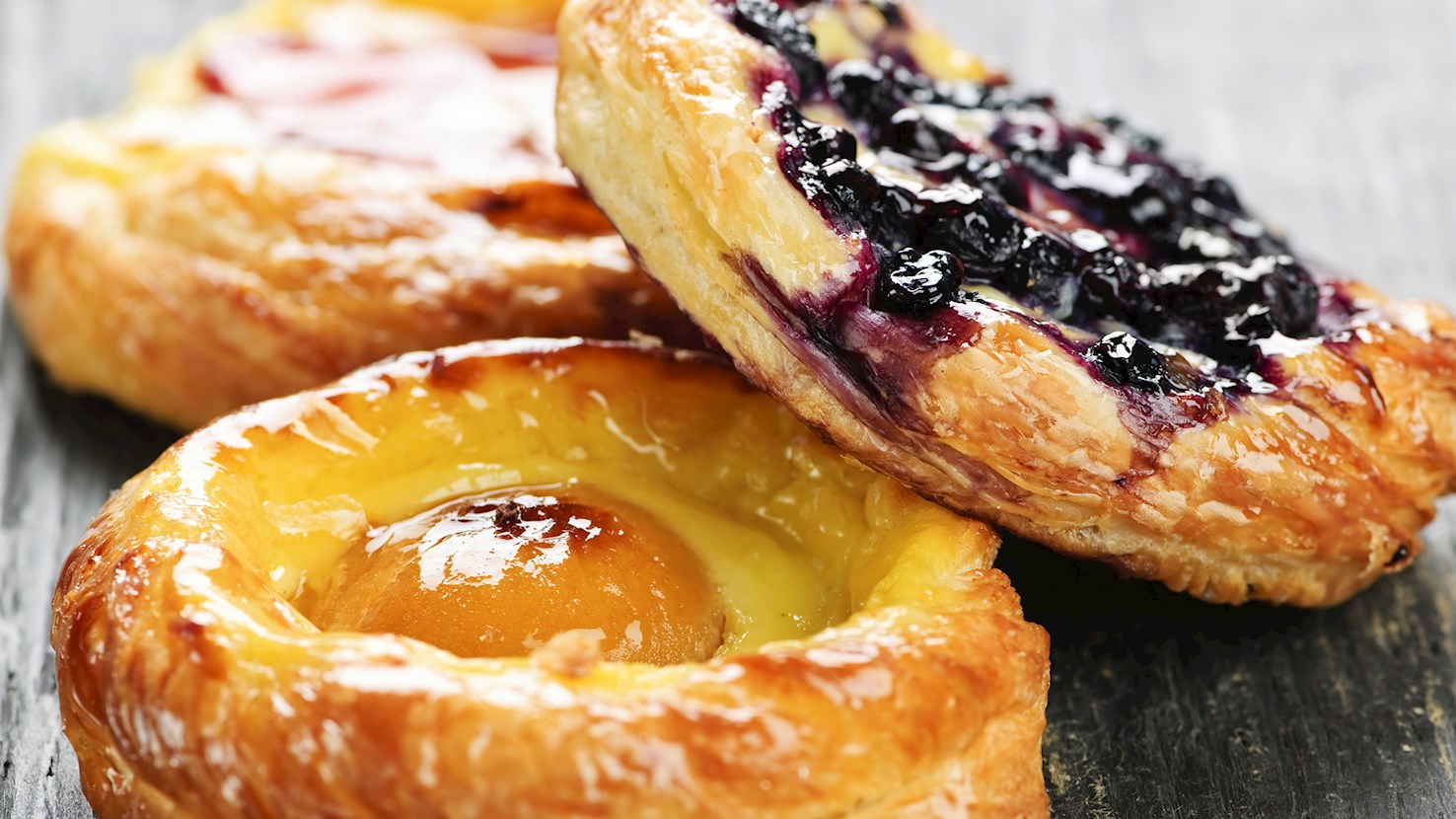
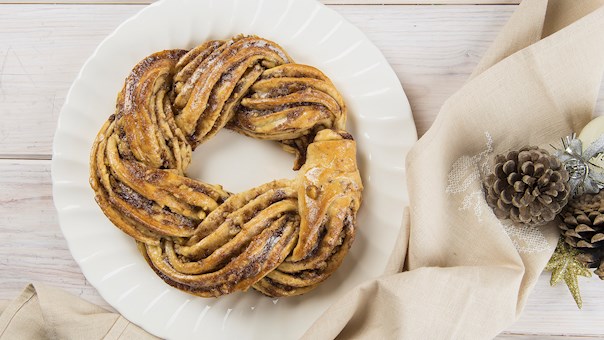
The epitome of a cozy Sunday breakfast in Denmark is a crispy sweet treat known as Danish pastry. It is made with laminated dough, where the dough is repeatedly covered with butter and folded over itself. The result is a creation that is quite similar to puff pastry. The dough is shaped into different forms and filled with flavorful, creamy fillings. Traditional fruit fillings such as apple and raspberry, vanilla custard, and almond paste are Danish favorites, but due to its popularity, the fillings are usually region-specific. For example, cinnamon is more favored during the winter season, while readily available fresh fruit is occasionally incorporated into Danish pastry during the warmer months. The pastry is often decorated with almond flakes or lemon drizzle, which contribute to a more sophisticated look and provide more interesting flavors and textures. It is believed that Danish pastry was created by Austrian bakers who were hired in Denmark during the bakers' strike in 1850, and they brought a tradition of preparing laminated dough to the country. They modified the recipe by adding more butter to create what is today known as Danish pastry. However, in Denmark, Sweden, and Norway it is referred to as wienerbrød, originating from the name Viennese bread, and in Vienna, it is often called Kopenhagener plunder. Today, this pastry is an internationally recognized baked product that is found in many European countries and both North and South America. With intricate designs and a variety of flavors, it represents a staple pastry of every bakery and a favorite sweet breakfast of many people.
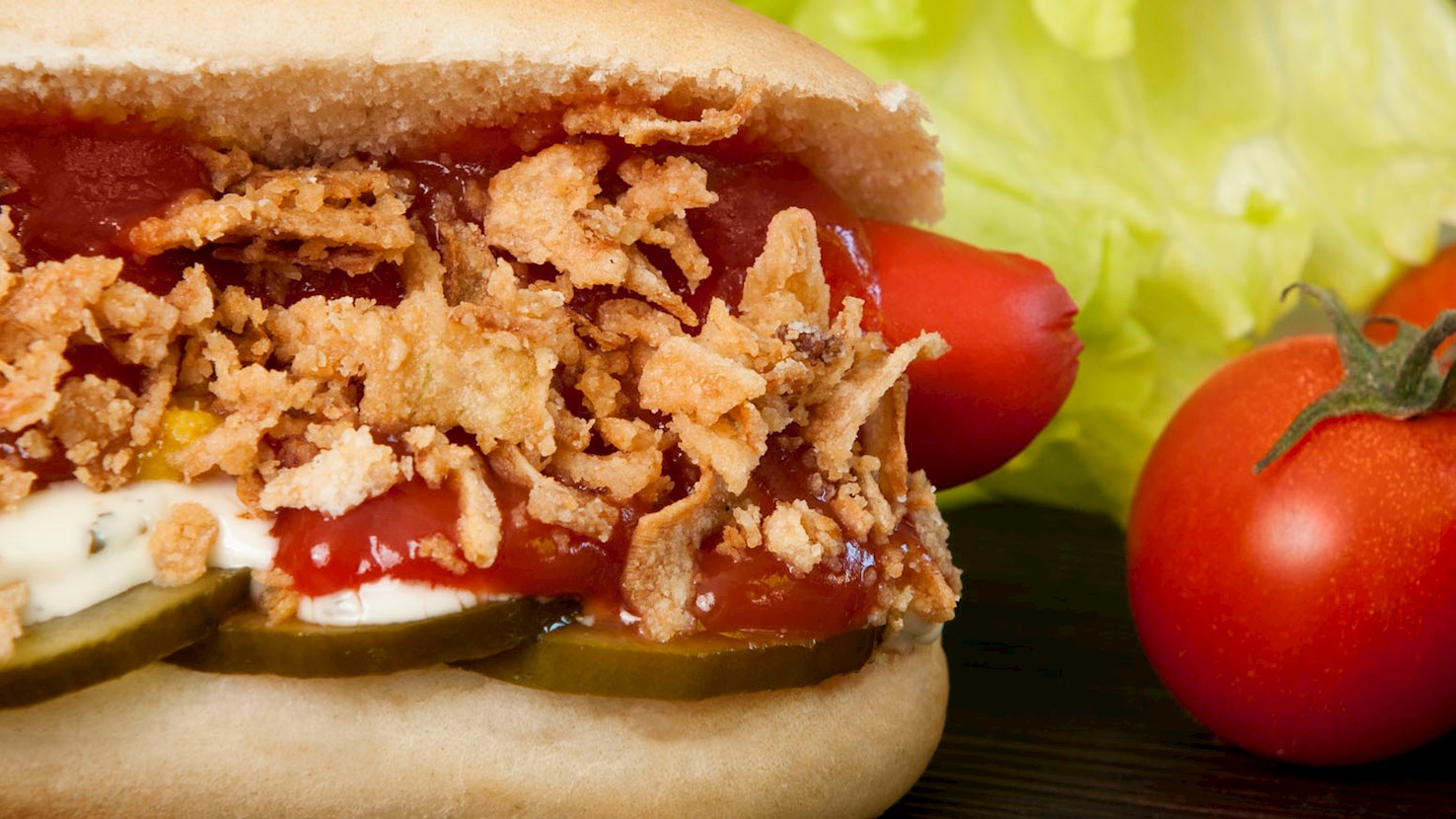
This famous snack is often referred to as the rød pølser, and it is the most common fast food eaten in Denmark. In fact, nothing is considered to be more Danish than eating freshly prepared pølser followed by a refreshing bottle of beer. It consists of a traditional Danish sausage served in a bun and is held to be a sort of a gourmet hot dog. The original pølser is distinguished by its unusual red color and is traditionally made with pure pork. The first pølser originated around 1921. It quickly became popular, and has since become an important heritage and fast food tradition all over Denmark. It is sold on the streets at mobile food stands called pølsevogns, where many types of hot dogs are served, but pølser is the absolute crowd pleaser. There are more than 120 pølsevogns in Copenhagen, and they are present all year round. Pølser is usually served with the sausage sticking out of the bun on both sides, and the traditional condiments served with the sausage are ketchup, mustard and Danish remoulade. The traditional Danish pølser is crowned by the addition of chopped onions, a heap of fried onions, and sliced pickles on top.
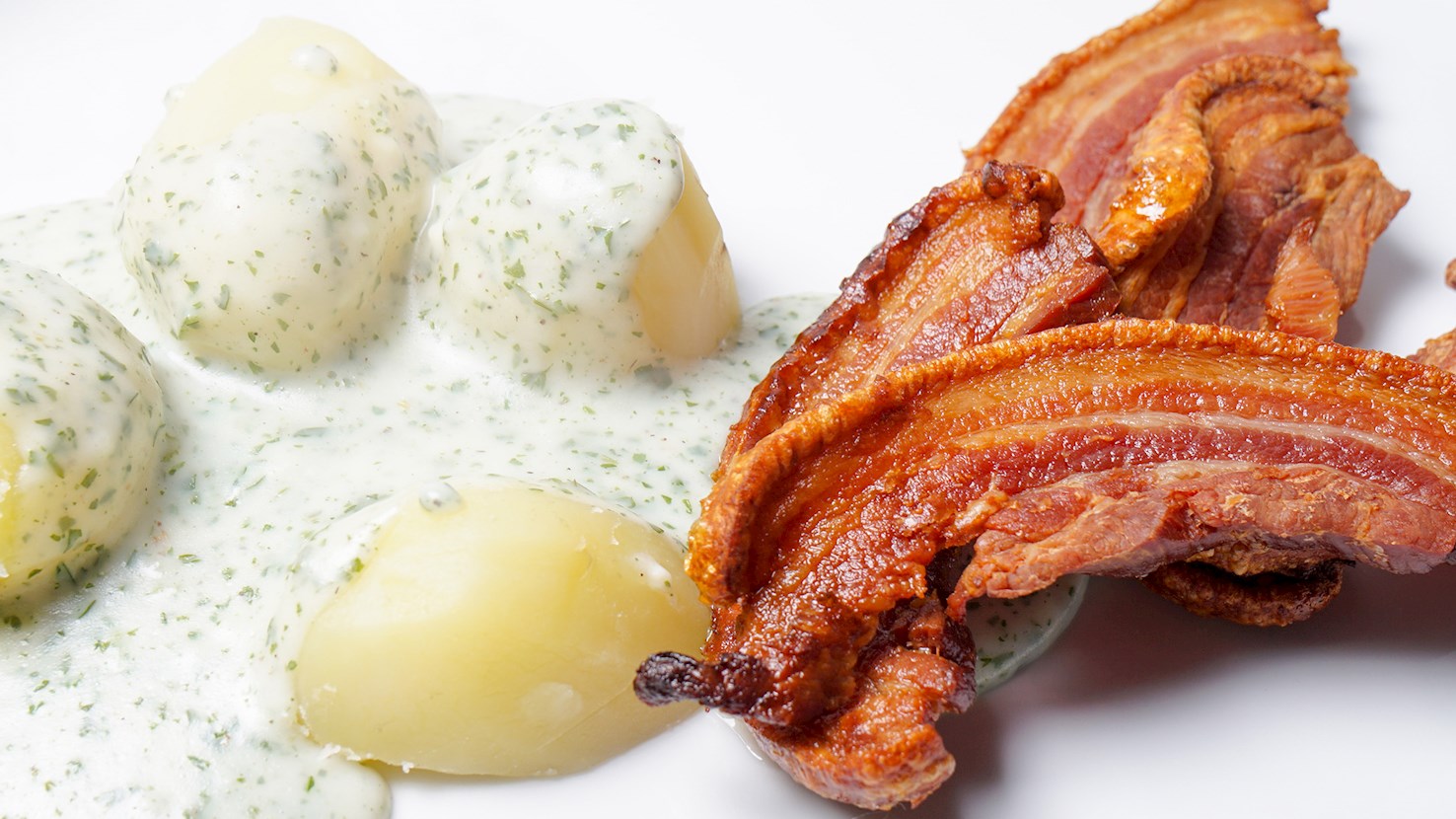
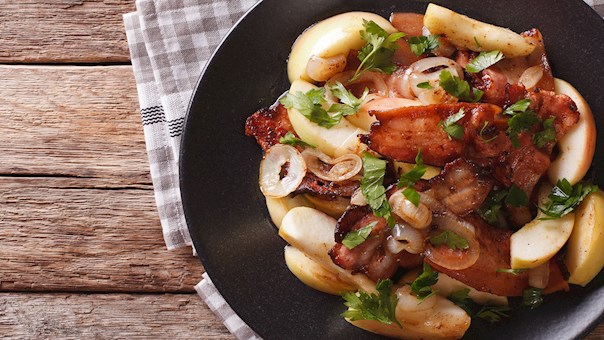
Stegt flæsk is a quintessential Danish dish which consists of fried, grilled, or oven-roasted pork belly. Thick and crispy pork belly slices are traditionally served alongside boiled potatoes and a flavorful parsley sauce. The dish originally appeared in the 19th century, and since then it has become one of the most popular Danish dishes, usually enjoyed as a common everyday meal.
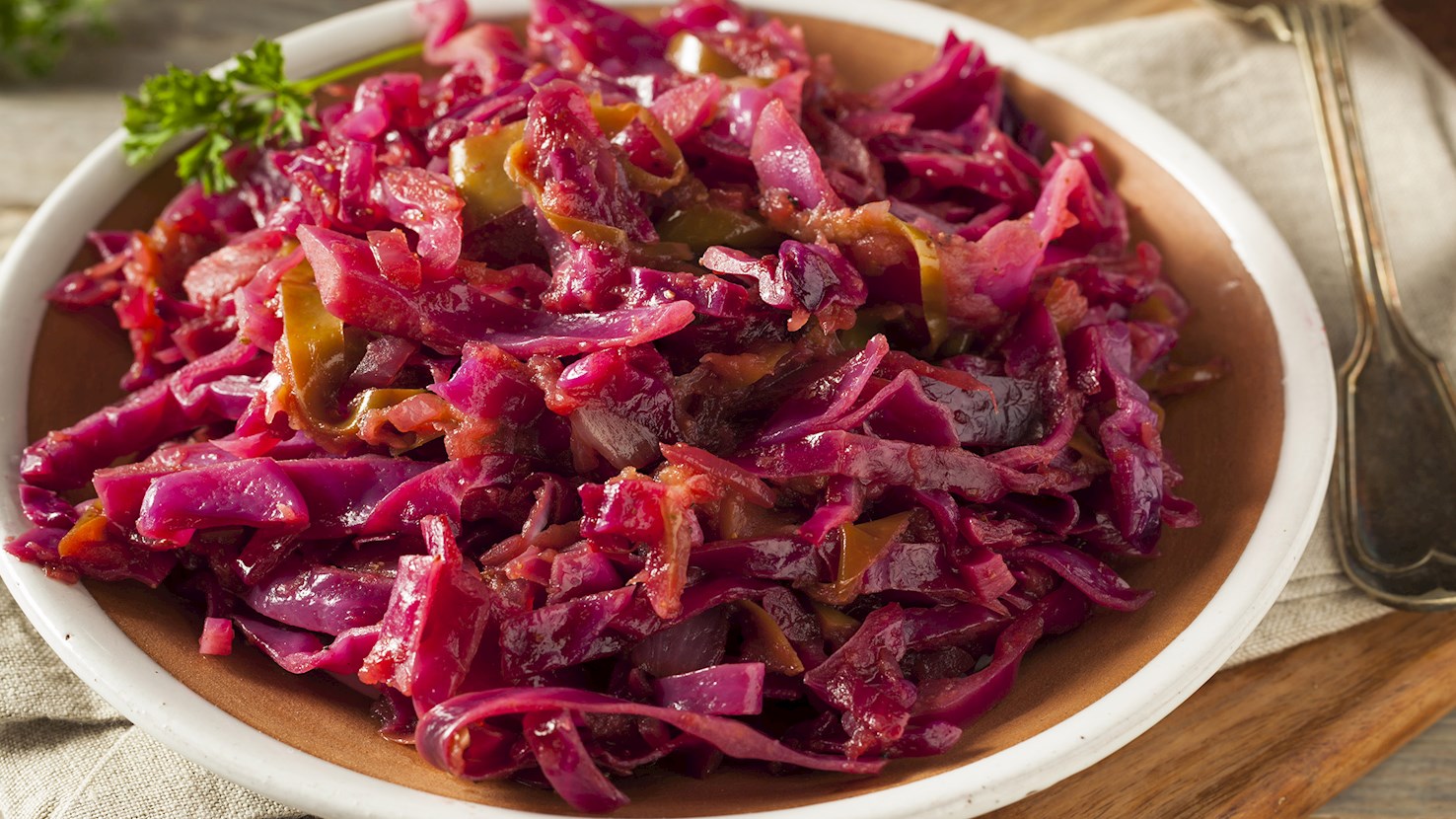
Rødkål is a sweet-and-sour side dish made by slowly braising shredded red cabbage with vinegar, sugar, and warm winter spices until it is completely tender. Making a batch requires halving a dense head of raw red cabbage, removing the tough core, and slicing the leaves into thin, uniform ribbons. The raw ribbons go into the melted duck fat and butter, wilting slightly before absorbing a heavy splash of apple cider vinegar and a handful of white sugar. A peeled, tart apple usually gets grated directly into the pot, dissolving completely during the simmer to add natural pectin and a fruity acidity. Whole cloves, a stick of cinnamon, and bay leaves drop into the purple liquid to infuse the vegetables with deep, earthy aromatics. The pot is covered, and the mixture simmers on low heat for at least two hours, stirring occasionally until the tough leaves break down into a glossy, jam-like consistency. The origins of this sweet-and-tart preservation method lie deep within Northern European agricultural practices. Before modern refrigeration, hard winter crops like cabbage had to last through months of freezing temperatures. Boiling the hardy leaves in a highly acidic vinegar-and-sugar bath significantly extended their shelf life while breaking down the fibrous cell walls. Over the centuries, this practical survival method became a mandatory holiday staple, heavily associated with massive winter feasts and Christmas Eve dinners. Minor tweaks to the liquid base regularly change the final flavor profile. Many households swap the white sugar entirely for a generous scoop of red currant jelly, which adds a brilliant ruby gloss and a sharper, berry-forward tang. Some kitchens pour in a splash of robust red wine or dark berry juice to deepen the color and introduce a complex fruitiness to the acidic braise. You will also see chunks of raw onion tossed into the hot fat alongside the cabbage to build a stronger savory backbone. The steaming-hot purple ribbons arrive at the dining table in a large serving bowl, serving as the necessary acidic counterpart to heavy, fat-laden meats. A massive scoop of sweet-and-sour cabbage always sits right next to thick slices of roasted pork belly with crackling skin, or a whole roasted duck. Beyond large holiday dinners, cold leftovers often serve as a bright, crunchy garnish atop open-faced rye bread sandwiches stacked high with warm pork meatballs.
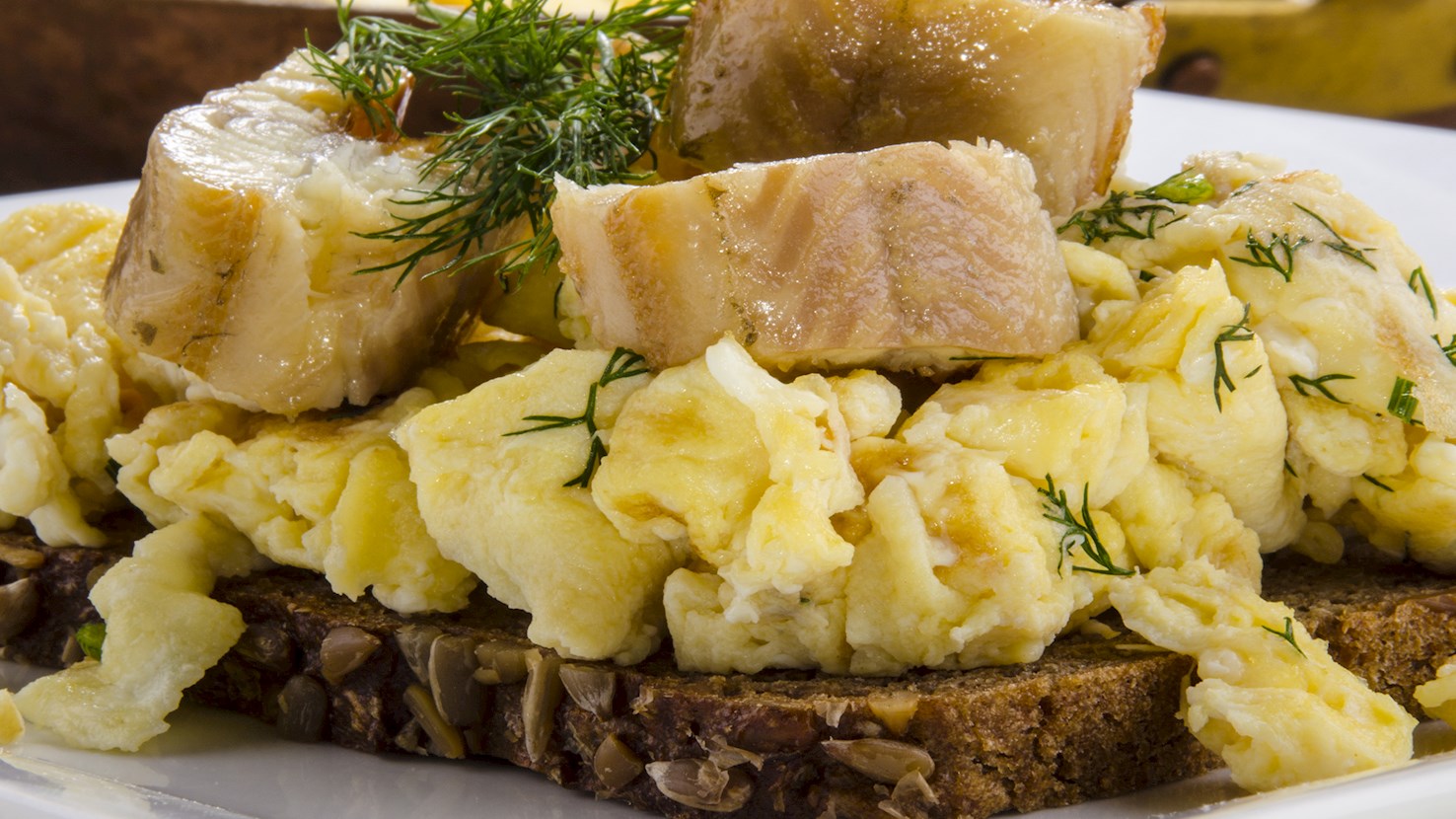
The combination of tender smoked eel and buttery scrambled eggs is a popular breakfast and lunch option in Denmark and Sweden. The combination is either served individually or as a topping on traditional, open-faced smørrebrød sandwiches. The dish is often accompanied by salads and seasoned with fresh herbs and lemon. Healthy, nutritious, and easily prepared, it is a common restaurant staple and a popular home-cooked dish.
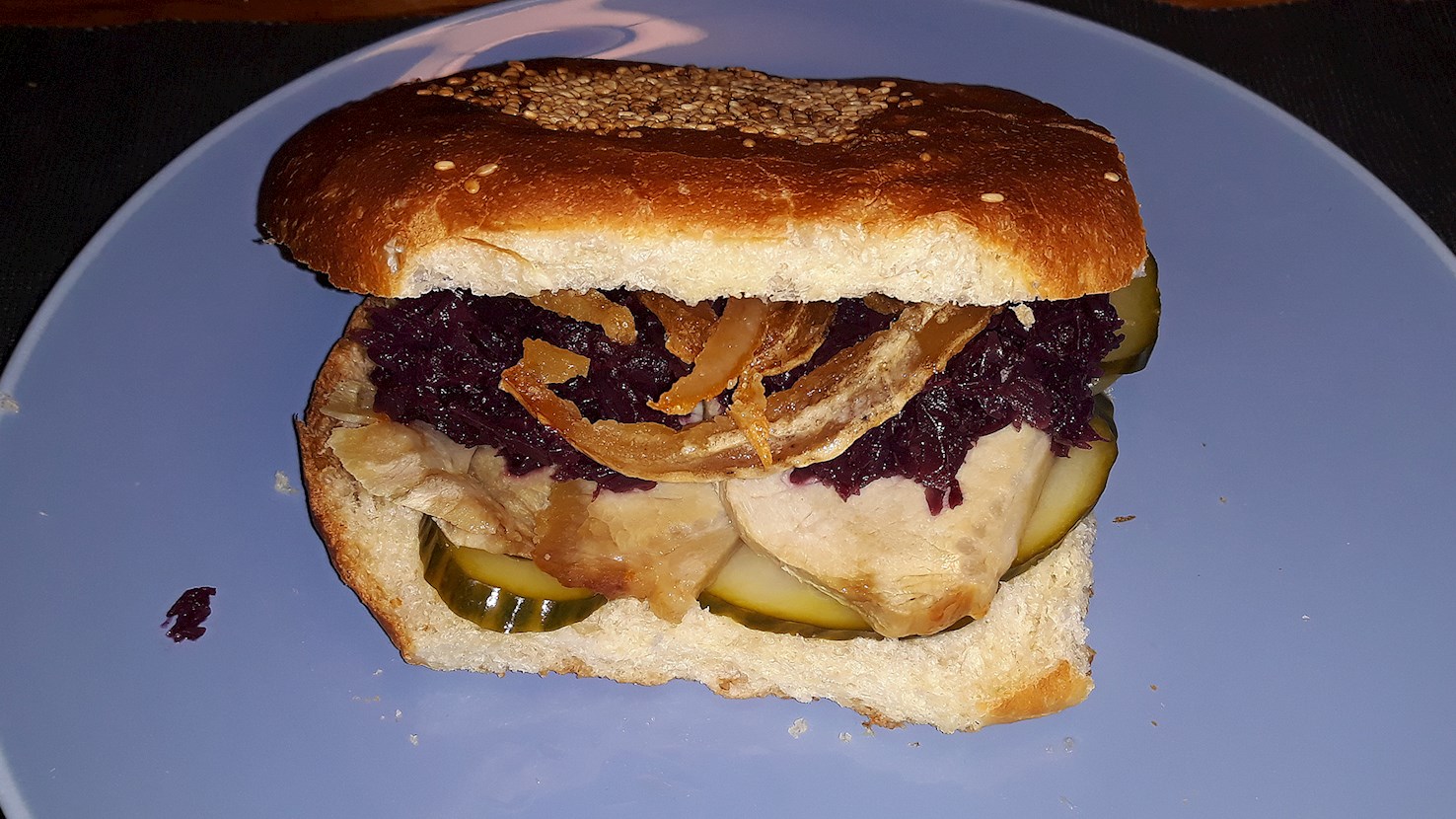
This Danish sandwich consists of a bun that is filled with thinly sliced flæskesteg—a traditional pork roast with a crispy rind. It is usually complemented by braised red cabbage, pickles, mustard, ketchup, or mayonnaise. Flæskestegssandwich is a popular street food item that is often served at traditional hot dog stands and fast food establishments.
Stjerneskud is a popular Danish type of open-faced sandwich, part of the traditional Danish cuisine known as "smørrebrød." The dish typically consists of a buttered piece of rye bread topped with various kinds of seafood. Commonly, it features steamed and breaded plaice fillets, with fish like salmon, and shrimp. Additionally, Stjerneskud is garnished with a variety of ingredients such as asparagus, caviar, lemon slices, and mayonnaise or a remoulade sauce.
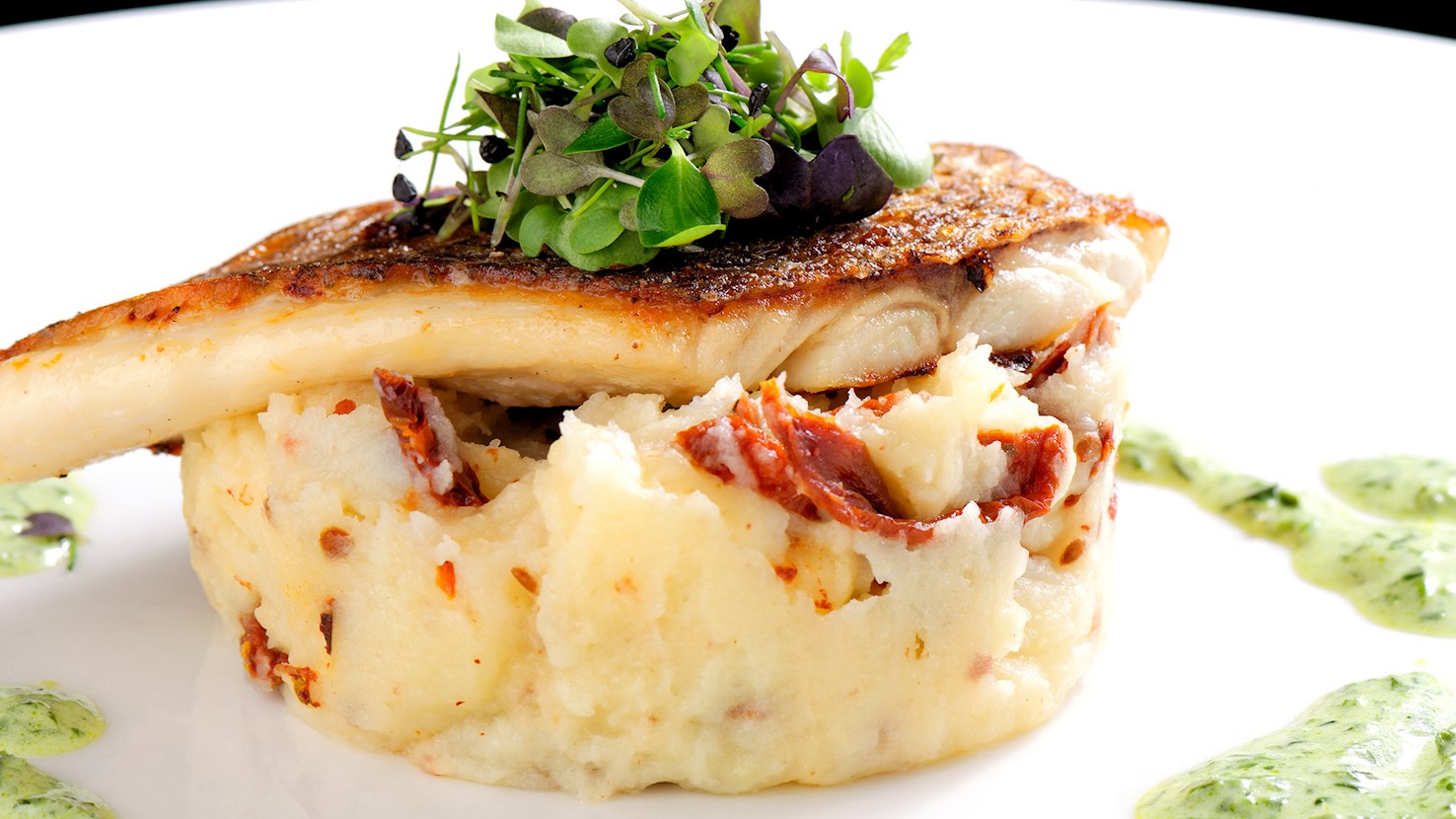
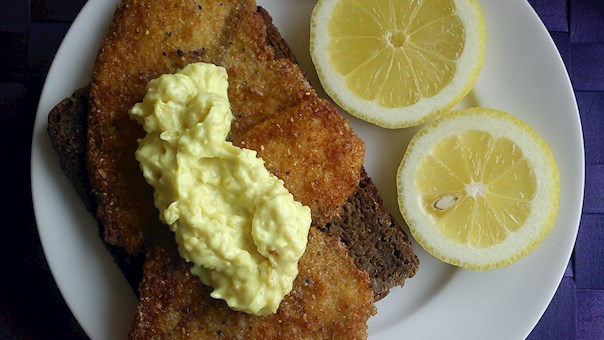
In Denmark, fried plaice fillets are a restaurant staple as well as a common home cooked meal. They are usually breaded or lightly dusted with rye flour before they are pan-fried until golden and crispy. Fillets are often incorporated in the open-faced stjerneskud, a variety of smørrebrød, but are also commonly enjoyed as the main course, usually accompanied by potatoes, Danish rémoulade, parsley sauce, salads, sautéed vegetables, or lemon wedges.
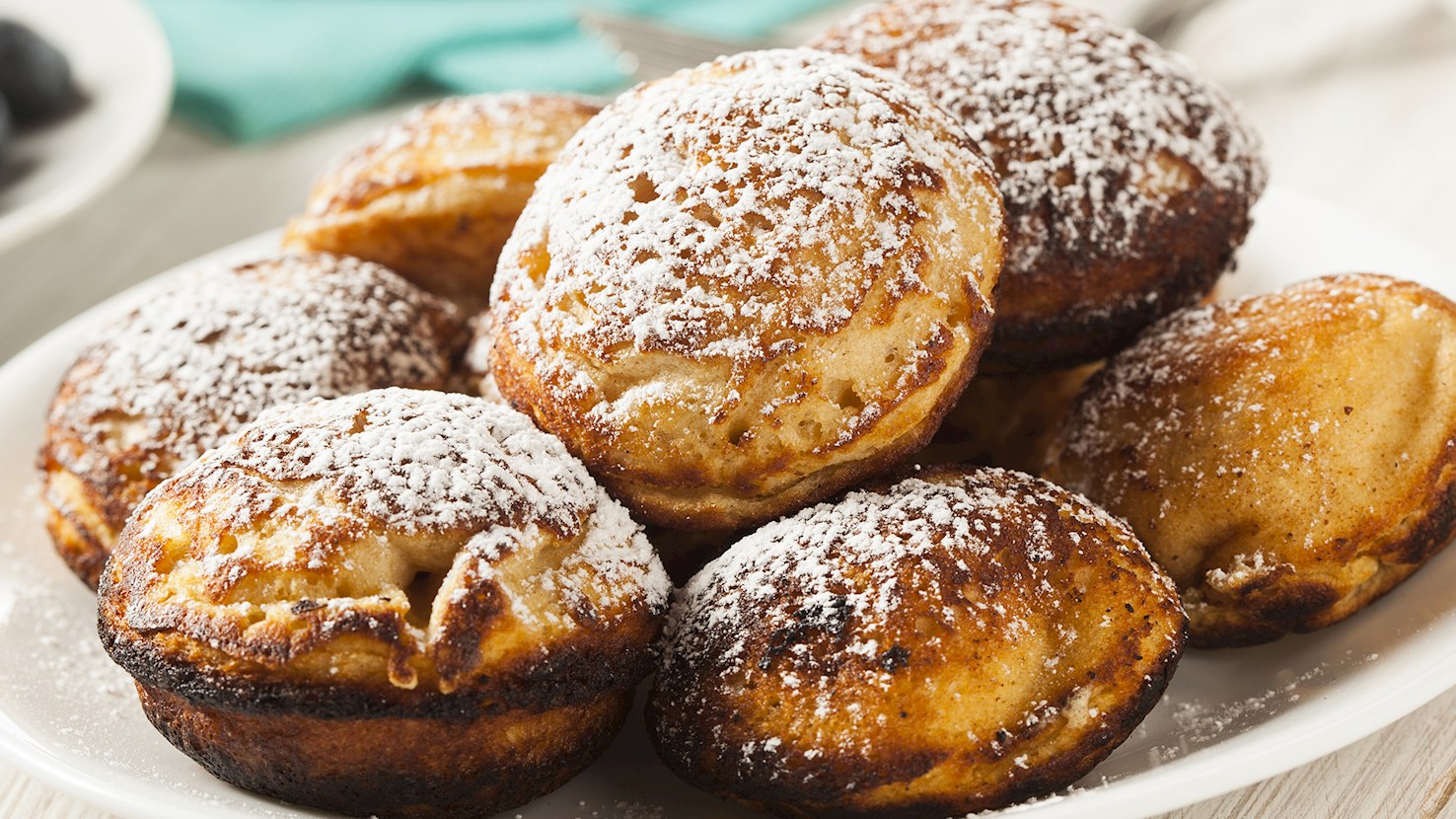
These light, small-sized Danish pancakes are prepared with a leavened egg batter that is poured and baked in specially designed hollowed pans. Even though they were initially prepared with apples – hence the name – today, they rarely appear in their original form and mostly incorporate ingredients such as vanilla, citrus zest, or cardamom. Traditionally associated with Christmastime, these sweet treats are usually served dusted with powdered sugar or complemented with various fruit preserves.
TasteAtlas food rankings are based on the ratings of the TasteAtlas audience, with a series of mechanisms that recognize real users and that ignore bot,
nationalist or local patriotic ratings, and give additional value to the ratings of users that the system recognizes as knowledgeable.
TasteAtlas Rankings should not be seen as the final global conclusion about food. Their purpose is to promote excellent local foods,
instill pride in traditional dishes, and arouse curiosity about dishes you haven’t tried.


What People Say