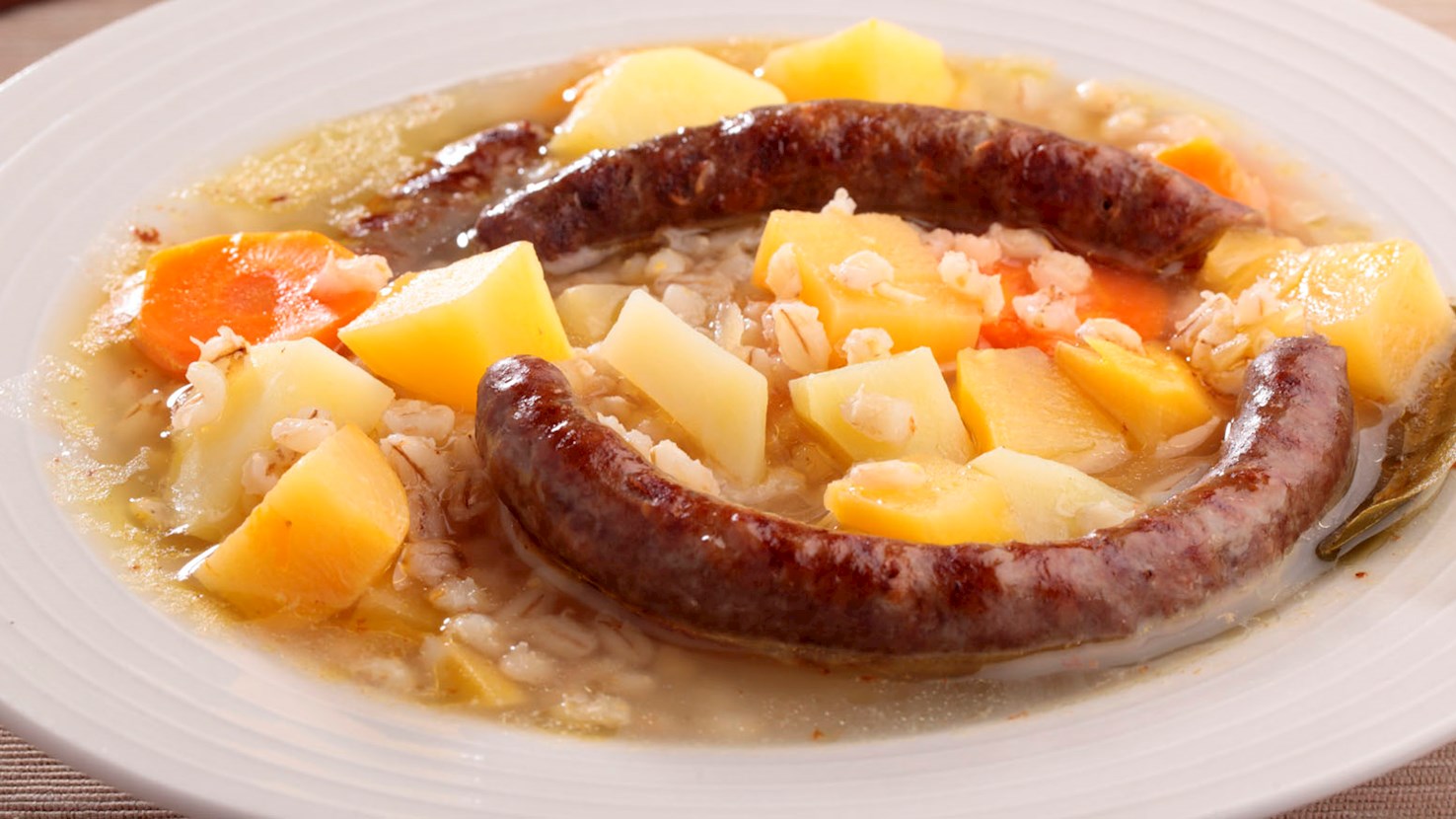
Dublin coddle is a hearty Irish stew-like dish that comes from the capital city, where it has been part of home cooking since 1700s. It is made by layering sausages, bacon, onions, and potatoes in a pot, slowly simmered so the flavors meld together into a comforting and filling meal. Allegedly, it originated from the habit of one-pot cooking employed by the sailors of Ringsend and was a favorite of both Jonathan Swift and Seán O'Casey, as well as mentioned in the works of none other than James Joyce himself. It became closely tied to working-class families, where resourcefulness in the kitchen was as important as taste. The preparation of Dublin coddle is straightforward, relying on long, gentle cooking rather than elaborate techniques. Thick-cut pork sausages and rashers of bacon form the protein base, while onions and potatoes provide body and substance. Everything is simmered together with stock or water, often seasoned simply with salt, pepper, and sometimes parsley. Unlike many Irish stews, coddle is not about searing or browning but rather about the slow cooking process that allows the sausages to soften and the potatoes to absorb the rich, meaty broth. This method gave families the advantage of preparing a meal that could sit on the stove for hours, ready whenever it was needed, often late in the evening. Today, Dublin coddle is still served in homes and pubs across the city and beyond, particularly in colder months when warm and sustaining food is most appreciated. It is often enjoyed with slices of crusty bread or soda bread, which help soak up the flavorful broth. Pairings with Irish stout or ale are common, as the malty notes complement the pork and potatoes, while lighter lagers also balance its richness.
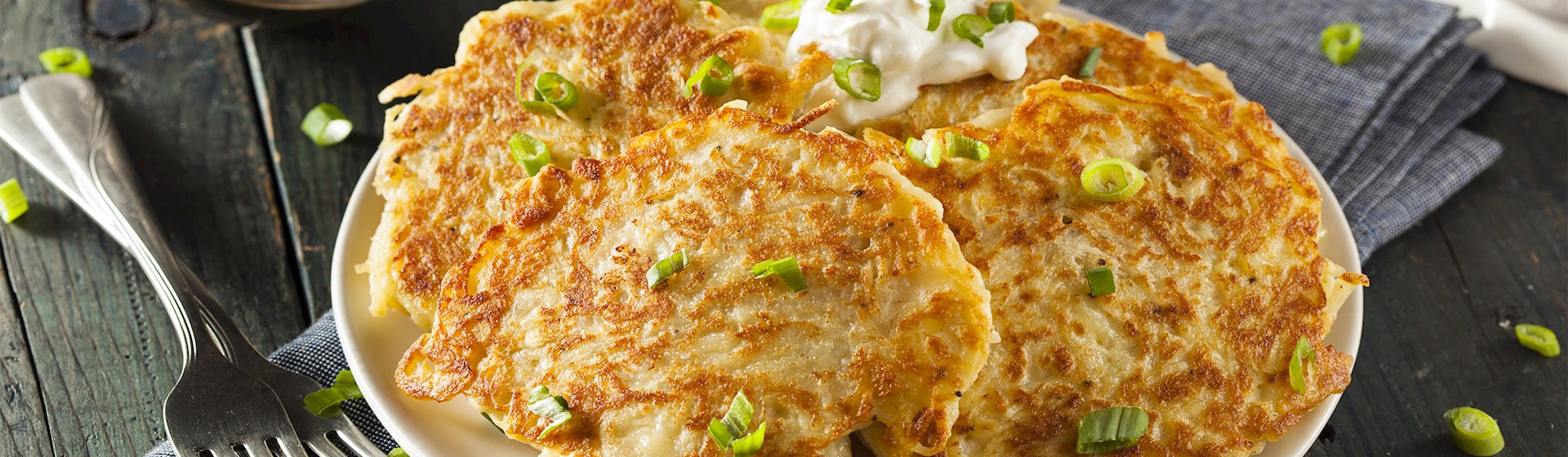
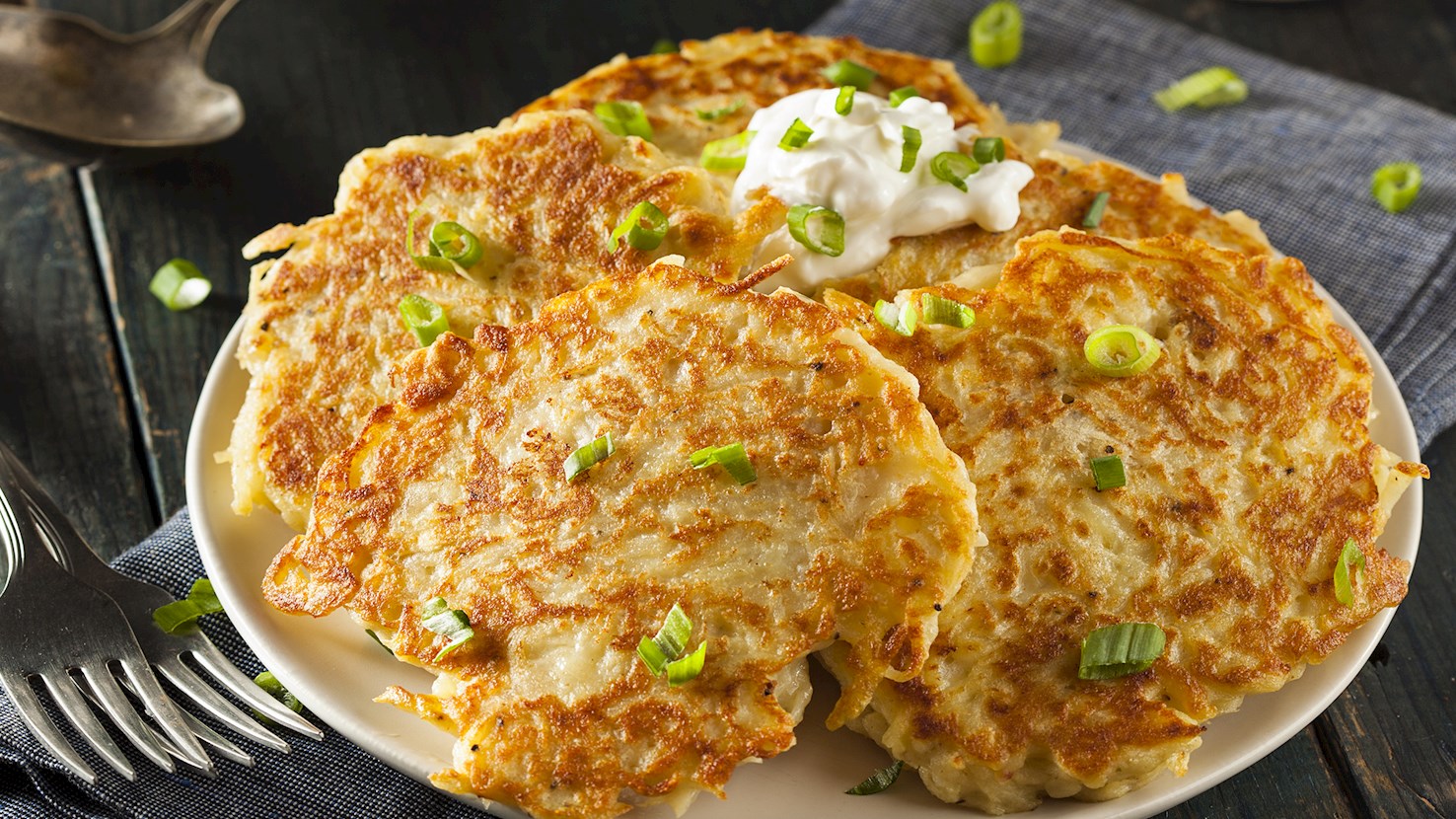
Boxty is an Irish potato pancake that comes from the northern and midland counties of Ireland, where potatoes have long been central to the diet. It is essentially a type of pancake or flatbread made from finely grated raw potatoes mixed with mashed potatoes, flour, buttermilk, and baking soda, then cooked on a griddle or pan. The name is thought to derive from the Irish words “arán bocht tí,” meaning “poor house bread,” which reflects the resourceful way potatoes were once used to stretch simple meals. The dish has its roots in times when potatoes were the most important staple of Irish cooking. To make food more filling and versatile, households developed different methods of preparing them, and boxty became one of the most recognizable forms. Variations appeared in different regions, with some families preferring a pancake-like version cooked on a griddle, while others baked a denser loaf-like form. What united them all was the combination of raw and cooked potatoes, which gave the dish a distinctive texture. Preparation involves grating raw potatoes to a fine consistency, squeezing out excess liquid, and then combining them with mashed potatoes and dry ingredients before adding buttermilk to form a batter. The mixture is then either fried in small rounds like pancakes or spread into a larger cake and cooked until golden brown on both sides. A baked version also exists, where the batter is placed in a loaf tin and cooked in the oven, resulting in a bread-like consistency. Today, boxty is eaten across Ireland, particularly in restaurants and pubs that highlight regional Irish cooking. It often appears alongside hearty foods such as stews or sausages and is also enjoyed at breakfast with eggs and bacon.
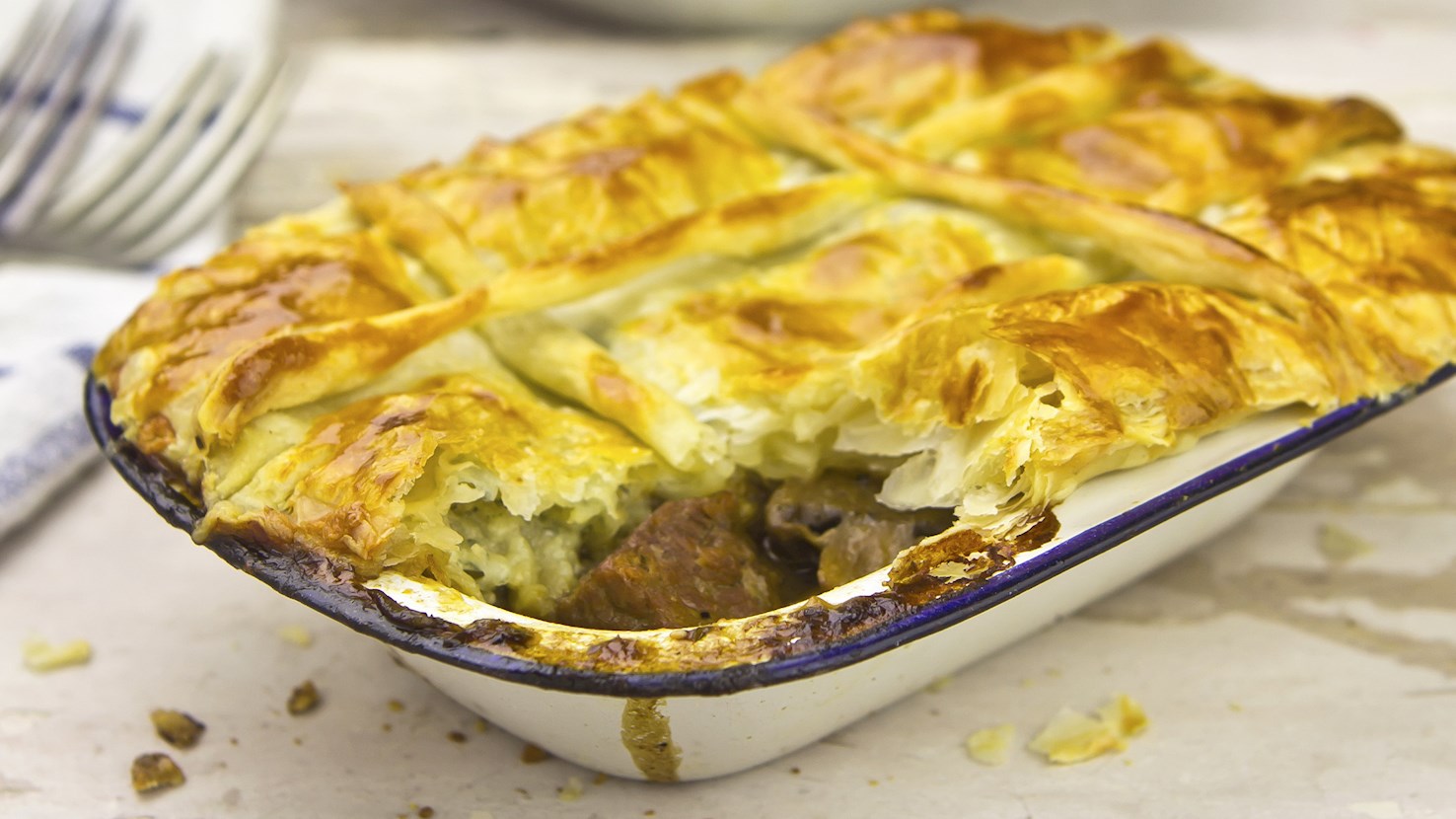
Beef and Guinness pie is a savory dish from Ireland, made by slow-cooking beef with onions, carrots, and herbs in a rich sauce built on the dark, malty character of Guinness stout, then sealing the filling beneath a golden pastry crust. Its roots are found in the longstanding Irish habit of using stout in cooking, where the beer’s depth of flavor complements meats and turns stews into robust, warming meals. Over time, cooks took the hearty beef and Guinness stew and enclosed it in pastry, creating a dish that combined the comforting qualities of a slow-braised filling with the satisfying crispness of baked dough. The preparation begins with browning cubes of beef to develop flavor, followed by softening onions and other vegetables in the same pot. Flour is often added to thicken the sauce before Guinness is poured in along with stock, herbs like thyme or bay leaf, and sometimes a touch of Worcestershire sauce or mustard for complexity. The filling is simmered until the beef becomes tender and the sauce takes on a silky texture. It is then cooled slightly, placed into a baking dish, and topped with shortcrust or puff pastry, brushed with egg wash, and baked until the crust is crisp and golden. Beef and Guinness pie is served across Ireland in pubs, restaurants, and homes, especially during colder months or festive gatherings. It is often accompanied by mashed potatoes, chips, or buttered greens, and sometimes paired with a pint of stout to echo the flavors in the filling. Its reputation has spread beyond Ireland, and it is now found in Irish pubs abroad, where it has become a marker of Irish comfort cooking.
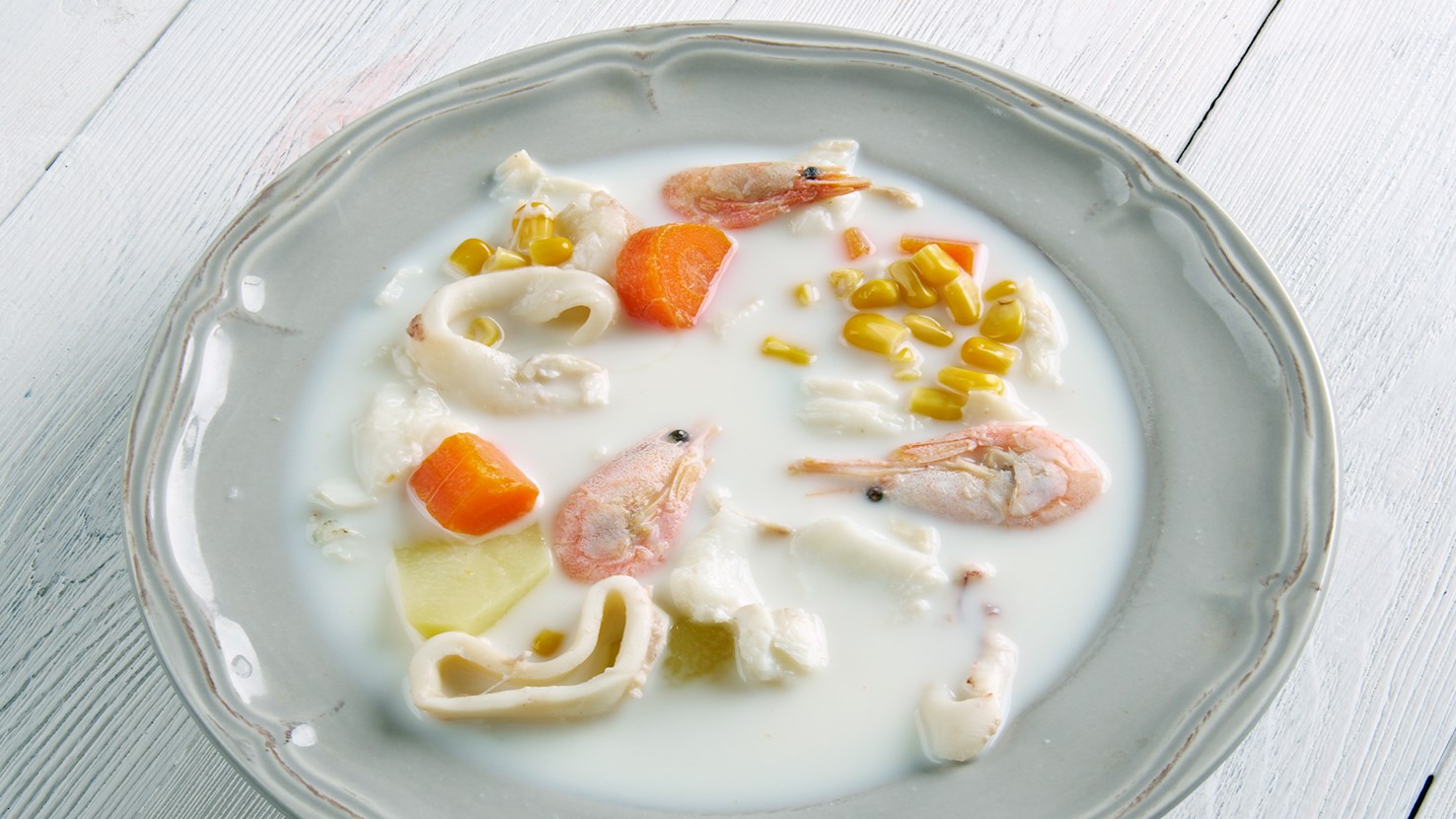
Irish seafood chowder is a hearty soup that comes from the coastal communities of Ireland, where the Atlantic Ocean has long provided an abundance of fish and shellfish. It is a dish shaped by geography, as fishing villages relied on what was freshly caught, from salmon and cod to mussels and prawns, and combined these with staples such as potatoes, onions, and milk or cream to create a warm and filling meal. Its roots go back to the practical cooking of fishermen and households who needed to make use of the daily catch in a way that could feed families with simple yet nourishing ingredients. Over time it became a signature part of Irish food culture, carried from small harbors to restaurants and pubs across the country. Preparation begins with a base of butter, onions, and leeks gently softened before being joined by diced potatoes, fish stock, and milk or cream. The seafood, often a mix of white fish and shellfish, is added near the end so it cooks quickly and retains its delicate flavor and texture. Herbs such as parsley or thyme may be included for freshness, and the chowder is sometimes finished with a splash of cream to give it a smooth body. It is served hot, usually in deep bowls, accompanied by brown soda bread that can soak up the broth. One distinctive aspect of Irish seafood chowder is its flexibility. Unlike fixed recipes, it often reflects what the local boats bring in, which means it may vary slightly from one town to another. In some coastal areas, smoked fish is added, lending a stronger and more complex flavor, while in others mussels or clams feature prominently. This adaptability has allowed the dish to remain both consistent in spirit and diverse in expression, making it as common at a rural inn as in a modern restaurant. Today, it is eaten throughout Ireland, especially in seaside towns where it is offered as a highlight of the menu. It is enjoyed as a starter or a full meal, often paired with brown bread and butter, and it matches well with a pint of stout or a glass of crisp white wine.
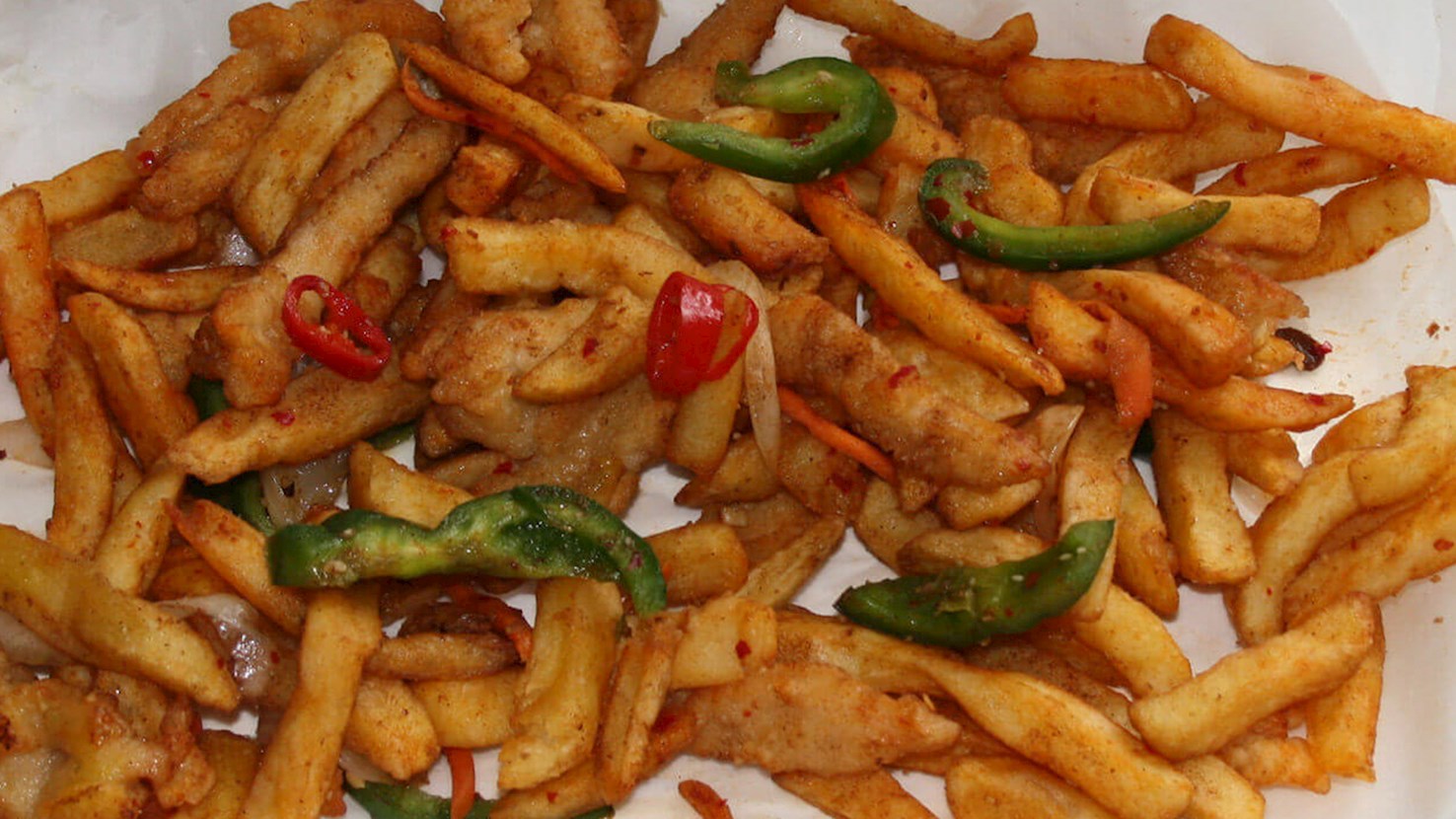
The spice bag is an Irish fast-food dish made with fried chicken, chips, vegetables, and a bold spice blend, usually served together in a paper bag. It originated in Dublin in the mid-2010s, introduced by Chinese takeaways that adapted their offerings to local tastes, quickly becoming a late-night favorite. Preparation involves deep-fried chicken, often shredded or cut into strips, mixed with thick-cut chips, stir-fried onions and peppers, and a dry mix of spices that usually includes chili, salt, garlic, and sometimes curry powder. What makes it stand out is the way the components are tossed together before being served in a bag, which not only gives the dish its name but also intensifies the flavors as the ingredients mingle. Over time, variations have appeared, with some versions including crispy prawns, extra vegetables, or different spice blends, showing its flexibility as a canvas for experimentation. Today, the spice bag is eaten across Ireland, found in Chinese takeaways, fast-food shops, and even gastropubs, most often enjoyed as a late-night meal, a weekend indulgence, or a casual comfort food. It pairs well with cold beer or a fizzy soft drink, underscoring its role as a social and satisfying dish that has secured a place in Ireland’s modern food culture.
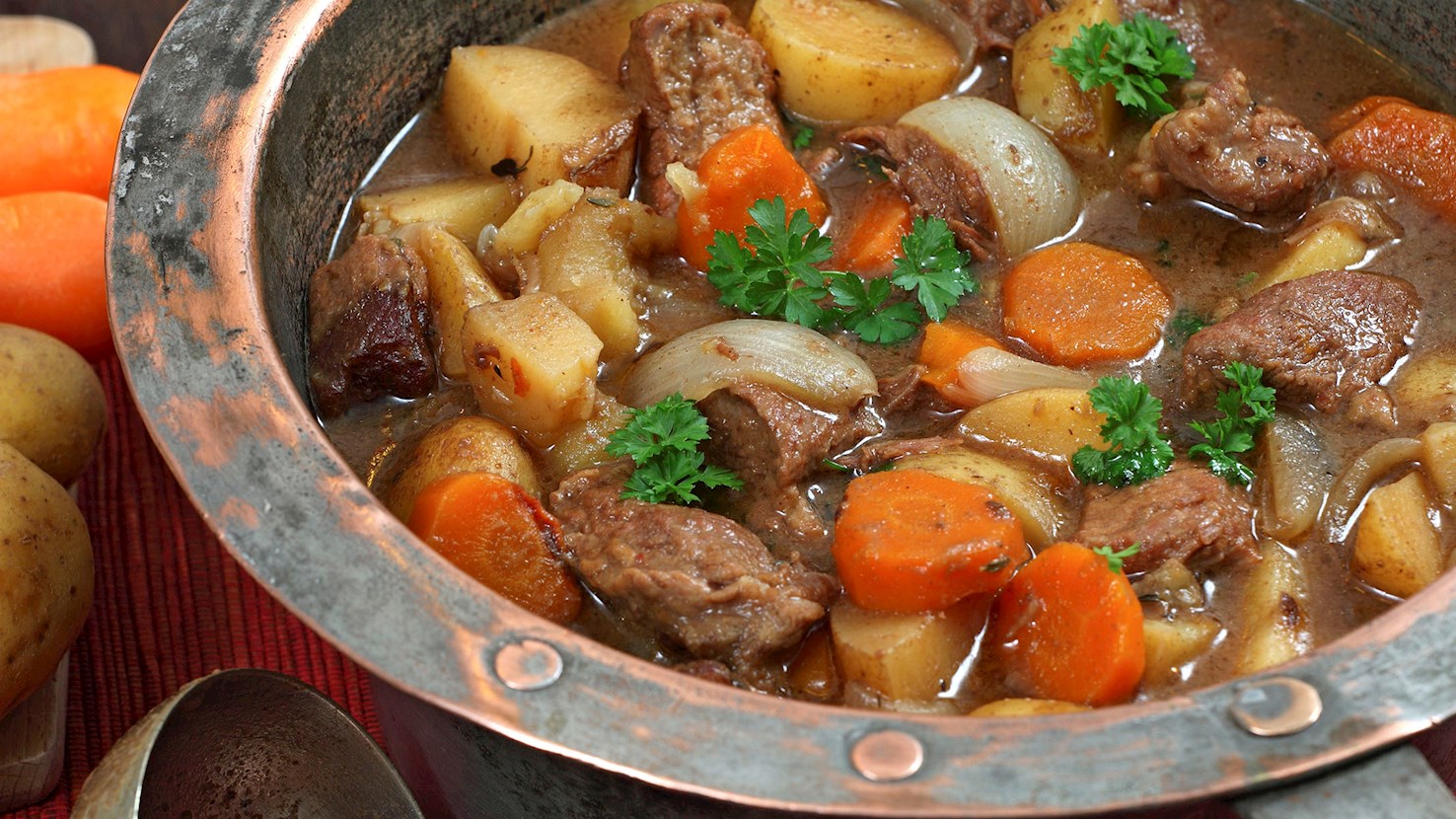
Irish stew is a traditional folk stew that first appeared at the beginning of the 19th century and was developed out of necessity to make a meal out of available, leftover ingredients. Originally, the stew was made only with mutton, onions, potatoes, and sometimes barley, while lamb meat and other root vegetables like carrots, turnips, and parsnips were added later. It is said that goat meat was also used in the past, but besides the previously mentioned mutton and lamb, beef is a common addition in today's recipes. Given that the meat used in the dish is chewy and hard, usually bone-in, the stew is cooked slowly for a couple of hours so that the meat turns tender and releases the fat into the stew, thus enhancing the flavor of the entire dish. A stew made with Guinness stout has gained widespread popularity throughout Ireland as it intensifies the flavors and gives the broth a rich, brown color. Traditionally, the stew is consumed on St. Patrick's Day and for Samhain, an old Gaelic festival, but it can also be found on the menus of most Irish restaurants throughout the year.
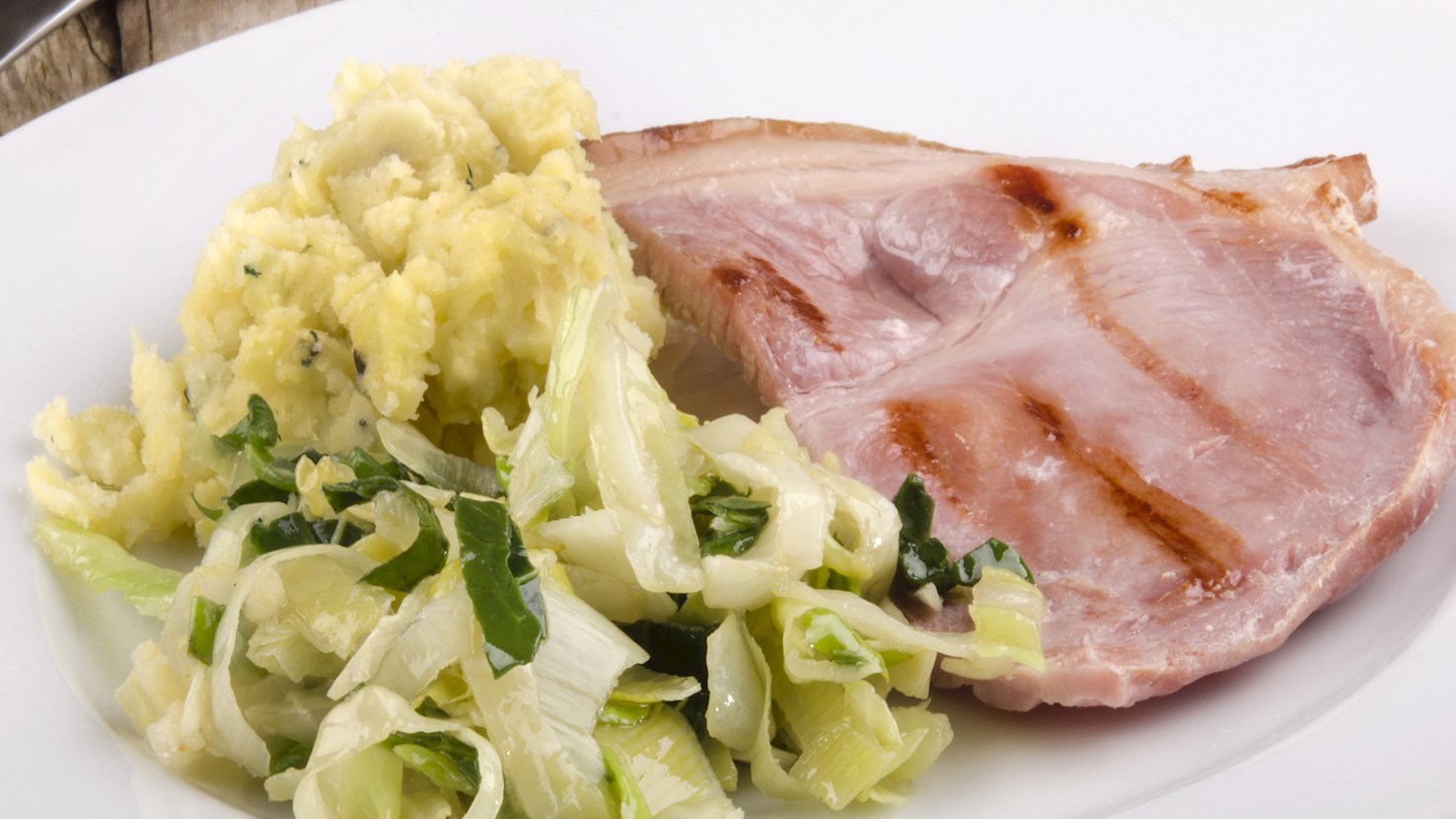
Bacon and cabbage is a classic Irish dish consisting of cured pork served with boiled cabbage and potatoes. It is rooted in the farming culture of Ireland, where pigs were a common household animal and cabbage one of the most dependable vegetables. Together with potatoes, which became central to the Irish diet after their introduction in the 16th century, these ingredients formed the basis of a hearty, filling meal that could sustain rural families through hard work and long days. The dish developed in an environment where self-sufficiency was vital, and pork was preserved through curing or salting to ensure it lasted. This curing method produced the cut of meat commonly referred to as Irish bacon, distinct from the streaky bacon more familiar elsewhere. Paired with boiled cabbage and potatoes, it created a complete meal that was both economical and nourishing. Over time, bacon and cabbage became closely associated with Irish identity and remained a staple long after the country’s diet began to modernize. Preparation begins with simmering the bacon joint gently in water, often with aromatics like onions, carrots, or bay leaves, until tender. The cabbage is then cooked in the same water, which has absorbed the flavor of the pork, giving it a savory depth. Potatoes, whether boiled or mashed, are served alongside to round out the dish. The simplicity of the cooking allows the natural flavors of each element to shine while blending together harmoniously. Today, bacon and cabbage is still enjoyed across Ireland, often considered a comfort food that reflects the country’s agrarian past. It is commonly served at family gatherings and also appears in pubs and restaurants, especially on menus that highlight Irish heritage. The dish is frequently paired with stout beers or a glass of Irish whiskey, both of which balance its rich and savory qualities.
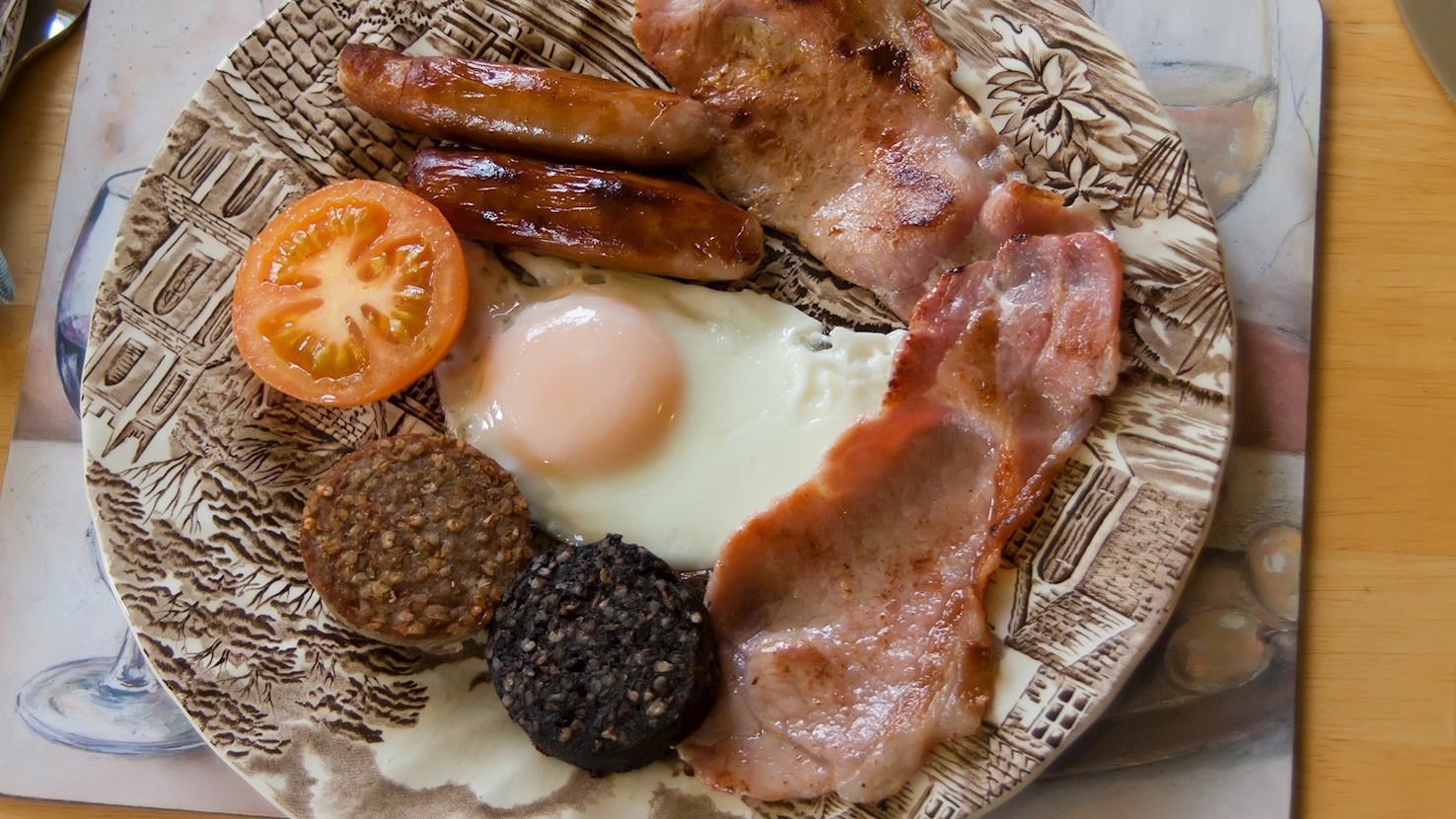
Irish breakfast is a traditional meal consisting of fried eggs, vegetables, potatoes, and meats such as bacon, sausages, and both black and white puddings. The large meal is almost always served with Irish soda or brown bread, a cup of tea, and a glass of orange juice on the side. All of the ingredients are most commonly fried in creamy butter. Originally, the breakfast was invented as a way to prepare the people for a day of hard work on the farm, and the meal was especially popular on cold winter mornings. Today, its huge size is making it somewhat impossible to consume on most working day mornings, so it is usually prepared on Sunday morning (or Christmas morning, when it's especially popular). Although it is called a breakfast, it can be consumed at any time of day. Key ingredients are not set in stone, so every household can add other ingredients according to their preference, such as mushrooms, baked beans, boxty, or hash browns.
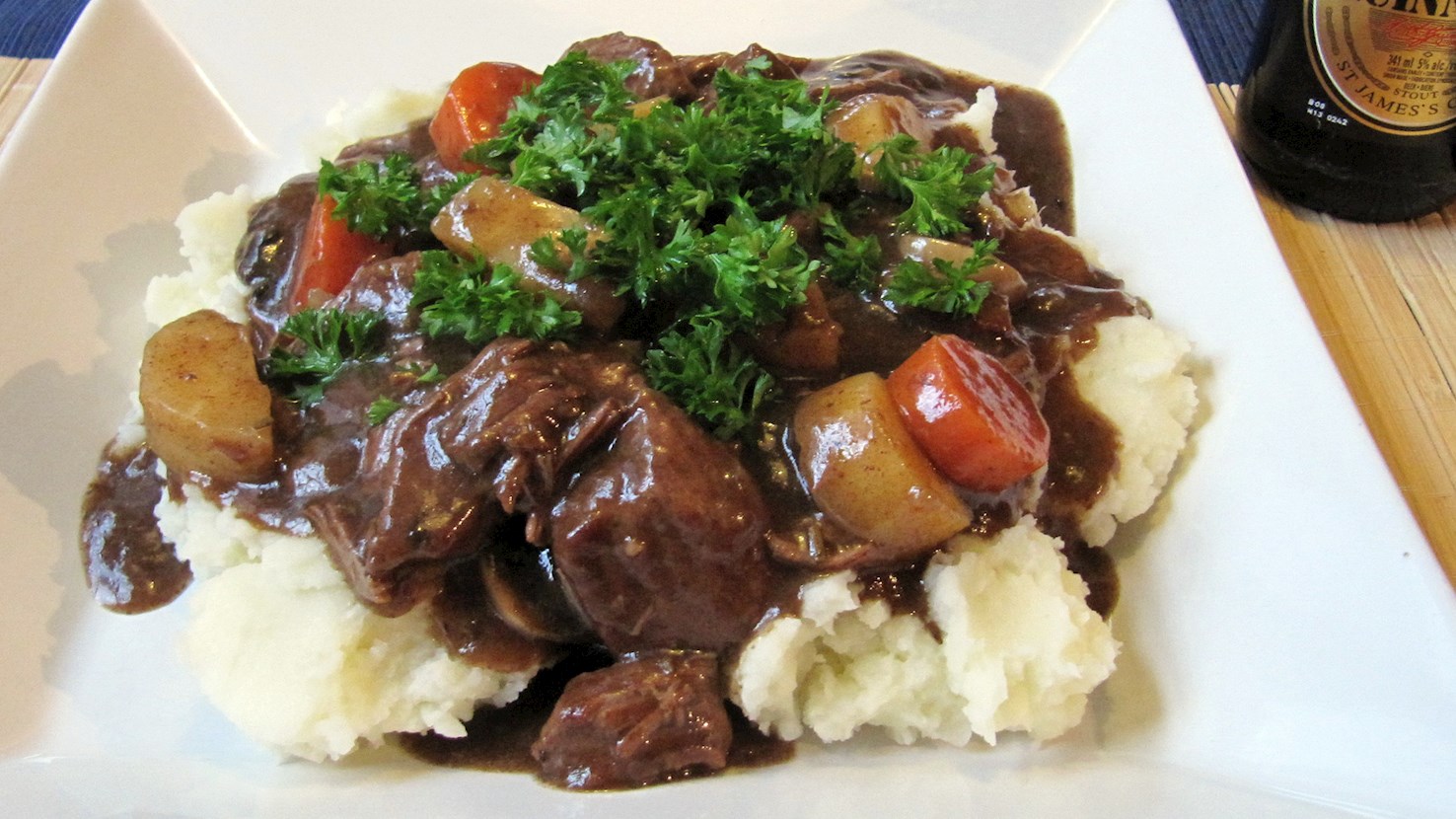
Beef and Guinness stew is a slow-cooked meat dish from Ireland that brings together the depth of stout beer with the richness of braised beef. Its roots are connected to rural cooking, where hearty stews were a practical way to transform modest cuts of beef and simple root vegetables into a warming and filling meal. The introduction of Guinness stout into the preparation reflects Ireland’s brewing heritage, adding both flavor and character to an otherwise straightforward preparation of beef, onions, carrots, and potatoes. The method of making this stew is centered on patience. Beef is first browned to build flavor, then simmered gently in a mixture of stock and Guinness until tender. Vegetables are added, sometimes in stages to maintain texture, and the stew thickens naturally as the starch from the potatoes mingles with the broth. The stout itself mellows during cooking, leaving behind notes of roasted malt and a slight bitterness that balances the sweetness of onions and carrots. In some variations, herbs like thyme or bay leaf are included, and cooks may thicken the sauce further with flour or add a small splash of Worcestershire sauce for extra depth. Today, beef and Guinness stew is eaten widely in Ireland and has become a hallmark of Irish pubs around the world, particularly during gatherings such as St. Patrick’s Day. It is most often served with bread like soda bread to soak up the sauce, or with mashed potatoes for an even heartier meal. Pairings are naturally straightforward: a pint of Guinness itself is the most iconic accompaniment, though other robust ales or even red wines also complement its rich, slow-cooked flavors.
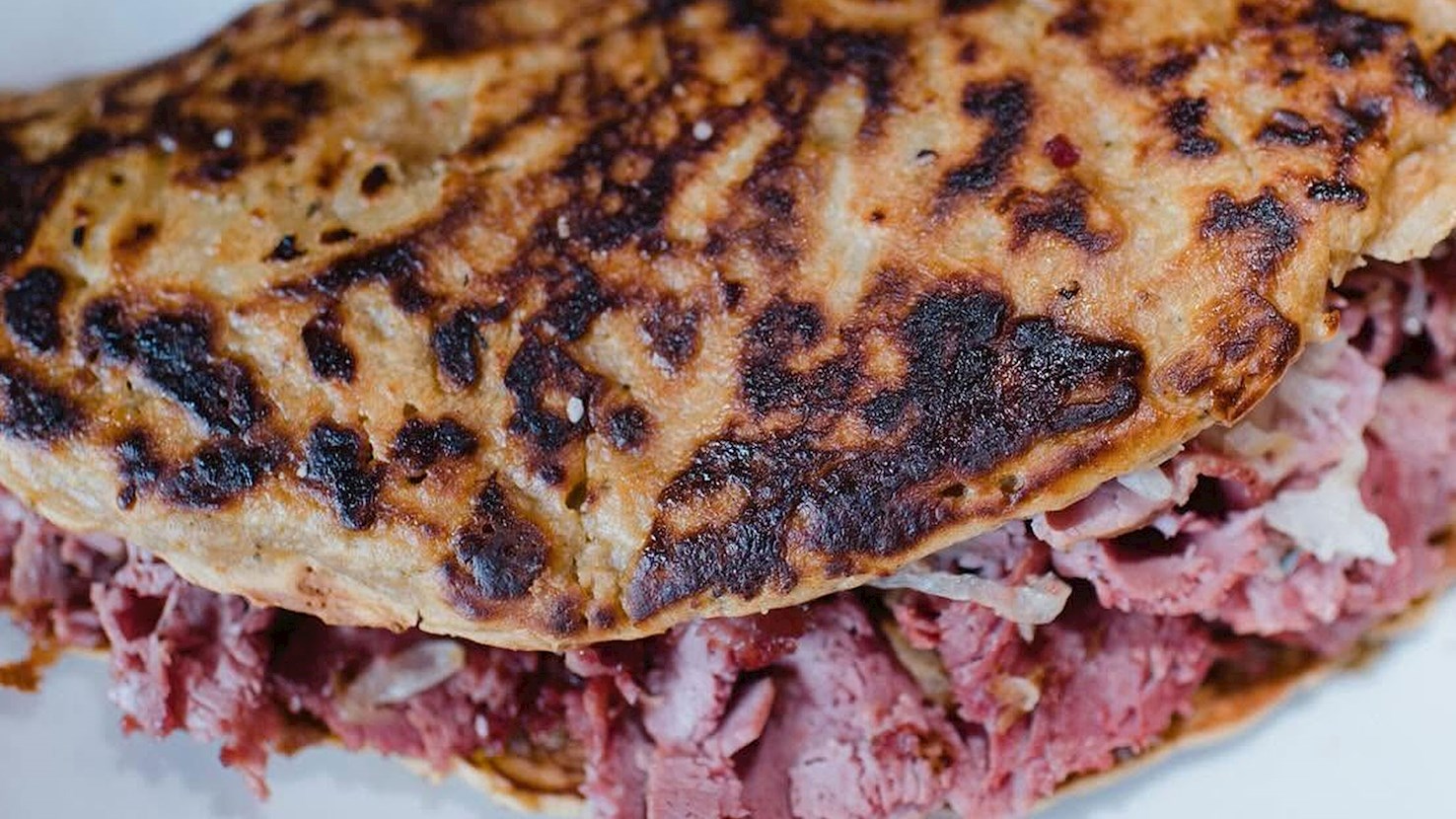
Corned beef boxty pairs potato pancakes with tender salt-cured beef, often folded inside a large pancake with cabbage, cheese, or sauce. Served in Ireland and in Irish-style pubs abroad, particularly in the United States, it is a substantial main course rather than a single, fixed recipe. The pancake usually has a lightly browned surface and a soft interior, giving the salty meat a mild potato base. Some versions resemble a filled crêpe; others are thicker and folded in half. The name can also describe a plate of corned beef served with boxty dumplings, so it does not always indicate a stuffed pancake. In Dublin, this dumpling form is served with cabbage, kale, and parsley sauce. Boxty itself belongs to the cooking of Ireland’s northern midlands and northwest, especially counties such as Leitrim, Cavan, Mayo, and Sligo. Its essential ingredient is grated raw potato, combined with flour and, in many recipes, cooked mashed potato. It can be made into griddle cakes, baked loaves, or boiled dumplings, with the consistency of the mixture determining the form. These older ways of making boxty should be distinguished from the generously filled restaurant pancake. Corned beef boxty has no securely established inventor or date of creation, and insufficient evidence assigns the combination to one Irish county. It is better understood as a modern serving of an older potato food, with considerable freedom in the filling and presentation. Corned beef brings a separate Irish and Irish-American background to the plate. Ireland produced salted beef for centuries, including for export, but that does not mean it was everyday food in all Irish households. Its association with cabbage and St. Patrick’s Day became especially strong among Irish Americans, while bacon and cabbage had a more prominent place in domestic Irish cooking. That connection makes corned beef a familiar filling on Irish-American pub menus, though it doesn't establish where the first corned beef boxty was made. For the pancake version, the main practical challenge is making boxty that holds together but remains supple enough to fold. Finely grated potato gives a more even texture than coarse shreds, while cooked mash produces a softer mixture and helps bind it. Excess liquid is squeezed from the raw potato so the batter does not become watery; some methods allow the extracted liquid to settle and return the potato starch to the mixture. Flour adds structure, and milk or buttermilk loosens the batter enough to spread across the pan. Some recipes include eggs, particularly for large filled pancakes, but they are not universal. Neither are raising agents. A thick mixture makes a more substantial potato cake, while a looser batter spreads into a thinner wrapper. Too much flour makes the pancake heavy, and excessive heat can brown the outside before the raw potato has softened. Steady cooking allows the center to set while the surface develops color. For a filled boxty, the edges should remain flexible rather than becoming brittle and crisp all the way through. The corned beef is cooked before it goes into the pancake. It may be sliced, shredded, or chopped, depending on the desired texture and the cut being used. Thin slices give a layered filling, while chopped or shredded meat distributes more evenly and is easier to cut through with a fork. Leftover cooked corned beef works well, making the dish a useful follow-up to a larger meat-and-cabbage meal. The pancake is browned on both sides before the filling is added, then folded and heated just long enough to warm the contents and melt any cheese. A brief finish in the oven is another option. Filling it sparingly enough to close without tearing matters more than achieving a particular shape. American pub versions sometimes borrow the combination used in a Reuben sandwich: corned beef, sauerkraut, Swiss cheese, and a creamy dressing. The sauerkraut adds acidity, while the cheese melts around the meat; these are optional additions, not requirements of corned beef boxty. Other versions use cooked cabbage and a mustard sauce, including sauces flavored with stout. The cabbage needs to be drained well so its moisture does not soak the pancake. A parsley sauce gives a milder accompaniment, particularly when the boxty is served as dumplings alongside the beef rather than wrapped around it. Corned beef boxty is generally eaten hot with a knife and fork as a pub lunch or dinner. In the United States, it also appears in St. Patrick’s Day cooking, although it is not restricted to the holiday. Because the potato pancake already supplies a substantial starch component, cabbage, sautéed greens, or a lightly dressed salad can be more useful alongside it than another potato side. Mustard or a little horseradish suits the cured beef, especially when the filling contains cheese or a creamy sauce. An Irish stout offers roasted bitterness alongside the browned potato and salty meat, while a dry cider provides a sharper accompaniment to richer versions.
TasteAtlas food rankings are based on the ratings of the TasteAtlas audience, with a series of mechanisms that recognize real users and that ignore bot,
nationalist or local patriotic ratings, and give additional value to the ratings of users that the system recognizes as knowledgeable.
TasteAtlas Rankings should not be seen as the final global conclusion about food. Their purpose is to promote excellent local foods,
instill pride in traditional dishes, and arouse curiosity about dishes you haven’t tried.





What People Say