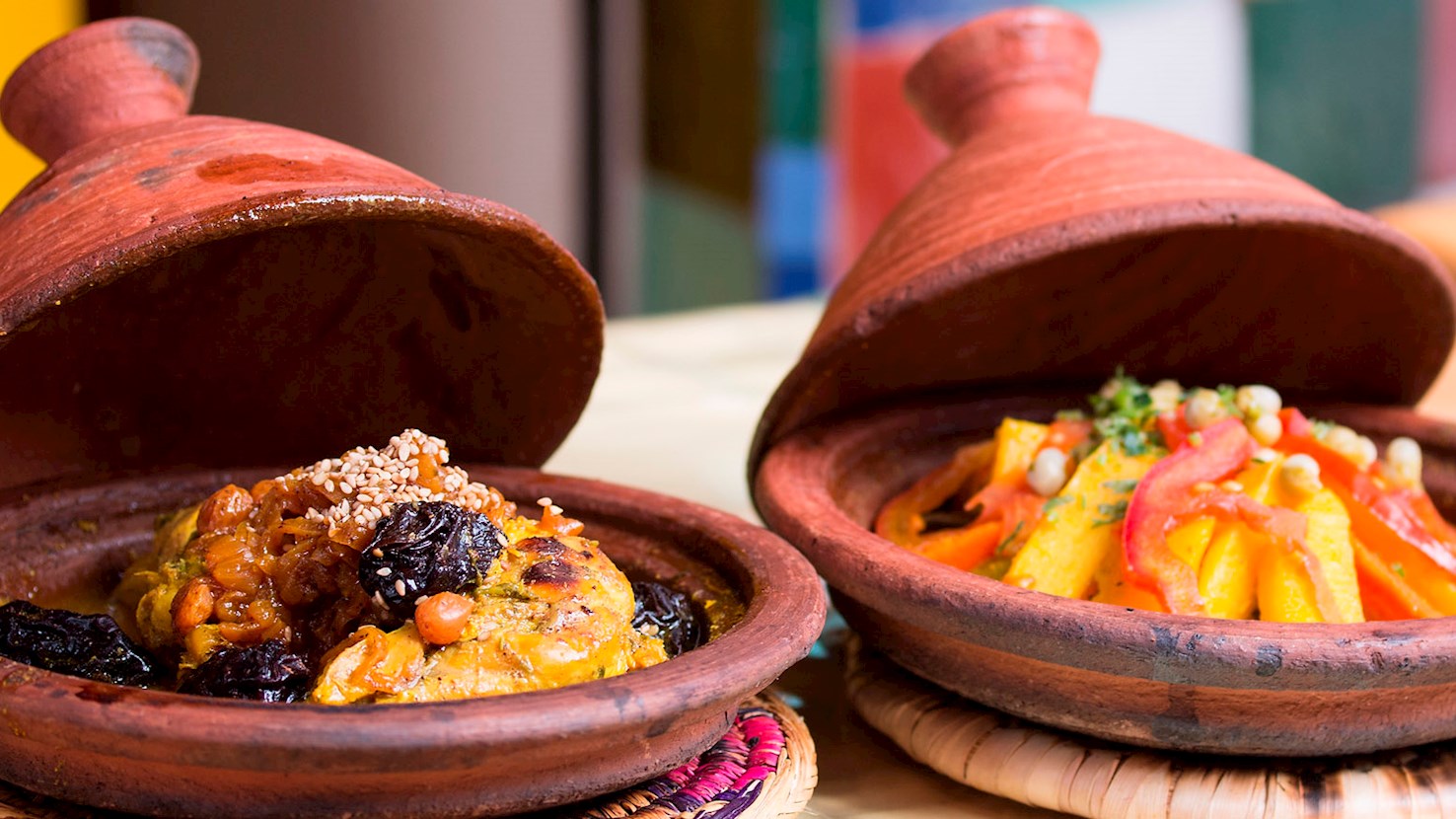
Tajine, also known as tagine, refers both to the rich Moroccan stews and the cooking vessel used to make them. When referring to the cooking vessel, it is a round and shallow, clay or ceramic casserole with a tall, pointy, conical lid. The same lid fits into the base, so the steam condenses on its interior and drops back into the stew without any waste of flavors and moisture. The pots are ideal for slow cooking over embers or on a stove, resulting in buttery, tender vegetables and meat that falls off the bone. Tajines can be glazed or unglazed - the unglazed ones are earthier and darken over time, while the glazed ones are recommended for people who cook infrequently. There are also serving tajines, which are usually decorated and lighter than the other tajines, but they're not resistant to heat. In the area of Rif Mountains, there's tagra, an unglazed tajine with little clay handles and without a lid. A Berber tajine is known as chalhaoui, and it has a rounded, dome-shaped lid instead of the conical one. Tajines show Moroccan cuisine's affinity for combining different textures and mixing flavors, such as a well-balanced blend of savory and sweet, for example, chicken with tomato and almonds, and veal cuts with stewed, sliced pears. Baby artichokes, spring peas, and various nuts such as almonds or pistachios are a common ingredient in tajines. These dishes are often accompanied by couscous, steamed rice, or fresh, hot bread, and the varieties are virtually limitless – from seafood tajines with mussels and tomato sauce, to lamb tajines with vegetables such as onions, carrots, potatoes, and olives, fruits such as apricots and raisins, and lots of spices such as red and black pepper, cumin, saffron, and turmeric, tajines are a national dish full of creativity and flavour.
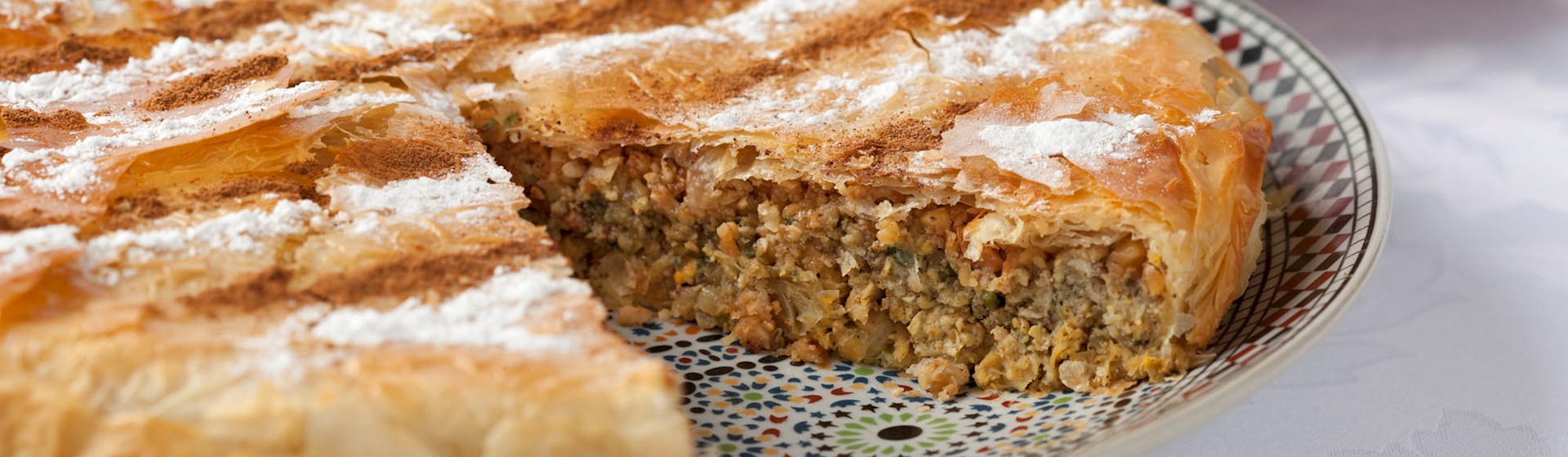
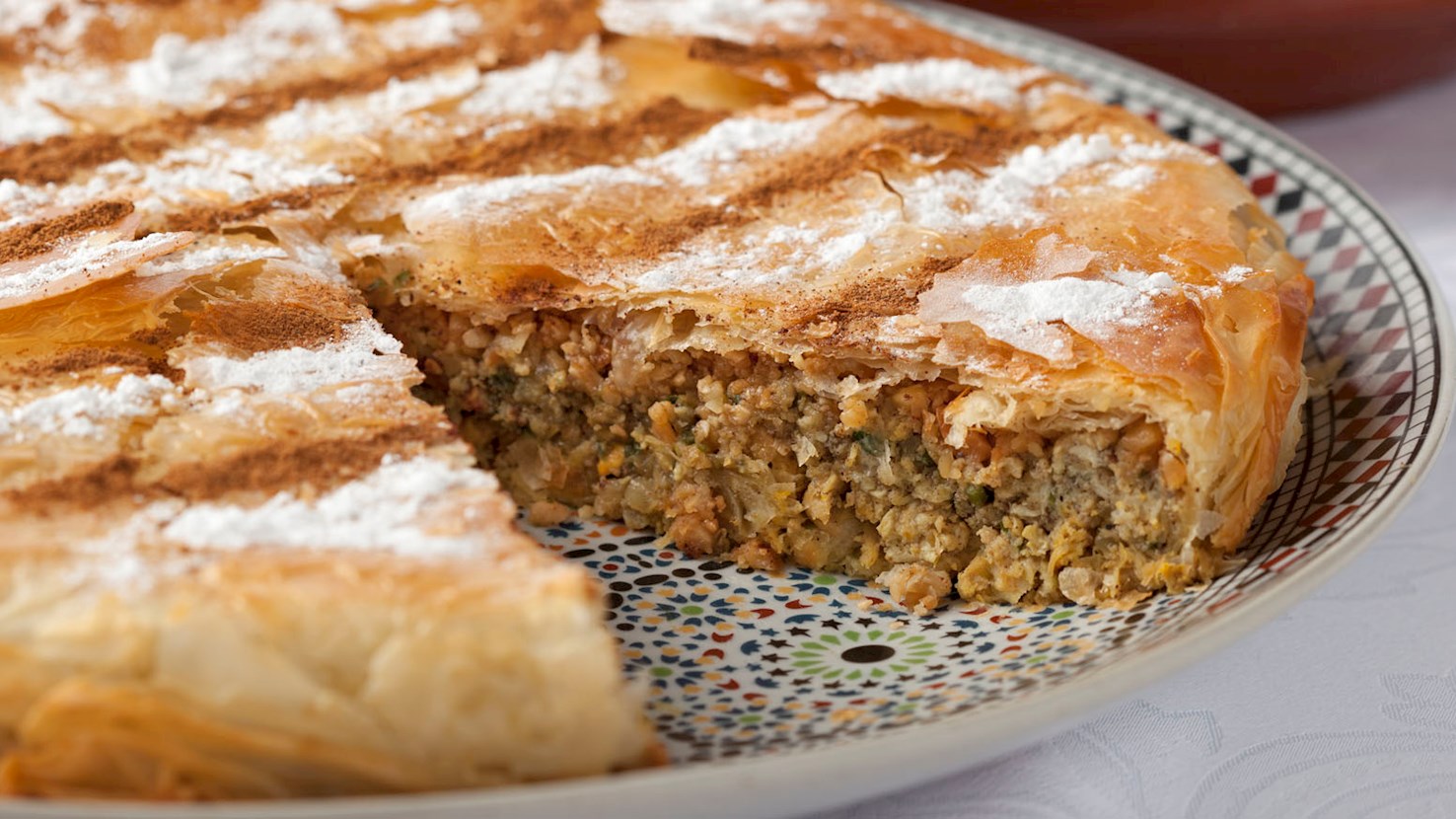
Pastilla is a stuffed pastry from Morocco, also known as b'stilla or bastilla. The rich, sweet and savory pie is filled with an unusual mix of pigeon or chicken meat, eggs, almonds, and cinnamon. It is commonly prepared for special events such as holidays, weddings, or parties. The name stems from the Spanish word for pastry – pastilla. It is a time-consuming dish, but well worth the effort, as the end result is an incredibly flavorful, crispy warqa pastry, concealing savory meat and spices such as saffron, nutmeg, and ginger, topped with fried almonds and a dash of powdered sugar and cinnamon. Although it is quite sweet on the exterior, this is a main course dish and not a dessert, as it is a plat complet, a dish with everything - the contrasts of savoriness and sweetness working together in unison. For the adventurous, there is also a modern and popular seafood pastilla, filled with fish, calamari, shrimp, and Asian rice noodles.
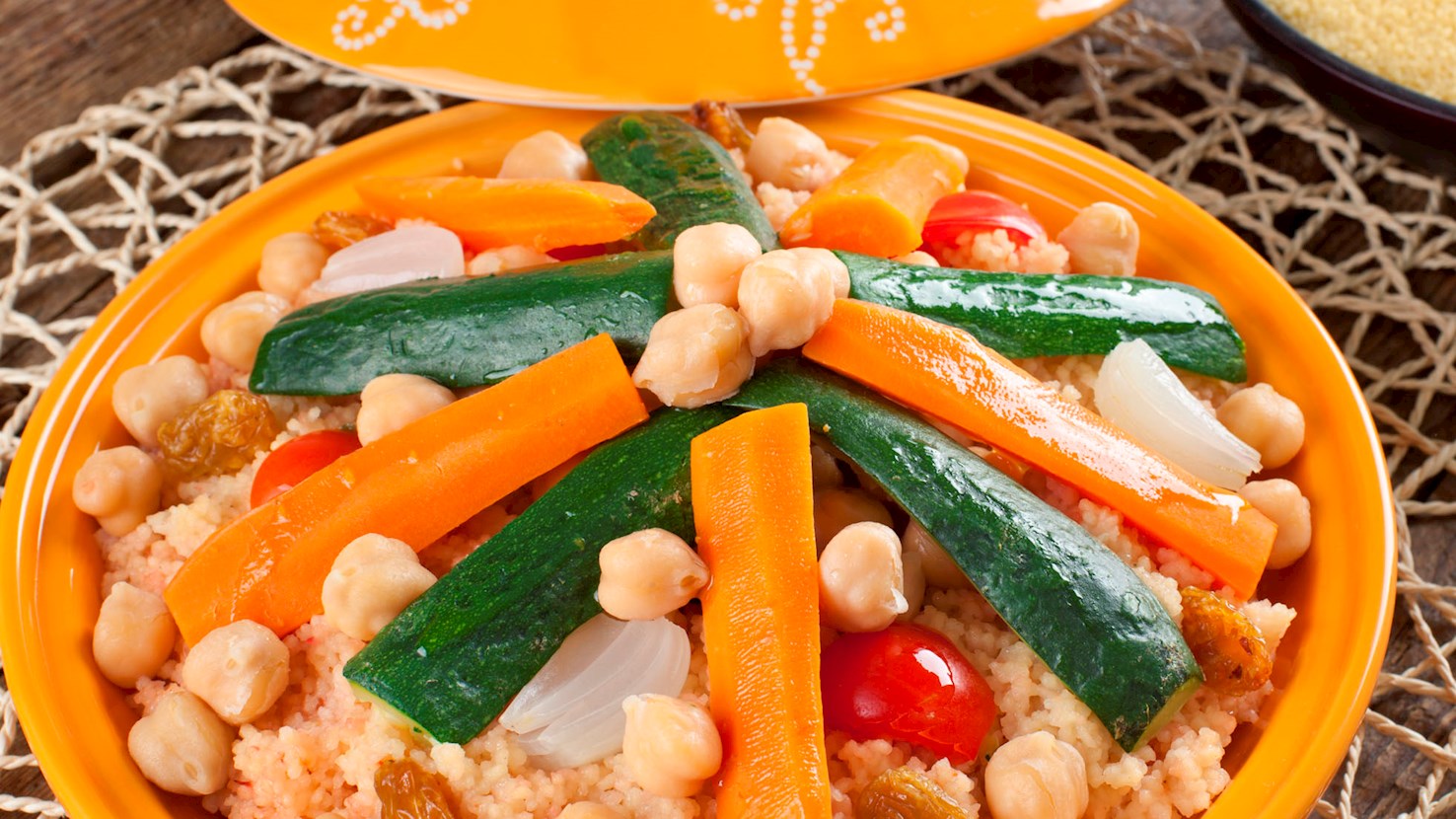
Numerous tiny, light, tender grains, ideally arranged to form a pyramid and served on a platter at the end of a meal - that is couscous, the national dish of Morocco and Algeria and a must-have dish in any Moroccan and Algerian restaurant. The word itself refers both to the complete dish and the tiny grains of semolina. Semolina flour is sprinkled with water until it forms into tiny pellets that are then pushed through a sieve. Couscous is usually prepared on Fridays for lunch, when whole families get together for the most important meal of the week. The dish is traditionally made in a metal steamer pot called a couscoussier, where the stew is on the bottom, while the small grains are in the perforated basket on top, cooking in the steam that is rising from the rich stew. Although couscous dishes are often full of vegetables, they are rarely vegetarian. Some classics include couscous with seven vegetables and couscous with raisins and caramelized onions, but there are many more varieties such as spicy with chili peppers, sweet with chickpeas, lamb and raisins, Berber-style with chicken, milk and turnips, or fish couscous with fish, fennel stalks, and wild turnips. There is even a dessert couscous dish served with butter and enhanced with cinnamon and sugar. After couscous is served, it is covered with meat or fish and vegetables, while the broth from the same stew is served on the side, for the ones who want to ladle some on top of the grains. However, don't be mistaken - it is not the main course, as it is served at the end of a long string of courses to totally satiate the consumer, as the popular Arabian hospitality saying goes - "No guest should go home hungry".
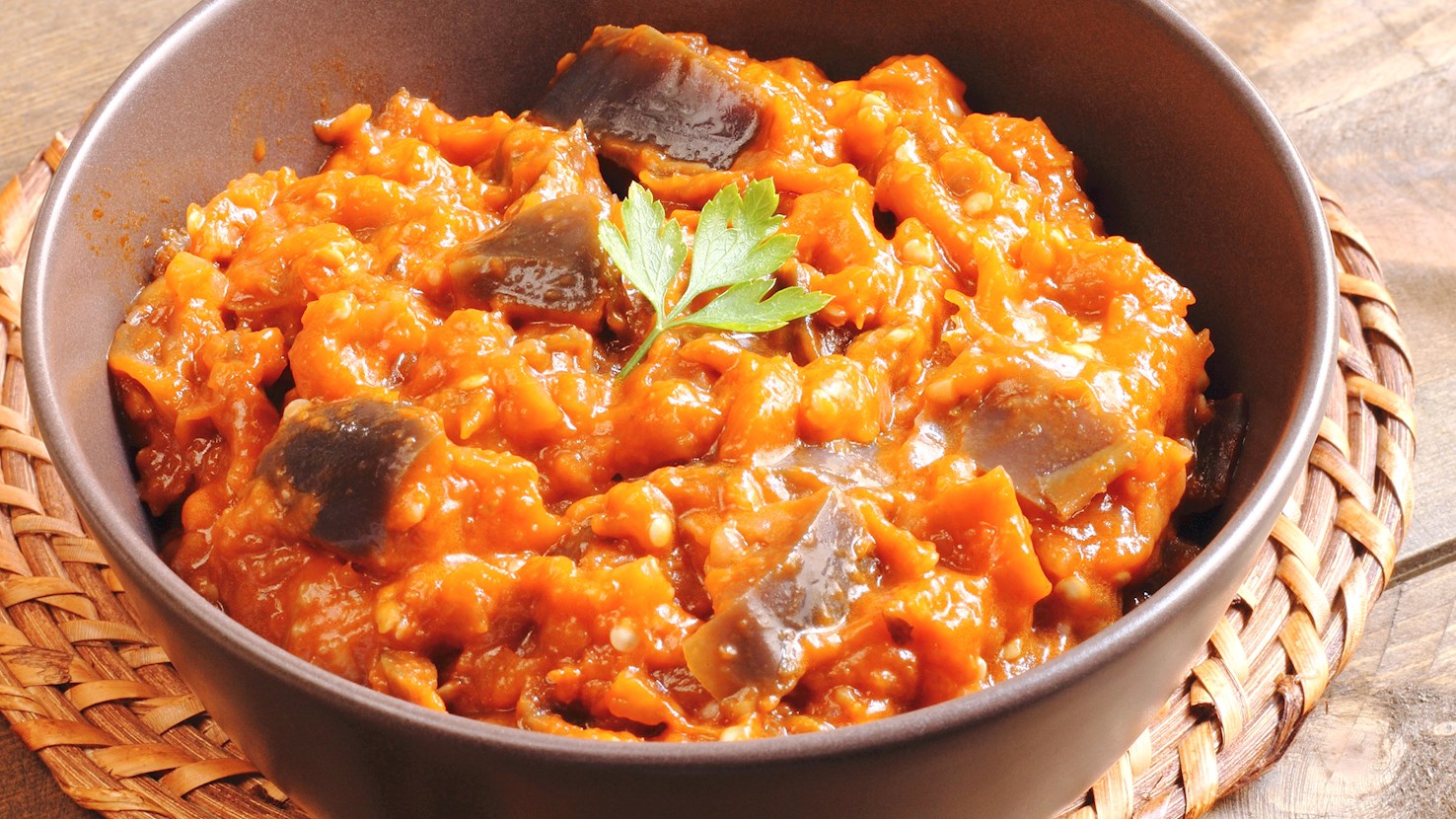
Zaalouk is a traditional salad made by cooking eggplant, tomatoes, garlic, and flavorings such as cumin, paprika, coriander, and parsley. Although it can be served on its own, zaalouk is also often served as a side dish, a spread for sandwiches, or a dip, when it is paired with crusty bread.
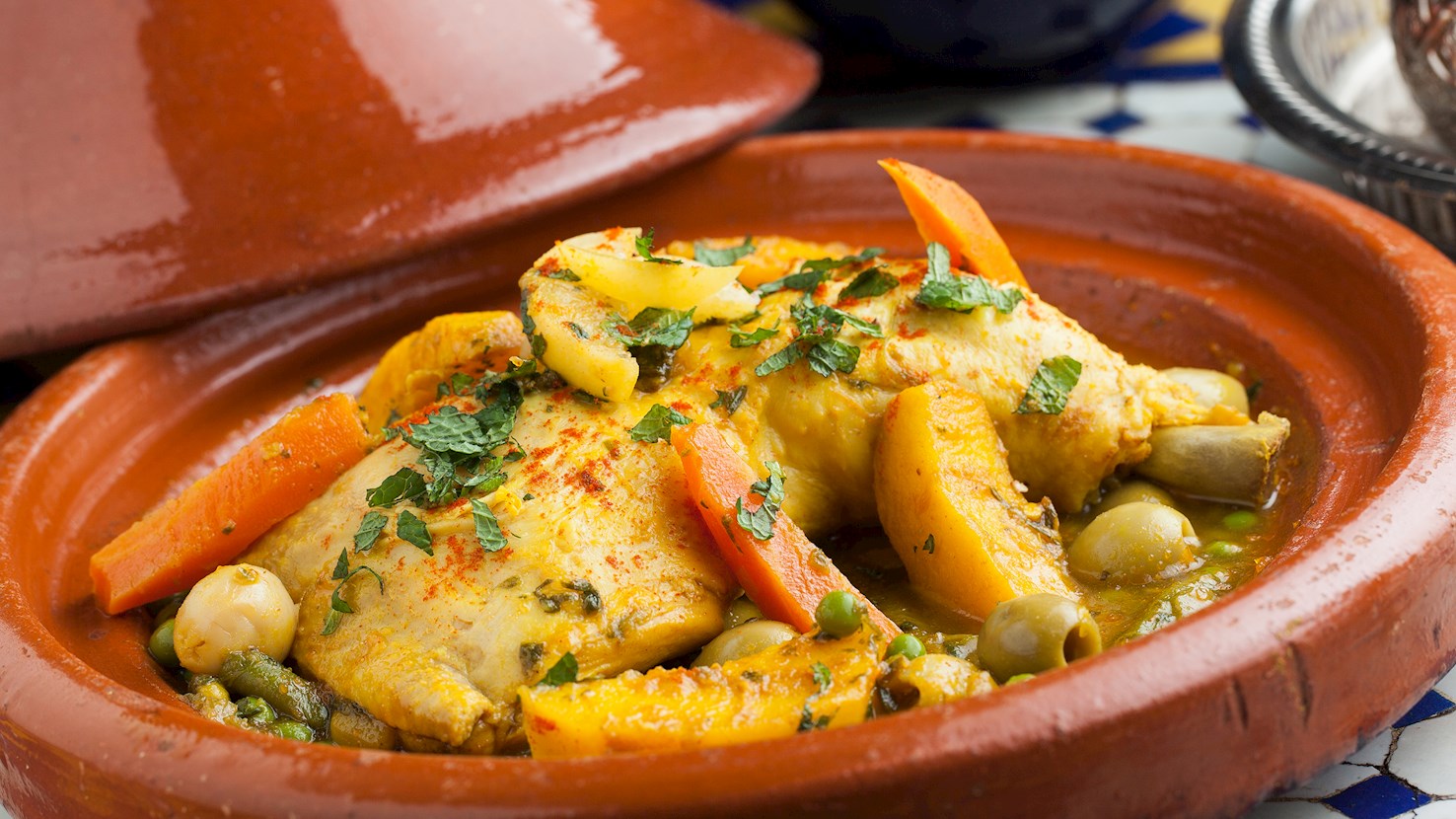
As the name suggests, the star ingredient in this traditional Moroccan dish is chicken, preferably bone-in chicken cuts such as legs, thighs, or drumsticks. Like other tajine dishes, this chicken variety is also prepared in the eponymous conical cooking vessel. The meat is neatly arranged with various vegetables such as onions, carrots, tomatoes, or potatoes, and the whole dish is usually seasoned with cumin, saffron, parsley, or coriander. Typical variations also may include preserved lemons, olives, almonds, or apricots. Chicken tajine is usually served with bread on the side.
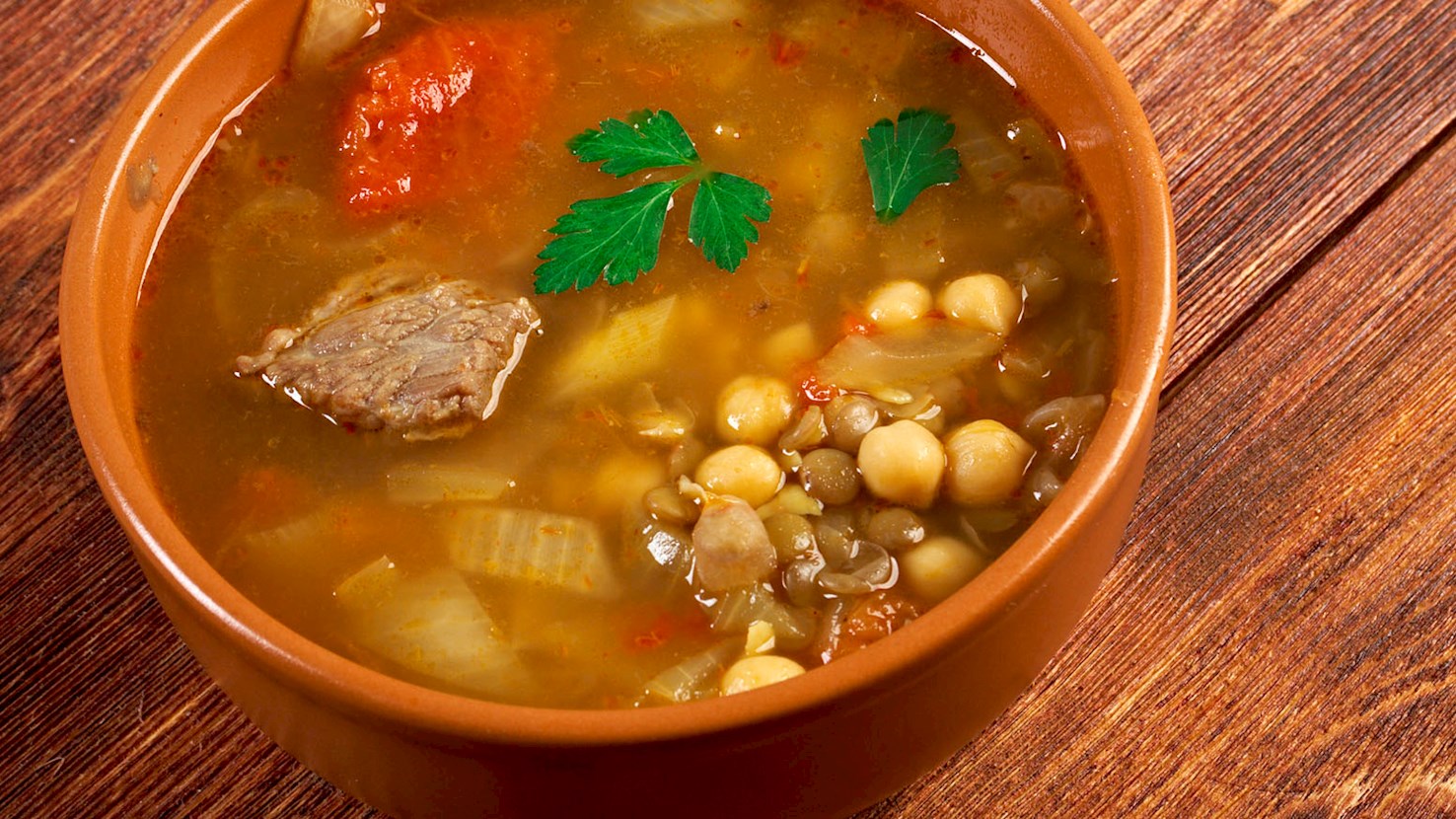
Harira is a herb-rich, tomato-based soup with a velvety-smooth, creamy texture, as the word hareer signifies velvetiness in Arabic. It's the most popular soup in Morocco, symbolizing the unification of people during Ramadan, the holy month of fasting in the Muslim calendar. According to religious law, practitioners may not eat or drink anything between dawn and sunset. At sunset, when the cannons strike, Moroccans eat their first meal of the day - the obligatory harira soup, accompanied by dates, figs, coffee, or milk, along with fried honey cookies shaped like flowers and sprinkled with sesame, called chebakia. Harira is made from a variety of legumes such as lentils, fava beans, and chickpeas, tomato sauce, harissa paste, and fresh herbs such as parsley, turmeric, saffron, lemon, caraway seeds, and coriander, but every region in Morocco has its own version of the soup. It's also very popular in Algeria. Harira can be either vegetarian or stuffed with bits of lamb, chicken, beef, or fish meat. In some cases, beaten eggs or flour and water mixture are whisked into the soup near the end of cooking in order to give it a slightly different texture and to thicken it. Spicy, peppery, nourishing, rich with vegetables and meat, harira is a true delicacy in the world of soups.
TasteAtlas food rankings are based on the ratings of the TasteAtlas audience, with a series of mechanisms that recognize real users and that ignore bot,
nationalist or local patriotic ratings, and give additional value to the ratings of users that the system recognizes as knowledgeable.
For the “6 Traditional Foods You Have To Try in Fes” list until May 22, 2026, 119 ratings were recorded, of which 16 were recognized by the system as legitimate.
TasteAtlas Rankings should not be seen as the final global conclusion about food. Their purpose is to promote excellent local foods,
instill pride in traditional dishes, and arouse curiosity about dishes you haven’t tried.