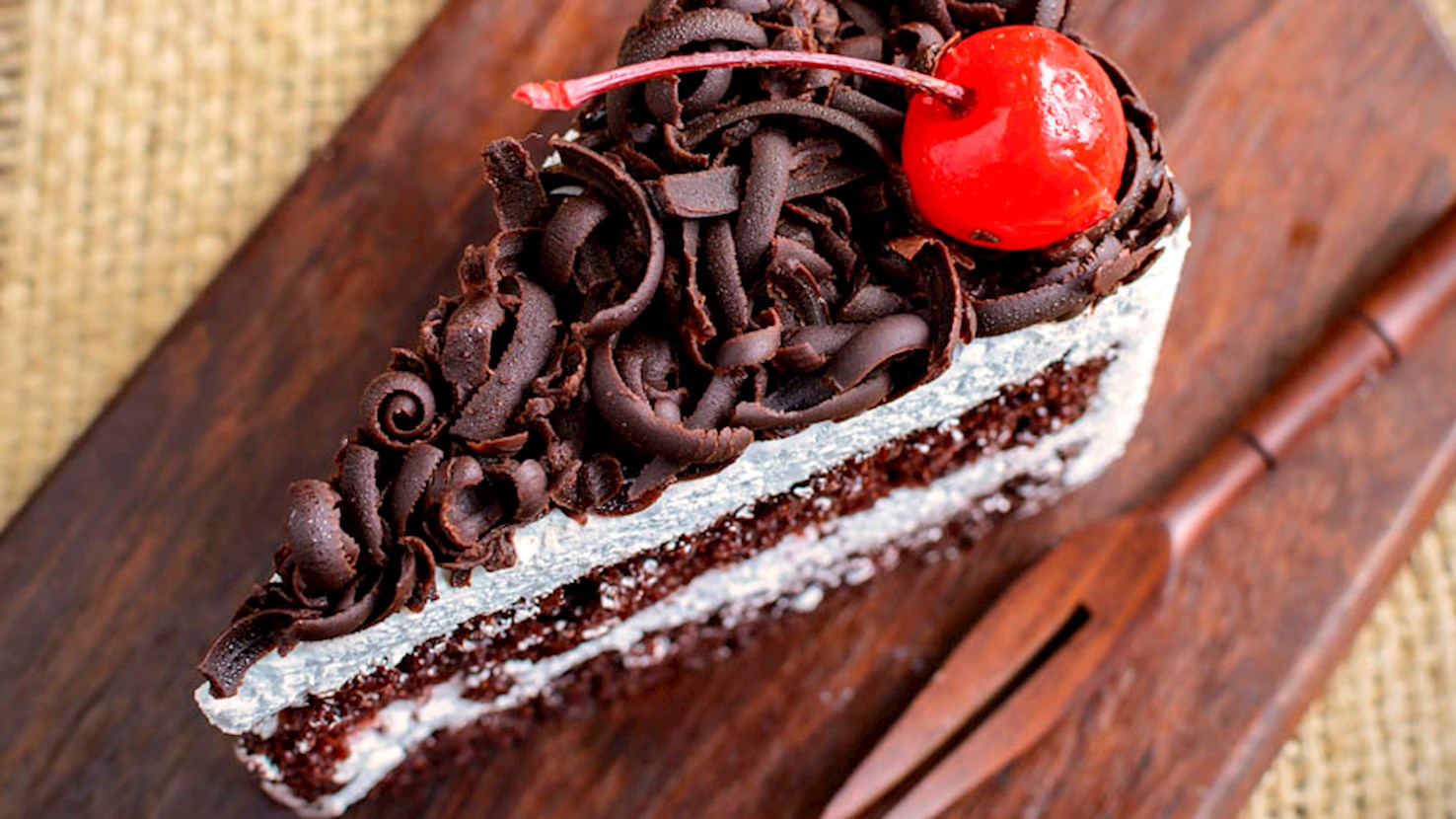
Black Forest cherry cake is a popular German dessert consisting of chocolate sponges that are coated in whipped cream and dotted with kirschwasser-infused cherries. Some varieties use the kirschwasser brandy to soak the chocolate layers or to lightly flavor the whipped cream. When assembled, the cake is lavishly decorated with whipped cream, chocolate shavings, and cherries. Among the numerous theories about its invention, it is still debated whether the cake was created by confectioner Josef Keller or pastry chef Erwin Hildenbrand. What is certain is that Schwarzwälder Kirschtorte originated in the Black Forest area and was in all likelihood modeled on the colors of the regional folk dresses. Since its first appearance in written form in 1934, it has become a well-known German dessert that is enjoyed throughout the country.
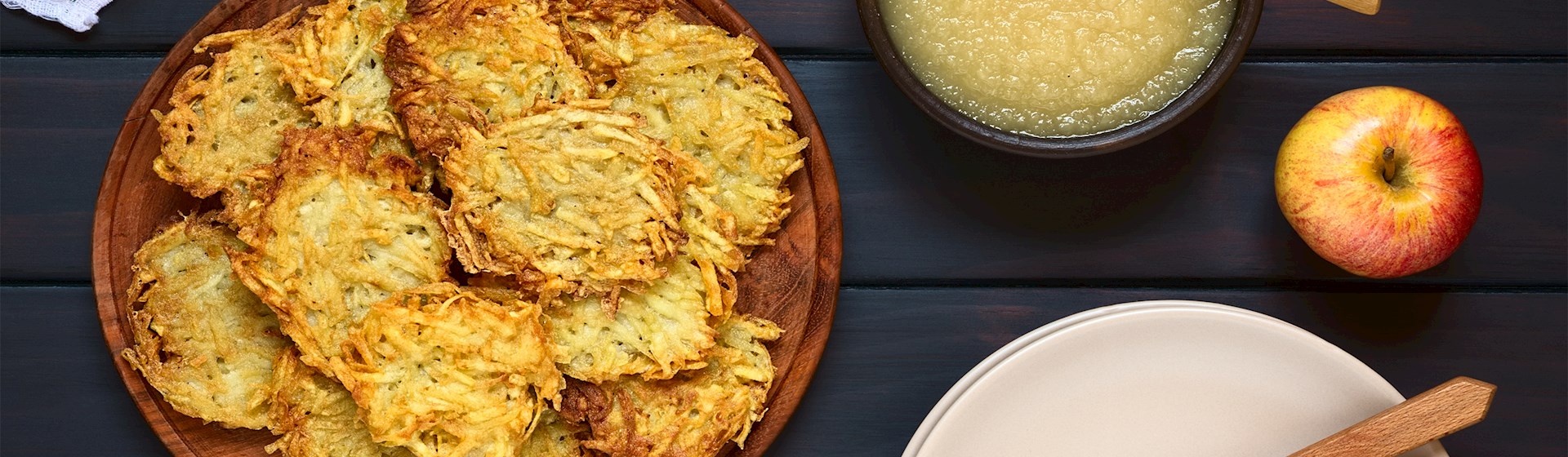
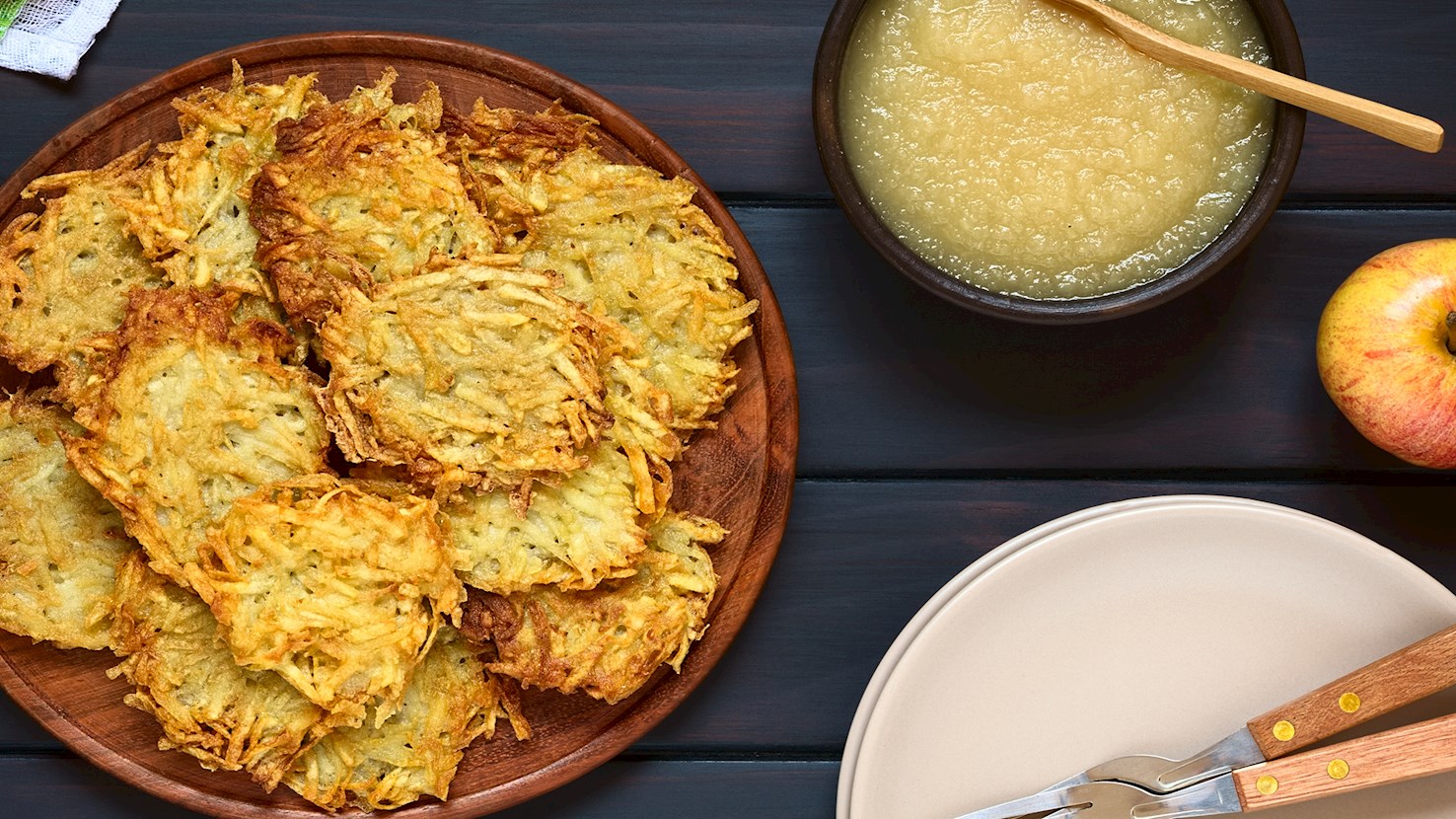
German potato pancakes are a restaurant staple, a homemade classic, and a popular street food snack. They are prepared with a thick batter that employs grated raw potatoes, flour, and eggs, and are usually shaped into flat, round discs that are shortly pan-fried until golden and crispy. Even though they are often served as a complement to stews, grilled meat, and sausages, potato pancakes make an excellent snack or main course. Kartoffelpuffers are traditionally accompanied by creamy apple sauce, fruit preserves, or sour cream.
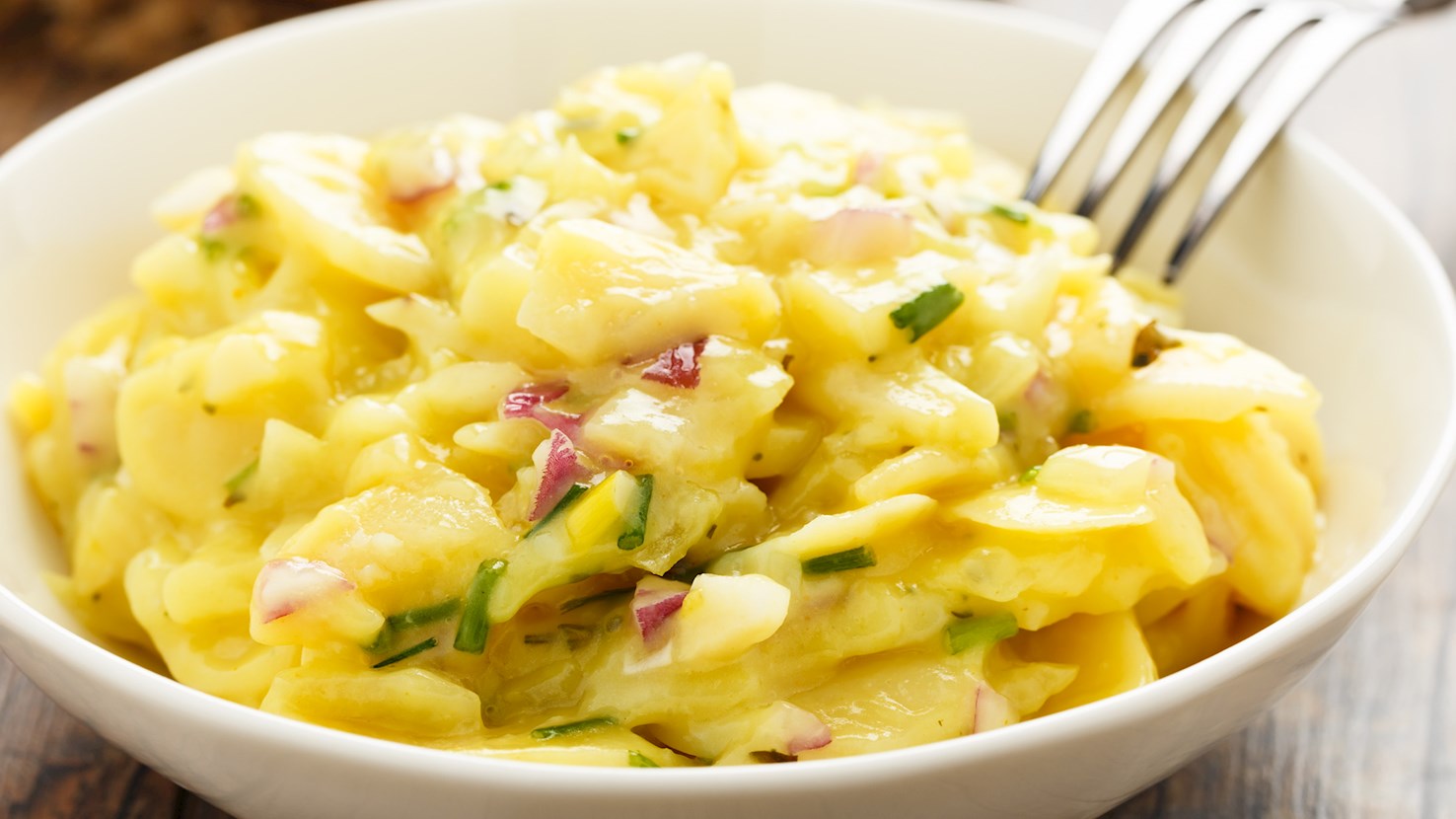
Kartoffelsalat is a potato salad from Germany made from cooked potatoes mixed with other ingredients, with two main preparation families defined by whether the dressing contains mayonnaise or not. Kartoffelsalat has sliced or cubed potatoes that stay tender but intact, coated either in a clear, savory, mildly acidic marinade or in a creamy, tangy dressing, and it commonly includes components such as vinegar, oil, salt, pepper, mustard, broth, onions, pickles, bacon cubes, eggs, apples, and fresh herbs depending on the version. The oldest known potato-salad recipe is dated 1621 in Nova Typis Navigatio by the Austrian abbot Caspar Plautz, similar potato salads appeared in German recipes around 1800, and named recipes such as Tarfuffeln-Salat were printed in 1752 and Erdäpfelsalat in 1770 as potatoes became integrated into everyday cooking. Waxy or mostly waxy “salad” potatoes are preferred because they do not fall apart easily when mixed, and some recipes include a small portion of floury potatoes to create a slightly thicker consistency. Basic preparation starts by cooking the potatoes either peeled in salted water or in their skins, cutting them into slices, and combining them with the chosen dressing, with the timing of cutting and dressing shaped by the regional style. For mayonnaise-based kartoffelsalat common in northern Germany, the potatoes are often processed a day after boiling to gain extra firmness before mixing with the dressing, while in southern styles the potatoes are often dressed while still warm so the marinade absorbs more deeply, and some methods lightly crush the potatoes instead of slicing them. One established non-mayonnaise method uses a hot mixture of meat broth, vinegar, oil, salt, pepper, and mustard poured over sliced potatoes, with optional additions such as finely cut onions, fried bacon cubes, garlic, or cucumber pieces, and the result can be eaten warm or cold. A specific Swabian method called “grated potato salad” uses day-old cooked potatoes grated on a kitchen grater and combined with onion, vinegar, oil, salt, pepper, and warm meat broth. In parts of Styria and Burgenland pumpkin seed oil is used for dressing, and in Franconia chives are treated as required. Mayonnaise-based kartoffelsalat is also associated with Silesian and Bohemian cooking, the Rhineland often adds gherkins or apples, northern variants often feature apples and hard-boiled egg, and Brandenburg combinations include gherkins with radishes or finely sliced onion, with optional additions such as roast leftovers, matjes, sausage pieces, and fresh herbs, and yogurt can replace mayonnaise as a lighter option. Kartoffelsalat is used as a flexible side dish and party food served with sausages, cutlets, and fried or baked fish, and as Erdäpfelsalat it is a classic accompaniment to Wiener Schnitzel, with many families in Germany eating Kartoffelsalat with bratwurst, bockwurst, or Wiener on Christmas Eve and a 2020 survey naming sausages with potato salad as the most popular Christmas Eve meal in Germany. Regional naming reflects local potato words, including erdäpfelsalat in southern Germany and Austria and härdöpfelsalat in Upper Swabia and Swiss German, alongside many dialect forms used for local variants.
TasteAtlas food rankings are based on the ratings of the TasteAtlas audience, with a series of mechanisms that recognize real users and that ignore bot,
nationalist or local patriotic ratings, and give additional value to the ratings of users that the system recognizes as knowledgeable.
TasteAtlas Rankings should not be seen as the final global conclusion about food. Their purpose is to promote excellent local foods,
instill pride in traditional dishes, and arouse curiosity about dishes you haven’t tried.



What People Say