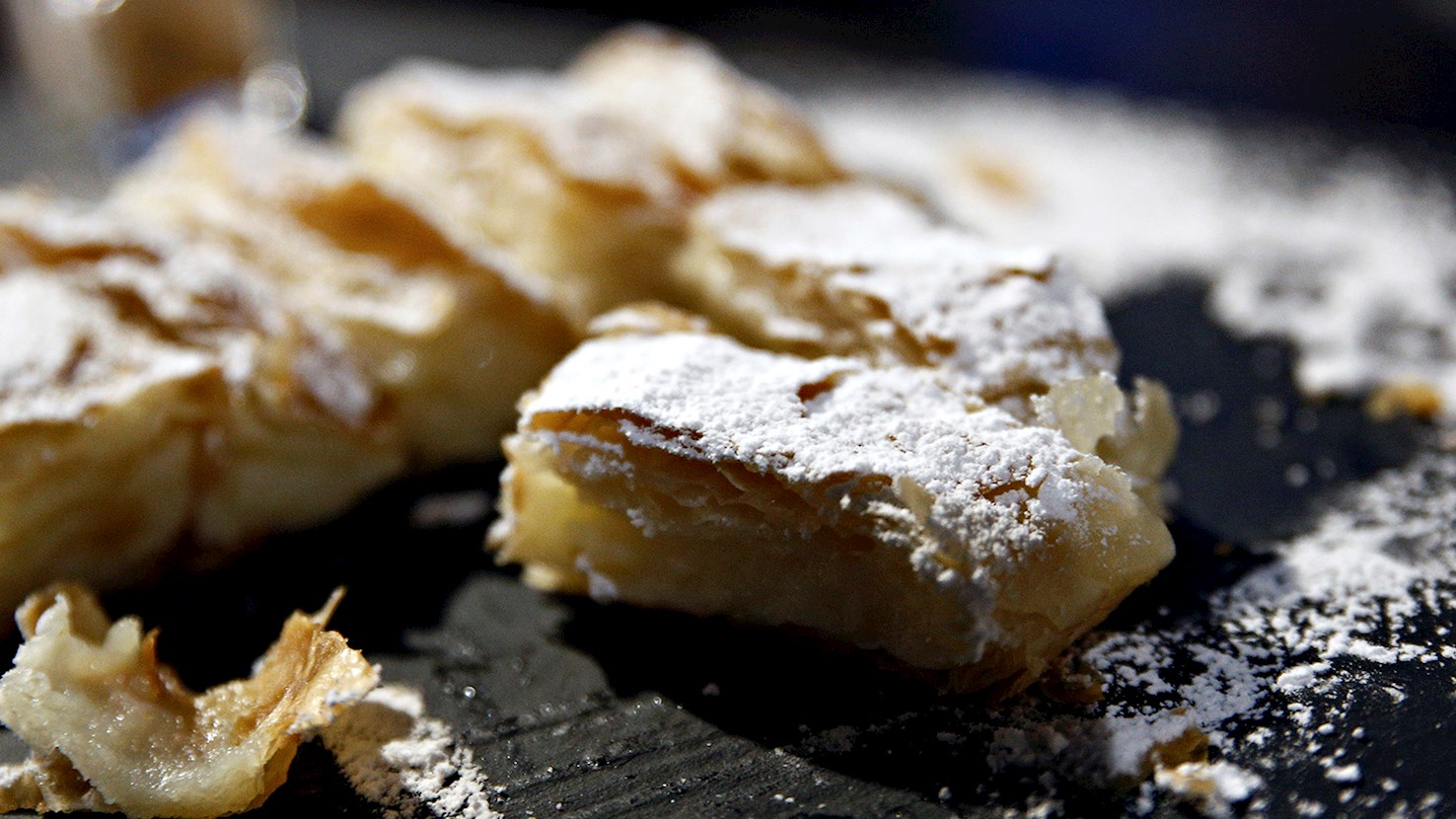
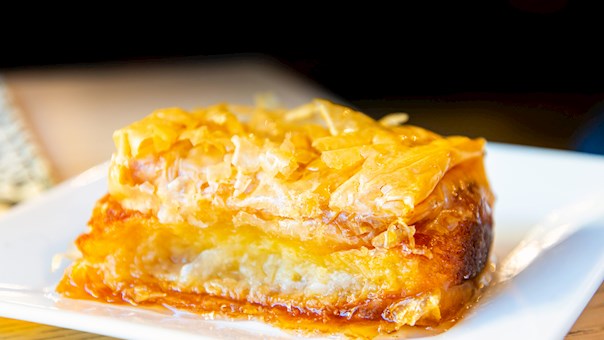
Bougatsa is a traditional, rustic Greek pie consisting of a phyllo pastry layered with a filling of semolina custard, although there are variations with minced meat or cheese. The name of the dish is a derivation of the Ottoman word pogatsa, denoting a pie filled with cheese. Bougatsa has origins from the Byzantine period, when Constantinople was Greek, and it began as a dough that was stuffed with numerous sweet and savory fillings. Over time, bougatsa evolved to incorporate a thinly rolled, hand-made phyllo pastry. As many Turkish immigrants settled in Northen Greece, bougatsa became a specialty of Serres and Thessaloniki. Today, the pies can be found throughout Greece in specialty shops called bougatsopolia, selling bougatsas exclusively.
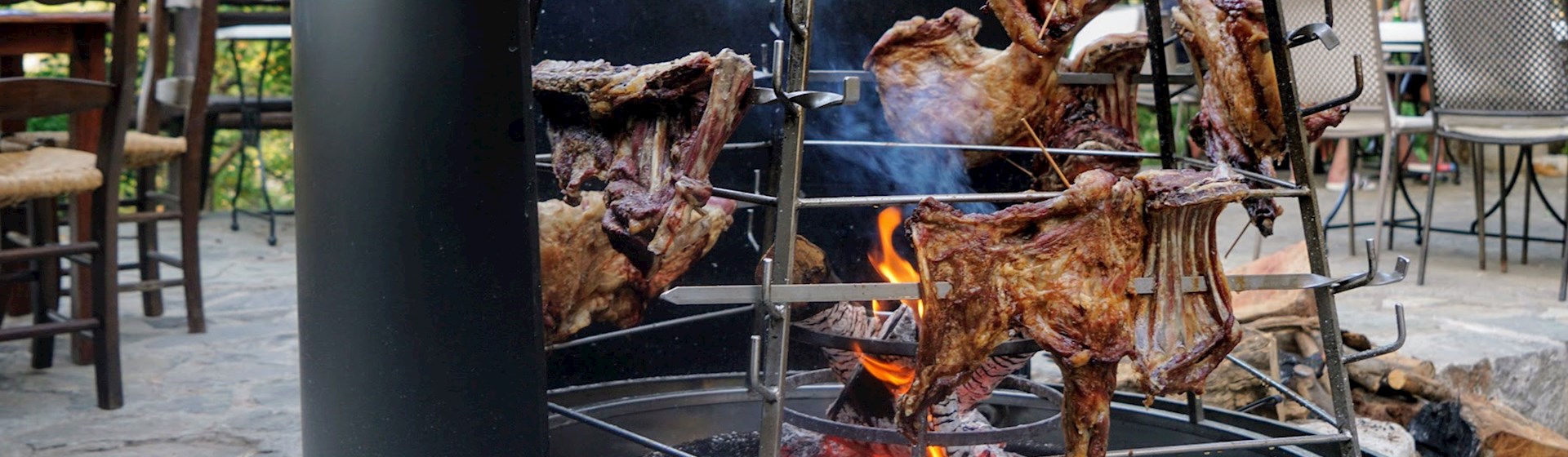
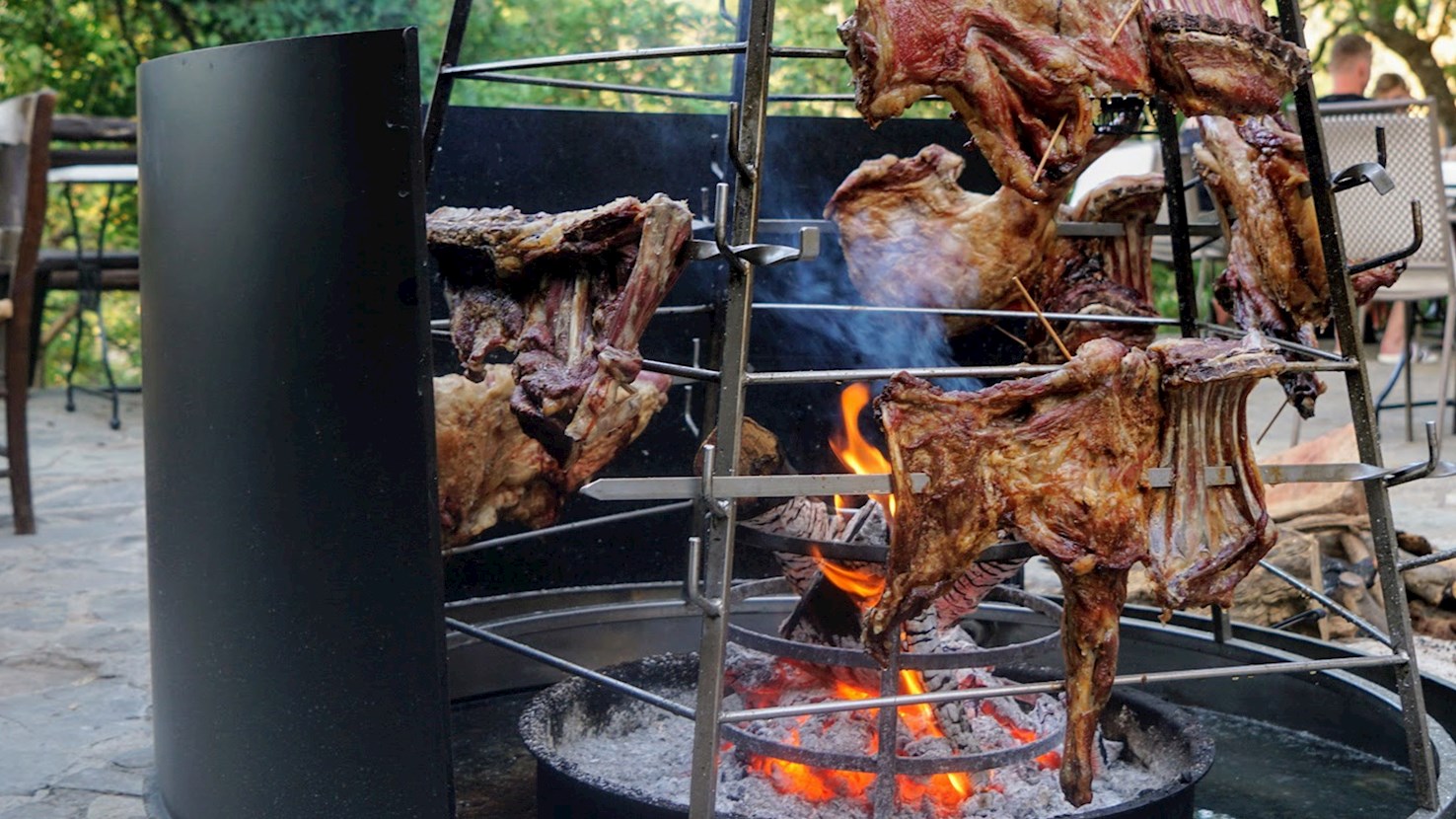
Antikristo is a traditional technique of cooking meat on Crete. A young lamb (or a goat, on rare occasions) is cut into four pieces (called goulidia), salted, then placed on big wooden skewers that are arranged around the fire in a circular formation, taking into consideration the direction of the wind, the intensity of the fire, and the distance between the fire and the meat. This process lets the meat cook in its own fat and salt with the heat coming from the flames instead of coals. The name antikristo means across the fire, describing this unique technique. The meat is slowly cooked, sometimes up to 6 hours, and it develops different flavors in the process. In the past, antikristo was common in the villages of Psiloritis mountain, but nowadays it can be found anywhere in Crete. Traditionally, it's prepared and cooked exclusively by men, most often shepherds.
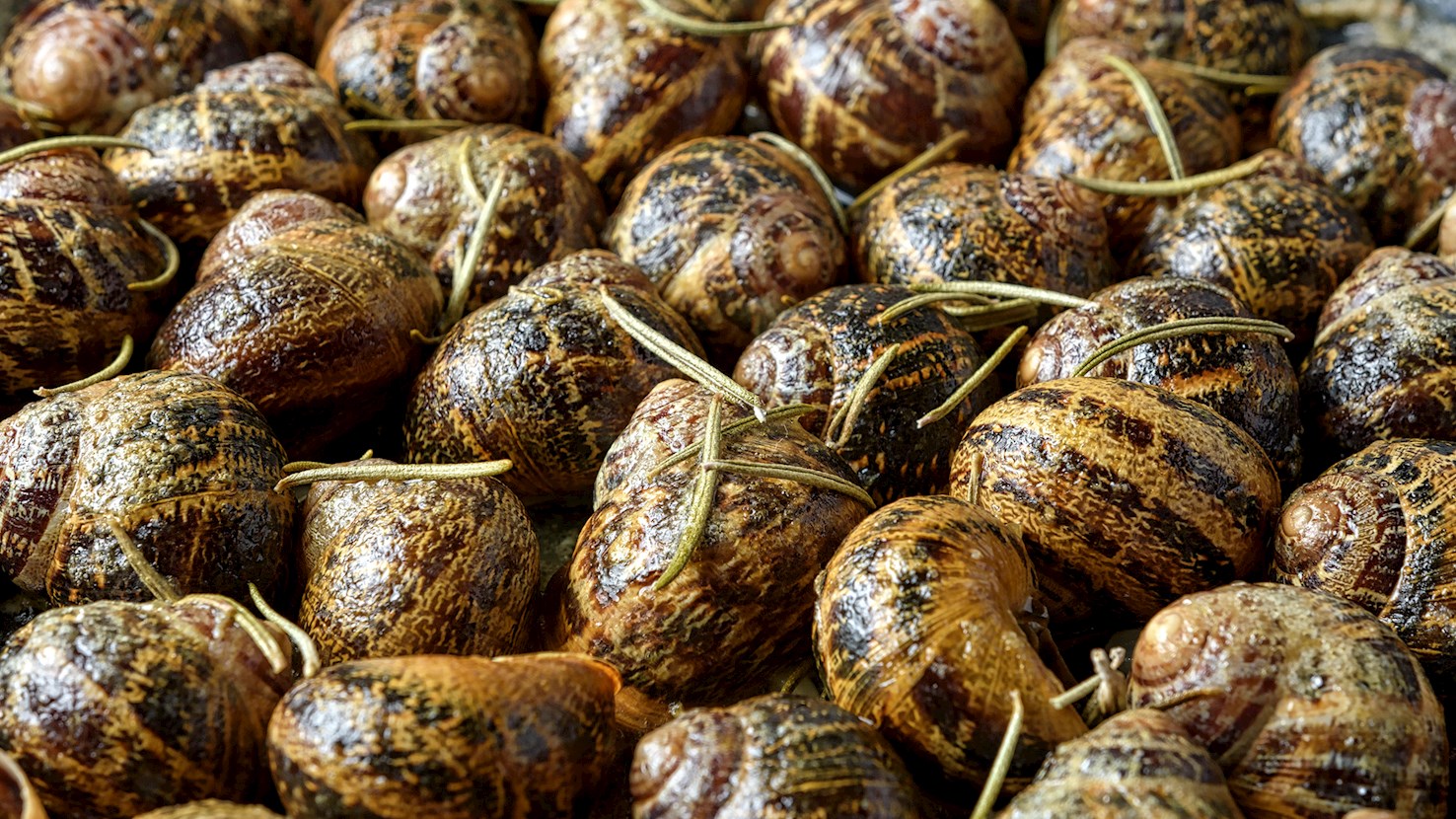
The star ingredient in this traditional Greek dish are snails that are pan-fried in their shells, usually in hefty amounts of olive oil or on a bed of salt. The dish is often elevated with the addition of vinegar or herbs such as parsley or rosemary. The unusual name, which vaguely translates as popping fried snails, refers to the loud sound the snails make when fried. Others claim it comes from the Cretan word abouboura, meaning face-side down. The snails are served inside the shells, and they are traditionally eaten with toothpicks, while crusty bread and a glass of raki or ouzo are often served on the side. The dish is mainly associated with Crete, where it is considered to be an authentic delicacy that's especially popular before the Greek Orthodox Easter, when it can be found in most homes and taverns.
Beets are the main ingredient in this colorful Greek dish that comes in two different versions. Cooked beets are either coated in a yogurt-based dressing or simply seasoned with vinegar, while the whole dish can come in the form of a creamy, thick purée, or as a regular salad with diced beets. Pantzarosalata is traditionally served garnished with whole, halved, or crushed walnuts and is most commonly enjoyed as a meze dish.
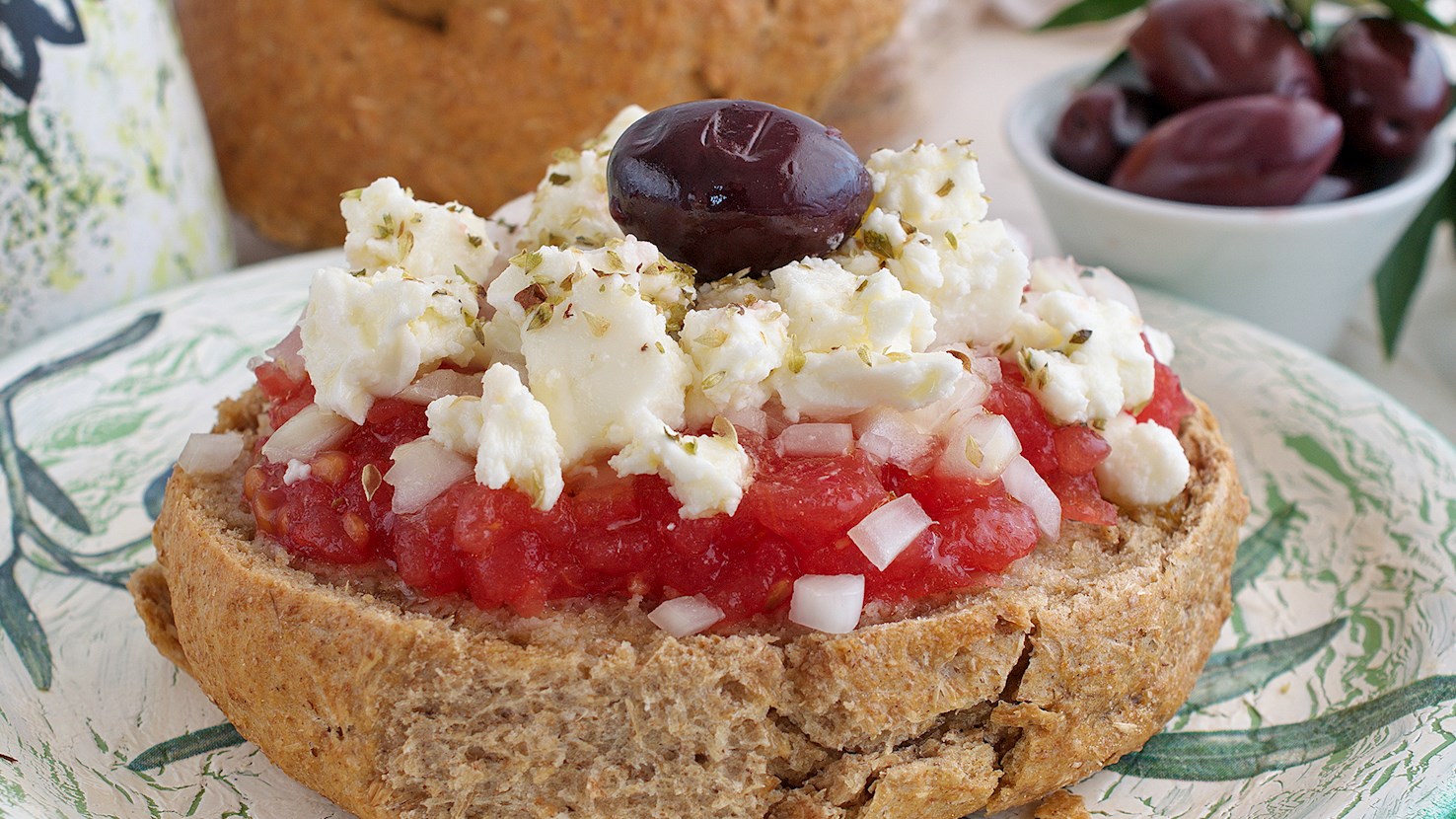
Dakos or ntakos is a traditional Cretan dish consisting of a dry barley rusk called paximadi that is topped with crumbled myzithra cheese, chopped ripe tomatoes, whole olives, capers, fresh oregano, and a few generous splashes of high-quality olive oil. It's recommended to use olive varieties such as Koroneiki, Lianes, or Tsounates. Myzithra cheese is traditionally used, and not feta, which is usually reserved for tourist restaurants. The rusk is often gently rubbed with a small piece of garlic and lightly sprinkled with sea salt. If available, kritamo (sea fennel) is also sometimes added to dakos. The dish is usually served as a meze or light dinner.
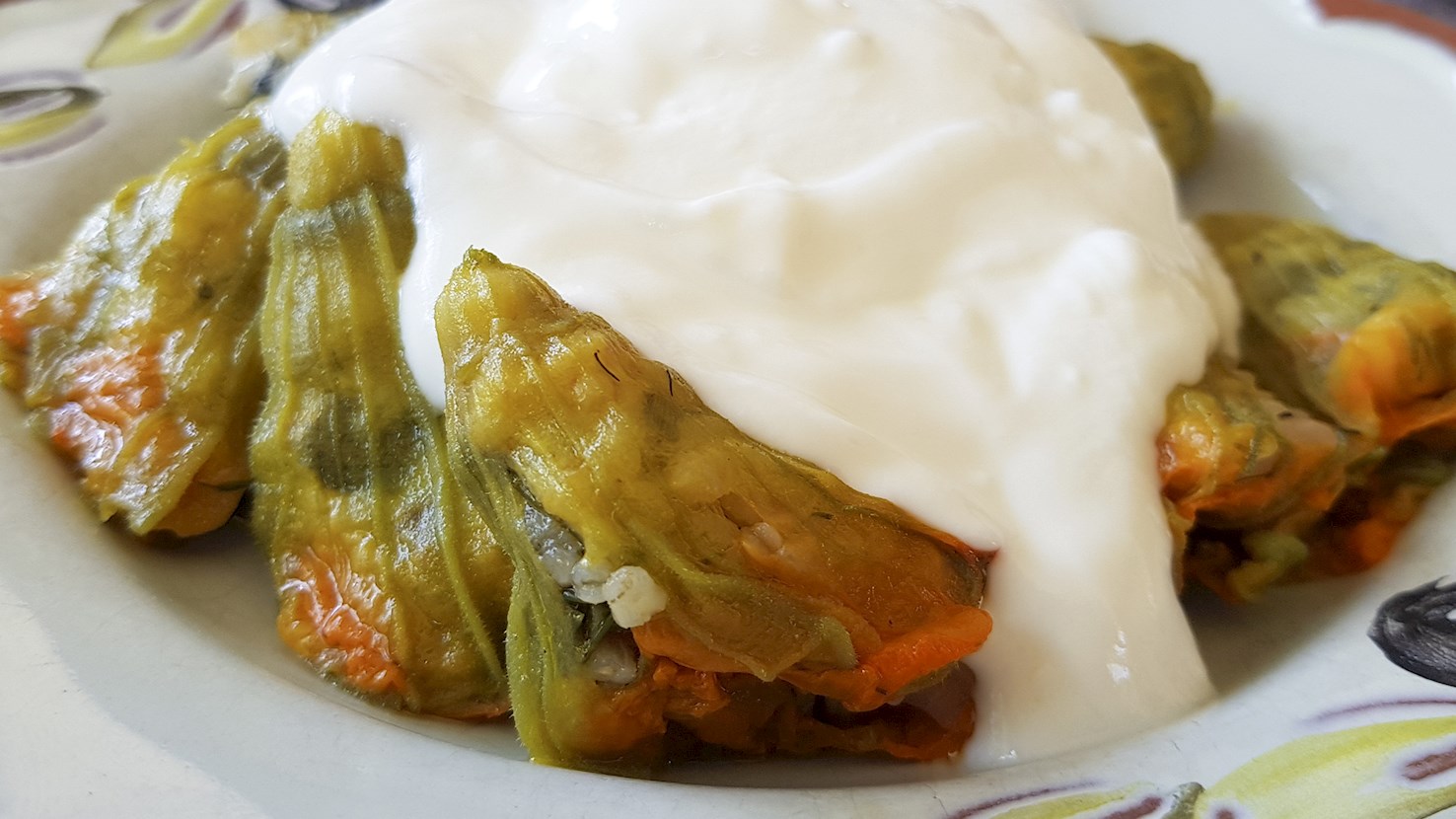
Greek-style stuffed zucchini flowers are typically filled with a combination of rice, vegetables and various spices and herbs. If prepared with a rice stuffing, the blossoms are usually slowly baked in the oven, and if stuffed with other ingredients, they can also be baked or dipped in batter and shortly fried. They are best served accompanied by a spoonful of yogurt on the side. A similar dish is also found in Turkish cuisine, where it goes under the name kabak çiçeği dolması.
Kόkoras krasάtos is a Greek variation on the famous French coq au vin. This Greek dish is made with rooster, Greek red wine, onions, garlic, Greek olive oil, cinnamon stick, nutmeg, cloves, allspice, bay leaves, tomatoes, and Florina peppers or Florina pepper paste. The rooster is boiled in a delicious red wine sauce until the meat becomes extremely tender and aromatic. In the summer, the sauce is light, while in the winter it's usually much thicker. Traditionally, the dish is served with hollow, spaghetti-like pasta and grated Kefalotyri cheese. It's typically prepared for Sunday lunch or special occasions such as Christmas. It's recommended to pair kόkoras krasάtos with a glass of the same wine in which the rooster was cooked.
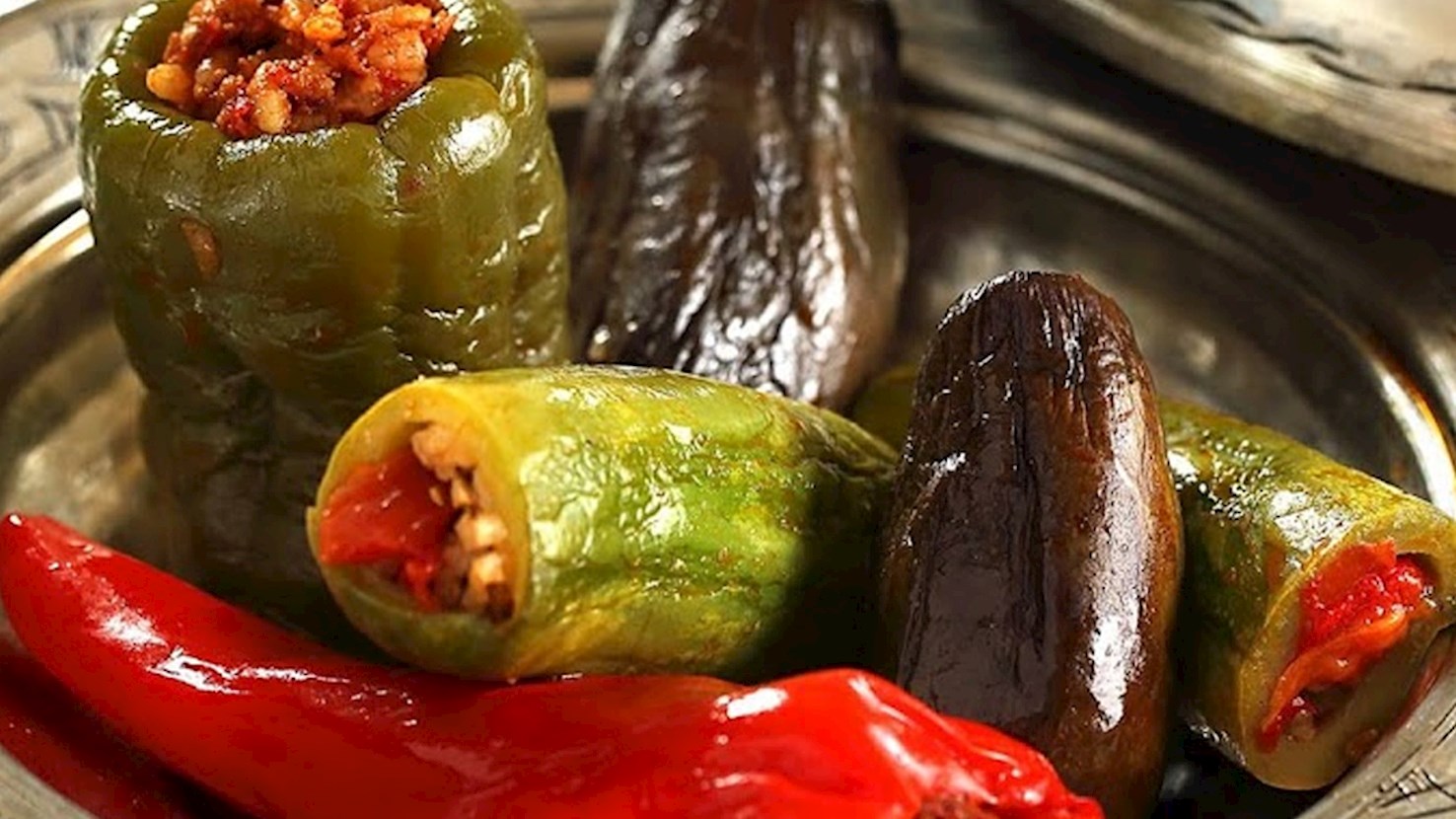
Dolma is a broad family of foods made by filling vegetables, fruits, leaves, seafood, or other edible casings with rice, minced meat, herbs, spices, or combinations of these ingredients. In its most familiar vegetable form, peppers, eggplants, zucchini, tomatoes, onions, or squash blossoms hold the filling. Some versions are rich with lamb or beef and served warm, while others rely on rice, olive oil, herbs, pine nuts, and currants and are served cool or at room temperature. Dolma is therefore not one fixed recipe but a large culinary category found across lands once connected by the Ottoman Empire. The exact birthplace of stuffed vegetables is not documented. Stuffed foods existed before the Ottoman period, and a tenth-century Arabic-language cookbook compiled in Baghdad contains several filled items. Ottoman sources show that stuffed vegetables and fruits had become a distinct and increasingly varied category by the fifteenth century. Records from that century mention stuffed onions and apples. Sixteenth-century sources add gourds, vine leaves, cabbage, carrots, immature squash, eggplants, and pumpkins. By the seventeenth century, Istanbul reportedly had about fifty specialist shops known as dolmacı, selling several kinds of filled vegetables. These records confirm the importance and expansion of dolma in Ottoman food culture, but they do not prove that the method itself originated in the kitchens of Topkapı Palace. The claim that palace ledgers from the reign of Süleyman I document massive purchases of eggplants and zucchini specifically for dolma is not securely supported. The name comes from the Turkish verb dolmak, meaning to become full or be filled. Dolma denotes something that has been filled. It is divided into two groups: dolma without meat and dolma with olive oil. Those without meat and cooked with olive oil are called yalanci, meaning imitation. A closely related term, sarma, comes from sarmak, meaning to wrap or roll. In current Turkish usage, a hollow vegetable filled through an opening is usually called dolma, while a filling enclosed in a grape, cabbage, chard, or other leaf is more precisely called sarma. However, dolma is often used for both stuffed vegetables and leaf-wrapped rolls. The Ottoman Turkish form of the word was recorded in a major multilingual dictionary published in 1680. A common meat-filled version begins with firm, fresh vegetables of similar size so that they soften at roughly the same rate. Bell peppers are opened around the stem and cleared of seeds and white membranes. Zucchini and short eggplants are trimmed and hollowed from one end with a narrow corer or small spoon. Tomatoes are opened at the top, and their pulp is removed and often retained for the sauce or filling. The vegetable walls should be thin enough to become tender but thick enough to hold their shape. Removing too much flesh leaves a fragile shell that can split as the rice expands. The hollowed vegetables do not need to be reduced to an extremely thin casing. Eggplants may be lightly salted and rested before filling, especially when they are mature or strongly flavored. Onions require a different method: they are softened briefly in hot water, separated into flexible layers, and wrapped around the filling. Squash blossoms are handled gently, with the inner stem or pistil removed before the petals are filled and folded closed. A common filling combines short-grain white rice with raw minced lamb or beef, finely chopped yellow onion, fresh dill, mint, parsley, black pepper, allspice, and salt. This is one important form, but the exact balance changes by region. Garlic, paprika, dried mint, cinnamon, cumin, tomato paste, pomegranate molasses, chopped tomato, or rendered fat may also appear. Some fillings contain more meat than rice, while others use rice mainly to soften and extend the meat mixture. Dried currants can be added to meat-based fillings, but they are more strongly associated with meatless olive-oil versions. Their sweetness is usually balanced with black pepper, allspice, cinnamon, lemon, or fresh herbs rather than allowed to dominate the filling. The rice is usually rinsed and drained before mixing. Depending on the recipe, it may enter the bowl raw, partly cooked, or briefly fried with onion. Raw rice absorbs the cooking liquid and the juices released by the vegetables and meat. Partly cooked rice shortens the simmering time and makes the final texture easier to control. Short- or medium-grain rice is useful because it becomes tender while helping the filling hold together. Long-grain rice, bulgur, cracked wheat, lentils, and chickpeas also appear in regional versions. The filling should be mixed evenly but not compressed into a heavy paste. Raw minced meat becomes dense when worked too aggressively. Each vegetable is filled only about two-thirds to three-quarters full, leaving space for the rice to swell. Packing the mixture tightly to the rim can split tomatoes and zucchini, push the caps from peppers, or force the filling into the cooking liquid. The filled vegetables are arranged snugly in a wide, deep pot. Peppers and tomatoes often stand upright, while zucchini and eggplants may lie on their sides or be fitted in alternating directions. Tomato tops, pepper caps, small tomato slices, or vegetable trimmings may be placed over the openings to help contain the filling. A heatproof plate can be set over the vegetables to keep them stable, particularly when the pot also contains leaf rolls or loosely packed pieces. The cooking liquid varies. Water, meat broth, tomato juice, crushed tomatoes, diluted tomato paste, olive oil, lemon juice, or combinations of these can be used. It is normally poured around the vegetables rather than directly into every opening. The liquid should reach partway up their sides without completely flooding the pot. The vegetables release additional water as they soften, while the rice absorbs both the added liquid and the juices from the meat. Too much liquid can leave the filling loose and watery, while too little may leave the rice hard. The pot is covered, brought to a gentle simmer, and kept over low heat until the rice is tender, the vegetables can be pierced easily, and the meat is fully cooked. Vigorous boiling can tear the softened shells and scatter the filling. Cooking time depends on the vegetable, the rice, and the size of each portion. The finished filling should be moist but not soupy. Rice that remains hard indicates too little liquid, insufficient time, or a shell packed too tightly for the grains to expand. A loose center usually results from excessive liquid, very juicy vegetables, or rice that was already close to fully cooked before it entered the pot. Resting the covered pot briefly after the heat is turned off allows the rice to absorb remaining juices and helps the filling settle. This also makes the vegetables easier to lift without breaking. The meatless olive-oil form, widely known as zeytinyağlı dolma, removes the minced meat and increases the importance of rice, onion, herbs, spices, and olive oil. Pine nuts and currants are especially associated with this style rather than with every meat filling. Cinnamon, allspice, black pepper, mint, dill, parsley, and sometimes a small amount of sugar may create a fragrant sweet-savory balance. The onions and pine nuts are often softened in olive oil before the rice and seasonings are added. The rice may be partly cooked at this stage or added raw, depending on the final simmering method. This filling is not made only with rice, pine nuts, currants, and enormous amounts of oil. Recipes vary, and herbs, onions, tomato, lemon, spices, or other grains may be central. Nor does it have to simmer exclusively in a bath of lemon juice and olive oil. Water is normally needed to soften the rice, while lemon supplies acidity and olive oil gives the filling its smooth texture and rounded flavor. Meatless versions are usually served cool or at room temperature after the rice has absorbed the aromatic liquid. Chilling is possible, but refrigerator-cold dolma can taste muted because the olive oil thickens and the aromas become less pronounced. Allowing it to lose the deepest chill before serving usually gives a softer texture and clearer flavor. Leaf-wrapped versions use grape leaves, cabbage, chard, collards, or other flexible leaves. Fresh grape leaves are blanched briefly, while preserved leaves are rinsed to remove excess brine. Cabbage leaves are softened in hot water and trimmed where the central rib is too thick. A small amount of filling is placed near one edge, the sides are folded inward, and the leaf is rolled into a compact cylinder. The roll must be secure but not excessively tight because the rice still needs room to expand. Dolma containing lamb or beef is commonly served hot or warm because the melted animal fat, softened rice, and cooking juices are most pleasant before they congeal. The pieces are lifted carefully onto a wide ceramic platter or served directly from the pot with some of the reduced liquid spooned around them. Plain yogurt is a frequent accompaniment to meat-filled dolma. It may be served beside the vegetables, spooned over them, or mixed with crushed garlic and salt. The cool acidity and lactic tang balance the fat and spices, while the thick texture clings to the warm vegetables. Yogurt is common rather than compulsory, and pouring a heavy layer over the entire platter can conceal the individual flavors. Olive-oil versions are more often served cool or at room temperature as an appetizer, side plate, or part of a larger spread. Lemon wedges commonly accompany them, but a heavy squeeze is optional. A modest amount of fresh juice can sharpen the rice and herbs; too much may overpower the currants, pine nuts, olive oil, and delicate vegetable casing. Dolma can function as a starter, side, or main course. Meat-filled peppers, eggplants, zucchini, and tomatoes are substantial enough to anchor a meal, particularly with yogurt and bread. Smaller olive-oil vegetables and leaf rolls are often served in modest portions with other cold plates. Bread may collect the cooking juices, while rice-based versions generally need no additional starch.
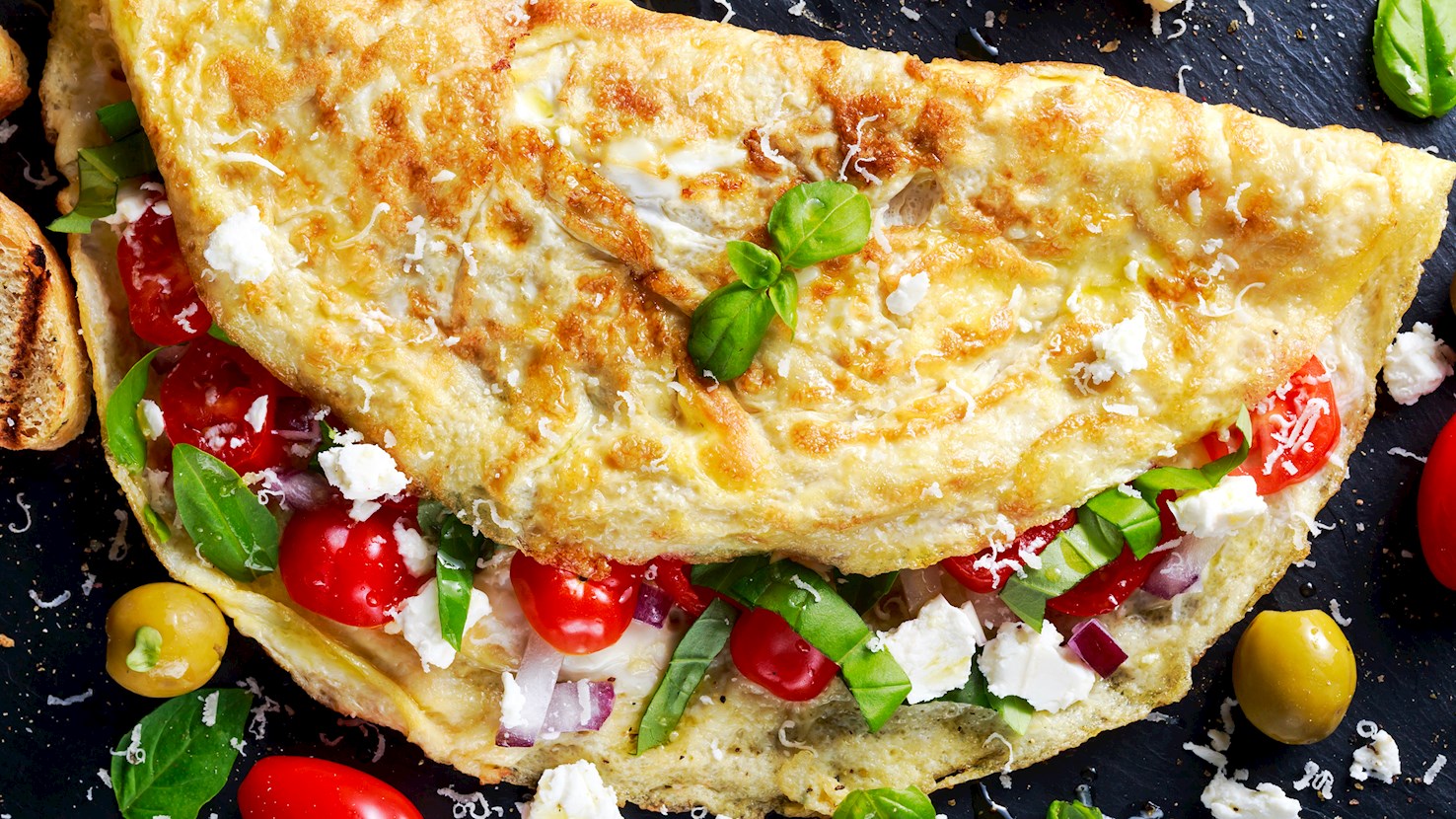
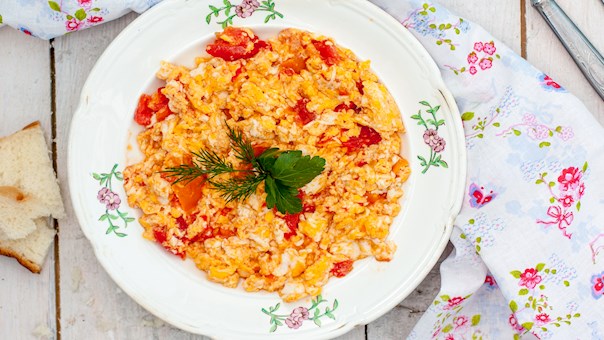
Omeleta is a traditional Greek-style omelet made with Mediterranean ingredients, giving it a distinct and flavorful twist compared to classic omelets. Unlike a typical omelet, the Greek omeleta incorporates local vegetables, cheeses, and sometimes meats directly into the eggs rather than as fillings. The base is made with whisked eggs seasoned with salt and pepper, and crumbled feta cheese is a common addition, adding a tangy, creamy flavor. Fresh tomatoes, bell peppers, onions, and sometimes zucchini are included, giving the omelet vibrant color and taste, while Kalamata olives contribute a briny depth. Fresh herbs such as oregano, parsley, or thyme enhance the Mediterranean flavor, and olive oil is used instead of butter for cooking, adding a fruity richness. The vegetables are typically sautéed in olive oil until softened, after which the beaten eggs are poured over to incorporate the cheese and herbs, cooking slowly to allow the flavors to meld. The Greek omeleta is often enjoyed as a breakfast or light lunch and is served with fresh bread and a side of Greek yogurt or tzatziki.
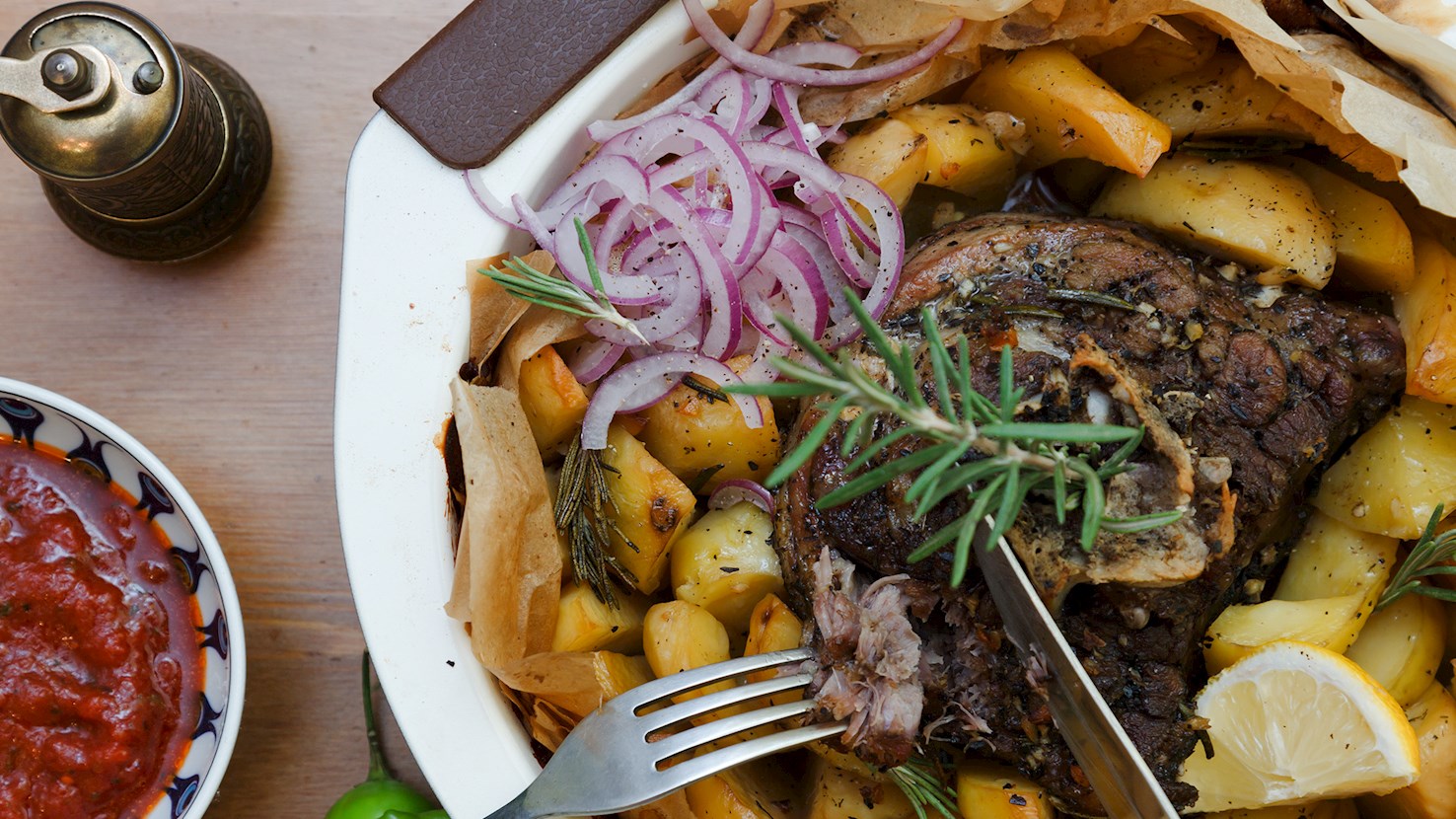
Kleftiko is a typical Greek dish that is commonly prepared at festive events and celebrations, consisting of a succulent piece of lamb or goat meat that is wrapped in foil and baked in airtight ovens. Also spelled as klephtiko, the name comes from the Klephts, mountain rebels from the Greek Revolution who cooked the food underground, so that no aromas or steam could escape, as it could reveal their positions. The cooked food was typically stolen, as klepht is also the root of the word kleptomaniac, describing a person with the urge to steal. Today, the meat is slowly cooked in a bowl so that it remains juicy and falls off the bone. Kleftiko is usually cooked with potatoes that soak up some of the flavorful meat juices. Other accompaniments may include red peppers and tomatoes. It is recommended to pair the dish with a glass of red wine on the side.
TasteAtlas food rankings are based on the ratings of the TasteAtlas audience, with a series of mechanisms that recognize real users and that ignore bot,
nationalist or local patriotic ratings, and give additional value to the ratings of users that the system recognizes as knowledgeable.
TasteAtlas Rankings should not be seen as the final global conclusion about food. Their purpose is to promote excellent local foods,
instill pride in traditional dishes, and arouse curiosity about dishes you haven’t tried.





What People Say