Ash is a category of thick, hearty soups and stews from Iran and Afghanistan that are prepared with a combination of noodles, vegetables, fresh herbs, and grains. Ash is often considered a cornerstone of Iranian and Afghan cooking and appears on tables both as an everyday meal and as a specialty dish during gatherings, celebrations, and religious occasions. The origins of ash go back centuries, with mentions found in historical Persian texts and cookbooks. Its role as a nourishing and accessible meal made it popular among communities across the Iranian plateau, where grains like wheat and barley and abundant garden herbs such as parsley, cilantro, dill, and mint provided the foundation. Over time, cooks developed countless varieties, such as ash reshteh, ash-e doogh, ash-e anar, and ash-e jo, each with its distinctive flavor profile and purpose. Some versions were linked to specific seasons or events, for example, ash reshteh is associated with Nowruz, the Persian New Year. To prepare ash, cooks typically begin by gently frying onions in oil until golden. Garlic and turmeric are often added, creating a fragrant base. Lentils, split peas, beans, or chickpeas follow, simmered with water or stock until tender. Fresh herbs and sometimes vegetables like spinach or pumpkin are stirred in later, giving the soup both vibrant color and layered taste. In ash reshteh, wheat noodles are added near the end of cooking, while in ash-e doogh, tangy yogurt is incorporated to create a creamy texture. Once ready, ash is topped with a garnish called “naná dagh,” a sizzling blend of fried dried mint and sometimes garlic or onions in hot oil, drizzled over each serving. Ash can be found everywhere from street food stalls to family kitchens, and it is served in large bowls accompanied by flatbreads such as sangak or barbari. In homes, it is often enjoyed communally, with diners gathering around a pot set in the center of the table. Some people prefer to drizzle vinegar or a splash of kashk, a fermented dairy product, over the top to enhance the flavor.
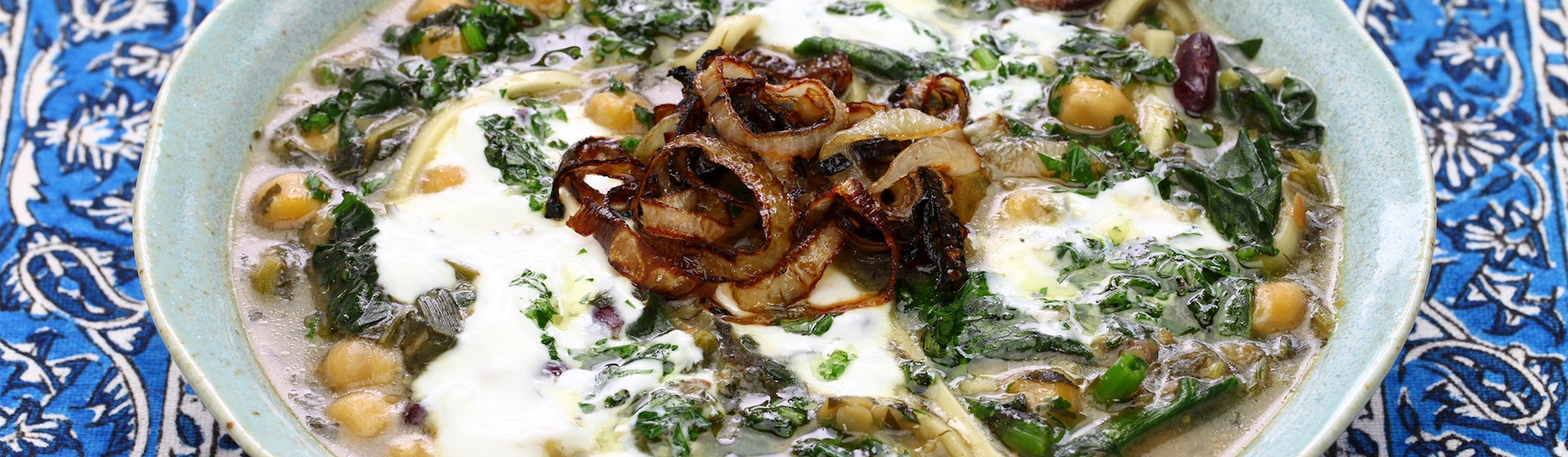
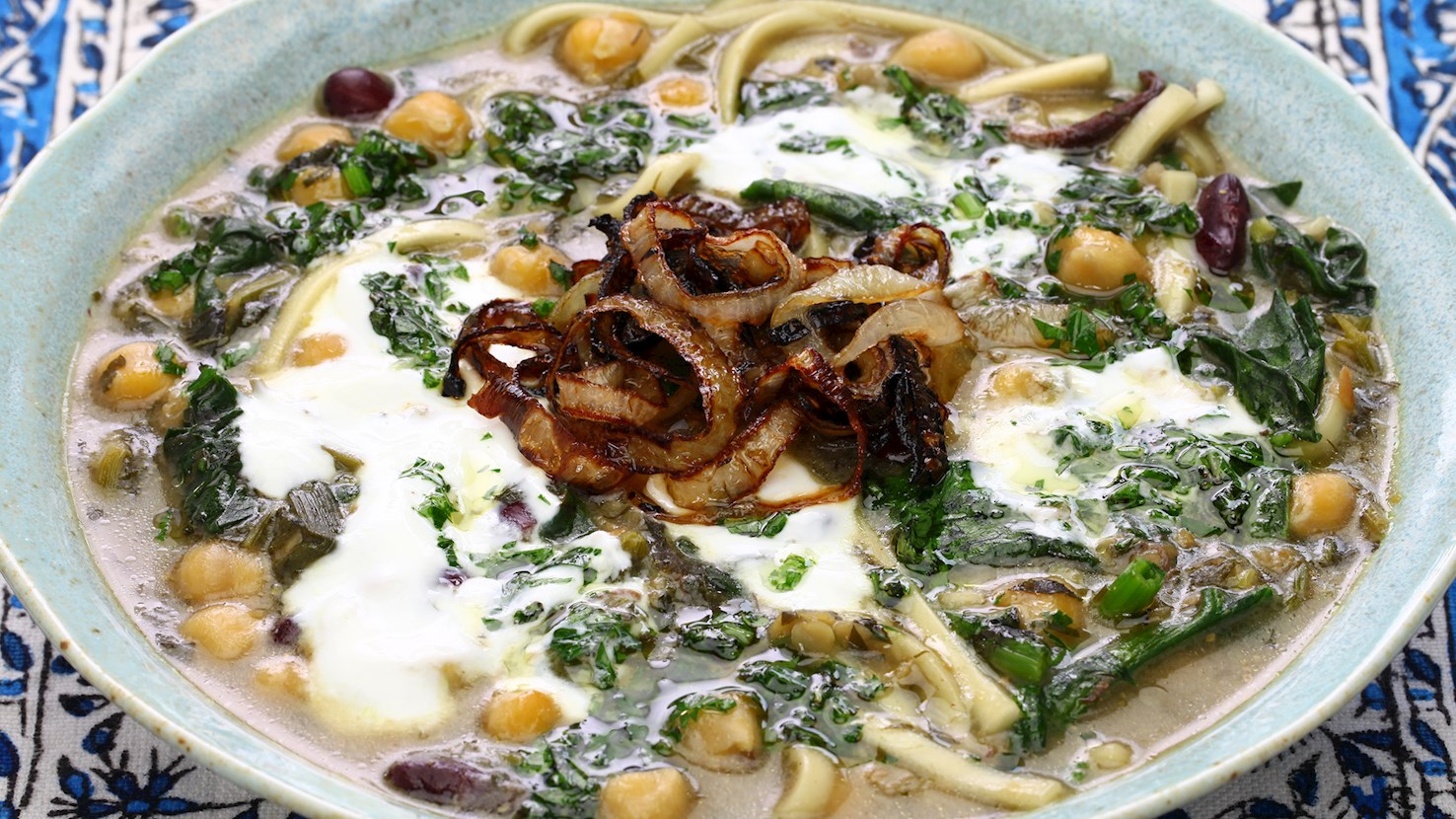
Ash reshteh is a thick Iranian soup originating from various regions across Iran, where it has been cherished for centuries as a nourishing meal especially enjoyed during colder seasons and festive gatherings. It is made with reshteh, which are Persian wheat noodles, combined with a blend of legumes such as chickpeas, lentils, and beans, as well as leafy greens like spinach, parsley, dill, and cilantro. The dish is further enriched with fried onions, garlic, turmeric, and a tangy topping of kashk, a fermented whey that lends a distinctive flavor and creamy finish. The origins of ash reshteh date back to the pre-Islamic era when similar thick soups were part of Persian culinary practices, evolving gradually as trade introduced new ingredients and regional cooking methods shaped its preparation. The widespread use of reshteh noodles symbolizes good fortune and longevity, which is why this dish is often served during Nowruz, the Persian New Year, and other communal celebrations. Over time, ash reshteh became a recognizable staple across Iran’s diverse provinces, embraced by both urban and rural communities. To prepare ash reshteh, cooks begin by simmering soaked legumes until tender. A separate pot is used to sauté onions and garlic with turmeric to develop a rich aromatic base. The greens are then added in stages to preserve their color and flavor. Reshteh noodles are broken into sections and cooked into the soup, thickening it as they release starch. Once assembled, the soup is topped generously with kashk, and finished with garnishes of caramelized onion, fried mint, and sometimes a drizzle of saffron-infused oil. Each serving balances earthiness from legumes, freshness from herbs, and tart creaminess from kashk. Beyond the home kitchen, ash reshteh is commonly found in Persian restaurants and at gatherings during significant holidays, religious events, or communal charity meals. It is served in deep bowls, often with flatbread on the side and extra kashk to taste.
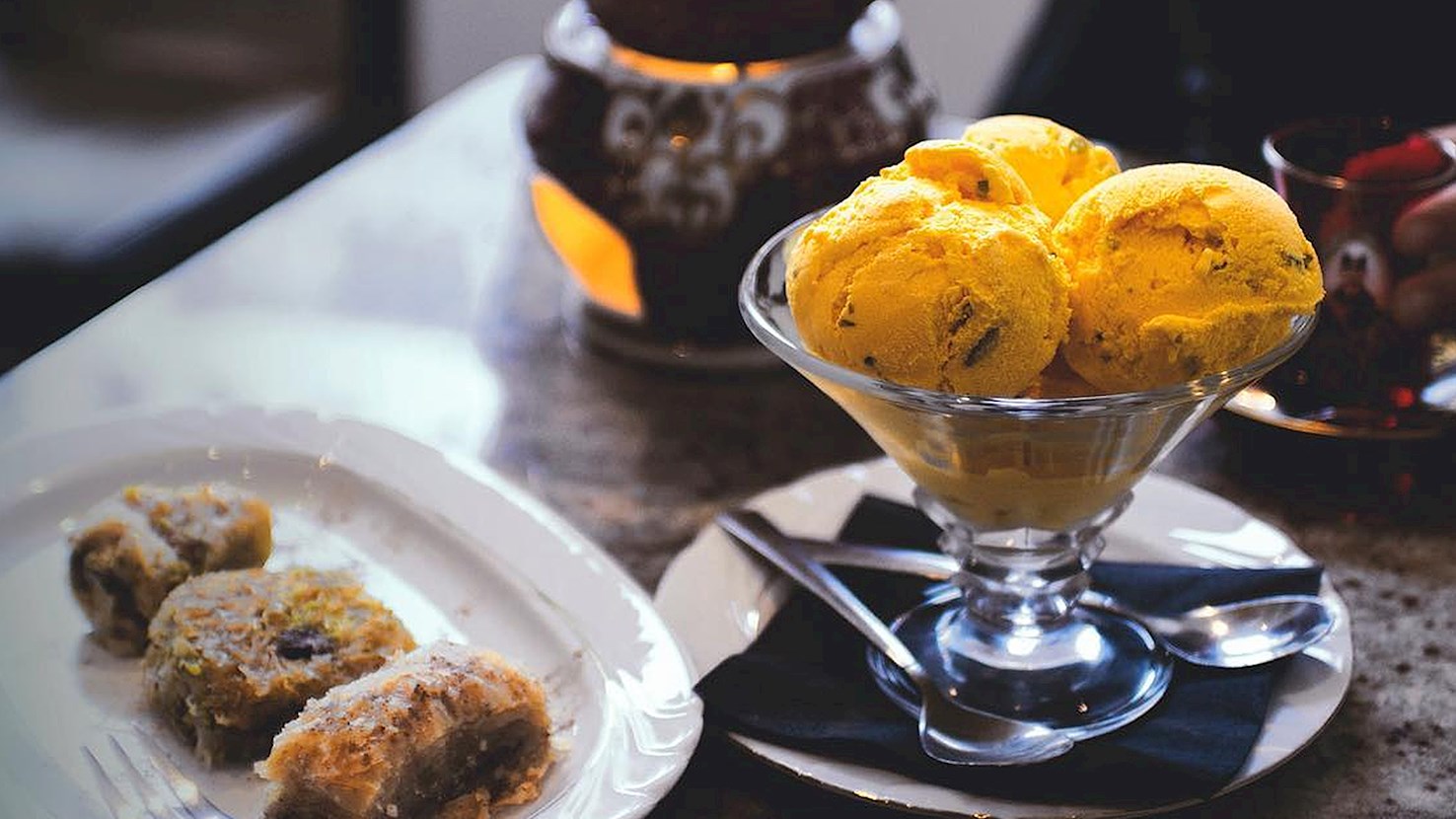
Bastani sonnati is a unique saffron-infused Iranian ice cream that was invented at the beginning of the 20th century by Akbar Mashti, the first ice cream vendor in Tehran. The name “bastani sonnati” means “classic ice cream,” emphasizing its status as a benchmark of Iranian confectionery. The base is a dense custard made by combining milk, cream, egg yolks, and sugar, then cooking it gently to achieve a smooth consistency. What sets bastani sonnati apart is the addition of saffron, rosewater, and ground cardamom, which infuse the ice cream with a vivid yellow color and a distinctly floral aroma. Salep, a flour derived from orchid tubers, is also incorporated, lending the mixture a stretchy, elastic quality similar to Turkish dondurma. Small pieces of frozen clotted cream, called makhloot, are sometimes folded in, creating pockets of rich creaminess in each bite. After churning, bastani is packed into shallow containers and stored at low temperatures to set. Before serving, it is often garnished with chopped pistachios, which add texture and contrast. In Iranian ice cream parlors, it is common to see bastani sonnati served alongside faloodeh, a frozen dessert made from thin vermicelli noodles in rosewater syrup. The combination of the creamy bastani and the icy faloodeh has become an iconic pairing in Iran. Unlike Western-style ice cream, bastani sonnati is known for its dense body and slower melt, which allows the saffron and rosewater aromas to linger on the palate. Many recipes are closely guarded by families or vendors, with proportions of salep and flavorings varying from one confectioner to another. Its production still relies on skill and careful handling to achieve the right balance of elasticity and smoothness.
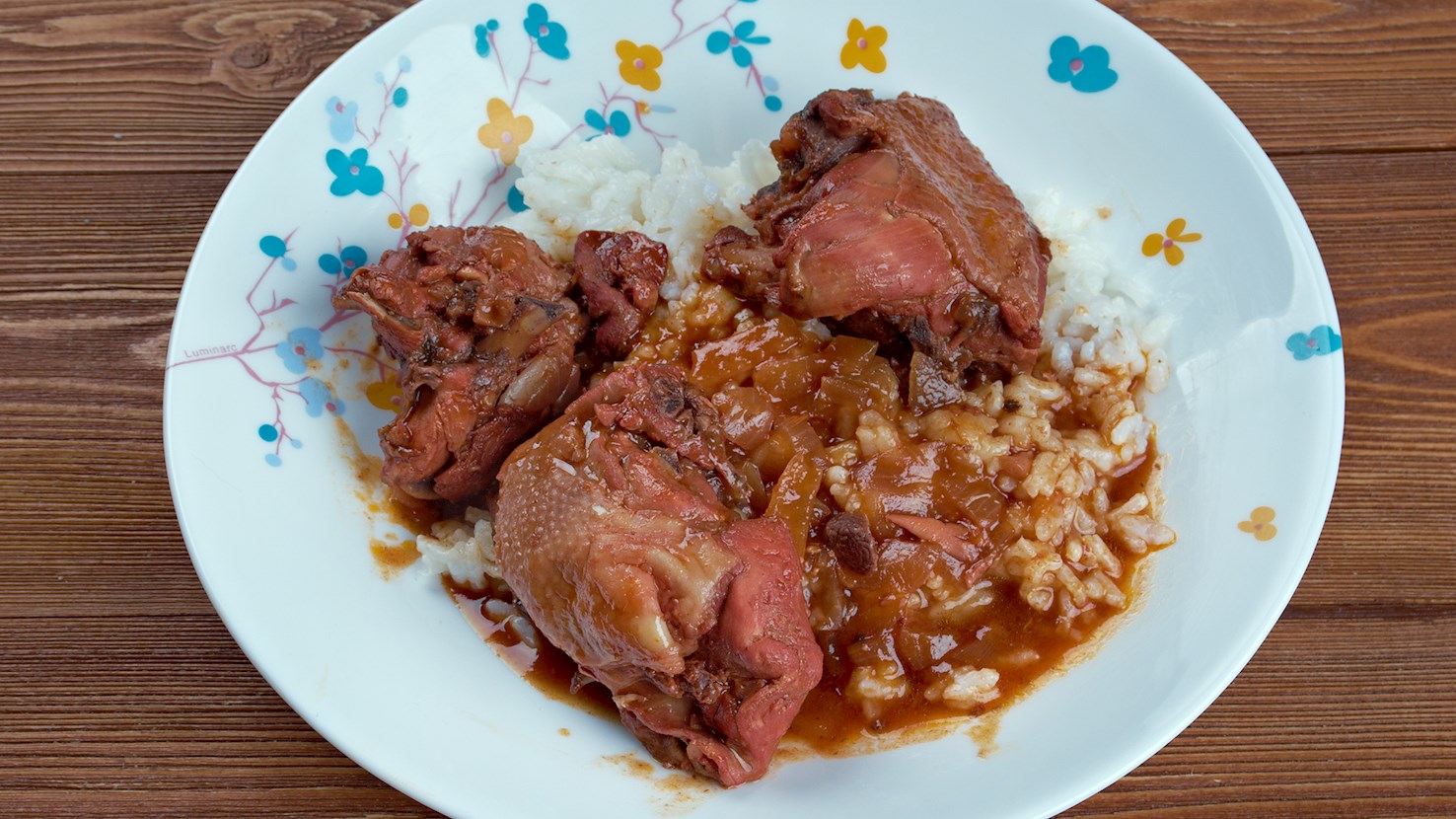
Khoresh is a Persian term describing a wide range of Iranian stews prepared by slowly simmering meat, vegetables, legumes, and aromatic spices into richly flavored dishes that are always served with rice. The word itself simply means “stew” in Persian, and it encompasses some of the most iconic meals of Iranian cuisine, including khoresh gheimeh with split peas and dried lime, khoresh fesenjan with ground walnuts and pomegranate molasses, and khoresh bademjan with eggplant and tomatoes. Each type of khoresh has a distinct character shaped by regional preferences, seasonal produce, and family recipes passed down over generations. The core technique behind khoresh involves layering flavor gradually. Onions are typically sautéed first, followed by meat (commonly lamb, beef, or poultry) which is browned to develop depth. Spices like turmeric, cinnamon, and black pepper are added early, while ingredients such as dried limes, fresh herbs, or tomato paste contribute their own nuances as the stew simmers. This slow cooking allows the sauce to thicken naturally and the meat to become tender without falling apart. Many khoresh recipes are finished with a sour component, like dried lime, lemon juice, or pomegranate, that balances the richness and gives the dish its distinctive taste. Khoresh is always paired with chelo, the carefully prepared Persian rice with separated grains, sometimes finished with saffron and accompanied by flatbreads and fresh herbs. The combination of fragrant stew and fluffy rice forms the heart of a typical Iranian meal. Whether the khoresh features vegetables like okra, squash, or eggplant, or rich combinations like fesenjan’s sweet-sour walnut sauce, the final dish is designed to be eaten communally, inviting diners to savor small bites with rice and side dishes. The concept of khoresh reflects Iran’s long history of regional cooking and culinary exchange. Each province has developed its own signature stews based on what grows locally and the influences of neighboring cultures. In Isfahan, you find the celebrated khoresh mast with lamb and yogurt. In Gilan, khoresh aloo esfahani uses prunes and lamb. While the basic approach remains consistent, the variety of vegetables, legumes, and flavorings has made khoresh a category with remarkable breadth.
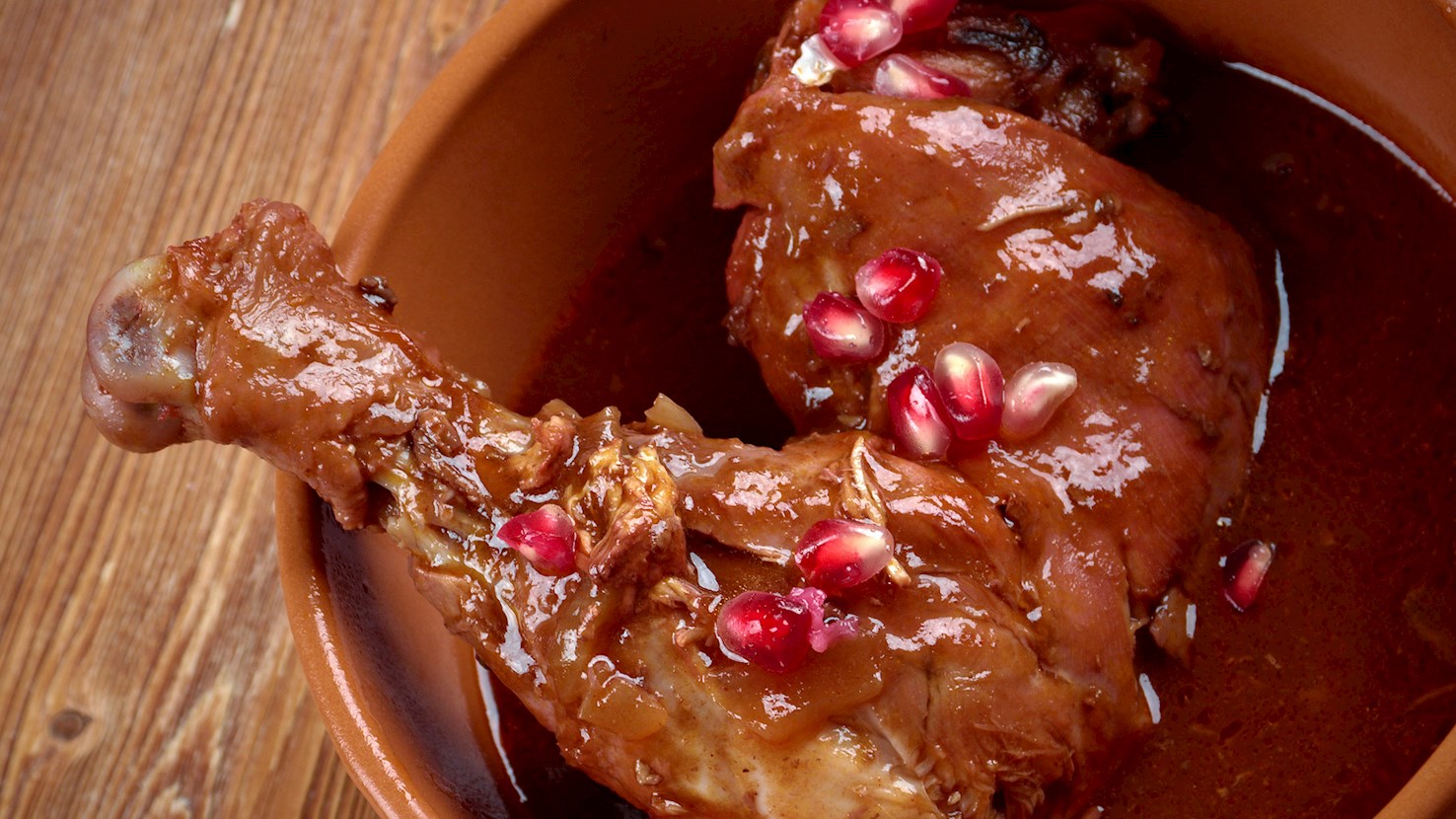
Fesenjān is a rich Persian stew that comes from the northern provinces of Iran, especially Gilan and Mazandaran along the Caspian Sea. Known for its distinctive combination of ground walnuts and pomegranate molasses, this dish is typically prepared with poultry such as duck or chicken, though lamb or beef can also be used. It is valued as one of the most refined examples of Iranian khoresh, offering a deep, tangy-sweet flavor profile that sets it apart from other Iranian stews. The documented history of fesenjān stretches back centuries, with references found in Persian culinary manuscripts describing the method of slow-cooking meat in nut pastes and fruit extracts. Its use of pomegranate, a fruit with ancient ties to Iranian agriculture and symbolism, points to the dish’s connection with pre-Islamic gastronomy and festive occasions. Over time, fesenjān became associated with family gatherings, celebrations, and autumn harvests when pomegranates are plentiful. To prepare fesenjān, cooks begin by finely grinding walnuts until they release their oils, forming a paste that will help thicken the sauce. The meat is seared lightly in oil and simmered slowly in the walnut base, which is diluted with water or stock. As the cooking progresses, pomegranate molasses is added gradually to achieve the characteristic balance of acidity and sweetness. The mixture must cook gently for several hours so the flavors develop fully and the walnuts release their richness, resulting in a thick, dark sauce that clings to each piece of meat. The final seasoning may include a touch of sugar if the pomegranate is especially tart, and occasionally saffron or cinnamon is stirred in to deepen the aroma. This stew is always served hot, ladled over a mound of steaming Persian rice (chelo), with the contrasting textures of fluffy grains and the glossy, walnut-laden sauce. Fesenjān is often presented on special occasions, such as weddings or religious celebrations. Beyond Iran’s borders, fesenjān has drawn the interest of chefs who admire its layered taste and the technique of cooking with nuts as a primary thickener. Its inclusion in cookbooks and restaurant menus highlights the diversity of Iranian regional cooking, which is far broader than many realize. In homes, it remains a dish associated with care and patience, cooked slowly to achieve the exact consistency and flavor that generations have come to expect.
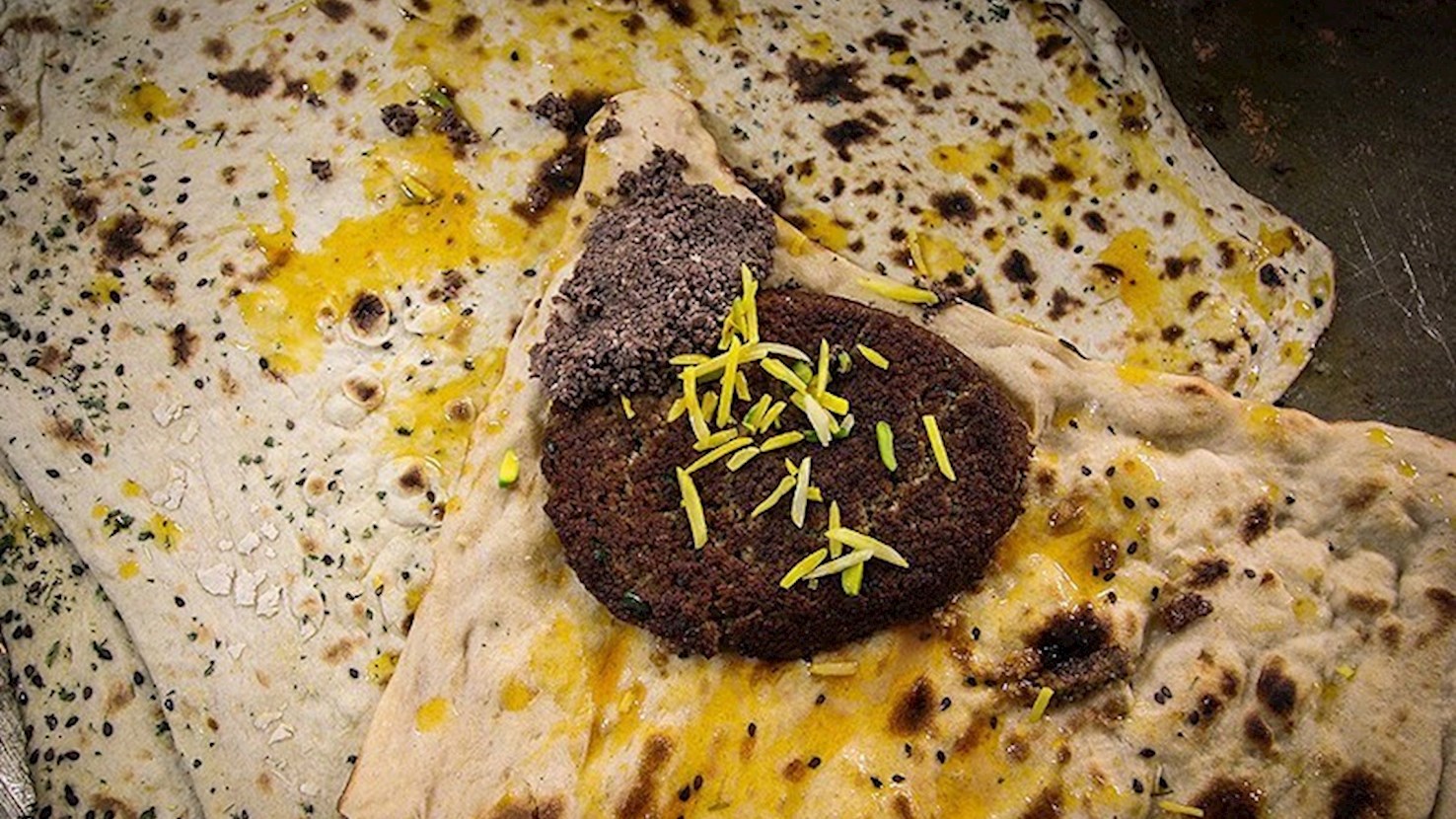
Beryani is a distinctive meat dish from Isfahan, a historic city in central Iran renowned for its rich culinary heritage and architectural landmarks. Unlike the similarly named rice dishes of South Asia, Isfahani beryani is a preparation made with finely minced lamb or mutton, often mixed with lamb lungs, aromatic spices, and onions, then shaped into thick patties and seared until browned and crisp on the outside while remaining tender within. The dish is typically cooked in specialized shallow pans designed specifically for this purpose. Its origins can be traced to the Safavid period when Isfahan was the Persian capital and a center of refined gastronomy. Beryani became an esteemed specialty served to visitors and dignitaries, celebrated for its richness and the skill required to prepare it properly. Over the centuries, it remained associated with the city, and many families developed their own closely guarded recipes. Preparation begins by boiling pieces of lamb and lamb lungs with onions and spices until very tender. The meat is then minced or pounded and seasoned with salt, pepper, cinnamon, turmeric, and sometimes dried mint. A portion of the cooking broth is often added back to the mixture for moisture. The seasoned meat is shaped into compact rounds or ovals and fried in a pan brushed with a little fat or oil. Once cooked, it is lifted out carefully to retain its shape and typically placed on a piece of soft sangak bread to soak up the juices. A small amount of the rendered fat from cooking is usually poured over the top before serving. Beryani is not eaten with rice, unlike many Iranian meals, and is often accompanied by fresh herbs, raw onions, and doogh, a yogurt-based drink. Some vendors in Isfahan maintain decades-old shops dedicated exclusively to this dish, where they still cook it in the same manner as their predecessors. Locals often enjoy it as a midday meal, and it has become a culinary symbol of the city, attracting visitors who seek out the experience in the busy bazaar alleys where Beryani is prepared to order and served hot from the pan.
TasteAtlas food rankings are based on the ratings of the TasteAtlas audience, with a series of mechanisms that recognize real users and that ignore bot,
nationalist or local patriotic ratings, and give additional value to the ratings of users that the system recognizes as knowledgeable.
TasteAtlas Rankings should not be seen as the final global conclusion about food. Their purpose is to promote excellent local foods,
instill pride in traditional dishes, and arouse curiosity about dishes you haven’t tried.



What People Say