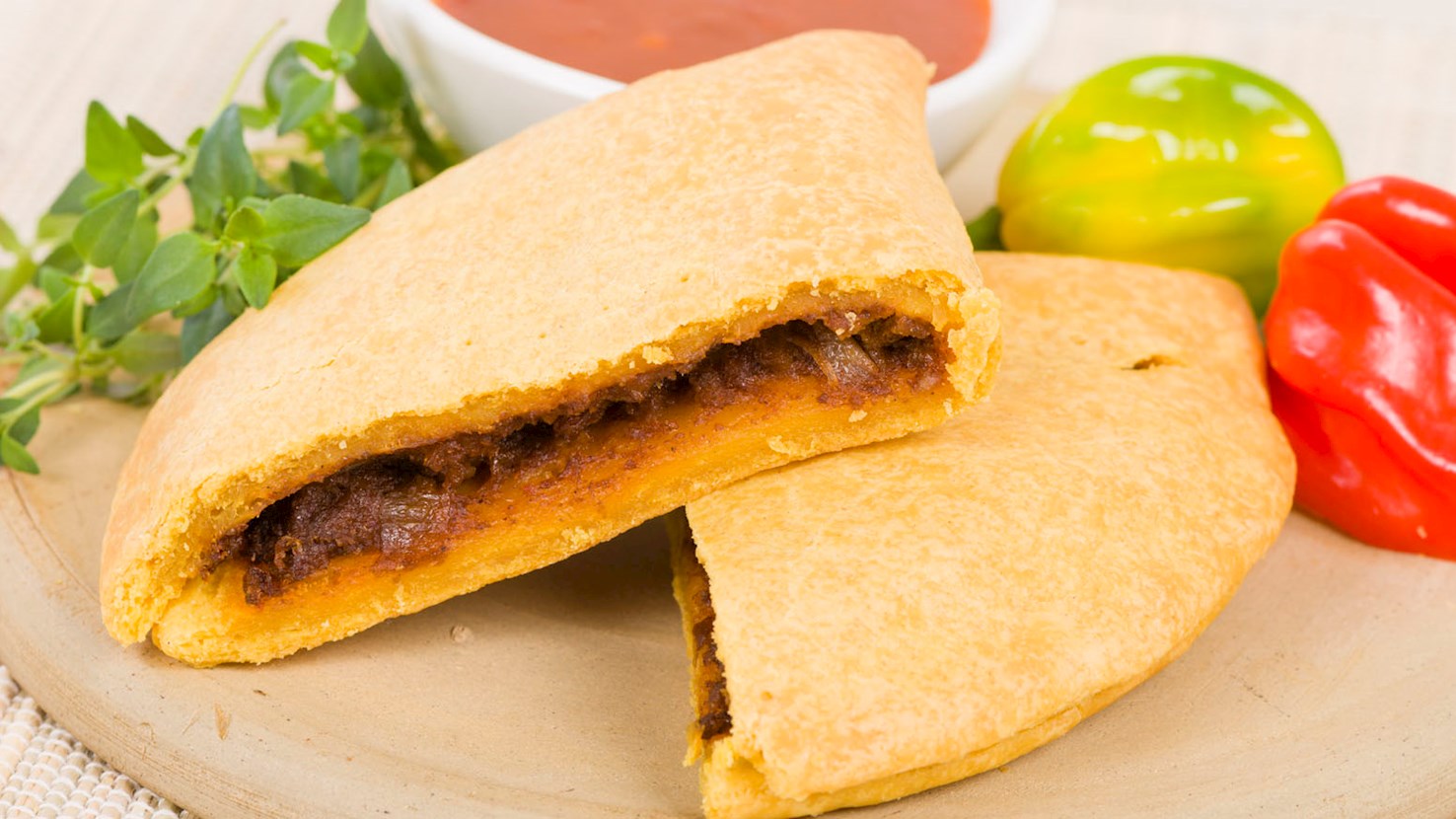
A Jamaican patty is a baked, handheld pastry filled with seasoned meat, vegetables, or seafood and enclosed in a flaky, yellow-tinted crust. It is one of the most recognizable foods of Jamaica and is widely eaten across the Caribbean and in Jamaican communities abroad. The distinct yellow color of the crust comes from turmeric or curry powder, and the filling is defined by a blend of Jamaican spices, including allspice, thyme, Scotch bonnet pepper, and scallion. Patties are commonly sold by bakeries, street vendors, and small shops, where they serve as an everyday meal or snack. The development of the Jamaican patty reflects several culinary influences that converged on the island. British settlers introduced meat pies, which inspired the concept of a seasoned filling wrapped in pastry. African cooking practices contributed techniques for seasoning and slow-cooking meat with spices and herbs. Indian indentured laborers brought curry powder and turmeric, which influenced both the color and flavor profile of the crust and fillings. Ingredients such as Scotch bonnet pepper, thyme, and allspice reflect local Jamaican agriculture and spice preferences. These elements gradually blended over the nineteenth and early twentieth centuries, and the patty emerged as a standardized street food item in urban areas such as Kingston, where bakeries refined the crust and expanded the variety of fillings. Preparation begins with making the dough, which combines flour, cold fat such as butter or shortening, turmeric or curry powder for color, salt, and water. The fat is cut into the flour to create a flaky texture similar to puff or shortcrust pastry. The dough is chilled, rolled out, and cut into circles or half-moon shapes. The filling typically consists of ground beef cooked with onion, garlic, thyme, Scotch bonnet, allspice, and breadcrumbs or flour to bind the mixture. Other fillings may include chicken, saltfish, shrimp, callaloo, vegetable mixes, or cheese. The filling is placed onto a piece of rolled dough, folded over, and sealed by crimping or pressing the edges. The patties are then baked until the exterior becomes crisp and golden. Jamaican patties are eaten throughout Jamaica in homes, schools, bakeries, and street stalls. They are widely consumed as a quick lunch or snack and are often served inside coco bread to make a more filling sandwich. Outside Jamaica, they are popular in Trinidad, Barbados, Guyana, Canada, the United Kingdom, and the United States, where Jamaican bakeries and restaurants prepare them with both traditional and expanded fillings. Common beverage pairings include ting, ginger beer, kola champagne soda, sorrel drink, fruit punches, and cold beer. The patty remains one of Jamaica’s most accessible and widely exported foods, valued for its portability, distinct flavor, and consistent preparation style.
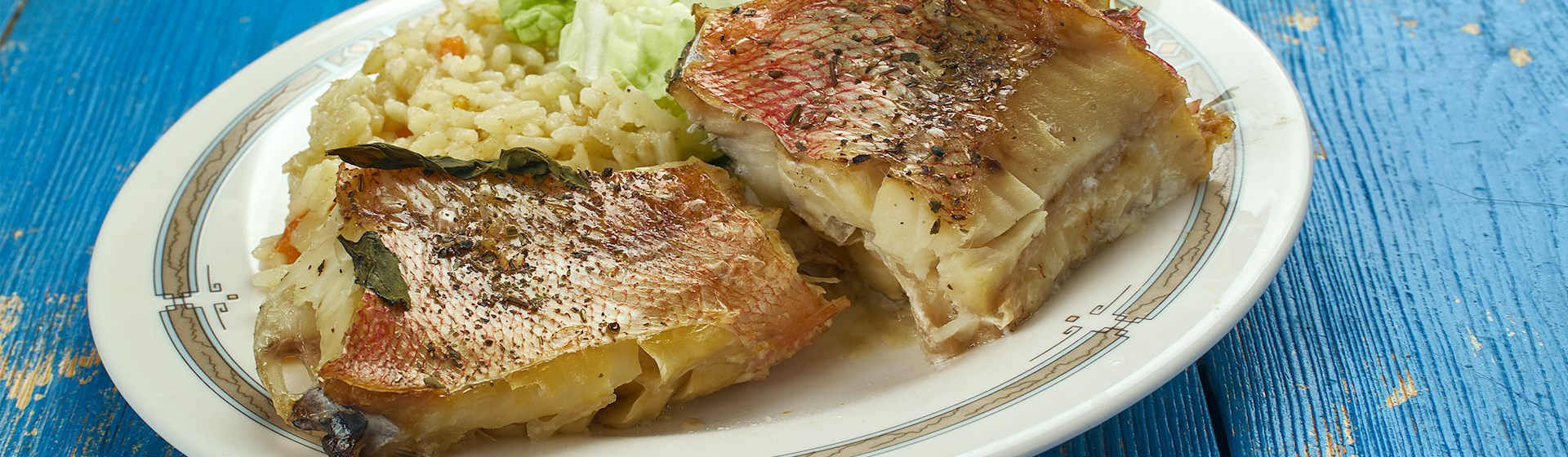
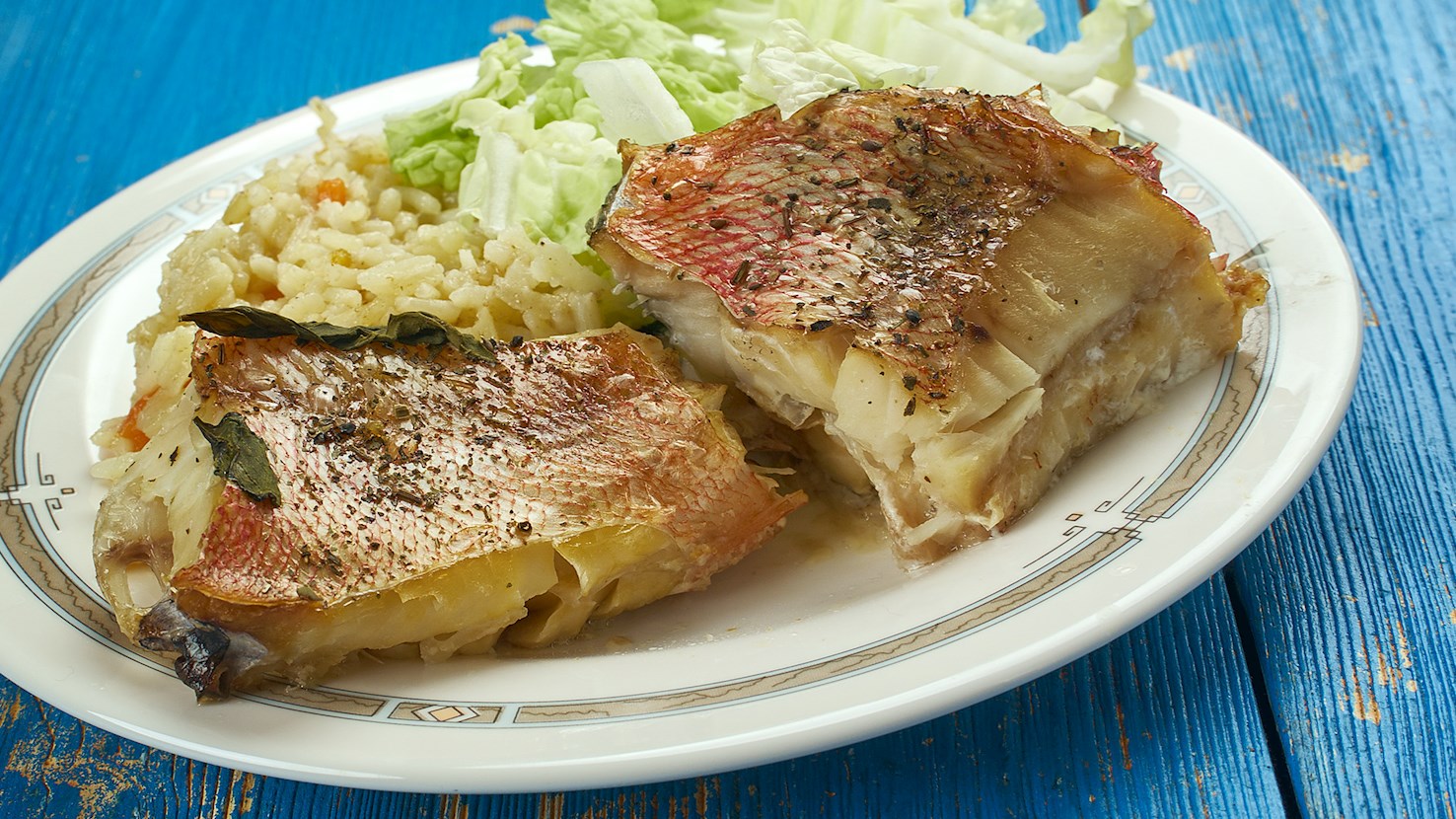
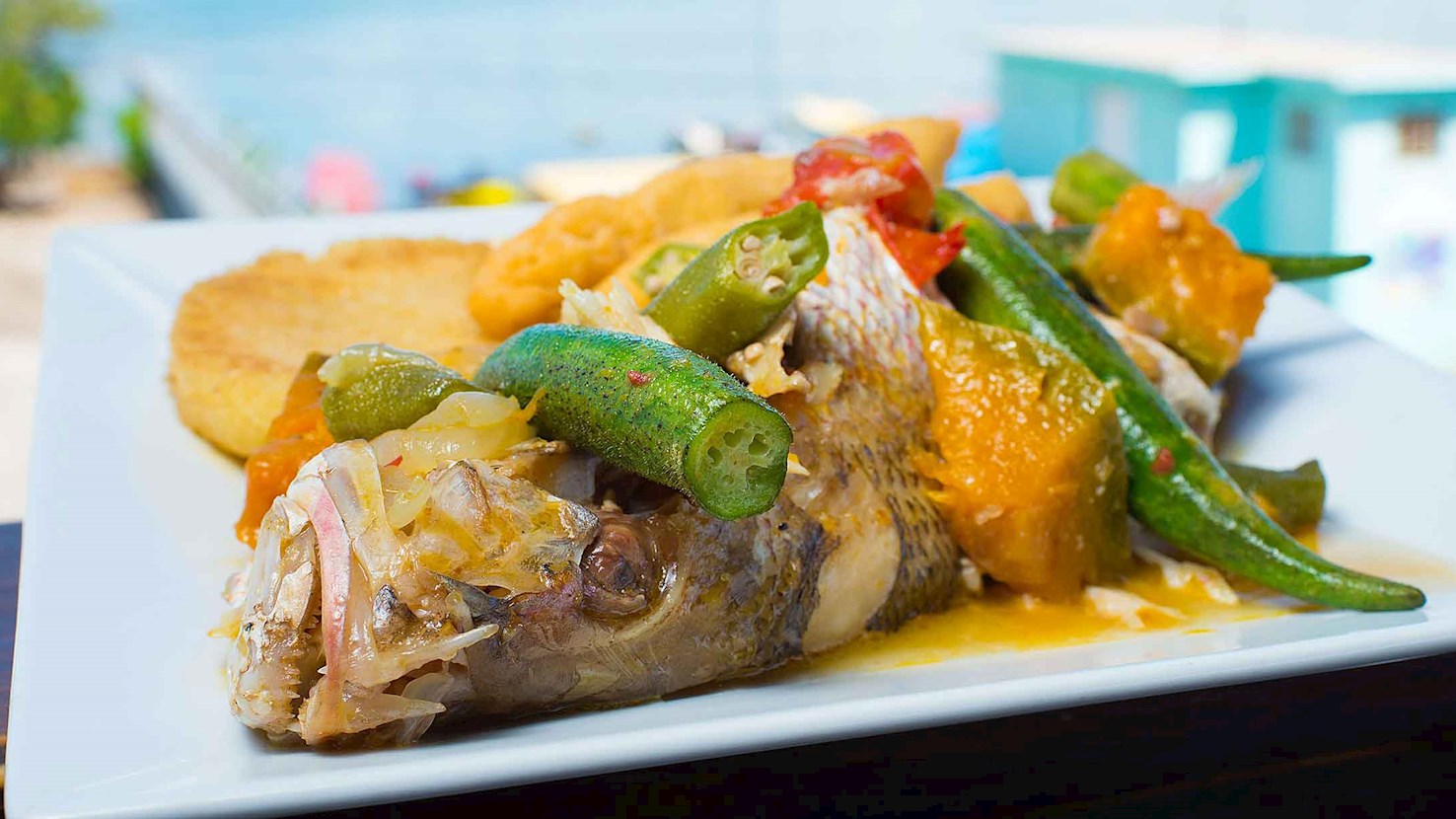
Brown stew fish is a Jamaican dish made by frying seasoned fish until browned and then simmering it in a sauce of onions, tomatoes, bell peppers, thyme, garlic, Scotch bonnet pepper, and browning or caramelized sugar. It is prepared across Jamaica using fish such as snapper, grunt, parrotfish, and kingfish, and appears in home kitchens, cookshops, and restaurants. The dish developed within Jamaican stewing practices, which combine pan-frying with a secondary braising step to build depth and color. As cooks adapted methods used for brown stew chicken and brown stew beef, they applied the same approach to fresh coastal fish, which were readily available in seaside communities and urban markets. The use of browning sauce or caramelized sugar reflects local cooking patterns where color and flavor are developed early in the cooking process before vegetables and liquids are added. Preparation begins by cleaning and scoring the fish, then seasoning it with salt, pepper, thyme, all-purpose seasoning, garlic, and sometimes lime or vinegar for rinsing. The fish is fried in oil until the exterior is firm and browned. In a separate step, onions, bell peppers, tomatoes, Scotch bonnet pepper, and garlic are sautéed in the same pan to absorb the flavor from the fish. Browning sauce or caramelized sugar is added to create the base color. Water or broth is poured in to form the stew, and the fish is returned to the pan to simmer gently until the sauce thickens and the vegetables soften. Some cooks add pimento berries or butter for additional flavor. Brown stew fish is eaten throughout Jamaica for lunch or dinner and is served with rice and peas, white rice, ground provisions, fried dumplings, or bammy. It is also sold in Jamaican restaurants abroad, often as part of daily menu rotations. Beverage pairings include ginger beer, sorrel, lime juice, or cold lager, which complement the heat and acidity present in the stew. Some diners prefer coconut water or lightly sweetened iced tea, which softens the spice and balances the savory sauce.
Bammy is a Jamaican cassava flatbread made from grated, pressed, and cooked cassava, usually shaped into small rounds and finished by frying, steaming, or soaking in milk or coconut milk. It is widely eaten in Jamaica, especially in coastal areas where it is commonly paired with fried or steamed fish. The flatbread is made from bitter cassava varieties that require grating and thorough pressing to remove the toxic liquid before cooking. Once pressed, the cassava meal is sieved, shaped, and cooked on a griddle or flat pan until firm. Its development is rooted in the food practices of the indigenous Taino people of the Caribbean, who processed cassava into flatbreads long before European arrival. Cassava was a staple crop that grew well in the region’s climate, and Taino communities produced flour-like meal from grated cassava that was baked on clay or stone griddles. When Africans were brought to Jamaica, they continued the use of cassava and flatbread preparation methods, merging them with other cooking approaches. Over time, communities in rural and fishing villages maintained cassava processing techniques, and bammy became a recognized Jamaican product sold in markets and produced commercially by small factories. Its persistence in Jamaican cooking reflects the continued importance of cassava in areas where wheat flour was less accessible or less preferred. Preparation begins by peeling and grating the cassava, then placing the pulp in a cloth or pressing device to remove liquid. The dried meal is passed through a sieve to create a consistent texture. A dry pan or griddle is heated, and the cassava meal is shaped into flat circles and cooked until firm and lightly browned on both sides. At this stage bammy can be stored or cooked again. Before serving, the rounds are often soaked briefly in coconut milk or water, which softens them and adds flavor, followed by frying or steaming. Some cooks simply toast the flatbread without soaking, which produces a firmer texture. Bammy is eaten throughout Jamaica, especially with seafood dishes. It is typically served with fried fish, escovitch fish, steamed fish, rundown, or saltfish preparations. It is also eaten with butter, cheese, or lightly sweet spreads in some households. Beverage pairings include ginger beer, lime water, iced tea, sorrel drink, coconut water, or cold beer, which complement the flatbread’s mild flavor and starchy texture.
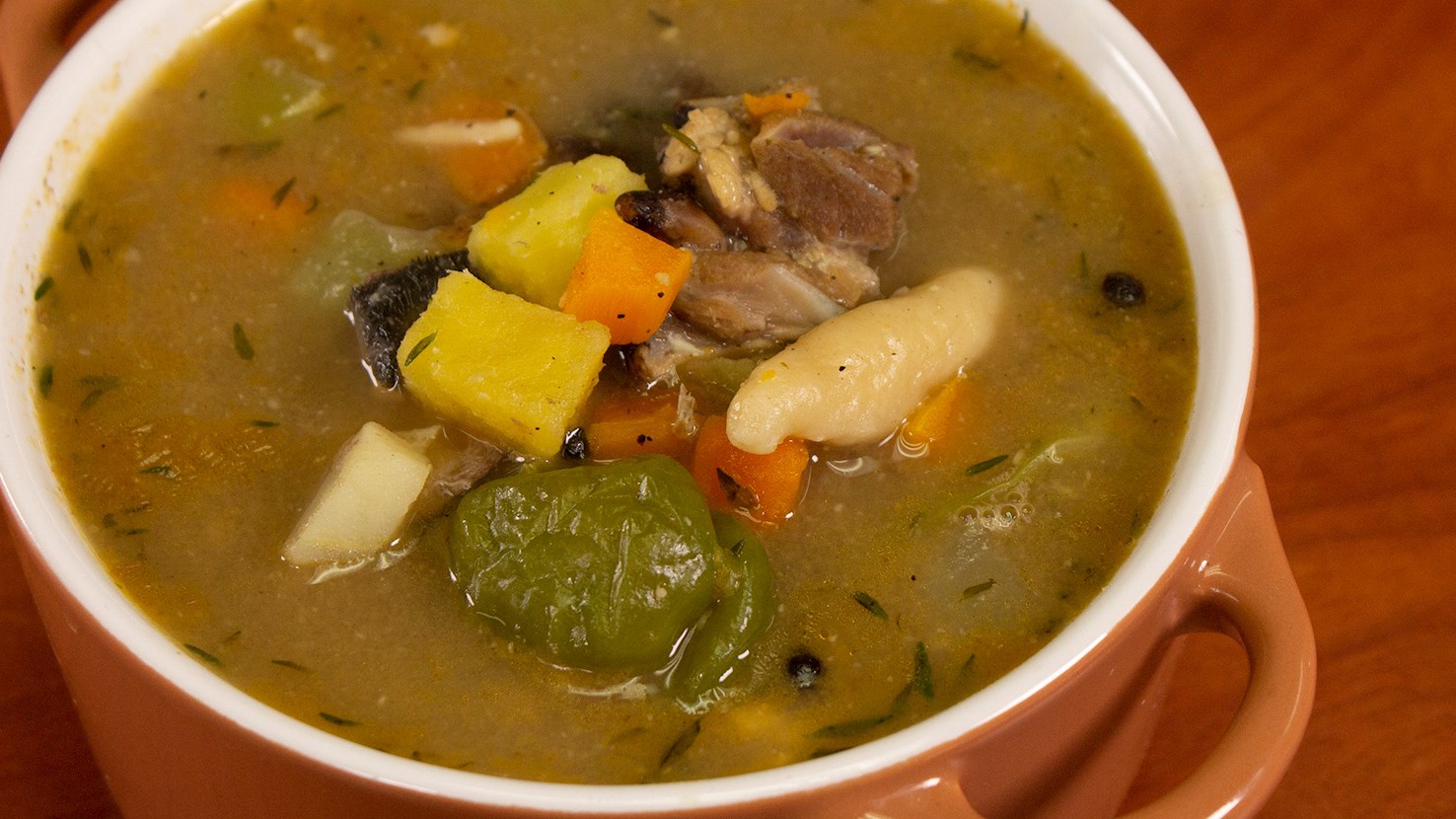
Mannish water is a goat-based soup associated with Jamaica, prepared as a clear yet hearty broth containing goat meat, offal, ground provisions, vegetables, and spices, and consumed as a complete savory dish rather than a light starter. Its development is linked to rural Jamaican cooking practices centered on whole-animal use, where goat was widely raised and valued, and where soups served as practical ways to combine protein, starch, and seasoning into a single pot suitable for communal eating. Preparation involves cleaning and cutting goat meat and selected organs such as tripe or testicles, then simmering them slowly with water, yam, green banana, carrot, chocho, onion, garlic, scallion, thyme, and spices until the broth becomes well infused and the ingredients tender, with dumplings often added near the end to provide body. The soup remains relatively clear compared to stews, relying on long cooking rather than thickening agents, and the balance of herbs and heat is adjusted to preference without masking the character of the goat. Mannish water is served hot in bowls and is commonly prepared for gatherings, celebrations, and weekend meals, where it is eaten on its own as a sustaining dish. It is typically consumed without side dishes, though bread or crackers may be offered, and it is most often paired with simple beverages such as water, beer, or lightly sweetened drinks that do not compete with its savory profile.
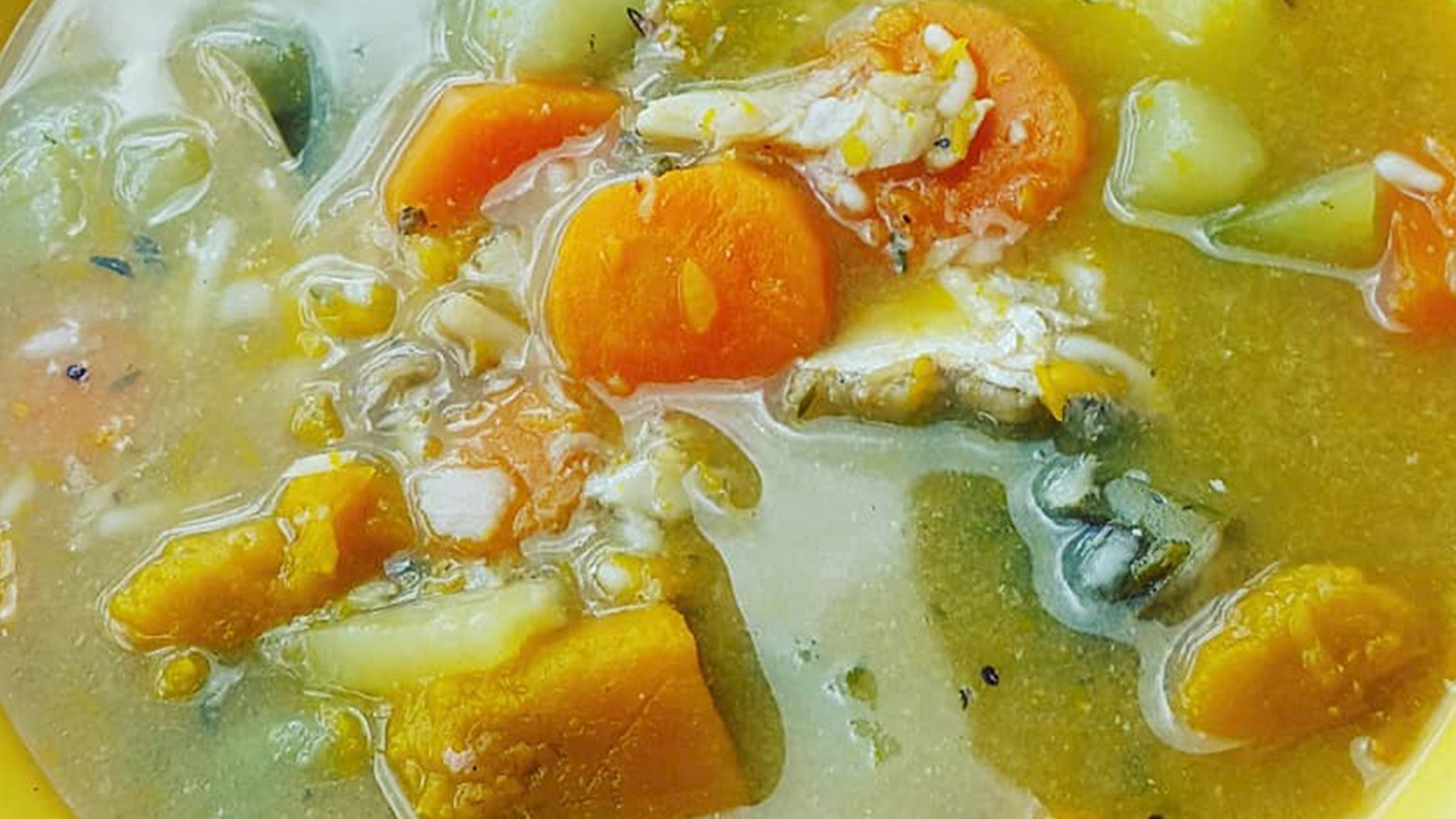
Fish tea is a light, broth-like Jamaican soup made by simmering small fish with vegetables, herbs, and seasonings until the ingredients break down into a thin, flavorful liquid. Despite the name, it is not a tea but a clear fish soup with a thin consistency compared to heavier Caribbean fish soups or stews. It is prepared throughout Jamaica and is commonly served at roadside stalls, community gatherings, fishing villages, and home kitchens. Many versions use small whole fish such as sprat or parrotfish, which dissolve during cooking and contribute to the body and flavor of the broth.Its development reflects coastal cooking practices in Jamaica where fish was used in soups alongside starchy vegetables and local seasonings. Light fish broths were common in fishing communities because they could be prepared quickly with inexpensive fish and available produce. As rural and urban Jamaicans adapted the dish, they incorporated elements such as thyme, Scotch bonnet pepper, pimento, pumpkin, green bananas, and carrots, combining African, European, and indigenous culinary influences. Preparation begins with cleaning the fish and cutting vegetables such as pumpkin, chocho, carrots, okra, onion, and scallion. These are simmered in water with thyme, pimento, garlic, and sometimes green bananas or yam. The fish is added early enough that it breaks down during cooking, creating flavor without leaving many intact pieces. The broth becomes lightly opaque as the fish dissolves. A Scotch bonnet pepper is added whole or partially cut to provide aroma and heat without overwhelming the soup. Salt is added at the end once the flavors have developed. Some cooks strain the broth lightly to remove bones, while others serve it as-is with soft vegetables and flakes of fish. Fish tea is eaten throughout Jamaica as a light meal, restorative soup, or social dish at gatherings such as beach outings, fishing trips, and cookouts, while some believe that it is a strong aphrodisiac. It is common during rainy weather and at evening events where food is shared in large pots. It pairs well with crackers, fried dumplings, or hard dough bread, which absorb the broth. Beverage pairings include lime water, ginger beer, sorrel drink, or cold beer, though many people drink fish tea on its own given its light consistency.
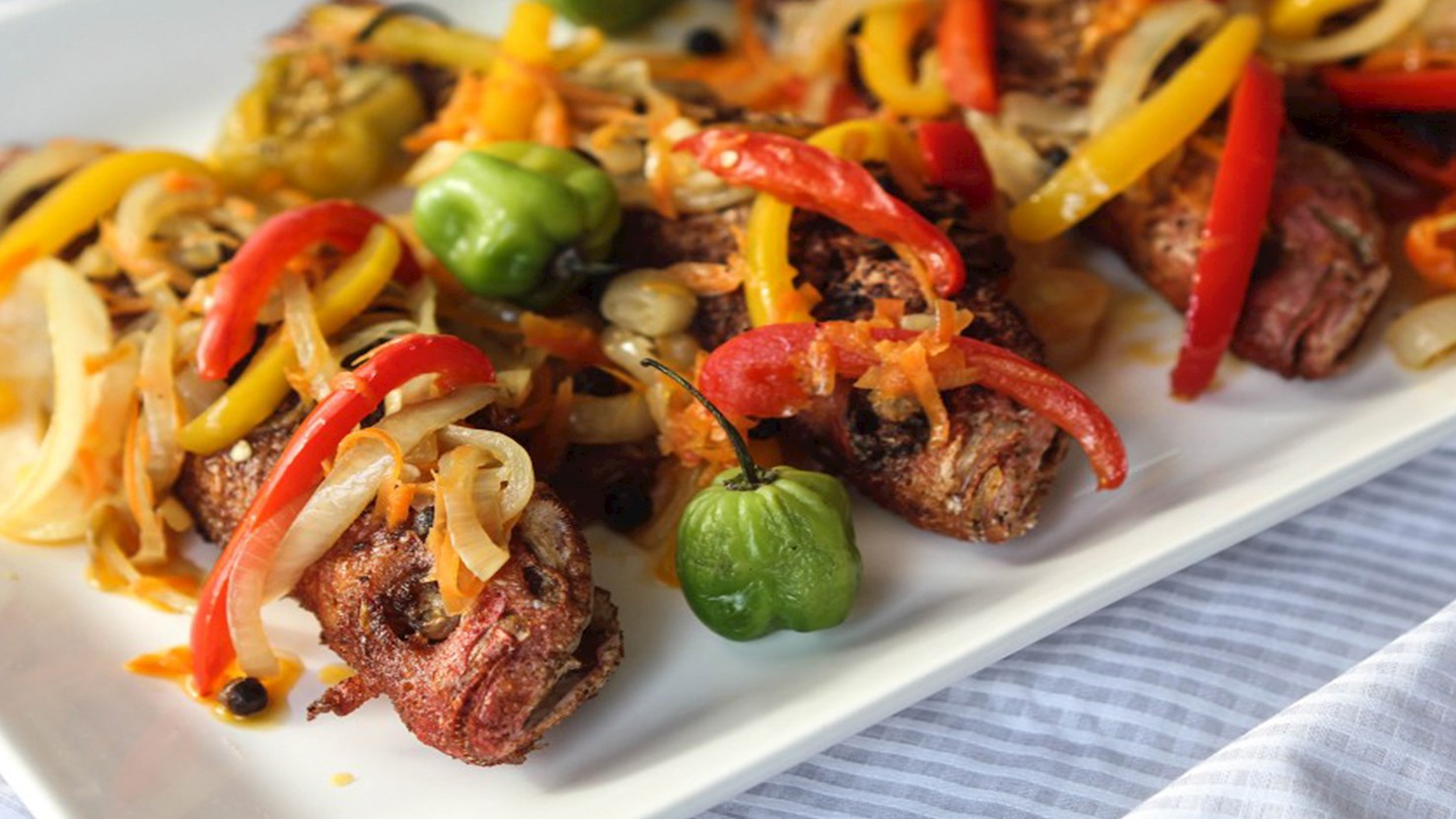
Escovitch fish is a Jamaican dish consisting of whole fried fish covered with a sharp, lightly cooked sauce made from vinegar, onions, carrots, Scotch bonnet peppers, pimento berries, and bell peppers. It is eaten throughout Jamaica in homes, street stands, community gatherings, and seaside cookshops, where fish such as snapper, parrotfish, or doctor fish are commonly used. The preparation is associated with coastal regions where fresh fish is abundant and frying is a standard cooking method. The term “escovitch” comes from the Spanish escabeche, a pickled or vinegar-based preparation introduced to the Caribbean during the period of Spanish presence in the region. Over time, Jamaican cooks adapted the method by using local peppers and aromatics and by pouring the vinegar sauce over freshly fried fish instead of storing the fish for preservation. Escovitch fish is prepared by cleaning and scoring a whole fish, seasoning it with salt, pepper, and sometimes garlic or all-purpose seasoning, then frying it in oil until crisp. Separately, a sauce is made by heating vinegar with sliced onions, carrots, Scotch bonnet peppers, bell peppers, pimento berries, and a small amount of sugar, salt, and occasionally thyme. The vegetables are cooked only briefly to maintain texture and brightness. The hot or warm sauce is poured over the fried fish, allowing the acid and aromatics to penetrate the surface. The dish can be served immediately, but it is also commonly allowed to sit so the flavors deepen as the fish absorbs the vinegar mixture. A distinguishing feature is the balance of acidity and heat, shaped by the use of Scotch bonnet peppers and pimento berries, which anchor the flavor within Jamaican seasoning practices. Escovitch fish is eaten across Jamaica at breakfast, lunch, and dinner, often paired with fried dumplings, bammy, festival, breadfruit, or rice. It is especially common during holidays such as Easter, when fish is served more frequently in many households. Beverage pairings include ginger beer, sorrel, limeade, and cold lager, all of which complement the acidity of the sauce and the heat of the peppers. In Jamaican restaurants abroad, escovitch fish appears as a regular menu item and is paired similarly, often presented as one of the central expressions of Jamaican fried fish cookery.
Janga soup is a freshwater shellfish soup prepared in Jamaica, made from janga, the local name for freshwater crayfish belonging mainly to the genus Macrobrachium, simmered with vegetables, herbs, and spices to form a light but filling meal. Its development is linked to inland rivers and streams where janga are harvested, and to cooking practices that favored quick-cooking proteins combined with ground provisions and leafy greens, allowing rural communities to use what was locally available without reliance on preserved foods. Preparation begins by cleaning the crayfish thoroughly, then sautéing aromatics such as onion, garlic, scallion, thyme, and hot pepper before adding water and the janga, followed by vegetables like chocho, carrot, yam, and sometimes callaloo, with the shells contributing flavor to the broth as the soup cooks. The crayfish are cooked briefly to avoid toughness, and the soup remains relatively clear, thickening only slightly from vegetables rather than added starch. Janga soup is served hot in deep bowls and eaten freshly cooked. It is commonly consumed at home, particularly in areas near rivers, and is eaten as a complete dish rather than alongside multiple sides, though bread or crackers may be offered. Beverage pairings are usually simple and cooling, such as water, coconut water, or lightly sweetened drinks, chosen to complement the delicate shellfish broth without overwhelming it.
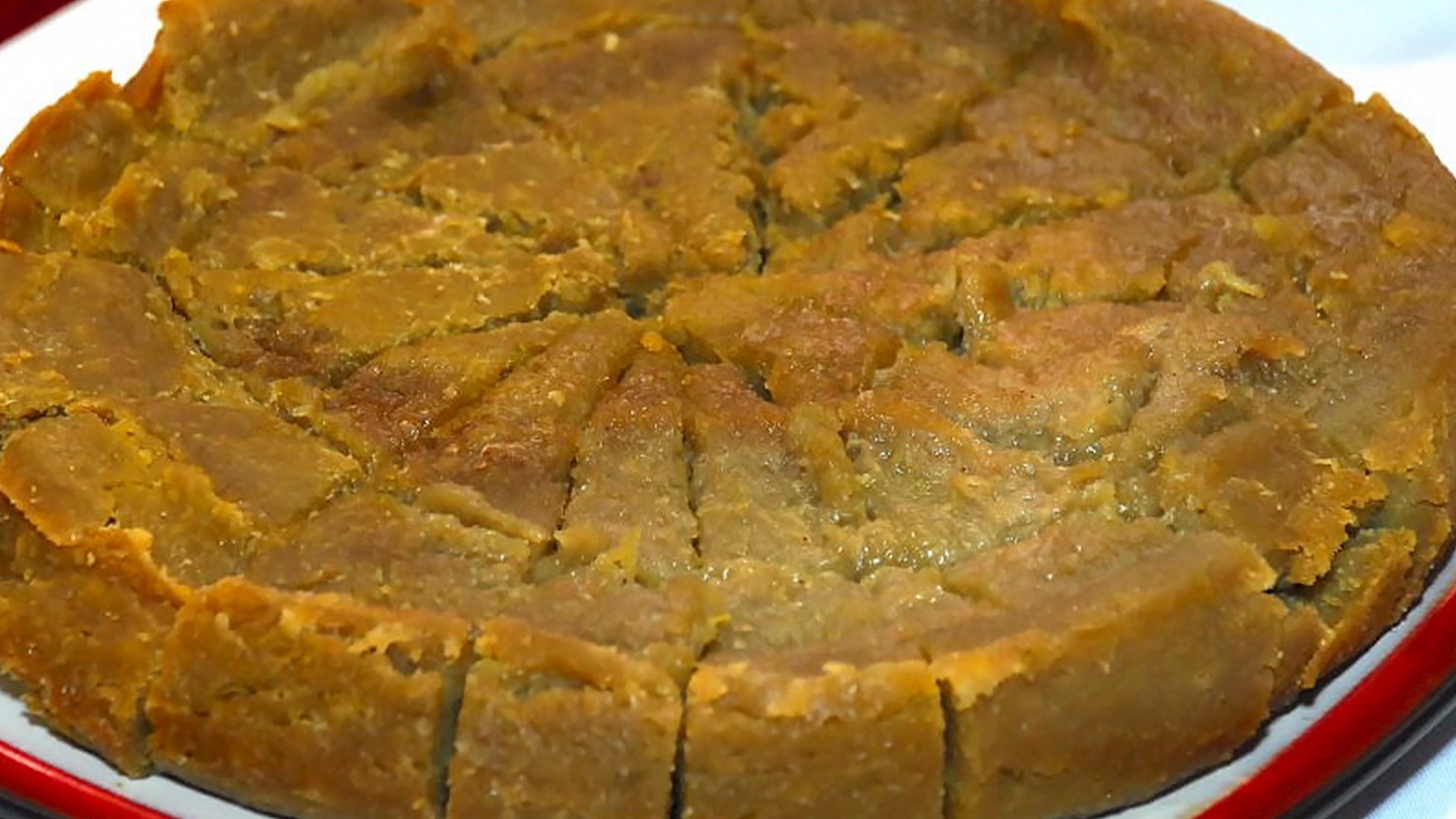
Sweet potato pudding is a Jamaican baked dessert made from grated sweet potato mixed with coconut milk, sugar, spices, and flavorings, then baked until it becomes a firm, sliceable pudding with a dense, moist consistency. It is widely eaten across Jamaica at home, at bakeries, and at weekend food stalls, especially on Saturdays. The dish uses local sweet potatoes, which are typically yellow or orange and have a firmer texture than many North American varieties, giving the pudding its characteristic structure. Its development can be traced to West African culinary practices brought to Jamaica, where grated root vegetables were often combined with coconut-based liquids and baked or steamed. Sweet potatoes became a major crop in Jamaica during the colonial period, and by the eighteenth and nineteenth centuries they were commonly used in both savory and sweet preparations. As coconut milk became a standard ingredient in rural Jamaican cooking, the combination of grated sweet potato, coconut milk, sugar, and spices such as nutmeg and allspice evolved into a baked pudding known throughout the island. Notes from nineteenth-century Jamaican household manuscripts, along with references in early twentieth-century local cookbooks, show the dish already well-established. Over time, cooks refined the mixture and baking method and developed the “soft top,” a slightly creamy layer formed by adding extra coconut milk near the end of baking. Preparation begins by peeling and grating sweet potatoes finely so they create a natural batter when mixed with coconut milk. Sugar, vanilla, nutmeg, allspice, sometimes cinnamon, and a bit of salt are added, along with grated coconut or raisins depending on household preference. Melted butter is sometimes incorporated. The mixture is poured into a greased baking pan and baked slowly for a long period, often an hour and a half or more. Near the end of baking, additional sweetened coconut milk may be poured on top to form the soft top layer, which is a distinctive feature of many Jamaican versions. When finished, the pudding is firm throughout but moist, with a slightly caramelized top and edges. Sweet potato pudding is eaten throughout Jamaica as a snack, dessert, or weekend treat. It is often sold in squares or slices at markets, cookshops, and roadside vendors. It pairs well with beverages such as ginger beer, sorrel drink, cocoa tea, coffee, or a cold glass of milk. Some people enjoy it alongside savory dishes, but it is most commonly served on its own due to its rich, filling nature.
Ackee and saltfish pizza is a savory baked dish prepared primarily in Jamaica, combining pizza dough with a topping based on cooked ackee and salted cod, and presented as a complete meal rather than a snack. Its emergence is linked to contemporary Jamaican cooking that adapts widely recognized formats such as pizza to local ingredients, bringing together the established pairing of ackee and saltfish with an Italian-style base, a combination that reflects urban food culture, restaurants, and home kitchens experimenting beyond standard presentations. Preparation begins with soaking and boiling salted cod to remove excess salt, then sautéing it with onion, sweet pepper, scallion, thyme, and sometimes tomato, after which carefully cleaned and cooked ackee, derived from Blighia sapida, is folded in gently to preserve its structure; this mixture is spread over rolled pizza dough, often with a light layer of tomato sauce or oil and a restrained amount of cheese to avoid masking the topping, and baked until the crust is set and lightly browned. The dish relies on the contrast between the soft, mildly flavored ackee and the salt-forward fish, while the dough provides structure without dominating the topping. Ackee and saltfish pizza is usually served hot and sliced, eaten in casual settings such as homes, cafés, and informal restaurants, and it functions well as a shared dish. It pairs best with simple salads, lightly dressed vegetables, or plain sides, and beverages such as water, citrus-based drinks, beer, or lightly sparkling drinks are commonly chosen to balance the richness and salt content without competing with the topping.
Jamaican steamed fish is a dish made by cooking whole fish or large fish pieces with vegetables, herbs, and seasonings in a lightly simmering liquid until the flesh becomes tender and infused with aromatics. It is prepared throughout Jamaica in homes, cookshops, and seaside restaurants, commonly using snapper, parrotfish, or doctor fish, which are readily available in Jamaican coastal markets. The dish relies on a method of moist cooking rather than frying or grilling, producing a broth-like sauce that coats the fish and accompanying vegetables. Its development reflects local fishing culture and Caribbean cooking practices that emphasize fresh seafood combined with aromatic herbs. Steaming and simmering fish with vegetables was a common method across the islands, influenced by African and European cooking techniques as well as the availability of fresh spices and produce in Jamaica. Over time, Jamaican cooks adapted this approach to include Scotch bonnet pepper, thyme, scallion, pimento, and okra, ingredients that became characteristic of the island’s cuisine. The increased use of coconut milk in some versions came later as cooks experimented with ways to enrich the broth, while others maintained a clear, lightly seasoned liquid preferred in rural and coastal areas. Preparation begins with cleaning the fish and seasoning it with salt, black pepper, and sometimes powdered spices. A pot is lined with sliced onions, tomatoes, scallion, thyme, garlic, julienned carrots, bell peppers, and okra. Water or fish stock is added in a modest amount, just enough to create steam and a light broth. Scotch bonnet pepper is included whole or sliced depending on the desired heat level. The fish is placed on top of the vegetables or nestled between them, then simmered gently until cooked through. Some cooks finish the pot with butter or a splash of coconut milk to create a richer sauce, while others keep the broth clear for a lighter flavor. Steamed fish is eaten across Jamaica as a lunch or dinner dish and is especially popular in beachside establishments where fish is cooked to order. It is commonly served with bammy, festival, fried dumplings, rice, green bananas, or ground provisions such as yam and dasheen. Beverage pairings include ginger beer, lime or lemon water, sorrel drink, cold beer, or light rum cocktails, all of which complement the dish’s savory broth and fresh herbs without overpowering the mild flavor of the fish.
TasteAtlas food rankings are based on the ratings of the TasteAtlas audience, with a series of mechanisms that recognize real users and that ignore bot,
nationalist or local patriotic ratings, and give additional value to the ratings of users that the system recognizes as knowledgeable.
TasteAtlas Rankings should not be seen as the final global conclusion about food. Their purpose is to promote excellent local foods,
instill pride in traditional dishes, and arouse curiosity about dishes you haven’t tried.




What People Say