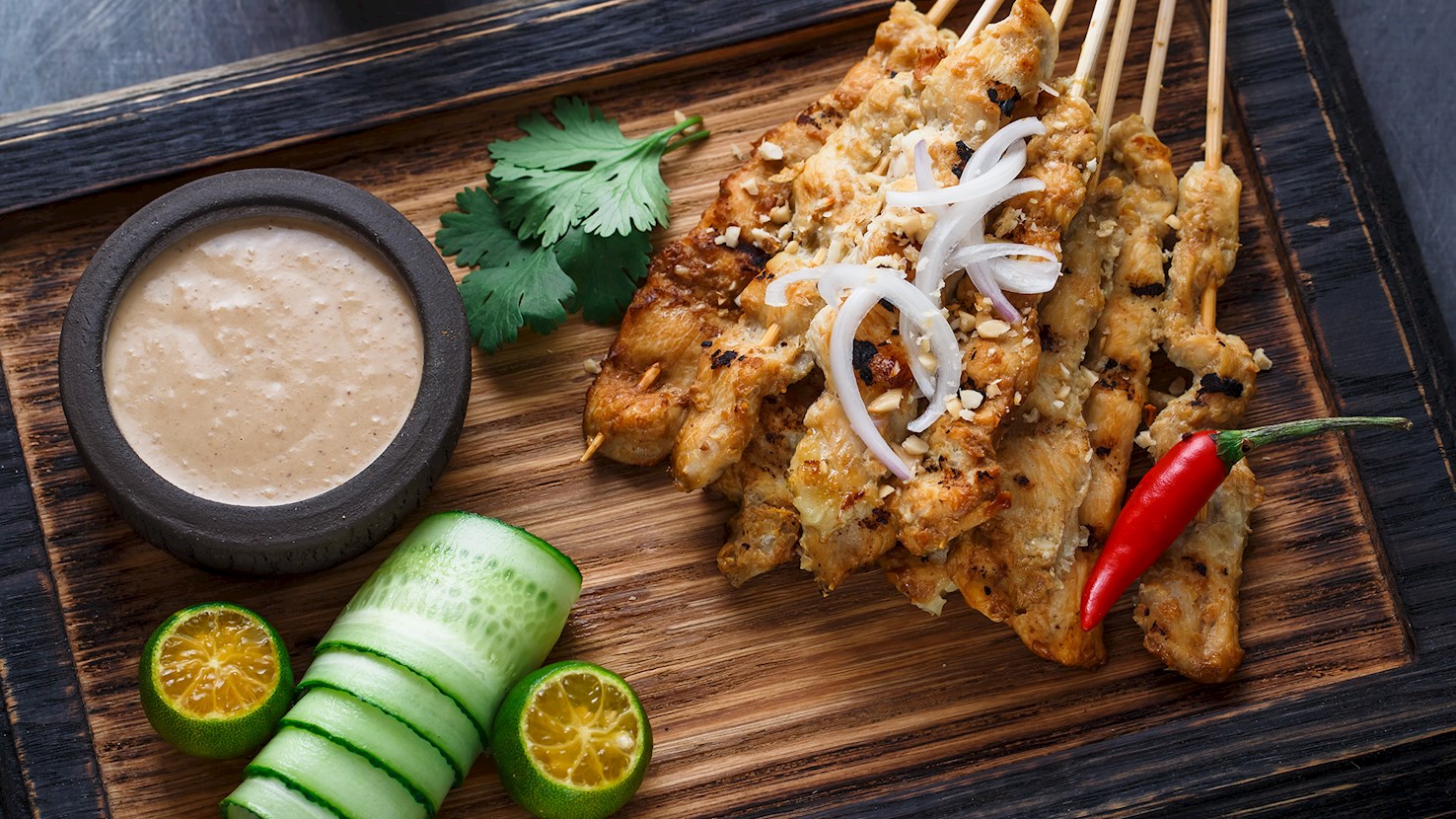
Satay is a traditional dish consisting of skewered meat that's served with a sauce on the side. All types of meat can be used to make satay, even some exotic varieties such as crocodile or snake meat. In most cases, the meat is marinated before grilling. Marinades vary, but typically include dark soy sauce, sugar, garlic, lime juice, and other seasonings. It is believed that satay originated in the Indonesian region of Java and that it was developed under the influence of Muslim traders who migrated from India. Another theory claims that satay was created in the 19th century by Indonesian street vendors as a variation on Indian kebabs. The theory is supported by the fact that satay became popular when Muslim and Arab immigrants had populated those areas. From the moment it originated in Java, satay quickly spread throughout Southeast Asia, and eventually all over the world. In Indonesia, it has become a national dish and nowadays it can be found everywhere, from street vendors to high-class restaurants. The most common sauces served with satay are peanut, soy, or pineapple sauce.
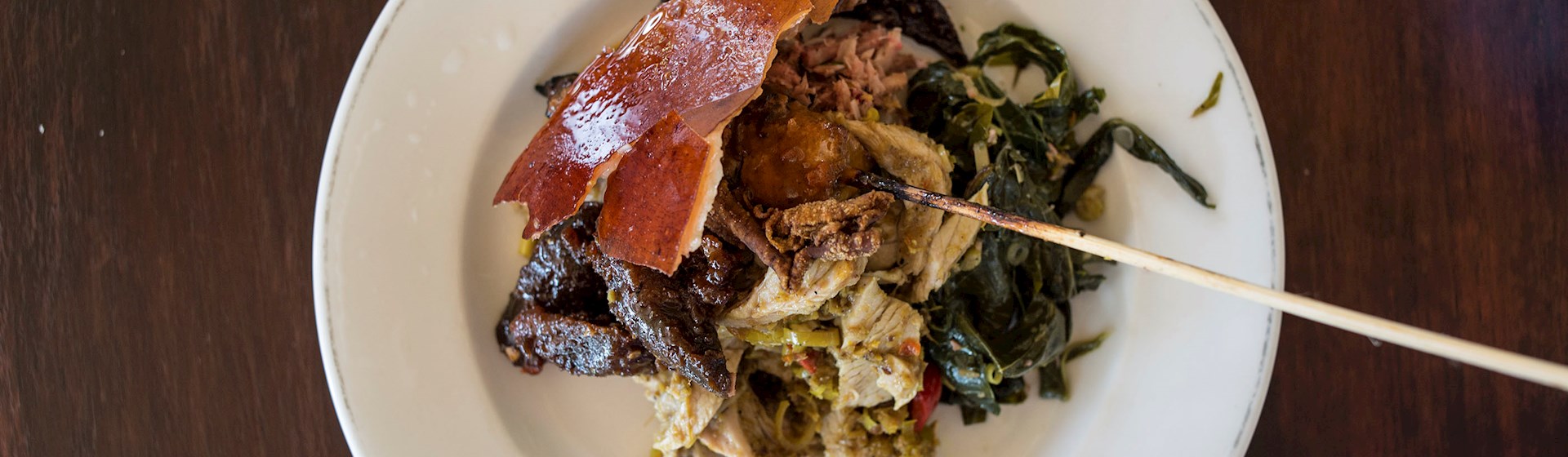
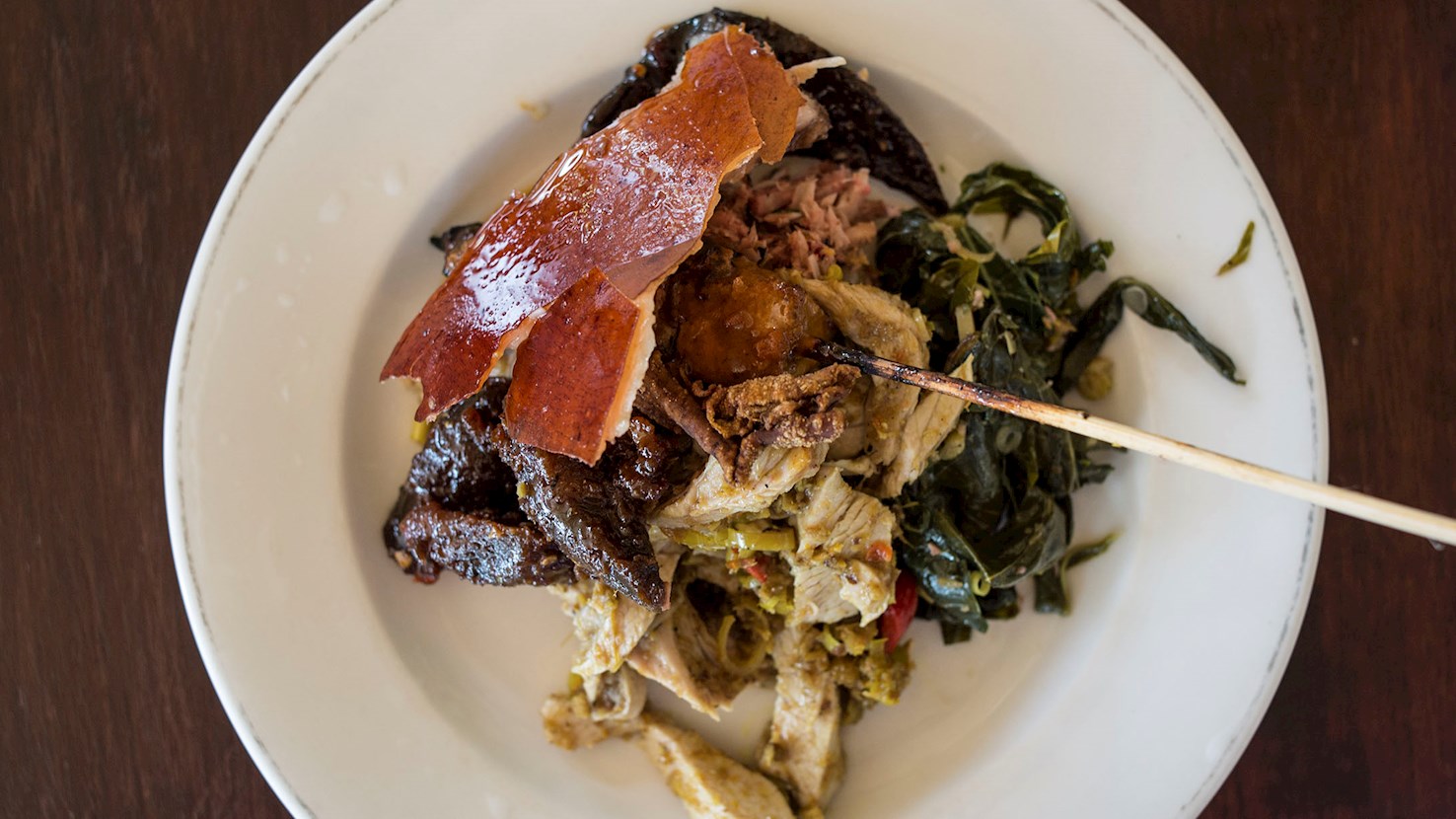
Babi guling is the Indonesian version of a roast suckling pig. Although not common to other Indonesian regions, on Bali, where the predominant religion is Hinduism, it is one of the most popular dishes. Before roasting, pig's skin is usually rubbed with turmeric, and the animal is stuffed with a bumbu Bali spice mixture, which usually includes turmeric, coriander, lemongrass, shallots, galangal, chili, shrimp paste, and garlic. Pork is then placed on a spit and roasted over an open fire. This Balinese delicacy is usually served during special occasions and formal gatherings, but can often be found in warungs, traditional Indonesian casual eateries. The dish is so popular in Bali that most warungs specialize and serve only babi guling as their signature dish. When the pig is roasted, the crisp amber-colored skin is carefully removed, and the meat is cut into chunks. Each serving of babi guling is supposed to have a chunk of juicy meat, a piece of crispy skin, and a tablespoon of the flavorful stuffing. Babi guling is often served with steamed rice, fresh vegetables, and a dollop of spicy Indonesian condiment known as sambal.
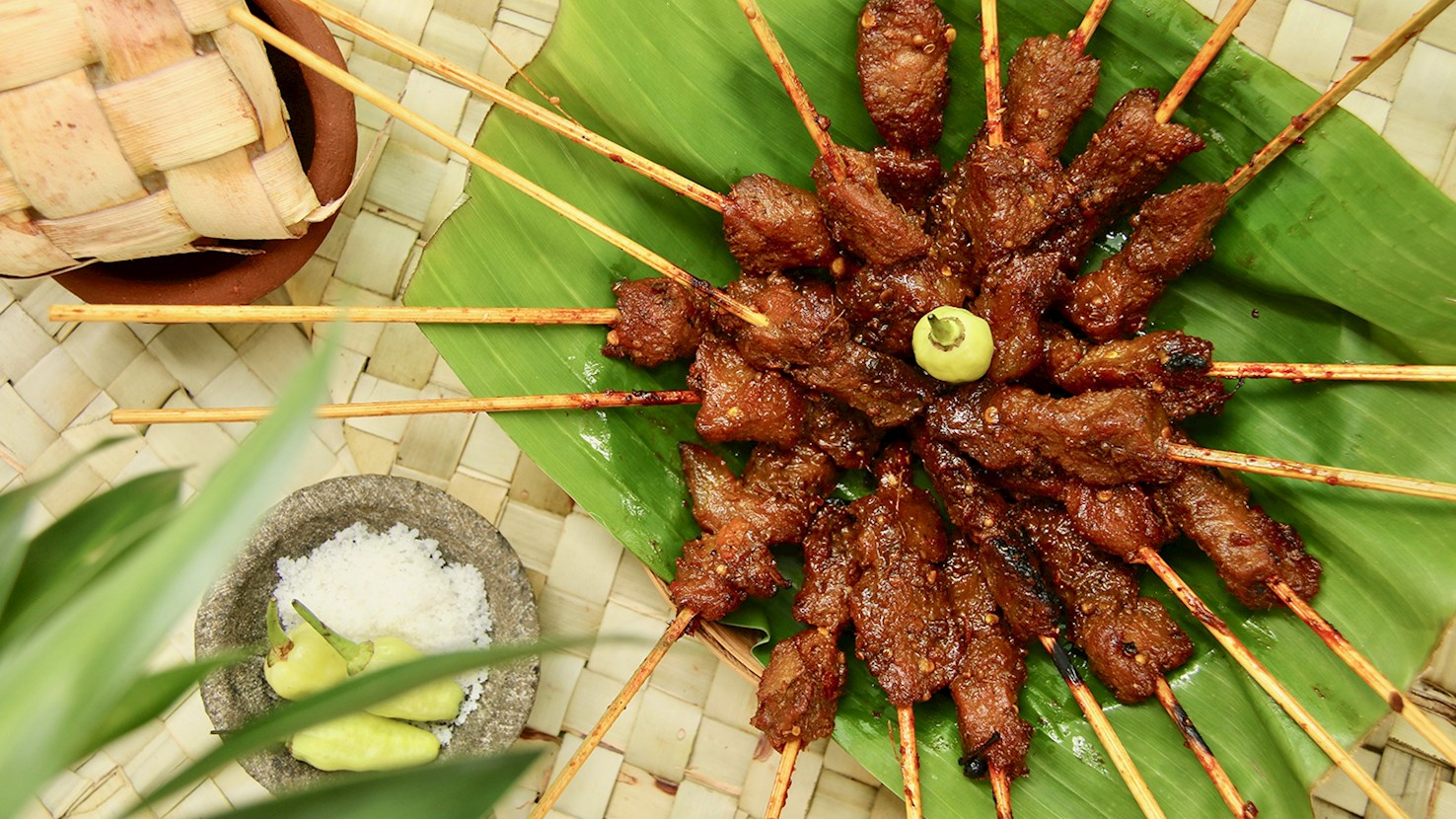
Sate babi is an Indonesian pork satay that originates primarily from the Chinese-Indonesian and Balinese communities, offering a distinctive take on the country’s iconic skewered meat dishes. Unlike most Indonesian sate, which is often made from chicken, beef, or goat due to the country’s majority Muslim population, sate babi is popular in regions where pork is widely consumed, such as Bali, North Sulawesi, and parts of Java with significant non-Muslim populations, particularly among Chinese-Indonesians. The dish consists of small cuts of pork that are marinated in a richly seasoned mixture before being skewered and grilled over charcoal. The marinade typically includes garlic, shallots, coriander, tamarind, soy sauce, palm sugar, and sometimes lemongrass or ginger, resulting in a flavor profile that is simultaneously savory, sweet, and aromatic. The meat is usually cut into bite-sized cubes or thin slices, allowing it to cook quickly while maintaining a tender, juicy interior and slightly charred exterior. During grilling, the skewers are often brushed with the leftover marinade to deepen the flavor and create a glossy, caramelized finish. In Bali, sate babi is often prepared for religious ceremonies and festive gatherings, where it is served alongside lawar, rice, and spicy sambal. It holds an important cultural role, symbolizing celebration and abundance. In Chinese-Indonesian cuisine, it is commonly sold at street stalls and small family-run warungs, especially in urban areas like Jakarta and Surabaya, where it is typically served with rice, pickled vegetables, and a thick peanut or soy-based sauce. The Balinese version tends to be spicier and more aromatic, reflecting the island’s bold and vibrant culinary traditions, while Chinese-Indonesian versions may lean slightly sweeter and more soy-forward.
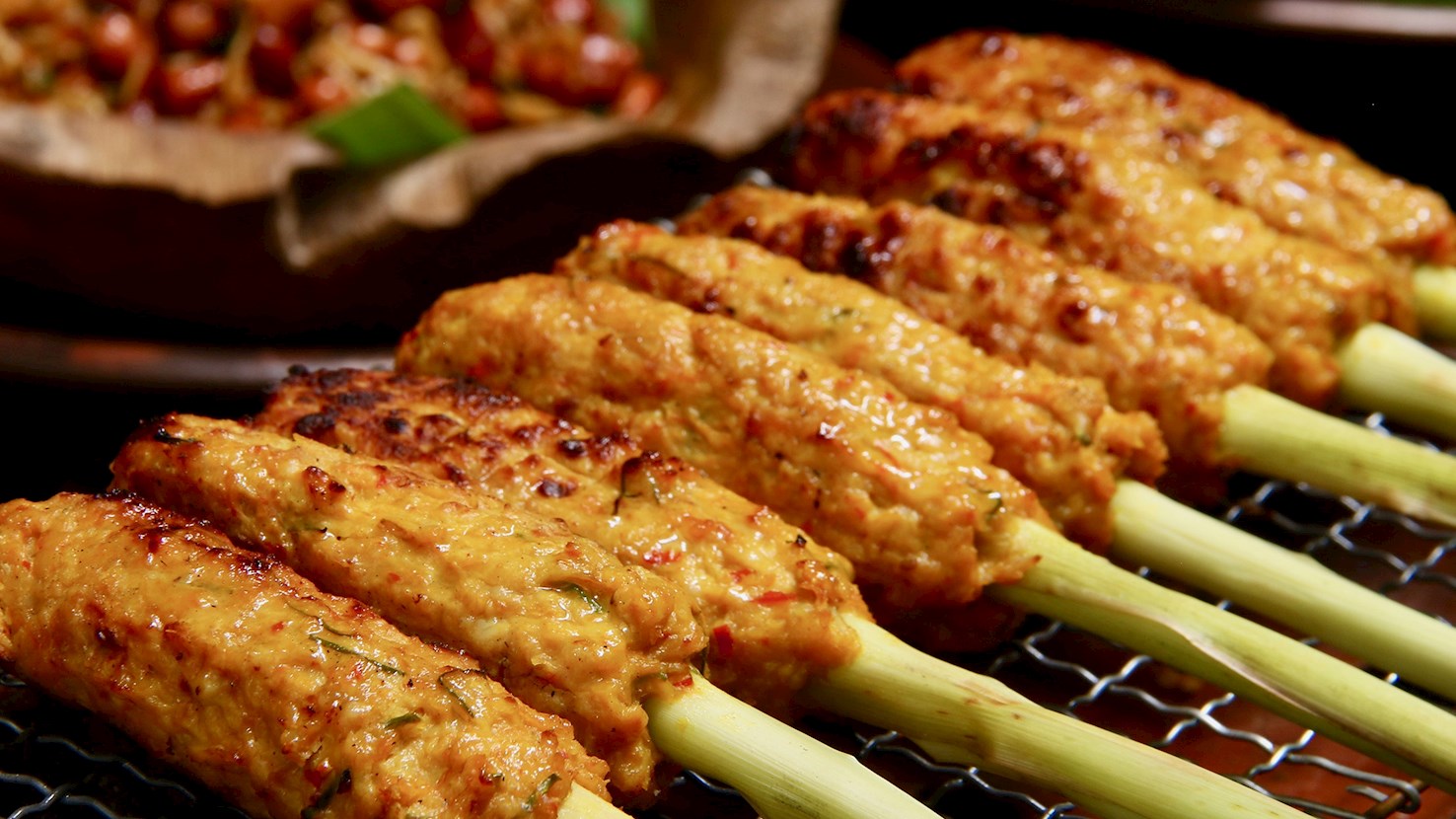
Sate lilit is the favorite street food on Bali. This traditional delicacy is usually made with minced meat which is wrapped around a flat skewer. All meat varieties (including fish and other seafood) are used to prepare sate lilit. However, the most common variety is prepared with pork. The skewers are usually spiced with traditional Indonesian spices such as lemongrass, galangal, chili, and lime leaves. It is believed that Indonesia is the birthplace of sate, and its numerous varieties can be found everywhere in Indonesia. Since sate lilit originated on Bali, it is often referred to as sate lilit Bali, and next to babi guling, it is one of the most popular dishes on the island. This traditional Balinese delicacy can be eaten for breakfast, lunch, or dinner, and it can be served as a light main course or a nutritious snack. The skewers are usually served with rice or rice cakes, and occasionally with spicy sauces on the side.
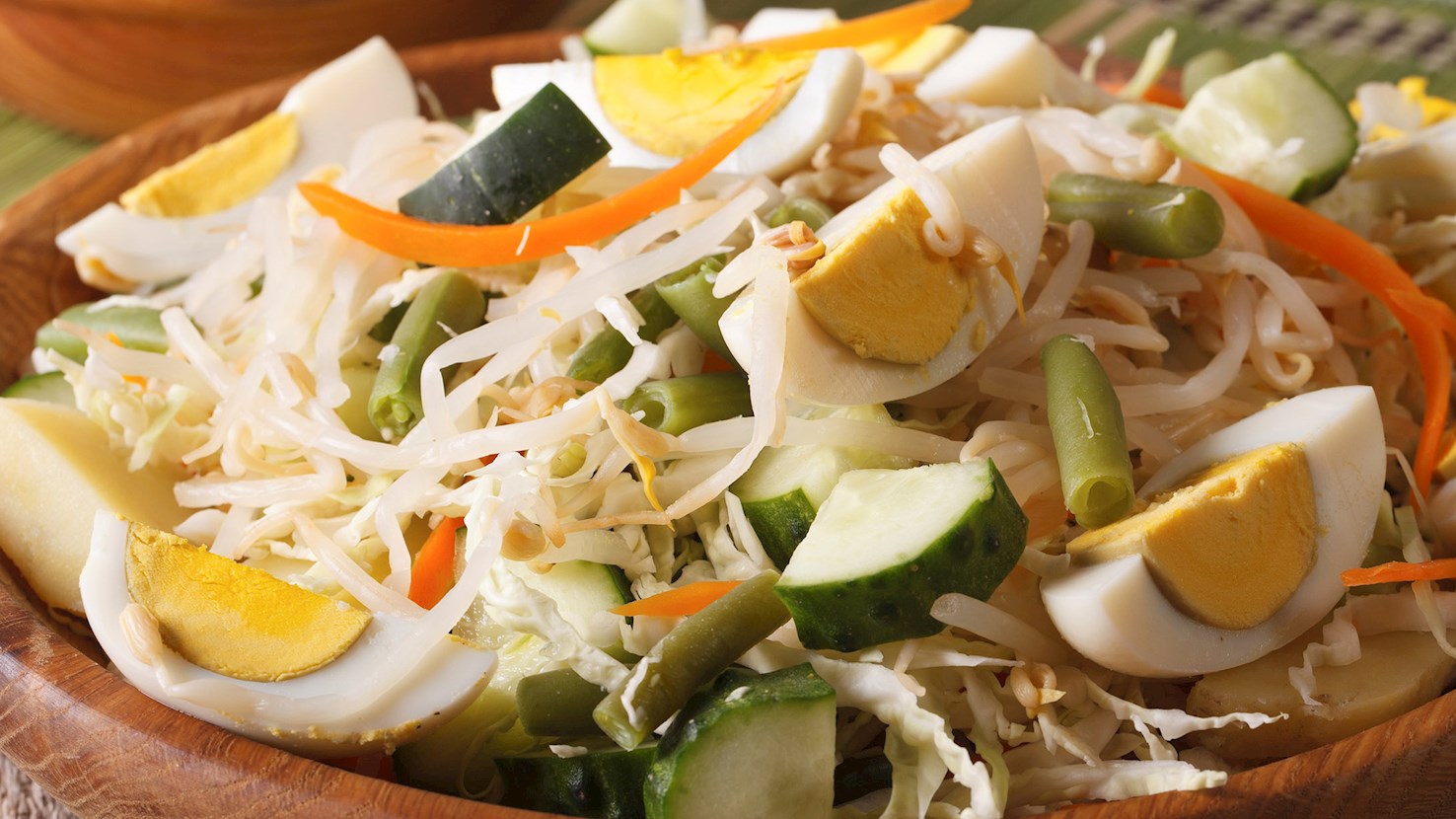
Gado-gado is an Indonesian version of a mixed salad. It usually consists of a variety of vegetables, eggs, tempeh, and tofu. The vegetables are usually just slightly boiled, tossed with a nutty sauce, then completed with the addition of crispy prawn crackers. The sauce was traditionally made with cashews, but due to lower price and availability, peanuts are more frequent today. The dish is a true representative of Indonesian street food, and it has been present in the Indonesian culture since the 16th century. It originated among the native people of Jakarta, but today it can be found in all parts of Indonesia. Gado-gado can be a whole dish on its own, but it can also be boosted by the addition of rice, rice crackers, or chicken. This classic Indonesian street food is usually sold by street vendors or at hawker centers, and it can be served for breakfast, lunch, or dinner.
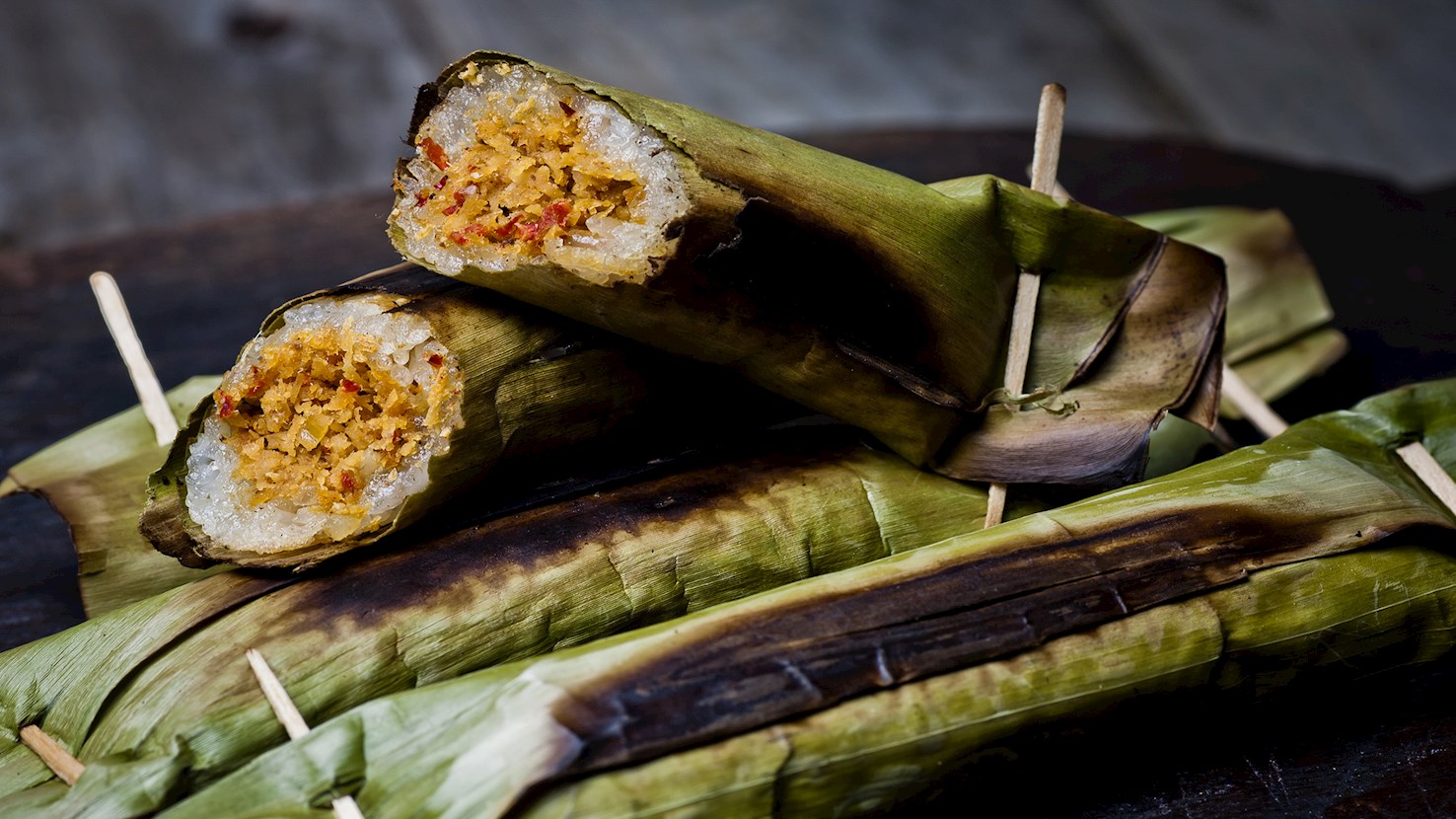
Lemper is a snack made of glutinous rice filled with savory shredded meat, traditionally chicken, although beef, fish, or even abon (meat floss) variations are also popular. The rice is first cooked in coconut milk, giving it a rich, slightly sweet taste and a sticky, tender texture that holds its shape well. Once the rice is prepared, it is flattened and wrapped around a flavorful filling made by sautéing the meat with aromatic spices such as garlic, shallots, galangal, coriander, lemongrass, and kaffir lime leaves. The seasoned mixture is then encased in the rice, shaped into a compact cylinder or rectangle, and wrapped tightly in banana leaves, which not only help preserve moisture but also impart a subtle earthy fragrance during cooking. Traditionally, lemper is steamed or lightly grilled, often leaving behind a charred scent on the banana leaves that adds another layer of complexity. It is commonly found in traditional markets, roadside stalls, and as part of ceremonial or festive offerings, appreciated for its portability, long shelf life, and comforting flavor.
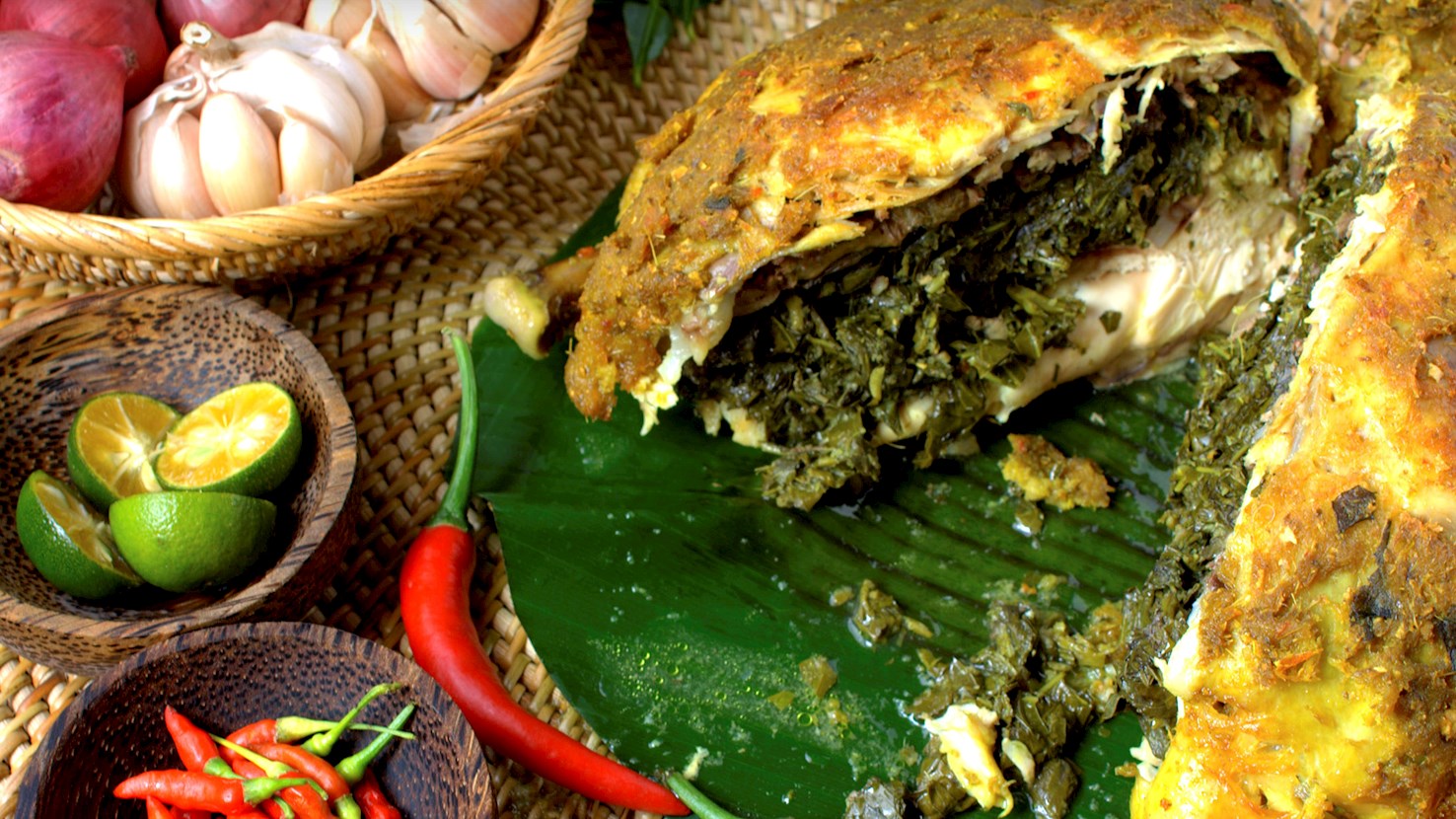
This ceremonial Balinese dish comes in two versions: the chicken-based ayam betutu, or the traditional duck version that goes under the name bebek betutu. The whole animal is rubbed and stuffed with a mixture of local spices such as turmeric, ginger, pepper, chili, and shrimp paste. Though the dish is nowadays mainly barbecued, the traditional procedure includes wrapping the seasoned duck or chicken in leaves, placing it in an earth oven, then steaming it over hot coals. If prepared in an old-fashioned way, the dish should always be ordered at least a day ahead. Long steaming time and fragrant spices produce a dish that is moist and full of flavor, and it is usually served at weddings and other important ceremonies.
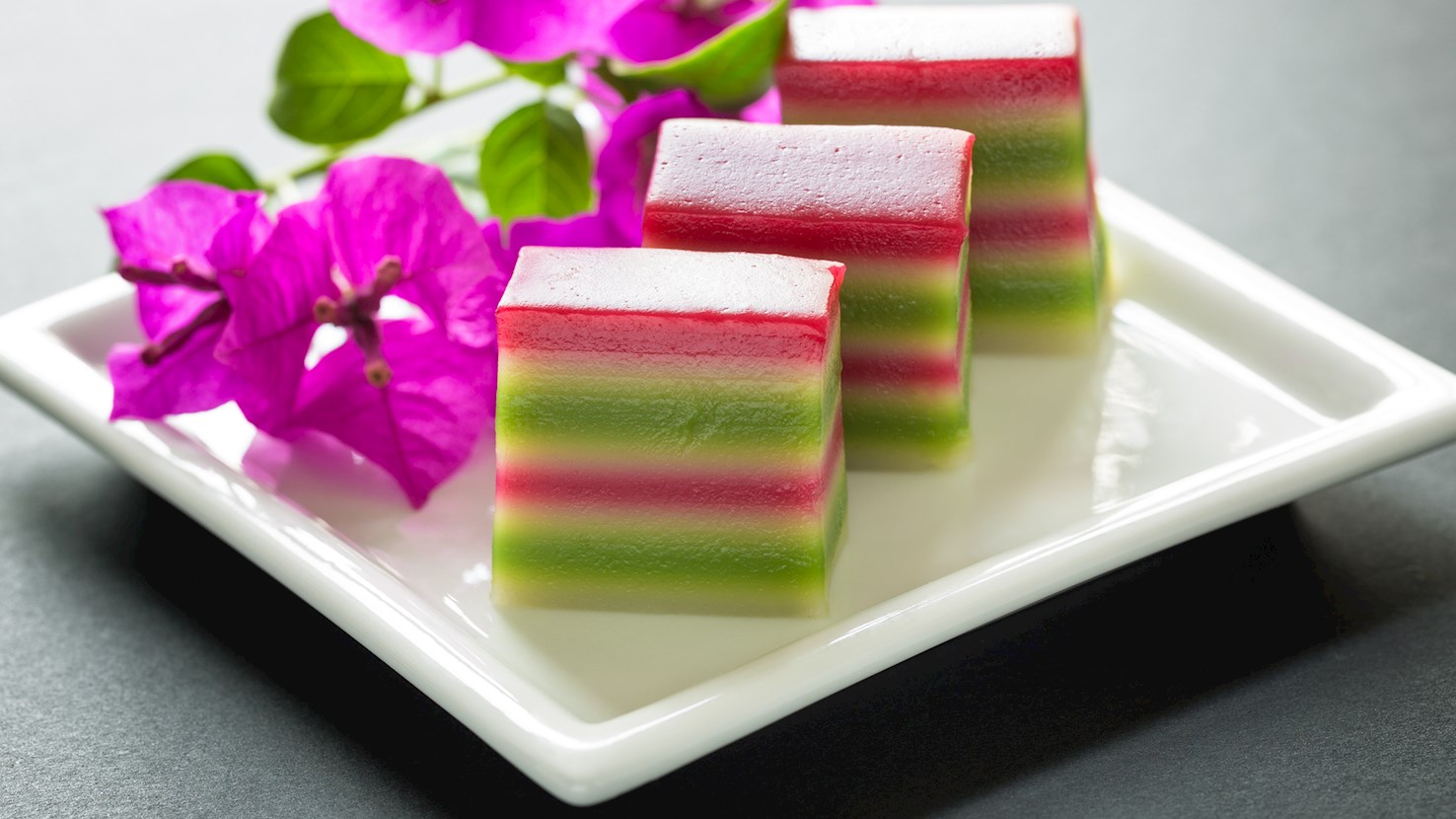
Kue lapis is a layered steamed cake widely enjoyed in Indonesia, Malaysia, Singapore, and Brunei, known for its vibrant colors, soft, chewy texture, and delicate coconut-infused flavor. The name comes from the Malay and Indonesian word kue (or kuih in Malaysa), meaning "cake" or "sweet snack," and lapis, meaning "layers"—a literal reflection of the dessert’s distinctive multi-layered structure. Often made with a combination of rice flour, tapioca flour, coconut milk, sugar, and natural food coloring, kue lapis is steamed layer by layer, resulting in alternating bands of color, typically in shades of pink, green, and white, although many regional and modern versions feature other color combinations. Each layer is steamed individually, giving the cake its characteristic appearance and allowing for a unique peel-apart texture, which is particularly beloved by children and nostalgic adults alike. The cake is lightly sweet and subtly aromatic, with the richness of coconut milk and a smooth, slightly sticky chew. It is usually cut into small squares or diamonds, served at room temperature, and commonly found in street markets, festive gatherings, and traditional kuih platters. Although similar in name to the baked Indonesian-Dutch kue lapis legit (a spiced layered cake), kue lapis is entirely different in preparation and character—soft and steamed, rather than firm and baked.
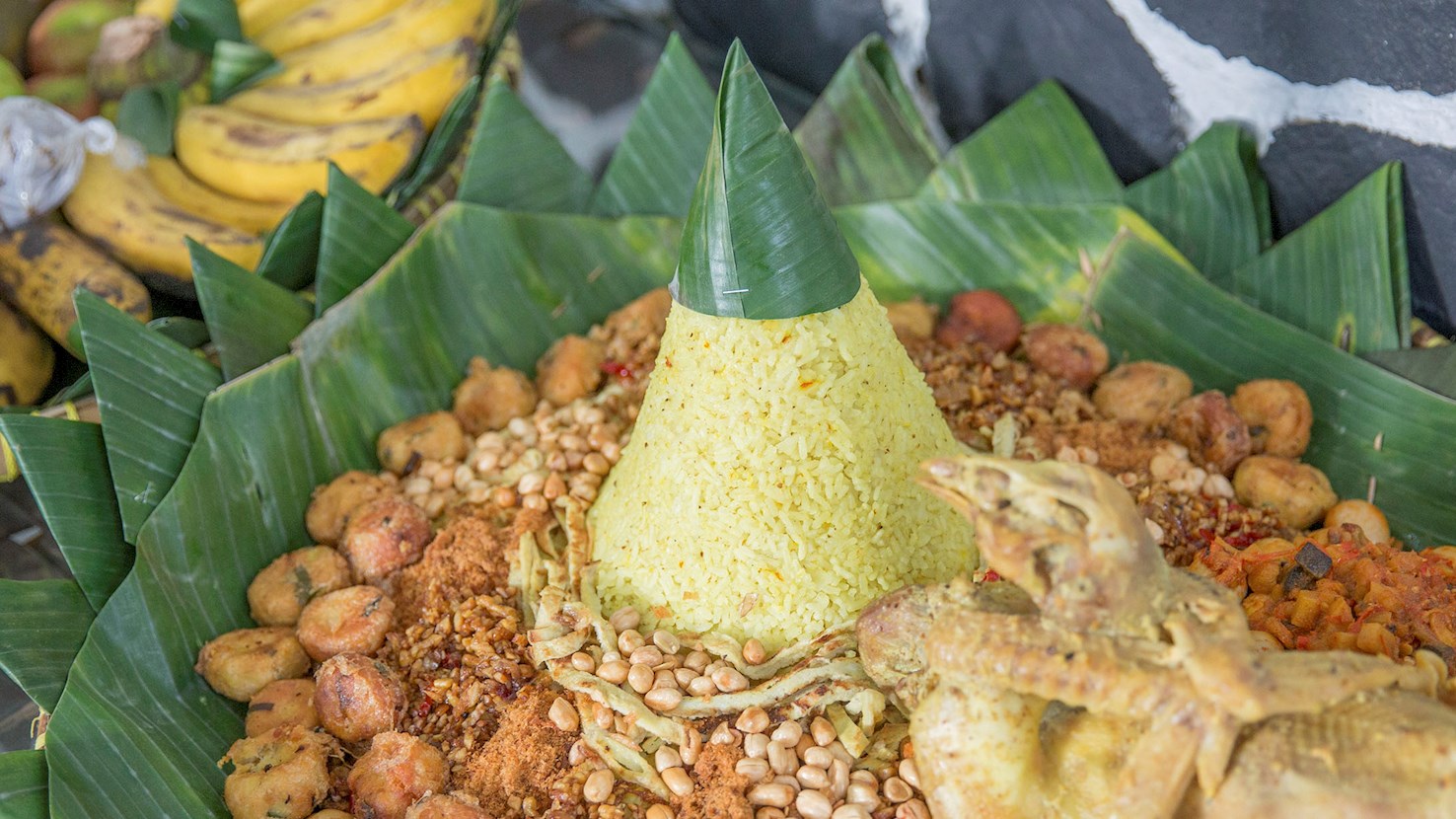
Traditionally associated with the island of Java, this complex Indonesian dish consists of a heap of cone-shaped rice that is surrounded by numerous other traditional Indonesian dishes. Due to its complexity, tumpeng is usually prepared for special occasions, and like many other dishes in Indonesia, it has a strong symbolic meaning. The shape of rice is a reminder that everything leads to higher power, and the height of the cone symbolizes the importance of deities in Indonesian culture. The dishes served around the rice represent abundance and prosperity, and everything is usually presented on a round plate to symbolize continuity. If served on special occasions, tumpeng represents the most prestigious dish of the ceremony. After saying their blessings, the attendees will cut the top of tumpeng to symbolize the beginning of the feast.
This quintessential Southeast Asian condiment is usually made only with spicy chili peppers and salt. It is occasionally adapted with lime juice, onions, sugar, ginger, shrimp paste, or vinegar. Traditionally prepared in a mortar, it is characterized by its thick consistency and an incredibly strong and sharp flavor. This original Indonesian creation has gained worldwide acclaim, and store bought varieties are available at numerous Asian food markets and international stores around the world. Sambal is used in a variety of Asian dishes, usually as a spicy condiment, seasoning, or a topping served alongside meat, seafood, vegetables, or rice.
TasteAtlas food rankings are based on the ratings of the TasteAtlas audience, with a series of mechanisms that recognize real users and that ignore bot,
nationalist or local patriotic ratings, and give additional value to the ratings of users that the system recognizes as knowledgeable.
TasteAtlas Rankings should not be seen as the final global conclusion about food. Their purpose is to promote excellent local foods,
instill pride in traditional dishes, and arouse curiosity about dishes you haven’t tried.




What People Say