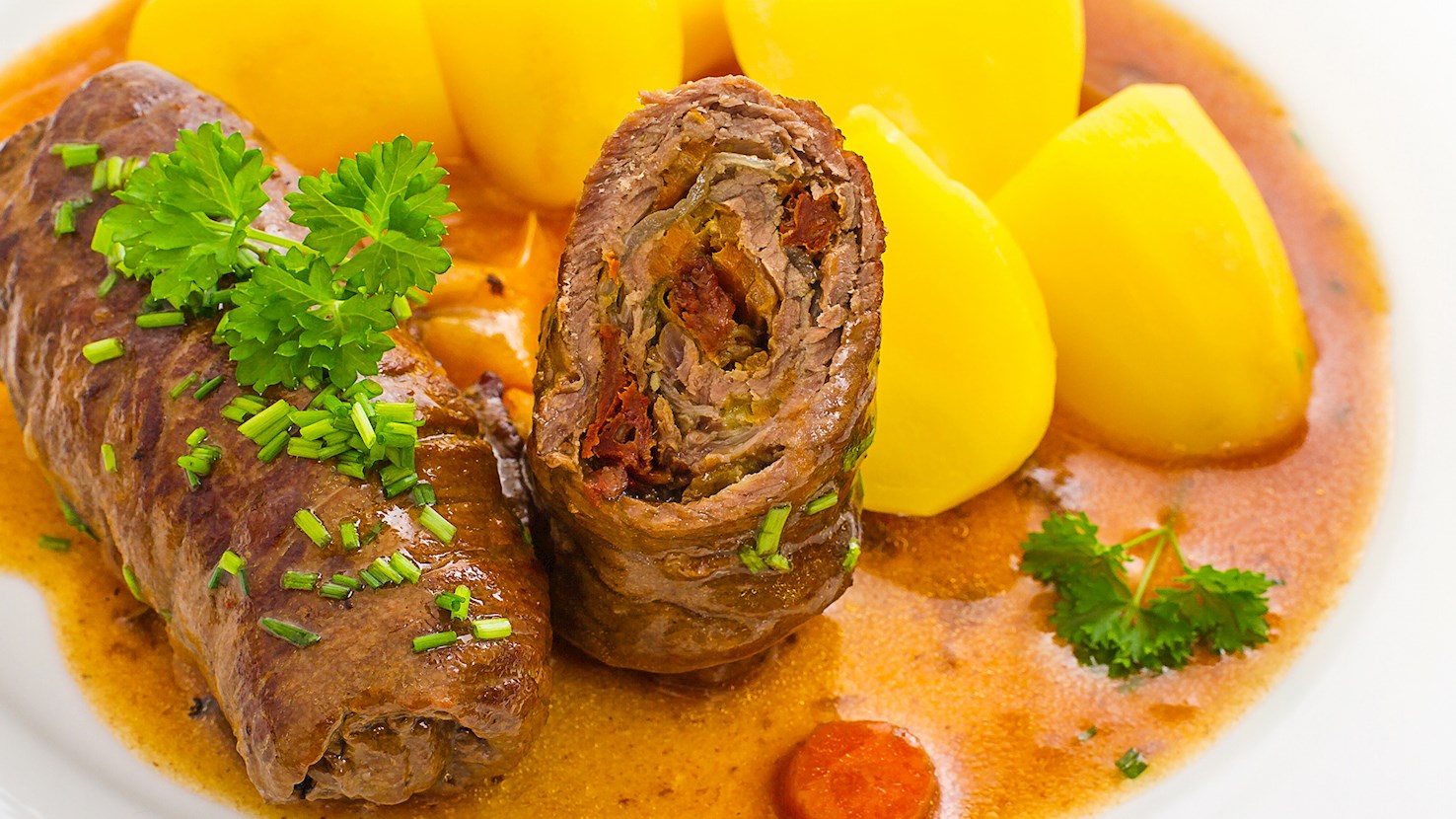
Rouladen are traditional German meat rolls stuffed with a variety of ingredients. They are always served accompanied by a creamy sauce. The rolls are usually made with long and thin beef steaks, which are pounded, generously seasoned, and usually covered with a layer of sharp German mustard, which flavors them and keeps the meat juicy and tender. Traditional stuffing inside rouladen usually incorporates thin strips of bacon and sliced pickles, but there are many different regional combinations which might include carrots, onion, or bread. The steaks are typically rolled into small logs and secured with toothpicks. Rouladen are shortly seared on all sides, then braised in a flavorful mixture of wine and vegetable or meat broth. The same broth, commonly thickened with flour, is usually used as the base for a velvety sauce accompanying the rolls. Potato dumplings, braised red cabbage, mashed potatoes, spätzle, different vegetables, or soft boiled potatoes can all be served as side dishes with this German classic. Even though it is believed that the name roulade derives from the French rouler, which means to roll, this delicacy is considered to be an authentic German dish.
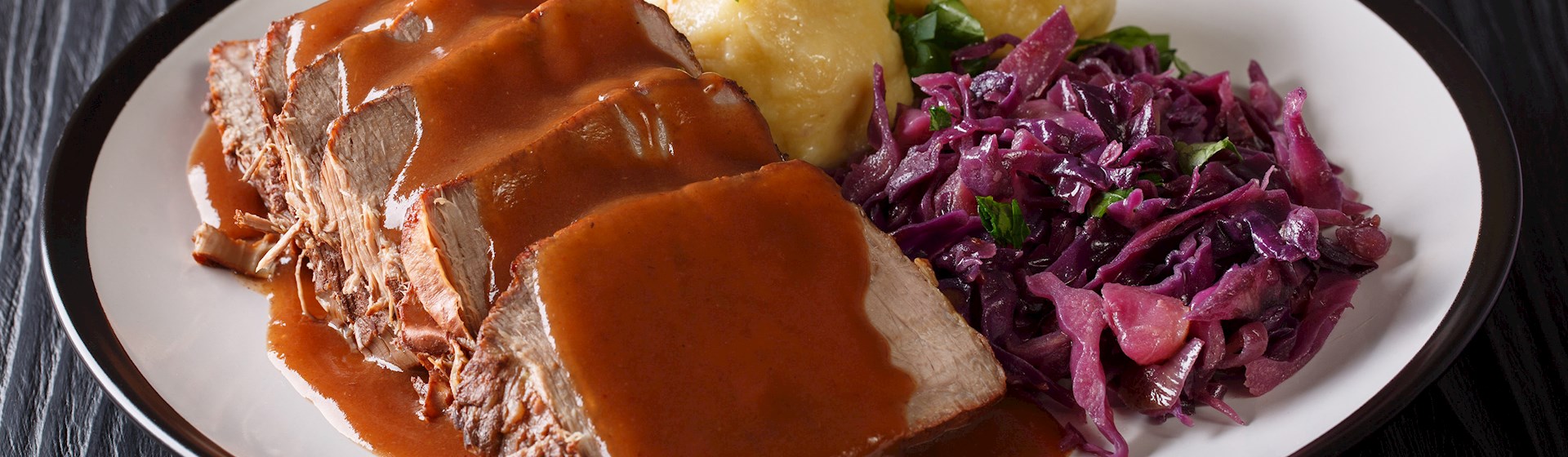
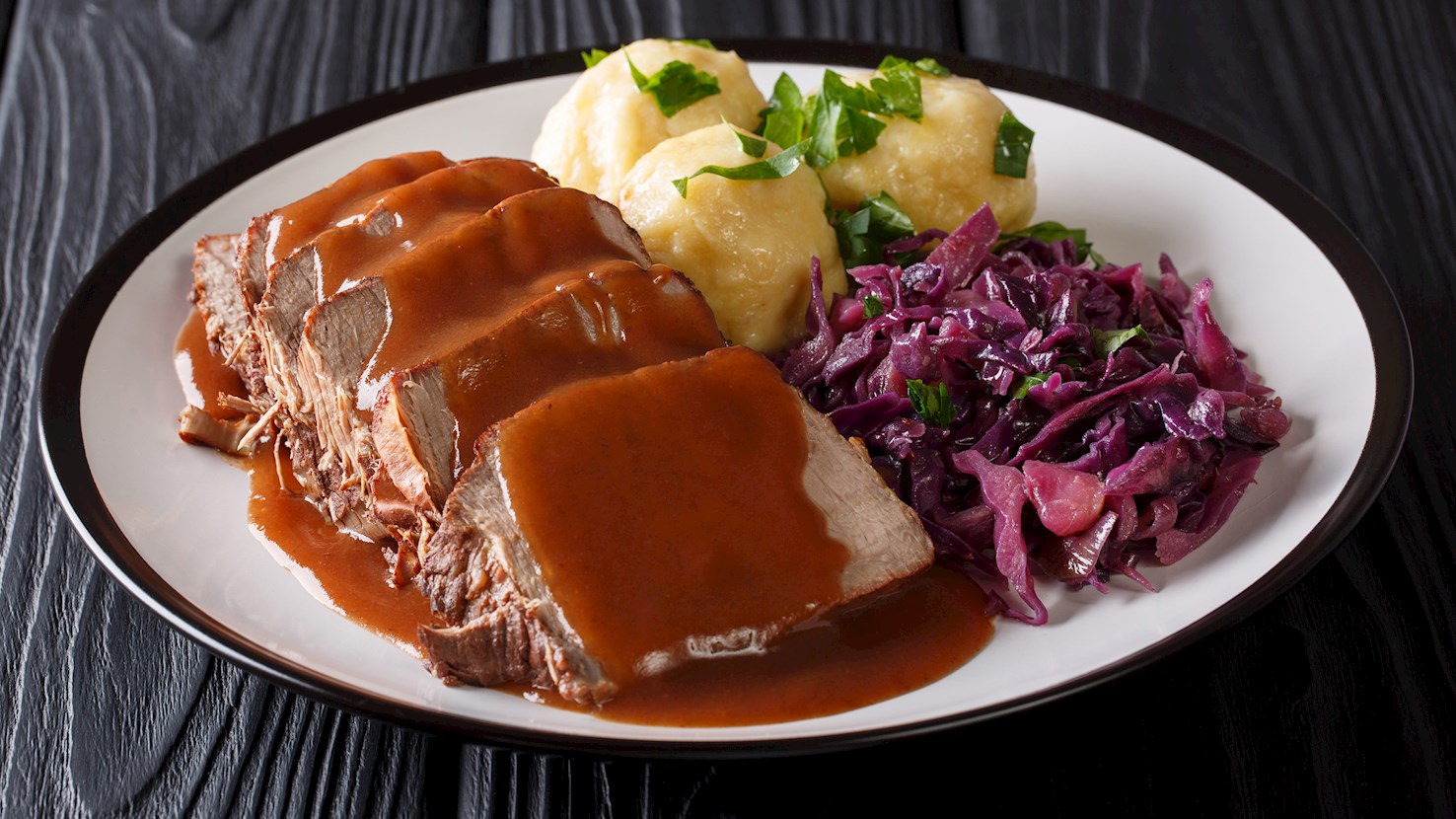
The traditional German pot roast is one of the best ways to transform more tougher cuts of beef into a tender, succulent meal. Chuck and bottom round are most favored cuts for this German classic, while the key to a perfect sauerbraten is in its lengthy marinade of red wine, tart vinegar, and spices, which tenderizes the meat infusing it with sharp, tangy flavors. After long hours of braising, the remaining cooking liquid is whisked into einbrenne (roux), and finally simmered into a thick, brown gravy. Sauerbraten is traditionally served with German favorites such as spätzle egg noodles, bread dumplings, or boiled potatoes and a side of braised or roasted red cabbage.
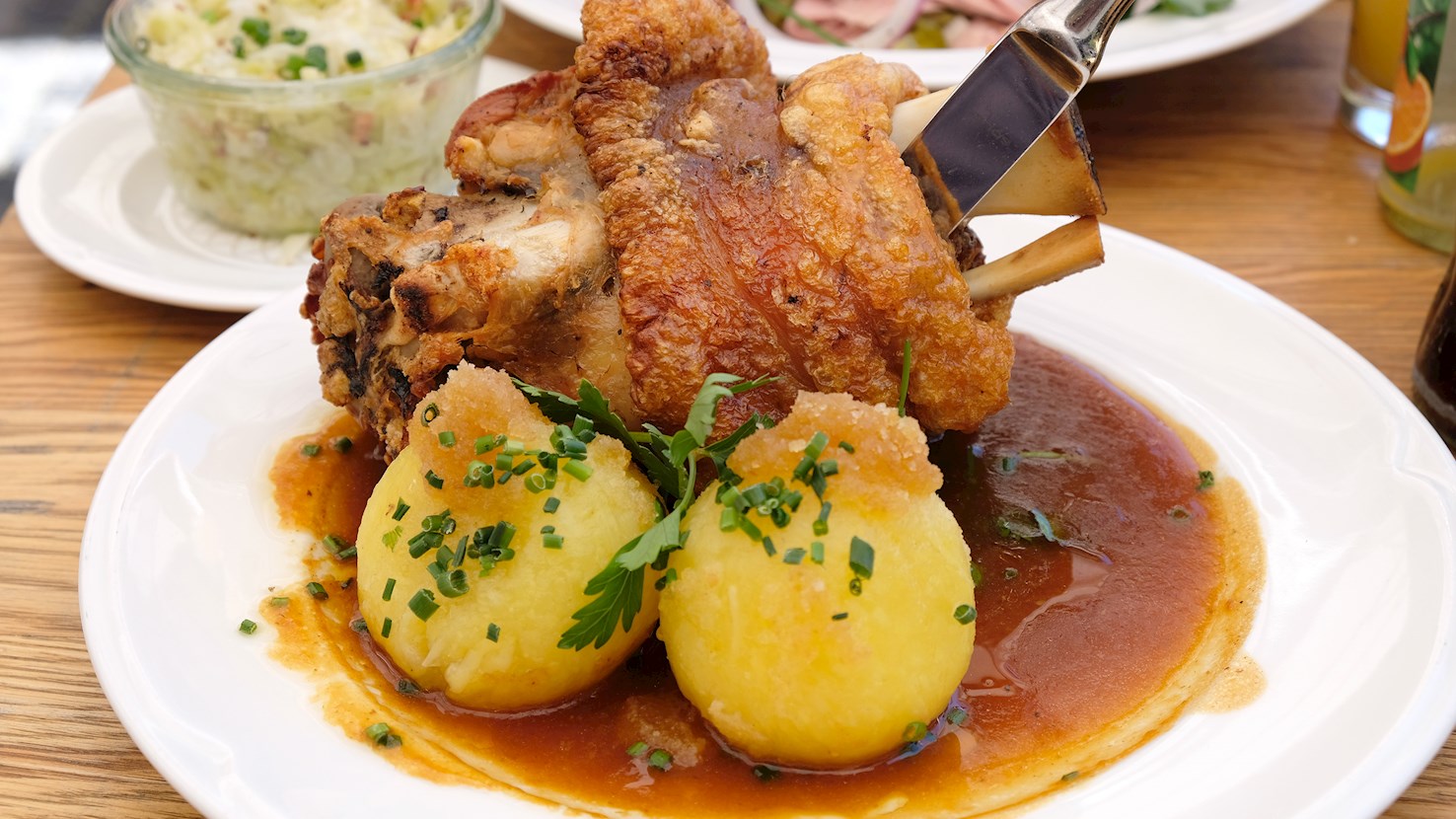
The term Schweinshaxe is typically used in the southern parts of Germany, predominantly in Bavaria, and it usually refers to a whole pork knuckle that is roasted for hours until it is thoroughly cooked and the skin becomes golden brown and crispy. Pork knuckles are a staple in traditional German cuisine, and they come with various names such as hachse, haxe, haxn, knöchla, hechse, hämmchen, and bötel, mainly depending on the region and a slightly different preparation process. Eisbein is the northern version of the dish that is typically cured or pickled and then boiled. Though it is commonly found in restaurants throughout the country and the region, Schweinshaxe is a quintessential dish at the popular folk festival Oktoberfest. The knuckle is almost always served whole, and it's usually accompanied by sauerkraut, braised cabbage, roasted potatoes, or potato dumplings. Similar dishes are found in other European countries, such as pečené vepřové koleno in the Czech Republic.
TasteAtlas food rankings are based on the ratings of the TasteAtlas audience, with a series of mechanisms that recognize real users and that ignore bot,
nationalist or local patriotic ratings, and give additional value to the ratings of users that the system recognizes as knowledgeable.
TasteAtlas Rankings should not be seen as the final global conclusion about food. Their purpose is to promote excellent local foods,
instill pride in traditional dishes, and arouse curiosity about dishes you haven’t tried.



What People Say