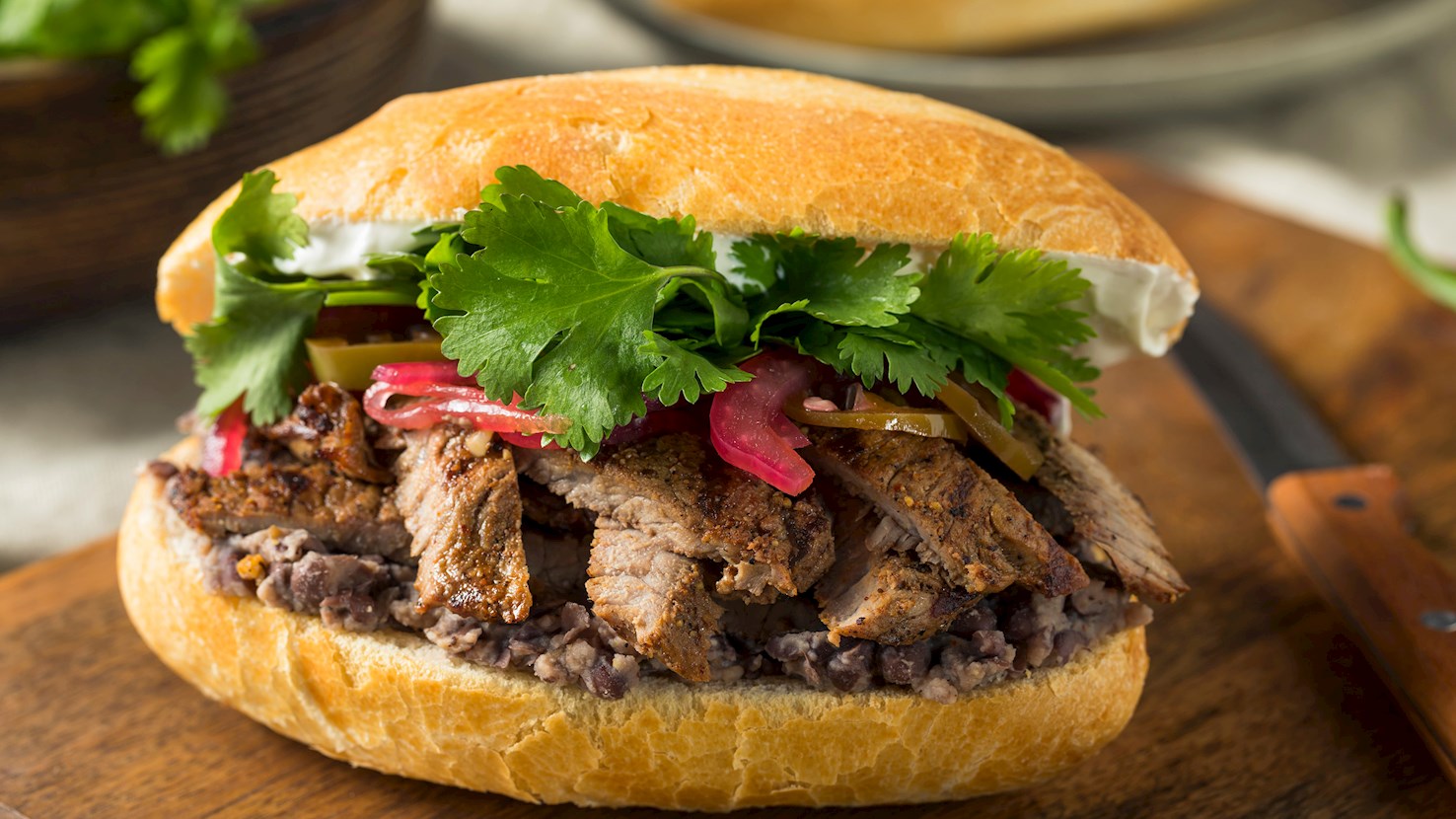
Mexican tortas are luscious traditional sandwiches filled with delicious, mostly authentic Mexican ingredients. They are a unique Mexican creation, considering they are served in bread rolls, an ingredient that is not so often associated with Mexico. There are two bread varieties usually incorporated in tortas, the traditional French influenced bolillos, and the similar round teleras, which are an authentic Mexican product from Puebla. The rolls are sliced horizontally, buttered, and stuffed with the most popular Mexican ingredients such as beans, avocados, ham, queso, jalapeños, and a myriad of other typical Mexican dishes like fried beef or chicken, shredded beef, roasted pork, and even tamales. Tortas are traditionally served cold, but in the 1960s, the hot, grill-heated varieties started to appear and soon became equally famous. There is not much known about the origin of this hearty sandwich, but it is believed that during the French colonization, French bakers introduced their tradition of baking bread to Mexicans, who modified it and created their popular varieties, which later became a staple of Mexican cuisine. The birthplace of the torta is usually associated with the city of Puebla, the place where traditional telera originated, but the location where they flourished was Mexico City. Although tortas have not been widely recognized outside of Mexico as tacos, burritos, and tortillas, they are a favorite meal eaten throughout the country. Tortas are usually sold at food stalls and small restaurants, popularly called torterias, widespread across Mexican cities. The variations and regionally influenced creations of tortas are endless. The most common ones are cubana, which usually combines at least four meat varieties and two types of cheese; pepito, made with marinated sliced steak; cochinita, made with slowly roasted pork; and agohada, a Guadalajara favorite made with pork and served in tomato sauce.
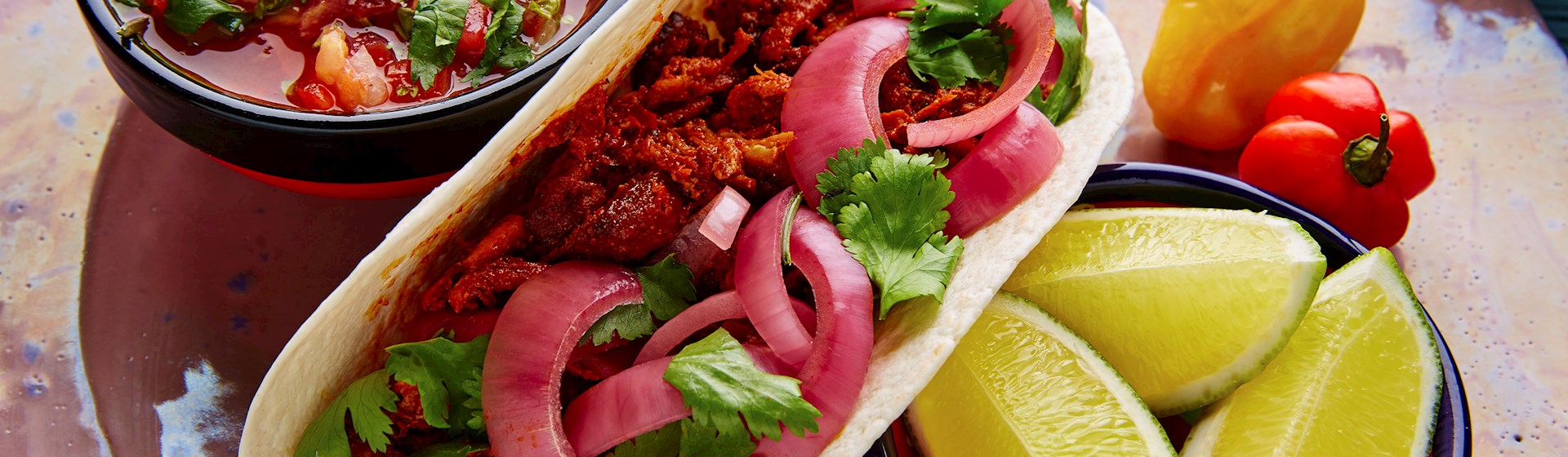
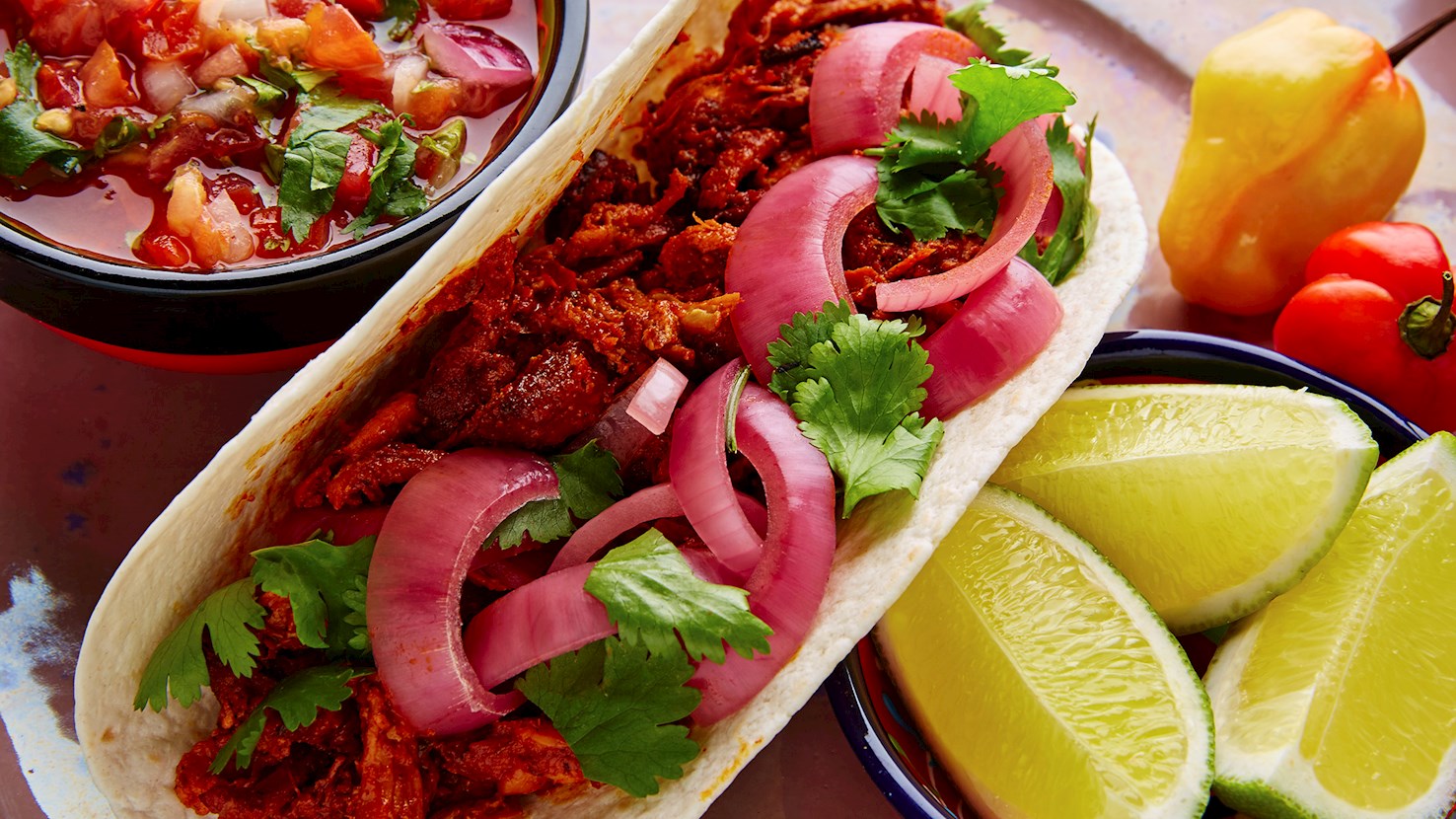
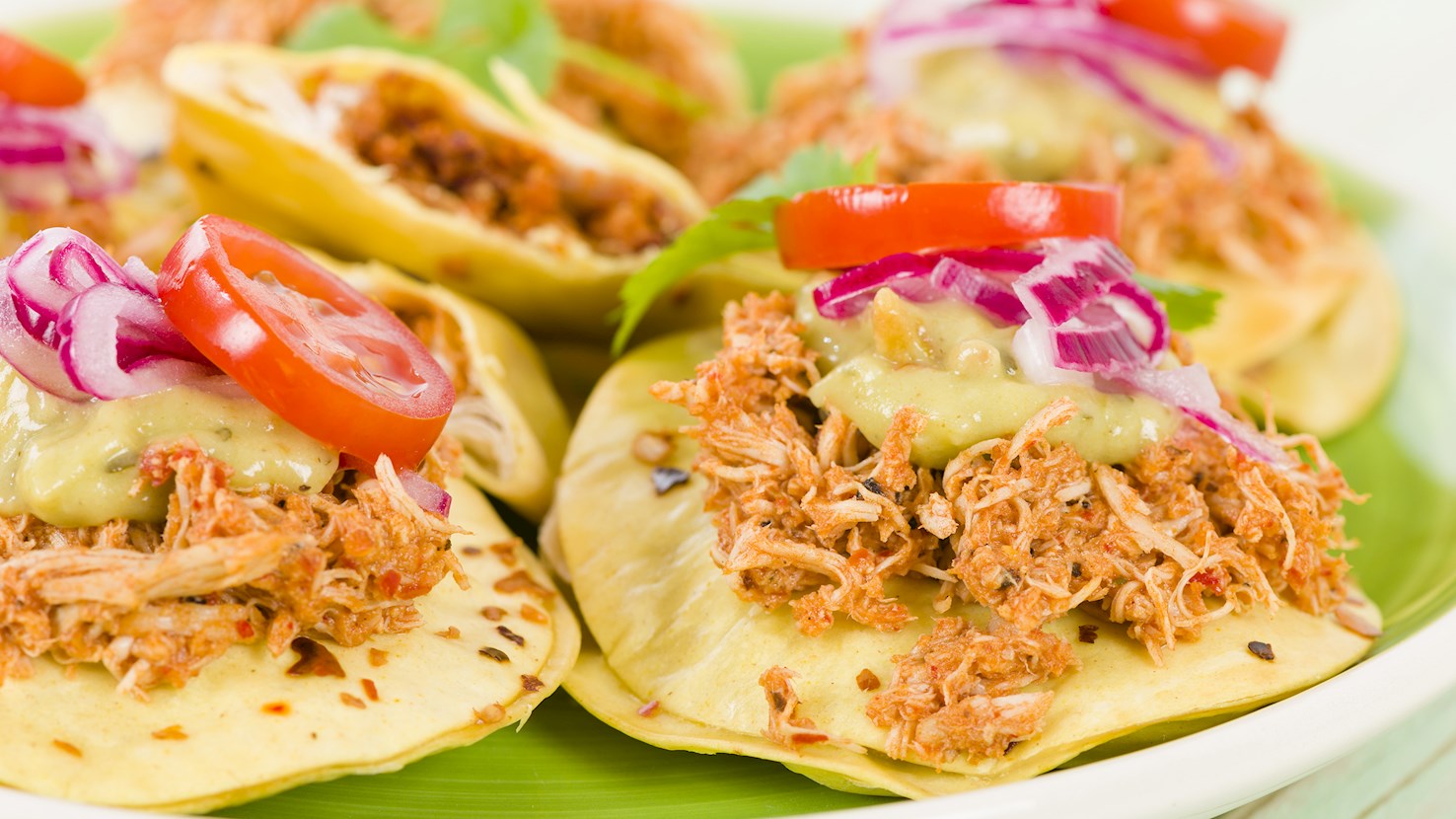
Cochinita pibil is a Mexican pork dish originating from Yucatan. Pork is marinated in a combination of annatto paste, bitter orange juice, and garlic. It is slowly baked and then shredded and served on tortillas, tacos, or on its own with shallots, pickled onions, salsa, and various roasted vegetables. Cochinita pibil is characterized by the red color of the meat, imparted by the annatto seeds from the marinade. Originally, pork was wrapped in banana leaves prior to baking, but today a foil or any other suitable wrapping can be used instead. Since cochinita means baby pig, and pibil means buried or underground, it acts as a proof that the original recipe used a whole suckling pig that was buried in a pit for roasting. This Mayan-influenced dish is most often served on weekends in many Mexican homes, usually as a Sunday family ritual.
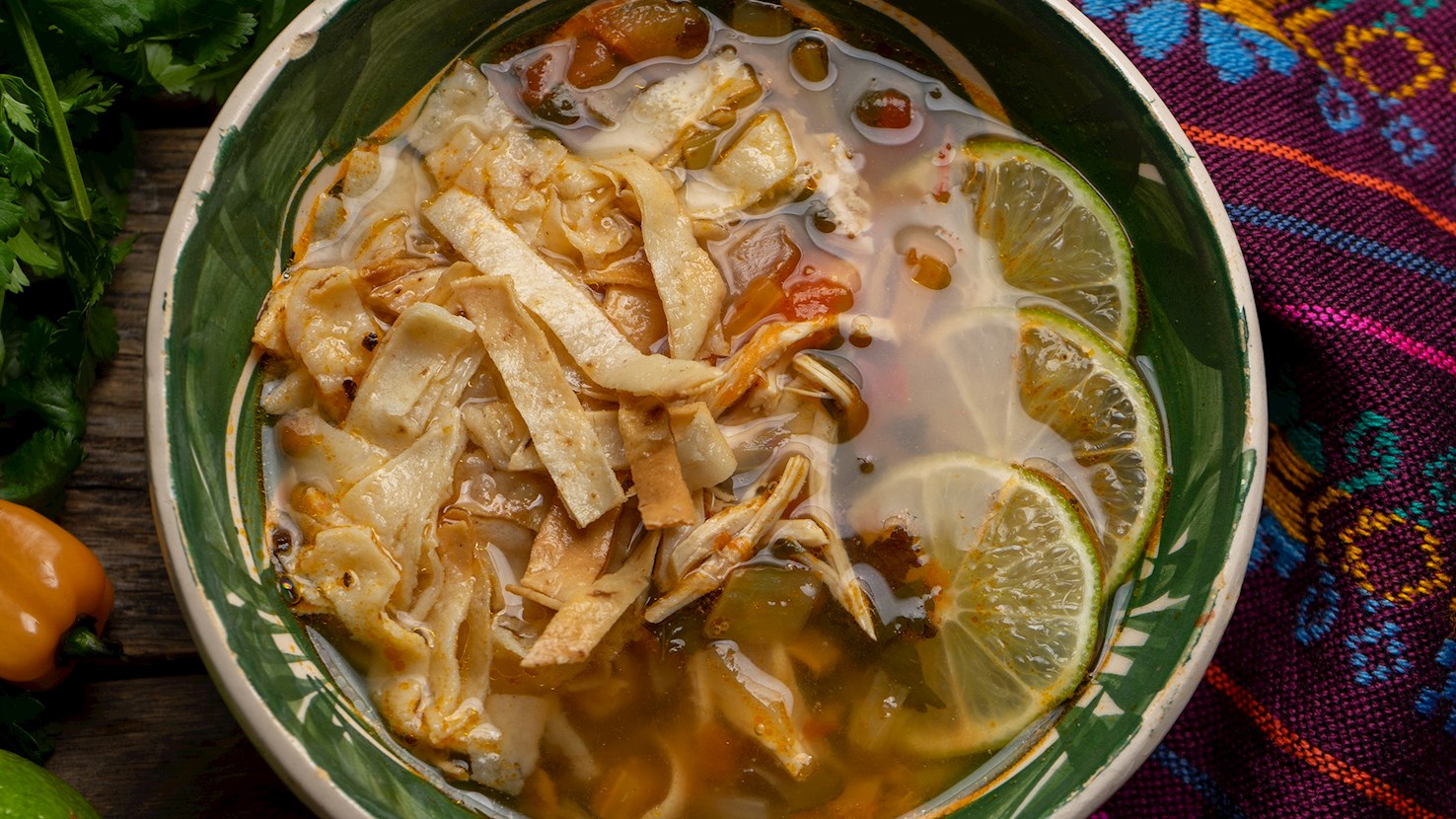
A traditional dish from Mexico's Yucatan Peninsula, sopa de lima is a spicy, flavorful chicken and tomato soup, contrary to its name that would make one think limes are the main ingredient in the dish. However, the soup is flavored with unique, bittersweet Yucatan limes and spicy habanero peppers. Since native Yucatan limes are scattered throughout the peninsula, it is no wonder that they are incorporated in numerous recipes of Yucatecan cuisine. A hearty, healthy soup from a warm climate, sopa de lima is also great as a winter comfort food. Although the origins of this soup are still a mystery, some food historians claim that it was most likely derived from an ancient Mayan dish.
Panucho is a Yucatan specialty consisting of a tortilla topped with refried beans, acting as the base of the dish. Other toppings are left for the cook or the customer to decide according to preferences. It can be anything from cabbage, tomatoes, avocados, and onions to shredded chicken, fish, and pickled hot peppers. Traditionally, panuchos are served warm at panucherias, small restaurants specialized in making the dish.
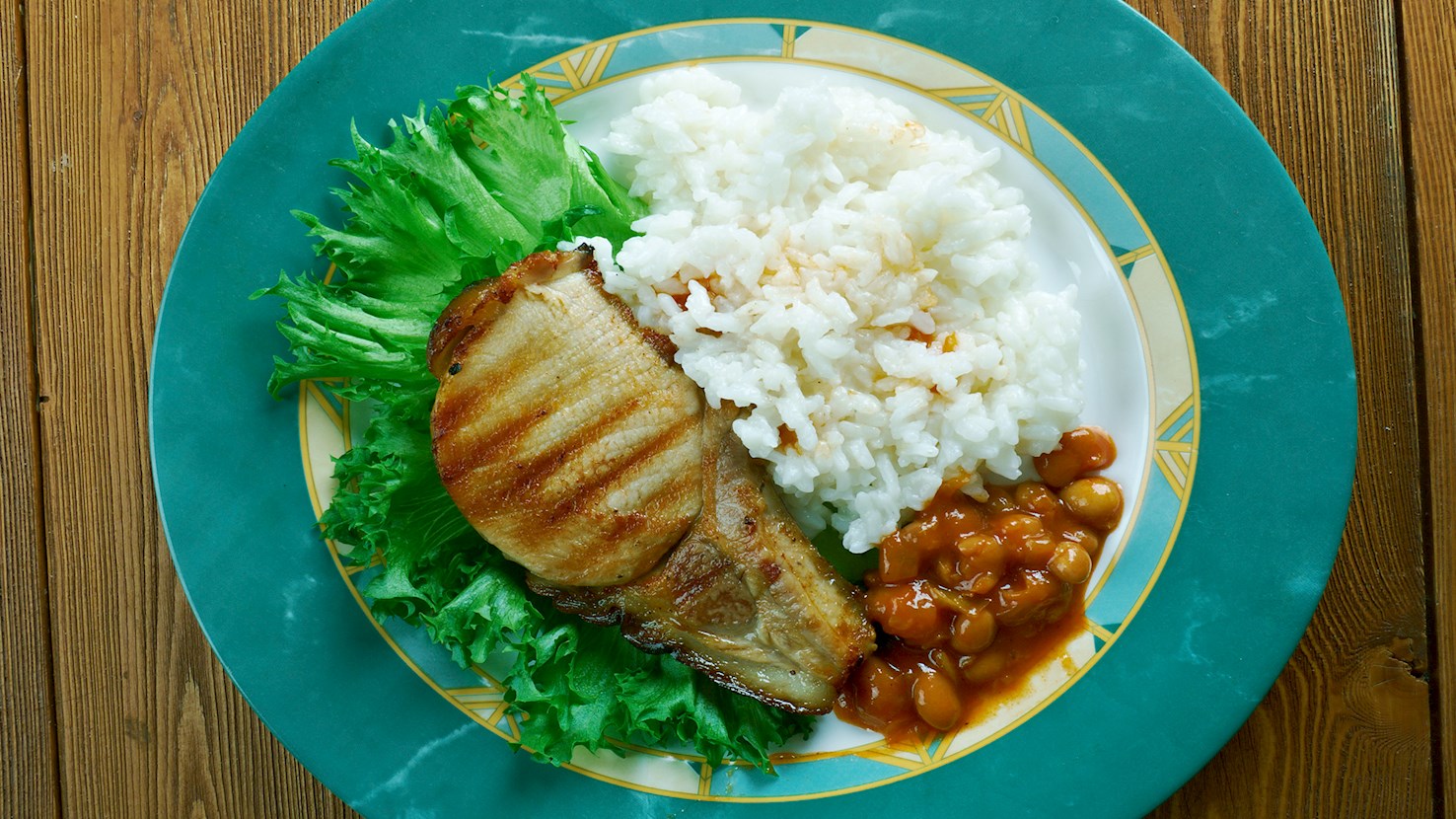
Poc chuc is a Mexican meat dish consisting of thin pork cutlets marinated in orange juice. The meat is then grilled and served with pickled onions and freshly prepared corn tortillas on the side. It can be found in most restaurants throughout the Yucatan region, since it is one of the region's signature dishes. It is believed that the dish was invented as a means of preservation, when the meat was cured with salt brine. The name of the dish is derived from poc, meaning to toast, and chuc, meaning charcoal.
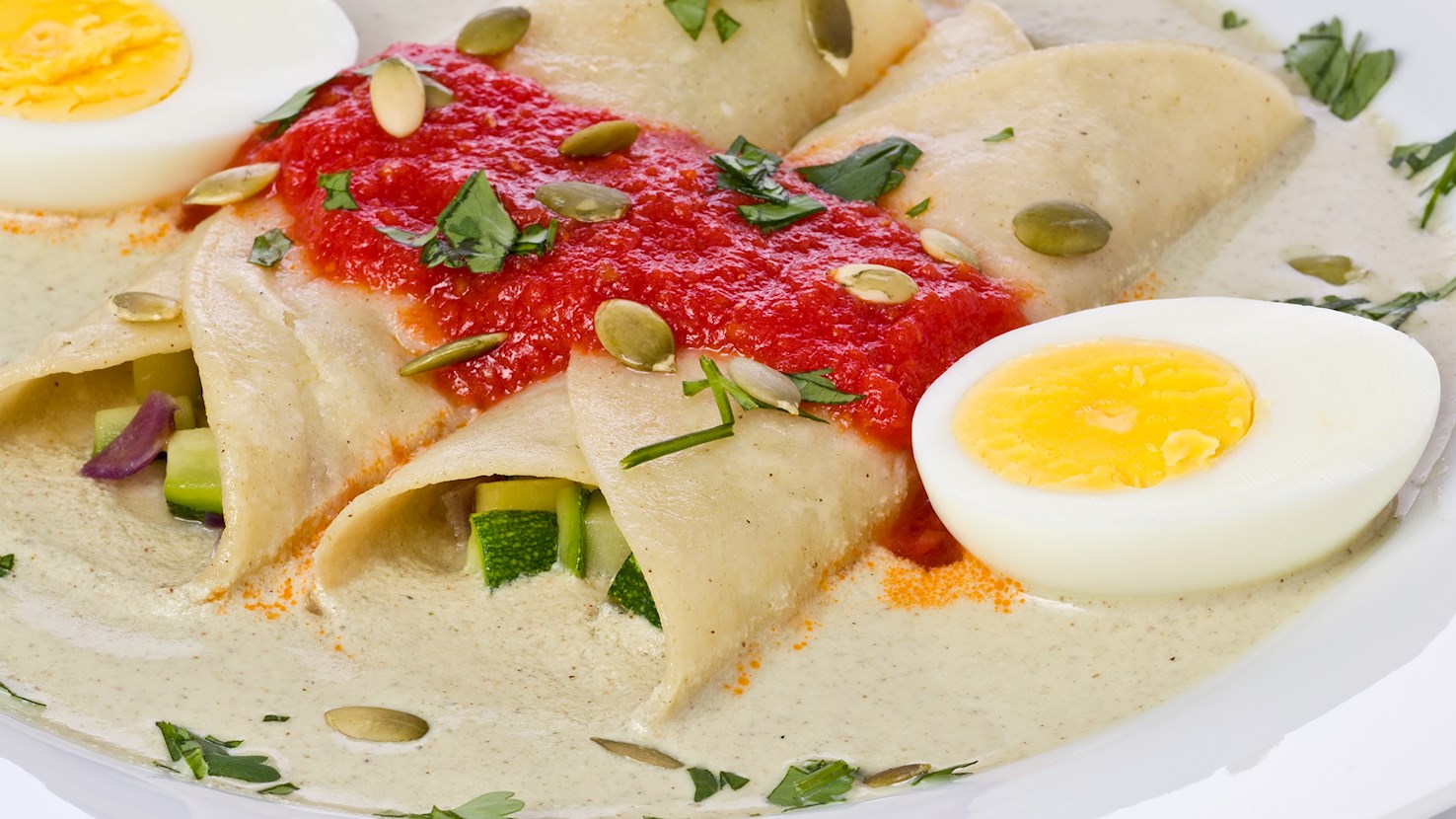
Papadzules are rolled corn tortillas from the Yucatán Peninsula, dipped in a creamy pumpkin seed sauce, filled with chopped hard-boiled eggs, and topped with roasted tomato salsa. The dish is closely associated with Maya cooking and the region's agricultural staples, especially maize, squash seeds, tomatoes, and epazote. The name is usually explained in Maya terms, often interpreted as "food" and "lord" or "master," although the exact translation remains debated. One common interpretation links the dish to food served to nobles, important guests, and later to Spanish arrivals, while its reliance on squash seeds, maize, tomatoes, and regional herbs reflects a cooking tradition rooted in the peninsula's ingredients before the widespread use of European livestock. The dish begins with hulled pumpkin seeds, or pepitas, which are toasted and ground into a fine paste. This paste is mixed with warm broth infused with fresh epazote leaves, producing a thick, smooth, pale green sauce with an earthy, herbal flavor. Eggs are boiled until firm, peeled, and chopped into small pieces. Fresh corn tortillas are warmed briefly on a griddle until soft and pliable, then dipped into the pumpkin seed sauce, laid flat, filled with a line of chopped egg, and rolled into compact cylinders. Once the rolls are arranged side by side on a serving platter, more of the green pumpkin seed sauce is poured over the top. A second sauce, known as chiltomate, provides a bright contrast to the rich seed sauce. It is usually made by roasting ripe tomatoes, white onion, and whole habanero chiles until lightly charred, then blending and simmering the mixture until it becomes smooth and slightly thickened. The red tomato salsa is spooned over the green-coated tortillas, creating the characteristic contrast of colors and flavors. Although hard-boiled eggs are the most common filling, local versions may use shredded roasted chicken or slow-braised pork shoulder instead, turning the dish into a richer, meat-based main course. Other variations avoid meat entirely and use pan-fried white cheese or sautéed chaya leaves as the filling. Papadzules are served warm, usually on a wide ceramic platter, with the sauce-soaked tortillas arranged in a row. A few drops of dark green pumpkin seed oil may be added over the tomato salsa for extra nuttiness, while raw habanero slices are sometimes served on the side for sharper heat. The soft tortillas are eaten with a fork and knife, cutting through the pumpkin seed coating and tomato salsa to reach the firm egg filling inside. A cold, citrus-forward fruit drink is a common accompaniment, helping balance the dense, earthy flavor of the pepitas, epazote, and sauce.
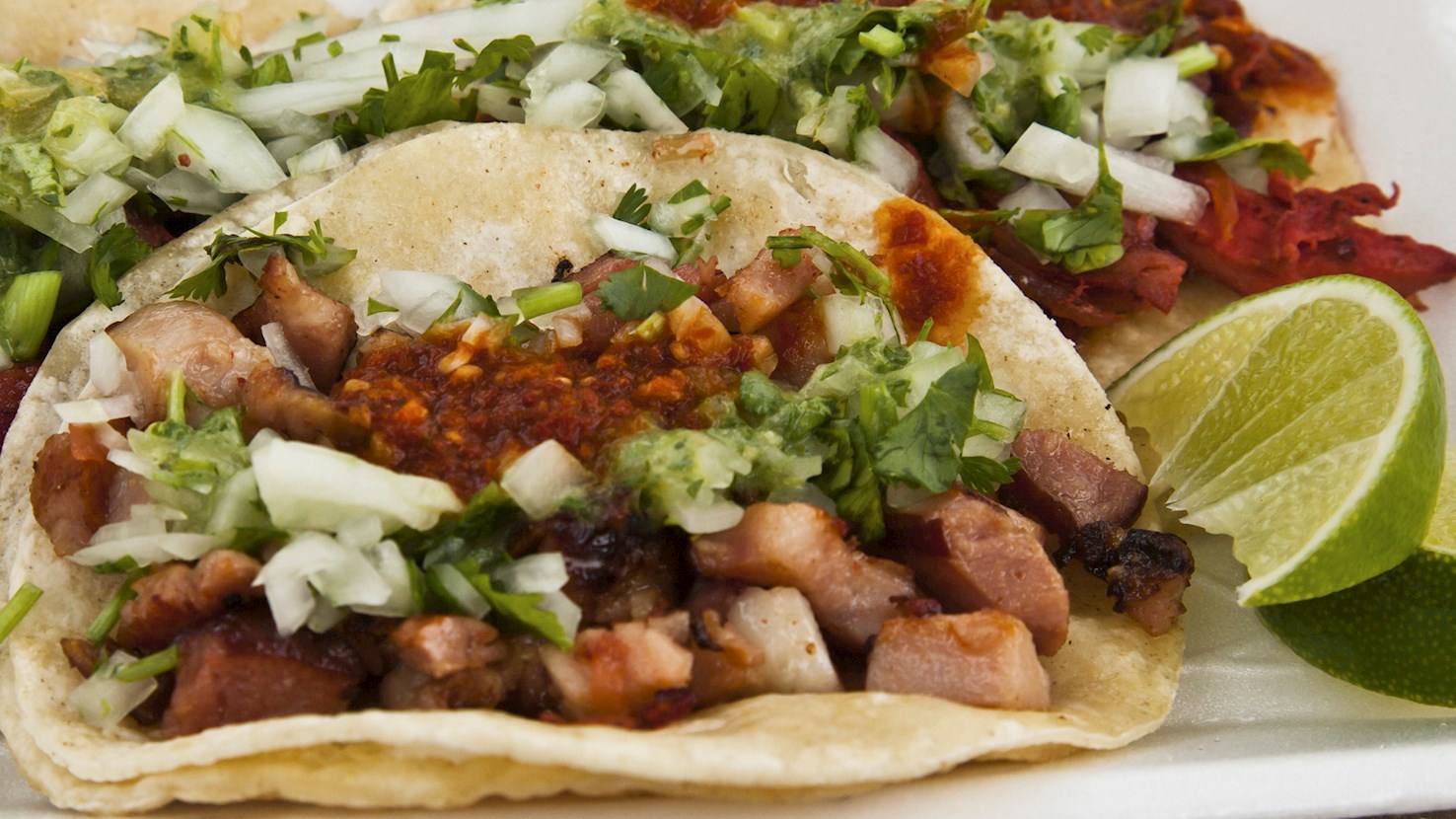
Tacos are the national dish of Mexico, dating back to the Mexican silver mines of the 18th century, when the word taco referred to gunpowder that was wrapped in a piece of paper and inserted into rocks. It was used to excavate the precious ore from mines and was called tacos de minero or miner's tacos. Today, the word is widely known to signify the leading street food and fast food item in Mexico – thin, flat griddle-baked tortillas topped with numerous fillings, folded and eaten without any utensils. A taco is basically anything eaten on a soft tortilla, and there is an infinite variety of them. In Sonora, in the north of Mexico, they eat the classic carne asada - thinly sliced meat grilled over coals and topped with salsa, onions, guacamole, and a lime wedge. In Baja, the topping consists of fried fish with cabbage and an acidic mayonnaise sauce. In Mexico City, sudados (sweated tacos) are the most popular option, filled with cooked and steamed meat. In Jalisco and Michoacan, they prepare carnitas, eaten in the morning or in the early afternoon, filled with deep fried pieces of pork that are sliced according to preference. Similar is the taco de cabeza, filled with pieces of cow's head that was steamed for a long time, and the customers can choose from slices of eyes, brains, tongue, lips, cheek, or ears. Tacos are mainly made of corn, except in the north, where wheat flour is used more often. They also differ in size, from the tiniest white tacos (blancas) to bigger ones, often made with blue corn. Most tacos come in pairs of two, in order to be able to hold all the flavorful and slightly wet ingredients. Some of them are fried until they become crispy and crunchy, in which case they're called tostadas. As anything can be a filling, there is a version made with fried veins from dried chiles, usually accompanied by salt, a tasty treat called tacos de venas. However, the standard is ground or shredded meat, cheese, potatoes, or vegetables and a topping of onions and coriander. Eaten at all times of day and night, one can find them on every corner in Mexico, in restaurants known as taquerias. Alternatively, they can be bought from numerous street vendors.
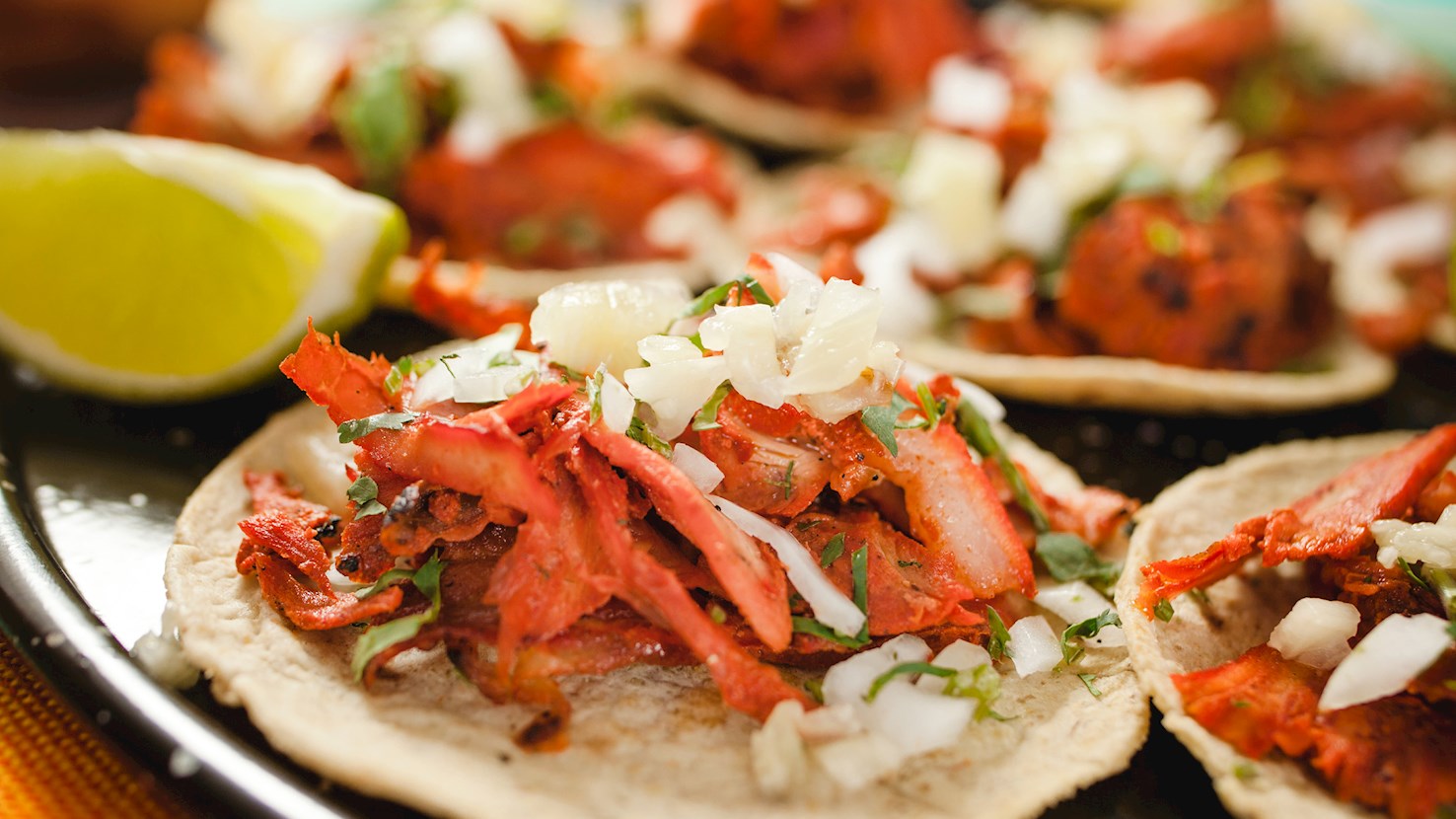
Tacos al pastor are thinly sliced pork marinated in a complex blend of dried chilies, spices, and achiote, stacked onto a vertical spit, and served on small corn tortillas with pineapple, onions, and cilantro. The origins of this vibrant street food trace back to the 1920s and 1930s when Lebanese immigrants arrived in Puebla, bringing with them the method of roasting lamb on a vertical, spinning spit known as a shawarma. Over the decades, local palates adapted this Middle Eastern technique, substituting the original lamb with thinly sliced pork shoulder and replacing Mediterranean spices with indigenous ingredients. Handling the meat involves a meticulous multi-day process. The pork is bathed in a thick, vibrant red adobo. This marinade relies heavily on rehydrated guajillo and ancho chilies, acidic vinegar, earthy cumin, fragrant oregano, and a dense paste made from crushed annatto seeds called achiote, which imparts the signature crimson hue. The marinated pork slices are tightly layered onto a long metal rod, forming a large, bell-shaped mound called a trompo. An onion and a peeled pineapple are typically placed at the very top of the spit. As the metal rod slowly rotates next to a vertical gas-powered heat source, the outer layer of the pork develops a charred, crispy crust while the interior remains succulent, constantly basted by the dripping juices of the roasting fruit above. While pork remains the standard base, multiple variations exist to accommodate different tastes. Chicken al pastor has emerged as a lighter alternative, utilizing the exact same red adobo but applied to stacked poultry. Plant-based iterations frequently utilize sliced king oyster mushrooms or textured soy protein bathed in the chile paste and griddled rather than spit-roasted. Another highly popular adaptation is the gringa, which takes the carved al pastor meat and places it inside a flour tortilla with melted cheese, then heats the entire package on a flat-top grill until the cheese bubbles. The serving style is fast-paced and visually theatrical. An individual wielding a long, sharp knife shaves the deeply caramelized exterior of the spinning meat directly into a pair of small, warm corn tortillas held in the opposite hand. A flick of the wrist slices a thin wedge of roasted pineapple from the top of the spit, letting it fall perfectly onto the waiting meat. The assembled meal is immediately dressed with finely diced white onions, chopped fresh cilantro, a generous squeeze of lime juice, and a spoonful of spicy salsa—most often a smoky chipotle or a bright, fiery salsa verde made from tomatillos.
TasteAtlas food rankings are based on the ratings of the TasteAtlas audience, with a series of mechanisms that recognize real users and that ignore bot,
nationalist or local patriotic ratings, and give additional value to the ratings of users that the system recognizes as knowledgeable.
TasteAtlas Rankings should not be seen as the final global conclusion about food. Their purpose is to promote excellent local foods,
instill pride in traditional dishes, and arouse curiosity about dishes you haven’t tried.



What People Say