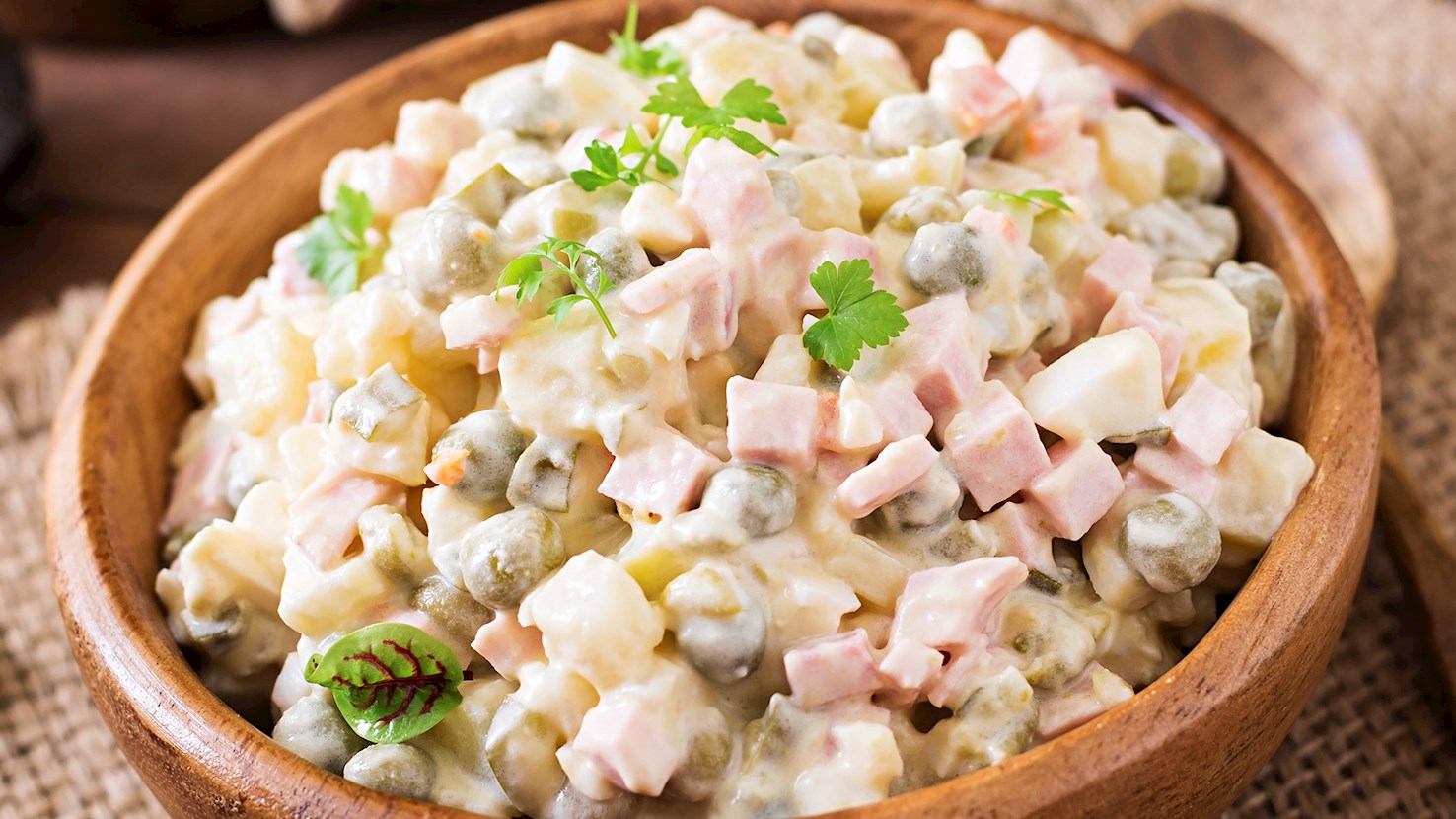
Olivier salad is a salad with variable ingredients, but it is typically made with chopped vegetables, meat, and mayonnaise. The key ingredients include diced potatoes, vegetables, eggs, chicken, or ham. This salad is one of the most important appetizers at the New Year's salad buffets in Russia, as well as in some of the other countries of the former USSR. The original was invented in the 1860s by Lucien Olivier, a chef in the popular Moscow restaurant called L'Hermitage. Olivier guarded the recipe until he died, but it is believed that the recipe was stolen by an employee who watched the chef at work, so the salad is still made today. Another theory says that the recipe for the new Olivier salad was developed by one of the restaurant's customers who wanted to keep the salad alive after the chef passed away. Olivier salad as we know it today is nothing like the original version, because it was called game bird mayonnaise, made with gourmet ingredients such as black caviar, capers, hen, and crayfish tails. Over time, the salad evolved and most of the gourmet ingredients have been replaced with more common ones such as peas, chicken, ham, and pickles. Today, the variations are endless, but most Russian chefs agree on one thing: adding carrots to the Olivier is a heresy. Interestingly, Olivier salad is also sometimes called Russian salad, while the meatless version is called French salad or francuska salata, probably due to the French name of its creator. The Spanish version is known as ensaladilla rusa. It is so popular in Spain that it's an important part of the Spanish gastronomy as well as being a staple in schools and summer camps all over the country. Ensaladilla rusa is also one of Spain's most popular tapas – in some cases, it's even served free of charge if you order a beer. There's also the Piedmontese insalata russa, typically consumed as an appetizer, and with many variations, so the salad might also include ingredients such as pickled cauliflower, anchovies, and tuna. Interestingly, in the Italian municipality of Carrù, tuna is an obligatory element of the salad.
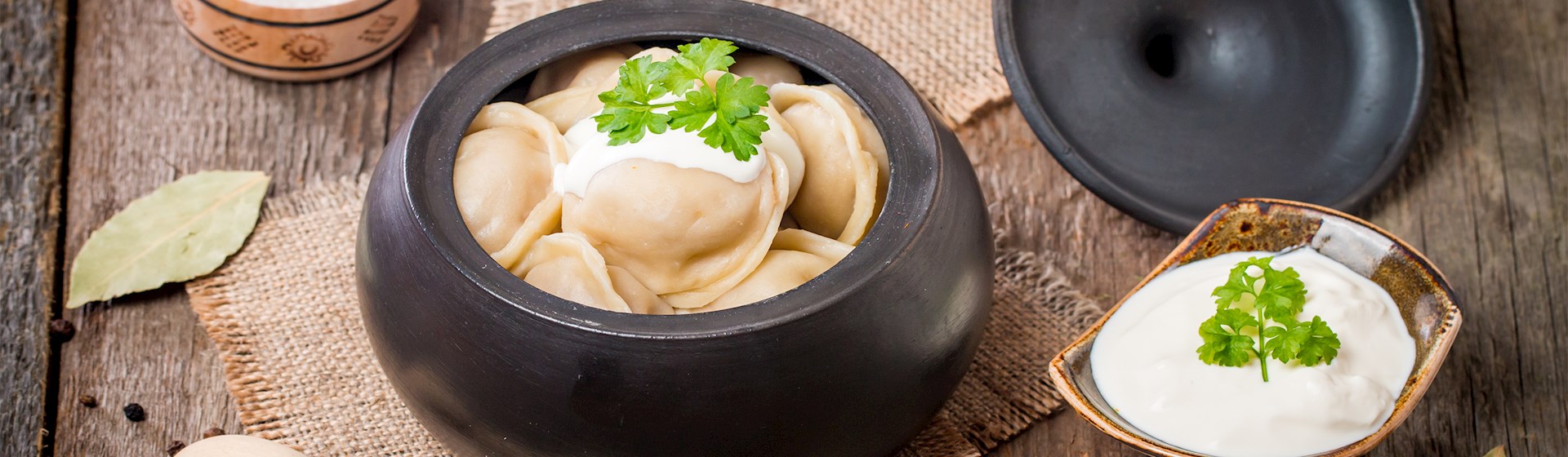
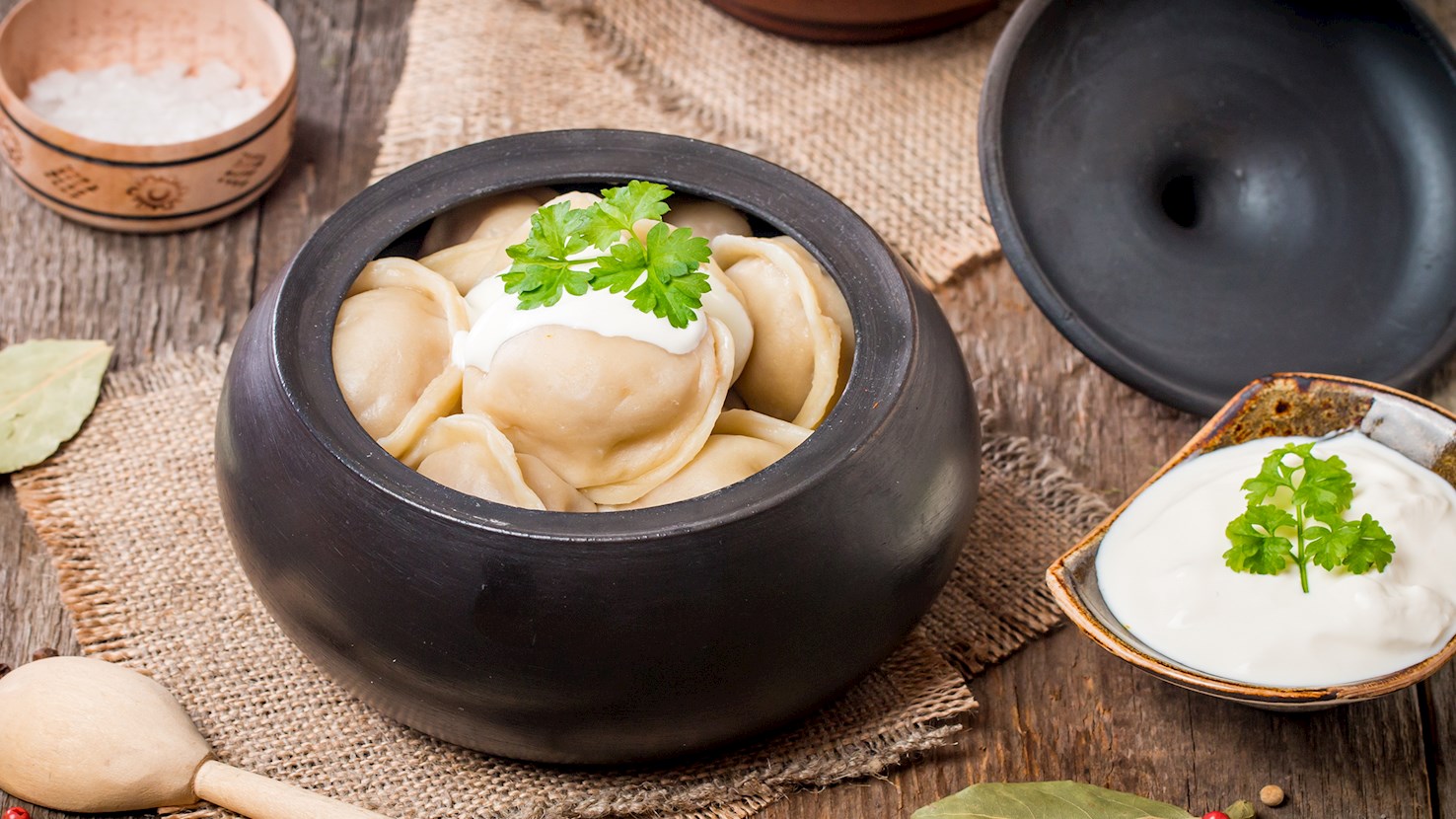
Pelmeni is one of Russia's national dishes, a small dumpling with a delicately thin dough, filled with anything from ground meat or fish to mushrooms. The fillings can be mild or very spicy, depending on the amount of seasonings such as various fresh herbs, black pepper, and onions. Pelmeni dumplings are served in almost every Russian restaurant, as well as in numerous Russian homes where each family has their own recipe for the dish.
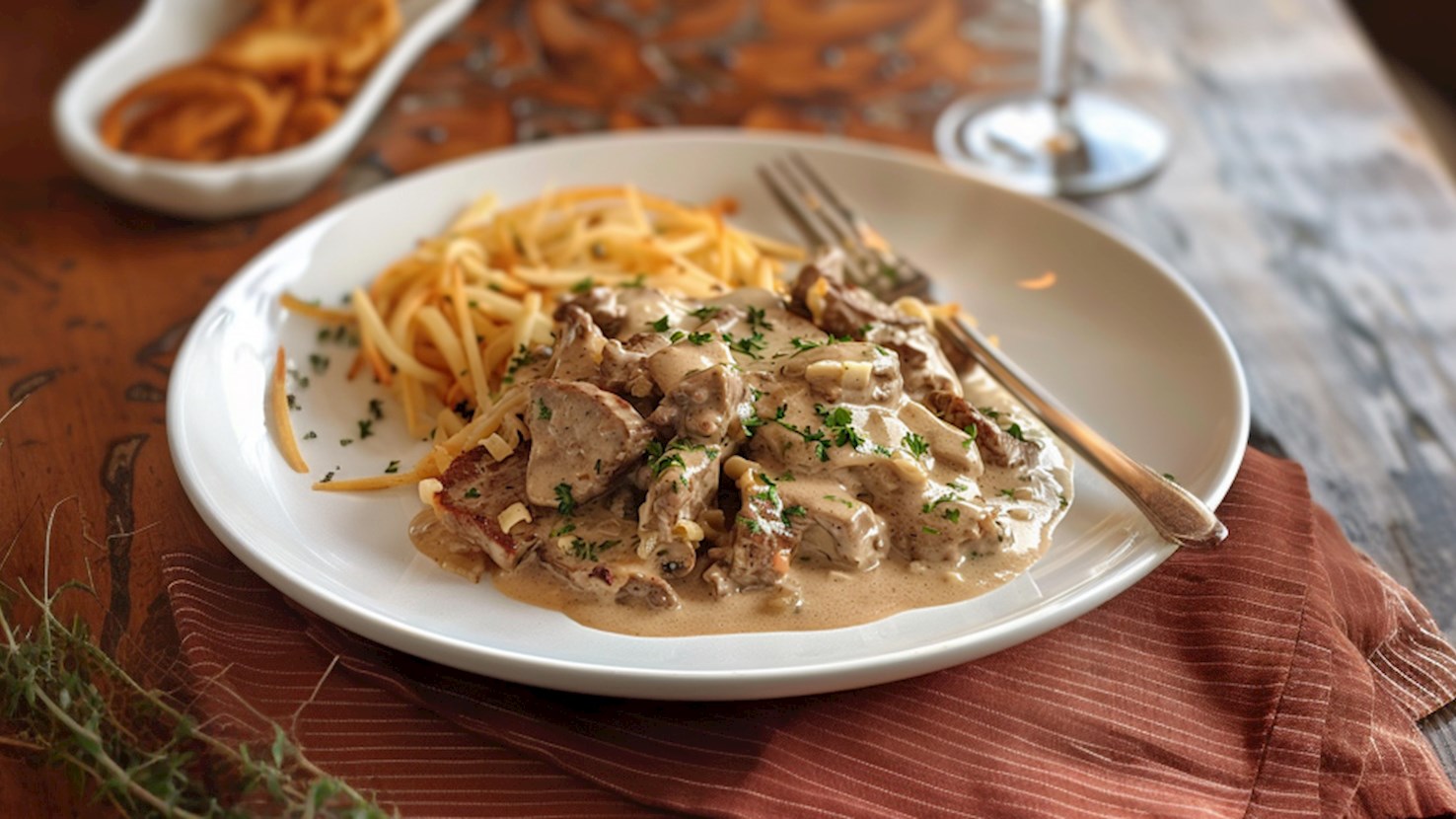
When it first appeared in the mid-19th-century Russia, beef Stroganoff was a dish made out of lightly floured beef cubes that have been sautéed and cooked in a simple sauce made from stock and mustard with only a small amount of sour cream. The origin of the dish is unclear, but it is most likely linked to a French chef—or a French-trained chef—working for the Stroganoff family. Although Russian in origin, the dish is strongly influenced by the French style of cooking—this is most obviously seen in the way the beef is cut, in either cubes or strips. The first known recipe appeared in Elena Molokhovets’s A Gift to Young Housewives, published in 1871. Since then, the dish has had major alterations. The beef is still cut in strips, but the sauce is much richer; with sliced mushrooms and onions that are cooked with beef stock and thickened a bit with sour cream that is only stirred in at the end. The dish is traditionally served with potato straws, but is often served with either rice pilav, egg noodles, or mashed potatoes.
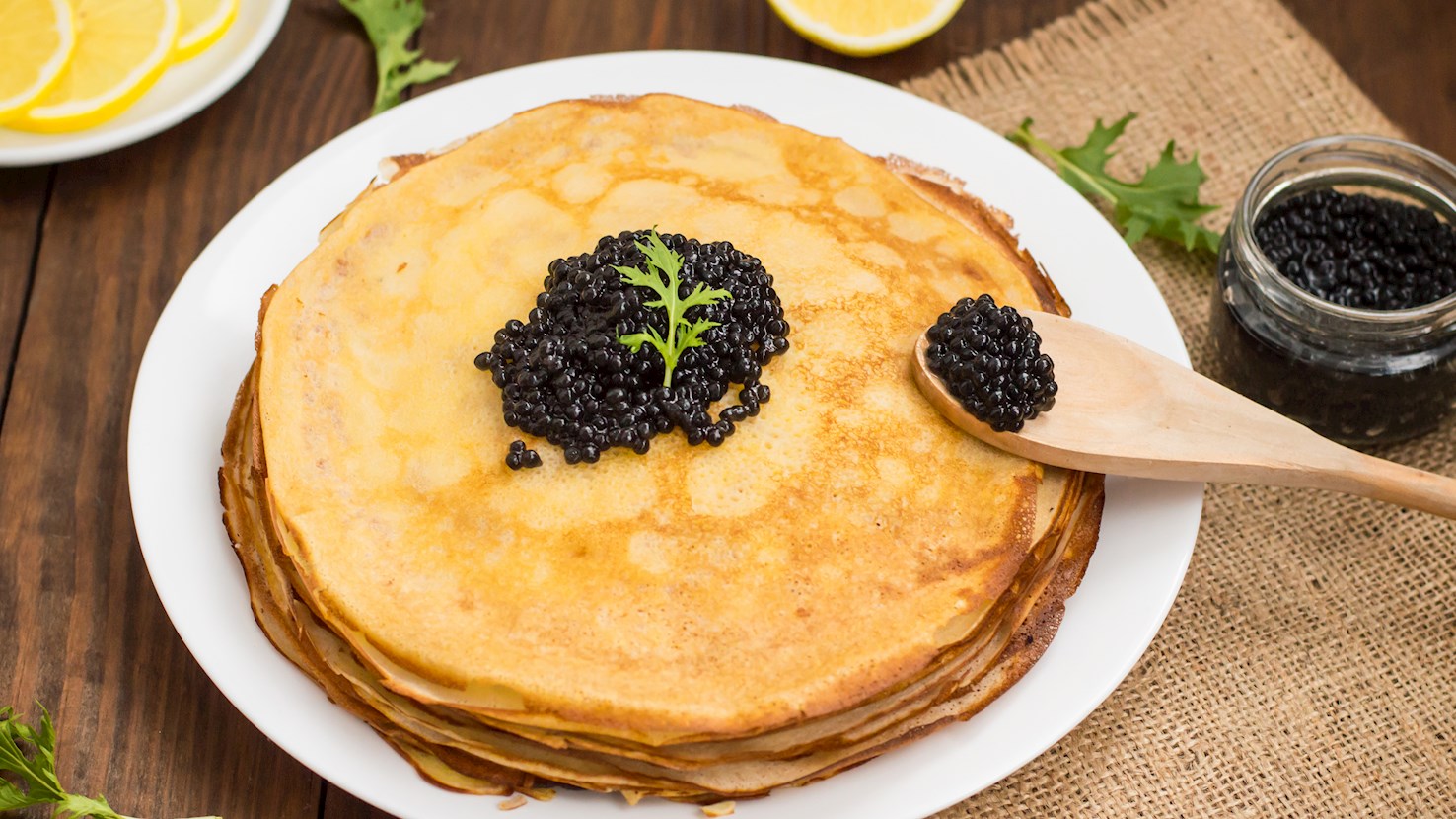
These traditional Russian pancakes are prepared with flour, eggs, milk, yeast, and a pinch of salt. What distinguishes them from other pancakes is the addition of yeast, since similar equivalents mostly do not add any leavening agents. The batter is poured over a hot pan, shaped into a circle, and fried for a couple of minutes on both sides. The tradition of preparing this traditional Russian dish originates from ancient times: it was a ceremonial dish, served during the pagan holiday called Maslenitsa – a week-long festivity praising the end of winter and the celebration of spring. With their shape and color, blini symbolized the long-awaited Sun. However, blini are not consumed exclusively during Maslenitsa, as they have become one of the most popular dishes in Russia, and are also commonly eaten around the world. Blini are extremely versatile and can be served with sweet or savory fillings. Some of the Russian favorites include various jams, condensed milk, while the most famous savory version is topped with fish roe or caviar.
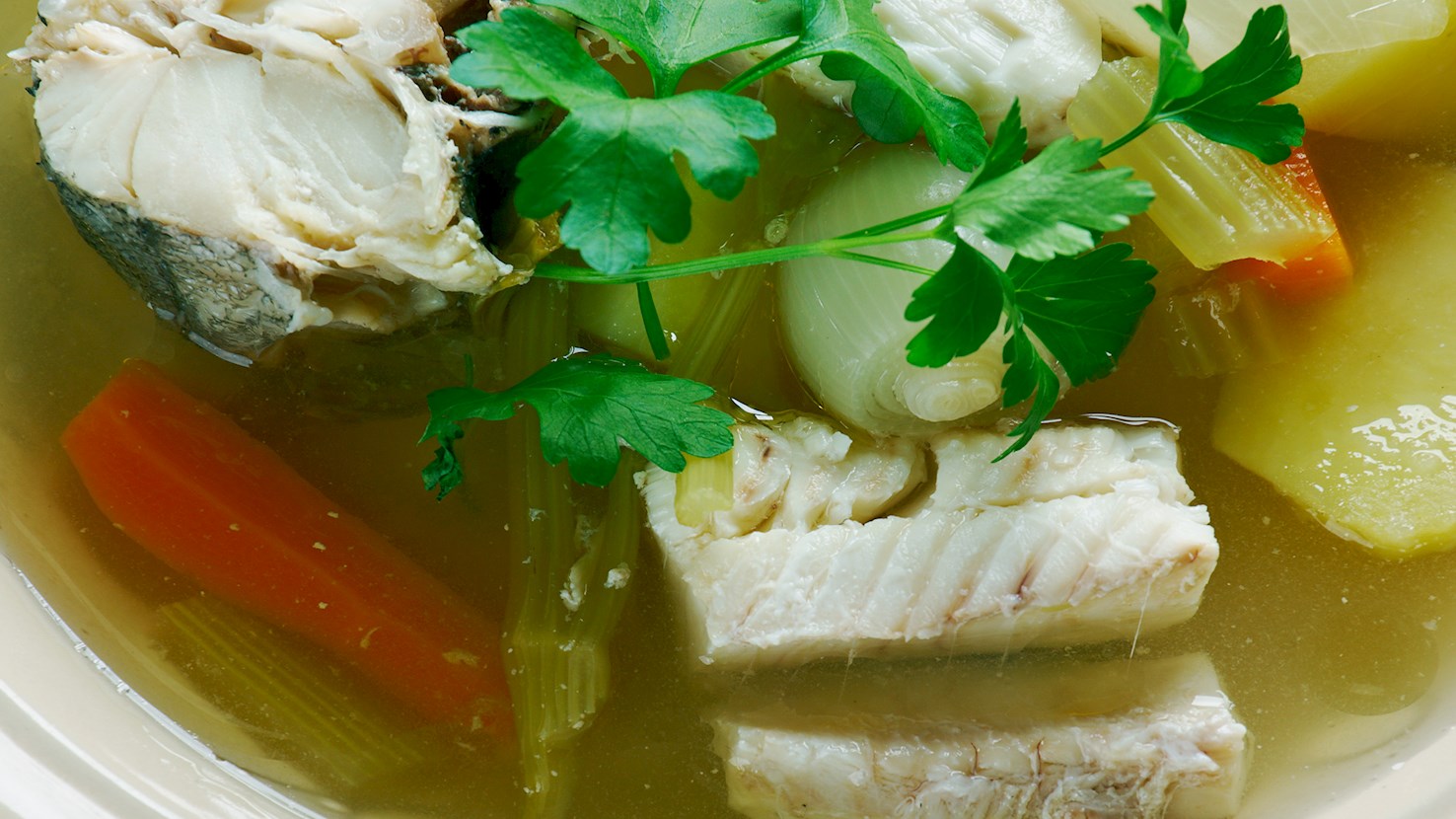
Ukha is a rustic Russian soup consisting of a broth filled with herbs, seasonings, root vegetables, and fish such as salmon, cod, perch, and trout. A bit of vodka is often added into the pot while the soup is simmering. Although it originated as a simple broth, it evolved into an elaborate dish during the 16th and 17th centuries, when it was served in Russian courts. Apparently, the soup is so good that it was even a favorite of Ivan the Terrible.
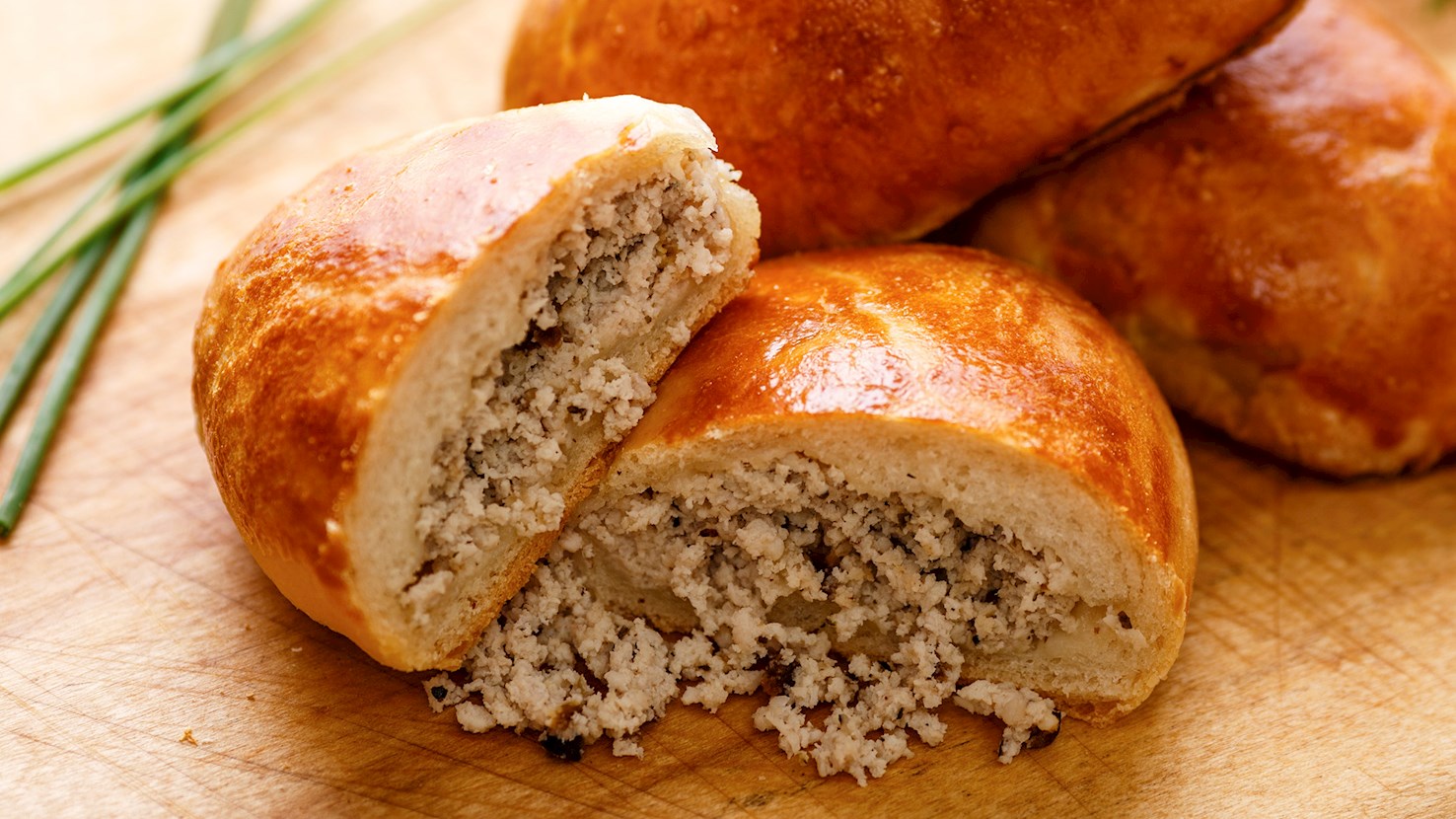
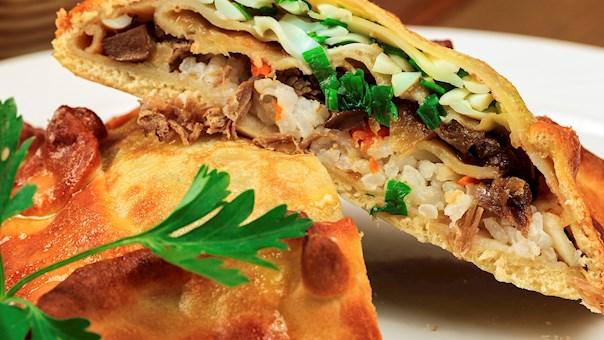
Pirozhki is one of the most popular Russian dishes, often sold as street food, although it can also be made at home. The pocket-sized, oval-shaped pirozhki are yeast dough buns stuffed with a variety of ingredients such as fresh fruits, jams, and cottage cheese for the sweet varieties, or meat, eggs, vegetables, fish, and rice for the savory versions. They can be either baked or fried. The name pirozhki can be literally translated to little pies. Pirozhki are commonly consumed as a snack, and today, they are prepared in numerous versions throughout the world.
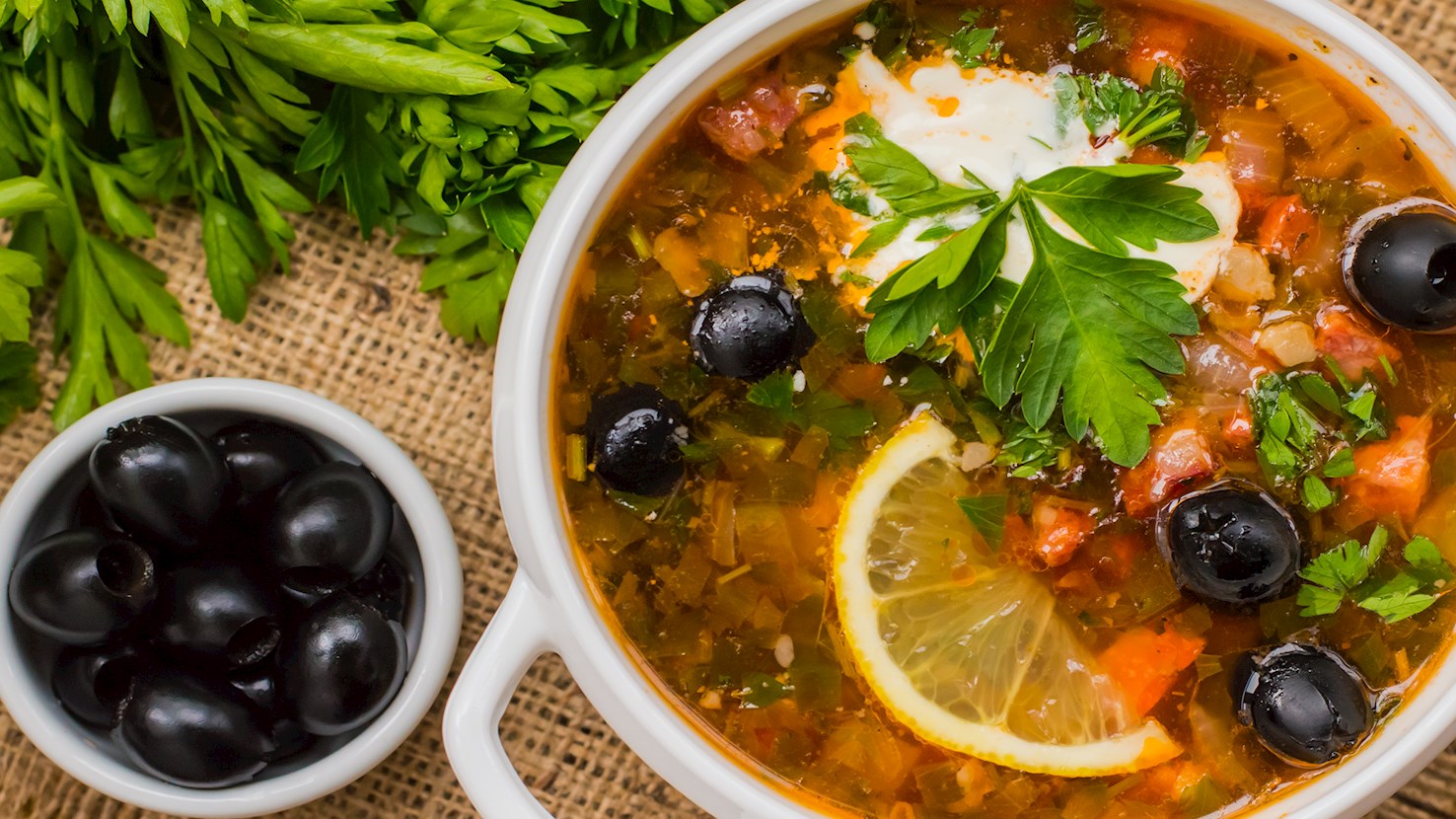
Solyanka is a traditional soup made with meat, fish, or mushrooms, and vegetables such as tomatoes, onions, olives, and cabbage. The soup is usually served with lemon wedges on the side, but it is also flavored with lemon juice during the cooking process. If meat is used, it is typically beef, pork, or chicken. Solyanka is also well-known as a hangover cure and it is traditionally served with sour cream.
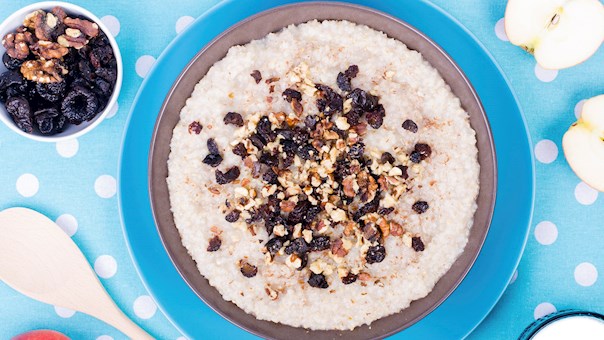
The fundamental dish of Russian cuisine is known as kasha, a porridge that has represented an essential Russian meal for centuries. Russian kasha refers to various dishes which are created with cereals, most commonly rice, wheat, or millet, and pseudocereals like buckwheat and quinoa. The dish is usually boiled in water and milk, and ranges from sweet to savory in flavor. It can be modified by numerous additions such as fresh or dried fruit, preserves, cheese, butter, vegetables, nuts, or honey. In the past, the porridge was traditionally prepared in cast iron pots and slowly baked in the oven during the night. This authentic Russian dish holds a strong symbolic meaning–it is the first solid meal served to children, and is typically served during funerals, thus symbolizing the circle of life. Varieties of the dish, prepared with different cereals, are often found in other Slavic countries such as Ukraine, Poland, and Belarus.
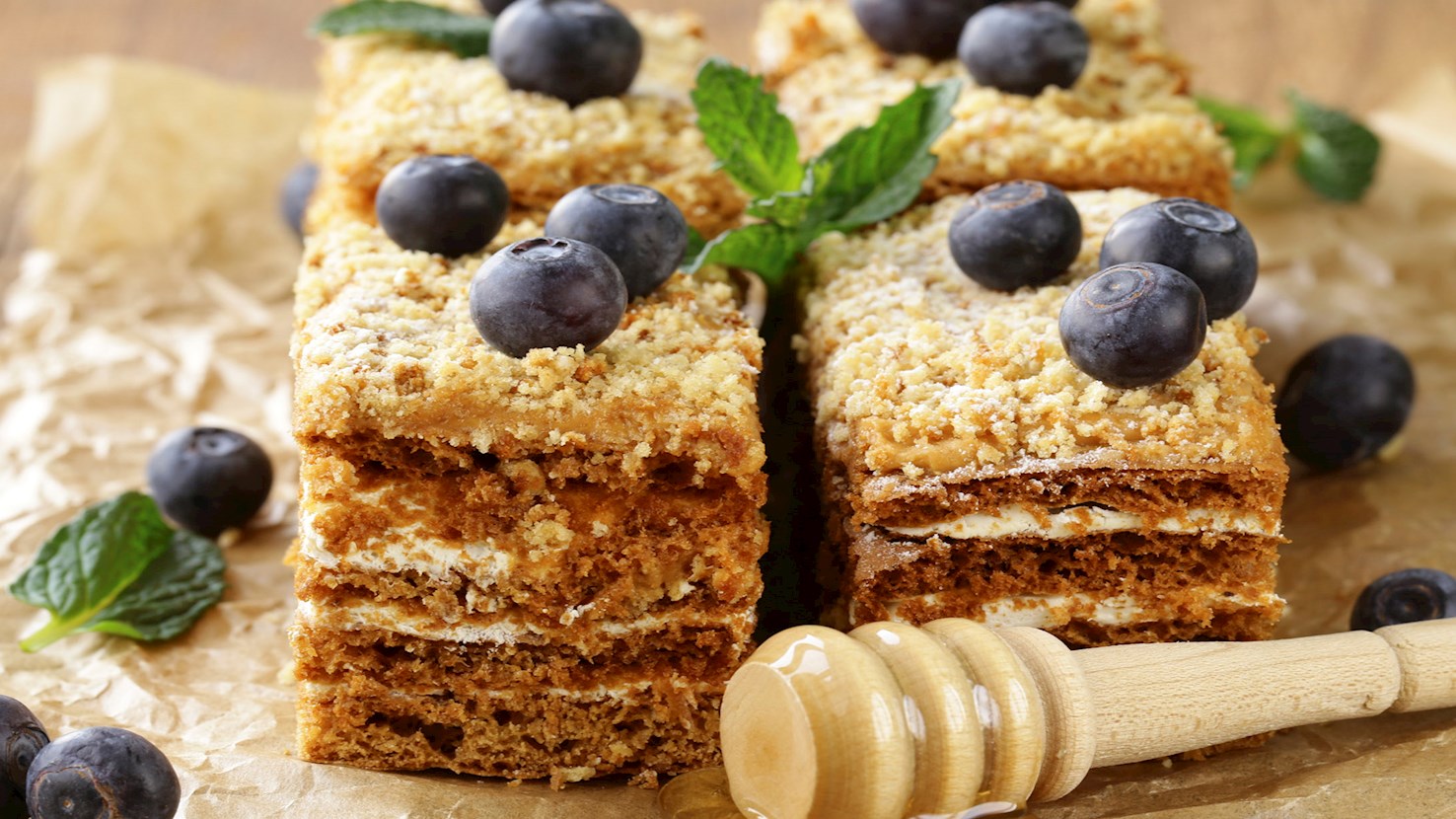
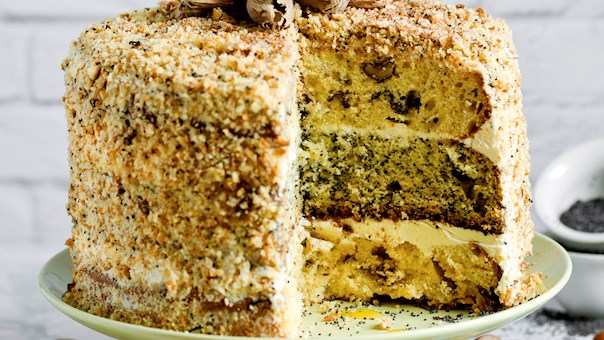
Medovik is a popular Russian layered honey cake consisting of honey-infused, almost biscuit-like sponges that are coated with thin layers of cream. Although there are numerous variations of the cake, the custard is usually prepared with whipped cream or various combinations of condensed milk and butter. It is believed that the cake first appeared in the 1820s and was initially created for the wife of Alexander I of Russia. The addition of condensed milk probably originates from the Soviet era, while modern variations may include berries or even chocolate. Medovik is traditionally decorated with ground walnuts and is commonly served on various special occasions.
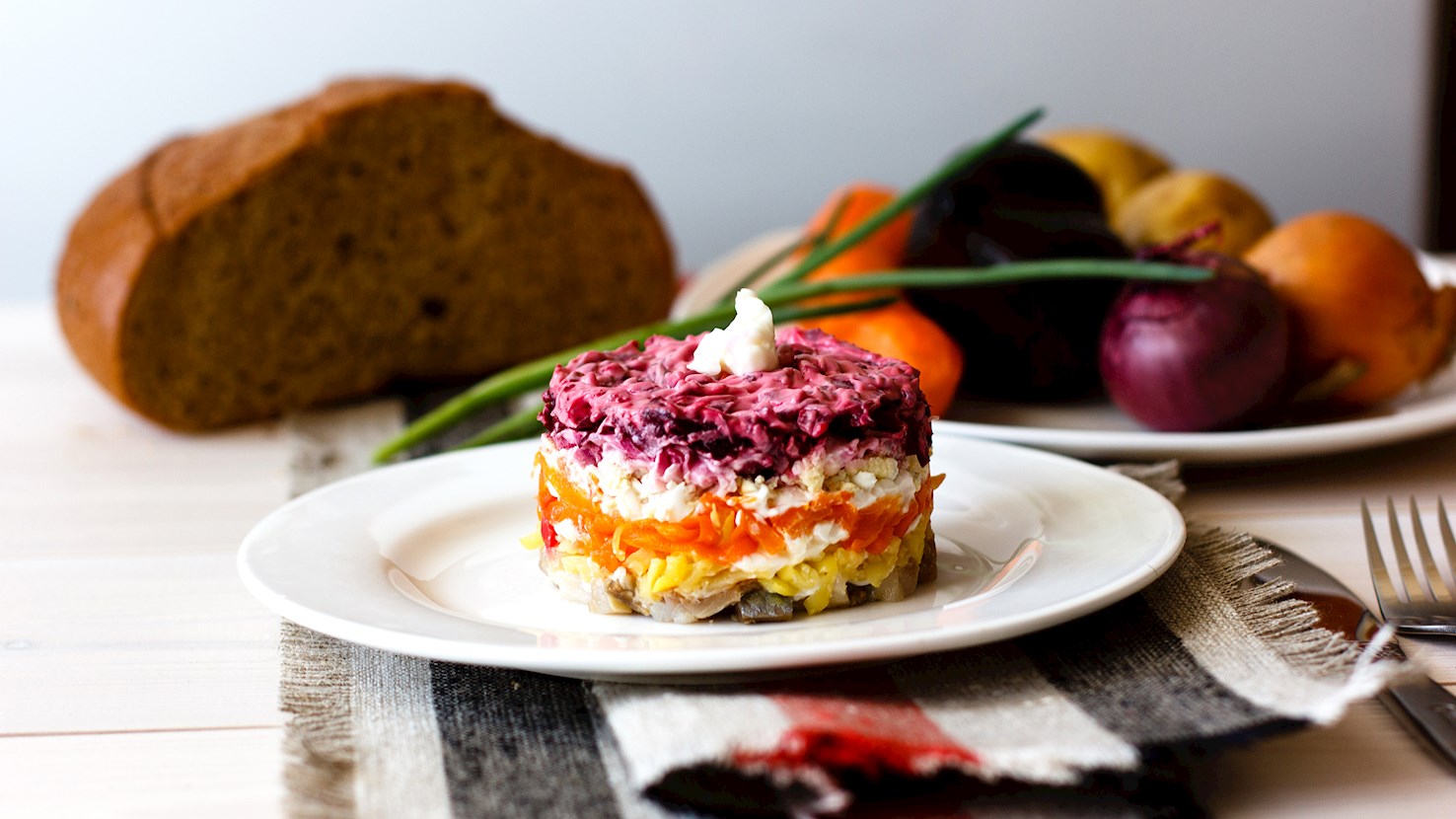
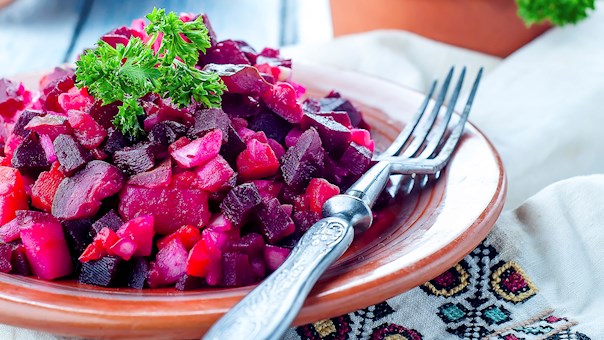
Shuba or herring under a fur coat is a unique Russian salad consisting of three distinctive layers: salted herring, potatoes, and beets. The salad often has more than three layers, mostly consisting of apples, onions, or hard-boiled eggs. Most people believe that it was invented by a tavern owner named Anastas Bogomilov at the beginning of the 20th century. The red color of the beets symbolizes the red flag, and potatoes symbolize the staple food of peasants and workers. Today, the salad is a well-known staple at Russian New Year celebrations.
TasteAtlas food rankings are based on the ratings of the TasteAtlas audience, with a series of mechanisms that recognize real users and that ignore bot,
nationalist or local patriotic ratings, and give additional value to the ratings of users that the system recognizes as knowledgeable.
TasteAtlas Rankings should not be seen as the final global conclusion about food. Their purpose is to promote excellent local foods,
instill pride in traditional dishes, and arouse curiosity about dishes you haven’t tried.




What People Say