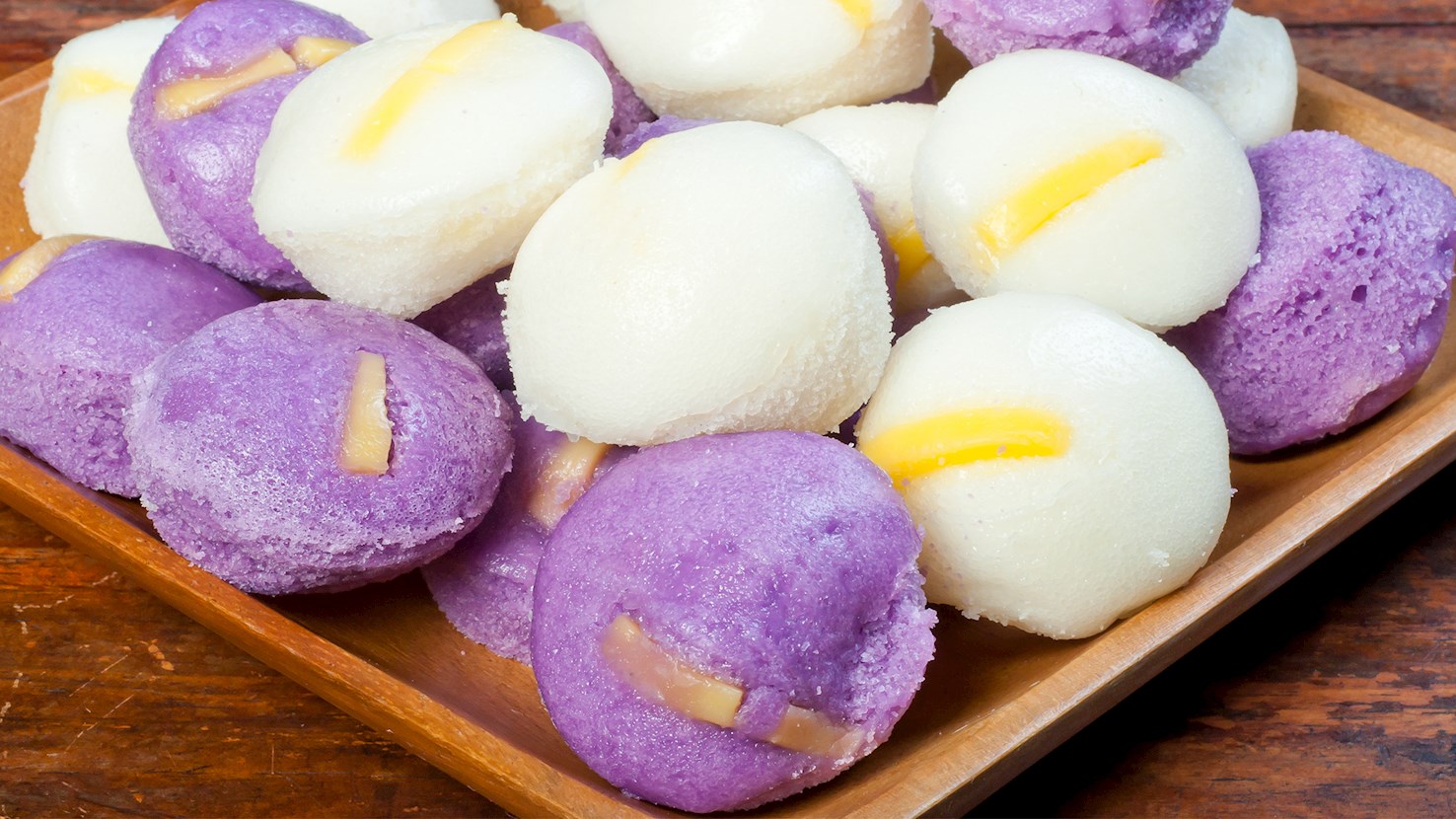
The lightly sweetened puto are popular Filipino steamed rice cakes traditionally consisting of finely ground soaked rice that is steamed in round containers and served sliced. The popularity of these versatile cakes has caused the development of many modern puto varieties, which often vary in texture, color, shape, size, and flavor. Because of their neutral flavor, they can be enjoyed as a quick snack or a dessert, but they are also served as an accompaniment to savory dishes such as hearty Filipino stews.
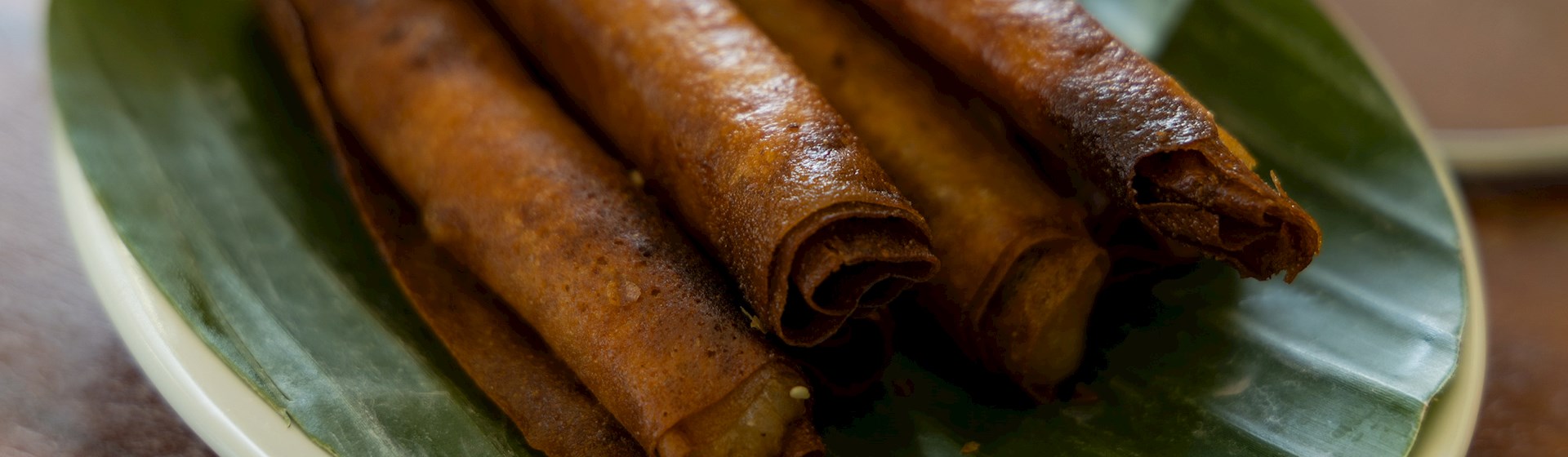
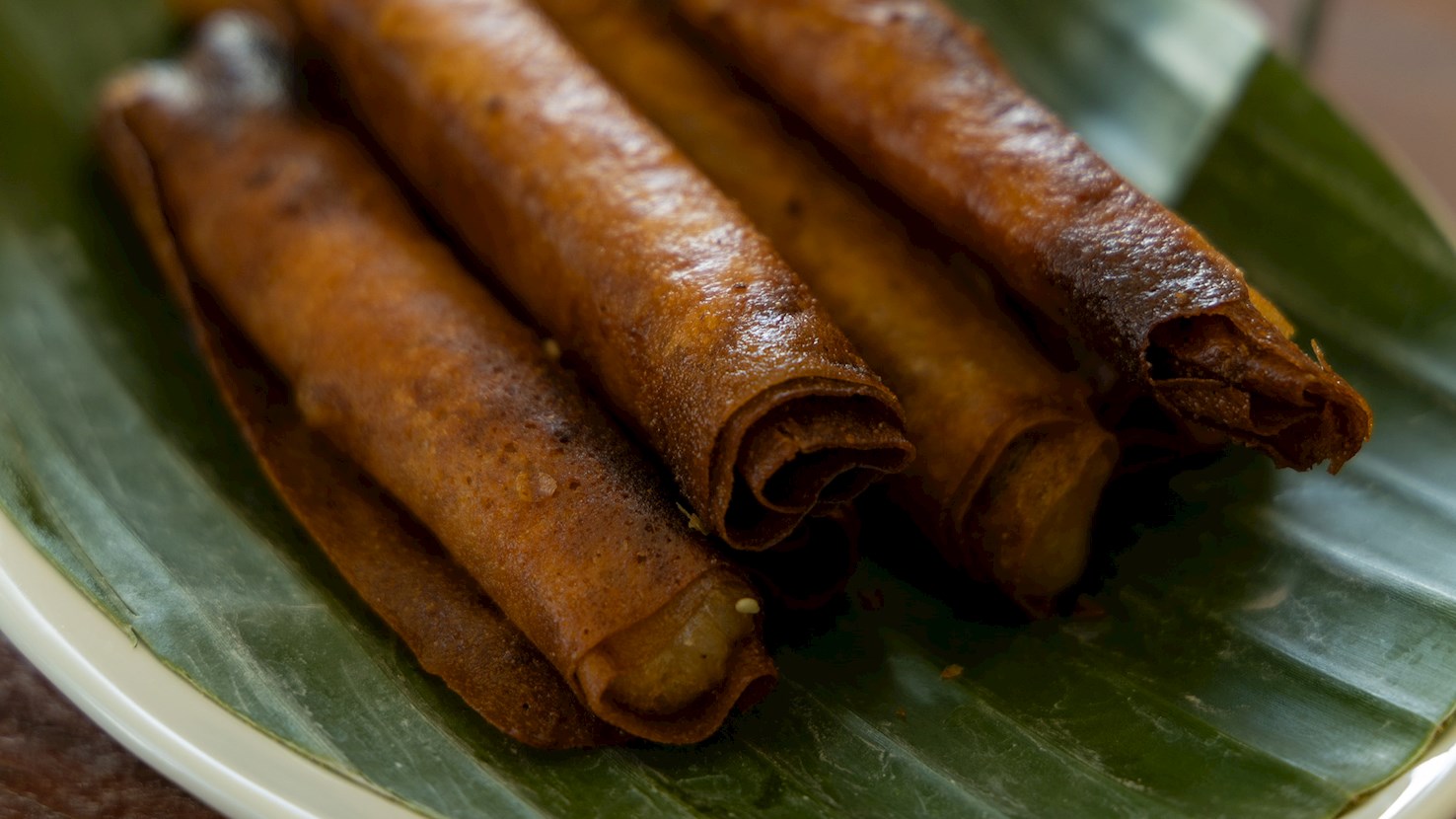
Falling in the group of popular lumpia snacks, turon is the famous Filipino treat made with saba plantains and jackfruit. The fruit is sliced lengthwise, dusted in brown sugar, enclosed in thin wheat wrappers, then fried until golden and crispy. Like other lumpia varieties, turon was also developed from the Chinese spring rolls and represents one of the most common sweet versions of the dish. Before it is served, it is commonly drizzled with caramel or sprinkled with roasted sesame seeds. It is usually sold by Filipino street vendors and enjoyed as a sweet snack or a satisfying dessert.
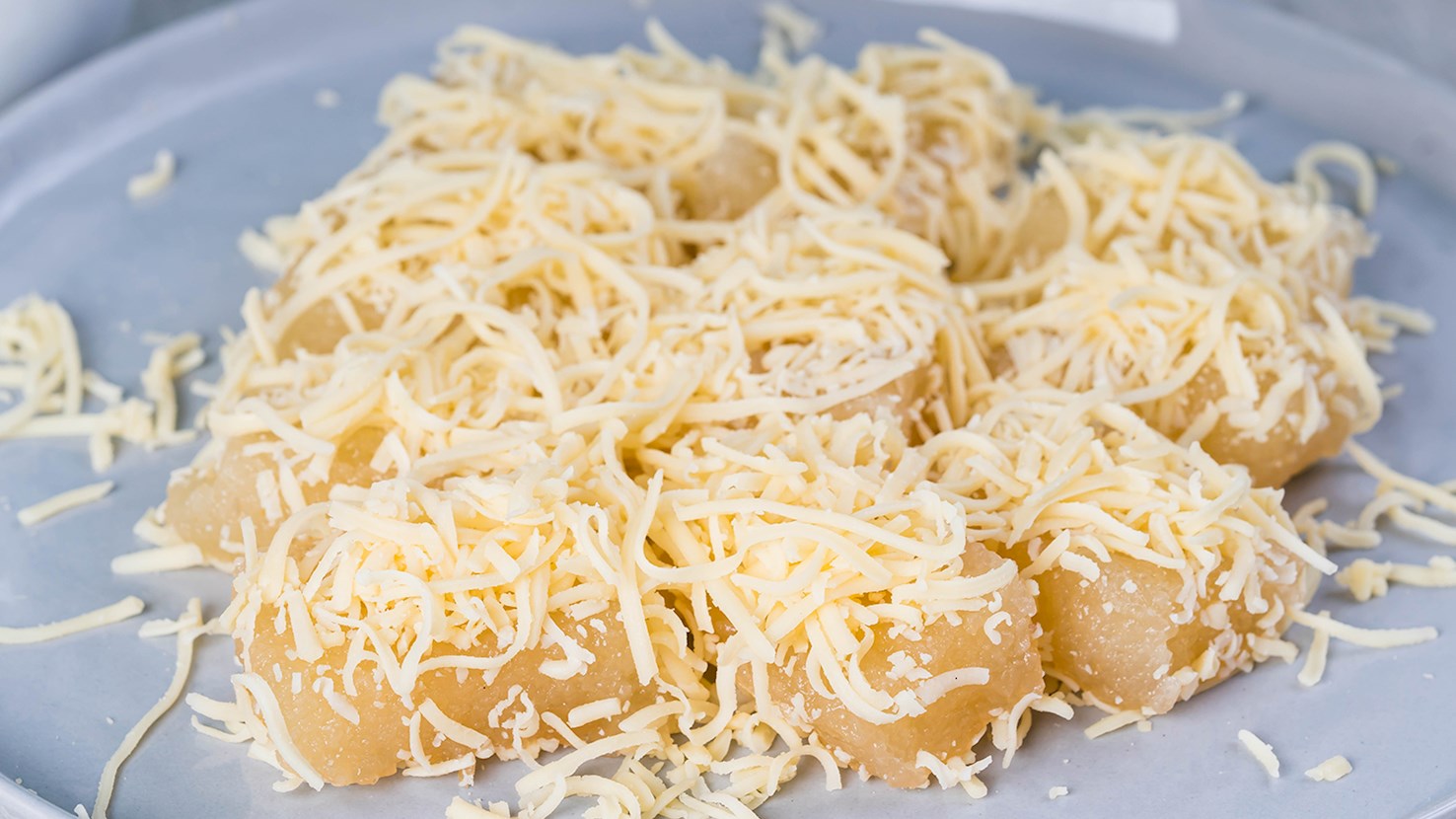
Pichi-pichi is a soft, gelatinous sweet snack made from finely grated cassava root mixed with sugar and lye water. The origins of this sticky treat trace back to Quezon province, where it was a resourceful way to use the abundant cassava crops growing across the area. When refined wheat flour was hard to find, rural farm families relied heavily on this hardy root vegetable, grating and steaming it to invent brand-new sweet snacks. Making this bouncy dessert starts with peeling raw cassava tubers and shredding them down to extract the moist, starchy flesh. This wet mash is thoroughly mixed with granulated white sugar and a few drops of food-grade lye water. Adding the alkaline lye water triggers an essential chemical reaction, turning the cloudy white batter into a clear, golden-yellow dough and giving the final treat its famous chewy, elastic bite. Small cups or shallow pans are filled with this wet slurry and placed inside a steamer over boiling water. The heat solidifies the starch, turning the liquid batter into a firm, sticky jelly. After cooling completely to room temperature, the pieces are popped out of their molds and rolled in a thick coating to prevent them from adhering to hands or the serving tray. These sweet lumps sit piled high on a shared plate and function perfectly as a mid-afternoon snack or a dessert right after a large meal. The traditional topping is freshly grated mature coconut, which adds a slightly crunchy, milky texture. A massively popular variation uses a thick layer of shredded cheddar cheese instead, delivering a sharp, salty punch that cuts right through the sweet jelly. Another popular variant uses fragrant pandan leaf extract in the raw batter, dyeing the pichi-pichi bright green and adding a sweet, floral scent.
TasteAtlas food rankings are based on the ratings of the TasteAtlas audience, with a series of mechanisms that recognize real users and that ignore bot,
nationalist or local patriotic ratings, and give additional value to the ratings of users that the system recognizes as knowledgeable.
TasteAtlas Rankings should not be seen as the final global conclusion about food. Their purpose is to promote excellent local foods,
instill pride in traditional dishes, and arouse curiosity about dishes you haven’t tried.



What People Say