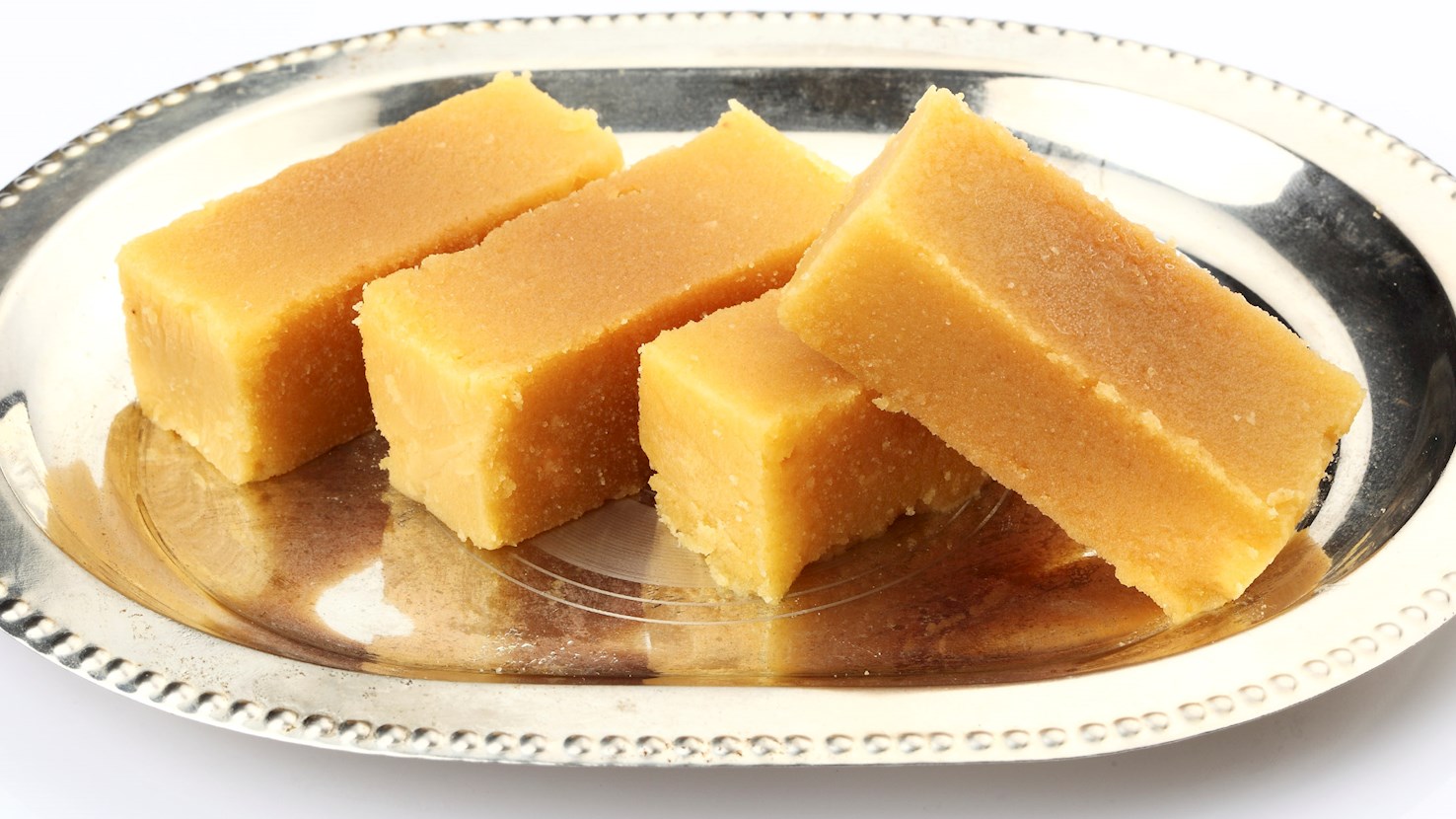
Mysore pak was invented in 1935 at the Mysore Palace by the royal chef Madappa. As the King Krishna Raja Wodeyar was ready to have his lunch, the chef began experimenting with a sweet dish, combining gram flour, ghee butter, and sugar into a syrup. When the King finished his lunch, the sweet cooled down and was served to the King, who loved it. The chef told him it was Mysore paka, the word paka denoting a sweet concoction. Soon, Mysore pak was proclaimed the royal sweet. Today, it is still known as the king of sweets in the South, and it is commonly prepared for numerous Indian festivities and celebrations, although it can also be found throughout India on various street stands.
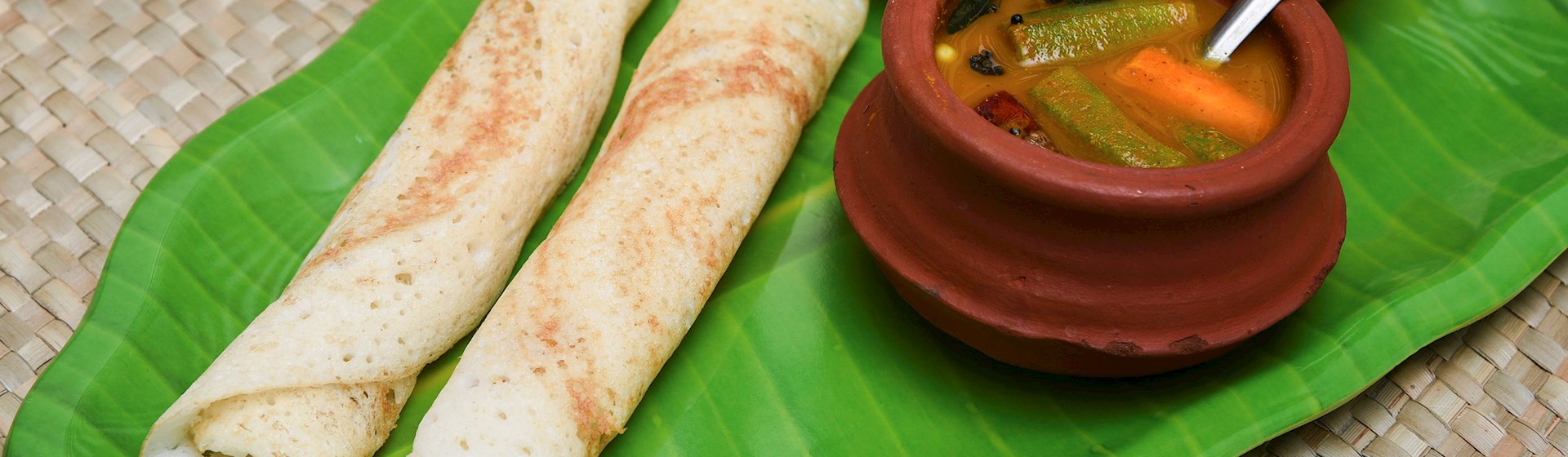
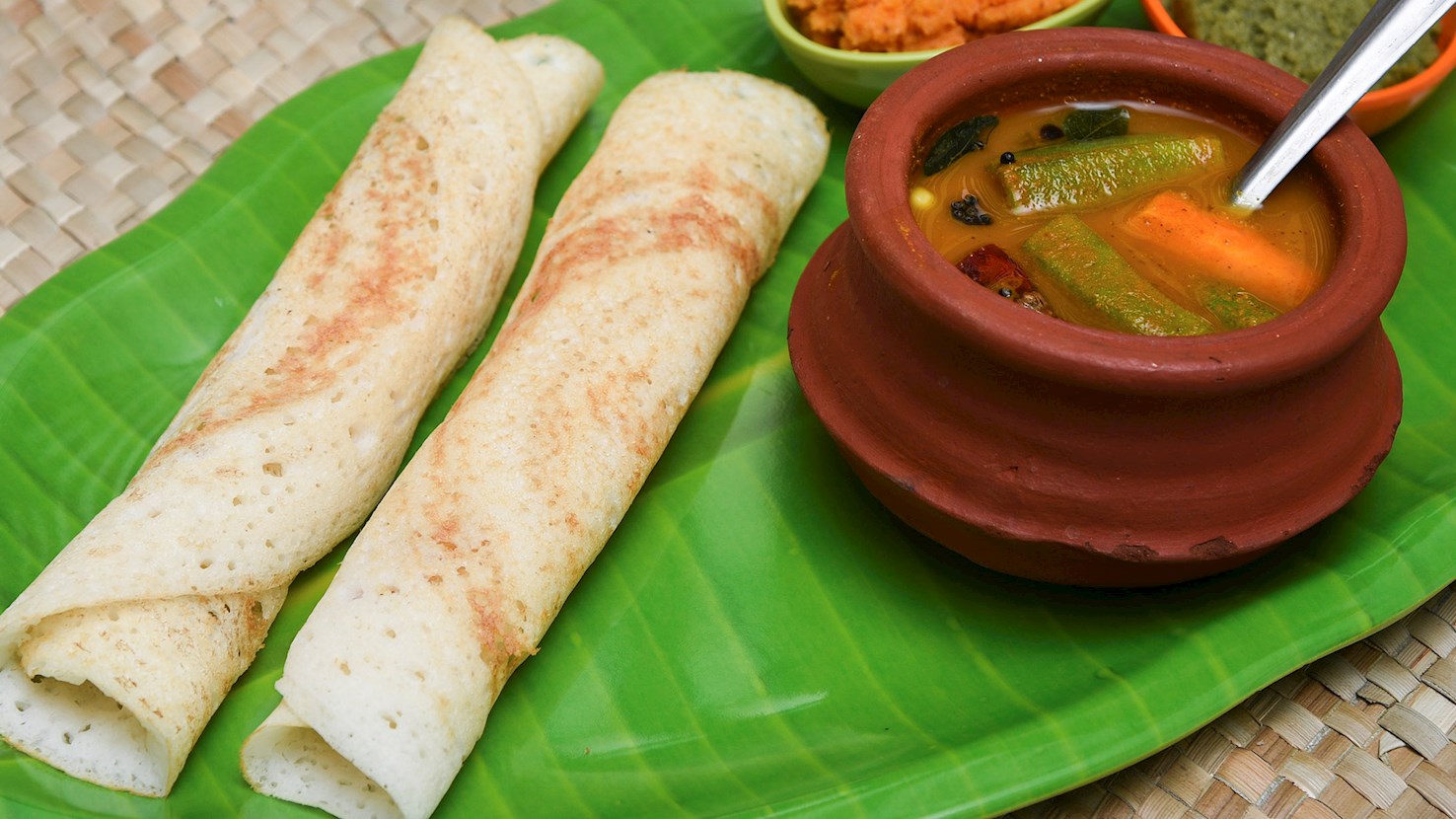
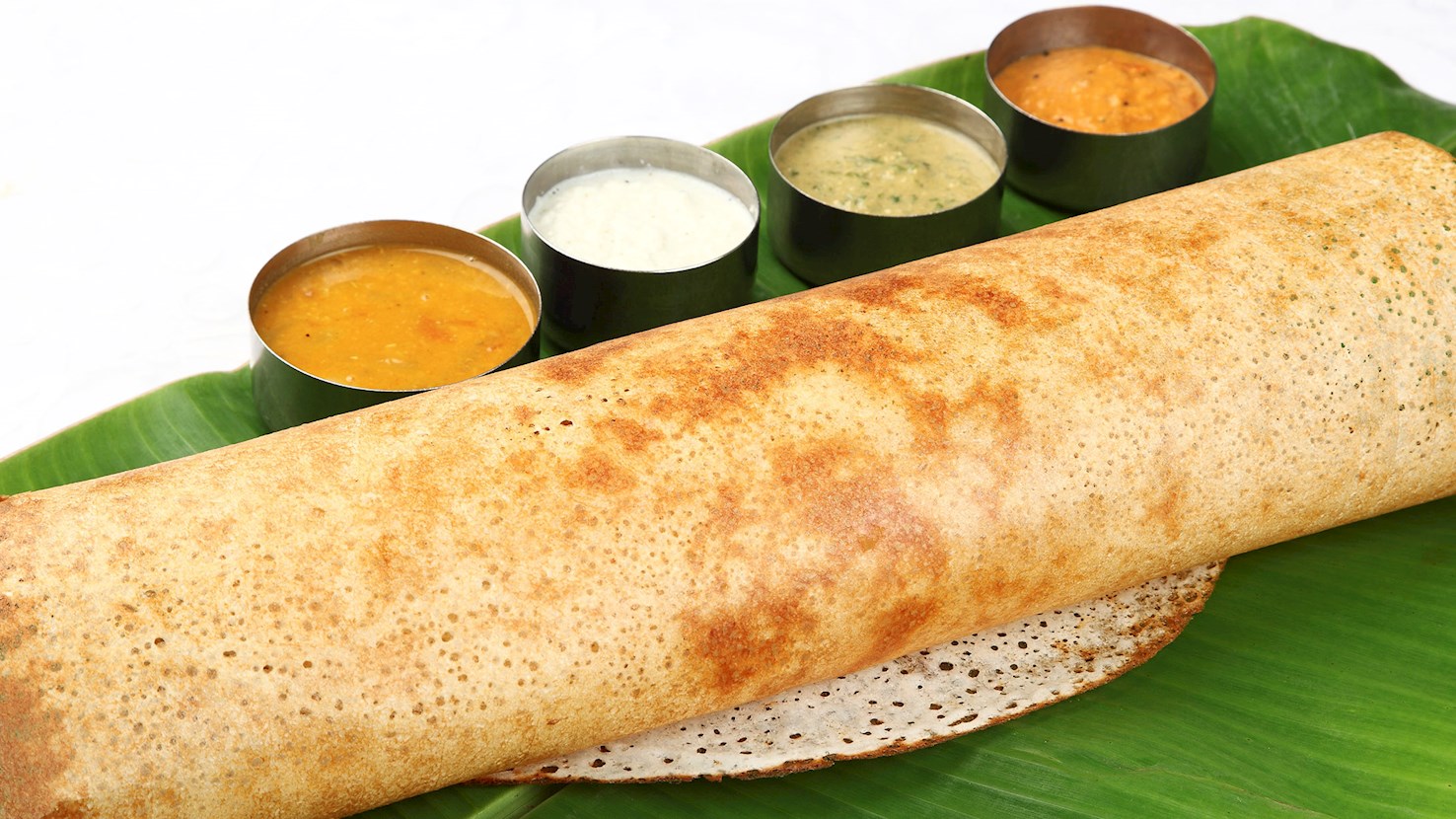
The thin pancake known as dosa is one of the most famous Indian dishes. It is made with soaked rice and black gram beans, which are ground into a paste and mixed to create a thick batter, usually left to ferment overnight. The mixture is enriched with a handful of fenugreek seeds, which give dosa its distinctive golden brown color and a delicious, crispy texture. It is then baked on a hot oiled griddle, pertaining a delicate, thin texture and round shape. Indian dosa is a staple dish in the entire country, but some believe that dosa had originated in the south Indian state of Tamil Nadu. It is an ancient dish, whose origins are traced back to the 1st century AD, when it was first mentioned in Tamil literature. Others claim that it's linked to Udupi (present day Karnataka) due to the association with the Udupi restaurants. Usually, dosa is consumed as a savory dish, commonly eaten for breakfast, dinner, or a quick snack. Since it has a rather neutral taste, dosa is an ideal accompaniment to many luscious Indian dishes, such as meat and vegetable curries or chutneys. It is often filled with ingredients and wrapped, or served on the side as an integral part of a meal, when it is usually used as a utensil to scoop the fragrant side dishes. As other ancient food staples, dosa has been adapted and combined with other ingredients to create numerous distinct varieties. Wheat flour, semolina, rice flour, or soy milk are used in some regions to create milder, diverse, and more interesting dosa varieties. This ancient Indian creation, in its numerous forms, is found everywhere in India - it is sold as a quick snack by street vendors, and it is an irreplaceable item in traditional Indian restaurants.
A traditional southern Indian dish known as masala dosa is popular throughout the country, made from a batter of soaked rice and lentils that is baked into a thin pancake and usually stuffed with potatoes, onions, and mustard seeds. The dish is often garnished with grated coconut and chopped coriander. With its huge popularity, there are also some variations of the dish, such as mysore masala dosa,rava masala dosa, onion masala dosa, and paper masala dosa. It is usually consumed as a quick snack or as a part of any meal of the day. Masala dosa has even made the list of 10 foods to try before you die, complied by the Huffington Post, alongside famous dishes such as Beijing duck, moussaka, and BBQ ribs.
TasteAtlas food rankings are based on the ratings of the TasteAtlas audience, with a series of mechanisms that recognize real users and that ignore bot,
nationalist or local patriotic ratings, and give additional value to the ratings of users that the system recognizes as knowledgeable.
For the “3 Traditional Foods You Have To Try in Mysore” list until May 22, 2026, 71 ratings were recorded, of which 48 were recognized by the system as legitimate.
TasteAtlas Rankings should not be seen as the final global conclusion about food. Their purpose is to promote excellent local foods,
instill pride in traditional dishes, and arouse curiosity about dishes you haven’t tried.