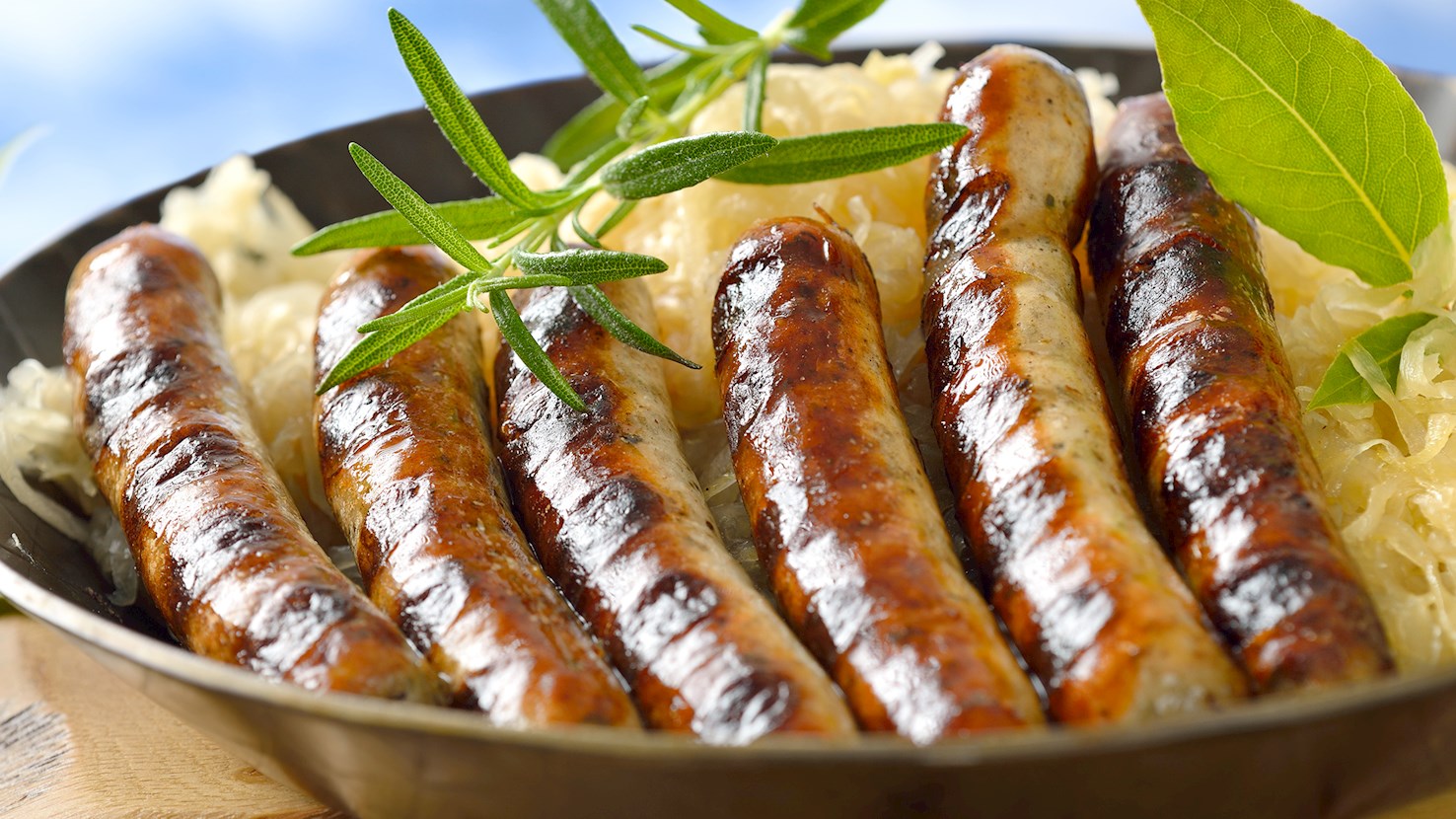
What was once an item for survival during the cold winter months and a technique of not wasting meat scraps is nowadays a delicacy consumed throughout Germany and abroad. Bratwurst stems from two words, an Old High German word brat, meaning meat without waste, and wurst, which means sausage. Bratwurst has origins with the Celtics, but the Franconians developed it further. It dates back to the 1300s in a region that would eventually become Eastern Germany. Bratwurst is usually consumed for breakfast, due to the tradition of farmers who would make the sausages in the morning and eat them by noon, as they would otherwise spoil. Technically, a bratwurst must be made from either pork, veal, or beef, but there are more than 40 varieties of the sausage throughout Germany. The oldest recipe for bratwurst was discovered in 2000 by a historian named Heinrich Höllerlhas. The same recipe, for the Thuringian bratwurst (one of the most famous varieties), says that the makers had to use only the purest, unspoiled meat in the production process. Today, bratwursts are commonly served with sauerkraut, potato salad, horseradish, or mustard in Germany, but the sausages are also popular in the United States, especially in Wisconsin, where they are commonly found at summer cookouts and barbecues.
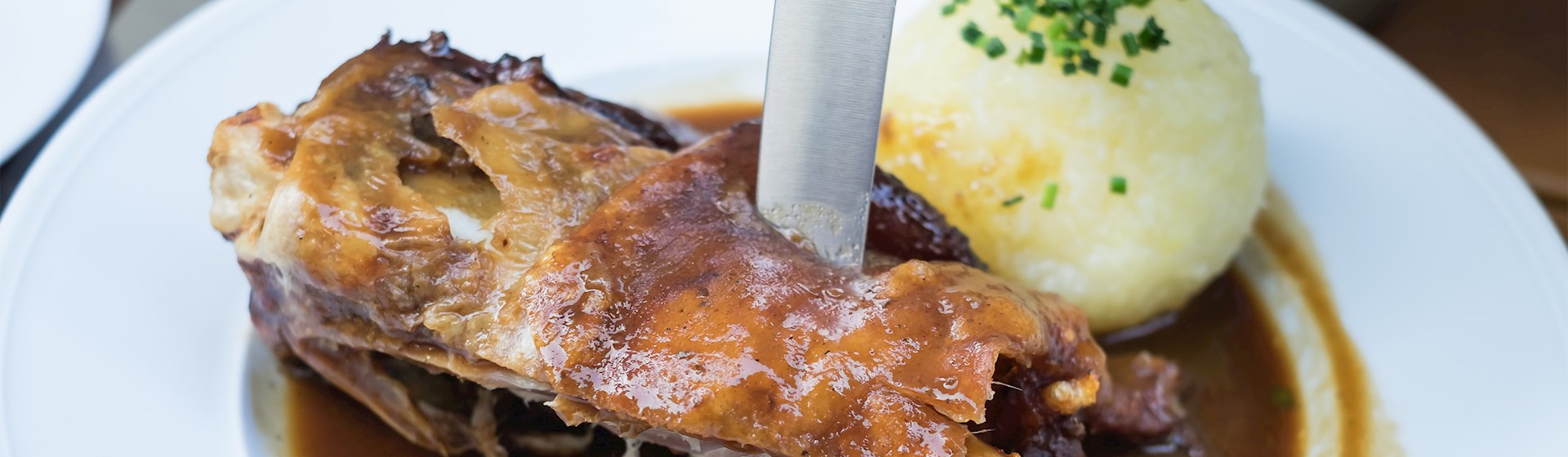
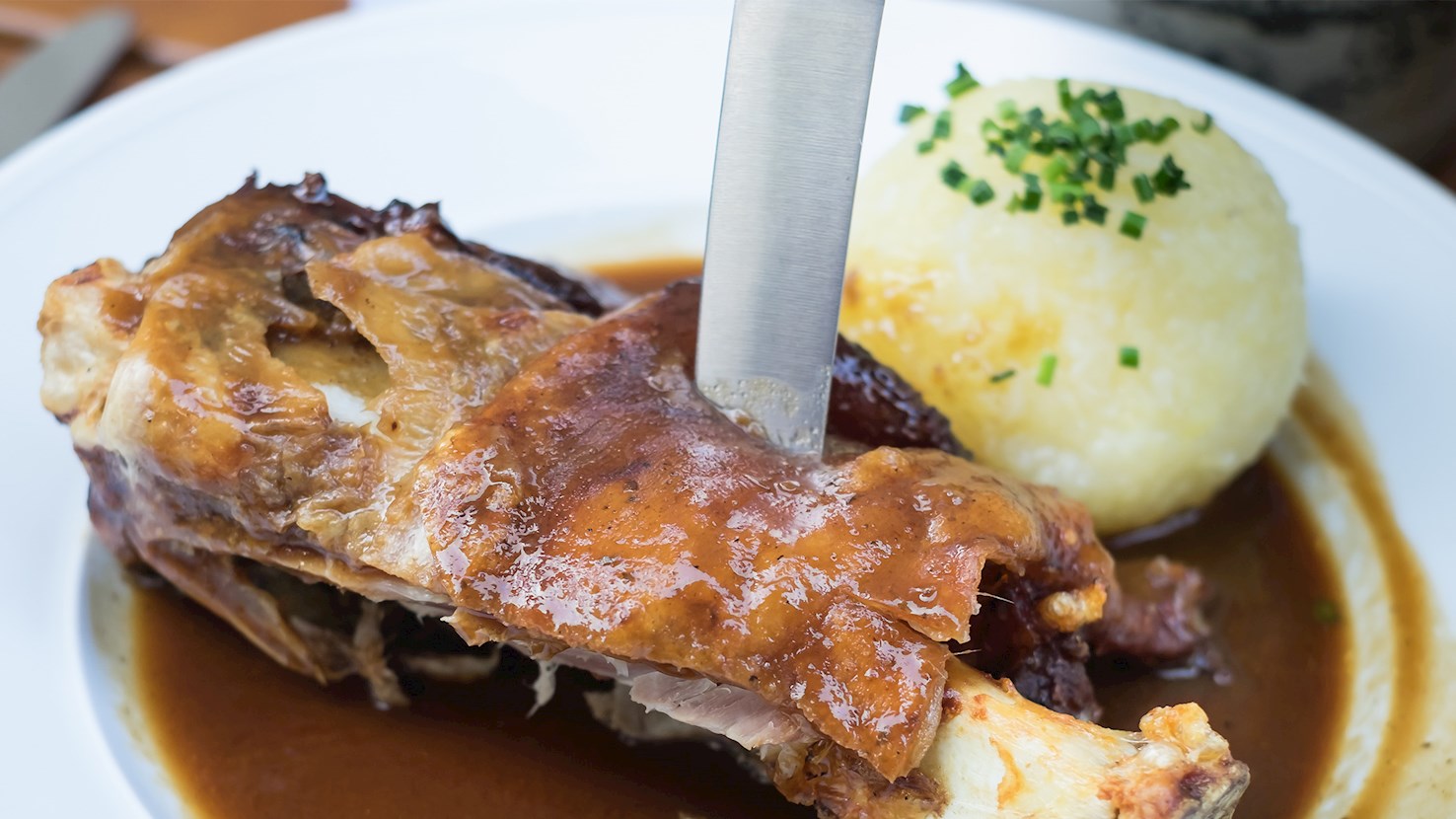
Schäufele is a traditional dish from the south of Germany, using pig’s shoulder as the main ingredient. Depending on the region, the meat can be cured and smoked beforehand, seasoned, and then it is either roasted or boiled. Additional ingredients may include various spices, onions, and root vegetables. A typical Franconian version of the dish is served with gravy, potato dumplings, and a salad on the side, while the smoked and cured version from Baden is usually accompanied by a potato salad.
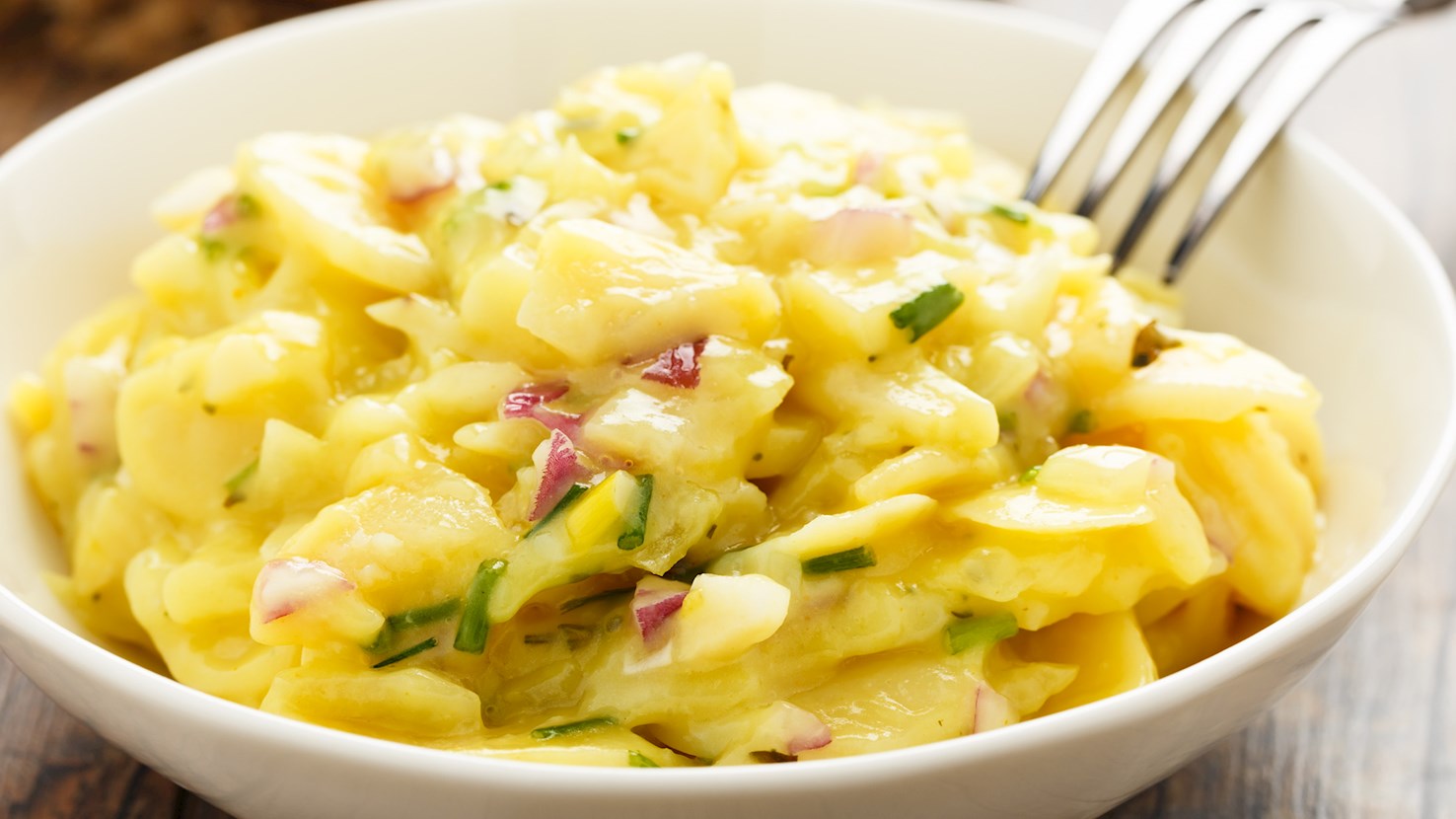
Kartoffelsalat is a potato salad from Germany made from cooked potatoes mixed with other ingredients, with two main preparation families defined by whether the dressing contains mayonnaise or not. Kartoffelsalat has sliced or cubed potatoes that stay tender but intact, coated either in a clear, savory, mildly acidic marinade or in a creamy, tangy dressing, and it commonly includes components such as vinegar, oil, salt, pepper, mustard, broth, onions, pickles, bacon cubes, eggs, apples, and fresh herbs depending on the version. The oldest known potato-salad recipe is dated 1621 in Nova Typis Navigatio by the Austrian abbot Caspar Plautz, similar potato salads appeared in German recipes around 1800, and named recipes such as Tarfuffeln-Salat were printed in 1752 and Erdäpfelsalat in 1770 as potatoes became integrated into everyday cooking. Waxy or mostly waxy “salad” potatoes are preferred because they do not fall apart easily when mixed, and some recipes include a small portion of floury potatoes to create a slightly thicker consistency. Basic preparation starts by cooking the potatoes either peeled in salted water or in their skins, cutting them into slices, and combining them with the chosen dressing, with the timing of cutting and dressing shaped by the regional style. For mayonnaise-based kartoffelsalat common in northern Germany, the potatoes are often processed a day after boiling to gain extra firmness before mixing with the dressing, while in southern styles the potatoes are often dressed while still warm so the marinade absorbs more deeply, and some methods lightly crush the potatoes instead of slicing them. One established non-mayonnaise method uses a hot mixture of meat broth, vinegar, oil, salt, pepper, and mustard poured over sliced potatoes, with optional additions such as finely cut onions, fried bacon cubes, garlic, or cucumber pieces, and the result can be eaten warm or cold. A specific Swabian method called “grated potato salad” uses day-old cooked potatoes grated on a kitchen grater and combined with onion, vinegar, oil, salt, pepper, and warm meat broth. In parts of Styria and Burgenland pumpkin seed oil is used for dressing, and in Franconia chives are treated as required. Mayonnaise-based kartoffelsalat is also associated with Silesian and Bohemian cooking, the Rhineland often adds gherkins or apples, northern variants often feature apples and hard-boiled egg, and Brandenburg combinations include gherkins with radishes or finely sliced onion, with optional additions such as roast leftovers, matjes, sausage pieces, and fresh herbs, and yogurt can replace mayonnaise as a lighter option. Kartoffelsalat is used as a flexible side dish and party food served with sausages, cutlets, and fried or baked fish, and as Erdäpfelsalat it is a classic accompaniment to Wiener Schnitzel, with many families in Germany eating Kartoffelsalat with bratwurst, bockwurst, or Wiener on Christmas Eve and a 2020 survey naming sausages with potato salad as the most popular Christmas Eve meal in Germany. Regional naming reflects local potato words, including erdäpfelsalat in southern Germany and Austria and härdöpfelsalat in Upper Swabia and Swiss German, alongside many dialect forms used for local variants.
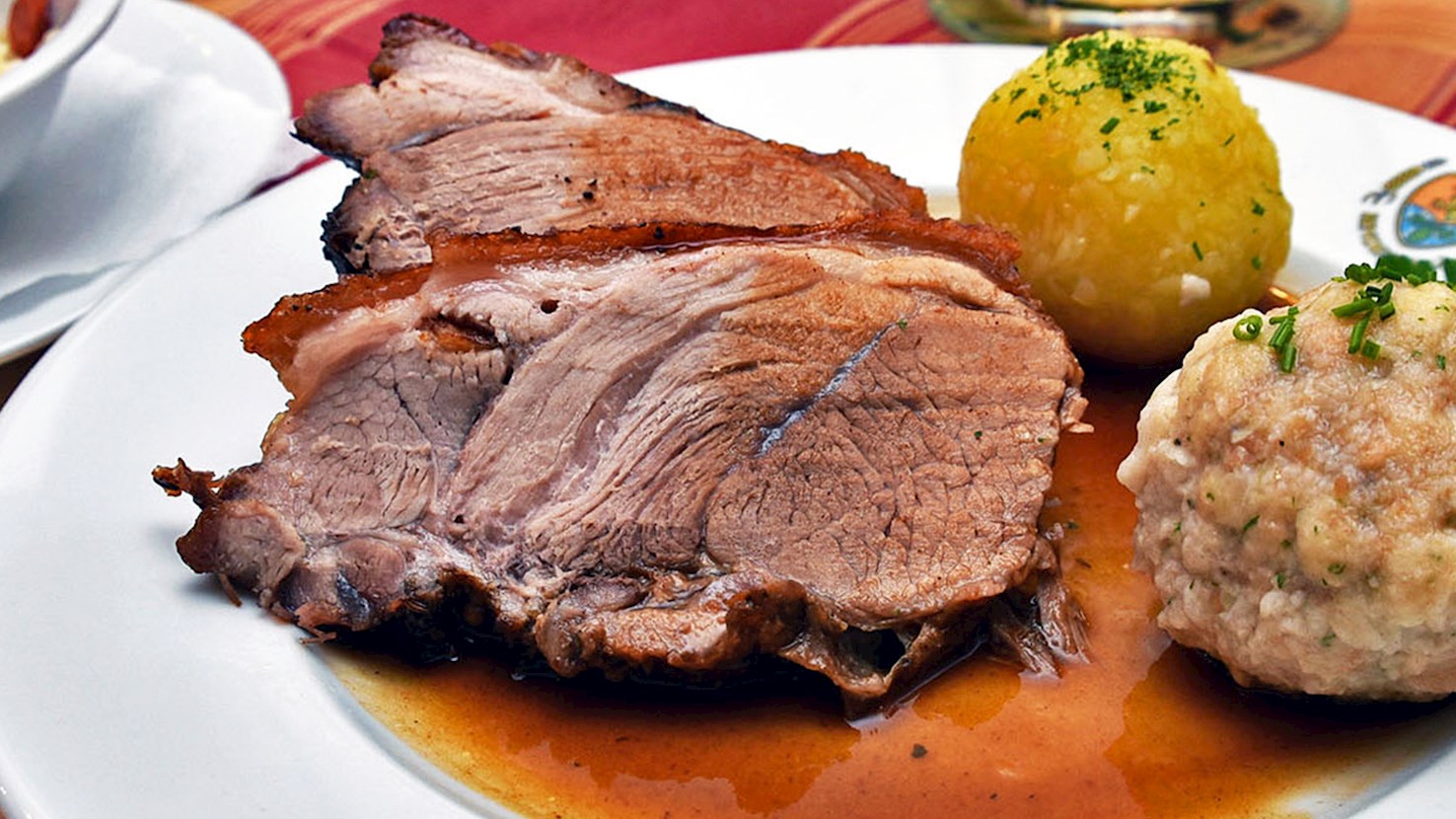
Schweinebraten is a traditional pork roast originating from Bavaria. It is typically prepared for Sunday lunch and consists of sliced pork roast that's served with homemade gravy, semmelknödel (bread dumplings) or potato dumplings, and either sauerkraut or rotkohl (red cabbage). When properly prepared, the meat should be succulent and very tender. The best part of pork to use for this dish is boneless pork shoulder. Before the preparation, pork is often rubbed with mustard, marjoram, or minced garlic, giving it a bit of extra flavor. For the best possible experience, it is recommended to pair the dish with a cold German beer on the side, preferably a lager.
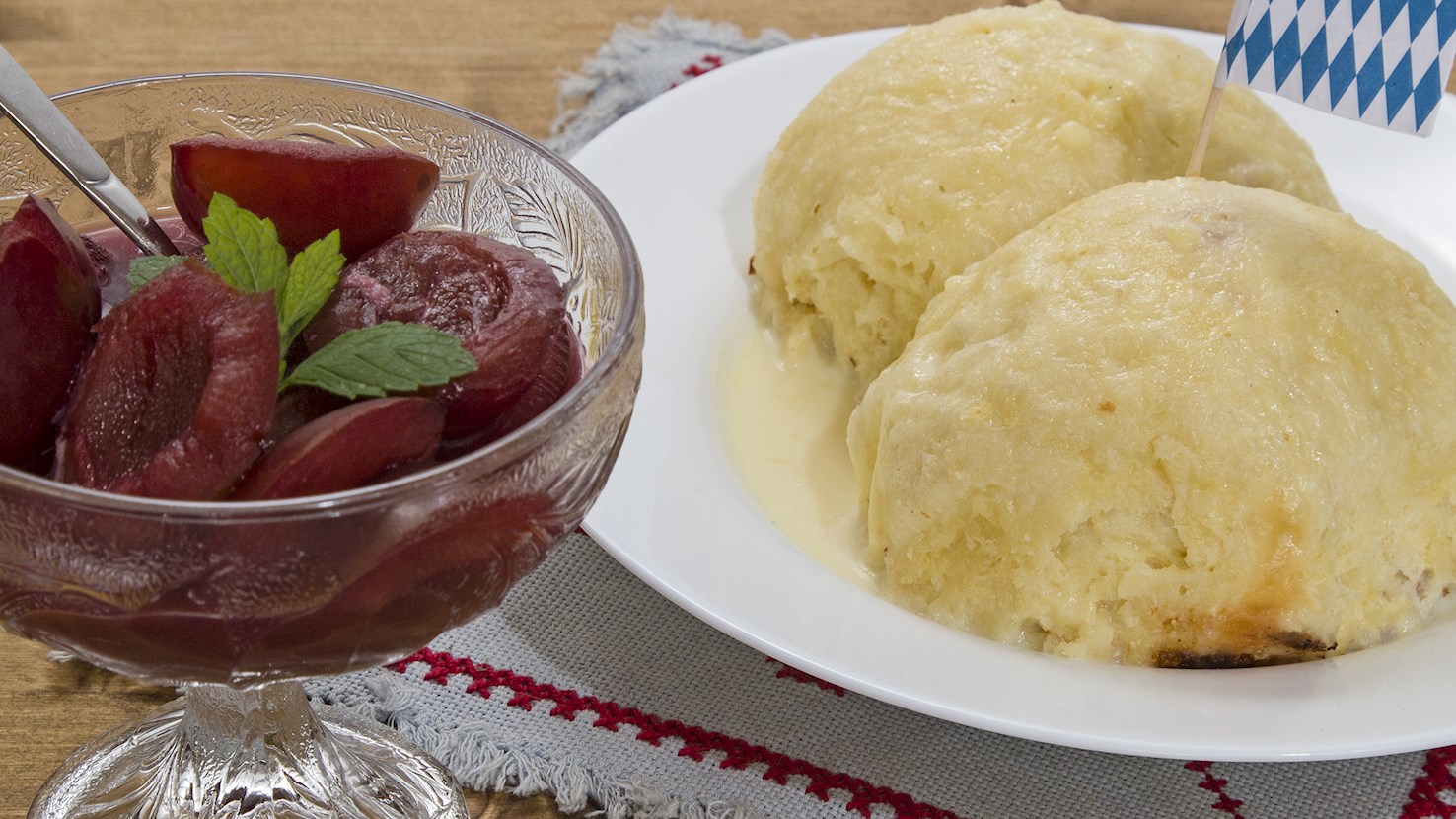
Dampfnudeln is a traditional dish made by steaming yeast dough dumplings in water, milk, and butter. After the liquids have evaporated, the dumplings are fried in butter until they develop a crispy crust on the bottom, while the top remains soft from the steaming process. Dampfnudeln can be prepared in a savory or sweet versions. The savory version is a Palatinate specialty, steamed in salt water, typically without a filling, and it is usually accompanied by a thick potato soup. The sweet versions are usually filled with fruit jams and accompanied by vanilla custard or fruit compotes. Although it is not known whether the first dampfnudel was made in Palatinate or Bavaria, the earliest written reference to the dumplings was found in an 1811 cookbook called The Bavarian Dampfnudeln.
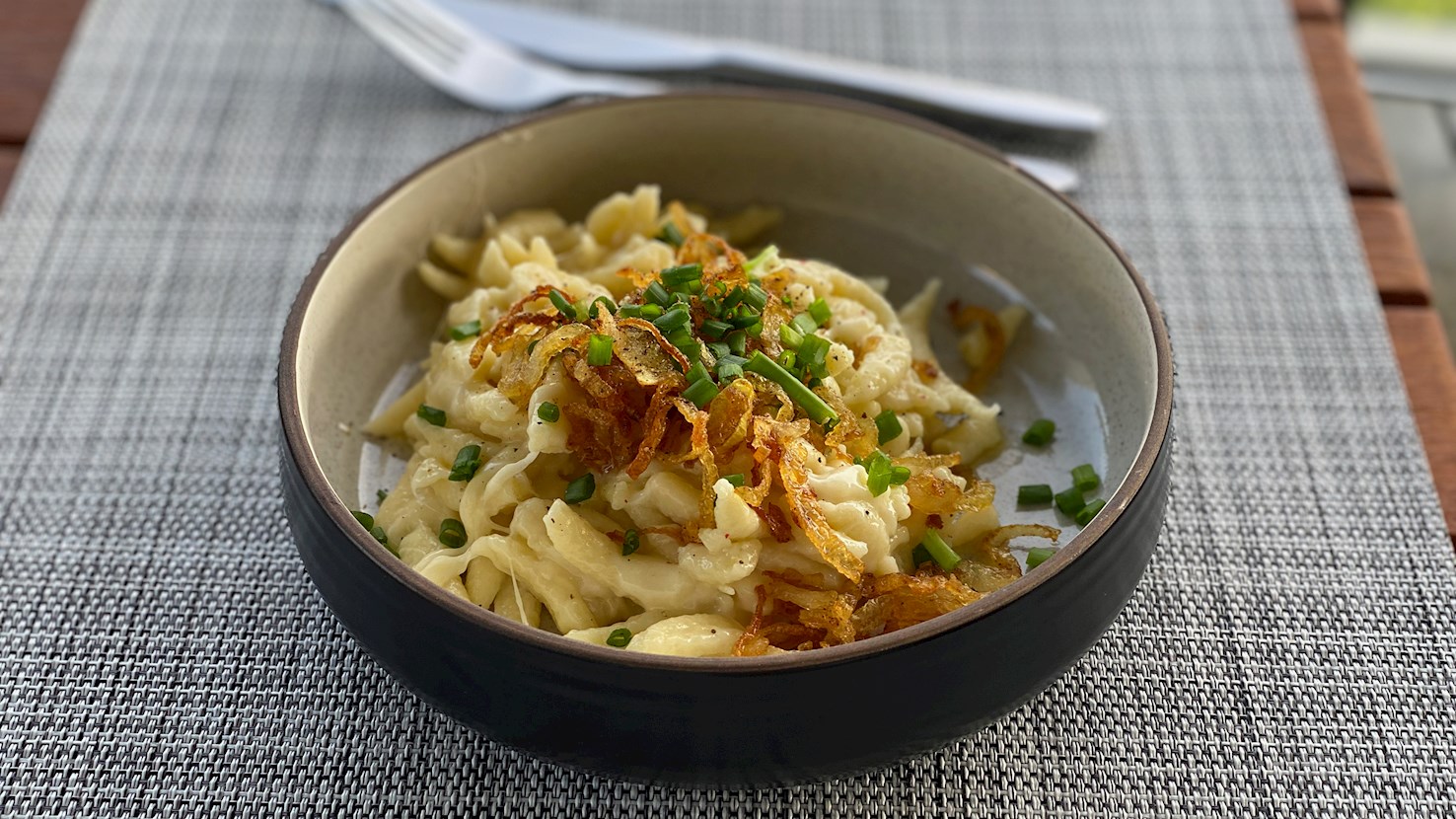
Käsespätzle is a simple noodle dish that combines spätzle noodles with a creamy mixture of melted cheese. The noodles are also called knöpfle, meaning little buttons, and are made with eggs, flour, milk or water, and seasonings such as salt, pepper and (sometimes) nutmeg, while käse refers to the melted cheese mixture, which is usually a combination of two or more types of cheese such as Edam, Gouda, Fontina, Gruyère, Appenzeller, or Emmental cheese. The noodle mixture is typically pressed through a specially designed spoon or colander directly into boiling salted water and cooked until done before it is mixed with the melted cheese. Also referred to as käsknöpfle, the dish is typically enjoyed with additional grated cheese and caramelized onions on top, and typical accompaniments include apple sauce, potato salad, and fresh green salads. Versions of this dish are traditionally consumed in Southern Germany, Swabia, Austria, and Liechtenstein, and it's also a typical dish in Switzerland, Hungary, Alsace, Moselle, and South Tyrol.
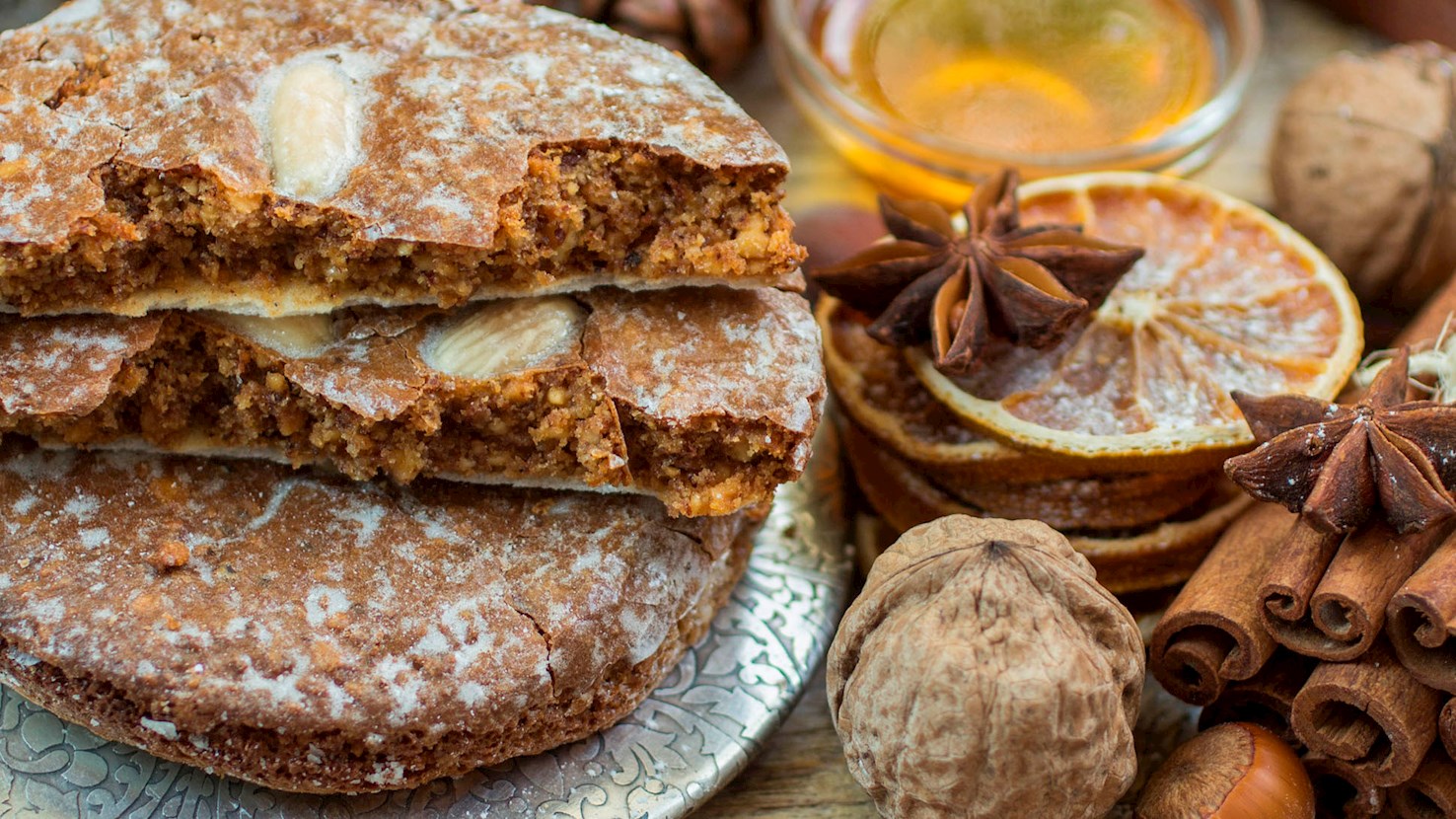
This traditional German treat is mainly associated with Christmas and winter holidays. The term lebkuchen covers a wide variety of different types of honey or ginger-flavored cookies which are traditionally baked on oblaten (thin wafers), and glazed or coated with either dark chocolate or sugar icing. Additional ingredients may include various spices like cloves, aniseed, nutmeg, coriander, and cardamom, with different types of nuts or candied fruit. Best-known varieties of this cookie include the heart-shaped lebkuchenherzen which are often decorated with icing and different inscriptions, the German version of the gingerbread man called honigkuchenpferd (lit. honey cake horse), and hexenhausel (lit. witch’s house), while the most famous is the Nurnberger Elisenlebkuchen. In Germany, the earliest records date back to the year 1296 and the city of Ulm, and the year 1395 and the city of Nurnberg. The area itself was an intersection of many trade routes that supplied it with spices necessary and thus helped to keep the production of lebkuchen alive and thriving. In 1996, the Nurnberger lebkuchen was granted the protected designation of origin (PDO) status which applies to all the lebkuchen produced in the city of Nurnberg.
The history of Nuremberg's gingerbread is closely tied to the city's role as a crossroad of several European trade routes, a position that bestowed the city with spices from distant countries. Nürnberger Lebkuchen are typically large, round gingerbread wafers with icing that can either be chocolate-coated (schokoliert) or plain (natural). These gingerbread cookies are often decorated with almonds and candied lemon peel. Nürnberger Lebkuchen are produced by virtually all bakers in Nuremberg. They should contain at least 25% almonds, hazelnuts, or walnuts, and no more than 10% flour or starch, while the manufacturers must produce these cookies exclusively within the city limits of Nuremberg.
TasteAtlas food rankings are based on the ratings of the TasteAtlas audience, with a series of mechanisms that recognize real users and that ignore bot,
nationalist or local patriotic ratings, and give additional value to the ratings of users that the system recognizes as knowledgeable.
For the “8 Traditional Foods You Have To Try in Nuremberg” list until October 17, 2026, 1,077 ratings were recorded, of which 953 were recognized by the system as legitimate.
TasteAtlas Rankings should not be seen as the final global conclusion about food. Their purpose is to promote excellent local foods,
instill pride in traditional dishes, and arouse curiosity about dishes you haven’t tried.




What People Say