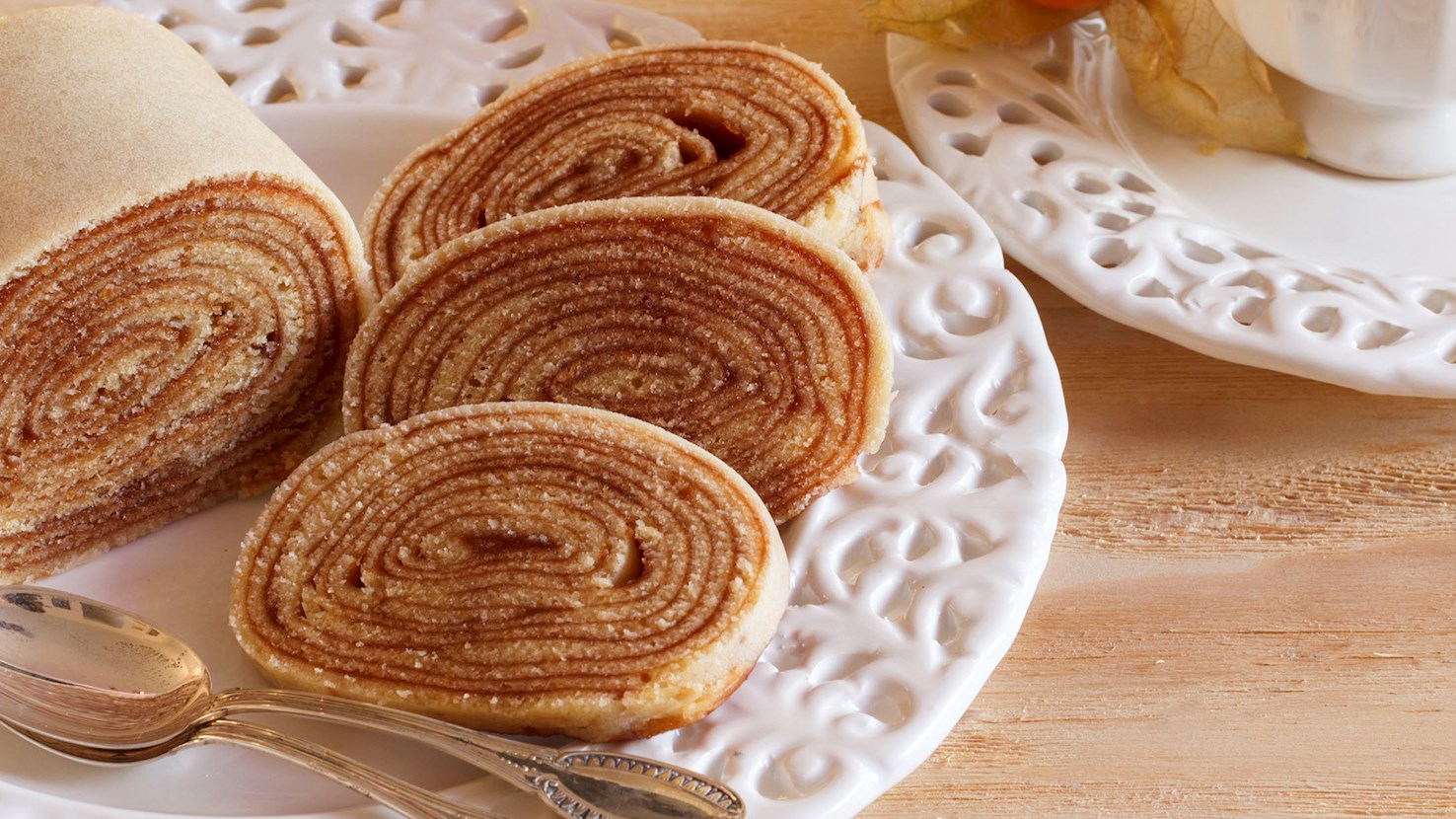
Bolo de rolo is a traditional dessert with origins in the state of Pernambuco. This rolled guava cake is similar to a jelly roll cake or a Swiss roll; however, its preparation is much more complicated. It incorporates many delicate and thin sponge layers which are connected to form a giant sheet, spread with a layer of sweet guava jam, then rolled into a log. The most elaborate varieties of bolo de rolo can have up to twenty layers of sponge, which results in an unusual decorative spiral. Because of the intricate and time-consuming preparation, it is rarely made at home and can usually be found in pastry shops and supermarkets around Brazil. It is usually served sliced, to showcase the number of meticulously created jelly spirals. To balance the sweetness, slices of bolo de rolo are often served with a dollop of unsweetened whipped cream.
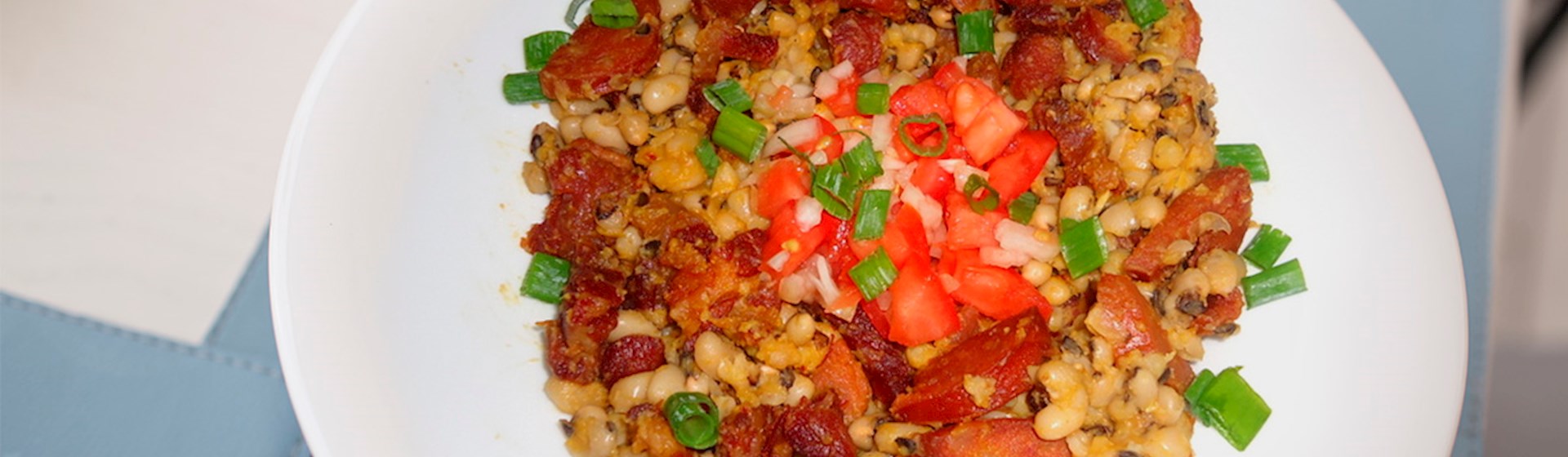
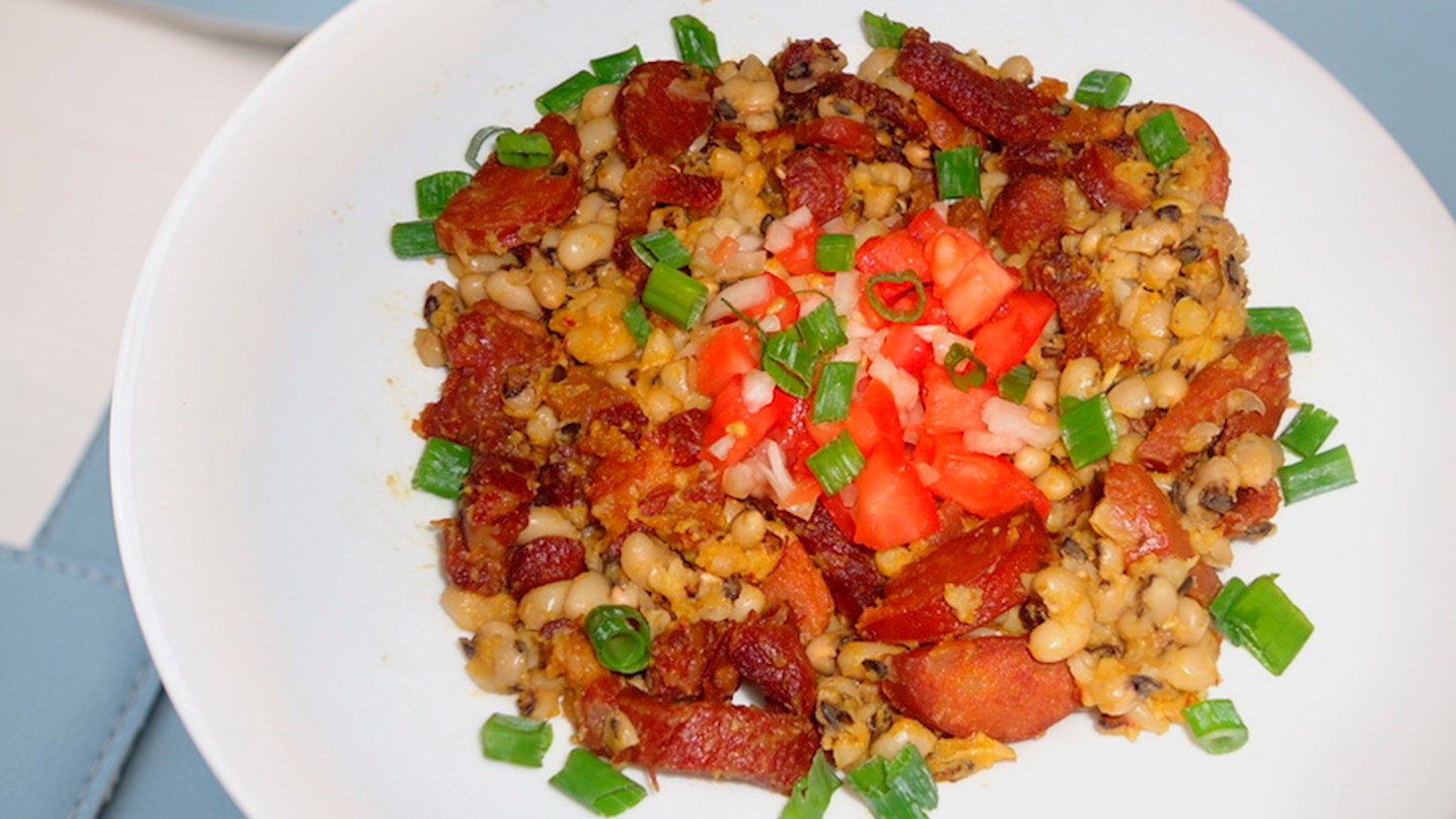
Arrumadinho is a complex Brazilian dish that is usually served as an appetizer. The dish is a combination of four elements that are neatly organized and served together as a complete meal. The essential parts are sliced, sun-dried beef, diced and mixed vegetable vinaigrette, beans, typically black eyed peas, and farofa – a toasted cassava flour mixture. All of the ingredients are seasoned with clarified butter, neatly arranged and served on a plate. The four elements of arrumadinho can either be mixed or consumed as individual dishes. A plate of arrumadinho is usually shared by a couple or a group of people, typically followed by a glass of cold beer or a freshly prepared caipirinha. The dish can usually be found in the northeast of Brazil, more precisely in the state of Pernambuco, where it is believed to have originated. It is often sold at food stands as a snack, but it is also commonly served as an appetizer in elegant restaurants.
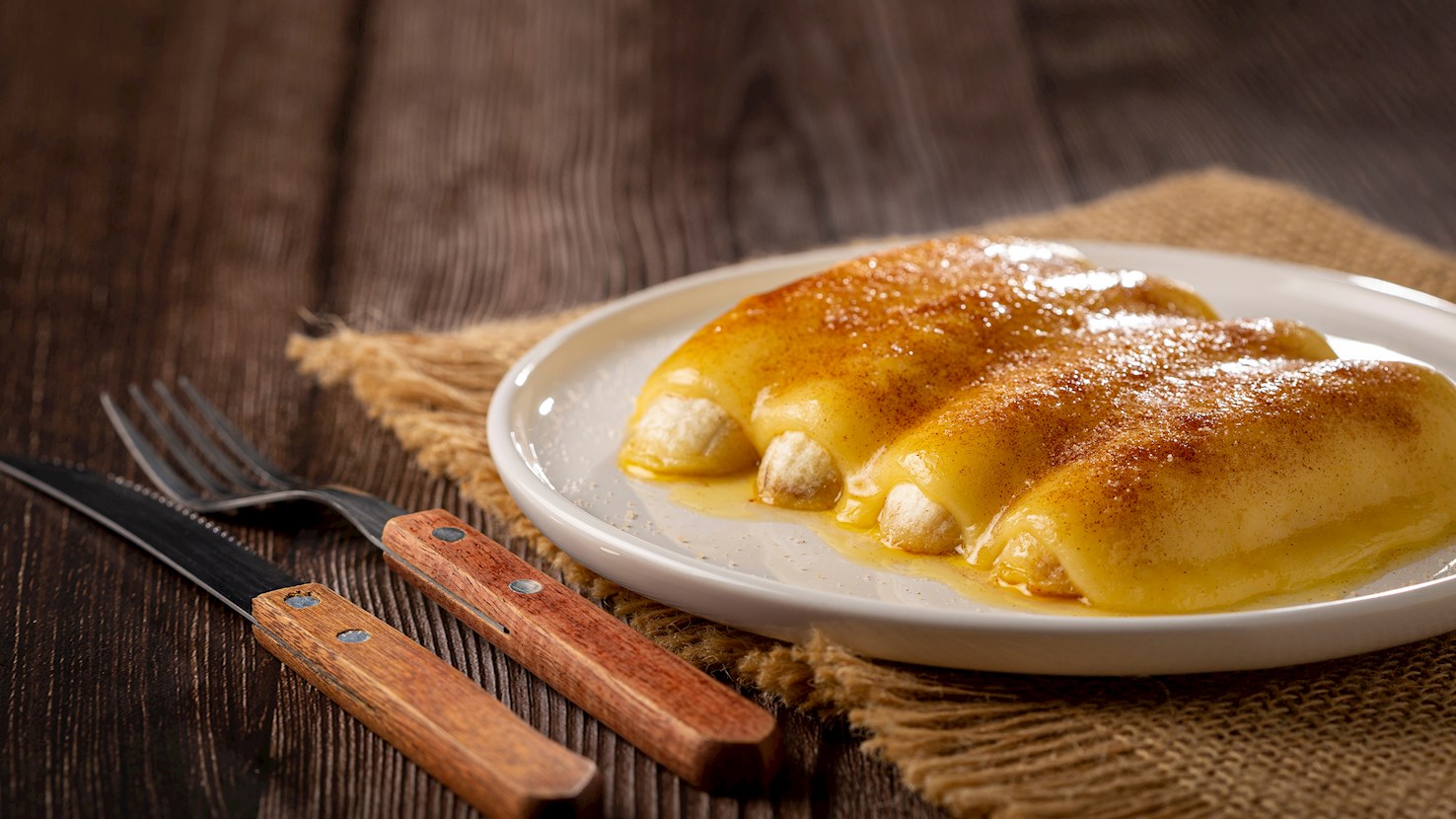
Cartola is a traditional dessert originating from Pernambuco, but popular across the country – it can be found both in restaurants and home kitchens. The name of the dish means top hat. It's made with sweetened and fried bananas in combination with cheese. The cheese should brown and bubble, but not melt, so queijo coalho cheese is most often used for this dish. In texture, it's like a firm feta, but without the saltiness in flavor. The bananas are cut lengthwise, then fried in butter, while the cheese is sprinkled with a combination of sugar and cinnamon before it's heated through. When served, the cheese goes on top of the bananas, and it's recommended to accompany the dessert with a scoop of vanilla ice cream for the ultimate indulgence.
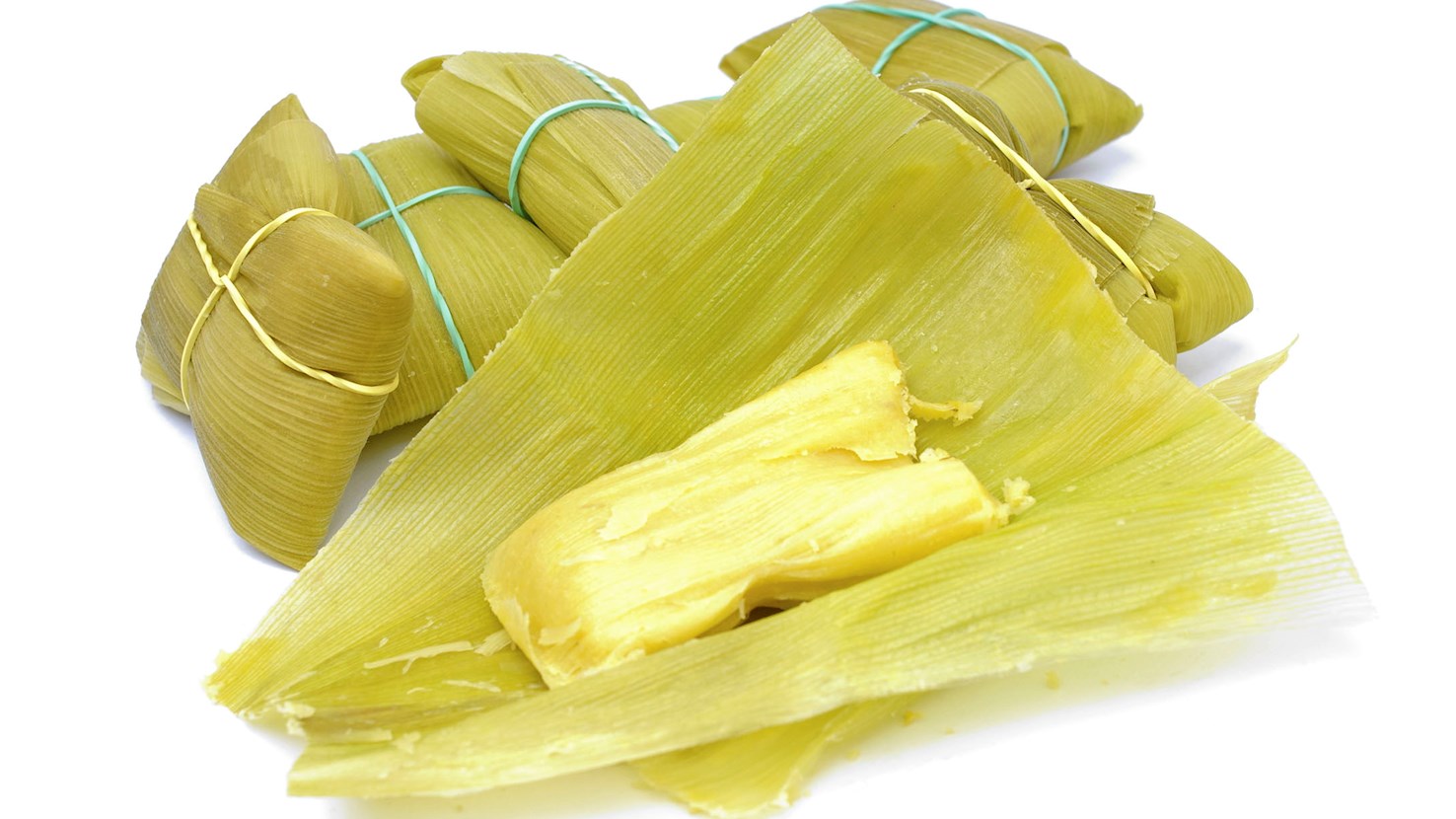
Similar to Mexican tamales, pamonha is a traditional dish made with fresh corn. The dough, or more precisely the paste, is made out of grated and juiced corn. It is tightly wrapped in fresh corn husks and cooked in boiling water. Depending on the ingredients, pamonhas can be either sweet or savory. The savory varieties are usually prepared plain or made with chopped meat, sausages, or cheese. The sweet version of pamonhas is often made by incorporating coconut milk or coconut pulp in the dough. Pamonhas are traditionally eaten all year round in Brazil, but they are usually associated with Festa Junina, the annual Brazilian festivity celebrated throughout June, marking the end of the harvest season and the beginning of Brazilian winter. The snack was primarily sold as a street food item, but nowadays the tradition has disappeared, and pamonhas are usually prepared at home or served in traditional Brazilian restaurants.
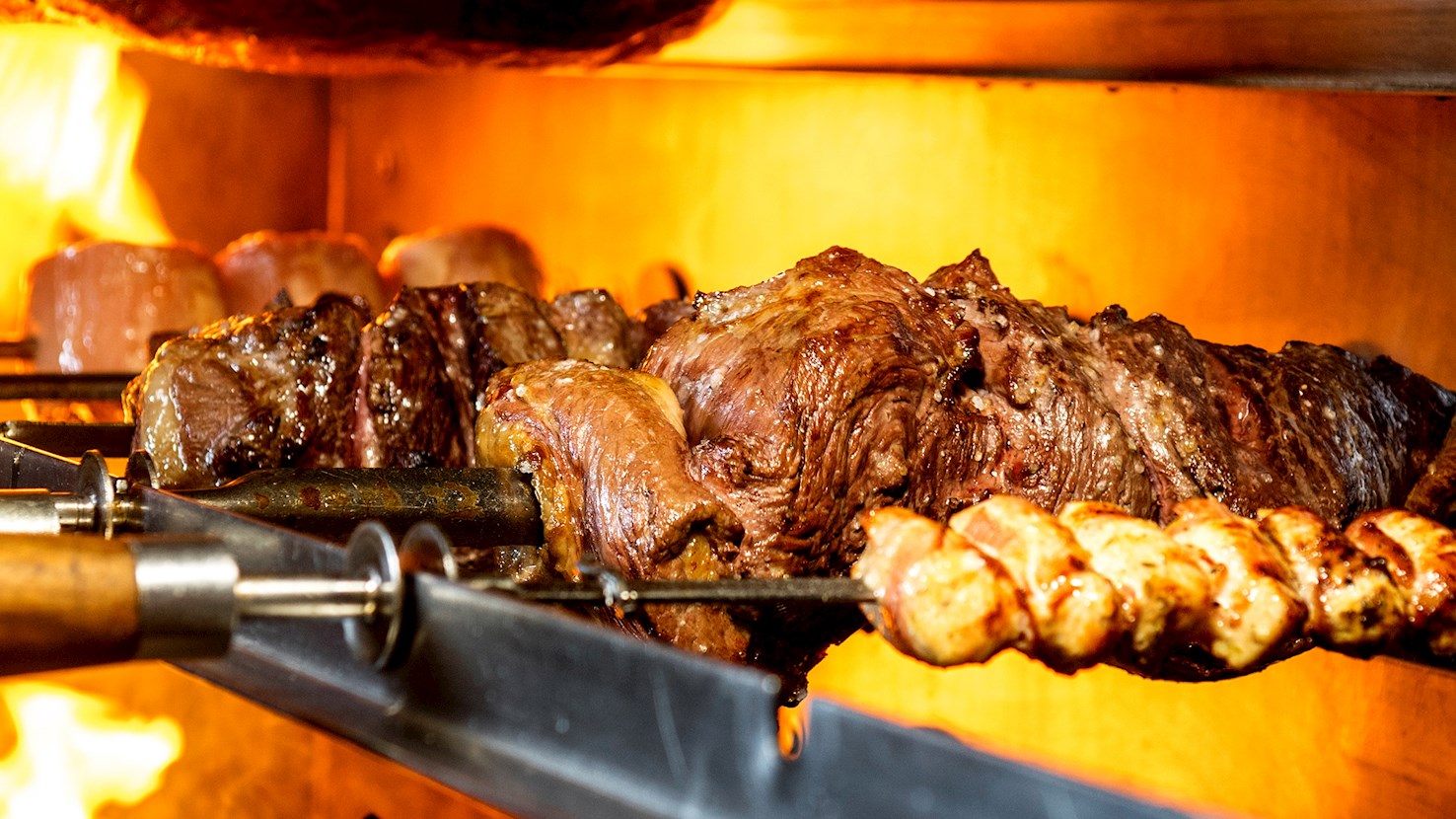
Churrasco is a Brazilian barbecue method where juicy pieces, slices, steaks, and chops of beef, veal, lamb, pork, and chicken are placed on big skewers and grilled over wood fire. It started in the early 1800s when the Gauchos (European immigrants that settled in the Rio Grade do Sul area) would get together and start a fire, adding large portions of meat on skewers and slowly grilling the meat. In the restaurants, known as churrascarias, the skewers are paraded across the restaurant in a flashy manner, and the waiters circulate among the tables in order to show off the succulent meat to hungry diners. After the customers have chosen their preferred type of meat, it is sliced off the skewers to the dining plates. Also known as rodízio, the theme of this barbecue experience is all you can eat, so the customers should know to come with an empty stomach. Beef is the most popular option, although livers and hearts are especially rich and chewy. In Brazil, the meat will often be from the zebu, a succulent, lean breed of cattle with a hump that's especially popular in churrasco as a cut of meat called cupim. Churrasco starts with appetizers and a variety of salads offered from a big buffet, as a preview of things to come. The usual accompaniments for the meat include farofa grains, rice, fried potatoes, potato salad, steamed greens, black beans, onions, fried bananas, and numerous chili-based sauces. After the big meal, it is typical to consume grilled pineapple slices, serving as a palate cleanser as well as a tasty dessert. Churrasco (lit. barbecue) is also popular as a cooking method in countries such as Nicaragua, Puerto Rico, Argentina, Uruguay, Ecuador, Guatemala, and Chile, and each country has their own favorite cuts of meat and accompaniments for this popular barbecue style.
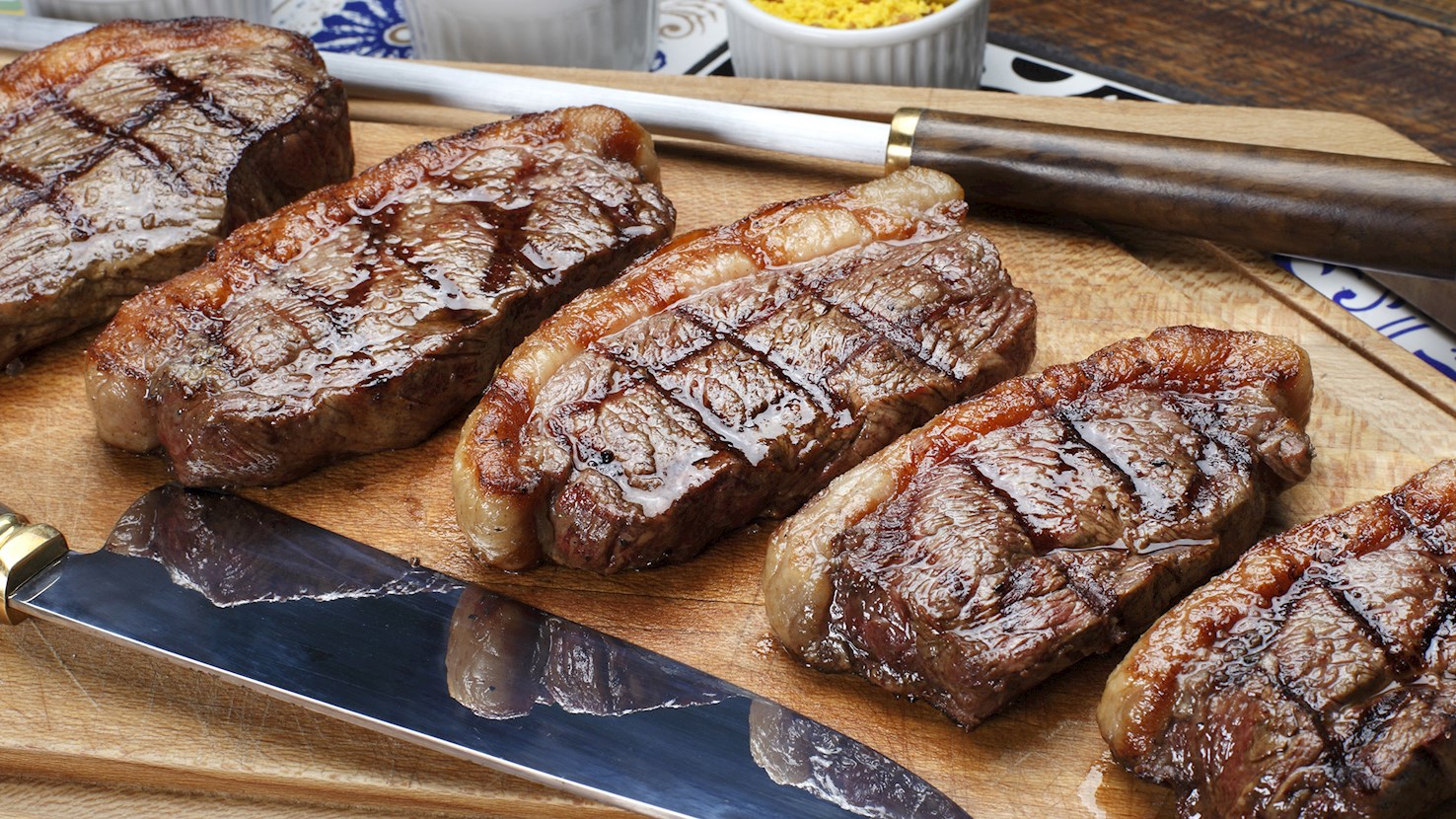
Picanha is a fresh cut of beef that's especially popular and highly prized in Brazil. In the US, it's called sirloin cap, and in the UK, it's known as the rump cap. Picanha is situated on the back side of the animal, above the butt, where it sits on a fat cap. It's mostly used for churrasco – the meat is first grilled, then sliced off of a skewer. This cut holds very little fat in the meat, so it must be cooked perfectly in order not to make it tough. In Brazil, every churrasco has picanha, and all of the best churrascarias feature picanha on their menus. The name picanha is derived from the word picana, referring to the ranchers' pole used for herding cattle in Portugal and Spain. The technique was brought over to Brazil where the word picanha was used to refer to the part of the cow that was poked by ranchers with the pole.
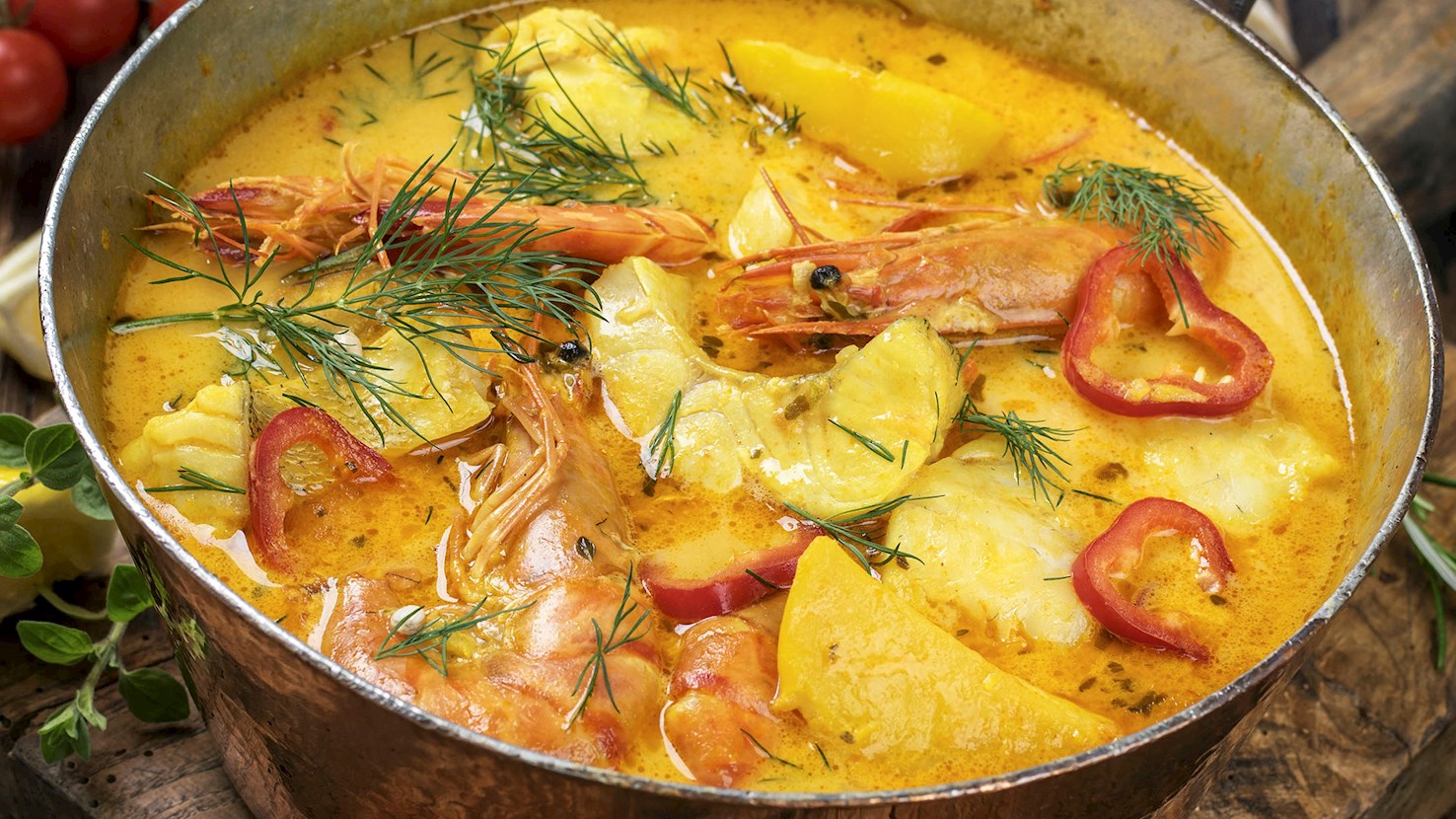
Moqueca is a seafood stew with a base of palm oil and coconut milk or olive oil, combined with fish or shrimps (or both). The dish is stewed in traditional clay pots along with vegetables and fresh herbs, and it is traditionally served over rice. It can be traced back to 300 years ago, when it was first invented due to the fact that the Portuguese brought coconuts to the country, and slaves from Africa introduced palm oil to Brazilian cuisine. There are numerous versions of moqueca, such as moqueca Capixaba, or moqueca Baiana, from the Bahia state in the northeast of the country. The dish is traditionally garnished with fresh chopped cilantro on top, and accompanied by rice, pirão, or farofa.
TasteAtlas food rankings are based on the ratings of the TasteAtlas audience, with a series of mechanisms that recognize real users and that ignore bot,
nationalist or local patriotic ratings, and give additional value to the ratings of users that the system recognizes as knowledgeable.
TasteAtlas Rankings should not be seen as the final global conclusion about food. Their purpose is to promote excellent local foods,
instill pride in traditional dishes, and arouse curiosity about dishes you haven’t tried.



What People Say