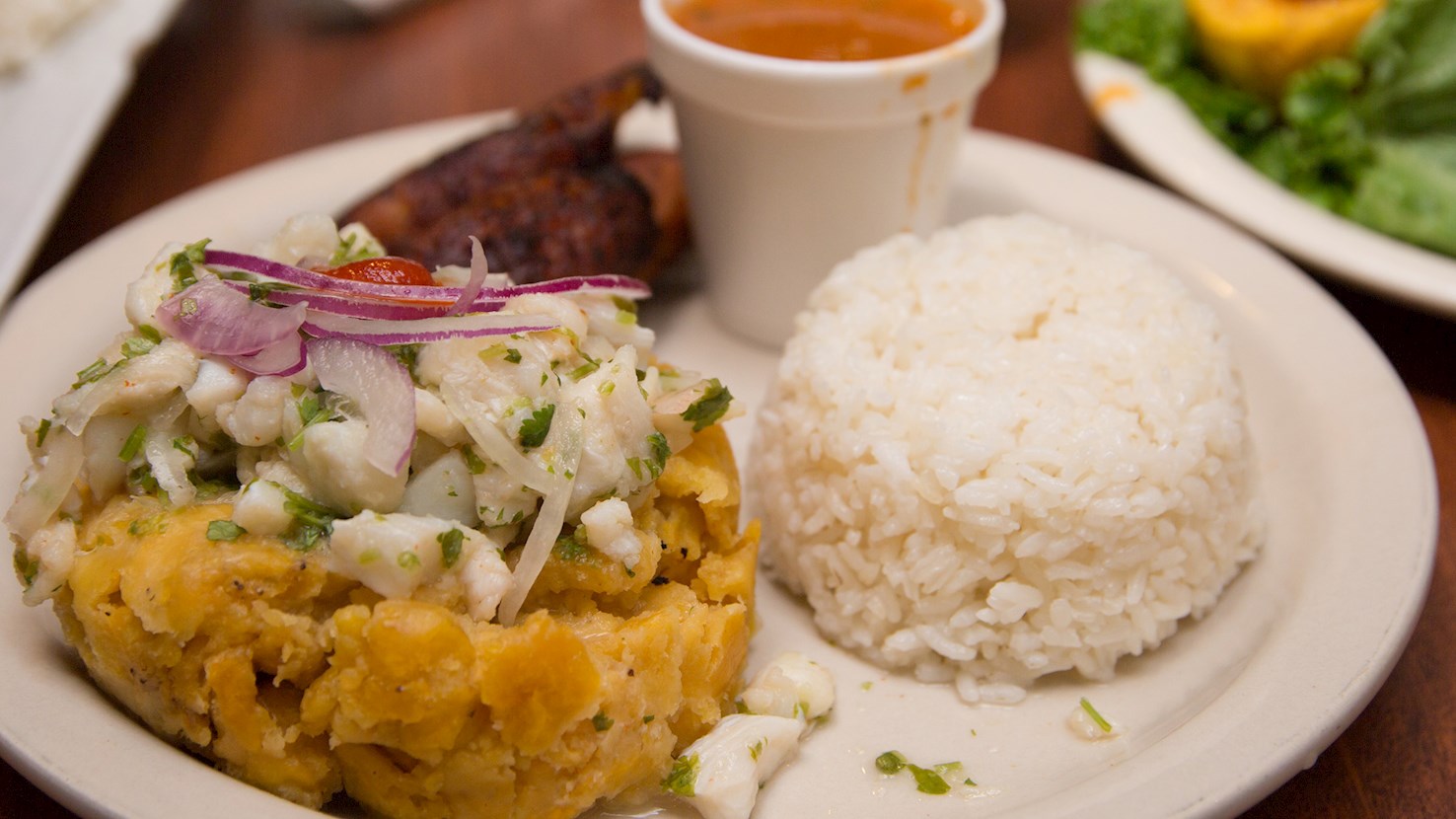
Mofongo is constructed by aggressively mashing fried green plantains together with raw garlic cloves, olive oil, and crispy pork cracklings. Although mofongo is Puerto Rican, it has African origins, as it was originally brought to Puerto Rico by enslaved people from West and Central Africa. Arriving at the table steaming hot, mofongo frequently sits in the center of a wide plate or directly inside the hollow wooden mortar used to shape it. Because the heavy starches naturally absorb massive amounts of moisture in the mouth, a small side bowl of savory chicken broth almost universally accompanies the meal; the hot liquid is meant to be poured directly over the top or sipped intermittently to soften the dense bite. Building this dish requires utilizing completely unripe, hard green plantains. The peeled plantains are sliced into thick rounds before being submerged in hot vegetable oil. Frying the slices until they reach a golden yellow color softens the interior flesh while keeping the outside sufficiently firm. The hot plantain chunks are immediately transferred into a large wooden mortar, known locally as a pilón. The fried plantain is crushed together with salt, generous pours of extra-virgin olive oil, and handfuls of crunchy pork skin, known as chicharrón. The constant pounding transforms the separate ingredients into a cohesive, highly textured mass, which is then tightly molded into a half-sphere against the mortar walls. A mofongo variant called trifongo blends three distinct starches by mashing fried green plantains alongside sweet, ripe yellow plantains and boiled cassava root, resulting in a softer texture and a distinct sweet undertone. Also, instead of serving the mofongo plain, many kitchens hollow out the top center to create an edible bowl, filling the cavity to the brim with plump shrimp swimming in a buttery garlic sauce, slow-stewed beef chunks, or fried chicken pieces. Plant-based adaptations replace animal fat with extra olive oil or vegetable broth and use fried garlic chips or crispy tofu bits to mimic the crunch of pork skin without altering the overall structural integrity. Today, it is also popular in Cuba and the Dominican Republic, where it's called mangu, and the plantains are not fried but boiled. Mofongo is usually consumed as a main dish, served with broth and fried meat, due to its starchiness that is ideal for absorbing all of the flavorful juices.
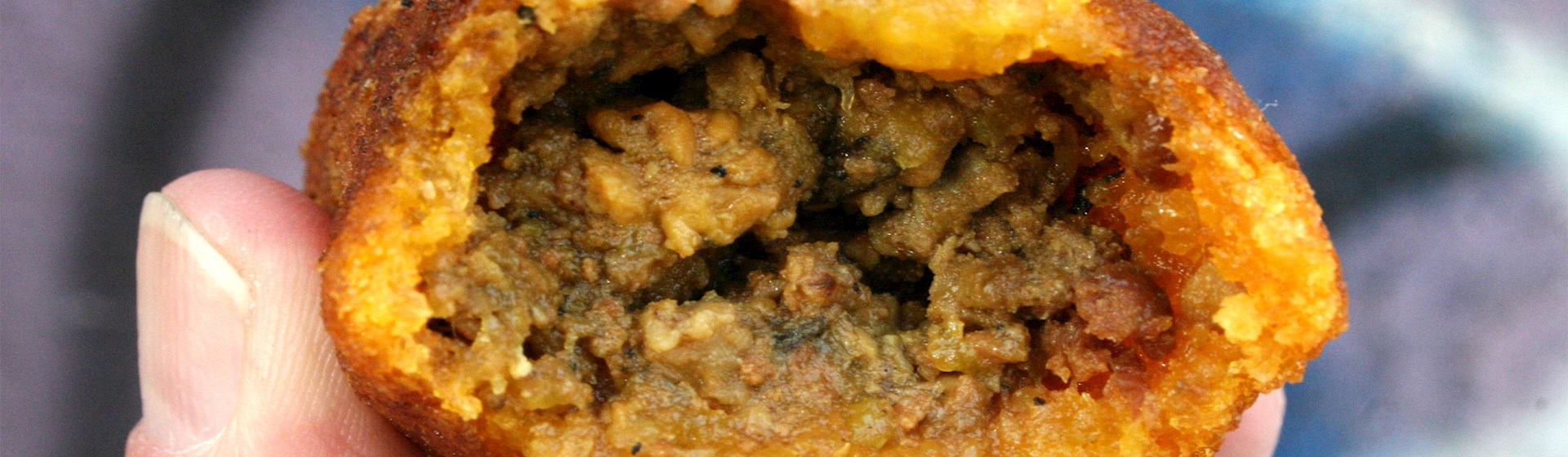
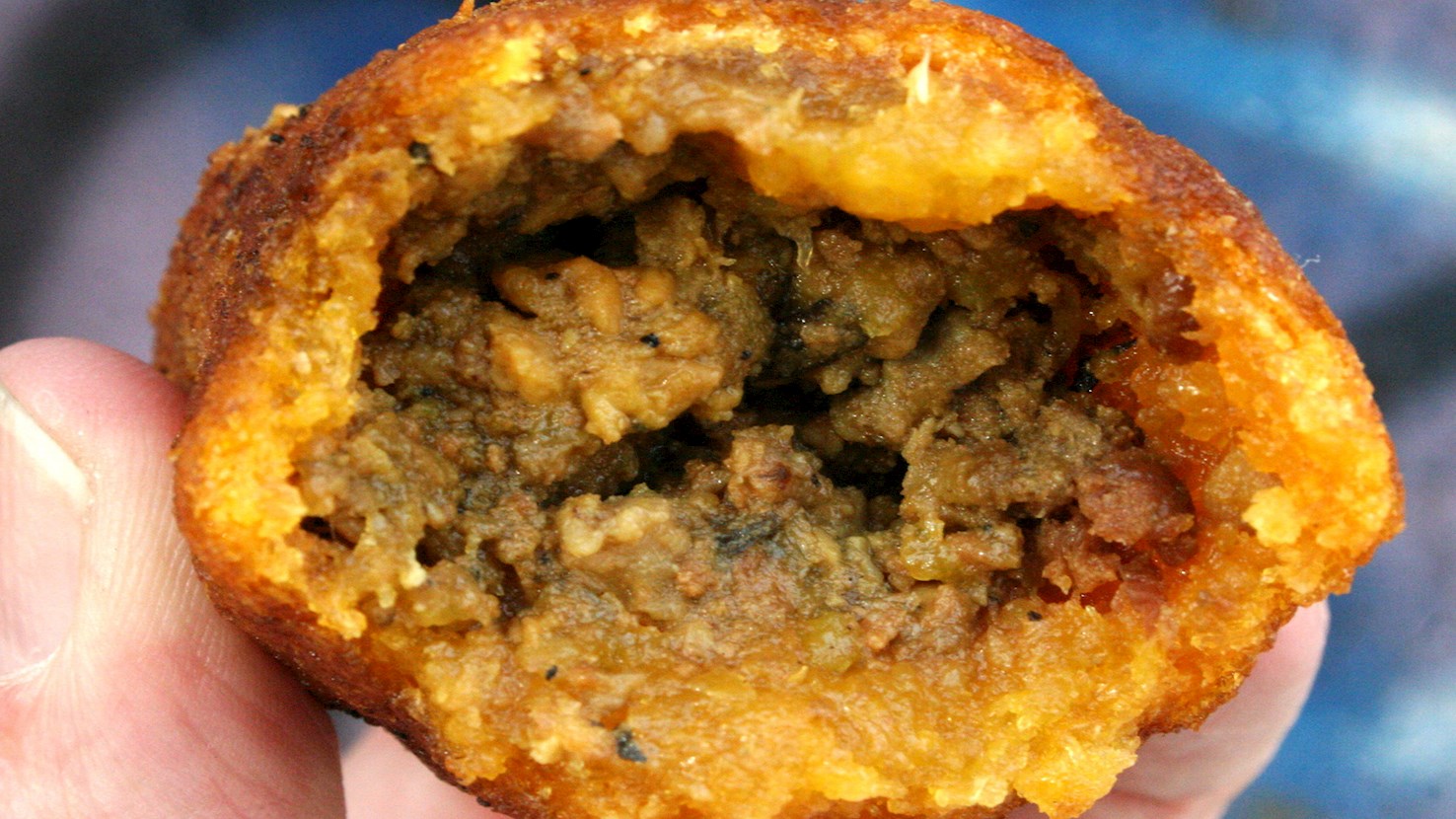
Alcapurria is a fritter made from a seasoned masa of grated green bananas and yautía, wrapped around a savory meat filling and deep-fried until deeply golden and crisp. Usually shaped into an elongated oval or torpedo, it is one of Puerto Rico’s best-known frituras and is especially associated with roadside stands, beach kiosks, and casual outdoor eating. The traditional masa is made primarily from very green bananas and yautía, a starchy tropical root from the genus Xanthosoma. Green plantain is also commonly included. The peeled vegetables are grated very finely, traditionally on a metal grater called a guayo, until they form a thick, sticky paste. Salt and achiote-infused oil are mixed into the masa. The achiote gives it a warm yellow-orange color and a subtle earthy flavor while also adding enough fat to make the mixture easier to handle. The masa should be thick and cohesive enough to hold a filling without breaking apart during frying. The classic filling is a Puerto Rican-style ground-beef picadillo. The meat is cooked with sofrito, typically containing onion, garlic, ají dulce, peppers, cilantro or culantro, and other seasonings. The filling may also include tomato sauce, oregano, olives, and capers. It is cooked before being enclosed in the raw masa. To shape an alcapurria, a portion of masa is spread onto an oiled banana leaf, waxed paper, or another smooth surface. A spoonful of picadillo is placed down the center, and the masa is folded around it until the filling is completely enclosed. The fritter is then shaped into its characteristic elongated form. The alcapurria is slid carefully into plenty of hot oil and fried until the outside becomes dark golden brown and crisp. The oil should be hot but not smoking. Inside, the grated banana and yautía cook into a soft, moist, slightly dense layer surrounding the seasoned meat. Freshly fried alcapurrias are drained briefly and eaten while still hot. They are usually served on their own as a snack or appetizer and are commonly sold in paper containers at kioskos and roadside stands. Pique, Puerto Rico’s vinegar-based hot sauce, can be added at the table, although it is not required. They are particularly associated with places such as Piñones, Luquillo, and Puerto Rico’s coastal food stands, where alcapurrias are sold alongside other frituras such as bacalaítos and empanadillas. Crab-filled alcapurrias are also closely associated with coastal areas, but seasoned ground meat remains a classic filling. The precise origin of the alcapurria is not documented. Its ingredients and technique reflect the different cultures that shaped Puerto Rican cooking: yautía and achiote have deep Indigenous roots in the Caribbean and tropical Americas, and plantains arrived through the transatlantic world. They became particularly important in Afro-Caribbean cooking, and the seasoned meat filling reflects Spanish and Creole influences. Over time, these elements came together in a fritter that became distinctly Puerto Rican.
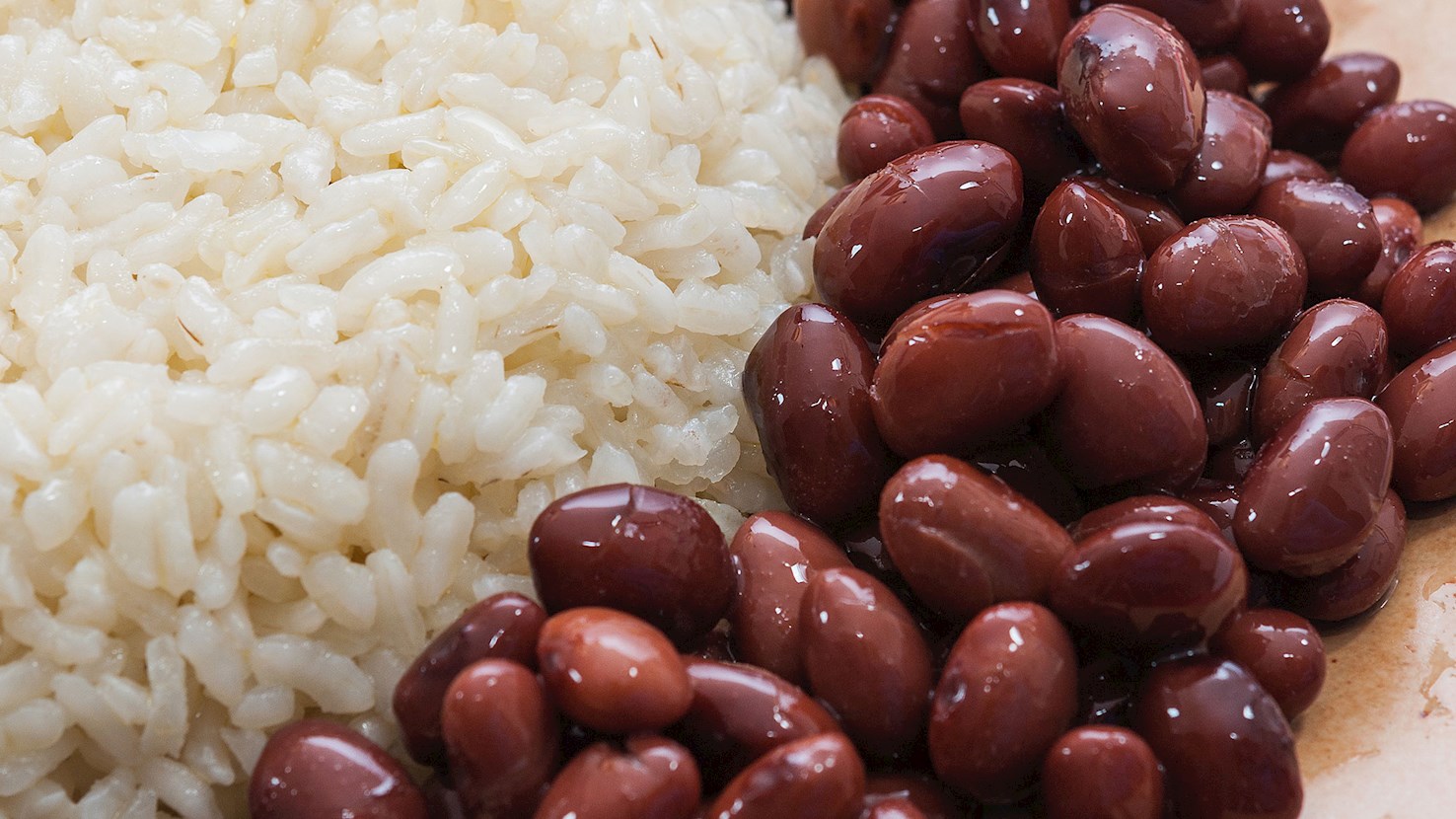
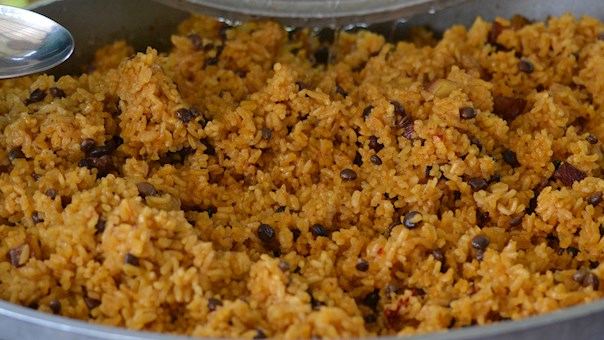
Arroz y habichuelas is a simple and traditional Puerto Rican dish. It consists of rice and beans flavored with bacon or ham, sofrito, tomato purée, spices, and (optionally) olives. In Puerto Rico, it is typically served as a side dish, but it can also be served on its own. Throughout Central and South America, there are numerous variations and twists on this simple side dish, beloved for its protein content which comes from the beans.
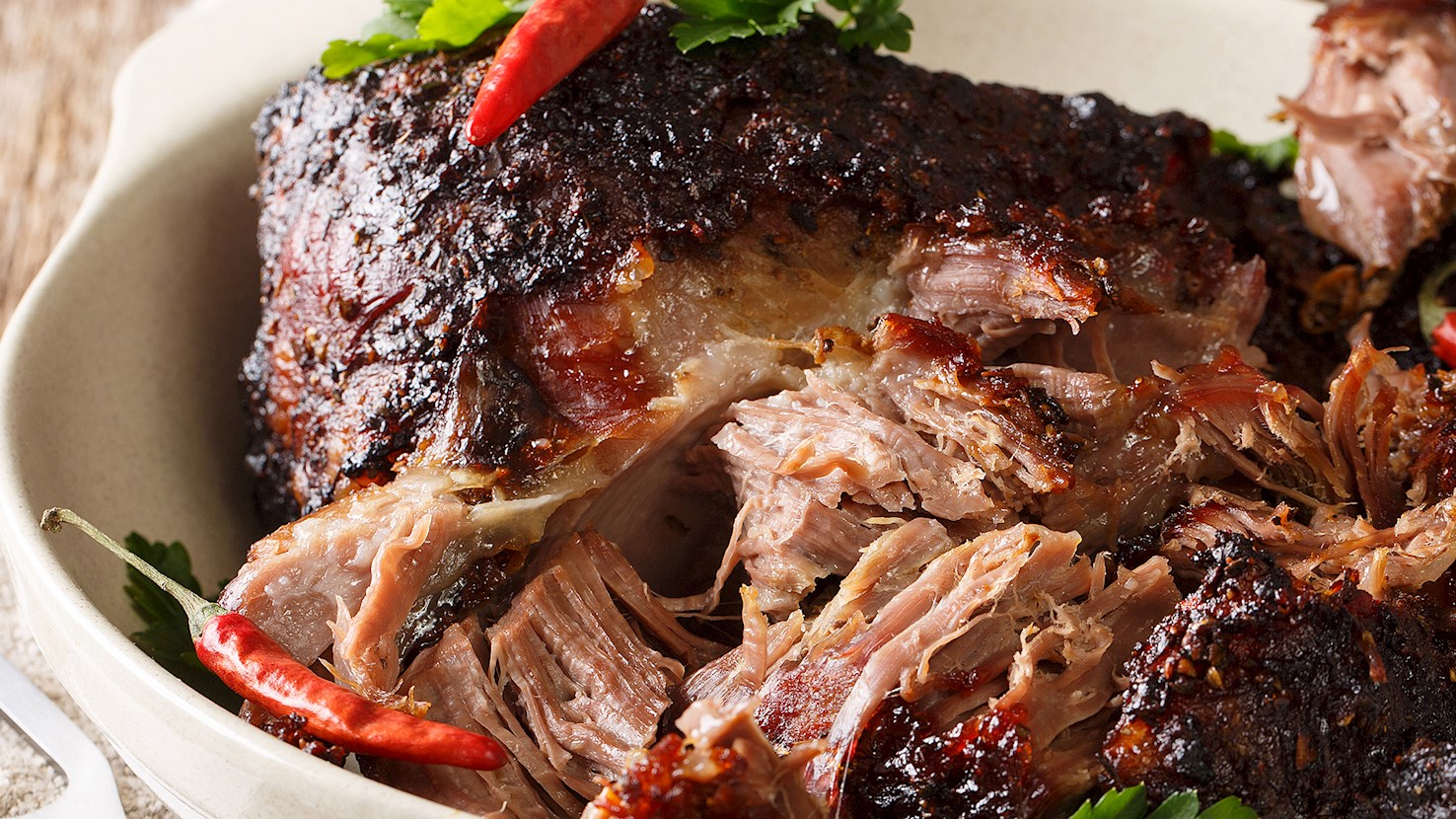
Pernil is one of Puerto Rico's most famous dishes, a succulent roasted pork shoulder that is traditionally seasoned in a marinade called adobo mojado, consisting of paprika, salt, vinegar, garlic, and oregano. The name of the dish is derived from the Spanish word pierna, meaning leg, but it is also a Catalan word for ham, referring to the traditional recipe that calls for fresh ham. Because pork shoulder is more available and costs less than ham, it has become a key ingredient in pernil. Many people prefer it since it is believed to be much more flavorful than ham. The dish is a staple at numerous Puerto Rican festivities such as birthdays or weddings, where many people feast on the crunchy skin and tender meat that falls off the bone.
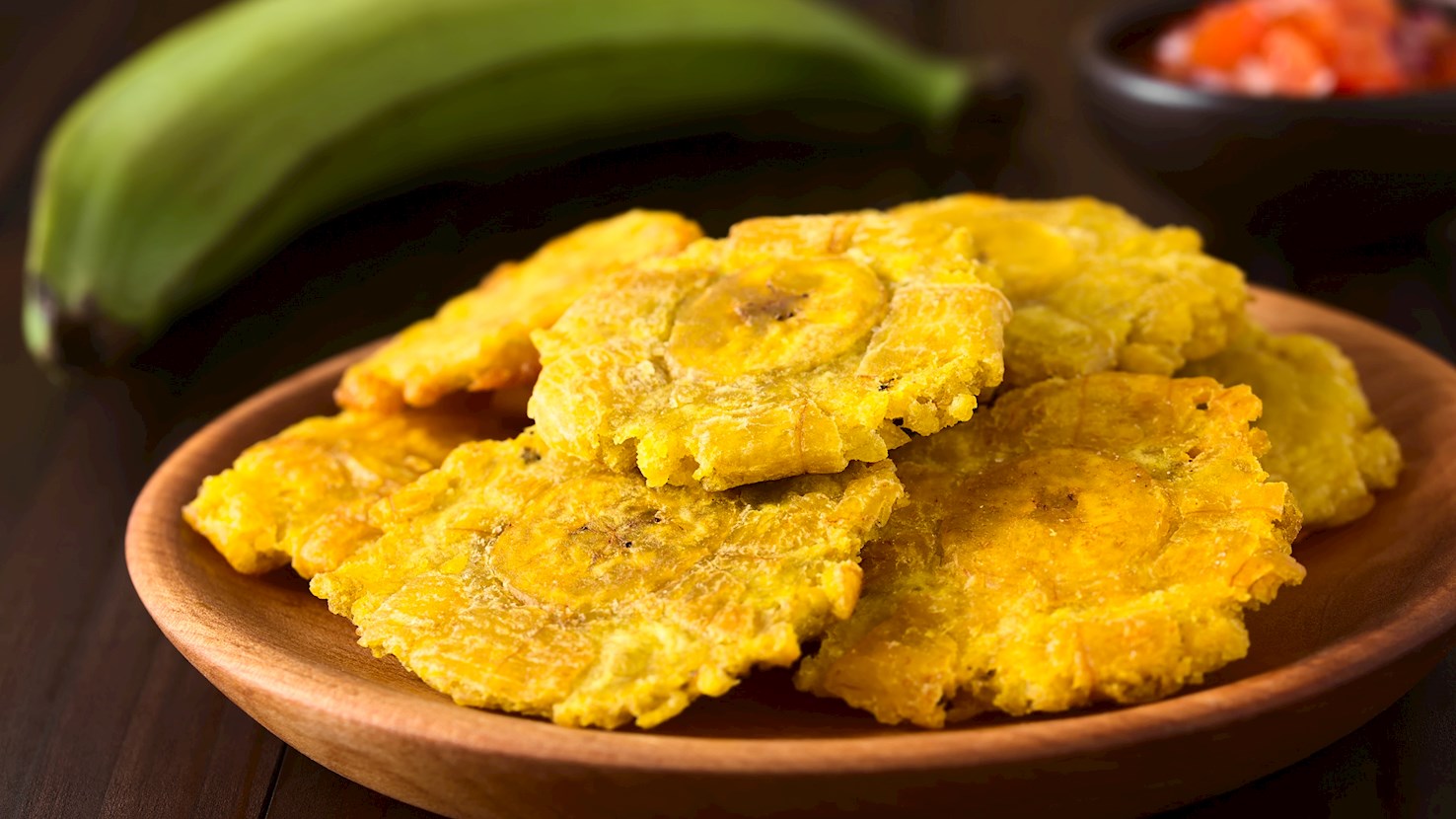
Tostones is a traditional side dish that's popular throughout Latin America and the Caribbean, especially in Puerto Rico. Unlike platanos fritos, where only ripe plantains are used, tostones are made with unripe, hard, very green plantains. They are sliced into pieces, fried on each side, then smashed or flattened and deep-fried one more time until they become golden. Once prepared, the tostones are sprinkled with sea salt and served as a side dish to various dishes. They are often served with garlic mojo sauce (mojo de ajo), either on top of the tostones, or on the side as a dip.
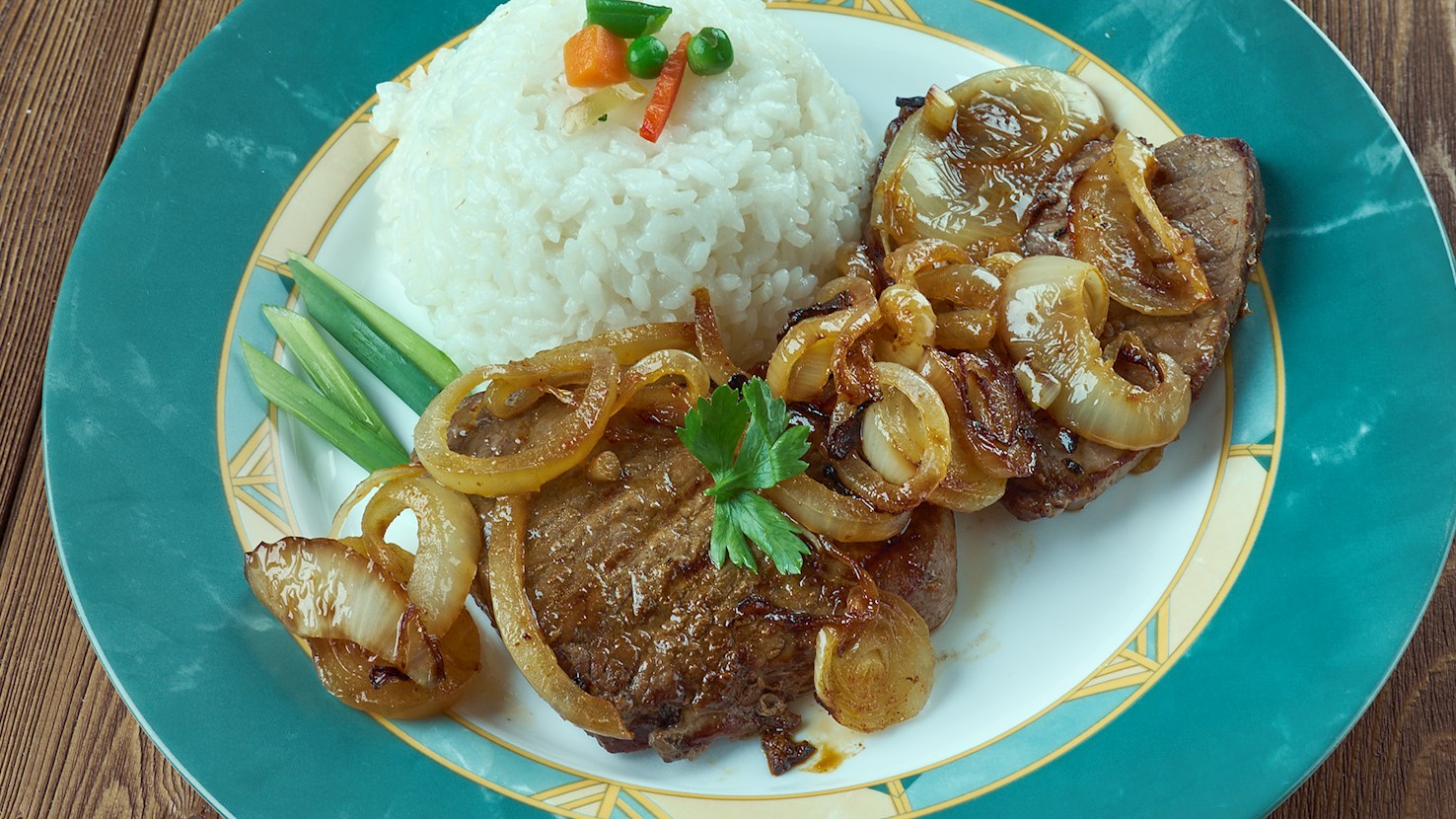
Bistec encebollado is a flavorful dish popular throughout Latin America, consisting of an adobo-spiced, marinated beefsteak combined with onion sauce and large onion rings on top. The wonderful flavors of bistec encebollado come from marinating the meat over a long period of time, usually anywhere from 10 to 12 hours. It is recommended to pair the dish with rice, pigeon peas, and fried plantains.
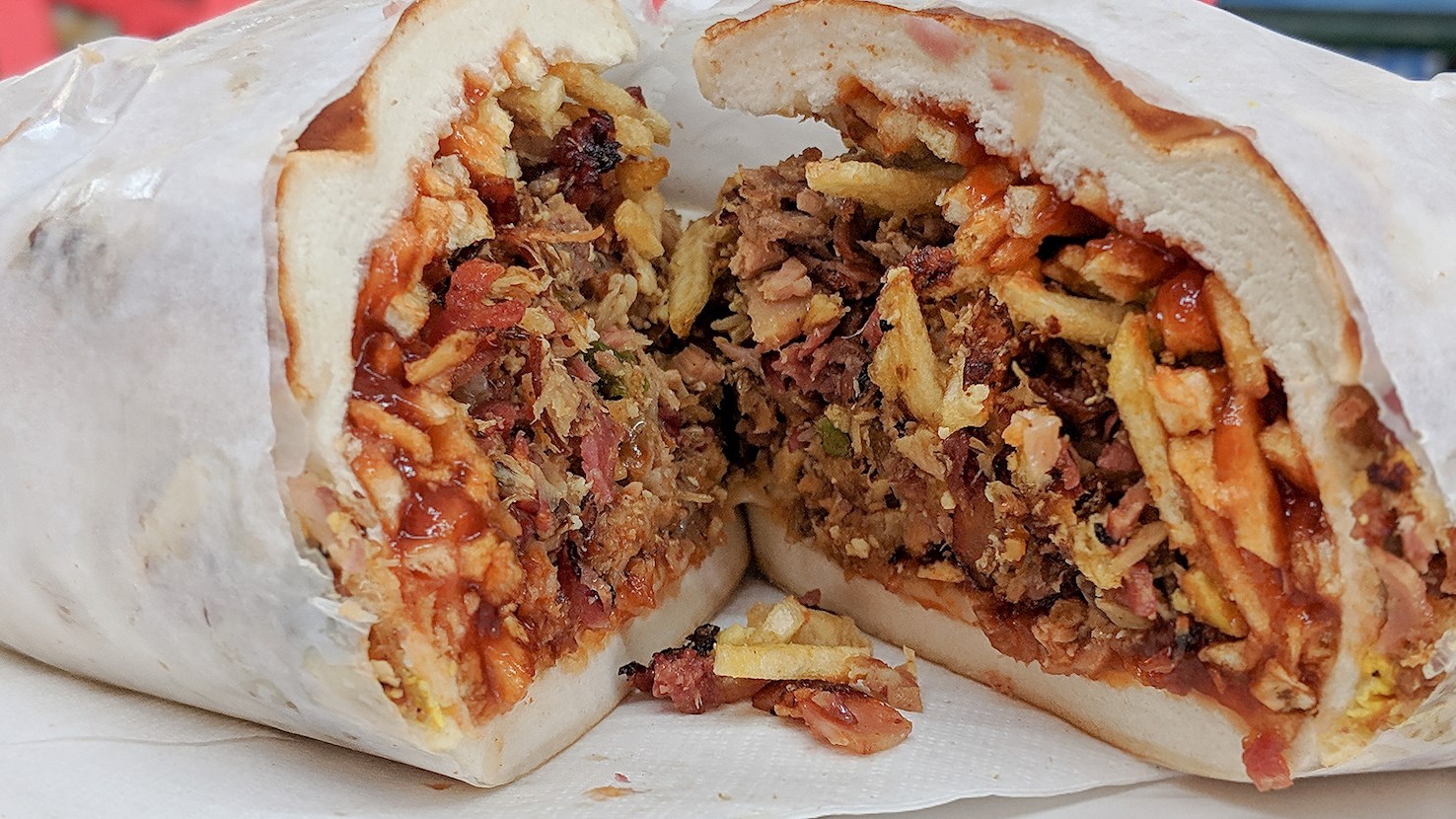
Tripleta is a popular sandwich from Puerto Rico, its name derived from the fact that it is filled with three types of meat: grilled steak, lechon pork, and ham. The meat is placed in a loaf of fresh bread and topped with fries, ketchup, mayonnaise, cheese, and vegetables such as lettuce, cabbage, tomatoes, and onions. The sandwich can be consumed as is or it can be grilled, depending on personal preferences. Tripleta is usually so large that one sandwich can easily feed two people.
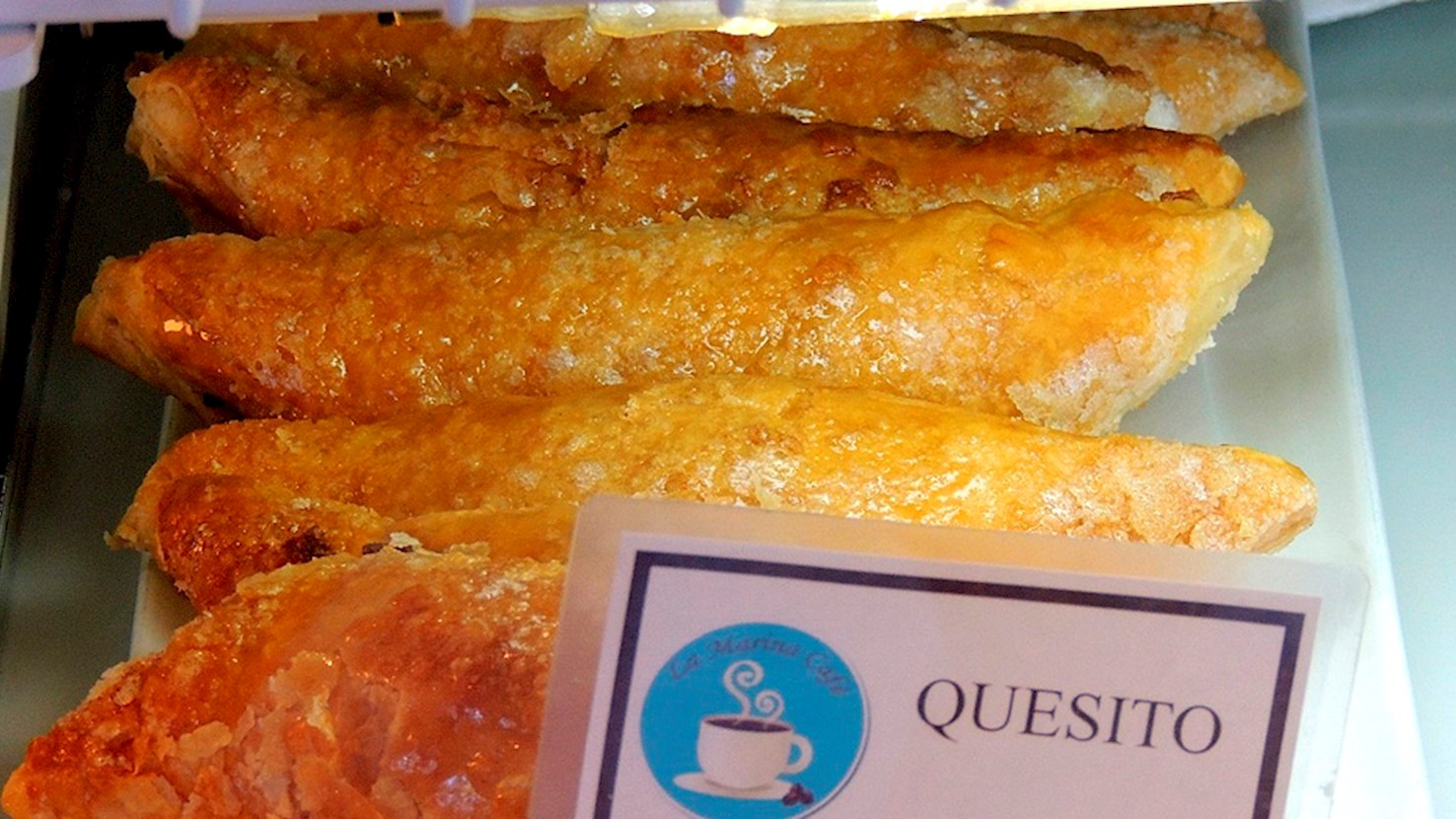
Quesito is a flaky puff pastry wrapped around sweetened cream cheese and finished with a glossy sugar glaze. The name means “little cheese,” referring to the cream cheese filling at the center of the pastry. Quesitos are among the most recognizable items in Puerto Rican bakeries and are commonly eaten for breakfast or as a snack with coffee. The exact origin of the quesito is not documented. Its puff pastry reflects European baking traditions, while the use of cream cheese places the familiar modern form of the pastry in a more recent period of Puerto Rican baking. By the late 20th century, quesitos were firmly established as a standard bakery item across the island. The traditional version is deliberately simple. Puff pastry is rolled out and cut into squares or rectangles. Cream cheese is mixed with sugar, and often a small amount of vanilla, until smooth. The filling should remain noticeably tangy rather than becoming as sweet as cheesecake. A portion of the cream cheese mixture is placed diagonally across each piece of pastry. Two opposite corners are folded over the filling and overlapped in the center, producing the elongated, slightly twisted shape characteristic of a quesito. Some bakers roll the pastry more completely around the cheese, but the filling usually remains visible at one or both ends. The surface is brushed with egg wash before baking, which helps the pastry develop a shiny, deep golden crust. As it bakes, the layers of puff pastry separate and expand around the soft cream cheese filling, producing a crisp, flaky exterior. Sugar is an important part of the finish. Depending on the bakery method, the pastry may be sprinkled with sugar before baking or brushed afterward with a simple sugar syrup or a light glossy glaze. The resulting surface is slightly sticky and often develops crisp, caramelized patches as it cools. A properly baked quesito has strong textural contrast: the outside is flaky and crisp, while the center remains smooth, creamy, and slightly tangy. The sugar coating adds sweetness without masking the cheese flavor. Quesitos are displayed alongside other pastries in Puerto Rican panaderías, bakeries, cafés, and pastry shops throughout the island. They are particularly associated with the morning bakery routine and are commonly eaten with café con leche or strong Puerto Rican coffee. Guava and other fillings are sometimes added, but the classic quesito remains the plain cream cheese version.
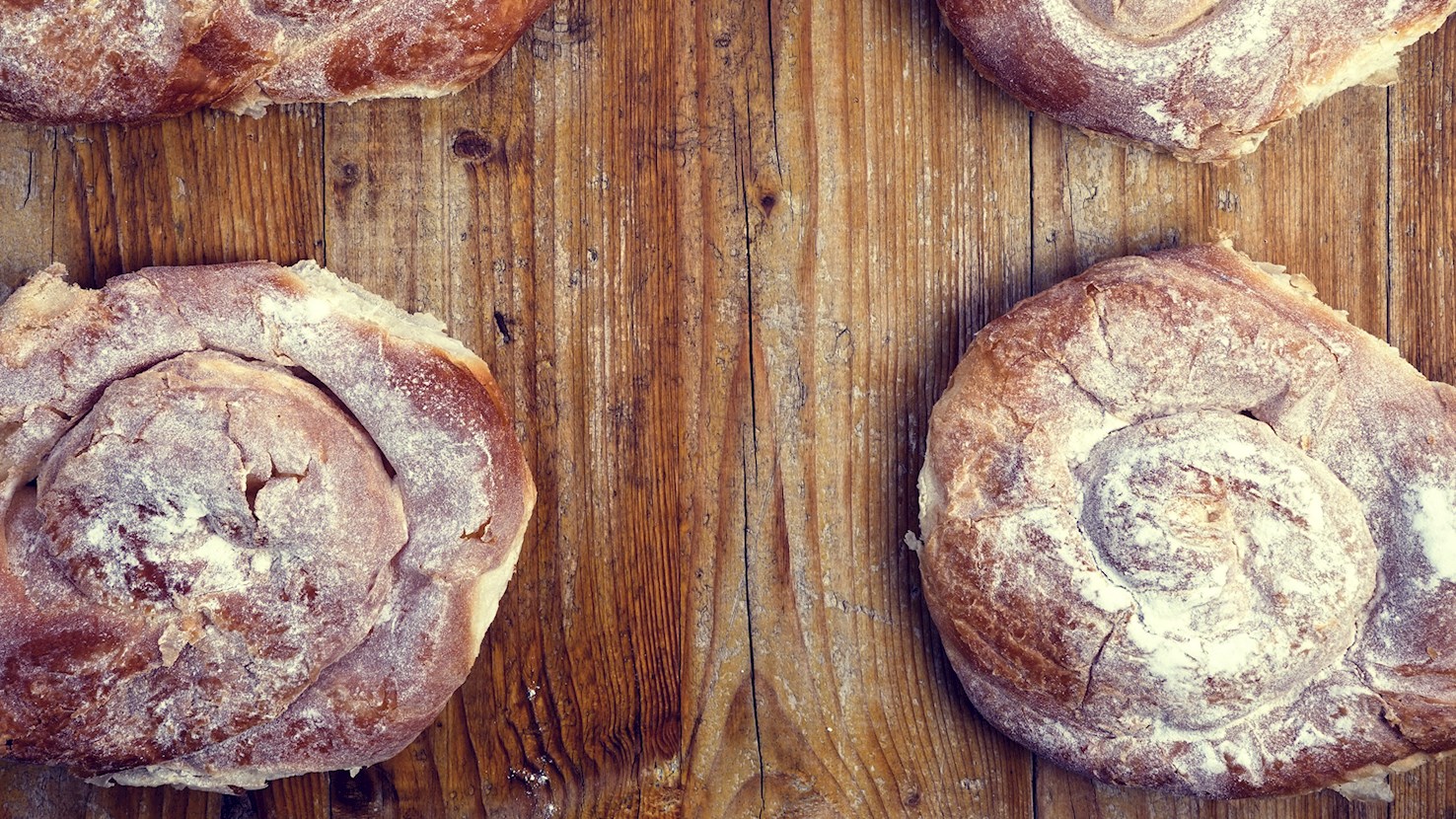
Pan de Mallorca are flavorful Puerto Rican bread rolls characterized by their soft, buttery, and fluffy texture. The bread consists of flour, yeast, milk, water, egg yolks, and butter. It is believed that pan de Mallorca originates from ensaimadas, a sweet pastry from the Spanish island of Mallorca. It is recommended to serve these rolls sliced and buttered, then pair them with a hot cup of coffee, although they can also be consumed in a savory version with ham and cheese.
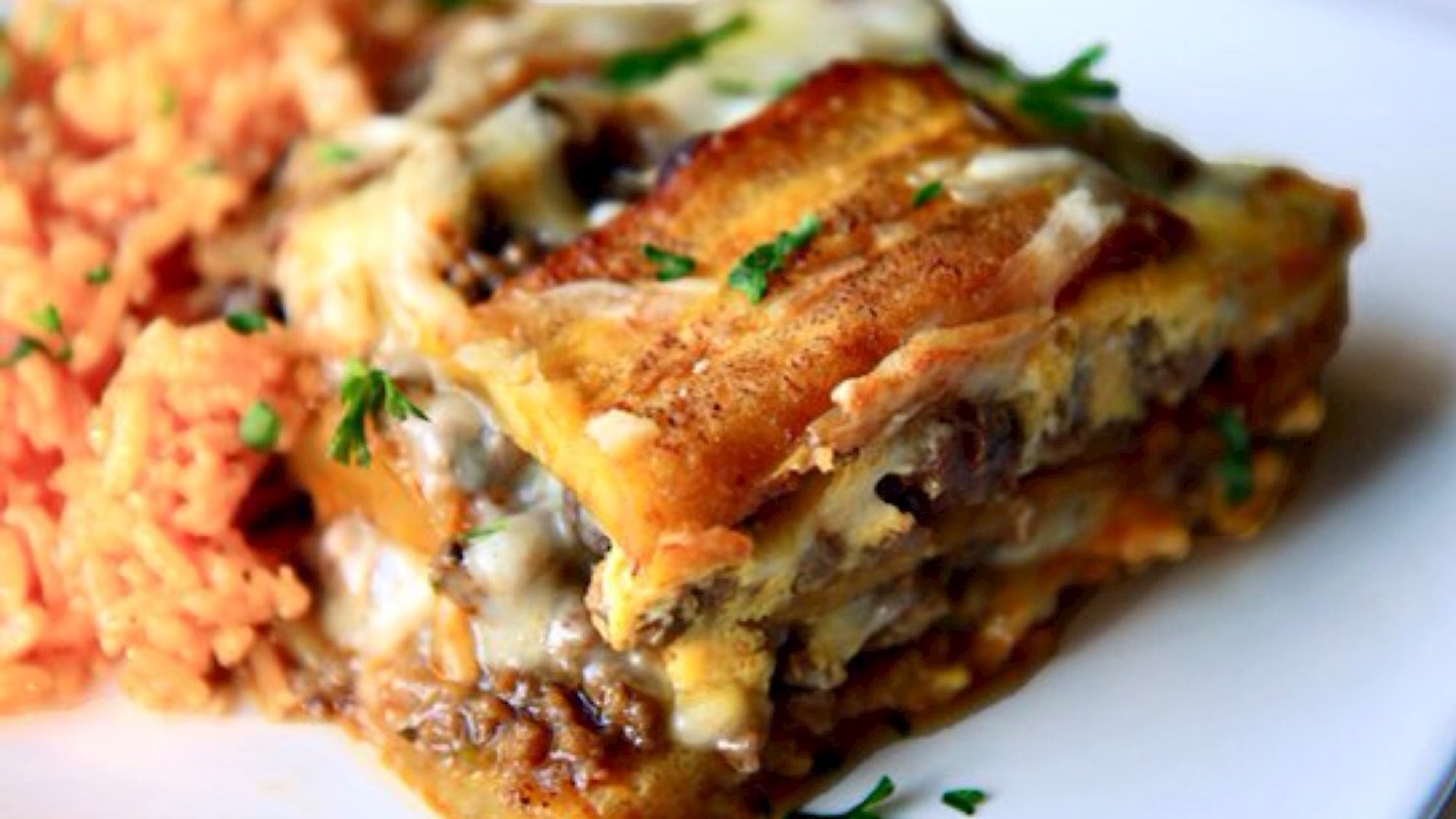
Pastelón is a Caribbean baked casserole most strongly associated with Puerto Rico and the Dominican Republic, where it is made by layering ripe plantains with seasoned ground meat, cheese, and eggs before baking until set. The dish belongs to a broader Caribbean way of combining sweet ripe plantain with savory meat, and while Puerto Rican and Dominican versions differ in method and seasoning, both rely on that contrast as the central idea. In Puerto Rico, pastelón is commonly made with long slices of fried ripe plantain arranged in layers around a picadillo-style filling of ground beef cooked with onion, peppers, garlic, tomato, olives, capers, and seasonings such as oregano and adobo, while beaten egg is often poured over the assembled casserole to help bind the layers. Dominican pastelón is more likely to use boiled or baked ripe plantains mashed into a smooth layer, with the meat and cheese placed between portions of the mash, producing a softer, more uniform texture. In both cases, the plantains need to be fully ripe, with darkened skins and pronounced sweetness, because underripe fruit would make the finished casserole too starchy and firm. Cheese varies by household and country, with mozzarella, cheddar, or local melting cheeses all used, and some versions include raisins or extra olives in the meat filling. Once assembled, the dish is baked until the cheese melts, the egg sets, and the edges begin to brown. Pastelón is served hot in square or rectangular portions and is substantial enough to work as a main course, especially at family lunches, holidays, and larger gatherings. It is commonly paired with white rice, beans, avocado, or a simple green salad, while cold fruit drinks, beer, or light-bodied red wine work well alongside the sweet plantain and savory meat.
TasteAtlas food rankings are based on the ratings of the TasteAtlas audience, with a series of mechanisms that recognize real users and that ignore bot,
nationalist or local patriotic ratings, and give additional value to the ratings of users that the system recognizes as knowledgeable.
TasteAtlas Rankings should not be seen as the final global conclusion about food. Their purpose is to promote excellent local foods,
instill pride in traditional dishes, and arouse curiosity about dishes you haven’t tried.



What People Say