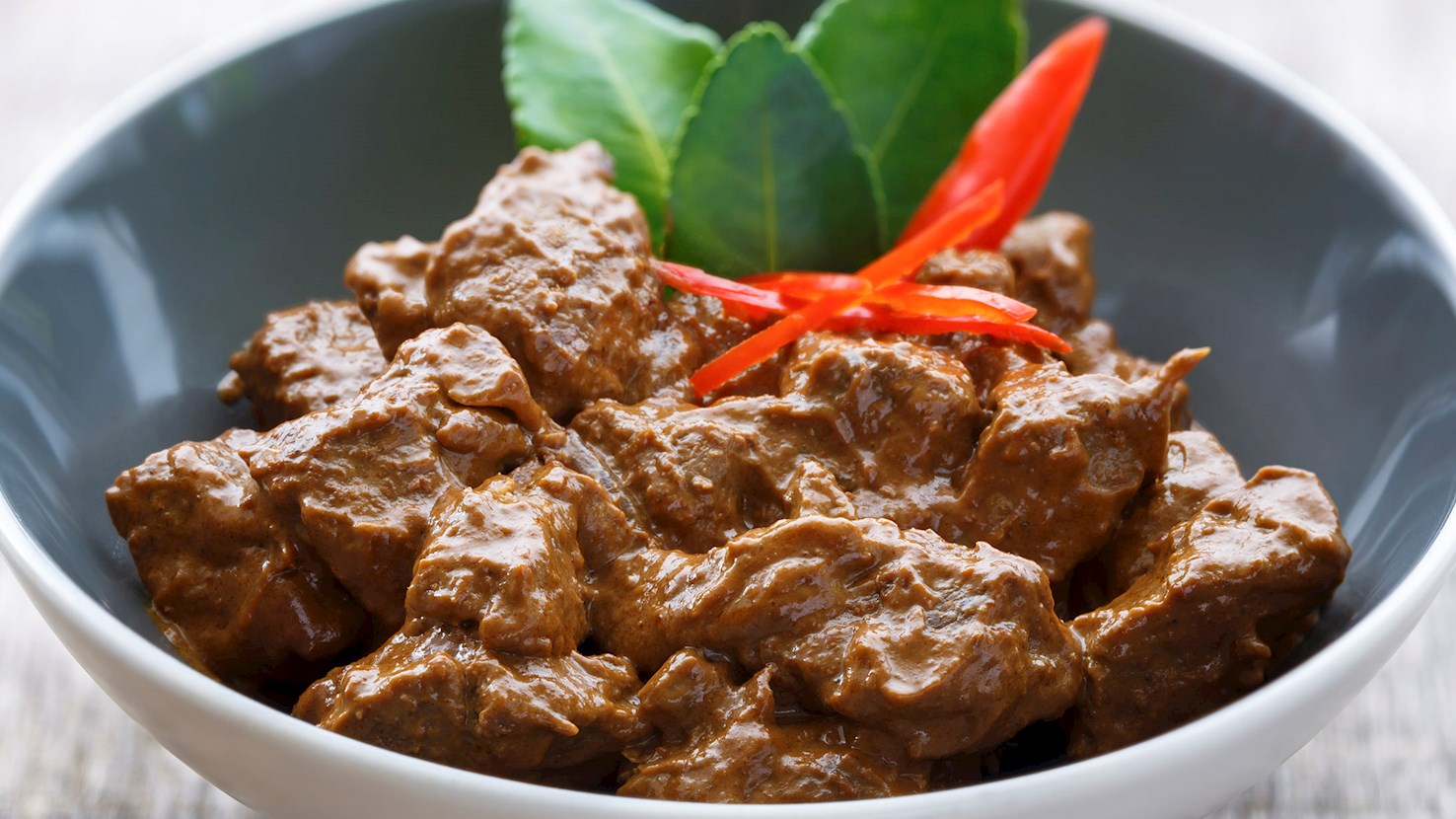
Rendang is an Indonesian meat dish which originated among the Minangkabau people in West Sumatra. The dish is famous for its spiciness and a long cooking procedure. It is often compared to Indian curry because of its consistency and unique flavors. The theory about how rendang was invented claims that the generous use of spices and long cooking hours were employed to preserve the meat in hot and tropical climates, such as Indonesian, so unsurprisingly, the need to preserve meat for a longer period appeared among the Minangkabau people. They were mainly traders who underwent long journeys and needed food which could stay fresh for weeks. However, the dish has a more symbolic meaning to them, because the main four ingredients used in rendang represent the Minangkabau society: the meat symbolizes leaders, coconut is a symbol of intellectuals, chili represents religious leadership, and other spices signify the rest of society. Today, rendang has surpassed Indonesian borders and has a reputation as one of the most delicious dishes in the world.
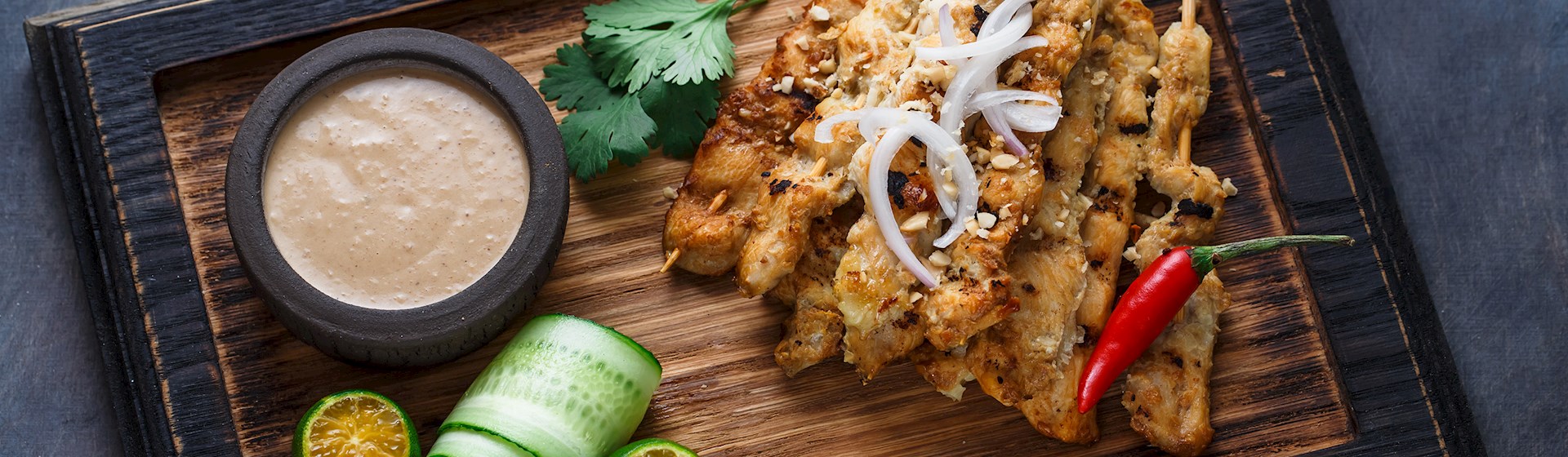
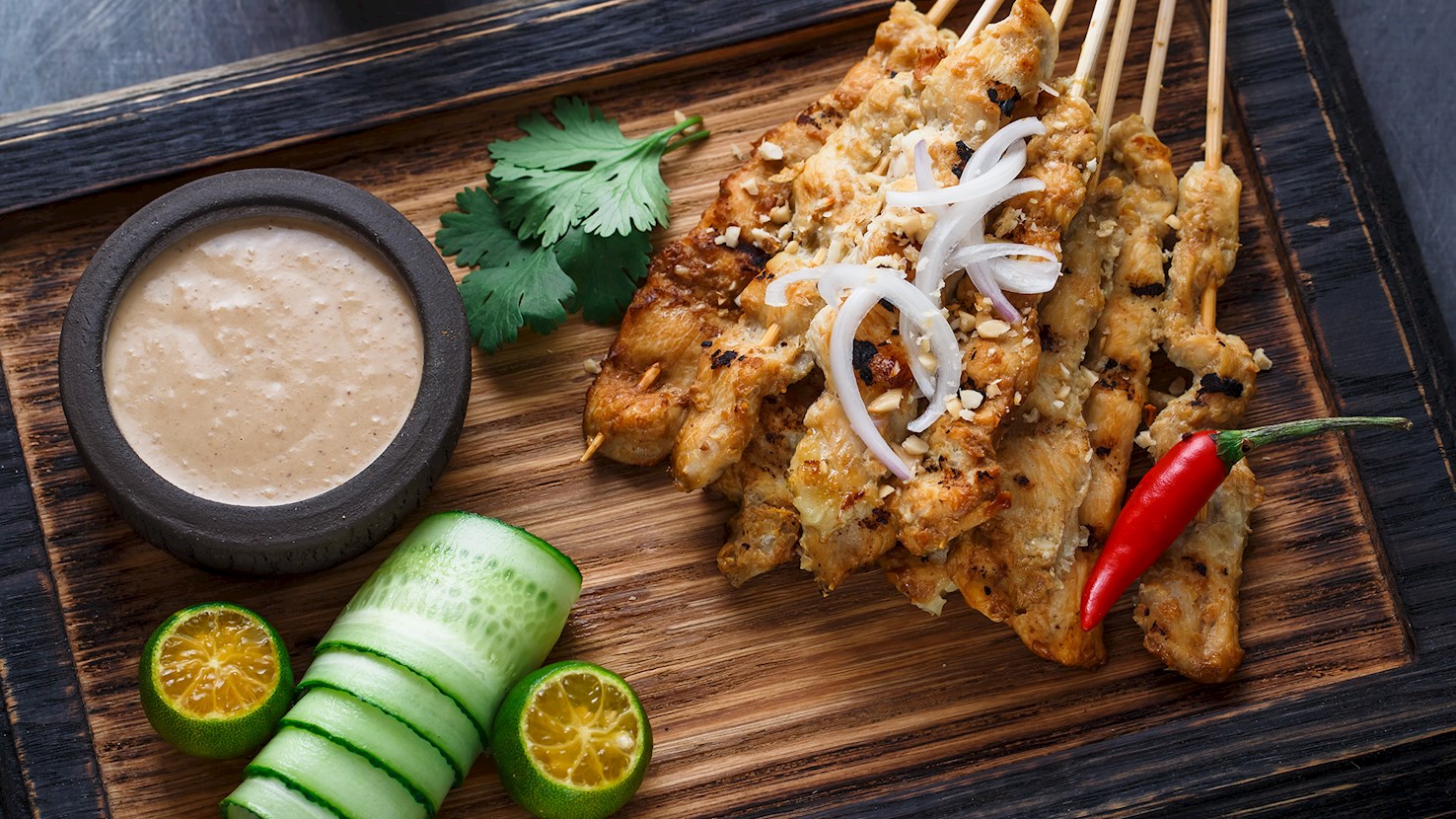
Satay is a traditional dish consisting of skewered meat that's served with a sauce on the side. All types of meat can be used to make satay, even some exotic varieties such as crocodile or snake meat. In most cases, the meat is marinated before grilling. Marinades vary, but typically include dark soy sauce, sugar, garlic, lime juice, and other seasonings. It is believed that satay originated in the Indonesian region of Java and that it was developed under the influence of Muslim traders who migrated from India. Another theory claims that satay was created in the 19th century by Indonesian street vendors as a variation on Indian kebabs. The theory is supported by the fact that satay became popular when Muslim and Arab immigrants had populated those areas. From the moment it originated in Java, satay quickly spread throughout Southeast Asia, and eventually all over the world. In Indonesia, it has become a national dish and nowadays it can be found everywhere, from street vendors to high-class restaurants. The most common sauces served with satay are peanut, soy, or pineapple sauce.
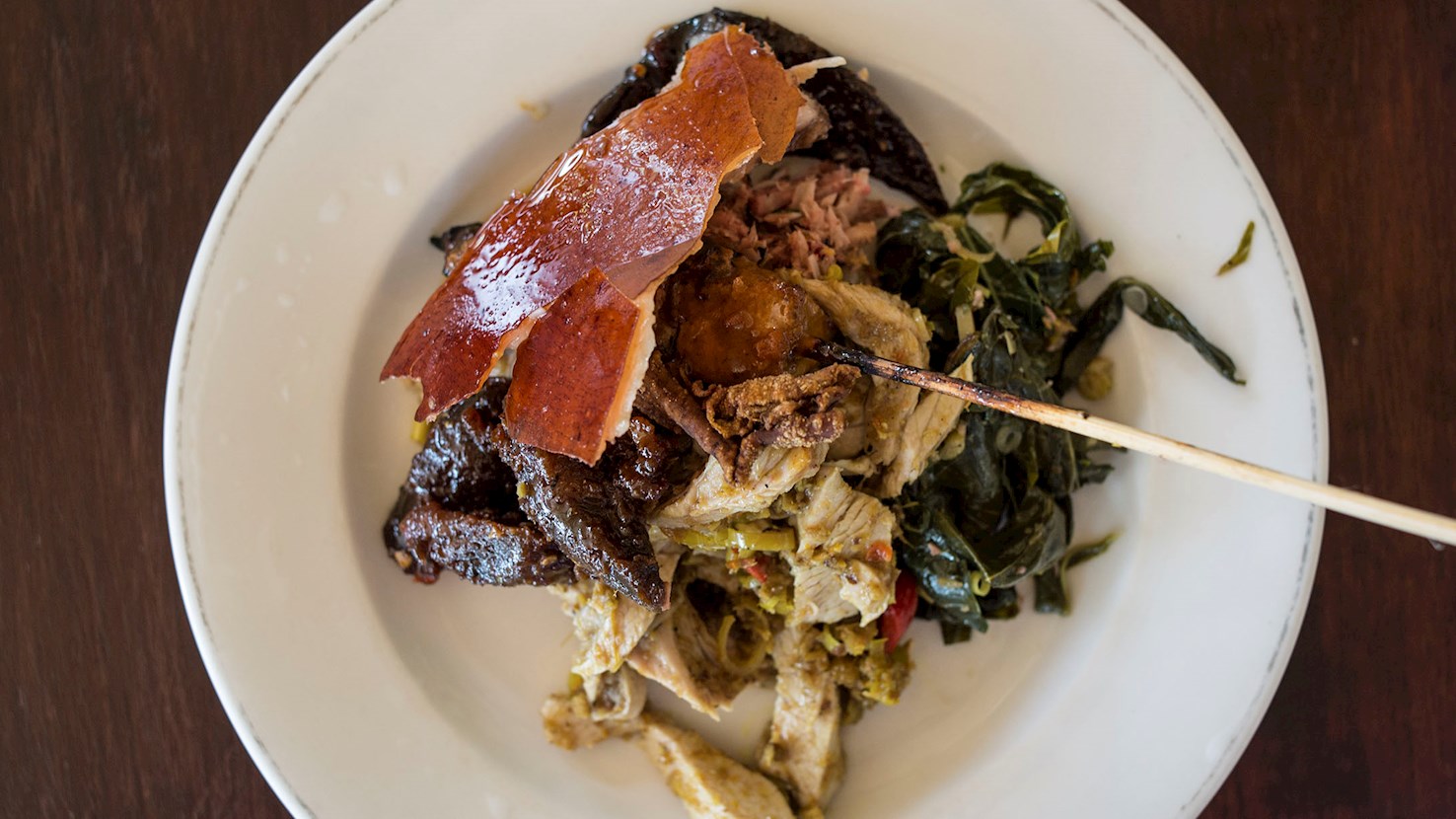
Babi guling is the Indonesian version of a roast suckling pig. Although not common to other Indonesian regions, on Bali, where the predominant religion is Hinduism, it is one of the most popular dishes. Before roasting, pig's skin is usually rubbed with turmeric, and the animal is stuffed with a bumbu Bali spice mixture, which usually includes turmeric, coriander, lemongrass, shallots, galangal, chili, shrimp paste, and garlic. Pork is then placed on a spit and roasted over an open fire. This Balinese delicacy is usually served during special occasions and formal gatherings, but can often be found in warungs, traditional Indonesian casual eateries. The dish is so popular in Bali that most warungs specialize and serve only babi guling as their signature dish. When the pig is roasted, the crisp amber-colored skin is carefully removed, and the meat is cut into chunks. Each serving of babi guling is supposed to have a chunk of juicy meat, a piece of crispy skin, and a tablespoon of the flavorful stuffing. Babi guling is often served with steamed rice, fresh vegetables, and a dollop of spicy Indonesian condiment known as sambal.
This quintessential Southeast Asian condiment is usually made only with spicy chili peppers and salt. It is occasionally adapted with lime juice, onions, sugar, ginger, shrimp paste, or vinegar. Traditionally prepared in a mortar, it is characterized by its thick consistency and an incredibly strong and sharp flavor. This original Indonesian creation has gained worldwide acclaim, and store bought varieties are available at numerous Asian food markets and international stores around the world. Sambal is used in a variety of Asian dishes, usually as a spicy condiment, seasoning, or a topping served alongside meat, seafood, vegetables, or rice.
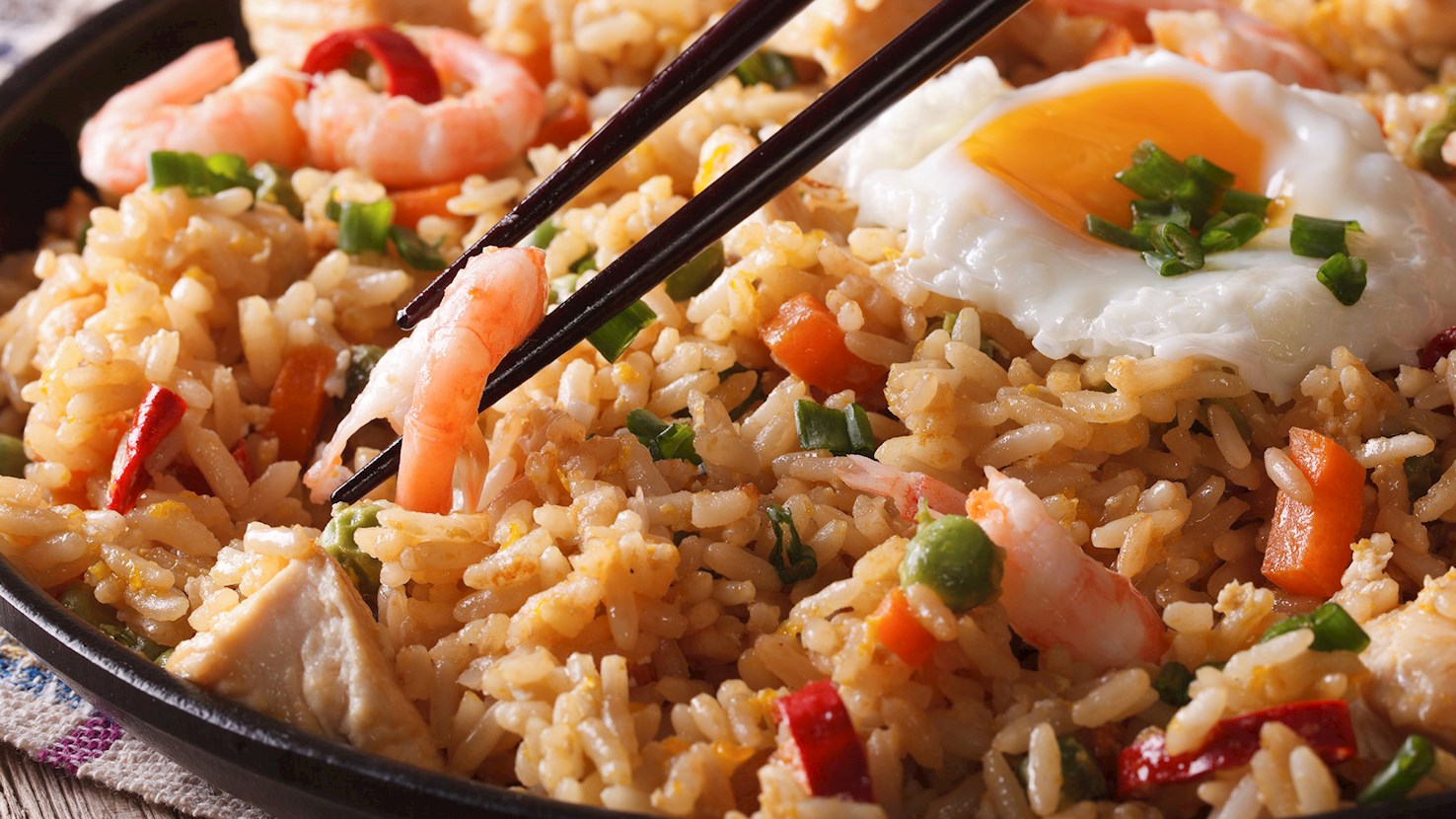
Nasi goreng is often referred to as the Indonesian version of fried rice. Although it is considered to be the national dish of Indonesia, it is also commonly eaten in Malaysia and Singapore. It is believed that the tradition of frying rice in Indonesia came from the Chinese culture, when the trade between the two countries started to develop. Indonesians adopted the Chinese tradition based on the belief that it is sinful to waste food, and soon, like many other versions of fried rice, nasi goreng was created. Since it was developed out of a practical need, it is usually eaten for breakfast and made with leftover rice from the previous day. Precooked rice is usually fried in a small amount of oil, then spiced up with shallots, garlic, chili, or ginger. Indonesian fried rice is distinguished by the generous use of sweet soy sauce, and because of that, it has a deeper and spicier flavor than other varieties of fried rice. Nasi goreng is commonly served with eggs. Usually, they are mixed in the rice or fried and served on the side.
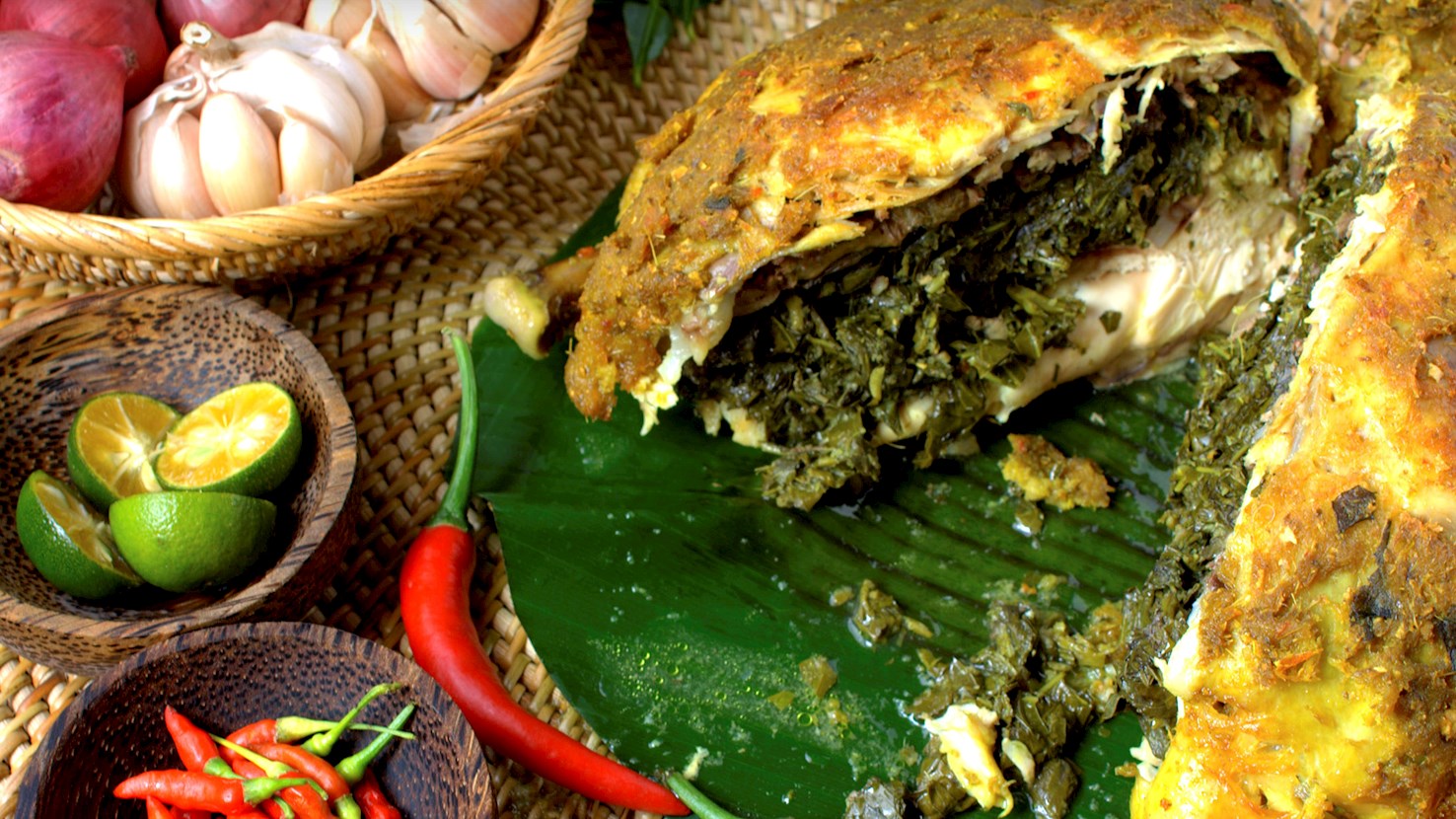
This ceremonial Balinese dish comes in two versions: the chicken-based ayam betutu, or the traditional duck version that goes under the name bebek betutu. The whole animal is rubbed and stuffed with a mixture of local spices such as turmeric, ginger, pepper, chili, and shrimp paste. Though the dish is nowadays mainly barbecued, the traditional procedure includes wrapping the seasoned duck or chicken in leaves, placing it in an earth oven, then steaming it over hot coals. If prepared in an old-fashioned way, the dish should always be ordered at least a day ahead. Long steaming time and fragrant spices produce a dish that is moist and full of flavor, and it is usually served at weddings and other important ceremonies.
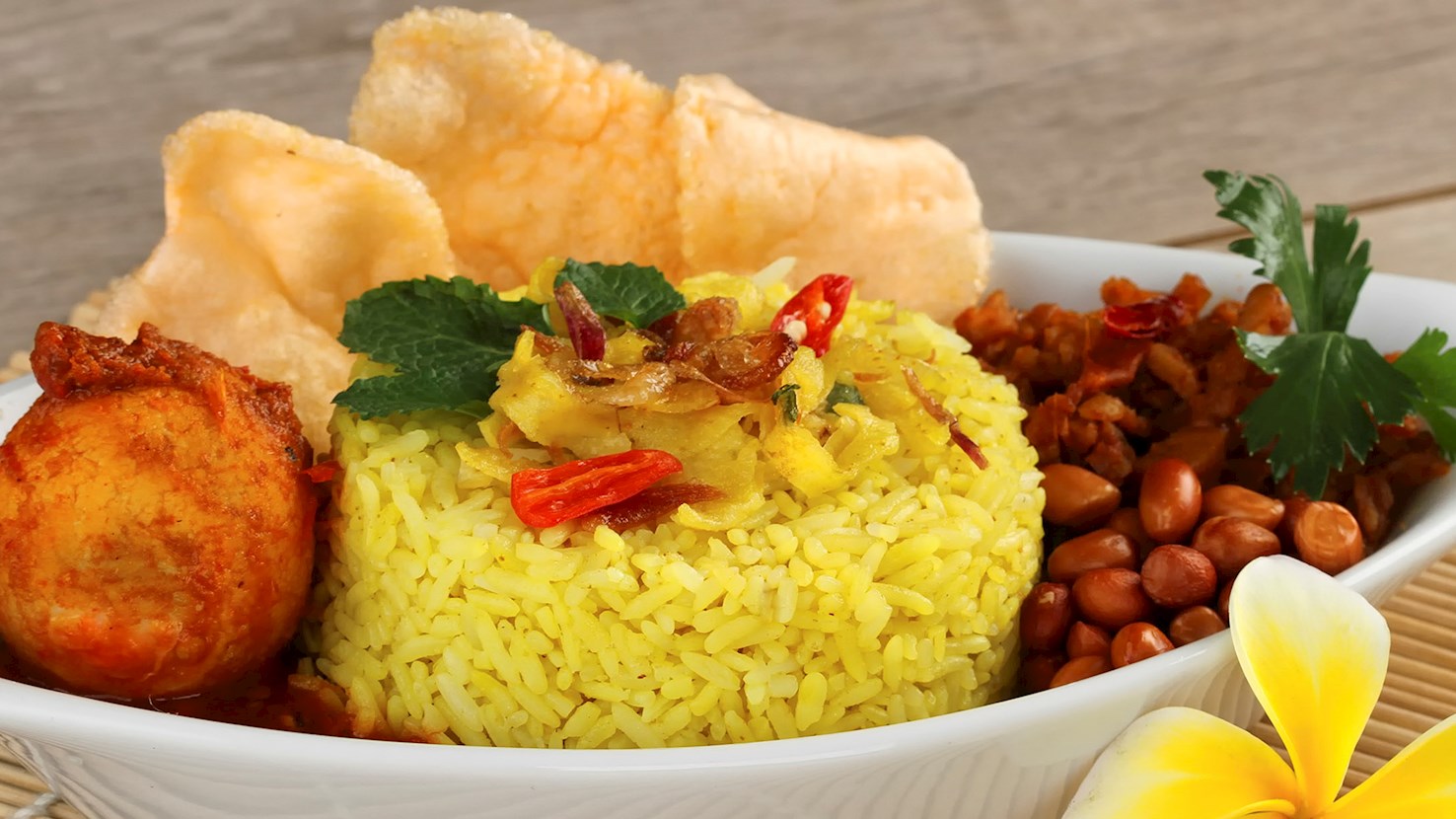
This traditional Indonesian dish consists of rice cooked in coconut milk that is usually seasoned with turmeric, lemongrass, and kaffir lime leaves. Even though yellow rice is the star of nasi kuning, the dish is assembled out of other Indonesian dishes and complements, such as fried chicken, potato fritters, sliced omelet, fried anchovies, shrimps, or fried tempeh. Sambal, the traditional Indonesian chili sauce, and serundeng (spicy fried coconut flakes) are often served as condiments. Nasi kuning is always served neatly organized on the plate, and the rice should always be placed in the middle. It is traditionally associated with the island of Java, which is considered to be the place of origin of this authentic Indonesian dish.
TasteAtlas food rankings are based on the ratings of the TasteAtlas audience, with a series of mechanisms that recognize real users and that ignore bot,
nationalist or local patriotic ratings, and give additional value to the ratings of users that the system recognizes as knowledgeable.
TasteAtlas Rankings should not be seen as the final global conclusion about food. Their purpose is to promote excellent local foods,
instill pride in traditional dishes, and arouse curiosity about dishes you haven’t tried.




What People Say