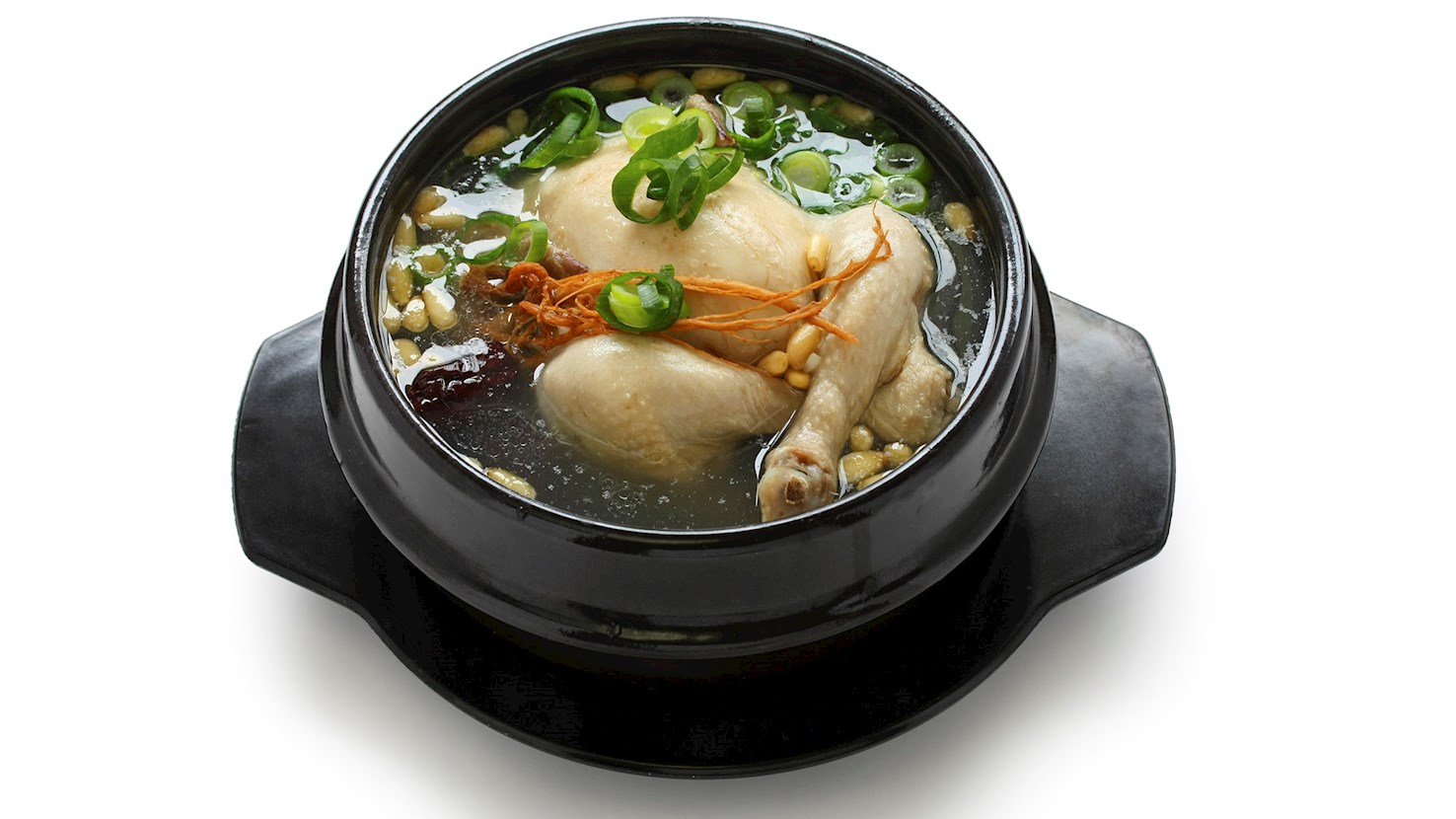
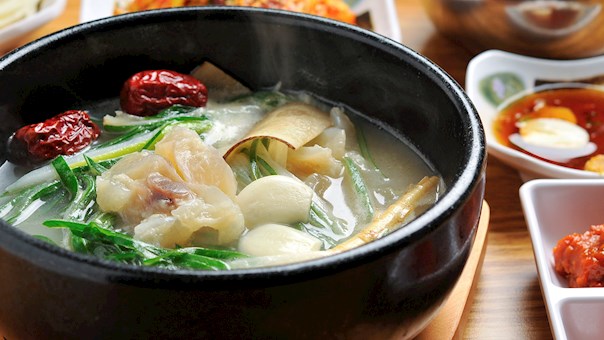
Samgyetang is a flavorful soup from South Korea, consisting of a whole young chicken cooked with ginseng, garlic, and rice. In Korea, ginseng is revered for its medicinal properties, as it lowers blood sugar and boosts the body's immune system and stamina, making samgyetang an ideal soup for hot summer days, when people fall into nutrition deficiency due to excessive sweating and loss of appetite. The flavors of the soup are somewhat milder than other Korean and Chinese herbal medicinal soups, and the key to its popularity during the summer may also be in its price, as it is generally pretty inexpensive. If consumed in a restaurant, there will often be a small bottle of insangju ginseng alcohol served on the side, believed to boost physical and sexual stamina.
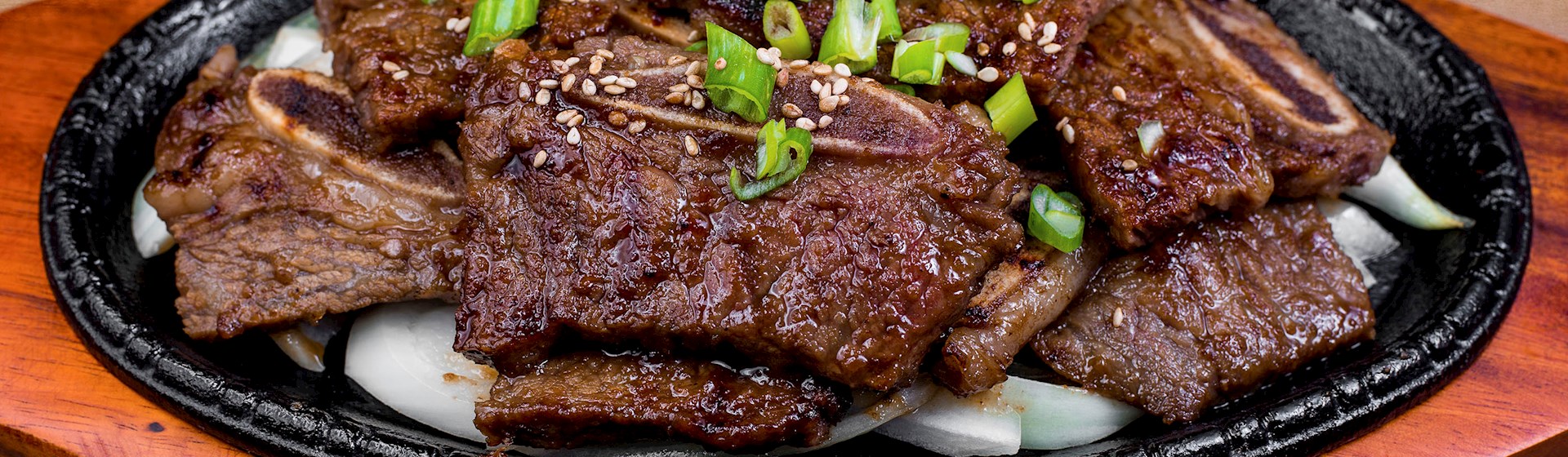
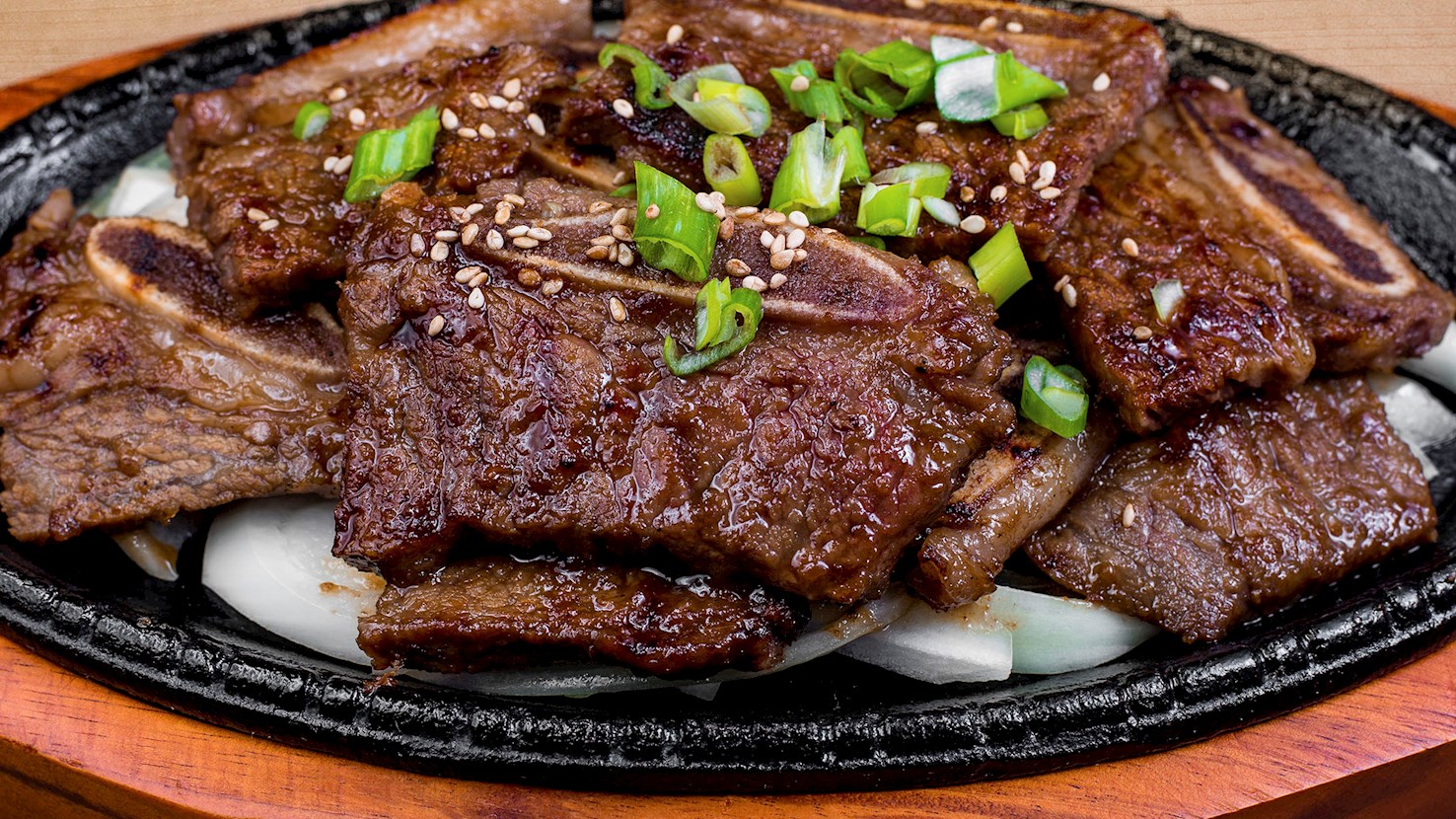
Galbi or kalbi refers to a variety of grilled beef short ribs dishes popular in South Korea. The ribs are marinated in a sweet sauce consisting of soy sauce, sugar, rice wine, sesame oil, and garlic. Although the name of the dish translates to ribs, chicken or pork meat can also be used. The dish originates from 18th-century Korea, when killing cows was strictly forbidden. As workers were building the Hwa Castle, they needed to be well-fed, so King Jeongjo allowed the opening of only one slaughterhouse in the whole country to process beef and feed the hungry workers. Of course, it didn't stop at just one slaughterhouse, and that is the best recommendation for trying the dish for yourself. Galbi is typically accompanied by kimchi, red bean paste or rice, but it can also be wrapped up in lettuce leaves with a variety of other vegetables. Due to galbi's great balance of sweet and savory flavors and rising popularity, the dish even has its own annual festival since 1995, called the Suwon Galbi Festival, offering the visitors a chance to indulge in this celebrated delicacy.
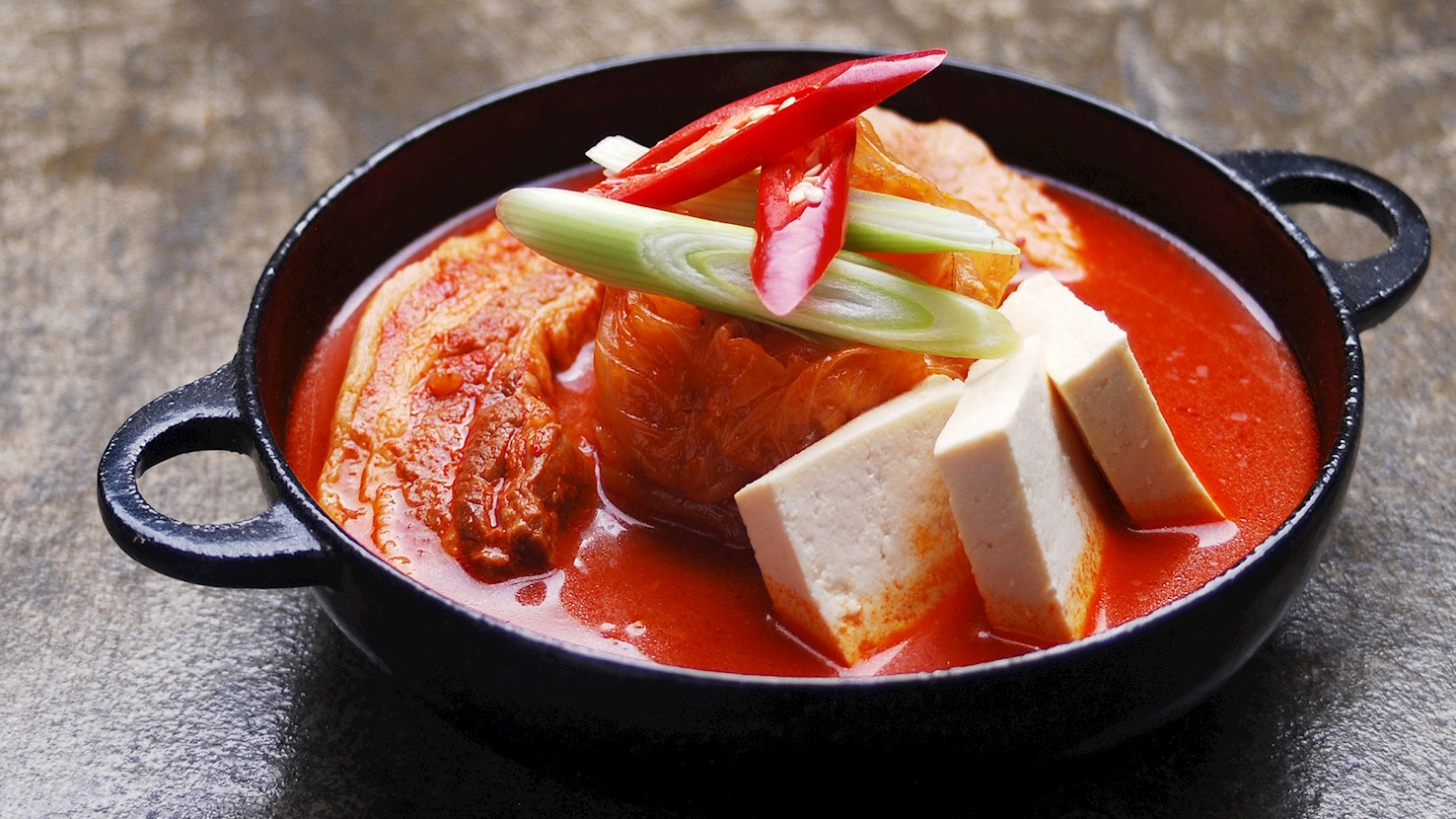
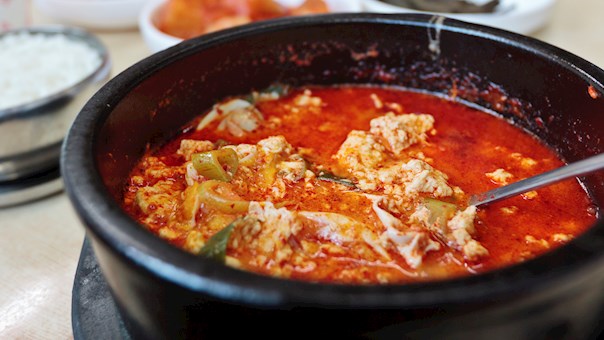
Kimchi jjigae is a flavorful Korean stew that employs kimchi as its base ingredient. Other elements usually include diced tofu, pork, or seafood, along with scallions and other vegetables such as potatoes or zucchinis. Kimchi stew is one of the most common dishes enjoyed in South Korea, and it is traditionally served as a communal meal, and should always be piping hot. The dish is best prepared with older kimchi since it tends to impart more flavor to the stew. Kimchi jjigae is usually served with rice on the side, as well as other traditional Koran sides (banchan).
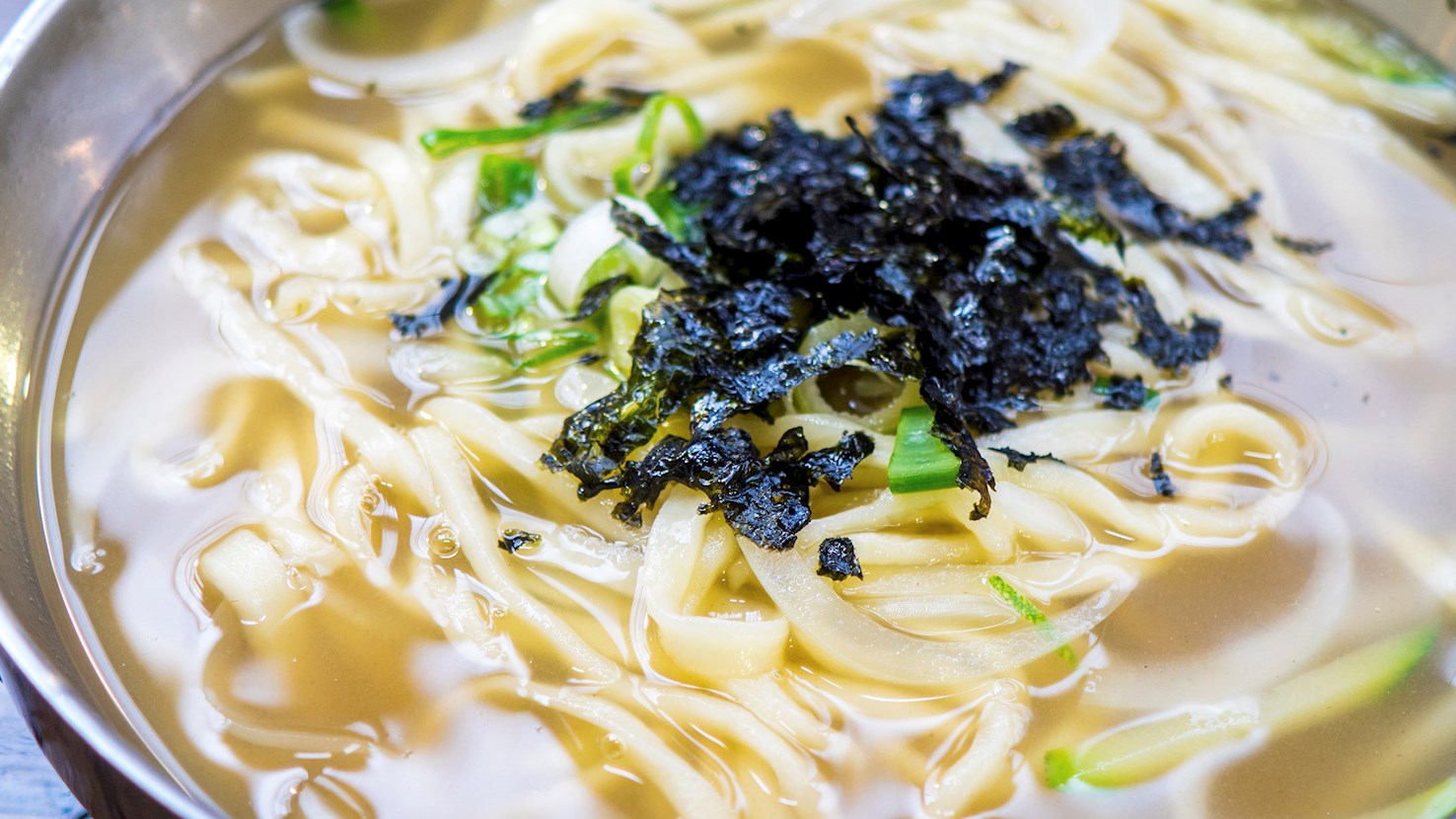
Kalguksu is a favorite summertime dish of many South Koreans, usually served during rainy seasons and on windy summer days. It consists of handmade wheat flour and egg noodles in a broth that is usually made with shellfish, dried anchovies, and kelp. The noodles are cut with a knife, giving the dish its name, kalguksu, which literally means knife noodles. Although seafood kalguksu is the most popular variety, there are other versions of kalguksu such as spicy (jjanppong kalguksu), chicken (dak kalguksu), and mushroom kalguksu (beodeot kalguksu). Typically, kalguksu is served with side dishes such as kimchi or barley combined with cabbage and soybean paste sauce. Kalguksu originated during the Joseon Dynasty era, and the first recipe for the dish was found in an old cookbook called Eumsik Dimibang, written by Lady Jang in 1670. Traditionally, kalguksu was consumed during the Yudu holiday, when barley and wheat were harvested. It was also a custom to serve the dish on a child's first birthday, as a sign of longevity, virtue, and health, but today, kalguksu is enjoyed by everyone as an inexpensive, hearty, and nourishing dish.
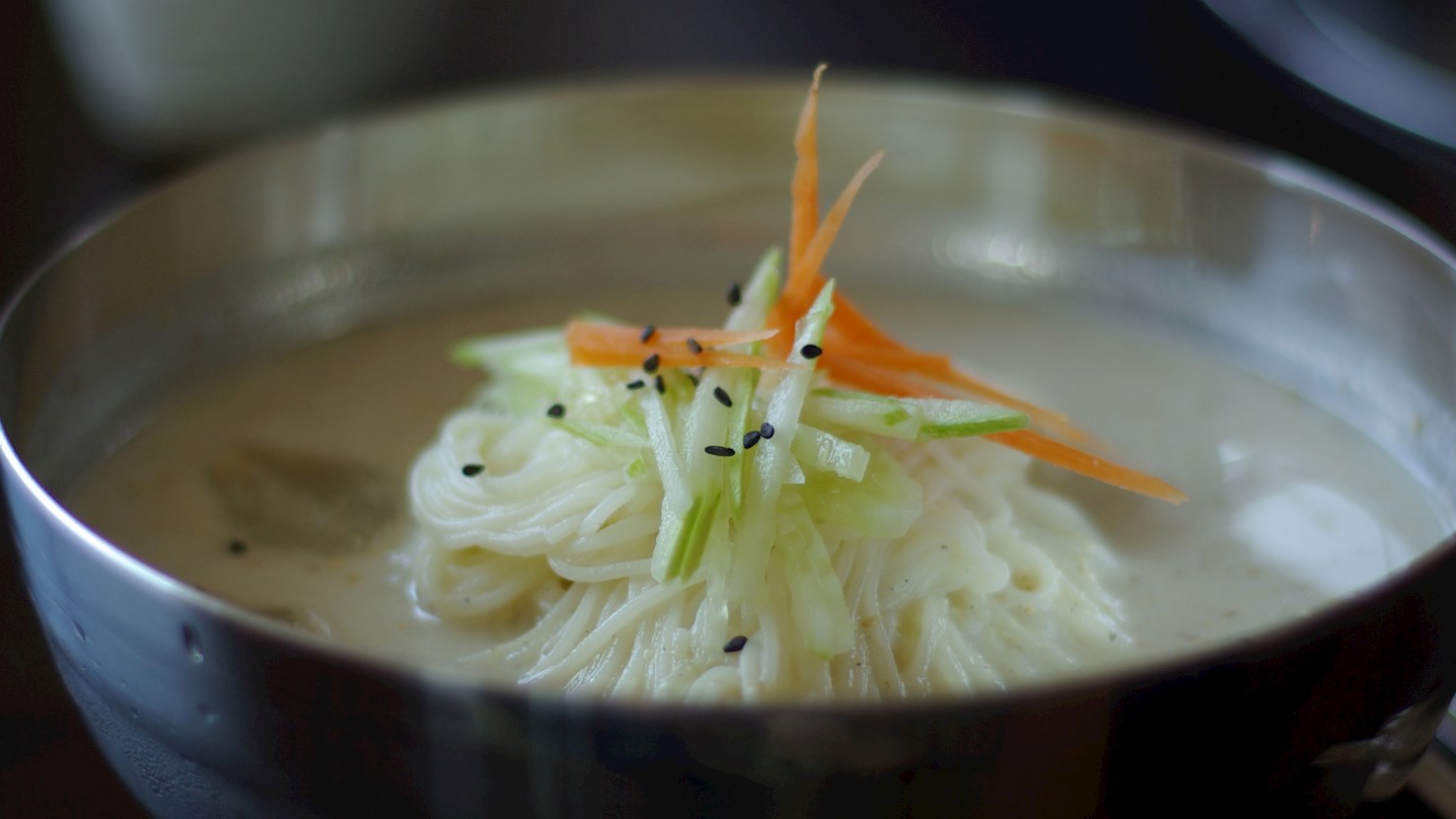
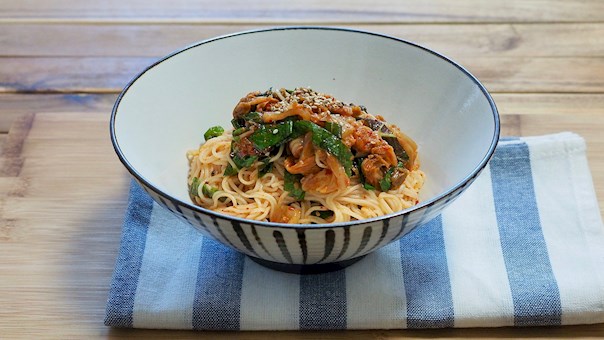
Kongguksu is a Korean summer classic that combines noodles and a cold, soy milk broth. Traditionally, the broth is made from scratch by cooking and puréeing soybeans, occasionally with the addition of sesame seeds or different nuts. The dish is usually prepared with somyeon noodles, and it is finished off with the addition of different toppings such as finely sliced cucumbers or tomatoes. Occasionally, ice cubes can be added to chill the soup.
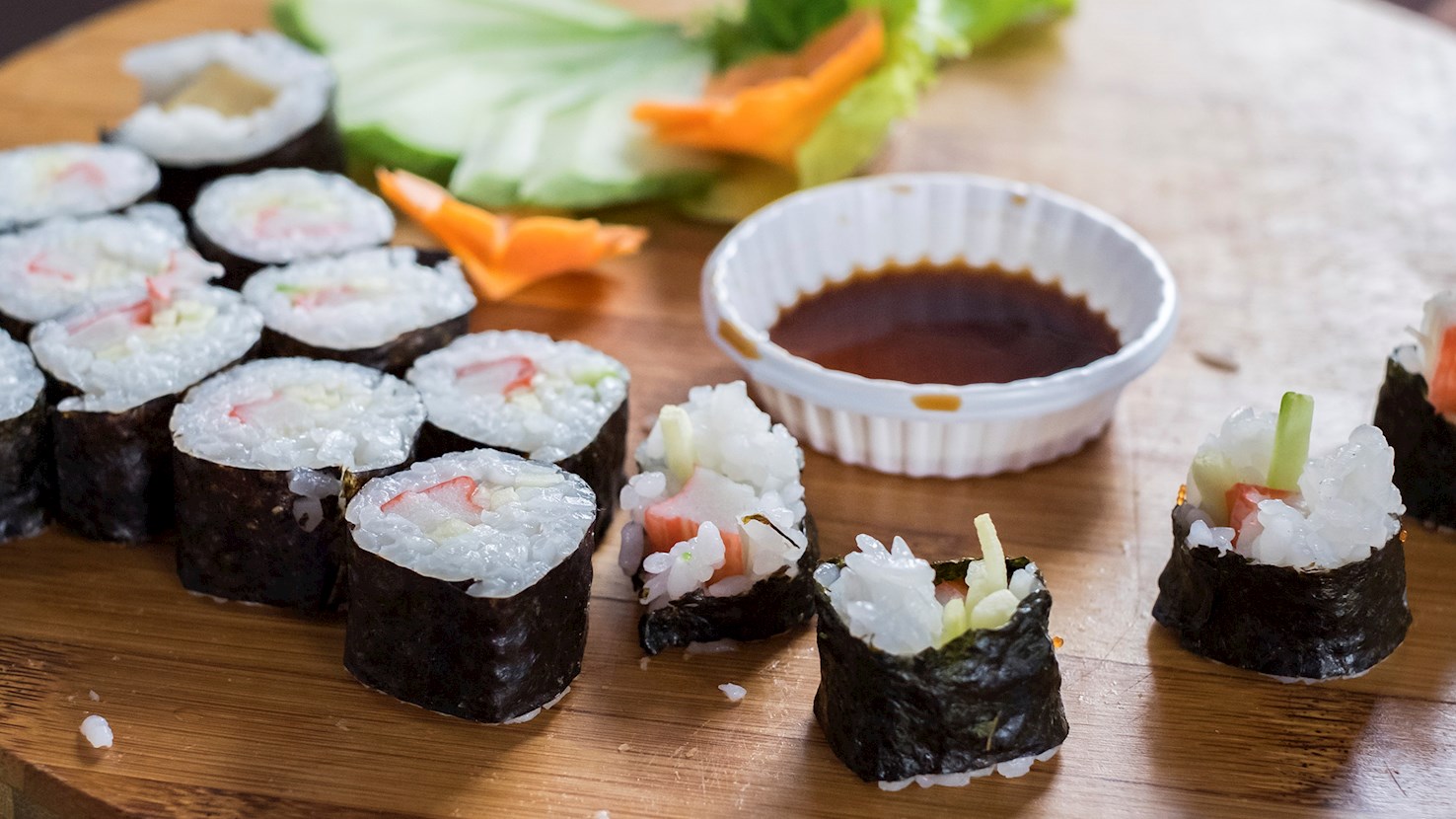
Gimbap is a savory roll made from cooked short-grain white rice and various pre-cooked fillings wrapped in a sheet of dried seaweed. The rice forms the foundation and requires seasoning with toasted sesame oil and salt rather than vinegar. Building the roll involves placing a sheet of seaweed, known as gim, on a bamboo mat. A thin, even layer of the sesame-seasoned rice is spread across the seaweed, leaving a small margin at the top. The core ingredients are cut into long, uniform strips and stacked horizontally across the lower third of the rice. Standard fillings usually include sautéed carrots, blanched spinach, long strips of yellow pickled radish, heavily seasoned ground beef or sliced fish cake, and ribbons of rolled omelet. The bamboo mat is then used to lift and tightly fold the seaweed over the ingredients, compressing everything into a firm, solid cylinder. Once sealed, a sharp knife is brushed with sesame oil to slice the long cylinder into bite-sized circular pieces. Roughly speaking, there are three main styles of gimbap with variations within each. Traditional gimbap with seaweed, rice, and fillings; French or nude gimbap with seaweed on the inside and rice on the outside; and samgak gimbap, shaped like a triangle and sold in many South Korean convenience stores. Tuna mixed with mayonnaise and perilla leaves creates a highly popular creamy variant, while a miniature version known as mayak gimbap consists of tiny, thin rolls filled only with carrots, spinach, and radish, specifically designed to be dipped in a mustard-and-soy sauce mixture. Another distinct style is chungmu gimbap, which leaves the rice unseasoned and entirely bare inside the seaweed wrapper, providing spicy radish salad and marinated squid on the side instead of rolling them within. The origins of rolling rice in seaweed date back to the Joseon era, where historical records mention wrapping rice and side items in gim as a portable meal. Many believe that it is a Korean take on Japanese sushi. Others say it is a variation of gimssam, a wrap made with rice and seaweed. During the early 20th century, the introduction of commercial bamboo rolling mats influenced the exact cylindrical shape recognized today, merging local ingredients with new assembly techniques. Because they hold their shape perfectly without refrigeration and require no utensils, the sliced rolls are packed tightly into lunch boxes and eaten by hand during picnics, long train rides, and school field trips. This portable meal is almost always consumed at room temperature alongside a simple bowl of warm broth or spicy pickled cabbage.
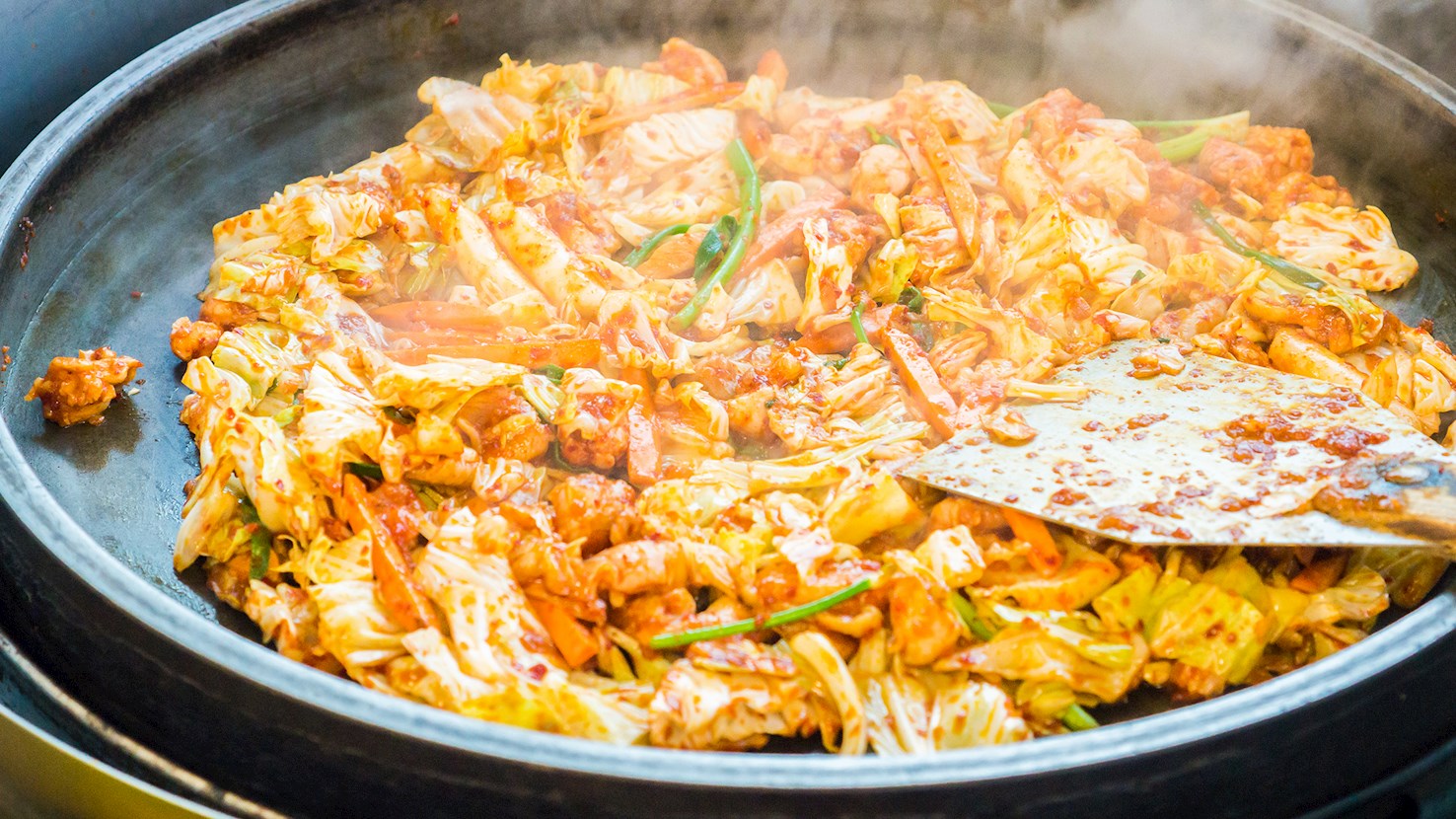
Dak galbi is the South Korean variety of stir-fried chicken. It is a communal dish that's cooked tableside, on large cast iron skillets. Typical elements in dak galbi include various chicken cuts, cabbage, tteok rice cakes, carrots, chili peppers, and sweet potatoes. When served in restaurants, the server will bring all the ingredients and cook the dish for the guests. Occasionally, perilla leaves are incorporated into dak galbi, but the final addition is always a generous amount of spicy sauce made with spicy chili paste, chili flakes, soy sauce, garlic, ginger, and onions. It is put on top of dak galbi and mixed until all the elements are completely coated in it. At the end of the meal, when there is still some food left in the skillet, a common tradition is for the server to add rice into the skillet and create an unusual variety of fried rice. Several vegetable side dishes are usually served alongside dak galbi, and lettuce or perilla leaves are occasionally used instead of utensils as crunchy wrappers. Dak galbi is now considered a Korean classic, but it originated as a frugal dish in the 1960s. Since then, it has spread from Chuncheon to other parts of South Korea. Although it can be prepared at home, it is typically eaten in specialized dak galbi restaurants.
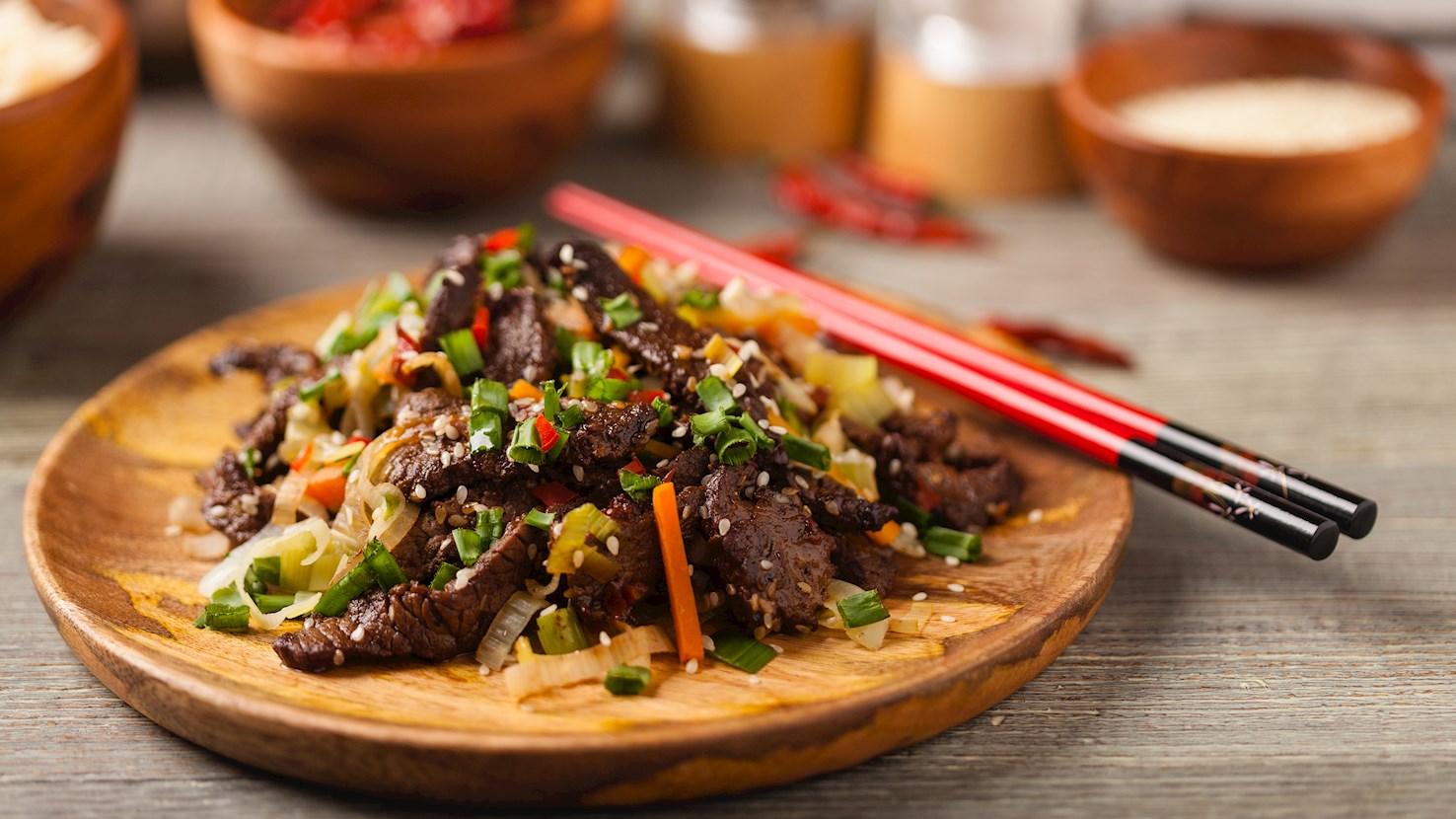
It's hard to say which is better: the succulent meat or spicy side dishes that define bulgogi, the Asian barbecue style in which thin slices of marinated meat are quickly cooked over high heat on top of a perforated, round metal plate that covers the grill's piping hot coals. The name of the dish stems from bool and kogi, Korean words denoting fire and meat. The earliest form of the dish originates from the Goguryeo period, when the meat was marinated before grilling, unlike the standard Chinese practice of seasoning the meat after it has been grilled. The marinade traditionally consists of honey, sesame, soy sauce, garlic, and scallions, while the alternatives for beef, chicken, and pork can be either tofu, shrimp, or squid. Typical for Korean food, the meat always comes to the table with a variety of accompaniments and side dishes such as rice, lettuce leaves, scallion pancakes, kimchi, and the omnipresent gochujang. What harissa is to Moroccan cuisine and what ketchup is to burgers and hot dogs in the USA, gochujang is to bulgogi, a fiery hot condiment made from dried chili peppers, soybean paste, and rice powder, all slowly fermented in huge clay pots, giving a pungent kick both to bulgogi, served at every Korean dinner party, and a variety of other meat and rice dishes.
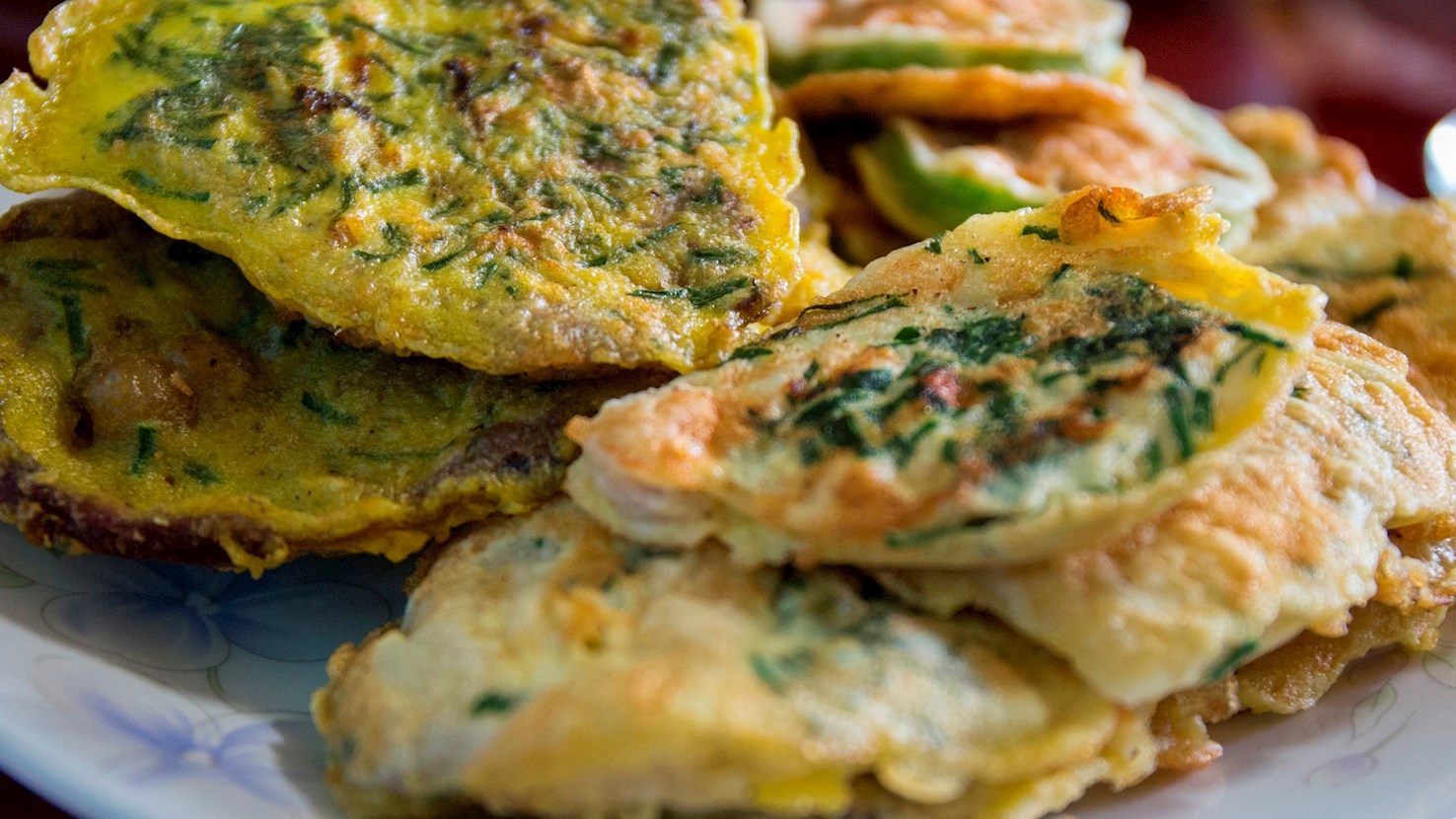
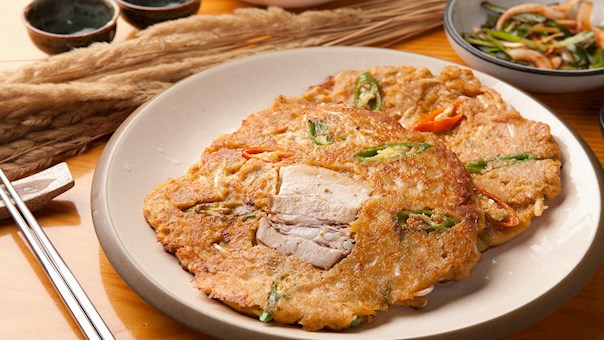
Jeon, also known as Korean pancakes, represents a number of pancake-like dishes in Korean cuisine that are often served as appetizers, side dishes, or consumed as snacks. Although jeon are typically prepared in savory versions, there are also some sweet varieties of these flavorful pancakes. At their simplest, it is food that is first coated in flour and eggs, then pan-fried in oil. Jeon incorporates ingredients such as thinly sliced meat, poultry, seafood, and various vegetables. The pancakes are traditionally prepared every year during the Korean Lunar New Year and Korean Harvest Festival, although they are eaten daily throughout the year. Some of the more popular varieties of jeon are made with shredded beef (yukjeon), oysters (guljeon), kimchi (kimchijeon), and green onions (pajeon). It is recommended to serve jeon with a spicy soy-based dipping sauce or a refreshing cucumber salad.
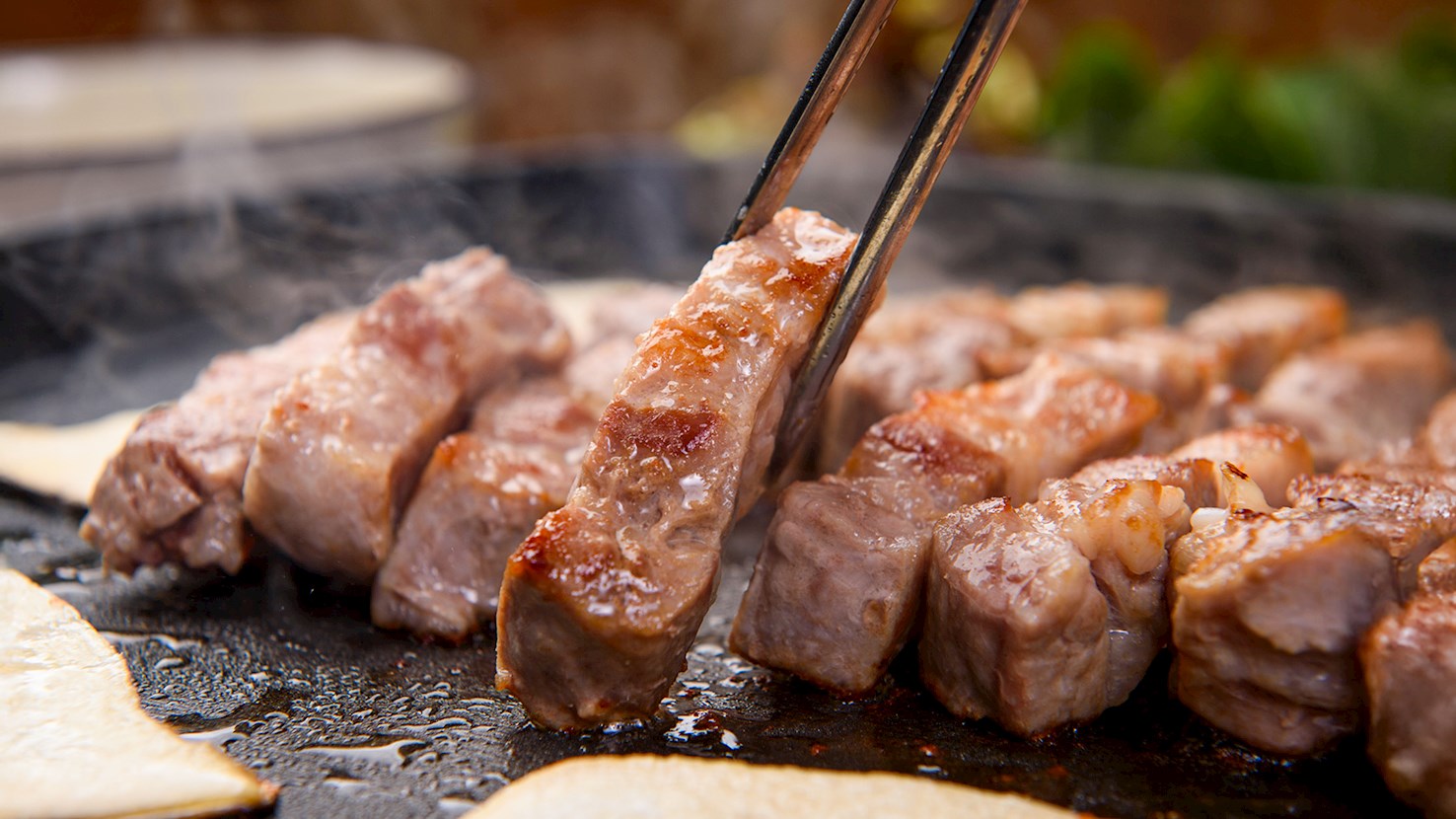
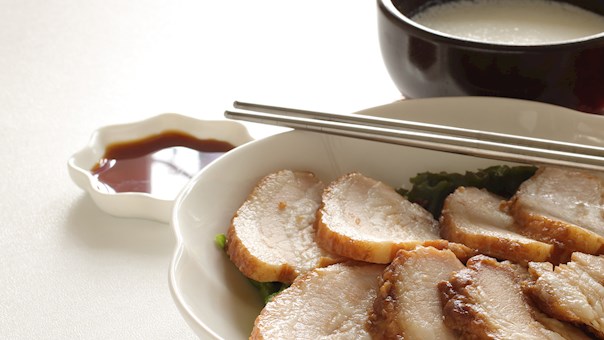
Samgyeopsal is a grilled meat dish featuring thick slices of unmarinated pork belly cooked directly on a hot metal pan at the dining table. The uneasoned pieces of pork belly are placed on a very hot grill, often set at a slight tilt to allow the rendered fat to slide downward and pool in a small collection cup. To maximize flavor, thick wedges of raw garlic, sharp white onions, enoki mushrooms, and deeply fermented sour kimchi are deliberately positioned at the lower end of the sloped metal to fry aggressively in the dripping pork fat. Once the meat develops a deeply browned, crispy exterior, individuals utilize metal tongs and large kitchen scissors to snip the long strips into bite-sized squares right on the hot surface. Samgyeopsal is eaten wrapped in lettuce, either green lettuce or perilla, known as ssam. A piece of the sizzling meat is dragged through gireumjang, a simple mixture of toasted sesame oil, coarse sea salt, and black pepper, or heavily coated in ssamjang, a thick, spicy paste combining fermented soybeans and chili. The dipped pork goes into the leaf alongside the grilled garlic, raw green chilies, and a sharply dressed scallion salad, before the entire bundle is folded tightly and eaten in a single, massive bite. Cold shots of clear distilled liquor, specifically soju, almost universally accompany the heavy meal to cut through the intense grease. While the plain, unseasoned slabs represent the absolute standard, there are massive variations in thickness and marinades. Daepae samgyeopsal uses freezing temperatures to slice the belly remarkably thin, resembling wood shavings, which crisp up rapidly over heat in mere seconds. Ogyeopsal leaves the chewy skin fully attached, offering a five-layered cut with significantly more bounce and texture. Other modern iterations soak the raw meat in red wine, coat it heavily in green herbs, or entirely ditch the unmarinated rule by submerging the strips in sweet soy sauce or fiery red chili paste before hitting the grill. The name of the dish consists of three words: sam (three), gyeop (layered), and sal (meat), so it can be literally translated as three-layered meat, referring to the three visible layers of the meat. The massive surge in this specific fatty cut dates to the late 20th century, accelerating during the economic boom of the 1980s and 1990s. During this era, export markets heavily favored lean pork cuts, leading to massive quantities of the rejected fatty belly sections flooding the domestic market at incredibly low prices. Concurrently, a widespread belief emerged among coal miners and construction workers that consuming the heavily greasy meat effectively washed away toxic dust accumulated in the throat and lungs after a long shift. This combination of cheap abundance and perceived health benefits firmly cemented grilled meat as an absolute staple, so much so that March 3rd is universally celebrated as a dedicated holiday for eating samgyeopsal, a date that mirrors the three layers in the meat. The dish is most commonly accompanied by lettuce, raw garlic, green chili peppers, kimchi, and green onions. Two dipping sauces are traditionally served on the side: one is ssamjang, consisting of sesame oil, chili paste, and soybean paste, and the other is gireumjang, consisting of sesame oil, salt, and black pepper.
TasteAtlas food rankings are based on the ratings of the TasteAtlas audience, with a series of mechanisms that recognize real users and that ignore bot,
nationalist or local patriotic ratings, and give additional value to the ratings of users that the system recognizes as knowledgeable.
TasteAtlas Rankings should not be seen as the final global conclusion about food. Their purpose is to promote excellent local foods,
instill pride in traditional dishes, and arouse curiosity about dishes you haven’t tried.



What People Say