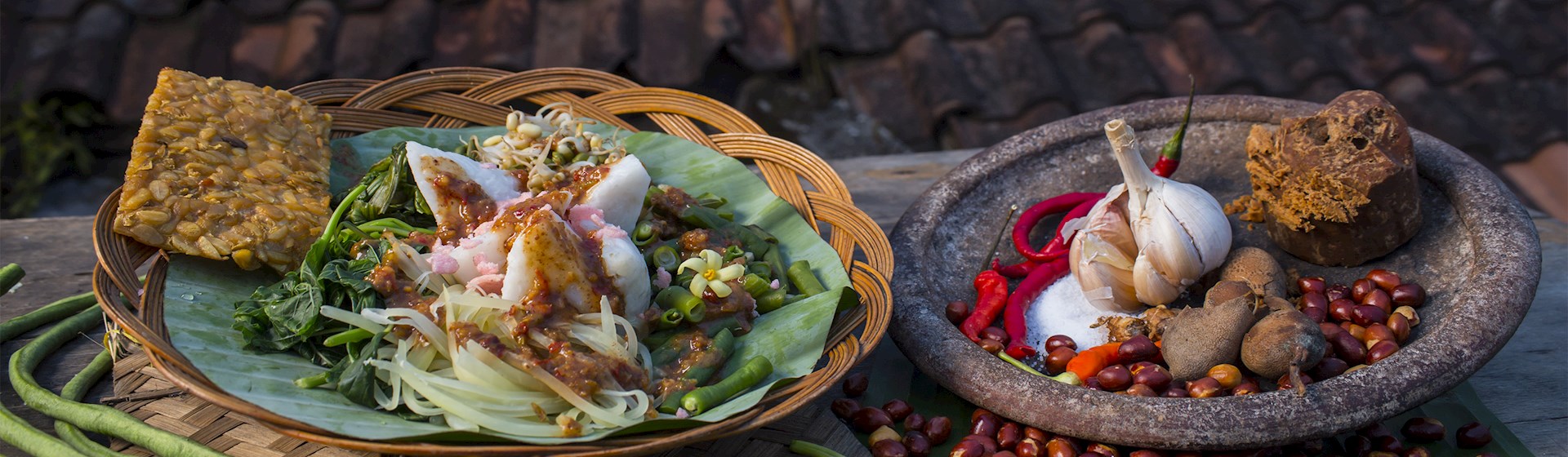
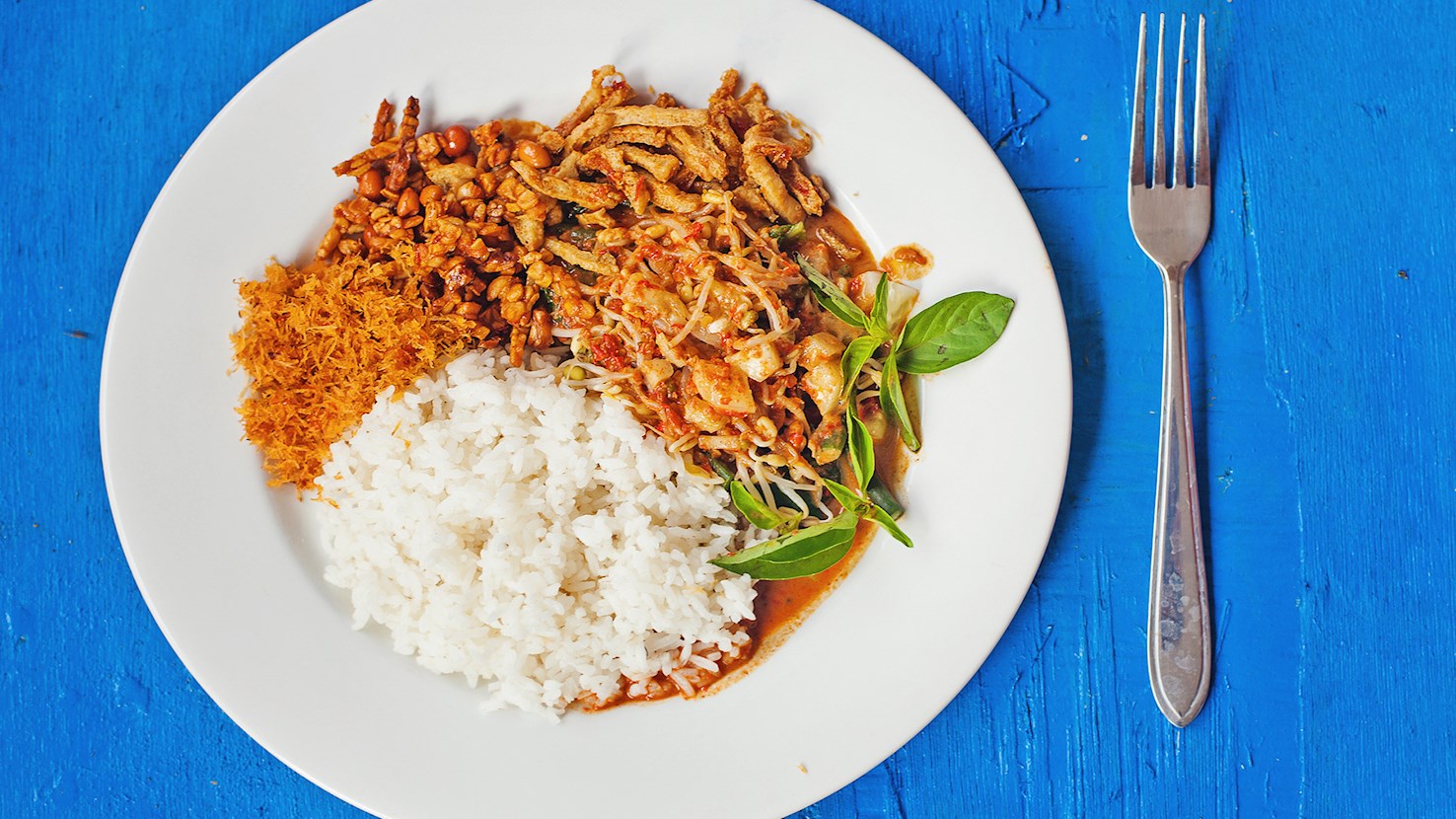
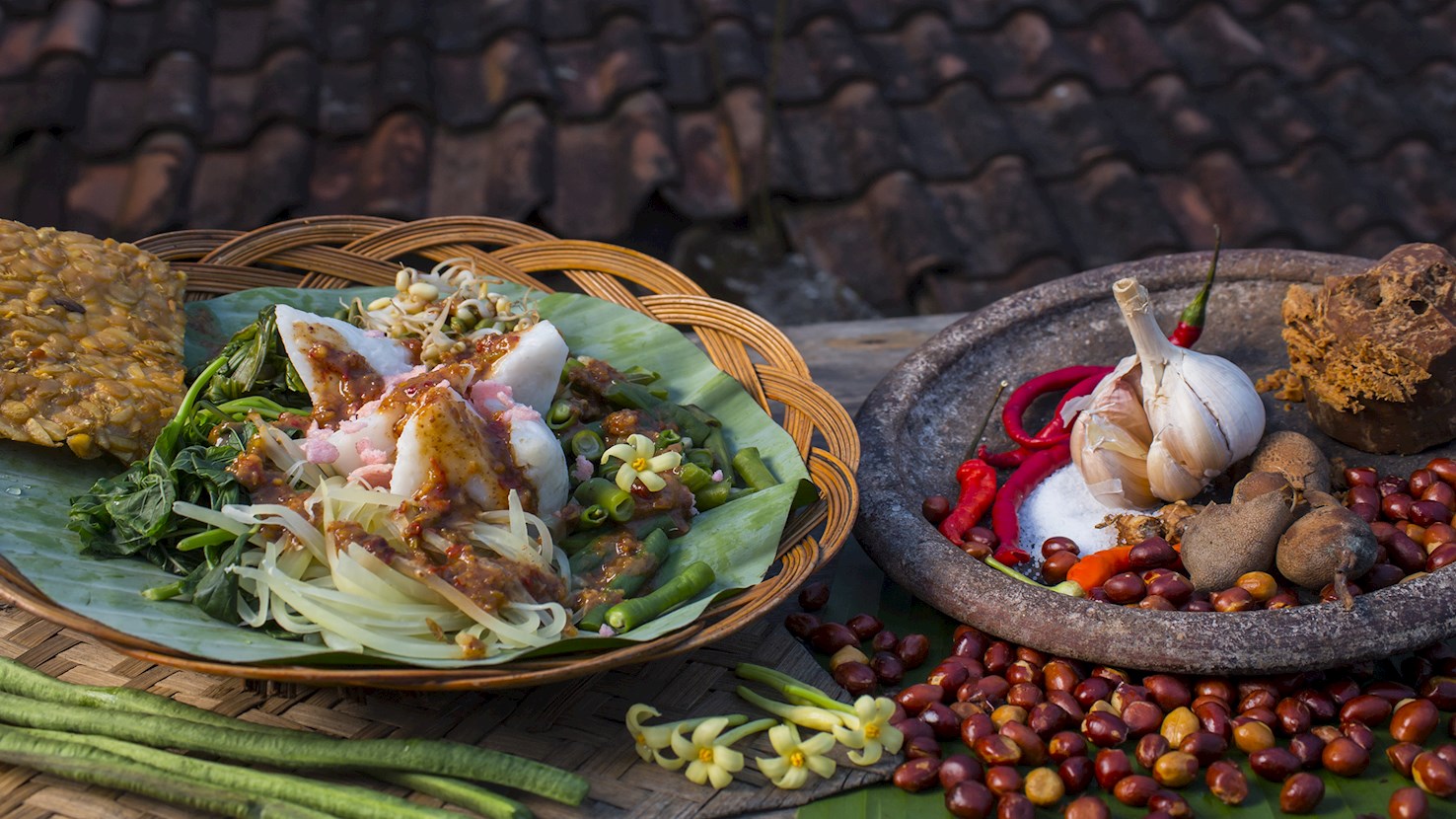
Nasi pecel is a Javanese rice dish that brings together a colorful array of lightly blanched vegetables served over steamed rice and generously topped with a rich, aromatic peanut sauce, originating from Central and East Java, particularly in cities like Madiun, Kediri, and Blitar. At the heart of the dish is the pecel sauce, a slightly coarse, deep brown peanut dressing made from roasted peanuts, chili peppers, garlic, tamarind, coconut sugar, and makrut lime leaves, pounded or blended into a thick, fragrant paste. The result is a sauce that is bold yet balanced, with a satisfying heat and a subtle citrusy lift that complements the freshness of the vegetables. The vegetable selection in nasi pecel typically includes water spinach (kangkung), long beans, bean sprouts, cassava leaves, and cabbage, all lightly blanched to retain their crunch and vibrant color. These are laid over a warm bed of white rice, then drenched in the warm pecel sauce. The dish is often served with rempeyek (crispy peanut crackers), tempeh, fried tofu, or a fried egg, adding contrasting textures and extra protein. Nasi pecel is widely enjoyed for breakfast or lunch, especially in roadside warungs and traditional markets, where it is often wrapped in banana leaves, infusing the meal with a subtle aroma and offering an eco-friendly form of takeaway. While similar in spirit to dishes like gado-gado, nasi pecel is less elaborate and more rustic, with a spicier, thinner sauce and a stronger regional identity rooted in Javanese culinary tradition.
Indonesian pecel may refer to a fragrant peanut sauce or a combination of the sauce and various vegetables, when it is commonly referred to as a salad. The base of the sauce is prepared with roasted peanuts and spices that typically include chili peppers, palm sugar, garlic, tamarind juice, shrimp paste, kaffir lime leaves, salt, and kencur, an aromatic ginger variety. Usually associated with Java, the sauce is characterized by its distinctive combination of sweet and spicy flavors. When served with rice, the dish goes under the name nasi pecel.
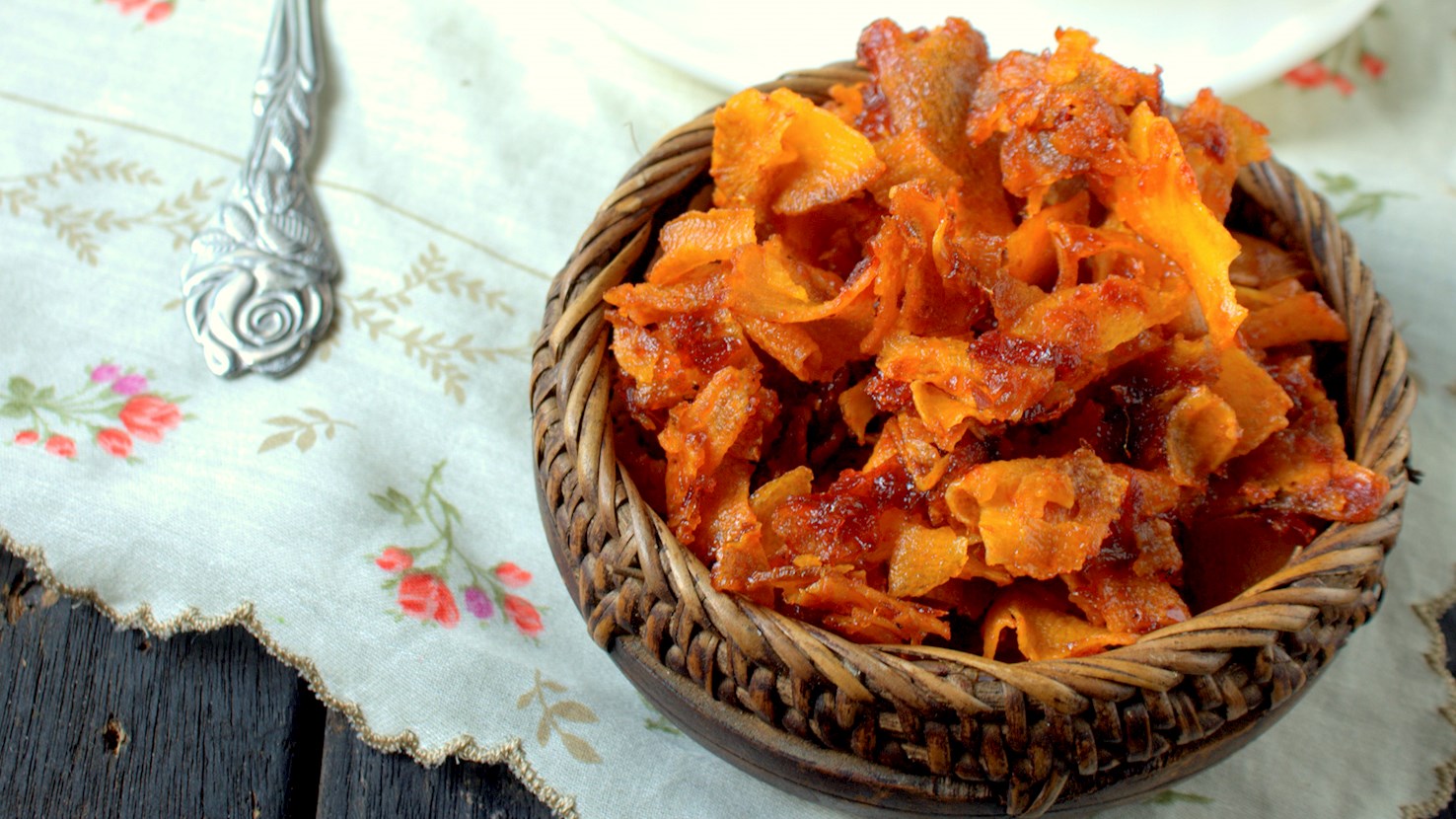
Kripik are small chips from Indonesia, prepared in sweet and savory versions. They are made with fish, vegetables, or fruit, in some cases the exotic ones such as taro, breadfruit, jackfruit, and snake fruit. The chips are deep-fried in vegetable oil until crispy. The most popular varieties include kripik singkong (cassava chips) and kripik pisang (banana chips). Kripik belongs to the group of krupuk, which are larger chips, while kripik is smaller, but has more variety in its ingredients, so almost any fruit, tuber, vegetable, or nut can be incorporated into kripik. The varieties are endless: durian, sweet potatoes, chicken feet, cassava and chili, spinach, and sea cucumber are just some of the ingredients that can be made into this flavorful and unique Indonesian treat.
TasteAtlas food rankings are based on the ratings of the TasteAtlas audience, with a series of mechanisms that recognize real users and that ignore bot,
nationalist or local patriotic ratings, and give additional value to the ratings of users that the system recognizes as knowledgeable.
TasteAtlas Rankings should not be seen as the final global conclusion about food. Their purpose is to promote excellent local foods,
instill pride in traditional dishes, and arouse curiosity about dishes you haven’t tried.



What People Say