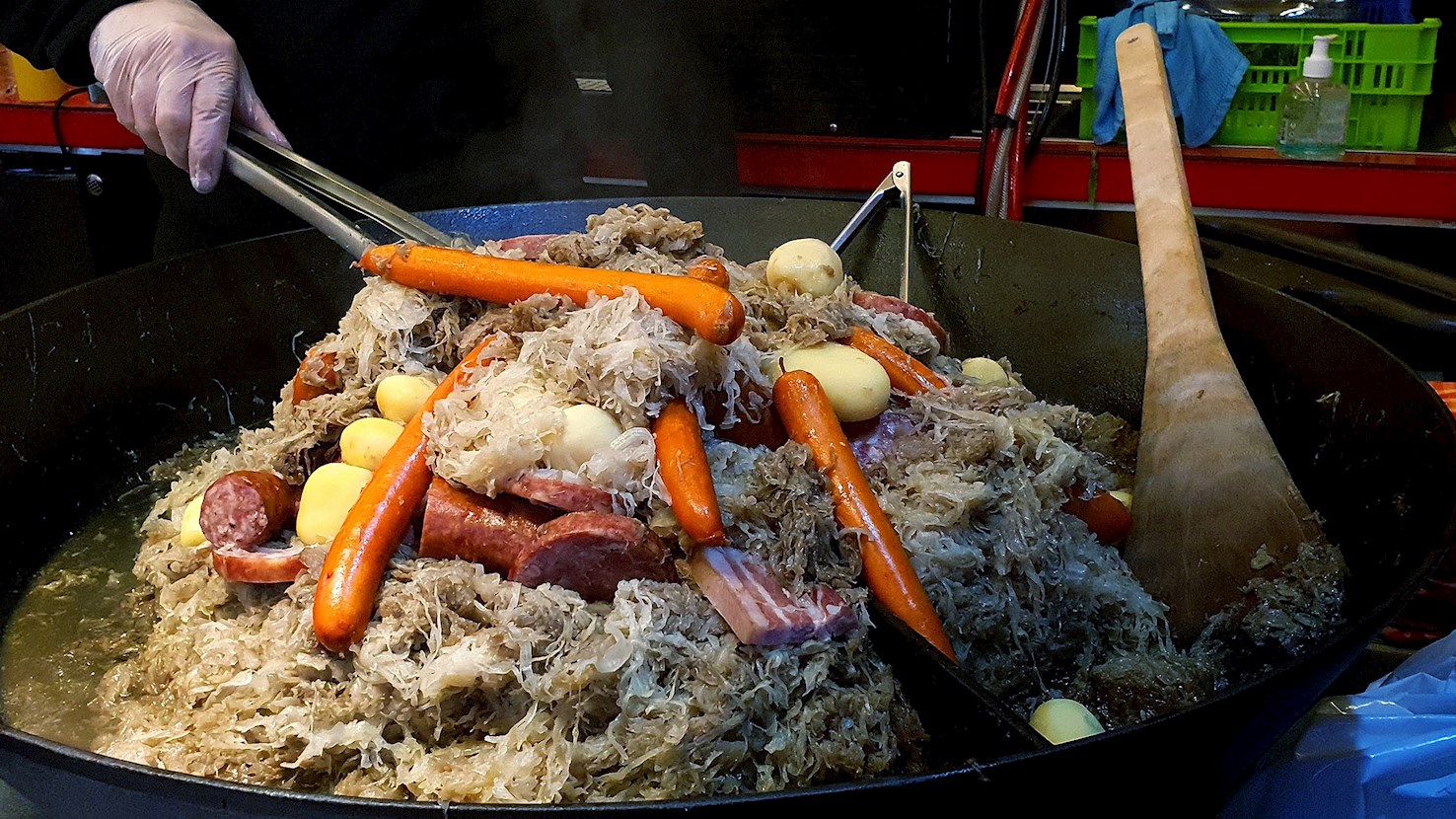
Choucroute Garnie is a typical winter dish coming from the French Alsace region. At its base is the silky, pungent, fermented cabbage known as sauerkraut, infused with flavors of goose fat, onions, garlic, juniper berries, caraway, and white wine such as the local dry Riesling. Sauerkraut is garnished with a hefty number of ingredients such as smoked or fresh beef and pork sausages, pork loin, pork shoulder, and bacon. The ultimate version of the dish, called choucroute royale is served with added calf or pork liver dumplings that are poached and sautéed with onions. Ever since the dish became a national treasure and a staple of French brasseries, other variations emerged, such as choucroute á la juif, where pork is replaced with beef and beef sausages, and choucroute des navets, a version made with turnips. The Alsatian soil is ideal for the production of cabbage for pickling, so homemade sauerkraut can be found in many households throughout the region. Typical accompaniments to the dish include Dijon mustard, grainy moutarde ancienne, boiled potatoes, and an obligatory glass of beer or Riesling on the side.
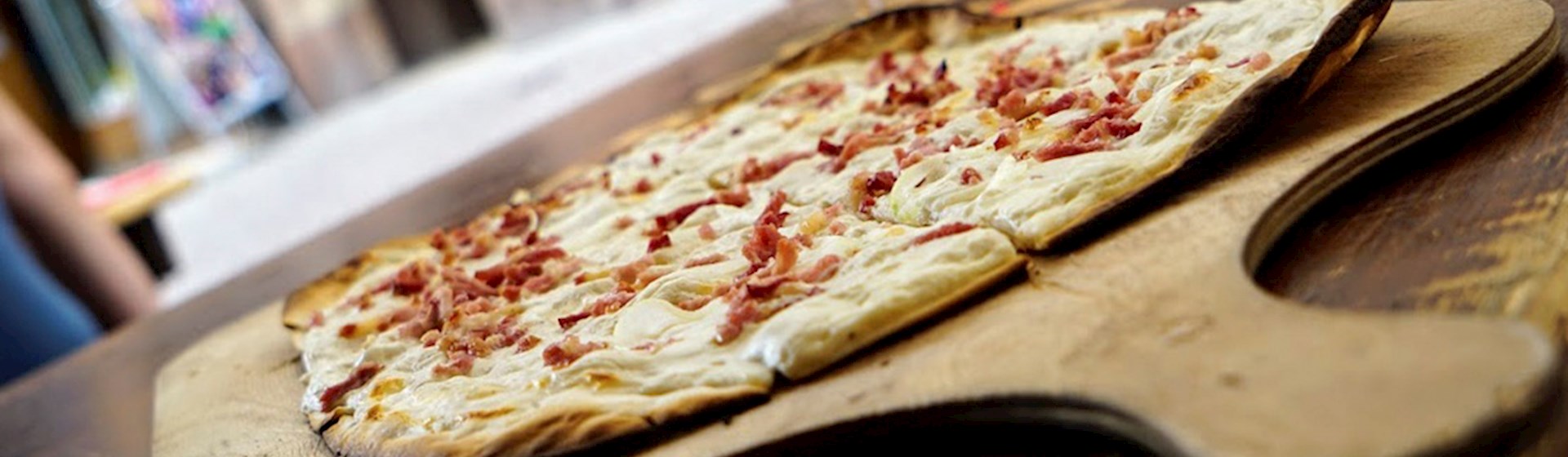
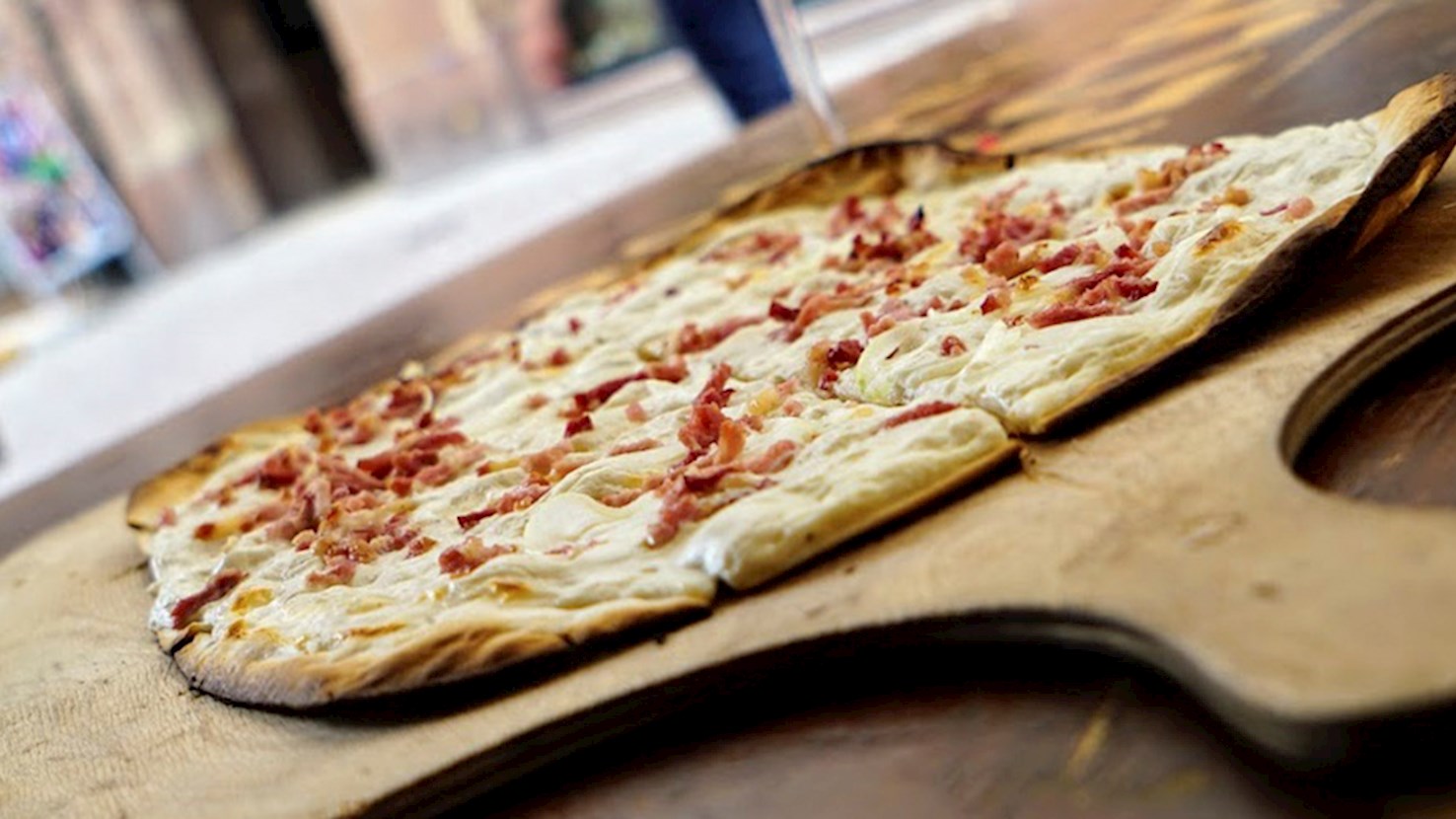
Tarte flambée is a thin, crispy, rectangular baked dough that is topped with tart and spreadable cheese (fromage blanc) or melting ripe cheese (Munster), créme fraîche, crispy bacon, and thinly sliced roasted onions. A pinch of salt, ground pepper, peanut oil and nutmeg add extra layers of flavor to this beloved snack. Also known as flammeküche in Germany, the flaming tart takes its name from the fact that it is baked at a close proximity to hot embers in a brick oven. Of course, due to its popularity, it spread well beyond Alsace, so there are many varieties of the dish with added mushrooms or tomatoes. Tarte flambée pairs perfectly with dry white wines and foamy local beers, both of them specialties of the Alsace region.
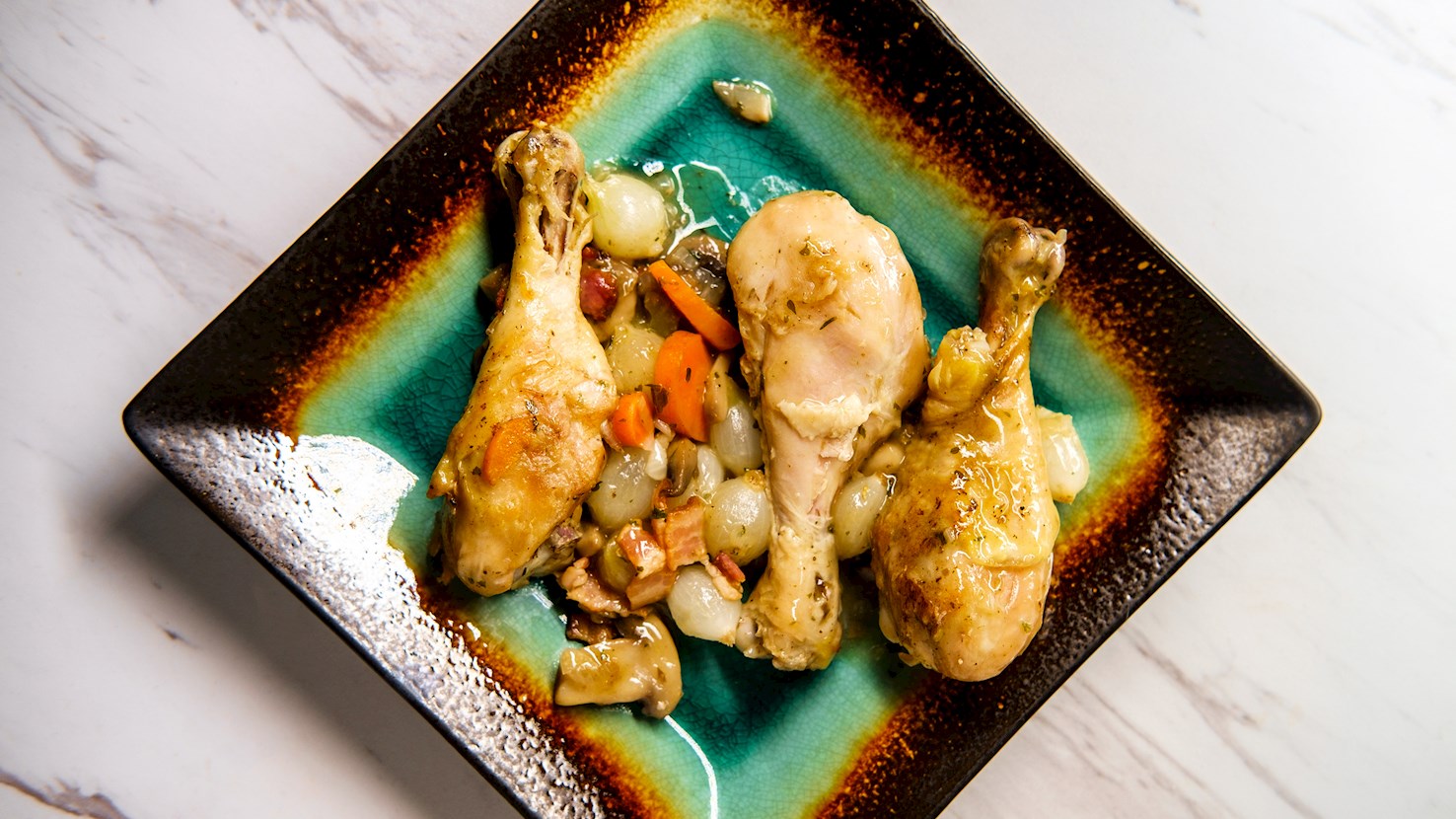
An Alsatian version of the classic coq au vin, known as coq au Riesling is a dish consisting of chicken, mushrooms, onion, lardons, and dry Riesling wine from Alsace, recognized as one of the best wines in the world. It is said that the dish is even better when reheated the next day due to the flavors that deepen when left in the fridge overnight. The chicken can be served over egg noodles, white rice, boiled potatoes, or the more traditional spätzle, making for a great comfort dish, especially on a cold winter's night.
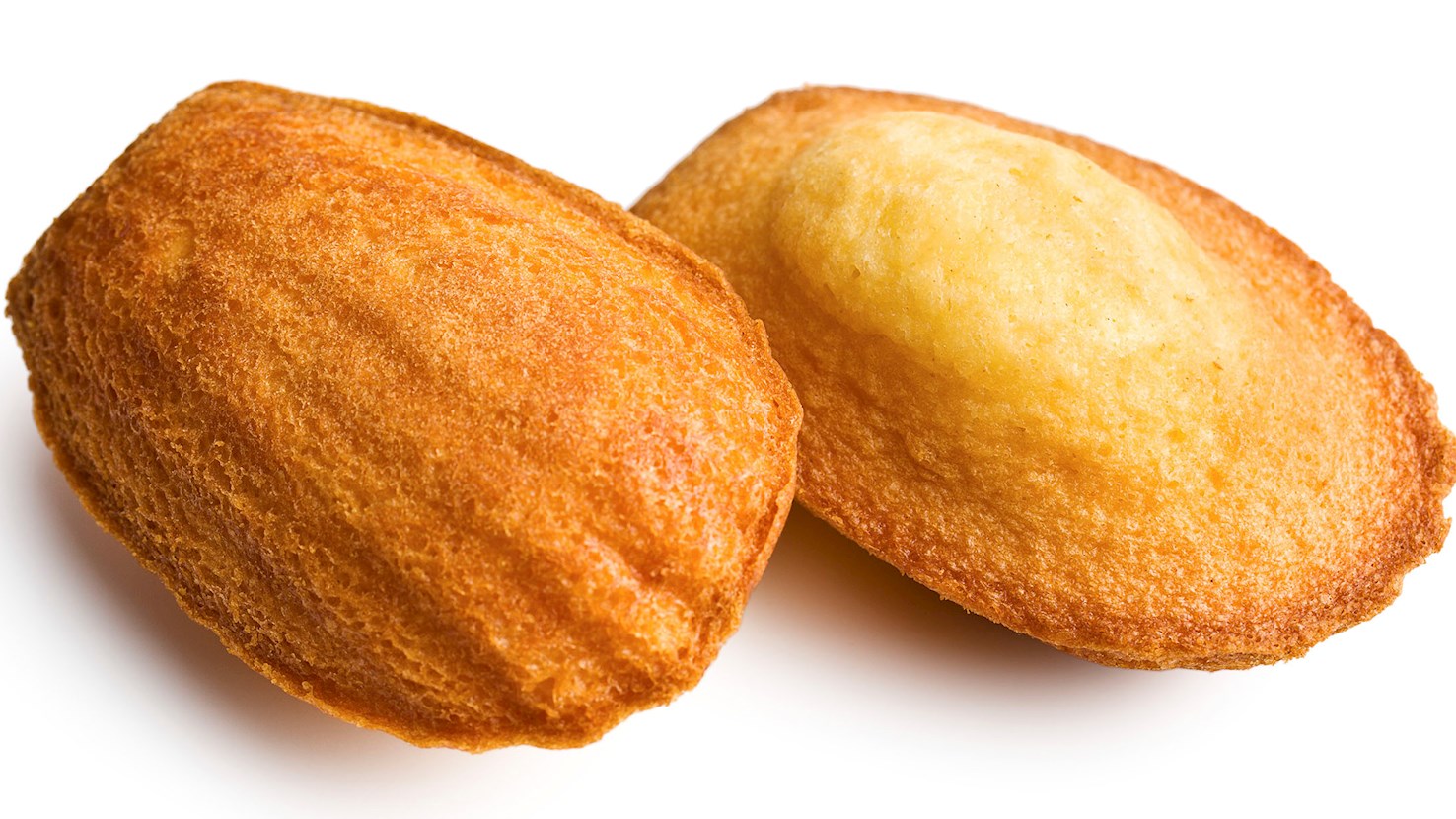
Madeleines are the perfect accompaniment to afternoon tea - these buttery sponge cakes (often mistaken for cookies because of their small size) are slightly browned and crispy on the outside while remaining soft and tender on the inside. A typical dessert of the Lorraine region, madeleines are said to have originated in Commercy. They are supposedly named after Madeleine Paulmier, the 18th-century pastry chef who first made them for Stanisław Leszczyński, the Duke of Lorraine. Later on, his daughter Marie Leszczyńska introduced madeleines to the court in Versailles, and they attained countrywide popularity soon afterward. However, what brought them worldwide fame is a passage from Swann’s Way, the first volume of Marcel Proust’s 20th-century literary masterpiece In Search of Lost Time. In painstaking detail, Proust describes biting into a soft little madeleine dipped in linden blossom tea, the taste of which then takes him on a bittersweet journey of nostalgia, evoking long-forgotten memories of his childhood and youth. Also known as petite madeleines, these delicate little tea cakes are traditionally baked in shallow, scallop-shaped molds that give them their distinctive shell-like appearance. Even though they come in many flavors, such as chocolate, vanilla, rose, honey, lavender, and orange, classic madeleines are typically flavored with almonds or lemon and are served with a dusting of powdered sugar.
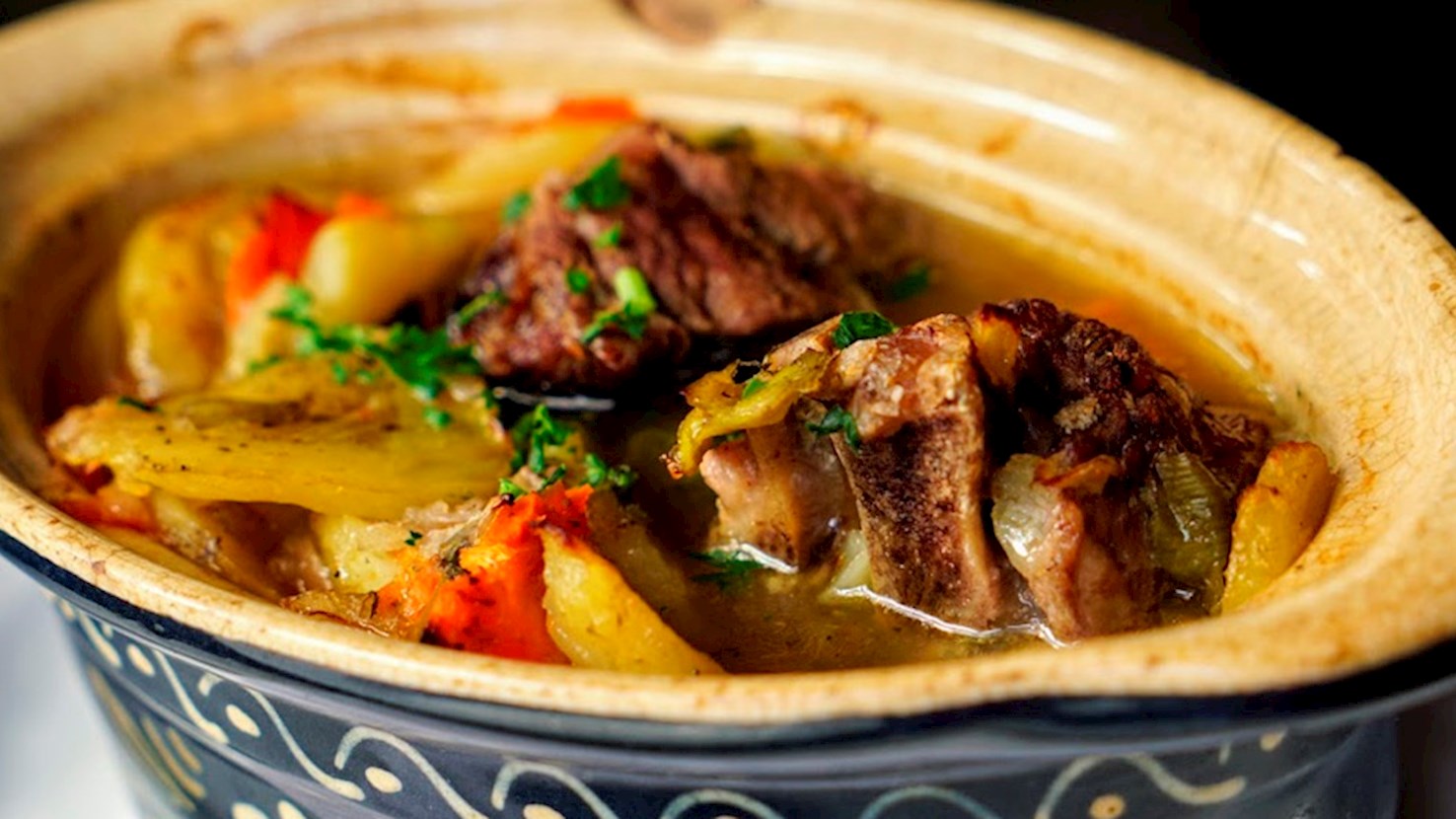
Baeckeoffe is a one-pot dish from the French region of Alsace containing vegetables, potatoes, wine, and three types of marinated meat - pork, beef, and lamb. The name of this typical peasant's dish is literally translated to baker's oven, as French women would leave the pots for the baker in the early morning. They left to do the laundry, and when they would return home with their children after school, they would pick up the pot from the baker. Another theory about the origin of the dish says that it was made on Saturday evening and left in the bakers' oven overnight to cool. The next day, the women would pick up the dish along with a loaf of bread from the baker, then consume baeckeoffe with some bread on the side.
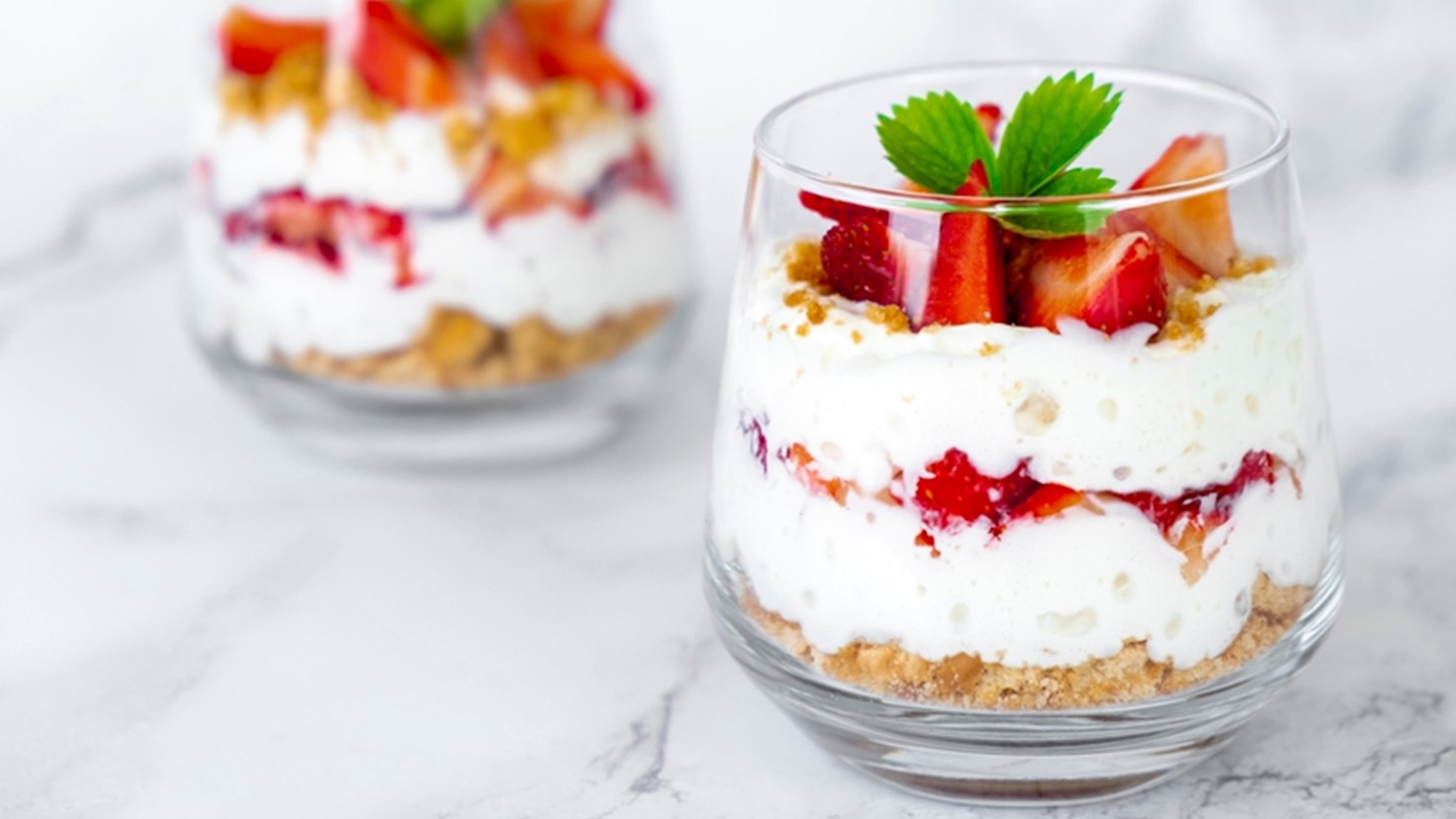
The name of this partially frozen French dessert means perfect – so one can imagine that its creators intended the experience of eating it to be no less thrilling than its name implies. Parfait is a frozen dessert made from a base of egg yolks, sugar, and whipped cream, and it can be flavored with any number of additional ingredients such as fruit, nuts, or coffee. Today, however, parfaits can be made with savory ingredients as well, and there are versions made with seafood, vegetables, and even foie gras. Parfaits were originally served on decorative plates, but today they are usually layered in tall and thin flute glasses. The dessert is so popular that it even has its own holiday in the US – National Parfait Day – which is celebrated on November 25th.
TasteAtlas food rankings are based on the ratings of the TasteAtlas audience, with a series of mechanisms that recognize real users and that ignore bot,
nationalist or local patriotic ratings, and give additional value to the ratings of users that the system recognizes as knowledgeable.
TasteAtlas Rankings should not be seen as the final global conclusion about food. Their purpose is to promote excellent local foods,
instill pride in traditional dishes, and arouse curiosity about dishes you haven’t tried.



What People Say