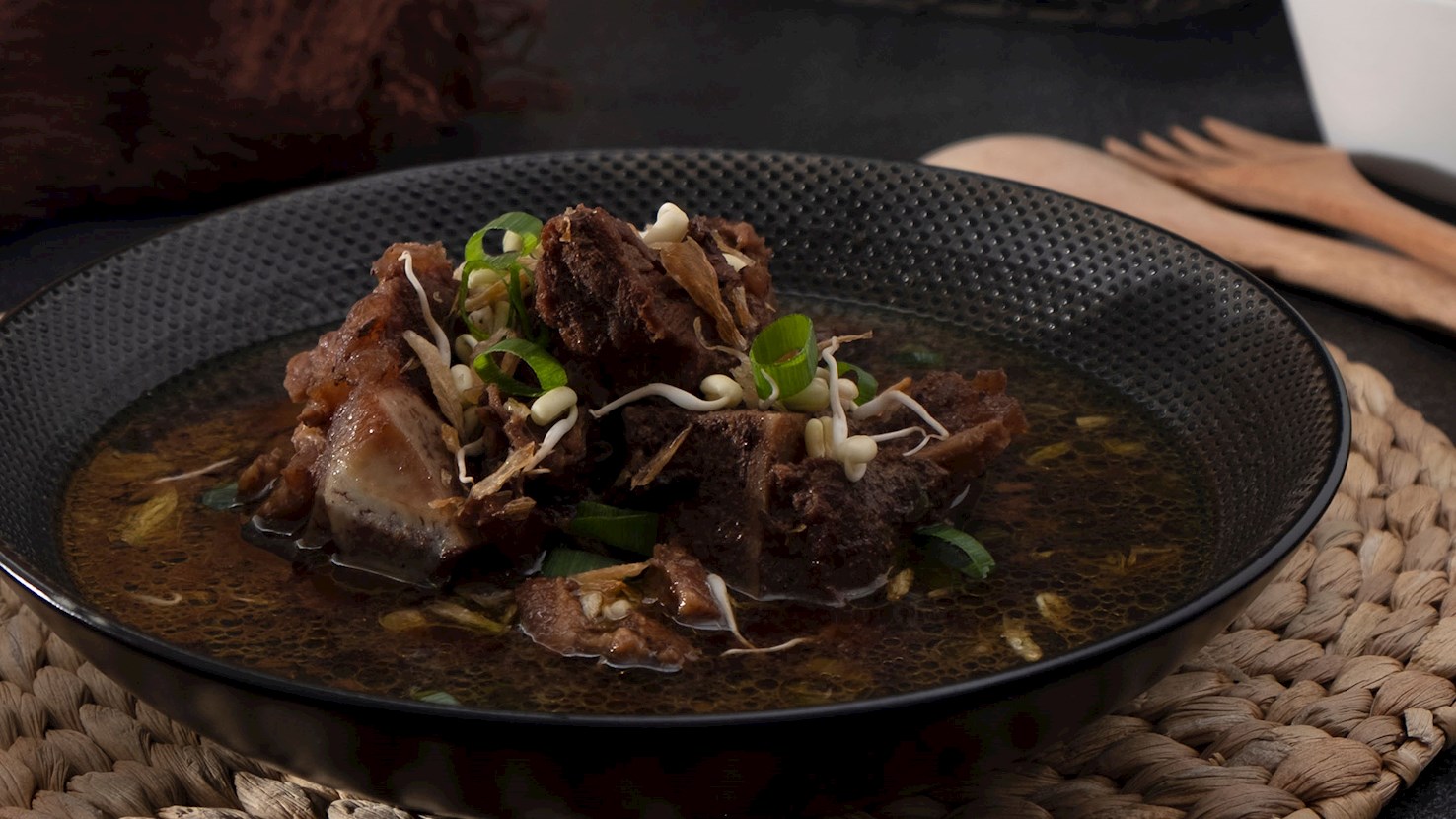
Rawon is a unique Indonesian dish with origins in East Java. This flavorful soup is usually made with slow-braised beef and other traditional Indonesian ingredients such as lime leaves, lemongrass, ginger, and chili. However, the key element is buah kluwek, the Indonesian black nut. This unusual Indonesian spice is highly toxic when raw, and always needs to be fermented before consumption. It is ground with other ingredients and spices, giving the dish its earthy and sour taste and the unique dark black color. The origin of the dish is believed to be the city of Surabaya, the capital of East Java. Primarily prepared as a plebeian dish, it soon became a favorite among royalty and quickly grew in popularity. Today it can easily be found on the menus of numerous traditional Indonesian restaurants. It is usually served alongside plain rice, salted eggs, bean sprouts, and sambal - a spicy Indonesian chili paste.
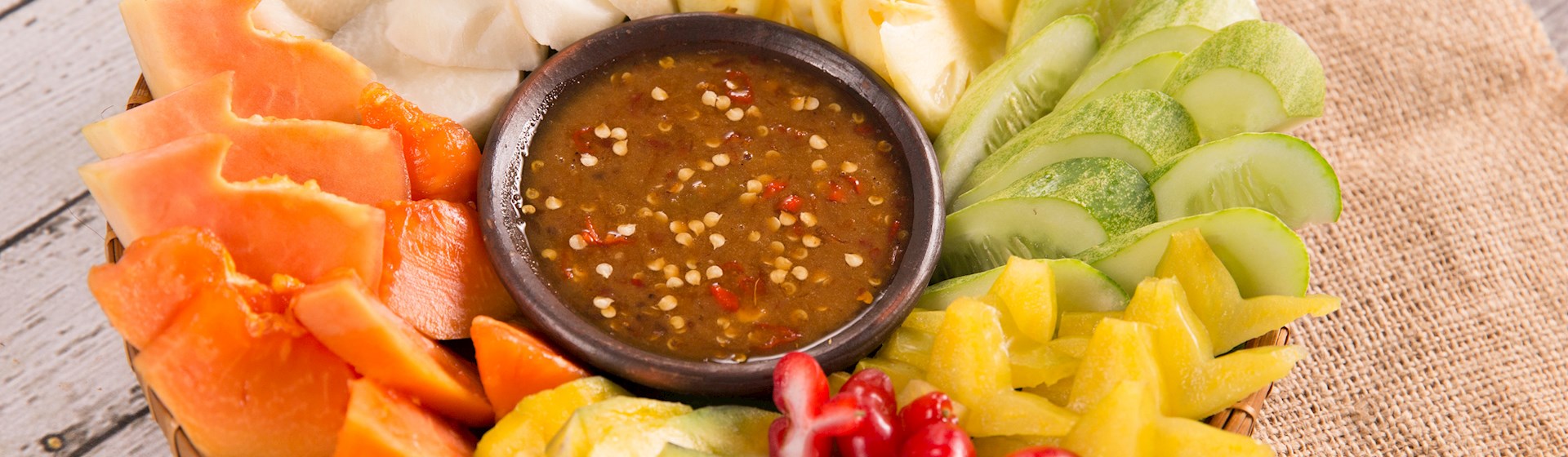
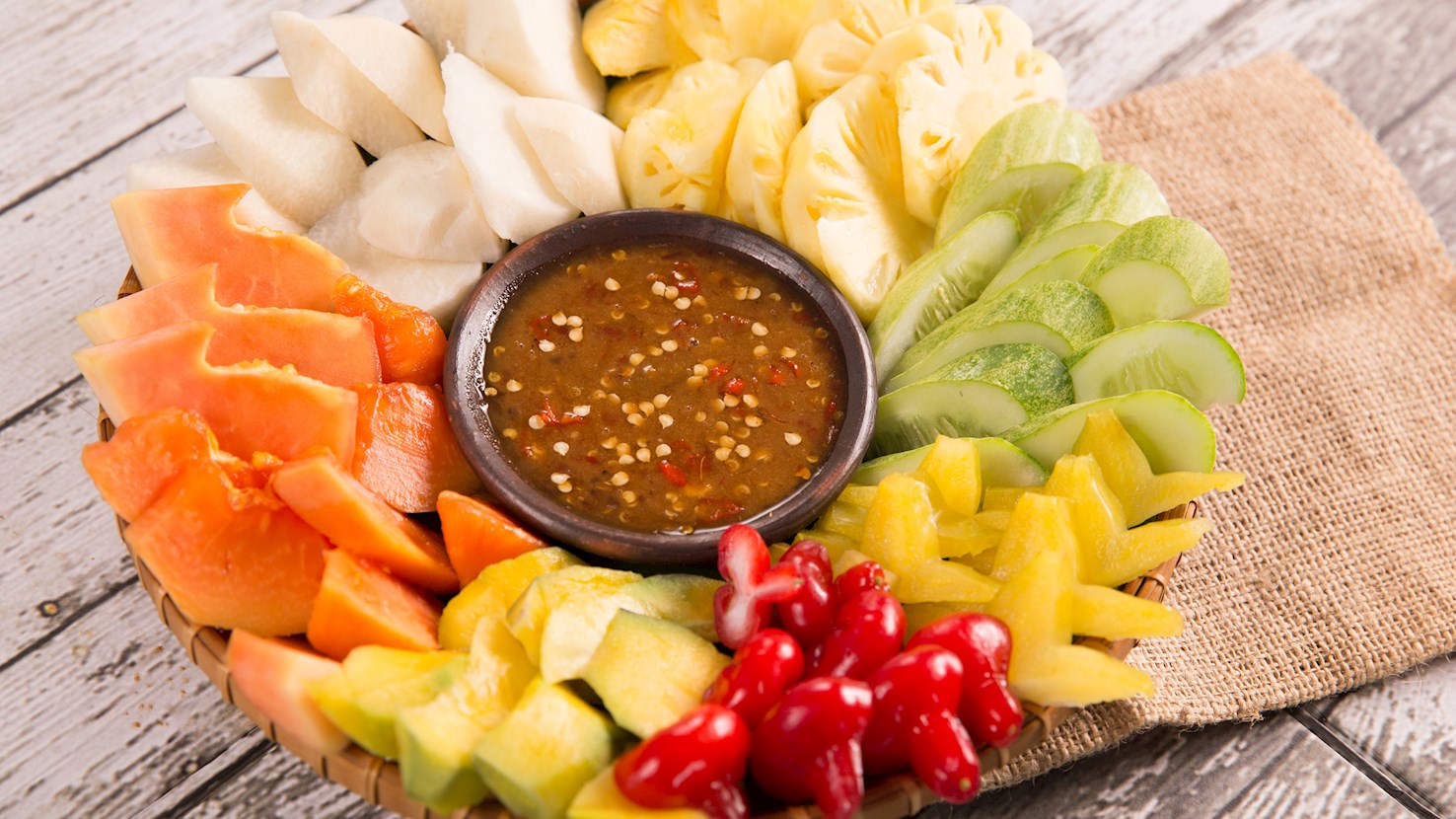
Rujak is a traditional Indonesian fruit and vegetable salad, known for its bold combination of sweet, spicy, sour, and savory flavors. A beloved street food and household dish across Indonesia, Malaysia, and Singapore, rujak typically consists of fresh tropical fruits and raw vegetables, tossed or dipped in a thick, spicy palm sugar and tamarind dressing. Unlike Western fruit salads, rujak is distinct for its complex flavor balance, with the dressing often made from palm sugar (gula Jawa), tamarind paste, peanuts, salt, shrimp paste (terasi), and bird’s eye chilies, creating a deeply umami, tangy, and fiery sauce. The fruits commonly used include pineapple, mango (ripe or unripe), jicama, cucumber, papaya, water apple, and starfruit, while some variations also add boiled sweet potatoes or tofu for extra texture. There are many regional variations of rujak, each with its unique twist. Rujak buah is the most common, featuring assorted fresh fruits with a thick, sticky dressing. Rujak cingur, a specialty from East Java, incorporates boiled beef snout (cingur), vegetables, and tofu, dressed with a more pungent shrimp paste-based sauce. Rujak ulek from West Java involves pounding the sauce and fruits together, intensifying the flavors. Rujak serut features grated fruits for a more refreshing, spoonable version, while rujak kuah pindang from Bali uses a dressing infused with fish broth for a savory depth. Rujak is typically served fresh, either as a snack or a light meal, and is often enjoyed with kerupuk (crispy crackers) for added crunch.
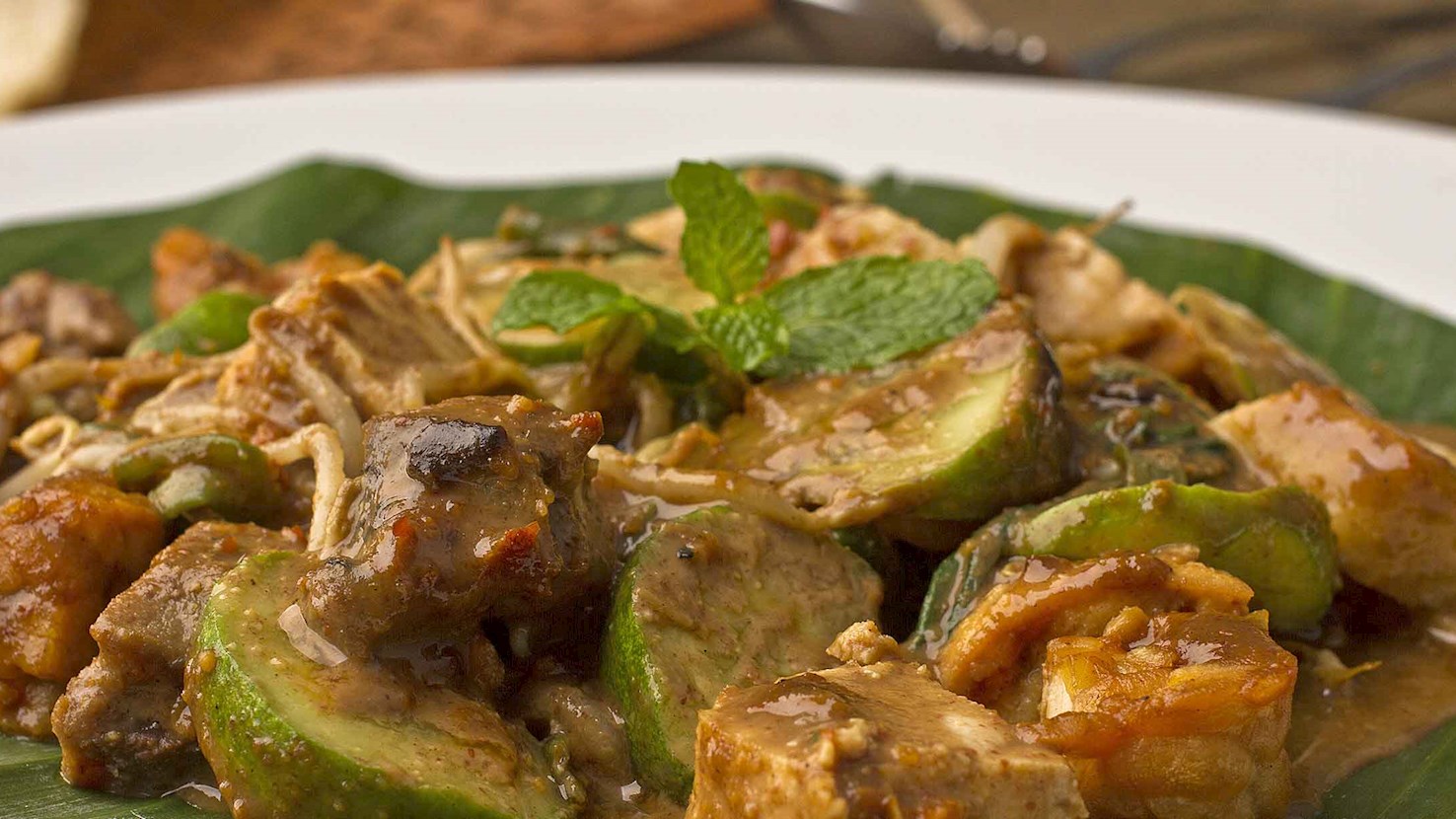
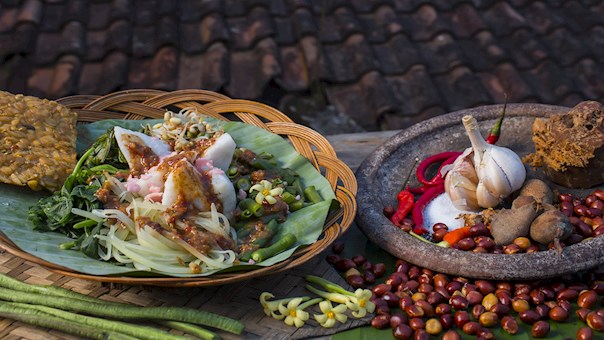
Rujak cingur is one of many versions of Indonesian rujak, a fruit salad which consists of different tropical fruits, usually served with a spicy and sweet dressing. Rujak cingur is a unique variety, because apart from fruits, it also incorporates vegetables and a rare ingredient – beef snout. This chewy, gelatinous meat is a delicacy in East Javanese cuisine and provides a unique texture and depth that sets rujak cingur apart from all other salads in the Indonesian repertoire. The dish is a layered composition of raw and boiled vegetables such as cucumber, water spinach, bean sprouts, long beans, and young jackfruit, combined with tropical fruits like pineapple, unripe mango, or kedondong, creating a vibrant contrast between sweet, sour, crunchy, and soft elements. What binds rujak cingur together is its extraordinary black sauce, a thick, pungent dressing made from fermented shrimp paste (petis), ground peanuts, palm sugar, garlic, chili, and tamarind, often pounded together with fried shallots and a hint of lime. It delivers an umami punch with sweet, spicy, and salty notes, enhanced by the distinctive funk of petis, which is darker and more intense than standard shrimp paste used elsewhere in Southeast Asia. The cingur, when mixed with the sauce, absorbs these powerful flavors while providing a tender resistance that plays against the crispness of the vegetables and fruit. Traditionally, everything is mixed together using a cobek or stone mortar, ensuring the sauce coats every piece evenly. Often served with steamed rice or lontong (compressed rice cakes), rujak cingur is not just a dish but a cultural experience that embodies the fearless approach to flavor found in East Javanese cooking. It challenges Western notions of what a salad should be and rewards those willing to embrace its aromatic complexity. For locals, it is both street food and ceremonial food, available at humble roadside stalls or as part of celebratory feasts.
Throughout Indonesia, soto is known under various names such as the Makassar coto or the Pekalongan tauto. However, this traditional Indonesian soup is usually associated with the island of Java, where it is believed to have appeared in its original form. Nowadays there is no right way to prepare soto because the varieties are numerous and usually adapted to local cuisines. Although it is believed that soto was developed because of a strong Chinese influence in the country, it is more likely that the soup was created following common cooking traditions of the area and utilizing the ingredients which were available in abundance. This versatile dish also has a myriad of accompaniments such as stewed eggs, grilled offal, fried tofu, and either chili or soy sauce. Soto is regarded as comfort food, and it can be found everywhere in Indonesia - from local open-air eateries to high-end restaurants. This authentic Indonesian creation is also popular and commonly eaten in Malaysia, Singapore, and Brunei.
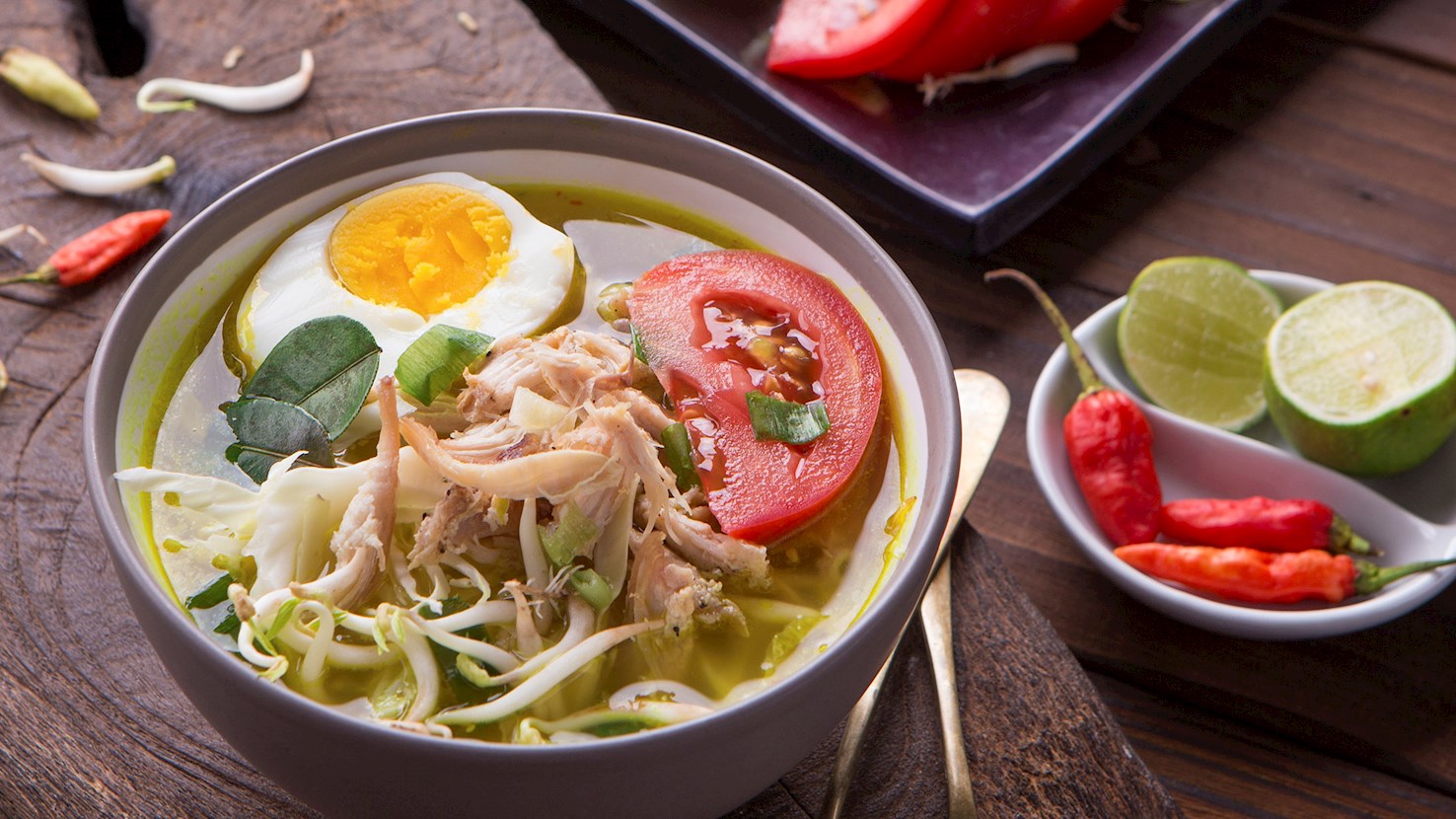
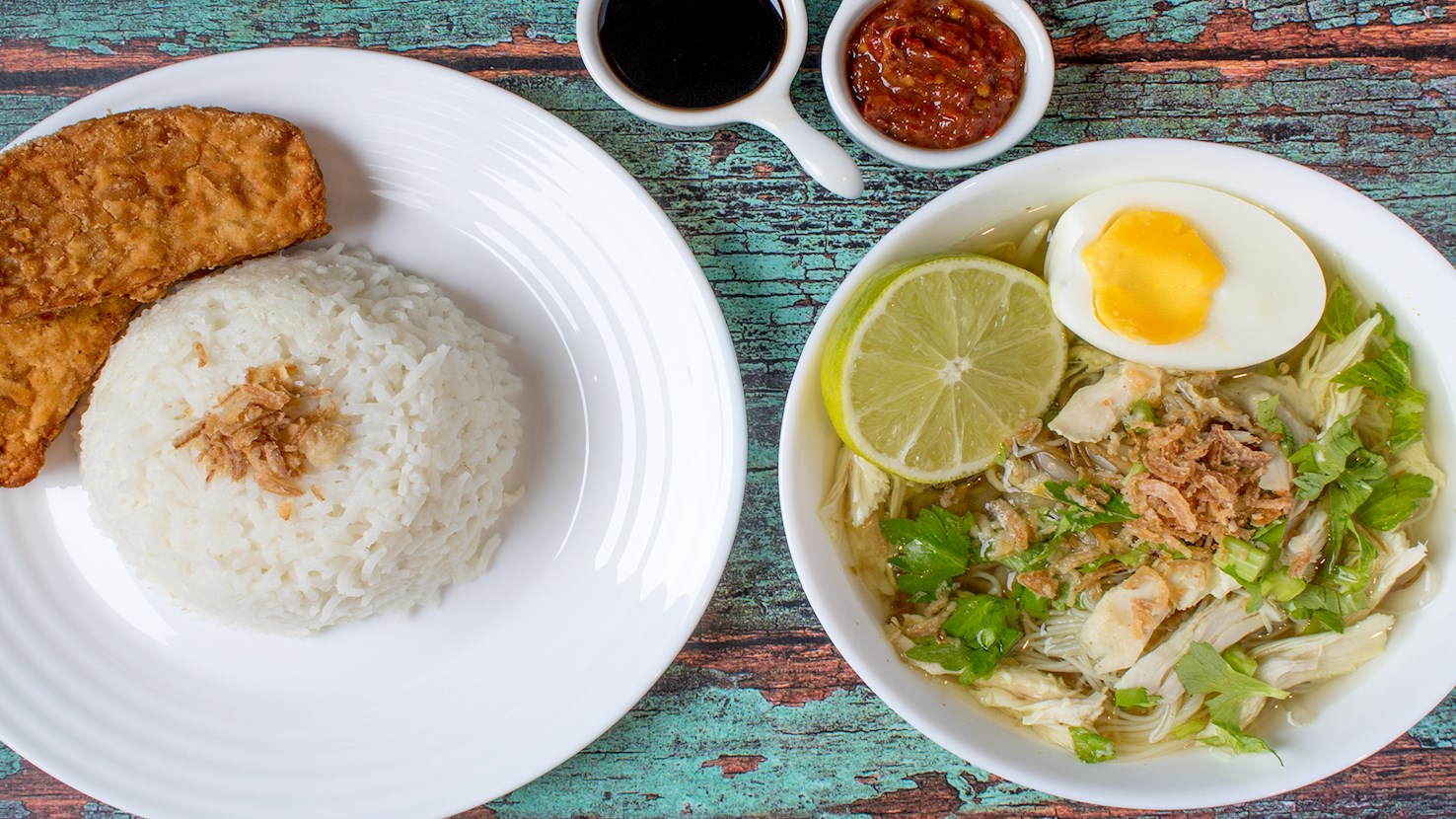
Soto ayam is possibly the most popular variation of the traditional Indonesian soto soup. This chicken-based version usually includes compressed rice cakes such as lontong, nasi himpit or ketupat, vermicelli or noodles, while turmeric gives it a specific yellow color. Other ingredients that may be used are onions and garlic, white or black pepper, ginger, cumin, lemongrass, coriander, and sometimes koya, a mixed prawn cracker and fried garlic powder. It is commonly served topped with boiled eggs, fried potato slices, Chinese celery leaves, and fried shallots. Sambal, a hot chili paste, krupuk, deep-fried crackers, or emping, traditional Indonesian chips may also be used as accompaniments to the dish.
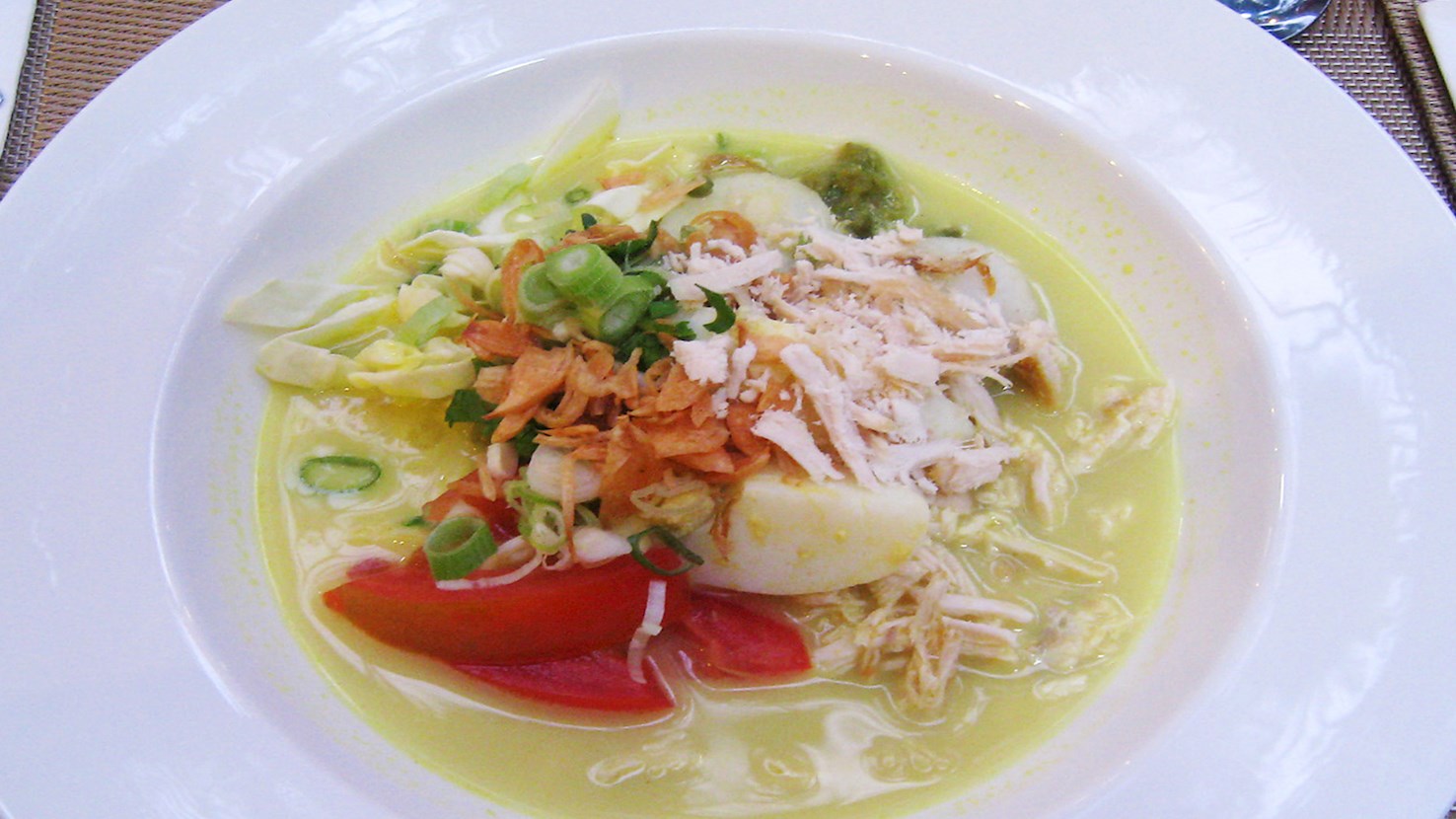
Soto Lamongan is a beloved Indonesian chicken soup that originates from Lamongan, a city in East Java. What makes soto Lamongan unique is its clear, fragrant broth infused with turmeric, and most notably, the addition of "koya" — a finely ground topping made from fried garlic and shrimp crackers (krupuk udang). Koya is sprinkled generously over the soup just before serving, adding a deliciously salty, umami crunch that elevates the entire dish. The soup itself is made by simmering chicken in a broth flavored with spices like garlic, shallots, coriander, turmeric, galangal, and lemongrass. The chicken is typically boiled, shredded, and added back to the broth or placed on top of the rice in the bowl. Unlike creamy sotos (like soto Betawi), soto Lamongan is known for its light, clear, golden-yellow broth, but it packs deep flavor. Traditionally, it’s served with steamed rice, often already placed in the bowl before the soup is poured over. Common accompaniments include boiled egg, shredded cabbage, vermicelli noodles (sohun), bean sprouts, fried shallots, lime wedges, and of course, koya. A side of sambal (chili paste) is usually offered for those who want extra heat. Soto Lamongan is commonly enjoyed for breakfast or lunch, served in humble warungs, roadside stalls, or at home.
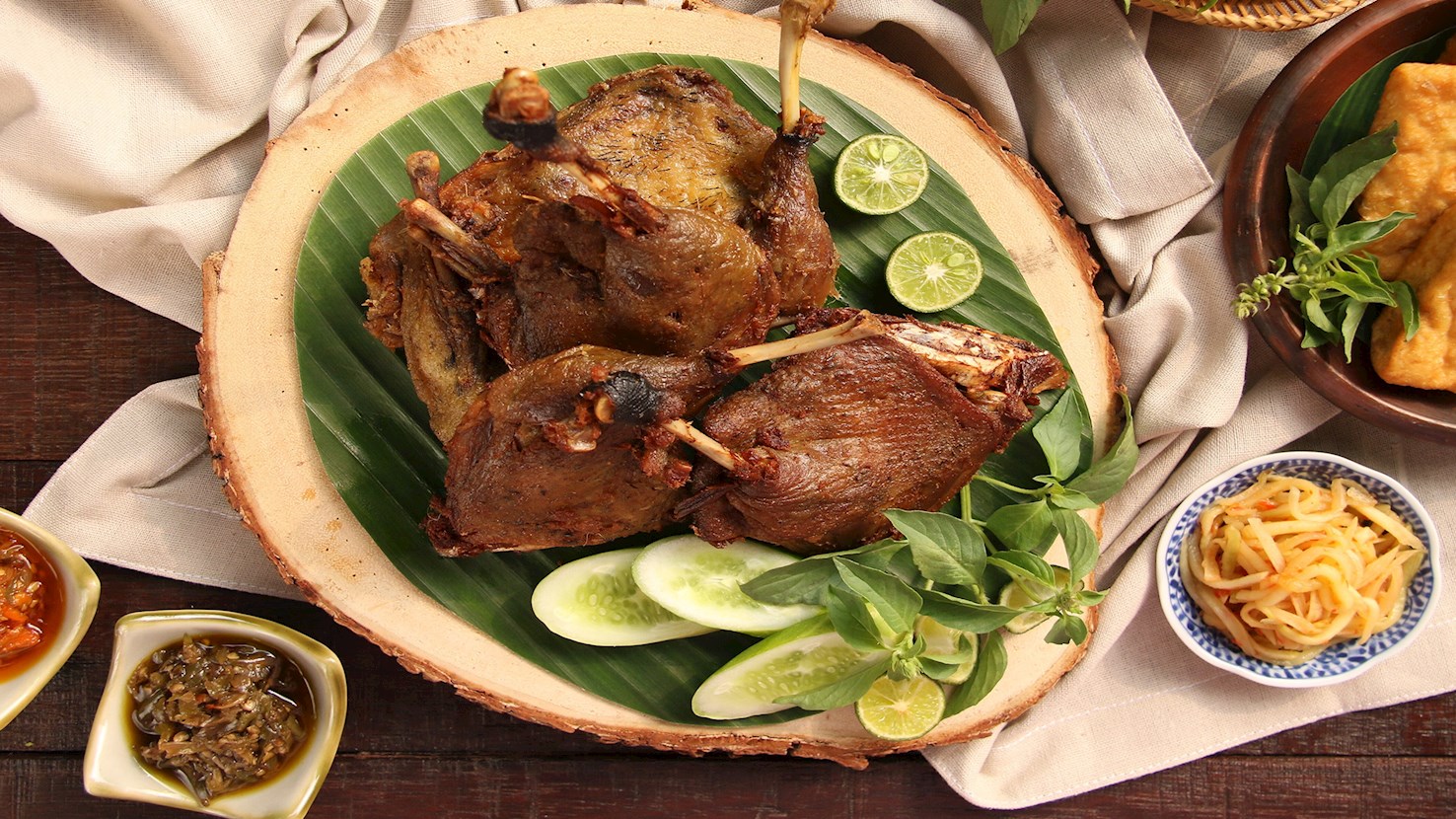
Bebek goreng is deep-fried duck with deeply seasoned dark meat, crisp skin, and a rich layer of rendered fat. It is almost always served with a hot sambal. Its roots are closely tied to the agricultural cultures of Java and Madura, where ducks have long been raised around flooded rice fields. Older egg-laying ducks were also used for meat. Because mature duck can be firm and dense, the meat is usually simmered for a long time with spices before frying, which tenderizes it and allows the seasoning to penetrate deeply. Bebek goreng became especially prominent as street food in East Java, particularly around Surabaya, where Madurese-style duck stalls became widely established. This commercial culture was already visible by the late 1980s: Bebek Purnama, one of Surabaya’s best-known Madurese duck stalls, dates to around 1989 and helped popularize the combination of fried duck, dark seasoning, sambal, rice, and fresh vegetables. The duck is plucked, cleaned, and usually cut into four, six, or eight large pieces. A fresh spice paste, or bumbu, is made from ingredients such as shallots, garlic, galangal, ginger, turmeric, coriander seeds, and lemongrass. The paste is rubbed thoroughly over the duck so the meat is well coated. The seasoned duck is then placed in a large pot with water and aromatic leaves such as daun salam. The meat is simmered slowly for roughly two to three hours, or until it becomes tender and much of the cooking liquid has reduced. The remaining liquid is highly concentrated with duck fat and spices and can be used again as a seasoning or as the basis for other toppings. Once tender, the duck pieces are fried in very hot oil. The final frying stage is relatively short because the meat is already fully cooked. The surface quickly becomes dark golden brown and crisp, while some of the fat beneath the skin renders into the oil. The turmeric, spices, and concentrated juices left on the surface darken during frying and give the duck its characteristic roasted appearance. The goal is a crisp exterior without drying out the already tender meat inside. Regional variations differ mainly in the spice mixture, the treatment of the remaining braising liquid, and the final frying stage. Bebek Madura is especially known for its thick bumbu hitam, or black seasoning. The remaining spice mixture and cooking liquid are fried repeatedly with oil until they become very dark, concentrated, and slightly gritty. Shallots, garlic, candlenuts, coriander, ginger, galangal, citrus leaves, and other spices can be included, while some versions also use kluwek for additional darkness and an earthy flavor. The finished paste is spooned generously over or beside the fried duck. Serundeng, made from seasoned toasted coconut, is another common addition to Madurese-style servings. It adds a dry, crumbly texture alongside the moist meat and dark spice paste. Bebek goreng kremes adds a separate crisp topping. A thin batter made from tapioca flour, rice flour, and some of the seasoned duck broth is poured or scattered directly into hot oil. It breaks into very fine, brittle golden flakes called kremes, which are drained and scattered over the fried duck. Another variation skips the wet simmering stage and steams the seasoned duck inside folded banana leaves before frying. This produces a somewhat lighter-colored exterior and keeps more moisture inside the meat before it reaches the oil. The duck is commonly served immediately after frying on a plate or woven bamboo tray lined with banana leaf. A generous serving of hot steamed white rice sits alongside it. Fresh vegetables, collectively served as lalapan, provide a cool contrast to the fried meat. Cucumber, raw cabbage, and kemangi, or lemon basil, are especially common, and lettuce, tomato, or long beans can also appear. Surabaya-style nasi bebek is commonly served with cabbage, cucumber, and kemangi. Sambal is essential to the usual serving. One version combines red bird’s-eye chilies with garlic, fermented shrimp paste, and lime juice, creating a sharp, salty, intensely hot condiment. Other stalls serve fried red sambal, green chili sambal, sambal bawang, or sambal pencit made with young mango. At Bebek Purnama, for example, the red sambal is fried until oily and carries a mild aroma of shrimp paste. The duck is often eaten by hand. Pieces of crisp skin and tender meat are pulled from the bones, dipped into sambal, and eaten with rice and raw vegetables. The combination depends on contrast: rich duck meat and rendered fat, crisp skin, aromatic spices, hot sambal, plain rice, and cool lalapan. In Madurese versions, the addition of dark bumbu and serundeng makes the plate even more concentrated and heavily seasoned.
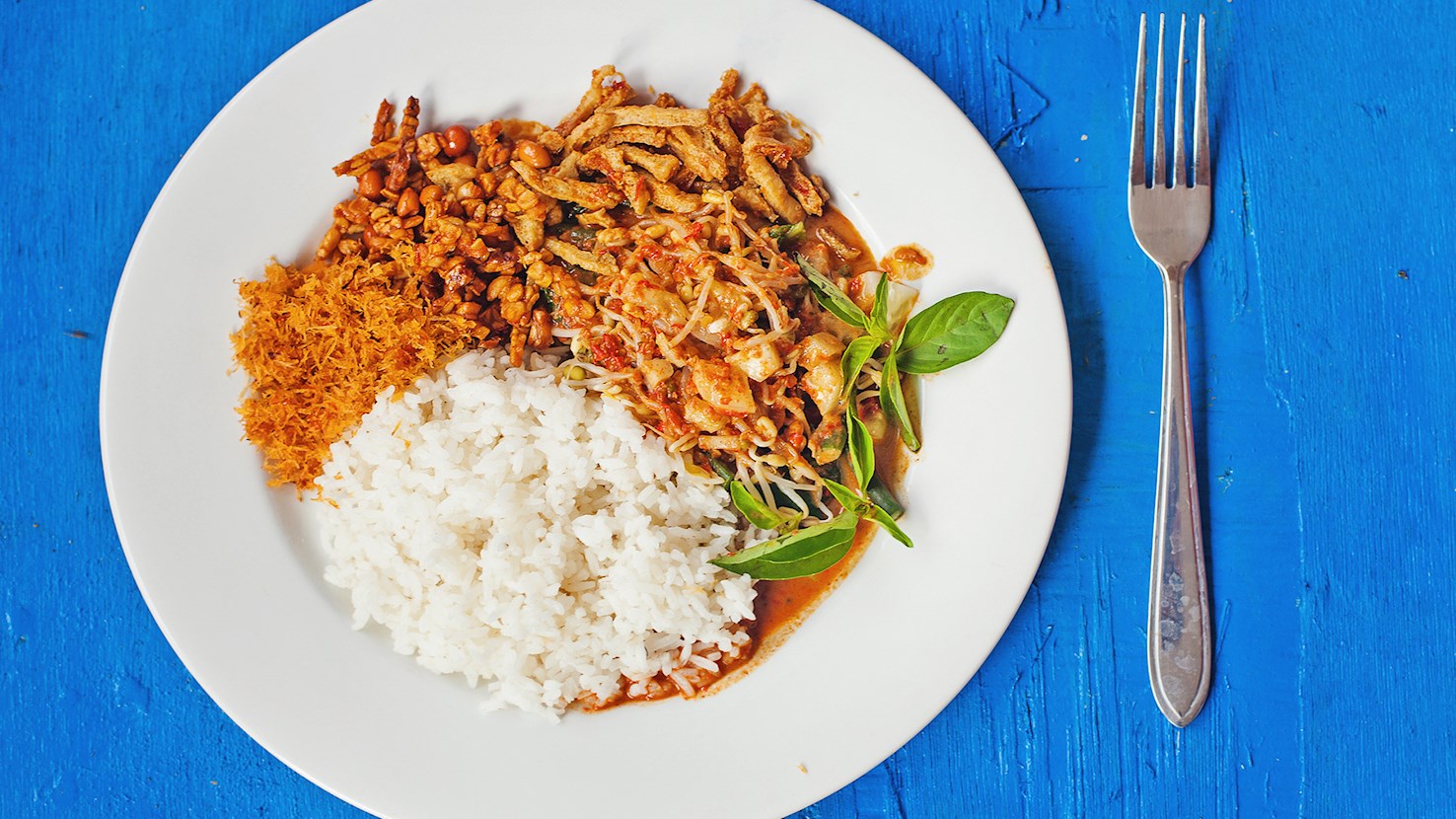
Nasi pecel is a Javanese rice dish that brings together a colorful array of lightly blanched vegetables served over steamed rice and generously topped with a rich, aromatic peanut sauce, originating from Central and East Java, particularly in cities like Madiun, Kediri, and Blitar. At the heart of the dish is the pecel sauce, a slightly coarse, deep brown peanut dressing made from roasted peanuts, chili peppers, garlic, tamarind, coconut sugar, and makrut lime leaves, pounded or blended into a thick, fragrant paste. The result is a sauce that is bold yet balanced, with a satisfying heat and a subtle citrusy lift that complements the freshness of the vegetables. The vegetable selection in nasi pecel typically includes water spinach (kangkung), long beans, bean sprouts, cassava leaves, and cabbage, all lightly blanched to retain their crunch and vibrant color. These are laid over a warm bed of white rice, then drenched in the warm pecel sauce. The dish is often served with rempeyek (crispy peanut crackers), tempeh, fried tofu, or a fried egg, adding contrasting textures and extra protein. Nasi pecel is widely enjoyed for breakfast or lunch, especially in roadside warungs and traditional markets, where it is often wrapped in banana leaves, infusing the meal with a subtle aroma and offering an eco-friendly form of takeaway. While similar in spirit to dishes like gado-gado, nasi pecel is less elaborate and more rustic, with a spicier, thinner sauce and a stronger regional identity rooted in Javanese culinary tradition.
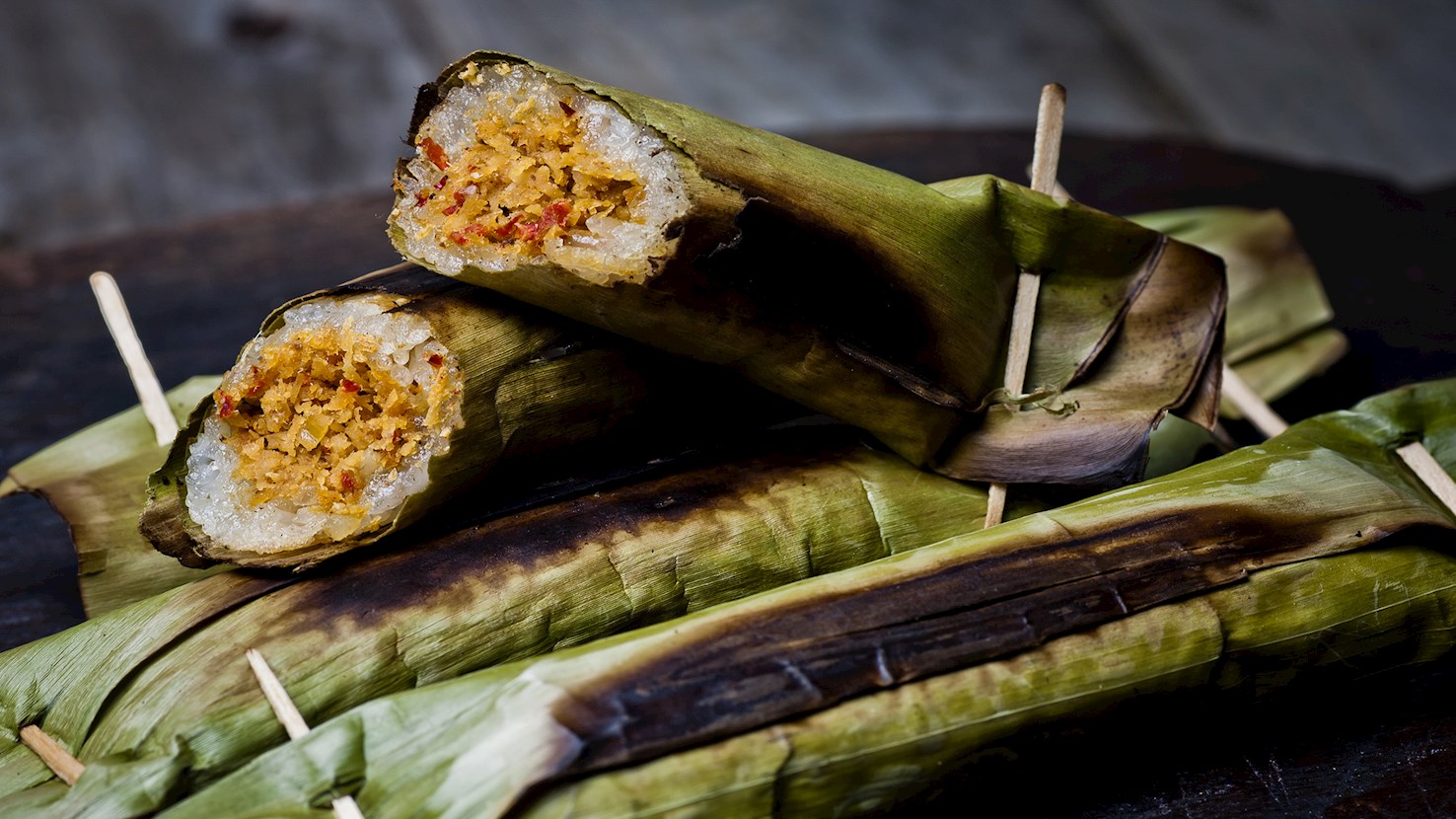
Lemper is a snack made of glutinous rice filled with savory shredded meat, traditionally chicken, although beef, fish, or even abon (meat floss) variations are also popular. The rice is first cooked in coconut milk, giving it a rich, slightly sweet taste and a sticky, tender texture that holds its shape well. Once the rice is prepared, it is flattened and wrapped around a flavorful filling made by sautéing the meat with aromatic spices such as garlic, shallots, galangal, coriander, lemongrass, and kaffir lime leaves. The seasoned mixture is then encased in the rice, shaped into a compact cylinder or rectangle, and wrapped tightly in banana leaves, which not only help preserve moisture but also impart a subtle earthy fragrance during cooking. Traditionally, lemper is steamed or lightly grilled, often leaving behind a charred scent on the banana leaves that adds another layer of complexity. It is commonly found in traditional markets, roadside stalls, and as part of ceremonial or festive offerings, appreciated for its portability, long shelf life, and comforting flavor.
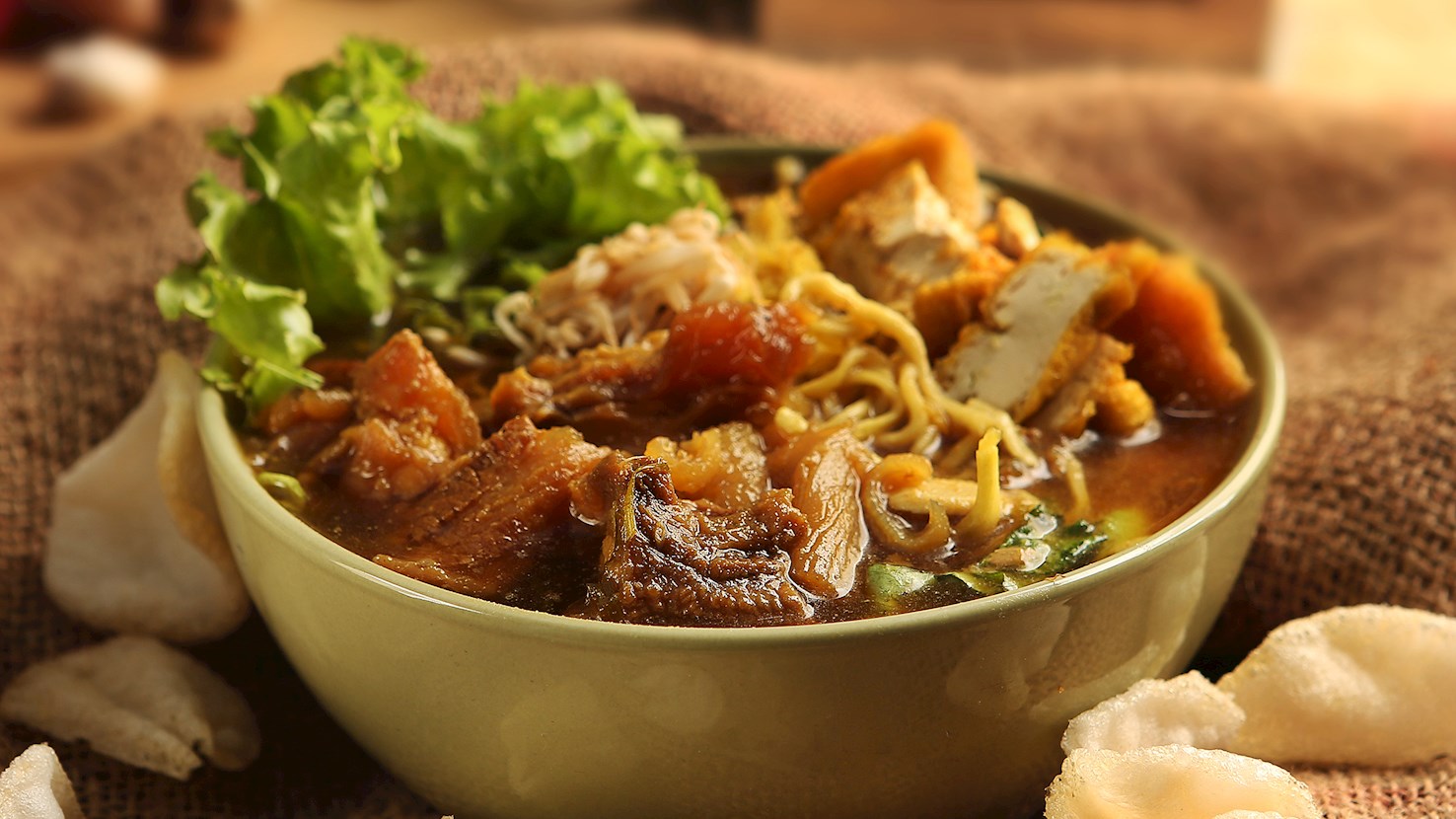
Tahu campur is a an Indonesian soup originating from East Java, particularly associated with the city of Surabaya and its surrounding towns. The name translates to "mixed tofu," but the dish is far more complex and layered than the name suggests. It is a vibrant and hearty combination of fried tofu, sliced beef or beef tendon, yellow noodles, fresh bean sprouts, lettuce, and sometimes rice cake, all brought together with a thick, savory broth enriched by fermented shrimp paste (petis). This deeply flavorful sauce is what gives tahu campur its signature East Javanese character: bold, slightly sweet, umami-rich, and distinctly aromatic. The dish reflects East Java’s culinary style, which is known for its generous use of spices, sweet-savory balance, and strong flavors. The beef, often slow-cooked until tender, adds richness and depth, while the fried tofu contributes a mild, creamy texture that soaks up the broth. The fresh vegetables and sprouts offer crunch and brightness, creating a contrast to the dense sauce. The broth itself, thickened with ground spices and seasoned with petis udang, is ladled generously over the entire bowl, binding all elements together into a dish that is both rustic and complex. Tahu campur is most commonly found at roadside stalls or humble warungs, where it is made to order and served steaming hot. It is often enjoyed in the evening or as a filling lunch, typically accompanied by kerupuk (crackers) and a squeeze of lime for freshness.
TasteAtlas food rankings are based on the ratings of the TasteAtlas audience, with a series of mechanisms that recognize real users and that ignore bot,
nationalist or local patriotic ratings, and give additional value to the ratings of users that the system recognizes as knowledgeable.
TasteAtlas Rankings should not be seen as the final global conclusion about food. Their purpose is to promote excellent local foods,
instill pride in traditional dishes, and arouse curiosity about dishes you haven’t tried.





What People Say