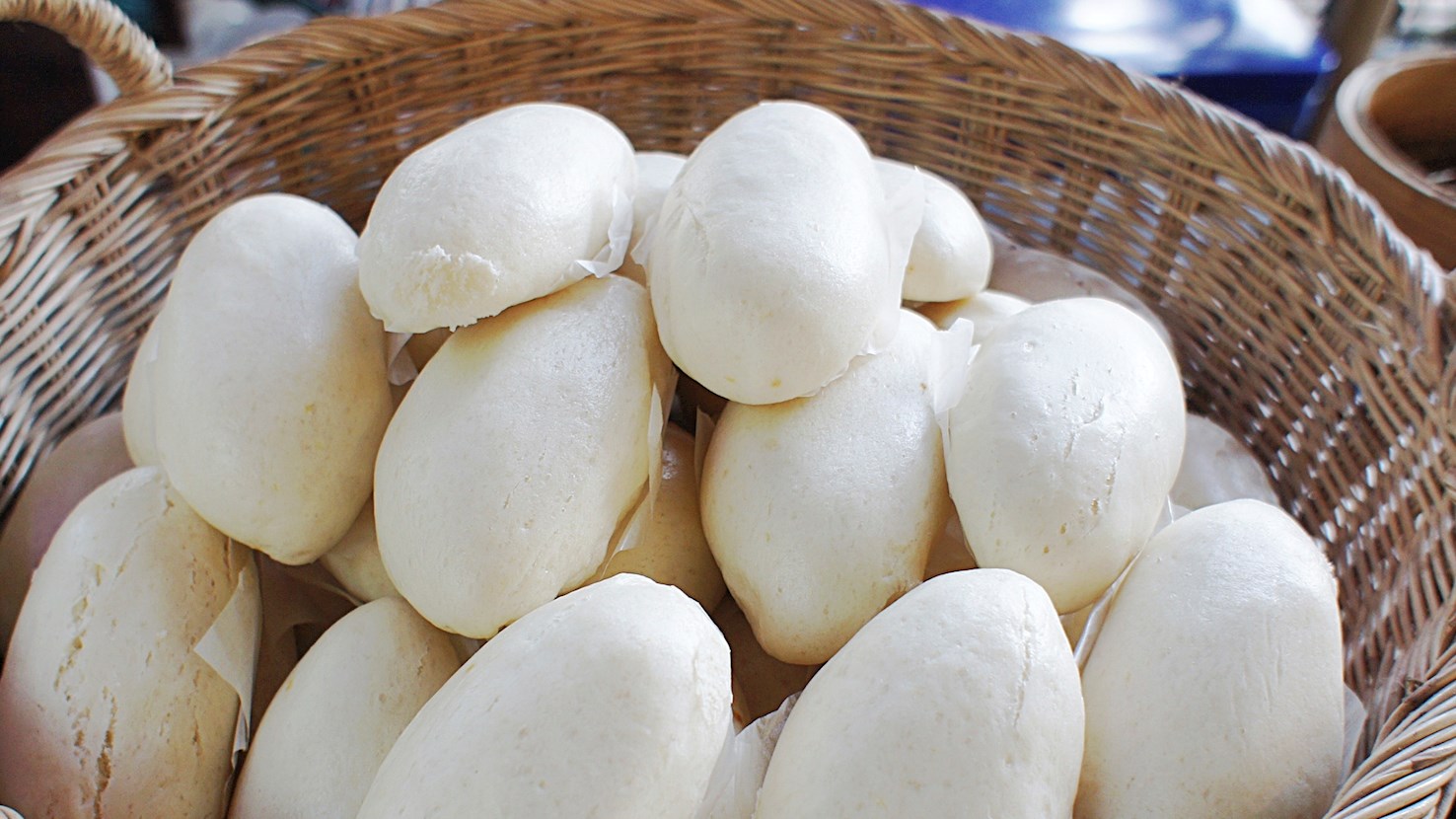
Mantou are Chinese steamed buns that are usually prepared plain, without any filling on the inside. It is sometimes served as a side dish, although it is more commonly consumed as it is. Mantou has a round, flattened shape, and it is a staple food of the Northern part of China. Traditionally, the buns are tasteless and they have no crust, while the crumb is somewhat dense. They are made from wheat flour and yeast, which is used as a leavening agent. For Chinese people, mantou is as important as bread is to the westerners. According to a popular legend, the word mantou literally means barbarian's head. During the period of the Three Kingdoms, chancellor Zhuge Liang attempted to capture a barbarian named Meng Huo. He was told that the barbarians used witchcraft, so only the gods could help him. Since the barbarians used to throw human heads in the river, Liang filled the buns, representing barbarian's heads, with pork and mutton, and sacrificed them to the River God. Modern buns with no filling did not appear until the mid-17th century. Nowadays, mantou is regularly consumed as a daily snack or as fast food for busy people, while in Singapore and Malaysia, it is traditionally eaten by dipping it into a gravy of chili crab dishes.
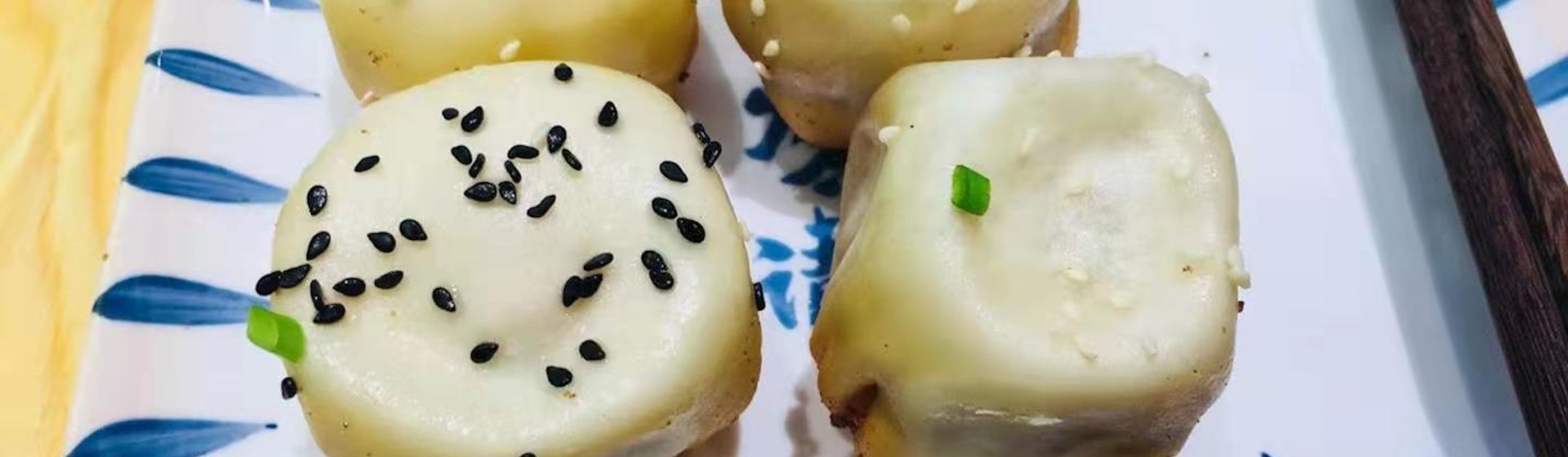
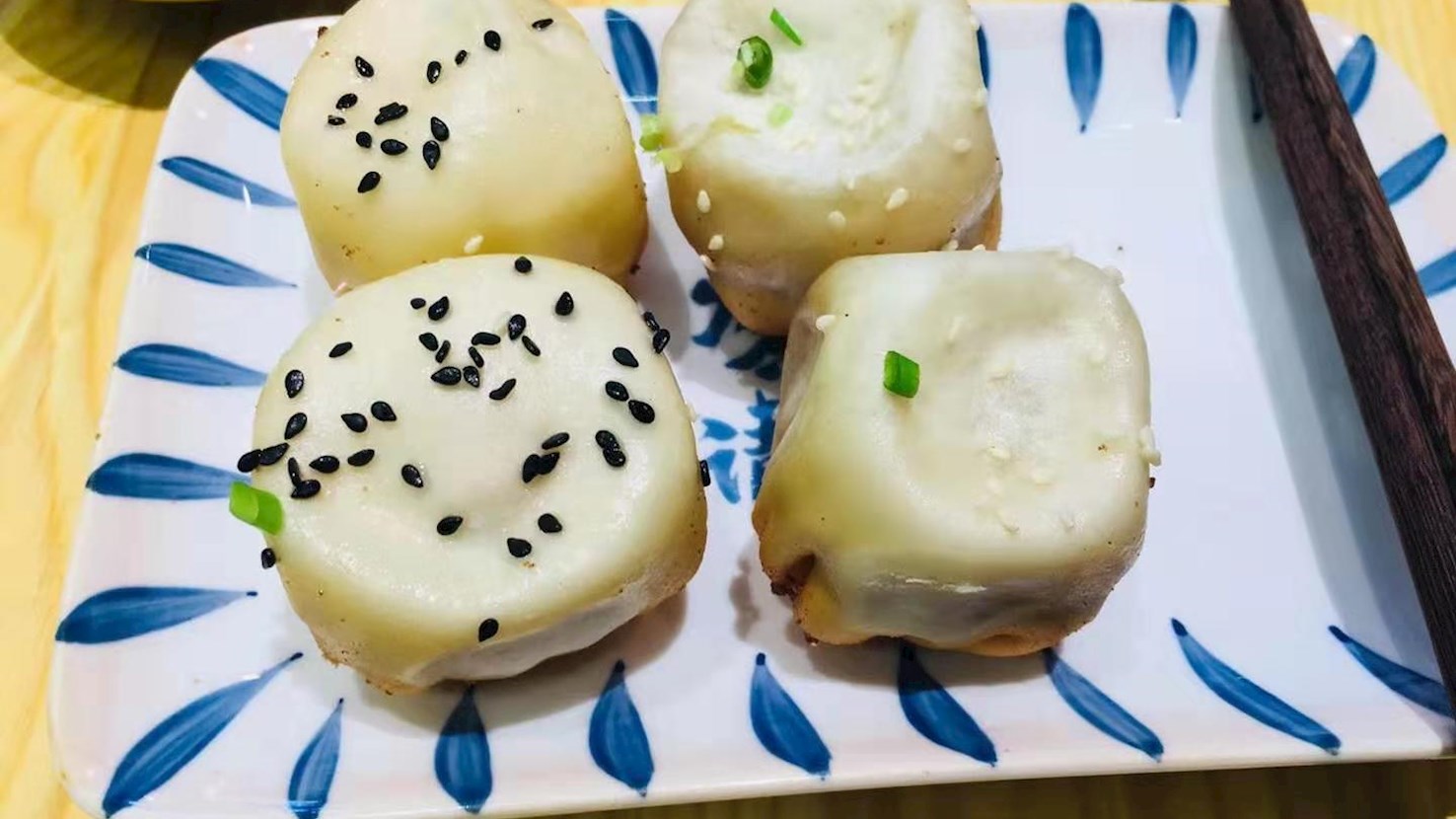
Among the broad group of Chinese dumplings, shengjian mantou stands out as a unique pan-fried variety. Belonging to the category of soup dumplings, or soup buns, they are slightly different than the more famous xiao long bao. Shengjian mantou can be made with minced pork, vegetable, or shrimp as the base, often incorporated with cabbage and chives, then infused with soy sauce, sesame oil, and occasionally ginger and garlic. The fillings are wrapped in a traditional soft leavened dough which might vary in thickness. When wrapped, the dumplings are pan-fried in shallow oil, and alternatively covered in water to produce the steaming effect. This technique provides texturally exciting dumplings, with a soft top and a crispy brown bottom. They are typically sold by piece, and before serving they are sprinkled with black or white sesame seeds, chopped cilantro, or spring onions. Although they can be found in restaurants, they are typically bought at street stands and food stalls which specialize in the preparation of this nutritious delicacy. It is believed that shengjian mantou originally appeared as a part of the traditional dim sum meals, and the first specialized shops started to open in the 1930s. The place of origin is usually associated with Suzhou and Shanghai, but today these delicious hearty dumplings can be found in other parts of China, as well as in numerous Chinese restaurants around the world.
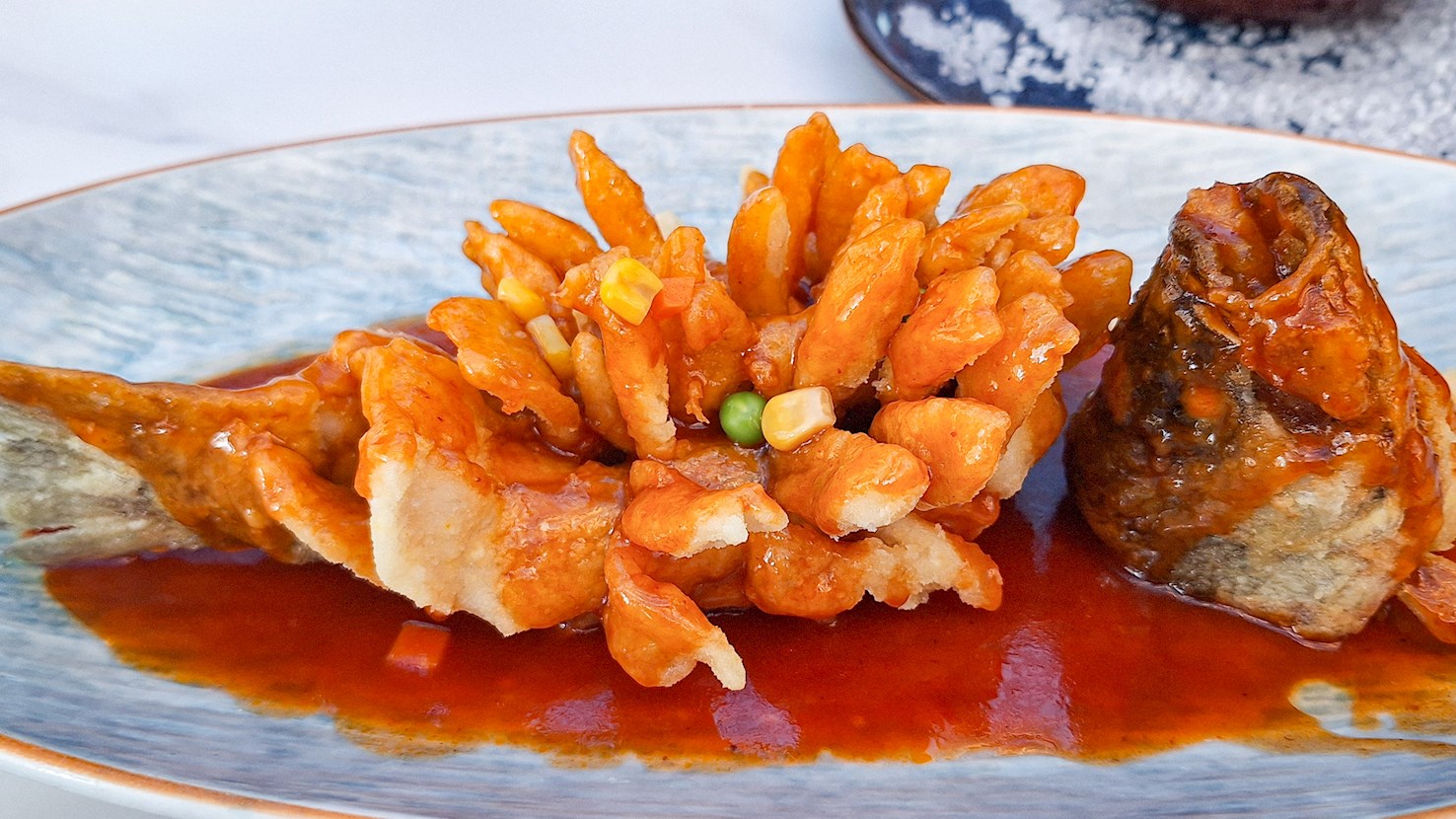
Sōngshǔ guìyú is a Jiangsu dish made from mandarin fish that is carefully cut, fried, and coated in a sweet and sour sauce, special because its precise preparation makes the flesh fan out like a squirrel’s tail while keeping a crisp texture and delicate flavor. Originating in Suzhou, it reflects the refined artistry of Jiangsu cuisine, where attention to knife skills, balance of taste, and visual presentation has long been valued. The dish became well known during the Qing dynasty, when Suzhou’s culinary culture emphasized both elegance and technical skill, and it soon became a highlight of banquets and formal gatherings. The preparation begins by cleaning the mandarin fish, leaving the head and tail intact while crosshatching the flesh so that it opens up when fried. After coating with starch, the fish is deep-fried until golden, puffed, and crisp, then served with a glossy sauce made from vinegar, sugar, soy sauce, and tomato paste or ketchup. This combination produces a dish that is visually striking and texturally balanced, with the crisp surface absorbing the tangy and sweet sauce. Today, it remains a centerpiece in Suzhou and across Jiangsu, often served at banquets, festivals, and family celebrations. It is eaten communally, shared at the center of the table, and continues to represent both the delicacy of freshwater fish and the craftsmanship of Jiangsu’s culinary heritage.
TasteAtlas food rankings are based on the ratings of the TasteAtlas audience, with a series of mechanisms that recognize real users and that ignore bot,
nationalist or local patriotic ratings, and give additional value to the ratings of users that the system recognizes as knowledgeable.
For the “3 Traditional Foods You Have To Try in Suzhou” list until June 17, 2026, 121 ratings were recorded, of which 100 were recognized by the system as legitimate.
TasteAtlas Rankings should not be seen as the final global conclusion about food. Their purpose is to promote excellent local foods,
instill pride in traditional dishes, and arouse curiosity about dishes you haven’t tried.