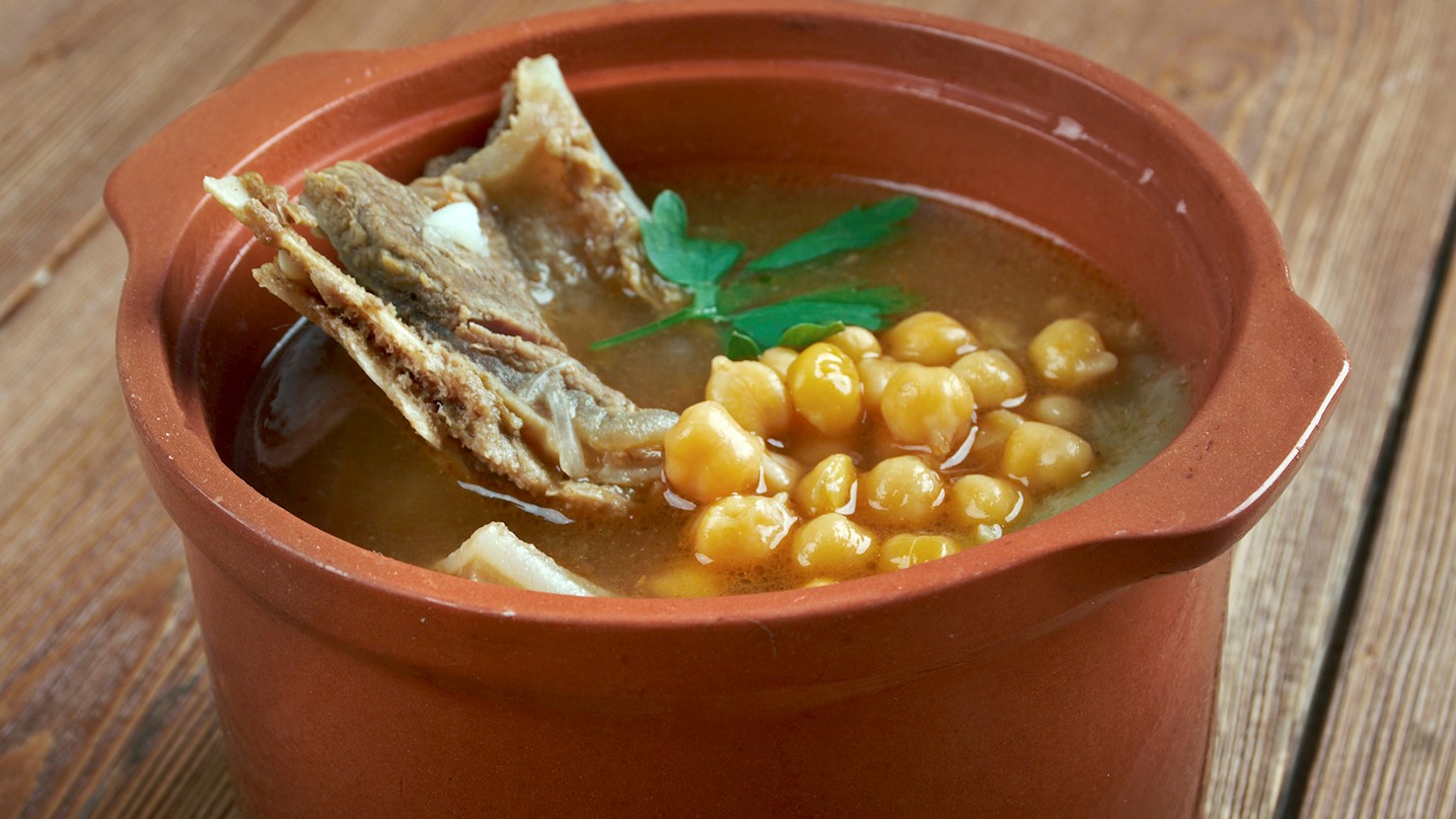
Abgoosht is a stew combining meat, legumes, and vegetables. Its name translates literally as “meat juice,” highlighting the importance of the rich broth it produces during cooking. This dish is commonly prepared by simmering lamb or mutton with chickpeas, white beans, potatoes, tomatoes, onions, and dried limes. Over several hours, the ingredients soften and meld together, creating both a fragrant broth and tender solids that are typically served in separate stages. Preparation begins by placing chunks of bone-in meat in a large pot with water, allowing the simmering process to extract the marrow and deepen the flavor. Chickpeas and white beans, usually soaked in advance, are added along with potatoes, tomatoes, and aromatics such as turmeric and black pepper. Dried limes (limoo amani) contribute a subtle sourness that balances the richness of the meat. As the abgoosht cooks, the broth gradually thickens and develops an amber color. Serving abgoosht follows a distinctive ritual that sets it apart from other stews. Once the cooking is complete, the liquid is separated and poured into bowls, often accompanied by pieces of flatbread torn into it. The remaining solids (meat, potatoes, and legumes) are mashed together with a wooden or metal masher called a goosht-koob. This mash, known as goosht kubideh, is then eaten with fresh herbs, pickles, and warm bread. The two parts of the meal, broth and mash, are enjoyed in succession, creating a contrast in texture and taste. Abgoosht is served across Iran in homes, teahouses, and small restaurants, where it remains a well-loved example of Iranian cooking that relies on slow preparation and accessible ingredients. In some regions, variations appear with additional spices or small noodles, though the core method of simmering meat and legumes remains consistent. The dish is often shared communally, emphasizing its role in family gatherings and casual meals alike.
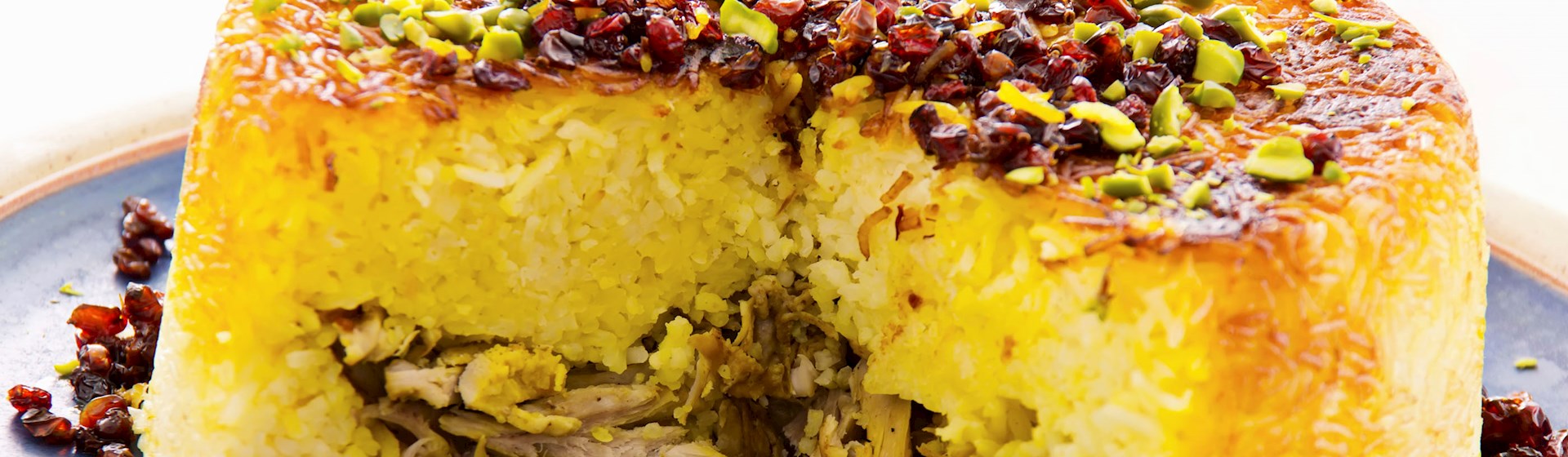
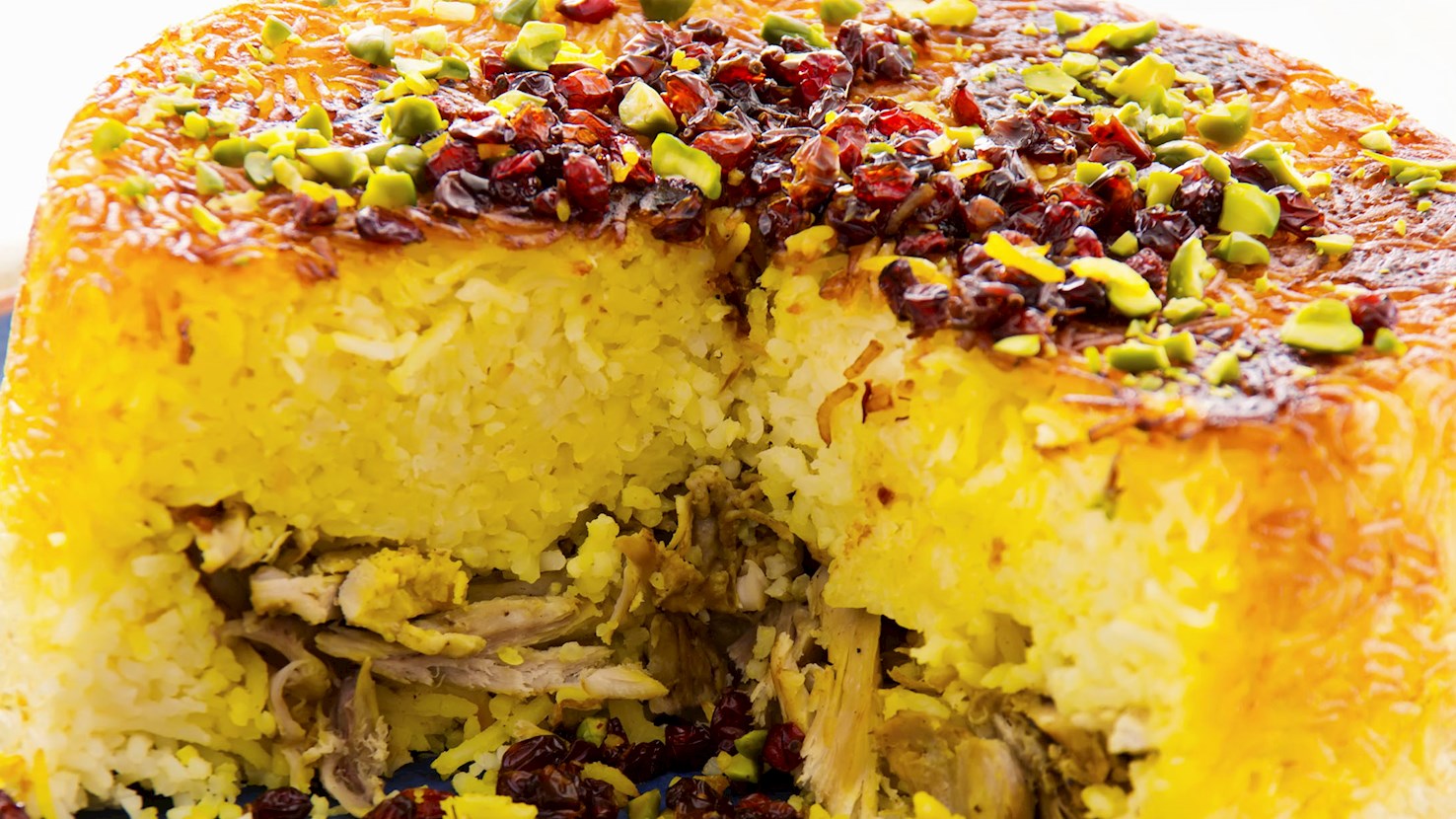
Tahchin combines fragrant rice with saffron, yogurt, eggs, and pieces of chicken or other fillings, baked together until it forms a golden crust. Its name means “arranged at the bottom,” referring to the way the rice and other ingredients are layered and then inverted onto a serving platter so that the crisp bottom becomes the top. Historically, Persian cuisine has emphasized rice dishes that showcase both texture and aroma, and tahchin is considered an example of this culinary approach. While the concept of cooking rice with yogurt and saffron has existed in Iranian cooking for centuries, tahchin evolved into a recognizable form during the Qajar era, when elaborate rice dishes were served in royal courts and gradually adapted for family kitchens. Its distinctive crust, called tahdig, is prized and often considered the most desirable part of the meal. While chicken is the most common filling, some regional variations use lamb, eggplant, or fish layered into the rice. In every version, the defining feature is the bright yellow hue created by saffron, which is dissolved in warm water and mixed into the rice before baking. The inclusion of yogurt and egg yolks gives the crust its tender yet cohesive texture, allowing it to hold its shape when turned out of the pan. Tahchin is served inverted onto a platter, revealing a uniform golden layer on top. It is often accompanied by barberries sautéed with butter and sugar, adding a sweet-tart contrast, and sometimes garnished with slivered pistachios or almonds. In Iran, it is enjoyed both as a centerpiece dish for special gatherings and as a comforting meal in everyday settings. Today, tahchin remains popular in Iranian homes, restaurants, and during festive occasions.
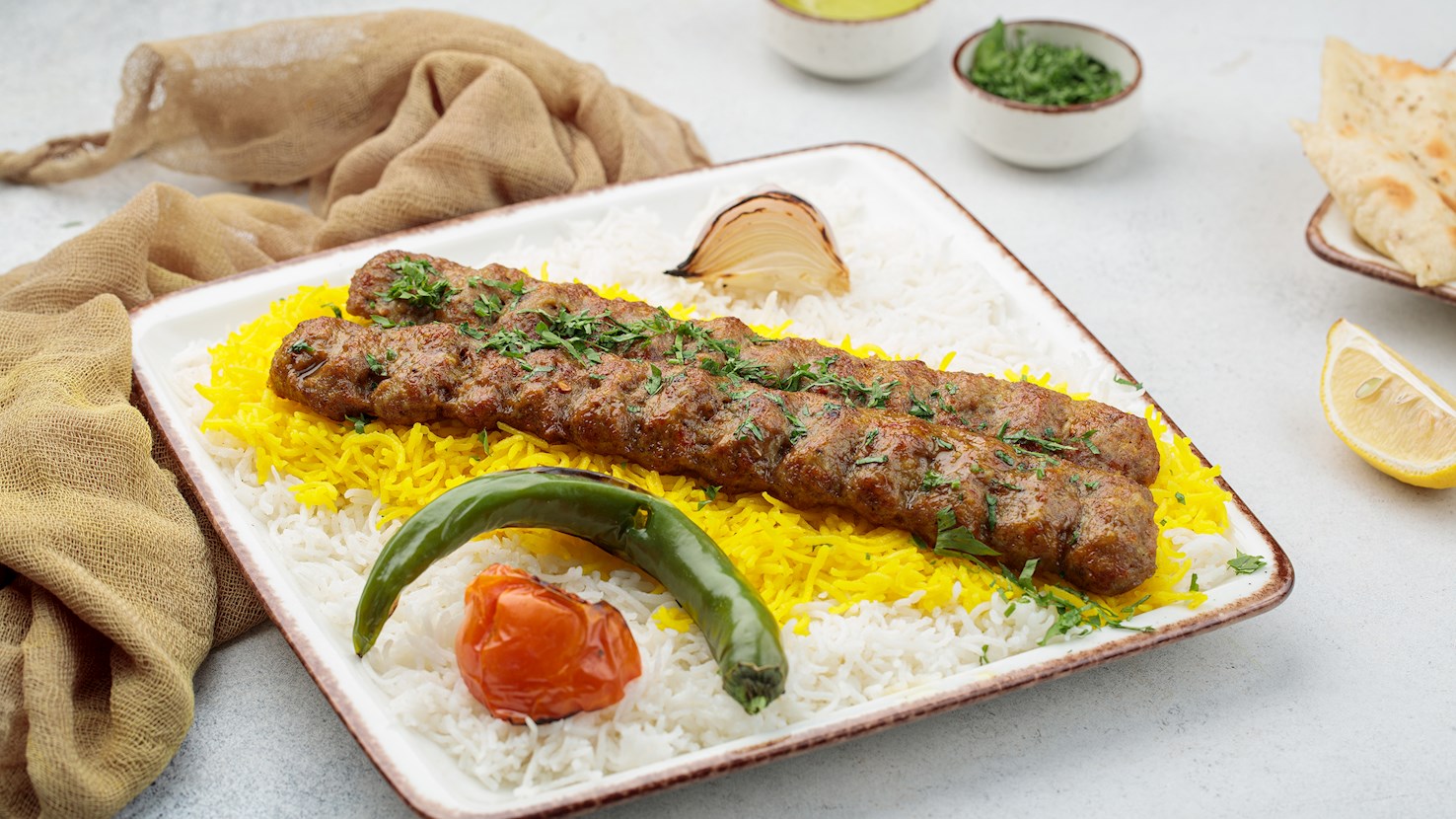
Chelo kebab is a dish of steamed saffron rice with skewered, grilled meat, most often ground lamb or beef, served alongside accompaniments such as grilled tomatoes, butter, and raw onion. The name “chelo” refers to the delicate white rice, which is prepared separately from the kebab and finished with a drizzle of melted butter and a sprinkling of saffron-infused water. This pairing of rice and kebab has become a defining feature of Persian cuisine, regarded as a benchmark of culinary skill and a popular choice for both everyday meals and special gatherings across Iran. The preparation begins with soaking long-grain rice, typically high-quality Iranian varieties, to remove excess starch. The rice is then parboiled, drained, and steamed until each grain is separate and tender. Meanwhile, the meat for the kebab is seasoned simply with salt, pepper, and sometimes grated onion for moisture and flavor. It is shaped onto wide, flat metal skewers and grilled over hot charcoal until charred on the outside and juicy inside. The most popular form is koobideh, made with ground meat, but other cuts like barg, prepared with marinated strips of tenderloin, are also common. Chelo kebab is served by placing the meat skewers next to the mound of rice, often with a raw egg yolk on top and a slab of cold butter that melts into the grains. Grilled tomatoes and fresh herbs are included on the side, and sumac powder is offered for sprinkling over the kebab. This combination balances the richness of the grilled meat with the delicacy of the steamed rice and the acidity of the tomato. Beyond Iran, chelo kebab has become a symbol of Persian hospitality, featured in Iranian restaurants worldwide and recognized as one of the country’s most famous dishes. In Tehran and other cities, dedicated kebab houses specialize in preparing it to order, often with open charcoal grills visible to customers. Chelo kebab is also a frequent feature of celebratory meals, where it is presented in generous portions and shared among family and friends.
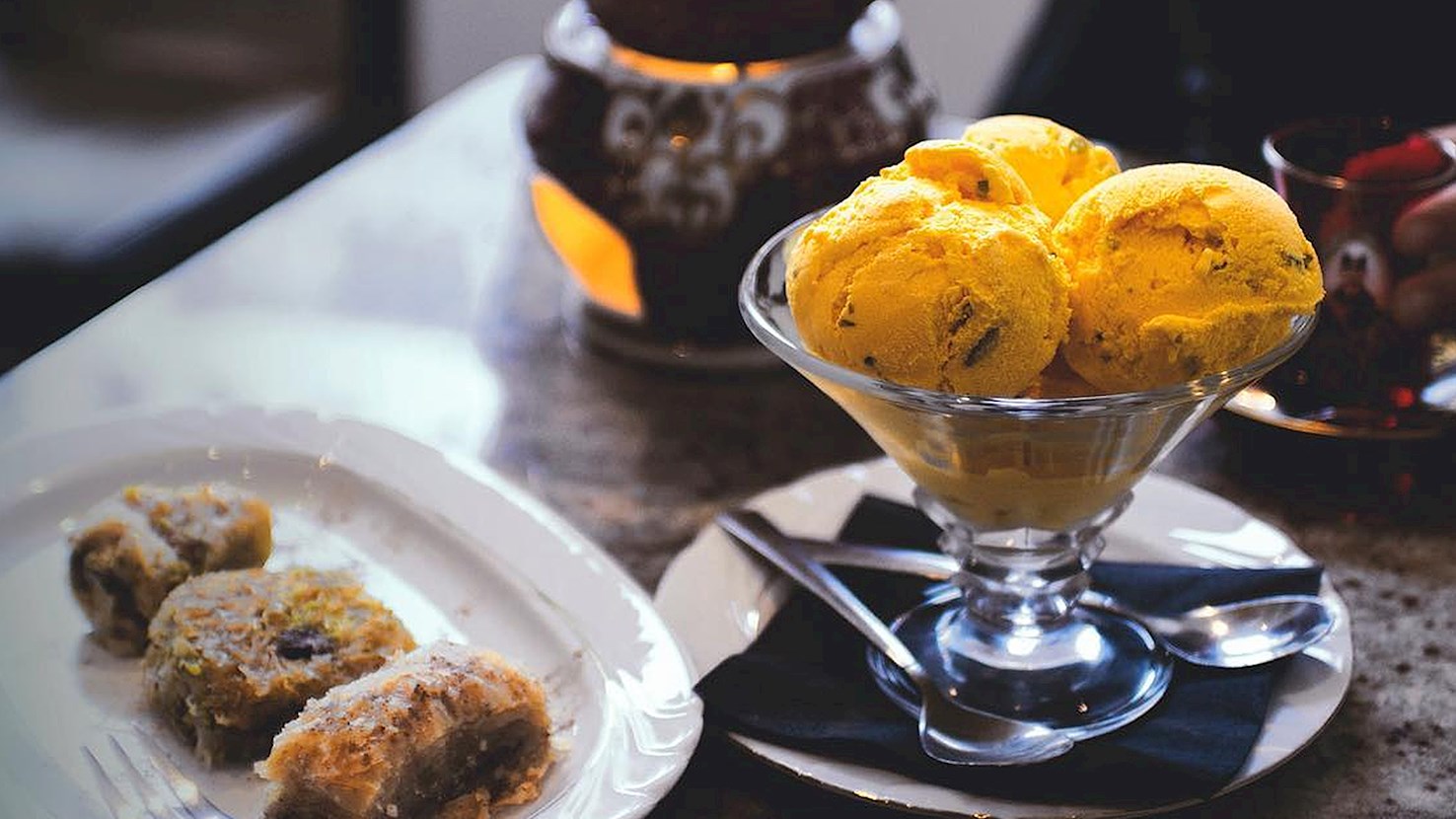
Bastani sonnati is a unique saffron-infused Iranian ice cream that was invented at the beginning of the 20th century by Akbar Mashti, the first ice cream vendor in Tehran. The name “bastani sonnati” means “classic ice cream,” emphasizing its status as a benchmark of Iranian confectionery. The base is a dense custard made by combining milk, cream, egg yolks, and sugar, then cooking it gently to achieve a smooth consistency. What sets bastani sonnati apart is the addition of saffron, rosewater, and ground cardamom, which infuse the ice cream with a vivid yellow color and a distinctly floral aroma. Salep, a flour derived from orchid tubers, is also incorporated, lending the mixture a stretchy, elastic quality similar to Turkish dondurma. Small pieces of frozen clotted cream, called makhloot, are sometimes folded in, creating pockets of rich creaminess in each bite. After churning, bastani is packed into shallow containers and stored at low temperatures to set. Before serving, it is often garnished with chopped pistachios, which add texture and contrast. In Iranian ice cream parlors, it is common to see bastani sonnati served alongside faloodeh, a frozen dessert made from thin vermicelli noodles in rosewater syrup. The combination of the creamy bastani and the icy faloodeh has become an iconic pairing in Iran. Unlike Western-style ice cream, bastani sonnati is known for its dense body and slower melt, which allows the saffron and rosewater aromas to linger on the palate. Many recipes are closely guarded by families or vendors, with proportions of salep and flavorings varying from one confectioner to another. Its production still relies on skill and careful handling to achieve the right balance of elasticity and smoothness.
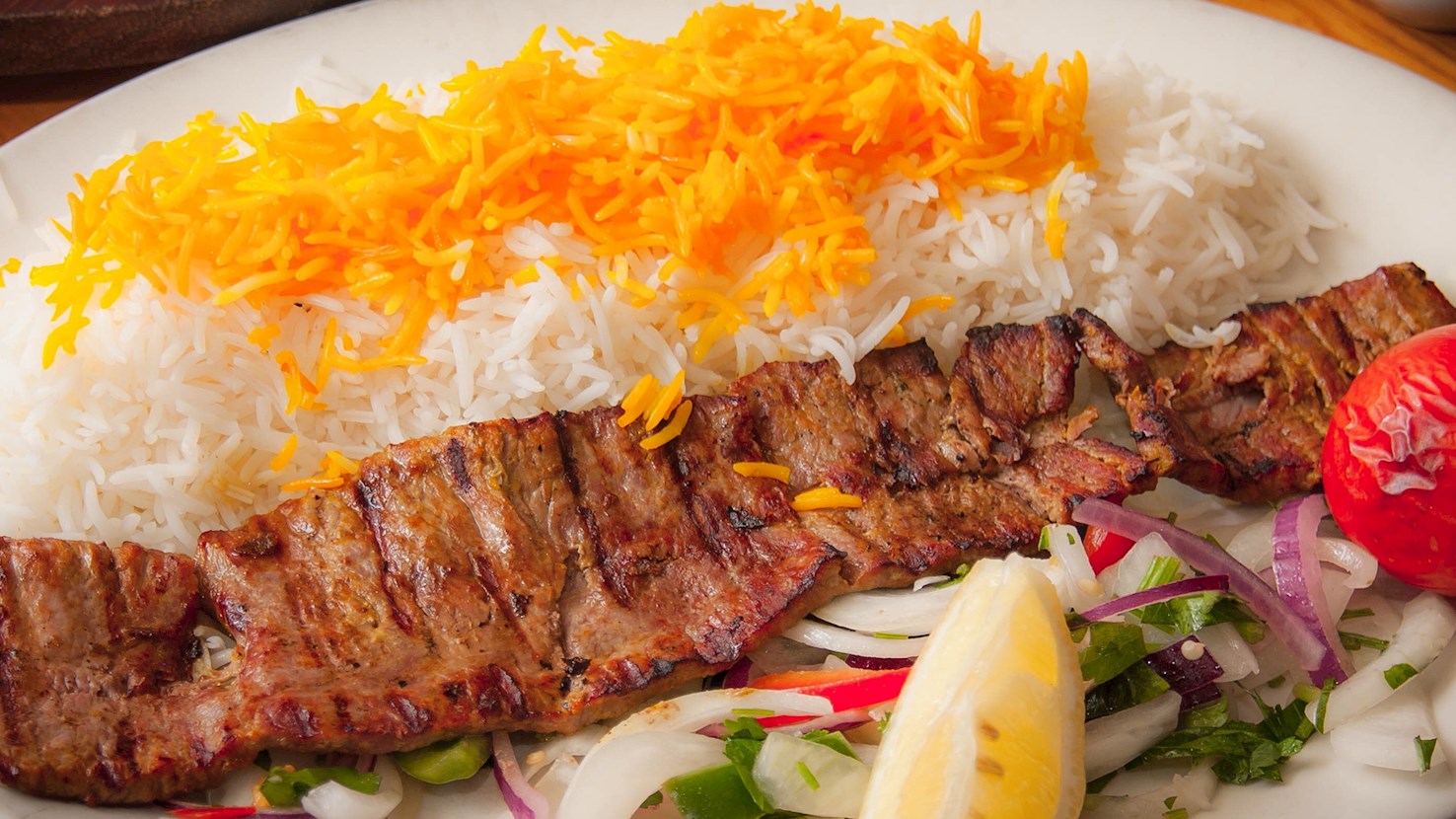
Kabab barg is a dish of thin slices of marinated lamb or beef, carefully skewered and grilled over hot coals to achieve a tender, juicy texture with a lightly charred exterior. Its name means “leaf kebab” in Persian, a reference to the flat, leaf-like cuts of meat. Kabab barg is most closely associated with Tehran and the broader culinary culture of Iran, where kebabs occupy a central place in everyday meals and festive gatherings alike. The dish has its origins in Persian grilling practices that stretch back centuries. Historical records and Persian cookbooks describe skewered meats prepared in royal courts and caravanserais, reflecting influences from nomadic cooking and regional tastes. Over time, kabab barg developed into a distinct preparation emphasizing finesse in both butchering and marination. Unlike minced kebabs such as koobideh, kabab barg relies on whole muscle cuts that are pounded thin to create an even, delicate bite. The meat is soaked in a mixture of grated onion, lemon juice, salt, pepper, and sometimes saffron, which both flavors and tenderizes the slices. Some recipes incorporate a little yogurt or olive oil to further enhance the texture. Before grilling, each piece is carefully threaded onto wide flat skewers to prevent curling or tearing over the fire. The grilling process requires skill and attention. The skewers are placed over a bed of glowing charcoal and turned frequently to cook the meat evenly without drying it out. As it grills, the kebab develops a light crust while remaining juicy inside. When fully cooked, it is brushed with melted butter or a saffron-infused baste to deepen the aroma and give a glossy finish. Kabab barg is traditionally served alongside steamed saffron rice, known as chelo, with a pat of butter on top. Grilled tomatoes, raw onions, and fresh herbs such as basil and tarragon are standard accompaniments, creating a balanced plate of rich protein, aromatic rice, and bright garnishes. In restaurants and at home, diners often sprinkle sumac over the meat to add a tart counterpoint.
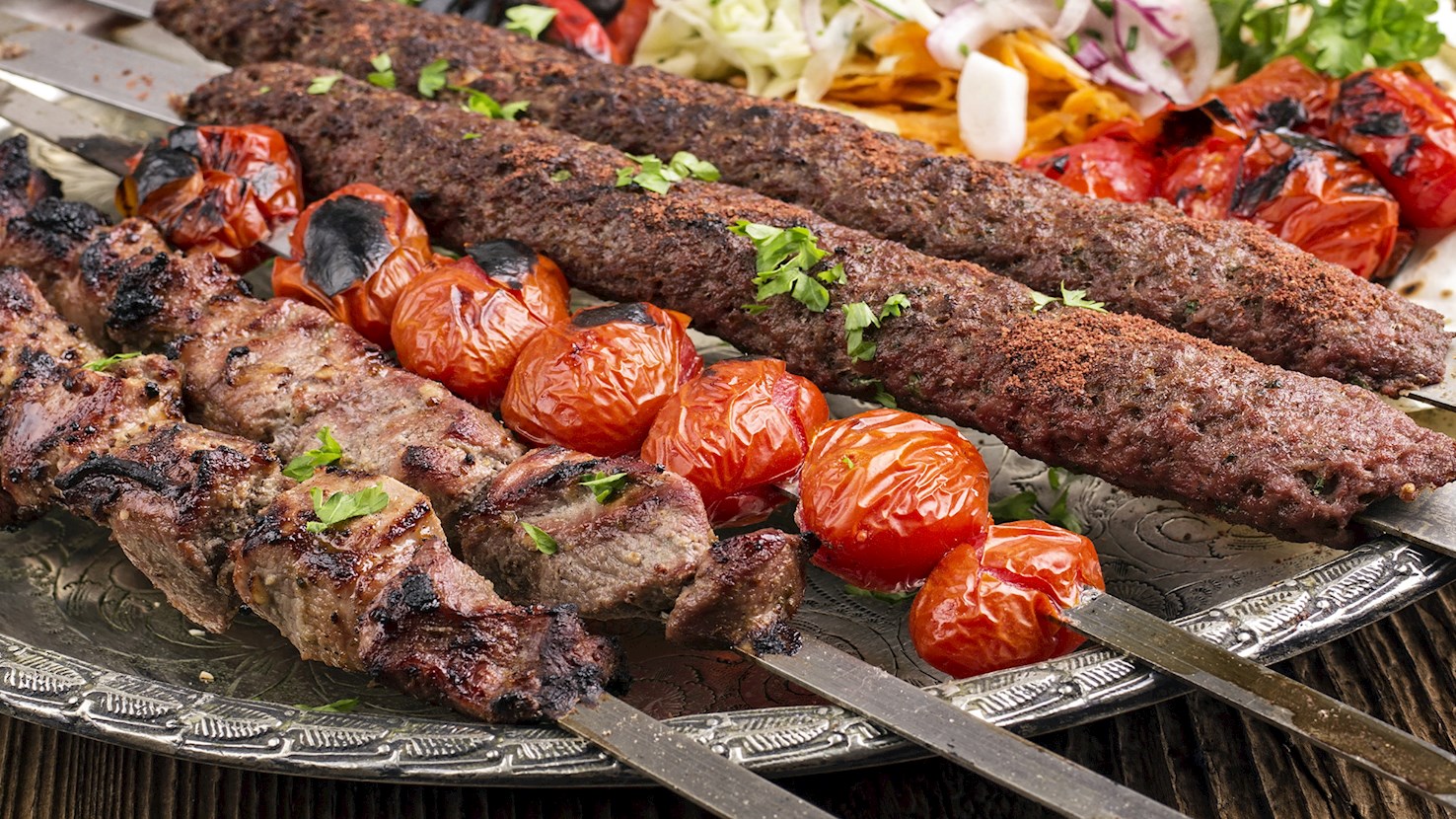
Kebab koobideh is a type of Iranian minced meat kebab prepared by combining ground lamb, beef, or a blend of both with grated onion and simple seasoning before shaping the mixture onto wide metal skewers and grilling it over hot coals. This kebab is among the most widely consumed in Iran, appearing in restaurants, street stalls, and homes where it is often served with chelo, a mound of steamed saffron rice, or with flatbreads, grilled tomatoes, and fresh herbs. The word “koobideh” comes from the Persian verb “koobidan,” meaning to beat or mash, referring to the practice of kneading and working the meat mixture until it becomes sticky enough to hold together on the skewer. Preparation begins by finely grating onion and squeezing out as much moisture as possible to avoid excess water, which can cause the kebab to fall apart. The onion is then mixed with freshly ground meat and seasoned simply with salt and black pepper. Unlike many other types of kebabs, koobideh does not include herbs or complex spices, focusing instead on the flavor of the meat itself and the subtle aroma developed during grilling. The mixture is kneaded thoroughly by hand until it becomes tacky, an essential step for ensuring that the kebabs adhere properly to the skewers. Once shaped onto wide, flat metal skewers, the kebabs are grilled over a bed of hot charcoal, where they cook quickly, developing a lightly charred exterior while staying juicy inside. The heat must be steady and even to avoid burning or drying out the meat. As the fat renders, it bastes the kebab, contributing to its tender texture and savory flavor. The kebabs are usually served hot, laid across mounds of rice or wrapped in thin flatbread alongside grilled tomatoes, raw onions, and sumac for sprinkling. Kebab koobideh has been embraced throughout Iran as an everyday meal as well as a popular choice for gatherings. It is often prepared in large quantities for family events, picnics, or communal feasts. In Iranian cities, specialized kebabi shops prepare koobideh fresh to order, sometimes offering variations made exclusively with lamb or leaner blends for a lighter taste.
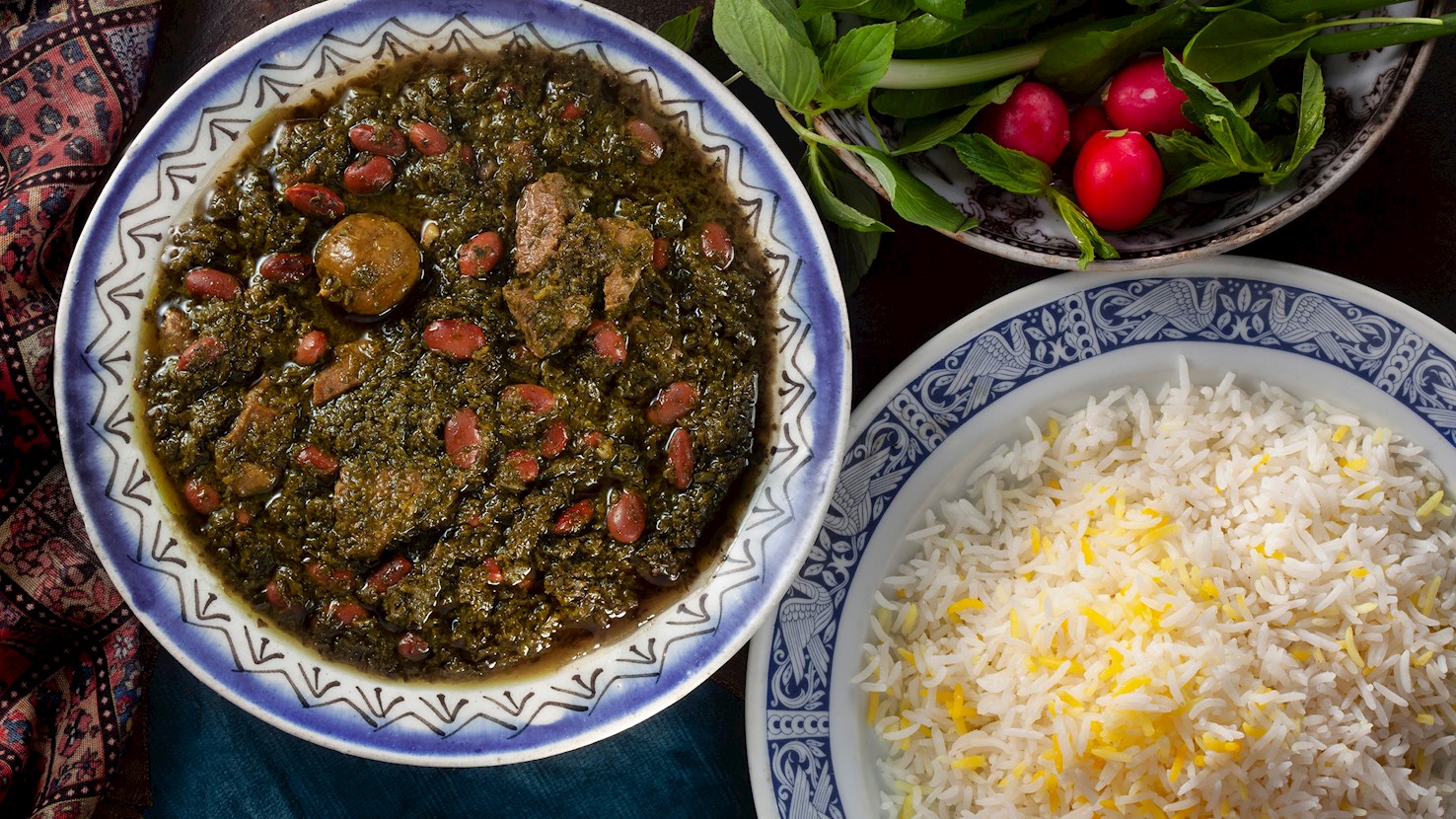
Ghormeh sabzi is an Iranian herb stew that has become one of the country’s most widely prepared and recognized dishes, appreciated for its complex flavor that combines aromatic greens, tender meat, and a signature tang from dried limes. The name translates simply as “fried herbs,” reflecting the preparation of finely chopped greens that form the core of the dish. Its origins are rooted in Persian home cooking, where it has long been a familiar part of family meals and gatherings. The preparation of ghormeh sabzi begins with a generous quantity of fresh herbs, primarily parsley, cilantro, and fenugreek, sometimes supplemented with spinach or chives. These greens are chopped finely and then sautéed slowly until their raw flavor mellows and their aroma intensifies. Cubes of lamb or beef are browned with onion and turmeric to build a savory base. Red kidney beans, either dried and pre-cooked or canned, are added along with water or broth. The mixture is left to simmer gently until the meat softens and the flavors meld together. Dried limes, known as limoo amani, are pierced and simmered in the stew, releasing a distinct sourness that balances the richness of the meat and herbs. Ghormeh sabzi is usually served hot with steamed Persian rice, allowing the rice to absorb the fragrant juices. The contrast between the fresh, slightly bitter herbs and the acidity of the limes is the hallmark of the dish. Though recipes vary by region and household, most agree that the herb frying step is essential, as it defines both the taste and the characteristic dark green color. Some cooks prefer more fenugreek, while others adjust the amount of kidney beans or substitute black-eyed peas. Across Iran, ghormeh sabzi holds a place of pride and is often viewed as a measure of a cook’s skill. Preparing it well requires patience, particularly in the slow sautéing and long simmering that bring out the stew’s depth of flavor. It is considered both a celebratory and an everyday dish, appearing in restaurants and homes alike.
TasteAtlas food rankings are based on the ratings of the TasteAtlas audience, with a series of mechanisms that recognize real users and that ignore bot,
nationalist or local patriotic ratings, and give additional value to the ratings of users that the system recognizes as knowledgeable.
TasteAtlas Rankings should not be seen as the final global conclusion about food. Their purpose is to promote excellent local foods,
instill pride in traditional dishes, and arouse curiosity about dishes you haven’t tried.



What People Say