




shutterstock

7 Traditional Foods
You Have To Try in Thessaloniki

Last updated on August 17, 2026
01

Tsoureki

4.1 ·

Tsoureki is a traditional Easter bread characterized by its braided shape, which can be either circular or elongated like a loaf. Tradition says that tsoureki should be braided in three strands - one for each aspect of the Trinity. The bread is usually made with milk, eggs, butter, and flavorings such as mahleb, orange zest, cardamom, and vanilla. After baking, it should be moist, tender, and soft, yet chewy. It is often served with a red-dyed egg on top of it, although it can sometimes be baked together with scarlet-colored eggs, representing the blood of Christ and resurrection. Tsoureki has been prepared in Greece since ancient times, and is traditionally served at the breaking of Lent. Loaves of tsoureki are typically exchanged among Greeks on Easter Sunday as a sign of good will and friendship. Today, there are numerous variations of the bread in Turkey, Armenia, Romania, and Bulgaria, all of them especially good when paired with a hot cup of tea or coffee.

Best restaurants
02

Bougatsa

4.4 ·

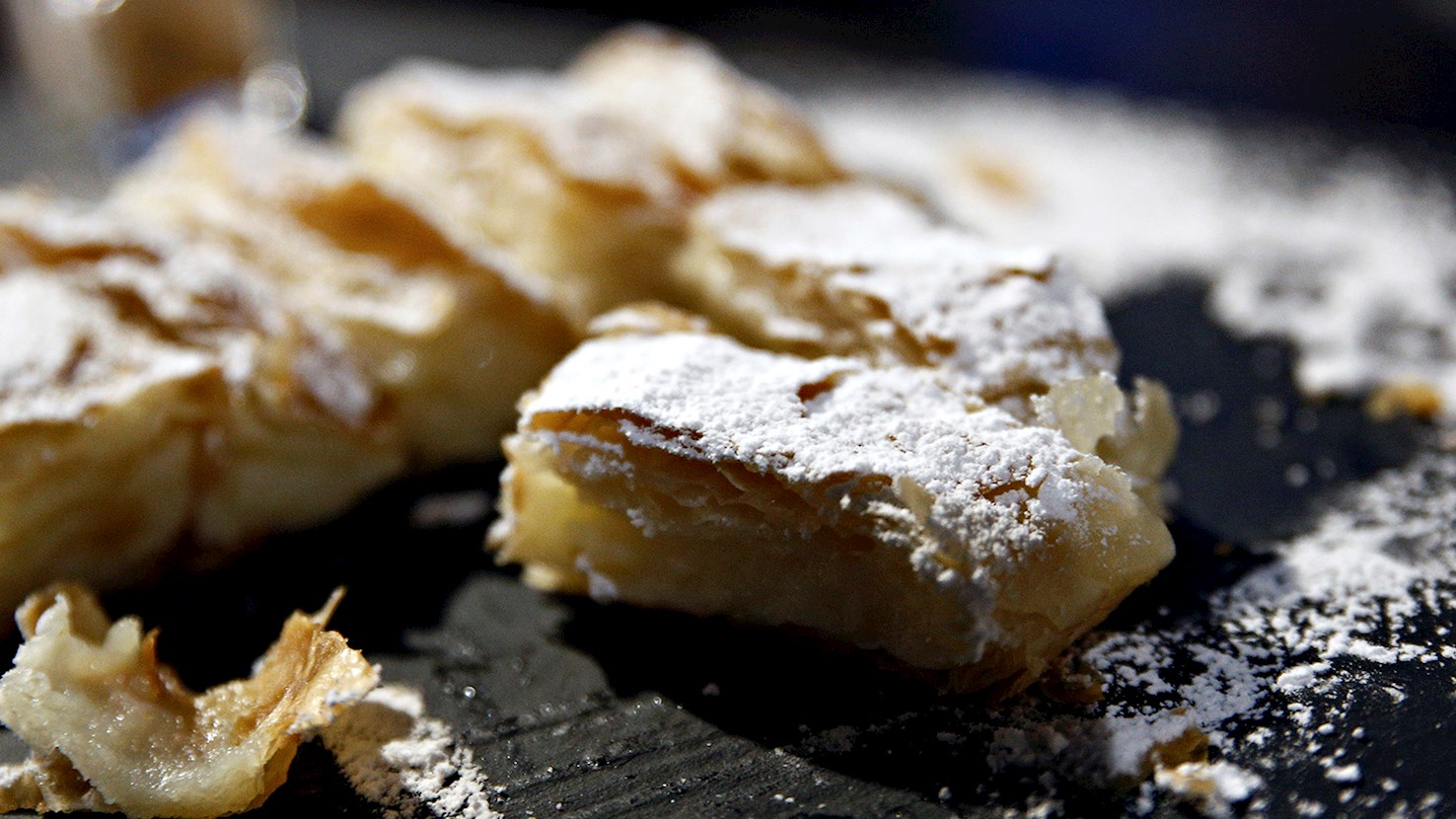
Bougatsa is a traditional, rustic Greek pie consisting of a phyllo pastry layered with a filling of semolina custard, although there are variations with minced meat or cheese. The name of the dish is a derivation of the Ottoman word pogatsa, denoting a pie filled with cheese. Bougatsa has origins from the Byzantine period, when Constantinople was Greek, and it began as a dough that was stuffed with numerous sweet and savory fillings. Over time, bougatsa evolved to incorporate a thinly rolled, hand-made phyllo pastry. As many Turkish immigrants settled in Northen Greece, bougatsa became a specialty of Serres and Thessaloniki. Today, the pies can be found throughout Greece in specialty shops called bougatsopolia, selling bougatsas exclusively.

03

Gyros

4.3 ·

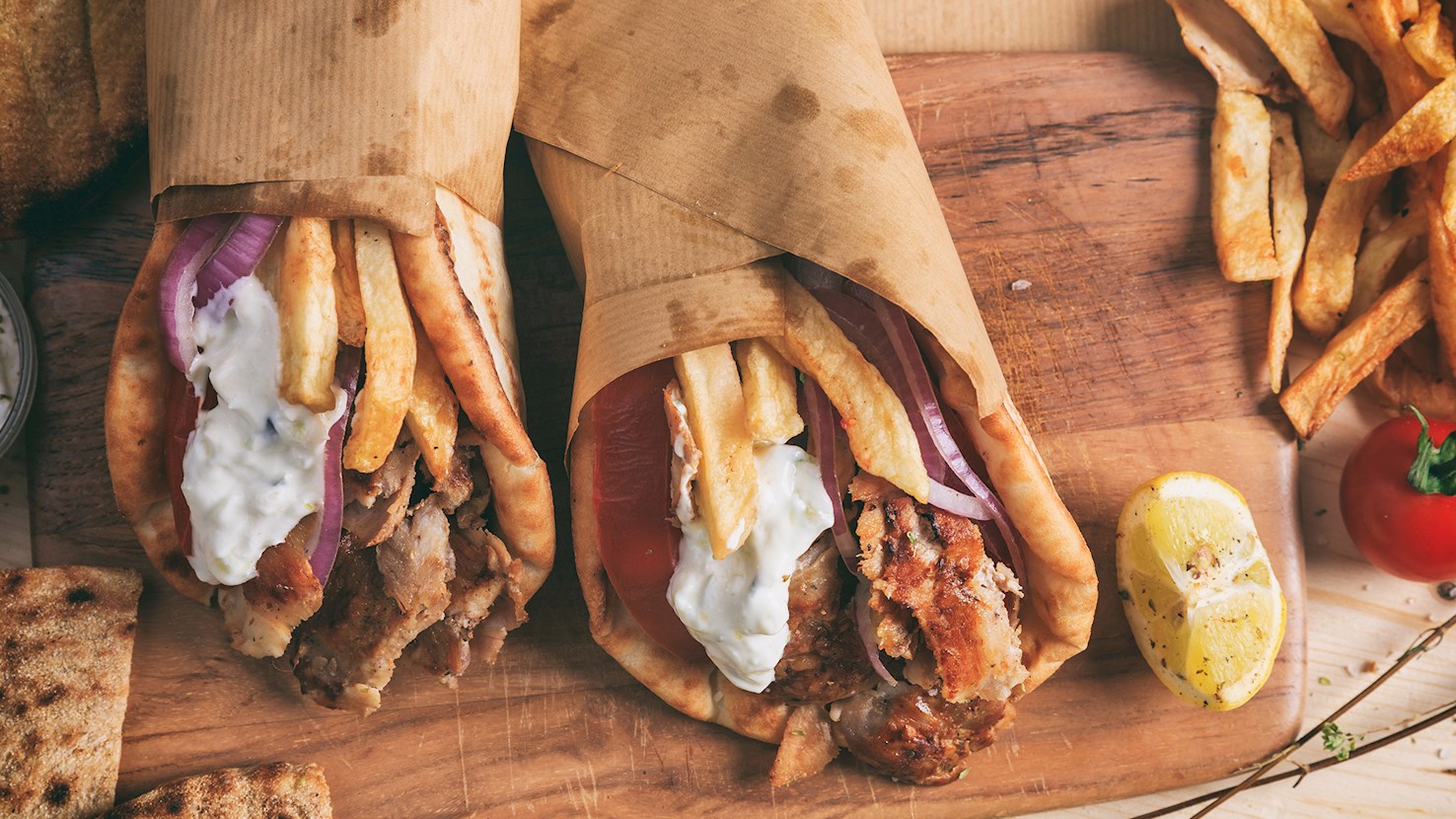
Gyros is one of the most popular Greek street food dishes, consisting of meat such as pork and chicken (in Greece) or lamb and veal (popular in other countries) cooked on a vertical spit. The meat is sliced in thin shavings and is then usually placed in a pita bread along with sauces such as tzatziki and vegetables such as tomatoes, onions, lettuce, and cucumbers. Gyros is derived from the Greek word gheereezo, meaning to turn, referring to the constantly rotating vertical spit on which the meat is cooked. Some believe that gyros originated during the time of Alexander the Great, when his soldiers skewered the meat on their swords and cooked it over a fire. Others claim that gyros was introduced to Greece in 1922, with the refugees from Constantinople and Smyrna. Many of the refugees became merchants and opened their shops with tiny holes in the wall, where gyros was sold. After WWII, gyros gained popularity and spread to Europe, Australia, and the United States. Today, gyros is known as one of the most popular street food varieties around the world.

04

Gamopilafo

3.6 ·

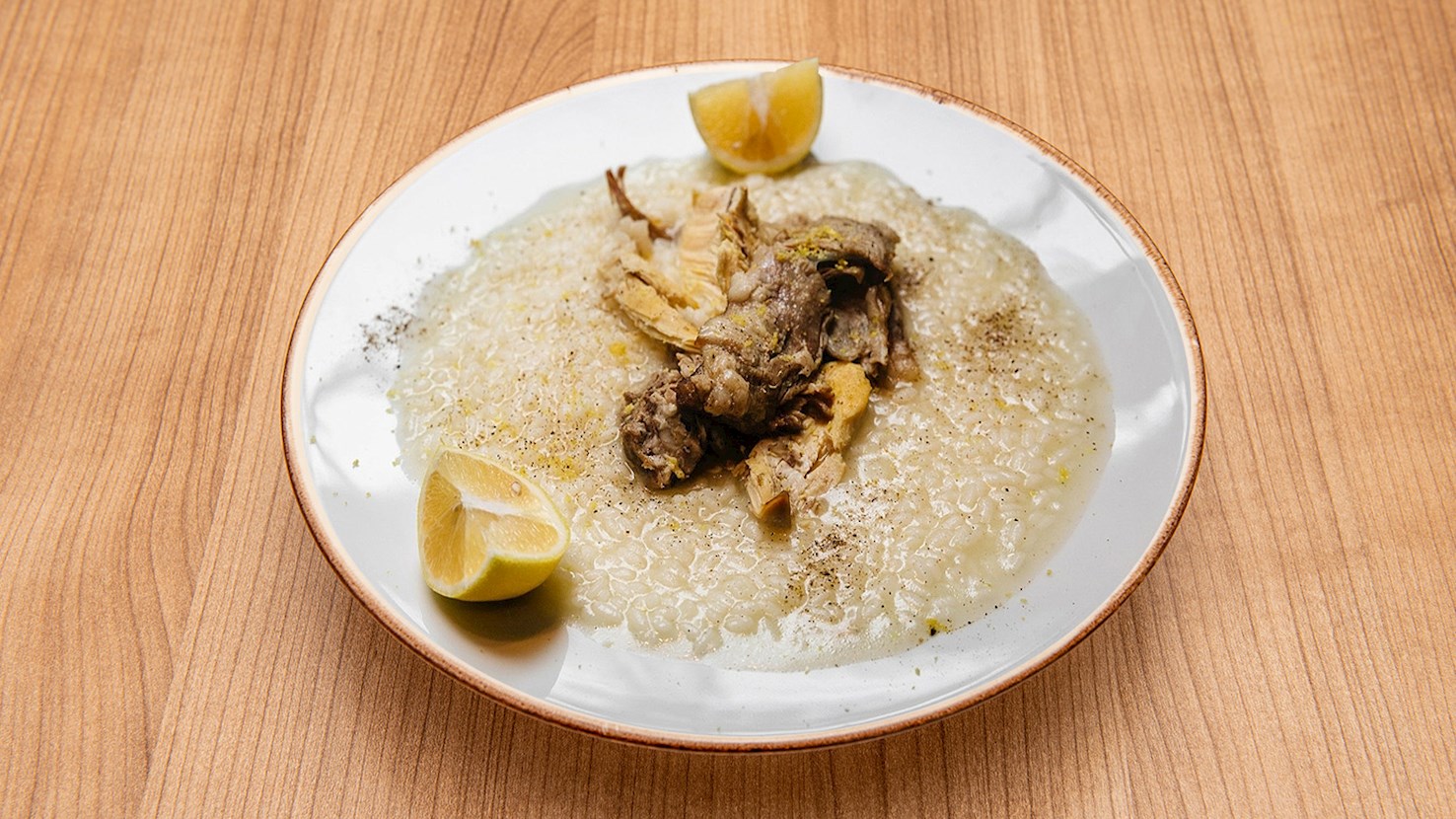
This complex Greek dish couples rice and various types of meat such as goat, lamb, veal, chicken, and occasionally pork. The meat is cooked separately, while the broth is later used to cook the rice, which is additionally flavored with lemon juice and generous amounts of butter. When served, sliced meat is typically placed neatly on top of the rice, and the dish is usually accompanied by lemon wedges. Gamopilafo is also known as wedding rice, referring to the fact that the dish was only prepared and enjoyed on special occasions. Though it is usually associated with Crete, it is popular throughout the country and is still mainly reserved for special occasions and various festivities.

Best restaurants
05

Trigona panoramatos

4.6 ·

Trigona panoramatos is a traditional sweet pastry originating from the outskirts of Thessaloniki. These crispy and buttery triangular (cone-shaped) phyllo pastries are typically soaked in syrup and filled with creamy custard. The custard is usually made with a combination of egg yolks, flour, butter, milk, sugar, vanilla, and heavy cream. The phyllo triangles are baked until golden brown, dipped in cold syrup consisting of sugar and water, and then filled with the chilled custard. Trigona is often garnished with chopped nuts before consumption.

06

Souvlaki

4.3 ·

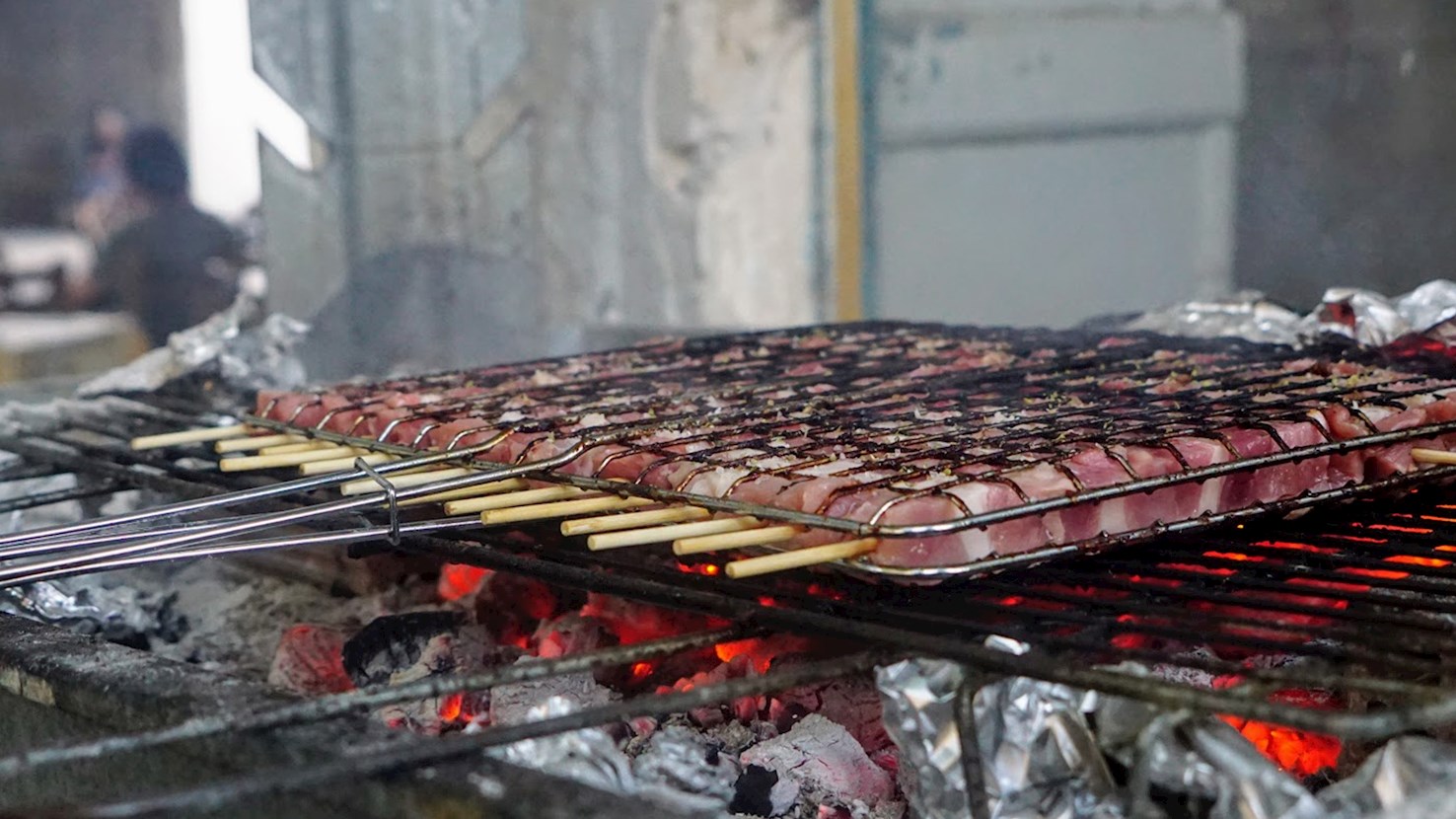
Souvlaki is one of the most popular Greek dishes, consisting of small cubes of skewered and grilled pork, chicken, lamb, or beef. It is a popular fast food item that is usually served in souvladzidika, small eateries that also often serve gyros and other similar grilled meat dishes. Souvlaki first appeared in ancient Greece, when it was called kandaulos, consisting of a combination of grilled meat, pita bread, cheese, and dill. The name of the dish is a diminutive of the Greek word souvla, meaning spit. The first souvlaki shop opened in Livadia in 1951, and today, souvlaki is sold in almost every Greek city, ordered as a takeaway, on the beaches, or on numerous street corners. It is usually served with a slice of bread or pita bread, tomatoes, parsley, onions, sometimes chips, and thick yogurt or tzatziki. There's also an oversized variety of souvlaki called kontosouvli in which large chunks of marinated meat, onions, tomatoes, and peppers are cooked on long and slim skewers over charcoal.

Best restaurants
07

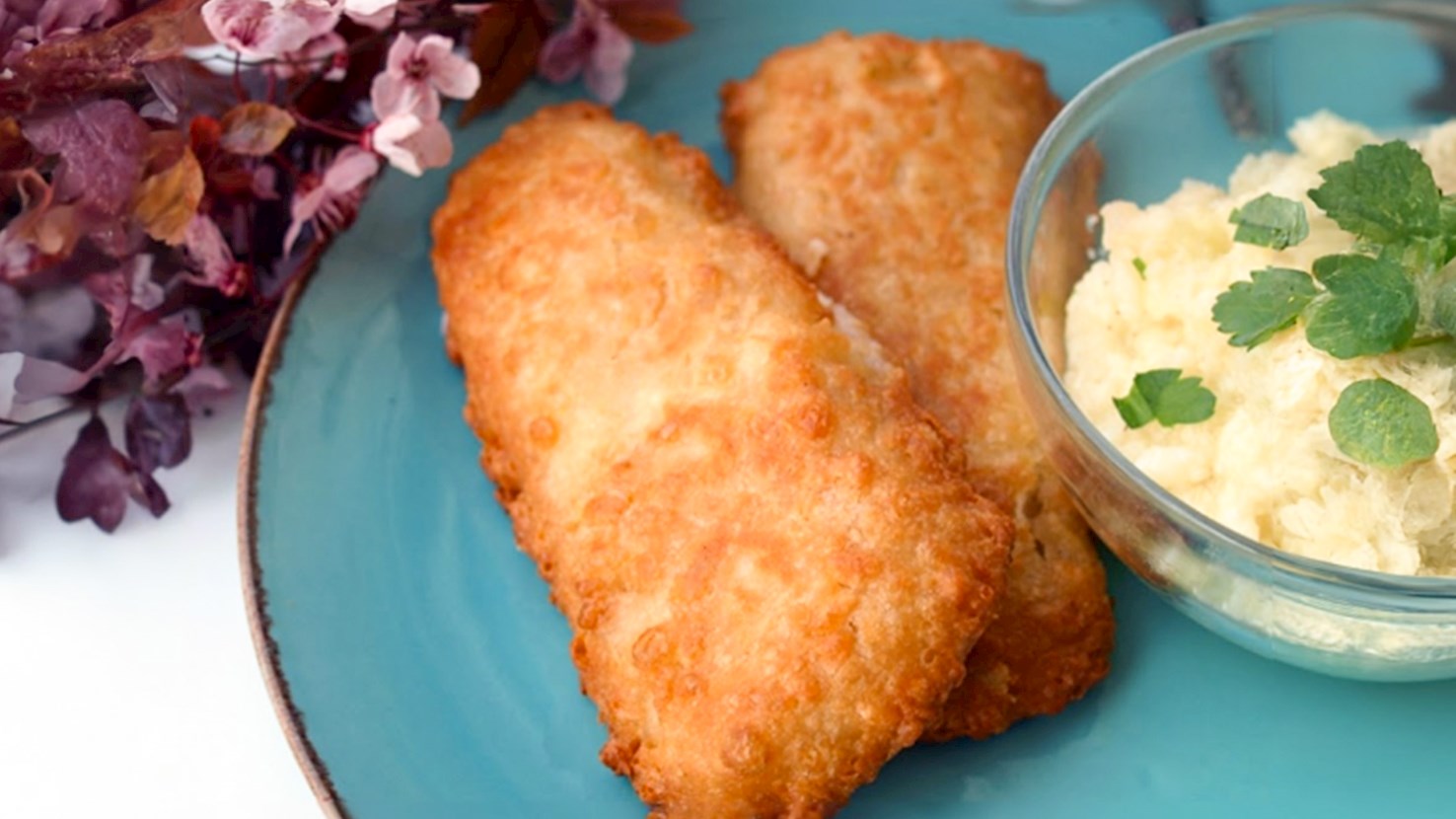
Bakaliaros

4.3 ·

Though the term bakaliaros refers to cod fish, Greeks mainly use it to describe golden and crispy cod fritters. Whether it employs salt or fresh cod, the dish can be made with batter-fried pieces of cod or flaked cod that is then incorporated into a thick batter. The fritters are mainly served as a meze dish, and when accompanied by a thick, garlicky dip, they usually go under the name bakaliaros skordalia. Although they are eaten throughout the year, cod fritters are usually associated with a celebration that commemorates the Annunciation of Virgin Mary and the War of Independence, which is celebrated each year on March 25th.

About this Ranking

TasteAtlas food rankings are based on the ratings of the TasteAtlas audience, with a series of mechanisms that recognize real users and that ignore bot, nationalist or local patriotic ratings, and give additional value to the ratings of users that the system recognizes as knowledgeable.

TasteAtlas Rankings should not be seen as the final global conclusion about food. Their purpose is to promote excellent local foods, instill pride in traditional dishes, and arouse curiosity about dishes you haven’t tried.

What People Say

Similar Lists