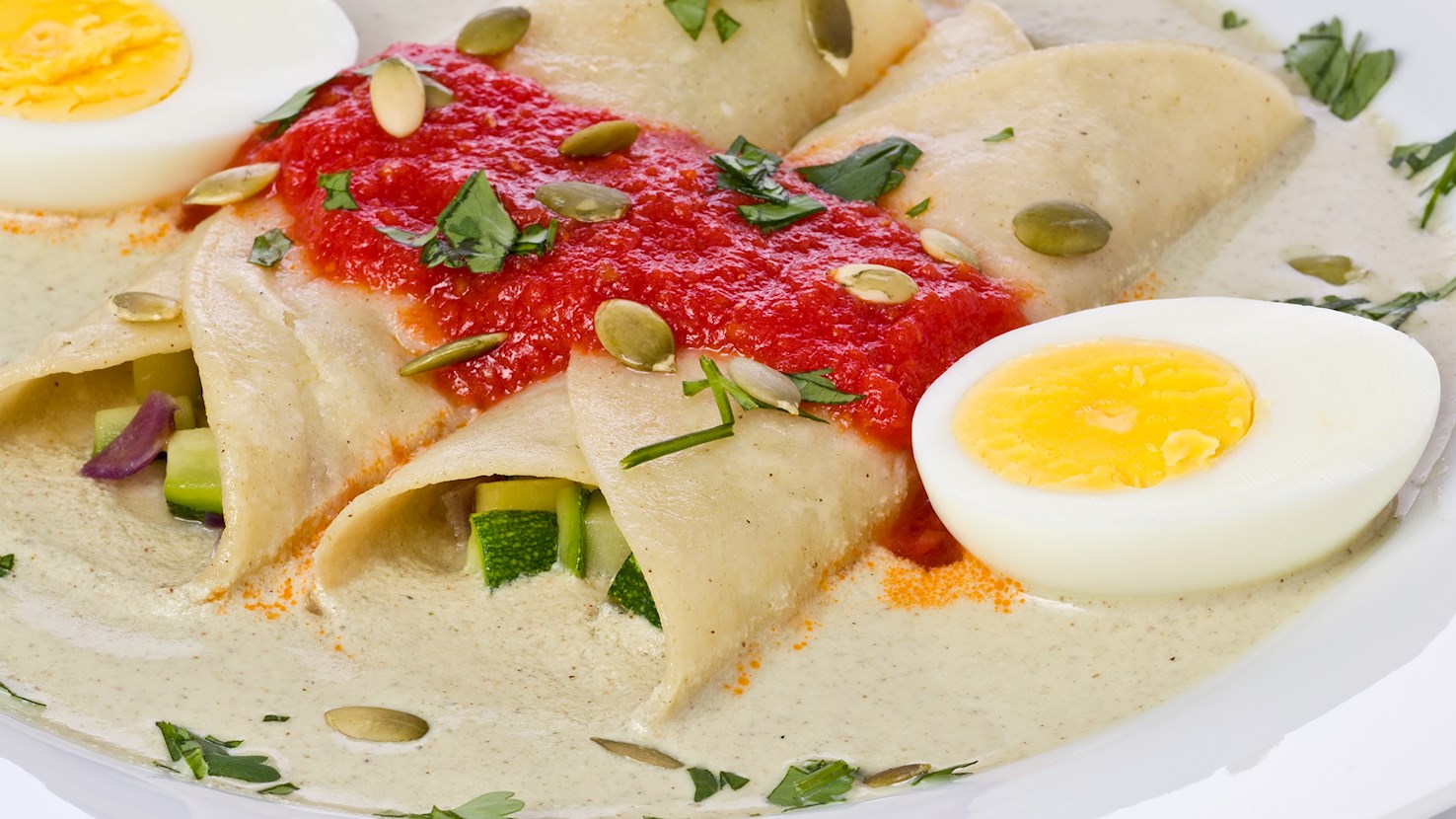
Papadzules are rolled corn tortillas from the Yucatán Peninsula, dipped in a creamy pumpkin seed sauce, filled with chopped hard-boiled eggs, and topped with roasted tomato salsa. The dish is closely associated with Maya cooking and the region's agricultural staples, especially maize, squash seeds, tomatoes, and epazote. The name is usually explained in Maya terms, often interpreted as "food" and "lord" or "master," although the exact translation remains debated. One common interpretation links the dish to food served to nobles, important guests, and later to Spanish arrivals, while its reliance on squash seeds, maize, tomatoes, and regional herbs reflects a cooking tradition rooted in the peninsula's ingredients before the widespread use of European livestock. The dish begins with hulled pumpkin seeds, or pepitas, which are toasted and ground into a fine paste. This paste is mixed with warm broth infused with fresh epazote leaves, producing a thick, smooth, pale green sauce with an earthy, herbal flavor. Eggs are boiled until firm, peeled, and chopped into small pieces. Fresh corn tortillas are warmed briefly on a griddle until soft and pliable, then dipped into the pumpkin seed sauce, laid flat, filled with a line of chopped egg, and rolled into compact cylinders. Once the rolls are arranged side by side on a serving platter, more of the green pumpkin seed sauce is poured over the top. A second sauce, known as chiltomate, provides a bright contrast to the rich seed sauce. It is usually made by roasting ripe tomatoes, white onion, and whole habanero chiles until lightly charred, then blending and simmering the mixture until it becomes smooth and slightly thickened. The red tomato salsa is spooned over the green-coated tortillas, creating the characteristic contrast of colors and flavors. Although hard-boiled eggs are the most common filling, local versions may use shredded roasted chicken or slow-braised pork shoulder instead, turning the dish into a richer, meat-based main course. Other variations avoid meat entirely and use pan-fried white cheese or sautéed chaya leaves as the filling. Papadzules are served warm, usually on a wide ceramic platter, with the sauce-soaked tortillas arranged in a row. A few drops of dark green pumpkin seed oil may be added over the tomato salsa for extra nuttiness, while raw habanero slices are sometimes served on the side for sharper heat. The soft tortillas are eaten with a fork and knife, cutting through the pumpkin seed coating and tomato salsa to reach the firm egg filling inside. A cold, citrus-forward fruit drink is a common accompaniment, helping balance the dense, earthy flavor of the pepitas, epazote, and sauce.
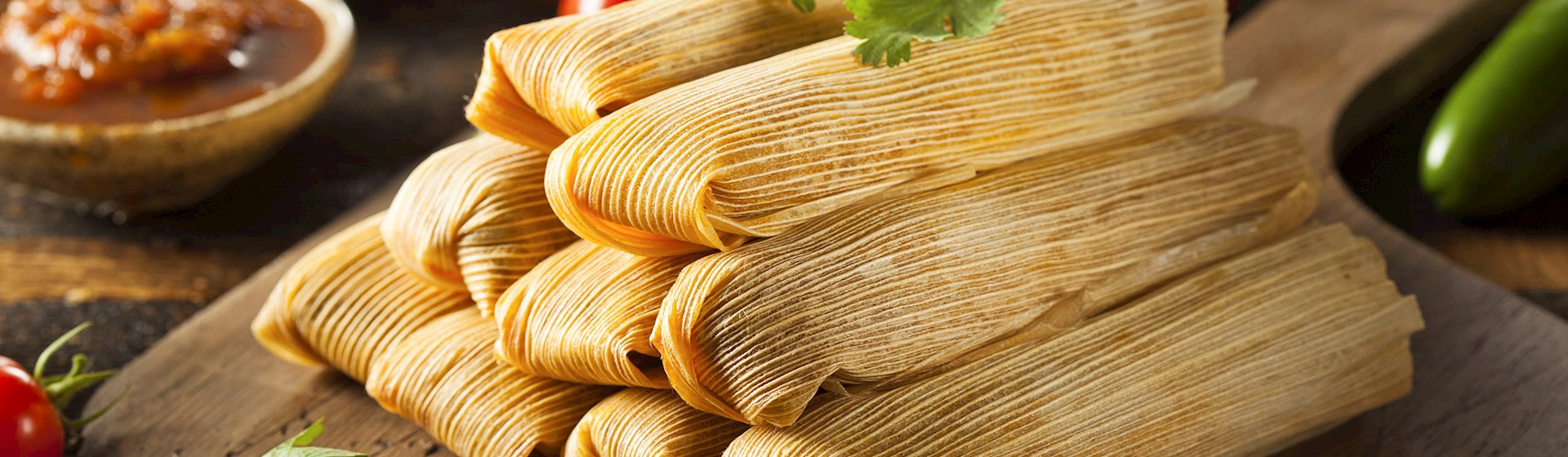
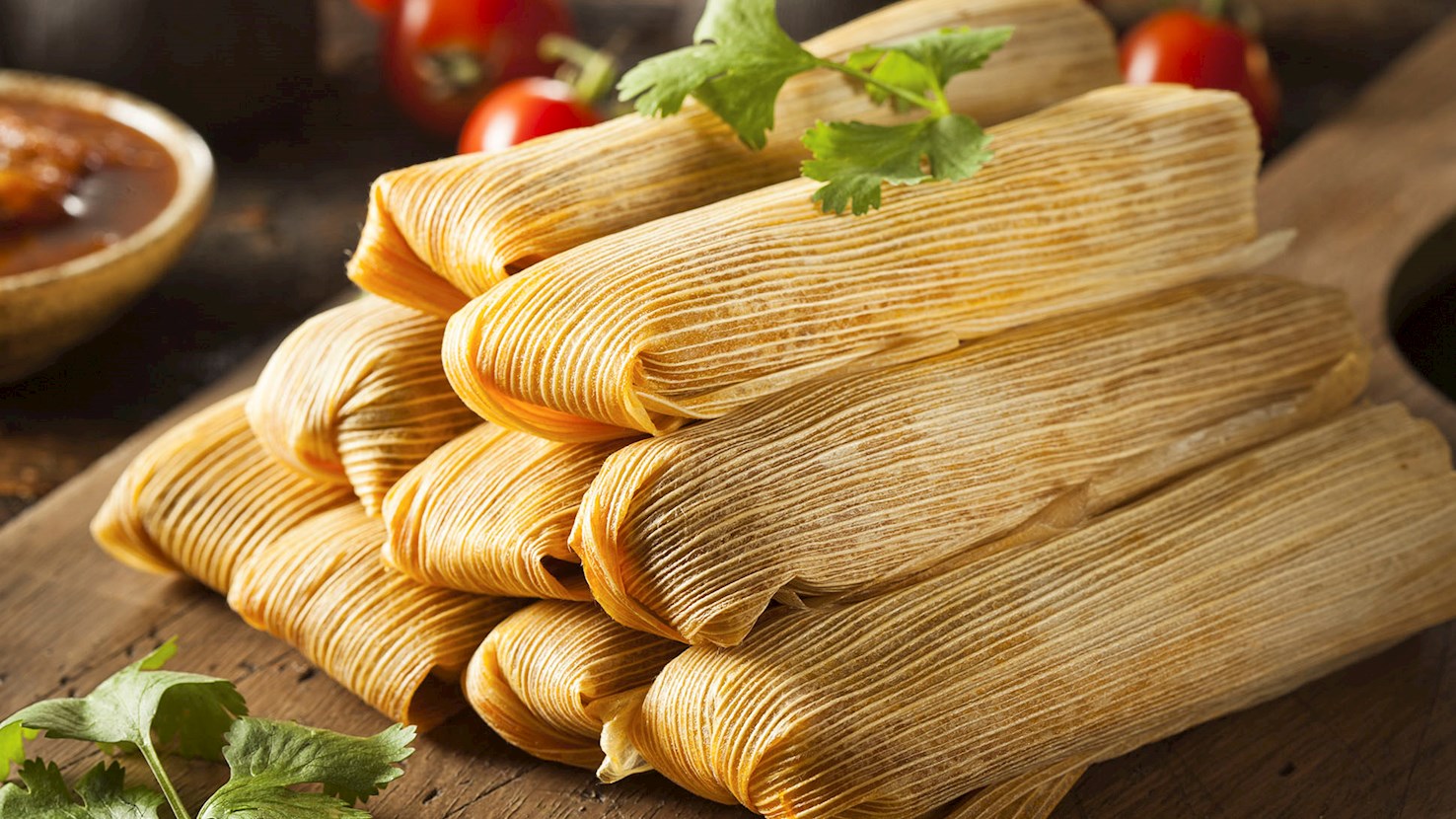
Tamal is a dish dating back to the Aztecs, consisting of corn masa dough with a filling that can be either savory or sweet, steamed and wrapped in corn husks, leaves, or banana leaves. The tamales are traditionally accompanied by atole, a masa drink. Even though it is common for Mexican food to be served with a variety of sauces and salsas, tamales are the exception because they are usually eaten plain and simple without any sauces, although it is not a rule set in stone. One of the first records of tamales dates back to the 1550s when the Spaniards were served the dish by the Aztecs who made them with beans, meat, and chiles. Today, the fillings can be anything from beans to chicken, fish, pork, hard cooked eggs, pumpkin seeds or squash. Tamales rojo (red tamales) are filled with shredded meat such as beef or pork in a red chili sauce. Tamales verde (green tamales) have the same meat and a different sauce made from sour, green tomatillos. Tamales dulce, the sweet variety, is filled with dried fruits such as raisins or berries. Hot and flavorful tamales vary by region. In Culiacan and Sinaloa, they like them with sweet brown beans, pineapple, and corn. In Oaxaca, tamales are drizzled with the regional speciality called black mole, and in Yucatan, there is a variety with a filling consisting of chicken, tomato, and achiote. Whatever the variety, tamales have a special place in the colorful Mexican cuisine and culture.
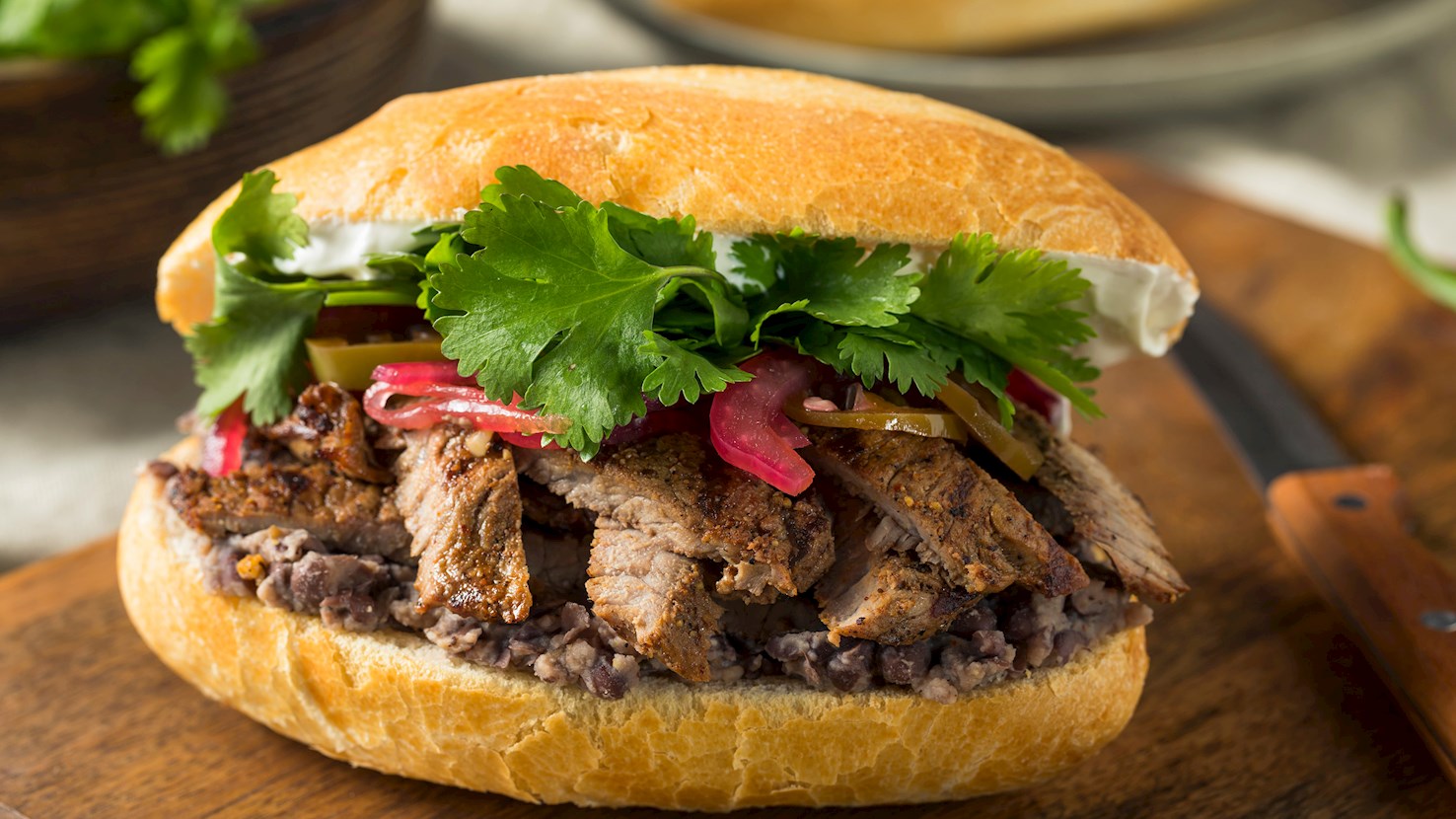
Mexican tortas are luscious traditional sandwiches filled with delicious, mostly authentic Mexican ingredients. They are a unique Mexican creation, considering they are served in bread rolls, an ingredient that is not so often associated with Mexico. There are two bread varieties usually incorporated in tortas, the traditional French influenced bolillos, and the similar round teleras, which are an authentic Mexican product from Puebla. The rolls are sliced horizontally, buttered, and stuffed with the most popular Mexican ingredients such as beans, avocados, ham, queso, jalapeños, and a myriad of other typical Mexican dishes like fried beef or chicken, shredded beef, roasted pork, and even tamales. Tortas are traditionally served cold, but in the 1960s, the hot, grill-heated varieties started to appear and soon became equally famous. There is not much known about the origin of this hearty sandwich, but it is believed that during the French colonization, French bakers introduced their tradition of baking bread to Mexicans, who modified it and created their popular varieties, which later became a staple of Mexican cuisine. The birthplace of the torta is usually associated with the city of Puebla, the place where traditional telera originated, but the location where they flourished was Mexico City. Although tortas have not been widely recognized outside of Mexico as tacos, burritos, and tortillas, they are a favorite meal eaten throughout the country. Tortas are usually sold at food stalls and small restaurants, popularly called torterias, widespread across Mexican cities. The variations and regionally influenced creations of tortas are endless. The most common ones are cubana, which usually combines at least four meat varieties and two types of cheese; pepito, made with marinated sliced steak; cochinita, made with slowly roasted pork; and agohada, a Guadalajara favorite made with pork and served in tomato sauce.
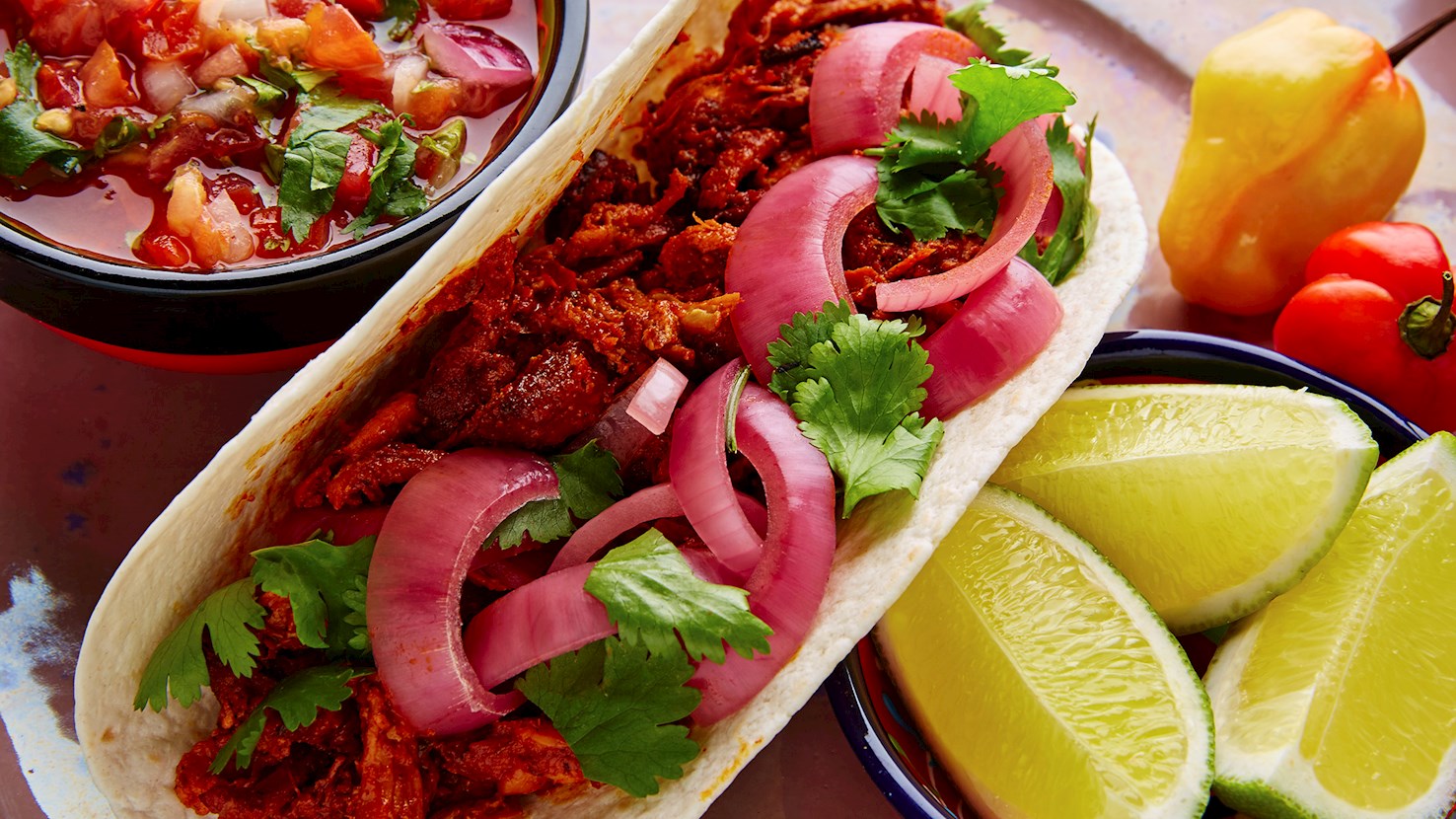
Cochinita pibil is a Mexican pork dish originating from Yucatan. Pork is marinated in a combination of annatto paste, bitter orange juice, and garlic. It is slowly baked and then shredded and served on tortillas, tacos, or on its own with shallots, pickled onions, salsa, and various roasted vegetables. Cochinita pibil is characterized by the red color of the meat, imparted by the annatto seeds from the marinade. Originally, pork was wrapped in banana leaves prior to baking, but today a foil or any other suitable wrapping can be used instead. Since cochinita means baby pig, and pibil means buried or underground, it acts as a proof that the original recipe used a whole suckling pig that was buried in a pit for roasting. This Mayan-influenced dish is most often served on weekends in many Mexican homes, usually as a Sunday family ritual.
TasteAtlas food rankings are based on the ratings of the TasteAtlas audience, with a series of mechanisms that recognize real users and that ignore bot,
nationalist or local patriotic ratings, and give additional value to the ratings of users that the system recognizes as knowledgeable.
TasteAtlas Rankings should not be seen as the final global conclusion about food. Their purpose is to promote excellent local foods,
instill pride in traditional dishes, and arouse curiosity about dishes you haven’t tried.



What People Say