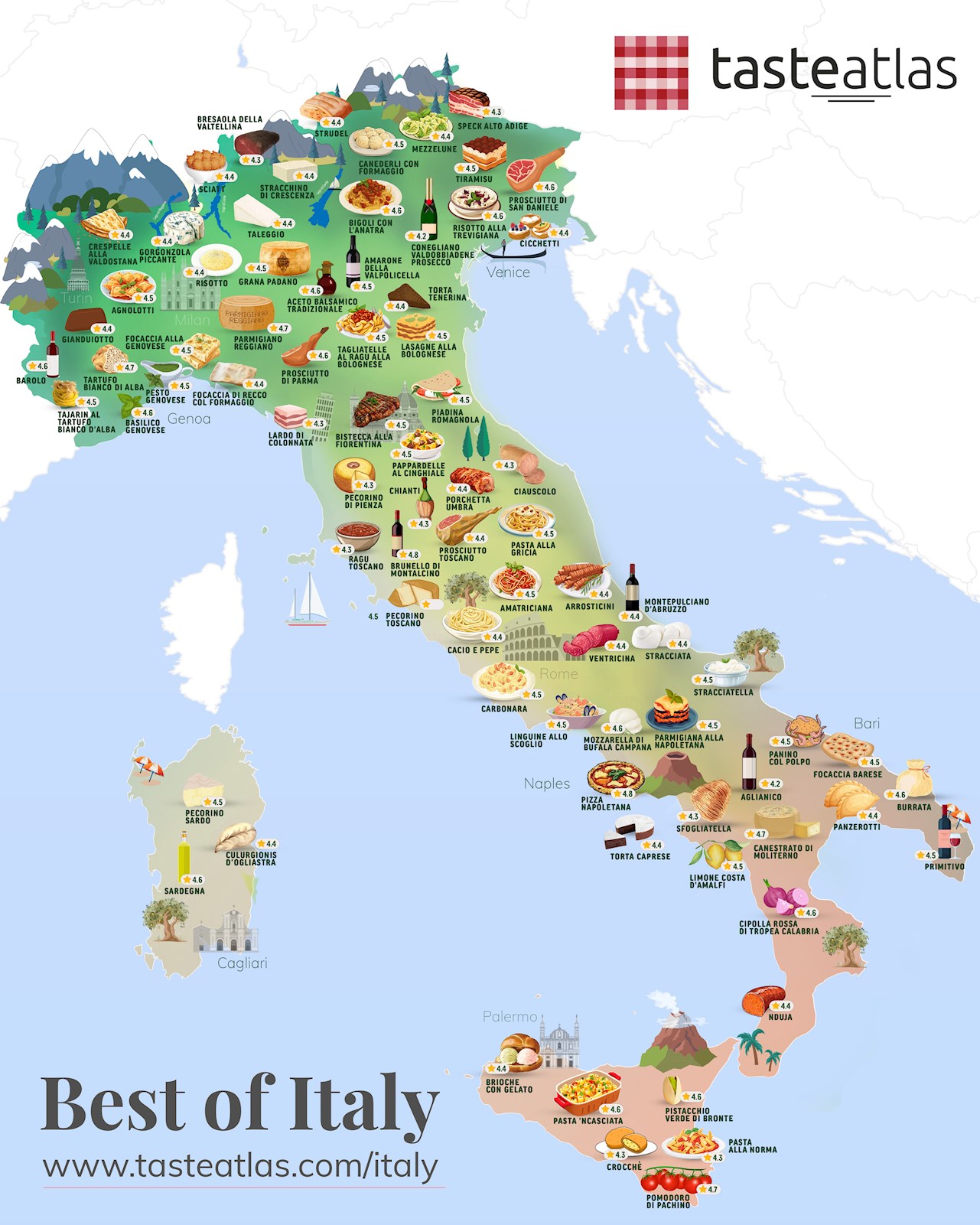
Italy is a paradise for food lovers, a country where every town, village, and region has its own iconic dish, secret recipes, and deeply rooted culinary traditions. From world-famous pastas and cheeses to hyper-local specialties known only to a handful of dedicated foodies, the Italian culinary landscape is as vast as it is delicious. While many travelers come for the classics—pizza in Naples, pasta in Rome, risotto in Milan—Italy’s true magic lies in the thousands of lesser-known dishes and ingredients that vary from one valley to the next.
Creating the ultimate Italian food itinerary is no easy feat, but if you truly want to experience the best flavors the country has to offer, we’d recommend dedicating at least three years to a full culinary road trip. This would allow time to savor the regional specialties at a semi-relaxed pace, explore local food markets, and visit the hidden trattorias that define each region. But we guess that’s not an option in real life.
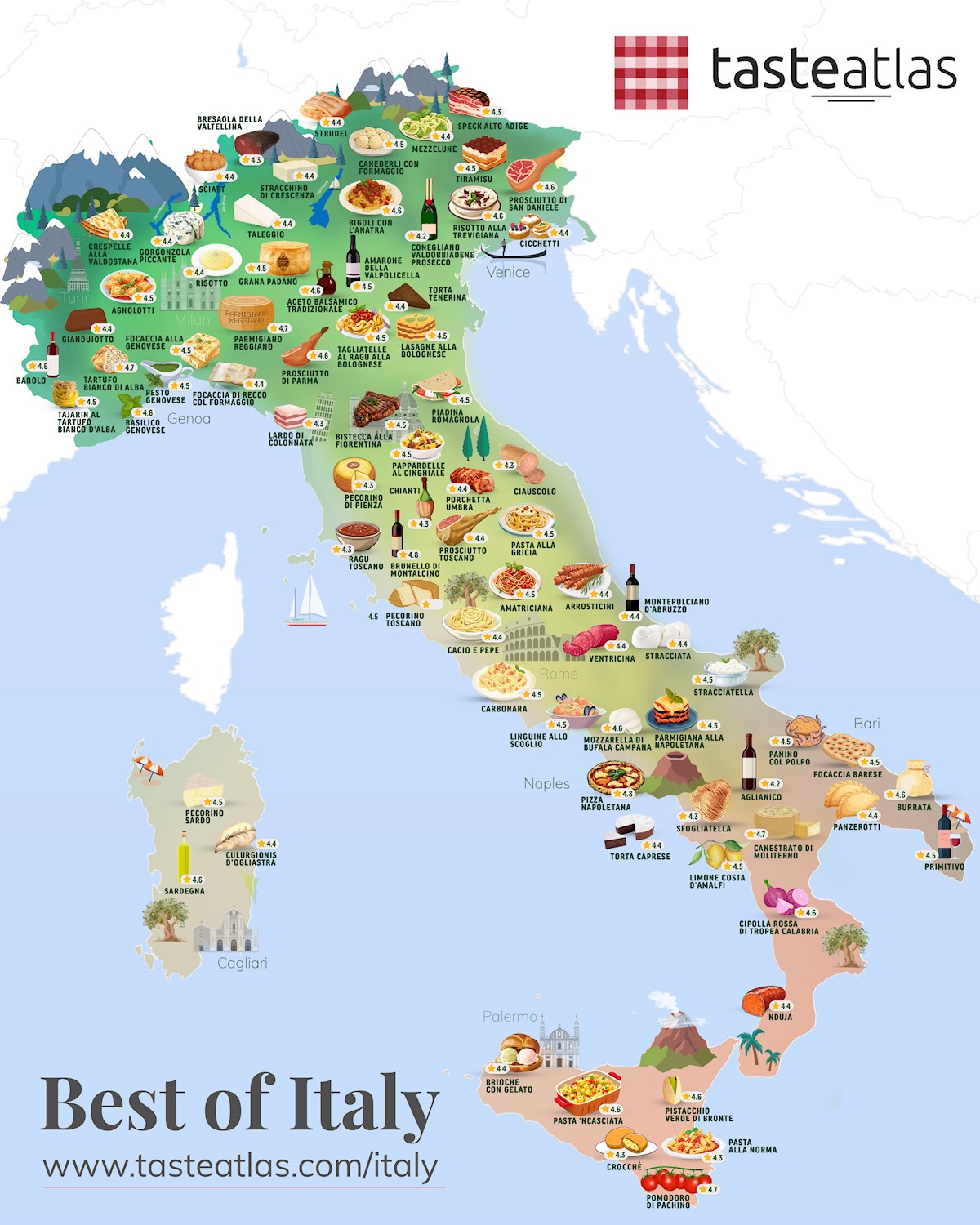
Of course, we acknowledge that Italians are passionate (and rightfully so) about their food, and we are fully aware that this list will spark countless debates. Every Italian has their own opinion on which dishes are the absolute best, which regional variations are superior, and which restaurant serves the most authentic version of a classic recipe. To all our Italian readers, we offer our deepest apologies in advance—we know you have at least a hundred objections already, but please understand that we were not blessed with being born Italian, nor can we magically fit every beloved dish into the limited space of 3,354,624 pixels available on the map.
With that said, this guide focuses on the best of the best—not the most famous nor the most loved in each village, but the highest-rated dishes and ingredients across Italy, based on TasteAtlas public rankings and expert reviews.
Whether you’re a first-time visitor or a seasoned Italophile, we guarantee that every dish and ingredient on this list is worth trying. Buon viaggio e buon appetito!
Friuli-Venezia Giulia
 Credits: shutterstock
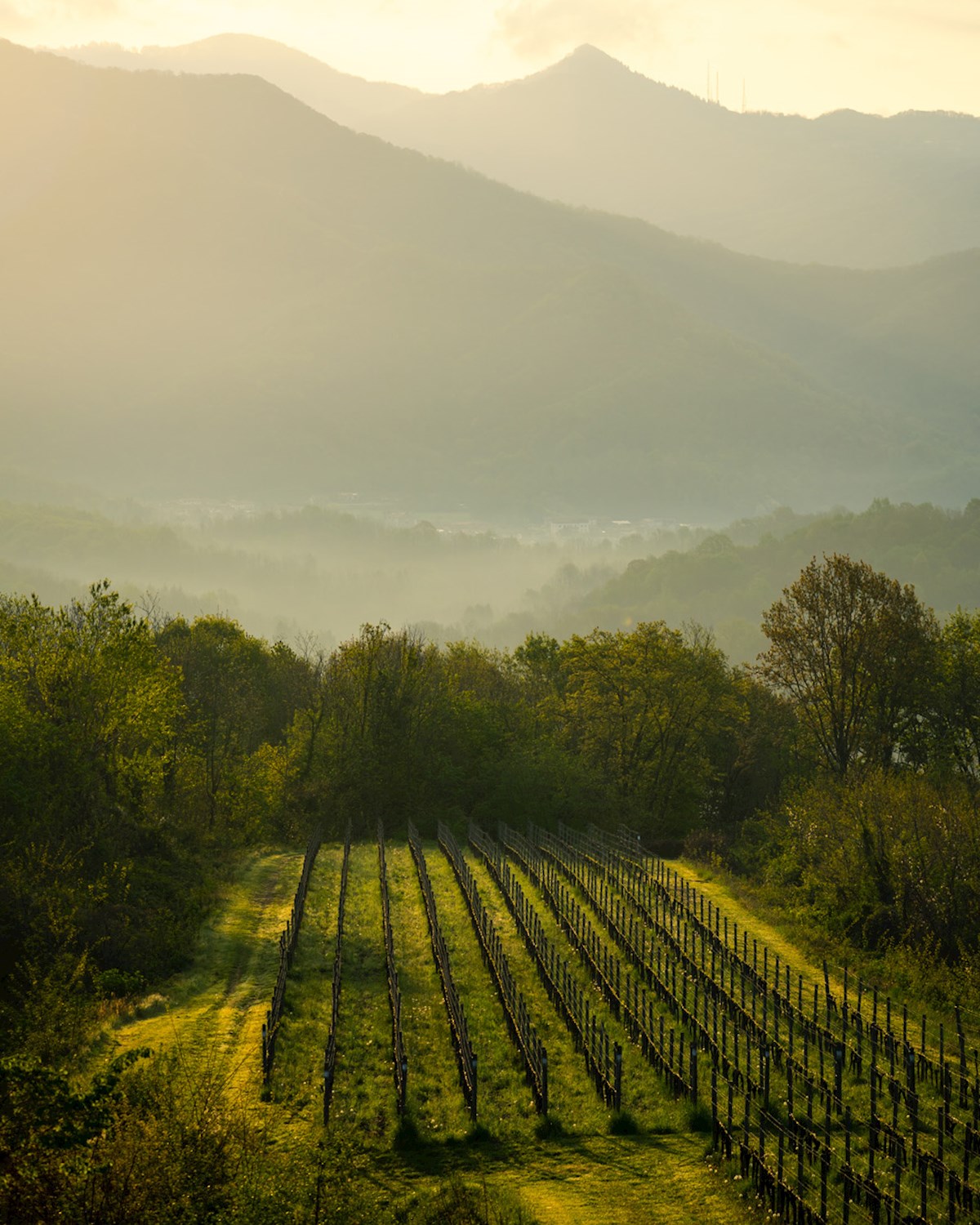
The crown jewel of this region is prosciutto di San Daniele (4.6), a delicate, sweet, and perfectly aged ham that rivals even the best Parma ham. Pair it with a glass of Teran wine for a true taste of Friuli. This region is also famous for its osmize, rustic farm taverns where you can taste homemade cheeses, cured meats, and local wines, as well as its historic Viennese-style cafés in Trieste.
Top-rated foods:
• Prosciutto di San Daniele (4.6)
• Tiramisu (4.5)
Unique to the region:
• osmize (family-run farmhouses offering homemade cheeses, cured meats, and wines, deeply rooted in Carso’s tradition)
• historic cafés in Trieste (elegant, century-old coffeehouses reflecting the city’s Austro-Hungarian heritage and deep coffee culture)
• Pestàt di Fagagna (a rare aromatic paste made with lard, herbs, and spices, traditionally used to flavor local dishes)
Top places to visit:
• Trieste (for its rich Austro-Hungarian culinary influence and historic cafés)
• San Daniele del Friuli (for its world-famous prosciutto)
• Cividale del Friuli (for medieval charm and local wine culture)
Best local food places:
• Lokanda Devetak 1870 (San Michele del Carso) – family restaurant with regional dishes and locally sourced ingredients
• Buffet da Pepi (Trieste) – historic eatery known for its pork specialties and traditional dishes
• Antica Trattoria Suban (Trieste) – 160 year old trattoria that preserves Trieste's culinary tradition
• Trattoria alla Luna (Gorizia) – traditional Gorizia dishes, prepared faithfully according to grandmother's recipes
• Antica Osteria Il Favri (San Giorgio della Richinvelda) – Friulian cuisine in a rustic setting with a beautiful garden
Learn more about Friuli-Venezia Giulia
From Cividale del Friuli, it takes about 2 hours (180 km) to reach Bolzano in Trentino-Alto Adige.
Trentino-Alto Adige
 Credits: Shutterstock
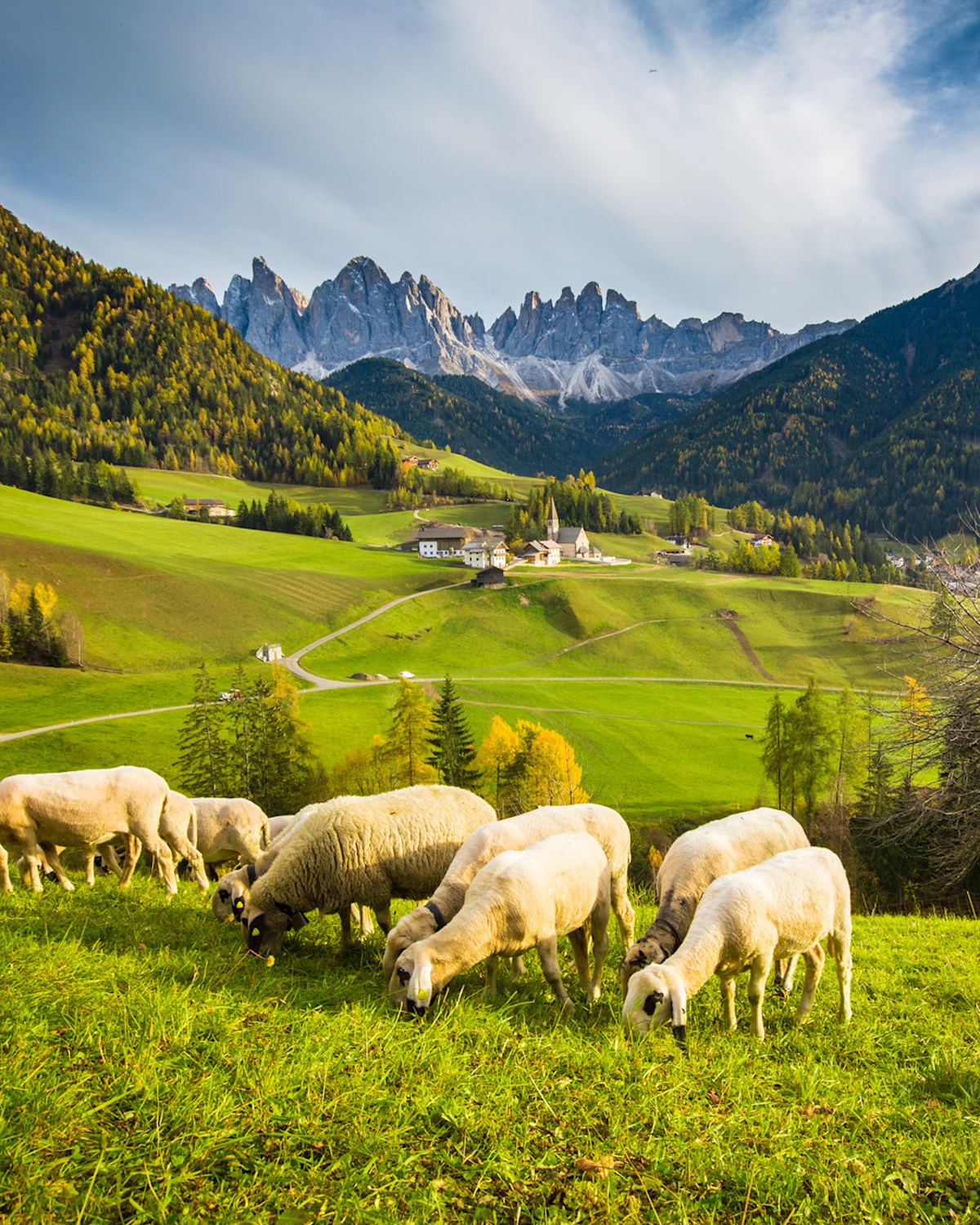
The undisputed highlight of this alpine region is Speck Alto Adige (4.3), a lightly smoked, dry-cured ham that embodies the perfect balance of spice and sweetness. Trentino - Alto Adige is famous for its rifugi (mountain huts), where hearty mountain dishes like canederli and polenta are served with breathtaking views of the Dolomites.
Top-rated foods:
• Canederli con formaggio (4.5)
• Mezzelune (4.4)
• Strudel (4.4)
• Speck Alto Adige (4.3)
Unique to the region:
• rifugi (remote mountain huts offering shelter and hearty local cuisine, essential to Alpine culture)
• Canederli (bread dumplings enriched with speck, cheese, or herbs, a hearty mountain dish)
• Vino Santo Trentino (a rare, sweet wine made from dried Nosiola grapes, aged for years in small barrels)
Top places to visit:
• Bolzano (for its fusion of Italian and Austrian cuisine and great markets)
• Merano (for its spa culture and wine region)
• Val di Fassa (for traditional Ladin cuisine and mountain dining)
Best authentic food places (based on TasteAtlas and other sources):
• Lerchner's in Runggen (St. Lorenzen) – traditional South Tyrolean cuisine with a focus on sustainability
• Gasthaus Lamm (St. Martin in Passeier) – well-rated for authentic South Tyrolean dishes
• Pretzhof (Pfitsch) – rustic restaurant that offers unique farm-to-table dining experience
• Ristorante Durnwald (Durna in Selva) – village inn with seasonal, authentic dishes rooted in the Slow Food philosophy
Learn more about Trentino-Alto Adige
From Val di Fassa, it takes about 2 hours (150 km) to reach Verona in Veneto.
Veneto
 Credits: shutterstock
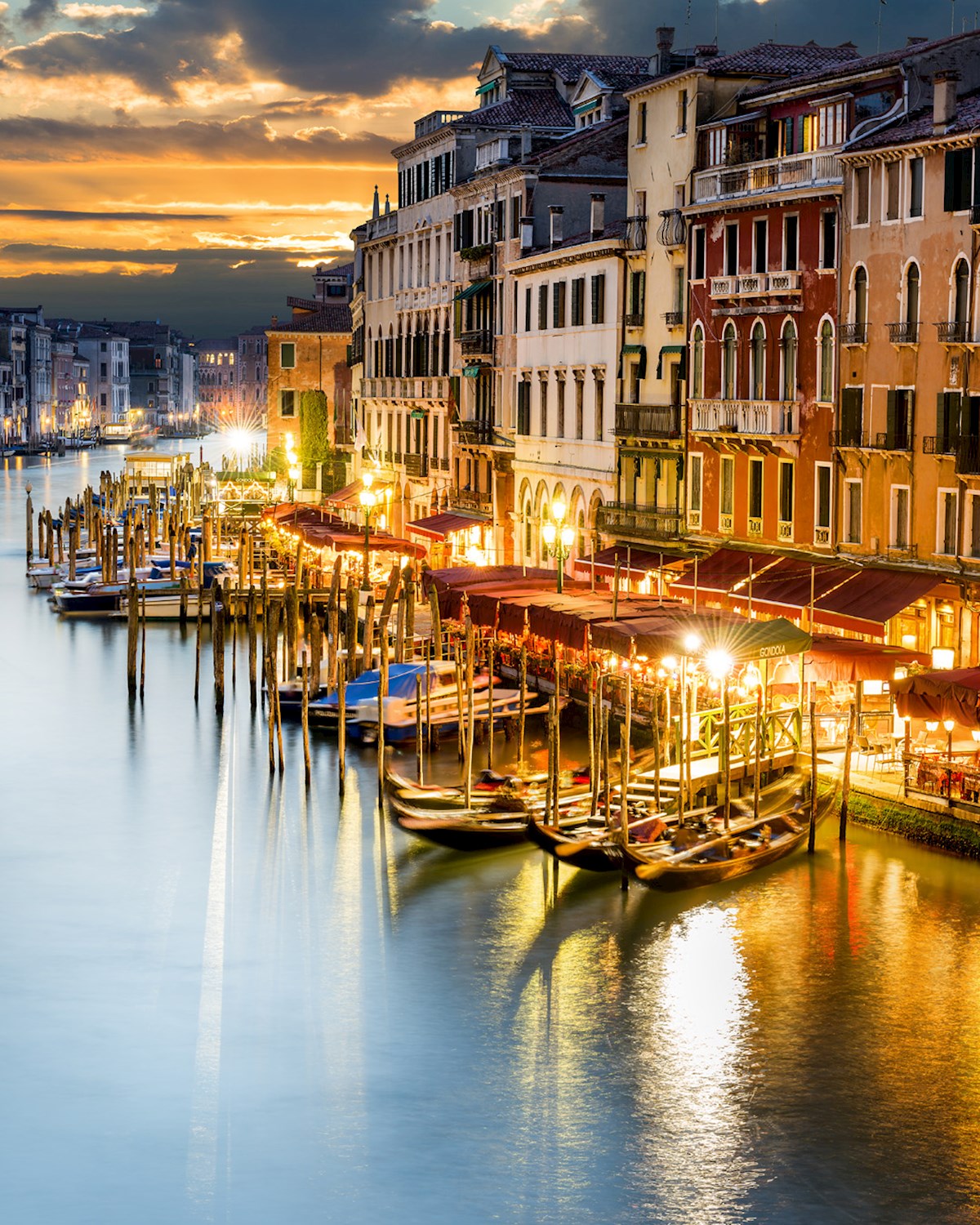
The king of Veneto’s cuisine is bigoli con l'anatra (4.6), a rich duck ragù served with thick, rustic bigoli pasta. Veneto is also famous for cicchetti bars in Venice, where small bites are paired with local wines and spritz, and the legendary Amarone della Valpolicella wine estates.
Top-rated foods and beverages:
• Bigoli con l'anatra (4.6)
• Risotto alla Trevigiana (4.6)
• Amarone della Valpolicella (4.5)
• Cicchetti (4.4)
• Conegliano Valdobbiadene Prosecco (4.2)
Unique to the region:
• Baccalà mantecato (creamy, whipped salt cod spread, a Venetian classic with Portuguese influences)
• bàcari (small, traditional Venetian wine bars serving cicchetti alongside local wines and spritzes)
• Prosecco Hills (UNESCO-listed vineyard landscapes producing Italy’s most famous sparkling wine)
Top places to visit:
• Venice (for its cicchetti and seafood markets)
• Verona (for its historic food traditions and Valpolicella wines)
• Valpolicella (for Amarone wine estates and vineyard dining)
Best authentic food places (based on TasteAtlas and other sources):
• Bacareto da Lele (Venice) – local bacaro renowned for its affordable and authentic Venetian panini
• Cantina Do Spade (Venice) – iconic spot for traditional Venetian cuisine, especially cicchetti
• Antica Trattoria Al Bosco (Saonara) – classic eatery with authentic regional specialties
• Antica Bottega del Vino (Verona) – historic wine bar with an outstanding Amarone selection
• Osteria Madonnetta (Marostica) - iconic osteria serving regional specialties, accompanied by a selection of local wines
From Valpolicella, it takes about 1 hour (100 km) to reach Milan in Lombardy.
Lombardy
 Credits: shutterstock
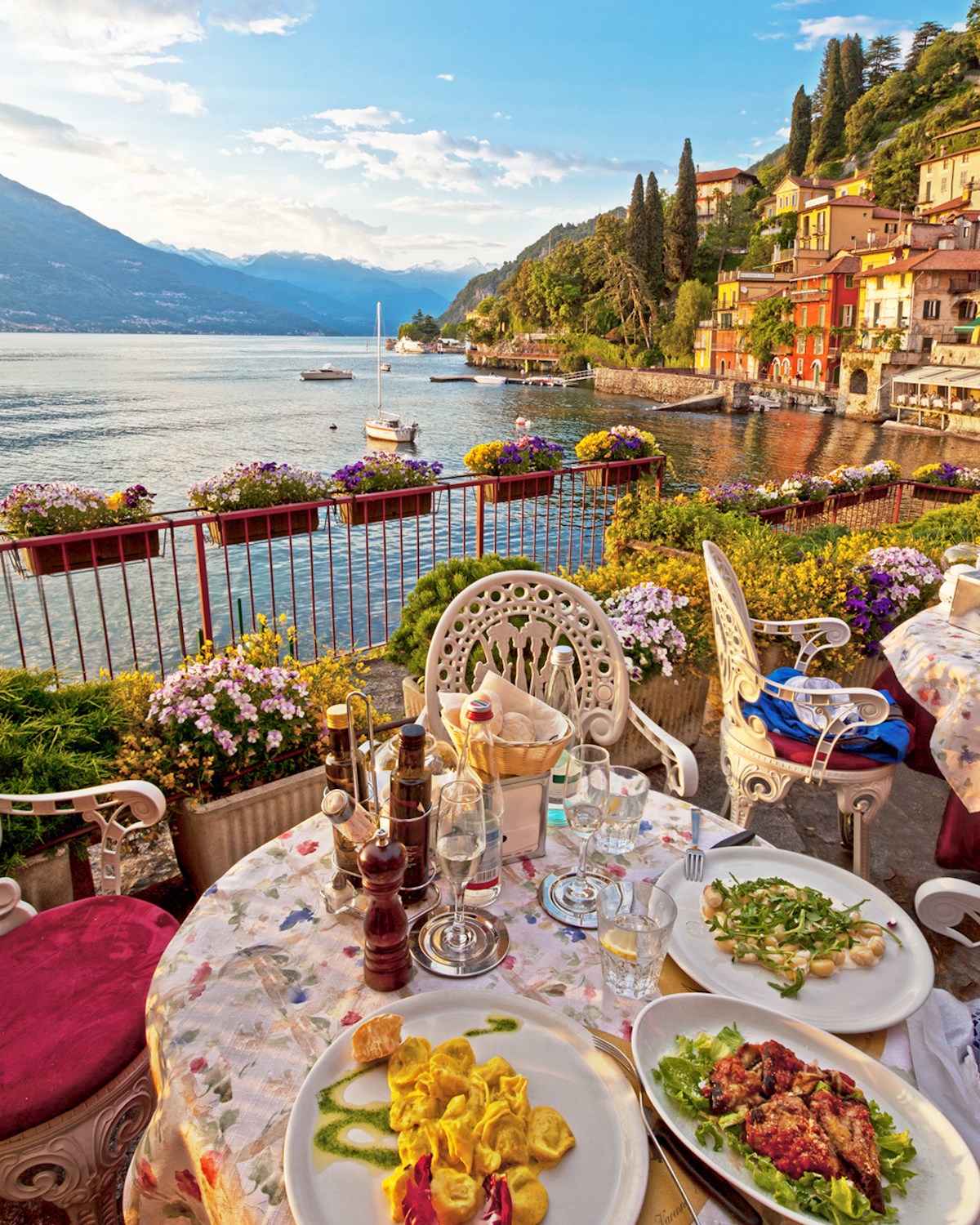
One may say that Lombardy is risotto (4.4), a creamy dish that embodies the elegance of the regional cuisine. Lombardy is also famous for its aperitivo culture in Milan, where locals gather before dinner to enjoy cocktails and small bites, as well as its cheese production in the Alpine areas, including Taleggio and Gorgonzola.
Top-rated foods:
• Grana Padano (4.5)
• Risotto (4.4)
• Taleggio (4.4)
• Gorgonzola piccante (4.4)
• Sciatt (4.4)
• Stracchino di Crescenza (4.4)
• Bresaola della Valtellina (4.3)
Unique to the region:
• Bitto Storico (a rare, long-aged Alpine cheese, historically produced by nomadic shepherds)
• Panettone (the world-famous Milanese Christmas cake, made with a slow-rising dough for an airy texture)
• Mostarda di Cremona (a unique condiment of candied fruit in mustard syrup, pairing perfectly with meats and cheeses)
Top places to visit:
• Milan (for its vibrant aperitivo culture and high-end dining)
• Lake Como (for scenic lakefront restaurants and local fish dishes)
• Valtellina (for mountain cuisine and world-class cheeses)
Best authentic food places (based on TasteAtlas and other sources):
• Antica Trattoria della Pesa (Milan) – historic restaurant serving ossobuco and risotto
• Trattoria Trippa (Milan) – trattoria renowned for its signature dishes with tripe and bone marrow
• Caffè La Crepa (Isola Dovarese) - regional dishes, including charcuterie, fresh pasta, and fish from the lake
• Trattoria Dell'Alba (Piadena) – trattoria that proudly preserved the warm simplicity of the family recipes
• Hostaria Viola (Castiglione di Stiviere) – ancient hosteria that serves traditional dishes of the Italian province Mantua
From Milan, it takes about 2 hours (180 km) to reach Aosta in Aosta Valley.
Aosta Valley
 Credits: shutterstock
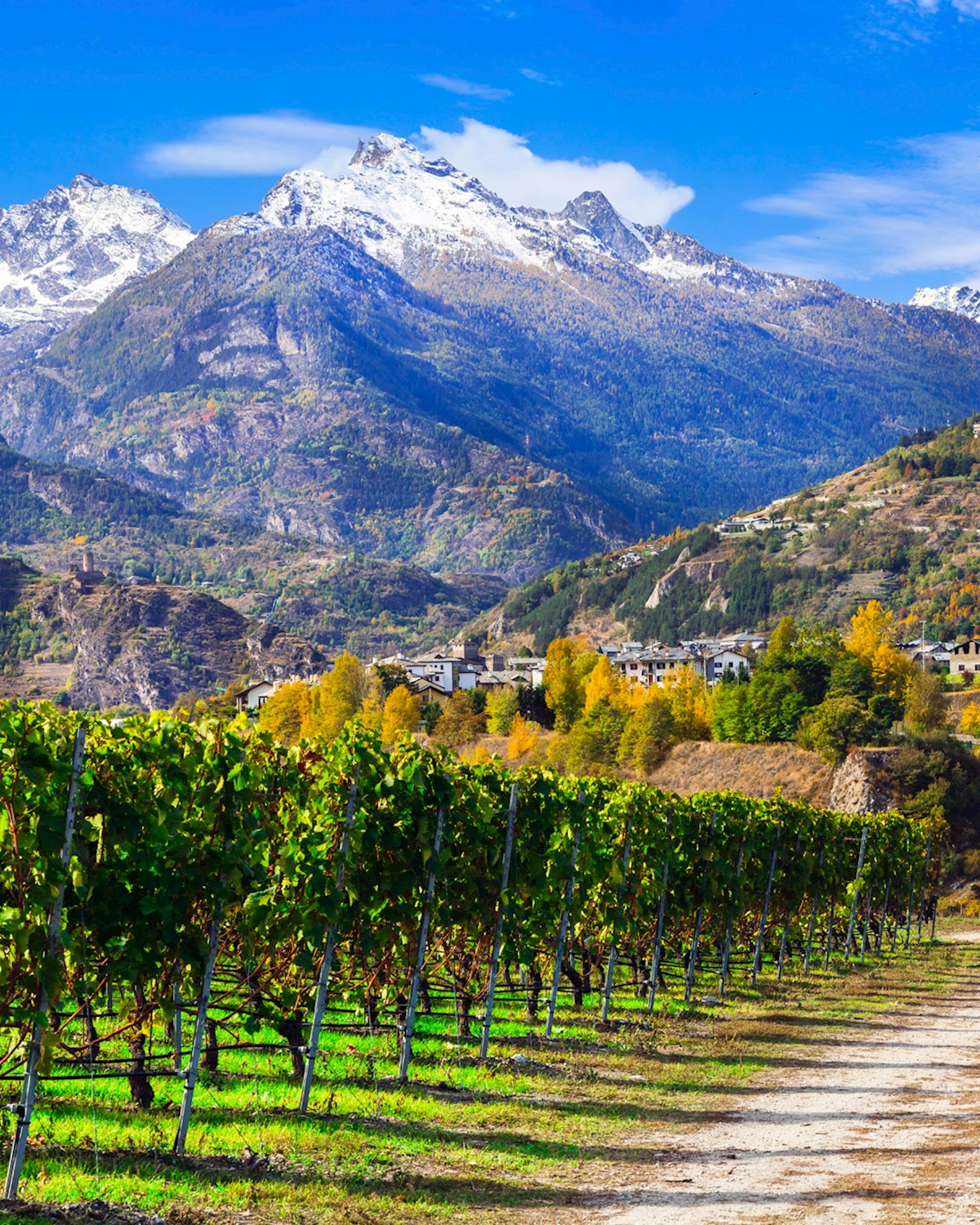
The hidden gem of northwestern Italy, Aosta Valley is known for crespelle alla Valdostana (4.4), delicate savory crêpes layered with melted Fontina and a touch of nutmeg, embodying the region’s alpine comfort. This mountain haven is also known for its hearty polenta-based dishes and air-cured meats like mocetta, staples that sustain locals through long winters. Beyond the table, Aosta Valley is home to Italy’s highest-altitude vineyards, where crisp whites like Petite Arvine and bold reds like Fumin thrive against the dramatic backdrop of the Alps.
Top-rated food:
• Crespelle alla Valdostana (4.4)
Unique to the region:
• Fontina DOP (a rich, nutty alpine cheese, the foundation of many traditional Aostan dishes)
• Fonduta alla Valdostana (a creamy melted cheese dish made with Fontina, eggs, and milk, served with bread or polenta)
• high-altitude vineyards (Europe’s highest vineyards, producing rare wines like Blanc de Morgex et de La Salle)
Top places to visit:
• Aosta (for its cozy taverns serving fonduta and crespelle alla Valdostana)
• Cogne (for its traditional seuppa à la Vapelenentse and mountain honey)
• Morgex (for its high-altitude Blanc de Morgex et de La Salle wine)
Best authentic food places (based on TasteAtlas and other sources):
• Osteria da Nando (Aosta) – osteria that offers traditional Valdotainian cuisine
• Osteria dell'Oca (Aosta) – known for their traditional fonduta and carbonade
• Trattoria Omens (Verrès) – 50-year old trattoria that uses high-quality local ingredients and changes the menu seasonally
From Aosta, it takes about 1.5 hours (120 km) to reach Turin in Piedmont.
Piedmont
 Credits: shutterstock
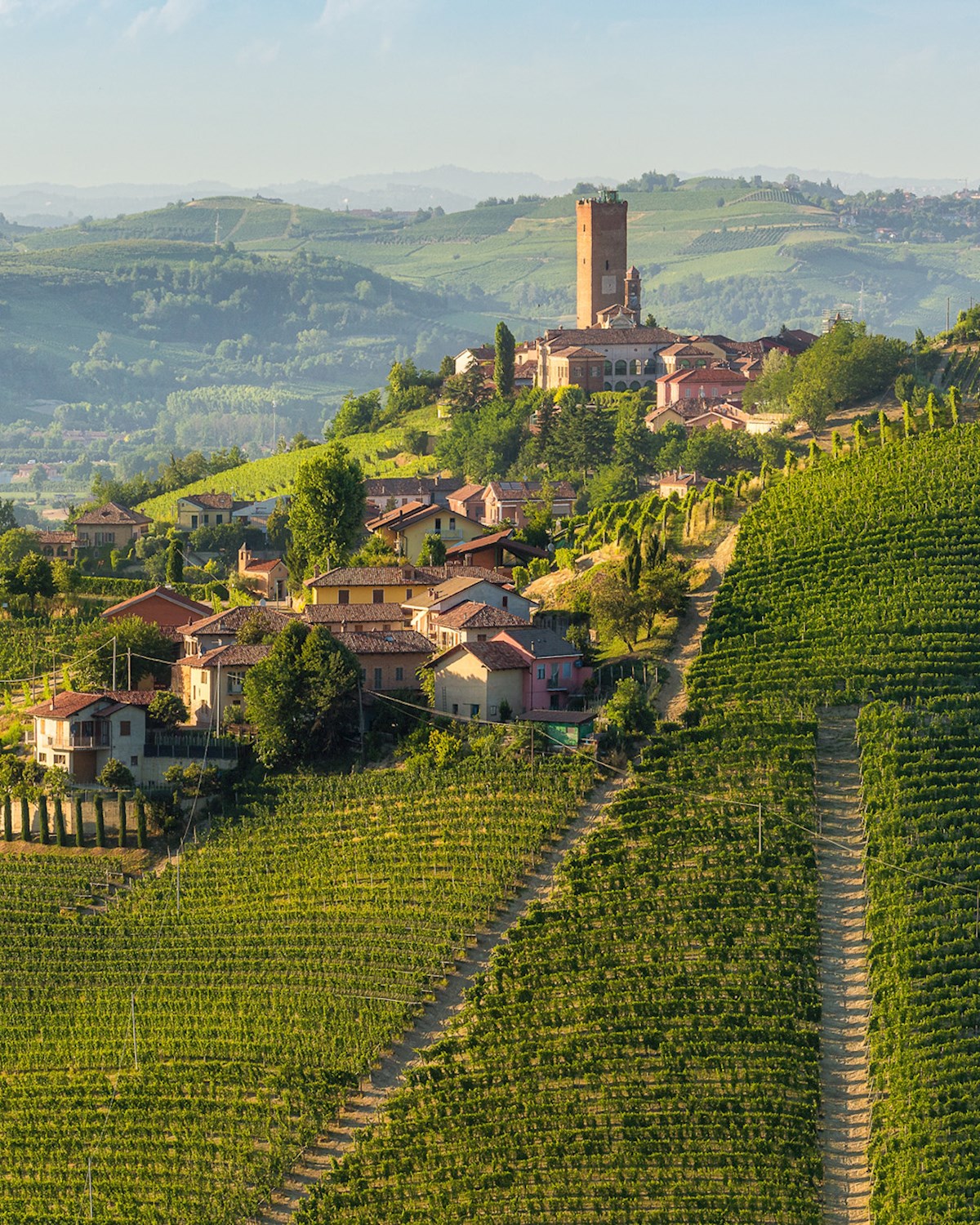
The undisputed king of Piedmontese cuisine is tajarin al tartufo bianco (4.5), a delicate egg pasta served with fragrant white truffle shavings. Piedmont is also renowned for its Barolo wine, known as the "King of Wines," and its legendary white truffle fairs in Alba.
Top-rated foods and beverages:
• Tartufo bianco d'Alba (4.7)
• Barolo (4.6)
• Tajarin al tartufo bianco d'Alba (4.5)
• Agnolotti (4.5)
• Gianduiotto (4.4)
Unique to the region:
• historic caffès of Turin (elegant 19th-century coffee houses where intellectuals, artists, and politicians once gathered over bicerin and fine pastries)
• Gianduja (a silky blend of chocolate and hazelnuts, the sweet heart of Piedmont’s confectionery tradition)
• Langhe Hills (a UNESCO-listed landscape of rolling vineyards, medieval villages, and culinary heritage, home to Barolo and Barbaresco wines)
Top places to visit:
• Turin (for its elegant cafés and chocolate culture)
• Alba (for the famous white truffle festival)
• Barolo (for prestigious wineries and truffle-hunting experiences)
Best authentic food places (based on TasteAtlas and other sources):
• Ristorante Madonna della Neve (Cessole) – features simple dishes prepared with high-quality local ingredients
• Trattoria della Posta (Monforte d'Alba) – traditional dishes with local wines
• Osteria del Borgo (Carrù) – classic osteria renowned for its bollito misto
• Battaglino (Bra) – restaurant that has been serving traditional Piedmontese cuisine since 1919
• Caffè Mulassano (Turin) – historic café famous for gianduia and tramezzini
From Barolo, it takes about 2.5 hours (180 km) to reach Genoa in Liguria.
Liguria
 Credits: shutterstock
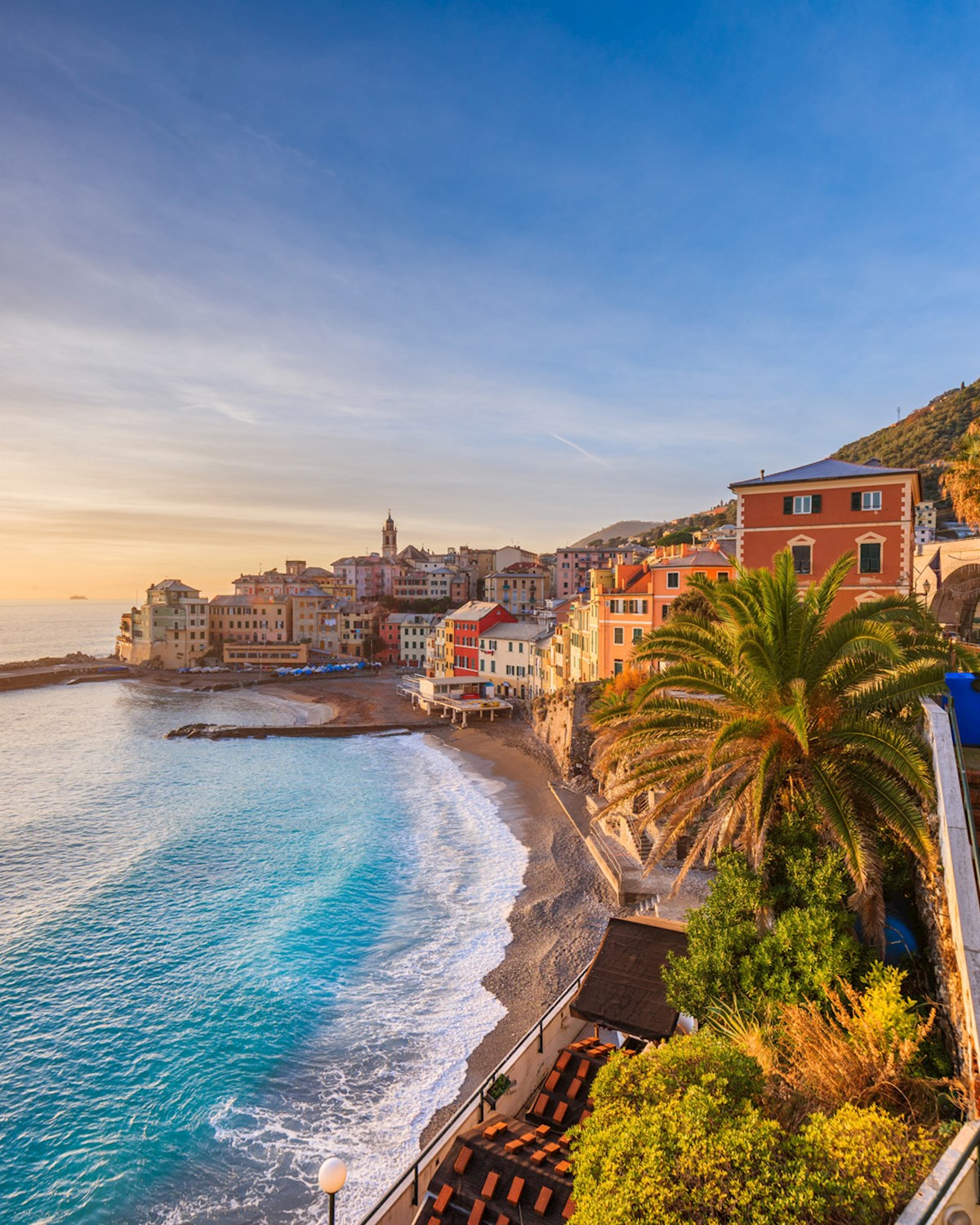
When talking about Liguria, first thing that comes to mind is pesto Genovese (4.5), a fragrant basil sauce blended with pine nuts, garlic, Parmesan, and olive oil. Liguria is also famous for its seaside villages serving fresh seafood, as well as focaccia variations that range from soft to crispy and cheese-filled.
Top-rated foods:
• Basilico Genovese (4.6)
• Pesto Genovese (4.5)
• Focaccia alla Genovese (4.5)
• Focaccia di Recco col formaggio (4.4)
Unique to the region:
• Farinata (a golden, crispy chickpea pancake baked in wood-fired ovens, a street food favorite)
• Trofie al pesto (twisted Ligurian pasta perfectly shaped to hold rich, aromatic pesto)
• Cinque Terre vineyards (steep coastal terraces where heroic viticulture produces unique wines like Bosco and Vermentino)
Top places to visit:
• Genoa (for its vibrant port culture and street food scene)
• Cinque Terre (for seafood dishes and breathtaking views)
• Portofino (for seaside dining and Ligurian specialties)
Best authentic food places (based on TasteAtlas and other sources):
• Antica Osteria di Vico Palla (Genoa) – historic tavern serving traditional Ligurian cuisine
• Trattoria da Maria (Genoa) – local favorite known for its pesto dishes
• Sa' Pesta (Genoa) – trattoria opened in 1889, offering such classics as farinate and stuffed anchovies
• Baccicin dü Carü (Fado Basso) – osteria that highlights strong local and family traditions by reviving old recipes
• La Brinca (Ne) – transformed farmhouse offers seasonal cuisine accompanied by over 1000 wine labels stored in the cellar
From Portofino, it takes about 3 hours (250 km) to reach Bologna in Emilia-Romagna.
Emilia-Romagna
 Credits: shutterstock
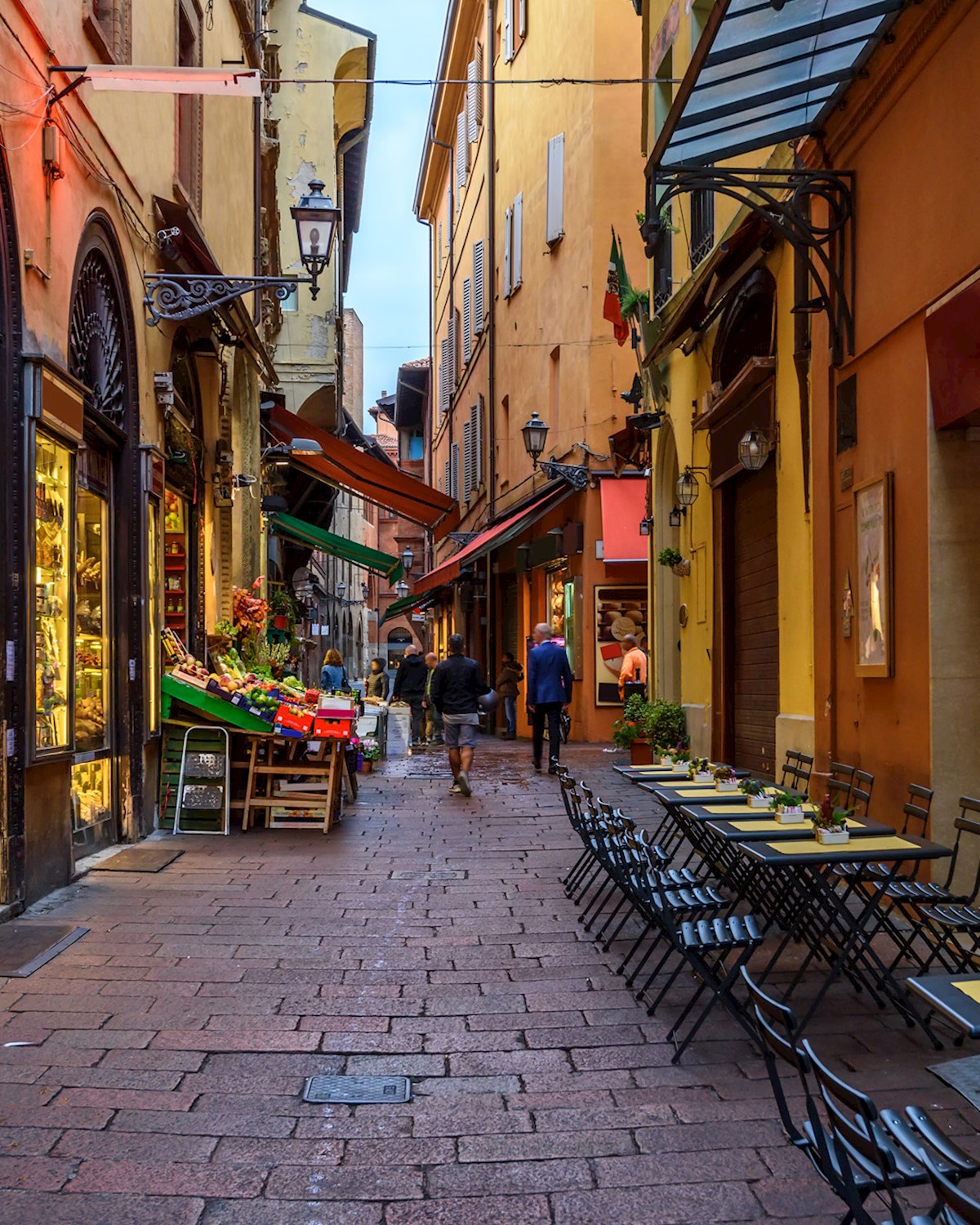
The undisputed king of Emilia-Romagna’s cuisine is Parmigiano Reggiano (4.7), the world-famous hard cheese that has been crafted for centuries. Emilia-Romagna is also home to handmade pasta traditions and the production of world-renowned Prosciutto di Parma and Aceto Balsamico di Modena.
Top-rated foods:
• Parmigiano Reggiano (4.7)
• Prosciutto di Parma (4.6)
• Aceto Balsamico Tradizionale di Modena (4.6)
• Tagliatelle al ragù alla Bolognese (4.5)
• Lasagne alla Bolognese (4.5)
• Piadina Romagnola (4.5)
• Torta Tenerina (4.4)
Unique to the region:
• Tortellini in brodo (small, hand-shaped pasta filled with meat and served in a rich broth, a comforting holiday classic)
• Lambrusco wine (a lively, slightly sparkling red wine, ranging from dry to sweet, deeply rooted in Emilia-Romagna’s vineyards)
• Gnocco fritto (golden, pillowy fried dough served with cured meats and cheeses, a staple of Modenese aperitivo culture)
Top places to visit:
• Bologna (for traditional pasta-making and vibrant food markets)
• Parma (for world-class ham and cheese)
• Modena (for aged balsamic vinegar and regional dining)
Best authentic food places (based on TasteAtlas and other sources):
• Trattoria Anna Maria (Bologna) – a legendary spot for handmade pasta
• Osteria dell' Orsa (Bologna) – osteria known for its tagliatelle al ragù alla Bolognese
• Trattoria Antichi Sapori (Gaione) – located near Parma, this trattoria focuses on regional specialties
• Osteria di Rubbiara (Nonantola) – regional dishes made strictly from the traditional recipes
• Amerigo dal 1934 (Savigno) – rustic eatery characterized by the simplicity of its dishes and authenticity of its ingredients
Learn more about Emilia-Romagna
From Modena, it takes about 2 hours (170 km) to reach Florence in Tuscany.
Tuscany
 Credits: Shutterstock
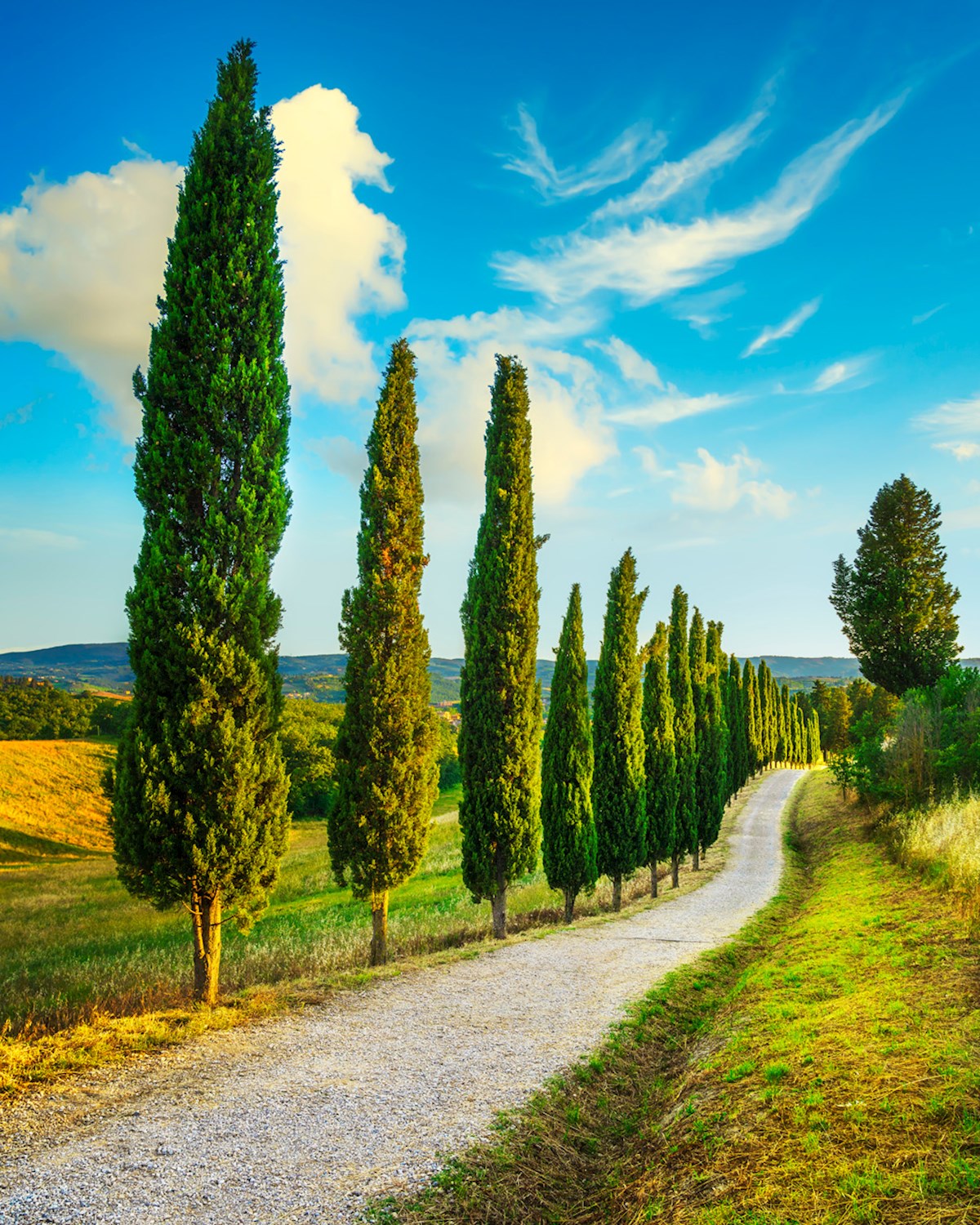
Tuscany is known for its meats, and none other embodies that like bistecca alla Fiorentina (4.5), a massive, perfectly grilled T-bone steak. The region is also famous for its Chianti wine routes, olive groves, and rustic farm stays offering authentic Tuscan cuisine.
Top-rated foods and beverages:
• Brunello di Montalcino (4.8)
• Bistecca alla Fiorentina (4.5)
• Pecorino Toscano (4.5)
• Pappardelle al cinghiale (4.5)
• Prosciutto Toscano (4.4)
• Chianti (4.3)
• Lardo di Colonnata (4.3)
• Ragù Toscano (4.3)
• Pecorino di Pienza (4.3)
Unique to the region:
• Ribollita (a peasant soup made with bread, black cabbage, and beans, reflecting Tuscany’s cucina povera)
• Chianti Classico DOP olive oil (a bright, peppery extra virgin olive oil, a cornerstone of Tuscan cooking)
• Chianina cattle (one of the world’s oldest and largest cattle breeds, responsible for the legendary bistecca alla Fiorentina)
Top places to visit:
• Florence (for its historical food markets and traditional trattorias)
• Chianti (for its renowned vineyards and wineries)
• Val d'Orcia (for scenic landscapes and agritourism experiences)
Best authentic food places (based on TasteAtlas and other sources):
• Trattoria Mario (Florence) – famous for its bistecca alla Fiorentina
• Osteria Vini e Vecchi Sapori (Florence) – small family-run eatery with traditional Tuscan dishes
• Antica Macelleria Cecchini (Panzano in Chianti) – a legendary butcher shop serving incredible steaks
• La Taverna di San Giuseppe (Siena) – authentic Tuscan dining in a historic setting
• Buca di Sant'Antonio (Lucca) – dating back to 1782, Buca di Sant'Antonio serves up traditional dishes of the Lucca cuisine
From Val d'Orcia, it takes about 2.5 hours (200 km) to reach Rome in Lazio.
Umbria
 Credits: shutterstock
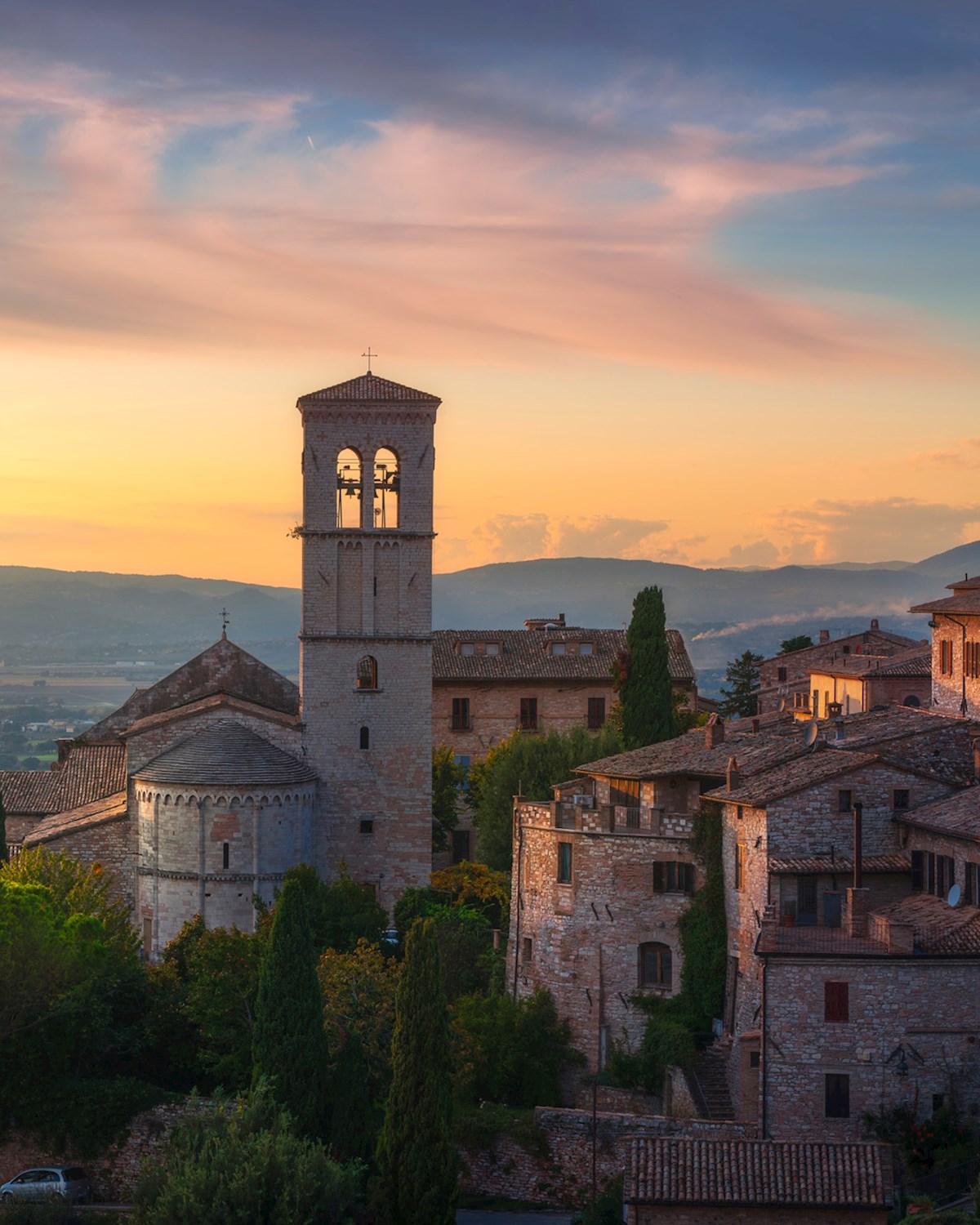
The highlight of Umbrian cuisine is porchetta Umbra (4.4), a succulent, herb-infused roasted pork with crispy crackling. Umbria is known for its black truffles, lentil-based dishes from Castelluccio, and its hearty rustic stews.
Top-rated food:
Unique to the region:
• Tartufo Nero di Norcia (one of Italy’s finest black truffles, intensely aromatic and prized worldwide)
• Frantoio culture (Umbria’s tradition of producing some of Italy’s finest extra virgin olive oils, celebrated in small artisanal mills)
• Lentils of Castelluccio (tiny, flavorful lentils grown in the stunning Sibillini mountains)
Top places to visit:
• Perugia (for its chocolate culture and historic food markets)
• Norcia (for black truffles and prosciutto production)
• Montefalco (for its Sagrantino wine and medieval charm)
Best authentic food places:
• Il Tempio del Gusto (Spoleto) – highly regarded for its truffle dishes
• Trattoria del Moro (Orvieto) – traditional Umbrian cuisine with a focus on game meats
• Stella Ristorante Vineria e Locanda (Casaglia) – famous for classic Umbrian dishes and wine pairings
• Trattoria Bruno Coppetta (Città della Pieve) – traditional Umbrian cuisine served in generous portions
From Norcia, it takes about 2 hours (160 km) to reach Ancona in Marche.
Marche
 Credits: shutterstock
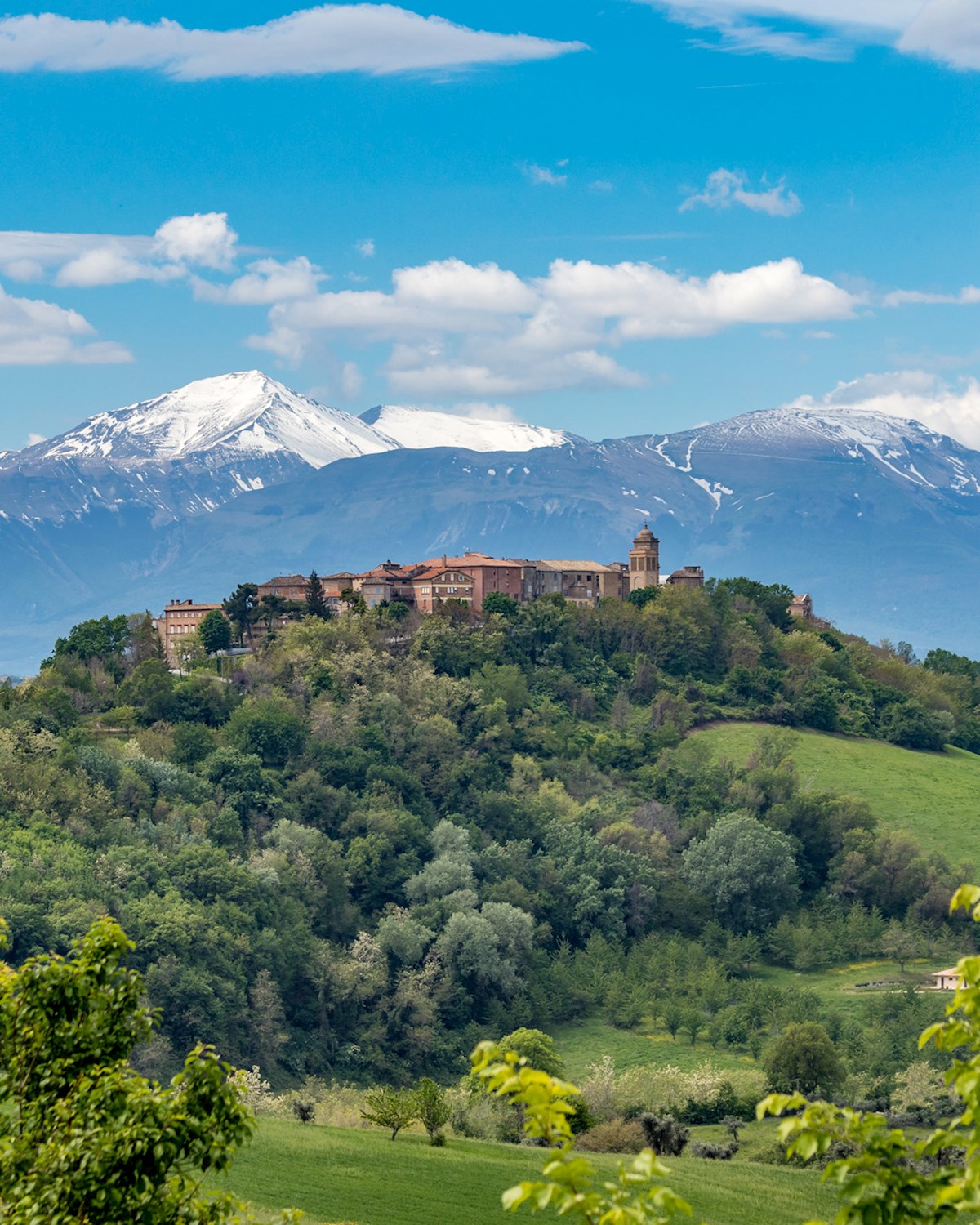
One of the most prized foods of Marche is Ciauscolo (4.3), a soft, spreadable salami with a smoky, garlicky depth. The region is also famous for olive Ascolane, brodetto fish stew, Vincisgrassi lasagna, and Verdicchio white wine.
Top-rated food:
Unique to the region:
• Olive Ascolane (stuffed and fried green olives, a must-try street food from Ascoli Piceno)
• Brodetto di pesce (a rich Adriatic seafood stew, varying from town to town along the coast)
• Vincisgrassi (a luxurious baked lasagna, layered with meat ragù and béchamel, a specialty of Macerata)
Top places to visit:
• Ancona (for its seafood and Adriatic cuisine)
• Ascoli Piceno (for its famous fried olives and Renaissance squares)
• Urbino (for its Renaissance history and local delicacies)
Best authentic food places:
• Ristorante Burro & Alici (Marotta) – renowned for preparing meals from the fresh catch of the day
• Trattoria Vino e Cibo (Senigallia) – offers authentic seafood dishes in an intimate setting
From Ascoli Piceno, it takes about 2.5 hours (210 km) to reach Rome in Lazio.
Lazio
 Credits: shutterstock
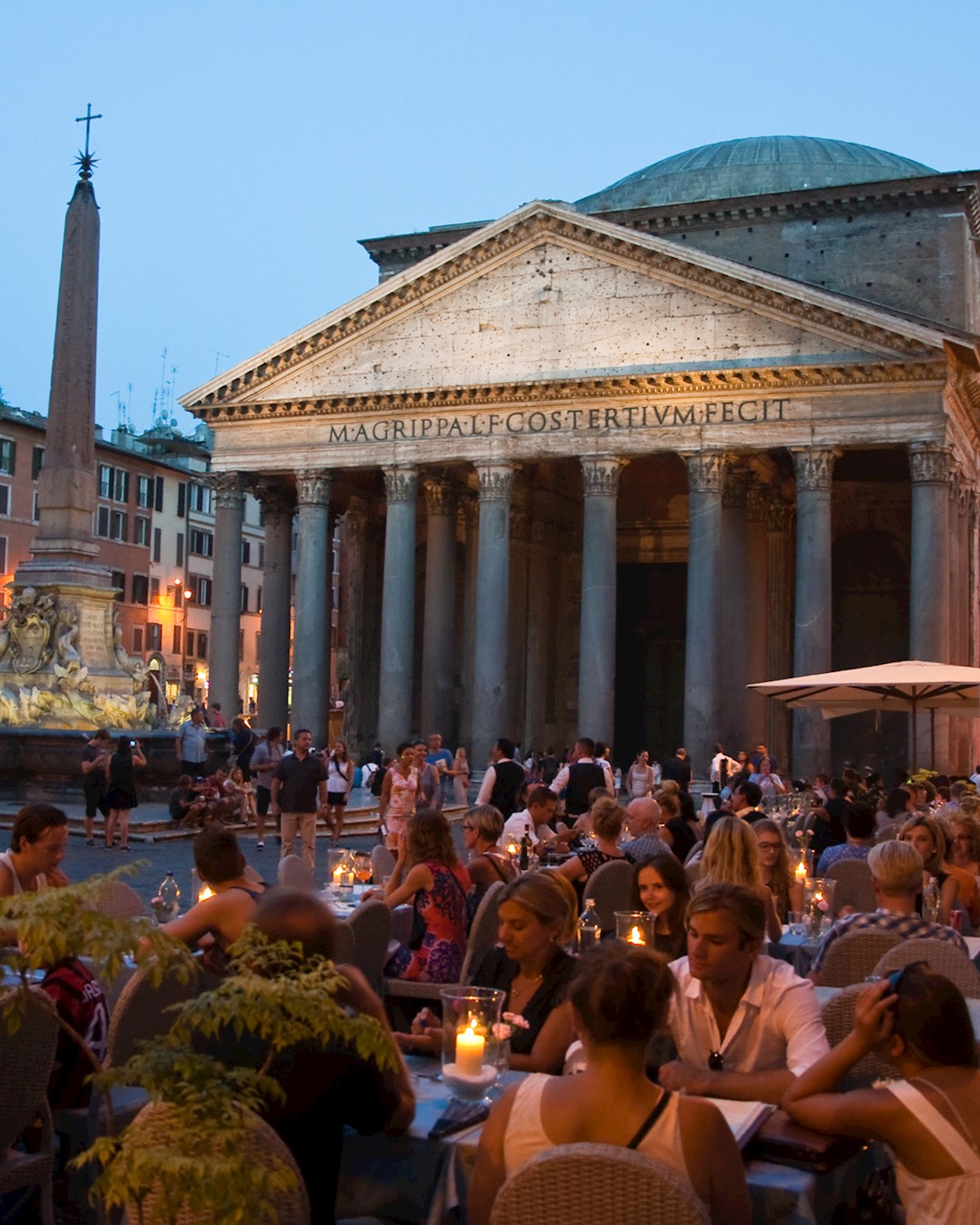
The most iconic dish of Lazio is carbonara (4.5), a creamy pasta made with egg, Pecorino Romano, guanciale, and black pepper. Lazio is also famous for its cacio e pepe, amatriciana sauce, and Jewish-Roman fried artichokes.
Top-rated foods:
• Carbonara (4.5)
• Amatriciana (4.5)
• Pasta alla Gricia (4.5)
• Cacio e pepe (4.4)
Unique to the region:
• Carciofi alla Giudia (deep-fried Jewish-style artichokes, crispy and golden, a specialty of Rome’s Jewish quarter)
• Supplì (Roman-style rice croquettes with a molten mozzarella center, a beloved street food)
• Fountains & piazzas culture (Rome’s vibrant street life is intertwined with food, where locals and visitors enjoy coffee, gelato, and aperitivi in stunning historical settings)
Top places to visit:
• Rome (for its unparalleled pasta traditions and street food)
• Civita di Bagnoregio (for breathtaking landscapes and local delicacies)
• Castelli Romani (for Frascati wine and rustic trattorias)
Best authentic food places:
• Roscioli (Rome) – renowned for its carbonara and extensive cheese selection
• Trattoria Vecchia Roma (Rome) – excellent for classic Roman dishes like amatriciana and carbonara, served in a rustic, authentic setting
• Felice a Testaccio (Rome) – legendary trattoria especially praised for cacio e pepe
• Nannarella (Rome) – offers traditional dishes using carefully selected ingredients
• Trattoria del Cimino da Colombo dal 1895 (Caprarola) – apart from rich traditional meals, the trattoria is widely recognized for its excellent wine offer
From Rome, it takes about 1.5 hours (120 km) to reach L'Aquila in Abruzzo.
Abruzzo
 Credits: shutterstock
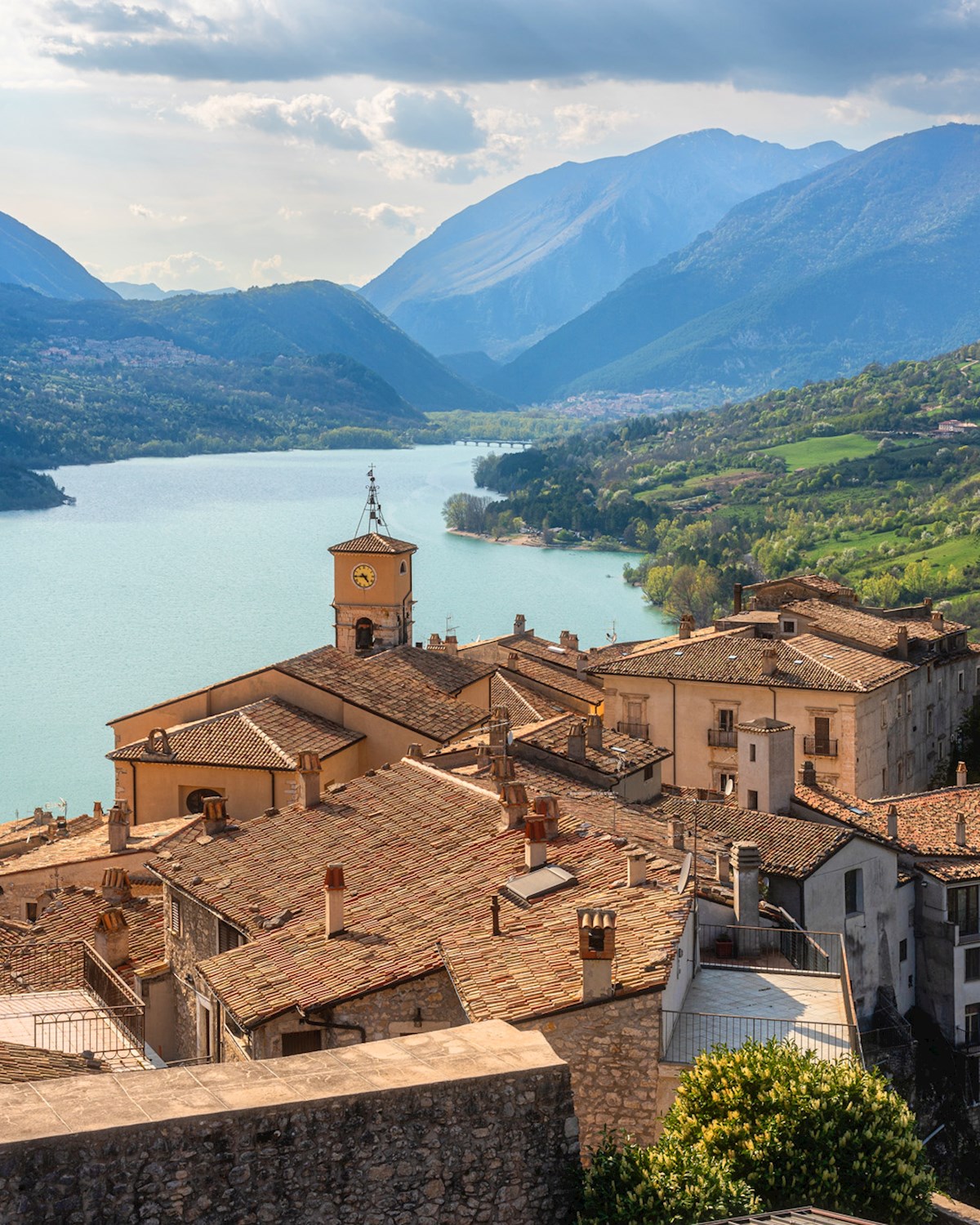
The highlight of Abruzzese cuisine is arrosticini (4.4), skewers of grilled lamb that are a local favorite. The region is also known for Montepulciano d'Abruzzo wine, Ventricina sausage, and saffron from Navelli.
Top-rated foods and beverages:
• Arrosticini (4.4)
• Montepulciano d'Abruzzo (4.4)
• Ventricina (4.4)
Unique to the region:
• Saffron of L’Aquila (one of the world’s finest saffrons, cultivated in high-altitude fields)
• Ferratelle (crispy or soft waffle-like cookies, made with iron molds and flavored with anise)
• Trabocchi (ancient wooden fishing structures where fresh seafood is caught and served right above the waves)
Top places to visit:
• L'Aquila (for saffron, pecorino cheese, and mountain cuisine)
• Sulmona (for confetti sweets and traditional desserts)
• Campo Imperatore (for its unique landscape and hearty food)
Best authentic food places:
• Trattoria Taverna 58 (Pescara) – great for traditional seafood and pasta
• Perilli (Castilenti) – renowned for its tender and flavorful arrosticini
• Agriturismo Sapori di Campagna (Ofena) – the food served is traditional and typical of the area, prepared with ingredients from local farms
From L'Aquila, it takes about 2 hours (180 km) to reach Campobasso in Molise.
Molise
 Credits: Shutterstock
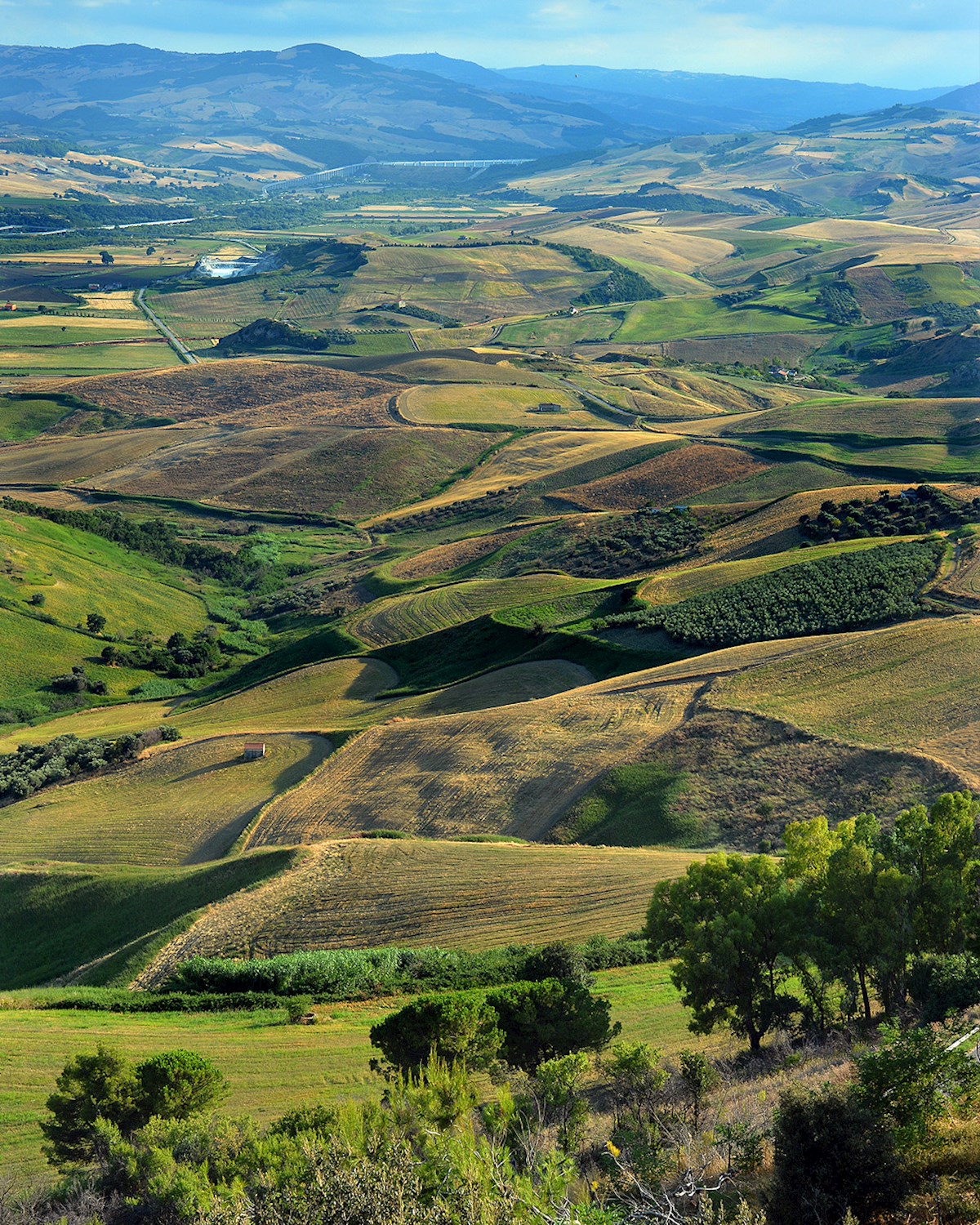
A staple of Molise’s cuisine is Stracciata (4.4), a fresh, ribbon-like cheese with a creamy texture and delicate flavor. The region is also known for its hearty lamb and pork-based dishes, traditional pasta varieties like fusilli molisani, and artisanal olive oil production.
Top-rated food:
Unique to the region:
• Pampanella (spicy, slow-roasted pork, deeply marinated in garlic, vinegar, and paprika)
• Tintilia del Molise (a rare, indigenous red wine known for its deep color and robust character, unique to the region)
• Wild foraging (Molise is rich in wild herbs, mushrooms, and truffles, all essential to its traditional cuisine)
Top places to visit:
• Campobasso (for its medieval charm and rich food culture)
• Isernia (for its local markets and historic cuisine)
• Termoli (for fresh Adriatic seafood and coastal beauty)
Best authentic food places:
• Existo Osteria Molisana (Isernia) – famous for traditional Molisani cuisine
• Ristorante da Nicolino (Termoli) – top-rated seafood restaurant by the coast, renowned for its brodetto alla Termolese
From Campobasso, it takes about 2.5 hours (220 km) to reach Naples in Campania.
Campania
 Credits: shutterstock
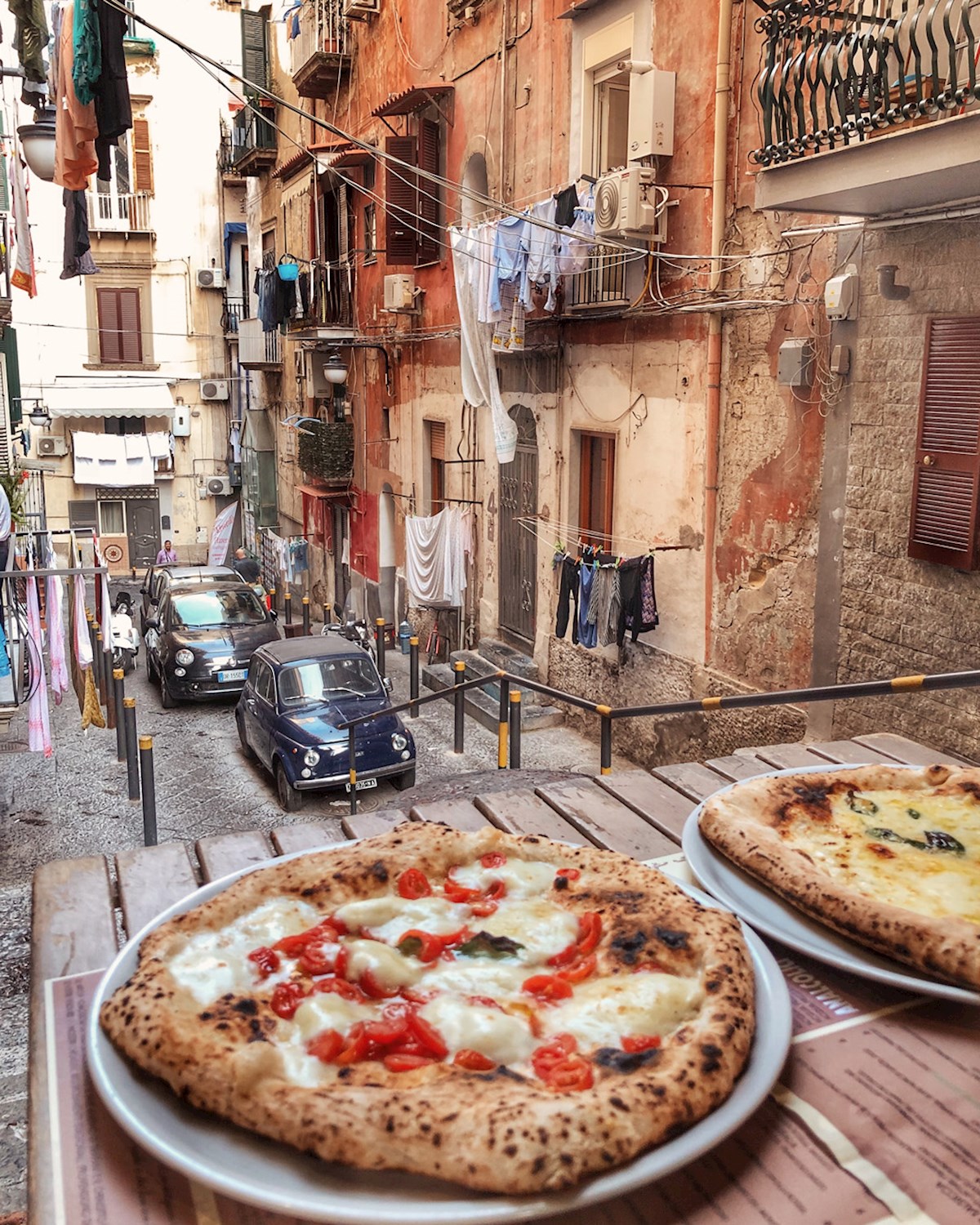
The undisputed king of Campanian cuisine is pizza Napoletana (4.8), the most famous pizza style in the world, known for its soft, airy crust and rich tomato base. The region is also home to Mozzarella di Bufala, linguine allo scoglio, and torta Caprese.
Top-rated foods:
• Pizza Napoletana (4.8)
• Mozzarella di Bufala Campana (4.6)
• Linguine allo scoglio (4.5)
• Parmigiana alla Napoletana (4.5)
• Limone Costa d'Amalfi (4.5)
• Torta Caprese (4.4)
• Sfogliatella (4.3)
Unique to the region:
• Limoncello (the iconic lemon liqueur of the Amalfi Coast, made from sun-ripened Sorrento lemons)
• Ragù Napoletano (a slow-simmered tomato sauce with large cuts of beef and pork, richer and more rustic than its northern counterpart)
• Spaghetti alle vongole (A simple yet elegant pasta with fresh clams, garlic, and white wine, a staple of Campania’s coastline)
Top places to visit:
• Naples (for its legendary pizza culture and street food scene)
• Amalfi Coast (for stunning views and fresh seafood)
• Caserta (for Mozzarella di Bufala farms and historic sites)
Best authentic food places:
• L’Antica Pizzeria da Michele (Naples) – one of the most famous pizzerias in Italy
• Gino e Toto Sorbillo (Naples) – a top-rated spot for authentic Neapolitan pizza
• Da Nennella (Naples) – trattoria beloved for its authentic Neapolitan dishes, like spaghetti alle vongole and pollo al burro
• Antica Trattoria Di Pietro (Melito Irpino) – one of the rare places honoring authentic peasant cuisine
• Lo Stuzzichino (Sant'Agata sui Due Golfi) – restaurant that presents a menu formed from the ingredients from their garden and small local suppliers
From Naples, it takes about 3 hours (250 km) to reach Bari in Apulia.
Puglia
 Credits: shutterstock
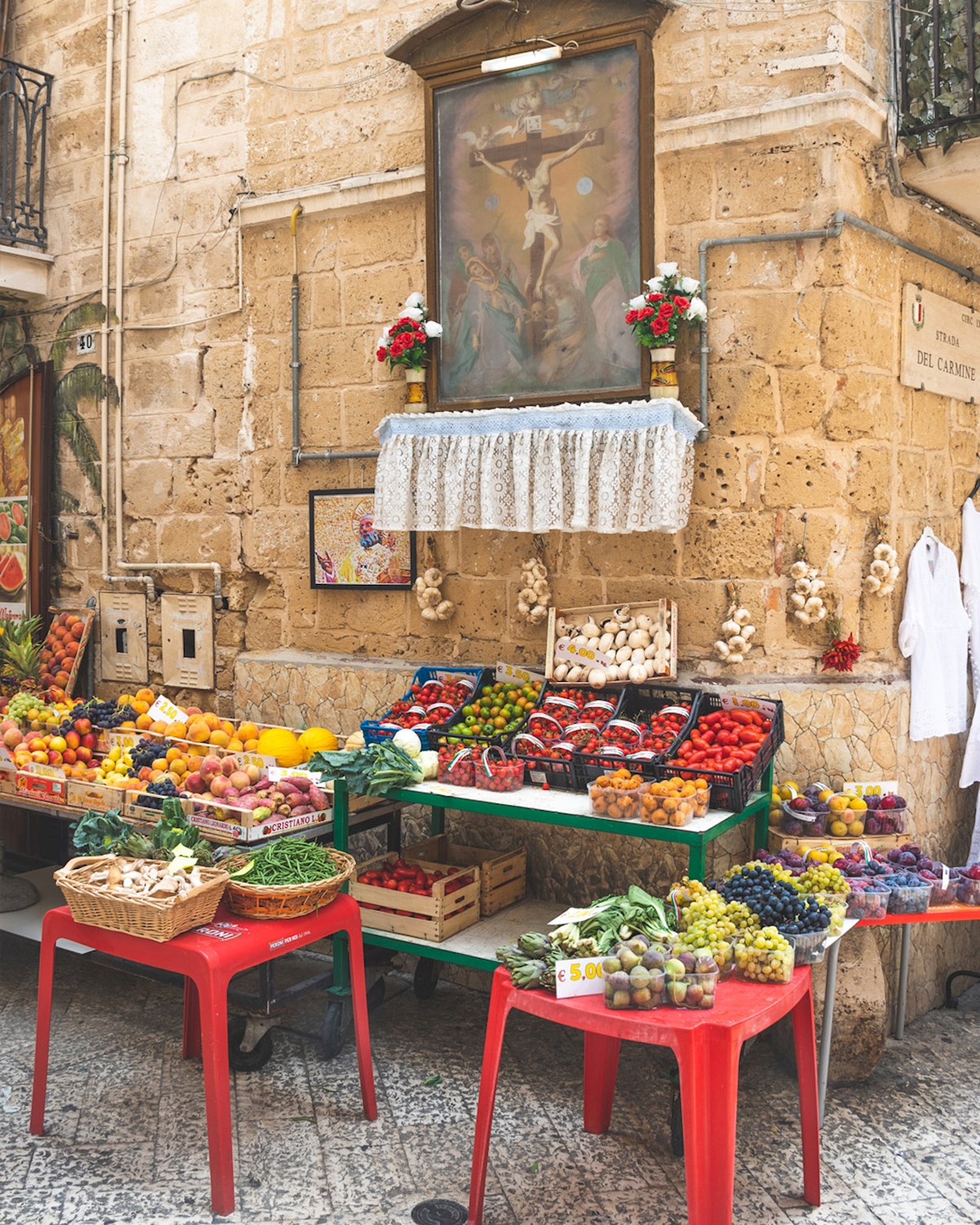
Apulians are especially proud of their Burrata (4.6), a creamy, rich cheese that embodies the region’s dedication to dairy excellence. Apulia is also famous for its rustic breads, handmade orecchiette pasta, and fresh Adriatic seafood.
Top-rated foods and beverages:
• Burrata (4.6)
• Primitivo (4.5)
• Focaccia Barese (4.5)
• Panino col polpo (4.5)
• Panzerotti (4.4)
Unique to the region:
• Orecchiette con cime di rapa (pasta shaped like “little ears,” served with bitter turnip greens and anchovies)
• Pane di Altamura (a DOP-protected, ancient-style sourdough bread, known for its crunchy crust and long shelf life)
• Trulli & masserie (iconic trulli huts and the historic masserie farmhouses)
Top places to visit:
• Bari (for its historic bakeries and pasta-making culture)
• Alberobello (for its unique Trulli houses and local food markets)
• Salento (for incredible seafood and traditional Pugliese flavors)
Best authentic food places:
• Panificio Fiore (Bari) – famous for focaccia Barese
• Antichi Sapori (Montegrosso) – well known for signature orecchiette with wild rocket and stuffed zucchini flowers
• L’Antica Locanda (Noci) – offers traditional Apulian dishes in a cozy, stone-walled setting
• Osteria La Tradizione (Minervino Murge) – osteria noted for its genuine food and excellent quality/price ratio
From Salento, it takes about 3.5 hours (300 km) to reach Matera in Basilicata.
Basilicata
 Credits: shutterstock
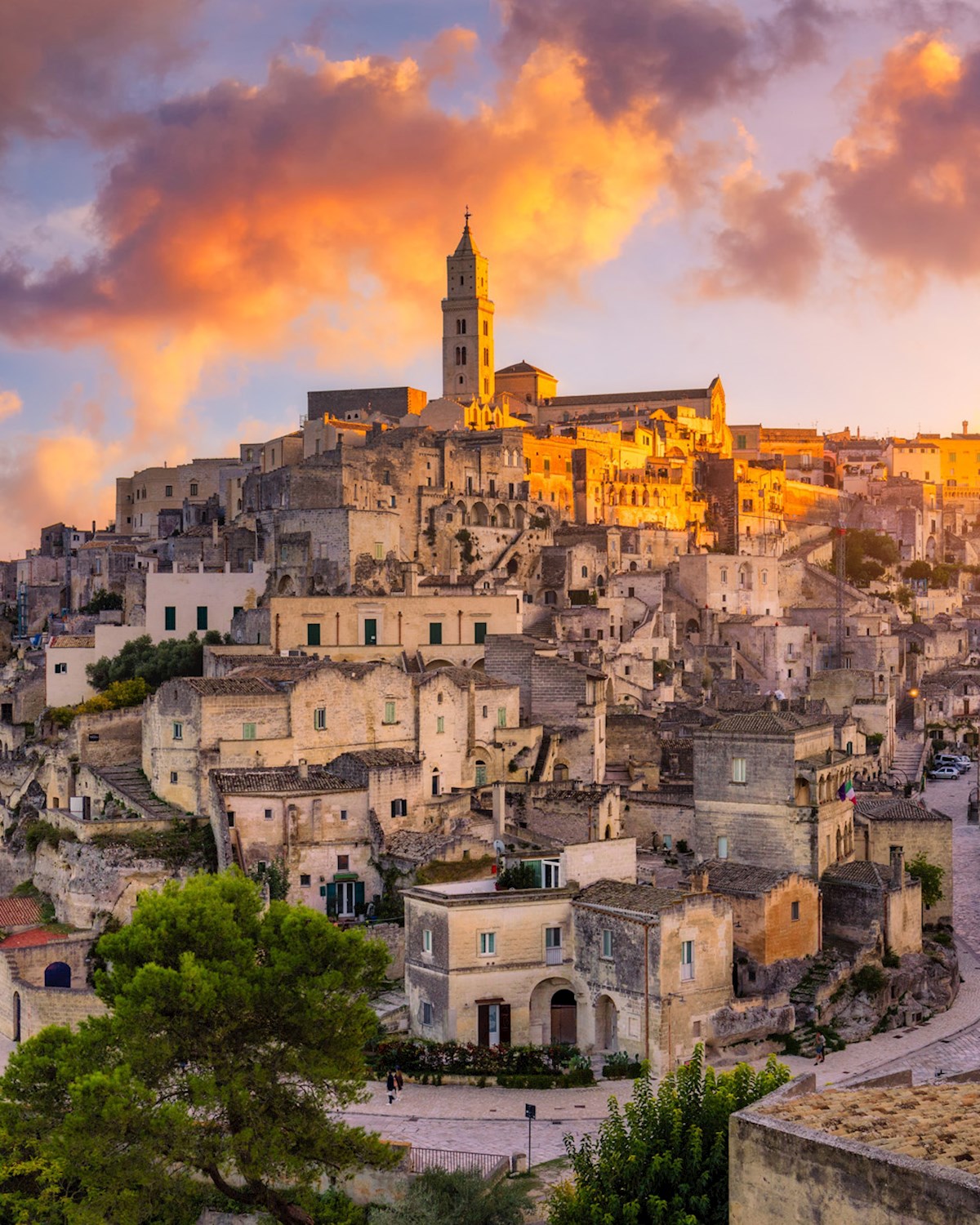
The most celebrated food of Basilicata is Canestrato di Moliterno (4.7), whole goat's and sheep's milk cheese that can be either quite sweet or piquant in flavor. Basilicata is also known for Pecorino di Filiano, Lucanian sausages, and rustic mountain cuisine.
Top-rated foods and beverages:
• Canestrato di Moliterno (4.7)
• Aglianico (4.2)
Unique to the region:
• Peperoni cruschi (sun-dried Senise peppers, fried until crispy, served as a snack or garnish)
• Pane di Matera (a centuries-old sourdough bread with a thick crust and airy crumb, baked in stone ovens)
• Vulture (a robust, slightly spicy olive oil produced in the volcanic soils of Mount Vulture, prized for its deep flavor and aromatic intensity)
Top places to visit:
• Matera (for its ancient cave dwellings and unique food culture)
• Maratea (for coastal cuisine and scenic landscapes)
• Potenza (for hearty mountain food and historical charm)
Best authentic food places:
• Ristorante Baccanti (Matera) – cave restaurant known for its Basilicata specialties
• Luna Rossa (Terranova di Pollino) – restaurant that specializes in traditional Lucanian dishes
• Trattoria Zi Mingo (Potenza) – offers traditional regional specialties like cod with cruschi peppers, lamb ribs, and rind rolls
From Matera, it takes about 3 hours (260 km) to reach Reggio Calabria in Calabria.
Calabria
 Credits: shutterstock
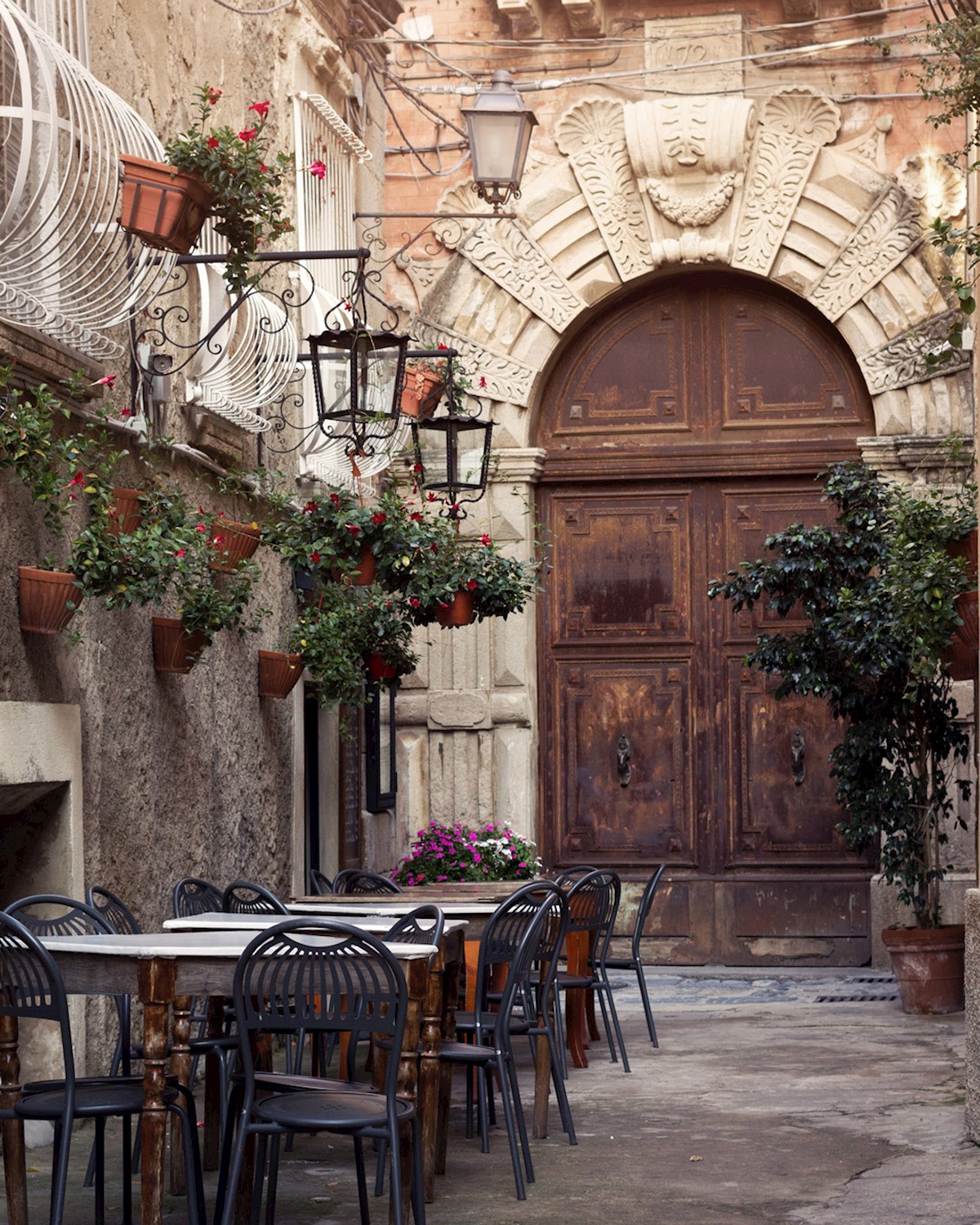
One of the most renowned and unique foods of the Calabrian cuisine is 'Nduja (4.4), a spreadable spicy sausage that embodies the region's love for bold flavors. Calabria is also famous for its red onions from Tropea, peperoncino-infused dishes, and cured meats.
Top-rated foods:
• Cipolla Rossa di Tropea (4.6)
• 'Nduja (4.4)
Unique to the region:
• Liquirizia di Calabria (some of the world’s purest licorice, extracted naturally from local roots)
• Tartufo di Pizzo (a decadent, hand-shaped hazelnut and chocolate gelato with a molten chocolate core, from the town of Pizzo)
• Bergamot citrus (Calabria is the world’s primary producer of bergamot, an aromatic citrus fruit used in liqueurs, perfumes, and the famous Earl Grey tea)
Top places to visit:
• Reggio Calabria (for its fresh seafood and bergamot liqueur)
• Tropea (for its famous red onions and stunning beaches)
• Scilla (for swordfish dishes and picturesque fishing villages)
Best authentic food places:
• Il Tipico Calabrese (Cardeto) – museum-tavern that aims to enhance the cultural, artisanal, and gastro heritage
• Il Vecchio Castagno (Serrastretta) – traditional Calabrian dishes made using local ingredients
• Bar Gelateria Ercole (Pizzo) – renowned for its artisanal gelato, credited with popularizing the famous tartufo di Pizzo
From Reggio Calabria, it takes about 2 hours (170 km) by ferry and road to reach Palermo in Sicily.
Sicily
 Credits: shutterstock
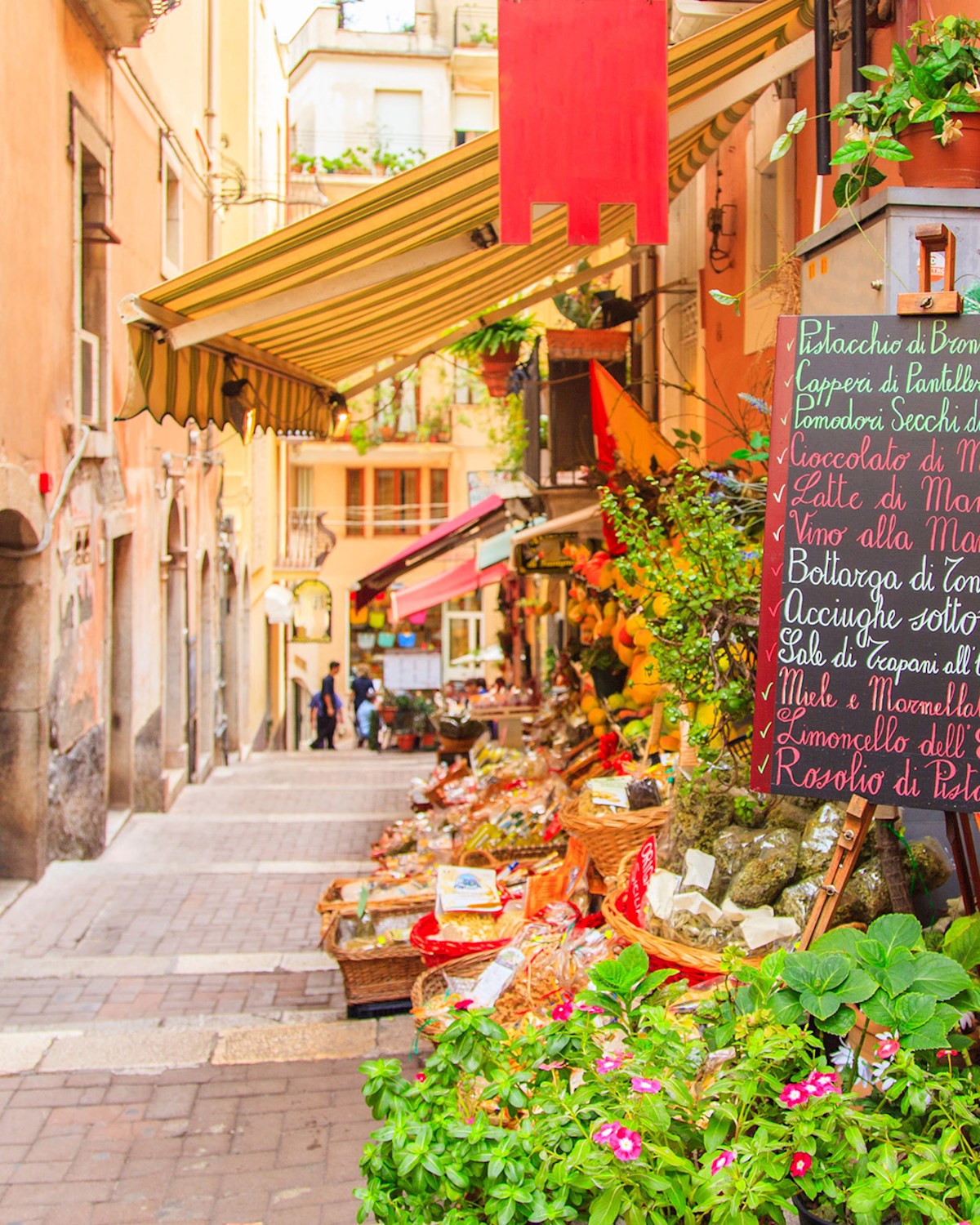
One of the most iconic dishes of Sicilian cuisine is pasta alla norma (4.3), a classic pasta recipe featuring fried eggplant, tomato sauce, basil, and ricotta salata. Sicily is also known for its arancini, cannoli, and Pistacchio di Bronte.
Top-rated foods:
• Pomodoro di Pachino (4.7)
• Pasta 'ncasciata (4.6)
• Pistacchio di Bronte (4.6)
• Brioche con gelato (4.4)
• Pasta alla norma (4.3)
• Crocchè (4.3)
Unique to the region:
• Arancini (crispy, stuffed rice balls filled with ragù, cheese, or pistachios, a Sicilian street food icon)
• Marsala (a fortified wine from western Sicily, ranging from dry to sweet, used in cooking and as a dessert wine)
• Cioccolato di Modica (an ancient, grainy-textured chocolate made using Aztec cold-processing techniques)
Top places to visit:
• Palermo (for its street food and vibrant food markets)
• Catania (for Pasta alla Norma and fresh seafood)
• Taormina (for upscale dining and breathtaking coastal views)
Best authentic food places:
• Antica Focacceria San Francesco (Palermo) – iconic spot for Sicilian street food
• Antica Dolceria Bonajuto (Modica) – offers sweets and nougats of the Modican and Sicilian tradition
• Pasticceria Savia (Catania) – famous for Arancini and Cannoli
• La Pasticceria Maria Grammatico (Erice) – typical Erice pastries, made only with natural ingredients
From Taormina, it takes about 4.5 hours (350 km) by ferry and road to reach Cagliari in Sardinia.
Sardinia
 Credits: shutterstock
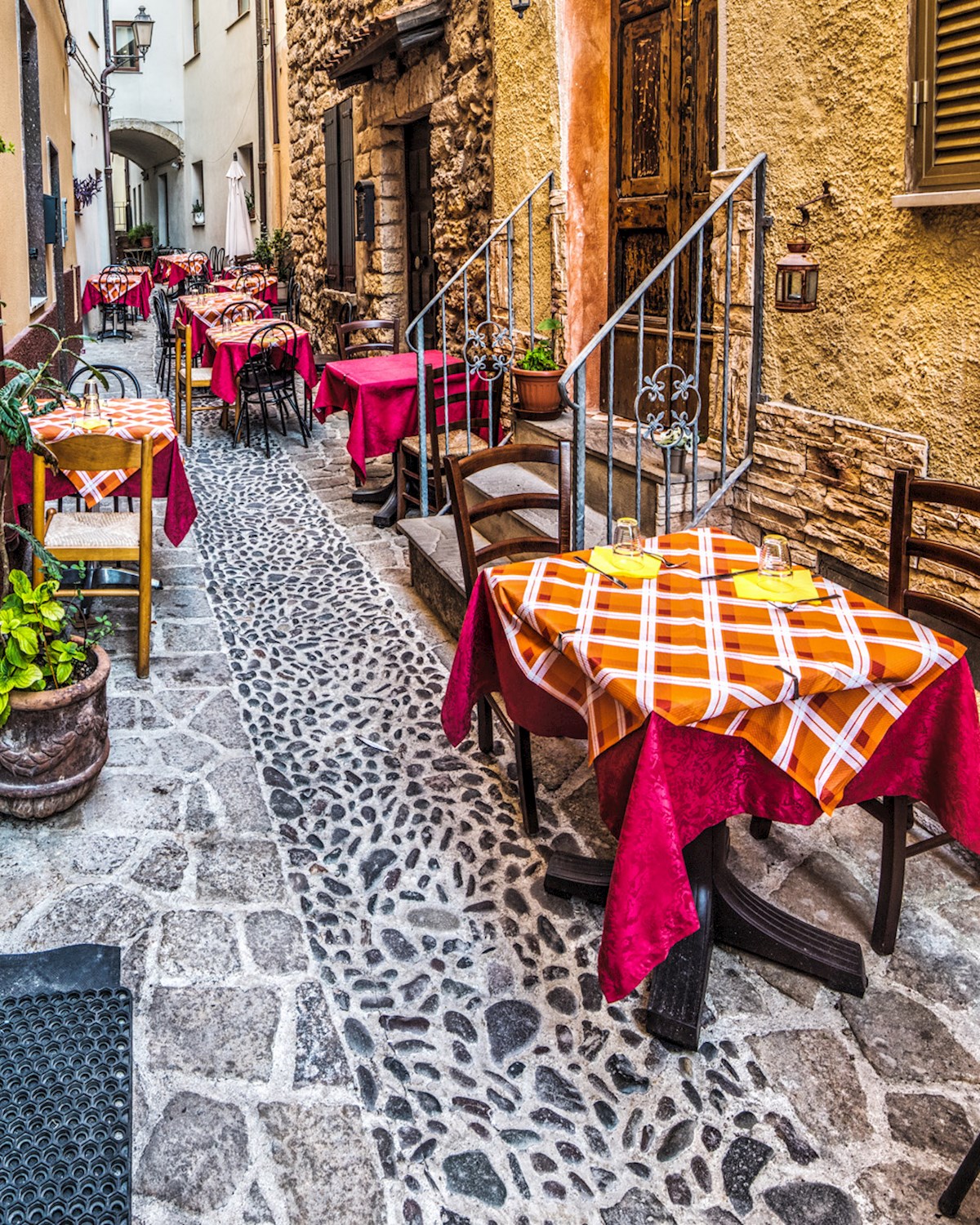
Sardinians love cheese, and one of their best is Pecorino Sardo (4.5), a firm and flavorful sheep’s milk cheese that represents the island’s rich pastoral traditions. Sardinia is also famous for its culurgiones, su porceddu (roast suckling pig), and bottarga.
Top-rated foods:
• Sardegna olive oil (4.6)
• Pecorino Sardo (4.5)
• Culurgiones d’Ogliastra (4.4)
Unique to the region:
• Su porceddu (suckling pig, spit-roasted over an open fire and seasoned with myrtle and rosemary)
• Pane carasau (thin, crispy flatbread known as "music paper bread," originally made for shepherds on long journeys)
• Seada (deep-fried pastries filled with fresh pecorino cheese and drizzled with honey, blending sweet and savory)
Top places to visit:
• Cagliari (for its seafood markets and fresh pasta traditions)
• Alghero (for Catalan-influenced dishes and stunning coastal views)
• Nuoro (for traditional Sardinian shepherd cuisine)
Best authentic food places:
• Ristorante Su Gologone (Oliena) – one of the most iconic places for su porceddu
• Agriturismo Su Recreu (Ittiri) – traditional Sardinian dishes made using farm-fresh ingredients
• Stella Marina di Montecristo (Cagliari) – renowned for its fresh seafood dishes