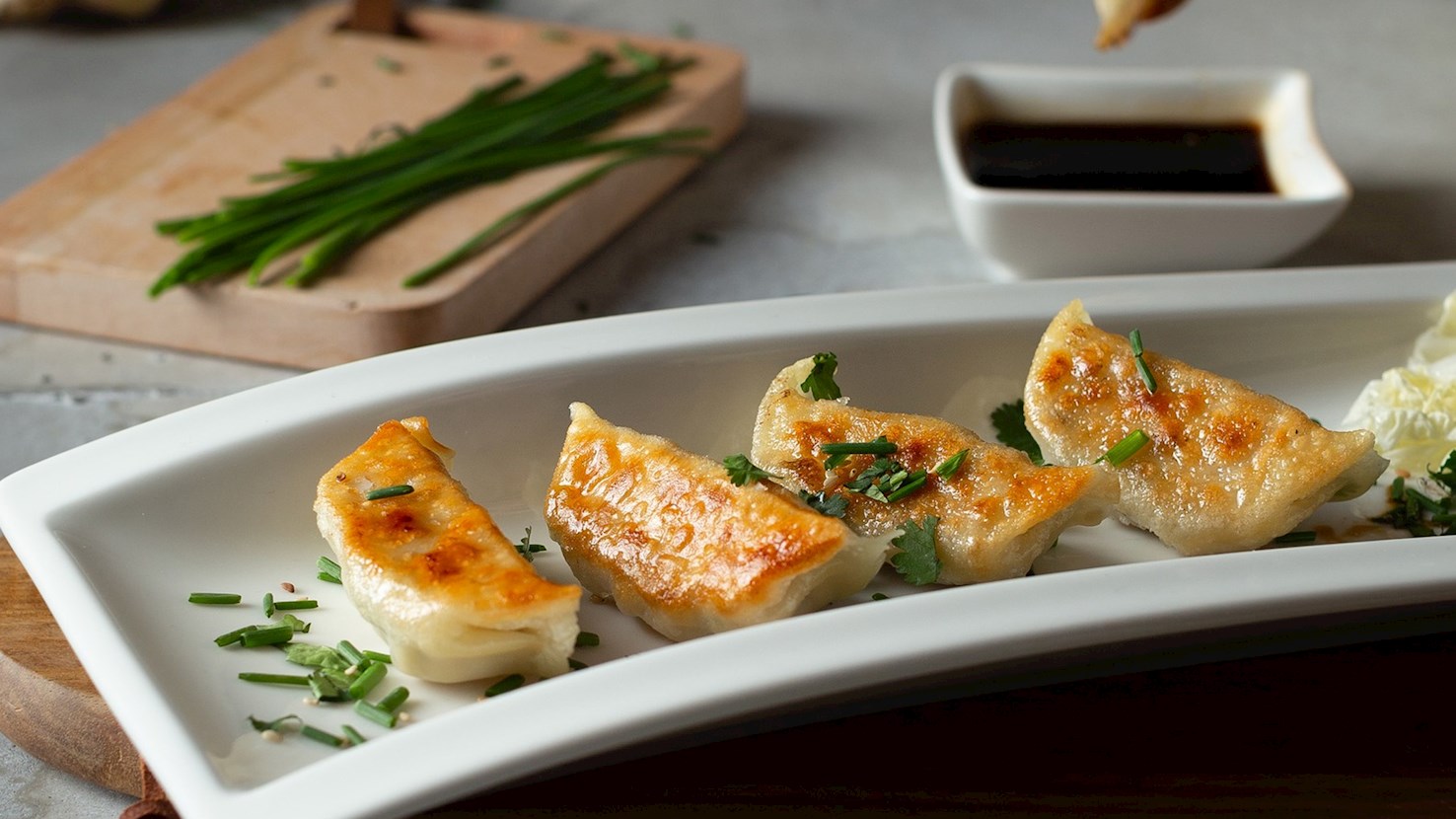
The pan-fried variety of the Chinese jiaozi dumpling, known as guotie, is a Northern Chinese dumpling typically filled with minced pork, Chinese cabbage, scallions, ginger, rice wine, and sesame seed oil. Crunchy and soft textures are achieved by a special method of preparing; while the bottom of the dumpling is frying, a small amount of liquid is added to the pan which is then covered, thus allowing the rest of the dumpling and the filling to steam. When it comes to the shape, guotie should always be long and straight as it can stand more easily and it does not fall over during cooking. Goutie can be literally translated as pot sticks, so these dumplings are often nicknamed potstickers, especially in North America. Although the first-known mention of goutie dates back to the Song Dynasty, today they are a popular street food, often eaten as a snack or an appetizer, typically accompanied by a dipping sauce.
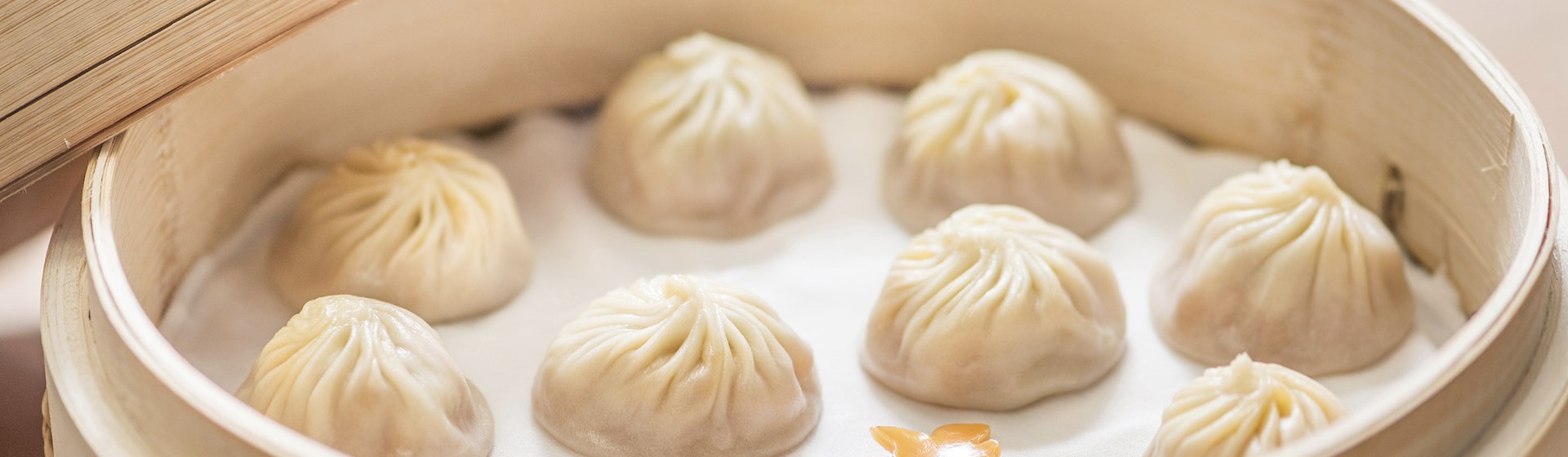
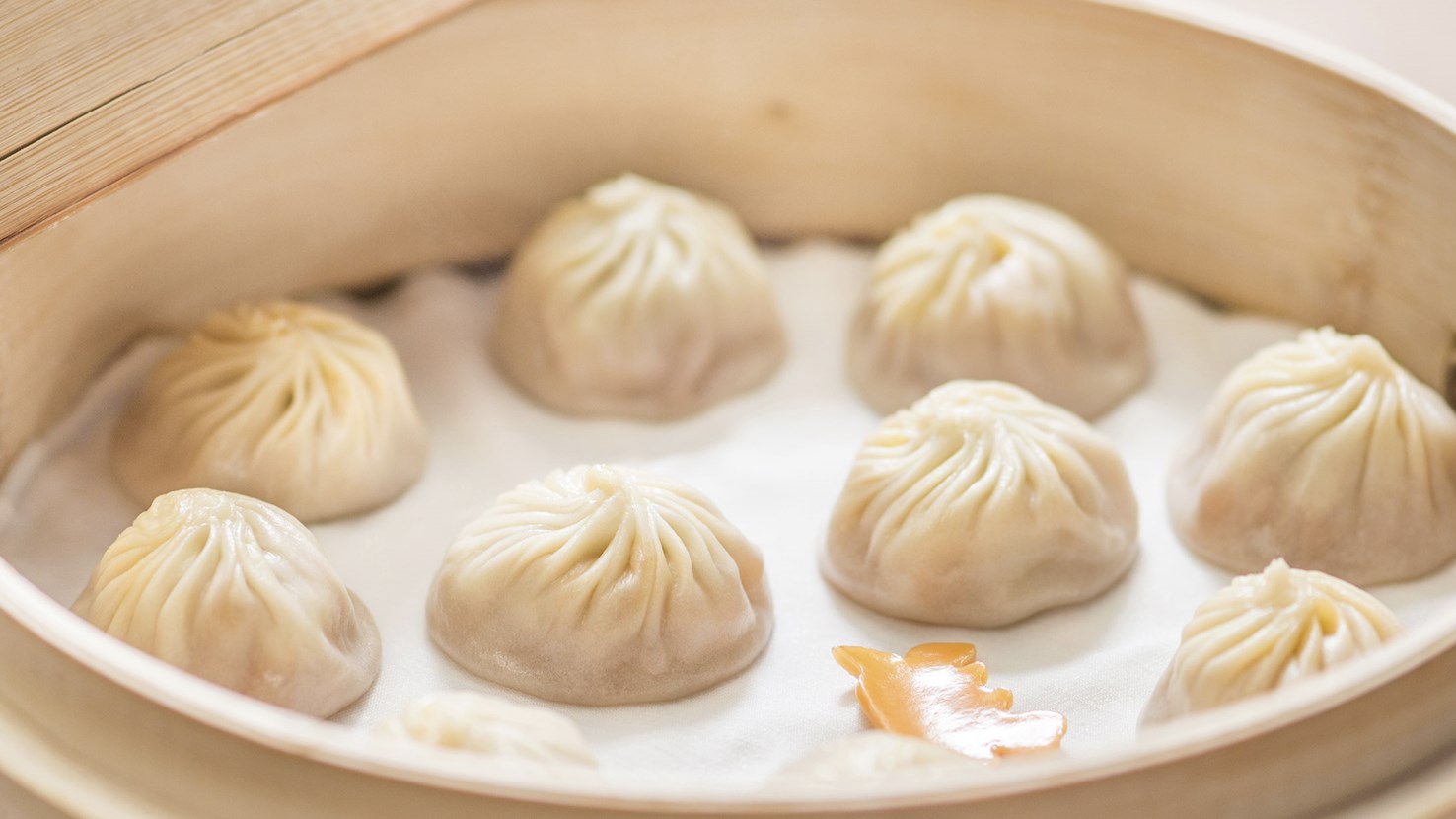
The name tangbao or tangbaozi refers to a broad group of steamed Chinese soup-filled dumplings. Depending on the origin, dumplings can be made with leavened or plain dumpling dough which is usually wrapped around a gelatinous filling, twisted and sealed at the top, and then steamed. While they steam, the firm filling (usually made with minced pork or crab meat) transforms into a flavorful soup, which stays safely secured inside the bun. Due to the nature of this Chinese delicacy, they are always served immediately after steaming, so the soup stays liquid and hot. Because of the sizzling filling, tangbao buns should be consumed with precaution and usually employ a unique eating technique. Chopsticks are used to hold the bun at the top, and a small bit is taken from the side, allowing the soup to pour into the wide spoon held underneath. The soup and the dumpling are usually eaten alternatively, but can also be enjoyed one at the time. One of the most common varieties of the dish includes the tangbao dumplings originating from the Jiangsu province, which are usually large in form and often come with a straw tucked inside the bun, which is used to slurp the delicious soup. Xiaolongbao, the authentic Shanghai version, is famous for its small size and slightly thinner dough. All the varieties found in China and in Chinese restaurants around the world are typically served as a snack, as a part of dim sum meals, or as a satisfying appetizer.
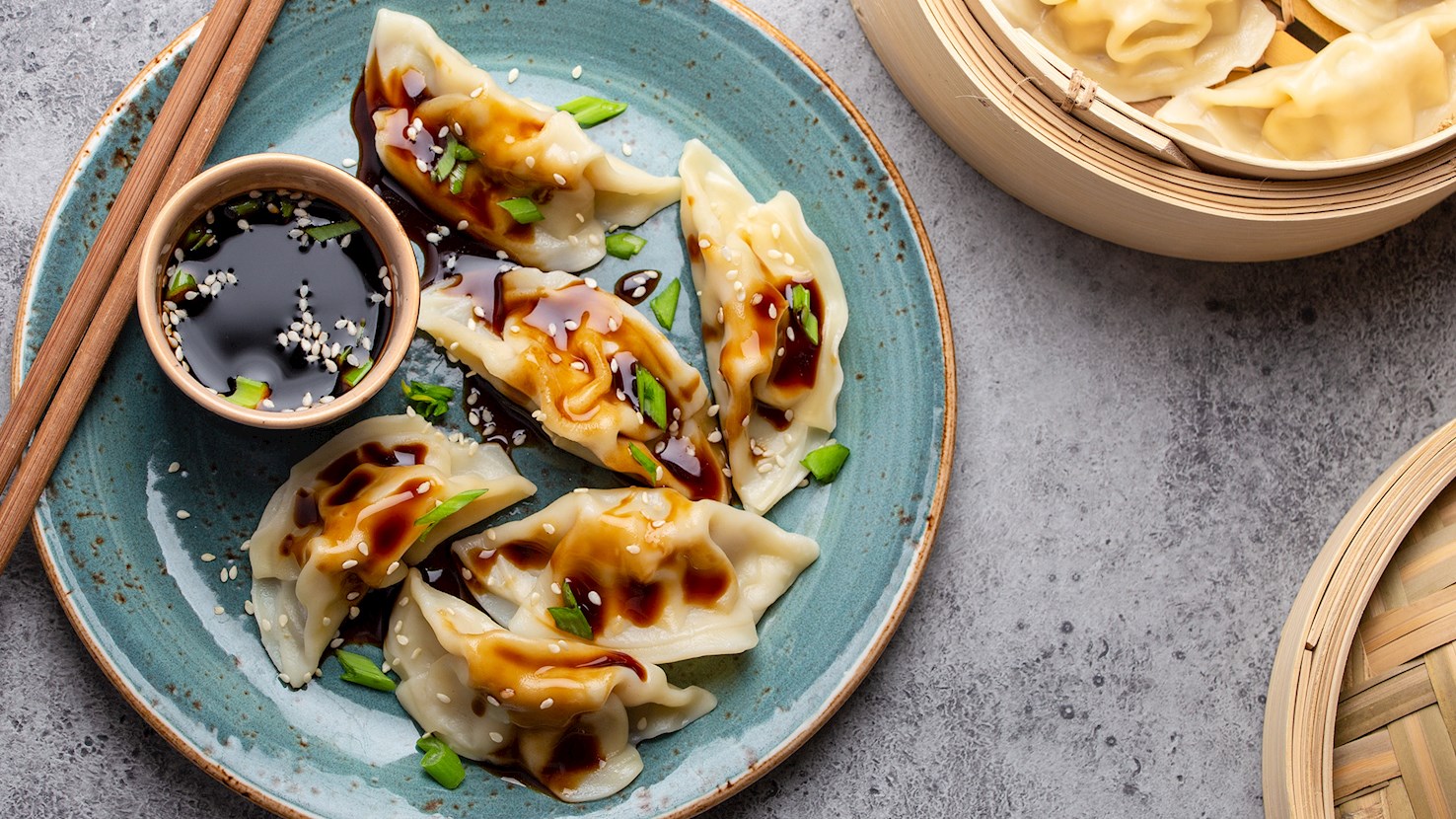
These Chinese dumplings known as jiaozi, consisting of a thinly rolled piece of dough which contains either meat or a vegetable filling, are one of the most popular and most commonly eaten dishes in China and East Asia. They can be served either as an appetizer or as the main course, always with a side of soy sauce-based dipping sauce. Traditionally, jiaozi are always eaten for Chinese New Year. Depending on how they are cooked, jiaozi dumplings can be classified into three categories: boiled, steamed, and pan-fried, but when it comes to folding techniques, there are many, and the most popular one is known as pinched-edge fold, which results in crescent-shaped jiaozi, the most popular shape in China. Well-known variations of jiaozi dumplings include the smaller variety gaau ji that has a thin, translucent wrapping, the pan-fried guotie, and the Japanese-style dumpling, gyoza.
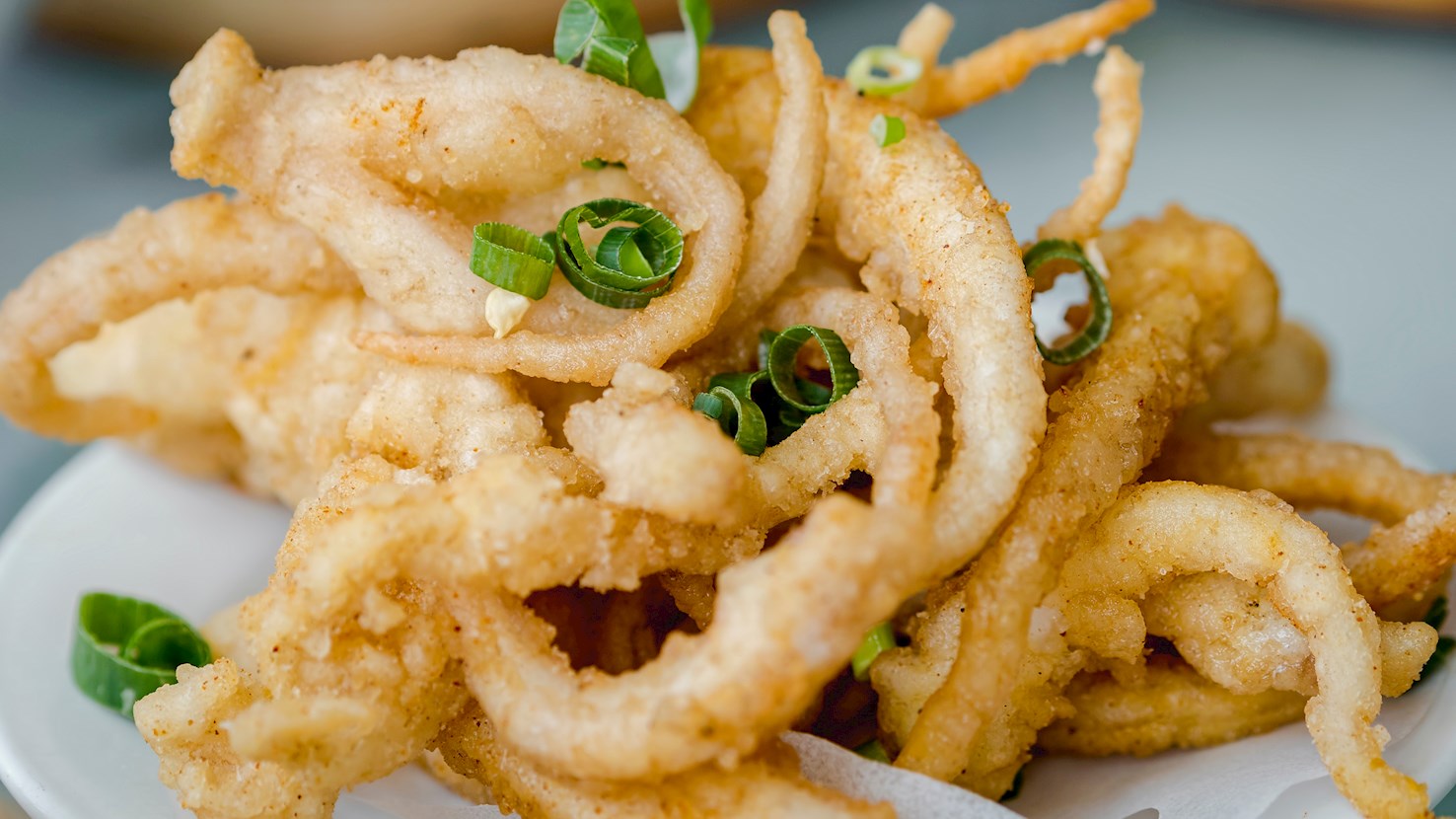
Jiao yan you yu or salt-and-pepper squid is a traditional dish originating from Guangzhou. This Cantonese dish is usually made with a combination of squid, potato flour, scallions, Shaoxing wine, garlic, oil, hot peppers, Sichuan pepper or white pepper, and salt. The surface of the squid is cross-hatched and the body is cut into bite-sized pieces. It's mixed with Shaoxing wine, drained, dredged in flour, and deep-fried in hot oil until lightly golden. The squid is removed from the pan. The garlic, scallions, and hot peppers are stir-fried in the same oil, and the squid is placed back into the pan with a mixture of Sichuan pepper and salt. The dish is stir-fried a bit more, tossed, and served hot as an appetizer or a main course.
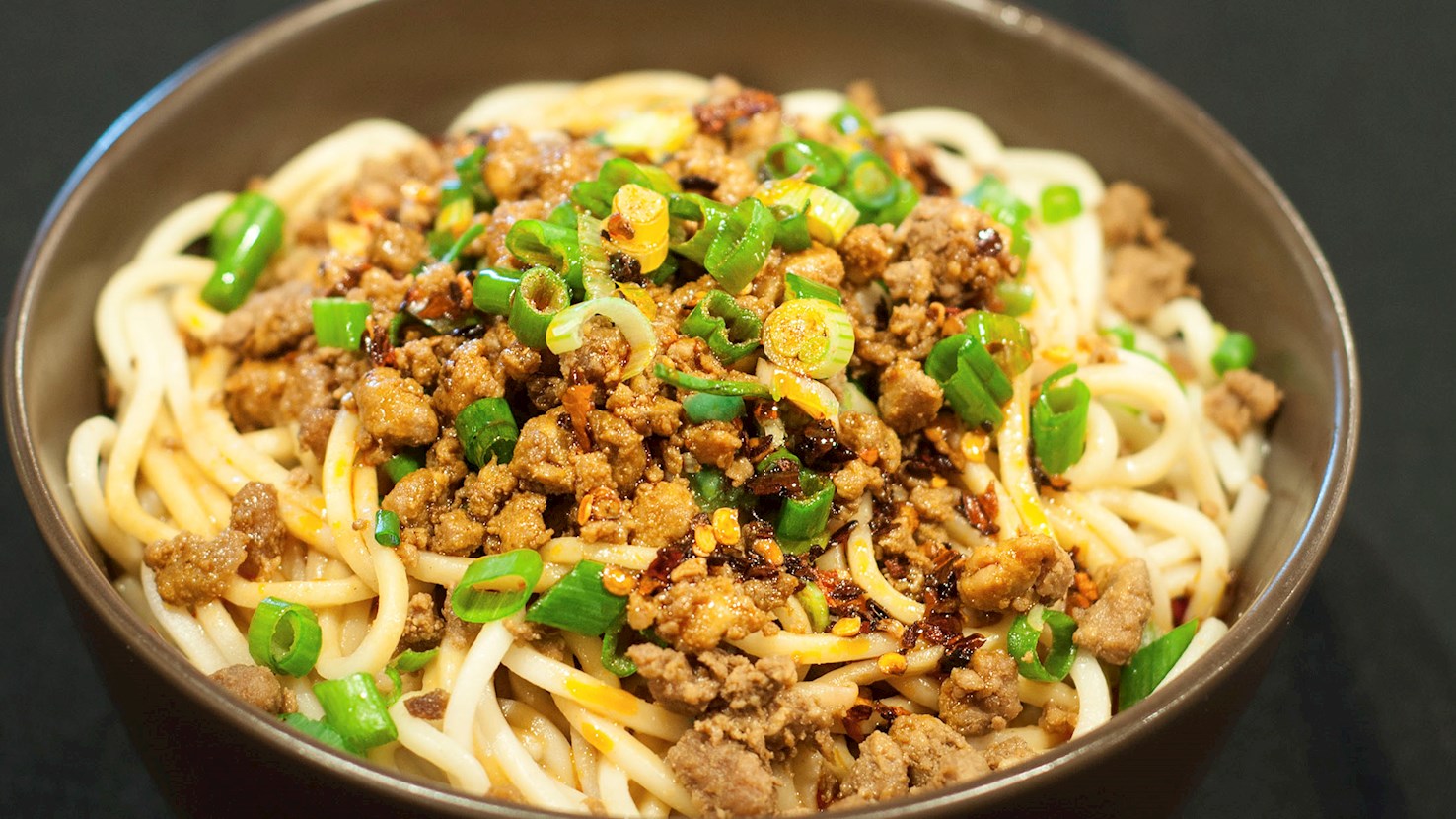
Traditional dan dan noodles are a true classic of Chinese cuisine. The star of the dish is a spicy sauce served with the noodles. Made with chili oil, preserved vegetables, Sichuan peppercorn, and sometimes sesame or peanut paste, the sauce bursts with heat and complex flavors. The meat, most commonly minced pork or beef, is also commonly included, but mainly acts as a garnish. In China, the varieties differ only slightly, but worldwide the traditional dan dan noodles have been adjusted to the more gentle western palate and use significantly fewer spices. The dish originated in the Sichuan province, and it is still one of the most common dishes in the area. The name itself comes from the way the noodles were initially offered to the Sichuan citizens and refers to the bamboo pole carried on the shoulders, which was used to transport the dish through the city streets. Today, the dish is usually served in restaurants, but is still equally attractive and retains the original flavors. Whether they are eaten hot or cold, dan dan noodles are usually served in smaller portions, as an appetizer, the main dish, and sometimes even as an accompaniment. Typical garnishes include sliced scallions, chopped peanuts, or sesame seeds.
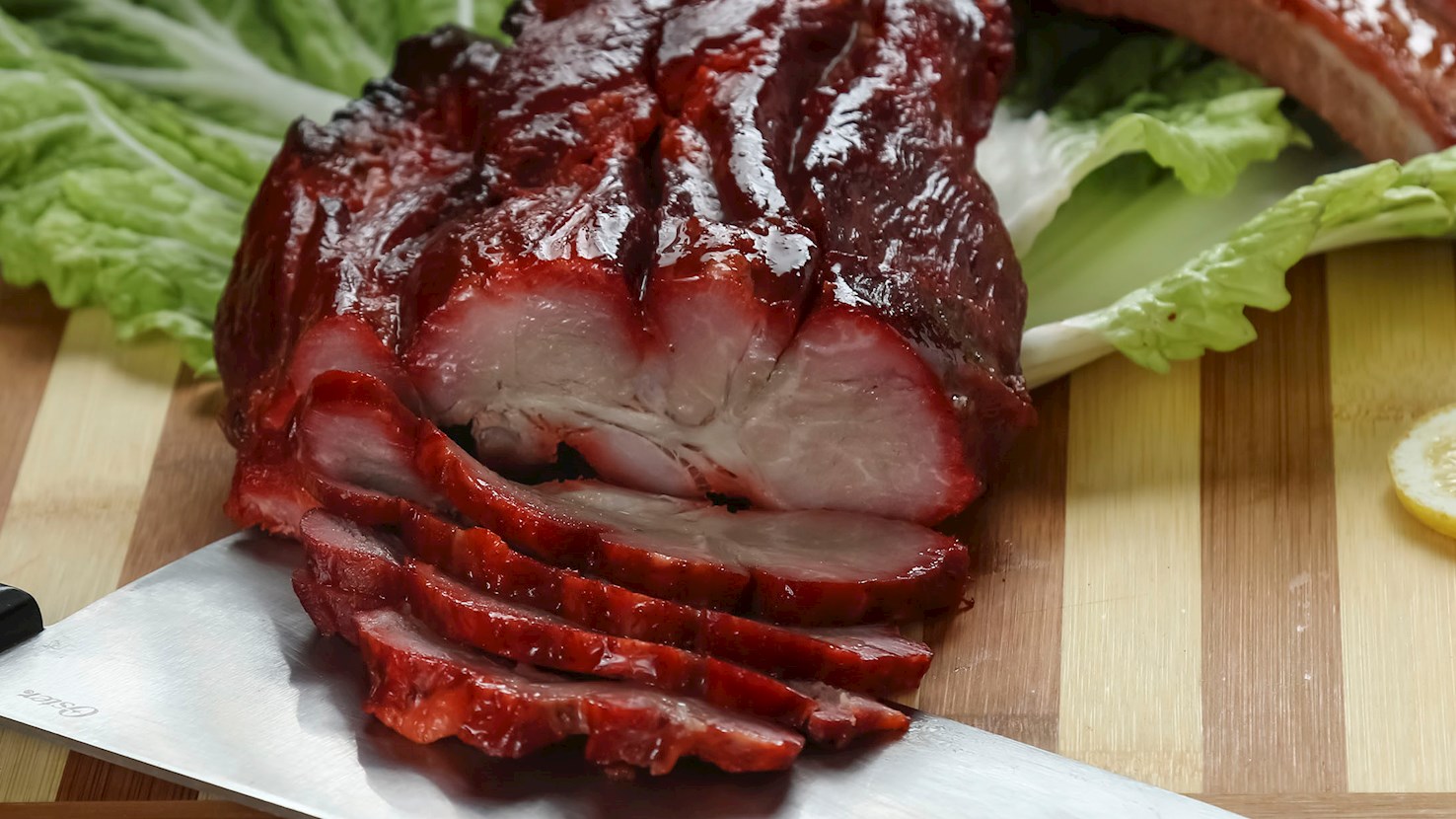
Char siu is a dish consisting of roasted, barbecued pork that has previously been marinated in the eponymous sauce, including ingredients such as soy sauce, hoisin sauce, rice wine, and star anise. The pork is usually served either as a sliced appetizer or shredded and chopped as a main meal. In the early days of char siu, any available meats, such as wild boars and pigs were used to make the dish. The name char siu is literally translated to fork-roasted, referring to the original method of preparation in which the meat is placed on an elongated fork and roasted over an open fire that caramelizes the sugars found in the marinade. One of the most popular ways to use the meat is to serve it in steamed buns called char siu bao. As a proof of char siu's popularity, it was listed as the 28th among the World's 50 Most Delicious Foods in a poll compiled by CNN Go in 2011.
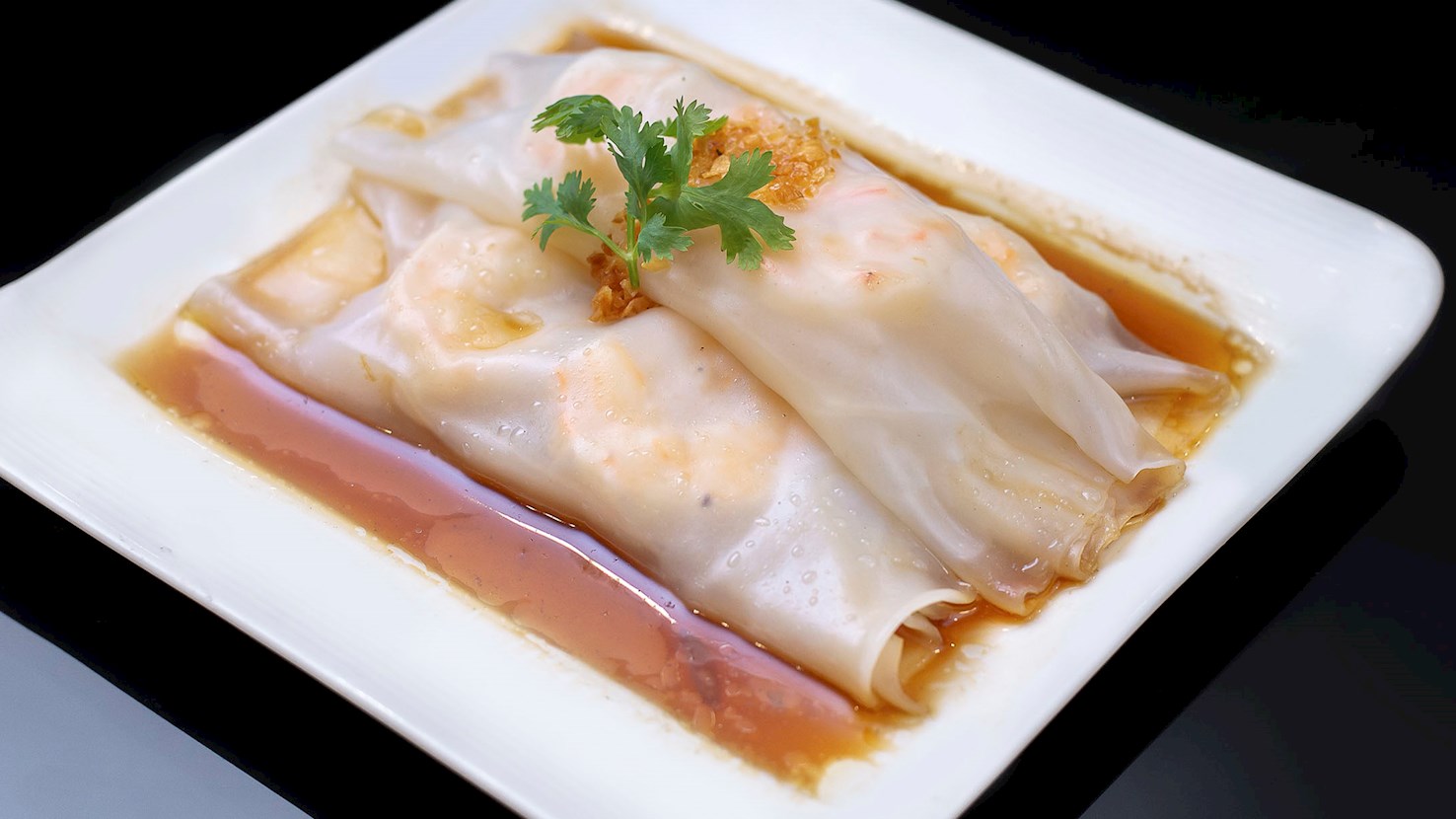
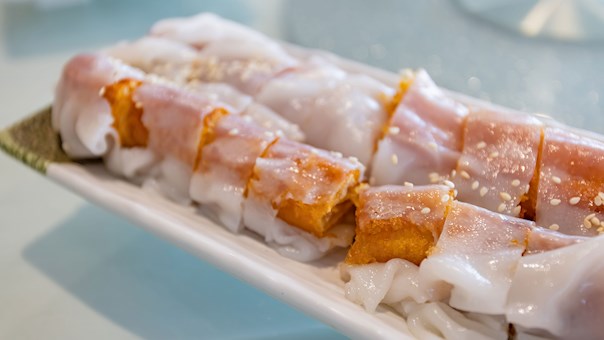
A typical Cantonese dish originating from the southern parts of China (including Hong Kong) known as rice noodle roll is a small roll prepared with a wide strip of rice milk that is usually filled with vegetables, beef, pork, or shrimp. The dish can also be made without any fillings, when it's commonly known as chee cheong fun, literally translated to pig intestine noodle, due to the fact that the noodle is rolled tightly, resembling the small intestine of a pig. Rice noodle roll is usually served either as a variety of the popular dim sum or as a snack, and it is common to pour some sweet soy sauce over it prior to serving. Because it is a popular snack in China, regional varieties are not uncommon, so in Cantonese cuisine, it is often prepared as dim sum, in Vietnamese cuisine it's mostly eaten for breakfast, and in Southeast Asian cuisine, it is served in two versions - dry or wet, accompanied by a sweet black sauce called timzheong.
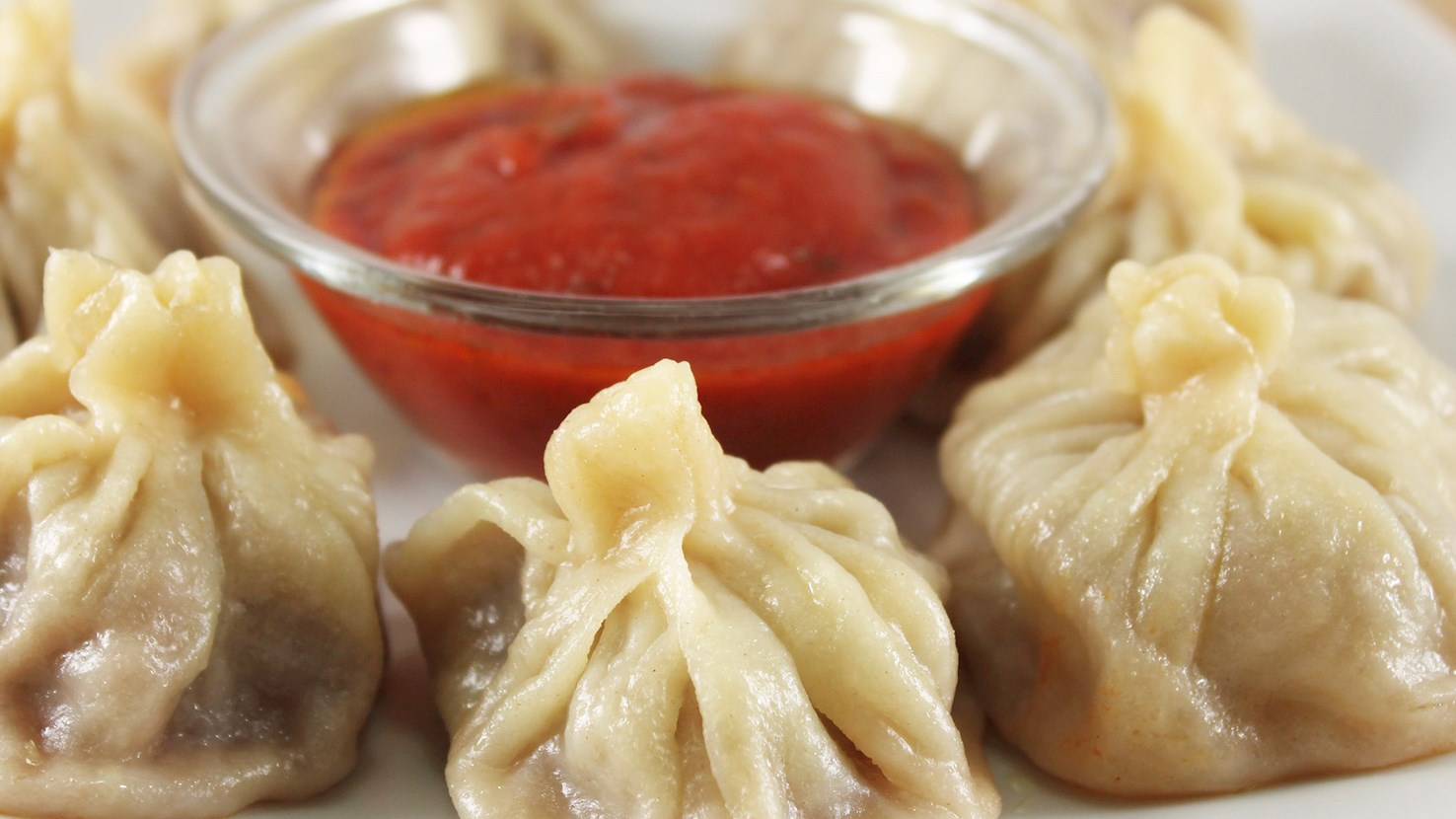
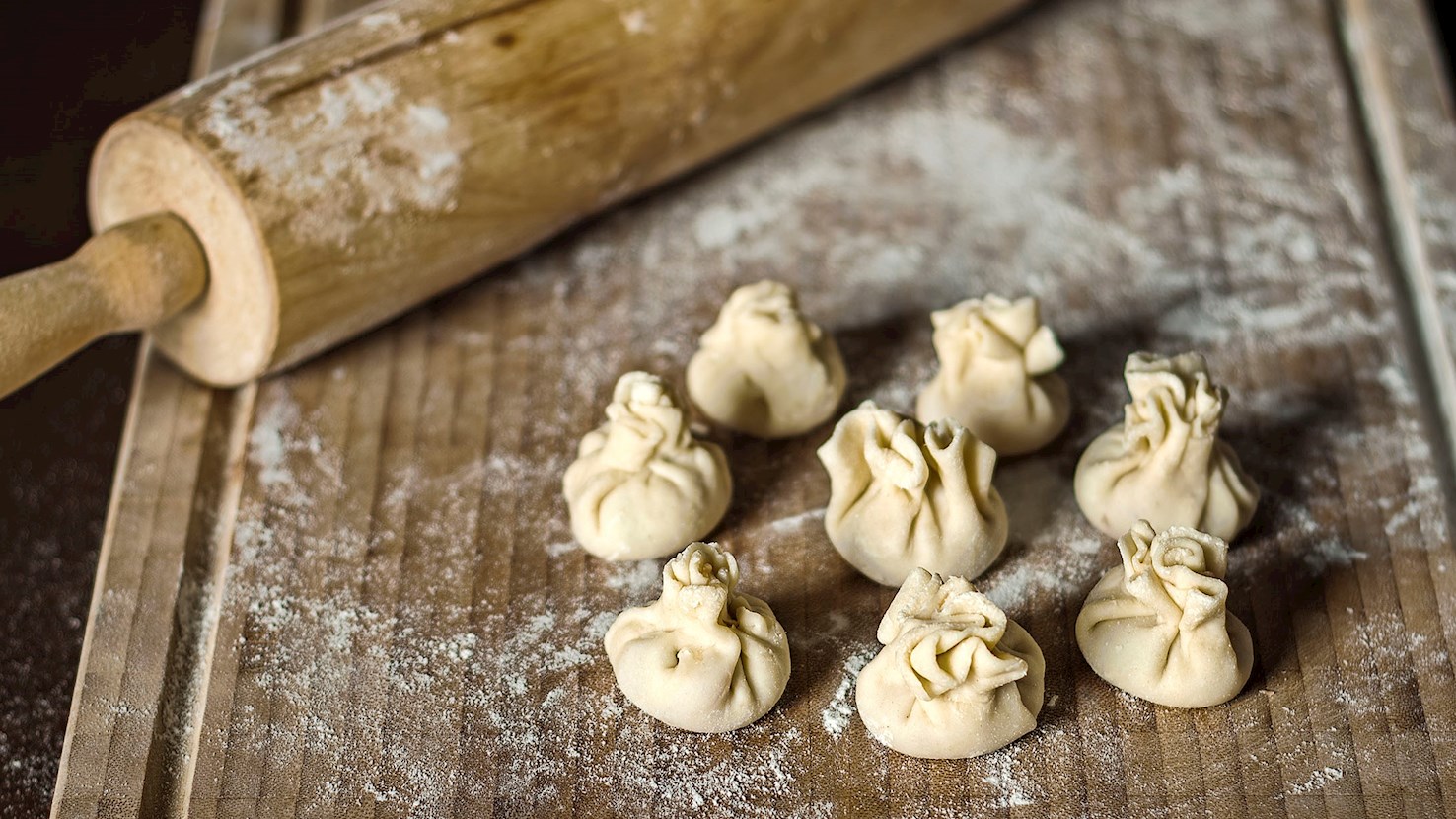
Momo dumplings were traditionally only filled with minced meat, but nowadays, the fillings have diversified to include vegetables, dairy, or a combination of both. They are native to Tibet and have been brought to the Kathmandu Valley by traveling Newar merchants, and thus Nepal, where they consider them as their own. Thanks to Tibetan diaspora, momos are also today hugely popular in India. Momo dumplings are typically steamed, but they can also be fried. They are usually shaped either into purses or into half-moons (other shapes also exist). The best-known varieties include buff momos made with water buffalo meat, sha momos made with beef or yak meat, and khasi momos with lamb or mutton filling, while both jhol momos and C-momos come served in a spicy, hot sauce. Other noted types of momo dumplings include open momos, tarkari momos that have a vegetable filling, potato-filled momos, and cheese-filled momos. These dumplings are very versatile and can be eaten either as a snack or an appetizer. However, they are typically served as a main course with a dipping sauce on the side.
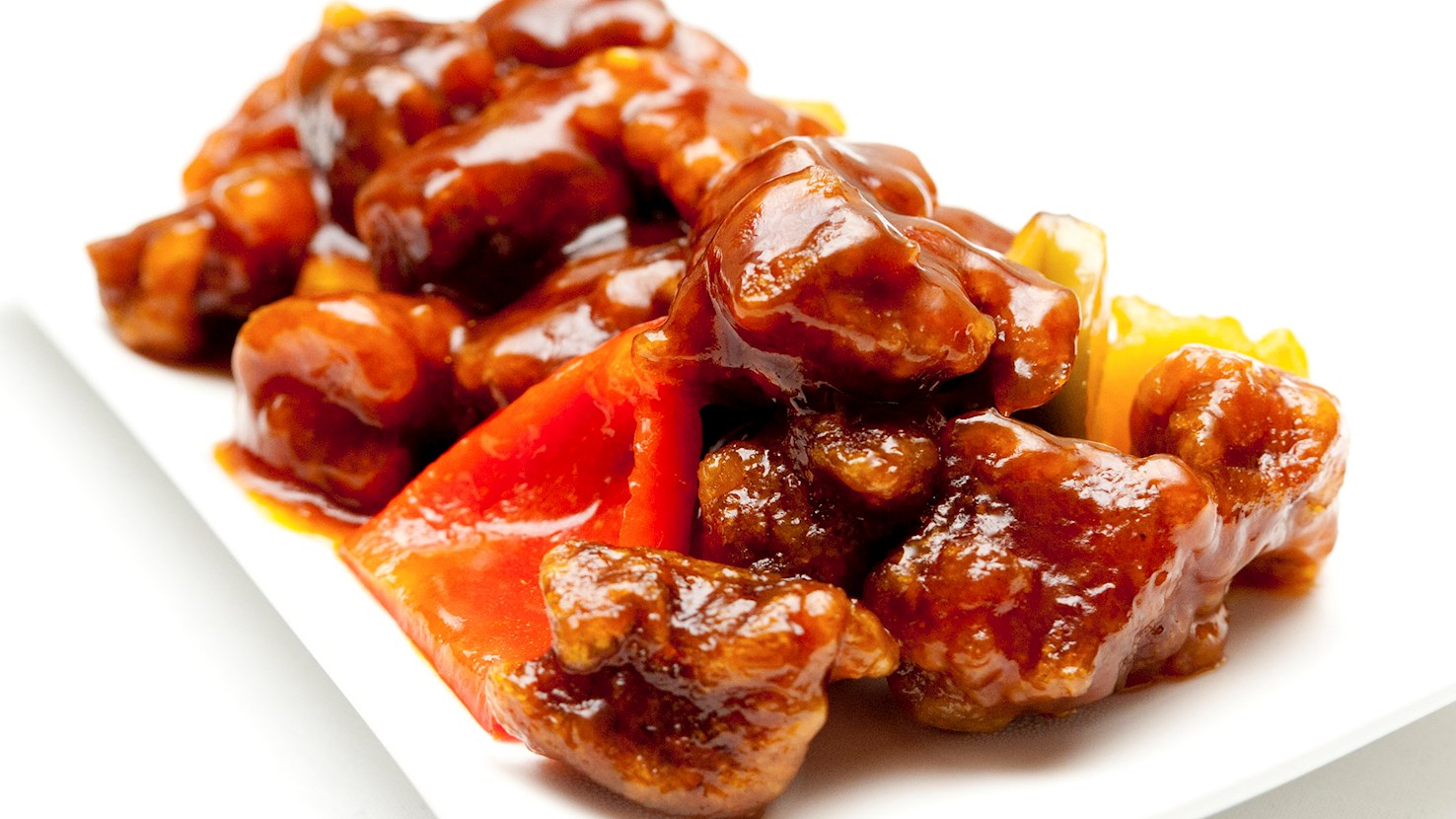
Sweet and sour spare ribs is a popular Chinese dish that is mostly consumed in restaurants since it is somewhat hard to prepare it at home. Spare ribs are first marinated, deep-fried, then dipped in Chinese sweet and sour sauce. Traditionally, the dish is served as an appetizer and is extremely popular in the southern parts of China. In Chinese culture, pork symbolizes prosperity, so the dish is often prepared and served for Chinese New Year. The Chinese people love to serve sweet and sour dishes during the festive time because the word sour (syun in Cantonese) sounds like the word grandchild when pronounced, giving hope for a new offspring. It is recommended to pair this decadent appetizer with a glass of ice-cold beer.
Often referred to as the Chinese ravioli, wontons are a variety of thin-skinned dumplings with meat, seafood or vegetable filling enclosed in tender wheat dough wrappers. Many sources suggest that the origins of wontons date back to the Han dynasty era, when they used to be prepared for the Chinese ancestor worship rituals as offerings to the spirits of the deceased. As the Han era concluded, circa 220 CE, the northern Chinese farmers who had long grown wheat discovered they could ground this grain into flour and knead it with water. From this practice emerged an entire world of new dishes known as bing, which was a collective name for steamed breads, grilled flatbreads, noodles, and various dumplings. These dishes soon became so popular they were sold anywhere from river boat food vendors to the streets, enjoyed both by royalty and the common folk. Over time, wontons have evolved and spread from Northern China throughout the country and beyond. Traditionally prepared during the Winter Solstice Festival, they were cooked in chicken broth until almost translucent and enjoyed as a heartwarming soup typically flavored with white pepper, sesame, and oyster oil. Nowadays, wontons are available in numerous varieties. In the North, they are most often stuffed with pork or lamb, while the classic Shanghainese filling includes minced pork and bok choy cabbage, flavored with the wild green called shepherd’s purse. Further to the south, people make their wontons with egg wrappers and fill them with a combination of pork and shrimp, while in Cantonese cuisine, wontons are often served as an appetizer, deep-fried and smothered in sweet-and-sour sauce. In the neighboring province of Fujian, they are better known as bianshi and are sometimes stuffed with fish paste. The so-called three treasure wontons, also known as Sanxian huntun or wuxi Sanxian wontons are stuffed with pork, dried shrimps, and pickled vegetables, and typically served in a spicy tofu and egg soup. Sichuan pork wontons are called chao shou, and they are traditionally served either in qing tang, a clear vegetable broth flavored with cilantro and other leafy greens, or in a spicy hong you chili oil sauce. Hong Kong-style wontons are filled with shrimp and lightly seasoned pork flavored with ginger, yellow chives, soy sauce, and sesame oil.
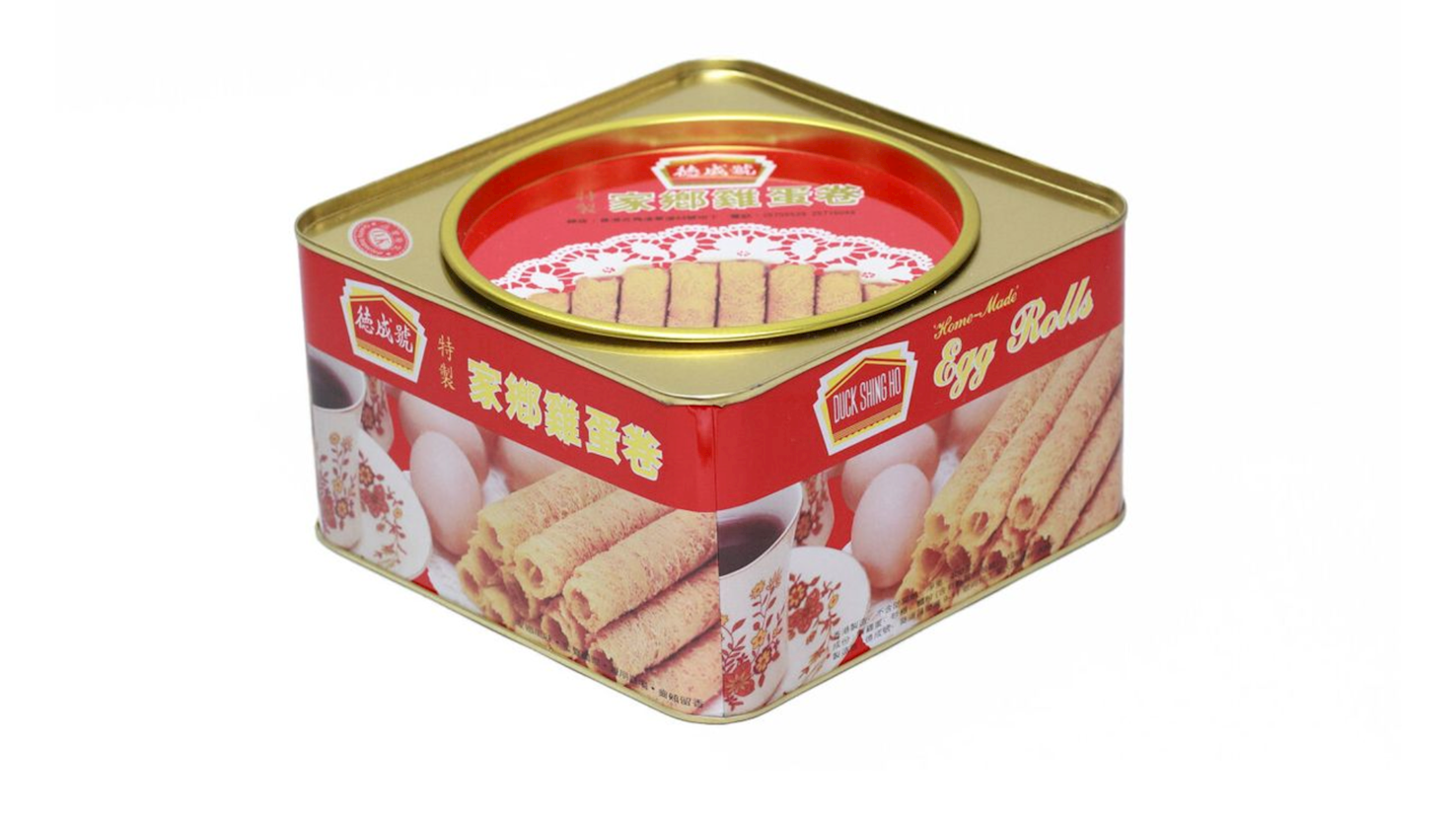
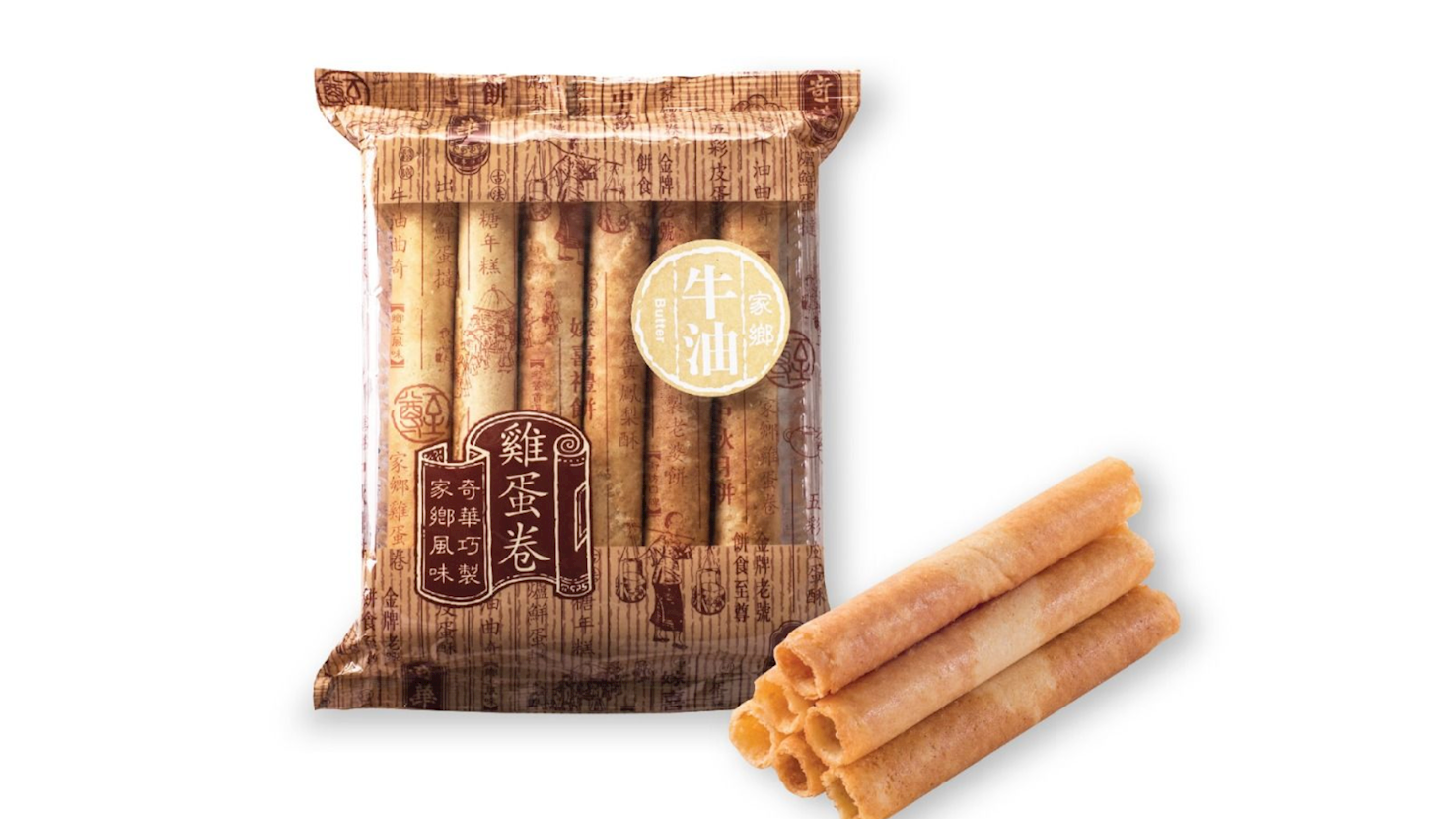
Duck Shing Ho is a Hong Kong family-owned producer of traditional Chinese baked goods, best known for its handmade egg rolls. The company has been in operation for more than a century and is widely regarded as one of Hong Kong's most renowned makers of this iconic specialty. Production is based on traditional recipes and small-batch methods, using simple ingredients such as eggs, butter, flour, and sugar without industrial mass production. Owing to its limited daily output, the products often sell out shortly after the shop opens, with customers frequently queuing or placing advance orders, especially during major Chinese festivals. In addition to its classic egg rolls, the company produces butter and coconut varieties, as well as traditional Chinese biscuits and seasonal festive pastries. Operating from a single family-run shop in North Point, Duck Shing Ho has earned a reputation among both locals and visitors for producing some of Hong Kong's most sought-after traditional baked goods.
Kee Wah Bakery is a Hong Kong manufacturer of traditional Chinese pastries and bakery products, founded in 1938 by Wong Yip Wing. The company began as a small neighborhood grocery store on Shanghai Street in Yau Ma Tei before gradually expanding into the production of traditional Chinese baked goods. Over the decades, Kee Wah Bakery has become one of Hong Kong's best-known heritage bakery brands, recognized for preserving classic recipes while modernizing production and packaging. Its product range includes mooncakes, Chinese bridal cakes, almond biscuits, egg rolls, wife cakes, pineapple pastries, cookies, and a variety of seasonal specialties. Although production has expanded with modern manufacturing facilities, many products continue to follow traditional recipes and preparation methods that reflect Hong Kong's baking heritage. Kee Wah places particular emphasis on consistent quality, carefully selected ingredients, and attractive gift packaging, making its products popular both for everyday consumption and as souvenirs. The company has grown from a local bakery into an international brand with retail stores across Hong Kong, Mainland China, Taiwan, Singapore, and the United States. Today, Kee Wah Bakery is widely regarded as one of the leading representatives of Hong Kong's traditional bakery culture, with its mooncakes and Chinese pastries among the city's most recognizable food specialties.
TasteAtlas food rankings are based on the ratings of the TasteAtlas audience, with a series of mechanisms that recognize real users and that ignore bot,
nationalist or local patriotic ratings, and give additional value to the ratings of users that the system recognizes as knowledgeable.
For the “Top 31 Chinese Appetizers” list until October 15, 2026, 4,186 ratings were recorded, of which 3,649 were recognized by the system as legitimate.
TasteAtlas Rankings should not be seen as the final global conclusion about food. Their purpose is to promote excellent local foods,
instill pride in traditional dishes, and arouse curiosity about dishes you haven’t tried.
The initial list of top producers was compiled based on available reviews, awards, local recommendations, media and blog coverage, and consumer reviews.
The list will be updated with ratings from TasteAtlas local ambassadors and TasteAtlas users.



What People Say