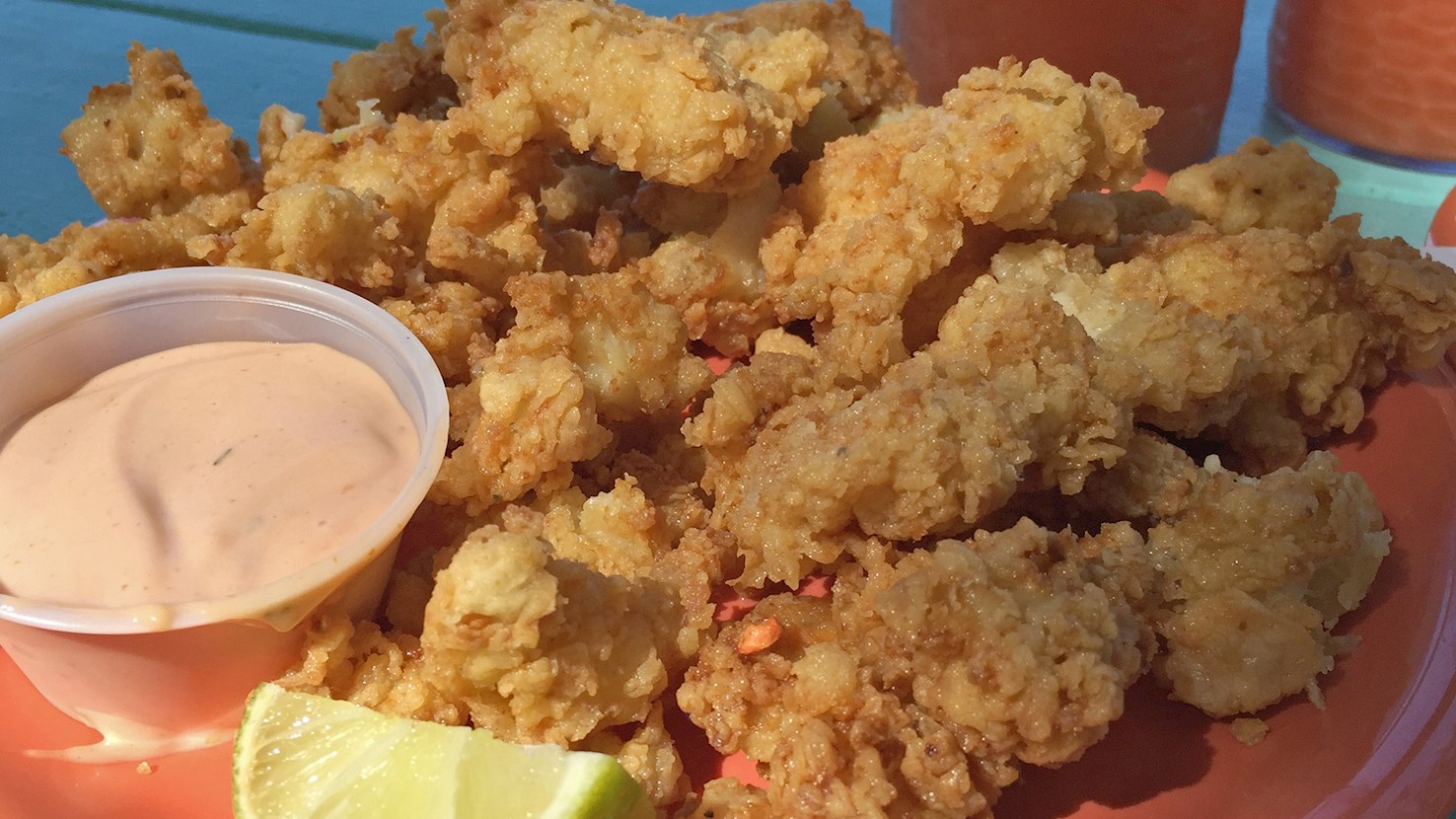
Cracked conch is one of the most popular Bahamian dishes – conch meat is breaded in a batter made with flour, then deep-fried until golden and crispy. The name of this dish refers to a method of tenderizing the tough, chewy meat with a meat mallet or a frying pan. These golden conch nuggets are typically paired with french fries or peas and rice. When paired with french fries, the dish is usually served on a sweet bread roll with ketchup or hot sauce on the side. It can also be consumed as an appetizer, when it is served with fresh lime juice and goat pepper sauce.
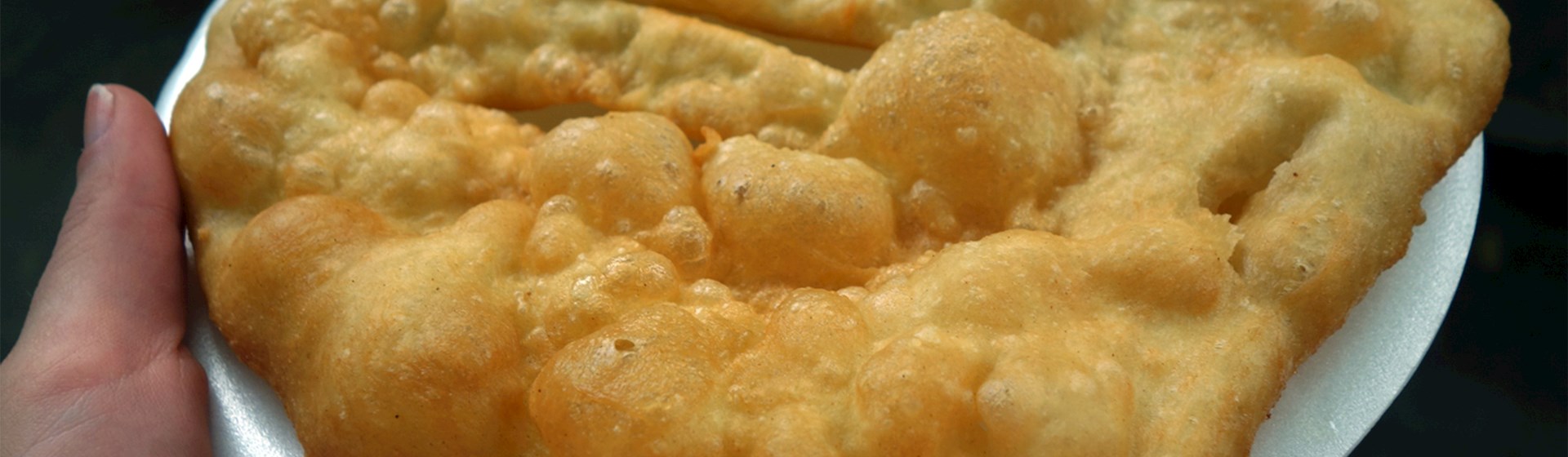
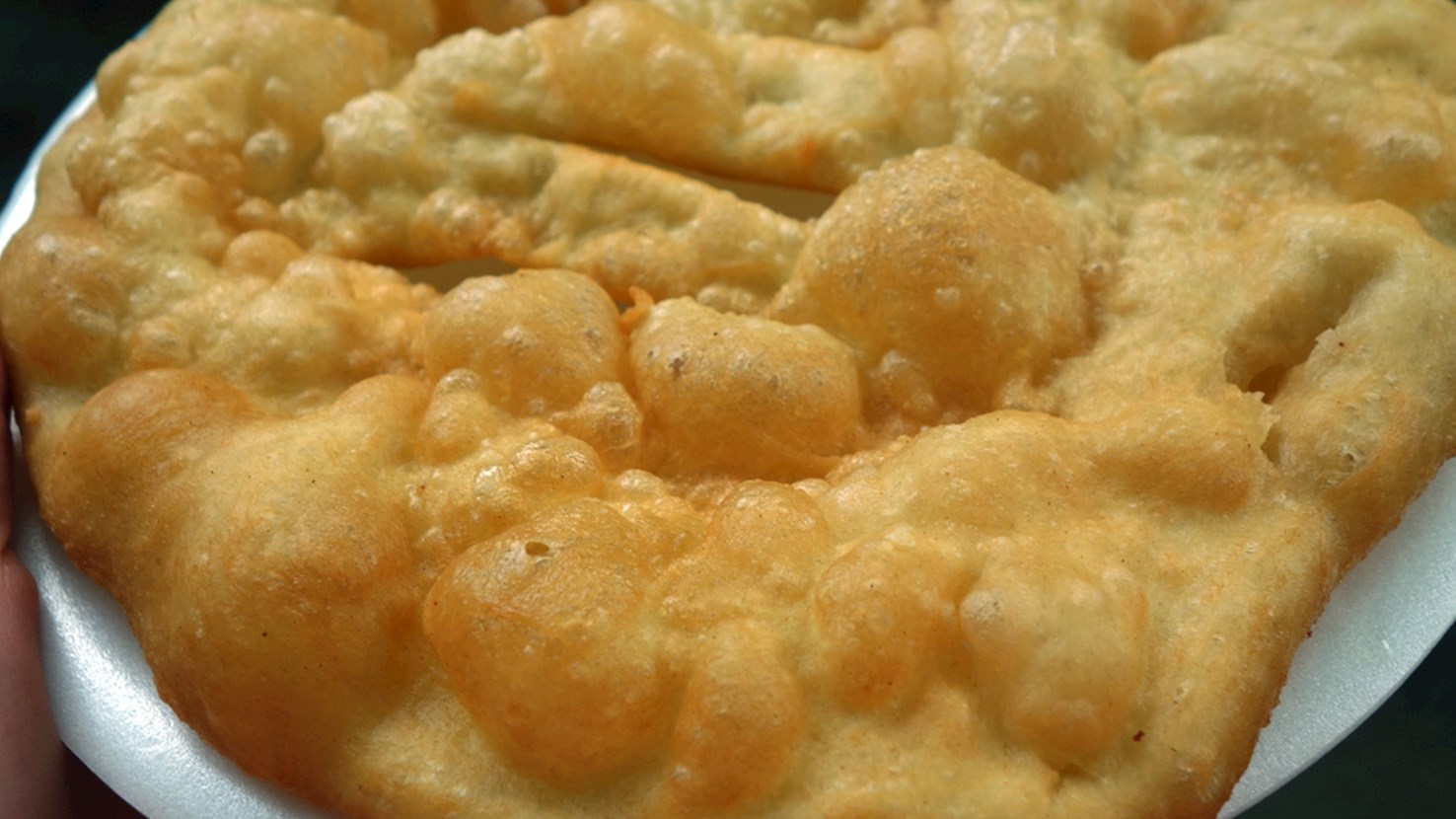
Yaniqueque or yanikeke is a Dominican fried bread with a crispy and crunchy texture. It is made with flour, salt, melted butter, and baking powder. The dough is rolled into thin circles with crimped edges, and it is then fried in hot oil until golden brown. Yaniqueques are typically placed on paper towels in order to let out excess oil. They can be found throughout the country, on numerous streets and beaches. It is believed that this is a variation on the johnny cakes, and the dish was brought to the country in the 1900s by Afro-Caribbean immigrants. Although yaniqueques are usually served with ketchup, they can also be sprinkled with salt, cinnamon, or sugar.
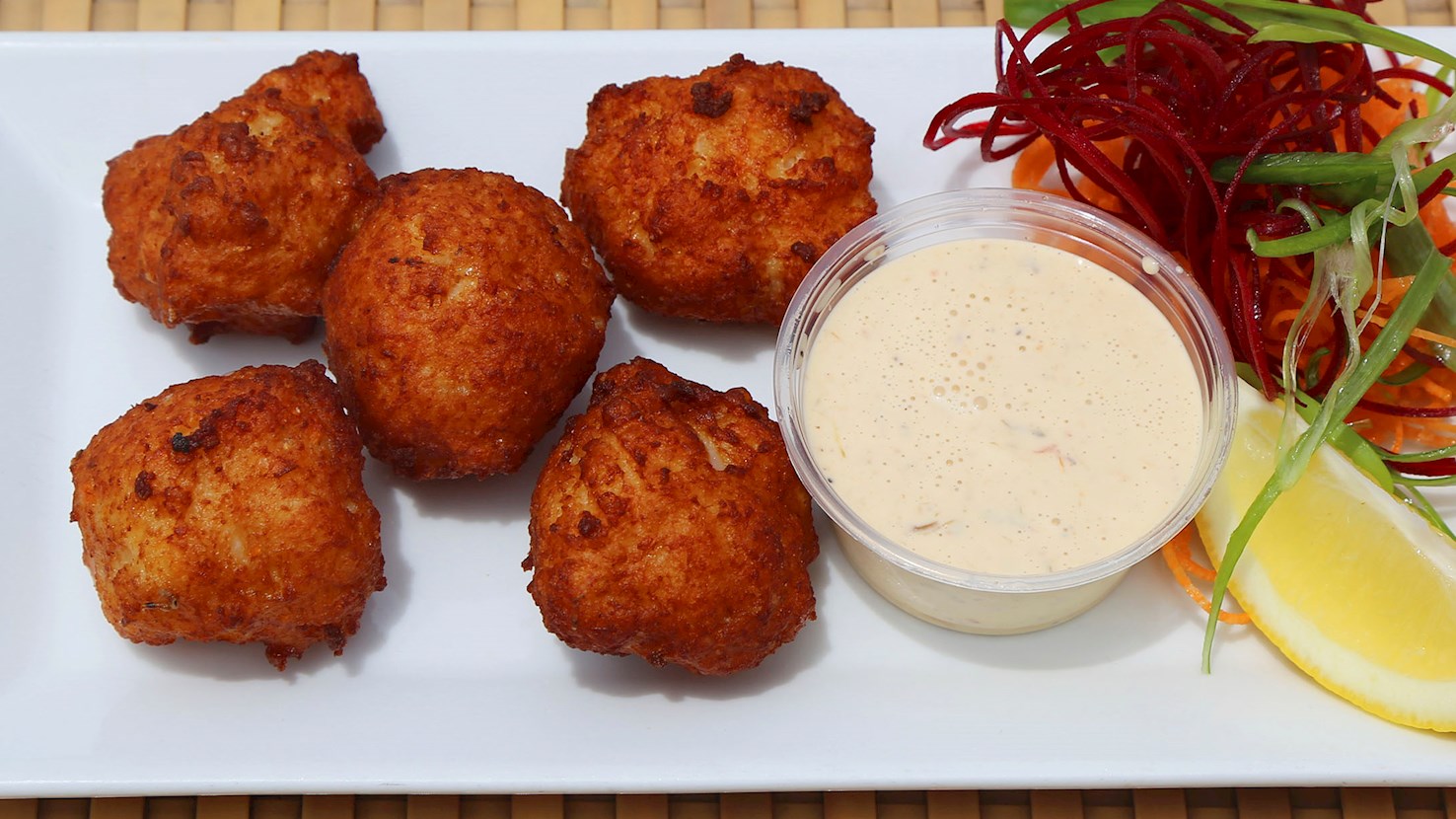
A delicacy of Caribbean and Creole cuisine, conch fritters are the national dish of sunny Bahamas. It consists of pounded, tenderized conch meat that is fried in batter with tomatoes, onions, celery, bell peppers, and various, often peppery seasonings. Conch meat is combined with vegetables because it takes a lot of effort to obtain a small amount of meat, and it's a way of making every bit of meat count. Usually tough and sturdy, conch meat greatly benefits from being cooked in tiny, diced pieces. Due to the popularity of conch in the Caribbean, one can easily find the dish throughout the islands, with many of the cooks adding their own spices to the mix in order to keep their menu unique. Therefore, it's best to try it at a few restaurants to compare different textures and flavors of the fritters. Fried until golden brown and crispy, this appetizer is best accompanied by a Bahamian-style dipping sauce consisting of lime juice, mayonnaise, ketchup, hot sauce, salt, and pepper.
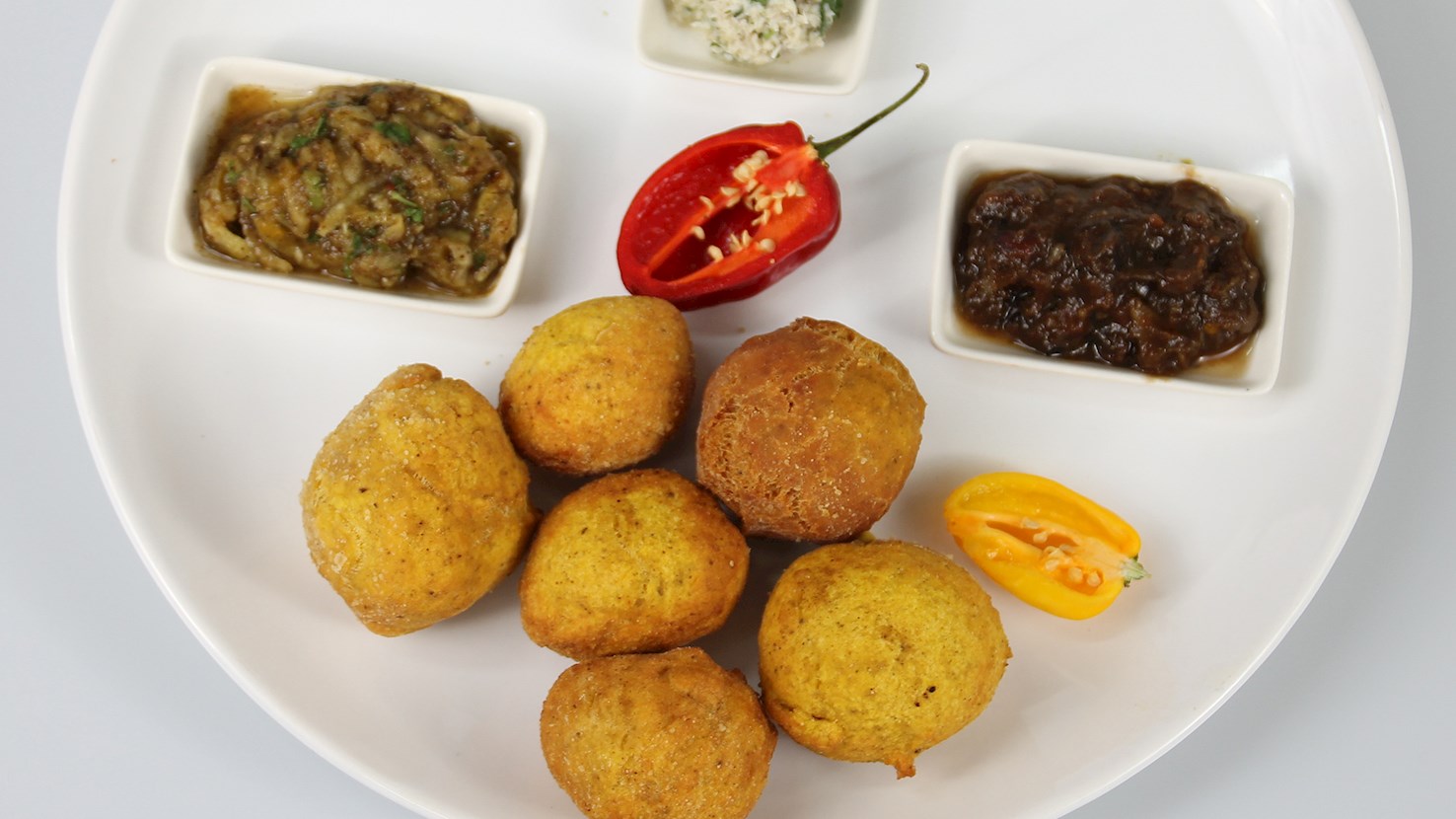
Pholourie is a Trini appetizer or a snack that is traditionally prepared and served at religious gatherings or birthday parties. This fritter is made with a split pea batter that is seasoned with hot peppers and various spices. The batter is dropped into hot oil and fried until it develops a golden brown color. Pholouries can also be found at numerous bakeries throughout the island. The snacks are typically served with sauces or chutneys on the side.
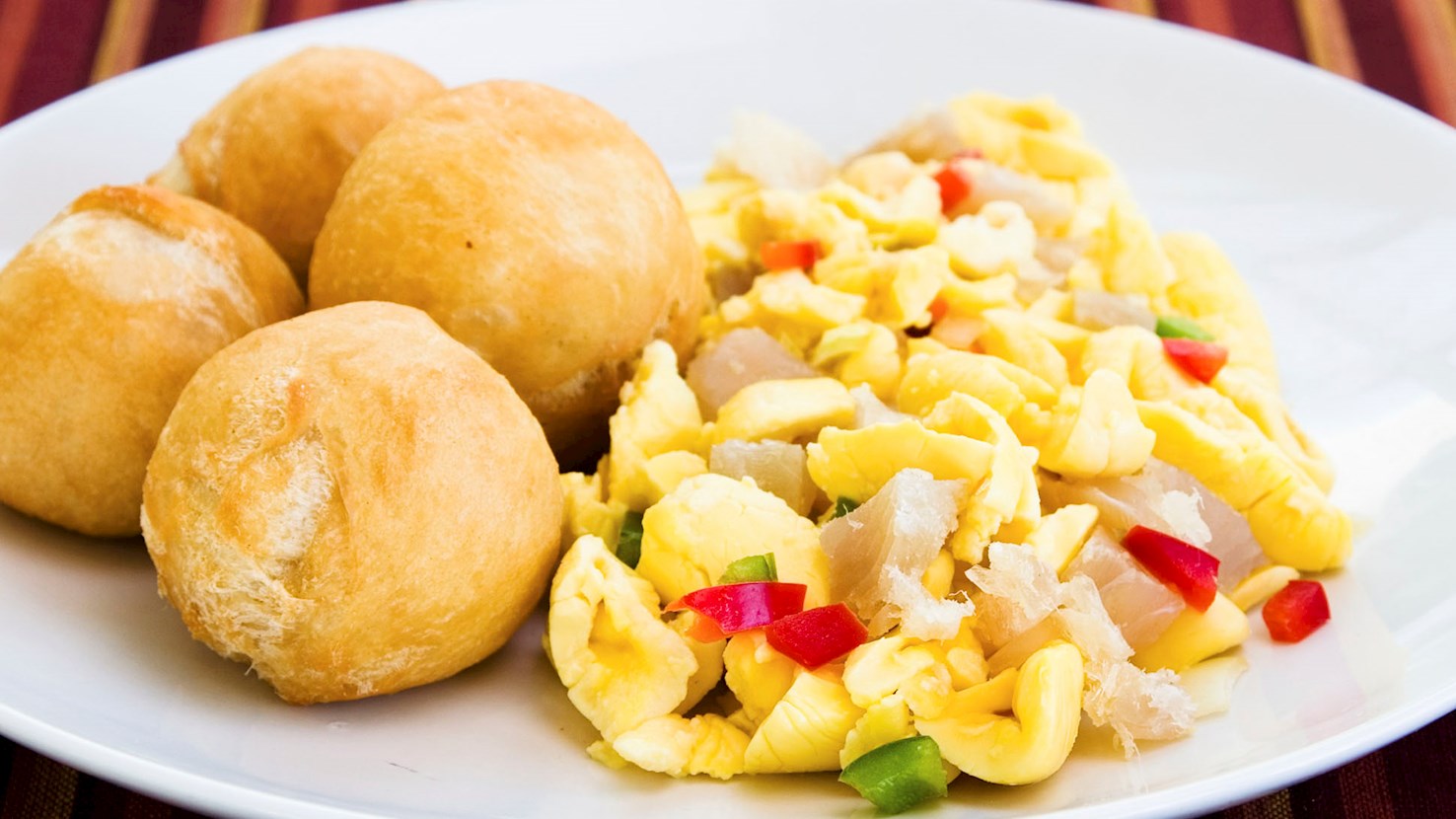
Ackee and saltfish is a dish made by combining the cooked flesh of the ackee fruit with flaked salted cod, sautéed aromatics, and seasonings such as Scotch bonnet pepper, thyme, scallion, onion, and tomato. It is widely regarded as Jamaica’s national dish and is eaten across the island for breakfast, lunch, and dinner. Ackee (Blighia sapida) originated in West Africa and was brought to Jamaica in the eighteenth century, where the tree adapted easily to the climate and became part of local diets. Salt cod arrived from the North Atlantic through colonial trade routes and became a dependable protein source because it was inexpensive and stored well in a tropical environment. Jamaican cooks combined these two ingredients, along with local herbs and peppers, over generations. By the nineteenth century, the pairing was established in domestic cooking and appeared in regional cookbooks and household records. Its growth in popularity coincided with the incorporation of Scotch bonnet pepper and fresh seasonings, which shaped the version recognized across Jamaica today. Preparation begins by cleaning and boiling ackee until the yellow arils soften and open naturally, ensuring they are fully ripe and safe to eat. The boiled ackee is drained carefully so the pieces remain intact. Saltfish is soaked or boiled to reduce salinity, then flaked and checked for bones. In a pan, onion, scallion, thyme, garlic, tomato, and Scotch bonnet pepper are sautéed until fragrant. The flaked saltfish is added and cooked briefly before the ackee is folded in gently to avoid breaking it apart. The mixture is simmered until the flavors meld without turning the ackee into a mash. Some versions include sweet pepper or black pepper, while others keep the seasoning minimal. Ackee and saltfish is eaten throughout Jamaica in homes, cookshops, hotels, and roadside eateries. It is commonly served with boiled green bananas, fried dumplings, roasted breadfruit, yam, or festival. At lunch it may appear with rice and peas or plain rice. Beverage pairings include ginger tea, cocoa tea, lime water, sorrel drink, or cold beverages such as ginger beer or ting. The dish’s versatility and presence across meal types make it one of the most recognizable representations of Jamaican cuisine.
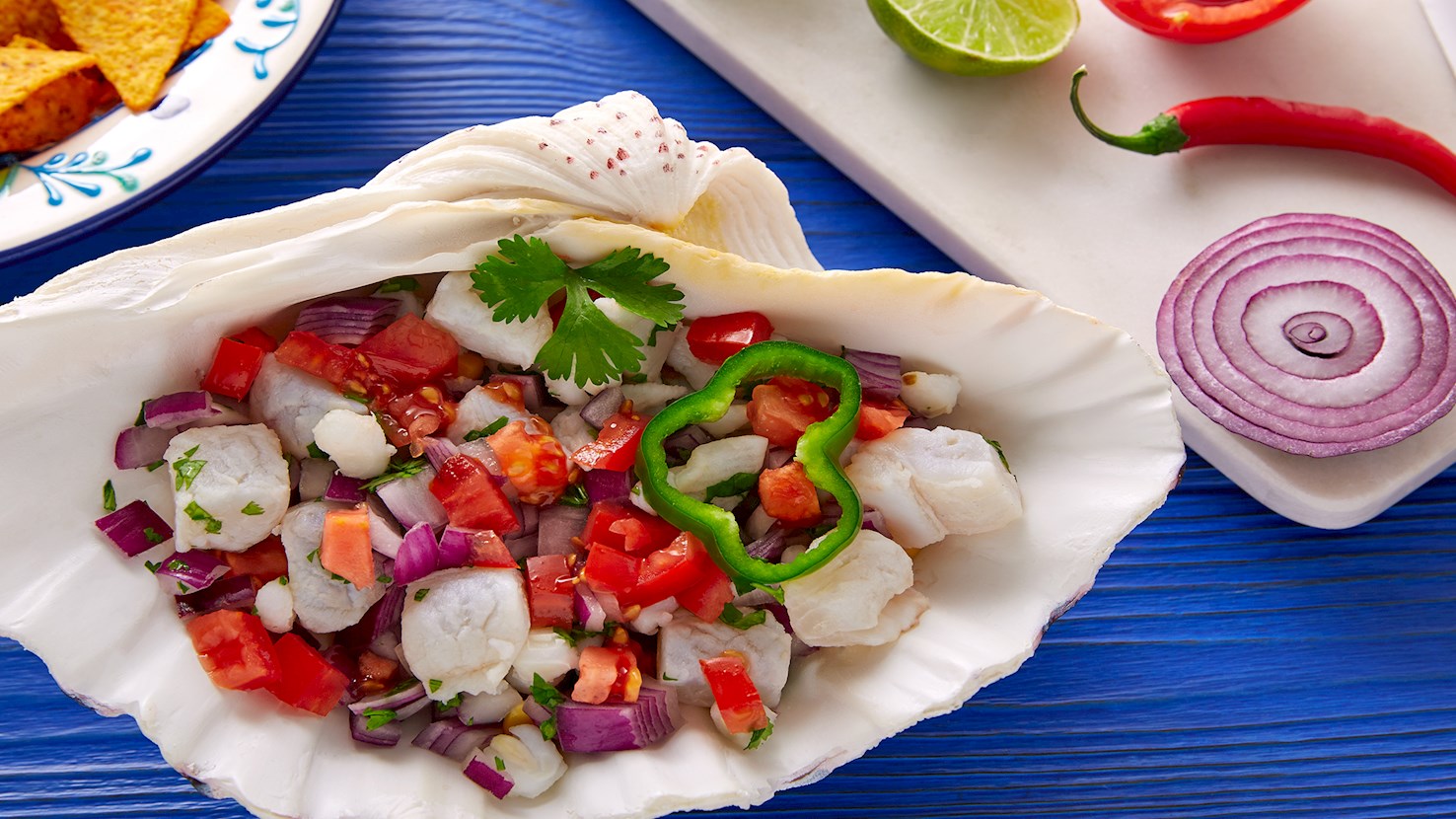
Conch ceviche is a Bahamian twist on the classic ceviche, made with conch meat as the key ingredient. It typically consists of conch meat, tomatoes, red onion, scotch bonnet peppers for heat, and diced mango for a small touch of sweetness. This ceviche variety is typically dressed with freshly squeezed sour orange and key lime juice. After the dish has been seasoned with salt and pepper and tossed, it should be served immediately.
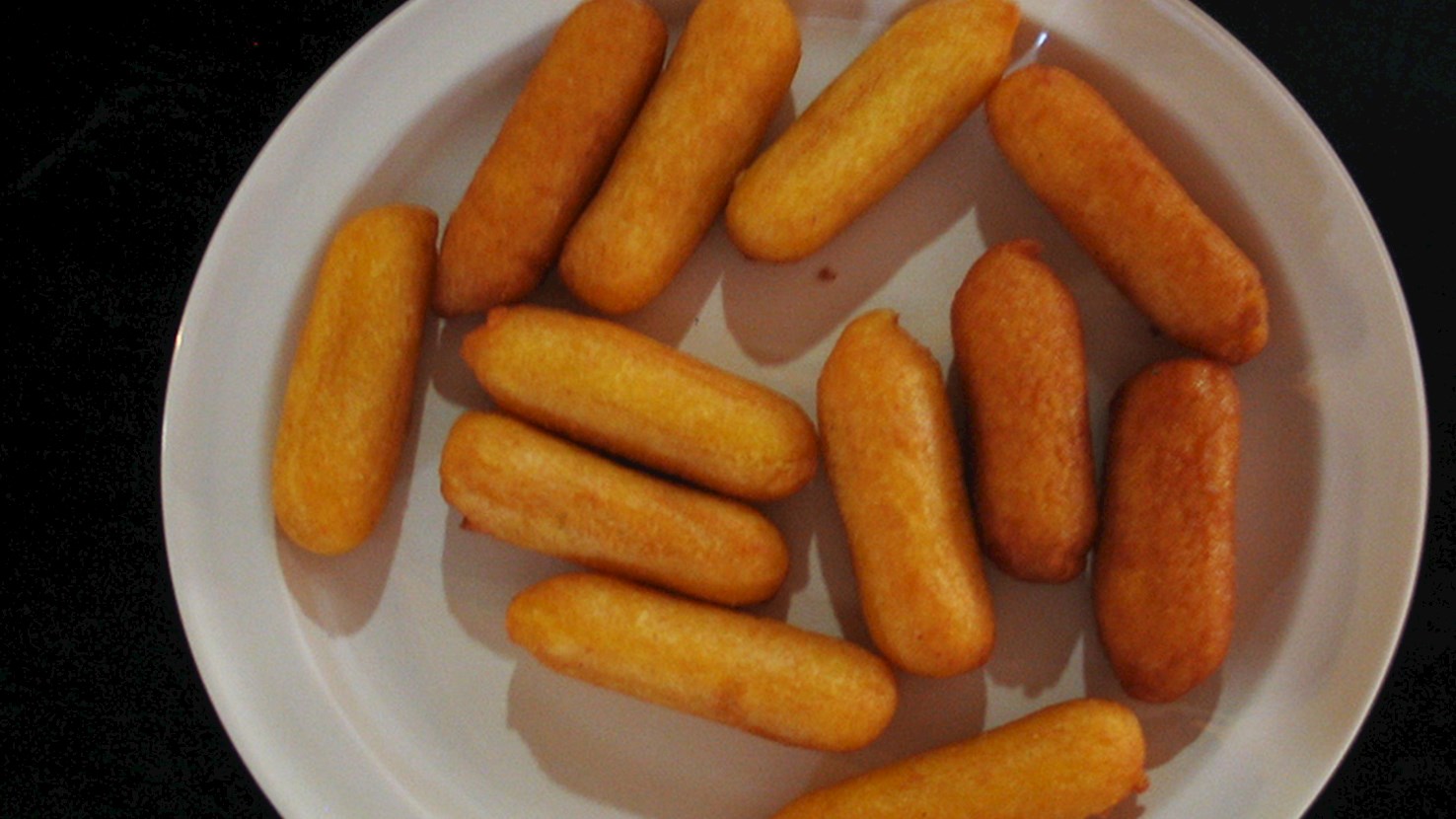
Sorullos are Puerto Rican fried corn sticks that are traditionally served as an appetizer. They consist of cornmeal dough that is often combined with cheese, then rolled into the shape of a cigar before frying. When prepared, the texture should be crisp and crunchy on the exterior, while the interior remains tender. These snacks are usually served hot, and it is recommended to pair them with dips such as mayonnaise and ketchup.
Accra is a traditional fritter that is usually made with black-eyed peas, scallions, onions, garlic, bell peppers, chili peppers, eggs, flour, baking powder, and malanga – a nutty-flavored root that is closely linked to cassava and potatoes. In order to prepare accra, all ingredients are mixed together, then fried in hot oil until golden brown. Accra can be served on its own as a snack or an appetizer, but it is most commonly served at festive events with plantains, salads, and fried pork, beef, or chicken.
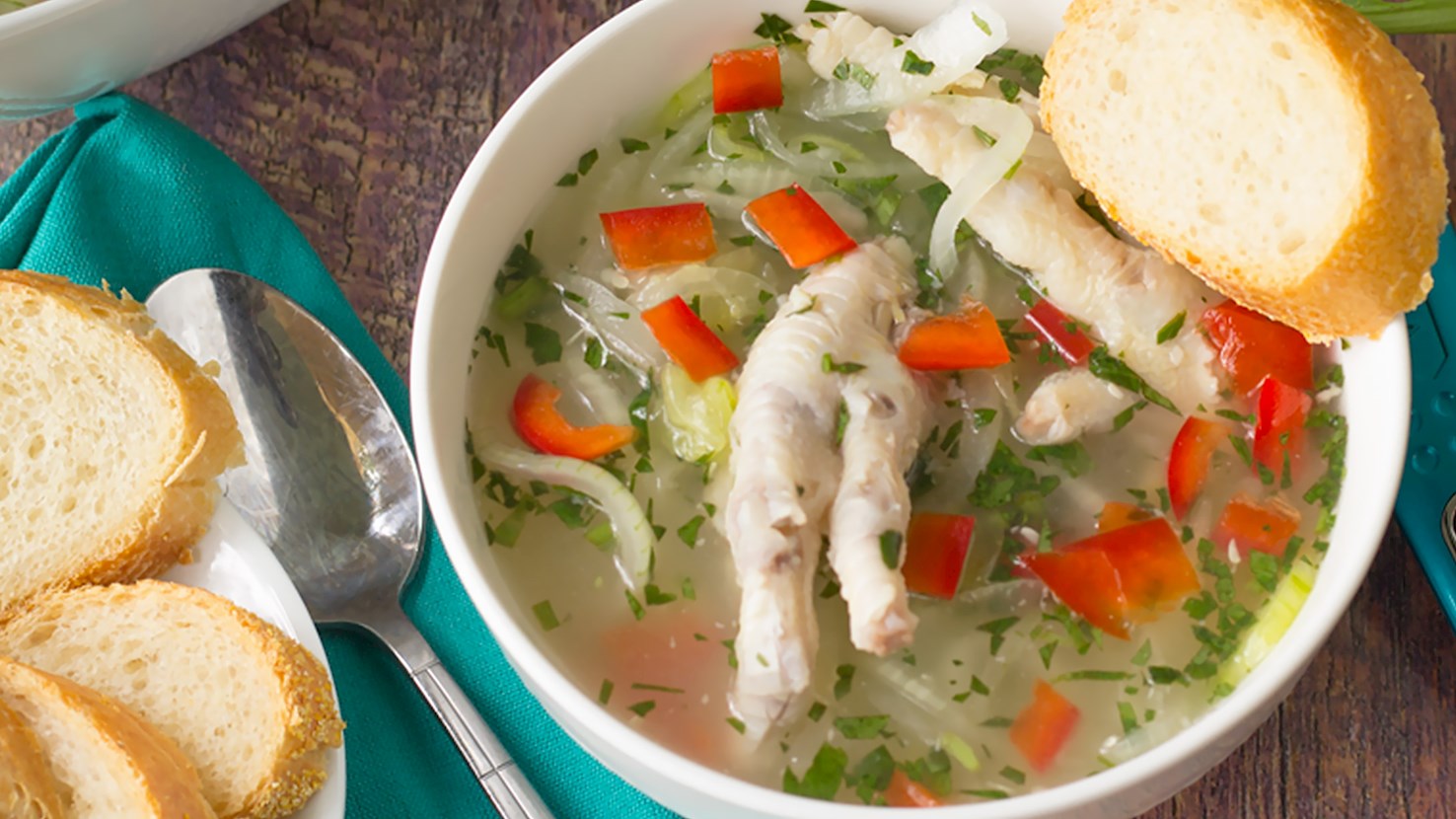
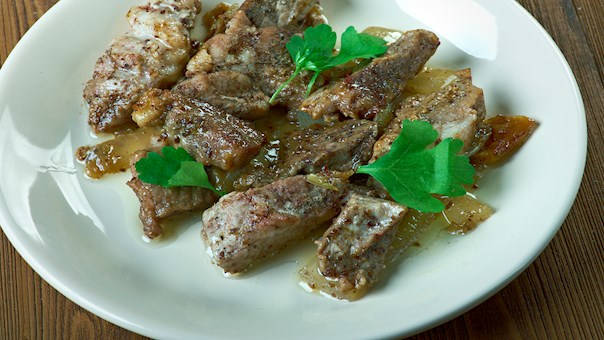
Enjoyed throughout the Caribbean, souse is a versatile dish that is typically prepared with pork, namely some of the less-favored cuts such as head, feet, knuckles, or tail, while other versions also employ beef or chicken feet. The cuts are cooked until tender and are then doused in a vinegar and lime-based combination of various spices, herbs, and sliced vegetables. The dish is often compared to aspic or head cheese, though its consistency is not as firm and it is traditionally marinated for a short period. Souse comes in different regional varieties, but it is usually enjoyed as a cold appetizer or as an accompaniment to black or white pudding.
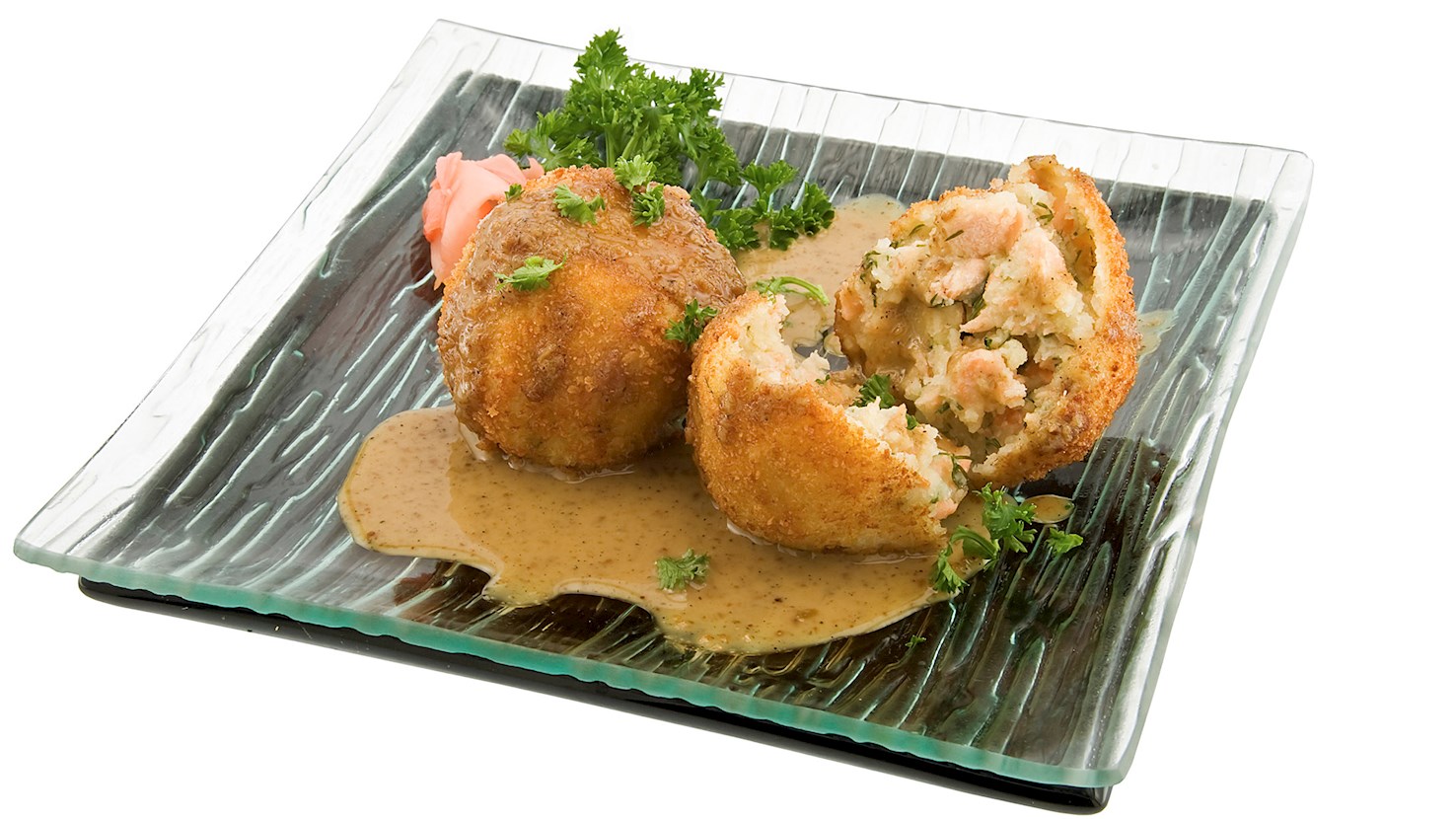
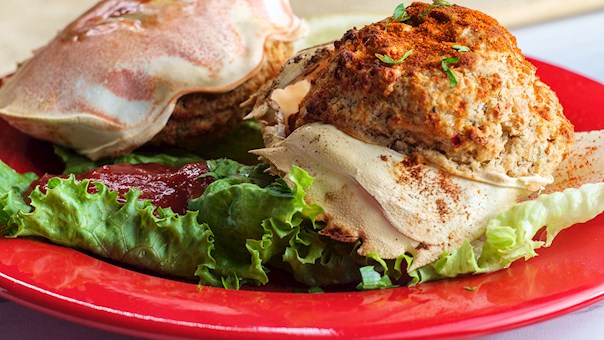
Balchi di pisca are Curaçaoan and Aruban fish cakes, a dish typically made from any of the islands local white-flesh fish, including cod, grouper, or red snapper. Salmon or mahi-mahi are also commonly used as key ingredients for the dish. The fish is combined with boiled potatoes and spices, then fried in hot oil until it becomes golden brown in color. Fish cakes are usually served as an appetizer before the main meal, or as a side dish accompanying the main meal.
TasteAtlas food rankings are based on the ratings of the TasteAtlas audience, with a series of mechanisms that recognize real users and that ignore bot,
nationalist or local patriotic ratings, and give additional value to the ratings of users that the system recognizes as knowledgeable.
For the “Top 16 Caribbean Appetizers” list until June 15, 2026, 252 ratings were recorded, of which 182 were recognized by the system as legitimate.
TasteAtlas Rankings should not be seen as the final global conclusion about food. Their purpose is to promote excellent local foods,
instill pride in traditional dishes, and arouse curiosity about dishes you haven’t tried.