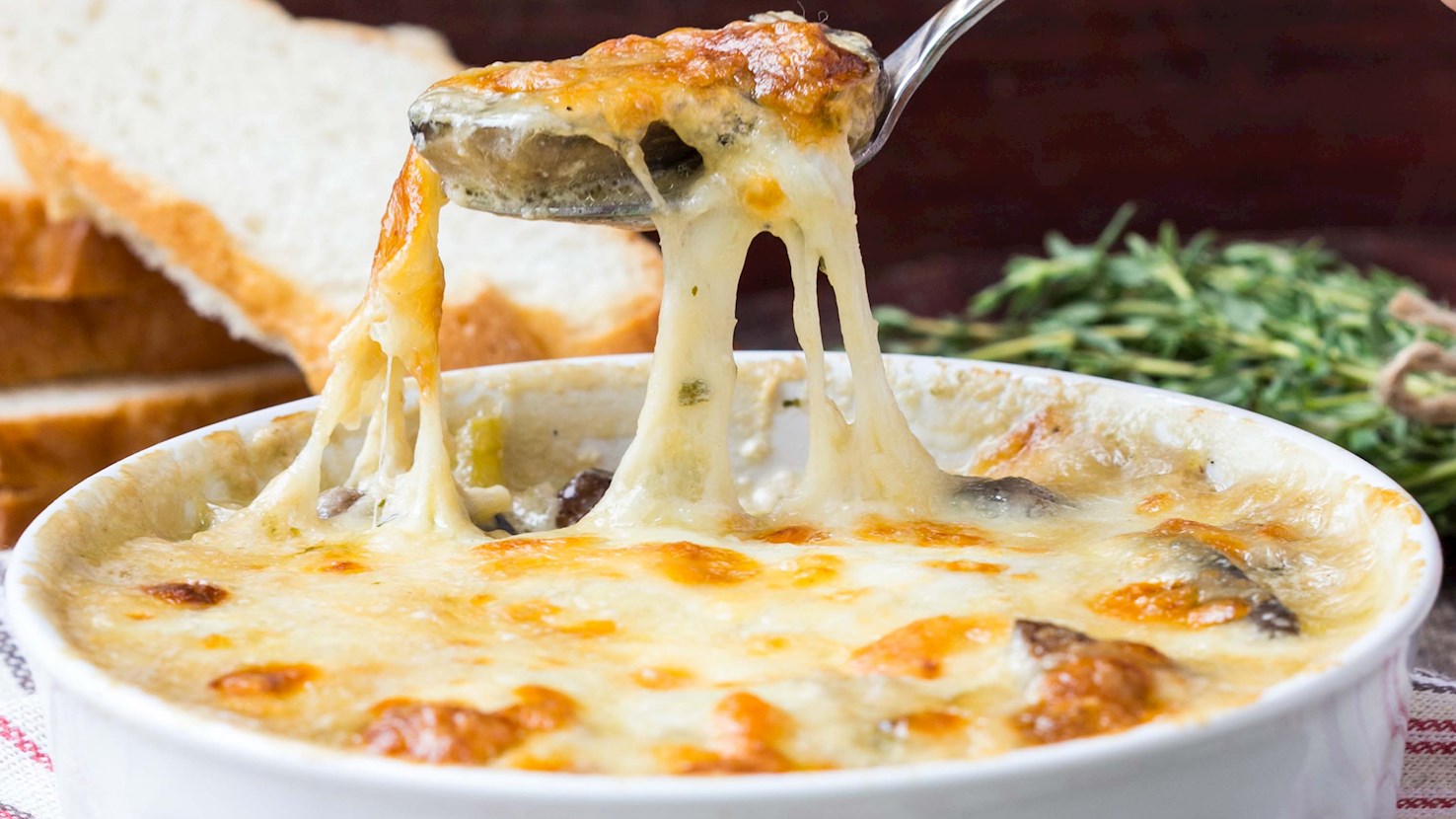
Mushroom julienne, or zhulien, is a hot appetizer of mushrooms and onions baked in a rich cream or sour-cream sauce beneath a layer of melted cheese. It is usually served in a small individual metal or ceramic vessel called a kokotnitsa, producing a concentrated portion with a browned cheese crust and a thick, creamy mushroom filling underneath. Chicken is another common addition, while seafood and other fillings appear in less common versions. The name has an unusual history. In French culinary terminology, julienne refers to food, especially vegetables, cut into long, fine strips similar to matchsticks. The term was in print by the early eighteenth century, and its exact etymology remains uncertain. In Russia, the borrowed word gradually acquired a very different meaning. Instead of referring only to the knife cut, zhulien became associated with a category of small, hot appetizers baked with sauce, especially mushrooms or poultry with sour cream or béchamel and grated cheese. Versions of this type were already served in restaurants before the Revolution, but the precise moment when the French term became attached to the baked appetizer is not securely documented. It became firmly established during the Soviet era, when mushroom julienne was a familiar restaurant and banquet-menu starter. By the second half of the twentieth century, the small handled kokotnitsa and its bubbling cheese-topped filling had become closely associated with formal restaurant service. The classic mushroom version begins with onions softened gently in butter until translucent. White button mushrooms are the most accessible choice, although porcini, chanterelles, and other woodland mushrooms can give the filling a deeper flavor. The mushrooms are sliced into strips or small pieces and added to the hot pan. They release a considerable amount of liquid as they heat, so they are usually left over fairly strong heat until that moisture has evaporated and the mushrooms begin to brown. The creamy binder varies. Often it’s sour cream, sometimes mixed with a little flour so that it thickens evenly and remains stable during baking. Another is béchamel based on butter, flour, and milk. Cream may also appear on its own or together with sour cream. Once added to the mushrooms and onions, the sauce is heated gently until it coats the ingredients and forms a thick ragout rather than a loose liquid. The mixture is then divided among kokotnitsas. These are small portion-sized vessels, historically most often metal, with a narrow body and a long handle. Typical examples hold roughly 100–150 ml and were designed specifically for hot appetizers served directly from the oven. Ceramic ramekins are now equally practical when the characteristic metal vessels are unavailable. To finish, a layer of grated semi-hard or hard cheese covers the mushrooms, with Gouda, Edam, Gruyère, and Emmental being the typical choice. The filled vessels are placed in a hot oven until the sauce bubbles around the edges, and the cheese melts into a golden crust. The ideal result has a clear contrast between the surface and the filling. The cheese should be melted and browned, while underneath it the mushrooms remain juicy and are held together by a thick, smooth dairy sauce. The sauce should not be watery, which is why allowing the mushrooms to release and evaporate their moisture before adding the dairy is important. One of the most popular variations adds chicken. Cooked chicken is cut into fine strips or small pieces and combined with the mushrooms before the sauce is added. This produces a more substantial version while retaining the same sour-cream or béchamel base and cheese topping. Chicken-and-mushroom julienne became particularly common on restaurant and banquet menus. Shrimp, scallops, squid, fish, or combinations of seafood can replace the mushrooms or accompany them. Because seafood toughens quickly, it requires much less time in the pan before the sauce and final oven heating. Mushroom julienne is served immediately after baking. The kokotnitsa arrives extremely hot and is normally placed on a small underplate or saucer covered with a napkin or paper doily, protecting the table and making the vessel easier to handle. Decorative paper covers, or papillotes, have also been fitted around the handles in formal restaurant service. The appetizer is eaten directly from the kokotnitsa rather than transferred to another plate. A small cocotte fork may accompany it, although a teaspoon or coffee spoon is also used. The utensil breaks through the browned cheese layer and reaches the creamy mushroom mixture underneath. Its place at banquets also explains its association with alcoholic drinks and larger meals. Hot julienne could appear among the sequence of appetizers served around vodka and other spirits, followed by more substantial courses. The idea that its high fat content was specifically intended to “coat the stomach,” however, is better treated as a later explanation than as the appetizer's original purpose.
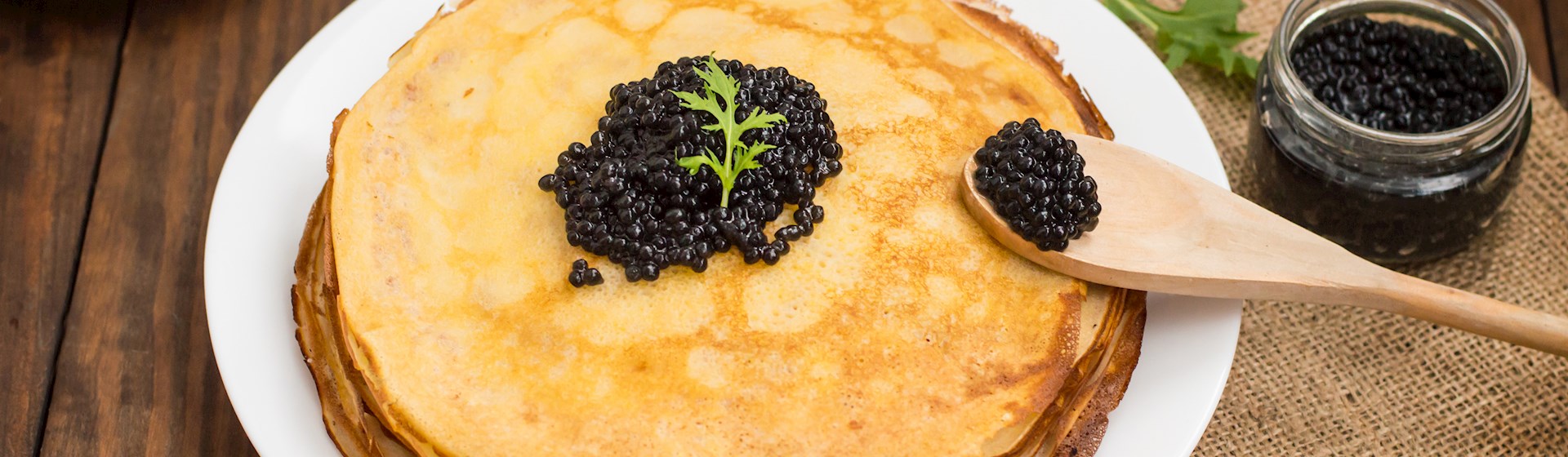
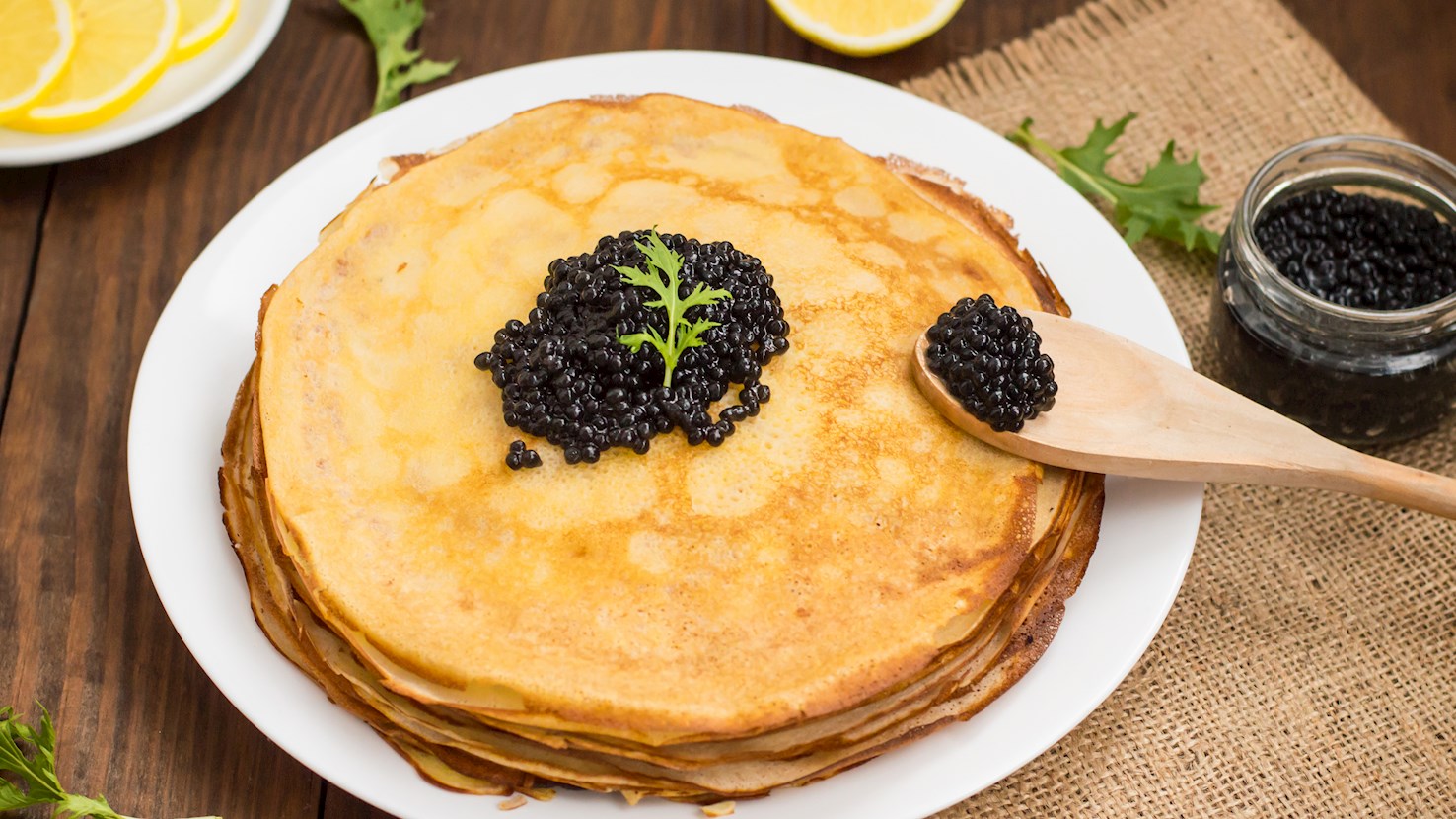
These traditional Russian pancakes are prepared with flour, eggs, milk, yeast, and a pinch of salt. What distinguishes them from other pancakes is the addition of yeast, since similar equivalents mostly do not add any leavening agents. The batter is poured over a hot pan, shaped into a circle, and fried for a couple of minutes on both sides. The tradition of preparing this traditional Russian dish originates from ancient times: it was a ceremonial dish, served during the pagan holiday called Maslenitsa – a week-long festivity praising the end of winter and the celebration of spring. With their shape and color, blini symbolized the long-awaited Sun. However, blini are not consumed exclusively during Maslenitsa, as they have become one of the most popular dishes in Russia, and are also commonly eaten around the world. Blini are extremely versatile and can be served with sweet or savory fillings. Some of the Russian favorites include various jams, condensed milk, while the most famous savory version is topped with fish roe or caviar.
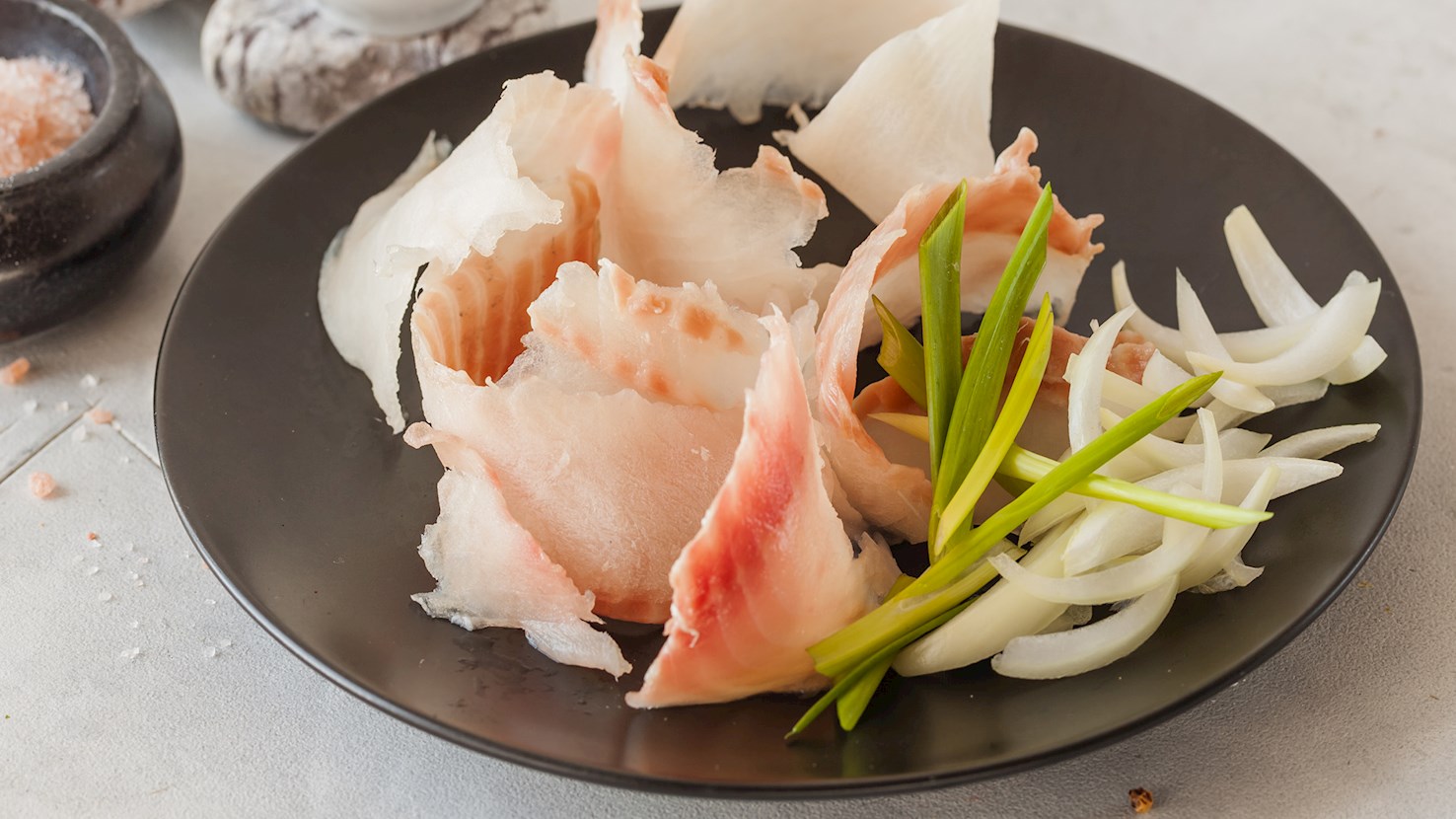
Stroganina is the Russian version of sashimi. It is prepared with a whole fish that is frozen raw after which it is skinned and cut with a sharp knife into incredibly thin slices. The pieces naturally curl, and they should be served immediately after slicing. Stroganina originates from the Russian Arctic, and it is traditionally prepared with whitefish such as omul, nelma, or muksun. The name of the dish stems from the word strogat, meaning to shave. Stroganina is traditionally paired with vodka and comes served on ice, usually accompanied by a combination of salt and pepper. A less common version is prepared with raw reindeer meat.
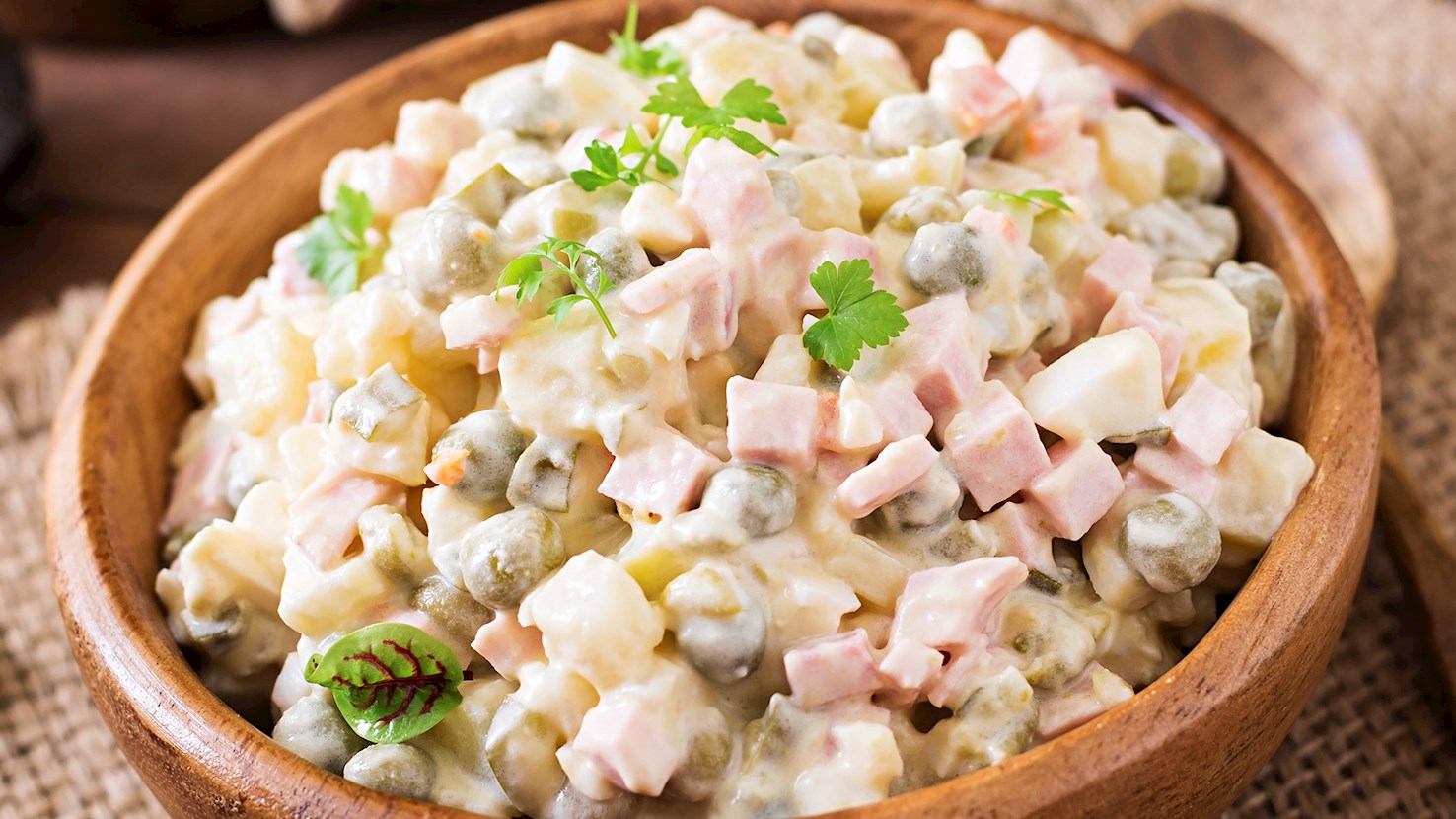
Olivier salad is a salad with variable ingredients, but it is typically made with chopped vegetables, meat, and mayonnaise. The key ingredients include diced potatoes, vegetables, eggs, chicken, or ham. This salad is one of the most important appetizers at the New Year's salad buffets in Russia, as well as in some of the other countries of the former USSR. The original was invented in the 1860s by Lucien Olivier, a chef in the popular Moscow restaurant called L'Hermitage. Olivier guarded the recipe until he died, but it is believed that the recipe was stolen by an employee who watched the chef at work, so the salad is still made today. Another theory says that the recipe for the new Olivier salad was developed by one of the restaurant's customers who wanted to keep the salad alive after the chef passed away. Olivier salad as we know it today is nothing like the original version, because it was called game bird mayonnaise, made with gourmet ingredients such as black caviar, capers, hen, and crayfish tails. Over time, the salad evolved and most of the gourmet ingredients have been replaced with more common ones such as peas, chicken, ham, and pickles. Today, the variations are endless, but most Russian chefs agree on one thing: adding carrots to the Olivier is a heresy. Interestingly, Olivier salad is also sometimes called Russian salad, while the meatless version is called French salad or francuska salata, probably due to the French name of its creator. The Spanish version is known as ensaladilla rusa. It is so popular in Spain that it's an important part of the Spanish gastronomy as well as being a staple in schools and summer camps all over the country. Ensaladilla rusa is also one of Spain's most popular tapas – in some cases, it's even served free of charge if you order a beer. There's also the Piedmontese insalata russa, typically consumed as an appetizer, and with many variations, so the salad might also include ingredients such as pickled cauliflower, anchovies, and tuna. Interestingly, in the Italian municipality of Carrù, tuna is an obligatory element of the salad.
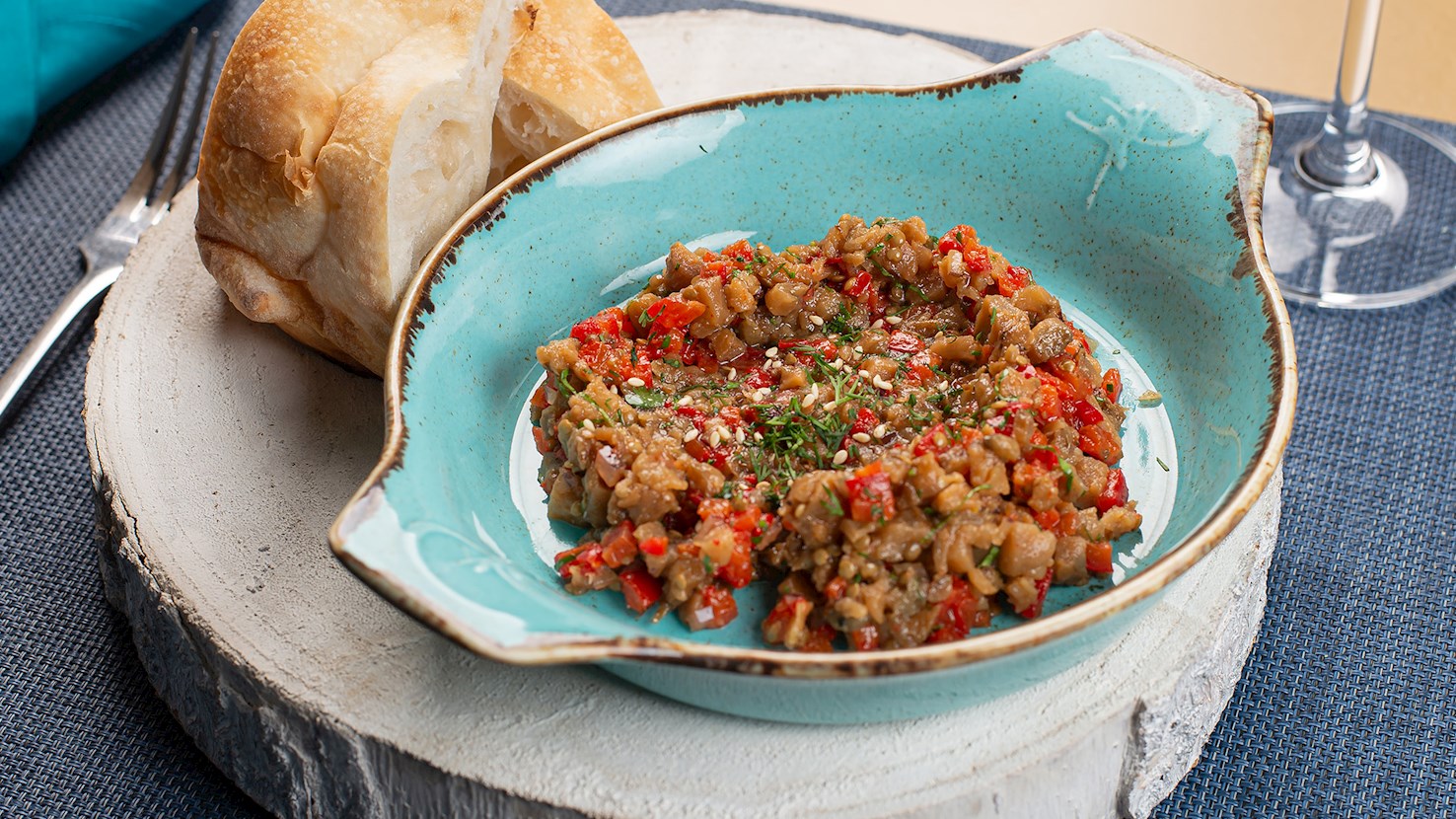
Baklazhannaya ikra is a traditional Slavic vegetable spread made primarily from eggplant. Often translated as "eggplant caviar," the dish is popular in Russia, Ukraine, and other Eastern European countries. Despite its name, it contains no actual caviar—the term "ikra" (икра) refers to its finely chopped, spreadable texture. It typically includes roasted or sautéed eggplant, peppers, carrots, onions, tomatoes, garlic, and sunflower or vegetable oil, all cooked down into a rich, savory spread. There are many regional and personal variations—some smooth and blended, others chunky and rustic. It's often served cold or at room temperature, spread on bread or crackers, and sometimes preserved in jars for winter. During Soviet times, it gained particular notoriety as a vegetarian staple and was famously nicknamed "poor man's caviar."
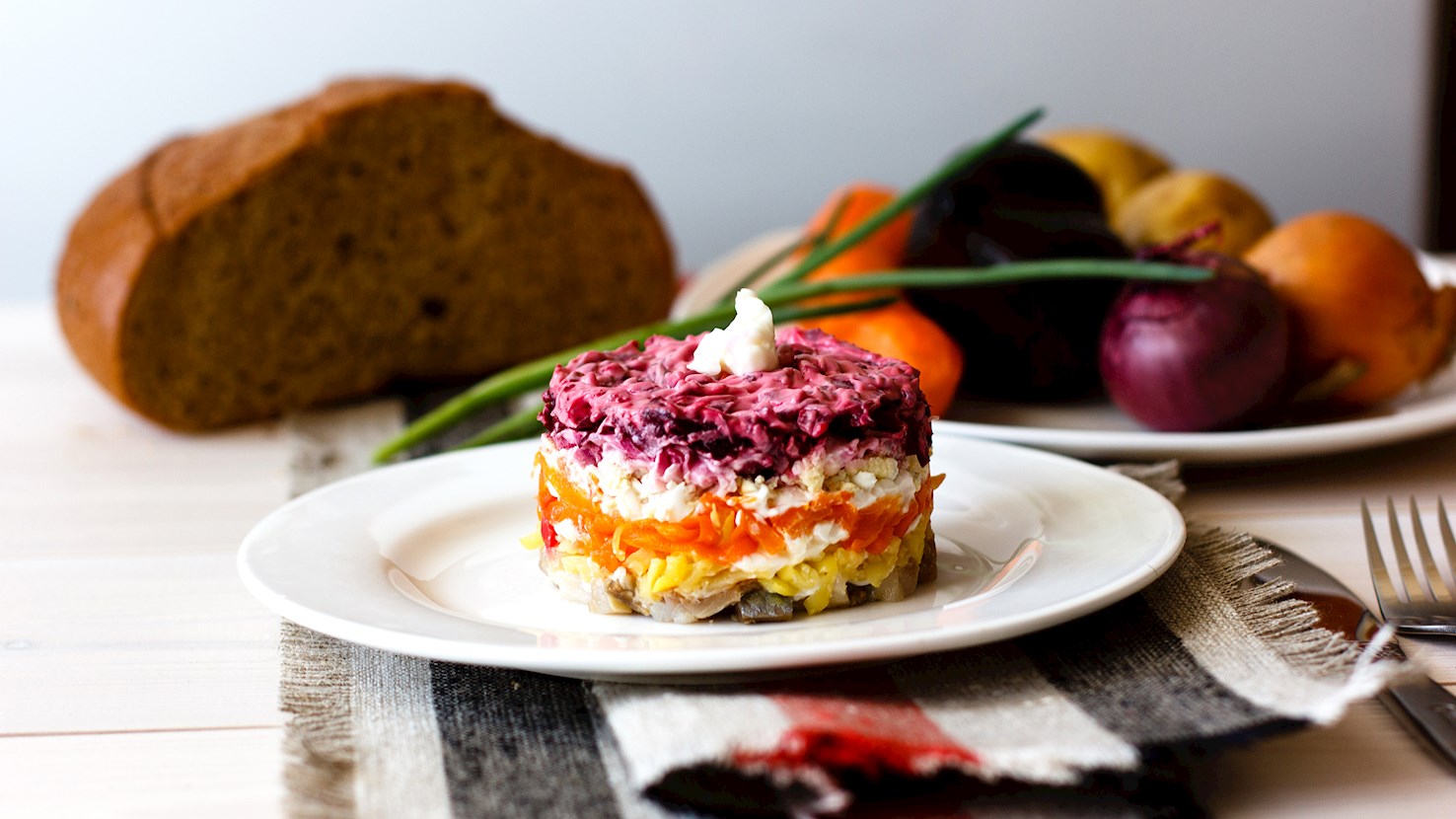
Shuba or herring under a fur coat is a unique Russian salad consisting of three distinctive layers: salted herring, potatoes, and beets. The salad often has more than three layers, mostly consisting of apples, onions, or hard-boiled eggs. Most people believe that it was invented by a tavern owner named Anastas Bogomilov at the beginning of the 20th century. The red color of the beets symbolizes the red flag, and potatoes symbolize the staple food of peasants and workers. Today, the salad is a well-known staple at Russian New Year celebrations.
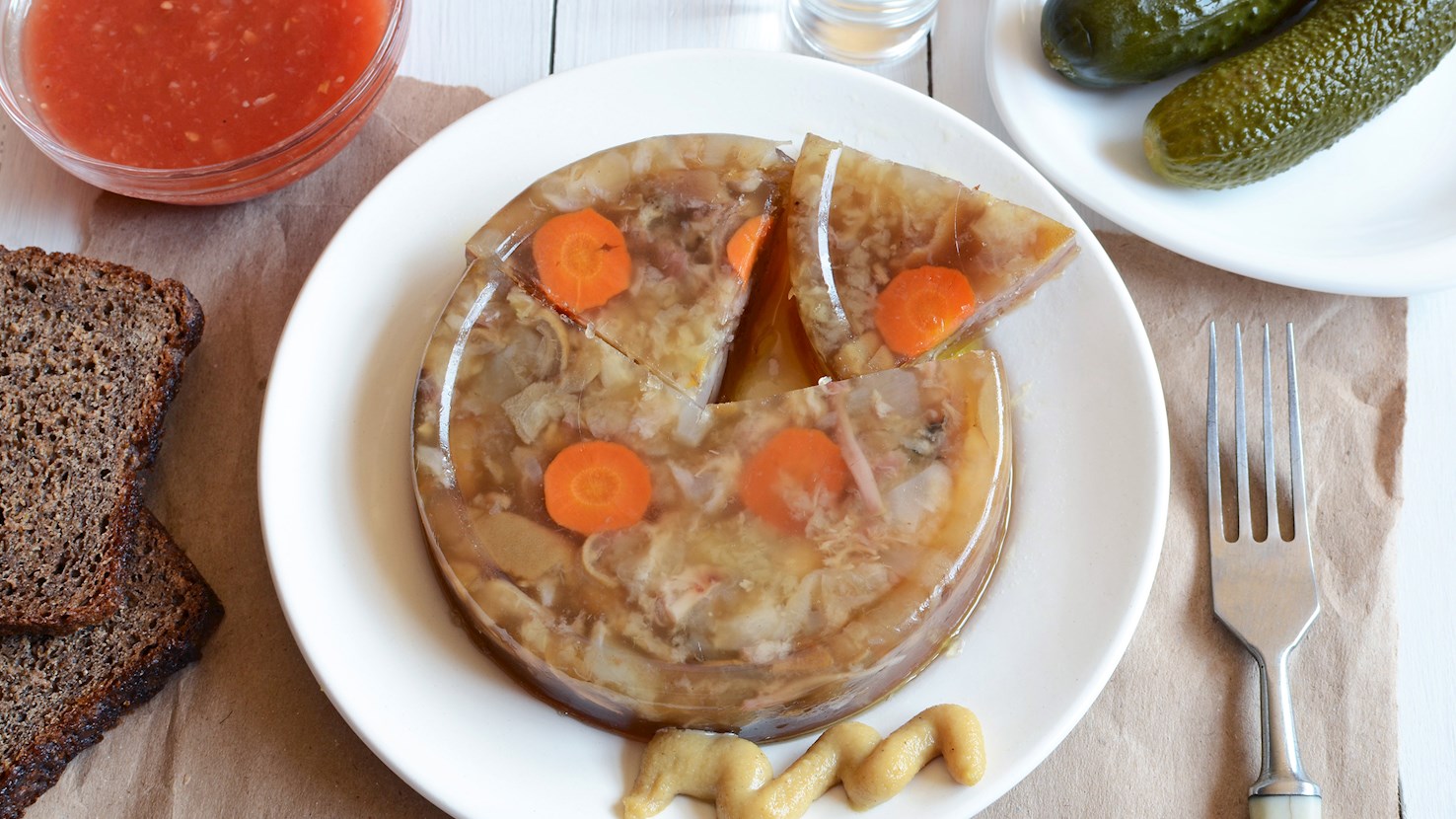
Kholodets is a traditional dish consisting of meat in gelatine. The name is derived from the Russian word kholod, meaning cold, referring to the fact that kholodets is always served cold. It is believed that the dish gained popularity during the 19th century, and it was mostly consumed by servants at the time. Kholodets is served as an appetizer, and it is recommended to pair it with a strong horseradish sauce, a bit of hot Russian mustard, and a glass of vodka.
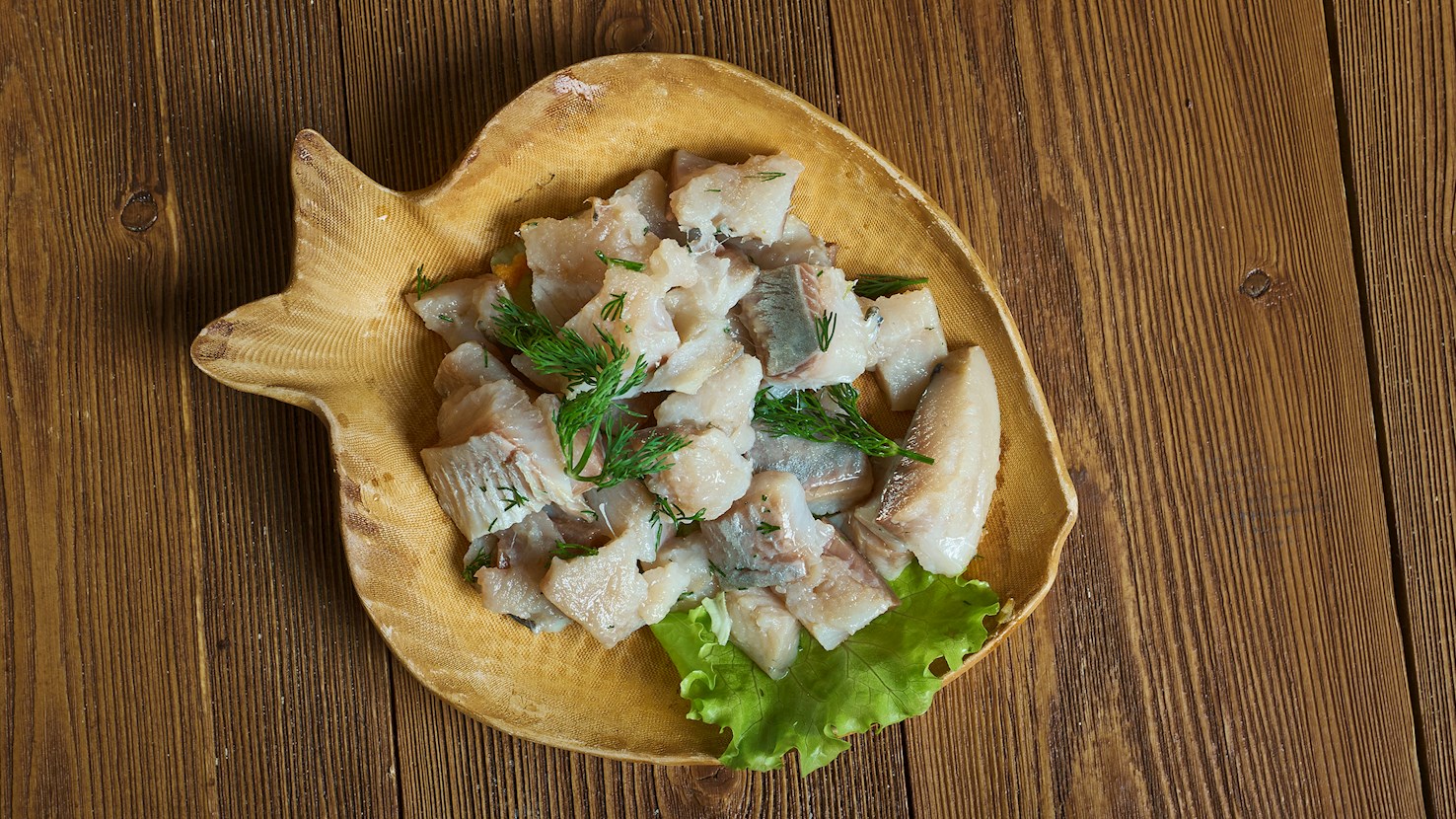
Indigirka is a Russian fish salad that has its origins in Yakutia (Sakha). It consists of diced frozen fish that is combined with onions, oil, salt, and pepper. The salad is typically made from whitefish such as broad whitefish (also known as chir), nelma, and muksun, and it is traditionally served in ice bowls. Indigirka salad first appeared in the middle of the 20th century and was named after the Indigirka River, one of the major Yakutian rivers. It is believed it was created by chef Innokenty Tarbakhov, who based it on a similar ethnic Yakutian dish made with raw fish called raw in the Yakut language or five minutes in Russian. The salad is occasionally accompanied by lemon wedges, but modern variations may include fish roe, fennel, as well as various dressings. This well-chilled appetizer ideally pairs with vodka.
TasteAtlas food rankings are based on the ratings of the TasteAtlas audience, with a series of mechanisms that recognize real users and that ignore bot,
nationalist or local patriotic ratings, and give additional value to the ratings of users that the system recognizes as knowledgeable.
For the “Top 8 Russian Appetizers” list until October 15, 2026, 1,754 ratings were recorded, of which 1,101 were recognized by the system as legitimate.
TasteAtlas Rankings should not be seen as the final global conclusion about food. Their purpose is to promote excellent local foods,
instill pride in traditional dishes, and arouse curiosity about dishes you haven’t tried.



What People Say