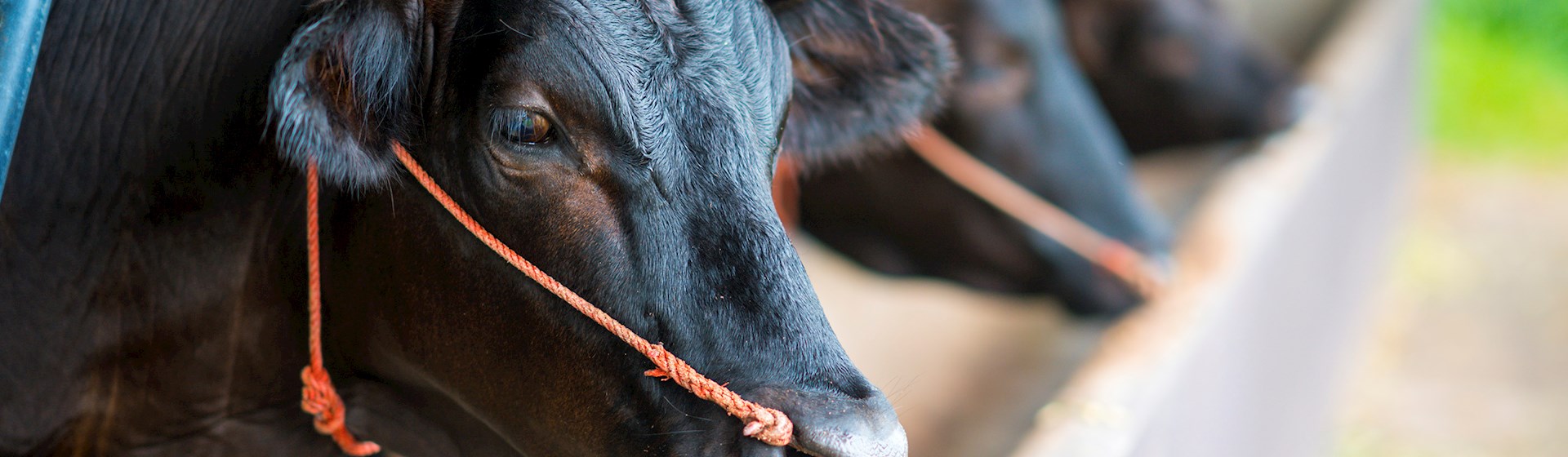
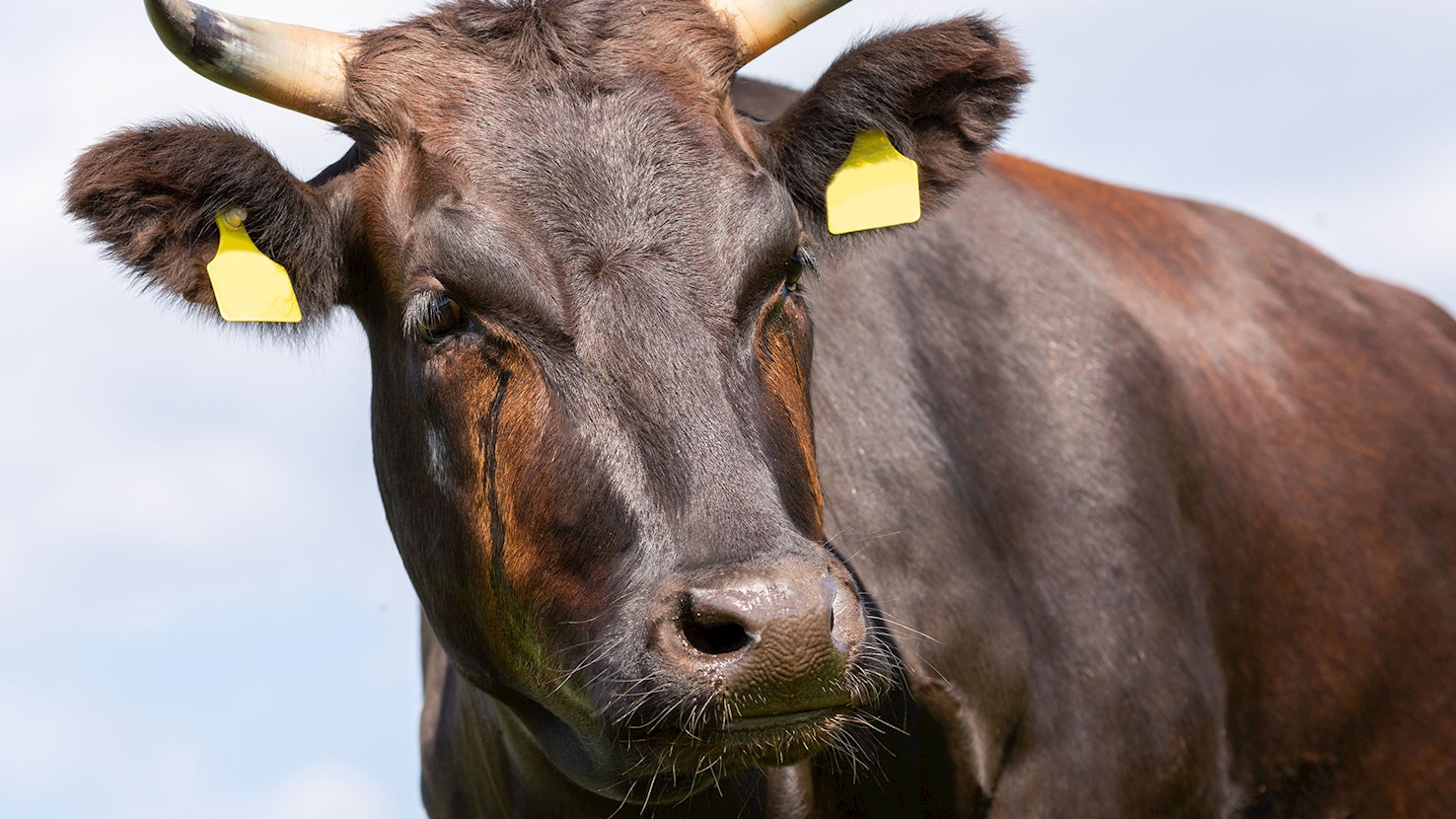
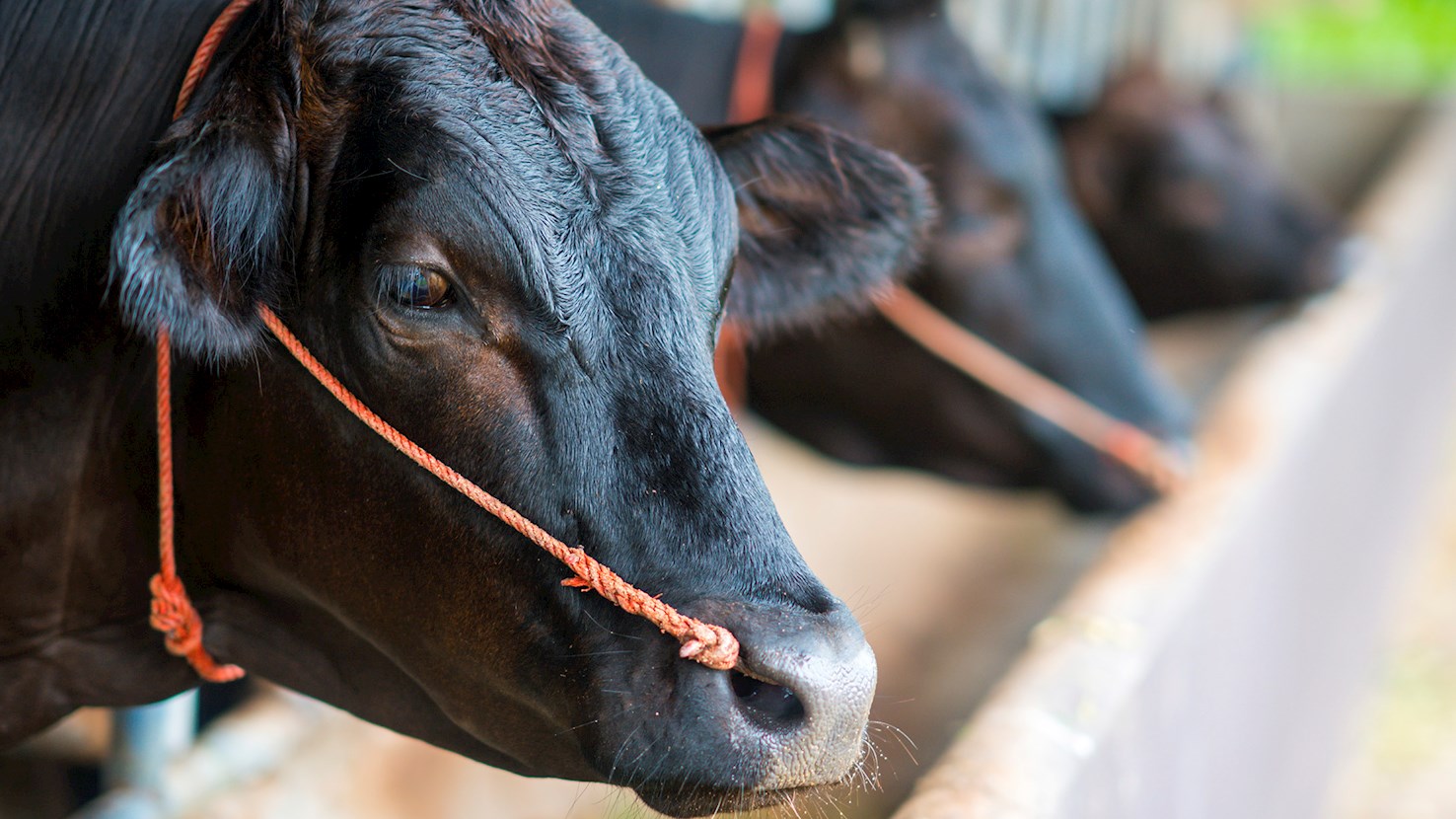
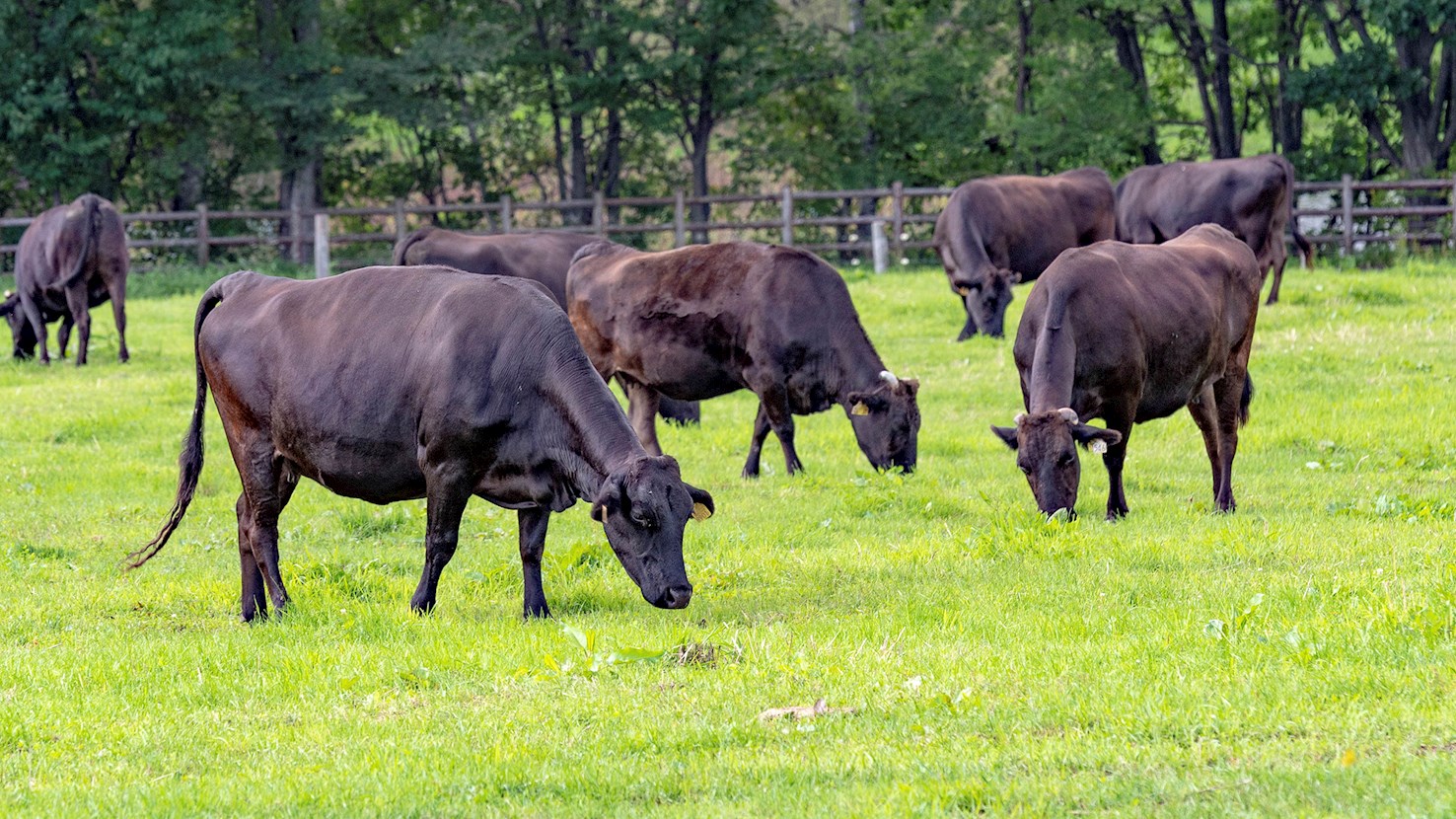
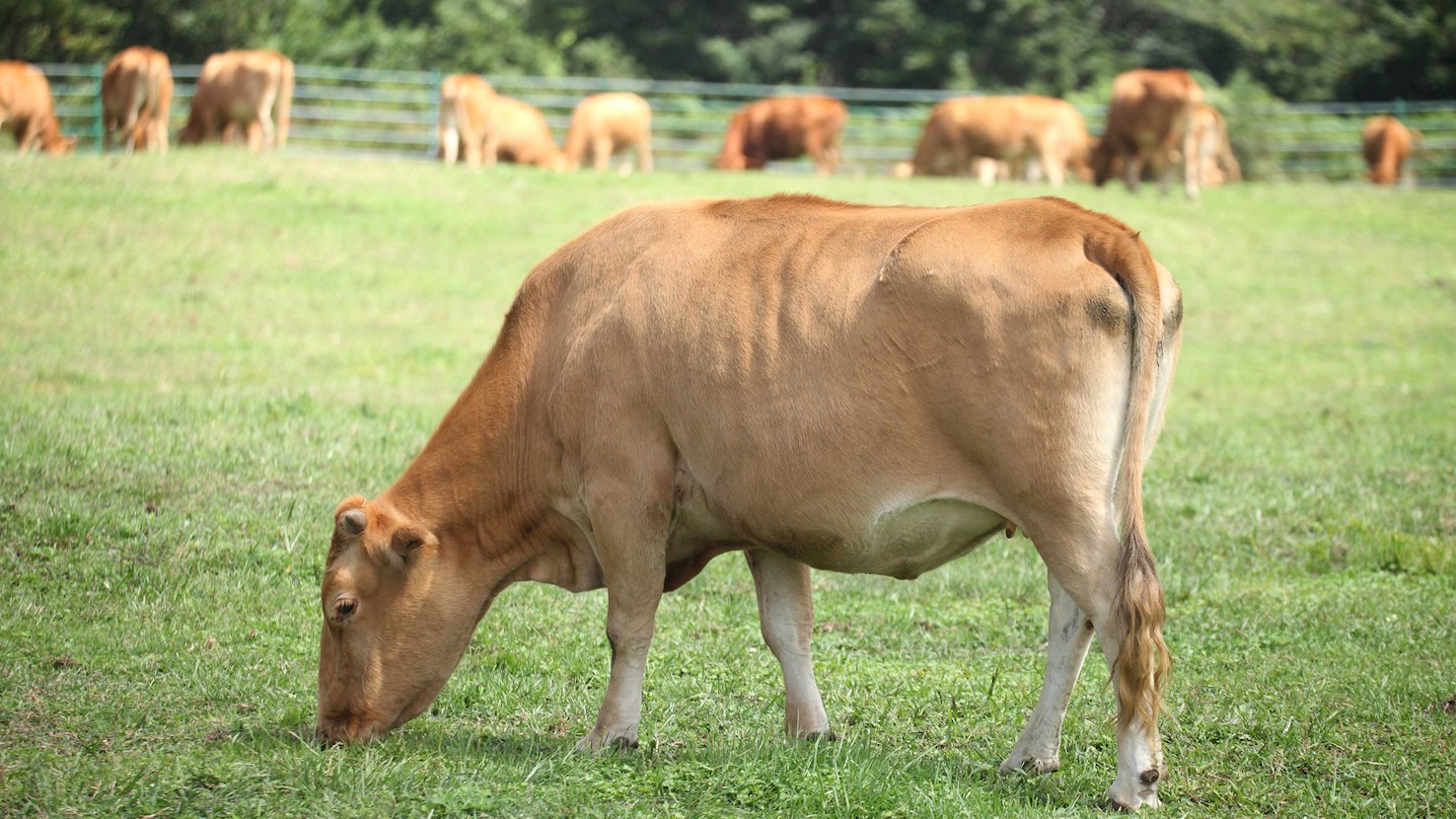
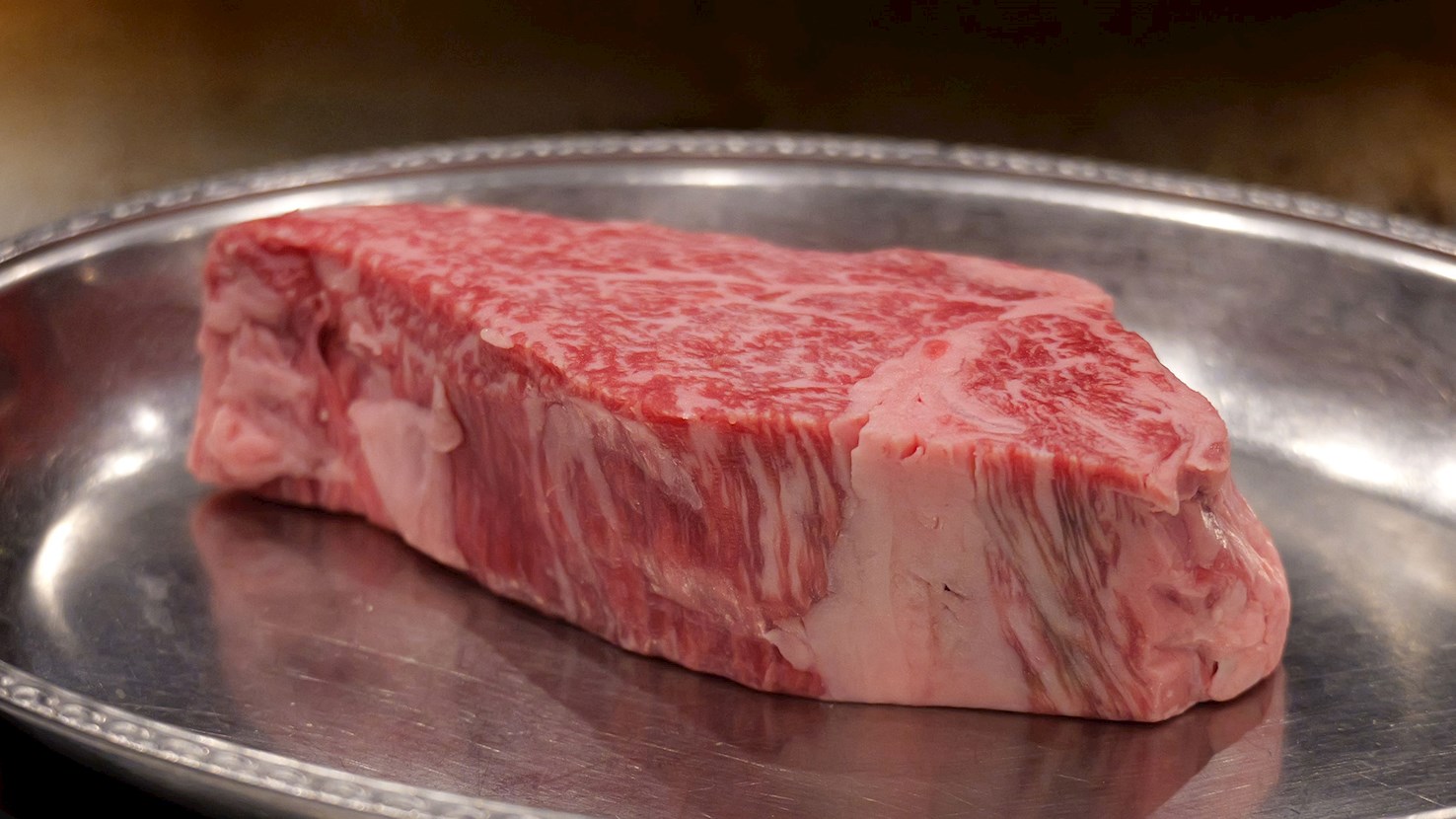
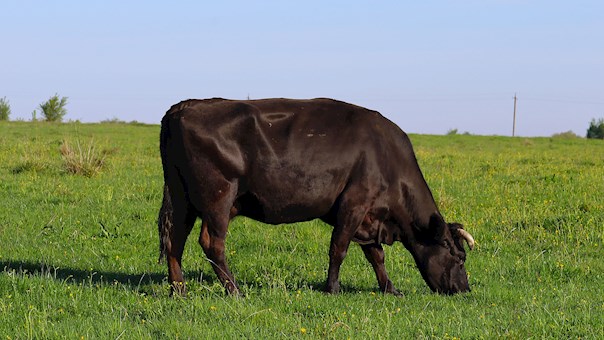
Wagyu is a term denoting a Japanese beef cattle breed (wa means Japanese, and gyu means cow). This breed has a genetic predisposition to create marbling of fat on the inside of muscle tissue. Average steaks have a fat cap on the outside, but Wagyu cows metabolize the fat internally and the fat remains integrated within the muscle. This rich and luscious beef cut almost dissolves as it hits the tongue, and it's recommended to keep the middle of the cut as raw as possible so that it remains extremely juicy and retains its sweet umami flavor. The meat can be cooked for a longer period of time without becoming dried out or too tough. The fat melts at a lower temperature, so it can be tasted much sooner than in other types of beef. Japanese cattle breeders make sure that the animals live in a stress-free, open-air environment, as stress creates cortisol, which deteriorates the quality. The most famous Wagyu cattle comes from Kobe, but there are other types, such as Matsusaka Ushi (Matsusaka city) and Ohmi (Shiga prefecture).
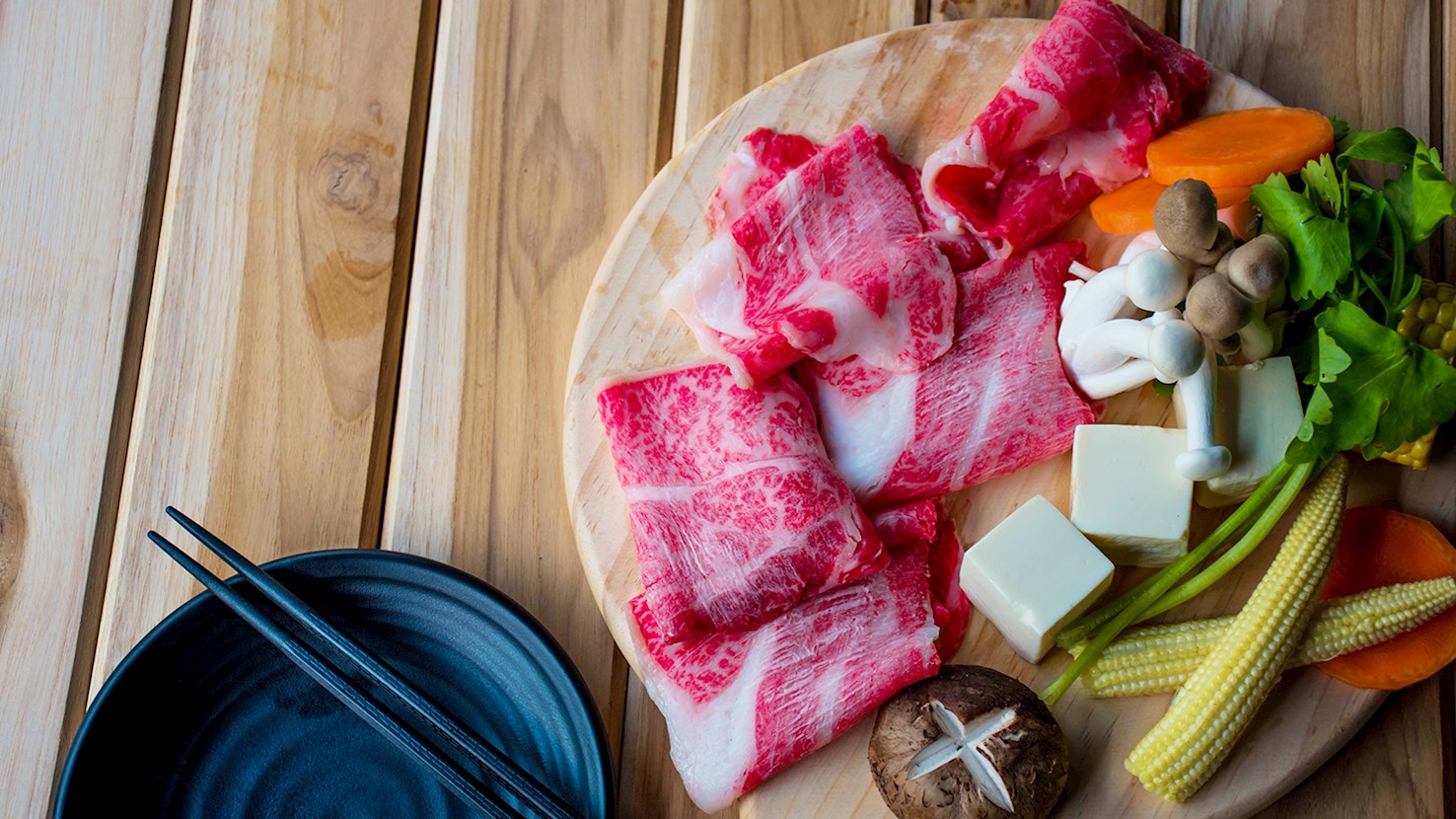
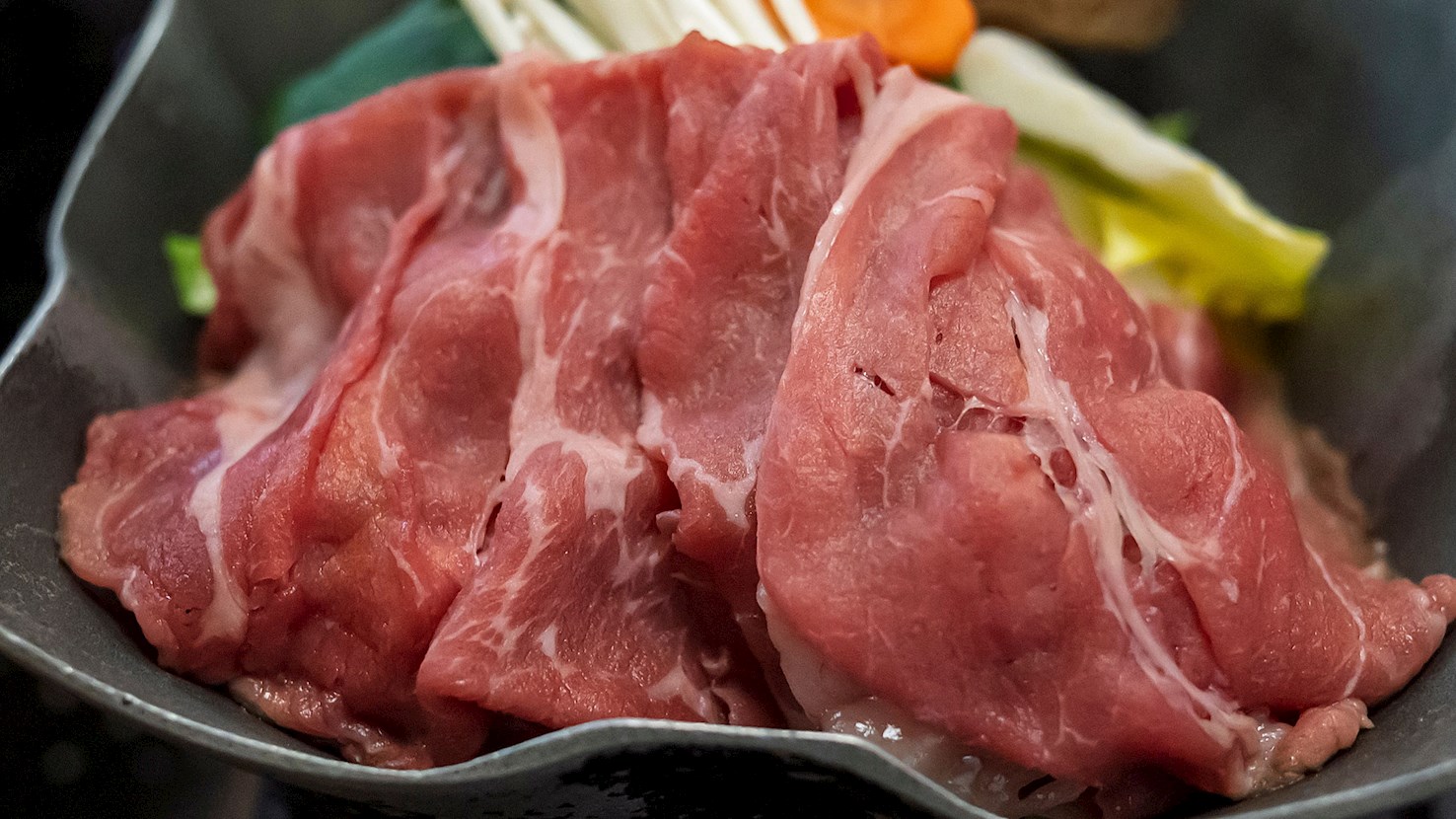
Kobe beef is a Japanese delicacy and one of the most popular regional specialties in Japan. The beef comes from the Tajima-gyu breed of cattle in Japan's Hyogo Prefecture, where Kobe is the capital and gives the beef its name. It is characterized by its tenderness, flavor, and exceptionally high levels of fat marbling. Kobe beef is usually prepared as steaks, sukiyaki (sliced in a hot pot), or shabu shabu (sliced and boiled in a broth). It is said that one of the best ways to consume the beef is at a traditional teppanyaki restaurant, where a chef grills the meat on an iron plate in full view of the restaurant's customers. Prices may vary, but it is common to pay a few thousand yen and upwards per hundred grams of this unique beef. Kobe beef is a registered trademark since 1983, setting a standard for animals to be labeled as prestigious Kobe beef.
Matsusaka is a type of wagyu or Japanese beef, originating from the town of Matsusaka in Mie Prefecture. The cattle must be raised from at least 12 months within the Prefecture and it‘s fed on a diet of wheat, rice, barley, and soy. This diet increases the weight of the animals, and the result is a great amount of marbling (intramuscular fat). Some cows are even fed beer and massaged with liquor, but it’s not mandatory. It takes about 3 years for the beef to reach maturity. Matsusaka beef is highly prized for its richness, flavor, and marbling. The beef is enjoyed as steaks in teppanyaki restaurants, and it’s also often prepared as sukiyaki (thinly sliced beef, eggs, and vegetables) or shabu shabu (thinly sliced beef that’s broiled in a hotpot).
Omi or Ohmi beef is a type of wagyu or Japanese beef that’s raised in Shiga Prefecture. The beef cattle has a very long history - in the Edo era, Ohmi beef was marinated in miso and presented to the Shogun as medicine. The meat has very fine and tender marbling (intramuscular fat), while the flavors are sweet and smooth, and the smell is mellow. The cattle is raised in the nature around Lake Biwa, and the cows drink the lake‘s clean water and consume feed that’s nutritionally balanced. Although it’s not as famous as Kobe beef, Ohmi can be bought at a relatively reasonable price, when compared to other brands of wagyu.
Olive Sanuki wagyu is a meat coming from beef that's named after Sanuki, the former name of the Kagawa prefecture, famous for its olive groves. In the finishing phase of rearing, the cattle are fattened with cakes made from pressed olives, resulting in substantial marbling. The texture is soft and buttery and the fat is sweet and very digestible, without any heaviness in the mouth. In order to be called Sanuki wagyu, the cattle must be of the Kuroge Washu breed, the animals must come from the Kagawa prefecture, and at least 3 months before the slaughter, they must have received dried pressed olive musts in their diet. It's recommended to rapidly cook the meat, which should be cut into thin slices. Ideal is cooking on a plancha or a tepanyaki grill.
Hanwoo beef refers to a breed of cattle native to Korea and is prized as a high-quality beef variety in Korean cuisine, much like how Wagyu is esteemed in Japan. It has a long history in Korea, with evidence suggesting they have been present on the peninsula for several thousand years. Just like Wagyu in Japan, Hanwoo beef is graded based on several factors, including marbling, meat color and texture, and the color and quality of the fat. The highest grades of Hanwoo beef have intense marbling, which translates to a rich flavor, tenderness, and juiciness. Due to the intricate marbling, Hanwoo beef has a deep, rich flavor with a melt-in-the-mouth texture. The fat has a lower melting point, which contributes to its unique mouthfeel. Hanwoo beef is often used in traditional Korean dishes, including Korean BBQ. The high quality of Hanwoo beef is not just due to the breed but also the rearing practices. Hanwoo cattle are often fed a specific diet and raised under particular conditions to ensure the quality of the meat. Due to its high quality, it often commands a premium price in restaurants. Hanwoo beef is not just a culinary treasure but also holds significant economic and cultural importance in Korea. Korean consumers often prefer Hanwoo over imported beef due to its distinct taste and cultural significance.
Miyazaki beef, commonly known as Miyazaki-gyu, is a premier brand of Japanese Black (kuroge washu) wagyu raised exclusively in the warm, sun-drenched Miyazaki Prefecture, which is renowned for some of the strictest quality standards in the country. While brands like Kobe or Matsusaka might dominate mainstream international headlines, culinary insiders and meat purists harbor a deep, quiet reverence for Miyazaki beef. To legally earn the coveted Miyazaki-gyu label, the harvested meat must achieve a minimum quality grade of A4 or A5 from the Japanese Meat Grading Association. If a meticulously raised cow falls even slightly short of this elite echelon, it is stripped of the title and sold merely as standard "Miyazaki Wagyu." The cattle thrive on the southern island of Kyushu, an area affectionately dubbed the "Sunshine Prefecture." This mild, almost tropical climate provides a low-stress environment, supported by nutrient-rich pastures and pure spring water. Farmers feed the herds a highly specialized, proprietary blend of wheat, corn, and local grasses, rearing them with an almost obsessive level of care. This dedication translates into undeniable dominance on the national stage. Miyazaki beef is famously known as the undisputed champion of the Zenkoku Wagyu Noryoku Kyoshinkai—often referred to as the "Wagyu Olympics." The brand has seized the prestigious Prime Minister's Award, the highest honor in the Japanese beef industry, in multiple consecutive tournaments over the last two decades, cementing its status as the pinnacle of modern wagyu. Visually, a premium cut of Miyazaki beef is an absolute masterpiece, characterized by a distinct, vibrant "cherry red" hue that serves as a canvas for an incredibly dense, snowflake-like webbing of white intramuscular fat. The true hallmark of Miyazaki-gyu, however, is how remarkably non-greasy this fat feels on the palate. Saturated with exceptionally high levels of oleic acid, the marbling has a shockingly low melting point. The moment it touches the warmth of the tongue, it liquefies into a sweet, velvety glaze. Rather than overwhelming the diner with a heavy buttery sensation, the fat dissolves cleanly, revealing a profound, earthy umami flavor that leaves a fragrant, lingering finish. Since the meat is so rich yet surprisingly clean, chefs utilize it across a variety of high-end culinary applications. It is a spectacular candidate for teppanyaki, where a blistering iron griddle creates a delicate, caramelized crust while gently warming the internal fat to a flawless, melt-in-the-mouth consistency. In upscale yakiniku establishments, diners briefly kiss thin, highly marbled slices over glowing binchotan charcoal, allowing the smoke to mingle with the dripping fat. For a more delicate experience, Miyazaki beef is frequently prepared via seiro-mushi. In this traditional cooking method, paper-thin slices of the beef are draped over a bed of fresh, seasonal vegetables and steamed inside a wooden bamboo basket. As the steam gently cooks the meat, the sweet juices cascade downward, elegantly flavoring the cabbage and mushrooms below without a single drop of essence lost.
Hida beef, widely known as Hida-gyu, is a highly esteemed brand of Japanese Black (kuroge washu) wagyu raised within the pristine, mountainous borders of Gifu Prefecture, revered for its extraordinarily fine marbling and blossom-like pink hue. To legally bear this prestigious title, the cattle must be bred and fattened in Gifu for a minimum of 14 months and achieve a rigorous quality and yield grade of at least 3 (on the 1 to 5 scale) from the Japanese Meat Grading Association. Any meat falling short of these strict metrics is simply sold as standard Gifu Wagyu, ensuring that the Hida label remains an uncompromised symbol of culinary excellence. The pedigree of this exceptional meat can largely be traced back to a single, legendary bull named Yasufuku. Arriving in Gifu Prefecture in the early 1980s, this celebrated sire possessed such phenomenal genetics that he successfully fathered tens of thousands of calves, fundamentally elevating the region's herds to national stardom. Combined with Gifu’s unique geography—defined by the drastic seasonal temperature shifts of the Northern Alps, vast expanses of lush grazing land, and remarkably pure, mineral-rich spring water—the cattle are afforded a stress-free environment that is essential for developing premium beef. Visually, a cut of Hida beef is breathtaking. The intramuscular fat, known as sashi, weaves through the muscle so intricately that it creates a delicate, mesh-like pattern across the pale crimson meat. What truly sets Hida-gyu apart from other elite wagyu brands is an exceptionally thin, exquisite layer of fat that naturally coats the exterior of the premium cuts. When the meat is cooked, this delicate outer layer acts as a seal, locking the rich, savory juices and the sweet, aromatic wagyu-ko firmly inside the steak. As it hits the palate, the fat melts away flawlessly, delivering a profound richness that feels incredibly smooth and refined rather than heavy or cloying. This melt-in-the-mouth texture and unique flavor profile make Hida beef a treasure in the kitchen, deeply intertwined with Gifu's local culture. While it is spectacular when seared as a classic steak or thinly sliced for sukiyaki, it truly shines in regional preparations. In the historic, beautifully preserved streets of Takayama, visitors flock to traditional food stalls to eat lightly torched Hida beef nigiri sushi, served atop crisp rice crackers. Furthermore, it is the star ingredient of hoba miso, a rustic, centuries-old local dish in which tender cubes of marbled beef are grilled over a tabletop charcoal stove atop a dried magnolia leaf, then enveloped in a deeply savory, bubbling mixture of sweet regional miso and scallions.
B4 Kobe beef is a premium grade of Japanese wagyu sourced from purebred Tajima cattle that offers an exceptional, meat-forward eating experience by balancing an elegant level of marbling with a solid muscle structure. To understand the appeal of this classification, one must examine how the strict Japanese grading system operates. The letter "B" indicates an average yield of usable meat harvested from the carcass, a metric that matters to farmers and wholesalers for pricing, but has absolutely no impact on the flavor or tenderness of the meat on the plate. The number "4" denotes the actual eating experience, representing a highly prized cut with a moderate marbling ratio that falls just short of the hyper-fatty perfection of a 5. This makes the B4 designation the ultimate intersection of luxury and approachability. Visually, this grade steps away from the overwhelmingly frosted, pure white appearance of the highest wagyu tiers. Instead, it presents a deep, rosy-red canvas laced with distinct, beautiful ribbons of pearl-colored fat rather than a dense, impenetrable web. Because it possesses significantly more structural muscle fibers than a rank 5 cut, a B4 steak does not simply dissolve on the tongue. It offers a gentle, pleasing resistance and a genuinely satisfying, juicy chew that reminds the diner they are eating a traditional, hearty cut of beef. As you bite into the meat, the fat—which is famously rich in low-melting oleic acid due to its elite bloodline—renders beautifully across the palate. Yet, rather than masking the meat in an overwhelming buttery richness, the fat acts as a luxurious dressing for the beef itself. The dominant flavor profile is grounded in a profound, earthy umami, heavily accented by the sweet, nutty aroma unique to highly graded Japanese cattle known as wagyu-ko. This structural integrity and balanced fat ratio make the B4 tier highly versatile and forgiving in professional kitchens. Unlike the richest grades, which are often too heavy to consume in large quantities, B4 is the absolute ideal choice for a traditional, thick-cut steak. Diners can comfortably enjoy a full ribeye or striploin portion without succumbing to palate fatigue. The robust muscle fibers also respond beautifully to a hard, crust-building sear in a cast-iron skillet or over a blazing charcoal grill. Furthermore, chefs frequently use this exact grade to craft luxurious, deep-fried gyukatsu cutlets, in which the meat must have sufficient natural firmness to hold its shape during the breading process while remaining wonderfully tender inside.
B5 Kobe beef is a prestigious classification of Japanese wagyu sourced from purebred Tajima cattle that delivers the exact same top-tier culinary experience as the world-famous A5 grade, differing only in the carcass's overall meat yield. In the highly meticulous Japanese beef grading system, the alphanumeric score is split into two distinct evaluations. The number represents the quality of the meat on a scale of 1 to 5, assessing marbling, color, firmness, and fat quality. The letter, however, evaluates cutability—meaning how much usable meat the butcher can harvest from the animal. While an "A" signifies an above-average yield, a "B" represents an average yield. For the person sitting at the dining table, this letter grade is completely invisible. Because B5 Kobe beef achieves a perfect 5 quality score, it boasts the same breathtaking characteristics as an A5 cut. It is an insider's secret in the wagyu world: you are eating the absolute pinnacle of beef, but the farmer simply yielded slightly less meat from that specific cow. Visually, the raw beef is a masterpiece, showcasing a stunningly dense, frost-like network of white intramuscular fat woven tightly through vibrant, ruby-red muscle fibers. When it comes to the eating experience, this grade offers the legendary, luxurious melt-in-the-mouth sensation that has made Hyogo Prefecture's cattle an international obsession. The fat is highly saturated with oleic acid, which causes it to soften and dissolve upon reaching the palate. This extraordinary melting point releases a wave of rich, buttery sweetness and a deeply fragrant aroma known as wagyu-ko. It completely coats the tongue in a velvety sheen while still delivering a savory, umami-packed beef finish from the delicate meat structure. Because a B5 cut is gastronomically indistinguishable from an A5, elite chefs treat it with the exact same level of reverence in the kitchen. Due to its overwhelming richness, it is almost never served as a massive, thick-cut steak. Instead, restaurants prepare it in delicate, precise portions to maximize its impact without causing palate fatigue. Chefs frequently flash-sear small cubes on a hot teppanyaki grill to create a delicately crisp crust while keeping the intensely marbled interior lush and soft. Diners also enjoy it in traditional hot pot formats, gently swishing paper-thin slices through a simmering kombu broth for shabu-shabu, or braising it in a sweet, bubbling soy mixture for sukiyaki.
TasteAtlas food rankings are based on the ratings of the TasteAtlas audience, with a series of mechanisms that recognize real users and that ignore bot,
nationalist or local patriotic ratings, and give additional value to the ratings of users that the system recognizes as knowledgeable.
For the “Top 18 Asian Beef Cattle Breeds” list until June 06, 2026, 329 ratings were recorded, of which 248 were recognized by the system as legitimate.
TasteAtlas Rankings should not be seen as the final global conclusion about food. Their purpose is to promote excellent local foods,
instill pride in traditional dishes, and arouse curiosity about dishes you haven’t tried.