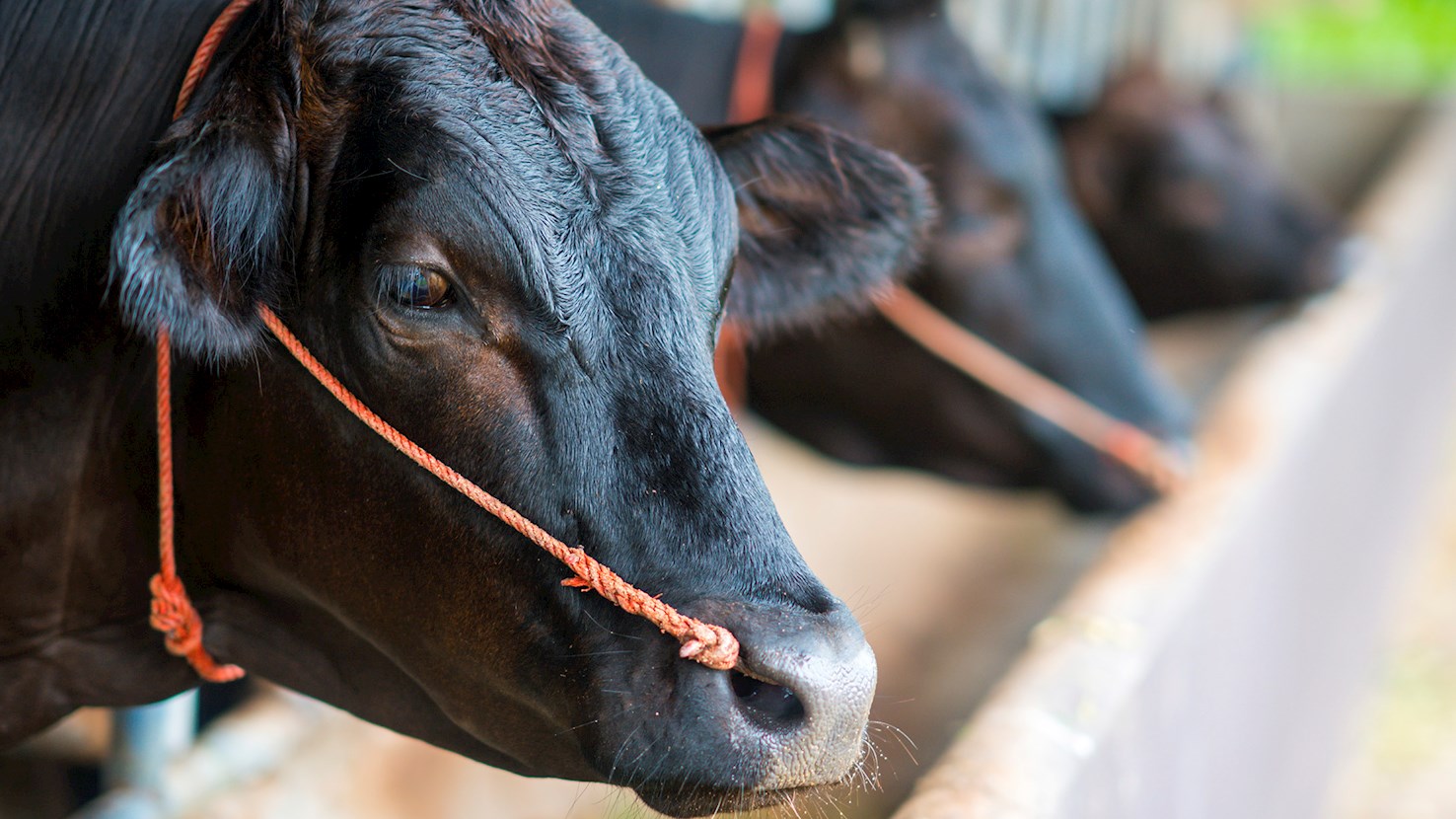
Kobe beef is a Japanese delicacy and one of the most popular regional specialties in Japan. The beef comes from the Tajima-gyu breed of cattle in Japan's Hyogo Prefecture, where Kobe is the capital and gives the beef its name. It is characterized by its tenderness, flavor, and exceptionally high levels of fat marbling. Kobe beef is usually prepared as steaks, sukiyaki (sliced in a hot pot), or shabu shabu (sliced and boiled in a broth). It is said that one of the best ways to consume the beef is at a traditional teppanyaki restaurant, where a chef grills the meat on an iron plate in full view of the restaurant's customers. Prices may vary, but it is common to pay a few thousand yen and upwards per hundred grams of this unique beef. Kobe beef is a registered trademark since 1983, setting a standard for animals to be labeled as prestigious Kobe beef.
B4 Kobe beef is a premium grade of Japanese wagyu sourced from purebred Tajima cattle that offers an exceptional, meat-forward eating experience by balancing an elegant level of marbling with a solid muscle structure. To understand the appeal of this classification, one must examine how the strict Japanese grading system operates. The letter "B" indicates an average yield of usable meat harvested from the carcass, a metric that matters to farmers and wholesalers for pricing, but has absolutely no impact on the flavor or tenderness of the meat on the plate. The number "4" denotes the actual eating experience, representing a highly prized cut with a moderate marbling ratio that falls just short of the hyper-fatty perfection of a 5. This makes the B4 designation the ultimate intersection of luxury and approachability. Visually, this grade steps away from the overwhelmingly frosted, pure white appearance of the highest wagyu tiers. Instead, it presents a deep, rosy-red canvas laced with distinct, beautiful ribbons of pearl-colored fat rather than a dense, impenetrable web. Because it possesses significantly more structural muscle fibers than a rank 5 cut, a B4 steak does not simply dissolve on the tongue. It offers a gentle, pleasing resistance and a genuinely satisfying, juicy chew that reminds the diner they are eating a traditional, hearty cut of beef. As you bite into the meat, the fat—which is famously rich in low-melting oleic acid due to its elite bloodline—renders beautifully across the palate. Yet, rather than masking the meat in an overwhelming buttery richness, the fat acts as a luxurious dressing for the beef itself. The dominant flavor profile is grounded in a profound, earthy umami, heavily accented by the sweet, nutty aroma unique to highly graded Japanese cattle known as wagyu-ko. This structural integrity and balanced fat ratio make the B4 tier highly versatile and forgiving in professional kitchens. Unlike the richest grades, which are often too heavy to consume in large quantities, B4 is the absolute ideal choice for a traditional, thick-cut steak. Diners can comfortably enjoy a full ribeye or striploin portion without succumbing to palate fatigue. The robust muscle fibers also respond beautifully to a hard, crust-building sear in a cast-iron skillet or over a blazing charcoal grill. Furthermore, chefs frequently use this exact grade to craft luxurious, deep-fried gyukatsu cutlets, in which the meat must have sufficient natural firmness to hold its shape during the breading process while remaining wonderfully tender inside.
B5 Kobe beef is a prestigious classification of Japanese wagyu sourced from purebred Tajima cattle that delivers the exact same top-tier culinary experience as the world-famous A5 grade, differing only in the carcass's overall meat yield. In the highly meticulous Japanese beef grading system, the alphanumeric score is split into two distinct evaluations. The number represents the quality of the meat on a scale of 1 to 5, assessing marbling, color, firmness, and fat quality. The letter, however, evaluates cutability—meaning how much usable meat the butcher can harvest from the animal. While an "A" signifies an above-average yield, a "B" represents an average yield. For the person sitting at the dining table, this letter grade is completely invisible. Because B5 Kobe beef achieves a perfect 5 quality score, it boasts the same breathtaking characteristics as an A5 cut. It is an insider's secret in the wagyu world: you are eating the absolute pinnacle of beef, but the farmer simply yielded slightly less meat from that specific cow. Visually, the raw beef is a masterpiece, showcasing a stunningly dense, frost-like network of white intramuscular fat woven tightly through vibrant, ruby-red muscle fibers. When it comes to the eating experience, this grade offers the legendary, luxurious melt-in-the-mouth sensation that has made Hyogo Prefecture's cattle an international obsession. The fat is highly saturated with oleic acid, which causes it to soften and dissolve upon reaching the palate. This extraordinary melting point releases a wave of rich, buttery sweetness and a deeply fragrant aroma known as wagyu-ko. It completely coats the tongue in a velvety sheen while still delivering a savory, umami-packed beef finish from the delicate meat structure. Because a B5 cut is gastronomically indistinguishable from an A5, elite chefs treat it with the exact same level of reverence in the kitchen. Due to its overwhelming richness, it is almost never served as a massive, thick-cut steak. Instead, restaurants prepare it in delicate, precise portions to maximize its impact without causing palate fatigue. Chefs frequently flash-sear small cubes on a hot teppanyaki grill to create a delicately crisp crust while keeping the intensely marbled interior lush and soft. Diners also enjoy it in traditional hot pot formats, gently swishing paper-thin slices through a simmering kombu broth for shabu-shabu, or braising it in a sweet, bubbling soy mixture for sukiyaki.
A4 (BMS 6–7) Kobe beef is a highly prized grade of Japanese wagyu from Hyogo Prefecture that delivers a refined, meat-forward eating experience through moderate, elegant marbling. While the international culinary world often obsesses over the hyper-fatty A5 tier, many traditionalists and local chefs secretly prefer this slightly leaner classification. Harvested from the same elite lineage of purebred Tajima cattle, a cut boasting a beef marbling standard of 6 or 7 offers a distinctly different, highly approachable way to enjoy one of the world's most famous luxury meats. The visual presentation of this grade is a striking departure from the frosty white appearance of top-tier wagyu. Instead, the meat presents a deep, vibrant ruby-red canvas, interrupted by distinct, beautiful rivers of fat rather than an overwhelming, dense web. This specific fat-to-muscle ratio fundamentally changes the texture. While the fat still contains the signature high levels of oleic acid that allow it to melt effortlessly on the tongue, the abundance of lean muscle means this beef does not instantly dissolve. It requires a genuine, satisfying chew, rewarding the diner with a juicy, firm texture that feels much closer to a classic Western steak. Because the lean meat takes center stage, the flavor profile of an A4 BMS 6–7 cut is intensely savory. The rich, sweet aroma unique to wagyu—known as wagyu-ko—is still very much present, but it acts as a subtle accent rather than the main attraction. The high concentration of amino acids in the muscle tissue steps forward, providing a deep, iron-rich umami flavor that perfectly balances the buttery notes of the fat. It is a hearty, deeply beefy bite that avoids the overwhelming richness that can sometimes cause palate fatigue with higher grades. This structural integrity and robust flavor make the A4 tier a dream to work with in the kitchen. It is arguably the best grade for those who want to consume a large, thick-cut steak, such as a substantial ribeye or filet, without feeling weighed down by excess grease. Professional kitchens frequently utilize it for high-heat roasting, teppanyaki, and premium cutlets (gyukatsu), where the meat's natural bite and rich, meaty juices can truly shine.
A5 Standard (BMS 8–9) Kobe beef is a premium grade of Japanese wagyu sourced exclusively from purebred Tajima cattle, characterized by a near-perfect equilibrium of rich intramuscular fat and deep red muscle. While achieving the elite A5 classification is already a rare milestone for cattle raised in Hyogo Prefecture, the beef marbling standard (BMS) score determines the exact density of that fat. Cuts falling into the 8 to 9 range sit right in the middle of this top tier. For many meat purists, this specific grade represents the absolute pinnacle of the wagyu experience, offering a much more balanced bite than the overwhelmingly fatty top-tier scores. Visually, this grade features a stunning, intricate web of pure white fat running through vibrant crimson meat. Unlike the highest BMS scores, which appear almost entirely frosted over, an 8 or 9 retains a clear structural integrity. The fat carries the legendary traits of its purebred bloodline, packed with oleic acid that melts effortlessly just from the warmth of the palate. However, because there is a prominent amount of lean muscle still present, the cut maintains a satisfying, genuine chew rather than dissolving instantly. This physical harmony translates into an incredibly complex flavor profile. When eaten, the beef releases the sweet, buttery aroma that made Japanese cattle world-famous. Yet, it never loses its identity as beef. The solid muscle fibers deliver a strong punch of savory umami that grounds the richness, creating a deeply satisfying contrast between melting fat and hearty, earthy meat. Because it strikes such an elegant middle ground, this grade is incredibly adaptable in kitchens. High-end restaurants confidently serve it as a traditional, standalone steak, as its fat content is restrained enough to let a person finish a whole portion without palate fatigue. It also performs brilliantly when sliced for tabletop yakiniku grills, where the intense charcoal flames crisp the fatty edges, or gently swished into a simmering, soy-heavy sukiyaki broth to enrich the entire pot.
A5 Kobe beef with a beef marbling standard (BMS) between 10 and 12 represents the absolute pinnacle of Japanese wagyu. While standard Kobe beef is already a globally recognized luxury, only a microscopic fraction of certified Tajima cattle achieve this specific, elite grading tier. The "A" signifies the highest possible yield of usable meat from the animal, while the "5" dictates the supreme tier of overall quality. However, it is the BMS score of 10-12 that truly sets this beef apart, indicating a spectacular intramuscular fat density. At this level, the cuts appear almost entirely white, with only delicate streaks of pale pink muscle visible beneath a heavy, frost-like webbing of fat. This extreme marbling fundamentally changes the physical properties and eating experience of the beef. Because the fat is incredibly rich in oleic acid, its melting point sits well below human body temperature. When a piece rests on the tongue, it dissolves before any chewing is required, creating a lush, velvety mouthfeel. The flavor profile steps away from traditional, hearty beefiness and focuses entirely on a sweet, buttery richness, accompanied by a distinct, fragrant aroma unique to top-tier Wagyu. Because of its overwhelming richness, eating this specific grade requires a highly delicate approach. It is rarely served as a traditional Western-style steak, as the intense fat content would quickly become far too heavy to finish. Instead, high-end restaurants prepare it in small, carefully measured bites. Chefs frequently sear small cubes quickly on a blistering teppanyaki grill to crisp the exterior while leaving the center meltingly soft. People also enjoy it sliced paper-thin and briefly swished through hot broth for shabu-shabu, or lightly torched and served as nigiri sushi, treating the beef with the exact same reverence as premium fatty tuna.
Tajima-gyu is a purebred strain of Japanese Black cattle raised in Hyogo Prefecture, Japan. It is the foundational genetic lineage for many of the country's premium beef brands. All certified Kobe beef comes from purebred Tajima cattle, though only the highest-grading animals earn the Kobe name. Breeders also use Tajima genetics to produce Matsusaka and Omi beef. Farmers originally used these cattle in the mountainous northern Tajima region as working animals for agriculture and transportation. The difficult terrain physically isolated the herds and prevented crossbreeding with other cattle. This geographic isolation preserved a pure, distinct genetic line over centuries. To endure heavy physical labor, the cattle developed small frames and a high capacity for storing intramuscular fat as an energy reserve. The Hyogo Prefecture government maintains a strict registry to protect this pureblood status today. Every Tajima calf receives a ten-digit identification number to track its exact lineage back to its ancestors. Farmers raise the cattle in quiet environments for 30 to 32 months. They feed the animals a specific diet of dried pasture grass, rice straw, barley, and corn, and provide them with fresh mountain spring water. The resulting beef features extremely fine muscle fibers and dense, intricate marbling called sashi. The fat contains a high percentage of oleic acid, a monounsaturated fat that significantly lowers the meat's melting point. This allows the fat to dissolve at human body temperature, creating a soft, melting texture in the mouth. The meat delivers a rich umami flavor and a distinct sweet aroma. Tajima-gyu is best cooked over high heat or gently simmered to protect the delicate fat. Restaurants serve it thinly sliced for hot pot dishes like sukiyaki and shabu-shabu. People also eat it as yakiniku (thick-cut steaks) or raw as beef sashimi and nigiri sushi.
TasteAtlas food rankings are based on the ratings of the TasteAtlas audience, with a series of mechanisms that recognize real users and that ignore bot,
nationalist or local patriotic ratings, and give additional value to the ratings of users that the system recognizes as knowledgeable.
For the “Top 7 Local Beef Cattle Breeds in Hyōgo Prefecture” list until June 06, 2026, 161 ratings were recorded, of which 111 were recognized by the system as legitimate.
TasteAtlas Rankings should not be seen as the final global conclusion about food. Their purpose is to promote excellent local foods,
instill pride in traditional dishes, and arouse curiosity about dishes you haven’t tried.