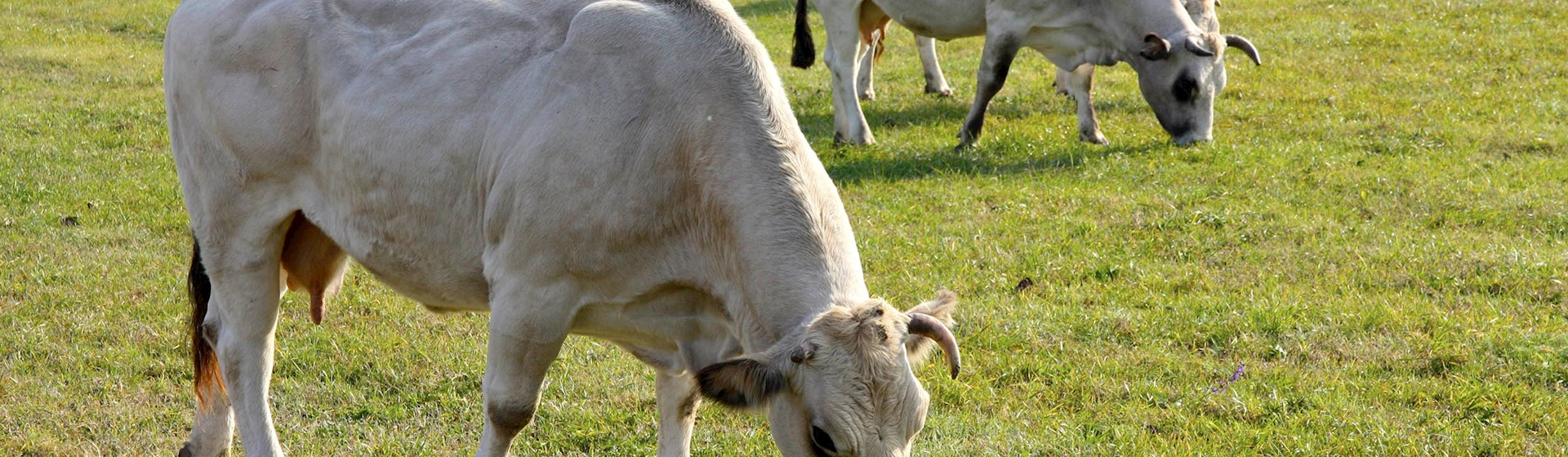
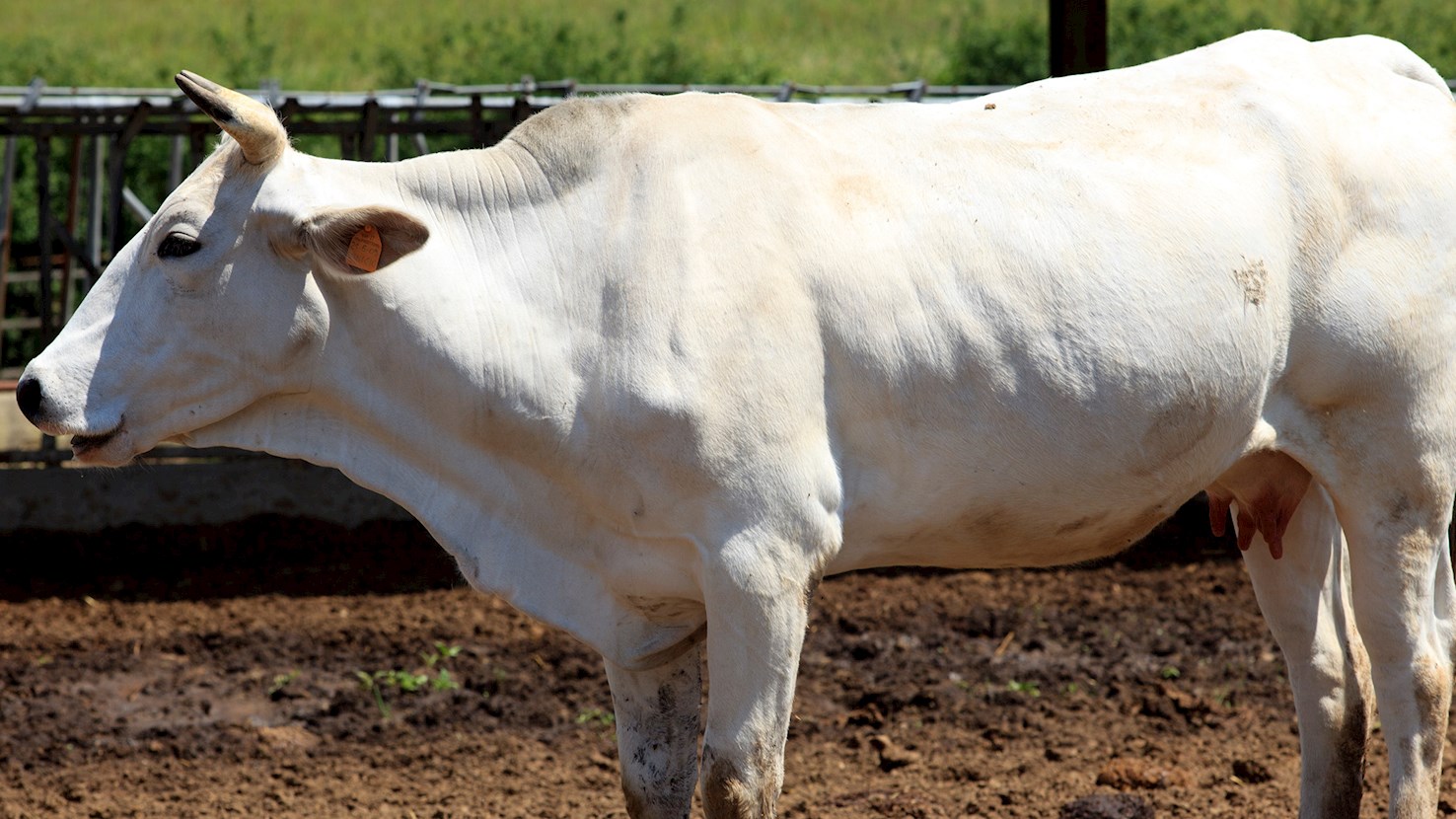
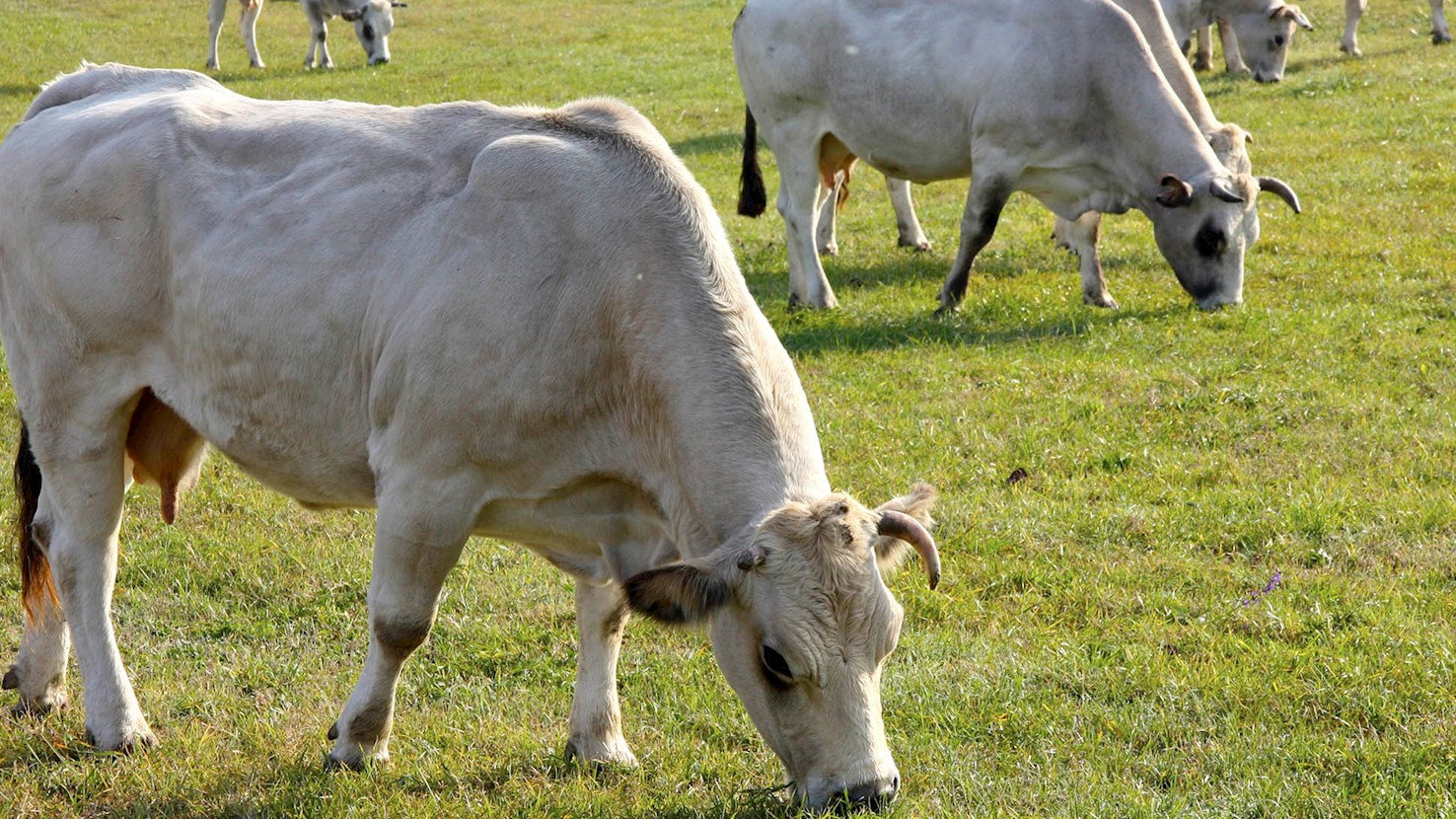
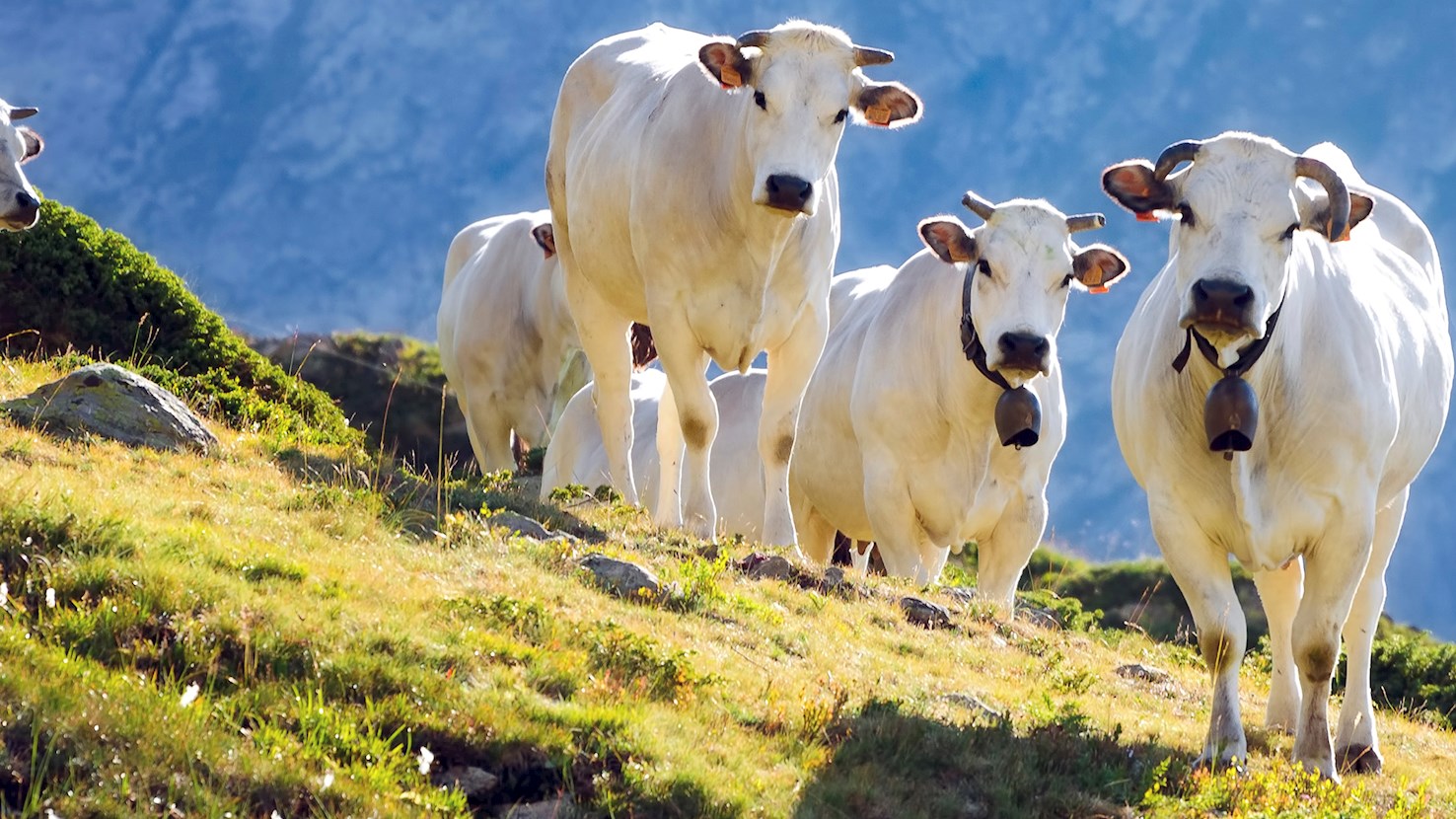
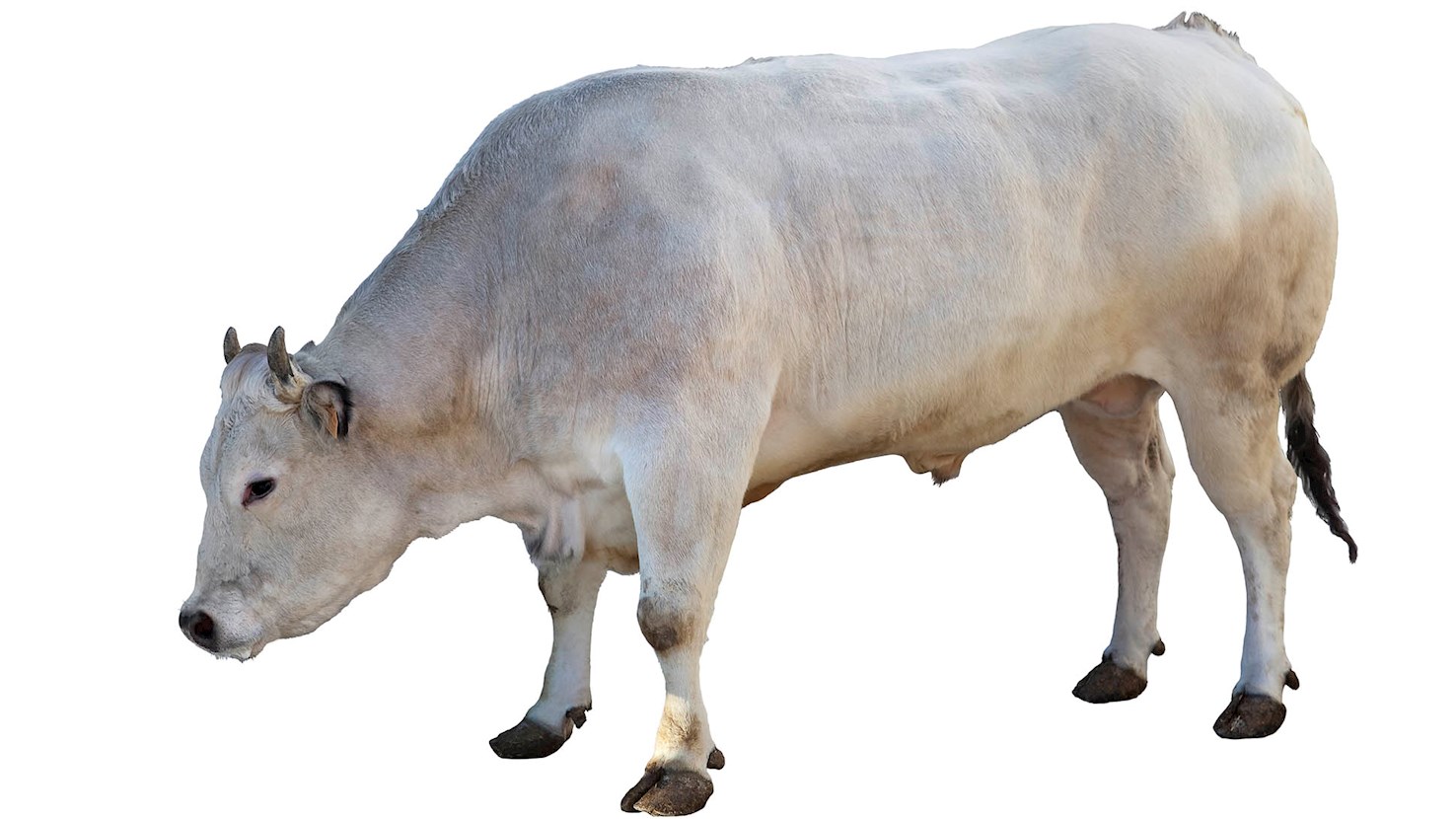
Hailing from Italy, chianina is an ancient cattle breed that is distinguished by its large size, well-muscled body, hardiness, excellent maternal abilities, ease of calving, and high adaptability to various environmental conditions. The initial purpose of the breed was that of draught animals, and due to their remarkable appearance and bright ivory coat, the cattle commonly took part in ancient sacrificial ceremonies. The breed then evolved into a dual purpose breed reared for both its meat and as a draught animal, while today, the main focus has been placed on beef production. Apart from Italy, pure-bred and cross-bred chianina are nowadays reared in other countries throughout Europe, in Ireland, Australia, the US, Canada, and, recently, South Africa.
The origins of Vitellone Bianco dell’Appennino Centrale can be traced back to the pre-Roman times when the Etruscans raised cows with the same common characteristics of the Podolica cattle breeds which are reared in the Apennines today. The fresh veal meat of Vitellone Bianco dell’Appennino Centrale is obtained from 12 to 24 months old cows and bullocks of the Central Italian Chianina, Marchigiana and Romagnola white breeds. The animals are raised in the regions of Umbria, Marche, Abruzzo, Molise, Emilia-Romagna, Campania, Lazio and Tuscany. The meat of Vitellone Bianco is particularly succulent, bright red and has a fine-grained texture. Its color doesn't darken when exposed to air, and has a high iron content due to the combination of genetic heritage, rearing methods and climate environment. Paired with a full-bodied red wine, Vitellone Bianco is most commonly prepared as the Florentine T-bone steak, a true Tuscan cuisine favorite.
Fassona beef is the exceptionally lean meat from the Fassona Piedmontese breed, born and raised in the region of Piedmont. The cattle are renowned for their unique muscular structure, particularly in the thighs, which is the result of natural muscular hypertrophy, yielding high-quality meat that is distinguished by excellent texture, tenderness, juiciness, and a rich, sweet flavor. Fassona beef’s excellent characteristics are also the result of a dry-aging process of the meat. It is highly prized for low amounts of saturated fat, cholesterol, and calories, but also for its high amounts of essential nutrients, omega-3, and omega-6 fatty acids. Fassona beef is especially suitable for raw consumption, either simply seasoned with salt and extra-virgin olive oil or used as a base for tartare or carpaccio specialties, although the meat is equally flavorful when pan-seared, roasted, grilled, braised, or boiled. The beef is often cooked with white truffles or a selection of Piedmontese wines such as Barbera, Barolo, and Barbaresco, and it can also be served with pasta dishes in the form of ragout.
Razza Maremmana is a breed of cattle native to the Maremma region of central Italy, an area that stretches across southern Tuscany and northern Lazio. Recognized for its large size, lyre-shaped horns, and adaptability, it has been deeply intertwined with the agricultural and cultural life of this landscape for centuries. Bred to survive in the once marshy, harsh environment of the Maremma, it is highly resilient, thrives on sparse pasture, and is valued both for its historical role as a working animal and for the quality of its meat today. The breed’s origins date back to antiquity, with roots that may trace to cattle raised by the Etruscans and later influenced by animals introduced during Roman and medieval times. For centuries, Maremmana cattle were indispensable to the region’s economy, used for plowing fields, pulling carts, and sustaining local agriculture. They were managed by the butteri, the skilled cattle herders and horsemen of the Maremma, who helped shape the pastoral traditions still associated with the region. As mechanization transformed farming in the 20th century, the breed’s role shifted toward meat production, where it gained recognition for its lean, flavorful beef and adaptability to extensive, low-input farming systems. Maremmana cattle are typically grey, with calves born a reddish-brown before darkening as they mature. Their robust build, calm temperament, and natural resistance to disease allow them to live semi-wild, grazing freely across large areas of land. This extensive, pasture-based system contributes to the distinctive quality of their meat, which is firm, deeply flavored, and nutritionally rich. Their hardiness and genetic strength have also made them valuable in breeding programs across Europe. One notable aspect of the breed’s culinary significance is its role in the preparation of bistecca alla fiorentina, one of Tuscany’s most renowned dishes. Maremmana is one of the two breeds used for this iconic steak, the other being the better-known Chianina. The meat’s depth of flavor and firm texture make it especially well suited to this preparation, which relies on high-quality beef cooked simply to showcase its natural qualities. Beyond its use in prized dishes, Maremmana beef often appears in slow-cooked stews, braised preparations, and rustic meat-based recipes typical of the region. It pairs naturally with full-bodied Tuscan red wines such as Morellino di Scansano or Brunello di Montalcino, which complement its intensity and structure.
This breed of bovine is indigenous to the Piedmont provinces of Cuneo, Turin and Asti, and has been traditionally raised for meat, milk and as working cattle. Today, Vitelloni Piemontesi are mainly bred for their excellent meat yield, since the animals are characterized by a particularly hypertrophic hind leg muscles called Groppa doppia (double rump) or Coscia doppia (double leg). These placid animals are easily recognized for their white coat and can be either free pastured or barn-raised. Vitelloni Piemontesi meat is most famous for the traditional Piedmont dish of Carne cruda all'Albese, an Italian variety of steak tartare, generously sprinkled with white truffle shavings.
TasteAtlas food rankings are based on the ratings of the TasteAtlas audience, with a series of mechanisms that recognize real users and that ignore bot,
nationalist or local patriotic ratings, and give additional value to the ratings of users that the system recognizes as knowledgeable.
For the “Top 5 Italian Beef Cattle Breeds” list until July 15, 2026, 29 ratings were recorded, of which 19 were recognized by the system as legitimate.
TasteAtlas Rankings should not be seen as the final global conclusion about food. Their purpose is to promote excellent local foods,
instill pride in traditional dishes, and arouse curiosity about dishes you haven’t tried.