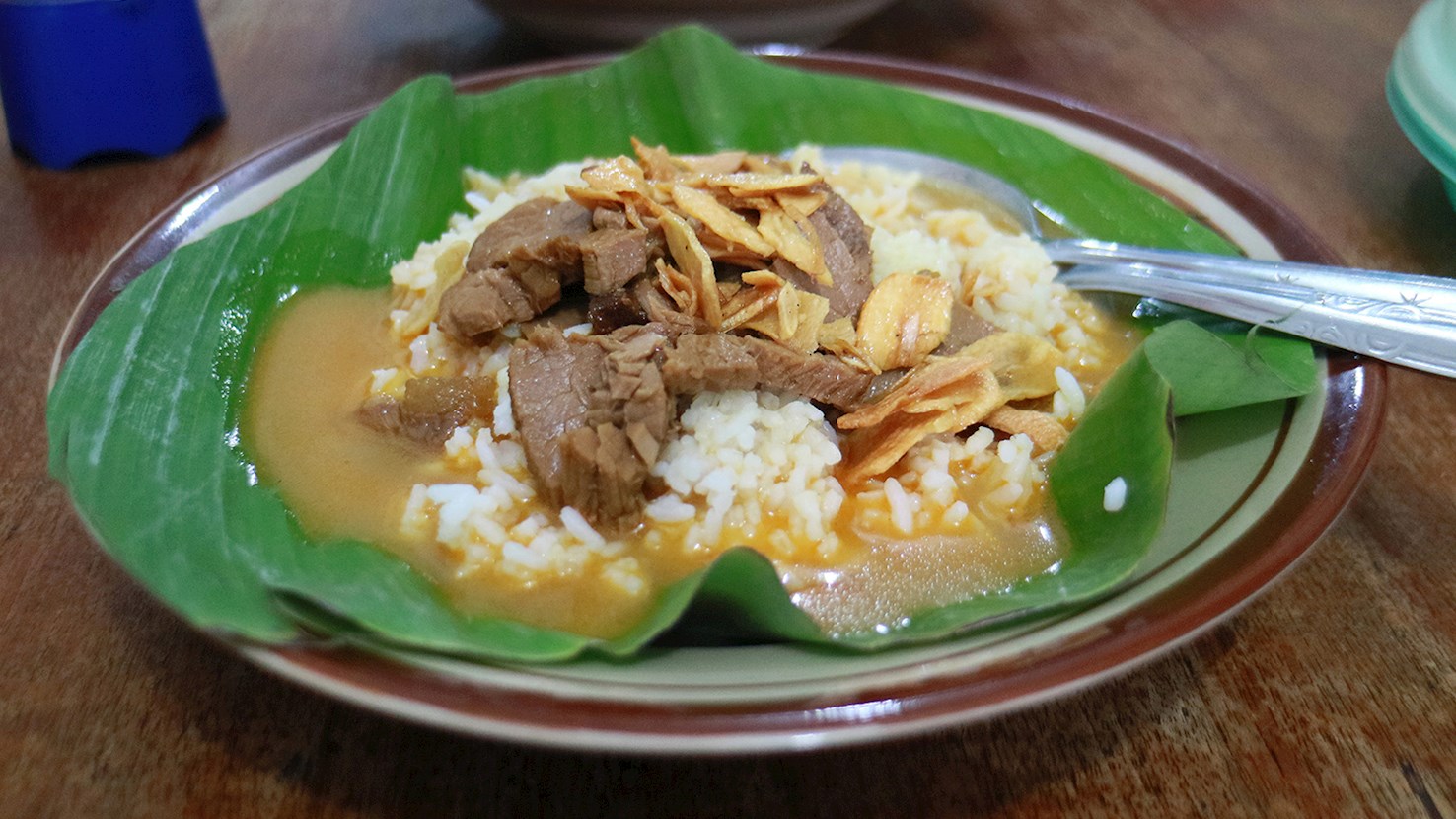
Nasi gandul is a richly flavored rice dish that hails from the town of Pati in Central Java, Indonesia. It features steamed rice served with tender slices of beef or offal in a thin, aromatic coconut milk-based gravy, typically infused with spices such as coriander, garlic, shallots, cumin, and cinnamon. The dish is often likened to a lighter version of gulai or a more brothy rendition of beef rendang, with its signature feature being the delicate balance between savory, sweet, and creamy elements. The name "gandul", which means "hanging" in Javanese, is believed to reference the way vendors once carried their food, suspended on bamboo poles over the shoulder, but over time, the name became synonymous with the dish itself. What makes nasi gandul distinct is not only its complex yet comforting flavor, but also its presentation. It is commonly served on a plate lined with banana leaf, enhancing the aroma and offering a rustic appeal. The meat, often beef brisket, tongue, or innards, is simmered until soft and spooned over the rice with the broth ladled generously on top. Crispy fried shallots and a splash of sambal add contrast and heat, while optional extras like fried tempeh or eggs can round out the meal. Although once sold by street vendors walking from village to village, nasi gandul is now a regional specialty served in food stalls and warungs in and around Pati, where it continues to be a symbol of local pride.
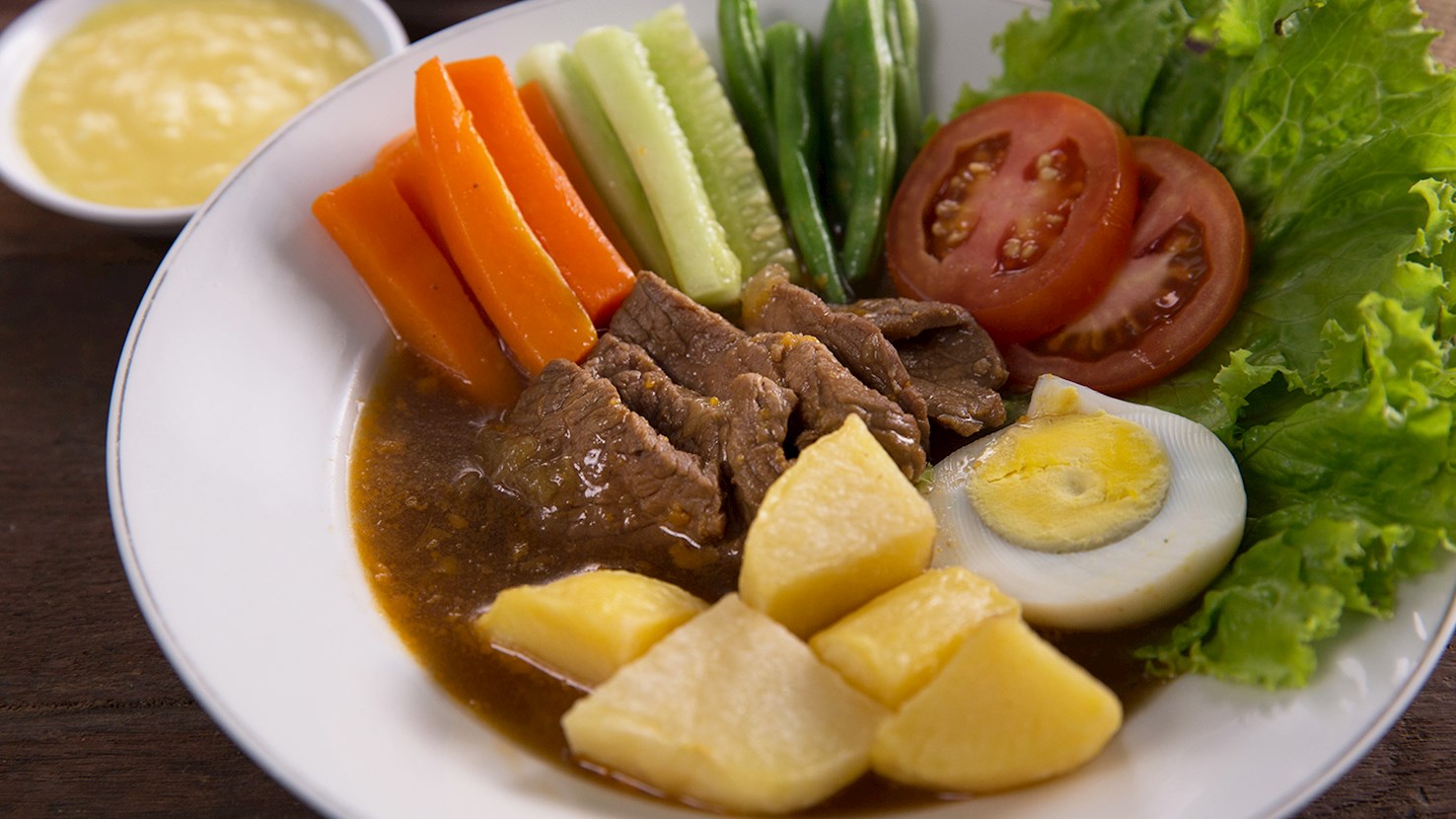
Selat Solo is a Central Javanese beef dish served in a lightly sweet, aromatic broth and accompanied by vegetables, originating from the city of Solo (Surakarta) in Indonesia. The dish reflects the culinary fusion between Dutch colonial influences and local Javanese tastes, evolving over time into a distinctly regional specialty. The name “selat” comes from the word “salad,” introduced during the colonial period, though the final dish bears little resemblance to a Western salad. It consists of stewed beef, usually tenderloin or another lean cut, braised in a thin sauce made from sweet soy sauce, garlic, shallots, nutmeg, cloves, and black pepper. The beef is cooked until tender and served warm, submerged in the broth that doubles as both cooking liquid and sauce. Alongside the beef, Selat Solo is commonly served with blanched vegetables such as carrots, green beans, and potatoes, either boiled or fried. Garnishes often include a slice of hard-boiled egg, pickled cucumber, and a light splash of mustard or Worcestershire sauce to enhance the dish’s slightly tangy, savory dimension. Unlike grilled steaks in Western cuisine, Selat Solo emphasizes slow cooking and a balanced flavor profile that leans toward the sweet and aromatic, typical of Central Javanese dishes. Originally associated with elite households and adapted from colonial kitchen practices, selat Solo has long since become part of everyday cuisine in the region. It is widely available in local warungs, home kitchens, and restaurants across Solo and neighboring cities.
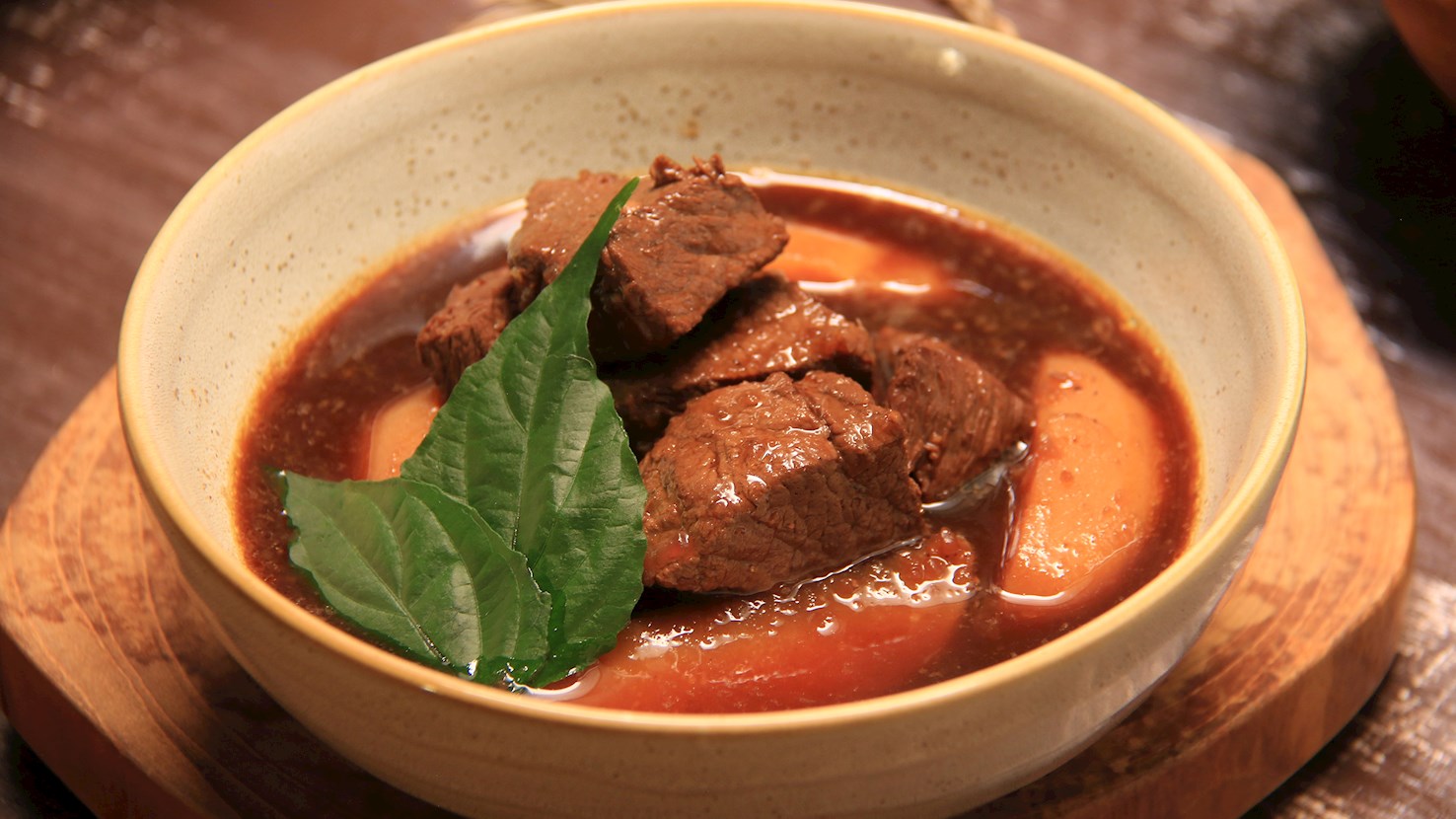
Semur daging is a richly spiced Indonesian beef stew, slow-cooked in sweet soy sauce and aromatic spices until the meat becomes meltingly tender and deeply infused with flavor. Rooted in the culinary intersections of Javanese tradition and Dutch colonial influence, semur daging is a dish that speaks to Indonesia’s layered history, where European braising techniques meet native spices and ingredients. The word “semur” is believed to come from the Dutch smoor, meaning “to braise”. Built around the dark, syrupy sweetness of kecap manis, semur daging layers warm spices like nutmeg, cinnamon, cloves, and white pepper with garlic, shallots, and sometimes ginger, resulting in a sauce that is complex, mellow, and comforting. The beef is usually cut into large chunks, seared, and then simmered gently in the spiced broth for hours until it yields to the touch and soaks up the dark, caramelized sauce. Unlike the fiery heat typical of many Indonesian dishes, semur daging is characterized by its soothing depth and gentle warmth. It is often described as sweet, but never cloying; the richness of the meat, the softness of slow-cooked onions, and the spice-laced sauce create a deeply satisfying balance. It is most commonly served during festive gatherings, family meals, and religious holidays such as Lebaran, alongside steamed rice, fried shallots, and sometimes boiled eggs or potatoes cooked in the same sauce. Each household has its own variation: some versions are darker and more intensely spiced, while others may be lighter and more soupy. Regional preferences add further nuance: in Betawi cuisine, it might be made with tongue or offal, while in Central Java, the dish leans toward sweeter and thicker interpretations.
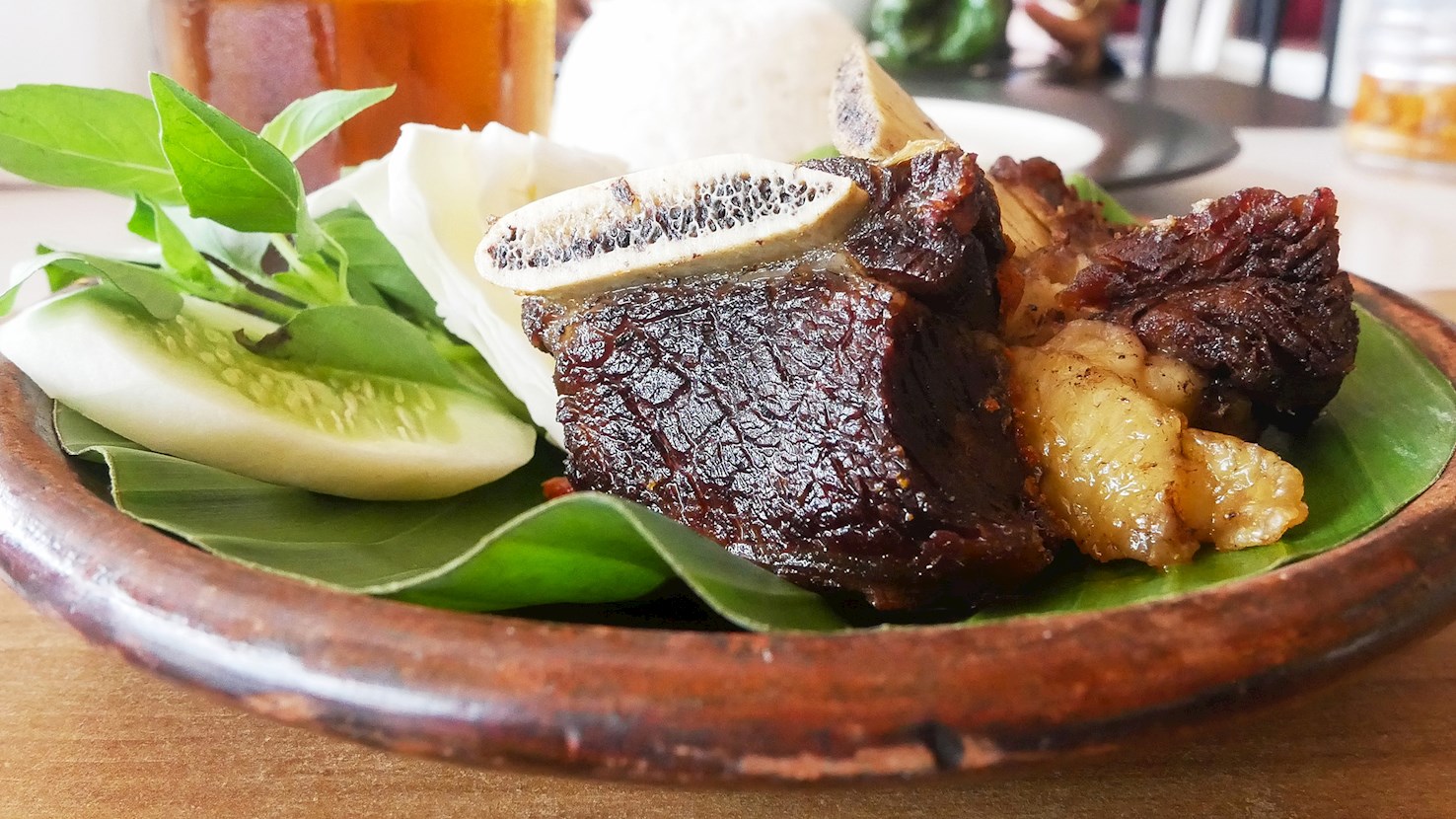
Iga senyet is a Balinese dish originating from Surabaya, known for its distinctive use of beef ribs that are marinated, slow-cooked, and typically grilled or fried before being served with sambal and rice. The name "iga" refers to ribs, while "senyet" is a local term that implies a pressing or crushing of ingredients, often referencing the sambal that accompanies the dish. This sambal is made by grinding together ingredients such as chilies, shallots, garlic, and lime juice, resulting in a vibrant and intensely flavorful condiment that defines the dish's character. The preparation of iga senyet involves marinating the ribs in a mixture that can include sweet soy sauce, garlic, ginger, coriander, and other local spices, then cooking them until the meat is tender enough to separate from the bone easily. After slow cooking, the ribs are typically finished on a grill or in hot oil to add a slightly crisp texture to the exterior, balancing the softness of the meat. The sambal, prepared separately, is pounded rather than blended to preserve the texture and freshness of the ingredients. The final dish is often served with warm rice, fried shallots, and sometimes vegetables, offering a balance between spicy, savory, and aromatic elements. While iga senyet is primarily found in Bali, its growing popularity has led to its appearance in Indonesian restaurants beyond the island, particularly in urban centers like Jakarta or Surabaya. It is often enjoyed as part of a larger meal and valued for its depth of flavor and the complexity added by the sambal.
TasteAtlas food rankings are based on the ratings of the TasteAtlas audience, with a series of mechanisms that recognize real users and that ignore bot,
nationalist or local patriotic ratings, and give additional value to the ratings of users that the system recognizes as knowledgeable.
For the “Top 4 Javanese Beef Cuts and Dishes” list until May 16, 2026, 51 ratings were recorded, of which 35 were recognized by the system as legitimate.
TasteAtlas Rankings should not be seen as the final global conclusion about food. Their purpose is to promote excellent local foods,
instill pride in traditional dishes, and arouse curiosity about dishes you haven’t tried.