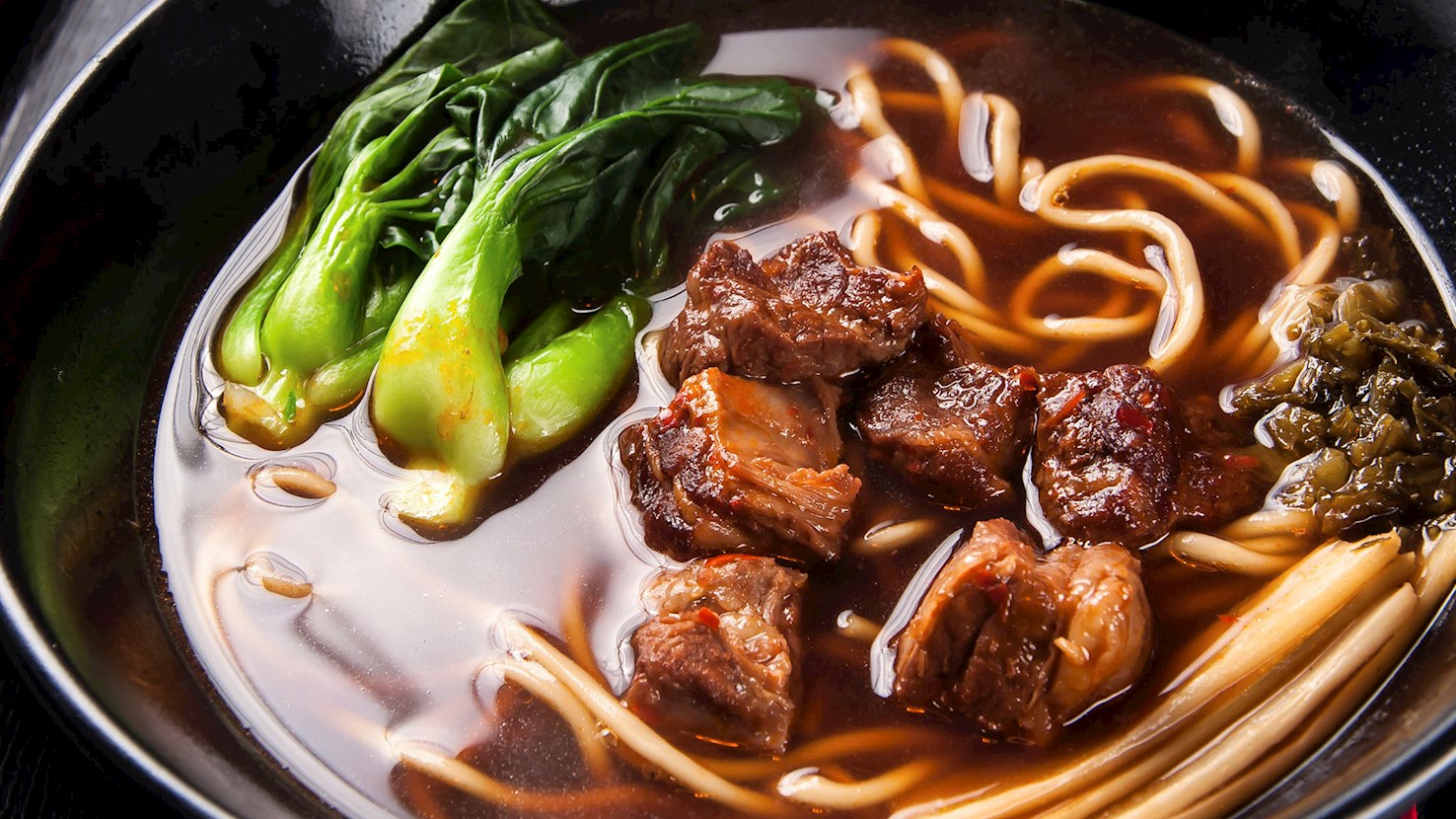
The savory, spicy beef noodle soup is the national dish of Taiwan and the source of immense pride for the locals. The dish is an ideal winter comfort food, typically consisting of beef, broth, vegetables, noodles, and spices. Beef noodle soup has a great Sichuan influence dating back to the 1940s, when China was in civil war and many Chinese people moved to Taiwan, creating this cross-provincial dish and incorporating chili bean sauce and Sichuan peppercorns into it along the way. Variations are endless when making this long-simmering stew, and in Taiwan, there are numerous side dishes to accompany it, such as seaweed and braised dried tofu. Today, there is even an annual Beef Noodle Festival held in Taipei, where various restaurants and cooks compete for the prestigious title of Best Beef Noodle.
Beef chow fun is a Cantonese dish prepared by stir-frying previously marinated beef slices together with flat, wide rice noodles (hor fun), and bean sprouts. Because of the preparation method, beef chow fun is a true measure of any accomplished Cantonese chef. Specifically, it is necessary to get two things right: wok hei — the cooking technique of stir-frying the ingredients at high heat which imparts them with a special umami flavor; and pow wok — a way of quickly tossing the ingredients without the use of a spatula, which prevents sticking and does not break the delicate rice noodles. The origins of the dish are still unclear, but according to a folk tale, it was invented during World War II in Guangzhou. Today, this Cantonese stir-fry is typically served in yum cha restaurants and cha chaan teng - tea restaurants known for serving diverse and affordable meals.
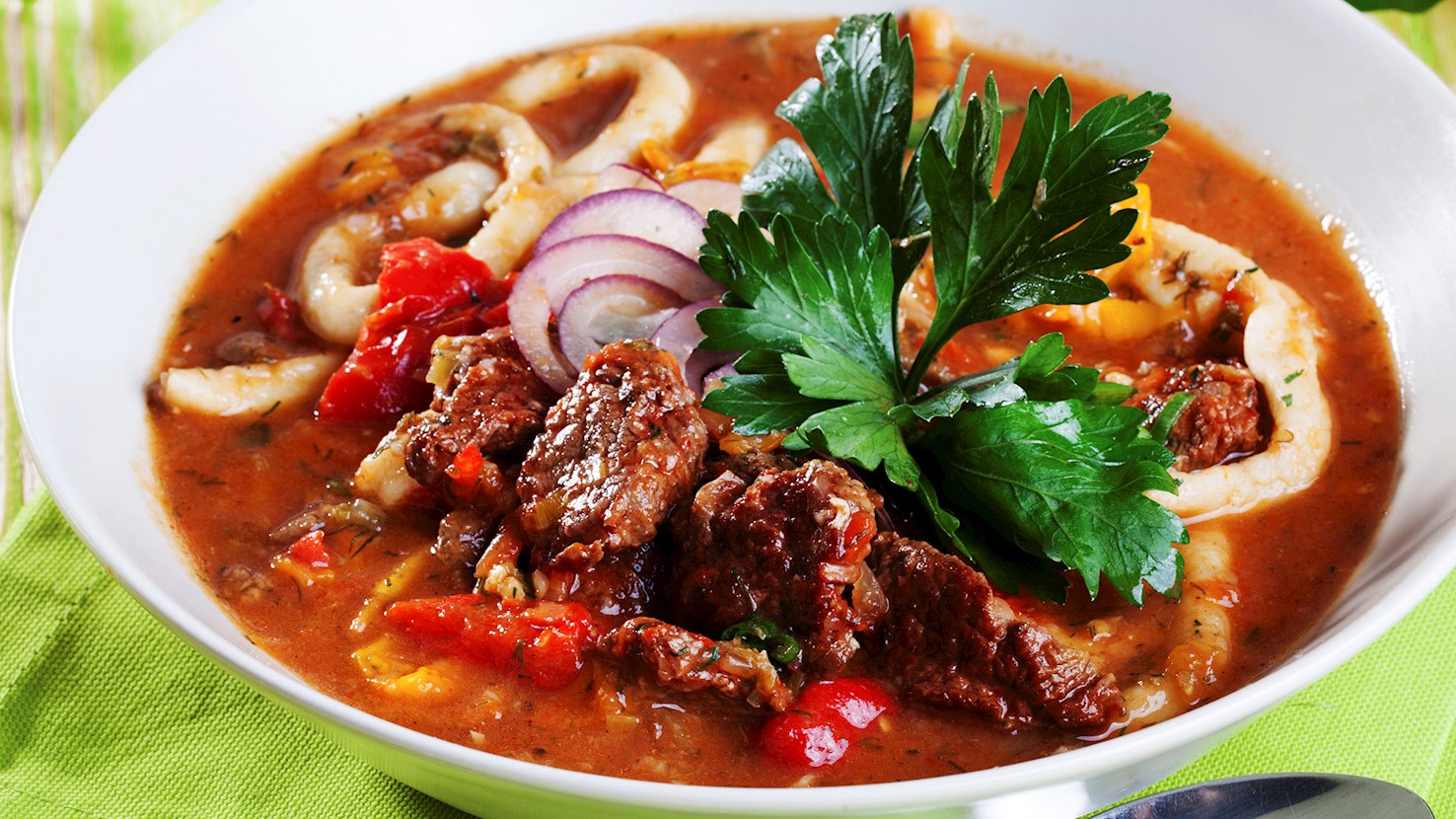
Lağman is a noodle-based dish made from hand-pulled wheat noodles served with a savory topping of meat, vegetables, and sauce, prepared across Central Asia and most closely associated with Uyghur communities in the Xinjiang region of China as well as widely cooked in Kazakhstan, Kyrgyzstan, and Uzbekistan, where it appears in home kitchens and casual eateries as a full meal rather than a side. Its development follows the movement of Turkic-speaking peoples along inland trade routes, where wheat cultivation, noodle-making techniques, and stir-based meat cookery intersected, resulting in a dish that combined Chinese-style hand-pulled noodles with Central Asian preferences for lamb, onions, and robust sauces, and adapted locally depending on available vegetables and fats. Preparation centers on a firm dough made from wheat flour, water, and salt that is rested and repeatedly stretched and pulled by hand into long, elastic strands, while the topping is cooked separately by sautéing meat, most often lamb or beef, with onions, garlic, tomatoes, peppers, and other vegetables, simmered until cohesive but not thickened into a paste, then spooned over or mixed with the cooked noodles. Serving can take two main forms, either with the sauce ladled generously over drained noodles or with additional broth added to create a soup-like consistency, and it is brought to the table immediately so the noodles retain their structure. What distinguishes lağman is the noodle-making method itself, which relies on manual stretching rather than cutting, producing strands with uneven thickness that hold sauce differently along their length and require skill and timing rather than tools. It is eaten hot, usually with a spoon and fork or chopsticks depending on local custom, commonly at lunch or dinner, and it pairs well with simple salads, pickled vegetables, or raw onions, while beverages such as black tea, lightly salted tea, or plain water are most often consumed alongside to balance the richness of the meat and sauce.
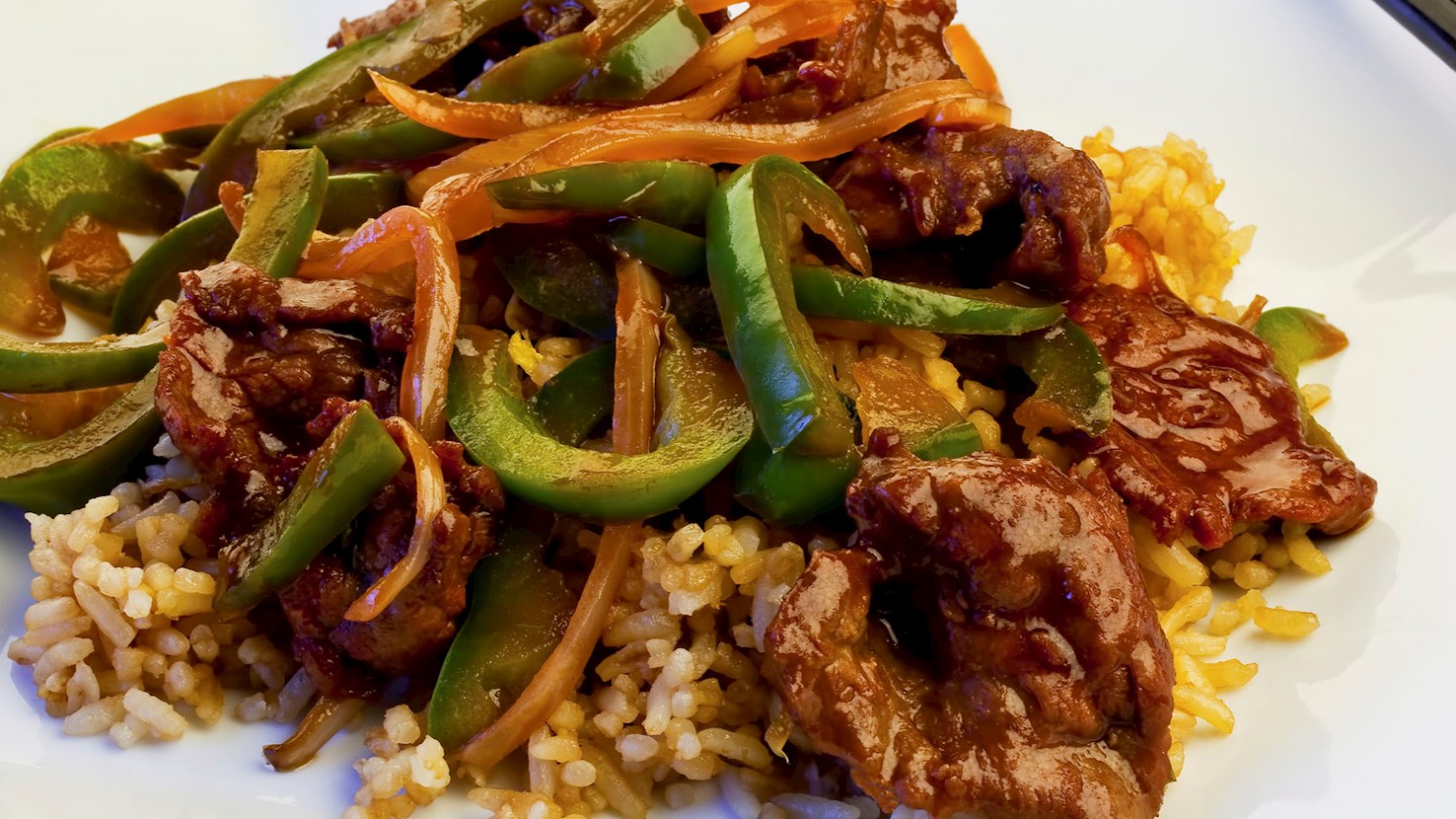
Pepper steak is a classic Chinese-American dish consisting of sliced strips of steak that are seasoned with a hefty dose of freshly ground pepper. The dish is believed to have origins in the Chinese province of Fujian, where pork was originally used instead of beef. Today, the beef is usually prepared with bell peppers and sliced onions, and it can be served either as an appetizer or as a main course, often with a side of rice or noodles. The dish has been prepared in the United States since the 1940s, with the main difference being that it is more heavily seasoned than the traditional Chinese version.
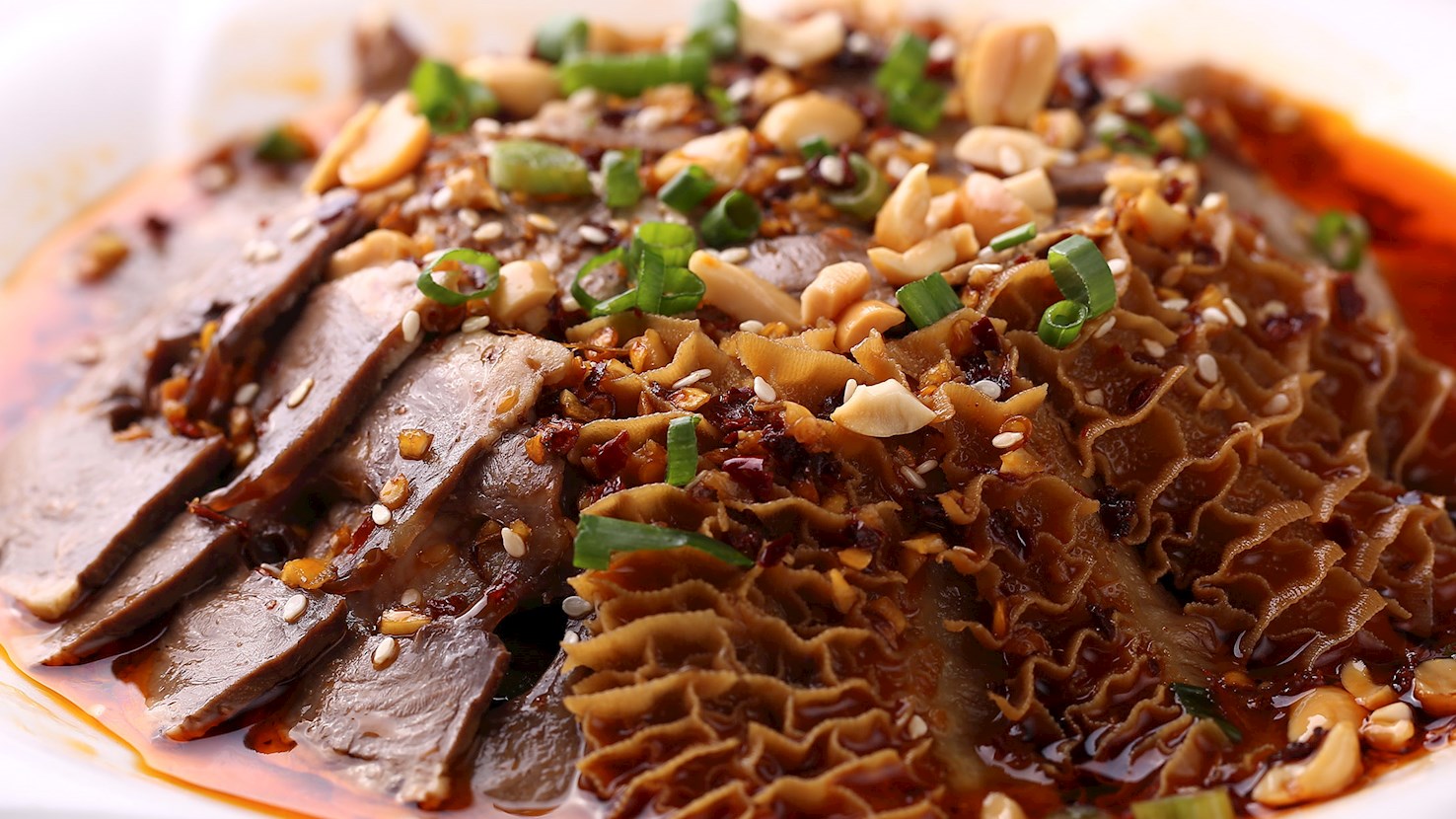
Fūqī fèipiàn is a Sichuanese cold dish made from thinly sliced beef and offal dressed in a fragrant, spicy sauce. The dish gained its distinctive name, meaning “husband and wife slices,” from a couple in Chengdu, Guo Chaohua and Zhang Tianzheng, who became famous in the early twentieth century for their exceptional version sold at street stalls. Their skill in seasoning and preparation turned what began as a humble vendor’s snack into one of the most recognizable representatives of Sichuan cuisine. Over time, the name stuck, spreading beyond Chengdu until it became synonymous with this particular style of seasoned beef. Preparation begins with beef heart, tongue, and tripe simmered in a lightly spiced broth until tender, then cooled and sliced thin to achieve a uniform texture. The sauce is what defines the dish: chili oil blended with Sichuan peppercorn, garlic, soy sauce, vinegar, sugar, and sesame paste, each component calibrated to strike a balance between numbing, heat, salt, and subtle sweetness. Once mixed, the sliced meat is coated thoroughly, allowing the oil to glisten over the surface and carry the fragrance of pepper and spice. Peanuts, sesame seeds, and fresh cilantro are often sprinkled on top, adding crispness and color. The result is both rich and precise, with the coolness of the meat offset by the warmth and sting of the dressing. Fūqī fèipiàn is served widely in Sichuan restaurants and across China, often as an appetizer or part of a shared spread. It pairs naturally with plain rice or light noodles that absorb its sauce without dulling its sharpness. Many people enjoy it with cold beer or mild grain spirits, as the drink’s crispness refreshes the palate between bites.
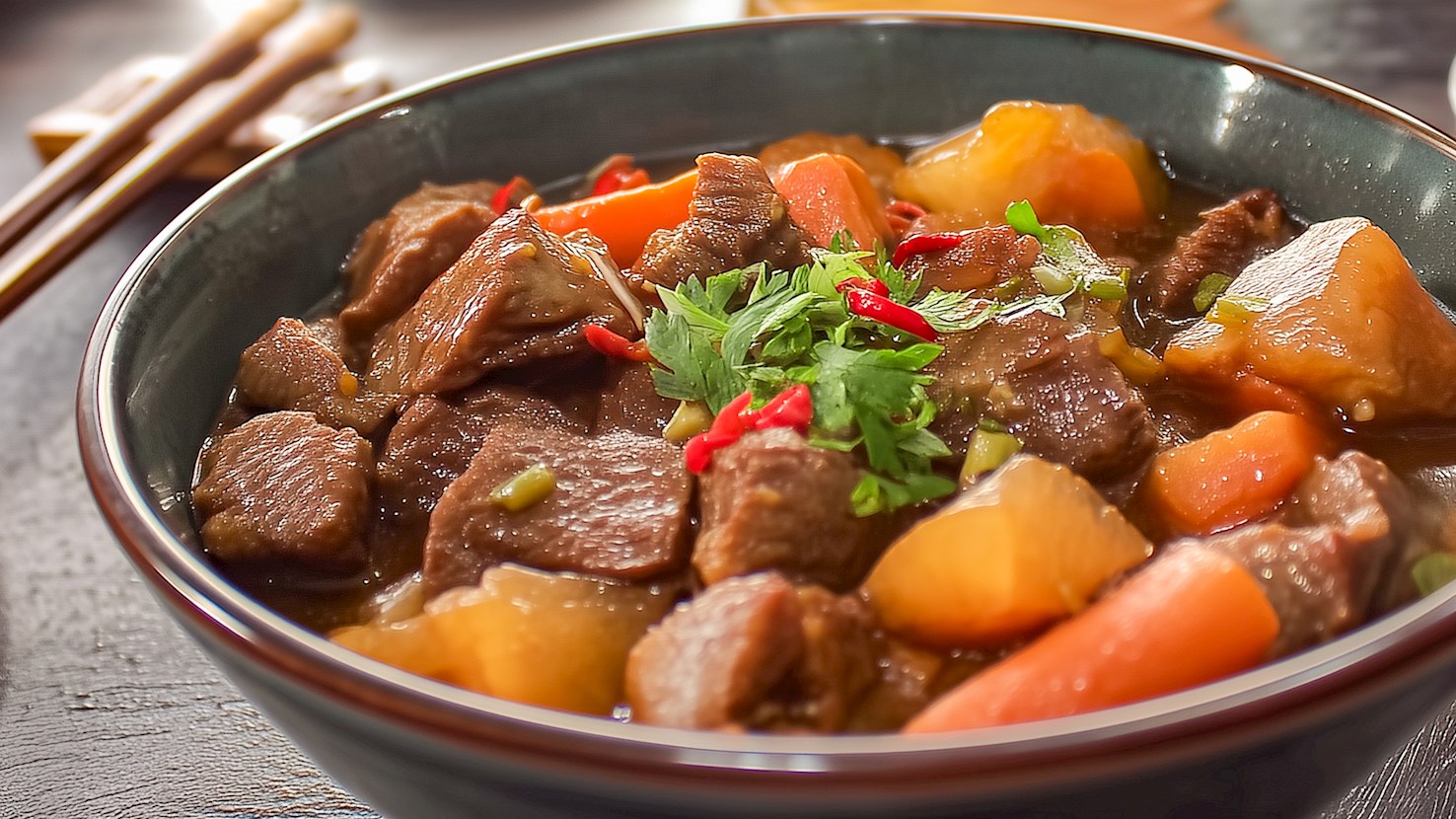
Dun niurou, translating to "stewed beef," is a cherished dish in Chinese cuisine, celebrated for its tender meat and rich, savory broth. The preparation involves simmering beef cuts, often combined with ingredients like potatoes, carrots, and a medley of aromatic spices, over low heat until the flavors meld harmoniously. This slow-cooking method ensures the beef becomes succulent, absorbing the essence of the accompanying components. Dun niurou is particularly favored during colder months, offering warmth and comfort. Its versatility allows for regional variations across China, with local spices and ingredients adding unique twists to this classic stew.
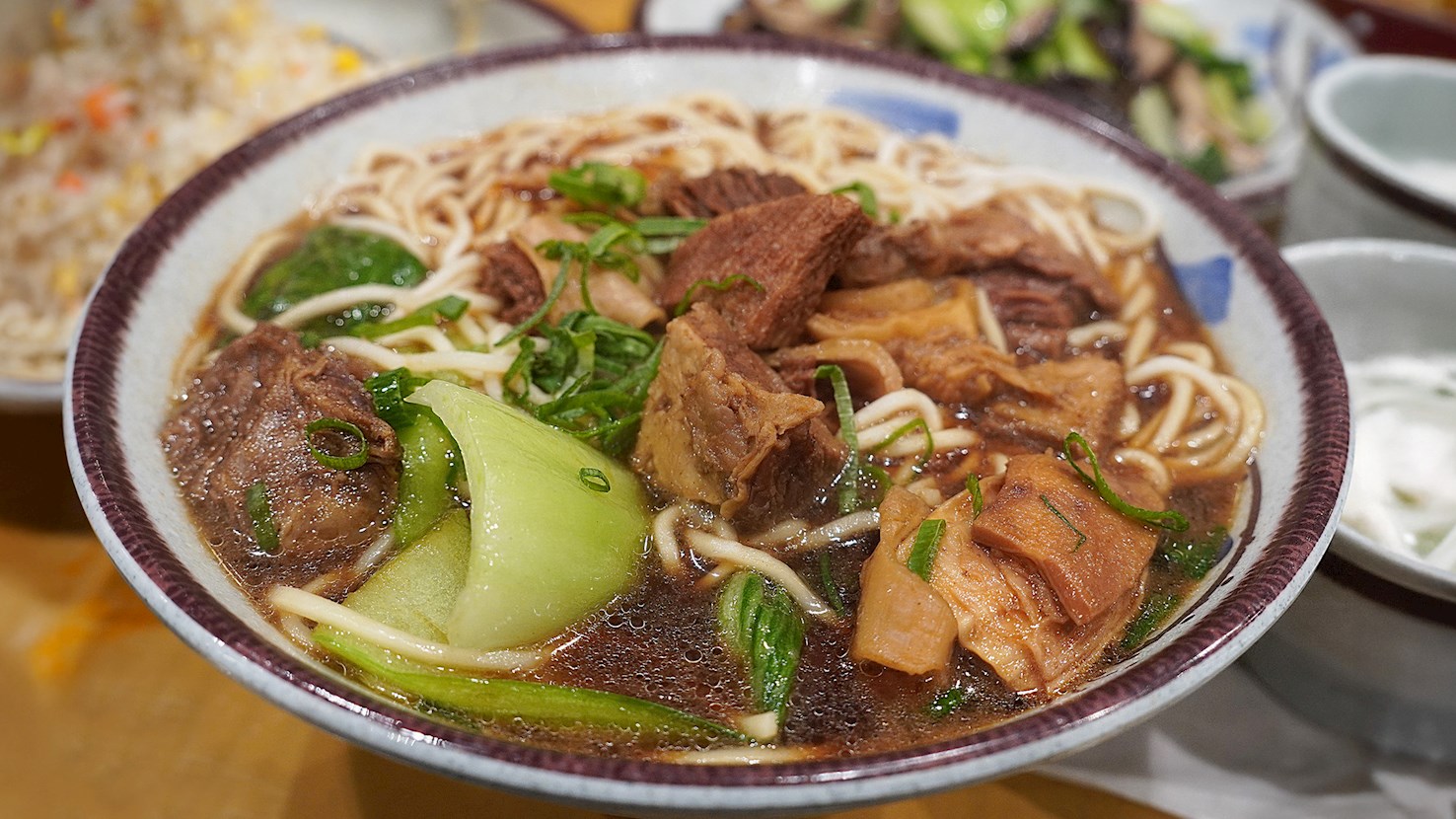
Braised beef noodle soup, is a well-known dish from China that has become especially prominent in Taiwan, where it is considered a staple of local food culture. It consists of wheat noodles served in a savory broth with chunks of soy sauce–braised beef, often accompanied by vegetables and pickled greens. The dish can be traced back to Chinese beef-braising techniques, particularly from Sichuan region where beef was more commonly eaten. When migrants brought these cooking styles to Taiwan in the mid-twentieth century, they adapted them to local tastes, creating the red-braised version that has since become a hallmark of Taiwanese street food and restaurant menus. Over time, regional variations emerged, with some emphasizing spiciness, others focusing on clear broth, and many blending influences from different parts of China to suit local preferences. Preparation begins with beef shank or brisket, which is cut into chunks and slowly braised with soy sauce, rice wine, ginger, garlic, star anise, and other aromatics until tender. The braising liquid is often combined with stock to form the base of the soup. Wheat noodles are cooked separately and placed in bowls, topped with the beef and broth, and sometimes garnished with blanched greens, scallions, and pickled mustard stems. The dish can be adjusted for depth and spice, with some versions adding chili bean paste or dried chilies to enhance heat and complexity. Today, braised beef noodle soup is eaten widely in both mainland China and Taiwan, with Taiwan in particular treating it as an everyday meal available in night markets, noodle shops, and restaurants ranging from casual to upscale. It is enjoyed at any time of day, from a quick lunch to a filling dinner.
Chen pi beef or tangerine peel beef is a traditional dish originating from Guangzhou. This Cantonese dish is usually made with a combination of beef (sirloin or rump steak), dried tangerine peel, scallions, garlic, sugar, sesame oil, and vegetable oil. The meat is cut into thin strips and mixed with baking soda and water. The dried tangerine peel is soaked in water, drained, and sliced into thin strips. The garlic is fried in a wok until light brown, and it's then mixed with the beef. The combination is stir-fried over high heat and mixed with tangerine peel, sugar, scallions, water, and sesame oil. The dish is stir-fried until the meat is fully cooked, and it's then served in deep bowls with rice on the side. A slightly different version of the dish is quite popular in Sichuan.
TasteAtlas food rankings are based on the ratings of the TasteAtlas audience, with a series of mechanisms that recognize real users and that ignore bot,
nationalist or local patriotic ratings, and give additional value to the ratings of users that the system recognizes as knowledgeable.
TasteAtlas Rankings should not be seen as the final global conclusion about food. Their purpose is to promote excellent local foods,
instill pride in traditional dishes, and arouse curiosity about dishes you haven’t tried.




What People Say