Maison de la Truffe is a historic Parisian gourmet house dedicated to truffles and truffle-based delicacies. Founded in 1932 by truffle brokers from Carpentras, it became one of the reference addresses in Paris for fresh truffles, preserved truffles and fine foods built around this prized ingredient. The brand is closely associated with Place de la Madeleine, one of the city’s classic luxury food destinations, where its boutique and restaurant present truffles as a central element of French gastronomy. Its offer includes fresh seasonal truffles, truffle oils, sauces, condiments, pasta, foie gras, risotto preparations and other delicatessen products. Maison de la Truffe works with different varieties such as black Périgord truffle, summer truffle and Burgundy truffle, depending on season and availability. The house combines retail, tasting and restaurant experience, allowing customers to discover truffles both as a raw ingredient and as part of prepared gourmet dishes. Today, Maison de la Truffe remains one of the best-known French names in the premium truffle category, valued for its long history, Parisian heritage and specialist focus on the “black diamond” of gastronomy.
Éleat Tartufi Alba is a family-owned company founded by Giulia and Alex, both born in the Langhe region, renowned for its stunning landscapes, prestigious vineyards, and rare white truffles. Their passion for this precious natural treasure led to the opening of their boutique in Alba on April 13, 2019. The company offers a wide range of truffle products, including fresh truffles, truffle sauces, oils, butters, and specialties such as tagliolini with truffles and polenta with porcini mushrooms. In addition, Éleat Tartufi Alba organizes unique truffle hunting experiences, giving participants the chance to explore private truffle woods with their trained Lagotto Romagnolo dogs and uncover the secrets of this craft. Based at Piazza Giuseppe Garibaldi 2 in Alba, Éleat Tartufi Alba is dedicated to providing high-quality products and authentic experiences for truffle enthusiasts around the world.
Alba Royal Truffles is a distinguished company specializing in the sale of premium white and black truffles, as well as a curated selection of truffle-infused products. Their offerings include fresh Alba white truffles, celebrated for their velvety exterior and rich aroma, and black truffles, each meticulously sourced from the renowned truffle regions of Langhe, Roero, and Monferrato. For enthusiasts seeking an immersive experience, the company organizes exclusive truffle hunting excursions in the woods of Langa and Roero. Participants accompany experienced truffle hunters and their dogs, learning about truffle characteristics, history, and foraging techniques amidst the picturesque UNESCO-listed hills.
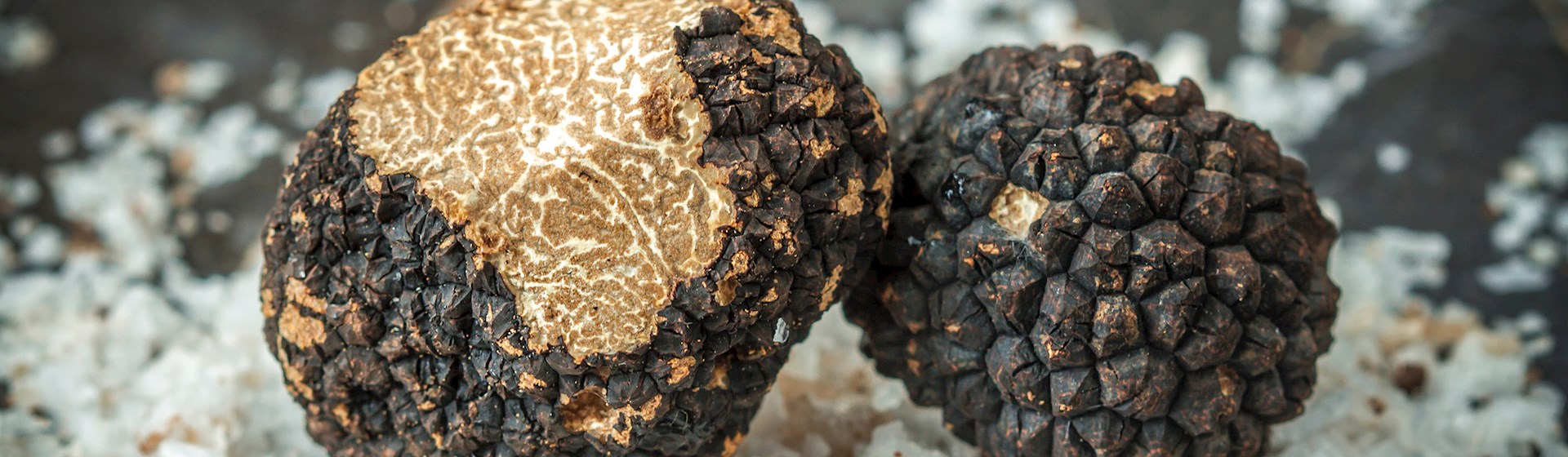
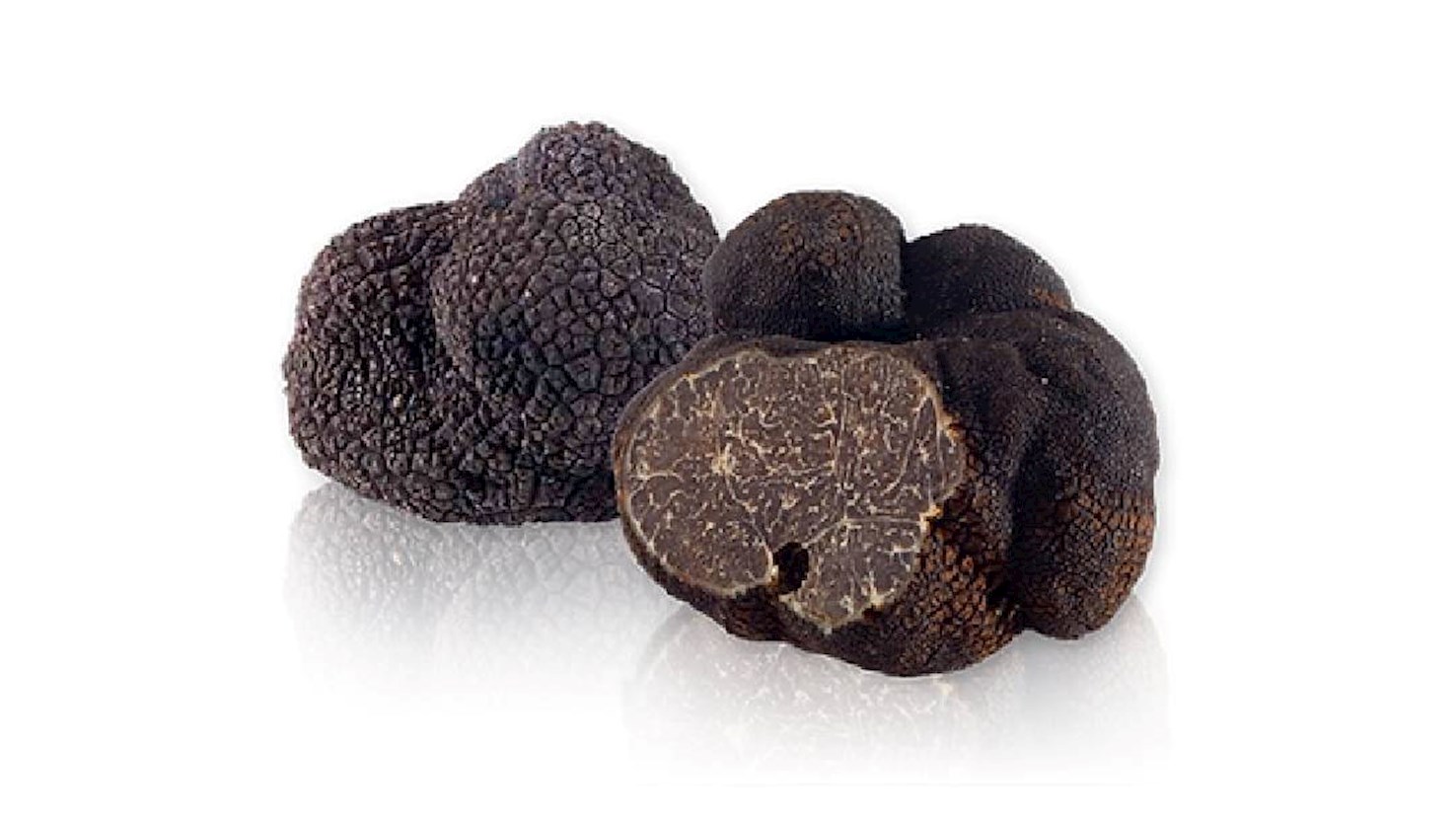
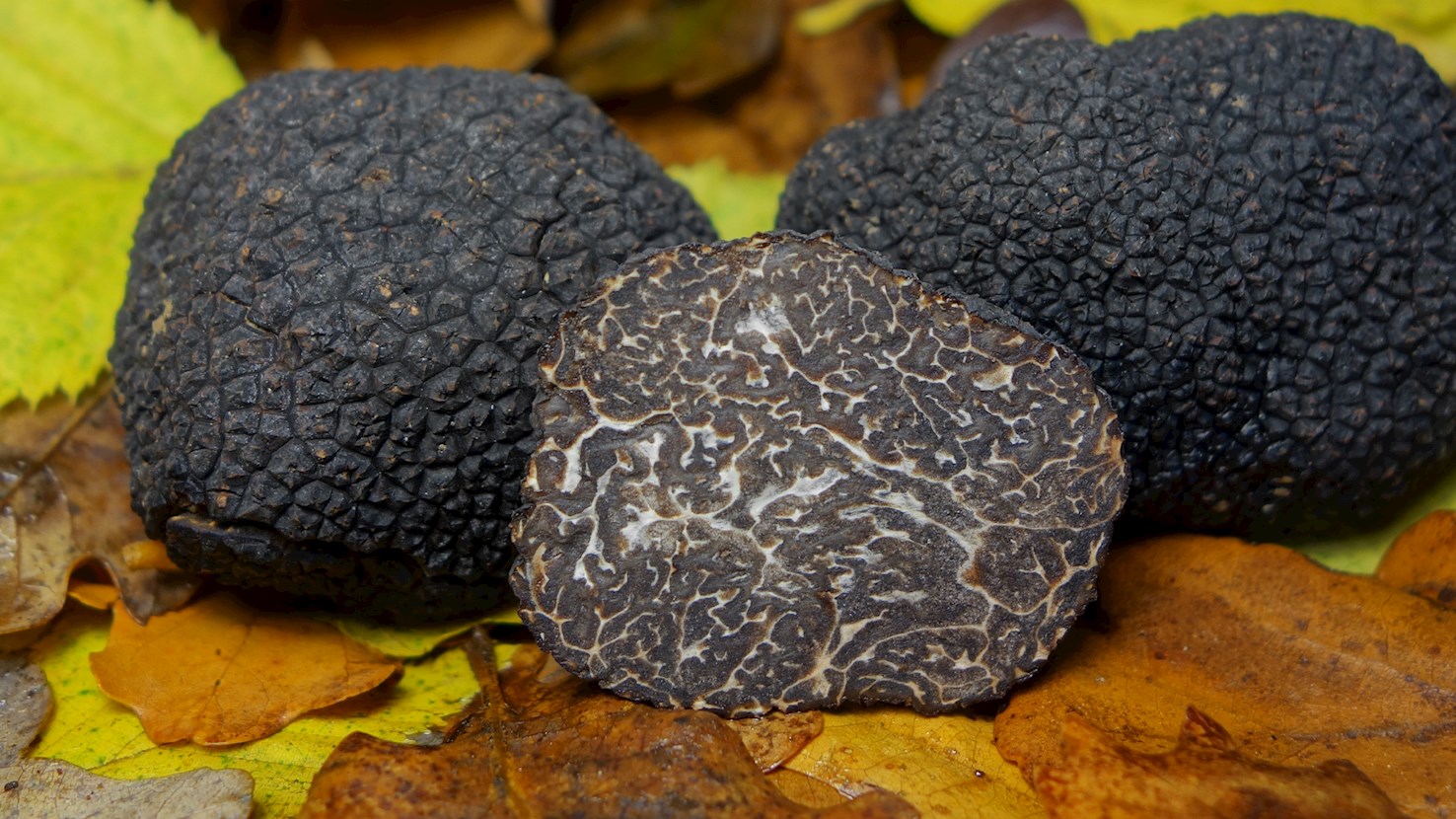
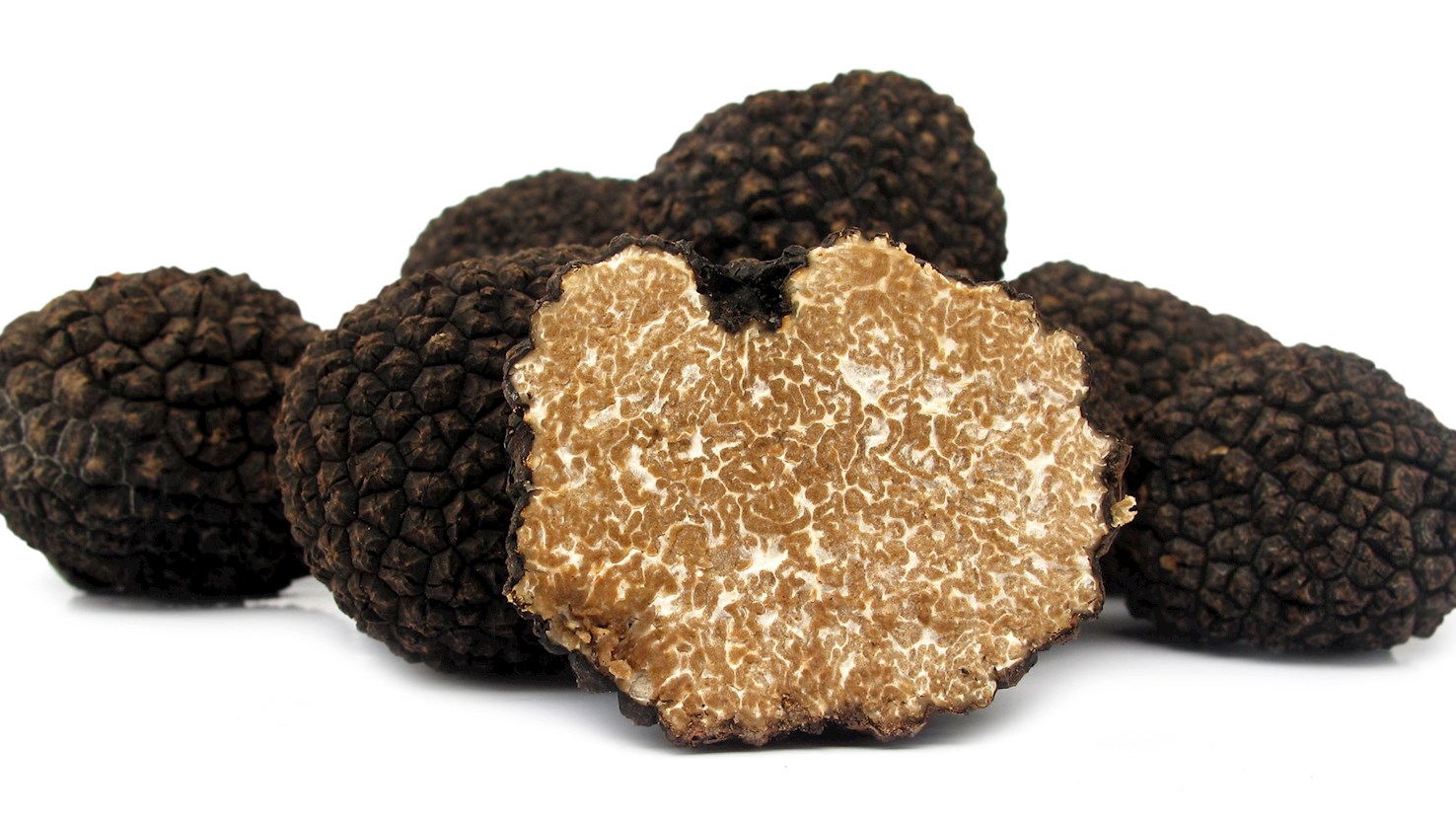
Named after the French Périgord region, black Périgord truffles (lat. Tuber mélanosporum) grow nestled in the roots of hazelnut and oak trees and are typically harvested during autumn and winter. Bulbous and irregularly shaped, the truffles are full of white veins on the inside. They are characterized by their unique, pungent, and earthy fragrance. When fully mature (from December to March), they release their distinctively musky and slightly sweet flavor, which is why Périgord black truffles are one of the most expensive edible fungi in existence. The best black truffles in Italy come from Norcia in Umbria, and in Spain from Teruel in Aragon. Small quantities of Tuber melanosporum can also be found in Slovenia and Croatia.
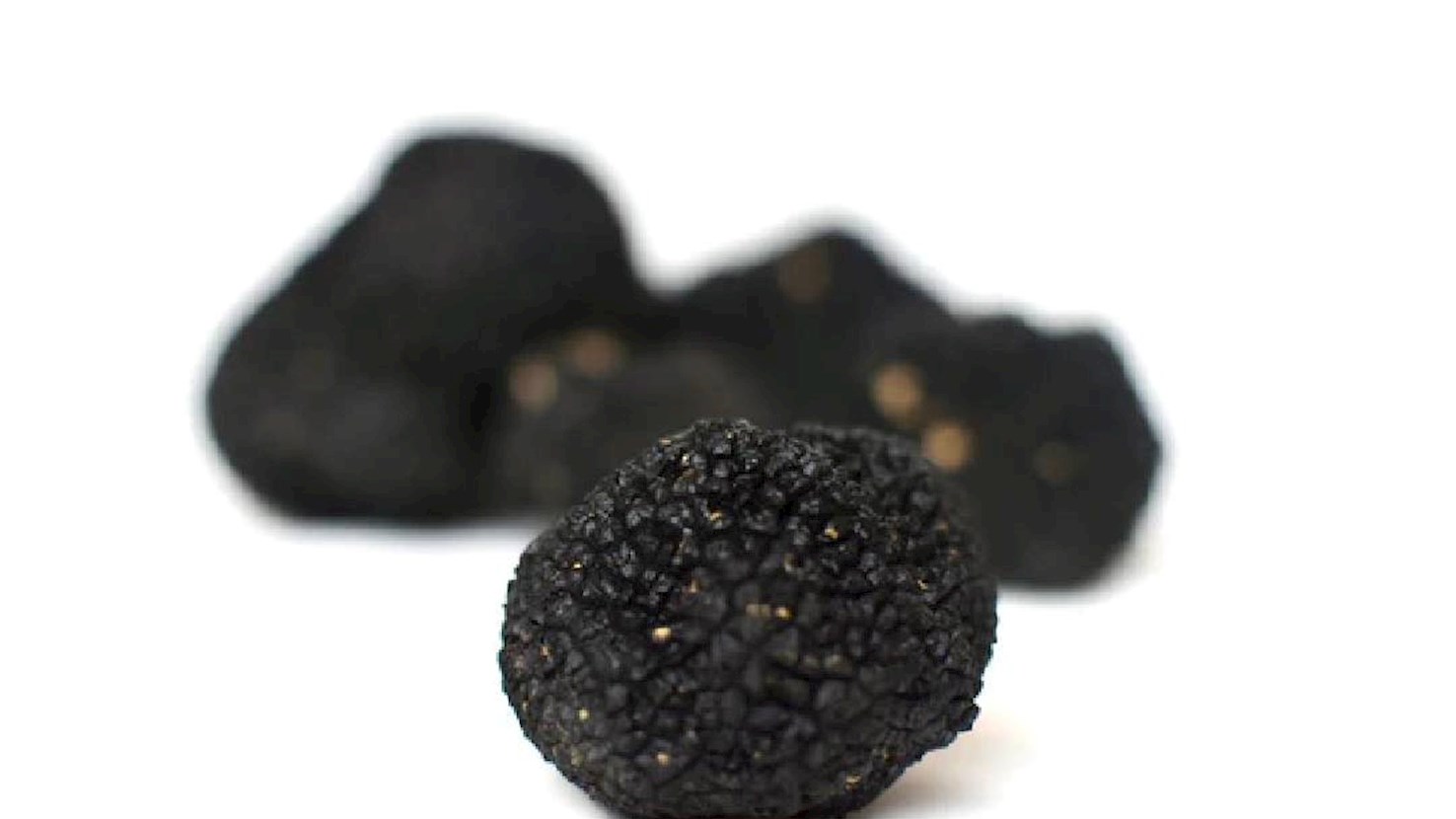
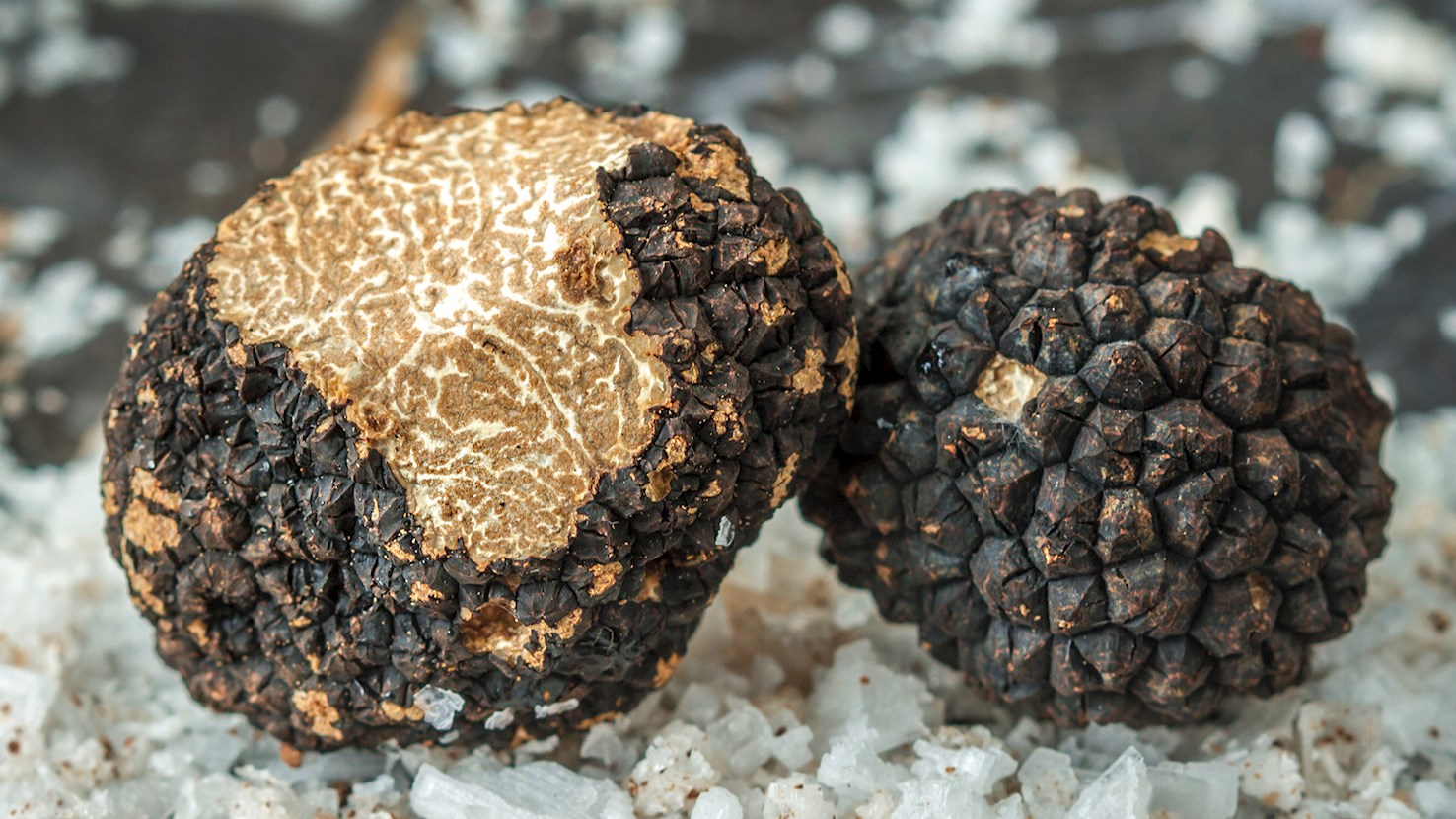
Black summer truffle, also known as Scorzone (lat.Tuber aestivum vitt) is a summer truffle that's easily recognizable by its rough, warted, black surface. This alligator skin-like surface is covered with tiny diamond-shaped projections that are molded by stones which surround the truffle while it's still in the soil. When fully mature, its flesh is pale grey with white marbling. The aroma is rich and woodsy, while the flavors are garlicky, mushroomy, and earthy with hints of hazelnuts. This truffle is harvested during the summer, hence the name. Shave it fresh over pasta or add it to sauces for more depth. Scorzone pairs well with foie gras, lobster, caviar, mascarpone, aged hard cheeses, and herbs such as basil and rocket. Scorzone's price is well below that of the real black truffle, and it's harvested from May to October, but these truffles are at their best in July.
Tartufo di Bagnoli (lat. Tuber mesentericum vitt) is a truffle that's harvested from October to March and grows in limestone and clay soil forests with oaks, hornbeam, beech, maple, and hazel trees. Its aromas are very unpleasant, reminiscent of bitter almonds. The exterior is black or brown with small warts. The interior is yellowish, grey, or brown. The flavor is also bitter, making it unappetising and little appreciated. Eat it raw, thinly shaved over various dishes.
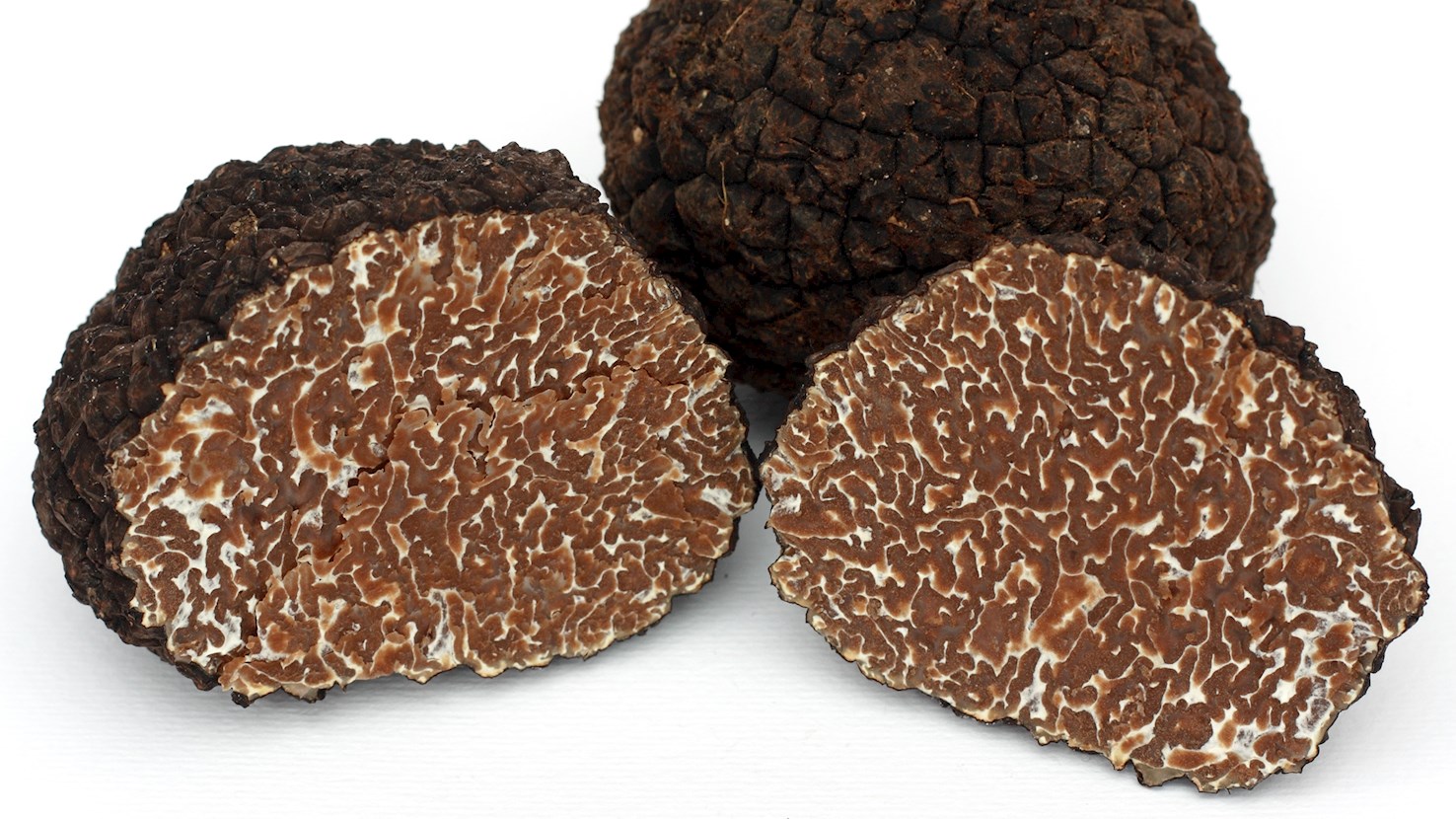
Burgundy truffle (lat. Tuber aestivum var uncinatum) is the autumn variety of black summer truffle. These truffles are available in the fall (September to late December) and look like small rocks with a rough surface. The exterior is brown, with large diamond-shaped points. The interior is coffee-colored and veined. The aroma is musky, and the flavor is earthy and nutty, stronger than the summer truffle (because these truffles have spent more time underground), but not as pungent as the winter truffle. The price is much lower than that of black summer truffles. Most of them are harvested in France and Italy. It's recommended to enjoy Burgundy truffles raw, shaved over pasta, risotto, eggs, or potato-based dishes. Just don't cook them as they do not respond well to heat.
Aragon black truffle (lat. Tuber melanosporum), is a highly prized variety of black truffle from the Spanish region of Aragon, most noteably the province of Teruel. This province is the world's largest producer and exporter of black truffles. Remarkably, of the 150 tonnes of black truffles harvested annually worldwide, more than 80 tonnes come from Aragon. They are found during the winter months and until mid-March, and are praised for their unique flavor and mild aroma.
Muscat truffle (lat. Tuber brumale vitt), also known as Trifola nera and Brumale truffle, is an Italian winter truffle that's harvested from January to March. It grows where the earth is at least a medium depth, in the hills, plains, or mountains, in symbiosis with oak, beech, hazel, and hornbeam trees. The exterior is black with low, flattened warts, while the interior is grey or brown with white veining. The aroma is pungent, but less intense than that of other black truffles. The flavor is pleasant.
Nero Liscio truffle (lat. Tuber macrosporum) is a rarely found truffle that grows in the same area as the Piedmont white truffle. These truffles, however, can withstand droughts and grow several of them in the same hole. The exterior is reddish brown with warts, while the interior is whitish-brown and becomes rusty-brown when mature, between August and September. The aroma is similar to that of white truffles, but the flavor is more garlicky. These truffles grow with poplar, willow, hornbeam, and oak trees.
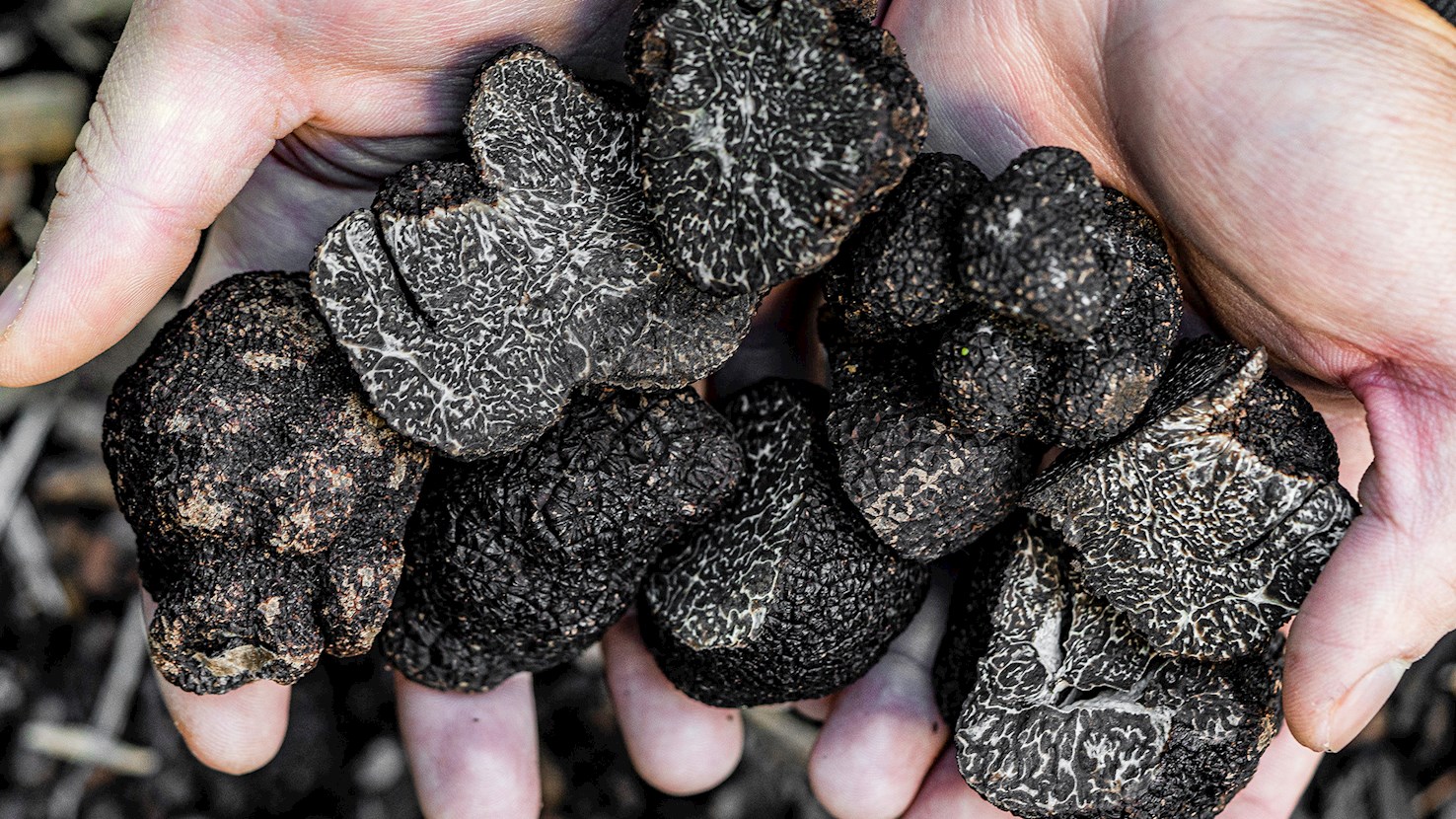
Truffe noire du Tricastin is a black winter truffle from France, harvested in the Tricastin zone. Its presence in the region is documented since the 17th century, when truffle-rich oak woods and early truffle markets appeared across the area, and by the 19th century, the region’s production had expanded through organized truffle hunting and the planting of truffle-bearing oaks. Over time, the zone became the first in France to receive a protected designation for black truffles, confirming the link between the species Tuber melanosporum and the specific soils and climate of Tricastin. Oaks, hazelnut trees, or other host species inoculated with Tuber melanospor are planted in calcareous, well-drained soils with good sunlight exposure, conditions that encourage the symbiosis needed for truffle formation. Truffles develop underground over many months and are harvested from late autumn through winter. Skilled hunters use trained dogs to locate the truffles by scent; once unearthed, the truffles are brushed clean, sorted by aroma, firmness, and marbling, and sold fresh because their quality declines quickly after harvest. Some areas are yielding stronger aromas, while others are producing slightly smaller truffles. Regarding harvest timing, early-season truffles are milder, while mid-winter specimens are more mature and perfumed. A particular feature of the truffle from this zone is the combination of limestone soils and cold winter nights, which helps develop the dense black flesh, veined with white, that identifies Tuber melanosporum and its strong, complex scent. No artificial cultivation method fully replicates these conditions, and production depends on natural symbiosis and seasonal climate. Truffe noire du Tricastin is used in homes and restaurants, shaved raw over eggs, pasta, foie gras, potatoes, or meat, or infused into sauces, creams, and butters. It pairs well with poultry, veal, mild cheeses, and dishes that allow its aroma to dominate, and it is often served with dry white wines or earthy reds.
TasteAtlas food rankings are based on the ratings of the TasteAtlas audience, with a series of mechanisms that recognize real users and that ignore bot,
nationalist or local patriotic ratings, and give additional value to the ratings of users that the system recognizes as knowledgeable.
For the “Top 8 European Black Truffles” list until May 31, 2026, 86 ratings were recorded, of which 61 were recognized by the system as legitimate.
TasteAtlas Rankings should not be seen as the final global conclusion about food. Their purpose is to promote excellent local foods,
instill pride in traditional dishes, and arouse curiosity about dishes you haven’t tried.
The initial list of top producers was compiled based on available reviews, awards, local recommendations, media and blog coverage, and consumer reviews.
The list will be updated with ratings from TasteAtlas local ambassadors and TasteAtlas users.