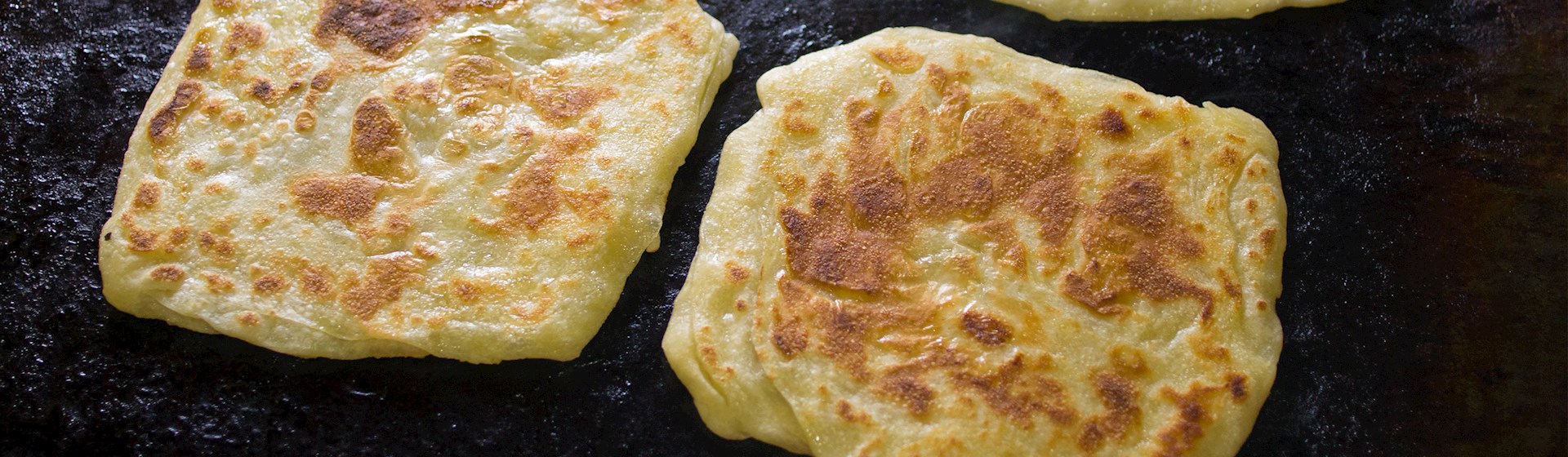
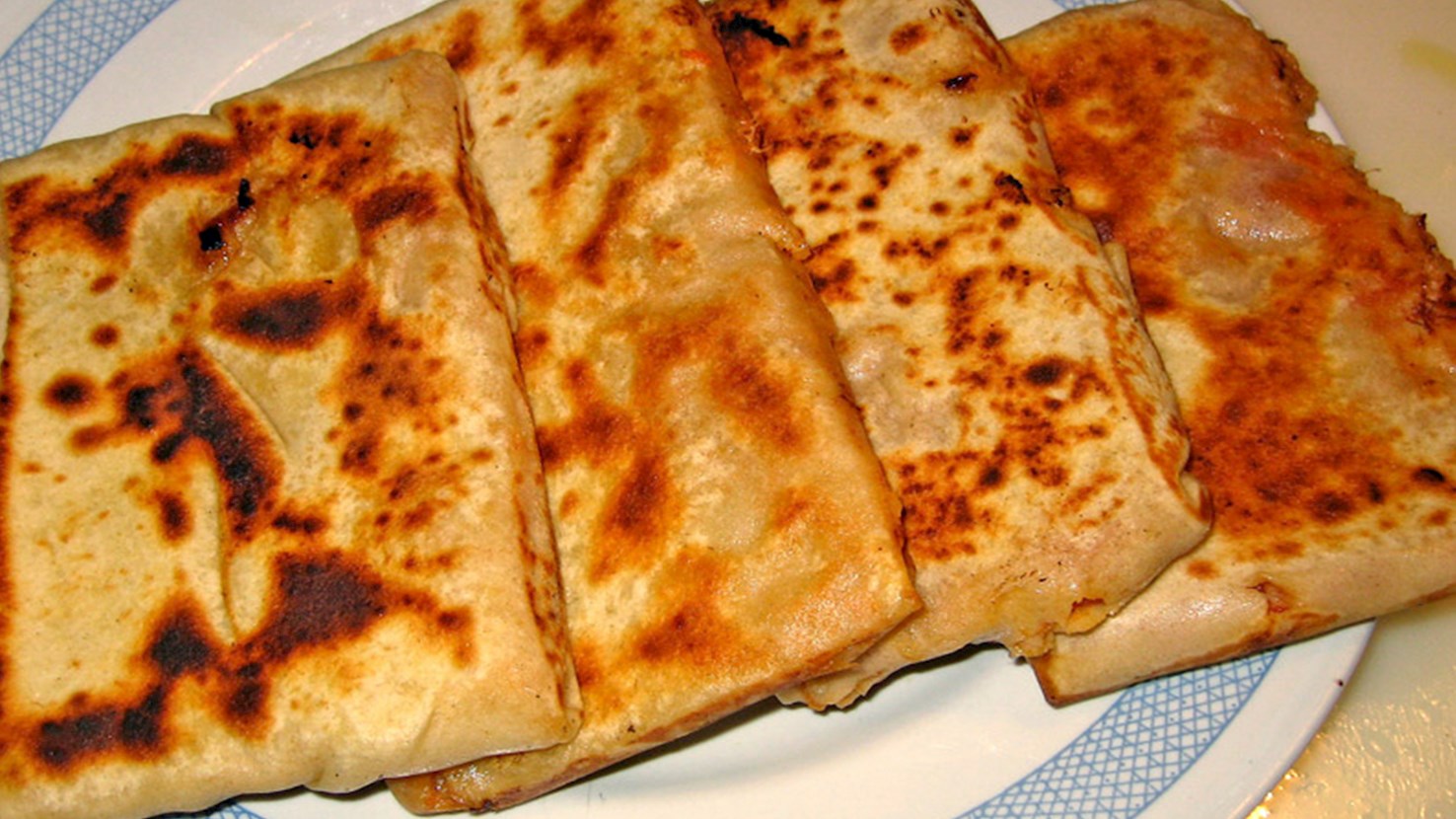
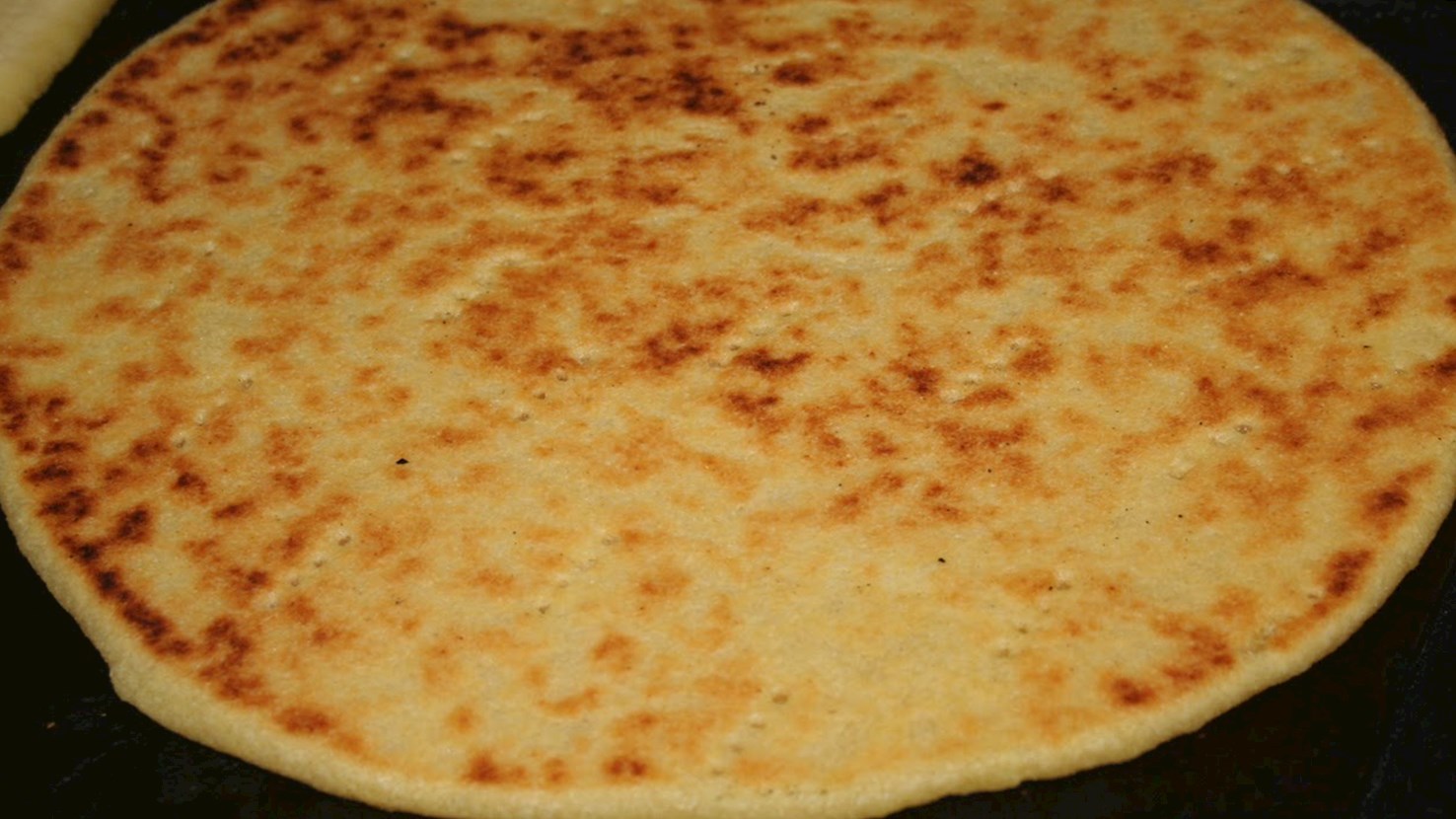
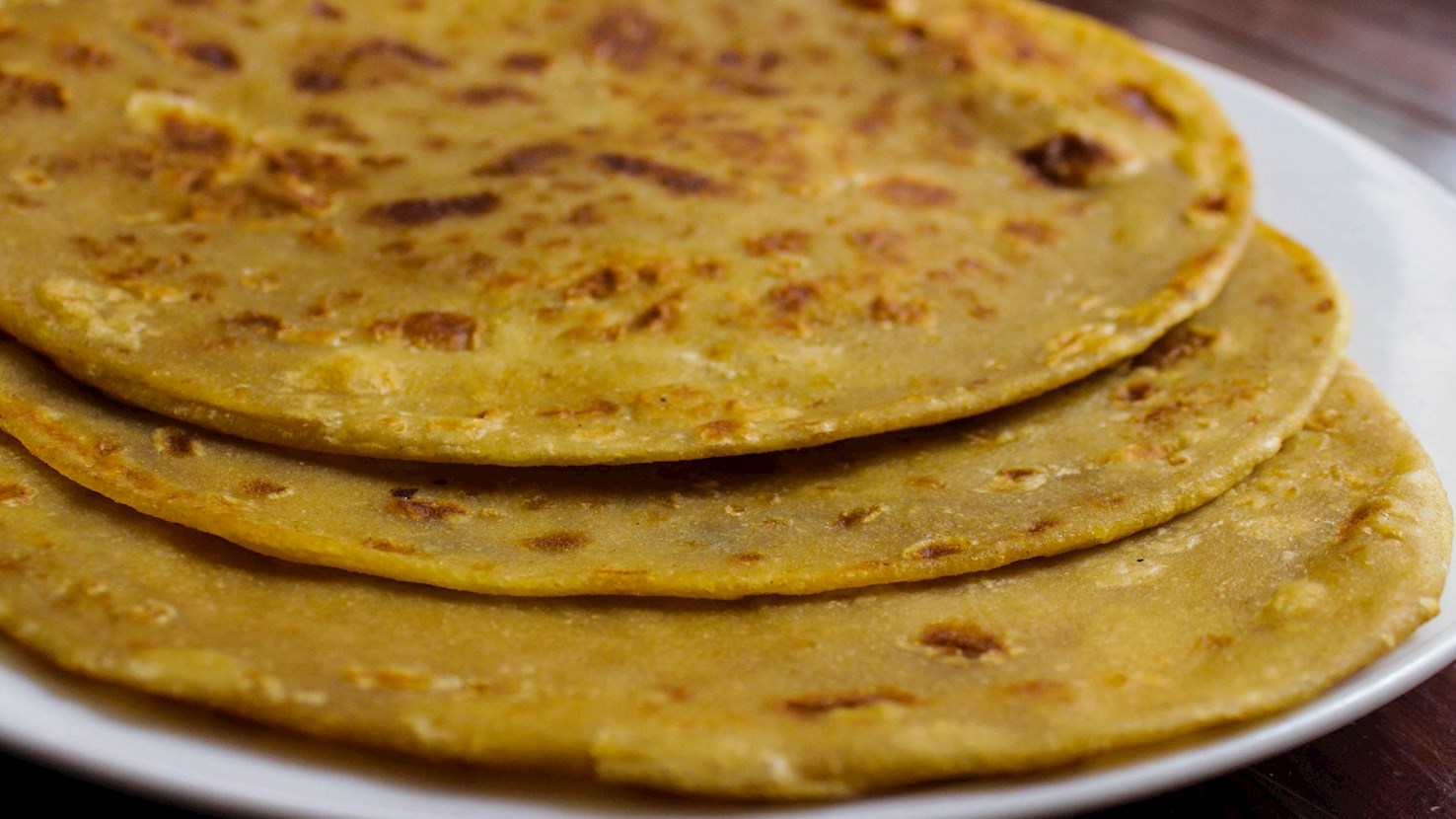
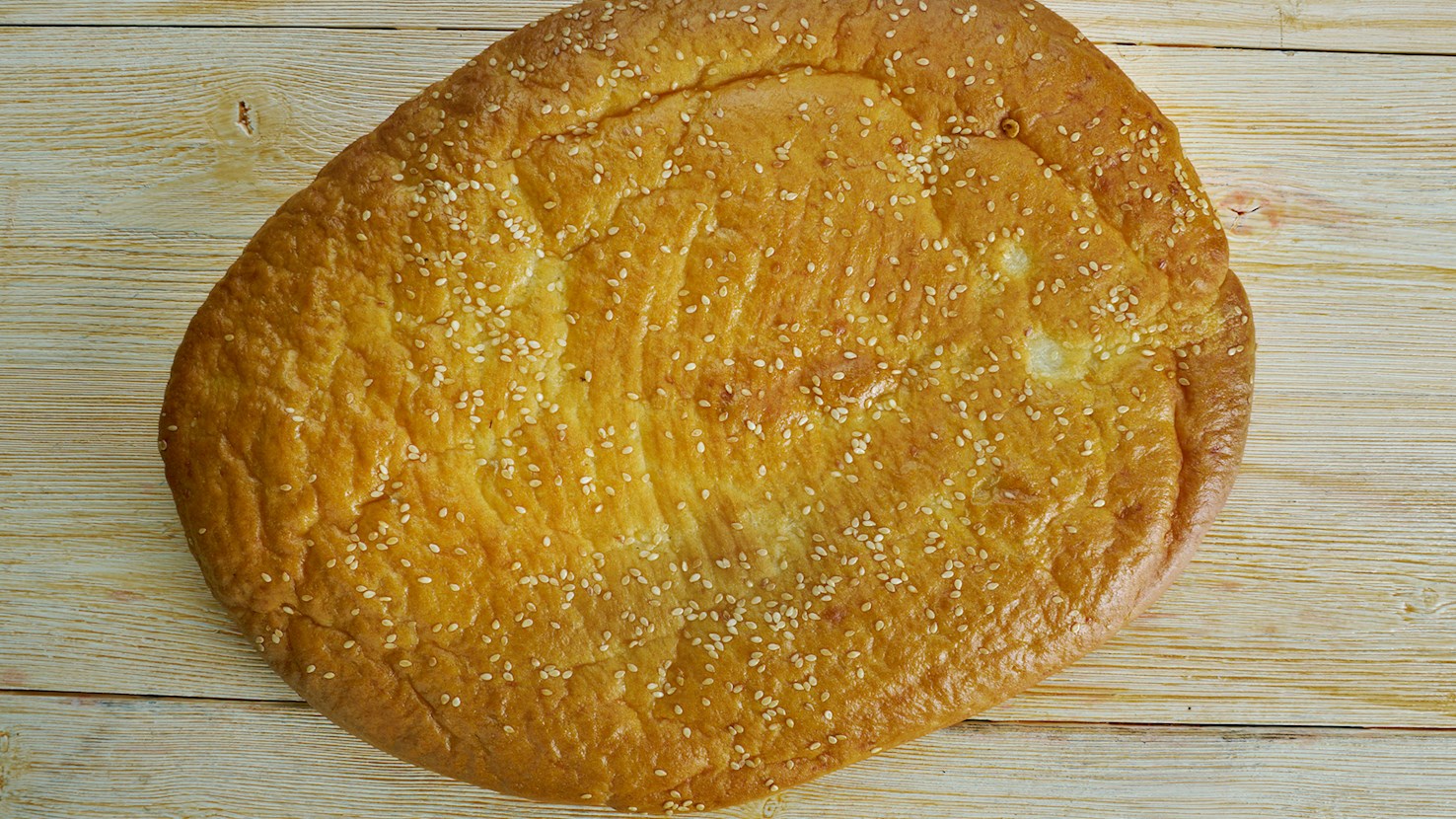
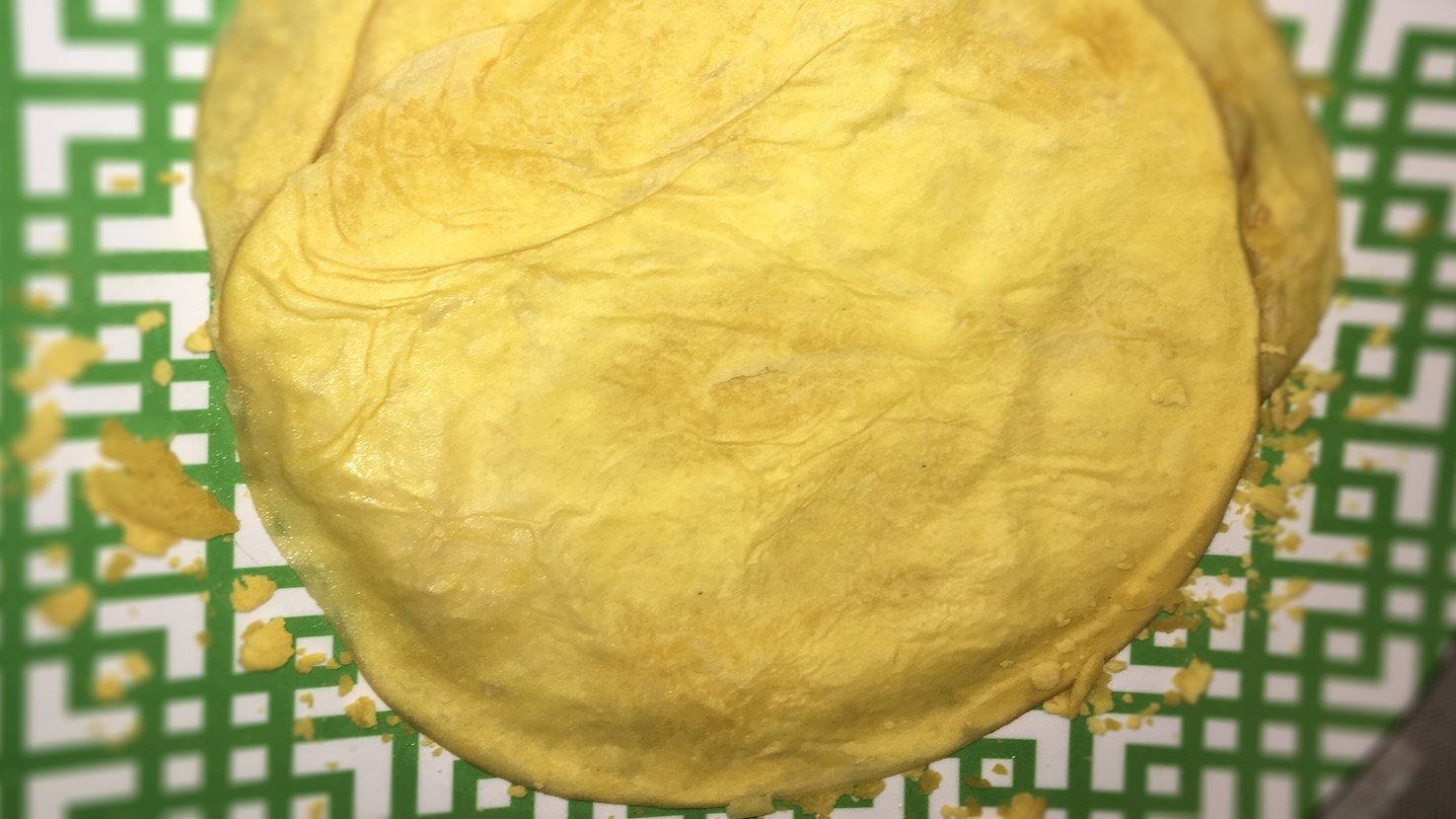
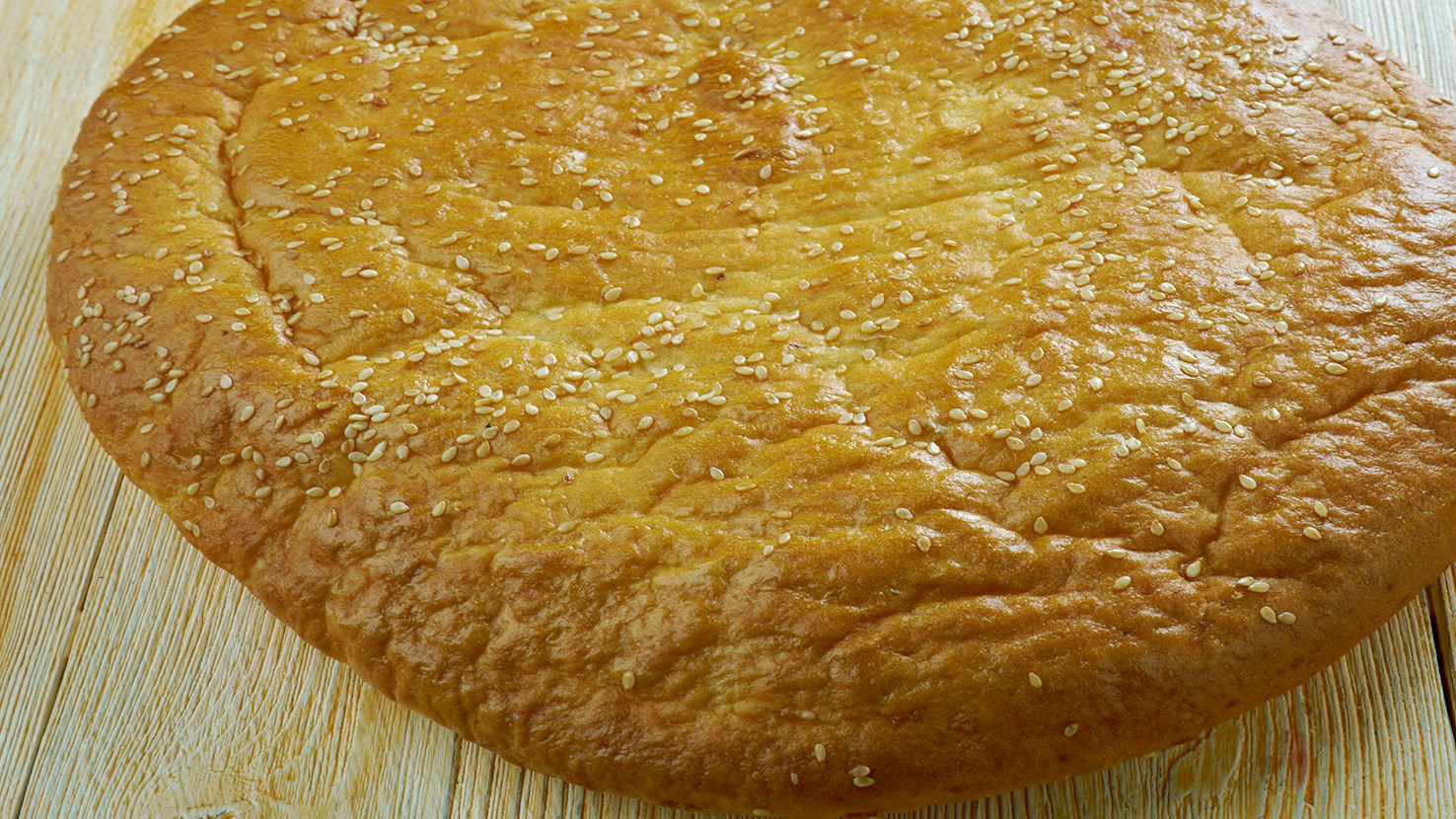
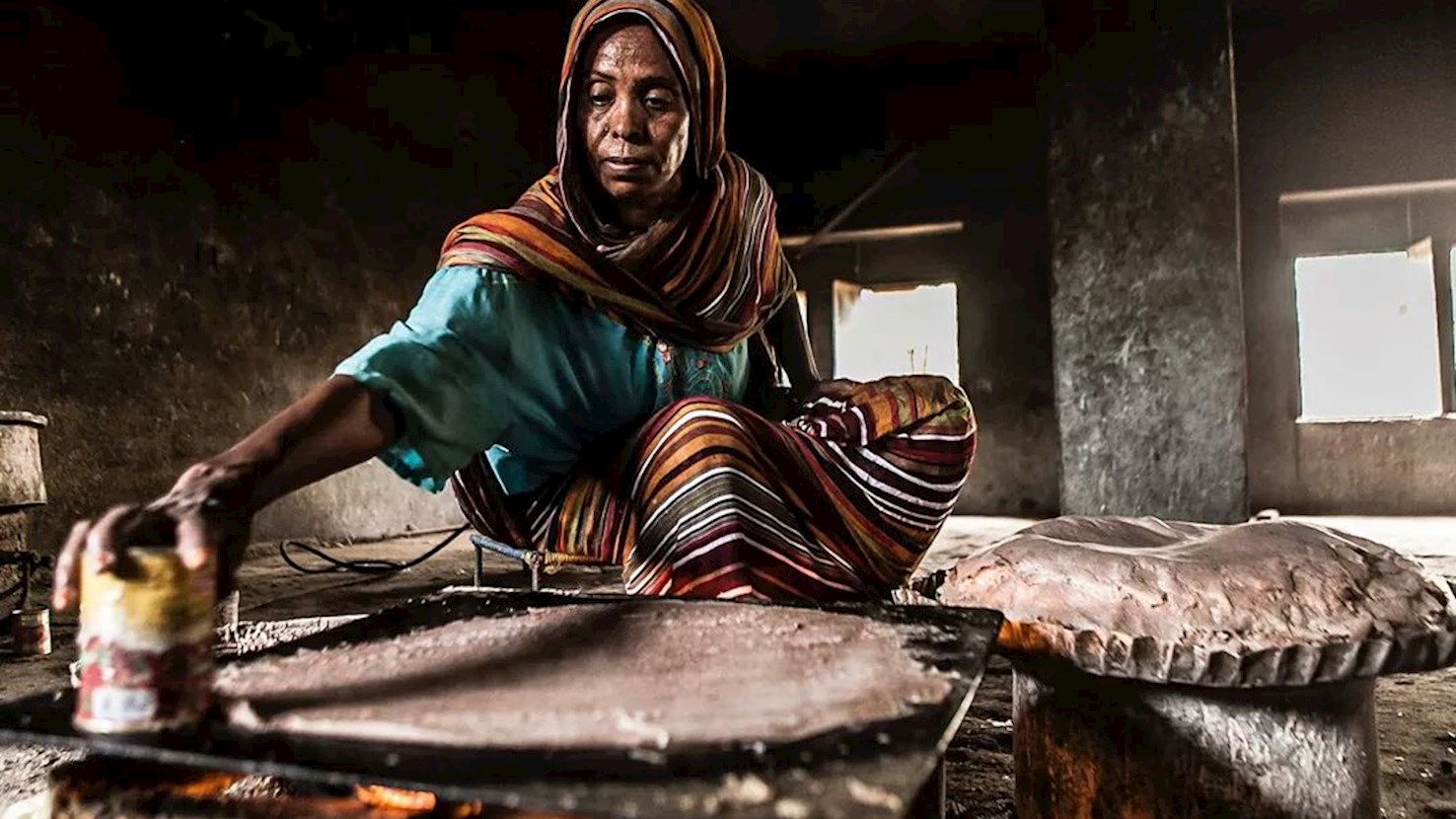
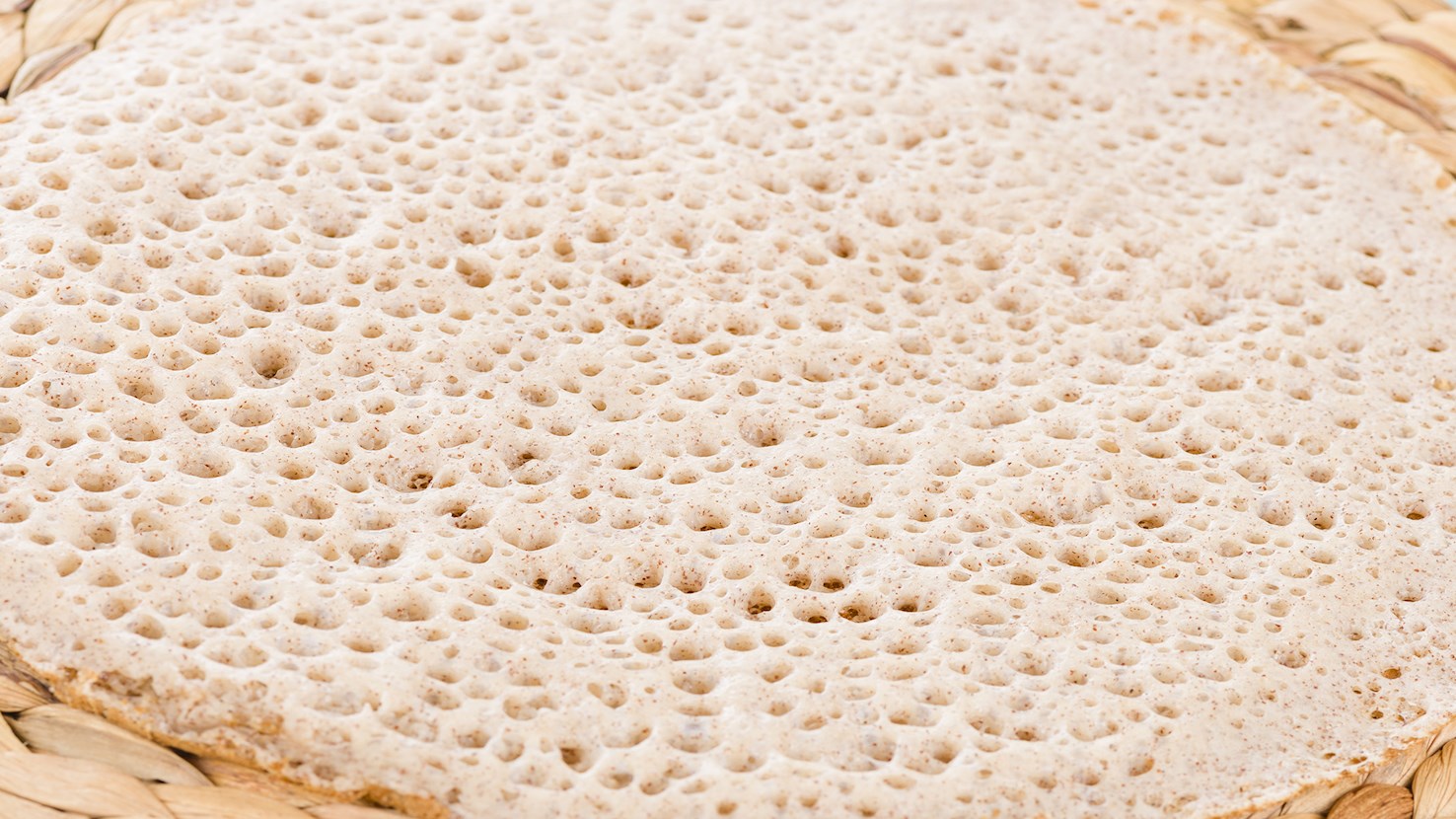
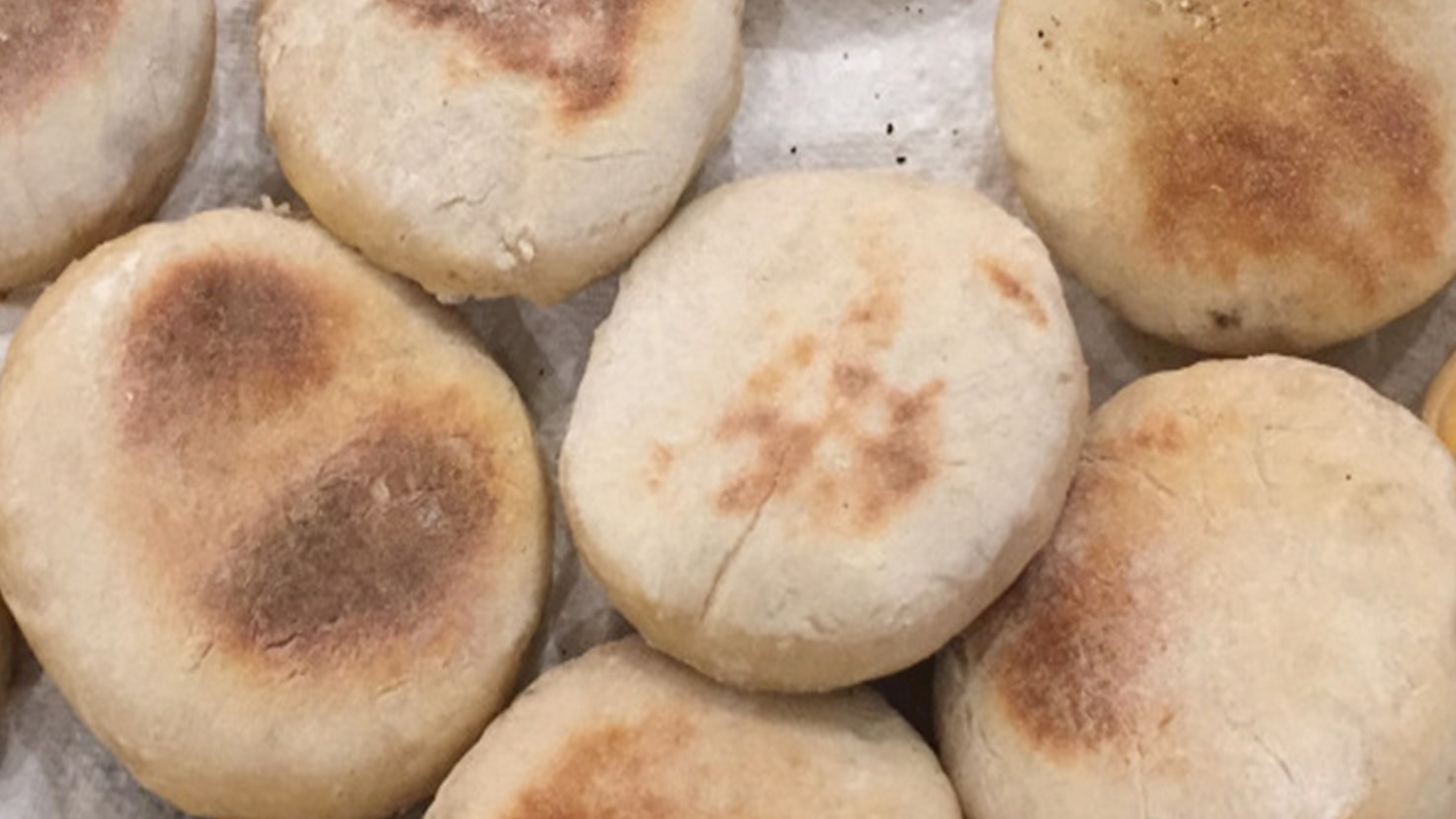
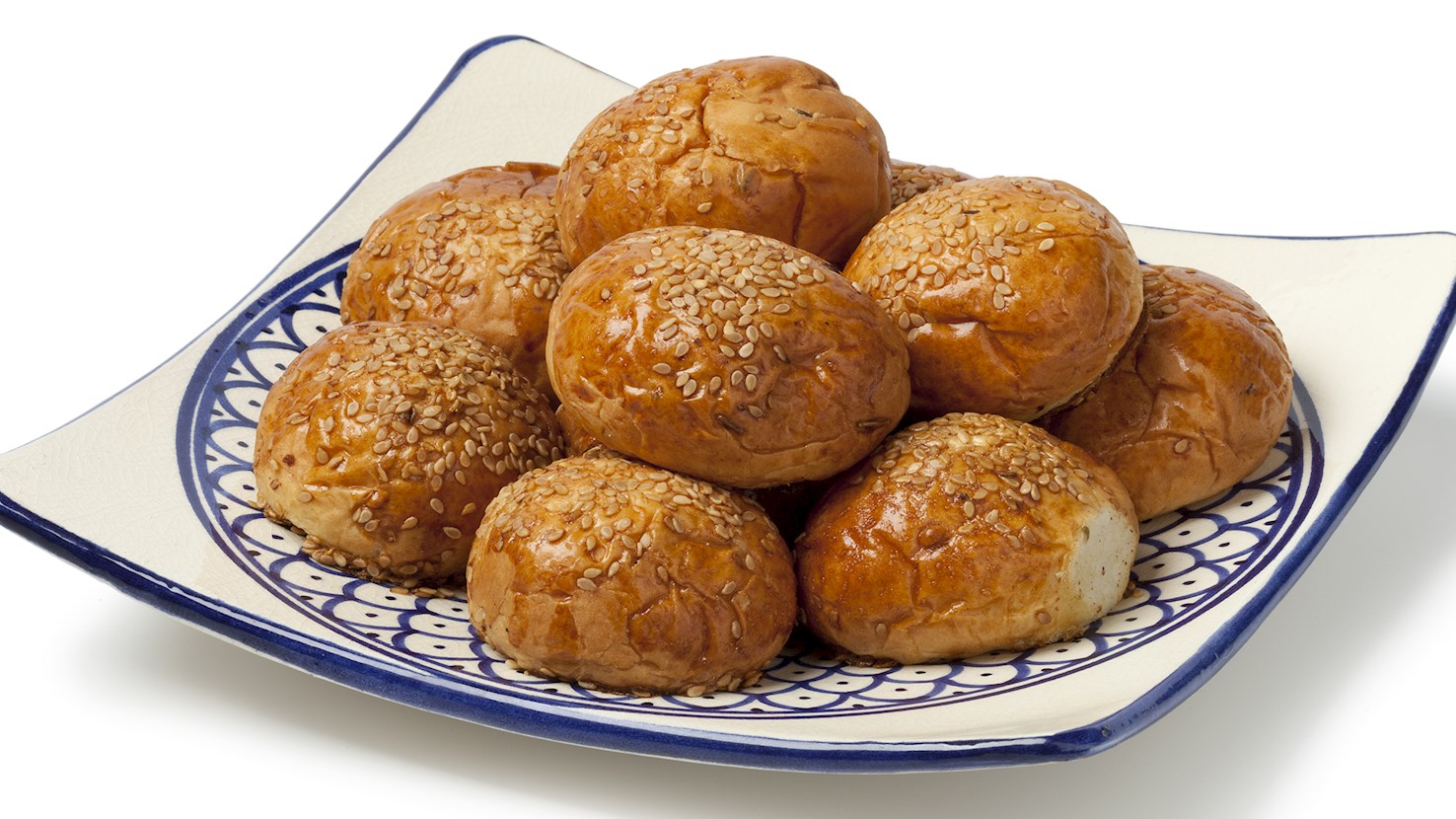
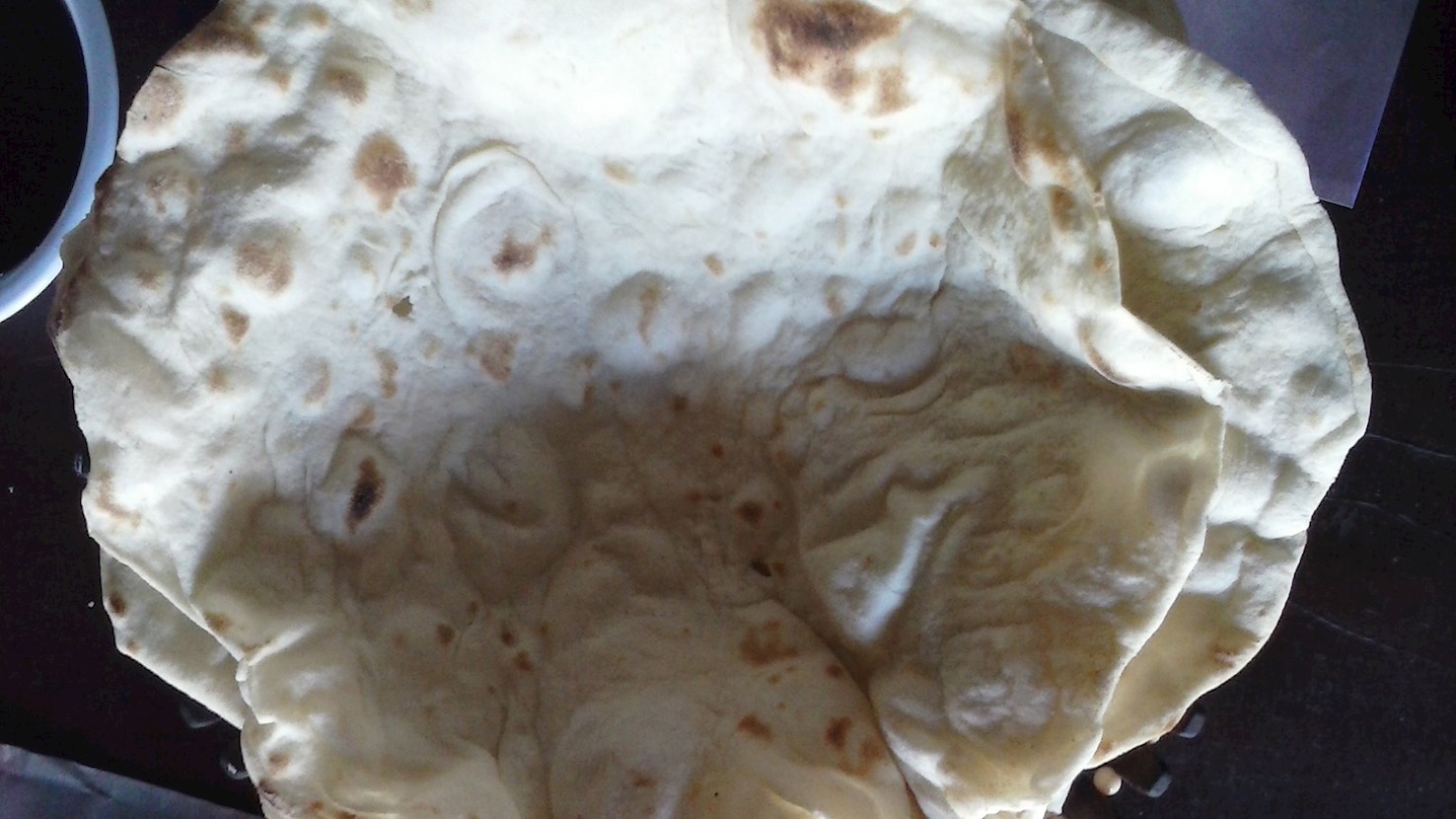
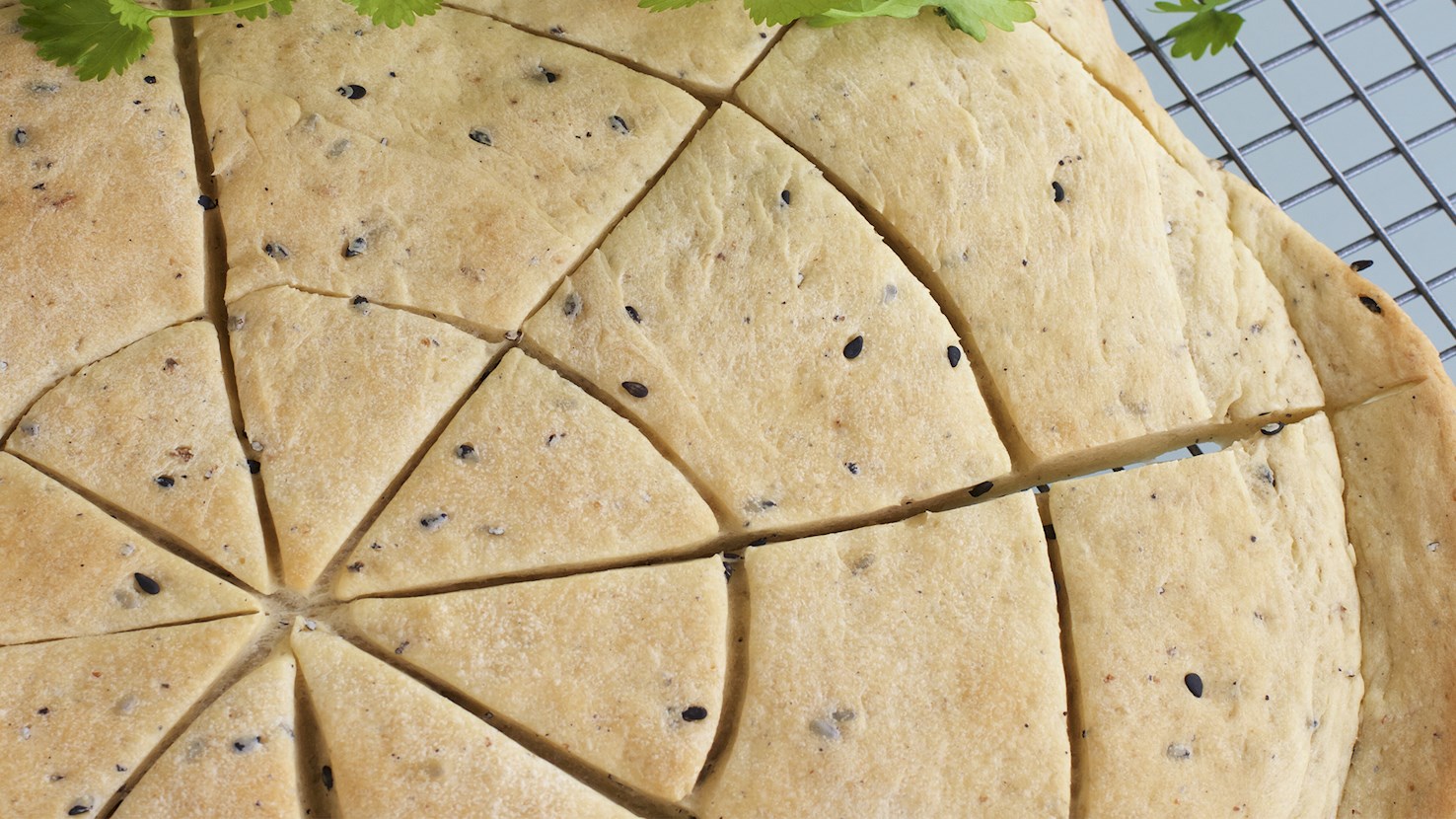
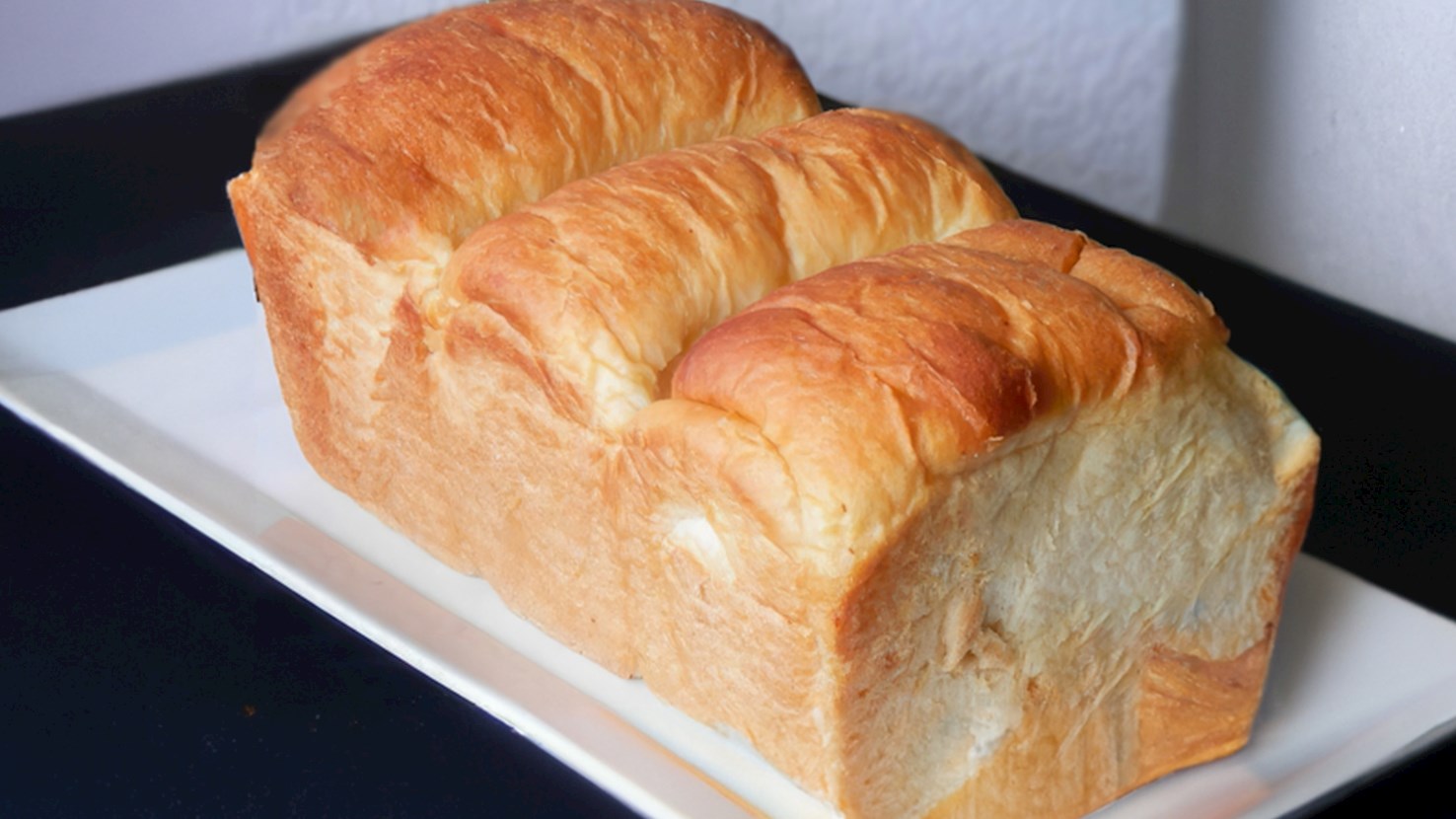
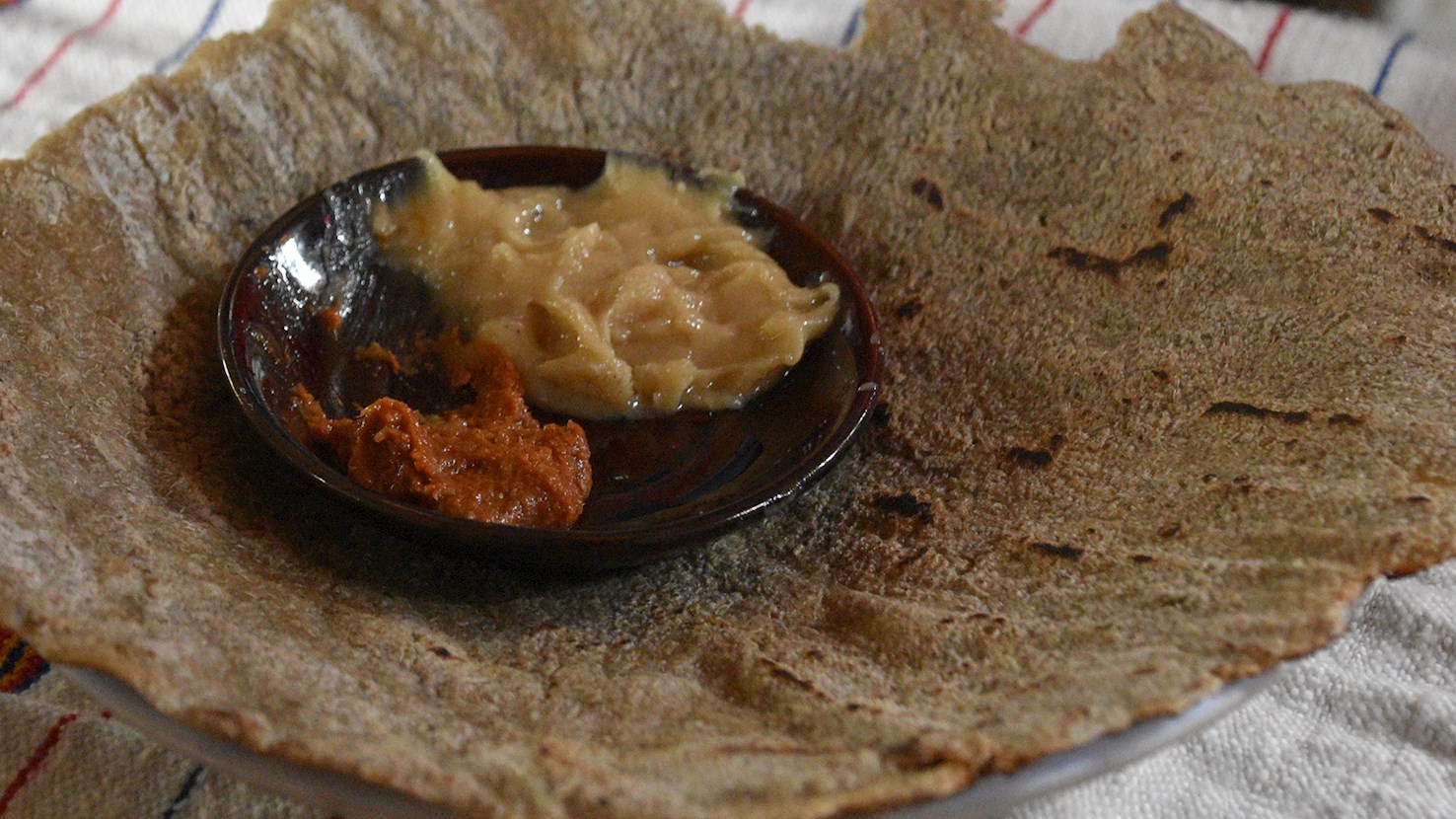
Mahjouba is a traditional flatbread that is one of the most popular street food items in the country. These thick and flaky crepe-like flatbreads are made with semolina, then filled with a combination of tomatoes and caramelized onions. Mahjouba is often paired with harissa sauce on the side, but the condiment is completely optional.
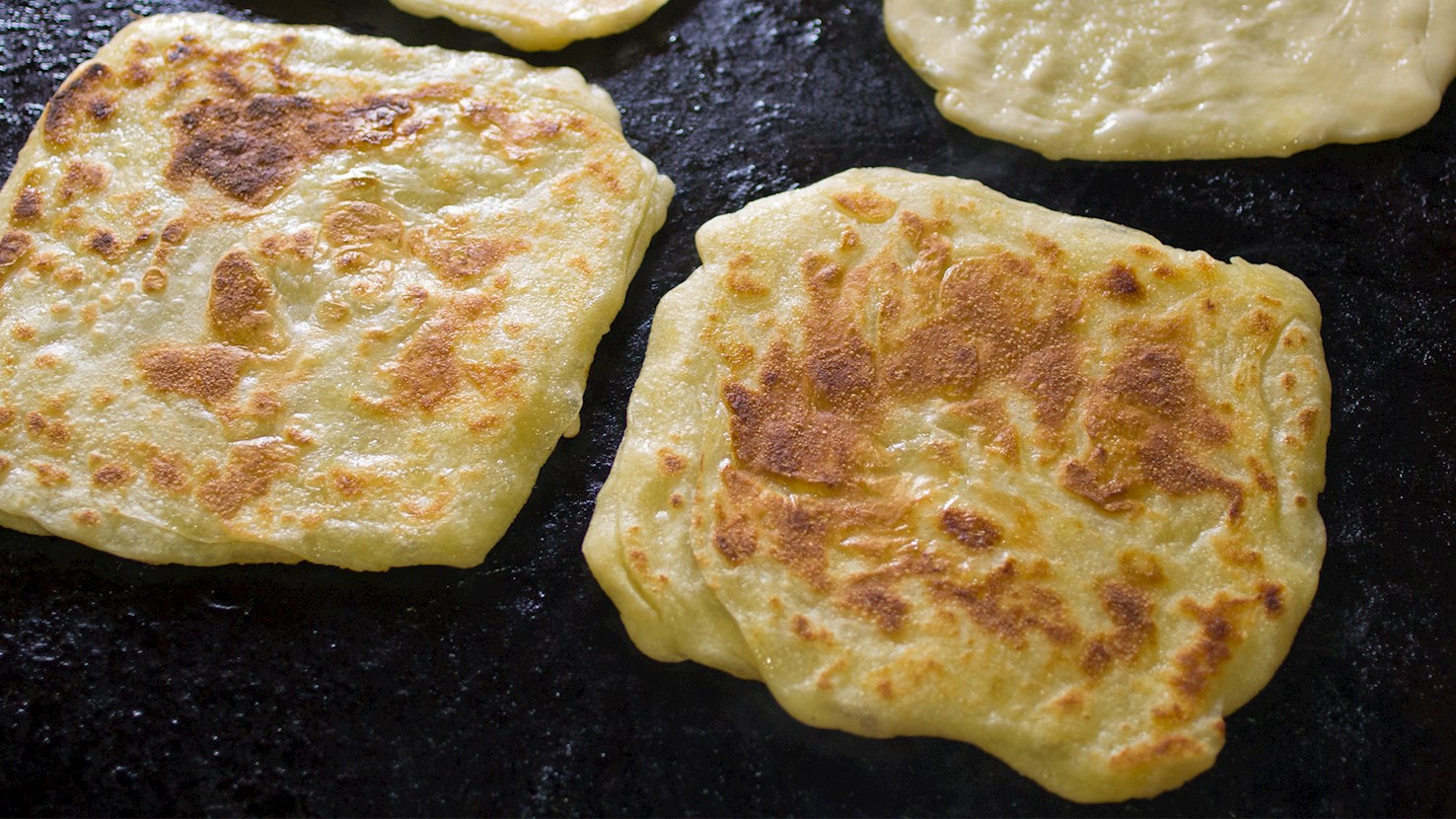
M'semen is a traditional Maghrebi flatbread made with a combination of flour, semolina, sugar, salt, yeast, warm water, oil, and clarified butter. The dough is kneaded until it becomes smooth, and pieces of it are then flattened and shaped into squares. Once the dough has been folded and shaped, it is cooked on a griddle or fried in a pan until it becomes crispy on the exterior and chewy on the inside. Although m'semen is traditionally consumed on its own as an accompaniment to coffee or tea, it can also be stuffed with various meats and vegetables. In Tunisia, the flatbread is often based on semolina flour and made without yeast.
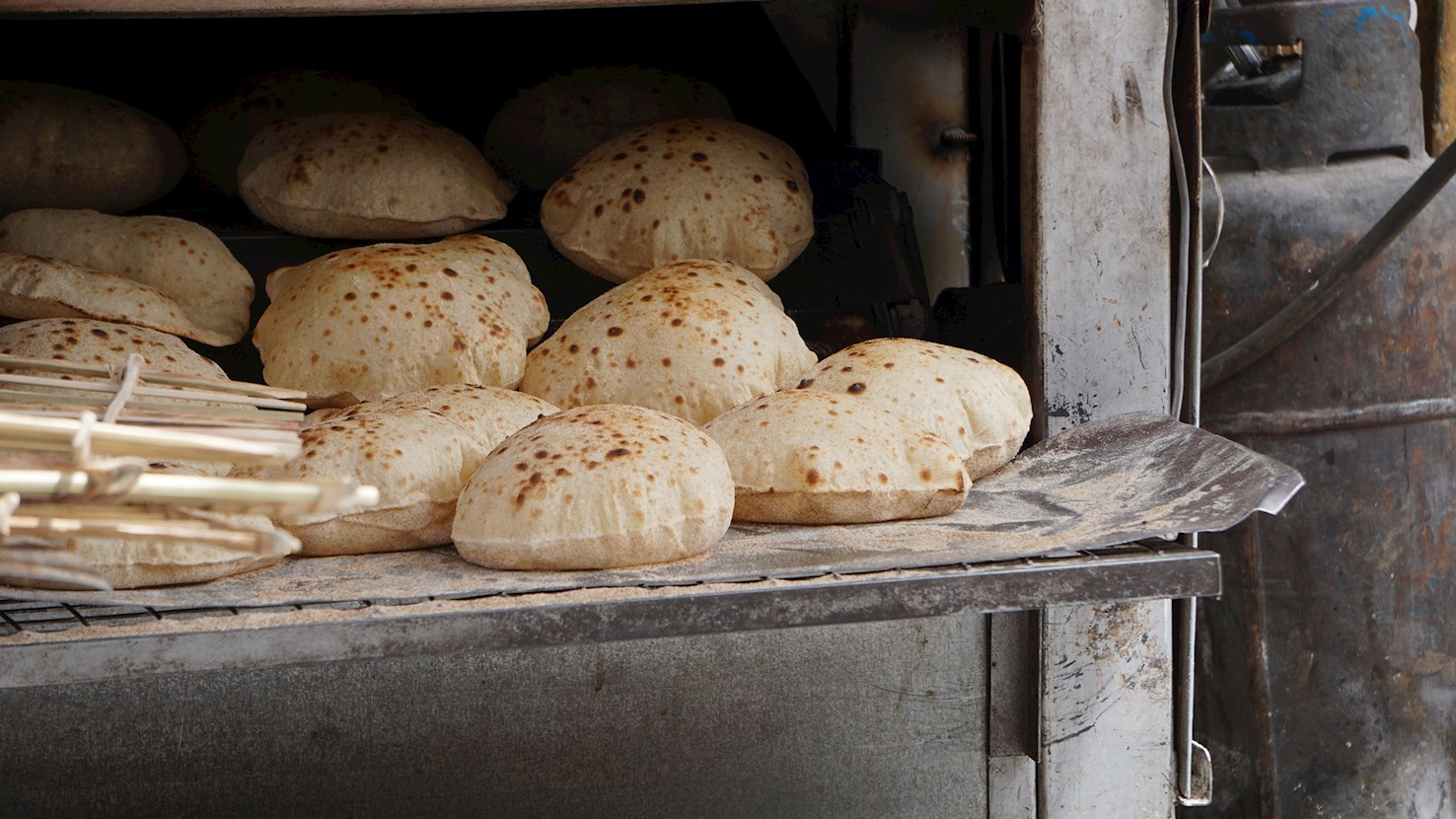
Native to Egypt, aish baladi is a flatbread made with whole wheat flour. It is traditionally baked in extremely hot ovens and can be found at numerous Egyptian markets. The bread has been produced since the times of ancient Egypt, when it was made with emmer wheat. Nowadays, this bread is a staple at Egyptian tables, from breakfast to dinner, and everyone eats it, whether poor or rich. In fact, it is so important that the word life (aish) is included in its name.
Kesra or khobz f'tir is a traditional flatbread that is used as a daily bread. The dough consists of semolina, oil, salt, and water, and typically contains no yeast. Unlike the similar khobz el dar, kesra is not baked, but cooked on a tagine or on the stove. It is recommended to pair kesra with an Algerian chicken and freekeh soup called chorba.
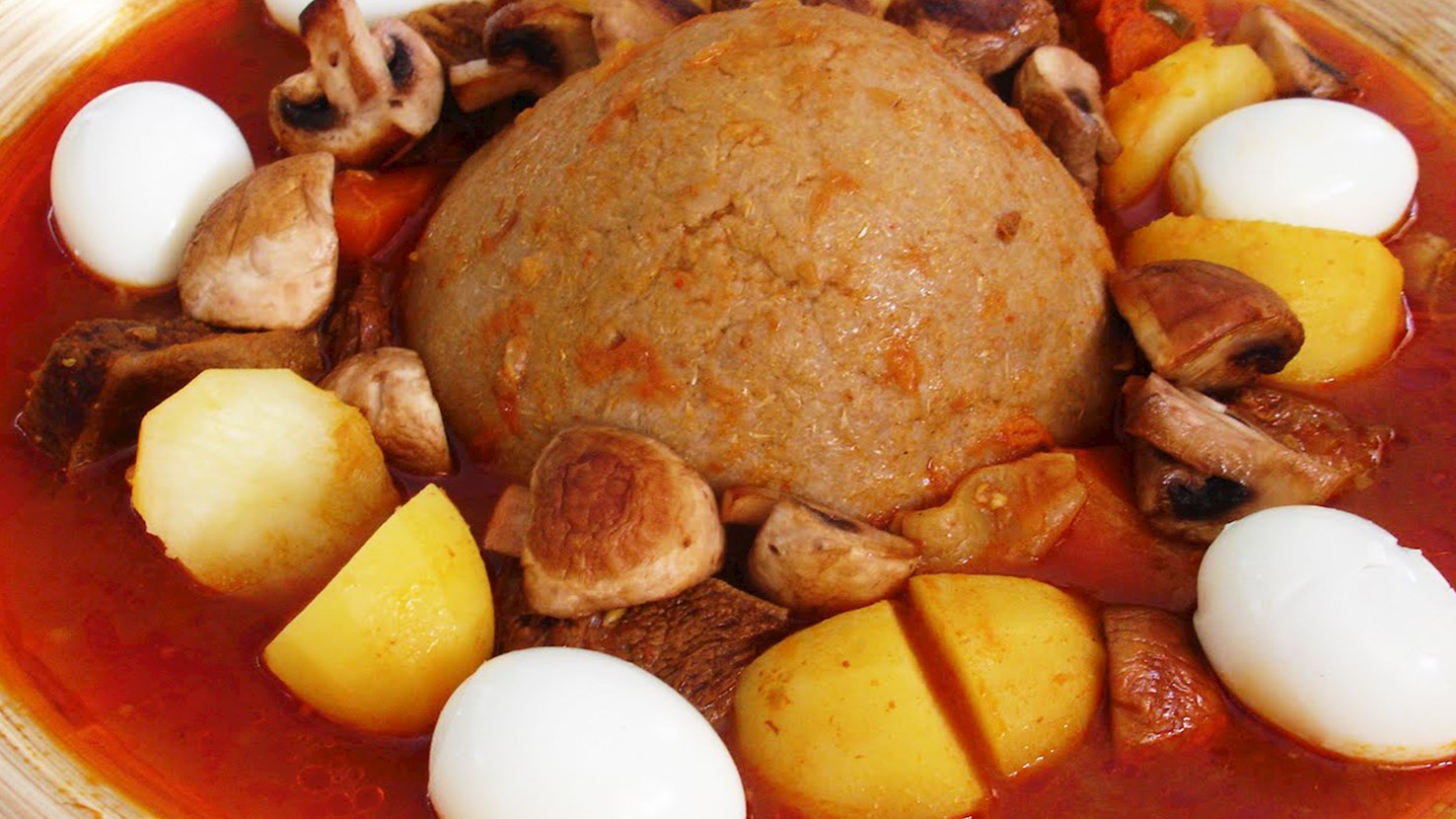
Bazin is a popular Libyan unleavened bread (also considered a dough-based dish) made by boiling barley flour and salt in water and beating it with a stick called magraf until it develops into a dough which is then baked or steamed. The bread is characterized by its hard texture, achieved by the usage of large amounts of salt. It is traditionally shared and consumed using the right hand. Bazin is often served with a tomato-based stew, potatoes, hard-boiled eggs, and mutton.
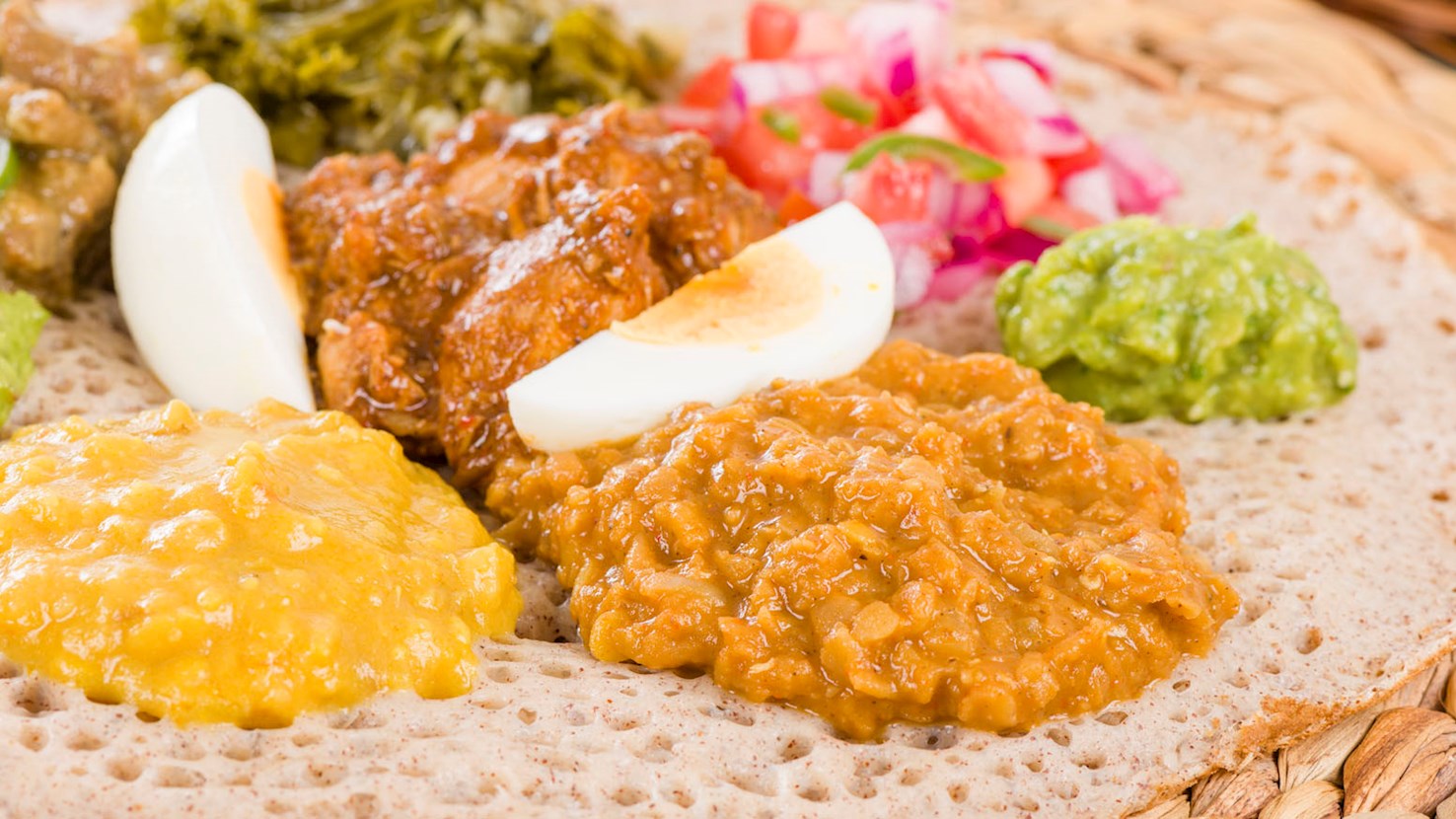
Injera (or tayta) is a spongy Ethiopian and Eritrean flatbread and an integral part of life for the locals. The bread is made from teff, the tiniest grain in the world, also considered a super grain due to its high nutritious properties. Injera is so popular that the people greet each other by asking "Did you eat injera today?", and if the answer is positive, that assures the other person that all is well. This flatbread is served for breakfast, lunch, and dinner, and sharing it when times are rough has kept many Ethiopians and Eritreans alive. Its flavor is tart and quite similar to sourdough bread. The dough is left for three days to ferment and is then shaped into a large, pancake-like disk. It is usually fried in a skillet over a fire, where the spongy texture of the bread develops as the dough hits the hot skillet and air bubbles form on the inside. Once cooled, it is combined with the main course, usually a hearty stew. Injera is eaten without utensils – instead, it is broken into pieces and used to scoop up some more stew from the shared communal platter. Due to the air pockets in the bread, it can absorb a lot of sauce from the stews. Although shared eating might seem strange to some, injera succeeds in bringing people together.
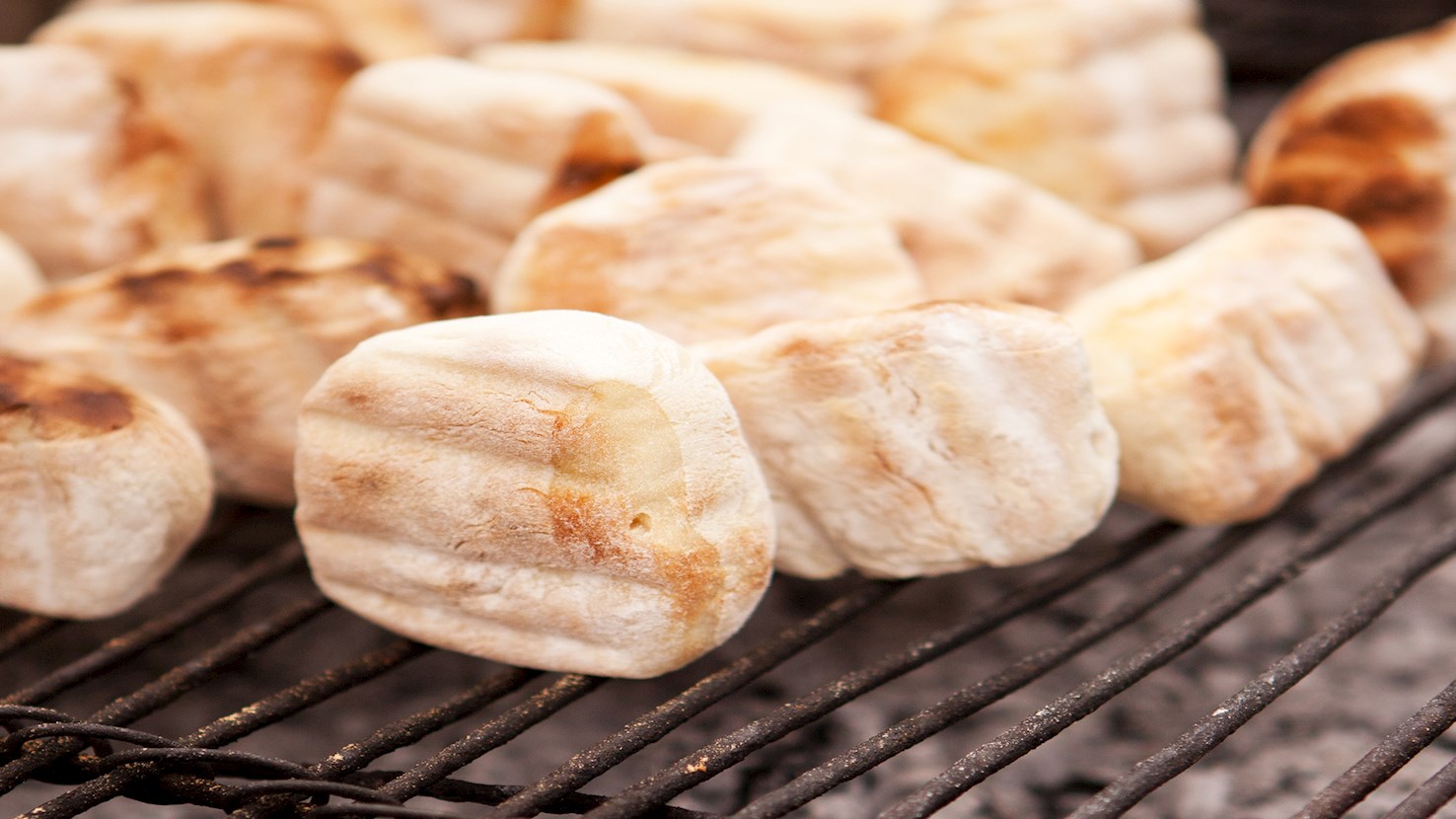
Roosterkoek, literally meaning grill cake, is a traditional bread baked on a grid over the coals. Made with flour, yeast, salt, sugar, oil, and water, these small balls of leavened bread dough are brushed with butter and grilled until slightly charred. Roosterkoek is best enjoyed piping hot, straight off the grill, smeared with more butter. The bread makes an inevitable part of a braai, a South African barbecue, but it's also great as a snack, paired with butter, jam, or cheese.
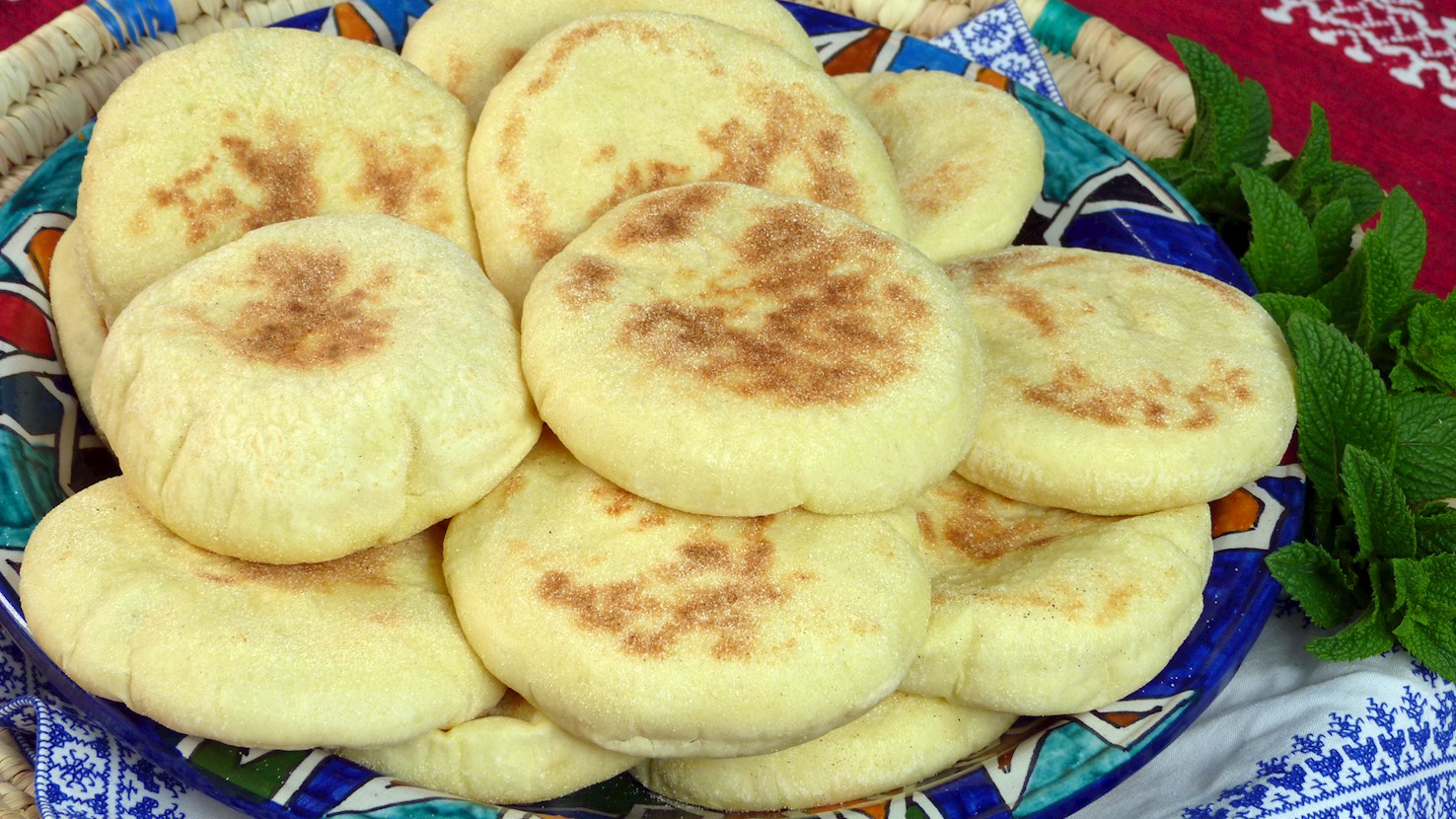
Batbout is a traditional flatbread originating from Morocco. The bread is usually made with a combination of wheat flour, semolina, yeast, salt, sugar, and olive oil or vegetable oil. The dough is shaped into balls that are left to rest and rolled into thin rounds. The bread is baked in a large pan or on a griddle on both sides until the air bubbles begin to appear on the surface. This puffy and chewy flatbread is then left to cool before consumption. Batbout is typically served as an accompaniment to grilled meat, but it can also be served for breakfast with jam, butter, or honey. Alternatively, the flatbread can also be used to make various sandwiches.
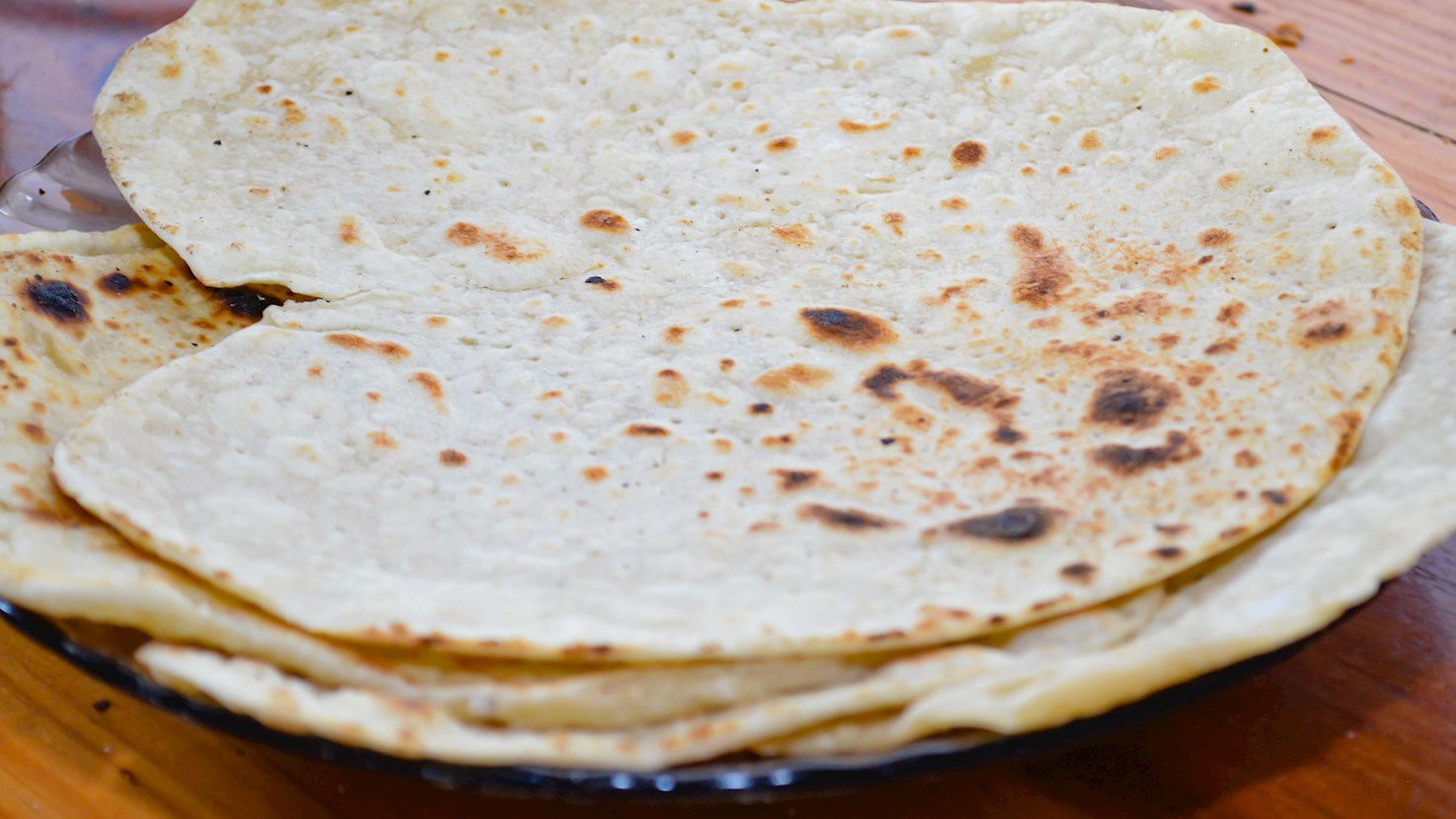
Rougag is a type of flatbread mostly associated with Algeria and Tunisia, although it is often used in the cuisines of other North African countries. It is made with semolina and wheat flour dough and prepared on a tajine or a cast-iron skillet. After it's cooked, rougag is folded and paired with various local dishes or torn into pieces and used as an ingredient in stews and pilafs.
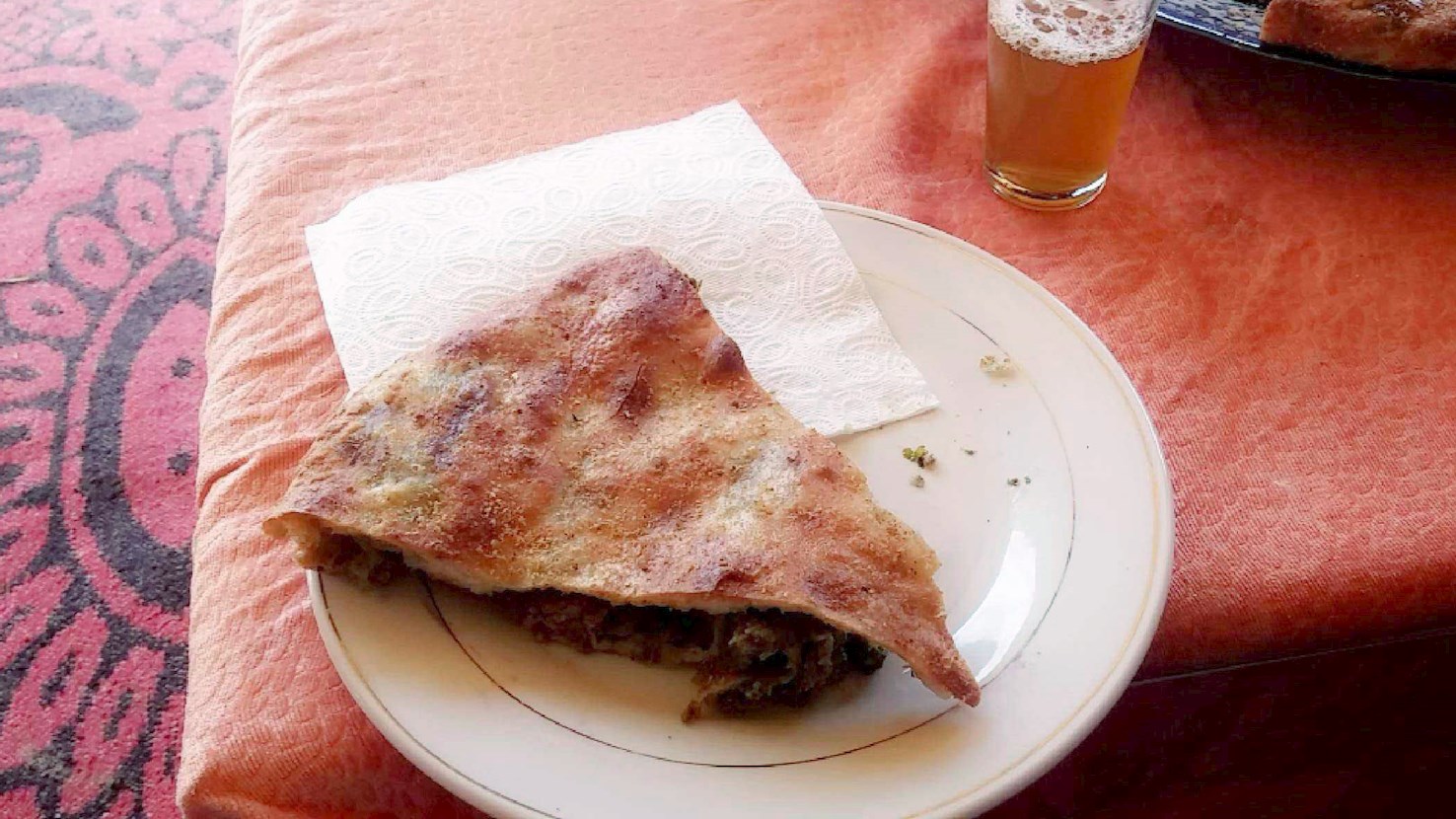
Berber pizza or khobzamedfouna is a traditional dish originating from Morocco, and it is believed that its true birthplace is Rissani, a small oasis town near the northwest edge of Sahara. Although it's called a pizza, this is more of a stuffed flatbread that's similar to calzone or stromboli. The flatbread dough is stuffed with beef or lamb, diced onions, and various spices, and it's then baked in a fire pit until done, while many restaurants and local Berbers cook it in a mud oven. Fried almonds and hard-boiled eggs are welcome, but optional additions. The name medfouna means buried, referring to the ingredients that are buried or hidden in the flatbread dough. Once prepared, Berber pizza is cut into slices, and it's usually accompanied by hot mint tea, which is believed to be a palate balancer that will contrast the flavor of fat from the meat.
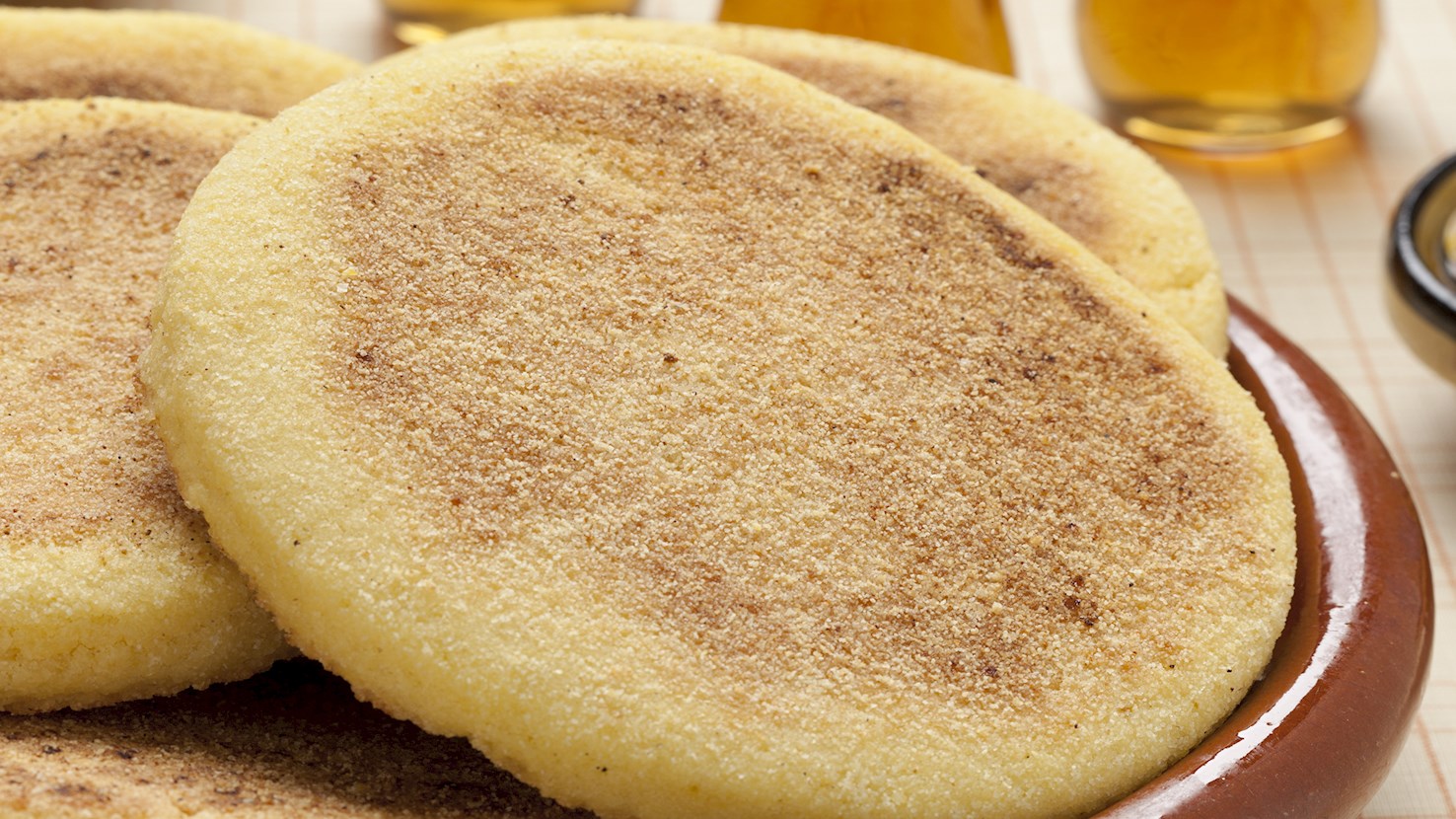
Harsha is a popular Moroccan bread that is usually made with a combination of semolina, sugar, butter, milk, baking powder, and salt. It is traditionally fried in a pan until it develops a soft, crumbly texture. Most Moroccans prepare it for breakfast or as an afternoon snack, serving it with butter, honey, or cheese. It is recommended to pair harsha with a cup of hot Moroccan tea.
Kitcha is an unleavened Ethiopian flatbread made with wheat flour, water, and salt. The dough is traditionally baked in a pan on both sides until it develops a golden-brown color of the exterior. The flatbread can be additionally spiced with chili and cardamom. It is usually served warm with melted butter, or used in a dish called fit-fit.
Chapo, commonly known as Kenyan chapati, is a pan-cooked flatbread made from wheat flour, eaten widely across Kenya where it functions as a filling starch served with both everyday meals and special-occasion foods. Its presence reflects the movement of flatbread-making techniques from South Asia into East Africa through Indian Ocean trade and later settlement, after which the method was adapted locally to suit available ingredients, preferences for softness and richness, and the rhythms of home and street cooking, resulting in a version that is thicker and more pliable than many related flatbreads elsewhere. Preparation involves mixing flour with water, salt, and oil to form a smooth dough that is rested, divided, rolled, brushed lightly with fat, folded or coiled to create layers, rolled again, and cooked on a hot flat pan until cooked through with browned spots and a tender interior, relying on technique and timing rather than leavening. Serving is direct, with chapo eaten hot or warm, torn by hand and used to scoop stews, vegetables, or legumes, or folded around fillings rather than plated as a separate course. What characterizes chapo is its layered structure created through folding and oiling rather than baking or puffing, giving it a balance of softness and chew that allows it to absorb sauces without breaking. It is eaten at home, in roadside eateries, and at gatherings, commonly paired with dishes such as beans, lentils, beef or goat stews, sukuma wiki, or eggs, and it is often accompanied by tea, especially milky tea, or water, fitting naturally into both daily meals and social eating without ceremony.
Khobz is a traditional bread that is shaped into round, flat loaves and baked in an oven until it develops a crispy crust. It can be made with different types of flour such as wheat, bran, barley, and semolina. Some bakers like to add anise, nigella, or cumin in order to enhance its flavors. The bread often replaces utensils and is used to scoop up sauces, dips, meat, and vegetables in numerous Moroccan dishes.
Dholl puri is a small, pan-fried, stuffed flatbread from Mauritius. It is the most popular street food item on the island, filled with anything from rougaille to chutneys and kheer rice pudding. The dish is consumed throughout the day, either for lunch or as a snack. These flatbreads are also commonly seen at festivities and wedding ceremonies.
Khobz el dar is an Algerian and Moroccan bread that requires no kneading. It consists of semolina, salt, sugar, yeast, oil, eggs, milk, and optional sesame seeds for decoration. Once it has been baked, the bread develops a soft and tender texture and a slightly sweet flavor. This bread can be found it almost every household in Algeria, hence its name, which translates to bread of the house.
Kisra is a traditional spongy flatbread from South Sudan, made with sorghum (millet) flour. It is often used for dipping into stews or as a spoon for scooping up other food. The bread can also be ripped into chunks and placed in soups or porridges, when it is traditionally accompanied by a vegetable and meat stew known as mullah.
Lahoh is a spongy flatbread popular throughout Somalia, Ethiopia, and Djibouti, among others. It is characterized by its circular shape with numerous holes on the surface. This pancake-like bread is made with plain flour, unlike its cousin injera which is usually made with teff flour. Lahoh can be consumed with both sweet and savory ingredients and dishes such as honey, sugar, stews, or soups.
Phaphatha is a circular, flattened dumpling from Botswana, consisting of flour and yeast. It is cooked without water, often in a frying pan. Due to its large size, the bread is usually used as an accompaniment to big meals, although it can be consumed for breakfast or as a snack.
These traditional Moroccan bread rolls are prepared with a yeasted, brioche-like dough that is enriched with aniseed. They also incorporate toasted sesame seeds and are usually flavored with orange blossom water. Before baking, krachel are brushed with egg wash, while the top is sprinkled with toasted sesame seeds or pearl sugar. The buns can be enjoyed plain, but they are also commonly served with cheese and savory or sweet spreads such as butter, jams, or chocolate spreads. They perfectly pair with coffee or tea.
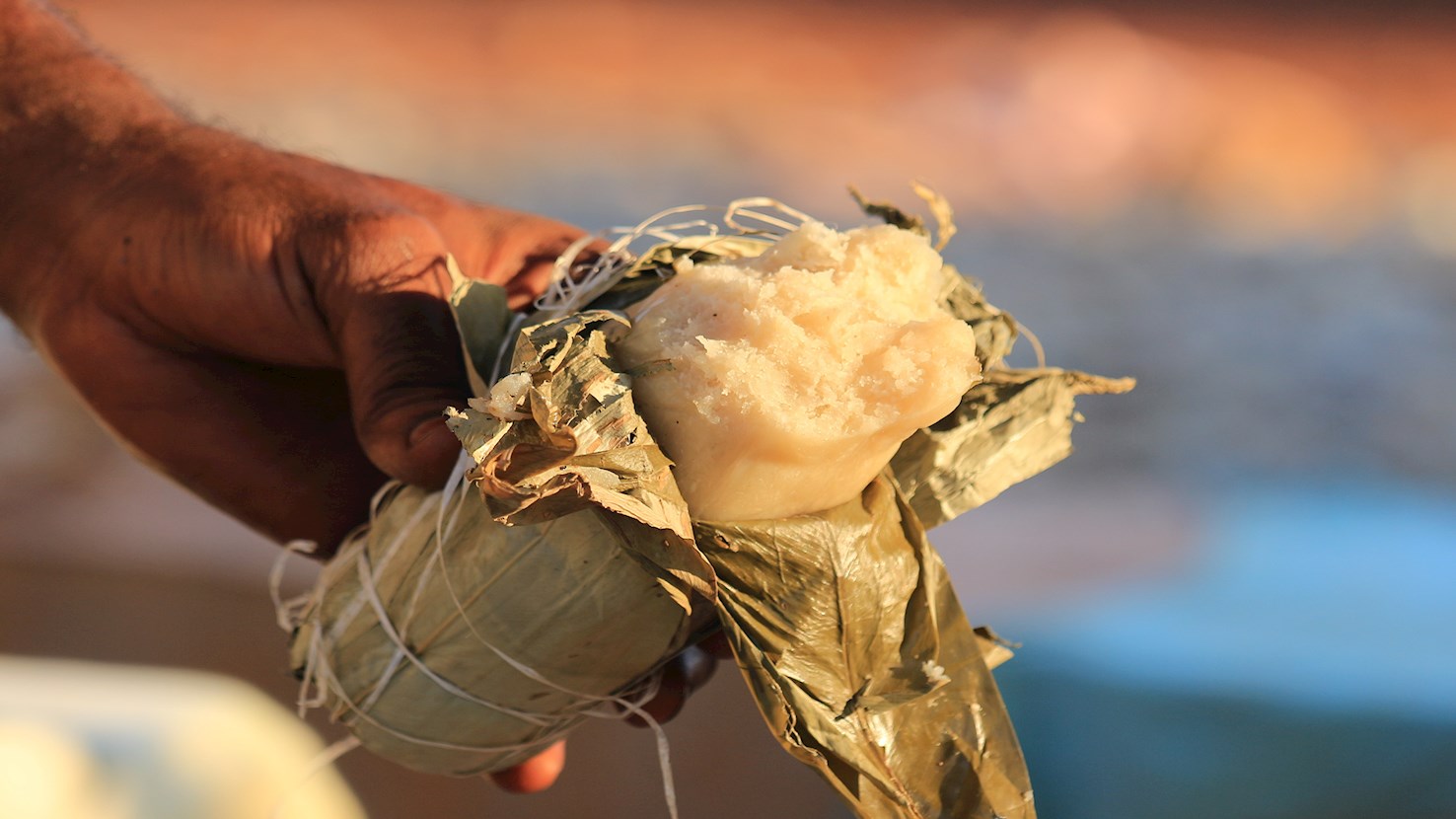
Chikwanga or kwanga is a traditional bread from the Democratic Republic of Congo, consisting of cassava flour cakes that are wrapped in dry banana leaves, then steamed. Its savory flavor pairs well with most of the main meals in the country. It is especially popular to serve warm chikwanga with various African stews, soups, and sauces as it helps to slightly offset their spicy flavors. This cassava-based bread is typically cut into thick round slices before it's served on the plates. Once prepared, chikwanga will keep for a few days, but only if it's kept in the leaf-wrapper in a dry and cool place.
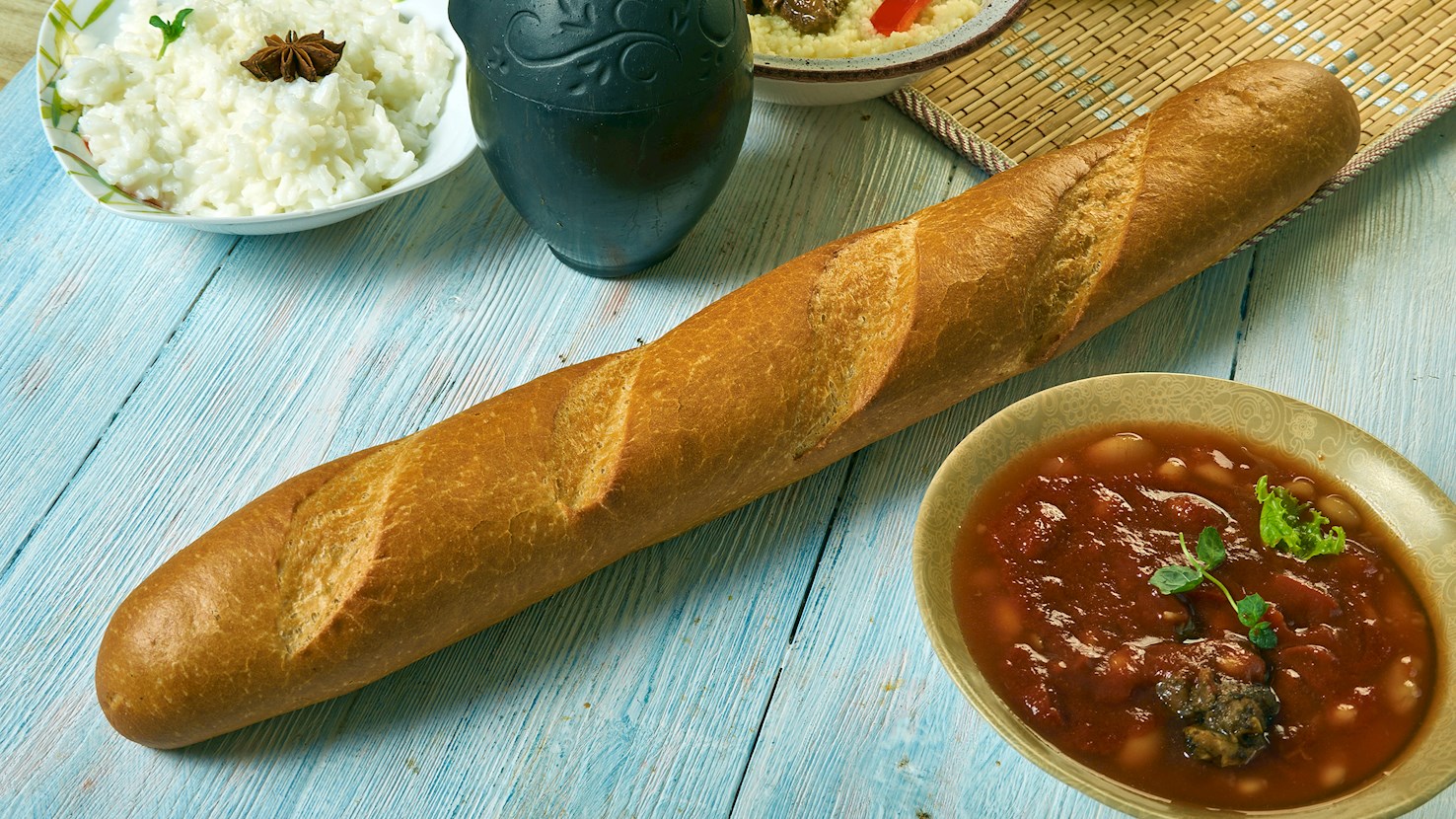
Tapalapa is a traditional bread, also very popular in Guinea. It is made with a mixture of millet and wheat flour with the addition of maize flour, cowpea flour, yeast, salt, and water. Visually, it looks somewhat similar to the French baguette on the exterior, but on the inside, it is much more dense and heavy, and its flavor is reminiscent of pretzels. The bread is typically bought for breakfast, and people like to pair it with jam, butter, or eggs.
Mmasekuku is a rustic, wood-fired bread hailing from Botswana, characterized by a firm, dense texture and a distinctly smoky flavor. The origins trace back to rural communities that relied entirely on outdoor hearths, demanding a reliable method to transform milled grain into a daily staple over open flames. The dough needs just four basic ingredients: wheat flour, warm water, salt, and a leavening agent like yeast. A lengthy period of aggressive hand-kneading turns these simple ingredients into a smooth, elastic mass. After resting in a warm spot until it doubles in size, the dough gets portioned out and shaped into uniform, solid rounds. The dough is placed right over burning firewood or inside a wood-fired clay oven. The intense, direct heat from the live flames quickly sears the outside, forming a thick, dark crust while deeply infusing the soft interior with a sharp wood-smoke flavor. This aggressive baking method yields a highly structural loaf that holds up well to heavy moisture without turning to mush. Because of this durability, the bread serves as a side to thick meat and vegetable stews. The warm, smoky rounds are brought to the table whole and torn apart by hand, usually dipped directly into savory spreads or simple melted butter. Tweaks to the core recipe happen based on regional preferences and available pantry items. Folding sorghum flour or coarse cornmeal into the wheat dough introduces a gritty, rustic texture and a deeper, nutty flavor, while adding a spoonful of rendered animal fat softens the crumb and adds a layer of richness. Apart from being a side, mmasekuku is also a standalone snack.
Mkatra foutra is a staple flatbread of the Comoros. It's made with flour, water, sugar, yeast, salt, coconut milk or cream, and a beaten egg. The flatbread contains coconut milk or cream because the islands lack a dairy industry. It is believed that mkatra foutra was probably brought to the islands by Omani traders or immigrants. The dough is baked on a ghee-brushed griddle or pan, and it's traditionally sprinkled with sesame seeds before baking. It is recommended to serve it with coconut-based curries, rougaille, or various relishes.
Farata is the Mauritian version of Indian paratha, a layered, flaky, pan-fried flatbread. It consists of three basic ingredients: flour, water, and oil. Faratas are traditionally served warm, accompanying spicy curry dishes or any kind of chutney.
Ftat misrati is a Libyan flatbread originating from the city of Misrata, hence the name. The simple dough is prepared with a combination of flour, water, olive oil, and salt. It is then cooked on a hot, flat surface, so it can be cooked on a stove as well. Although ftat is traditionally thin, this variety is even thinner: a combination of olive oil and cornflour is sandwiched between two pieces of dough, which is then rolled to be as thin as possible. Later on, the heat separates two pieces of dough, resulting in two pieces of ftat flatbreads instead of one, and they are twice thinner than regular ftat. This flatbread is often torn in small pieces and added to stews or soups, but it can also be enjoyed whole, when it is typically filled with potatoes and a variety of herbs.
Roti chaud is a traditional flatbread originating from Mauritius. This snack is essentially a roti flatbread that's filled with rougaille (tomato-based sauce) and butter bean curry known as gros pois. The flatbread is filled, rolled into a wrap, then served with an array of pickles and chutneys. The rotis are usually made with a combination of flour, oil, warm water, and salt, while grois pois is made with a combination of butter beans, tomatoes, stock, coriander, garlic, and ginger. The dish can be found at Mauritian street food stalls, but it can also be prepared at home.
Sabaayad is a traditional flatbread originating from Somalia. It's usually made with a combination of flour, baking powder, sugar, salt, milk, oil, and coriander. The dough is kneaded until elastic and springy, and it's then repeatedly coated with oil and folded in half before it's flattened into oval shapes and fried in a skillet over medium heat on both sides. If properly prepared, sabaayad should be crispy and flaky on the outside and soft on the inside. It's recommended to serve these flatbreads with stews and meat dishes such as beef suqaar.
Aish merahrah is an Egyptian bread shaped into flat, wide loaves. It is made with maize flour and ground fenugreek seeds, with the help of a sourdough starter which allows the dough to ferment overnight. After baking, this bread can be kept for a longer period of time, if stored in an airtight container. It is a staple of the Egyptian countryside, so it is often prepared locally in numerous village homes.
Himbasha or ambasha is a traditional and Ethiopian flatbread consisting of flour, water, yeast, sugar, sesame seeds, ground cardamom, and raisins (only in Eritrean version) resulting in a unique combination of sweet and savory flavors. It is characterized by a decorative wheel pattern that is scored on its top. In Eritrea and Ethiopia, himbasha is traditionally consumed for breakfast after mass, but it is also a popular item at numerous festivities and celebrations. Interestingly, breaking this bread over the back of a child on his first birthday to give him strength is a local tradition.
Khbeiza bil tonn is a small stuffed bread originating from Libya. The dough, which consists of flour, milk, butter, and yeast, is typically shaped into small loaves, crescents, or balls. Although these tasty snacks are often filled with dried mint, white cheese, and olives, the most popular stuffing is made with tuna and harissa. It is recommended to decorate the stuffed bread with cumin or sesame seeds before baking. In Libyan homes, khbeiza bil tonn is usually served to guests with a cup of tea on the side.
Mofo gasy is one of the most popular street food items in Madagascar, a bread made from a batter of sweetened rice flour that is cooked over charcoal in greased molds. The bread has a circular shape due to the molds in which it is cooked. It is traditionally served for breakfast and paired with a cup of coffee. In the coastal regions, mofo is prepared with coconut milk in a version known as mokary.
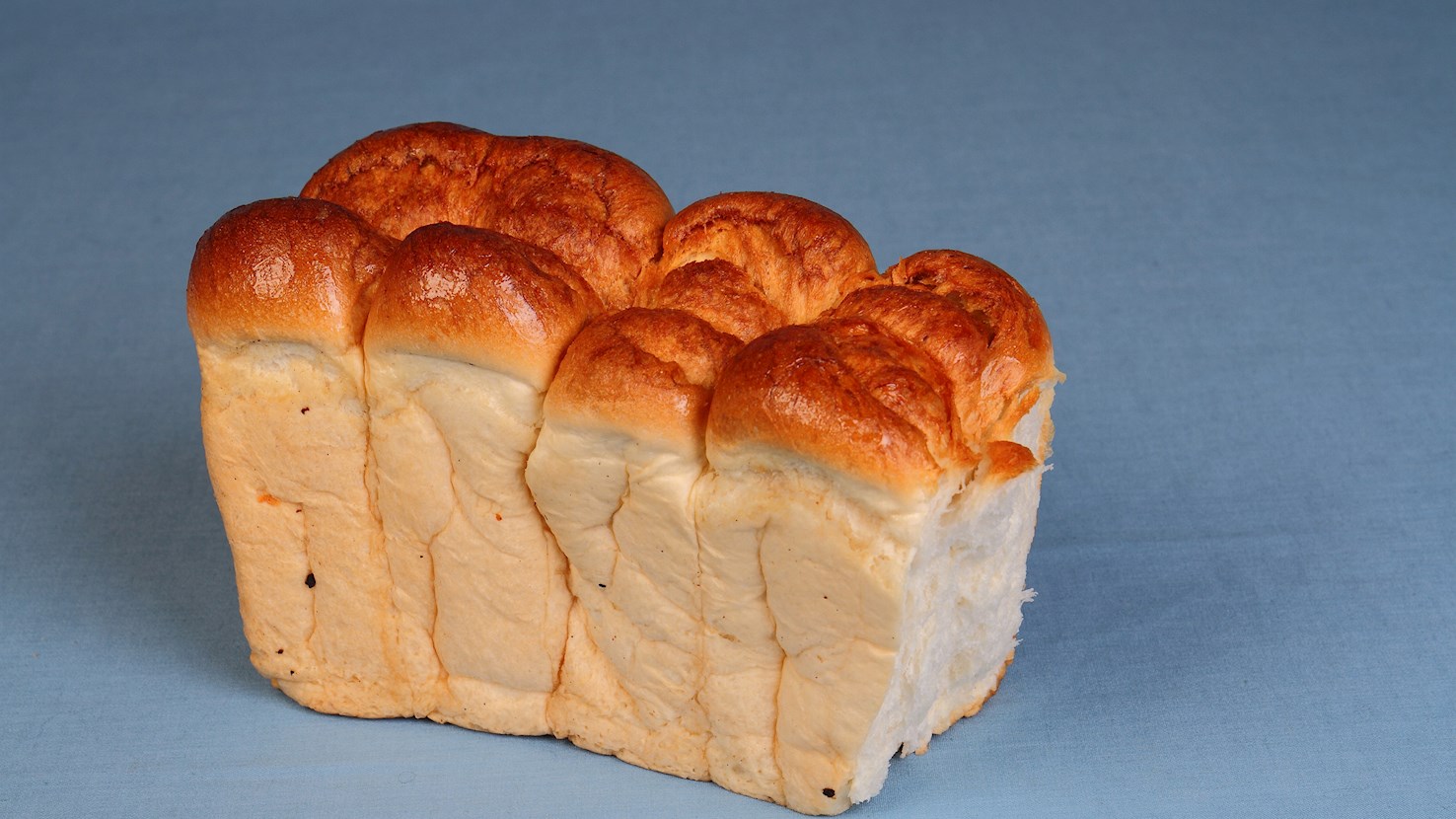
Agege bread is a distinctive type of bread originating from the Agege district in Lagos, Nigeria, that has gained immense popularity throughout the country. Agege bread is known for its soft and stretchy texture. It's slightly sweet, which sets it apart from many other bread types. The exterior is typically crusty, providing a delightful contrast to the soft interior. The bread is made using basic ingredients like flour, sugar, salt, water, and yeast. However, the specific method of preparation, especially the fermentation process, is why the bread has a unique stretchy texture. In Lagos and many other parts of Nigeria, you'll often find street vendors selling fresh agege bread, especially in the early mornings and evenings. It's often consumed at breakfast, but it's also versatile enough to be eaten at any time of the day. Agege bread is commonly paired with spreads, fried eggs, or local stews and soups.
Veldt is a dense Namibian bread that can be literally translated as bread of the wild. It consists of whole wheat flour, milk, salt, sugar, and warming spices such as cinnamon and ginger. The bread was originally prepared by European settlers who found a way to satiate their hunger with familiar ingredients. The usage of baking powder allows the dough to rise quickly, and it is then placed over a campfire to bake. It is recommended to serve veldt while still hot, preferrably with some butter on the side.
This traditional Liberian bread is the visitor's favorite amongst all the local bread varieties. Country rice is typically beaten in a mortar with a pestle, and it is then sifted to remove the larger pieces. The rice flour is combined with ripe mashed plantains, butter, eggs, baking soda, sugar, salt, water, and grated ginger. After it has been baked, Liberian rice bread is usually consumed as a coffee cake or as regular bread, and it stays nice and moist even after a full week.
Kocho is a traditional flatbread made with enset plant, which is often called false banana, due to visual similarities between the two. The Gurage people of southern Ethiopia chop the plant's thick flesh into a liquid meal, and then shape it into a dough-like mass that gets buried in the ground while wrapped in the plant's large green leaves. After some time, they dig up the fermented product, shape it into flat loaves or strips, and then cook it on a mitad – a hot plate that is traditionally used to make injera flatbread. Additionally, the dough might be enriched with nitter kibbeh (clarified butter) and various spices.
Tafernout is an Amazigh flatbread from Morocco, especially associated with Souss, the High Atlas, and parts of the south, such as the Zagora area. The name is used for the bread, but it is also closely tied to the earthen oven in which it is baked, so the item is understood through both the dough and the cooking method. It is a round, flat bread made from wheat flour, semolina or finely milled durum wheat, water, yeast, and salt, with some versions using whole wheat, barley, or a mix of flours depending on the household and the grain available. Its place in Amazigh food culture comes from mountain and rural households where bread is not only an accompaniment but a working part of the meal, used to scoop stews, carry oil, hold honey, and complete a table built around tagines, dairy, legumes, or simple morning foods. The bread developed around the practical conditions of southern Moroccan village cooking: grain was kneaded at home, fuel came from wood, and the oven had to deliver strong heat without requiring a large, built kitchen. In many areas, the tafernout oven is made from clay, earth, or stone, and the baking surface may include smooth river stones heated by the fire. Those stones matter because the dough is not always baked on a flat metal tray; it can be set directly onto the hot stones, where the bottom cooks quickly, and uneven contact gives the bread its characteristic surface. The work starts with a soft but manageable dough. Flour and semolina are mixed with salt and yeast, then water is added gradually until the dough comes together. Some cooks add a small amount of oil, but the basic dough is plain. It is kneaded until elastic, left to rise, then divided and flattened by hand into round discs. The shape is usually broader and flatter than that of a tall loaf of Moroccan khobz, because the bread needs to cook quickly in intense heat. While the dough rests, the oven is heated with wood until the walls, floor, and stones are hot enough to bake the bread directly. Ash and embers are moved aside as needed, and the flattened dough is placed inside, either against the hot surface of the oven or on the heated stones. The bake is shorter than that of a thick loaf. The outside firms and browns, sometimes with darker spots from the fire and stones, while the inside stays soft and chewy enough to tear. A good tafernout should not be dry or brittle. It should have enough structure to hold food, but it should still bend and pull apart easily when fresh. Because the oven and stones vary from house to house, the final look is not perfectly uniform; one bread may show deeper charring, another may be paler, and both can be correct if the center is cooked and the dough has not dried out. The most important feature is the relationship between the bread and the oven. A pan-cooked version can copy the ingredients, but it will not fully copy the texture that comes from contact with stone, clay, wood heat, and enclosed heat. Tafernout is commonly served warm, often soon after baking, when the crust is still light and firm, and the center remains pliable. It is torn by hand and eaten with savory dishes such as tagines, stewed vegetables, meat sauces, lentils, beans, or eggs, but it is just as natural with breakfast and afternoon foods. In Souss, it is closely associated with argan oil and amlou, the almond, argan oil, and honey spread that are strongly associated with the region. It is also eaten with olive oil, honey, fresh goat cheese, butter, or oudi, a clarified butter flavored in some local versions with herbs such as thyme. In a tagine, pieces of tafernout are used to scoop up the sauce and vegetables rather than sitting beside the dish untouched. With amlou or honey, it becomes a dense and filling breakfast or snack. In rural households, it is a home-baked bread; in towns and cities, it may appear in restaurants that serve Amazigh or southern Moroccan food in a more regional way. Its current presence outside its core areas shows how strongly the oven-baked style is recognized: restaurants in larger Moroccan cities sometimes advertise tafernout specifically because the name signals more than a generic round bread. The best drink pairing is usually Moroccan mint tea, especially when the bread is served with honey, amlou, or butter. In savory combos, it pairs well with buttermilk-like fermented milk, fresh milk, or water, while a tagine meal can also be paired with unsweetened tea. On the plate, its strongest partners are practical and specific: lamb or chicken tagine, vegetable tagine, lentils, white beans, olive oil, argan oil, amlou, thyme-scented clarified butter, goat cheese, olives, honey, fried eggs, and warm milk or mint tea.
Pissoj is a cassava-based bread made and eaten in Equatorial Guinea, particularly in the mainland region of Río Muni and among Fang-speaking communities, where yucca root is processed into a firm, bread-like form used as a daily starch. Its development is linked to the long-standing reliance on cassava as a primary crop in the equatorial forest zone, where climatic conditions favor its cultivation and where processing techniques were refined to render the root safe, durable, and suitable for regular consumption, with these methods remaining central even as other ingredients entered the local food system. Preparation involves peeling and soaking cassava roots, grating or pounding them into a pulp, fermenting and pressing the mass to remove liquid, then shaping it into flat or compact forms that are cooked over heat by baking, roasting, or pan-cooking until firm, resulting in a dense structure with a mildly sour profile and no use of yeast or added fats. Pissoj is eaten daily in homes and rural settings, usually alongside soups and stews made with vegetables, fish, or meat, consumed by hand rather than with cutlery, and it pairs naturally with water, palm wine, or lightly fermented drinks, while its neutral, starchy character allows it to balance strongly seasoned dishes without requiring specific food pairings.
Khubz al-qlīṭ is a hard, dry flatbread from the Tunisian islands of Kerkennah, made from simple ingredients: flour, salt, and water, without yeast or oil. It is baked until completely dry and solid, allowing it to last for long periods without spoiling. The bread is deeply connected to the seafaring culture of the Kerkennah islands, where fishermen relied on durable foods that could endure days at sea under the heat and humidity of the Mediterranean. The word “qlīṭ” is believed to come from the French or Italian term “galette,” which refers to a flat, round bread or pastry, and over time it became part of the local dialect. The method of making it, however, is rooted in the resourceful practices of fishing families who needed sustenance that would not decay during long journeys. For generations, islanders baked khubz al-qlīṭ before the fishing season began, stacking the hard rounds in woven baskets or clay jars and storing them for weeks. The bread’s durability came from its low moisture and the absence of fermentation, which made it immune to mold. When fishermen went to sea, they would take several pieces with them, softening them in seawater, fish broth, or soup before eating. Its dense texture and subtle saltiness complemented the strong, savory flavors of preserved or freshly cooked fish. As the islands’ economy and daily life evolved, the bread remained part of their food identity, sometimes prepared for cultural events or by local bakers who kept the practice alive. The preparation is straightforward but demands patience. Wheat flour, often locally milled, is mixed with salt and just enough water to form a stiff dough. The dough is shaped into flat discs and pricked with a fork or knife to prevent swelling during baking. The loaves are then baked slowly in an oven or on a low, even fire until they become light brown and hard throughout, losing nearly all moisture. The finished bread is smooth, dry, and firm, able to be stored for months in cool conditions. When eaten, it is rarely consumed dry; instead, it is soaked briefly in broth, fish stock, or a simple tomato sauce to soften it slightly while preserving its firmness. Today, khubz al-qlīṭ is still associated with Kerkennah, occasionally made in small bakeries or at home during festivals or family gatherings. It is eaten alongside fish stews such as cousha or with soups rich in olive oil, tomatoes, and capers, where the bread absorbs flavor while keeping its shape. Some eat it with a drizzle of olive oil or with preserved fish paste known as masmouta, maintaining the link between the bread and the maritime life it once served.
Mosbolletjies are traditional yeasted buns originating from South Africa's Western Cape. They're usually made with a combination of flour, butter, milk, sugar, yeast, aniseed, grape juice, and salt. Flour is mixed with salt, sugar, aniseed, and yeast. The mixture is then added to the liquid ingredients – milk, water, grape juice, and melted butter. The dough is kneaded until soft and left to rise until doubled. Pieces of dough are shaped into balls that are baked until golden brown. Mosbolletjies are brushed with sugar syrup and eaten warm. It's recommended to eat the sweet bread with butter and honey. Serve it with a cup of coffee or tea for an authentic experience. Mosbolletjies can also be dried and made into rusks called mosbeskuit.
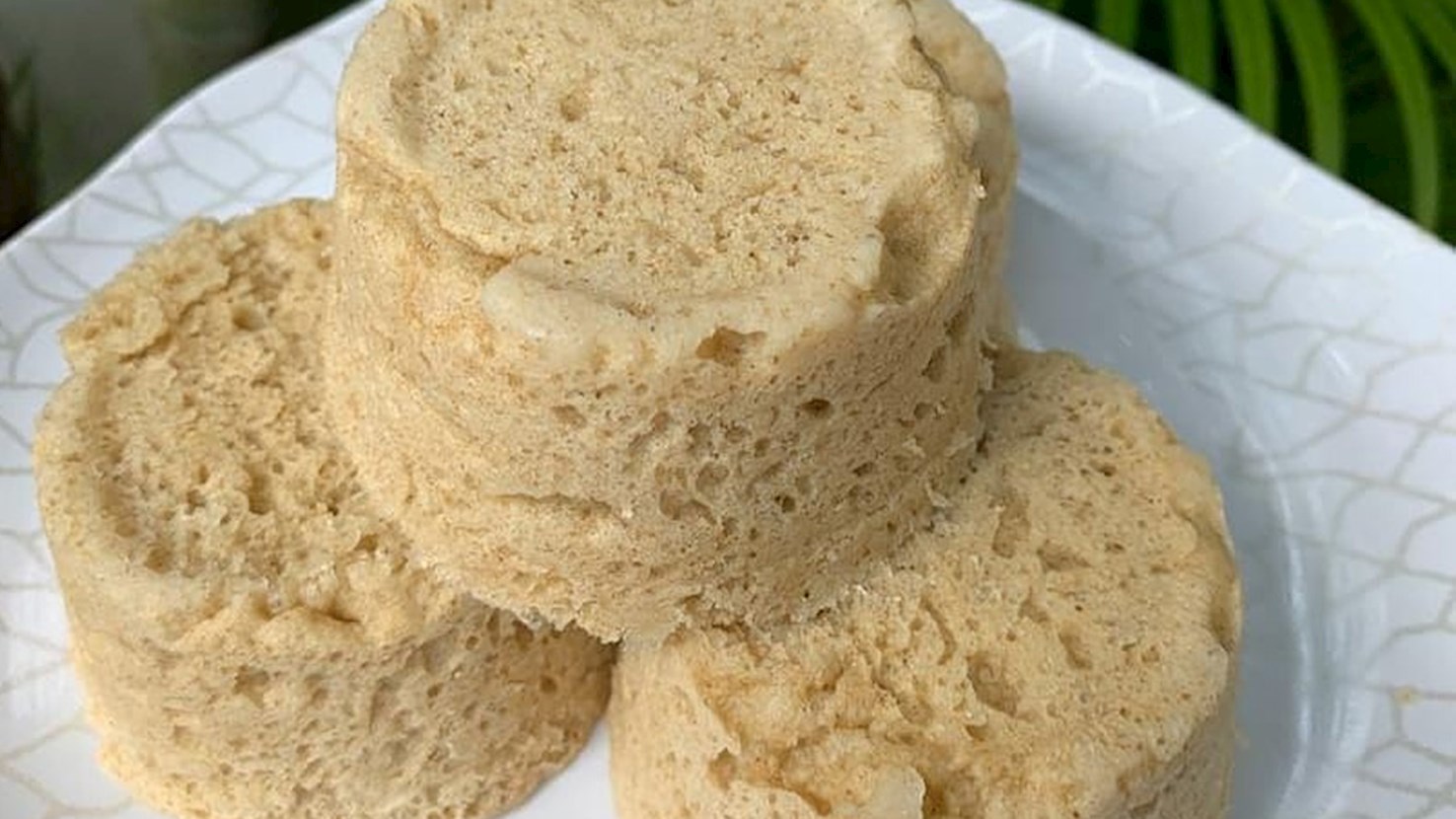
Alkubus is a traditional bread originating from Nigeria. The bread is usually made with a combination of wheat flour, sugar, salt, water, and yeast. The dough is left to rise for one to two hours, and it’s then divided into oiled containers or bowls. The small balls of dough are left to rise one more time before they’re placed in a steamer and steamed until fully cooked. If properly prepared, the steamed bread should be very soft, moist, and fluffy. Alkubus is often served with Nigerian soups or stews as an accompaniment.
Borotho is a traditional African bread originating from Lesotho. It's made with a combination of whole meal flour, white flour, sugar, salt, yeast, and lukewarm water. The dough is kneaded until it springs back, and it's then left to rise before it's baked in the oven or in a heavy pan over low heat. The dough can also be steamed. Once the bread becomes nicely browned, it is usually served with barbecued meat, stews, or eaten with fruit jams.
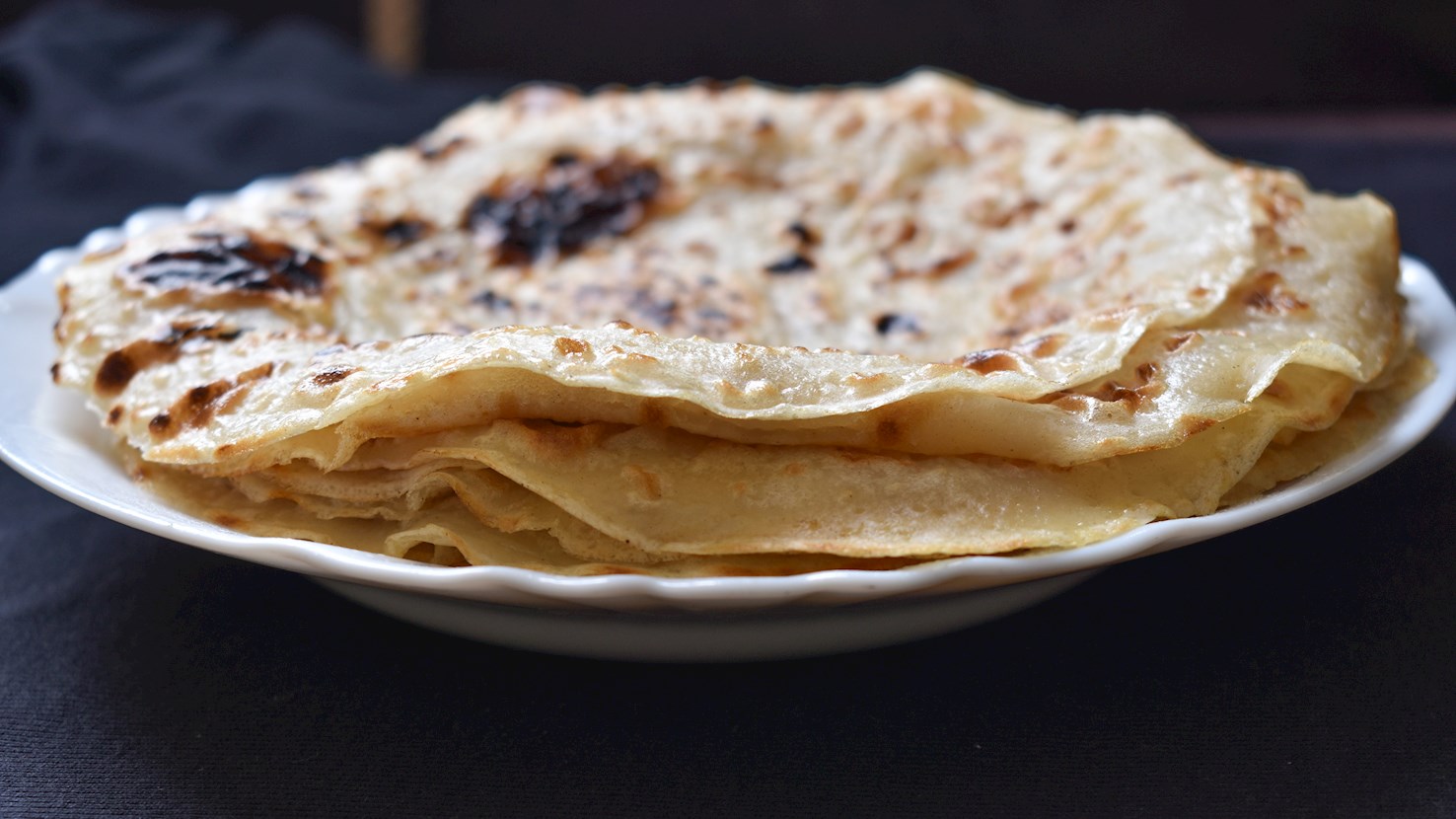
Goraasa is a Sudanese pancake or a flatbread that is spongy, versatile, soft, and doughy. It is made with flour, water, salt, and (optionally) baking powder. The batter is shaped in the pan, so the final result looks like a thick tortilla. In Sudan, it is eaten for breakfast, lunch, and dinner. Locals often place it under various stews, then tear off pieces of the flatbread to scoop up the main dish instead of using utensils, but goraasa can also be enjoyed on its own.
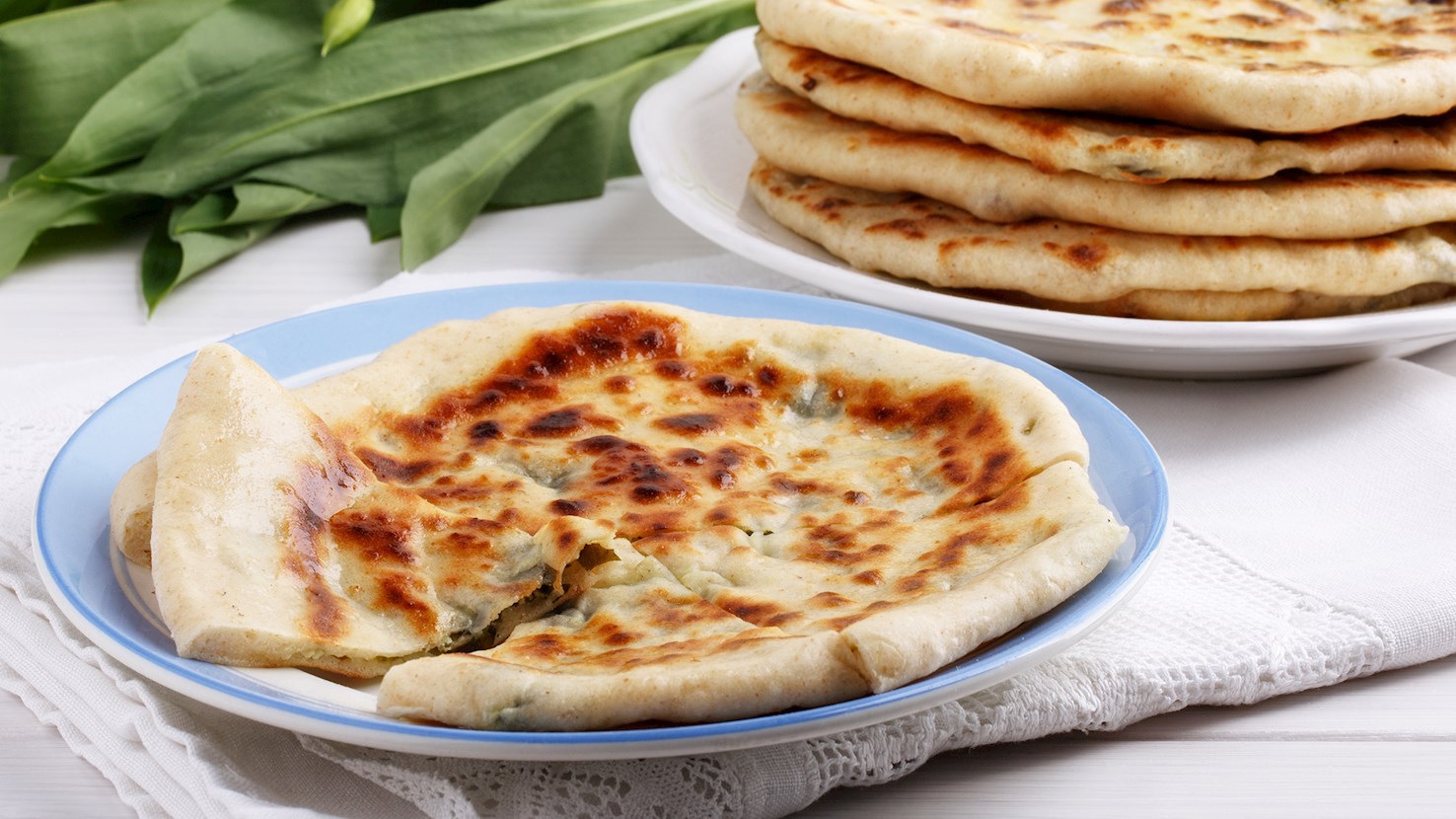
Khubzah bil a3shab is a savory Libyan bread characterized by its soft and spongy texture. The dough is made with a combination of flour, olive oil, sugar, salt, and baking powder. It can be flavored with ingredients such as thyme, parsley, rosemary, olives, hot peppers, cheese, or paprika, depending on personal preferences. This herb bread is typically served with tea in the evening.
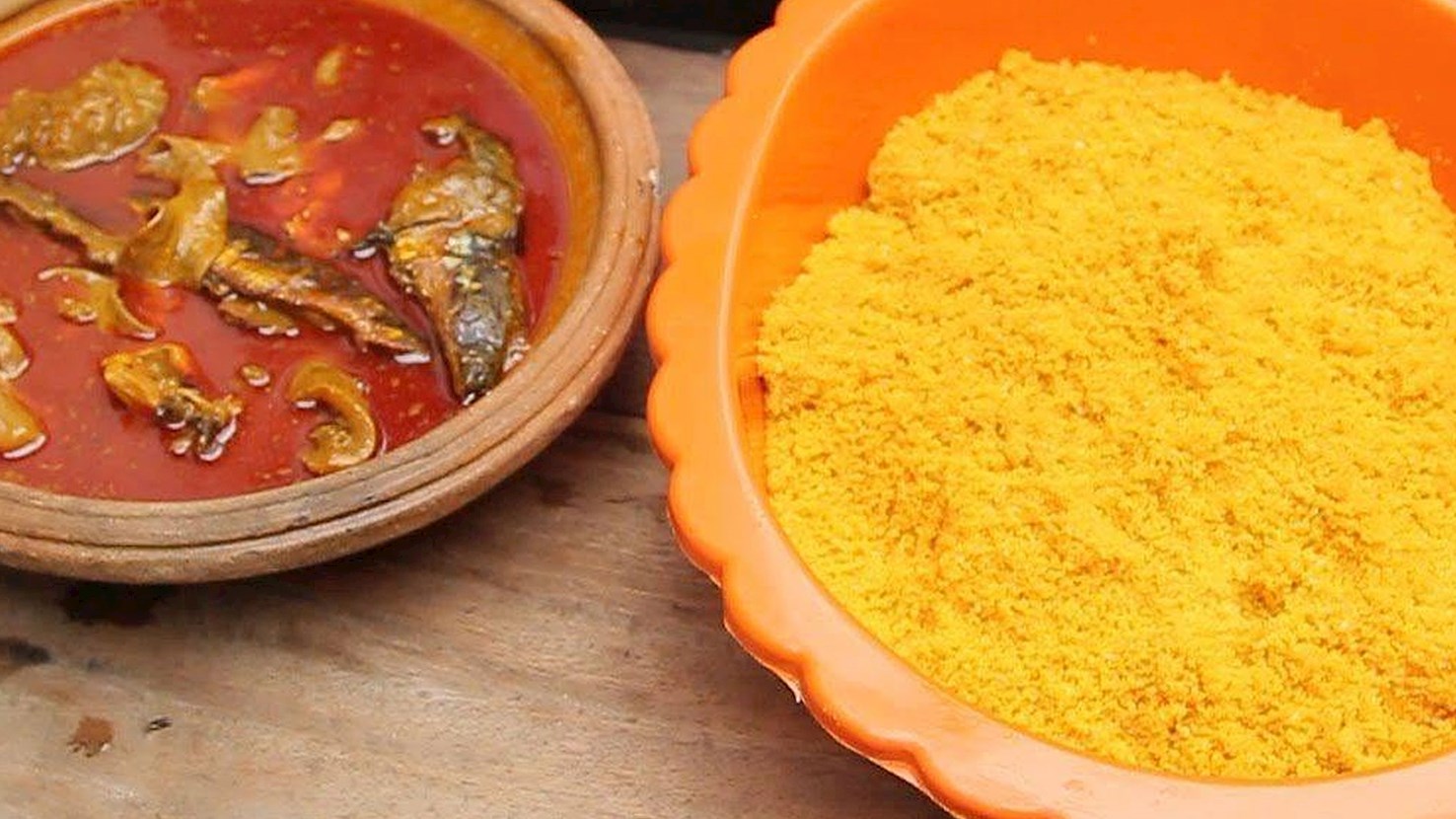
Kpekpele is a traditional bread made by steaming fermented cornmeal. The unleavened bread is often consumed with a palm soup that features large amounts of smoked fish. It is traditionally served during the harvest festival known as Homowo, celebrated by the Ga ethnic group. They are known to sprinkle some kpekpele at prescribed locations, a ritual that is used to please the gods and ancestral spirits.
TasteAtlas food rankings are based on the ratings of the TasteAtlas audience, with a series of mechanisms that recognize real users and that ignore bot,
nationalist or local patriotic ratings, and give additional value to the ratings of users that the system recognizes as knowledgeable.
For the “Top 45 African Breads and Flatbreads” list until July 16, 2026, 2,808 ratings were recorded, of which 718 were recognized by the system as legitimate.
TasteAtlas Rankings should not be seen as the final global conclusion about food. Their purpose is to promote excellent local foods,
instill pride in traditional dishes, and arouse curiosity about dishes you haven’t tried.