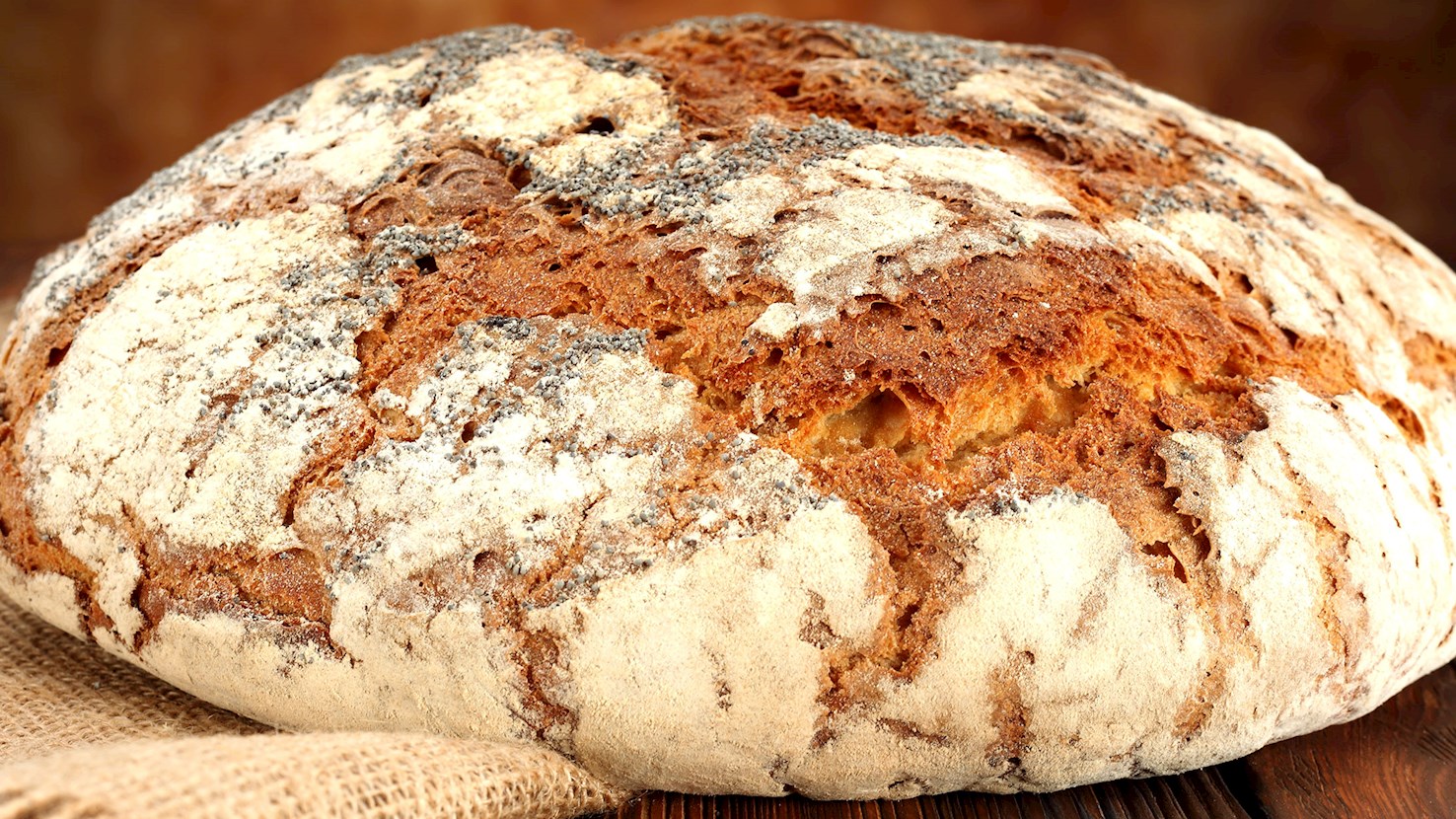
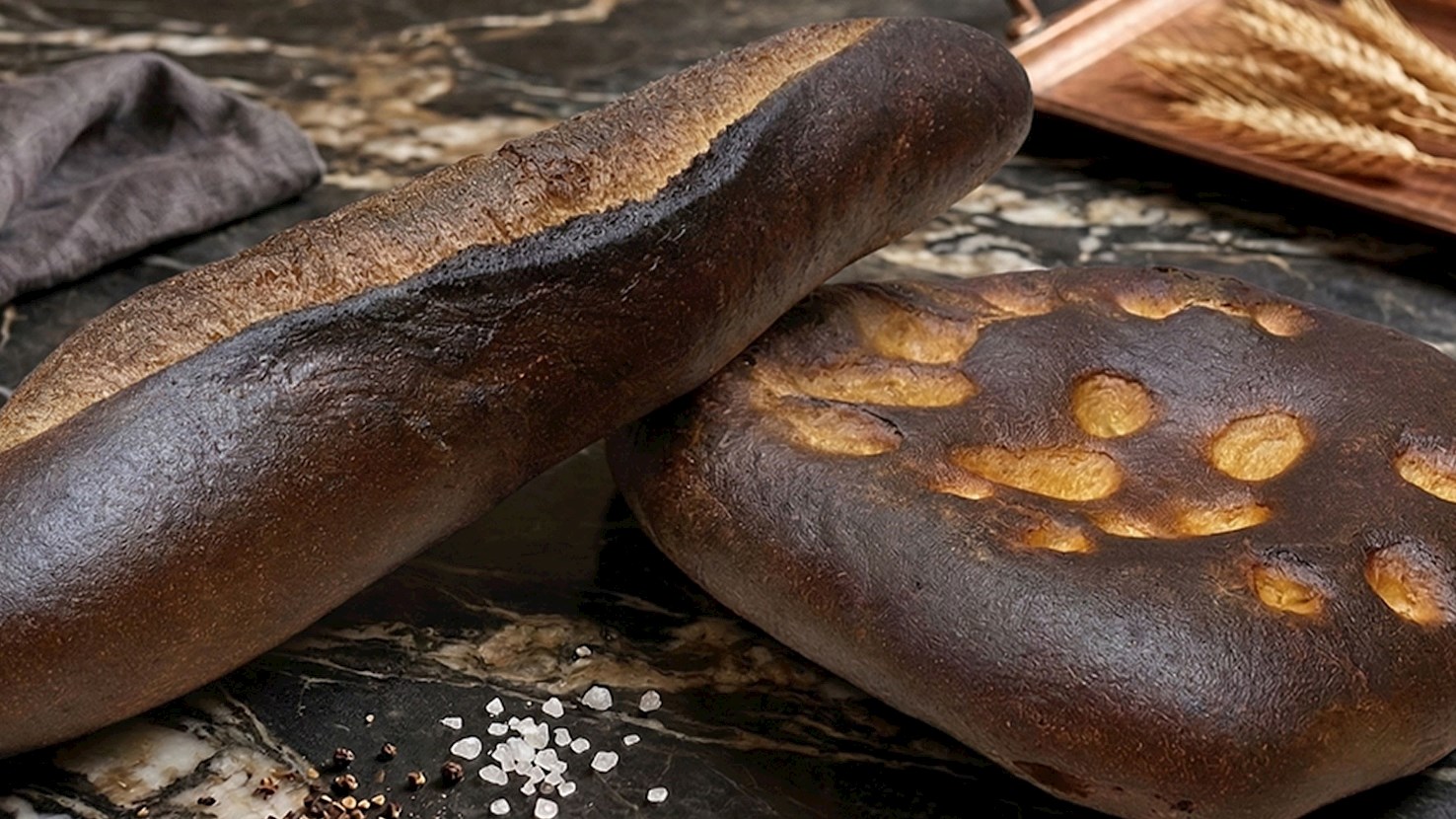
Pain de campagne or country bread is a traditional, rustic bread that is prepared throughout France. It can be found in numerous boulangeries. Most versions of pain de campagne are made with a mixture of white, whole wheat, and rye flour, water, salt, and sourdough starter. In the past, people would bake huge loaves of country bread in the communal ovens, feeding their families for days or weeks. In the early 20th century, baguette replaced pain de campagne in terms of popularity, but with the rise of artisan breads in the 1970s, pain de campagne grew in popularity once again.
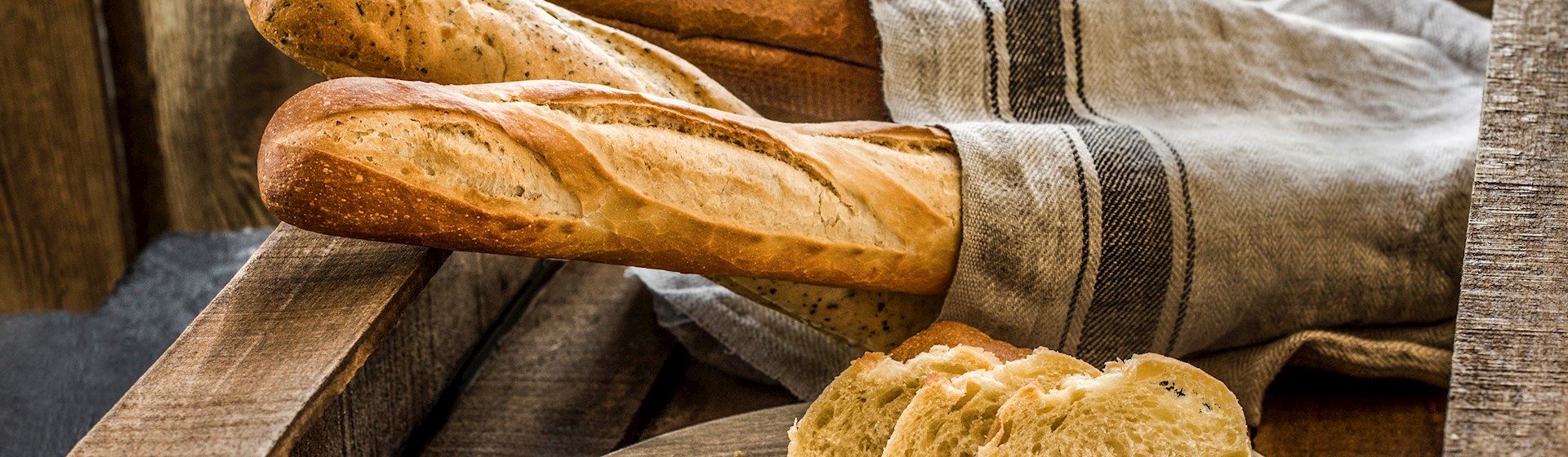
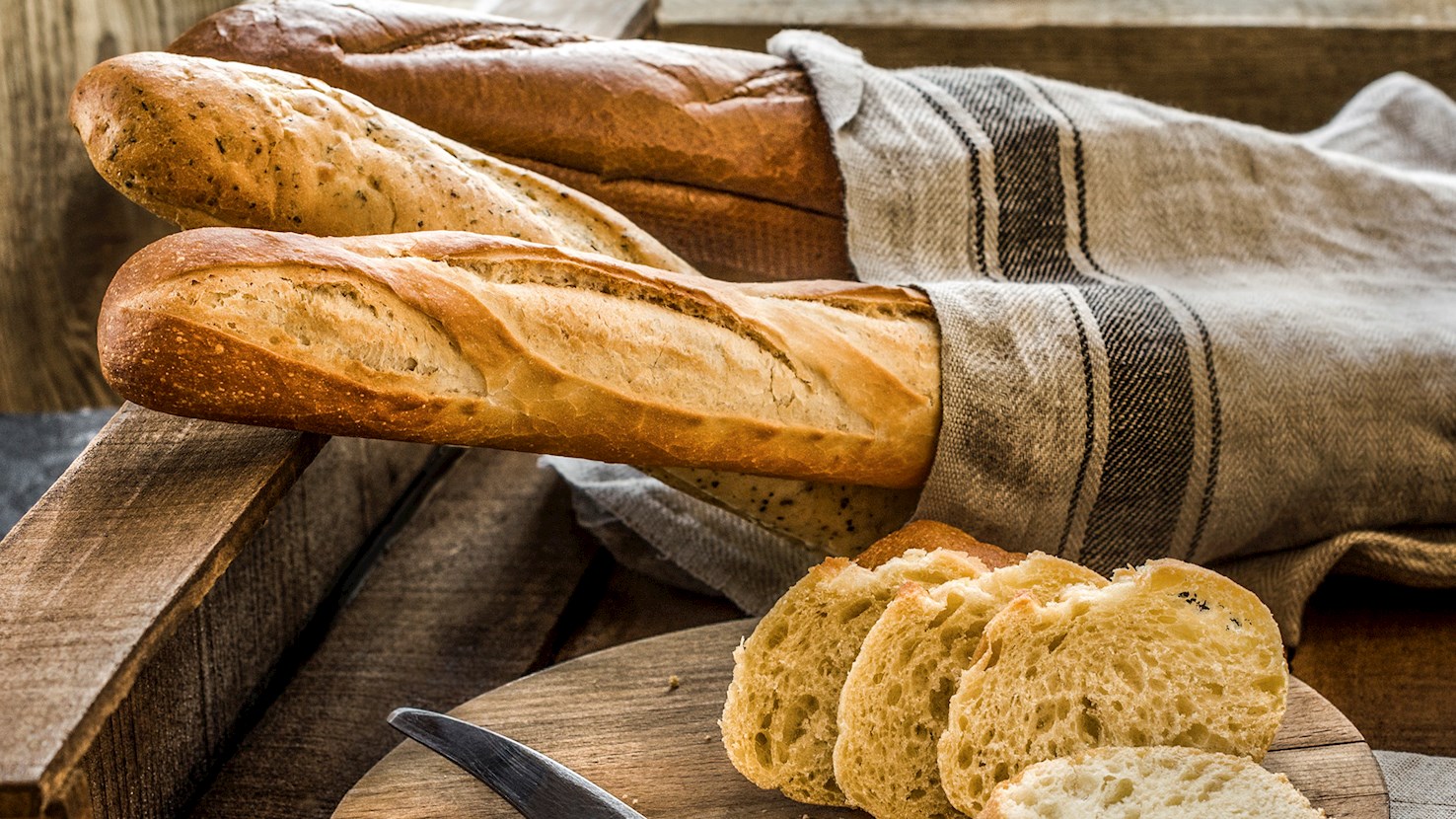
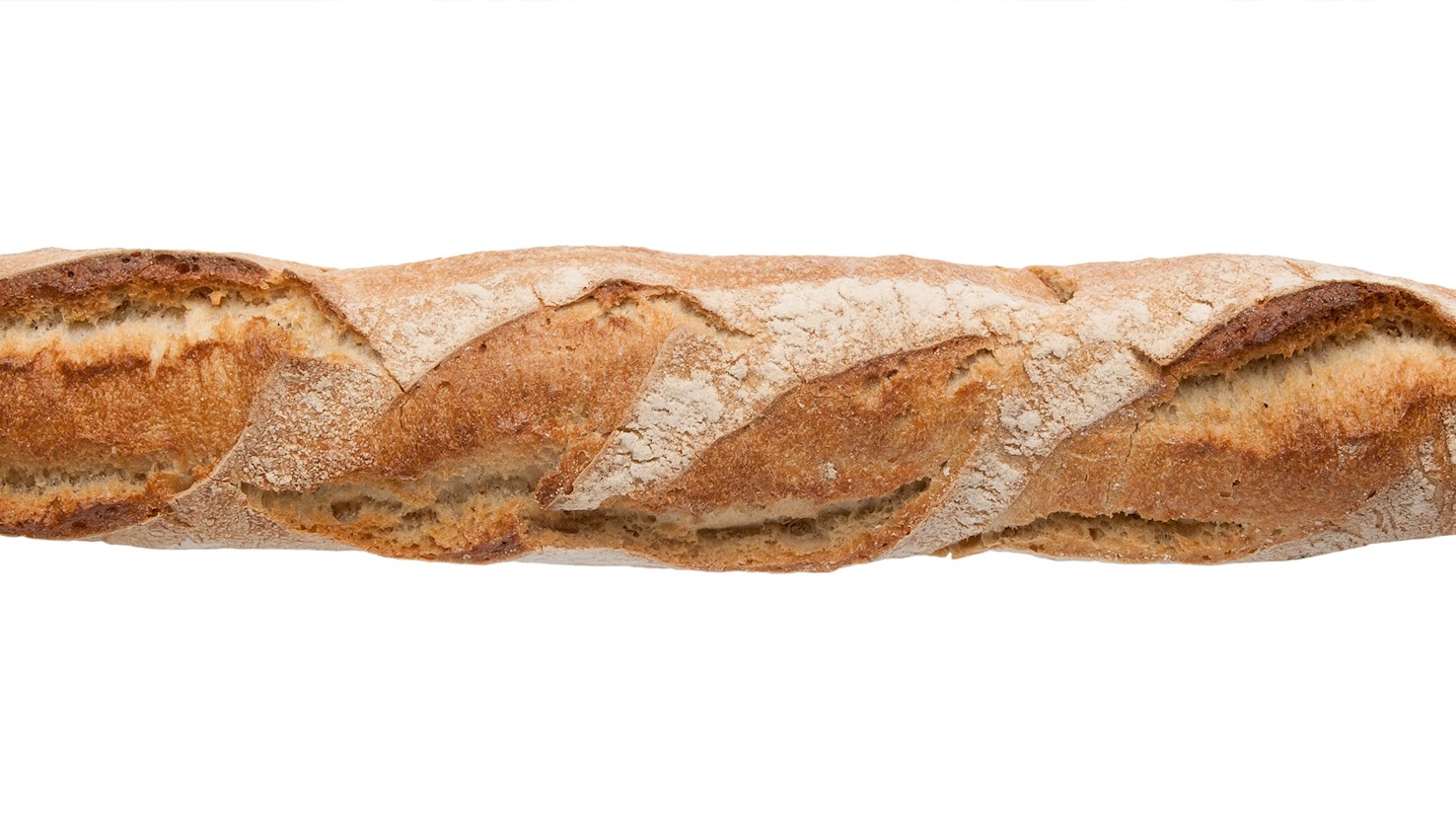
Probably the most iconic image of France, this long, light, airy bread with its characteristically crispy crust dates back to the 19th century, when wheat and white breads were no longer a privilege of the rich. Baguettes were made even before the invention of their name. The word baguette first entered use in 1920, derived from the Latin root baculum, meaning stick or staff, which became baccheto in Italian. Baguettes were first baked as long, wide loaves of bread, but a 1920 law prevented workers from beginning work before 4AM, making it impossible for bakers to finish baking the bread in time for breakfast. They then gave baguettes their typical long, thin shape in order to speed up the baking process. The bread was baked in steam ovens, which were first brought to Paris by an Austrian named August Zang, whom some French sources credit with the invention of the baguette. Another characteristic of the baguette is its typical flower-petal design on the top of the crust, made by making diagonal slashes with a curved knife on top of the loaves before they are put to bake. Today, baguettes can be found throughout France, and they are available for sale in nearly every boulangerie, as well as baked at home. The texture and flavor of a good baguette can transform any sandwich into a gourmet meal. Baguettes are also flexible – they can be made into bruschettas, turned into croutons or garlic bread, used for mopping up sauces, or simply dipped in olive oil as a snack.
Ficelle is a long and thin French bread that is spongy and tender on the interior, and crispy on the exterior. It is commonly made with white wheat flour, just like the baguette, but it is usually about half the size of a standard baguette that is sold at most French pâtisseries. The word ficelle means string in French, referring to its thinness. The bread is often used in the production of croutons, while it is regularly sliced and accompanied by a spinach dip.
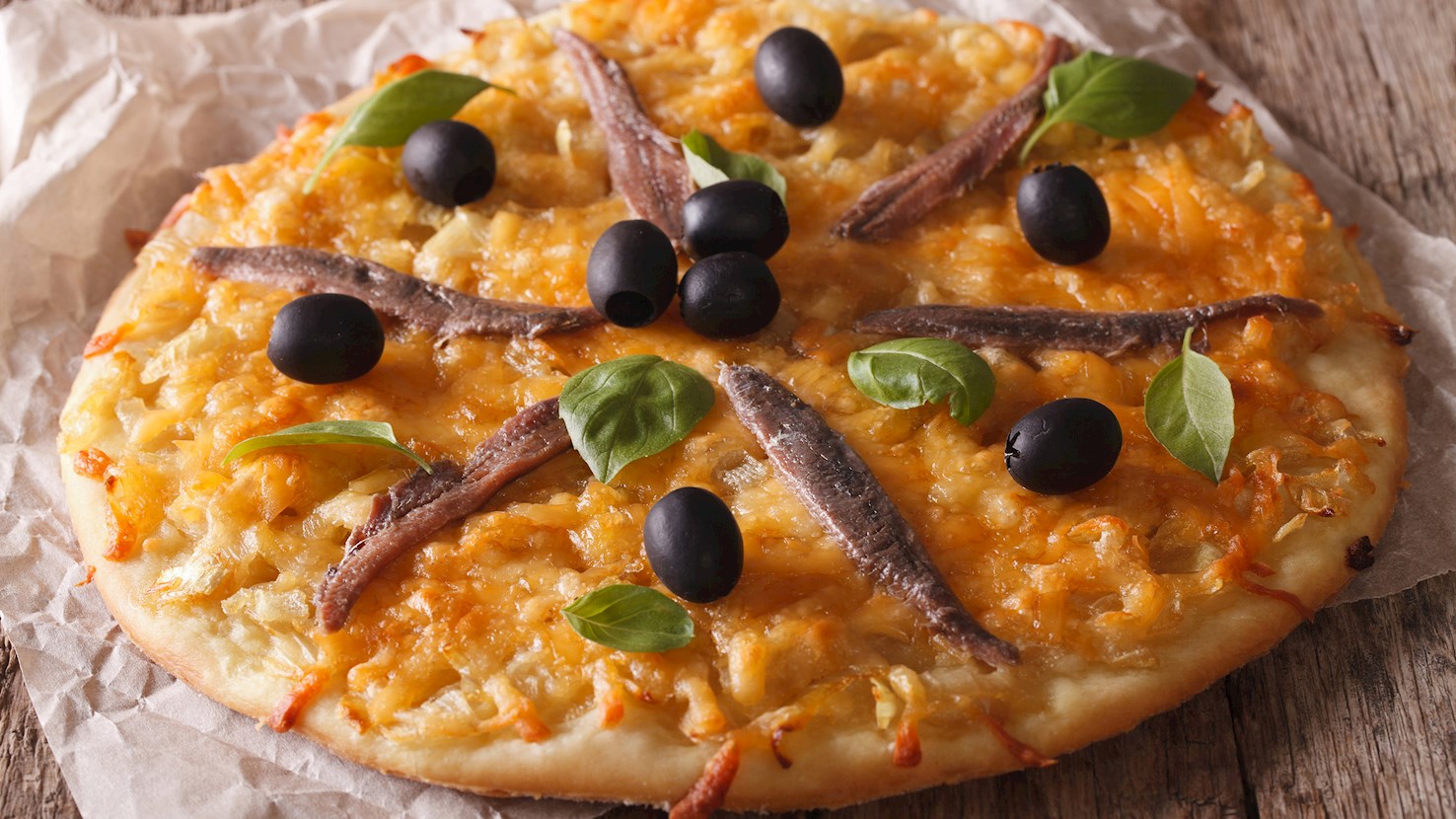
Originating from the French city of Nice, pissaladière is a baked tart that is similar to a pizza, but thicker. In the past, it was usually baked and sold each morning, but today it is traditionally served as an appetizer or a snack, consisting of a doughy base that is topped with anchovies, olives, caramelized onions, and fresh herbs. The name of the dish comes from the French phrase pèi salat, which translates to salted fish, one of the key ingredients used in the preparation of pissaladière. It is believed that the dish was invented between 1305 and 1377, during the Avignon Papacy. Pissaladière is best paired with a glass of chilled white wine.
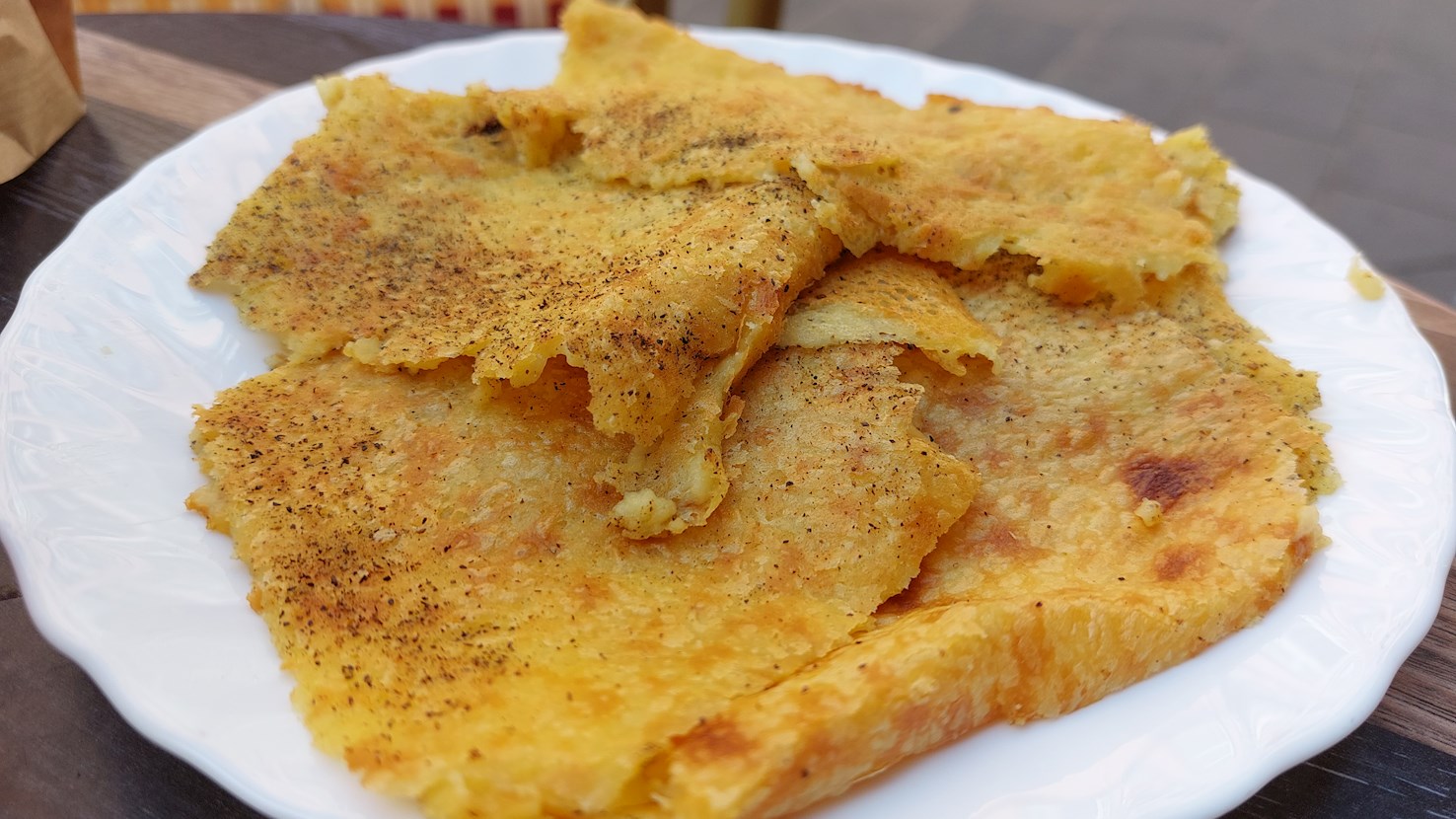
Originally derived from the Genovese farinata, socca eventually became the specialty of Nice, France, where it is a street food staple. This traditional flatbread is made with chickpea flour, olive oil, salt, and pepper. Once the batter is prepared, it is transferred to a wide pan or a skillet, which is placed in the oven at very high temperature. The batter is then baked until the socca hardens and begins to slightly burn on the edges. Once baked, socca is sliced into pieces and seasoned with salt, pepper, and a drizzle of olive oil. It can be served as an appetizer with cheese, olives, and a glass of rosé on the side.
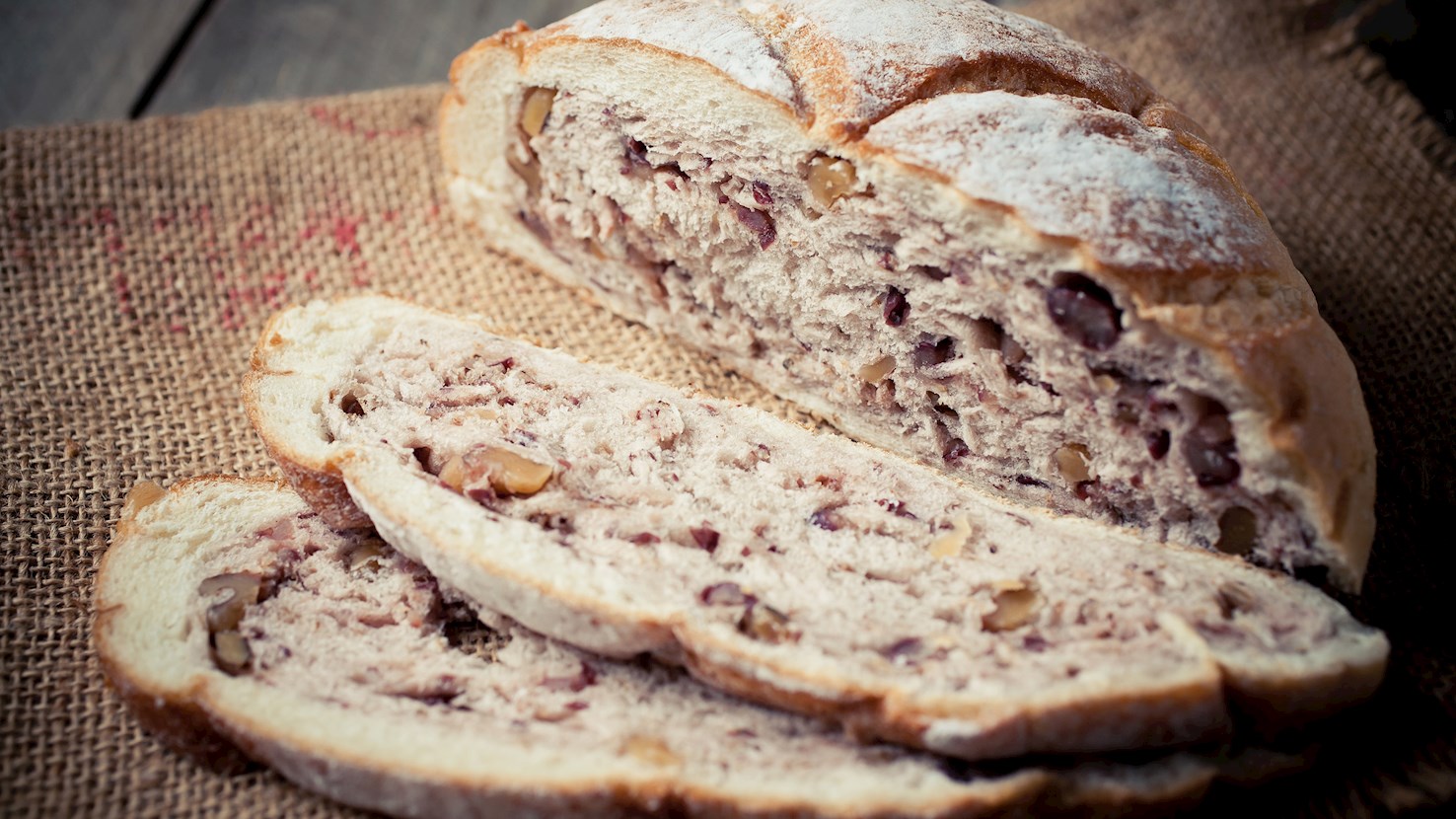
This French-style yeasted bread is traditionally prepared with wheat or whole wheat flour and coarsely chopped walnuts that are kneaded in the dough, while some varieties may also incorporate other nuts, typically coarsely chopped hazelnuts. It is usually shaped into plain or round loaves and is characterized by its dark brown crust and a light brown interior which is dotted with walnut kernels. For the best results, make sure to use whole wheat flour and the sweet and meaty French walnuts, if available. Due to its rich and complex flavors, the bread pairs well with butter, soft cheeses, charcuterie, savory spreads, or sweet toppings such as honey or fruit jams.
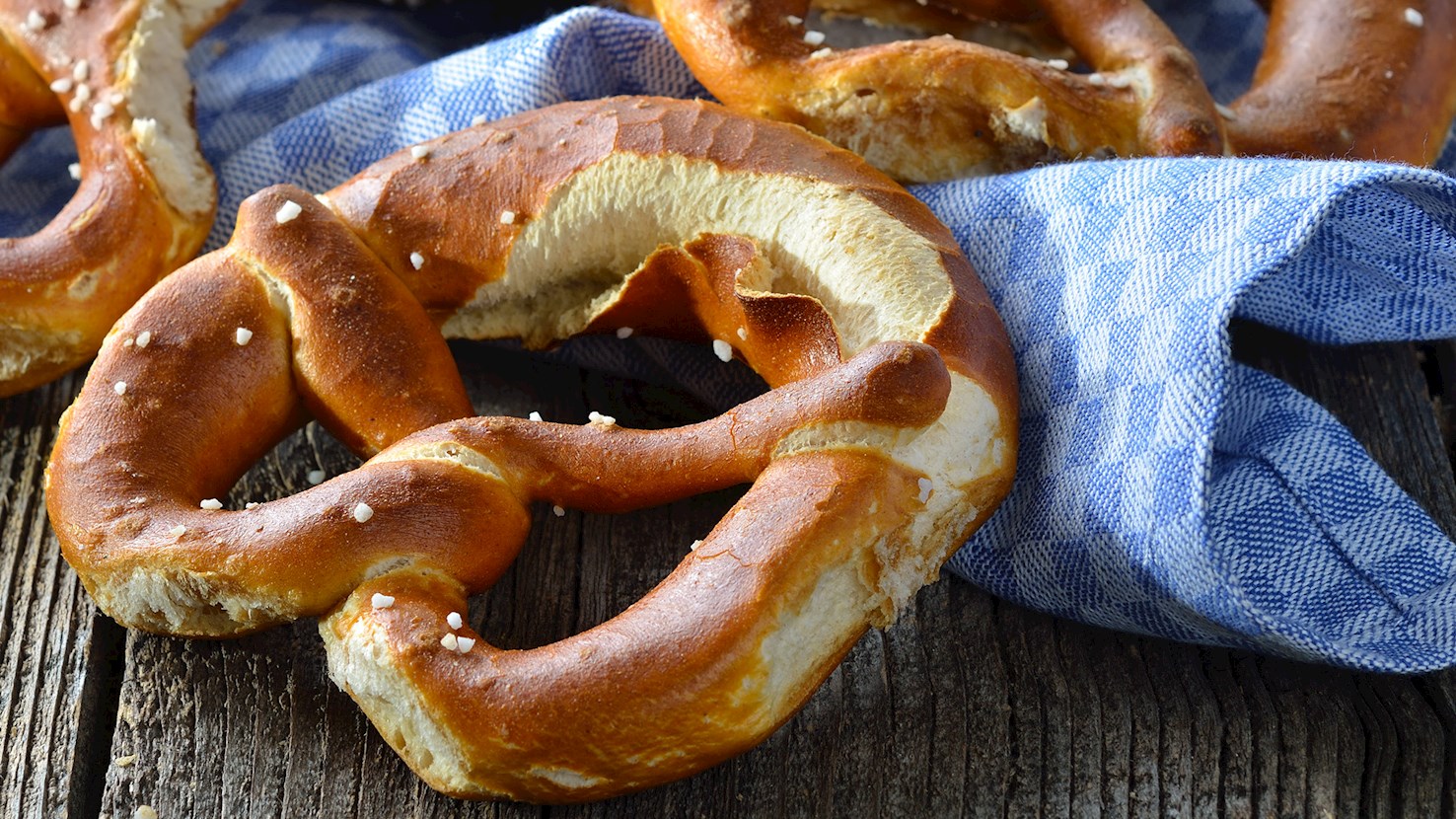
Considered an iconic symbol of Germany, the pretzel is a type of traditional baked good that is made by combining flour, salt, malt, yeast, and water. The resulting dough is then shaped into a well-known knotted shape of a pretzel before it is baked. Pretzels are often dipped in a lye solution (natronlauge in German) before they are baked, and then they are called laugenbrezel, a Bavarian-style pretzel distinguished by a nice, brown, and crispy exterior that surrounds the soft interior. Coarse salt is usually sprinkled over the surface of the pretzels, but other toppings may also be used, including sesame, pumpkin, sunflower, or poppy seeds. Regional variations of the pretzel abound, with some of them using fat to obtain a softer dough and others calling for different types of flour such as whole wheat flour or spelt flour. German pretzels come in both sweet and savory versions, and their texture may range from soft to hard. They are usually enjoyed warm as a snack with butter or along with German wurst sausages and a cold German beer on the side for an authentic German experience. The pretzel is a favorite street snack and a staple at any festival, holiday, and Christmas market in the country. Its versatile nature has given rise to numerous variations including New Year’s pretzels (neujahrbrezel), Oktoberfest pretzels (also called wiesnbrezn), and Lent pretzels (fastenbrezeln), among many others. In Alsace, France, the pretzel is known as bretzel d'Alsace.
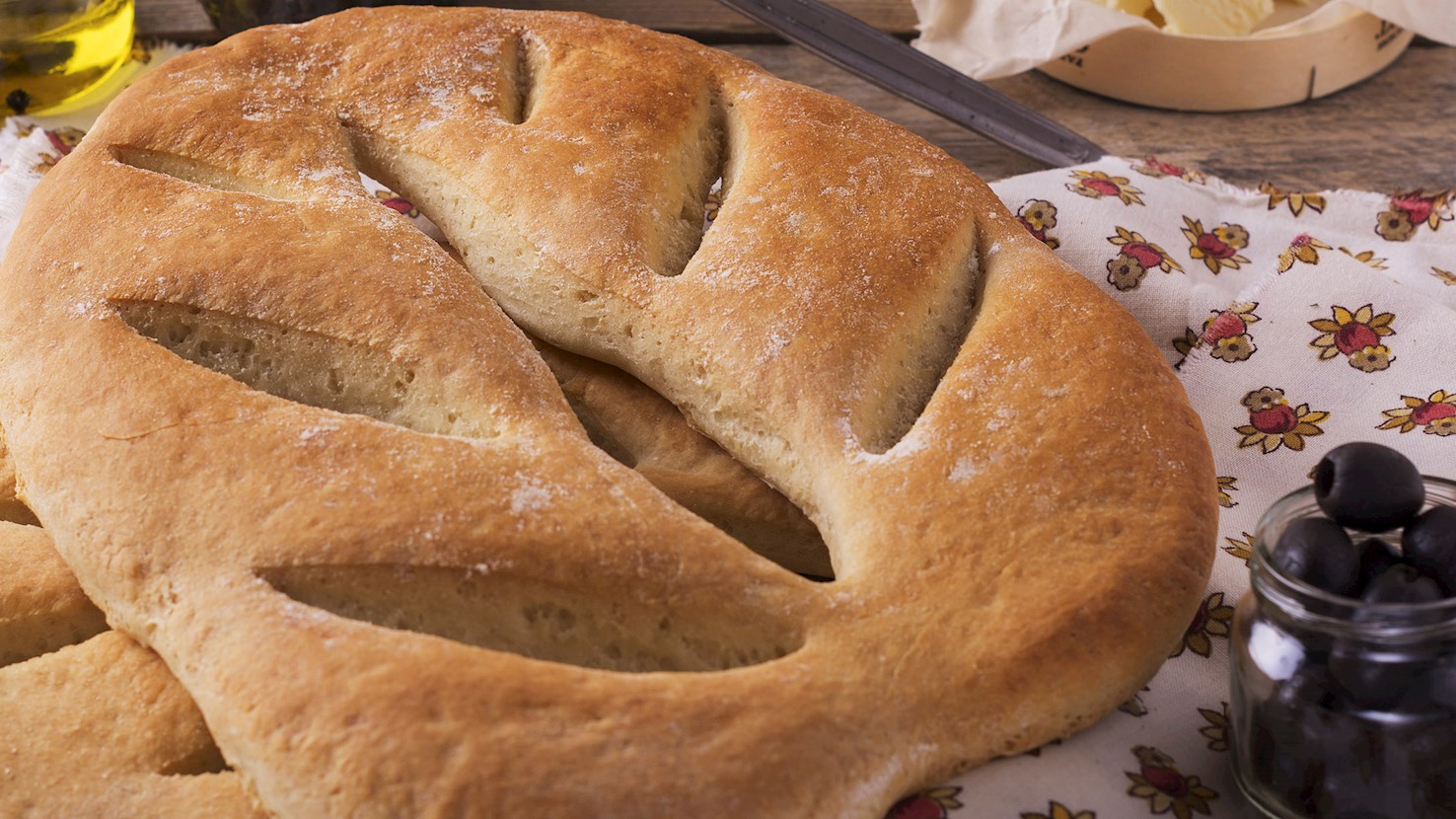
Fougasse is a flatbread that is typically sweetened with sugar and orange-flavored water. It can commonly be found in Provence and throughout southern France, and it is easily recognizable by its shape. Fougasse is usually shaped like a wheat grain, with cuts that form a veiny, leafy outline. Originally, this bread has been baked since Roman times, and it was mainly used to test the temperature of the oven. Today, there are several variations of the bread, while olives, cheese, and figs are often incorporated into the dough. It provides a perfect accompaniment to a number of dishes, but it can also be used to make a variety of sandwiches.
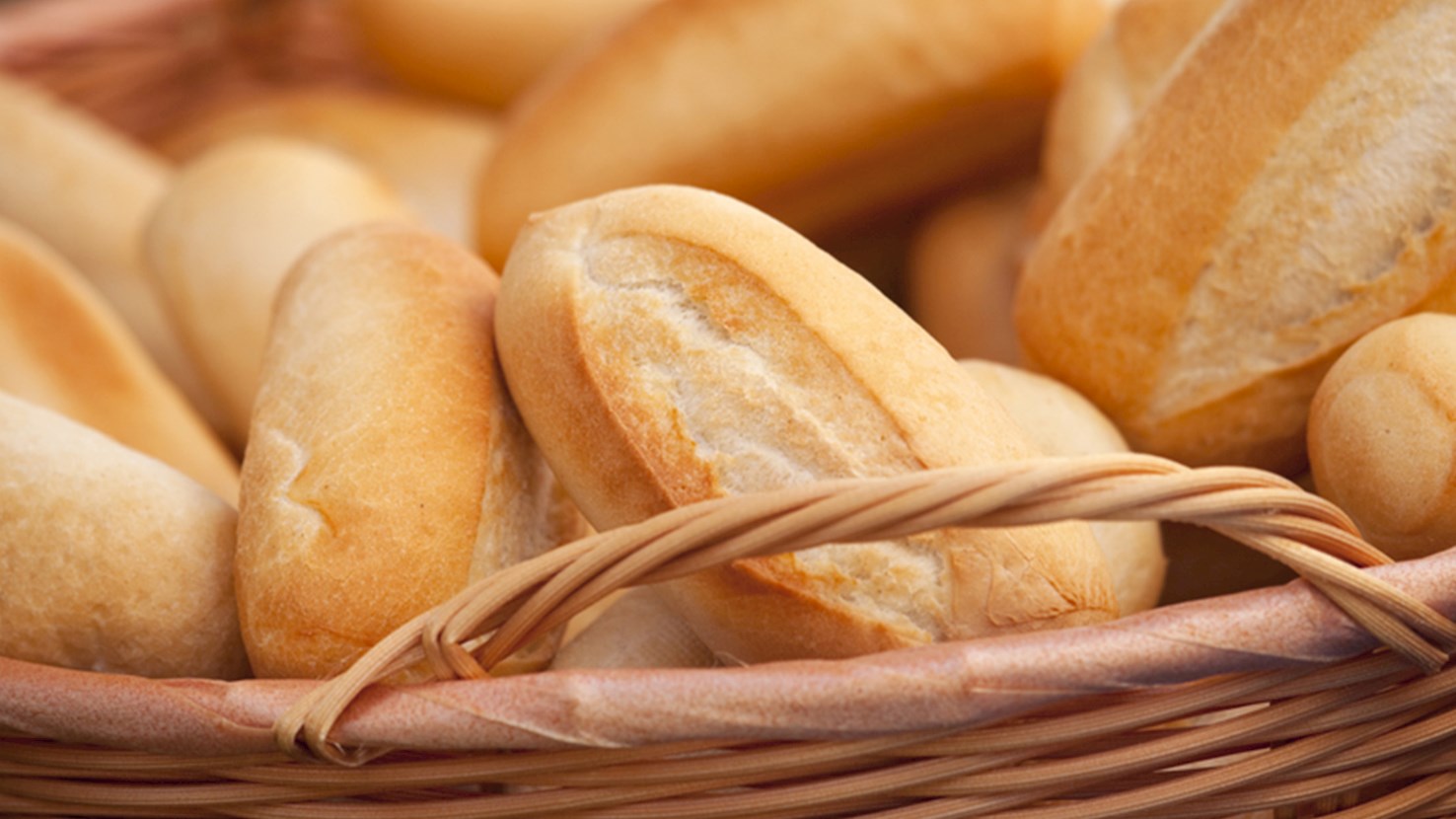
French roll is a type of bread roll that is typically long and slender in shape, resembling a smaller version of a baguette. Usually, it has a crisp crust and a soft, chewy interior. French rolls are commonly associated with French cuisine and are a popular bread option for sandwiches and burgers. They can be sliced horizontally and filled with various ingredients such as cold cuts, cheese, vegetables, and spreads to make a flavorful sandwich. The preparation of French rolls involves using a dough made with flour, water, yeast, salt, and sometimes additional ingredients like olive oil or sugar. The dough is shaped into long, thin rolls and allowed to rise before being baked until golden brown. The crust of a French roll is typically crisp and can have a slightly chewy texture, while the inside is airy and soft. French rolls are versatile and can be found in different variations and sizes depending on regional preferences and personal taste. They are enjoyed in many countries around the world, not just in France, and are a popular choice for creating delicious sandwiches and sliders.
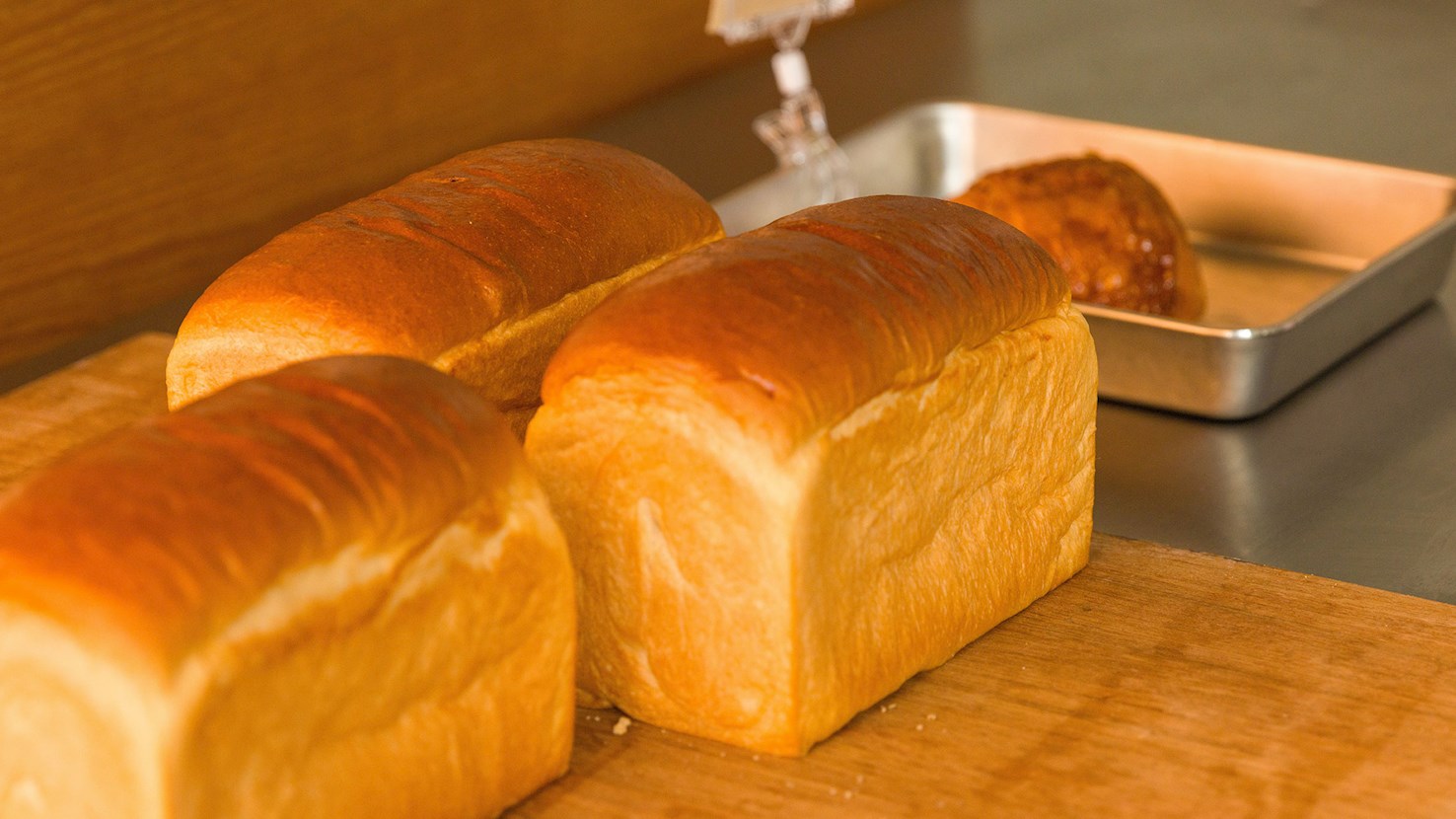
An approximate translation of the name of this popular French bread is “crustless bread”, referring to its thin layer of crust and thick white interior. The bread is made with wheat flour, water, salt, milk, sugar, and yeast. Although it is usually made industrially and sold sliced and packaged in supermarkets, it can also be made easily at home. Pain de mie is typically baked in square or rectangular covered pans, which ensure its characteristic shape. The cover prevents the bread from rising fully, resulting in a fine, compact crumb. The French use it most often for toasting, while its thickness and shape make it ideal for the preparation of the classic French sandwich croque-monsieur. A more recent, industrial version of the bread is called pain de mie 100%, which is a sliced loaf of pain de mie with the crust removed entirely. Pain de mie stays fresh for a long time due to the shortening used in the preparation process, which other French breads typically lack.
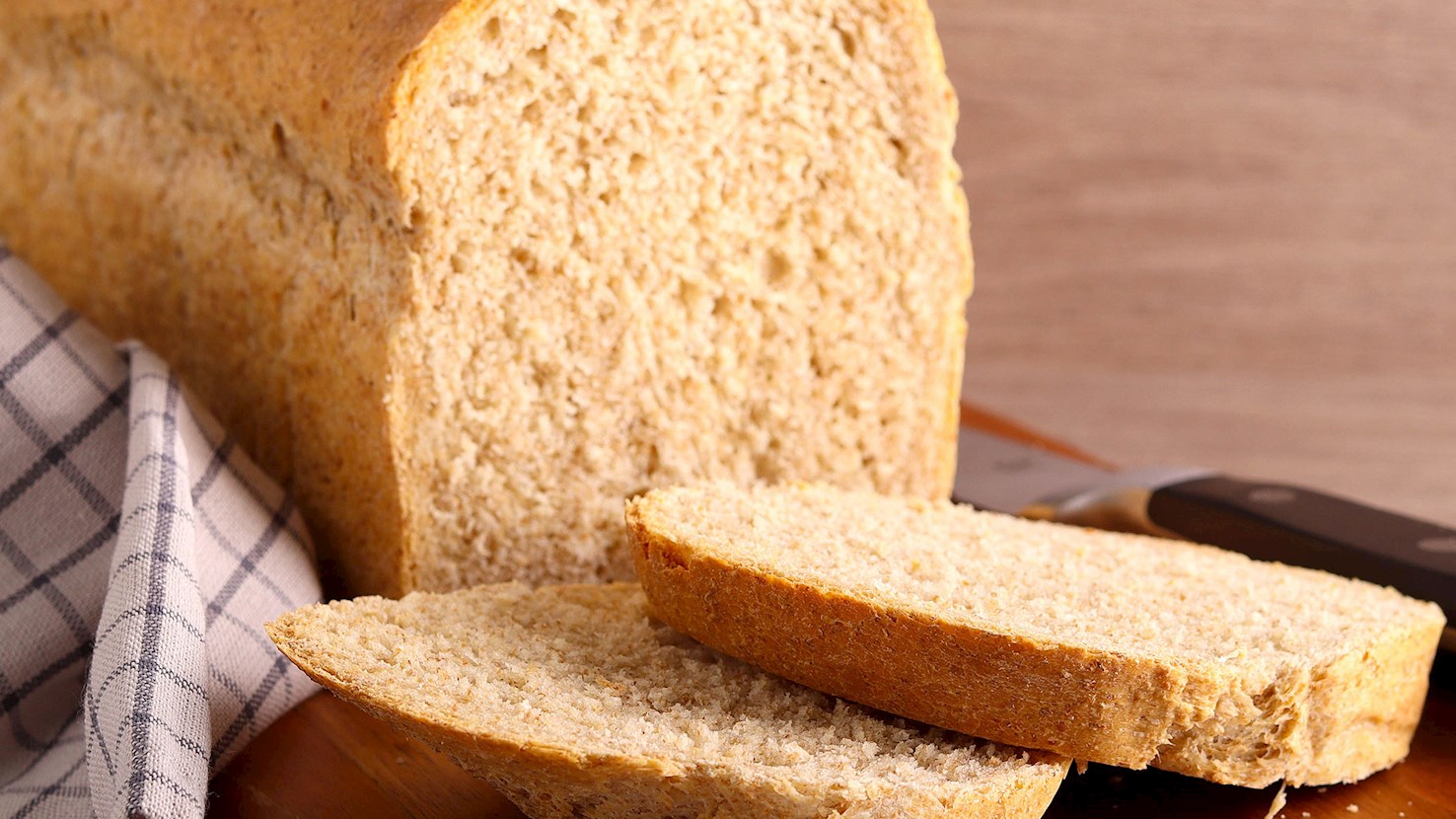
Pain au son is a traditional bran bread. To be called so, at least 25% bran needs to be used in the bread. The ingredients include yeast, oat bran, flour, salt, honey, and lukewarm water. When the dough has doubled, it's flattened into an oval, placed into a loaf pan, then baked until golden brown. Before the baking, the top can be sprinkled with oat bran. The bread stores well and it can last for up to 10 days.
Pain au lard is a savory, dense loaf enriched with cured pork belly, originating in the Lorraine region. Rural farming communities in the Vosges Mountains routinely slaughtered pigs before winter, necessitating practical methods to preserve every piece of the pig and ensure efficient consumption. Baking chopped, smoked pork fat directly into standard wheat dough provided agricultural workers with a highly portable, calorie-dense ration that sustained them through physically demanding labor in cold weather without requiring separate meat preservation or additional cooking steps in the field. The first step is to make a dough with high-protein bread flour, water, active yeast, and a conservative amount of salt. Concurrently, thick cubes of cured and lightly smoked pork belly, locally known as lardons, are briefly pan-fried to render a portion of their surface fat, then cooled to room temperature. Mixing these cooked meat pieces along with their liquid drippings directly into the final stage of the dough kneading process fundamentally alters the crumb structure. Rendered animal fat heavily coats the gluten strands, yielding a significantly softer, tighter interior crumb while extending the shelf life of the loaf by trapping internal moisture. Once proofed, the heavy mass is shaped into rustic oval boules and baked on a hot stone hearth until the exterior achieves a thick, deeply browned crust and the exposed pork pieces turn crisp. Cheese, lard, onions, and herbs can also be used to enrich pain au lard. Thick slices of this bread are eaten as a standalone mid-morning snack or as a robust accompaniment to evening meals. Serving pain au lard alongside a bowl of clear vegetable broth or a light green salad creates a balanced meal, effectively contrasting the rich, salty fat of the meat.
Mauricette is an elongated, savory bread roll made entirely from lye-treated pretzel dough, native to the Alsace region. Paul Poulaillon, a professional baker in Mulhouse, developed this baked good in 1973 to address a highly practical structural issue. Finding the standard knotted loop of a pretzel highly inefficient for holding sandwich fillings, Poulaillon reimagined the dough as a solid, cylindrical mini-baguette and named the new commercial product after a female acquaintance. Producing this bread roll requires mixing a firm base of high-gluten wheat flour, water, yeast, salt, and occasionally a small quantity of butter or lard. Once the mass undergoes primary fermentation, it is divided and rolled into short batons. Before entering the oven, the raw dough rolls are briefly submerged in an alkaline bath containing diluted sodium hydroxide. This basic coating radically alters the dough's surface pH, forcing a rapid, intense Maillard reaction during the high-heat bake that results in a glossy, dark mahogany crust while leaving the interior crumb completely white and pillowy. The tops are lightly scored and heavily garnished with coarse rock salt just before baking, and the finished rolls must cool thoroughly to allow the caustic exterior to neutralize into harmless, edible compounds. Bakeries and street kiosks throughout Strasbourg, Mulhouse, and the wider Rhine basin sell these items daily as portable midday meals. Consumers slice open the chewy rolls horizontally to build thick sandwiches, applying generous layers of unsalted butter, sharp Gruyère cheese, thinly sliced Black Forest ham, or locally cured salami.
Sübrot is a small, distinctly shaped bread roll that’s split and hollowed down the middle. The name of the bread translates to penny roll, and the term was a literal price tag dating back to the nineteenth century. Local bakeries standardized the volume and weight of this specific item so a single unit could be purchased for exactly one sou, the common low-denomination French coin circulating heavily during that era. As regional currency values shifted and the sou eventually fell out of circulation, the monetary association persisted solely in the permanent name of the bread. Creating the roll involves mixing a straightforward lean dough composed of high-protein white wheat flour, water, fresh baker's yeast, and salt. Following the first fermentation, bakers employ a highly specific structural technique that defines the roll's visual character. Rather than forming a standard single-round boule, the baker portions the dough into two equal, diamond- or oval-shaped pieces and presses them firmly together along their longest edge just prior to baking. This dual-piece assembly produces a prominent central seam and a distinct, double-lobed final structure, increasing the surface area exposed to oven heat and yielding a crisp exterior shell surrounding a soft, airy crumb. After baking to a light golden brown, the rolls are placed on wire racks to cool and are invariably served fresh on the same day they are made. Daily consumption of this staple occurs heavily throughout Strasbourg, Colmar, and the surrounding Alsatian villages. Locals typically break the roll apart by hand along the natural central fissure or slice it horizontally to accommodate various fillings for breakfast and mid-afternoon snacks. The mild wheat profile functions optimally as a neutral base for sweet applications such as cultured butter and local fruit preserves, as well as for savory regional provisions, including pungent Munster cheese and sliced smoked pork sausages.
Pain tourné is an elongated, twisted wheat and rye sourdough bread native to the Limousin area within the Nouvelle-Aquitaine region of central-western France. Rural bakers in the Haute-Vienne and Corrèze departments developed this specific shaping technique during the 19th century to solve a practical baking challenge. Wood-fired communal ovens of the era often had uneven temperature distribution, leading to inconsistent baking of standard round boules. By elongating the dough and applying a severe torsion before baking, local agricultural communities maximized the exposed surface area, ensuring a thorough, rapid bake even in the cooler zones of the masonry hearths. Producing this loaf requires mixing coarsely milled local wheat flour, a minor portion of dark rye flour, water, salt, and an active levain. The mixture undergoes a slow, ambient fermentation process to establish a mild lactic acidity. Once proofed, the mass is divided into thick, cylindrical batons. Holding both ends of the cylinder, a baker applies a forceful, opposing twist to the dough, creating deep, spiraling structural fissures along the entire length of the loaf. This deliberate torsion stretches the gluten network tightly across the exterior, which, under the high heat of the oven, bursts and forms highly pronounced, jagged ridges. These elevated ridges bake into a dark, heavily caramelized crust with an exceptionally sharp, crunchy texture, contrasting directly with the dense, chewy interior crumb. After cooling on open wooden racks, the loaf is presented whole and cut at ambient temperature. The high crust-to-structure ratio makes the interior highly effective at soaking up the thin, savory broths of local meat and root-vegetable stews. Slices frequently accompany regional charcuterie, acting as a sturdy textural contrast to smooth, fatty spreads like rillettes or rich terrines made from Limousin pork.
The couronne Bordelaise is a ring-shaped sourdough loaf made from a blend of white wheat and a small amount of milled rye flours, originating in Bordeaux. Baking practices in the Gironde estuary area during early rural expansion led to the engineering of this specific circular structure, primarily designed so families and merchants could thread the baked rings onto long wooden dowels suspended from ceiling rafters, effectively protecting their food supply from ground-level rodents and damp floors. Creating the dough requires combining a mature levain culture with water, salt, a dominant portion of refined wheat flour, and a minor amount of rye to introduce a darker hue and deeper acidity. The distinct physical form is achieved through a highly specific assembly method rather than simple molding. Six to eight equally sized dough spheres are arranged closely together in a circle on a proofing surface, while a separate, thin disc of dough is placed flat in the center of the ring. A sharp blade is used to slice this central disc outward into a star pattern, creating triangular flaps that are subsequently folded up and backward over the adjacent dough spheres to lock the ring together. High-heat baking on a stone hearth causes these stretched flaps to pull back and lift slightly, forming a rigid, elevated crest that drastically increases the overall crust-to-crumb ratio. Once the loaf leaves the oven with a deeply caramelized exterior and cools completely on wire racks, it is ready for consumption. People residing in Bordeaux and the broader Gironde department regularly acquire this bread for communal dining. Instead of slicing the loaf with a knife, individuals typically tear the ring apart by hand along the natural seams dividing the individual spheres. The highly textured, crunchy crust and mildly sour, airy interior serve as an optimal vehicle for rich local dishes such as Entrecôte à la Bordelaise cooked over grapevine coals. The bread frequently serves as a base for salted butter, accompanying fresh Arcachon basin oysters, while standard beverage accompaniments lean heavily on the robust, tannin-rich red wines produced by the surrounding Left Bank châteaux, using Cabernet Sauvignon blends to balance the sour notes of the fermented dough.
A rustic, heavy corn bread known as méture hails directly from the Béarn and Landes territories of the Aquitaine region. Maize cultivation surged throughout the Adour river basin in the 1600s, driven by a highly accommodating humid climate that allowed the crop to thrive. Wheat functioned primarily as a high-value commodity reserved strictly for aristocratic landowners and profitable export markets, leaving agrarian households to depend almost exclusively on their own corn harvests for daily sustenance. Creating this specific baked staple involves mixing coarse yellow maize flour with boiling water, salt, and either a vigorous sourdough starter or leftover fermented dough. Bakers sometimes blend in a fraction of wheat or rye flour to lend the heavy mixture a slight structural bind. Forming the resulting dense mass yields a thick, rounded loaf. Enveloping the entire raw dough completely in broad, freshly harvested green cabbage leaves serves a highly specific mechanical function. Burying this wrapped parcel directly beneath the hot ashes of an open hearth fire protects the crust from burning while trapping necessary steam to hydrate the coarse corn crumb during a slow, prolonged bake. Peeling away the charred, blackened outer leaves after cooling reveals a firm, golden-yellow interior carrying a distinct vegetal scent transferred from the wrapper. Slicing the heavy loaf into thick, substantial wedges allows people across rural Gascony to consume it by hand alongside their standard meals. The robust, slightly sweet corn flavor and heavy density make this bread an optimal companion for garbure, the regional soup built on cabbage, white beans, and preserved pork. The bread also serves as an accompaniment for duck confit or strong sheep's milk cheeses. Tannic, bold red wines from local appellations like Tursan or Madiran provide a standard beverage pairing that can cut through the rich animal fats typical of the area's diet.
Pain à l’anis is a regional anise-flavored bread, shaped into small loaves or rolls, from the Haute-Garonne area that is typically made with a simple wheat flour dough seasoned with anise seeds. It has a slightly fragrant liquorice-like flavor from the anise seeds, a soft, somewhat airy crumb with a thin crust, and a mild taste that highlights the spice, made from basic bread ingredients such as flour, water or milk, yeast, salt and the aromatic seeds of anise. The presence of pain à l’anis in Haute-Garonne’s list of local specialities shows that bakers in this part of Occitanie have long worked with anise in breadmaking, with villagers recalling its appearance on tables and in ovens in and around Toulouse and the surrounding countryside. Bakers in the region typically mix flour with yeast, water or milk, salt and generous anise seeds, knead until the dough is smooth, allow it to rise at least once before forming small rounds or elongated rolls, rest them briefly for a final proof and then bake until pale golden and aromatic; slight variations add a bit of sugar or olive oil to adjust sweetness and texture, while some home bakers allow a long cool fermentation overnight for a deeper flavor. Variations across southwestern France include slightly sweeter versions for breakfasts or snacks with added sugar, and some local bakers shape their dough into longer batards rather than small rolls to change the eating experience; in nearby regions other breads with anise may appear in different festive forms. Pain à l’anis is most often eaten at breakfast or as an afternoon snack with coffee or tea, and in Haute-Garonne it is enjoyed with fruity jams, mild cheeses or simply on its own to appreciate the delicate anise scent baked into the crumb.
Gochtial is a round brioche-style bread from the Presqu’île de Rhuys in Bretagne. It has a dense but soft crumb and is made from a dough of wheat flour, fermented dough, fresh milk, butter, sugar, eggs, baker’s yeast, and salt. Its origins date back to the 19th century when bakers and households in Saint-Armel and nearby villages prepared this brioche for local gatherings and especially for the feast of Saint Vincent on January 22, when inhabitants brought their dough to the communal oven and marked their loaves for identification in the bake. To make gochtial, a dough is prepared by combining fermented wheat dough with additional flour, fresh milk, softened butter, eggs, sugar, yeast, and salt, kneading until smooth, and then allowing a long rise; once the dough has developed, it is shaped into a round loaf with a slightly bulbous form and baked until the exterior is lightly colored and the interior shows a tight, supple crumb. Variations of gochtial are limited because many bakers treat the proportions and precise process as family secrets, but differences appear in slight adjustments to sugar levels, milk content, or the firmness of the crumb, while the essential character remains that of a plain, ferment-based brioche rather than one enriched with strong sweet or savory additions. Gochtial is eaten sliced at breakfast or with afternoon refreshment, served with spreads such as salted butter, jam, or honey, and it also pairs with mild cheeses from the region, black coffee, or light tea.
Hailing from the Savoyard Alpine region, bescoin is a unique viennoiserie that falls somewhere between a bread and a savory pastry. Developed in an era when saffron and aromatic seeds were treasured additions to festive foods, this brioche-like loaf became a staple for community celebrations in mid-August and January. The soul of the bescoin lies in its enriched dough. A rich blend of flour, eggs, milk, butter, and sugar is infused with saffron for a golden glow and anise seeds for a subtle, lingering scent. While the standard shape is an elongated loaf, variations exist, including rings or intricate designs, and some bakers add a hint of honey to boost the fermentation and crust color. To make it, yeast is activated in milk before joining the dry ingredients and fats. The dough is kneaded until elastic, risen until doubled, shaped, and given a second rise. A final brush of egg wash ensures a glossy finish before it is baked to a moderate golden brown. The result is a soft, slightly dense loaf perfect for slicing. It is traditionally eaten at breakfast or as an afternoon snack with coffee, tea, jam, or mild cheeses that highlight its aromatic spice profile.
Pain à soupe is a substantial, rustic bread hailing from the Manche department. Typically baked in large round or oval shapes, it features a rugged, thick crust and a densely packed, dry interior. Made simply from wheat flour, water, yeast, and salt, it has a mild, low-acid flavor profile. Its primary defining trait is its structural resilience, engineered specifically to soak up large amounts of liquid without turning to mush. This loaf has its roots in the resourcefulness of rural farming and coastal communities. Historically, bread needed to endure for several days, and as it staled, it had to remain useful to prevent food waste. It became intrinsically tied to the daily dietary staple of soup, providing a hearty, caloric base that transformed simple broths into sustaining meals for laborers. The baking process starts with a low-hydration (stiff) dough that is kneaded until highly elastic and firm. After a slow fermentation, the dough is formed into large loaves and baked extensively. This thorough baking develops a hard outer shell that protects the crumb, ensuring that as the bread ages, it dries out completely rather than spoiling or developing mold. Differences among these loaves are generally minimal, mostly restricted to the overall size of the bread and the coarseness of the flour used—coarser grinds are sometimes preferred to increase liquid absorption. Regardless of these minor tweaks, the essential characteristic is always the bread's ability to hold its shape and cohesion when submerged in hot liquid. As its name suggests, pain à soupe is designed to be eaten presoaked. Thick slices of the aged, dry bread are placed at the bottom of a bowl, and piping hot vegetable, meat, or fish soup is ladled directly over them. The bread softens to a palatable texture while maintaining its form. It is often enriched with a bit of butter or grated cheese and is traditionally enjoyed as a complete, satisfying meal, typically washed down with unpretentious beverages like water or local rustic cider.
Pain de Dieppe is a yeast-based loaf originating from the French port city of Dieppe. It bridges the gap between a standard daily loaf and a rich pastry. The bread features a pale, delicate crust and a finely textured, uniform crumb. Crafted from a blend of wheat flour, milk, butter, eggs, sugar, and yeast, it offers a subtly sweet, buttery flavor. The bread's development is deeply tied to Dieppe's bustling maritime environment. Catering to both local city dwellers and the seafaring trade, urban bakers utilized their ready access to refined flour and high-quality dairy. This commercial influence resulted in a refined, softer loaf that stood in stark contrast to the heavy, dense, and utilitarian breads typical of the surrounding rural farming communities. To create this bread, bakers first combine flour, milk, yeast, eggs, and sugar into a flexible dough, subsequently working in the butter. The mixture undergoes meticulous kneading to build elasticity, followed by a carefully monitored fermentation process. This controlled rising ensures the internal structure remains tight and even. The dough is then formed into various shapes and baked just until it develops a light golden hue, intentionally avoiding the formation of a thick or hard crust so it remains highly sliceable. Differences among batches are generally minor, mostly pertaining to the bread's physical form—ranging from individual small rolls to full-sized loaves. While bakers might slightly tweak the ratios of butter or sugar to adjust the richness, the core identity of Pain de Dieppe always rests on its signature pillowy softness and a sweetness that is purposefully subdued compared to heavily enriched goods like brioche. Enjoyed predominantly while fresh, this bread is a staple for breakfast or daytime snacks. It is highly versatile, whether eaten plain, smeared with butter, honey, or fruit preserves, or used as a soft foundation for mild cheeses and simple sandwiches. It pairs beautifully with morning coffee, tea, or a crisp, light cider that highlights the loaf's gentle dairy notes.
Pain brié is a heavy, traditional wheat loaf originating from Normandy that has an exceptionally tight, compact interior and a robust, hard crust. Crafted from a simple mixture of wheat flour, water, salt, and yeast, it offers a chewy, somewhat dry mouthfeel and a mild, low-acid flavor profile that firmly distinguishes it from lighter, airier baked goods. The bread's origins are rooted in the practical needs of Normandy's coastal and agricultural communities, where long-lasting provisions were crucial for sailors and farmers. Its name is derived from the old Norman verb brer, which means to pound or crush. This refers to the intense mechanical labor historically required to process the low-hydration dough, creating a durable loaf perfectly suited for extended sea voyages or long stretches of farm work. The baking process centers around an unusually stiff dough. This mixture is subjected to prolonged, vigorous kneading or beating to expel air pockets and densely pack the gluten network. Because of this forceful working, the dough undergoes very little fermentation. It is then formed into large loaves and baked until a thick, protective crust develops. This unique method yields a highly uniform interior that strongly resists staling, molding, and crumbling. While the essential technique of forcefully pounding the dough is non-negotiable, bakers may alter the bread's external appearance. Loaves can range from large, spherical boules to longer, oval shapes. The thickness and darkness of the crust may also vary slightly depending on the specific temperature and conditions of the oven used. Pain brié is typically cut into thick, sturdy slices. Its firm texture and neutral taste make it an excellent, structural canvas for rich or salty toppings. It is frequently enjoyed with salted butter, fresh cheeses, smoked fish, and seafood rillettes. To drink, it is traditionally paired with regional hard cider, crisp dry white wines, or hearty broths, where the bread provides substance without overpowering the meal.
Pichade is a savory tart originating from Menton, made with a bread dough base and tomato-onion sauce, black olives, and anchovy fillets as a topping. It evolved in Menton’s local bakeries, where abundant summer tomatoes and anchovies informed this regional variant of flatbread, and over time, it became a marker of the area’s culinary identity. Making a dough is the first step. Flour is combined with water, olive oil, yeast, and a pinch of salt, kneaded until smooth, and left to rise until doubled. Meanwhile, the sauce is prepared by sautéing finely sliced onions and garlic in olive oil, then adding ripe, peeled, and chopped tomatoes, seasoning with salt, pepper, thyme, laurel, and sometimes oregano, then cooking gently until the mixture thickens. Once the dough has risen, it is rolled into a rectangle on a well-oiled baking sheet, and then the tomato-onion sauce is spread evenly over it. Anchovy fillets are arranged across the surface, and black olives are scattered before baking in a hot oven until the crust is golden and crisp. There also exists pichade au maqué, in which, instead of tomato sauce, a paste of crushed anchovies, garlic, and parsley is spread on the dough, and fresh tomato slices are laid on top. However, some versions omit anchovies entirely and substitute smoked bacon or other cured meats for a milder taste. Pichade is best served warm or at room temperature, typically cut into squares for communal sharing or as part of an antipasti spread, and pairs well with a crisp, dry white wine or a chilled rosé from Provence, whose freshness balances the richness of olive oil and the saltiness of anchovies.
Pain paillasse de Lodève is an elongated rustic wheat loaf from the town of Lodève, constructed simply from water, salt, wheat flour, and a natural sourdough starter, with a light and open internal structure. Historical records trace this specific baked good to the local markets and fairs held during the French Wars of Religion, when the city's patron, Saint Fulcran, championed the staple, which was distinctly fermented in large straw baskets known as paillasses. Combining the base ingredients requires only a brief, light kneading phase before the entire dough mass is left to undergo a single, extended fermentation period directly in those signature woven containers. Once the bulk resting phase concludes, the highly hydrated dough is completely spared conventional molding or individual shaping; instead, it is simply sliced into elongated portions and immediately transferred to a high-temperature oven. Baking at high heat transforms the raw dough into finished loaves characterized by a deeply crisp outer crust and a deeply aerated interior crumb. Adjustments to the baseline formula frequently include introducing commercial yeast alongside the natural starter, swapping a portion of the white wheat for whole-grain or rye flours, or increasing the water content even further to achieve larger interior air pockets. Portions are typically consumed either freshly baked or lightly toasted, often accompanied by a heavy drizzle of olive oil and a generous rub of raw garlic.
Pain du Luberon is a rustic wheat loaf crafted in Provence, specifically utilizing the ancient heirloom grain known as blé Meunier d'Apt. Farming communities in the surrounding villages historically cultivated this specific crop to produce a highly characterful flour, ultimately designing the loaf to highlight the distinctive agricultural heritage of the area. Bakers make dough by combining milled Apt wheat—or a similarly robust substitute—with water, salt, and either commercial yeast or a natural sourdough starter. After kneading the mixture into a smooth mass, the dough rests until it doubles in size. Once fully risen, the baker forms the mass into an oval or round shape, scores the surface, and transfers it into a high-temperature oven. Injecting a sudden burst of steam during the bake ensures the exterior develops a golden, crusty finish while the interior remains moist and aerated. A defining characteristic of this regional bake is its reliance on local Apt wheat, which naturally imparts a subtle, nutty undertone and extends the crumb's shelf life far beyond a single day. The bread is used to scoop up savory Provençal stews like daube or is spread heavily with olive tapenade before a meal.
Pain de la Sainte-Agathe is a small hemispherical bread from Provence, made with just flour and water and historically baked in honor of Saint Agatha on February 5th. It arose from local customs in which households baked these small loaves in the days before the feast of Saint Agatha and brought them to church to be blessed, a ritual aimed at protection against fire and lightning. The dough consists of flour (wheat flour) and water, mixed and kneaded, shaped into a small round roll with a bump on top, then allowed to rest before baking in a hot oven until the crust lightly browns. Some bakers include minor variations: a slight addition of yeast for a faster rise or a small pinch of salt, though the core ingredients remain unchanged. The distinctive feature of this bread is its religious and communal origin: it is made and blessed specifically for Saint Agatha’s feast and sold after the mass in some Provençal villages. It is best eaten fresh, often on the day of the feast or shortly thereafter, and pairs well with simple Provençal fare—such as a glass of rosé wine or a light goat cheese.
Pain crestou is a bread from the Aubrac plateau, made with wheat flour, water, baker's yeast, salt, milk, eggs, and sesame seeds. Rural bakers in this mountainous region initially developed the recipe to accommodate local agricultural workers who needed a substantial loaf that could be mixed, proofed, and baked within a single workday. Over subsequent decades, the formula adapted to include its current defining mixture of dairy, eggs, and seeds to increase caloric density. Constructing the loaf requires blending milled wheat with warm water, yeast, salt, a splash of milk, and a whole egg, then folding in a generous amount of sesame seeds or mixed cereal grains to build internal texture. Once the dough completes its primary fermentation, the baker forms the mass into a wide, flattened shape—usually an oval or rectangle—and leaves it to rest until it doubles in volume. The surface is then heavily dusted with flour and scored with a blade right before entering a very heated oven. After a brief initial blast of intense heat, the temperature is dropped to medium-high guaranteing a robust outer crust while preserving a tender, hydrated interior crumb. Specific seed ratios can be adjusted by adding poppy or flax alongside sesame, and hydration levels are routinely changed to yield either a wide-open crumb or a tighter structure better suited for clean slicing. Integrating intact cereal grains directly into a dough enriched with milk and eggs allows the final product to maintain both a rapid production schedule and an extended shelf life without staling quickly. Slices of the bread are eaten fresh from the oven or heavily toasted alongside substantial farmhouse meals. To complement the nutty profile of the seeds and the richness of the crumb, the bread is typically served with aged farmstead cheeses from the Rouergue district and a glass of rustic, full-bodied red wine.
Pain de Beaucaire is a long rectangular bread from France, specifically from the town of Beaucaire on the Rhône. First created in the 15th century, when the town was home to one of Europe’s largest fairs, pain de Beaucaire was a bread locals provided that could be produced within a working day and would keep without hardening—a prized quality for trade. The dough is made of wheat flour, water, salt, and sourdough starter, and sometimes a small amount of baker’s yeast; it is kneaded thoroughly, allowed to ferment, then shaped into a split‐centre loaf so that the crust opens along a longitudinal fissure. After proofing, the loaf is baked at high heat with steam, which contributes to the fine crust and open crumb structure. There can be differences in flour types, adjustments to hydration and fermenting time, and the use of bran or whole-grain flour in some versions. Some bakers emphasise older wheat varieties for a more aromatic result, while others use modern flour blends for speed. The hallmark of pain de Beaucaire is its split shape, airy crumb, and extended conservation without staling. It is best eaten warm or toasted alongside hearty stews or Provençal daubes.
Pompe aux grattons is a savory brioche from France made with pork cracklings incorporated into a yeast-raised dough. It emerged in the centre of the country, especially within the Allier and Auvergne regions, where rural households and village bakers developed enriched breads using pork fat and cracklings to enhance simple flour-based doughs. The dough is made by mixing flour, butter or pork fat, eggs, and water with baker’s yeast and salt, kneading it into a smooth, elastic mass, then folding in pieces of grattons (cracklings); after a rest period the dough is shaped into a round loaf or crown, brushed with egg for gloss, and baked until the surface is golden and the interior soft and light. Variations include replacing some of the butter with pork fat entirely, adding extra cracklings for stronger flavor, or shaping the loaf into smaller portions for apéritif service; one distinctive feature is the use of grattons as a primary fat source in the dough rather than butter alone, which gives the brioche a rich savoury scent and slightly crisp texture. It is typically served warm or at room temperature, often at apéritifs, family gatherings or village events, and pairs naturally with a green salad or pickles, and with light red wines or crisp whites from the centre of France, as well as with coffee or a local liqueur when enjoyed after a meal.
Cade is a flatbread-like dish from Toulon, a port city in southern France on the Mediterranean coast. It is made from chickpea flour, water, olive oil, and salt, baked in large pans until crisp on the outside and soft inside. Its flavor is simple yet hearty, shaped by the use of chickpeas that were long a staple in Mediterranean cooking. The origins of cade are tied to the wider culinary practices of the Ligurian and Provençal regions, where similar chickpea-based preparations such as farinata and socca were already common. Toulon, with its close maritime connections to Italy and Liguria in particular, adopted and adapted the dish into its own version. Over time, cade became closely associated with Toulon’s street food culture, especially in working-class neighborhoods and at local markets, where vendors sold it hot in slices. The preparation of cade begins by mixing chickpea flour with water, olive oil, and salt into a smooth batter. This batter is poured into wide, shallow copper or metal pans and baked in wood-fired ovens. The high heat creates a characteristic texture: a golden, slightly blistered crust with a tender, custard-like center. Once baked, it is cut into generous wedges or squares and sprinkled with black pepper before serving. The simplicity of the ingredients highlights the quality of the flour and the olive oil, and the method of baking gives cade its distinctive appeal. Today it is eaten primarily in Toulon and the surrounding Var region, often purchased from street vendors who still prepare it in large pans and sell pieces wrapped in paper. It is enjoyed warm, either as a snack while walking through the city or as a light meal at home.
Pain de méteil is a traditional bread made with similar quantities of rye and wheat flour. The term "méteil" historically refers to a blend of these two grains. This bread is known for its dense texture, dark color, and slightly tangy flavor, which comes from the rye flour. It is often enjoyed for its hearty and robust qualities, making it a staple in rural French cuisine. Pain de méteil is typically leavened with natural sourdough, which enhances its flavor and shelf life.
TasteAtlas food rankings are based on the ratings of the TasteAtlas audience, with a series of mechanisms that recognize real users and that ignore bot,
nationalist or local patriotic ratings, and give additional value to the ratings of users that the system recognizes as knowledgeable.
For the “Top 32 French Breads and Flatbreads” list until July 16, 2026, 2,504 ratings were recorded, of which 2,232 were recognized by the system as legitimate.
TasteAtlas Rankings should not be seen as the final global conclusion about food. Their purpose is to promote excellent local foods,
instill pride in traditional dishes, and arouse curiosity about dishes you haven’t tried.