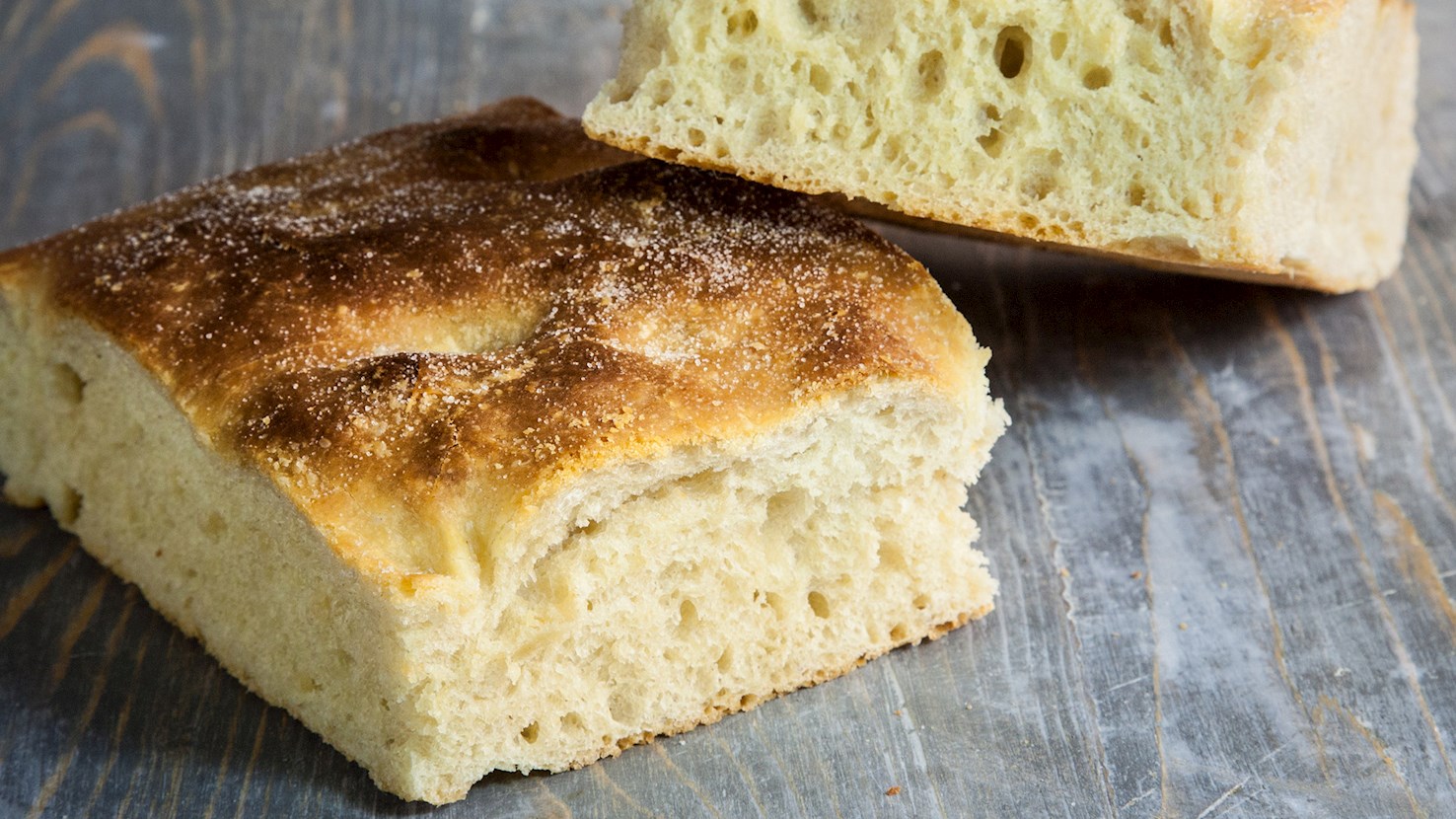
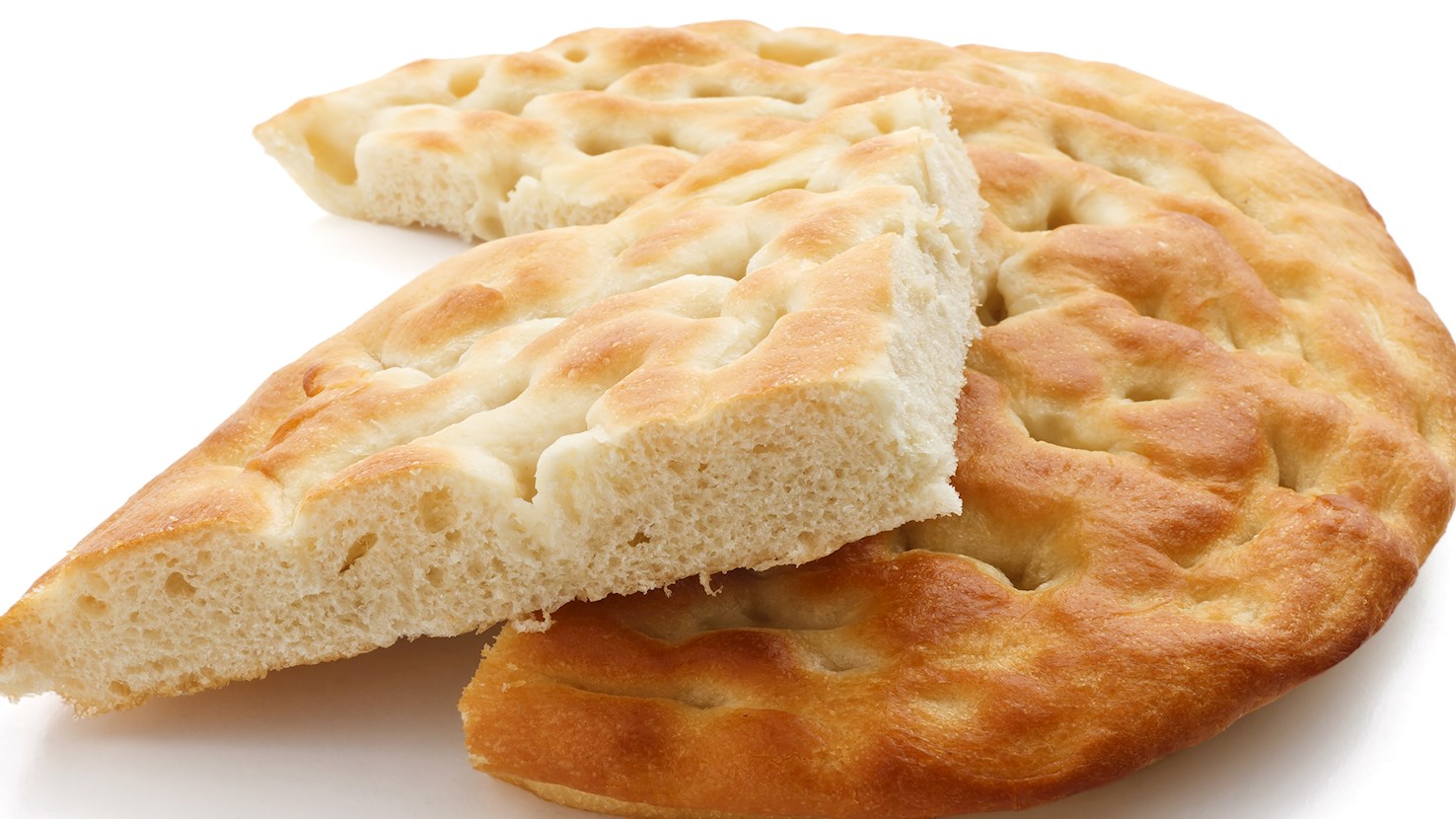
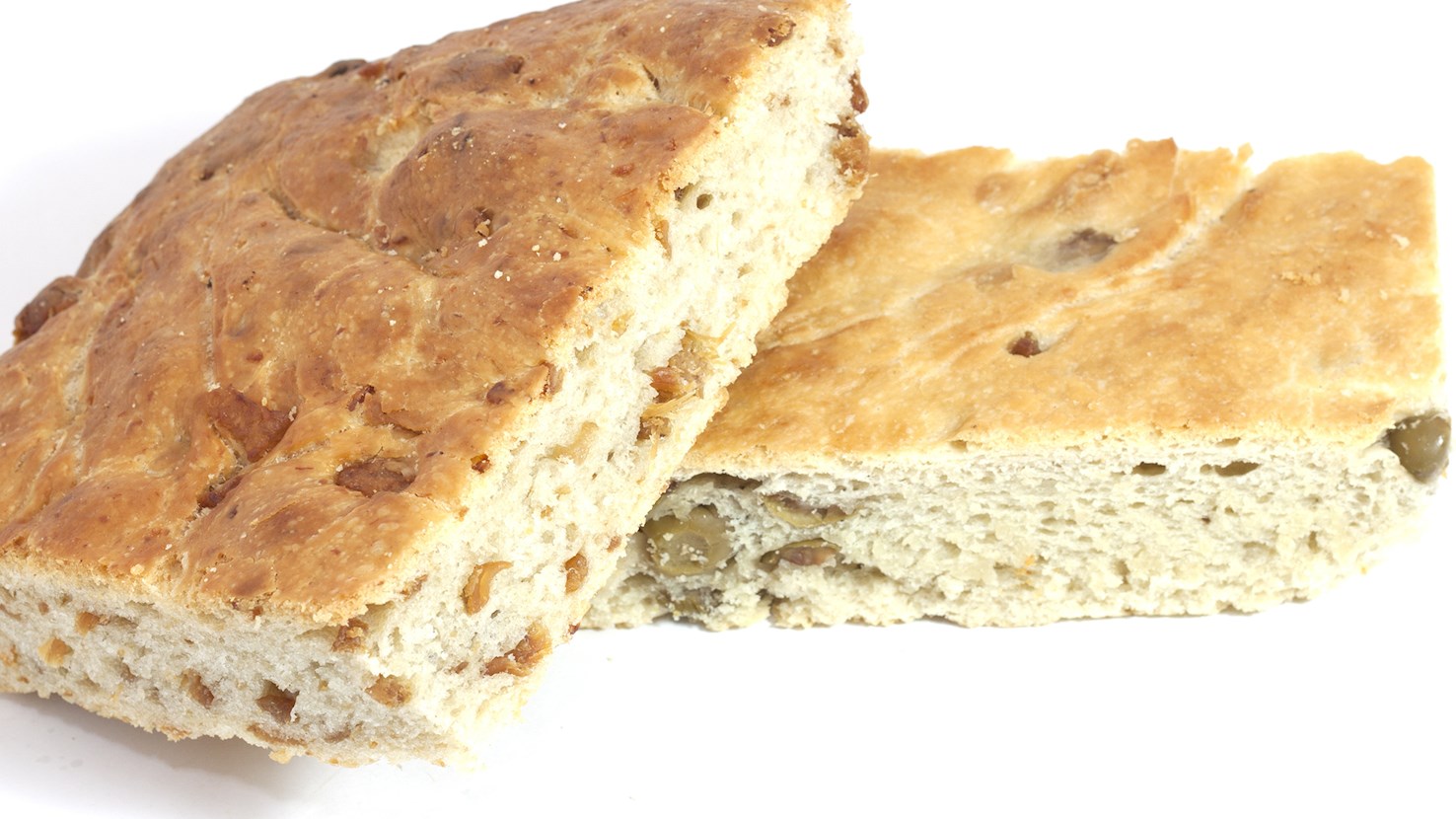
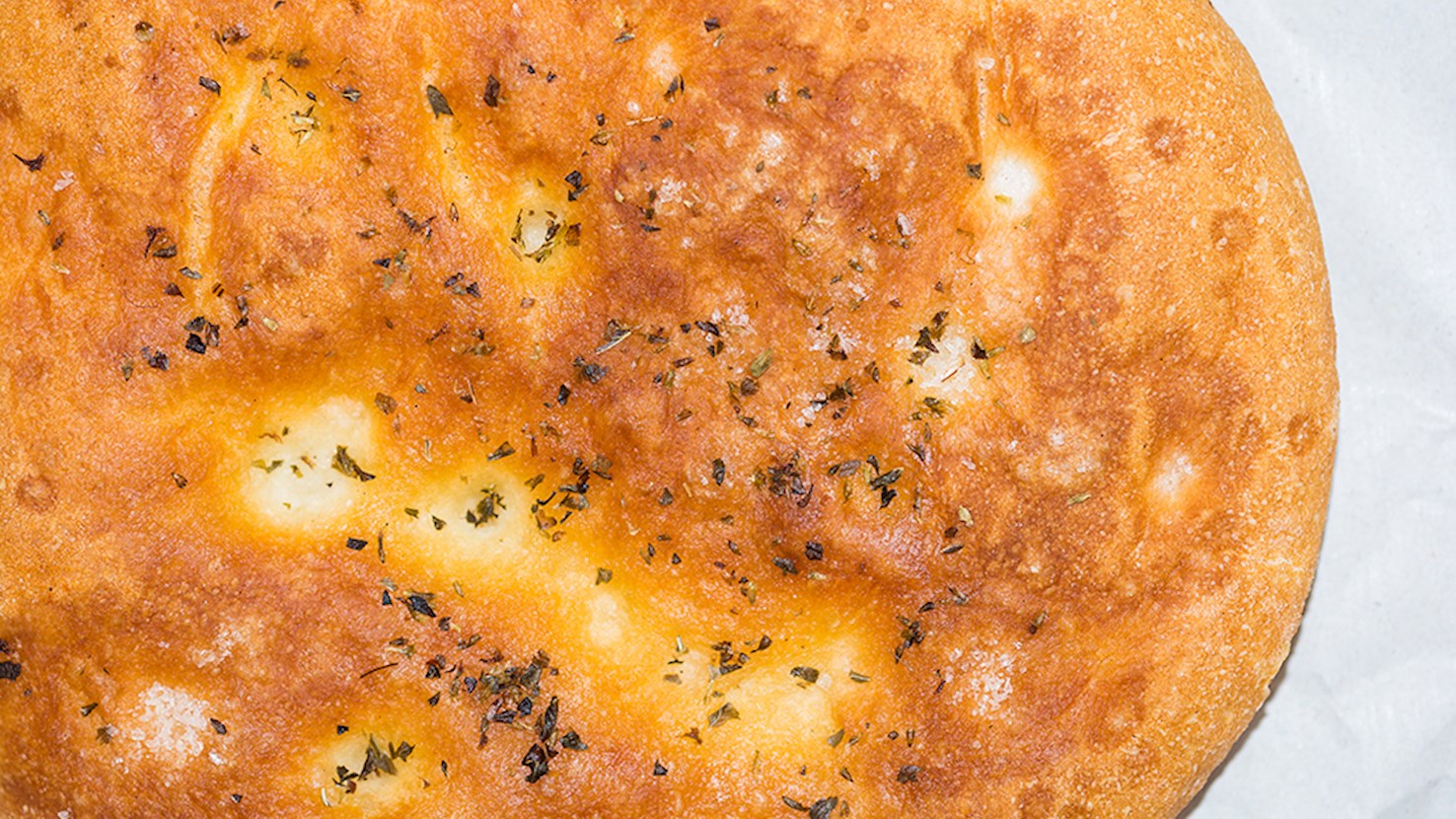
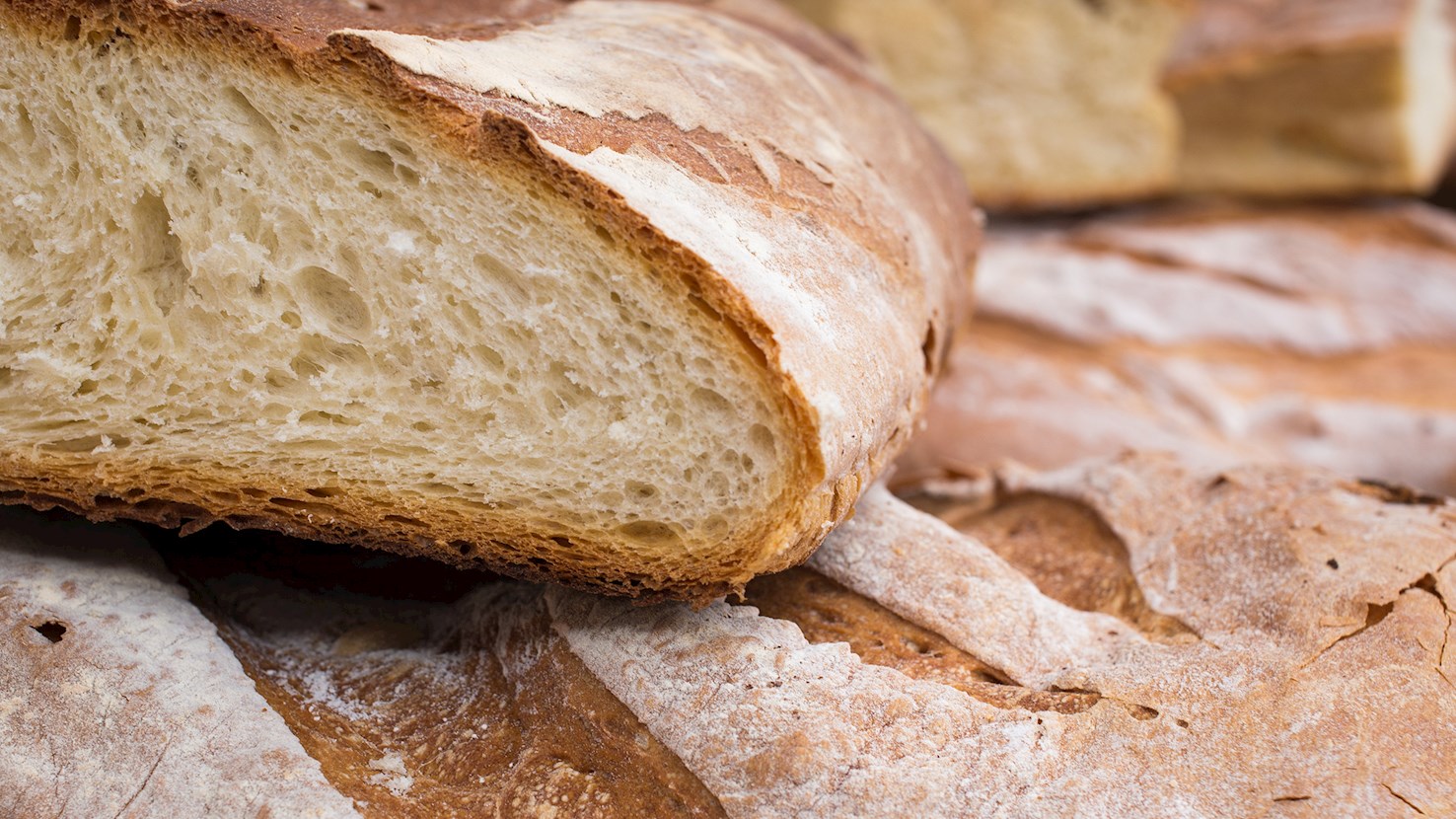
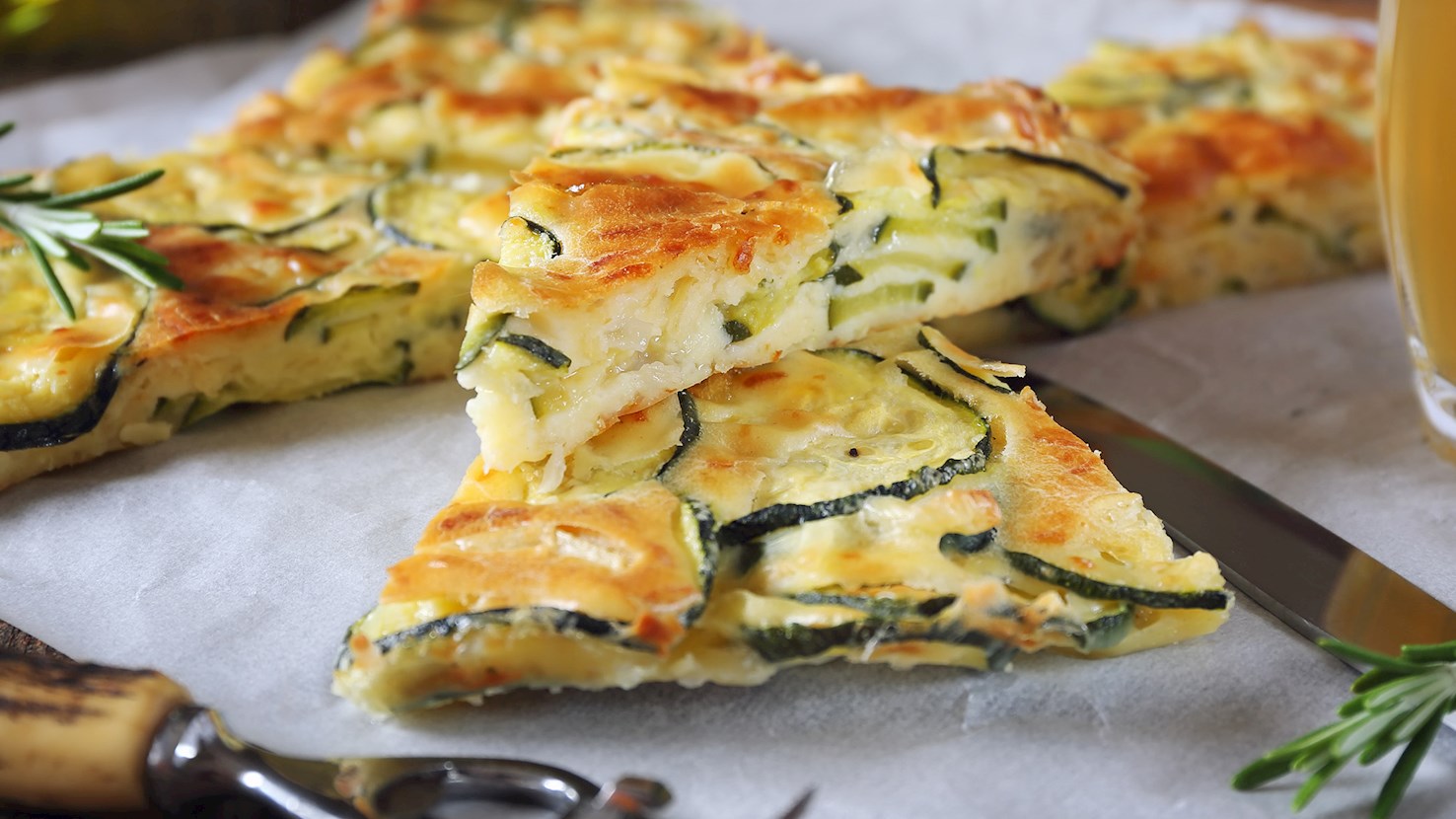
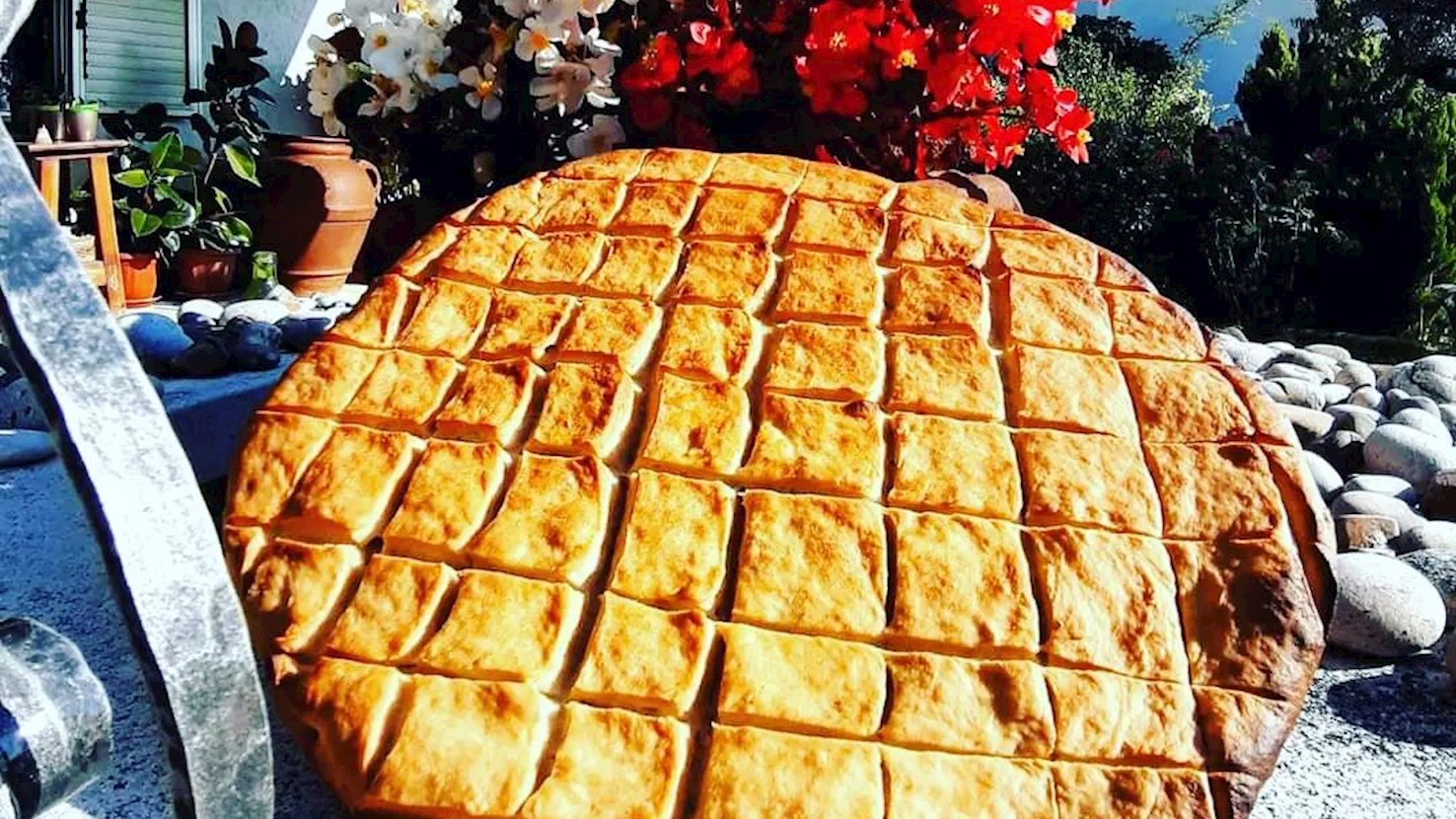
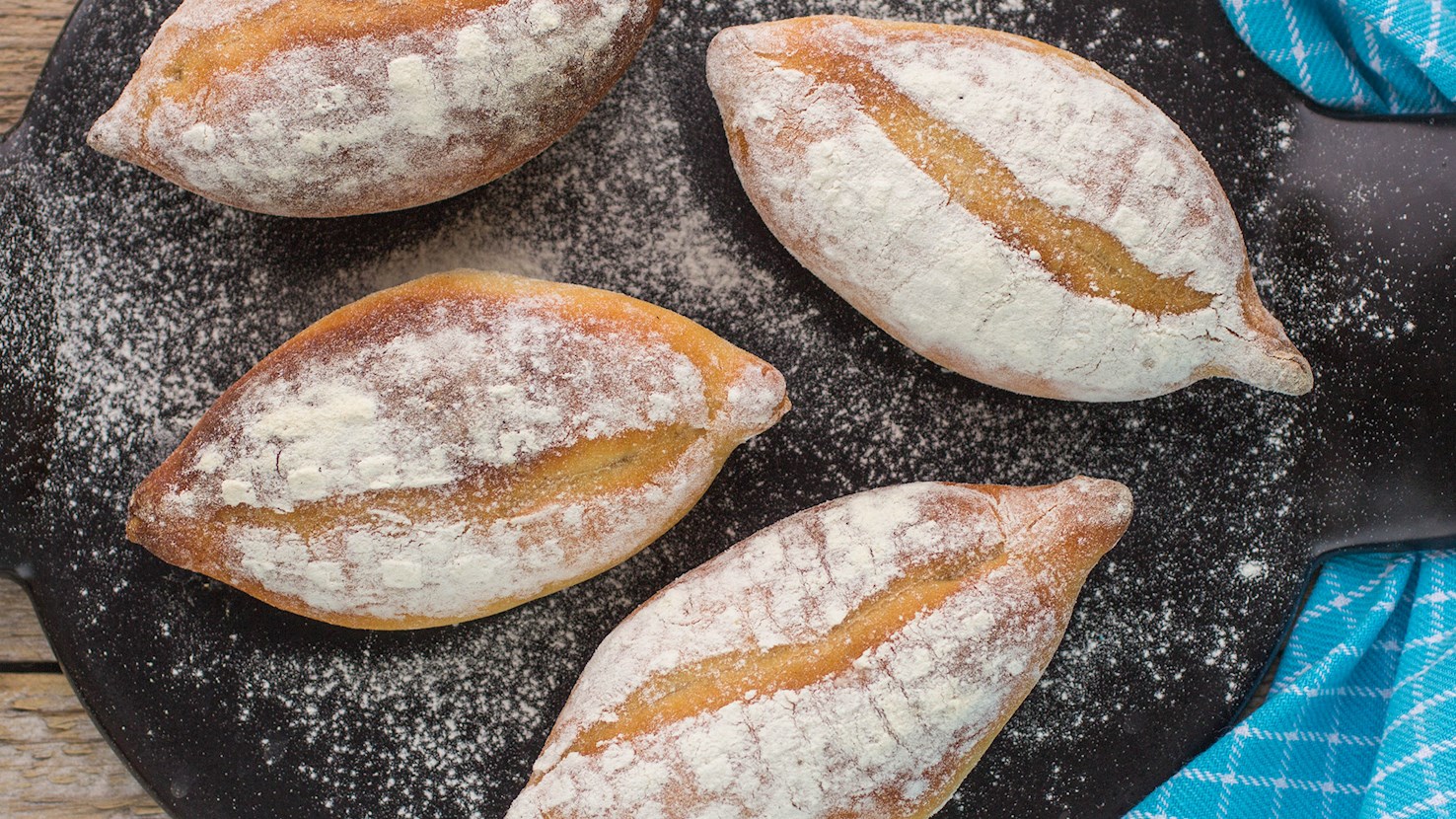
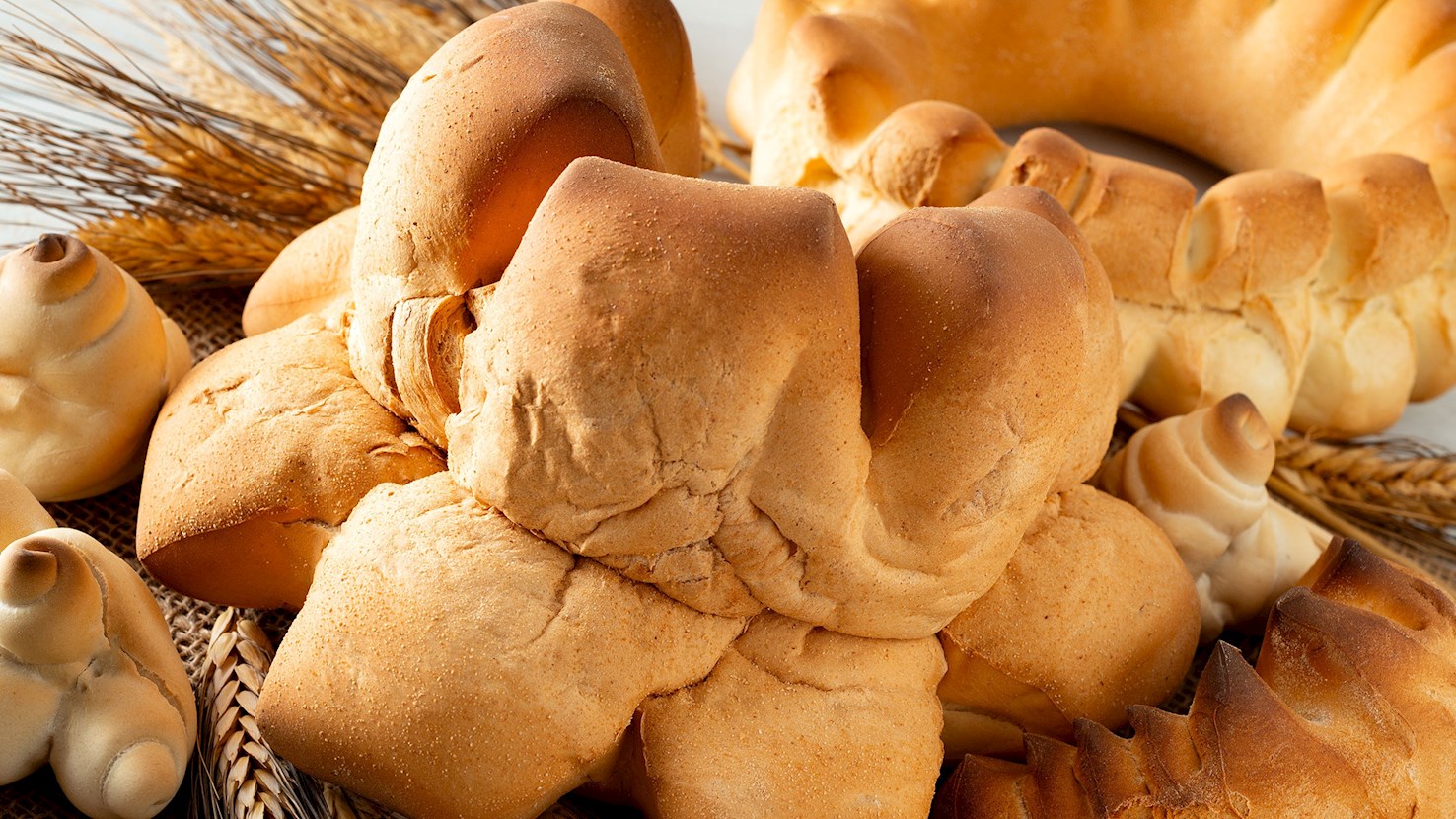
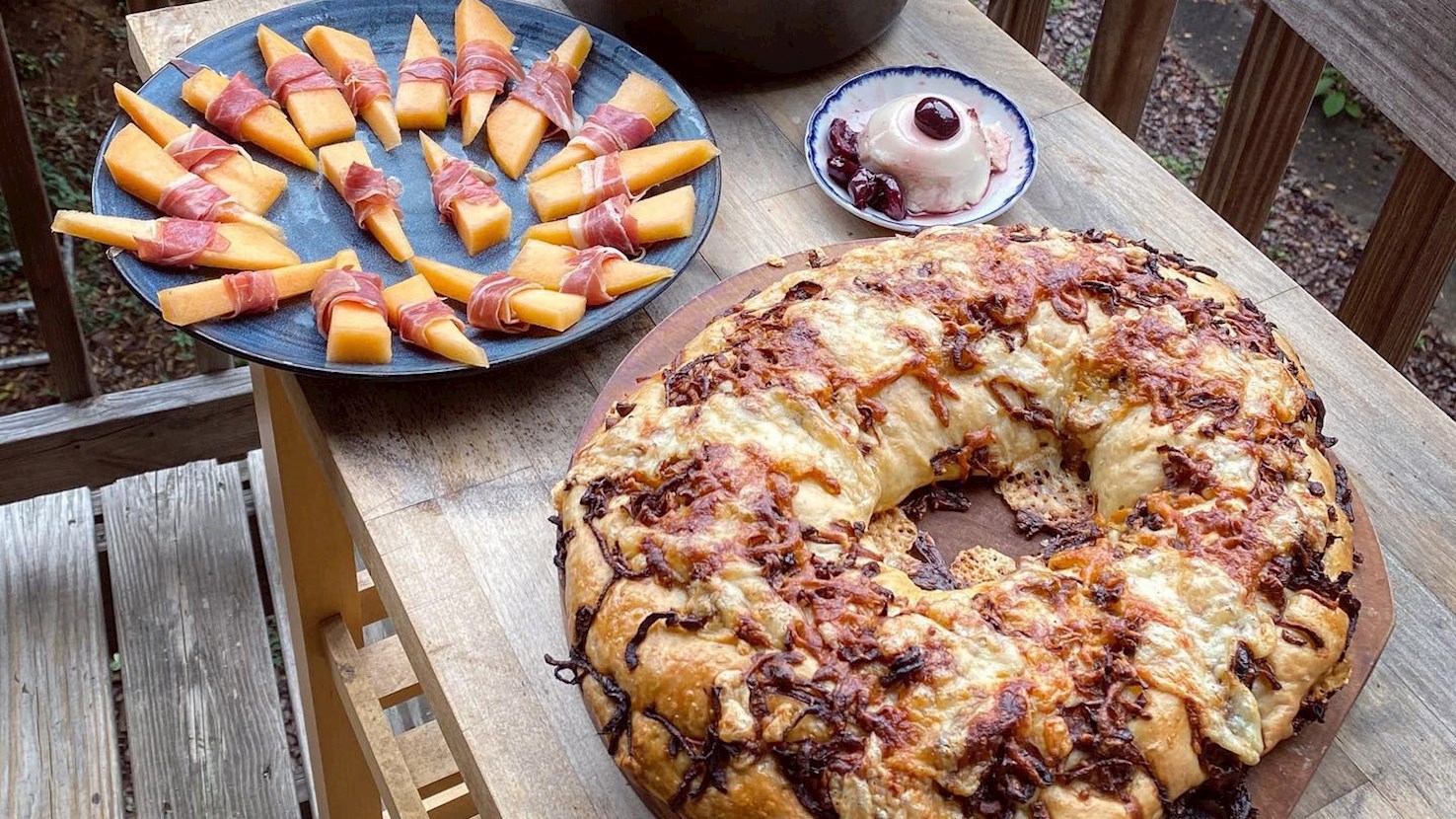
Focaccia alla Genovese is believed to be the original focaccia. Hailing from Genova, this classic focaccia is coated in olive oil and sprinkled with coarse sea salt. Unlike other focaccias, this one is traditionally shaped into a flat rectangle. It consists of flour, yeast, salt, sugar, water, and olive oil. The dough is simply baked in the oven until the focaccia becomes golden brown, crispy, and shiny. The flatbread is locally known as fugassa.
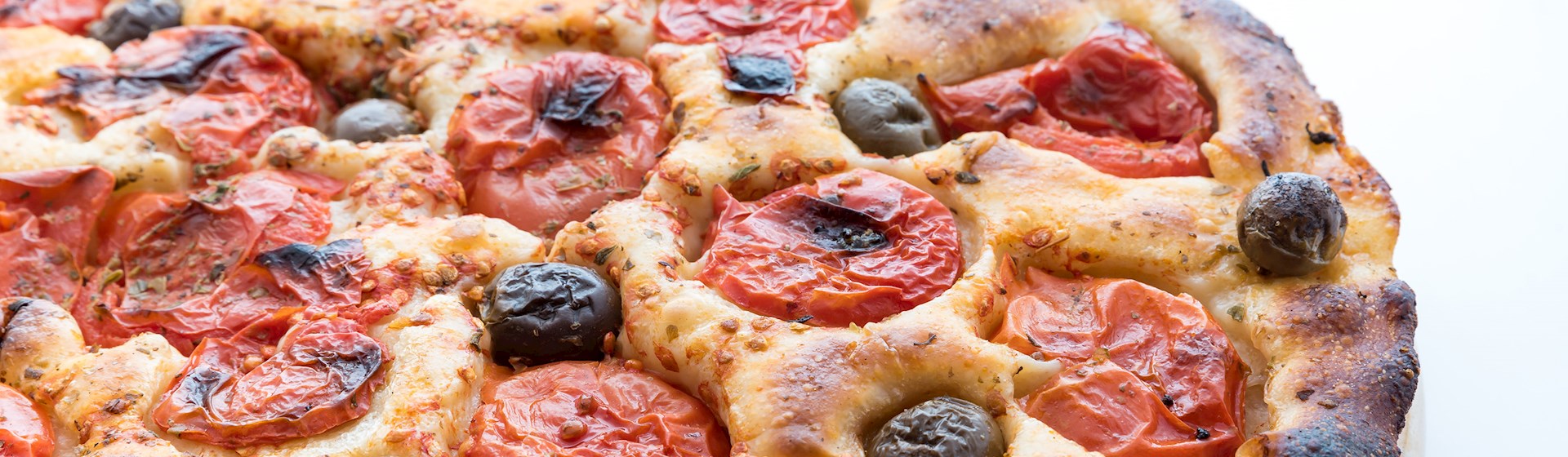
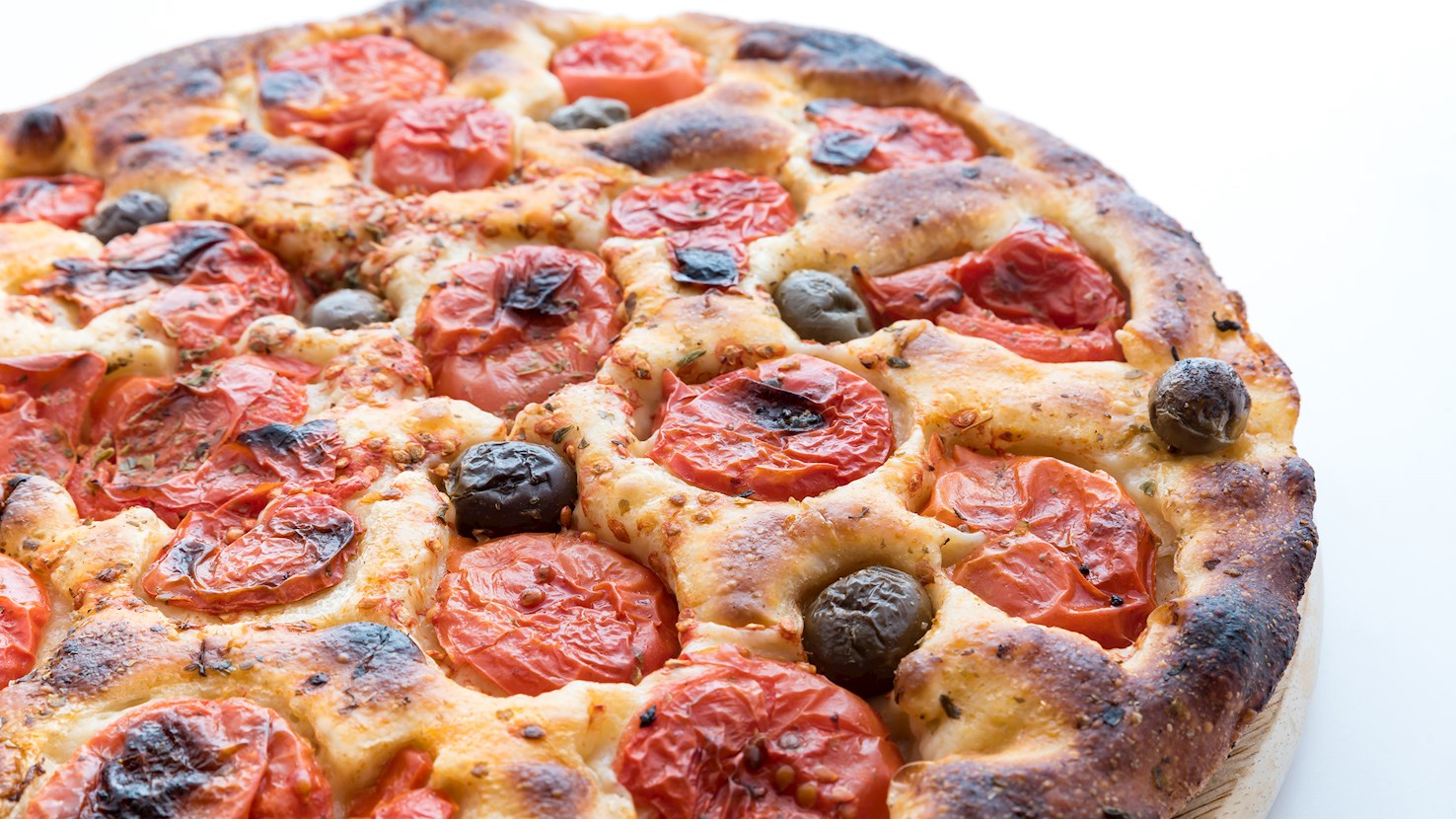
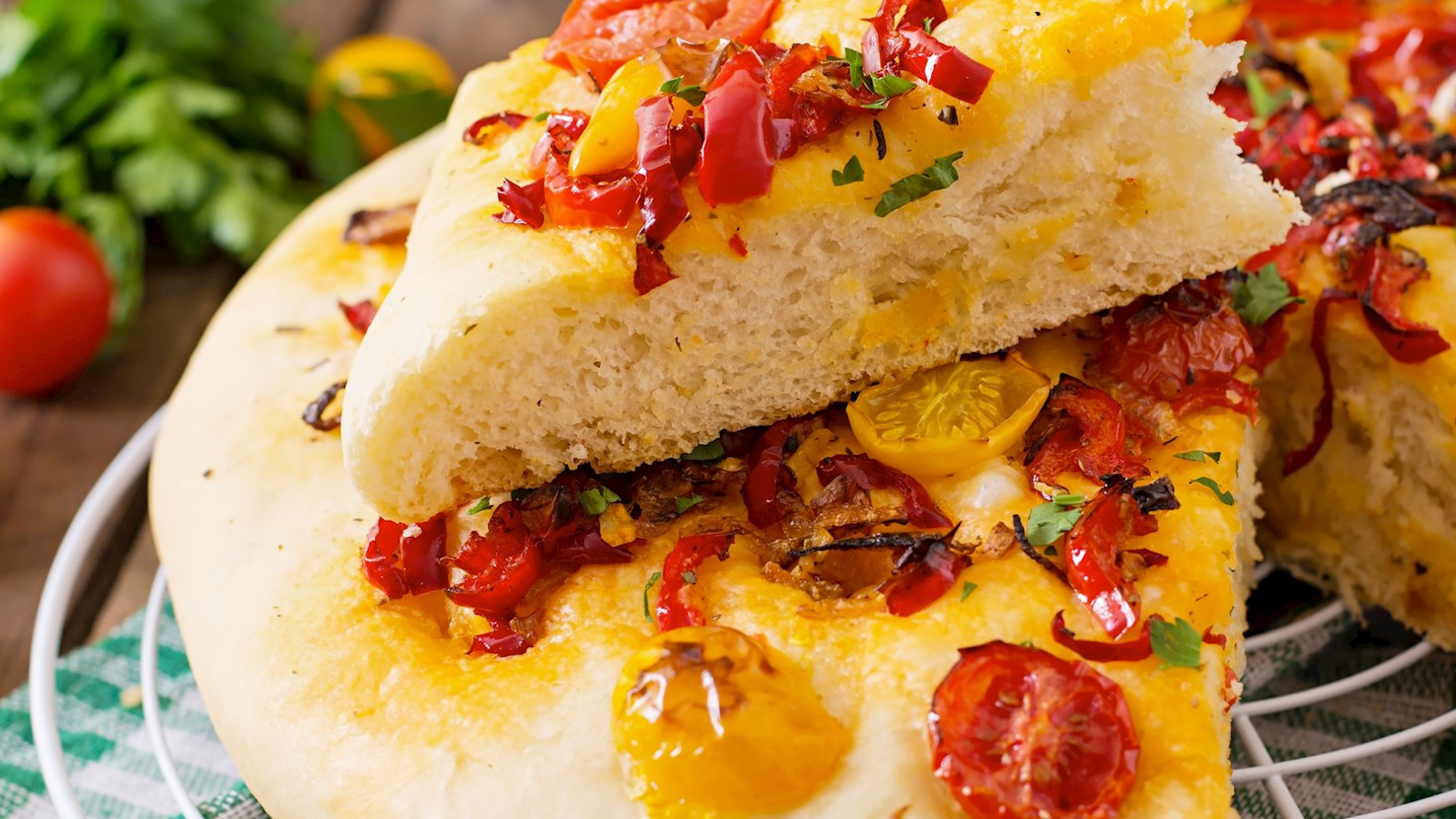
This Apulian delicacy is traditionally prepared with a soft, yeasted dough that combines semolina, wheat flour, and mashed potatoes. It is usually topped with cherry tomatoes and olives, but some varieties occasionally employ other combination of ingredients, such as different vegetables, coarse salt, or rosemary. Always baked in round tins, focaccia is usually doused in olive oil and is best served lukewarm.
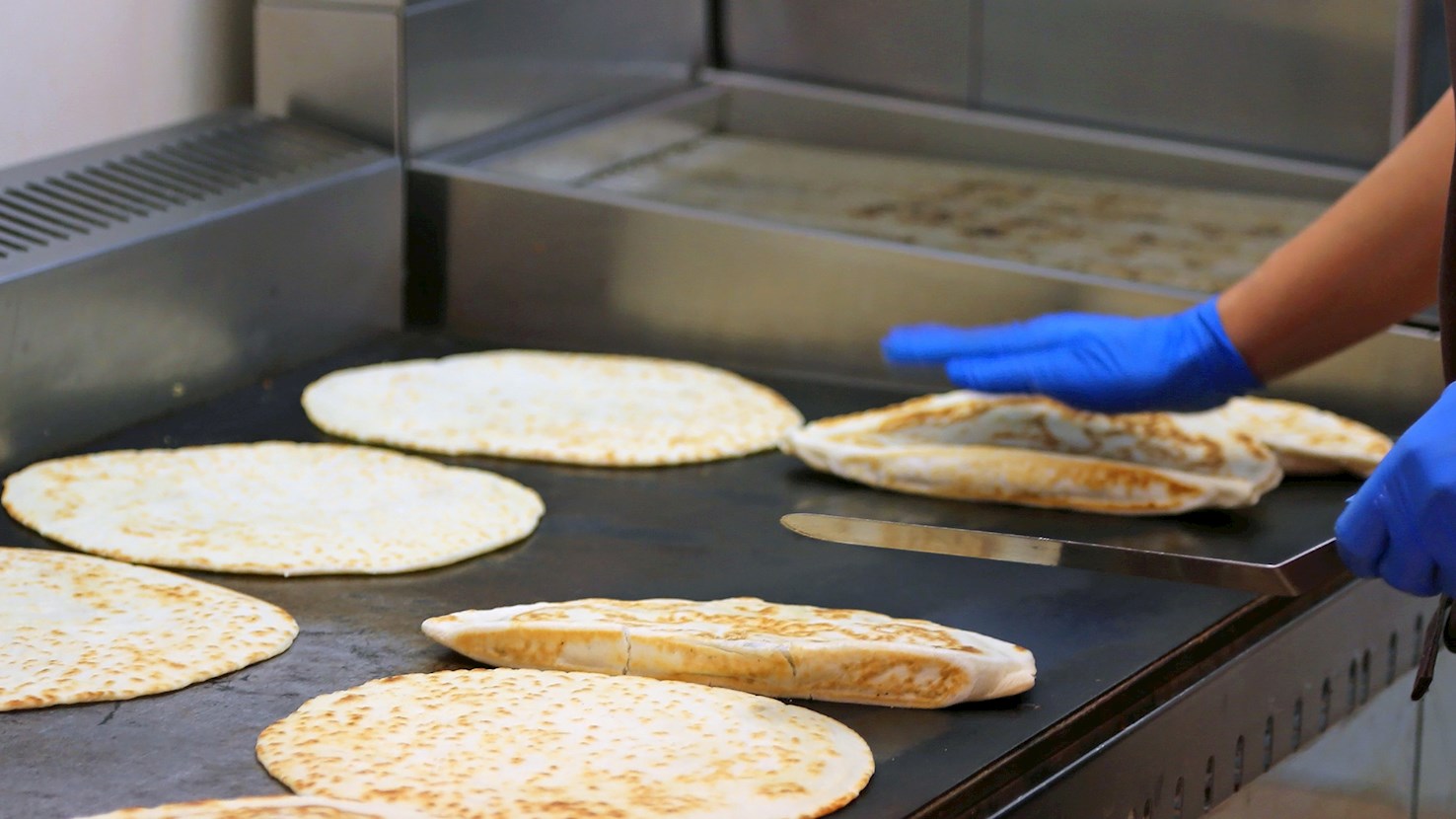
Even though today this griddled Italian flatbread is typically enjoyed as a sandwich (one of the most popular fillings includes prosciutto, creamy soft cheeses like squacquerone, tomatoes, and a handful of peppery wild arugula), Piada or piadina Romagnola was once merely a staple of the poor, often made with maize flour and called la pjida ad furmantoun in Romagnolan dialect. In his poem entitled La Piada, which is sort of an ode to the beloved Romagnolan piadina, a 19th century Italian poet Giovanni Pascoli calls it "the bread of poverty, humanity, and freedom", describing it as "smooth as a leaf and as big as the moon." Since then, the humble, rustic piadina has come a long way and even today takes a special place in the regional cuisine, having been awarded the Protected Geographical Indication status. Le piadine, in plural, can take virtually any ingredients as their filling, and they can be easily found freshly prepared at numerous street kiosks called piadinerie, as it is best to eat a piadina only minutes after it comes off the cast-iron griddle while it's still pliable and warm - the perfect frame for the almost-melting soft cheese and delectable, thinly sliced charcuterie.
This chewy, oily flatbread is quite versatile, and can be topped with a range of ingredients such as coarse sea salt, olive oil, herbs, tomatoes, or olives. Historians tend to believe it was invented either by the Etruscans or in ancient Greece, although unleavened flatbreads have long been made throughout the Middle East. The name focaccia is derived from the Roman panis focacius, meaning “hearth bread”, referring to the fact that focaccia was traditionally baked in coals in Roman times. The basic recipe spread to France and Spain over time, where the bread is known as fouaisse and hogaza, respectively. Foccacia’s pockmarked appearance results from indentations made in the dough to prevent large bubbles from appearing on its surface during baking. Today, savory versions of focaccia are topped with rosemary, sage, garlic, cheese, and onions, while sweet varieties can be topped with honey, raisins, sugar, and lemon peel, among others.
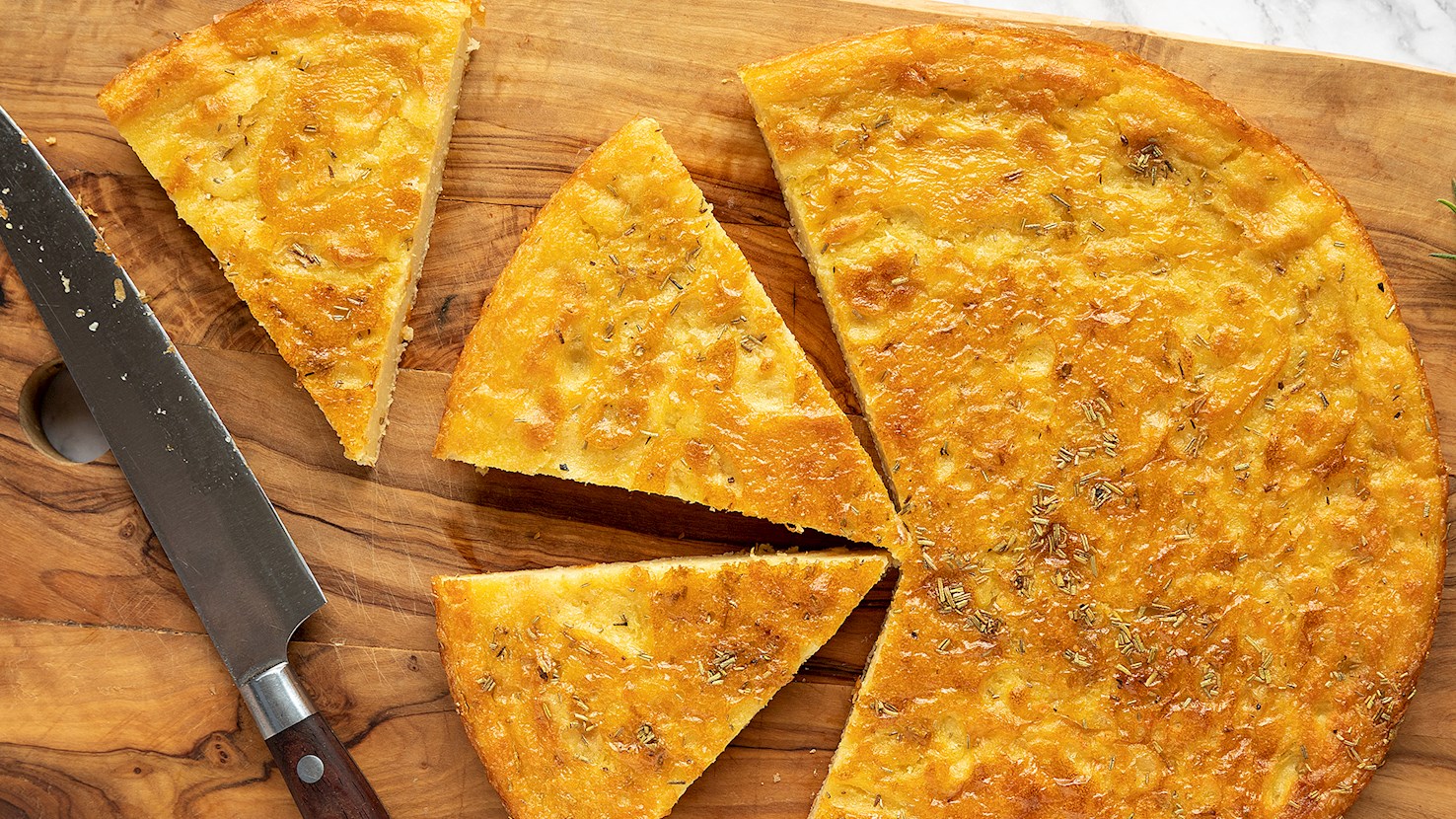
This traditional Ligurian dish is a simple, oven-baked flatbread made only with chickpea flour, water, extra virgin olive oil, and salt. Its origins can be traced to Roman times, but according to legend, farinata as we know it today is said to have been invented in August of 1284, when the Republic of Genoa defeated Pisa in the battle of Meloria in the Ligurian Sea. On their way back home, the Genoese ships were hit by a tempest, and some of the olive oil and chickpea flour barrels broke, they were mixed together, then moistened by salty sea water. After the tempest, realizing they didn’t have anything else to eat, the sailors put this mixture to dry in the sun and consumed it. Often flavored with rosemary, farinata di ceci can be eaten plain or enjoyed with creamy stracchino or crescenza cheese and a touch of pesto alla Genovese.
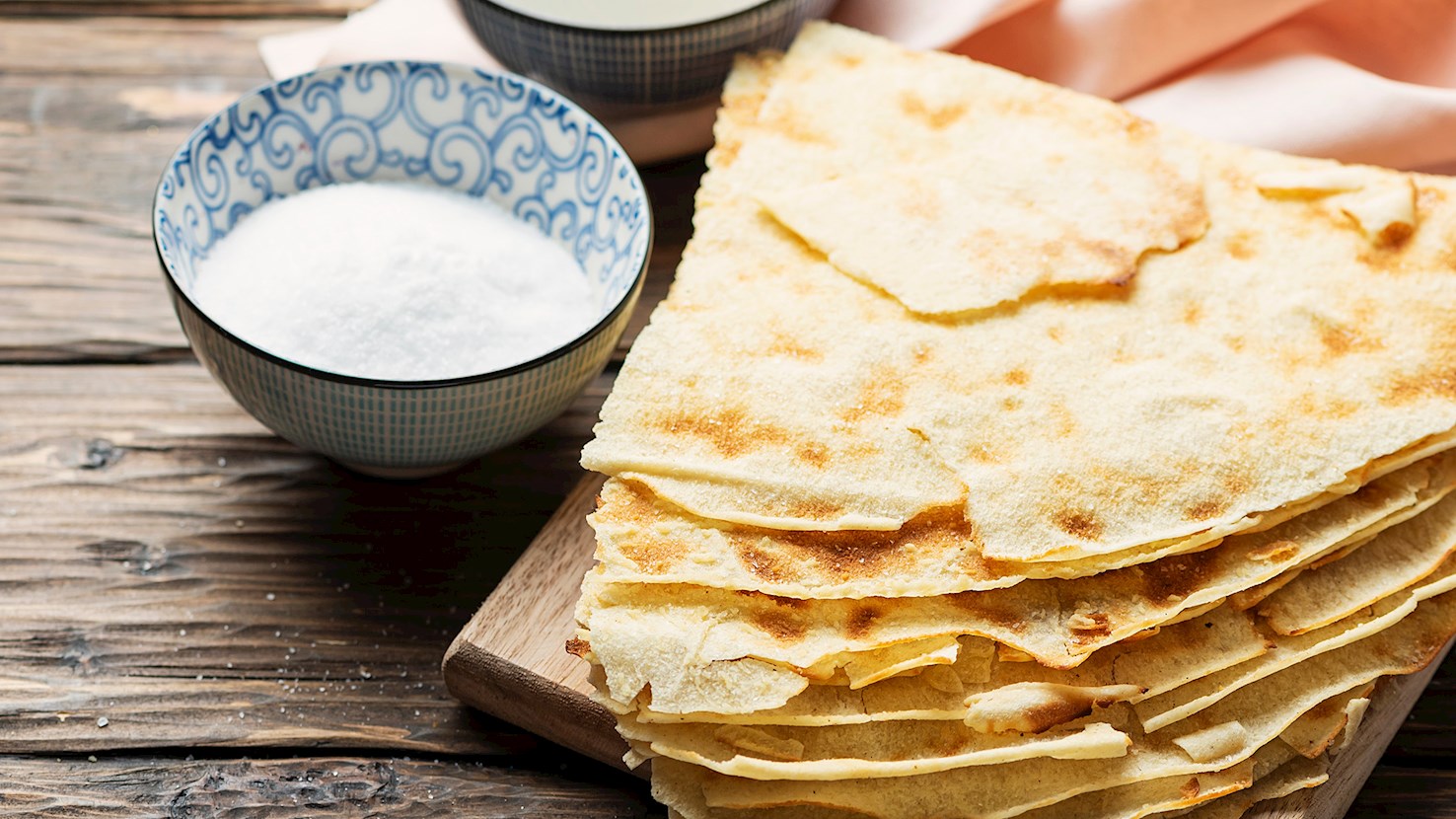
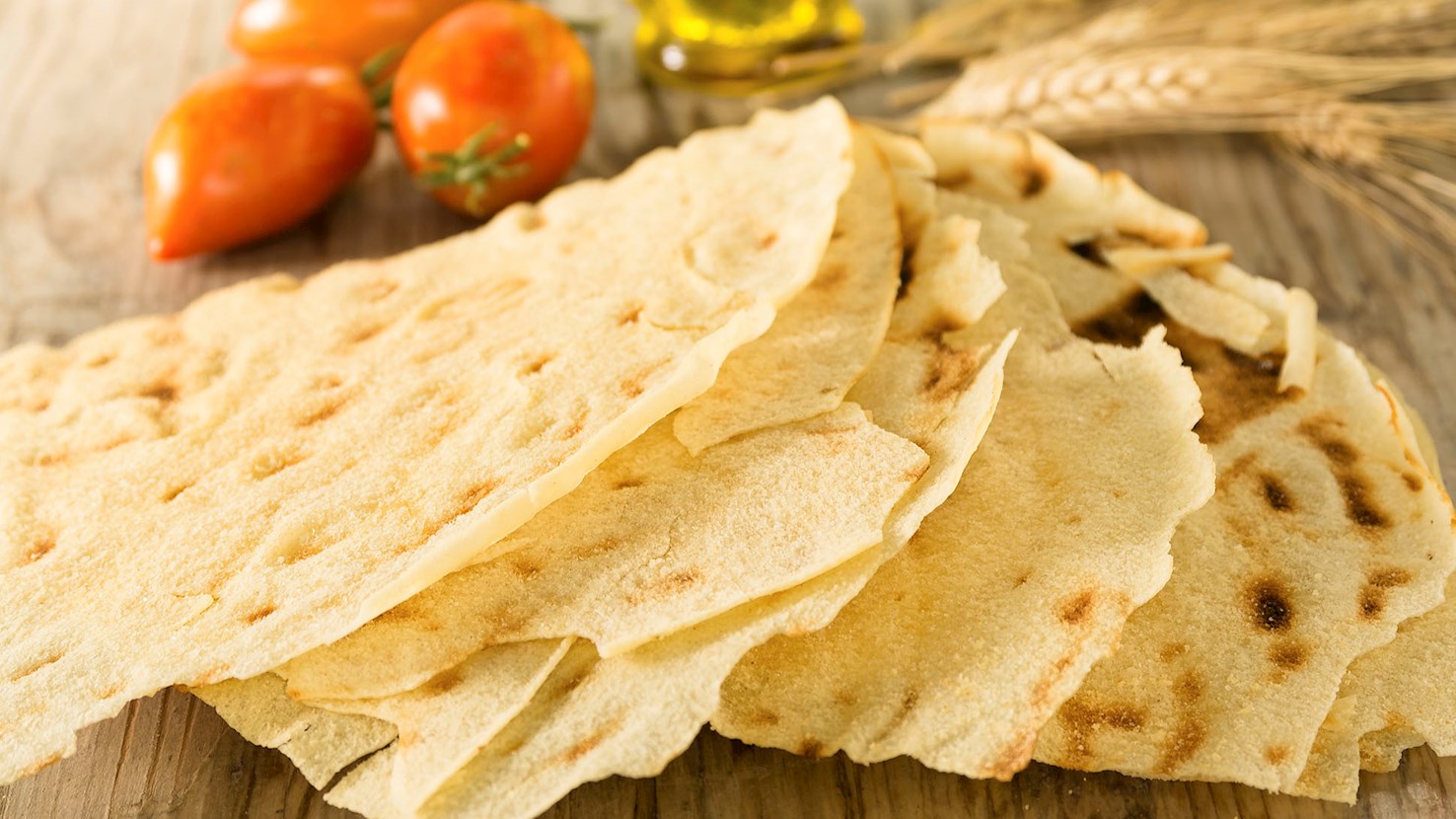
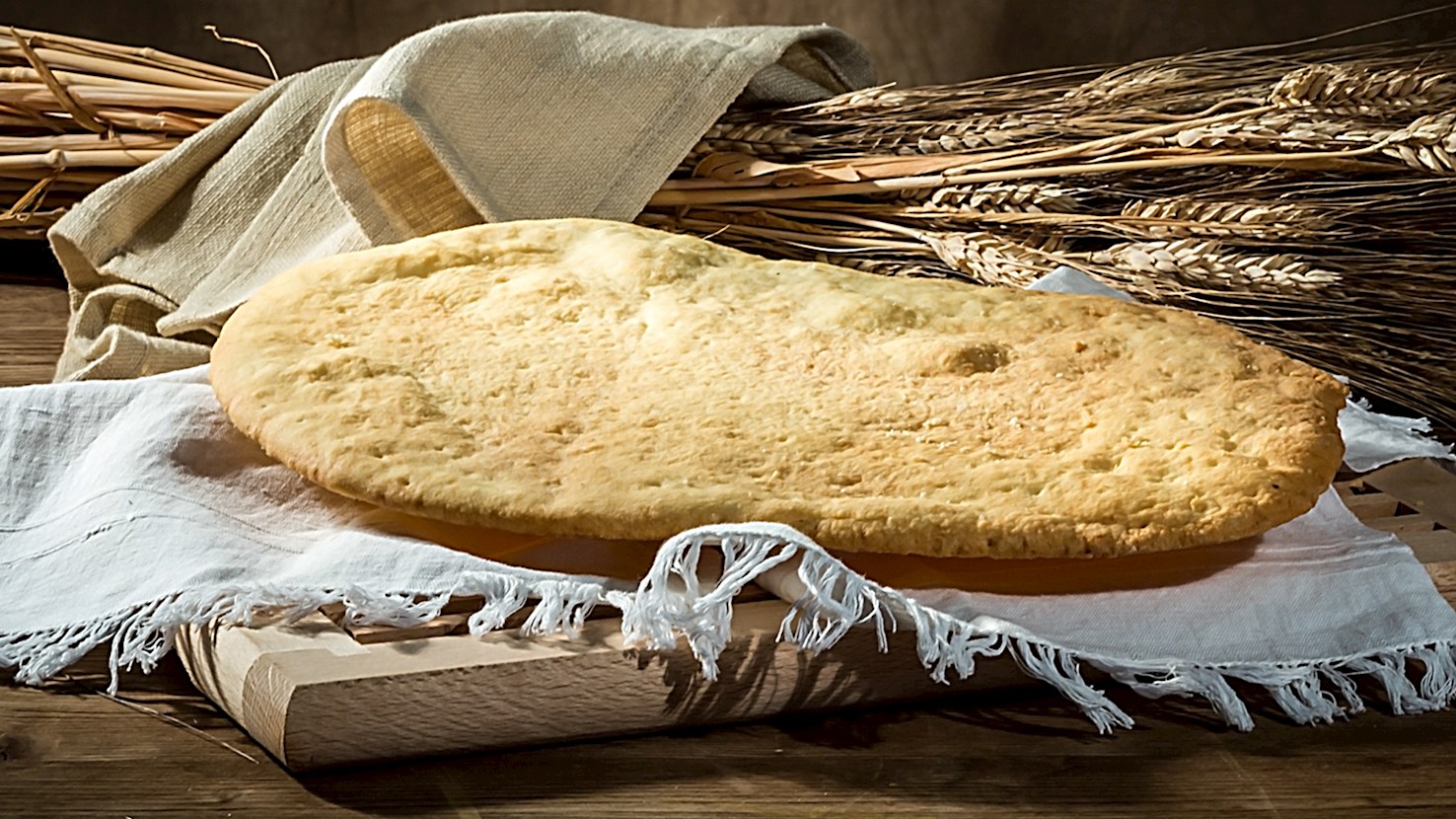
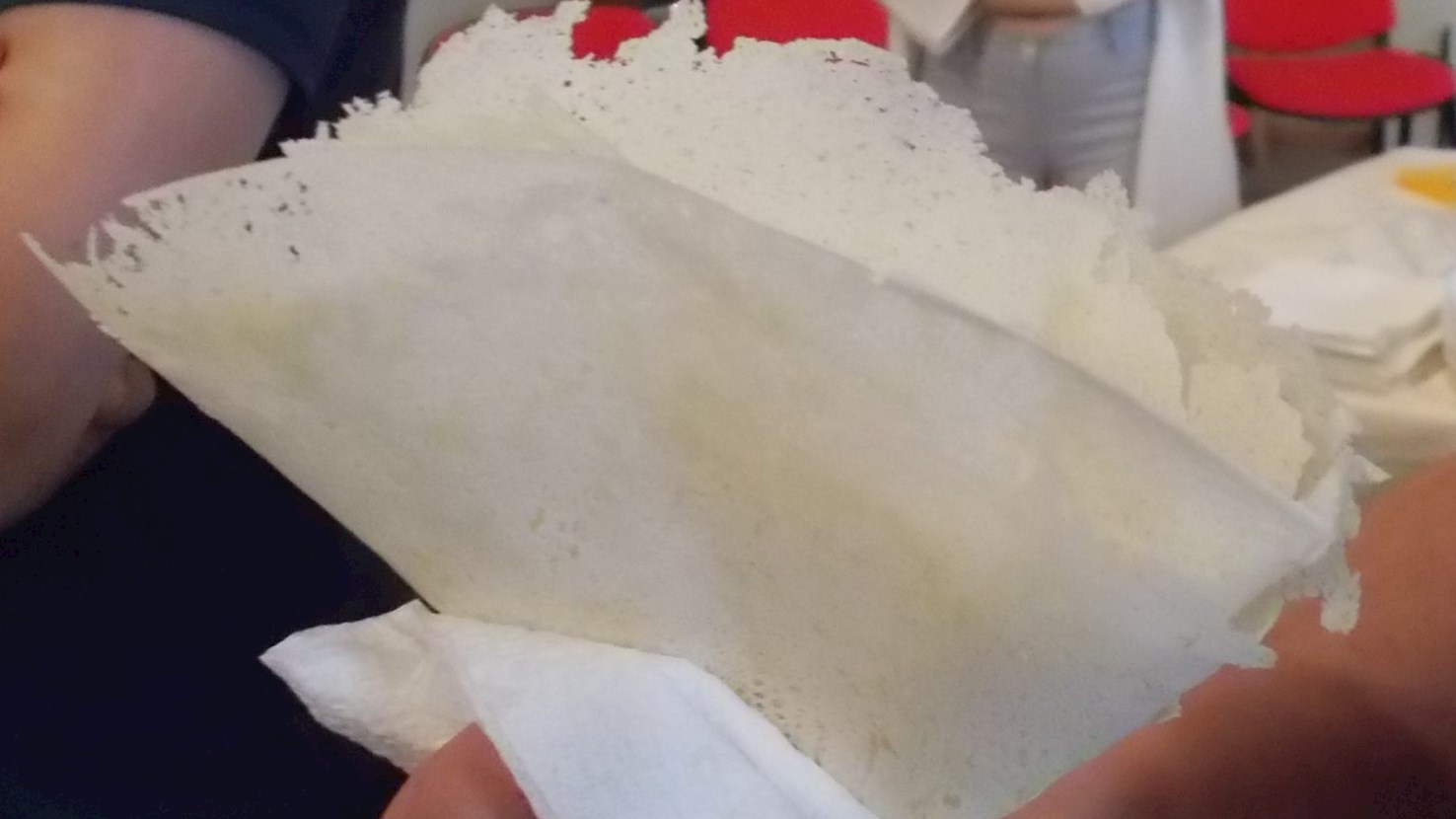
Pane guttiau is a traditional flatbread originating from Sardinia. It's very similar to pane carasau, but guttiau is even thinner. The flatbread looks like thin leaves with long cracks, and it was originally made for shepherds who took it with them to the pastures because it keeps very well – if kept dry, it stays edible for a whole year. The dough is rolled as thinly as possible, and it is then baked until the edges start to rise up. Pane guttiau is often brushed with olive oil and sprinkled with sea salt, then eaten as a snack. It's also commonly served with salami and cheese.
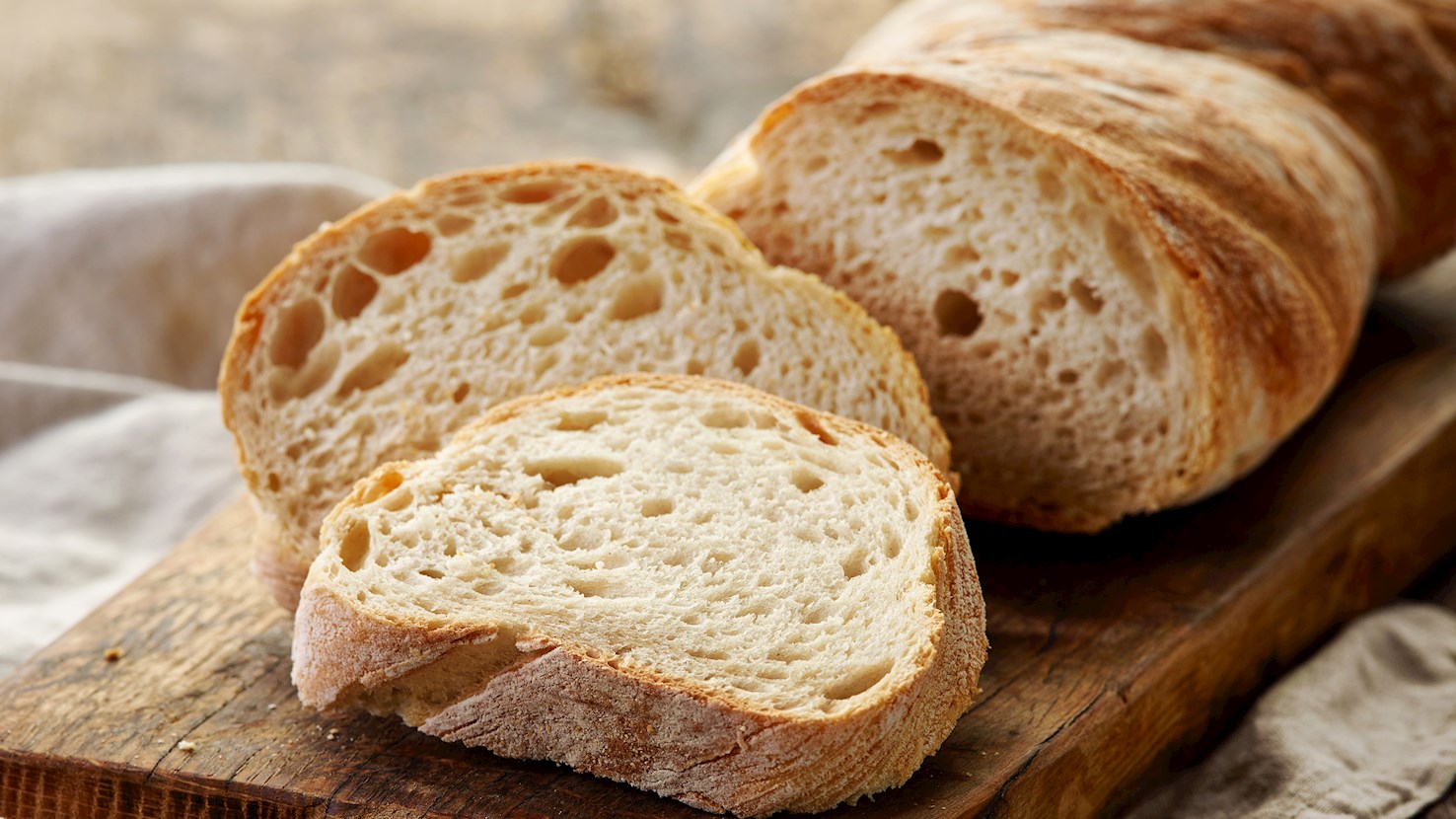
Literally translated to a slipper, as a reference to its shape, ciabatta is an Italian type of white bread made with yeast and wheat flour. It is characterized by numerous air pockets on the interior and a crispy crust. The first ciabatta was made in 1982 by a Veronese miller and baker named Arnaldo Cavallari. The bread was invented as a response to the rising popularity of French baguette, as the bakers were worried that it might endanger their business. Ciabatta is considered an ideal choice for sandwiches because the crumb absorbs liquids very well. Today, many regions in Italy have their own variations of the original recipe, producing ciabattas with olive oil, whole wheat flour, marjoram, and milk.
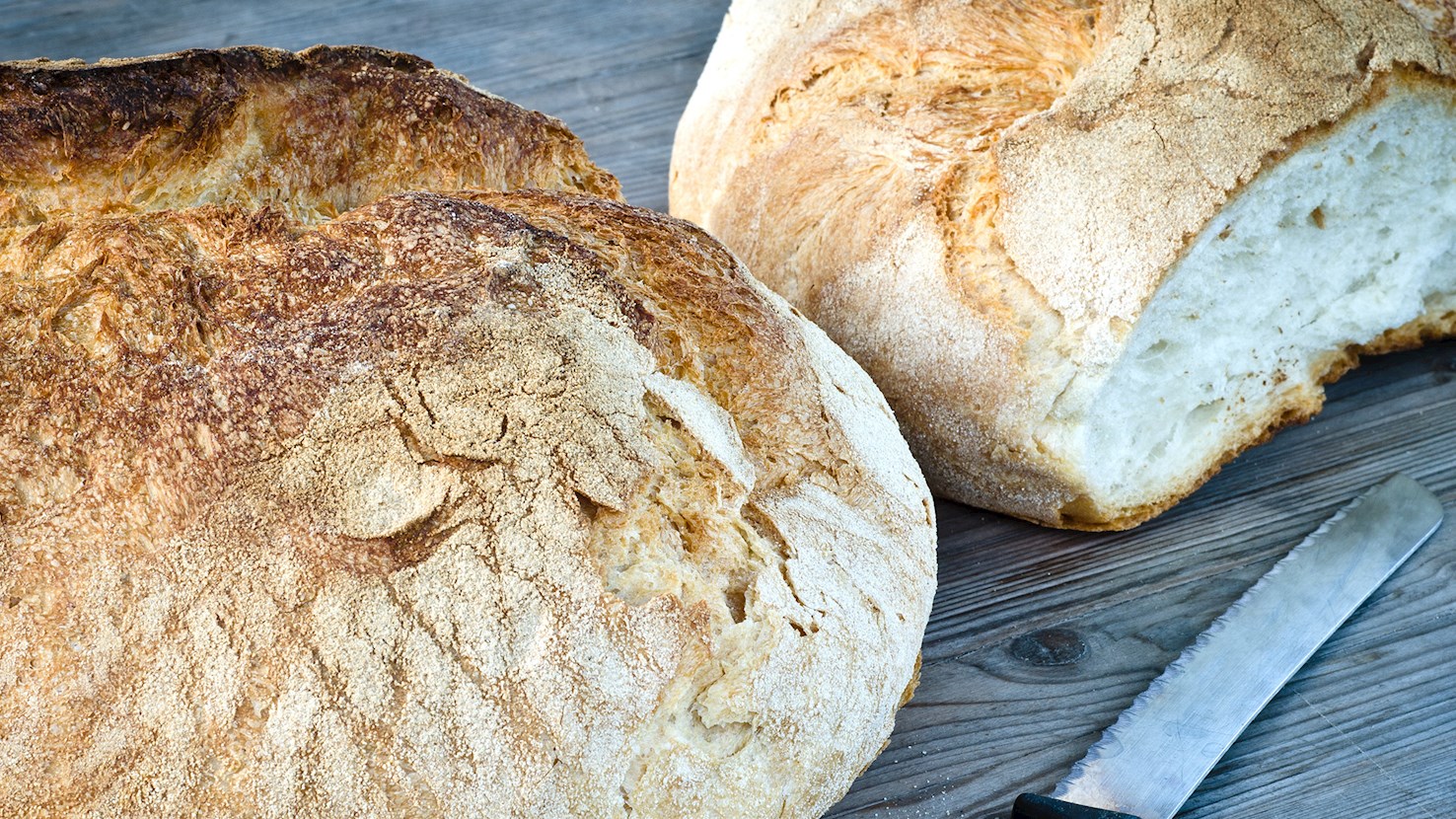
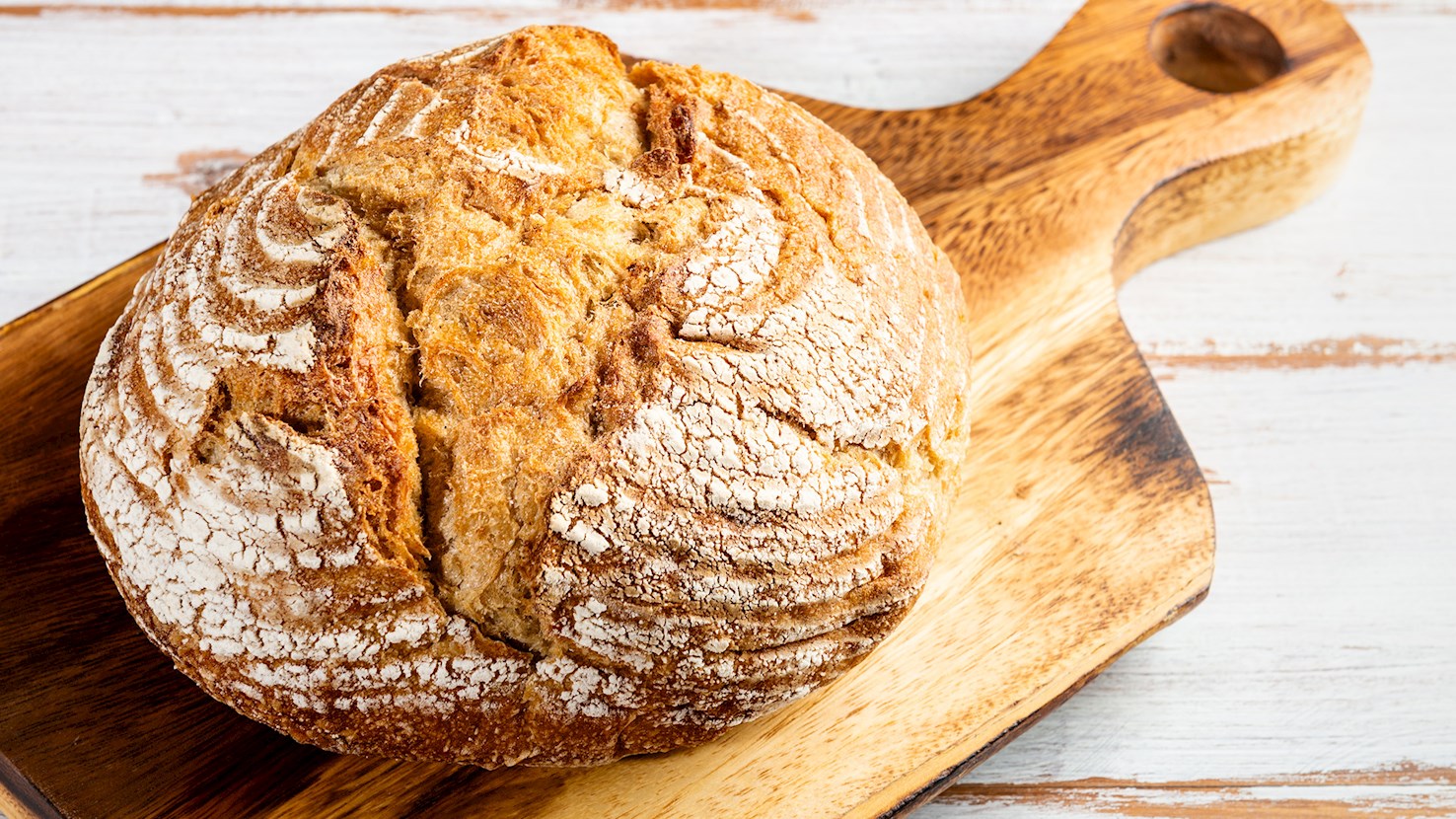
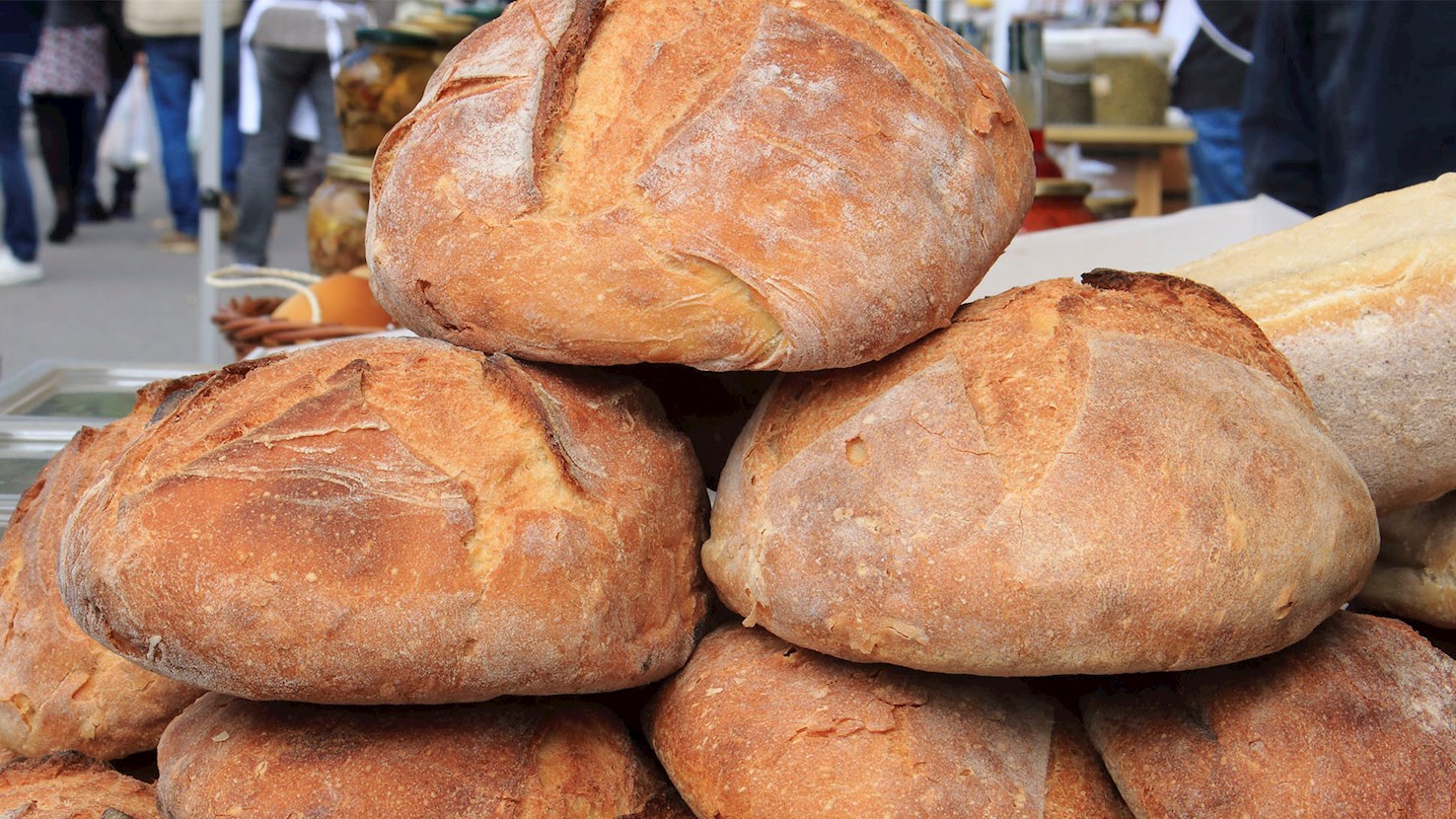
Prepared in the same traditional way for hundreds of years, the Sicilian pane a l'antico rustico or simply pane rustico is a type of homemade sourdough bread. The slightly flattened pane rustico is typically baked in a wood-fired oven, and pairs perfectly with many dishes of Sicilian cuisine, particularly soups and stews. Crusty on the outside and wonderfully tender on the inside, it is also great as an accompaniment to cold cuts and cheese. In Sicily, pane rustico is often enjoyed fresh from the oven, generously drizzled with extra virgin olive oil and simply seasoned with salt and coarsely ground black pepper.
Schiacciata is a traditional variety of bread made in Tuscany and Umbria, consisting of flour, olive oil, yeast, water, and sugar. It is quite similar to focaccia, although it takes much less effort to prepare schiacciata than focaccia. The name schiacciata means pressed, referring to the process of pressing the dough with fingers when it gets placed in baking tins or pans. The texture of this bread is crunchy, yet soft and moist, and it can be topped with anything from tomatoes and cheese to garlic and oregano.
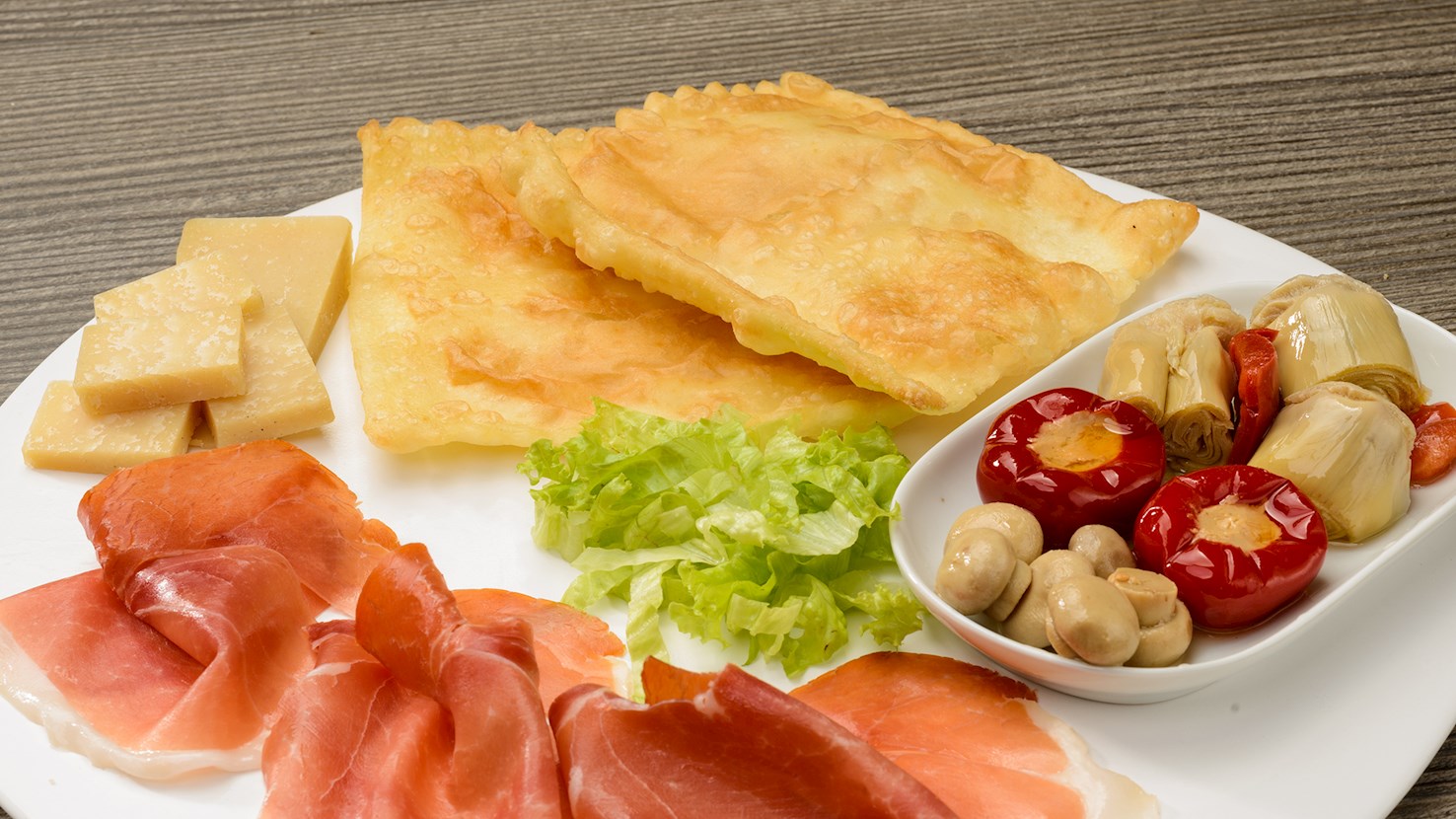
Crescentina is a type of puffed bread made with flour, lard, salt, milk and a leavening agent (sometimes with the addition of cracklings). The dough is fried in lard and served hot. Although very delicious on its own, crescentina is usually served with fresh soft cheeses and cold cuts typical for the region, or with jam and chocolate-hazelnut spreads in the sweet version. It is typical for Bologna, but similar dishes can be found throughout the Emilia Romagna region, and the name varies depending on the city: gnocco fritto in Modena, pinzino in Ferrara, torta fritta in Parma, chisulen in Piacenza. The name might vary, but these crunchy little pockets of fried dough remain a local favorite.
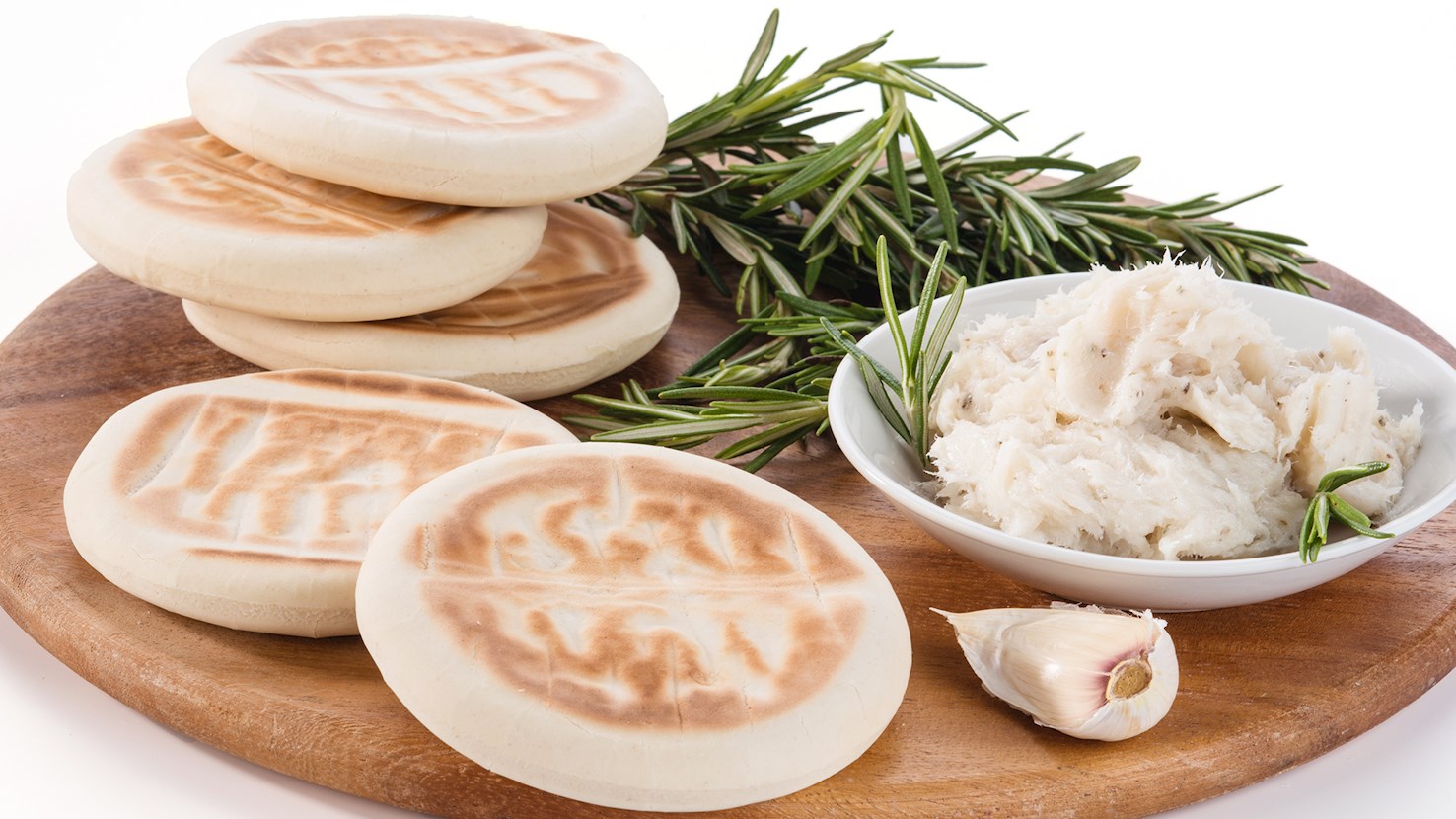
Crescentina modenese is a traditional, disk-shaped Italian bread that is crispy on the exterior and soft on the interior. It is traditionally baked in special stones called tigelle (the reason why the flatbread is sometimes called like that), and usually slathered with a spread made from lardo, rosemary, garlic, and Parmigiano-Reggiano cheese. The stones often have a decorative symbol on both sides, which is embossed on the dough as it bakes. It is believed that crescentina modenese was invented by the poor people from the Apennine Mountains near Modena, where farming families would gather around the hearth to bake their evening bread.
Popularly called carta musica, due to its resemblance to an old music sheet parchment, pane carasau is a traditional Sardinian flatbread whose origins have been traced to the Nuragic Age, circa 1900-730 BCE. Because of its long storage life, pane carasau was once a staple food of Sardinian shepherds during their trips to mountain pastures. This artisan Italian bread is made with durum wheat flour, water, yeast, and salt; it is extremely thin and twice-baked for extra crispness. With quite a unique flavor and a heavy aroma of cereals, barn, and wood-burning ovens, this flatbread is delicious as a cracker and is typically enjoyed as an accompaniment to various snacks, cheeses, appetizers, and soups. Pane carasau is also used for preparing another classic of Sardinian cuisine called pane frattau, a lasagna-style dish made with crispy sheets of carasau that are soaked in hot water, then layered with tomato sauce and pecorino Sardo cheese.
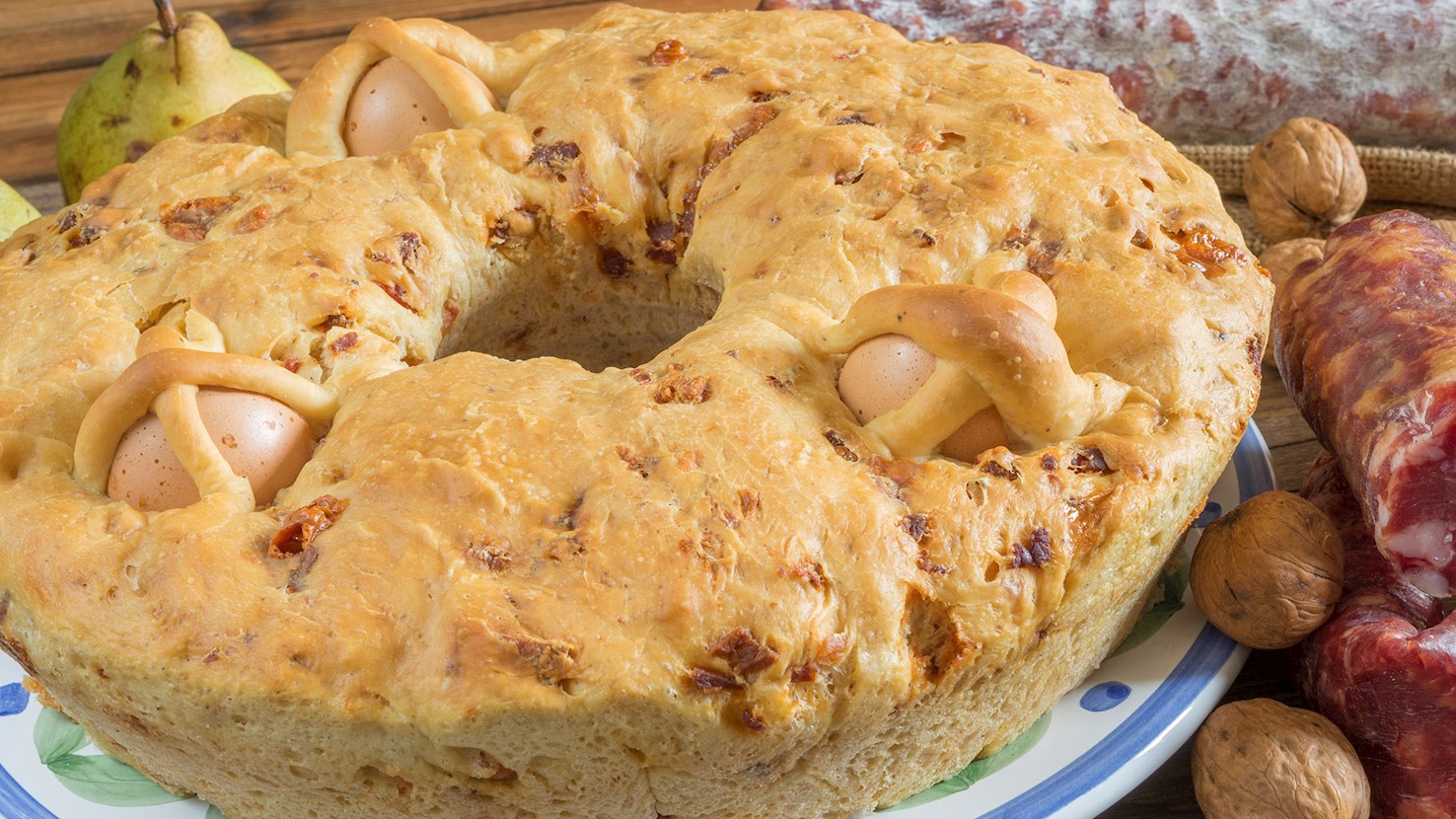
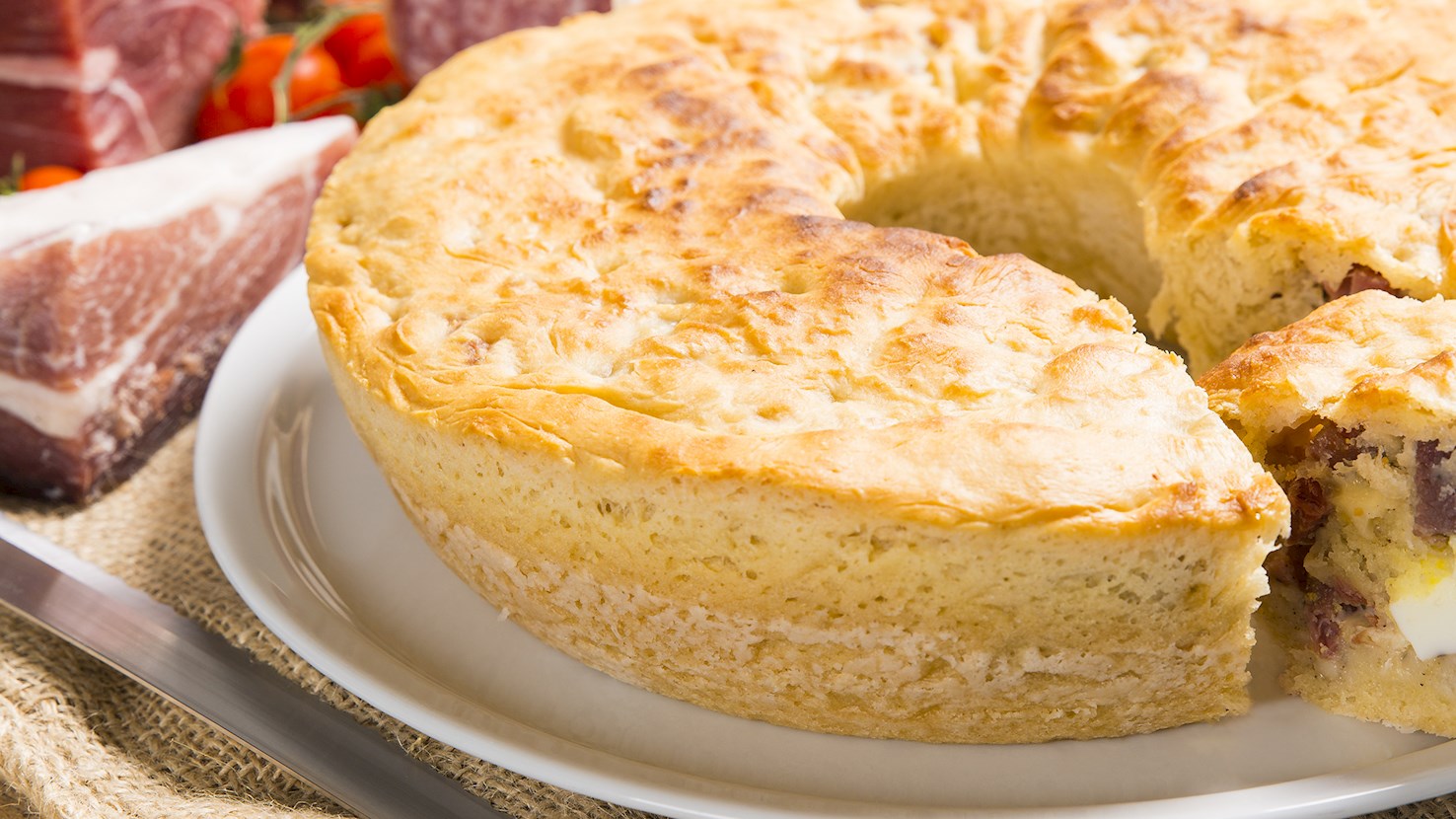
Decorative casatiello is a traditional Easter bread. It is prepared with leavened dough, made with lard or olive oil, which is then filled with meat and cheese, rolled, and baked in a large ring mold. The stuffing is made with pork salumi, Italian-style cured meat, and diced semi-hard cheese. Although the choice of meat is variable, Neapolitan salami, ham, prosciutto, and pancetta are the most common varieties. Before baking, casatiello is decorated with hard-boiled eggs which are put on top of the bread, then adorned with cross-shaped strips of dough. This rustic bread is usually prepared for Easter and has a strong symbolic and religious importance for the Italians. The use of leavened bread symbolizes new life, the shape of the bread is a symbol of the crown of thorns, while the eggs illustrate the act of rebirth. The tradition of preparing casatiello comes from Naples, but today, this authentic Italian creation is usually sold during Easter in bakeries across Italy. It is usually served warm or at room temperature, most commonly as an appetizer during Easter dinner.
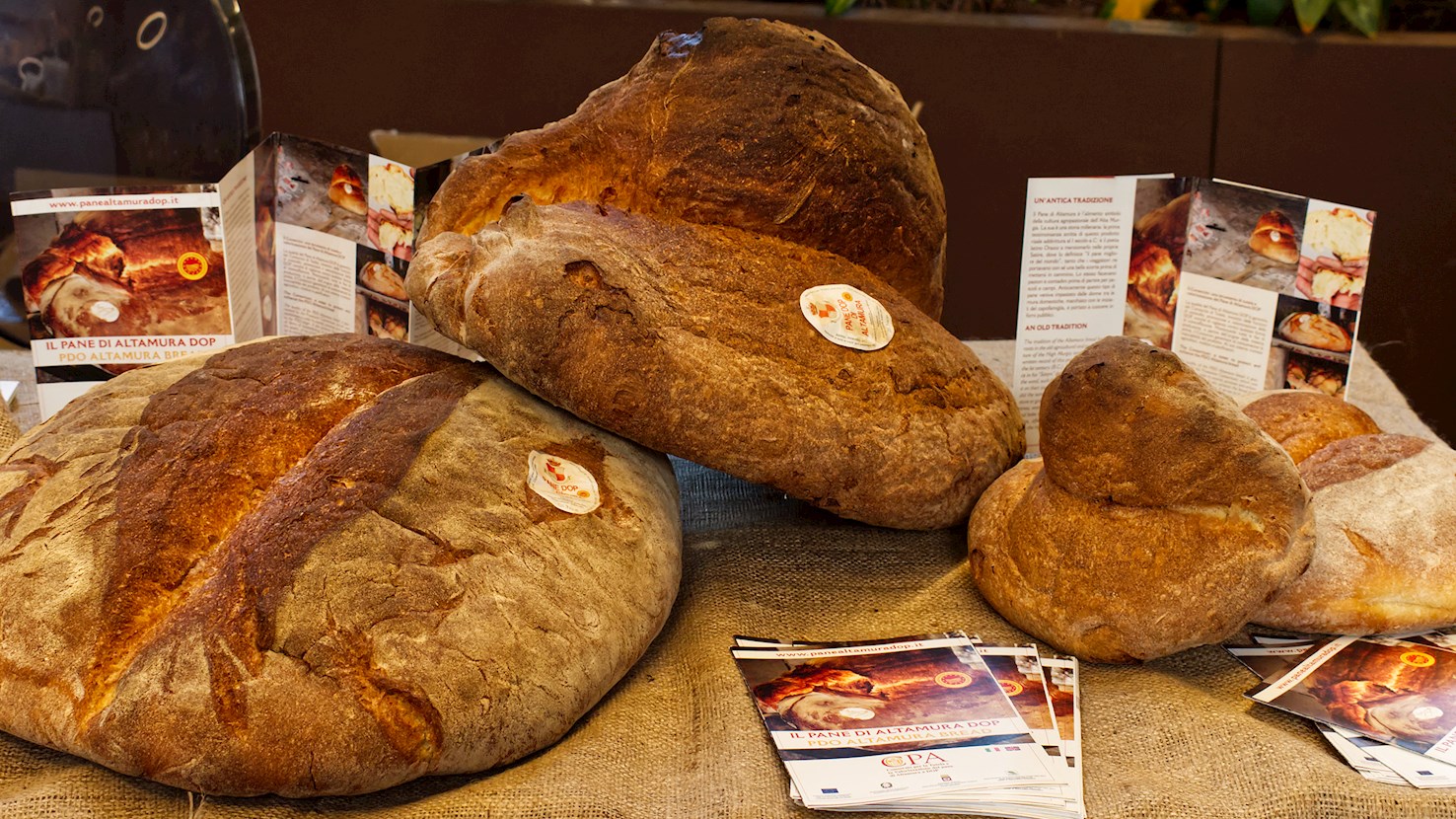
Named after a town settled on one of the Murge plateau hills, pane di Altamura is a country-style sourdough bread that has been traditionally produced in the provinces of Bari and Barletta-Andria-Trani for centuries. It is made only with durum wheat dough, natural yeast, salt, and water. Once the staple food of Murge people, these large loaves of bread were kneaded in Altamura's households, branded with the family name, then baked in community ovens. Since the loaves were supposed to feed whole families for one or even two weeks, the bread of Altamura had to be very durable, which is, even today, one of its most prized features. For a simple snack, pane di Altamura is simply drizzled with extra virgin olive oil and sprinkled with salt or smeared with tomato or olive tapenade. It is also an essential ingredient in many traditional recipes such as the zuppa povera, an aromatic tomato soup with toasted cubes of Altamura bread.
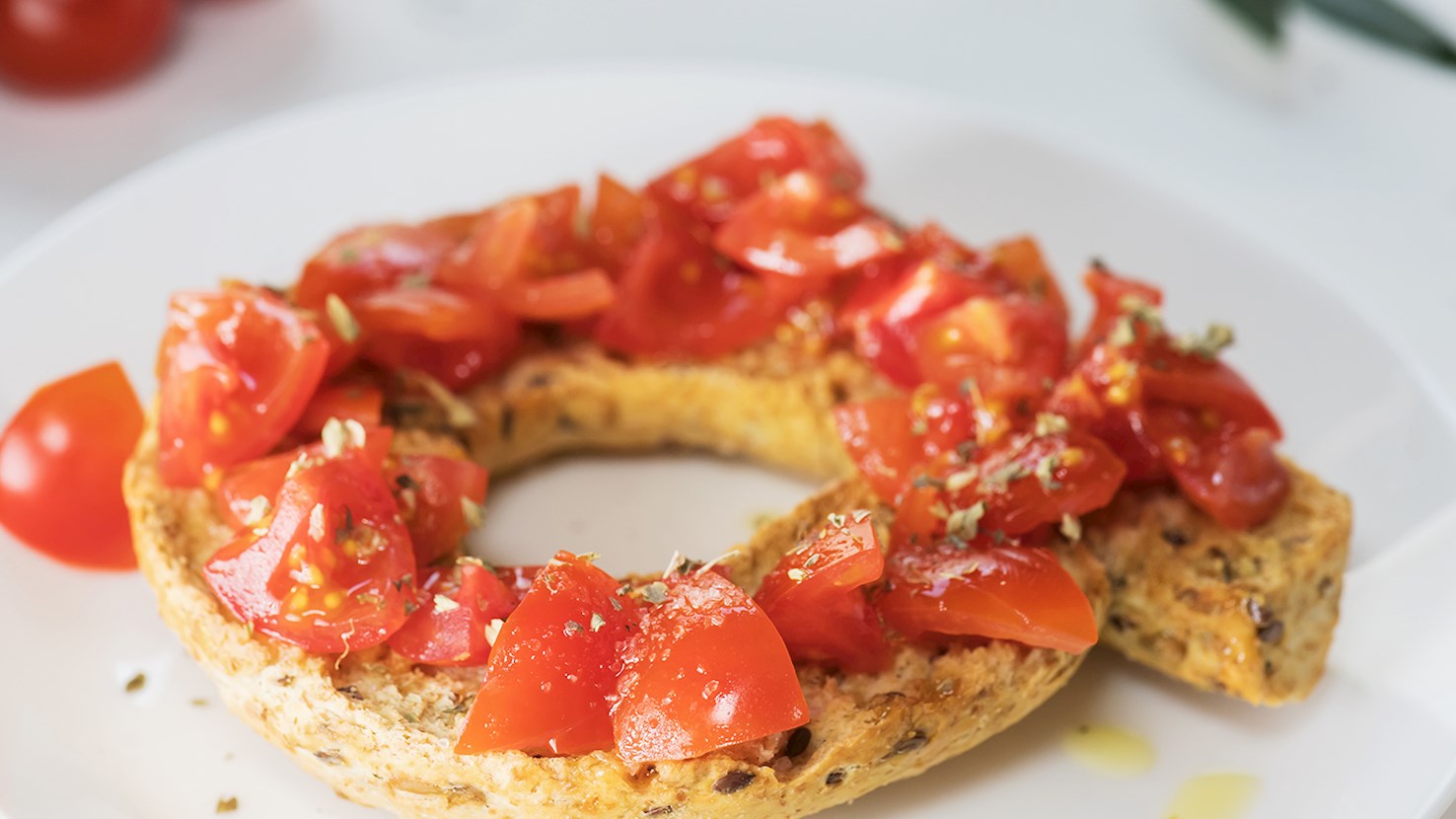
Frisele or frise is a traditional rusk originating from Puglia. It's made with a combination of plain flour, semolina flour, sea salt, yeast, and water. The rusks are double-baked, which greatly improves their shelf life. In the past, they were ideal for field workers or fishermen going out to sea. When served, friselle are usually soaked in seawater or springwater. If the rusks are topped with fresh tomatoes, they are then known as friselle Salentina, a specialty of Salento.
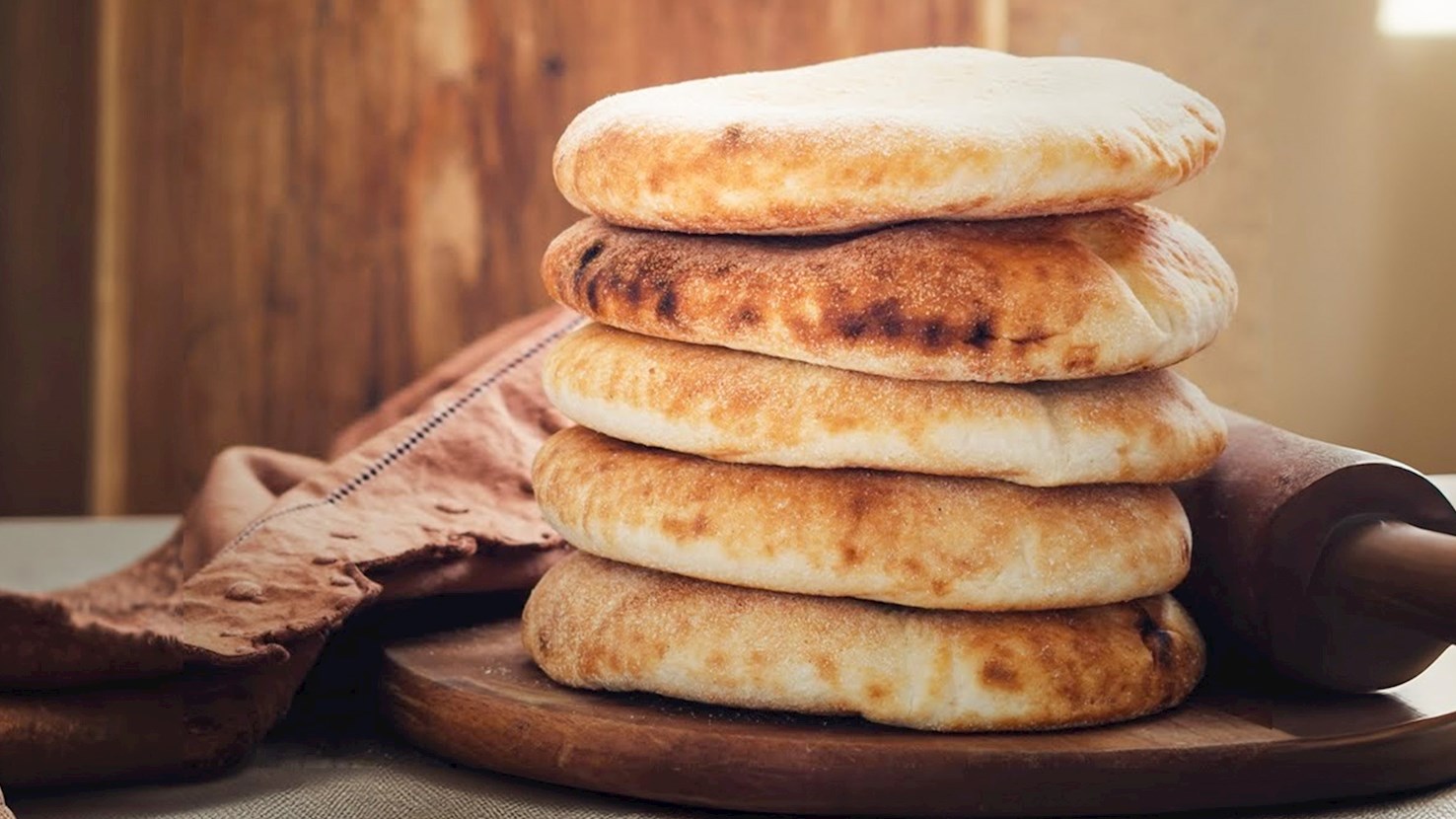
Puccia (pucce) bread is a traditional bread from the Puglia region, known for its soft, chewy texture and round shape reaching up to 20 cm (8") in diameter. It is typically made from durum wheat flour, baked in a wood-fired oven, very hollow with very little crumb. Puccia can be eaten plain or stuffed with a variety of fillings, including cured meats, cheeses, and vegetables, making it a versatile sandwich bread. The bread is especially popular during festivals in Puglia and is similar to pita in that it can be split and filled with ingredients. Salento and Taranto are the regions where this bread can be most often seen.
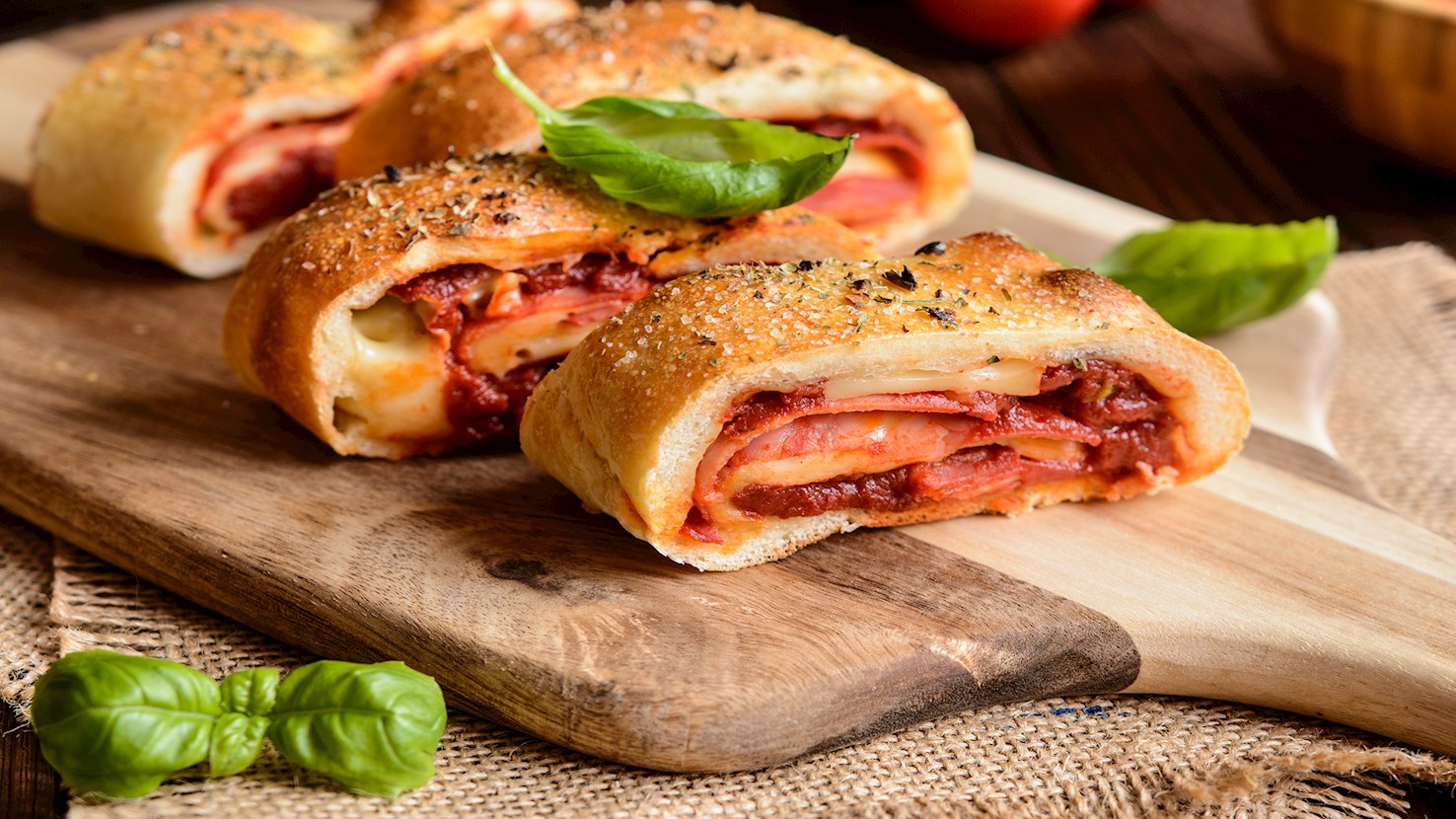
Scaccia is a unique dish from the Sicilian province of Ragusa that can either be described as a cross between lasagna and calzone pizza or a stuffed flatbread. It's prepared by topping the thinly rolled dough with various ingredients, then folding it over itself so that it resembles a strudel. These long, rectangular stuffed flatbreads are traditionally sliced in pieces, revealing the flavorful layers of dough, sauce, and cheese. There are several regional varieties of scaccia, so in some places it is topped only with sauce and cheese, while in other places it is topped with potatoes, cottage cheese, sausages, and different vegetables.
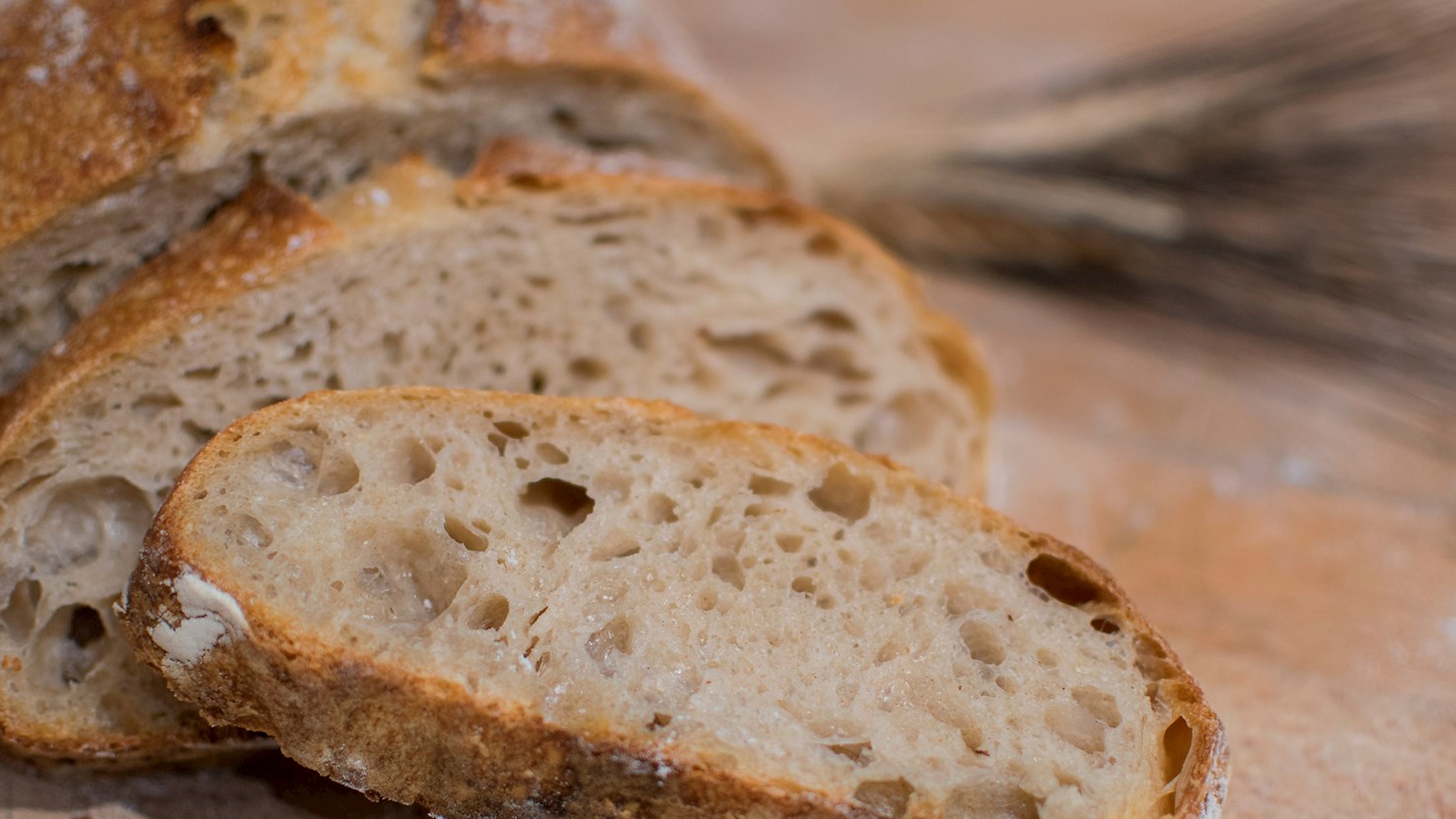
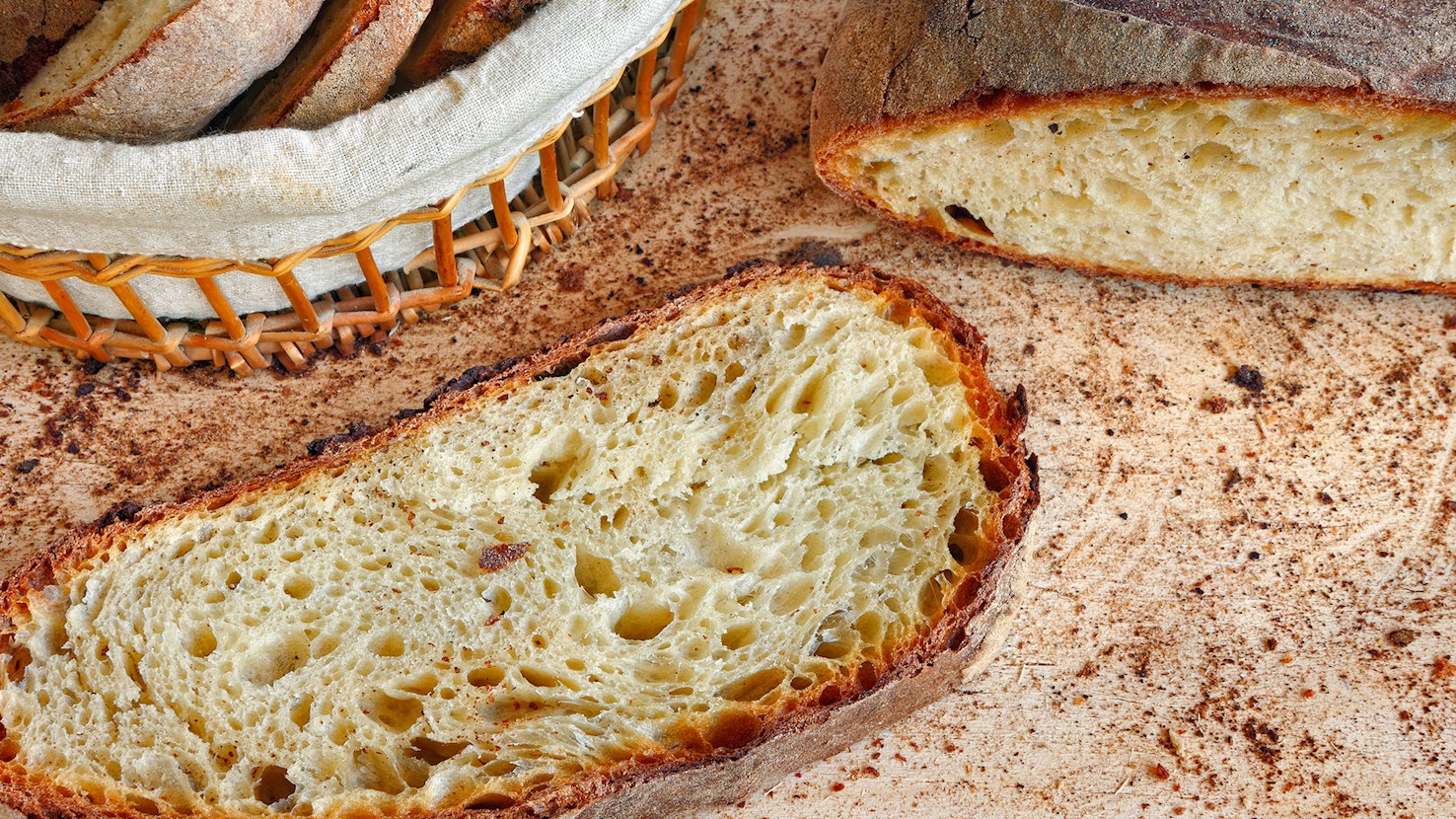
The crunchy-crusted pane Pugliese, a porous rustic bread whose origins can be traced to the 15th century, is said to be a legacy of the brown country bread which was brought to Apulia by the Turks who ruled the south of Italy at the time. This delicious peasant-style sourdough bread is made with only flour, water, and yeast, but the secret to making a perfect, slightly domed Pugliese loaf is in the kneading technique, namely the wet dough folding method. Even though the slack dough is very hard to work with, it produces a wonderful, airy texture, while long fermentation enhances the rich flavors of this bread. Pane Pugliese makes for an excellent bruschetta, but it is also enjoyed as an accompaniment to various soups and stews.
This round bread comes from Sardinia. It is usually made with a combination of regular flour and semolina flour, water, salt, and yeast. The crust is crispy, while the interior is slightly yellow and tender. In the past, it used to be made once a week in the early morning, and it was then kept in cellars, where it was wrapped in cloths. Civraxiu is best enjoyed warm as an appetizer, dipped in olive oil or the drippings of roasted meat, but it is also often used in the preparation of bruschettas.
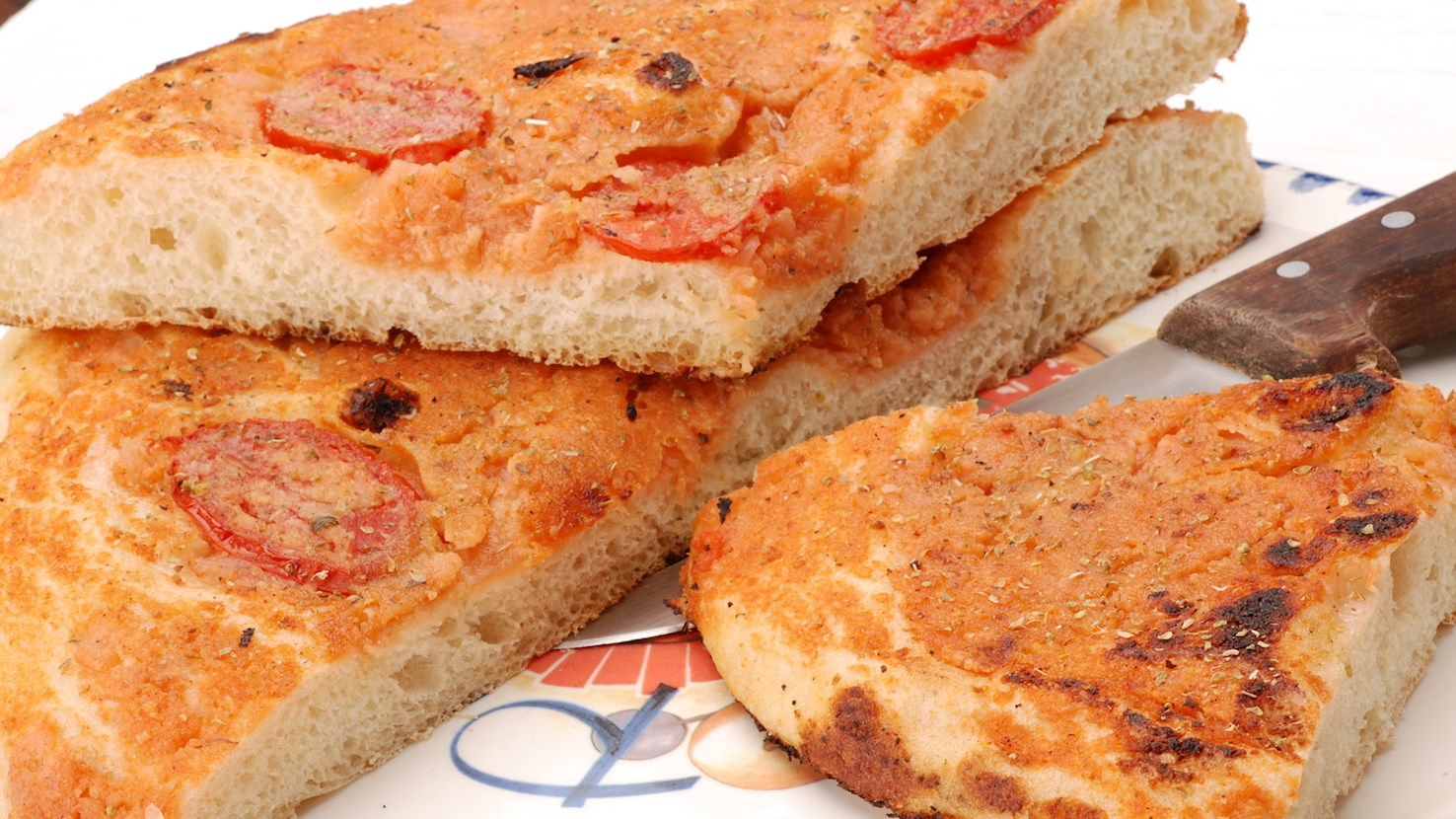
This traditional Sicilian focaccia is an oven-baked flatbread topped with an oregano-flavored tomato sauce made with the addition of onions, anchovies, breadcrumbs, and local cheeses such as caciocavallo, provolone, tuma, or ricotta. Sfincione is one of the island's favorite street foods, especially in Palermo, where street vendors are often seen driving around in their three-wheeled Piaggio Ape food trucks shouting "Scairsu r'uogghiu e chin'i pruvulazzu" (lit. little oil and lots of dust), referring to the crusty breadcrumb topping. The name sfincione is derived from the Arab word asfanaj and Greek sfoungári, both meaning sponge, which this flatbread resembles in appearance and texture.
Schiacciatina Mantovana (also known as chisolina) is a type of crunchy, rectangular or square-shaped flatbread from Mantua, with an ancient history – under the name schizzadas, they were even known during the rule of Gonzaga family, a famous Italian dynasty whose heads ruled Mantua from the 14th to the 18th century. Back in those days, it was an ancient bread of the farmers, who used to eat it when they went out to work in the countryside. Made with flour, water, yeast, lard, salt, and olive oil, schiacciatina can be enriched with onions, rosemary, or pork cracklings. Schiacciatina mantovana can be enjoyed on its own, served as a snack and accompanied by a glass of dry white wine, but it tastes even better when used as a vessel for local cold cuts and cheeses.
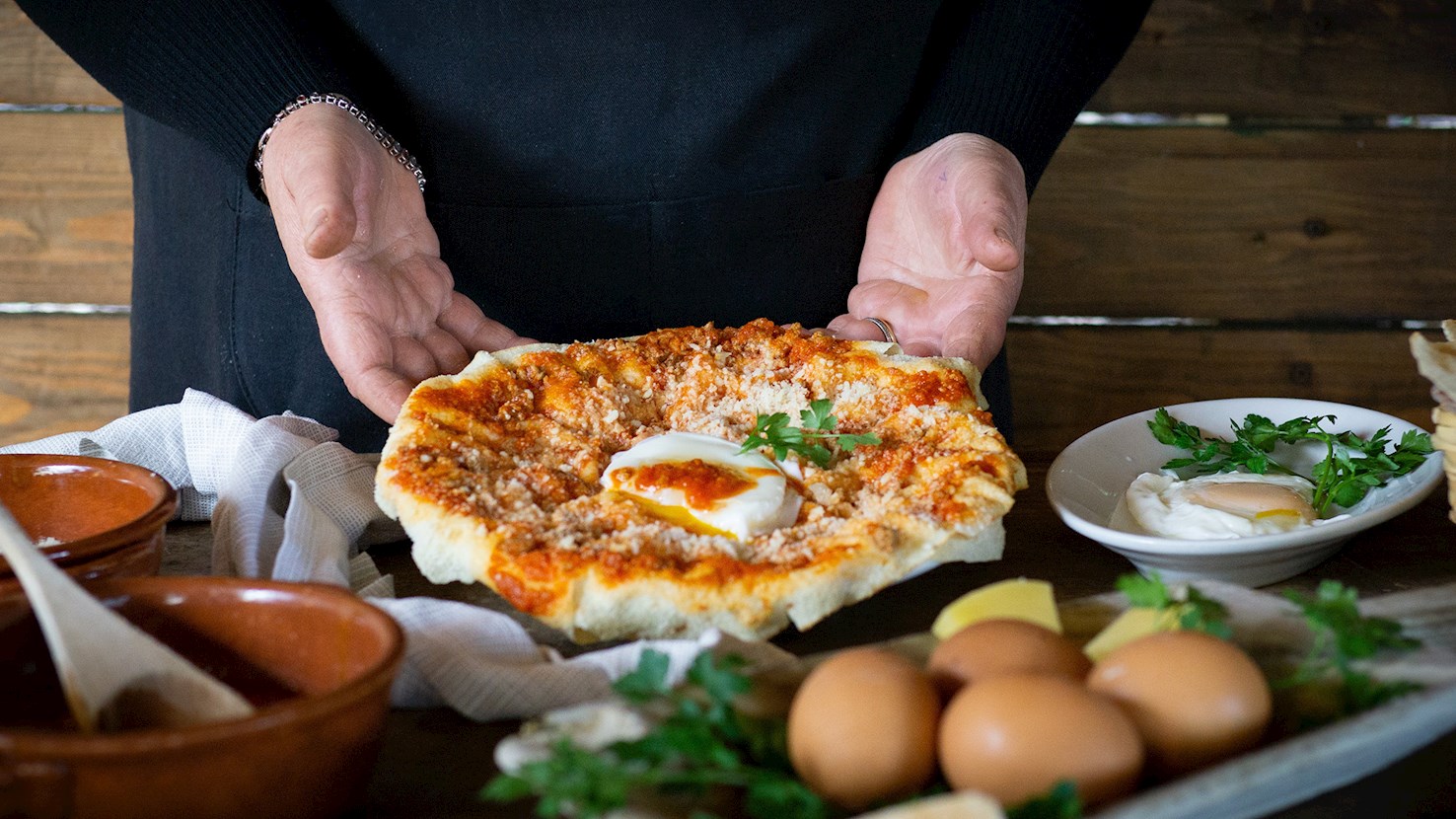
Pane frattau is a traditional Sardinian dish that was originally invented by local farmers as a way to use up old bread. It consists of the wafer-thin and crispy pane carasau flatbread which is first dunked in hot broth, then topped with tomato sauce, grated Pecorino cheese, and a poached egg. The locals say that pane frattau is an alternative to a dish of pasta because it's easier and quicker. The ingredients may vary from area to area, so tomato sauce might be replaced by sheep broth or water, while the poached eggs are not mandatory. It's recommended to serve the dish with Cannonau, a bold red wine.
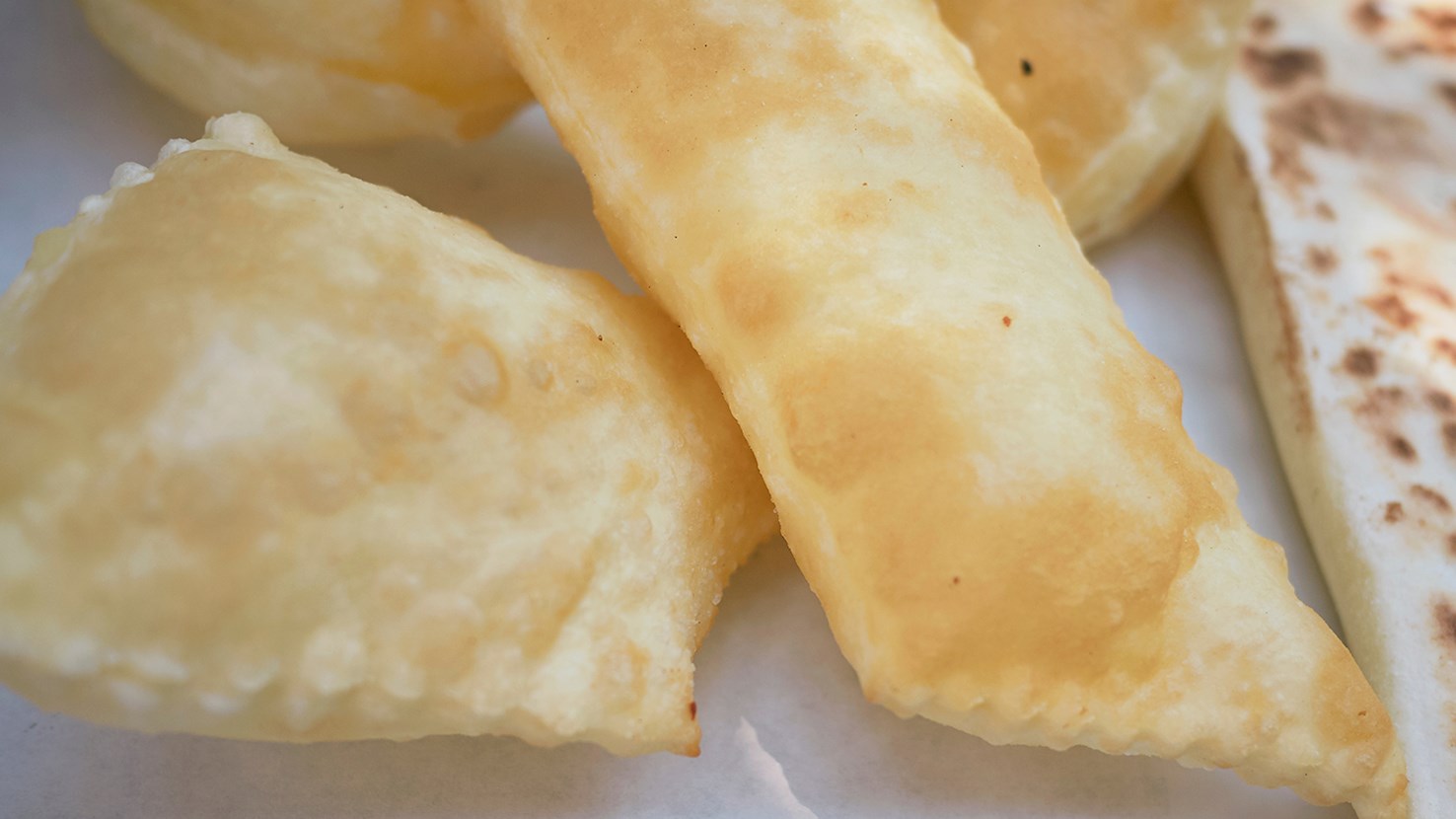
Piadina fritta, also called piè fretta, sometimes even pizza fritta, is a thin, golden-brown fried bread prepared alongside Santerno Valley in the Italian region of Emilia-Romagna. A very simple dough made with water, flour, salt, lard or olive oil, and yeast is first left to rise, and it is then shaped into thin round discs and deep-fried in oil. It can be enjoyed in both sweet or savory versions. The sweet piadina fritta can be served dusted with sugar, but it is often topped with jams or chocolate cream, while the savory version is usually lightly sprinkled with salt and enjoyed on its own or paired with different cold cuts and cheese. Since 1957, every year on Easter Monday, the Festival of Piè Fritta is held in Fontanelice - it is a great opportunity to try all the possible varieties of this simple, yet extremely versatile and delicious dish.
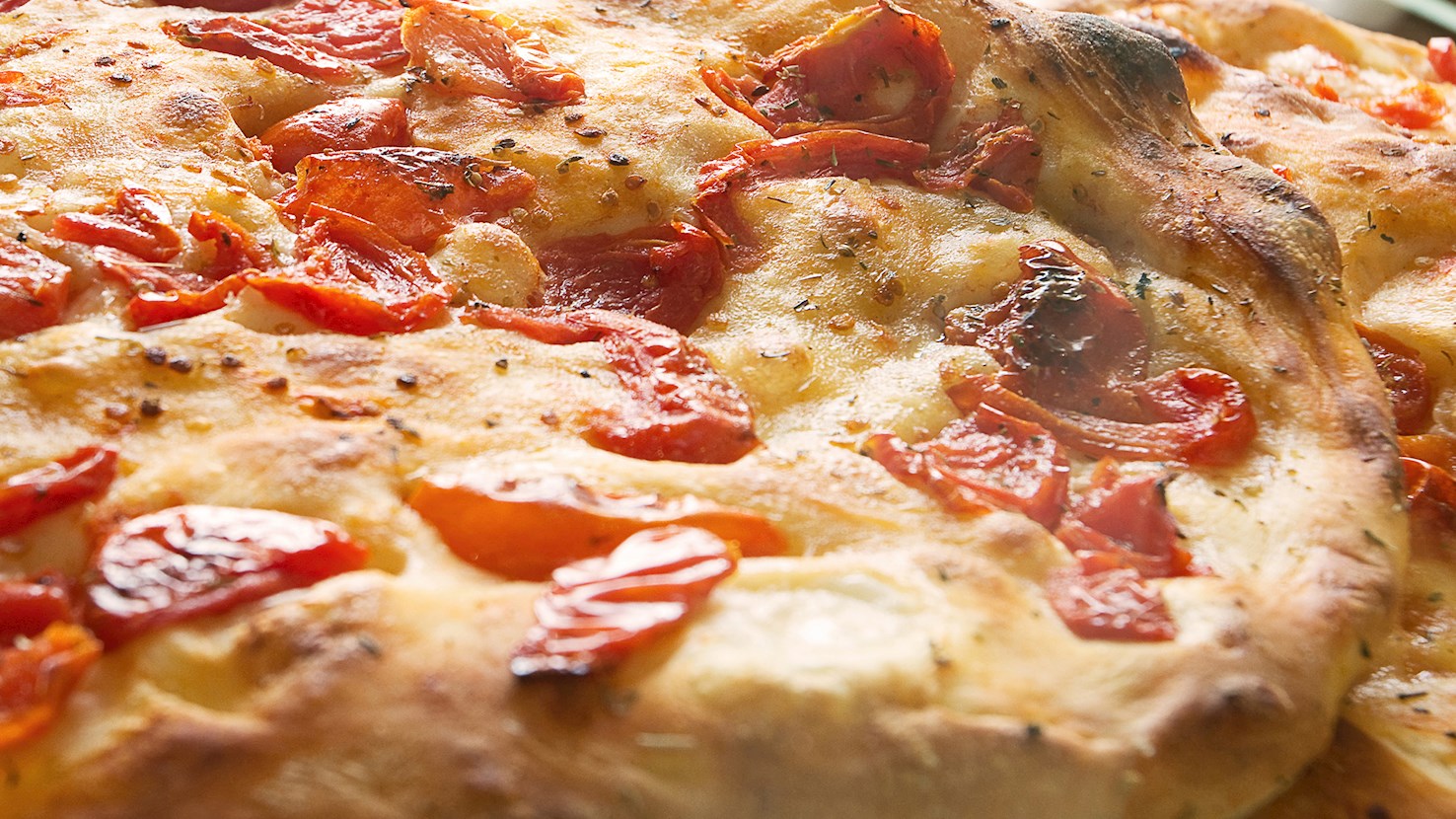
Puddica, a simple Italian flatbread from Puglia consists of a dough (made with flour, yeast, salt, sugar, water, and olive oil) that is traditionally topped with ripe tomatoes and sprinkled with oregano in the classic version. However, there are varieties with added capers, onions, prosciutto, black olives, and hot peppers. The flatbread is placed into a deep dish, then baked until it develops a nice golden brown color. Puddica is especially popular in Brindisi, where it's considered a local specialty that is consumed either as a light lunch with cheese or as a tasty afternoon snack.
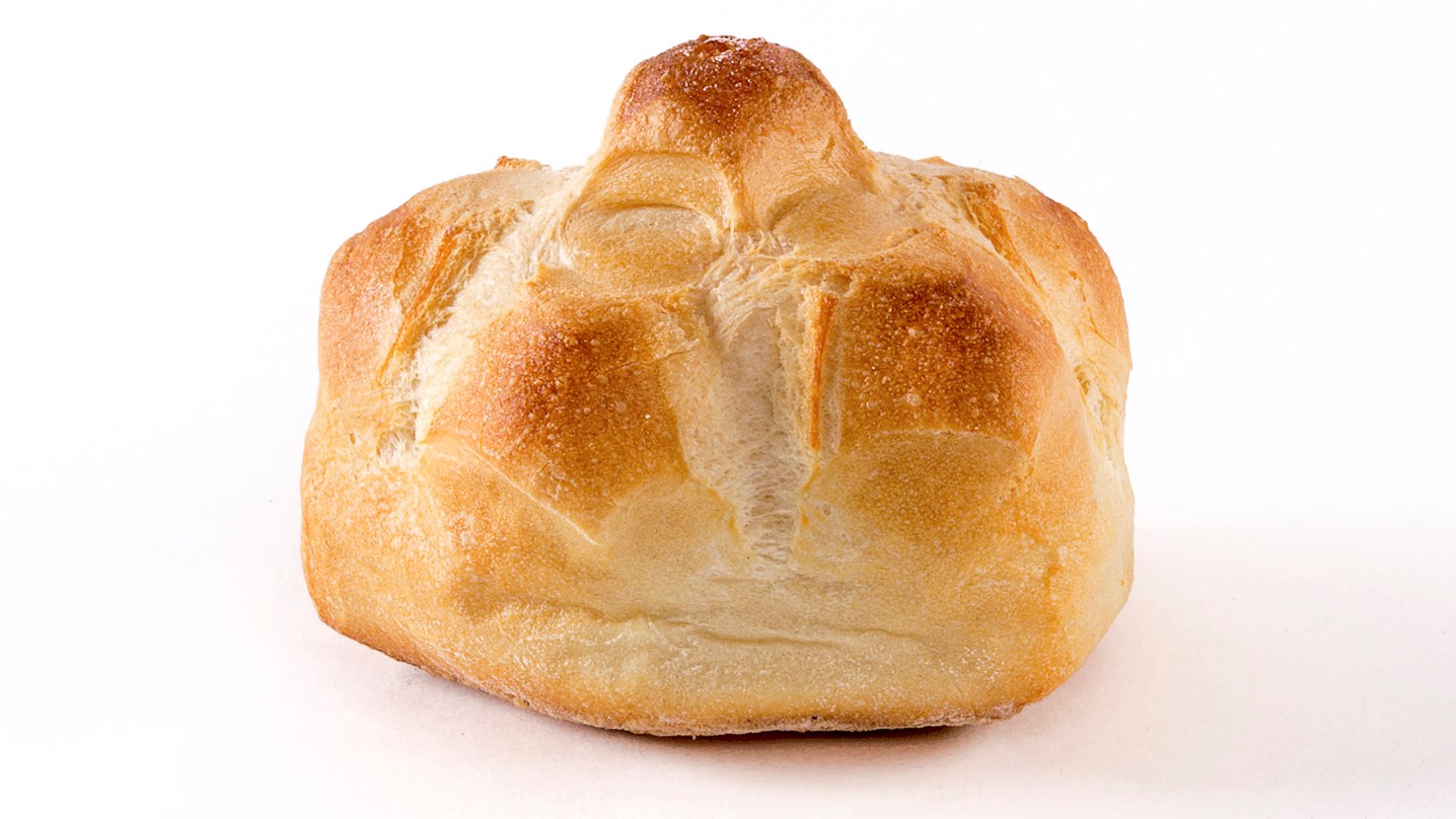
Michetta is a traditional white bread characterized by its round and bulbous shape, hard crust, and an airy, slightly hollow texture of the interior. It is believed that michetta was invented in Lombardy during the period of the Austrian rule. At the time, the officials who were located in Lombardy brought with them traditional Austrian dishes, including Kaisersemmel—a crusty round bread roll. The bread proved to be too soft and rubbery for the locals, who then tried to create a similar roll with a slightly hollow center which would remain crispy for longer. The name michetta, which initially meant crumb, is believed to stem from micca, a local term that was once used for Kaisersemmel. The bread is best served fresh, and it is typically filled and enjoyed as a sandwich. It can be paired with anything from pesto and mozzarella to prosciutto. Versions of michetta are sometimes referred to as bignè, rosetta, or stellina. In 2007, michetta was officially granted a municipal designation of origin which categorized it as a traditional gastronomic item of the region.
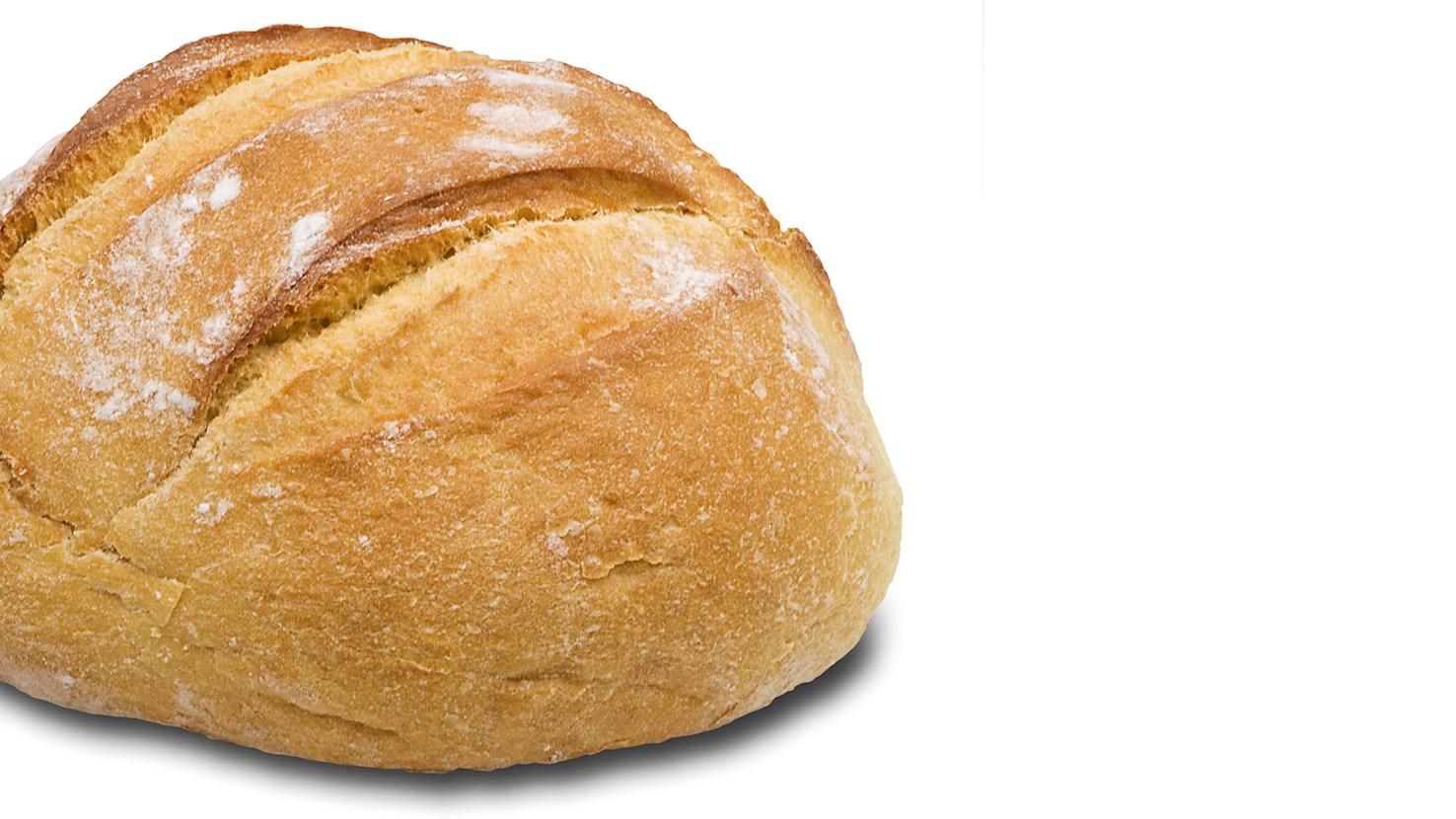
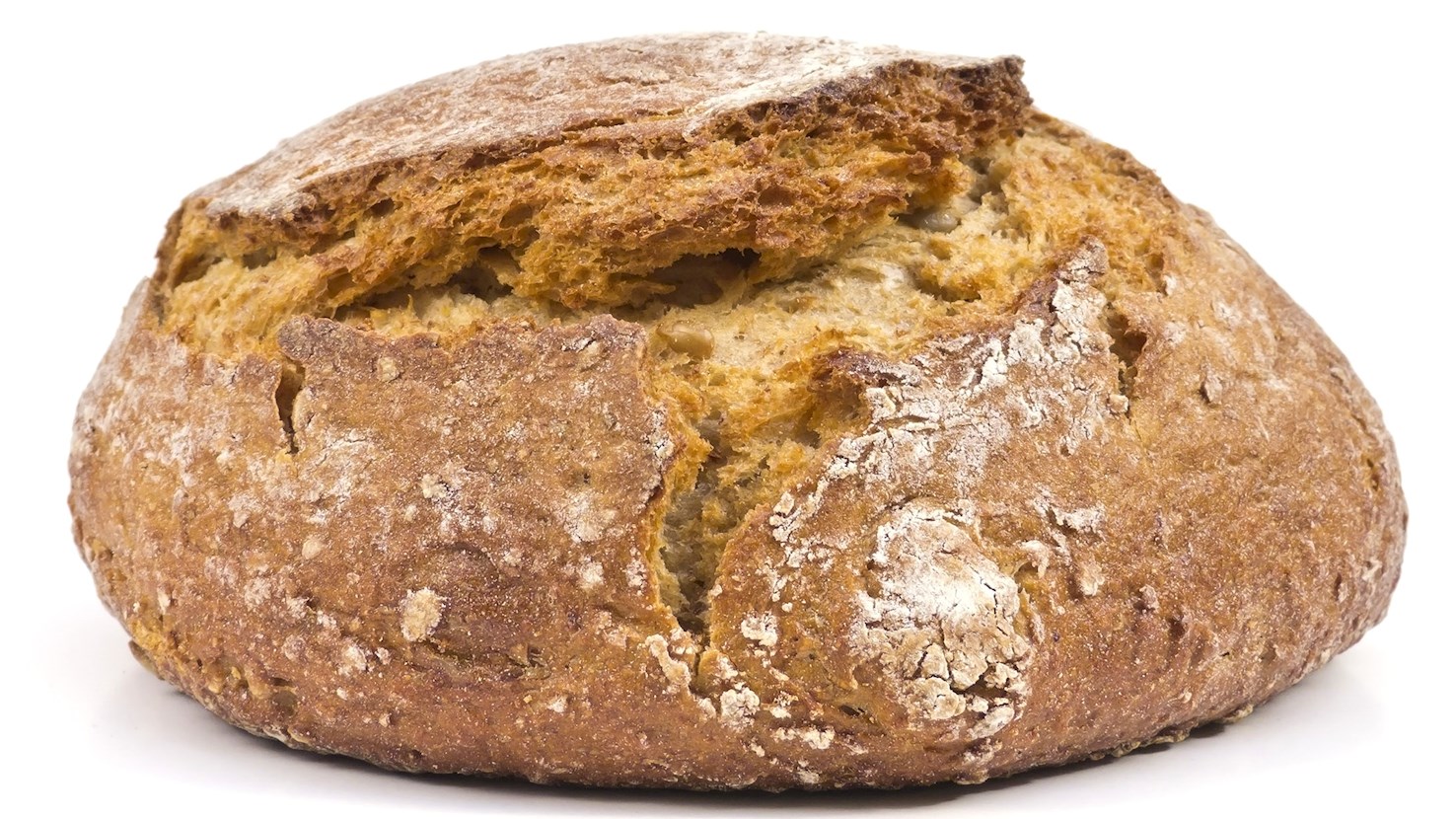
Pagnotta is a traditional round loaf of bread, known for its rustic appearance and crusty exterior. It is typically made with wheat flour, water, yeast, and salt, resulting in a soft, airy crumb inside. Pagnotta is often baked in a wood-fired oven, giving it a distinct smoky flavor and a thick, crispy crust. It is versatile and commonly served with meals, used for sandwiches, or enjoyed with olive oil and other toppings. Pagnotta is popular in various regions of Italy, especially in rural areas.
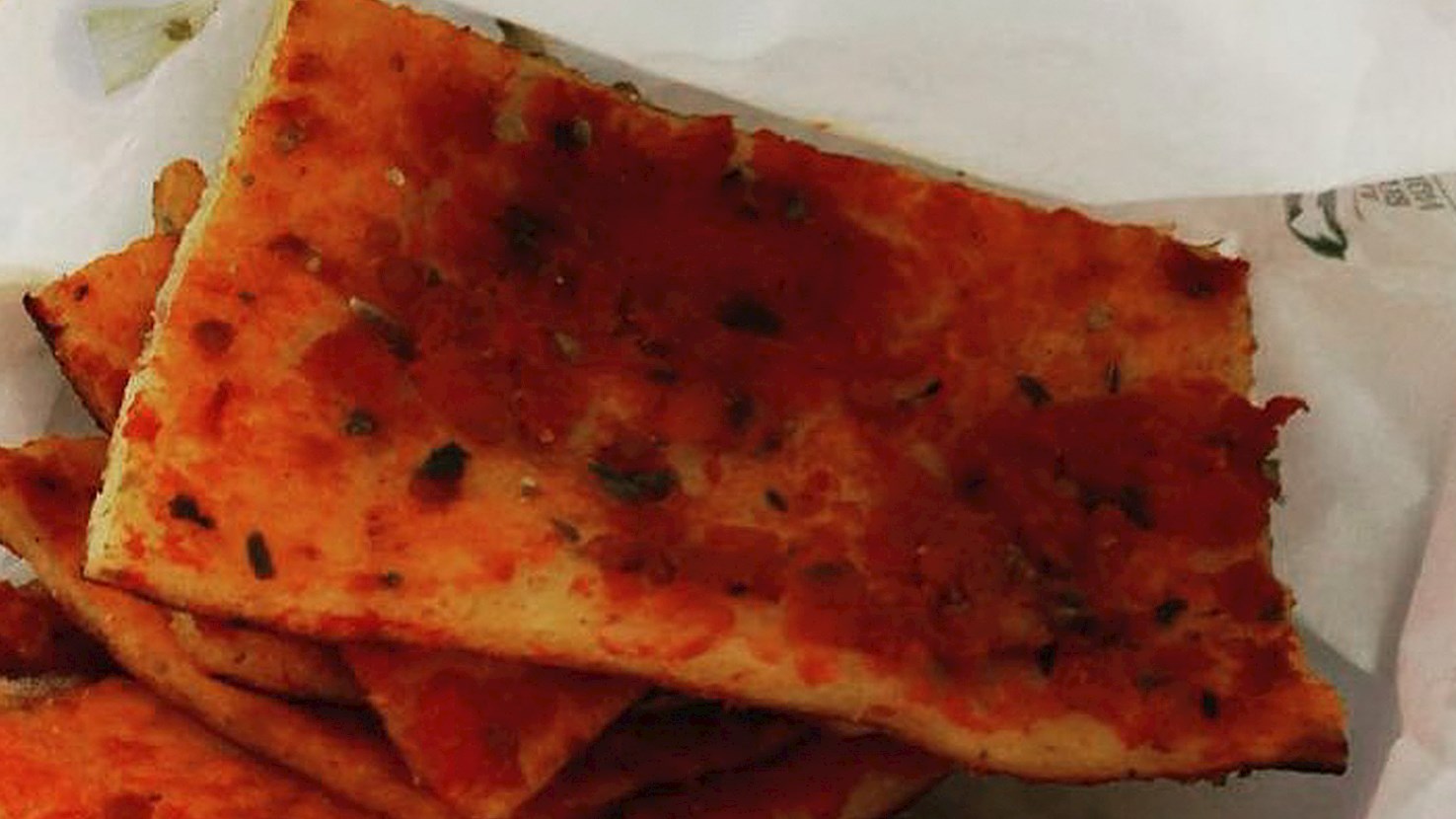
Pizza secca, meaning dry pizza, derives its name from the crunchy, crispy texture it develops once it’s baked. It is not a regular pizza but a type of schiacciatina, a very thin flatbread with a topping that resembles a pizza in visual appearance and flavor. Consisting of flour, water, olive oil, salt, and (sometimes) yeast, the dough is rolled out very thinly before it is cut into rectangular or square-shaped slices and brushed with a combination of tomato sauce, oregano, salt, and olive oil. The topping can also be enriched with other ingredients such as finely sliced onions, olives, eggplants, dry salami, or marinara sauce, while some versions may omit the tomato sauce altogether. Pizza secca is a specialty of the Sicilian town of Catania and the surrounding area, where it is available in almost every local bakery at any time of the day. Slices of this crunchy, pizza-like flatbread make for an excellent snack or an appetizer that can be enjoyed warm or chilled.
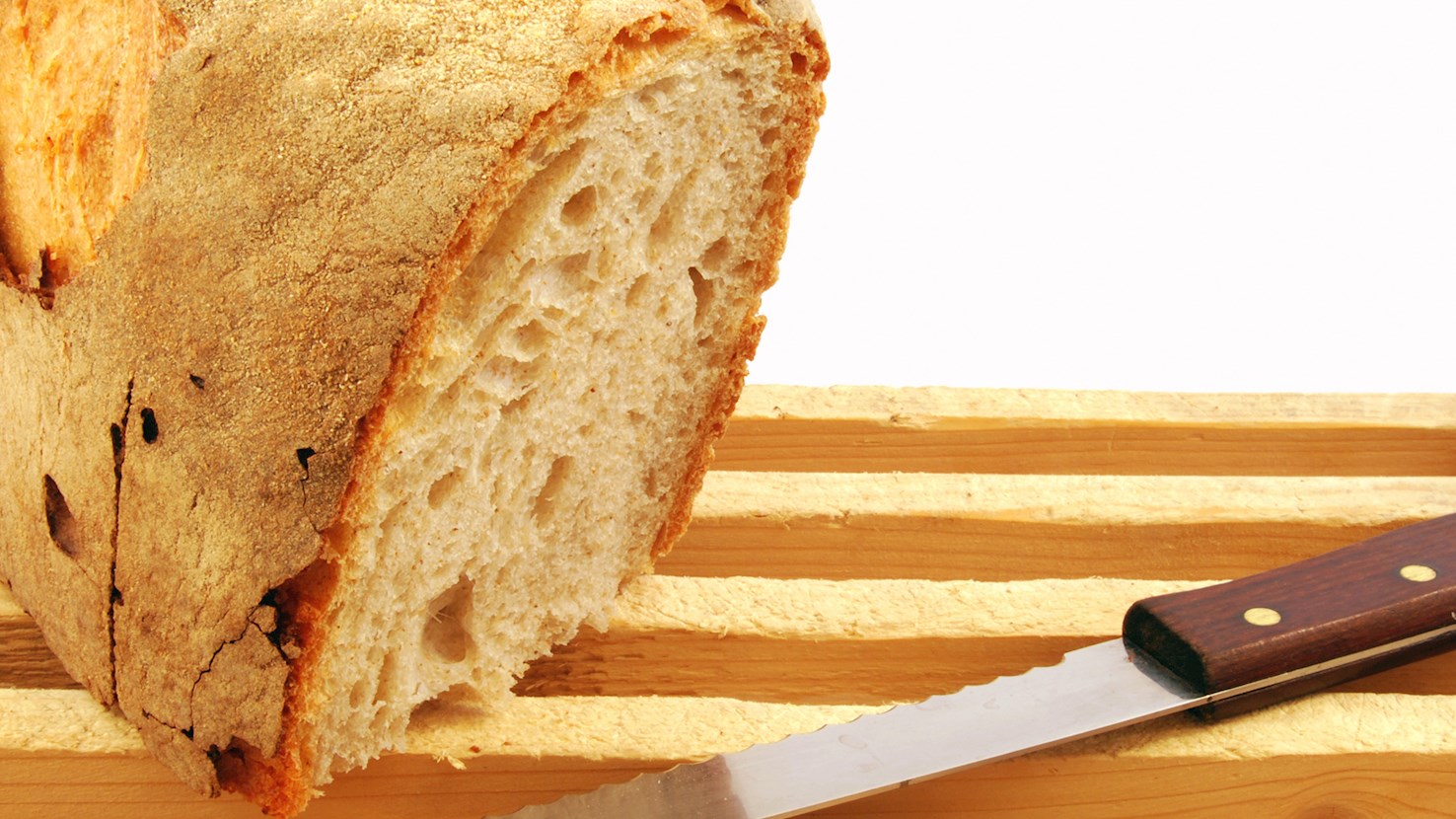
Filone is a traditional bread from Tuscany, visually similar to the famous French baguette, consisting of flour, olive oil, yeast, water, and salt. The bread has a hard, crispy crust on the exterior, and a light, airy crumb on the interior. The name filone is derived from the Italian word filo, which means line, referring to the shape of the bread.
Named after an ancient city and the province of its origin, pane di Matera is a country-style sourdough bread made with semolina dough, natural yeast, salt, and water. Due to special kneading methods and the use of a local wheat variety called Senatore Cappelli, the unusually-shaped Matera bread will stay fresh for up to a week or sometimes even longer, keeping its unmistakable flavor and aroma. It is especially good when combined with local cheese and charcuterie products, but it can also be used for bruschettas, or as an ingredient in various dishes such as the rustic cialledda Materana, a local specialty made with onions, tomatoes, and soaked Matera bread, altogether flavored with oregano and olive oil.
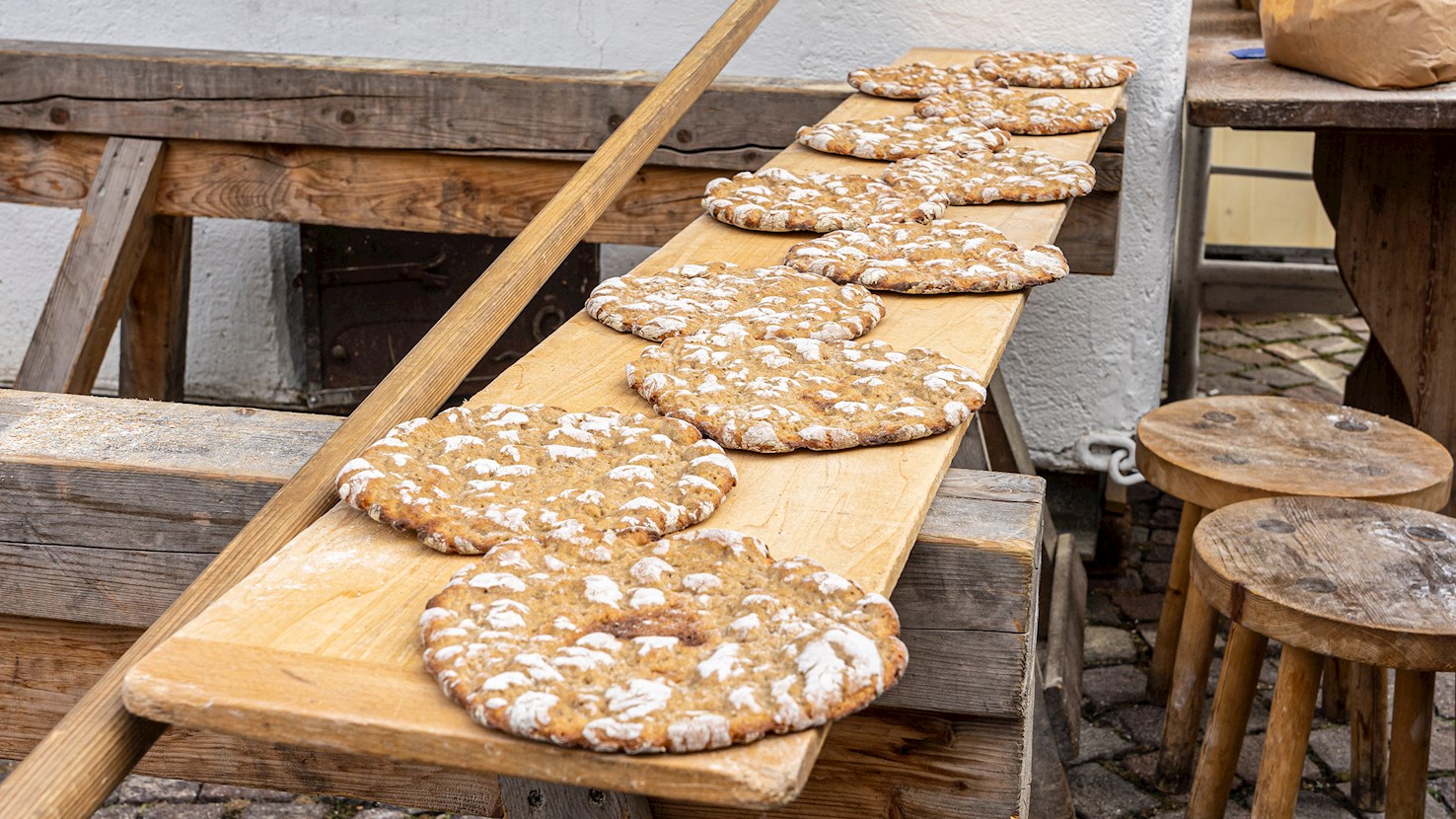
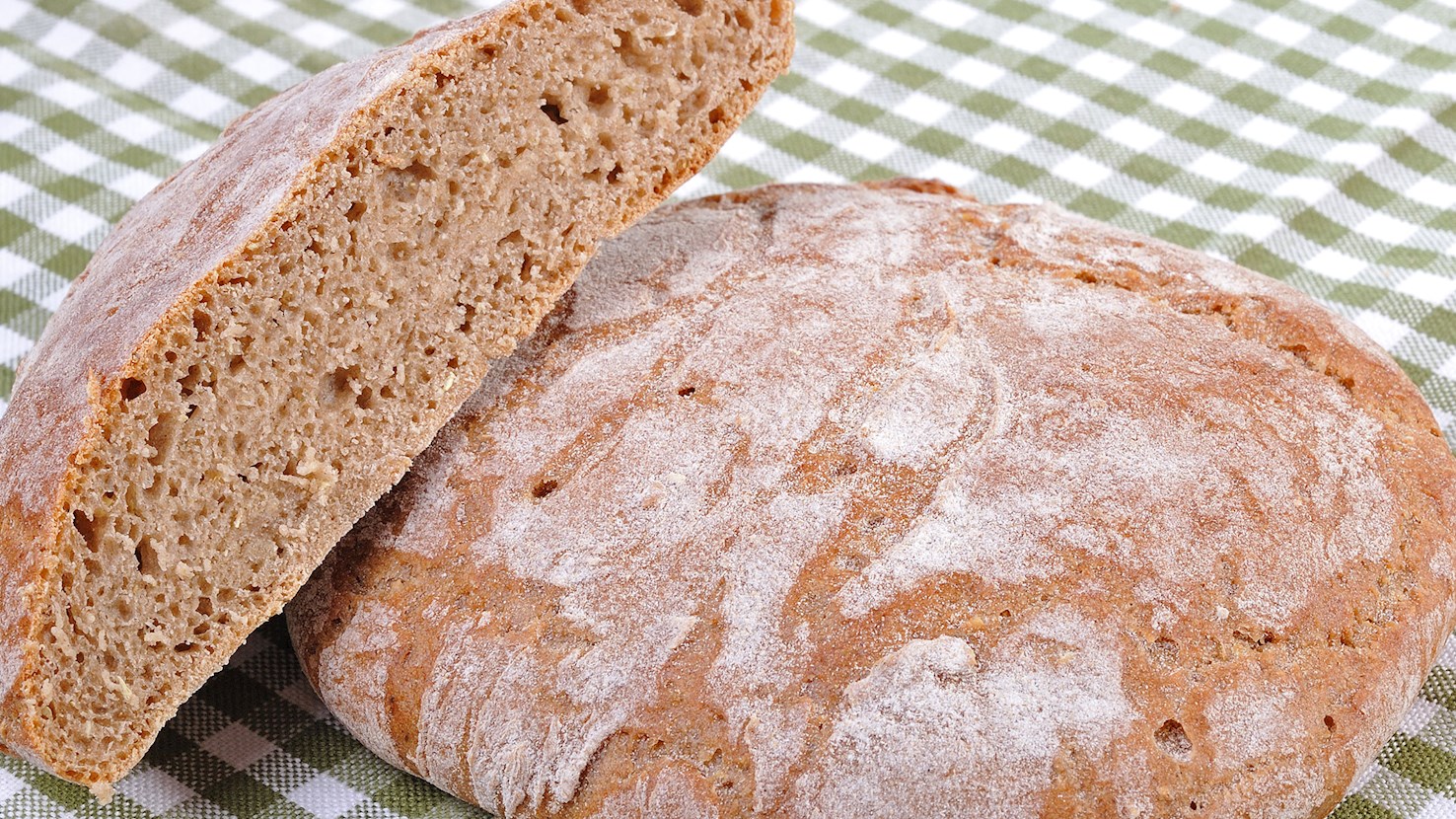
Schüttelbrot is a traditional flatbread originating from South Tyrol, or to be precise, the Isarco valley, in particular in Fiè allo Sciliar. It's usually made with a combination of rye flour, wheat flour, yeast and sugar, salt, oil, and herbs and spices such as fennel, cumin, and fenugreek. The seeds are crushed or pounded in a mortar, then kneaded into the dough. The dough is rolled flat – either paper-thin or a bit thicker – and it's then baked until crunchy and golden brown. If desired, whole rye kernels can also be added to the dough before baking, but the kernels should always be pre-soaked in warm water. Once baked, schüttelbrot is typically served with cheeses and sliced smoked ham or similar cold cuts. This flatbread keeps very well, so it's recommended to store it in a tightly closed container.
Traditionally made since the Middle Ages, pane Toscano or pane sciocco is a variety of bread commonly found in the central Italian regions of Tuscany, Umbria, and the Marches. Back then, to show their displeasure with the imposed regulations and high taxes on salt, the Tuscans started baking their bread without salt, hence the name pane sciocco (lit. tasteless bread). Due to its bland taste, the salt-free Tuscan bread is not quite intended for eating on its own, so it is typically served fresh from wood-fired ovens with cured meat products such as prosciutto, salami, or strong cheeses in order to balance out their saltiness and intense flavors. Drizzled with olive oil and smeared with mashed garlic, pane Toscano also makes for a delicious fettunta (similar to an untopped bruschetta), but it is more often used in various soups and stews such as zuppa di pane Toscana.
A real Tuscan specialty originating from the historical region of Garfagnana, schiacciata con ciccioli, locally known as ciaccia coi ciccioli, is a type of focaccia-style flatbread studded with crunchy pork cracklings. Its name stems from the Italian schiacciare which means "to press" or "to flatten". In the past, this flavorful oven-baked delicacy was a staple food and the traditional primo colazione or the first morning meal of Tuscan farmers who used to enjoy their ciaccia with a glass of hearty red wine. Today, ciaccia coi ciccioli can be found in bakeries throughout Tuscany; it is freshly baked and dished up all day long, not just for breakfast.
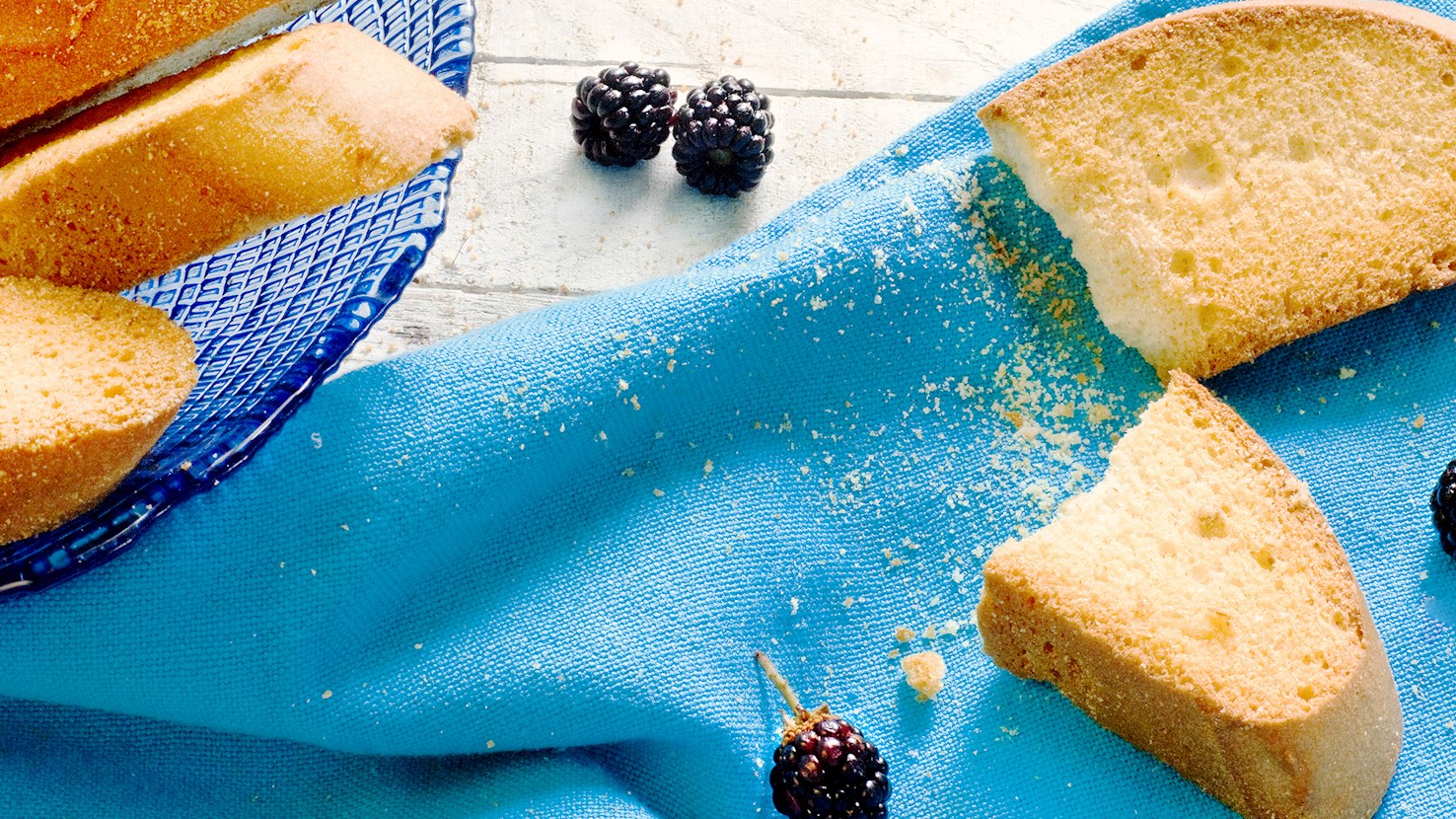
Categorized somewhere between a cookie and a rusk, biscotti del Lagaccio are named after a Genovese quarter where they were allegedly invented around 1593. In the beginning, they were simple double-baked biscuits made only with flour, butter, yeast, and sugar, but over time, the basic recipe was changed with the addition of wild fennel seeds and a few drops of anise liqueur, giving them their typical flavor. Delicately sweet, biscotti del Lagaccio make a perfect breakfast or an afternoon snack, especially if paired with a cup of caffè latte or tea.
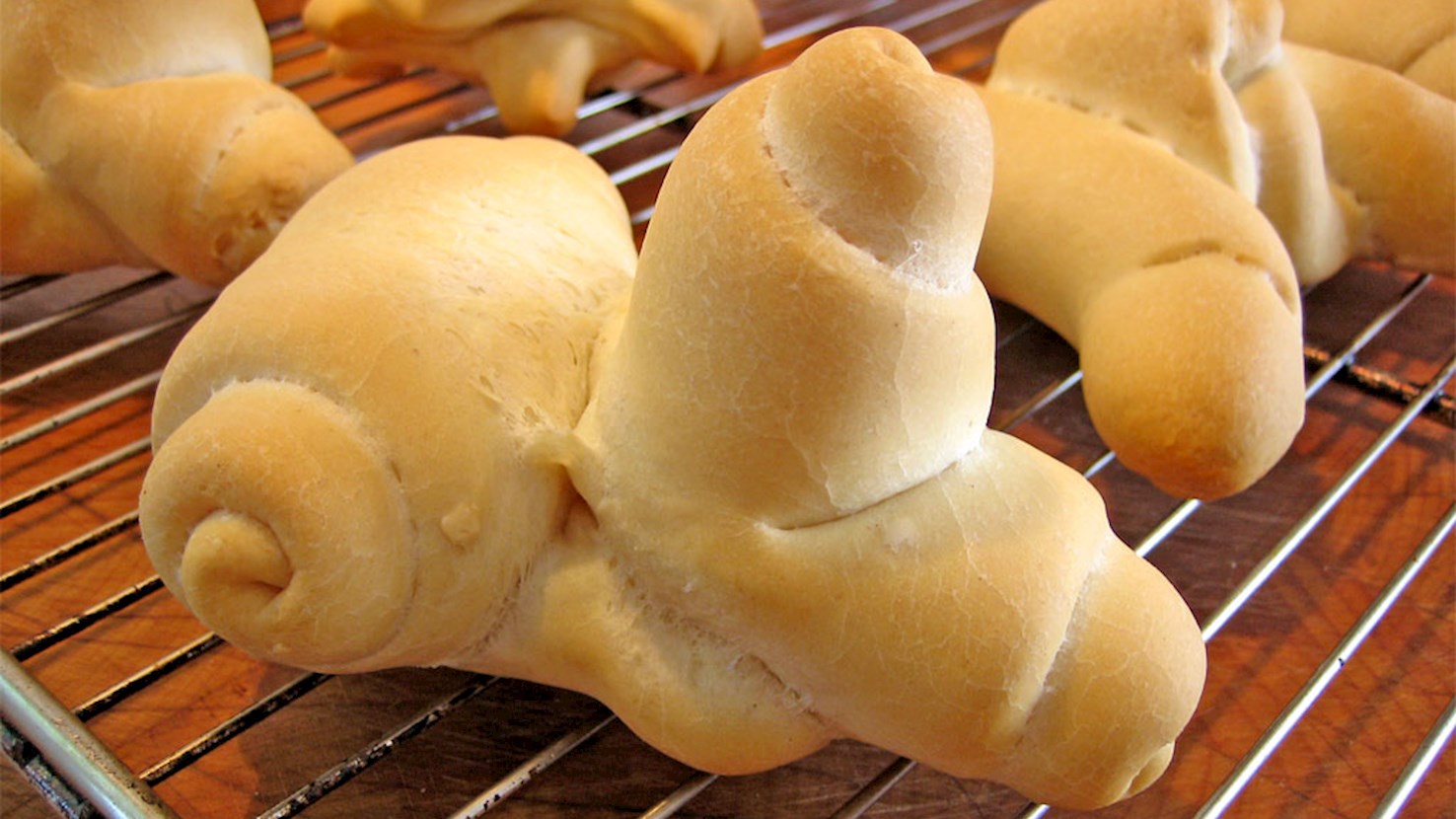
Shaped like a double twisted loaf, this traditional bread is prepared with flour, pork lard, extra-virgin olive oil, sourdough, salt, water, and malt. Characterized by its golden color and a distinctive taste, coppia is a signature dish of Ferrara that evolved from the original versions of pane intorto (lit. twisted bread), which dates back to the 12th century. Because of its distinctive shape, it is recommended to consume the elongated parts first, while the center can keep fresh for a longer time. In 2001, coppia was registered as a Protected Geographical Indication.
Moddizzosu is a round, artisan bread from the Barbagia di Seulo area. The dough is made with semolina and su frammentu, or mother yeast, and it is baked in a wood-burning oven fired with aromatic wildwood that adds another layer of flavor to the bread. Once baked, this soft-crusted bread with white crumb can last up to 10 days without losing its freshness. Traditionally prepared in two sizes, bigger, su civargiu, weighing around 800 g, and smaller, sa civargedda, weighing around 400 g, it can be additionally enriched with potatoes or fried pork fat.
Panini di Sant'Antonio is a traditional soft bread bun originating from Tuscany. It's made with a combination of flour, milk, sugar, oil, eggs, yeast, salt, and a bit of rum. The dough is rolled into balls which are then brushed with egg wash and baked until golden brown. Once baked, these buns are brushed with a syrup consisting of sugar and water. These sweet bread buns are traditionally taken to church to be blessed, and in the past these buns were blessed than distributed to the peasants as a sign of protection of Saint Anthony. You can enjoy them warm or at room temperature, plain or served with ricotta and fruit jams, but also with savory ingredients such as mortadella or prosciutto.
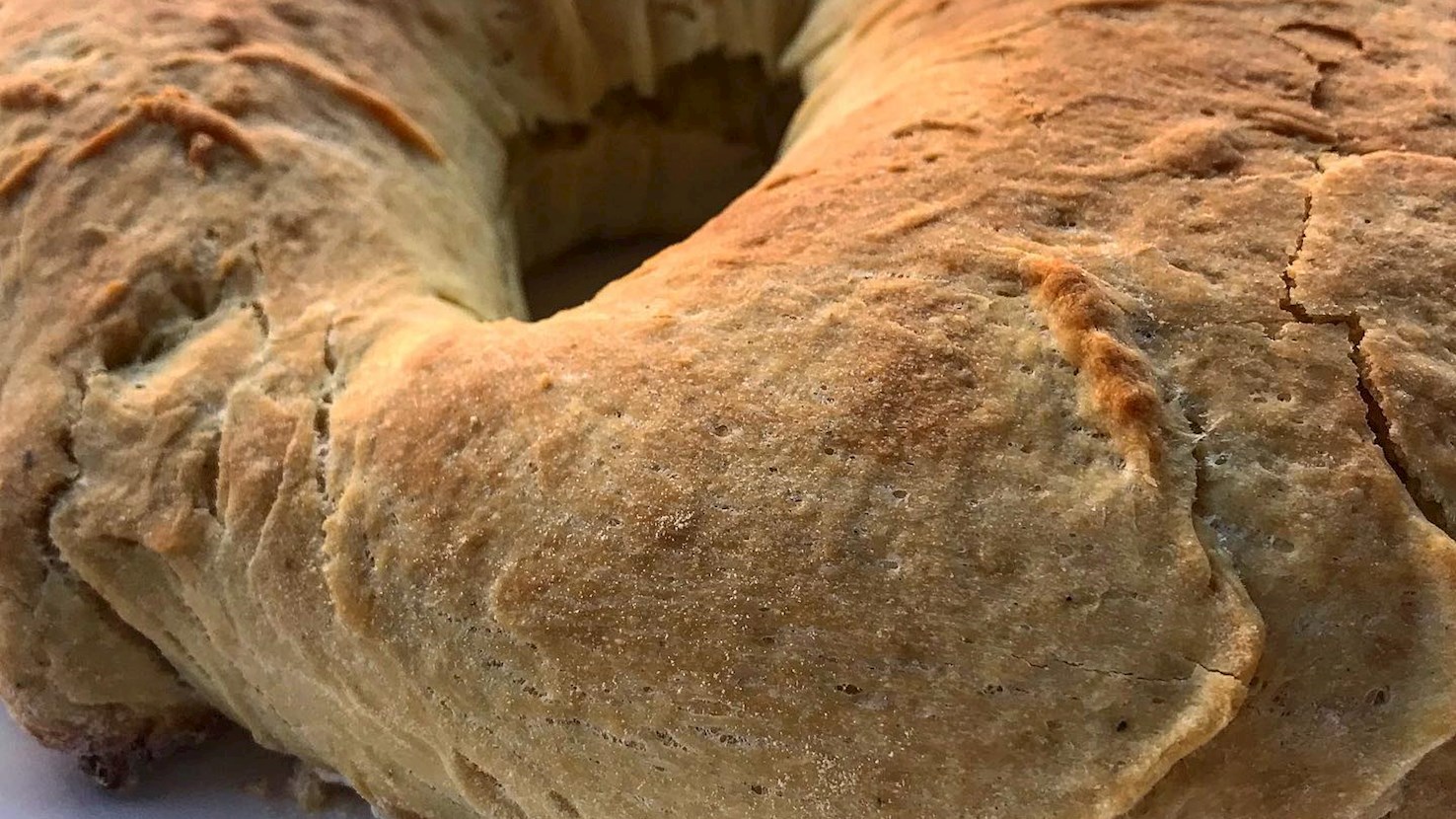
Tortano is a flavorful Italian bread that is stuffed with a variety of ingredients such as eggs, cheese, ham, and pork cracklings. It is traditionally prepared for Easter and baked in the shape of a ring. This delicious treat can be paired with various dishes or consumed as a meal on its own.
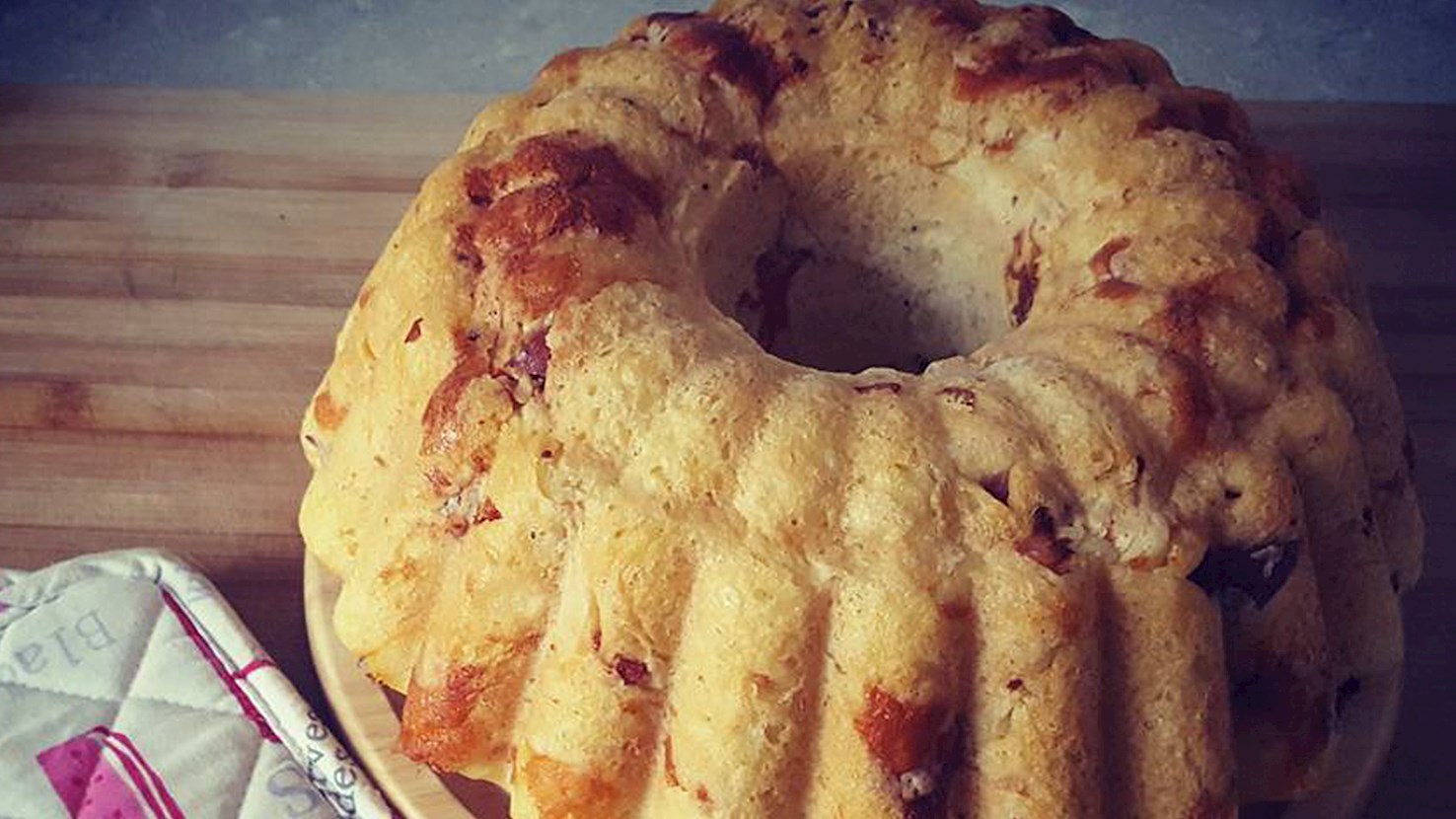
Babà rustico is a Neapolitan savory bread consisting of flour, milk, yeast, eggs, and oil. Once prepared, the dough is filled with salami, prosciutto cotto, grated parmesan or grana padano, and cubes of provolone, scamorza, or fontina cheese. The concoction is left to rise until it doubles in height, and it is then baked until golden brown. Babà rustico is often seen at parties, and it is traditionally prepared for similar events and various festivities.
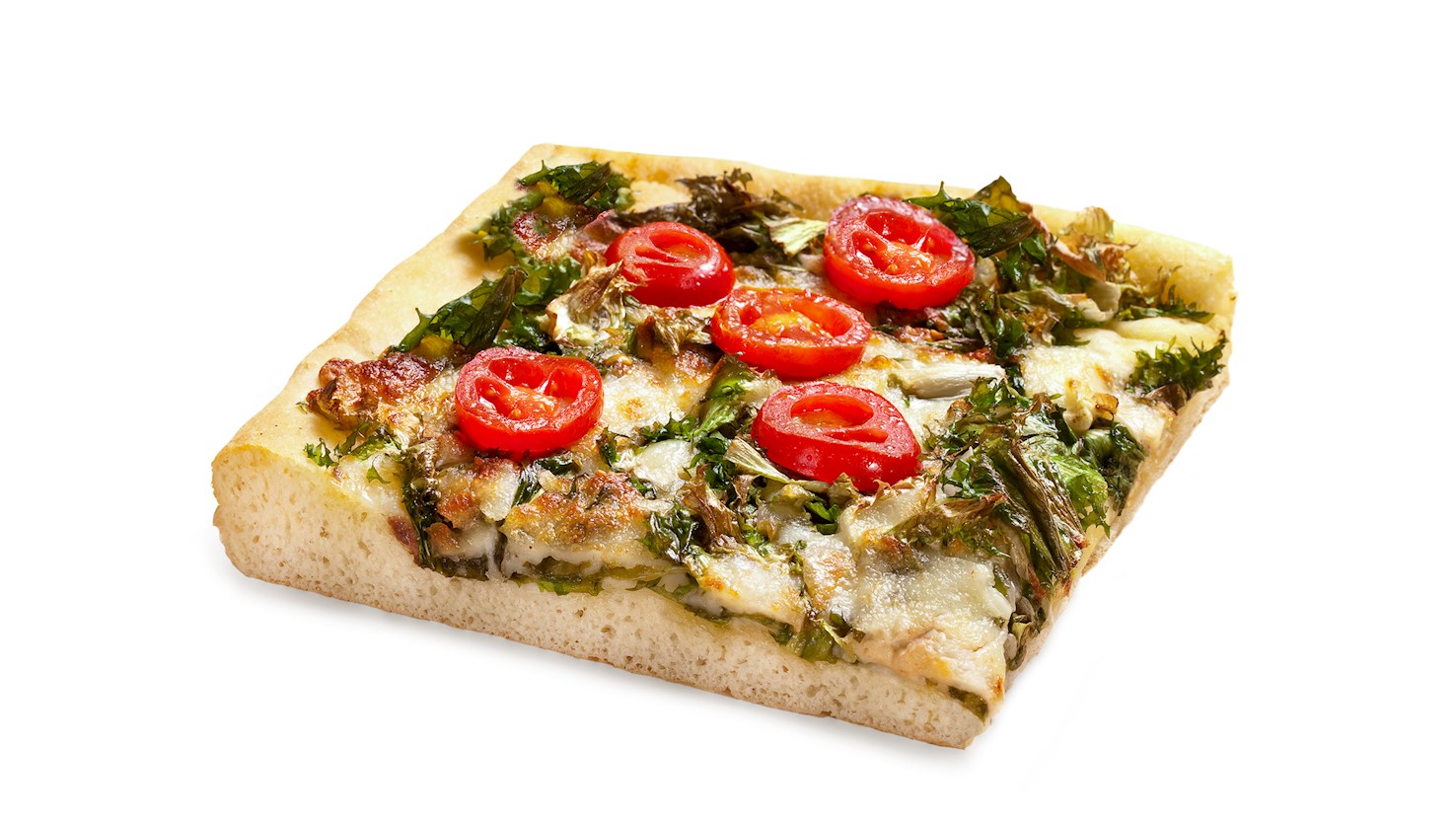
This variety of Italian focaccia originates from Messina. The focaccia dough is made with flour, semolina, yeast, lukewarm water, olive oil, salt, and sugar. The toppings are what differentiates this focaccia from all other varieties – it is topped with anchovies, tuma cheese, curly endive, and tomatoes. Before baking, the focaccia is seasoned with freshly ground black pepper, salt, and a drizzle of olive oil. You probably won't find this focaccia outside of the region. In the area of Parco dei Nebrodi, on the northwestern side of Messina, cooks like to use provola instead of tuma cheese because it gives the focaccia a more savory flavor.
Vinschgerl is a slender, crusty bread roll that hails from the Vinschgau Valley in South Tyrol. This bread is known for its distinctive round shape and robust, slightly sour crust that contrasts with a tender, chewy interior. Vinschgerl is typically flavored with caraway seeds, which lend it a subtle aromatic quality, and is enjoyed as a staple accompaniment in the Alpine region’s cuisine. The development of Vinschgerl is linked to the agricultural traditions of the Vinschgau Valley, where rye and wheat are commonly cultivated. The bread’s slightly sour flavor comes from a natural fermentation process that has been refined over generations, resulting in a bread that can withstand the demands of mountain life, both in terms of shelf life and nutritional value. This sourdough process not only enhances the flavor but also contributes to the bread’s digestibility, a quality valued in the region’s diet. Preparation of Vinschgerl involves combining rye and wheat flours with water, salt, and a natural sourdough starter, which is allowed to ferment to develop acidity and flavor. Caraway seeds are mixed into the dough, providing the signature aroma and taste. The dough is shaped into round rolls and baked in a hot oven until the crust turns a deep golden brown with a crisp texture. The result is a bread that pairs well with a variety of local foods, from cheeses and cured meats to hearty stews and soups. Vinschgerl is commonly consumed throughout South Tyrol and neighboring Alpine areas, enjoyed both at home and in bakeries.
Pane nero di tumminia is a traditional Sicilian round loaf bread, known as "vastedda", made from a blend of stone-ground Sicilian durum wheat flour and ancient tumminia (or timilia) wheat flour, with a distinctive dark coffee-colored crust sprinkled with sesame seeds and a soft, wheat-yellow crumb. This bread is a cornerstone of Sicilian culinary heritage, famous for its rustic appearance, nutty, earthy flavor, and production process that follows ancient artisanal methods. The flour blend is key to its unique character, as Tumminia wheat—a rare, ancient grain with low gluten content—is responsible for the bread's dark color and its signature sweet, toasted aroma. The dough is made with only a few simple ingredients: Sicilian durum wheat flour, tumminia flour, water, salt, and a natural sourdough starter known as "lu criscenti". After a slow, natural fermentation process, the bread is baked in wood-fired stone ovens, where the flames are fueled by dried olive branches. This ancient baking method infuses the bread with a subtle smoky aroma and produces its crisp, hard crust. The traditional baking process begins by heating the oven to approximately 300°C (572°F) using a lively fire. Once the flames are extinguished, the oven's interior is swept clean with a curina, a long-handled broom made from dwarf palm fronds. The bread is then placed inside, baking slowly as the oven's heat gradually decreases, creating an even cook and developing its characteristic texture and flavor. The final product is a rustic, aromatic loaf with a hard, dark, sesame-coated crust and a soft, moist crumb. Its flavor profile is rich and multi-layered, with notes of toasted grain, malt, almonds, and the faint aroma of olive wood smoke. The bread's deep flavor is enhanced by the slow fermentation process, while the use of Tumminia flour lends it a slightly sweet, nutty taste. Pane nero di tumminia is not only prized for its unique flavor and appearance but also for its health benefits, as Tumminia wheat is high in fiber, low in gluten, and considered a more digestible ancient grain. Traditionally, pane nero di tumminia is eaten warm and fresh from the oven. Sicilian custom calls for the bread to be split open and topped with local extra virgin olive oil—typically the fruity, peppery Nocellara del Belìce olive oil—then seasoned with salt, oregano, fresh basil, and tomatoes. It is often paired with primosale cheese or Vastedda cheese (a Sicilian PDO-certified sheep’s milk cheese) and sometimes topped with anchovies or boned sardines, creating a simple yet flavorful meal. This preparation is a quintessential Sicilian breakfast, snack, or light meal, reflecting the region's philosophy of simple ingredients prepared with care. Pane nero di tumminia is not just a bread but a symbol of Sicily’s agricultural, culinary, and cultural identity. It embodies the island's reliance on traditional stone-ground grains, slow fermentation, and ancient baking techniques. However, due to its labor-intensive production and the reliance on wood-fired ovens, the bread faced near extinction. Efforts to protect and preserve its heritage have led to its recognition as part of the Slow Food movement, which seeks to safeguard traditional foods and promote biodiversity. Today, it is produced by artisanal bakers in towns like Castelvetrano, where this bread remains a culinary treasure. While once at risk of disappearing, Pane Nero di Tumminia is now celebrated as a symbol of Sicily's sustainable farming and ancient bread-making traditions, offering a rich taste of Sicily's past in every bite.
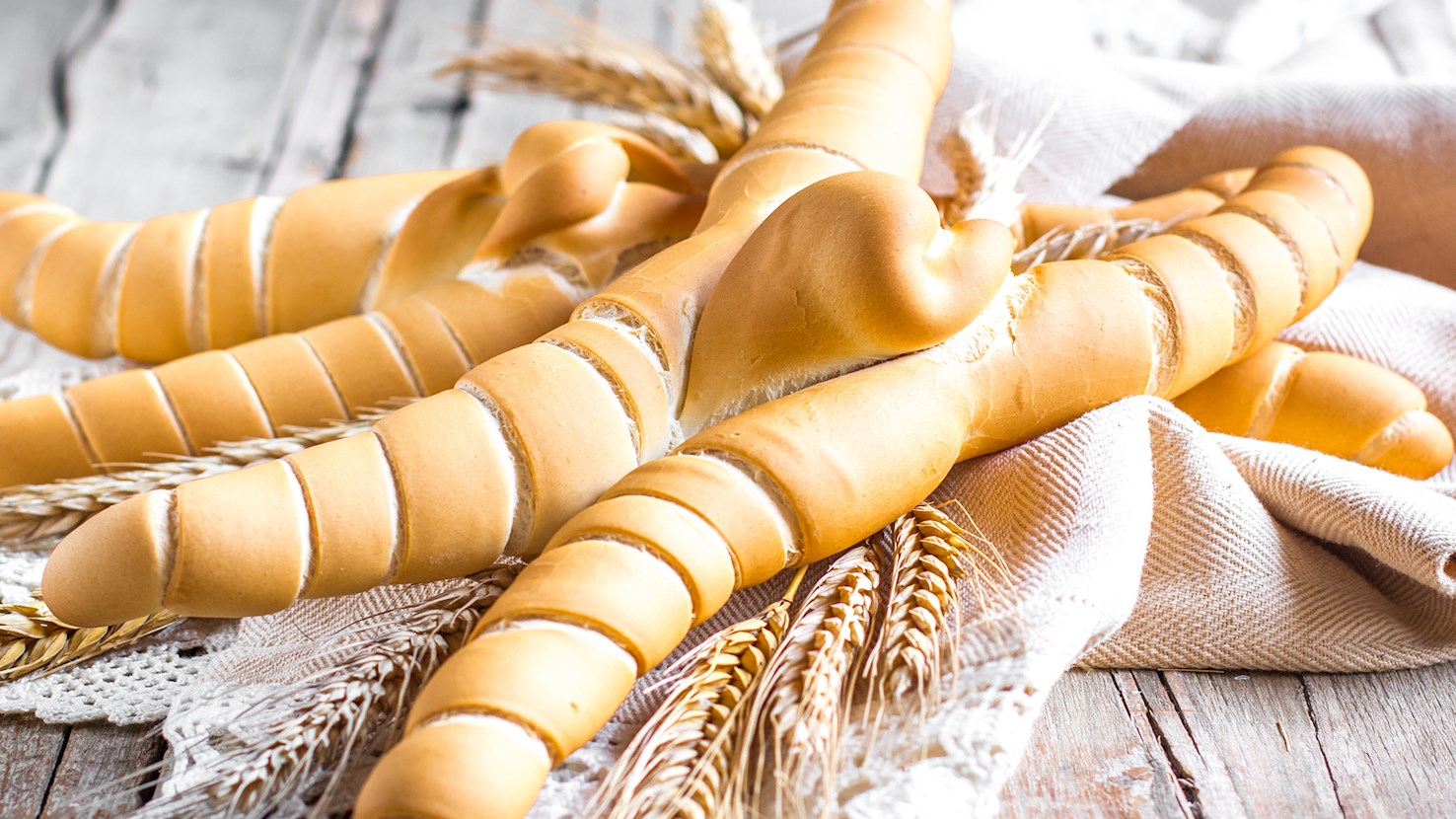
Sicilian mafalda bread, known for its crusty exterior and soft, airy crumb, is typically shaped into an elongated or serpentine form and sprinkled generously with sesame seeds. The bread is made with durum wheat flour, which gives it a slightly yellow hue and a unique flavor. Mafalda is often enjoyed as a sandwich bread or served alongside meals. It has become a beloved staple in Sicilian cuisine due to its distinctive texture and nutty taste from the sesame seeds.
Vastedda is a traditional bread originating from Sicily. This round loaf of bread without a hole in the middle is typically sold in Palermo. However, a bread with the same name is also prepared in the town of Ramacca in Catania, where it's made in the shape of a loaf or donut. In the province of Enna, there are the vastidduni, which are larger and have a thicker crust. The vastedda from Palermo is mostly used for pani ca meusa sandwiches, when the bread buns are filled with veal spleen and often caciocavallo or ricotta cheese.
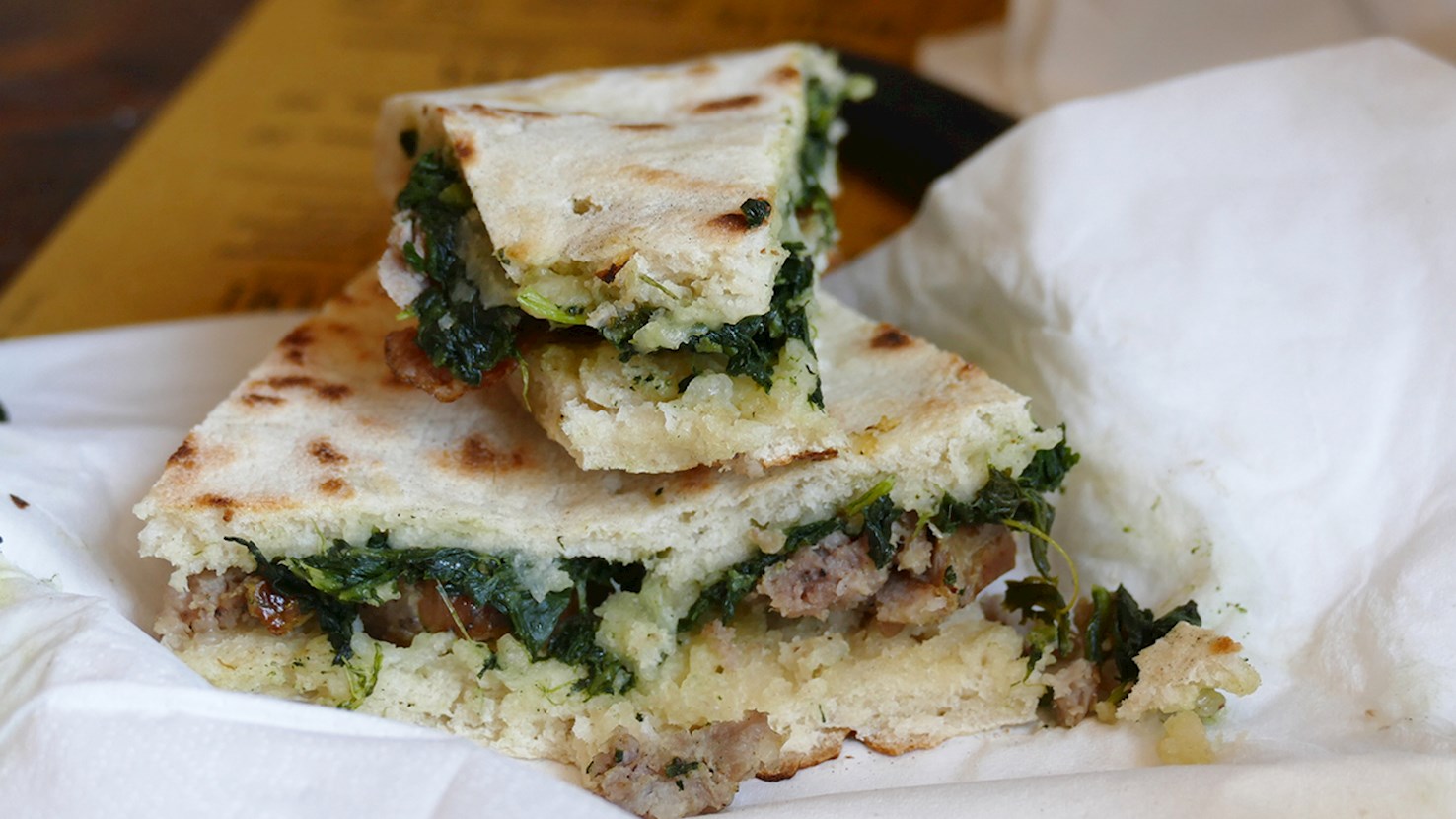
Torta al testo or crescia is a traditional flatbread hailing from Umbria. It's a type of circular, thick griddle bread that's named after the circular pan (testo) on which it's prepared. There are many recipes, but crescia is typically made with a combination of flour, salt, water, and maybe a bit of olive oil. Originally, torta al testo was made without any leavening agents, but nowadays, yeast or baking soda are often added to the mix. When baked, it can be cut in half and stuffed with Norcia prosciutto, greens such as chicory or spinach, and cheese for a heartier meal. This puffed-up focaccia is sometimes served with stews and it's used to mop up the flavorful juices.
Bozza pratese is a typical Tuscan bread made with yeast, flour, and water. Interestingly, the bread does not contain any salt. Bozza is extremely versatile, so it can be consumed at any time of the day – it is eaten daily as an accompaniment to meat, fish, and vegetable dishes, but when it becomes stale, it is a key ingredient in the famous tomato soup known as pappa con il pomodoro.
Scarpaccia is a traditional flatbread that can be prepared in savory or sweet versions. It consists of ingredients such as flour, eggs, butter, zucchini, zucchini flowers (if available), milk, vanilla powder, olive oil, and either salt or sugar. The dough is simply topped with grated zucchini, and it is then baked in the oven. In the past, scarpaccia was baked during the zucchini season by retired sailors who used the vegetables from their gardens. The name of the dish means old shoe, because scarpaccia is usually thin just like the soles of old shoes.
Pizza scima is a traditional flatbread originating from Abruzzo. It's made with a combination of wheat flour, olive oil, water, and salt. Some recipes call for white wine as well. Diamond shapes are etched into the top of the dough, which is subsequently drizzled with olive oil and baked in a coppo (ember-covered concave lid). The name of this flatbread means silly pizza, referring to the fact that it's made without yeast. Once baked, pizza scima should be fragrant with a crunchy crust. It's usually served as a replacement for bread during meals and is meant to be eaten as it is, without any toppings.
Ciriola is a traditional Roman bread that is crusty on the exterior, with a tender crumb on the inside. The name ciriola means candle in Italian, but in its local name it refers to the eels, which are visually not unlike the elongated shape of this bread. It is typically made with white flour, olive oil, yeast, salt, and sugar. The bread dries quickly, but it is often used the next day to make crostini (croutons). When fresh, it makes a good panino.
Pane di Monte Sant'Angelo is a distinctive bread from the town of Monte Sant'Angelo in the Gargano area of Puglia, known for its particular characteristics, such as a soft yet crunchy crust and a dense, soft interior. The bread is traditionally made from hard wheat flour, water, natural yeast, and salt. Extra virgin olive oil is also sometimes included. The entire preparation process is manual, from mixing and shaping the dough to baking it in a wood-fired oven. Historically, the loaves were quite large, weighing 5 to 6 kilograms and measuring 70 to 80 centimeters in diameter. Today, the loaves come in a variety of sizes, ranging from 20 to 100 centimeters (8-40") in diameter, and the crust's thickness ranges from 2 to 5 millimeters (1-2").
Altopascio bread is a traditional saltless bread from Tuscany. It's made from type 0 wheat flour, natural yeast, and water, which gives it a unique flavor. The dough, called sconcia, is left to rise while covered with hemp cloths. Sconcia is formed into rectangular or elongated shapes, and it's then baked for one hour. The bread has a crunchy golden crust and a soft texture of the interior.
Strazzata is a traditional focaccia originating from Basilicata, or more precisely the Avigliano area. It's made with a combination of flour, yeast, water, oregano, and black pepper, while ingredients such as pieces of bacon or lard are also sometimes added to the dough. In the past, strazzata was a staple at feasts and weddings, where it would always be served with wine, and often with vegetables, ham, and cheese. The more pepper the focaccia contained, the more wine the people would drink at the wedding. The name of this classic bread is derived from the word strazzat, meaning ripped or torn, referring to the traditional way of tearing chunks of bread with your hands instead of a knife. Nowadays, strazzata is a staple at the Sagra della Strazzata, a festival held each August in Avigliano.
Cudduruni is a traditional focaccia-style bread originating from Lentini, Syracuse. The bread is made with a combination of beer yeast or mother dough, hard wheat flour, salt, and water. Once prepared, the dough is shaped into a disk and half of it is covered with the filling, then folded into a half-moon. The edges are pinched and sealed, and the edge looks similar to a rope. The basic filling is made with onions or wild beet greens, black broccoli, tomatoes, fresh sheep's milk cheese, and olive oil. Cudduruni is traditionally baked in a wood-fired oven. Nowadays, the original recipe is often modified with ingredients such as prosciutto, cheeses, mortadella, and sausages from different regions of Italy.
This country-style sourdough bread made with durum wheat dough, natural yeast, water, and salt is traditionally prepared in the Sicilian provinces of Enna and Catania. Thanks to the quality of wheat cultivated in the fertile plains of the Dittaino River, this delicious bread remains fresh for up to a week, keeping its delicate aroma and rich flavor. Dittaino bread is typically used for preparing bruschettas, but it is also a perfect accompaniment to Sicilian cheeses and charcuterie.
The bread of Genzano is named after its birthplace, a small town settled on a hill overlooking the Lake of Nemi, where the art of bread-making has been carried out for centuries. The sturdy-crusted pane casareccio is made with soft or semi-soft flour, wheat bran, natural yeast, and salt. Though Genzano bread has been traditionally produced only in the province of Rome, after the 1940s it became popular across the region. Pane casareccio di Genzano can be enjoyed with typical Roman charcuterie products, used for bruschettas, or it can be served with various stews, soups, and sauces.
Pane di Laterza is a round-shaped sourdough bread with a crispy, dark golden-brown crust and soft crumb. Made with natural yeast, durum wheat semolina flour, water, and salt, this slow-rising bread develops an extraordinary flavor that is additionally enhanced by the baking procedure which closely follows ancient traditions. The bread is baked in stone ovens where the fire is made from aromatic wood varieties such as olive, mastic, and oak, sometimes even with the addition of almond husks or apricot seeds. Once the right temperature has been achieved, the embers are removed and the dough is baked without direct contact with fire. Pane di Laterza can last for days, remaining crispy on the outside and soft on the inside. It is a delicasy on its own, but it also pairs nicely with cheeses and a glass of full-bodied red wine.
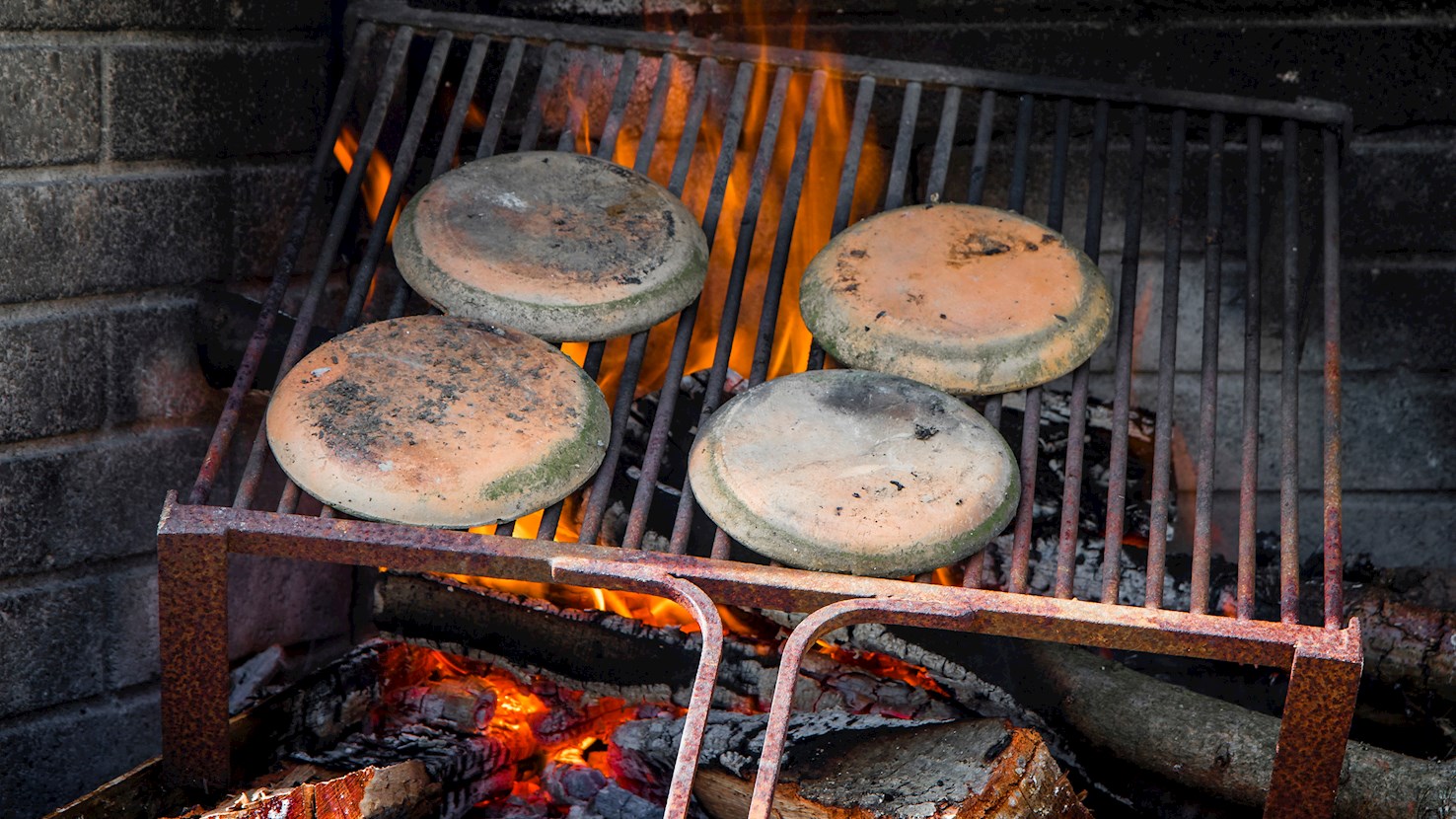
This traditional Italian flatbread is prepared with a simple dough that combines flour, water, and salt. The dough is shaped into small discs that are then baked on small-sized terracotta plates, known as testi, over an open fire. Panigaccio flatbread hails from the Lunigiana area, namely the Podenzana municipality, and works well in both sweet and savory combinations. If enjoyed as an appetizer, it is usually served alongside cheese and cured meat products.
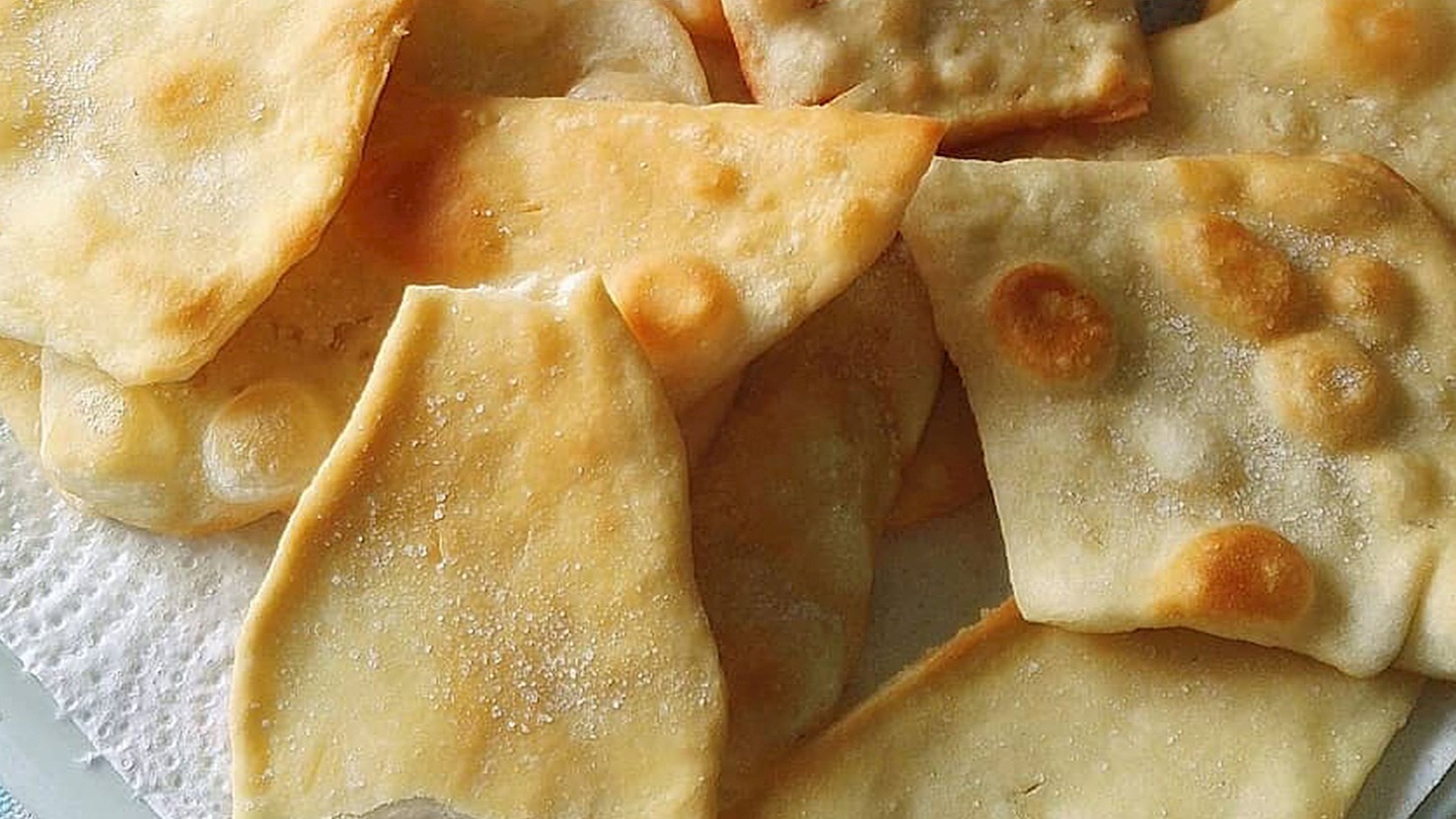
Pinzini ferraresi is a type of fried flatbread traditionally prepared in the Italian city of Ferrara. The dough is made with flour, yeast, lard or oil, water, and salt. It is first flattened, then cut and deep-fried until golden brown. Pinzini are best enjoyed warm, as an antipasto, paired with sliced cured meats, cheese, and pickled vegetables.
Runditt is a traditional buckwheat flatbread originating from Piedmont. It's made with all-purpose flour, buckwheat flour, butter, and salt. The trick is to make the thinnest possible sheet of dough. The dough is rolled as thin as possible, and it's then cut into squares. The dough is placed on a griddle, cooked, then removed and greased with a bit of butter and sprinkled with salt. If desired, it can also be rubbed with a garlic clove for extra flavor. This flatbread is typical of the Valle Vigezzo.
Montasù is a traditional bread originating from Padua, and it dates back to the 15th century, although it became popular once again after World War II. The bread is usually made with a combination of wheat flour, yeast, water, salt, malt, and lard. The ingredients are mixed into a dough, and lard is added near the end of kneading. The dough is divided into smaller pieces that are rolled into thin strips and shaped into various forms, such as crossed crescents. Montasù is baked in the oven until golden brown, and it’s then ready to be consumed. If properly prepared, the crust should be thin and flaky, while the texture is soft and the aroma is fragrant.
Sa costedda is a dense, vegetable-enriched flatbread originating from the island of Sardinia, specifically associated with the southern coastal town of Villasimius. It is defined by its soft, moist texture and a dough composition that utilizes a high volume of fresh tomatoes relative to the amount of flour. The development of this bread occurred within a resource-efficient agricultural system where surplus seasonal produce was integrated directly into dough to create a nutritionally complete food unit. Unlike standard Italian focaccia, which relies on a higher proportion of grain and surface-applied oils, sa costedda emerged as a method to preserve the moisture and sugars of ripened tomatoes within a portable, baked format. Preparation of sa costedda involves a base of durum wheat semolina mixed with a smaller quantity of all-purpose flour, salt, and yeast. The defining characteristic of the process is the preparation of the filling, which consists of approximately one kilogram of chopped, mature tomatoes mixed with garlic, fresh basil, and salt. These tomatoes are left to macerate so their juices can be released and subsequently incorporated into the dough, either as the primary hydrating liquid or as a concentrated interior layer. The dough is kneaded to ensure the tomato pieces are evenly distributed or, in some variations, the dough is stretched into a disc and the tomato mixture is folded inside like a stuffed pie. It is baked in a round tin or on a flat stone at approximately 200°C for 30 to 40 minutes, resulting in a golden-brown crust and an interior that remains humid due to the high water content of the fruit. A unique attribute of sa costedda is its structural density; it does not feature the large air pockets common in highly aerated breads because the fruit solids and juices weigh down the gluten network. The bread is served either warm or at room temperature and is a common choice for outdoor meals or snacks. It is eaten throughout the southern Sardinian provinces and is frequently paired with local sheep's milk cheeses, such as pecorino, or salted meats like pancetta. For beverage pairings, the high acidity of the baked tomatoes is balanced by a crisp, cold Vermentino di Sardegna (white) or a light-bodied Monica di Sardegna (red), both of which complement the herbaceous notes of the basil and garlic.
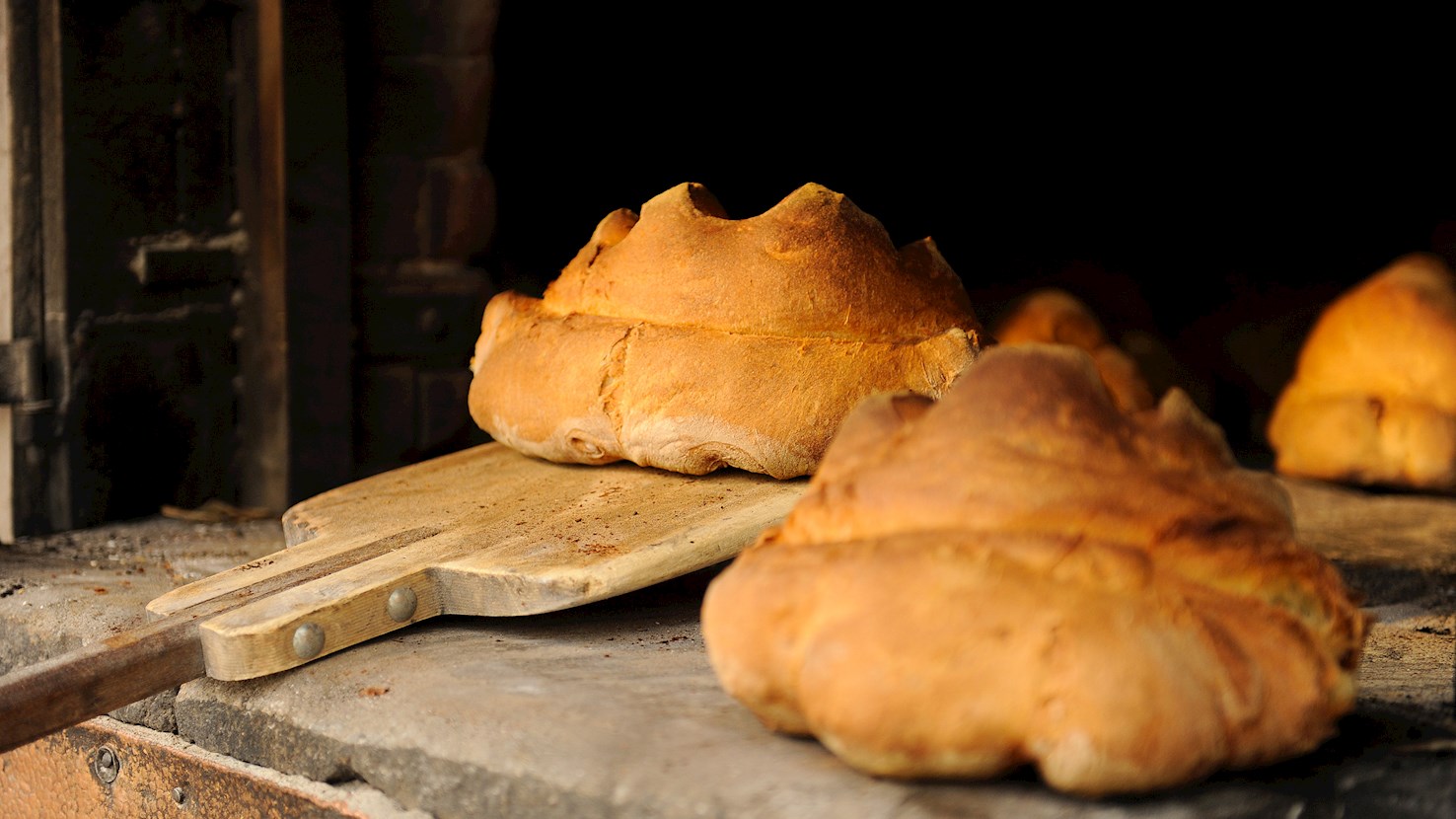
Su càbude is a decorative and ceremonial leavened bread from the island of Sardinia, characterized by its complex, crown-like circular shape and intricate surface carvings, often featuring floral or geometric patterns. The name derives from the Sardinian word for head, referring to its status as the principal or leading loaf in ritual contexts. This bread developed as an artisanal extension of the cereal-based agricultural economy of the southern Sardinian plains, where high-quality durum wheat has been cultivated since the Punic and Roman eras. The practice of elaborately shaping the dough emerged from the social requirement to mark specific life events, such as weddings and religious festivals, with bread that served both as a nutritional staple and a symbolic object. Preparation of su càbude requires high-quality durum wheat semolina, water, salt, and su fremmentalzu, a sourdough starter maintained through successive fermentations. The dough is kneaded extensively to achieve a high degree of plasticity, which is necessary for the detailed structural work. After the initial fermentation, the dough is shaped into a large ring, and the surface is manipulated using small knives, scissors, and bronze stamps to create the characteristic relief work. A specific technical aspect of su càbude is the inclusion of a whole egg, still in its shell, which is sometimes embedded into the dough and held in place by crossed strips of pastry before baking. The bread is baked in a wood-fired oven at a declining temperature, starting at approximately 220°C, to ensure that the interior is fully cooked while the exterior carvings remain sharp and do not brown excessively. This bread is unique for its use as a communal centerpiece, often blessed before being distributed to guests. It is eaten in both domestic and public communal settings during specific calendar events across the island. The dense, fine-crumbed texture of su càbude makes it a suitable accompaniment for savory, high-protein foods such as roast suckling pig (porcheddu) or local sheep’s milk cheeses like Pecorino Romano. Beverage pairings typically include full-bodied Sardinian red wines like Cannonau, which complement the bread's earthy grain profile, or sweet Malvasia di Bosa when the bread is served at the conclusion of a ceremonial meal.
Spianata sarda is a circular, leavened flatbread originating from the island of Sardinia, specifically associated with the inland pastoral regions of Logudoro and Barbagia. It is identified by its soft, flexible texture and its pale, golden-brown surface, often featuring small air pockets and decorative indentations. Viticulture and grain cultivation have defined the Sardinian landscape since the Nuragic period, but the specific development of spianata occurred as a logistical solution for shepherds who required a bread that remained pliable and edible for several days while tending livestock in remote areas. The production of this bread utilized the high-quality durum wheat semolina (grano duro) grown in the island's central plains, which provided the necessary gluten strength for a thin yet sturdy structure. Preparation of spianata sarda involves a dough of semolina, water, salt, and mother yeast (su fremmentalzu), which undergoes a long fermentation process to ensure digestibility and shelf stability. After rising, the dough is divided and rolled into thin discs approximately 20 to 30 centimeters in diameter. The discs are baked briefly at high temperatures, typically between 300°C and 350°C, causing the bread to puff up into a sphere before being removed and flattened immediately. This rapid baking prevents the bread from becoming brittle, unlike the twice-baked pane carasau. A specific technical attribute of spianata is the decorative stamping or prickling of the surface prior to baking, which controls the expansion of carbon dioxide and creates a uniform thickness. The bread is served slightly warm or at room temperature, often folded or sliced into wedges. It is eaten across Sardinia as a primary table bread and is a standard component of festive meals and daily snacks. It is frequently paired with local high-fat products such as pecorino sardo cheese, thin slices of prosciutto crudo, or pancetta, and it is commonly used to wrap roasted meats or as a base for honey. Beverage pairings include structural regional wines like Cannonau di Sardegna (red) or a crisp Vermentino di Gallura (white), which balance the starch content and the saltiness of the accompanying charcuterie.
Vignanello pamparito is a distinct anise-scented bread originating from the municipality of Vignanello in the province of Viterbo. It is a regional specialty of the Tuscia area, specifically within the Lazio region, where it has received the De.C.O. (Denominazione Comunale di Origine) certification. The product is physically defined by its donut-like or elongated shape and a light brown exterior achieved through an egg wash or water glaze before baking. The name is believed to have developed from the Latin pan parito, meaning bread to prepare, or from the phrase pane per il marito, suggesting a loaf made by wives for their husbands to carry to work. Historical records indicate the name was in established use by the mid-19th century. Preparation begins with a sourdough starter or brewer's yeast mixed with warm water and flour to create a sponge. After this initial fermentation, the dough is integrated with extra virgin olive oil from Vignanello, salt, and anise seeds that have been soaked in a half-glass of Greco di Vignanello white wine. The resulting mixture is kneaded extensively to develop elasticity and left to double in size. It is then shaped into round or prolate loaves and baked, ideally in a wood-fired oven preheated to 250°C. A specific characteristic of pamparito is its structural versatility; it possesses a fragrance dominated by anise and wine but maintains a neutral enough profile to accompany both sweet and savory items. It is served warm or at room temperature, typically sliced thin to reveal a dense but soft crumb. In its primary regional context, the bread is eaten alongside cured meats like capocollo, prosciutto, and salami, or with hard cheeses and boiled eggs, and is a staple at the Easter table. It is also commonly consumed as a breakfast item, dipped into caffellatte or spread with fresh ricotta. Beverage pairings often focus on the local Greco di Vignanello wine used in the dough, but the bread also complements dry sparkling wines or strong espresso when eaten in a sweet context.
Focaccia di San Giuseppe, locally referred to as U Rùcchelə, is a coiled, stuffed flatbread from the municipality of Gravina in Puglia, situated within the Metropolitan City of Bari. This culinary item emerged from the specific agricultural conditions of the Murgia plateau, where the availability of durum wheat and the seasonal harvest of sponsali, long, sweet spring onions, dictated the composition of local festive breads. The development of the recipe is legally protected by a De.Co. (Denominazione di Origine Comunale) designation, which codifies its link to the 19th of March, a date marking the end of the winter season and the commencement of the spring planting cycle. The preparation begins with a dough base consisting of re-milled durum wheat semolina, water, extra virgin olive oil, and a natural sourdough starter, which is rolled into a thin, elongated rectangular sheet. The filling is distributed evenly across the dough and consists of sliced sponsali, salted anchovies, sultanas, and black pepper, creating a combination of pungent, saline, and glucose-heavy profiles. The dough is then rolled into a long cylinder and twisted into a tight spiral shape before being placed in a circular baking tin. A technical aspect of the baking process is the high oil content within the spiral folds, which allows the dough to fry slightly from the inside while the onions steam, resulting in a dual texture of a crunchy exterior and a soft, laminated interior. The inclusion of sultanas serves a functional purpose by absorbing the excess moisture released by the onions during the high-temperature baking in stone ovens. The item is served in thick, wedge-shaped slices and is consumed primarily during the communal "Santu Giuseppe" bonfires or purchased from local bakeries during the month of March. It is eaten by hand at room temperature as a substantial midday meal or an evening snack. The high sodium content from the anchovies and the sweetness of the onions and raisins require a pairing with robust beverage profiles, typically a structured red wine from the region such as Primitivo or Aglianico, which possesses the necessary tannins to balance the lipid content of the olive oil.
Pitta cu’ sardella is a rustic stuffed bread from the Calabria region of Italy. It consists of a soft, yeast-leavened wheat dough that is rolled and filled with sardella, a potent, spicy paste made from small fish (often colloquially called "Calabrian caviar") and chili peppers. The pastry is characterized by its spiral structure, offering a soft, pillowy interior with golden, crisp edges. The flavor profile is intense and savory, defined by a sharp kick of chili heat, distinct salinity from the fish, and aromatic notes of wild fennel and olive oil. The bread originated in the region’s coastal fishing towns as a method to utilize and preserve the catch of small pelagic fish. By transforming these perishable ingredients into a concentrated, shelf-stable condiment, communities created a flavor-dense food source. The bread format evolved as a practical, high-energy meal for laborers, encasing the strong flavors in a portable dough that could be eaten during long workdays. A pliable dough is first made from flour, water, yeast, and oil. Once rested, the dough is rolled out into a thin sheet and slathered generously with the sardella mixture. The sheet is rolled up into a long log to enclose the filling, then sliced into rounds or "rosettes." These spirals are packed tightly into a baking pan. During baking, the buns expand and merge, creating a pull-apart loaf. Recipes often vary in the amount of enrichment, with some bakers adding lard or extra olive oil to achieve a softer crumb. Some versions incorporate a bit of tomato sauce to temper the chilies' heat. Due to modern fishing regulations regarding the specific whitebait historically used for sardella, contemporary adaptations often substitute permitted fish species or use vegetable-based alternatives that replicate the texture and spicy, savory seasoning of the original condiment. Pitta cu’ sardella is typically enjoyed warm or at room temperature, making it a popular street food or snack. It is usually pulled apart or cut into wedges and eaten by hand. Because of the filling's aggressive spice and saltiness, it requires a beverage with backbone; it pairs best with robust red wines or dry, mineral-forward white wines that can withstand the intense flavors.
Pane coccoi, also known as coccoi a pitzus, is a traditional Sardinian bread renowned for its intricate designs and cultural significance. Crafted primarily from durum wheat semolina, water, salt, and natural yeast, this bread is distinguished by its firm, sculpted crust and delicate, decorative patterns. Historically, pane coccoi was reserved for special occasions such as weddings, Easter, and religious festivals. During Easter, for instance, the bread often incorporates whole eggs into its design, symbolizing fertility and renewal. The elaborate shapes—ranging from crowns and flowers to animals and symbolic figures—are meticulously crafted using simple tools like knives and scissors, reflecting the artisan's skill and creativity. The preparation involves kneading the semolina dough to a firm consistency, shaping it into various forms, and then carefully incising and pinching the surface to create ornamental patterns. After shaping, the bread undergoes a leavening process before being baked to achieve a golden, crisp crust. Beyond its visual appeal, pane coccoi holds deep cultural value in Sardinia, symbolizing prosperity and community. The tradition of baking this bread is often passed down through generations, with families preserving unique designs and techniques. Today, while it remains a centerpiece during festivities, Pane Coccoi is also appreciated as a representation of Sardinian heritage and craftsmanship.
Lestopitta is a traditional unleavened flatbread from Calabria, particularly associated with the town of Bova in the province of Reggio Calabria. The term "lestopitta" combines the Greek words "leptòs" (thin) and "pita" (bread), translating to "thin bread". This bread is made from a simple dough of 00 flour, water, and salt, without any leavening agents. The dough is divided into small balls, rolled into thin discs, and then fried until golden and crisp. Traditionally, lestopitta is served hot and folded, filled with local Calabrian specialties such as soppressata (a type of salami), 'nduja (a spicy spreadable sausage), cheeses like pecorino, or vegetables like peperonata. There are also sweet versions, drizzled with honey or spread with chocolate-hazelnut cream. The origins of lestopitta are believed to date back to ancient Greek colonization in southern Italy, reflecting the enduring Hellenic influence in Calabria's culinary traditions.
Pane giallo di Allumiere is a traditional bread originating from Tolfa and Allumiere near Rome. The bread is made with a combination of yeast, durum wheat semolina, and water. It's made without a grain of salt. The dough is kneaded slowly, and it's then left to rise on a wooden table at room temperature for two hours, covered with a cloth. Later, it's baked over chestnut wood in a wood-burning stove for an hour. This bread is yellow in color due to its fine-grained crumb, and it's very aromatic with an intense fragrance of the grains. The flat, rectangular bread comes in two forms: a single loaf, and two paired loaves (called la coppia).
Guastella is a traditional stuffed focaccia originating from Calabria, where it’s often made on Easter Monday. It’s usually made with a combination of flour, yeast, lard, dry spicy sausage bits, hard-boiled eggs, provolone cheese, pork rinds, butter, and black pepper. Flour, water, and yeast are kneaded into an elastic dough that’s left to rise for an hour and divided into two portions. One-half of the dough is placed into a lard-greased baking pan and topped with the filling ingredients. The other half of the dough is placed on top, and the focaccia is then dotted with butter and baked in the oven until golden.
Filascetta is a traditional type of focaccia originating from Dongo, a village near Lake Como. It's usually made with a combination of flour, yeast, onions, butter, olive oil, salt, sugar, and cheese such as scamorza or fontina. The soft dough is made with a mixture of flour, yeast, oil, and salt. It's left to rest for about an hour. The onions are sautéed in butter while the dough is resting. Once rested, it's shaped into a large ring that's placed on a baking sheet, topped with onions and thin slices of cheese, sprinkled with sugar and salt, and then baked until golden. Filascetta is enjoyed while hot, and it's served as an appetizer or an afternoon snack.
Fanzelto is a traditional pancake-like flatbread originating from Terragnolo. This rare flatbread was made due to the scarcity of wheat in the area, so it's made with a combination of buckwheat (grano saraceno di Terragnolo), water, and salt. Once prepared, the batter is cooked over lard in an iron skillet. Nowadays it's mostly made at home, but it's also served to tourists during local festivals. Fanzelto is traditionally served hot and accompanied by cheese and slices of luganega sausage.
Pitta pizzulata is a traditional dish originating from Calabria. This cross between a pizza and a focaccia is made with a combination of flour, lard, eggs, dry white wine, tomatoes, pecorino cheese, red chili pepper, and salt. Once prepared, the dough is flattened and topped with the chopped red chili pepper, peeled tomatoes, salt, and small pieces of lard. Pitta pizzulata is then baked in the oven until golden, and it's always served hot.
Mugello is a traditional bread originating from Tuscany. It's made with natural yeast, stone-milled Mugello wheat flour, water, and just a bit of salt. The dough is shaped into an oval filone loaf that's baked in a wood-fired oven. These plain loaves have a crunchy exterior and a soft crumb. The bread remains fresh for at least five days. After that, when it hardens, mugello is often used in the preparation of typical local dishes such as panzanella, pappa con pomodoro, and ribollita.
Mangia e bei are traditional Italian focaccia bread rolls originating from Prato. These small and soft rolls are made with flour, eggs, sugar, fat, and yeast. The dough is left to slowly rise on strips of soaked cotton. It's then divided into small mounds and cooked in a wood-fired oven. Once the rolls have cooled, a hole is indented in the top, which is then filled with mint or citrus syrup, so you can eat (mangia) and drink (bere) at the same time. These rolls were traditionally produced for the Prato Fair in September, but nowadays they are only prepared for special occasions and national holidays.
Fitascetta is a traditional savory bread originating from the Como area. It's made with a combination of yeast, sugar, olive oil, flour, salt, and shredded Stracchino, Taleggio, or Mozzarella. The dough is shaped into a ring, topped with onions (sautéed in butter, water, and balsamic vinegar), and it is then taken out of the oven, brushed with olive oil, and sprinkled with grated cheese before being baked for a few more minutes. It's said that this onion-covered bread ring is best when eaten on the day it's been made.
Focaccia Seravezzina, also known as pane di Azzano, is a type of round, golden brown savory focaccia made with a mixture of corn and wheat flour, lard, olive oil, garlic, rosemary, mountain water, salt, and yeast. The dough is shaped and placed on wooden tables to rise under a linen cloth, and it is then brushed with olive oil and baked in a wood-fired oven. Pane di Azzano can be found in local bakeries – cut into slices, it tastes the best when enjoyed during the day it was baked.
Pitilla is a type of bread from the Salento area, similar to the traditional focaccia. The dough, which is baked in stone ovens, is made with durum wheat flour, yeast, water, and salt, sometimes with the addition of olives or raisins. The crust is crispy, while the interior is very compact and firm. Pitilla is best served hot, straight from the oven, with fillings ranging from fresh tomatoes, oil, and salt to slices of mortadella or other local cold cuts.
Ciambella all'anice is a delicious anise-flavored bread from the town of Veroli, located in the province of Frosinone, Lazio. The simple dough made with flour, water, salt, yeast, and anise seeds is twisted, shaped in a circle resembling a crown, then baked in the oven until golden brown. Traditionally prepared for New Year’s Day, nowadays it can be found all year round, served instead of regular bread or as a tasty snack, usually accompanied with a glass of wine.
TasteAtlas food rankings are based on the ratings of the TasteAtlas audience, with a series of mechanisms that recognize real users and that ignore bot,
nationalist or local patriotic ratings, and give additional value to the ratings of users that the system recognizes as knowledgeable.
For the “Top 78 Italian Breads and Flatbreads” list until July 16, 2026, 3,003 ratings were recorded, of which 2,415 were recognized by the system as legitimate.
TasteAtlas Rankings should not be seen as the final global conclusion about food. Their purpose is to promote excellent local foods,
instill pride in traditional dishes, and arouse curiosity about dishes you haven’t tried.