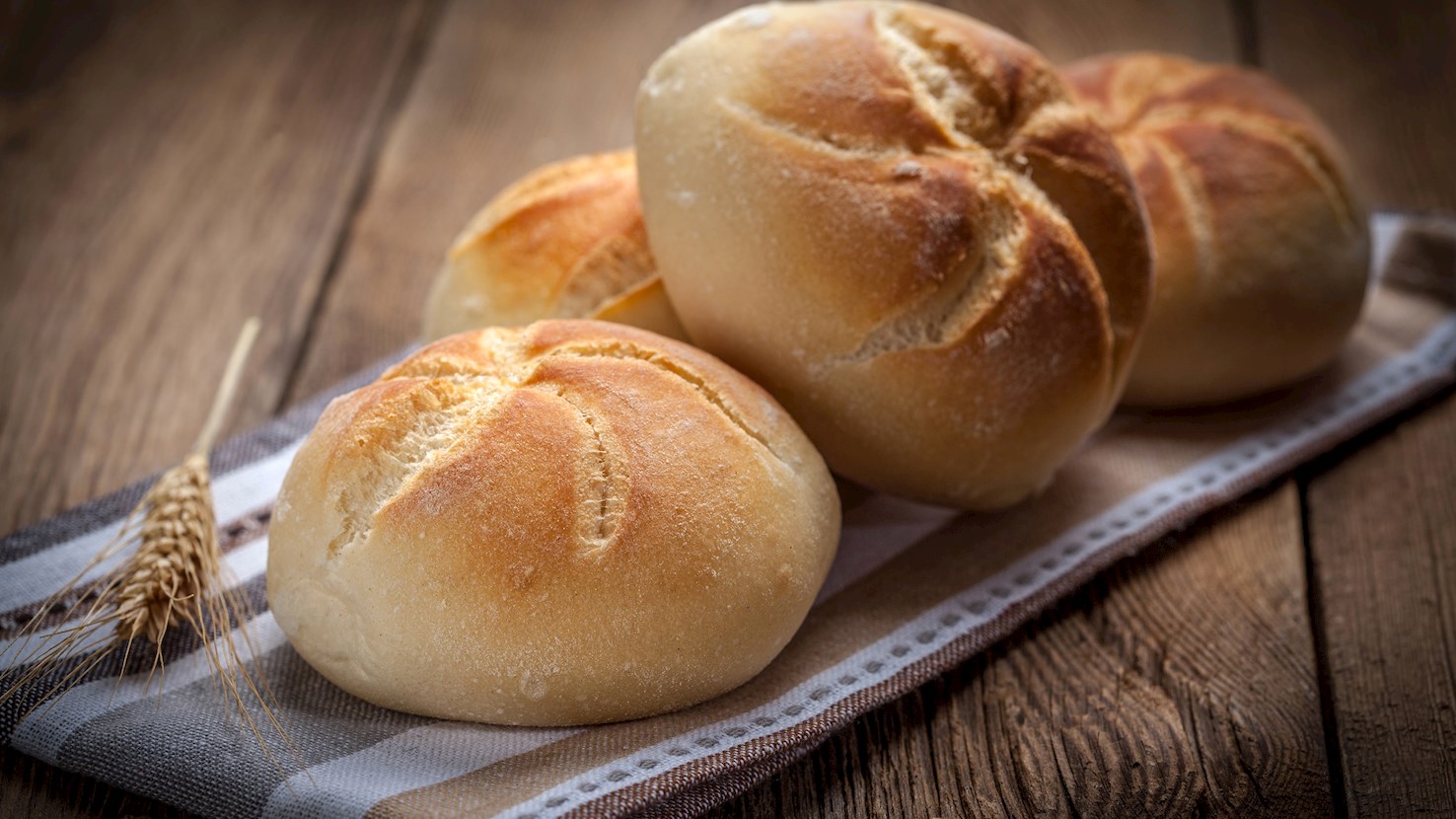
Kaisersemmel is a traditional bread roll originating from Austria. Also known as kaiser roll, it's usually made with a combination of flour, yeast, salt, sugar, and sometimes butter. The dough is shaped into rounds, and the top is divided into five segments so that the overlapping incisions form a crown. Once baked, the rolls should be crusty on the outside and fluffy on the inside. It is believed that they were named after Emperor Franz Joseph I of Austria. Nowadays, kaiser rolls are often topped with sesame seeds, sunflower seeds, poppy seeds, or linseed. They're traditionally eaten for breakfast with jam and butter, but the rolls can also be split open in order to make sandwiches, often with leberkäse in Germany and Austria.
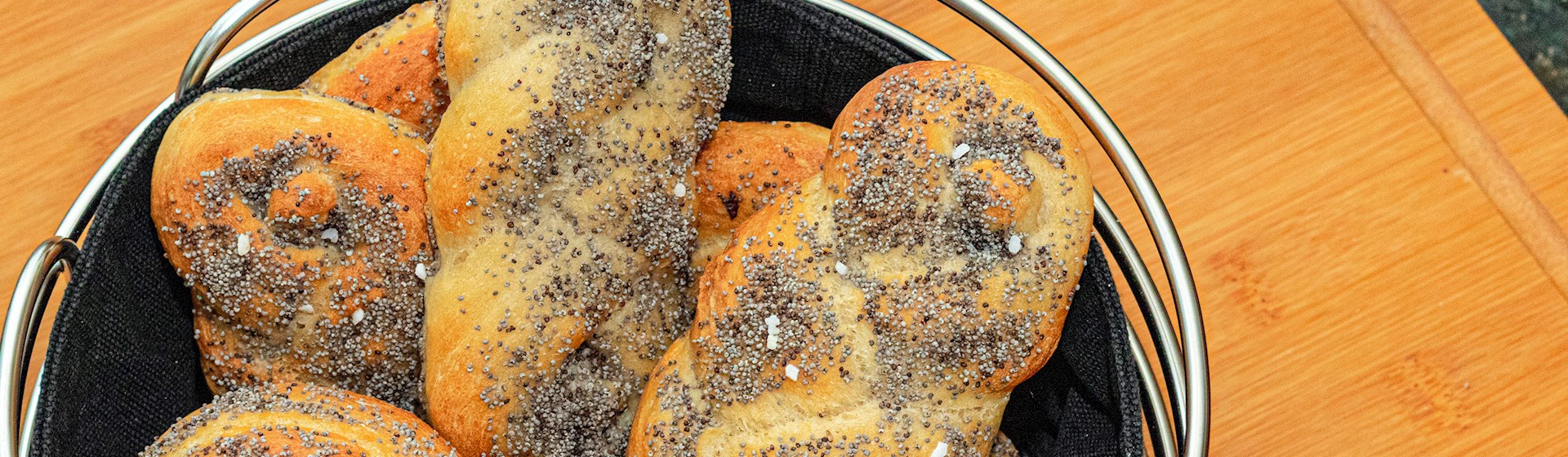
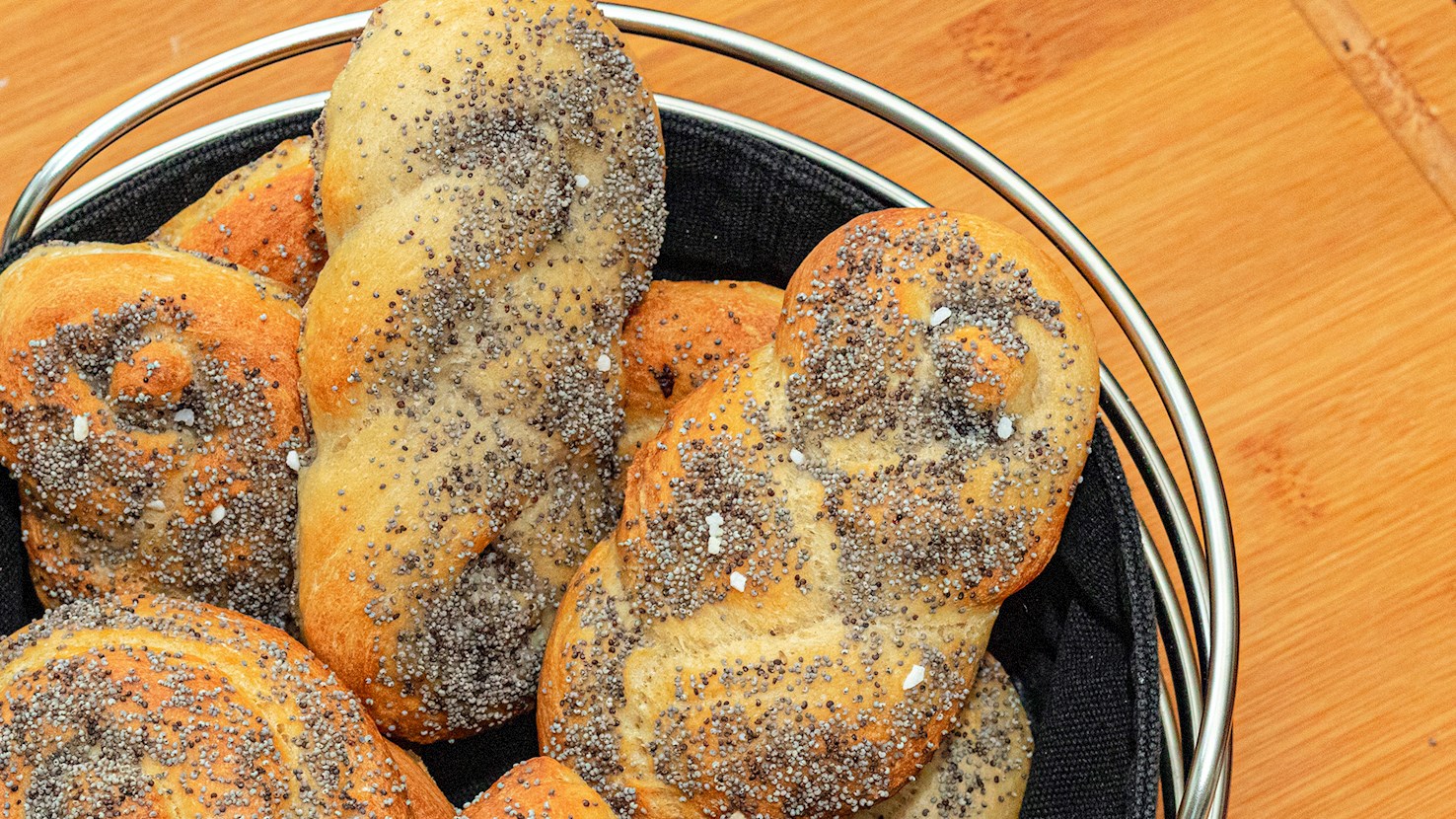
Mohnflesserl or Mohnstriezerl is a type of Austrian bread roll made with a braided or twisted shape and coated with poppy seeds ("mohn" in German). Commonly found in Austrian bakeries, Mohnflesserl rolls are known for their soft, airy interior and slightly crunchy crust. The dough is typically enriched with milk, butter, and sometimes a touch of sugar, creating a tender, mildly sweet flavor that complements the nutty, earthy taste of poppy seeds. Mohnflesserl is popular as a breakfast or snack bread, often enjoyed with butter, jam, or cheese. The twisting or braiding technique gives it a distinct appearance, resembling a small, elegant loaf, which is characteristic of Austrian and Bavarian bread-making traditions. This bread roll has become a staple in Austrian bakery culture and is widely enjoyed across the region.
A staple baked good across eastern Austria, the schusterlaberl is a compact, dark bread roll made from a mix of rye and wheat flour. The name translates literally to "shoemaker's roll," a designation stemming from local Viennese records detailing an apprentice cobbler who routinely mangled his master's daily food order at the bakery, eventually prompting the baker to name this specific rugged loaf after him. To create the dough, bakers combine a high proportion of rye flour with standard wheat flour, activating the mixture with a mature sourdough starter to ensure proper acid development. The formulation strictly requires a specific measurement of four ground seeds—caraway, coriander, fennel, and aniseed—to be kneaded directly into the dough, providing a sharp, earthy flavor profile. Once proofed, the mass is divided and rolled into tight spheres. Rather than using a blade to score the surface, bakers deliberately place the raw dough portions onto the baking tray with the folded seam facing upward. During baking, this exposed seam expands and tears apart naturally, yielding a highly jagged, deeply cracked upper crust that contrasts directly with the tight, chewy interior crumb. This specific seam-up technique ensures the surface area is maximally exposed to heat, creating an unusually thick and crunchy exterior for a roll of this volume. Schusterlaberl serves as a robust foundation for heavy toppings, frequently layered with cold cuts, smoked bacon, aged cheeses, or thick spreads of seasoned pork fat known as verhackert. Because of the aggressive spice blend within the crumb, diners routinely pair the roll with beverages that provide high acidity or carbonation, such as dry white spritzers, regional apple ciders, or malty dark beers.
Originating exclusively from the Lesachtal, a high Alpine valley in the Austrian state of Carinthia, Lesachtaler brot is a dense, wood-fired sourdough loaf. Because the rugged topography of this region caused severe geographical isolation for centuries, the local population was forced to rely entirely on self-sufficiency for their daily sustenance. Residents cultivated resilient local grain varieties, built horizontal water mills along mountain streams to process the harvest, and developed an independent bread-making method that completely bypassed modern industrialization. The standard formulation dictates a ratio of roughly two-thirds rye flour to one-third wheat flour, combined with spring water, salt, and a spice blend generally consisting of caraway, coriander, fennel, and aniseed. Bakers rely on a natural, wild-yeast starter, letting the mixture ferment extensively over several hours before forming large, round masses. Baking takes place strictly in masonry ovens heated by locally sourced spruce or larch wood, resulting in a thick, dark exterior crust that protects the moist crumb. The complete process of making this bread, encompassing the agricultural cultivation of the grain, mechanical milling powered by water, and the specific artisanal baking technique, is listed on the UNESCO Intangible Cultural Heritage list. Individuals consume this heavy bread in private homes, taverns, and Alpine huts throughout Carinthia, usually slicing it thickly from the whole loaf. It serves as a robust base for regional agricultural products, often topped with cultured butter, aged Carinthian mountain cheese, and cured pork products such as Gailtaler Speck. These savory sandwiches are usually enjoyed with regional fermented apple cider, locally known as Most, or with malty dark lagers.
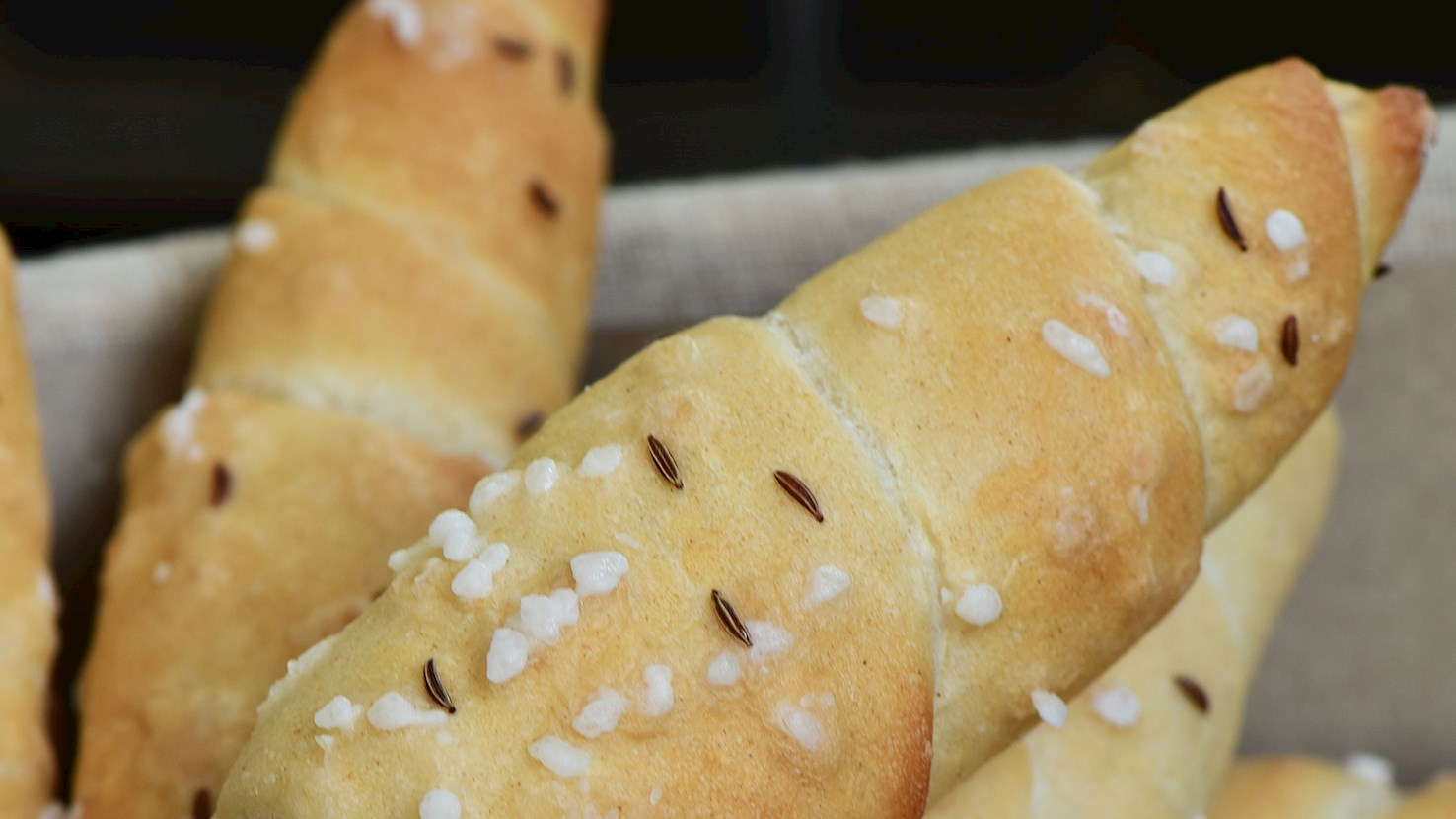
Salzstangerl is a straight, elongated bread roll native to Austria, distinguished by its tapering spindle shape and a prominent topping of coarse salt crystals and whole caraway seeds. The documentation of this specific baked good dates back centuries within Central European baking guilds, emerging as a savory variation on standard Viennese white dough. The shape serves to maximize the exterior surface area, deliberately increasing the ratio of crisp crust to soft crumb compared to standard spherical rolls. The bread rolls are made with a yeast-leavened wheat dough that frequently incorporates small quantities of milk and fat, such as butter or lard, to tenderize the interior. To achieve the final shape, bakers flatten the proofed dough into an elongated triangle and tightly coil it from the wide base down to the pointed tip. This specific coiling technique creates a distinct, spiraled, layered structure within the crumb that pulls apart easily after baking. Before entering the oven, the unbaked surface receives a light moisture wash to ensure the heavy application of salt and caraway adheres securely. Found extensively in bakeries, coffeehouses, and taverns across Austria and neighboring countries, this roll serves as both a standalone snack and a meal component. It is also used to make sandwiches with fillings such as unsalted butter, cured hams, and mild cheeses. It frequently accompanies rich, heavily sauced dishes like beef goulash or acts as a side to various sausages.
TasteAtlas food rankings are based on the ratings of the TasteAtlas audience, with a series of mechanisms that recognize real users and that ignore bot,
nationalist or local patriotic ratings, and give additional value to the ratings of users that the system recognizes as knowledgeable.
TasteAtlas Rankings should not be seen as the final global conclusion about food. Their purpose is to promote excellent local foods,
instill pride in traditional dishes, and arouse curiosity about dishes you haven’t tried.






What People Say